Josh Clemente: The Truth About Glucose & Body Fat | Wellness Force #Podcast
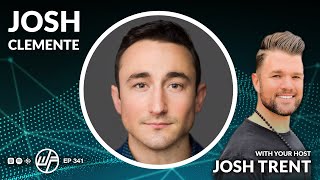
Interview (May 8, 2020) between Josh Trent (Wellness Force) and Josh Clemente (founder/CEO of Levels) about continuous glucose monitoring (CGM) and metabolic health. Major themes: what CGM measures and how it works; recent research showing large inter-individual variability in glucose responses (Weizmann 2015 and follow-ups, ~800-person 2-week study); Josh Clemente’s personal experience using CGM to reveal large daily glucose spikes and crashes despite normal annual labs; Levels’ 28-day metabolic awareness program and its goal to translate CGM data into actionable behavior change; practical device details and usage recommendations; links and contact (levelshealth.com). The interview emphasizes personalization, behavior-change, and integrating CGM with coaching/functional-medicine workflows.
Questions this video answers
Weizmann Institute (2015) landmark trial; cohort ≈800 people monitored for two weeks.
Sensors last 14 days.
Adhesive/tape typically lasts 7–10 days (swap once or twice during a 14-day sensor).
Five full-time founders (small team).
He cited ~70% metabolically unhealthy in the U.S.; ~120 million people have prediabetes or diabetes (and ~70% of those cases estimated lifestyle-related).
Chapters
Hey, what's up, my friends? It's Josh Trent from Wellness Force. Today I'm here with another Josh Clementi, and he is the CEO and founder of a company called Levels. Josh, how you doing today?
I'm doing great, Josh. Thanks for having me on. I'm super excited to talk.
Well, before we record, I said that both of our parents are smart because they named us Josh, and that is the truth. Right. I just love my name. And I think all of us can relate. Like, we all take so much from our parents, including our epigenetics and the way that we, quote, gain weight or lose it sometimes. But there's just so much misinformation out there, Josh, about what metabolism actually is for a unique individual. Like what metabolic health actually is. This. This field that you play in, you know, this continuous glucose monitoring field, it is, I think, the most. One of the most exciting branches of science, but also it's the most new if you really look at how it's applying to the general public. For so long. CGM continuous glucose monitoring, it really was only available in scientific or medical wards, right?
That's absolutely right. Yeah. Totally agree with the intro, by the way. You know, I. I really respect my parents for everything they to teach me how to look for truth or find facts and be independent when it comes to big questions. And yeah, I mean, to your question on metabolic health, I came to a point in my life where I wasn't able to answer that question myself. I didn't know whether or not I was metabolically healthy. And this technology, continuous glucose monitoring, which you're absolutely right, is currently just reaching its prime for the management of diabetes. The technology has, at core, been around for a long time, but its availability has been really, really low. And we're reaching this surge where the technology is achieving cost levels and accuracy levels and availability levels that make it not just available in a meaningful way for the diabetes community, but well beyond in the general wellness world. And I personally have transformed my life as a result of it. And I can say nothing but the future is bright for this tech.
Well, it's cool because I don't know if you're familiar with the ces, the Fit Tech Summit. You know, they have a yearly roundup in Vegas for a couple years in a row. I used to lead panels where I'd be on stage and I'd be talking to people like healbee, they make go be and then other. Other devices that are supposedly claiming to, like, actually help people with their wellness, with their health. But, man, when I Look at the science behind continuous glucose monitoring. It's one of the only, only quote, biohacks that I think really moves the needle for people. I use my glasses, you know, I have like my little oils and I have all my stuff and everything works. I consider health to be like, you know, the center of a building. And all these tools are like the scaffolding. What do you think that CGM actually represents and tell people, by the way, like, what CGM is, the history of it? Just unpack CGM for us.
Totally. Okay, so glucose, first off is it's the primary energy molecule in the modern human. And I don't mean that as in the modern diet. I mean as in what's coursing through your veins right now that your cells are using for energy, that is glucose. We also have other macronutrients that can be transformed into other molecules, like ketones that can be used for energy. But if you take the average person and you analyze their blood and see what their cells are running on, it's primarily glucose. And so that makes glucose a very powerful molec. Our bodies want to maintain this very tight band of control for glucose levels. Too low and you end up having these hypoglycemic symptoms which are very dangerous. Too high and you end up having these longer term, less acute but equally devastating effects when this dysregulation occurs. And so glucose is by default one of the most fascinating molecules to be able to measure. And for the longest time, we've only had technology that could measure those glucose molecules when pulling blood from a vein or from a larger sample. Over time, technology has been developed that can allow a little filament to be inserted into the skin cells. Very shallow. And that filament reacts electrochemically with the glucose in that what's called interstitial fluid. And it produces a signal which can be easily translated into the equivalent of your blood glucose levels. The development process has been slow. It's been primarily used in clinical environments. It's been primarily used the management of type 1 diabetes, which is where the pancreas, sort of the beta cells stop producing insulin. And so glucose levels start to get on the high, on the high side. And so it's been like a very protracted development process. But we're getting to the point now where this technology is. It's essentially a little disc, a little patch that you can wear in your arm. It doesn't interfere in your life at all. It's waterproof, it's sweat resistant, and it's wirelessly connected to Your cell phone, you can pull this data down and like see in where this master molecule of energy is in your bloodstream. And so that's kind of the moment in time where we are right now. The hardware is just reaching this point where it's accurate enough and it's easy to use enough that it's starting to make sense as what we can call a bio wearable. So a wearable device with deeper value.
It's so utterly fascinating to me and honestly, it kind of tugs at my heartstring a little bit because I can imagine how many people, if this technology existed, you know, like it is for like the end consumer 20 years ago, I can only imagine how many lives could have been saved. And I mean, this brings up a well of emotion in me because I think about like my own mother or even my grandfather who's passed, or just people in my life that are no longer here on the planet if they were able to understand their unique thumbprint. It's crazy. Like we all have a thumbprint, you know, and no one's fingerprint in the planet is identical. And it's the same thing with our metabolic individuality. Yet we have these diet programs and these plans that just push do these five things or eat this way, or of course, my favorite reductionistic meme where people just say, oh, just eat real food, like that's cool, but what the hell does that actually mean, you know? So my question for you is, when we look at individuality, metabolic individuality, how does CGM help people navigate that world of metabolic individuality?
It's a great question. You know, we actually owe our acute awareness of this metabolic individuality to CGM technology. Very recently, as of like 2015, there was this landmark study that was conducted by the Weizmann Institute in Israel. And this is like one of the first large scale studies where non diabetics had CGMs and were tracking their glucose levels through a long period of time. In this case it was two weeks. And this cohort of about 800 people, all of whom were metabolically healthy, had these structured meals that the clinicians gave them. So they had them eat defined meals at specific times. And then they ultimately went back and looked at the responses and what they found was there is the possibility for two people to eat the exact two same foods. So in this case it was a banana and a whole wheat cookie. And they eat these two foods and they have equal and opposite blood sugar responses to those two foods. And it's so counterintuitive that it led to additional Research from King's College in London and the Predict trials, which showed that identical twins sharing 100% of their DNA have the same amount of personalization in their metabolic responses. It led to the Clicotypes trial at Stanford, which has shown that you can sort of predict people's glucose responses based on how they respond to a small subset of calibration foods. There have been additional other sort of replicated the findings in those three. And so this is all just. In the past five years, we've gone from the assumption that you're either metabolically well or you're metabolically dysfunctional. So sort of like in this diagnosable category, what we're finding is there is such a broad, like, metabolism is a spectrum, and it's a broad spectrum. And where you land on that spectrum dictates or should dictate how you live your life. You know, what lifestyle decisions you make. And right now, without that data, you don't know whether you're the banana person or the cookie person. You know what I mean?
It's such a great point. Like some people, I have a friend, he, his name's Sean. What's up, Sean? If you're watching, you're listening. He eats like a sleeve of Oreos and he grows an extra ab muscle. You know, some people out there, man, they just, they can eat whatever the hell they want and they actually lose weight. It's utterly fascinating to me how we still are and you're breaking it. I feel like you and levels and what you stand for, you're really breaking the mold of the traditional fitness industry. You know, calories in, calories out. A calorie is not just a calorie. Like, I think people forget. And maybe you can give us just a high level metabolic activity of like what happens when we eat food. And just that pathway of breaking proteins, carbs and fat down in the body, what happens there for us? But I will say this before you answer. One man's food could be another man's poison, legitimately, unless it's passed through a filter of awareness. Can you give people a high level of what goes on when we actually consume food? You know what happens with the Krebs cycle and the metabolism.
Yeah, yeah, I'll keep it. I'll keep it super high level. It's really. You can kind of think of food as fuel and there are a few different fuel categories. And we can call those macronutrients. And so you have fat, protein and carbohydrates. Those are the highest level macronutrients. We have this kind of fourth category now called ketones. So exogenous ketones. You can actually buy these now, and we'll call that the fourth macronutrient. But high level fat protein, carbohydrates. And so the way the body uses those for energy is different. Carbohydrates will break down into sugars, which ultimately the sugar that you can use directly in your cells is glucose. Fructose has to be processed in the liver in order to be usable by the cells. And fat can be kind of used in both ways. So fat can be repackaged and stored, or it can be oxidized in the cells. And so protein, there's this really fascinating mechanism where protein can be used as the building blocks, the amino acids can to build new cells, or it can be reprocessed in a function called gluconeogenesis into additional glucose, which can also be burned by the cells for energy. So that's kind of how, like, at the very highest level, how we can produce energy from what we eat. Now, when you consume, let's say you consume some carbohydrates, that goes into your digestive system, your digestive system starts to break it down, depending on the structure of that carb. So whether it's like high in fat or low in fat, or, I'm sorry, high in fib, low in fiber, it will sort of dictate how quickly that glucose comes out of the carbohydrate or the carbohydrate strings break down into the glucose and get pulled into the bloodstream. Now, once that glucose is in the bloodstream, it can't get into the cells to be used as energy without the release of a hormone called insulin. And insulin is like, you can think of it as the key that unlocks the cell and allows the glucose to enter. So insulin is needed for the metabolism of glucose. It is not needed for the metabolism of fat. So it's specific to this use case for glucose for energy. A lot of the dysfunction that we see in the modern society seems to be a function of this hyperinsulinemic breakdown where basically you have sustained high levels of glucose. So the blood is. You're constantly consuming high carbohydrate, high glucose.
This is where people are told, eat every two hours no matter what, right?
Yeah. You sort of get into this cycle, just this cycle of repeatedly filling the fuel tank to the brim, right? Just filling the fuel tank to the brim and never depleting it. Like you're not, let's say you're at a sedentary office job, you're eating every two hours, like you're saying lots of high carbs, those are breaking down quickly into the bloodstream. The bloodstream is kind of at the high threshold of where the body wants it to be. And then insulin is released because the body wants to get that glucose out of the bloodstream as quickly as possible. So as this cycle continuously happens, happens, there's a process called insulin resistance that sets in, which basically numbs the cells to the influence of insulin. And now your body is at a decreased ability to use the glucose in the bloodstream to get it out of the bloodstream. And so you have this like continually higher threshold of glucose rising and rising, and that leads to some really detrimental effects. And so, you know, that's a, that's a very brief insight, but it's. This is like how we currently are seeing rates of metabolic dysfunction that are on the order of 70% in the United States.
I mean, think about that number. You know, the CDC says we're at 330 million people. And I know this because I've been doing a ton of research into Covid, which, if you're watching this right now, like, tell us how you're feeling, what's been your research. If you're listening, shoot me a message right now on Instagram. Let us know, like, what is the impact that this virus is having and has had on you and what tools do you think you actually need to move forward and to be healthier? Because when we look at immunity, Josh, 330 million people, if 70% of those have metabolic dysregulation and metabolic health issues, can we just start there? Like, can we just address one spoke of the wheel. Instead of trying to push a bunch of vitamin C down people's throats, can we actually heal them from the root up? You know, from a bottom up approach? Can you expand on that a little bit?
Exactly, yeah. You know, Covid is a really interesting example right now because although the mechanisms aren't entirely understood, there is a very strong correlation between aggressive cases of COVID and metabolic dysfunction. Existing diagnosed diabetes seems to be one of the number one correlations to a very severe complications of coronavirus. It could be that there is some interaction between the iron and heme molecules in your bloodstream. So there's some separation that basically the virus reduces the red blood cells ability to carry oxygen. And in the case of diabetes and other glucose dysregulation, you already have issues with your hemoglobin binding to the glucose Molecules and this is called glycation. So you're already damaging the blood cells and so then you add a virus into the mix and things just kind of go haywire. Whatever the mechanism is, the fact that you have a correlation here between metabolic dysfunction and worse outcomes means that we as a society should be taking, for the nth reason we should be taking metabolism and metabolic function so seriously right now. Because what's striking about the numbers is that I mentioned something like 70% of people are metabolically unhealthy. What I mean by that is either overweight or have pre diabetes or diabetes. And so the numbers there are 120 million people have prediabetes or diabetes and 70% of those cases are estimated to be entirely chronic lifestyle related. So in other words, entirely preventable. So when you're looking at a situation where we have this pandemic outbreak, metabolism is involved or metabolic dysregulation is involved and something like potentially 70% of the metabolic dysfunction in the country is completely preventable, it just shows that we are all individually on the hook to improve. We can't kick the can down the road. We have to take the front seat role in prevention.
Man, the powerful thing that's happening for all of us right now is that Mother Earth and whether you're spiritual or analytical, this applies to you. So don't worry, I'm not going super far into Wooland. Although I do believe everything we do is spiritual, which I'm down to ask you later on your spiritual connection. All this, but I can see where so many people might look at wearing a CGM continuous glucose monitor on their body and they might think, wait a minute, won't that disconnect me from my own awareness? Or in other words, won't that take away my own sense of awareness? You know, my, my, my loop of awareness that I have within myself. But if you look at the data and if you really unpack what's in PubMed around behavior change, the more data that people have on their own body, like their fasting glucose, their continuous glucose monitoring in your, in your case, or even just like doing a DEXA scan to see where their biometrics are, you know, the more data we have, it's not that we're depending on the data, it's that this data is so helpful because it's a mirror of mind about the mindfulness component in CGM for this.
Yeah. So you talk about breaking the loop. So I actually would say that this completes the loop. So right now if you look at a complex System. There are two kind of types. One is called an open loop and one is a closed loop and an open loop. And this is for like systems engineering, things like this. An open loop is where you don't have any feedback on where the system is and how it's proceeding. So you're basically sending out commands and you don't get any feedback on how that command worked and how we proceeded as a function of it. A closed loop is where you have constant data. So each decision you make is influenced by the prior information that you got from the last decision you made. What we do in modern society when it comes to our lifestyle is we are living an open loop lifestyle. We have intuition and we have emotion and we have sort of this mindful component where we like try and feel our way through, but that's all we have. We are in an open loop. And so when you have data that shows how a decision you make affects your metabolism in real time, you are now closing the loop for the first time. And the way that you use that data is entirely up to you. And I think that's key. The mindfulness component is we don't fixate on this. We don't use this to a detrimental degree where we're hyper focused on or hypochondriacs, you know, because of the information. We use this in an informed, educational manner where it's, it's, you know, we are personalizing our decisions going forward because we've closed the loop.
I love that behavior change models. If you look at the work of Charles Duhigg or Dan Pardee or anybody at all that's involved with getting a consumer or human being from point A to point B. Most of the behavior change out there is around cigarettes or weight loss. Like those are the top two, you know, how do I stop smoking or how do I lose weight? Obviously there's other addictive things below that. But I go back to the work of Rob Wolf and we had Rob on the podcast episode 103. So we'll link this in the show. Notes. He used the Dexcom, but I bet you if he found out about this, he would much rather use your product because your product is meant for non diabetic people right now. Diabetics can use it, I'm sure, but can you go over the use case of this and then I want to talk a little bit more about the window of testing.
Yeah, so Dexcom, you know, there are several devices on the market are coming to the market and all of them are typically regulated for the management of diabetes. So what we've done is we're building the analytics engine, the metabolic models that bring in glucose information, continuous glucose information, and turn it into actionable insights for the individual. So rather than you having to study some background history of what a glucose curve is and what matters about it, we break it down into the specific actions that you can take to bring control. And where are you going right? Where are you going wrong? And so we sort of bring out the highlight reel and help you to take action. And this is focused, again, around general wellness. So what does optimal glucose look like? What does normal glucose look like? And what ways can we use this information in order to enhance performance on a daily basis? That might be exercise performance, that might be mental conditioning, just trying to get control of stress levels. That may be weight loss, that may be bodybuilding. We all have different performance goals. What Rob did in Wired to Eat, which I love that book, he recommends doing a blood sugar testing regimen with a glucometer where you prick your finger and take a few data points after eating certain foods. We love that approach. Part of what we do with the levels program is once people get the seat, you spend about a week just living your life normally, bringing in information about what your baseline is. And then we recommend, over the next two weeks, experimenting. So pushing the corner cases, find out where by sort of exploring the set of options that you have in any given day. Explore and see how you respond to things that may be intuitive, may be counterintuitive. And that includes calibrating with different foods the way Rob Wolfe recommends, and even experimenting with things like sleep. How do you respond? How does your blood sugar react when you get four hours of sleep versus eight hours? It's quite profound, actually, in my experience.
You have a big case study with this yourself. Can you share with people you actually use the device? How old are you now? You're 29? 30 now or 30? 30. So you're 30 now at 28. You had a breakthrough of your own by using continuous glucose monitoring. So for the people just tuning in, or. Or maybe this concept is new for you, Continuous glucose monitoring is literally the 24 7. Your blood, the sugar in your blood is being monitored to give you feedback on your ultimate health. So a lot of people could be walking around unhealthy, they don't even know it. But this tool allows them to kind of look within the bottom of the well. That's what you found for yourself, right?
Yeah. So the way this all kind of came about, I was working at SpaceX on life support systems. And I had this kind of. At that point in my life, I was all about just physical fitness. I'm a CrossFit trainer, and I figured if you can lift heavy weights, run fast, you're healthy. I certainly discounted the role of diet in health. And I came across this study at work that showed this really amazing research that a ketogenic diet has these neuroprotective effects on the brain in extreme environments. Now, the study was in mice, but the effect was very clear that basically the mice went from 10 to 20 minutes before expiring to 10 times that, five to 10 times that. And so that was shocking to me. It was like a superpower. And so I thought, huh, this is wild that a diet can provide such a benefit. I wonder what my diet's doing to me. Is it working in my favor or against? I have never had a dietary philosophy.
You felt really healthy at this time, right?
Well, I certainly was in good shape. Physically and aesthetically, I was in good shape. And so I had always been okay with that feeling that I must be healthy. But when I took stock, I was having daily fatigue that was insane. I was constantly reaching for another coffee. By two o' clock in the afternoon, I wanted to curl up under my desk and disappear. And it was this, that was actually the realization where I zoomed out and I thought, I actually don't feel that great. I get workouts in, but I am not ringing the bell in terms of my energy levels and feeling good during the day. And so I decided to experiment with both dietary. Different dietary protocols, but also with getting as much data as possible so that I could quantify the results. I read a bunch on different molecules that can be measured. None of it was very promising until I came across cgm. And I actually spent several months trying to get my hands on one of the devices. And at the time, you know, again, they were. They were only really available for diabetes.
Yeah, they're hard to get, man. I remember when I did the interview with Rob, I was. I had to like go and hit up my friend group here in San Diego because Dexcom's here. And I finally got one, but it took me months and I'm like, okay, if it's that hard to get, it must be really good, actually, if it's that hard to get.
Well, it took me some time and when I did finally get it, it was the first week I found that I was spending a large percentage of every single day in the pre diabetic blood sugar range. And this was like such a shocking realization for me because my expectation was this date is going to be super boring. I'm going to be average, normal, low normal, and this is going to lead nowhere. In fact, I was having these large sustained elevations at almost all of my meals that would stay the case for one or two hours. And then I would crash so aggressively down into basically a hypoglycemic state where my blood sugar was, was out of range on the low end. That typically corresponded with my feelings of like two o', clock, you know, needing a coffee or a nap. And this, this like roller coaster was happening all through the night, all night long. My, my glucose levels were oscillating, major spikes and crashes, and all of it was, was outside of, of the, outside of the normal. And it was happening without my realization and it was happening without any doctor's realization. So I had had blood work several times. My fasting glucose checks were okay, my A1C was fine. And those, those fasting glucose measurements and those A1C measurements are single point measurements in time. So you go in, you get your blood drawn once a year or something like that, they check your blood, your blood sugar, and they say based on that, they extrapolate to your entire metabolic fitness. And so seeing the dynamic data throughout the day is where I realized, oh wow, it's, it's actually not 8 o' clock in the morning where my glucose is bad, it's 2 o' clock in the afternoon. And, and so over the next year, I basically dove headfirst into the research to try and find how can this data be used more effectively? What are the numbers for society at large? Simultaneously, I was able to bring my own glucose levels into complete control. I certainly still struggle to hit fully optimal. It's a daily effort, just like going to the gym. But I now have the information. I have the means to make a difference.
The crazy part on this for me is I just, just popped up a question here for everyone as you go about your day and just checking with yourself right now, wherever you are, do you feel like you are fit or do you feel like you are in famine? Do you feel malnourished? Do you feel like even though you eat foods, you never feel right or you can never quote, get the right recipe for you? How many people come to levels that are dealing with chronic health issues versus people that are just feeling like something's off? You know, who's this really for?
It's, it's, you know, it's, it's everyone, we want everyone to have access to their own biological information. We feel like that is a, is a key requirement for us at large, for society at large to make improvements in metabolic health. So we really want, you know, anyone who is interested in getting more information and making data driven decisions, we want to be able to work with them. But I would say that the majority of people are exactly the second case that you were mentioning. It's the person who has just sort of, they sort of have this abstract sense that I felt healthier previously and somewhere along the way it went wrong. And I just don't feel great anymore. And I don't feel great about myself. I've put on a few pounds. I don't feel great about my food. I'm kind of following advice from the Internet or a friend, and I just don't feel like it's tailored to me. And that's like the biggest thing. It's this very nebulous idea that something is just not right. And I think that that's the mindfulness component. We are in tune. The body and mind is very closely connected. We can tell when something is off. We have that intuition. It's just very hard to put a number on it. Once you do have that number, once you have that data readout, it becomes like, wow, this is tangible. I see this when I make this decision, I get this response. I know based on this information what's positive and what's negative. And now I have something to work with.
I love not guessing because in my life, I think whether it's business or healthy relationships, like anytime you guys, we guess, it tends to get us in trouble, you know, like, I think that's how it's gonna go with her or him. No, actually make an educated guess. You know, an educated guess is so much more intelligent. And this is what we're all about for Wellness Force. This is my life's mission, Josh, is just to learn about what really helps us to live life well. And in order to live life well, I believe, and I'm curious what you've, what you feel it takes physical, emotional and spiritual intelligence. And intelligence is not how smart you are. It is our ability to gather, to test and iterate and apply, and then lastly to embody. How do you see intelligence? What's your spiritual connection to this?
So it's a great question. You know, I'm, I'm kind of on my own journey in that, in that sense now. I've, I've realized that. But it's easy when you're younger to kind of just assume that you know it all and life's going well, so you must have it all figured out. And it takes a series of setbacks, I think, to really be able to reflect in a meaningful way. It's not just setbacks. Setbacks are to me the most important thing in life because they're lessons learned. So setbacks are very important to me. But I think it also, over time and through experience, we start to develop wisdom, we start to develop context for different things. And I think a lot of that is that is the spiritual component. I believe that we are sort of on a mission for self improvement. I think that that's the human condition is like we are all trying to help each other and ourselves. And so I would say that I feel most spiritually connected to in terms of this product and this project just helping people to reconnect with themselves. I've been able to experience it. I've been able to see other people experience it through this. And it really drives me forward and, and it keeps me going. I love that component of it and just being able to close the loop for people. I think it's very rewarding for me and I care deeply about it.
I'm utterly fascinated with how people can say that diet and nutrition and really what Paul Chet calls Dr. Diet is not a spiritual practice like having a relationship with food. Whether you're Melissa Hartwig of Whole30 or you're Mark Sisson or your Rob Wolf or your anyone, we all tend to think neck up when it comes to food. But what I think is really cool by wearing the CGM on our body, it can actually get us in touch with the neck down. You know, the neck down is where in our hearts, in our intuition, in our intuitive faculty. This is where long term behavior change, if you look at the research, actually is present. Excuse me, I got a cough there. This is what actually happens is somebody decides that they're worth it. Somebody makes the decision that they're worth it. Do you go over this in your programming, in your training? Because I know that when people come to you, yeah, they're going to get the device, they're going to get the data. But what is the emotional intelligence component that Levels puts into practice with cgm?
Yeah. So that's the entire focus of what we're developing right now, is finding ways to. And again we are early stage, we're still developing. So our focus is on finding ways to make that connection, to make that emotional connection so that it's not just raw data coming out of a device. It's Meaningful evidence based action. It's action oriented and giving people that control. So rather than having to go through a series of playing a game of telephone with other people where you maybe get a blood marker test, two weeks later you get the results, someone else delivers them to you. It's sort of a number and there's no real, it's not connected to an action with levels, it's real time. So you sit down, you make a decision for what you're going to eat for lunch and then you're immediately connected with the response to it. Now that can be confusing sometimes. So you can see a counterintuitive response or maybe it's intuitive. I kind of assumed that this was going to treat me this way. Okay, it's good to know. But ultimately we need to string these little micro experiences together into micro optimizations. And that's what we want to do with the levels program is not just give people a device in a vacuum, give them evidence based insight that is oriented, it's entirely based on their own biological data. So you're pulling this data stream for yourself. And levels is only there to make it intuitive to understand.
So the data is a mirror. Basically. It's a mirror of how somebody's showing up on the inside.
That's right. This data is always, it's always happening. This is a measurement of what's going on in you anyway. And all you're doing is exactly holding the mirror up so you can see it. And you know, this is nothing. It's not nothing. It's nothing new. It's not like we're changing or intervening. All you're doing is living your daily life the way you otherwise would, seeing what's going right and what's going wrong and then tuning those, you know, making little fine tuned adjustments. We're not, you know, we, we aren't selling some magic pill or trying to like, you know, supplement your way out of this. This is about like adjusting the, the set of decisions that you're making. Pulling on the big levers, tuning the little knobs so that you can start to string together control long term. And hopefully that happens without any meaningful intervention. Just small tweaks.
And you know, I'm laughing because I'm visualizing something. Somebody can eat an entire bag of chips, they're going to respond so different than someone else. Can you talk about the types of foods that really spike glucose and also the differences where it doesn't always matter what type of food it is, what really matters is the person.
Yeah, you know, like I Think there are some, some high level things that we can all agree, you know, we should all be eating whole foods. I totally agree with that. But you know, like it does at a certain point it gets, it gets down to the, where the rubber hits the road and that's the individual, it's the epigenetics, it's the, it's the phenotype. Like what, what type of, you know, you are going to be a, a specific case and you will respond to a specific type of macronutrient differently than someone else. And we have the evidence of that. Some of the most fascinating ones. I love this one. This is a personal anecdote. Again, just an n of 1. But if you Google healthiest breakfast, typically the top three will include oatmeal. Oatmeal is universally agreed upon as heart healthy and good for you. Now when I eat oatmeal, my blood sugar goes into a diabetic blood sugar state. So I exceed 180 milligrams per deciliter and that's plain oatmeal. Now it's not entirely clear why I respond so aggressively to it. It's, you know, there, it's fiber, it's a fairly whole grain. I mean it's somewhat processed. But this has been replicated by several people. And what's fascinating is that's counterintuitive. But I have since then tried various recipes with oatmeal. It's one of the most fascinating ones is I like adding some chia seeds and some almond butter. So adding a little bit of fiber, a little bit of fat and then eating that same serving of oatmeal again in a context that some people might assume is actually less healthy. And my blood sugar stays, you know, I have a little bit of an increase but it's about like 60% improvement. And everyone on the team has, has tried this oatmeal experiment. We, we call it the oatmeal challenge. And you know, there's tons of variability amongst us. But what's amazing is like, you know, this, this glucose response that I would otherwise have. And if I was trying to eat according to, you know, the Google vers, I would be putting myself into this elevated blood sugar state repeatedly every single day. And I might be passing up on other meal opportunities that I might think are less healthy than oatmeal. So I'm choosing this thing that ostensibly is healthier for me but objectively is less healthy than alternative options that keep my blood sugar more controlled. And so yeah, that's one Example, there are other interesting examples like for me again, pressed juice, pressed vegetable juice. In particular, when you strip out the fibers and you just have the fluid and the sugars that are pressed out of it. My blood Sugar has exceeded 200 milligrams per deciliter after having a pressed juice. And this is without added sugar. This is like carrot, celery, apple. And once again, these are decisions that I think every person has to have the information about themselves. I am not advocating to skip pressed juice or saying don't ever eat oatmeal again. This is a personal anecdote. And I know that I am a hyper responder. Like, my glucose levels respond way more aggressively than most people. So, you know, again, treat this as an anecdote. But for people like me, it is important to know that this information, to know that this is going on when you're making choices that you, you assume are objectively healthy but could actually be working against your goals. So yeah, those are, those are a few specific and real examples.
It's so powerful. And, and it's funny for you, you know, CrossFit trainer, somebody that's, that appears to be very healthy, but yet on the inside you were saying I would crash at 2pm like, how many people can relate to this, man? I mean, I can't tell you how many messages I get. Like, the number one complaint for people is low energy. And here's the big takeaway. If you have low energy in the afternoon, odds are that you probably have some kind of metabolic issue going on. Now it could be self induced, which is what most of them are, or people are also born. You know, some people are born where their pancreas doesn't secrete insulin properly, type 1 diabetes. But for most of us, for most of us, this is an epigenetic signal that we're exacerbating by our lifestyles, right? So if you look at the types of foods that are out there, or if you look at the ways that people don't move and we're sedentary, this is like a big wake up call, dude. The fact that your technology even exists is part of the awakening that we're having as a society. How do you see this helping people to, in the long term, not just in the first three months or six months or 12 months, but you know, let's say that somebody's using this for a year straight. What do you think this will do lifelong for them, sustainably, for their health practice?
Well, yeah, so for me, and I've been lucky enough to be Using CGM now for going on two years, I would say that I still. A month doesn't go by where I don't learn something fascinating. And you know, just prior to this coronavirus thing, I was training for a triathlon and it was kind of my first endurance training event. And I was seeing such crazy data, such interesting, fascinating data about how my blood sugar responds to various efforts like runs versus swims versus cycling. So there's that amazing, just raw data interest. Seeing how your body is responding is fascinating. But for me, the number one benefit, it has been the way that. So for me, really it's accountability is the best way to put it is having that information available holds me accountable to myself. So it isn't important necessarily that I make some profound breakthrough every week. But when I'm wearing this glucose monitor and I know that I'm going to see the data and I know that blood sugar spikes have a detrimental impact on cardiovascular health and long term metabolic health health, I am not willing to make that decision despite the adverse consequences. I hold myself to a higher standard. And this CGM is a bit of the angel on the shoulder. It's there, it's helping me stick to my goals. And I think that is one of the best ways that long term this can benefit people is just having that partner beside them, helping them out to stay on the right path.
So then let's take this like really ground level. Somebody only has $1,000 a month to spend on total healthcare or maybe 500, especially in this time. Like what does it look like from a practical standpoint for somebody to use the device? How can they sign up for the device and then also how do they work with levels so that they know which foods that they should be eating so they can keep their blood sugar more stable rather than just guessing.
Yeah. So right now what we're developing is a 28 day program where you get sort of an init, we call it metabolic awareness. And it's that process of closing the loop between the actions you're taking and the reactions your body is experiencing. And you do that using the continuous glucose monitoring. You're in constant contact with the levels team. So we can help you understand if you see something intuitive, see something counterintuitive, we can deliver some of the research that's out there, some of the studies that already exist on glucose levels to you so you can get context for it. We can help reinforce what you're learning. And so throughout that process, you have the first week where you experience just where your baseline is the middle two weeks are oriented around exploring, so trying out different things and kind of filling in the picture of how you respond to various sleep, stress and dietary factors, exercise factors. And then the final week is about congealing that into an optimal effort. So trying to bring your fourth week into juxtaposition with your first week and seeing like after those three weeks, weeks of lessons learned, here's how controlled you can be when you're putting all of these pieces in place. Now that whole 28 day experience is again, it's intended to connect us with our own metabolisms and develop that metabolic awareness intuition and then point us in the right direction for what we call metabolic fitness, which is the realization that even though you may not be exactly where you had hoped to be in terms of how your metabolism is functioning, there's no, you know, there is, this is something that you are in control over. So just like we think of physical fitness as something that we have to work for, you have to have focus, repetition, you got to hit the gym, you got to hit the street and get your runs in. Similarly, you know, we focus on mindfulness and you know, getting control of our mental health and mental well being. That's mental fitness. Metabolic fitness to us is the foundation beneath both of those. You know, it is in order for us to become metabolically healthy, we have to think of it in the same way where we're putting in focus and repetition and effort to achieve our goals. And so yeah, that metabolic fitness program is our primary focus. We're still in development on it. We have a small beta program going on where we have about 20 slots per month that we work very closely with those individuals and ultimately we hope to roll this program out over the summer or sometime later this year. It's still kind of up in the air as everything is today. But yeah, the way that we foresee this being used is for those people who maybe don't want to add another wearable to their collection for full time use. You could experiment with the 28 day program. You could learn a tremendous amount over the course of that four weeks and then you can put that into practice over the next few months. We would recommend basically doing regular check ins. You do a 28 day program once a quarter, maybe twice a year, something like that, that whatever works best for you and your lifestyle and your specific circumstances, that's totally fine. What's important is that it's, it's still data driven, it's coming from you, it's your own information guiding your decisions going forward and you know, the. In, in my opinion, I want to wear this 247 because I find the, again, the accountability element so powerful. Yes, but it's not 100% necessary. You can learn so much about yourself in just a short period of time and you can implement that in the longer term.
Man, it's written on the temple in Apollo. Know thyself, know thyself. If you want to heal thyself, you have to know thyself. So if you don't know thyself on the inside and this goes physically and emotionally, it's going to be almost impossible for you to have some long term sustainable life change. And I can relate to this myself. There was a point in my life where I was almost £280 and I had no idea about oatmeal and mixing carbs and protein and fat. And it brings up something for me. We had Krista Recchio on the show and she's the creator of the whole journey. And in her program she really helps people identify, like adrenal issues. But what I think is really cool is by wearing the cgm, I think it's on the arm, right, like the, the deltoid. So that, that's what it looks like. It's a little patch. And it's waterproof too. Yes. Yeah, it's waterproof. You can take in the shower, you can sweat with it. And how often do you have to replace the, the tape?
So the sensors last 14 days and so you, the tape kind of lasts. Tape typically lasts. It depends on how active you are. But yeah, seven to 10 days, you'll swap that once or twice.
And what I was alluding to is in her program, she deals with people that have stress and I can only imagine how much CGM would show stress spikes that are based on nutrient intake. In other words, emotional eating. This is a clear window from a physical intelligence perspective on how someone's emotional intelligence could be worked on. I could see this being used by health and wellness coaches. How many people actually are on the team at levels and what are some of the stories that you're already seeing that are exciting, that are making you feel good about what you're doing?
Yeah, there are many already. So right now the team is fairly small. We have five full time founders and we are all technical. So we come from software engineering and medical backgrounds. And what we're doing with this small team is again, we're laying the groundwork for the rollout of CGM as a meaningful bio wearable that people are using in daily life. Society I don't think has woken up. We're starting to move in this direction, but we haven't really woken up to the amazing negative consequences of our current metabolic function. It is not just financially, but emotionally taxing, physically taxing. Our lifespans are reducing. For the last three years, our lifespans have been going backwards, which is all, in my opinion, driving from this chronic poor decision making that we have. And so, yeah, the team is focused on primarily producing really rich content that can help educate and help inform people about why this matters. And then the second half. And more importantly is developing our product source, our data analytics system and making sure that the features we're developing are effectively translating this data stream into behavior change for people so that it becomes easy and obvious. Although we're early, we have seen people who come into our program who have completely renovated their lifestyles over the course of just due to the information they've gathered in a single month. One thing that we heard from someone who was very simple, this is just a few weeks ago, but they just said, thank you for doing this. This is going to make me healthier in ways that would not have otherwise been possible. And it's very simple. There's not a lot of detail there. I don't actually know the whole story, but I trust that person and I trust that they learned something that is profoundly valuable to them and that they are going to implement going forward. And that's, we don't always need the full picture. We're just here to help you connect with you again. And so oftentimes people like to share a ton more detail. And there was another great story where going actually back to that oatmeal example, there was a gentleman who, he had grown up eating oatmeal and at some point along the way he had been told that oatmeal is really not good for him and he should stop eating it. And so he cut it out of his life for a long time. It was one of those radical carb free situations like don't eat oatmeal, it's really bad for you. And he said using levels, he was able to develop a recipe of oatmeal. It involved mixing in again some almond butter and he had quite a few ingredients that he added, but he ultimately made a really rich meal out of it and his blood sugar was super stable with it. And he just wrote us a nice note and said, hey, I missed oatmeal. It was part of my childhood and I now have confidence that the way that I'm eating It each day I have the information that tells me that this is okay for me and it's really completed my mornings now. I like to work out and I like to have my own personal recipe of oatmeal. So these sound maybe like trivial examples, but the thing is that these decisions stack up over time into an outcome. So if you're making the right decisions for yourself, extend that out times 365 mornings a year. In 30 years, you will be in a different place as a result of that oatmeal recipe than you otherwise would be.
Man, I love that you're letting people, people eat their childhood friendly foods without having them go into metabolic chaos. Because I, I think about how many people are in functional medicine. You know, we've had Chris Kresser on the show, we've had so many experts that talk about blood sugar. But the way you've explained it today, you know, so simplistically and just having this be a mirror, really a filter of awareness, I think this is part of the future, you know, as people start to really take a deep look within which I think this virus is allowing us to do that, that you know, like what really matters, take a big, a big emotional inventory of like what really matters. I think we're going to start to change our physical inventory as well. And so it's really, really exciting to me like what this whole wing of science is producing. How do you think this might combine with other complementary services, in other words, functional medicine or specific coaching practicums? Or how do you see CGM and levels plugging into other ecosystems for people, you know, so they can eventually just be healthy on their own and not always have to wear the device.
Yep. So the key thing for us, you know, we look at the world of wearables today, you know, your Fitbits, your Garmins, your Apple watches, they all produce very interesting data. Heart rate, heart rate, variability, temperature. This stuff can track sleep, it can track exercise. So the first thing we're doing is we're pulling in the information you're already logging and we're bringing it into context with CGM data so you can start to see how the effects of sleep, how the effects of different workout routines are affecting your metabolism, your metabolic function. So that's one way. And then the larger question that you asked was around, how can additional services be brought to sort of like work with the node of levels? And so we're working on a professional product that will allow these practitioners who may have clients they're already working with, will Allow them to leverage levels. So work with their clients to develop a very personalized, sort of coached approach to metabolic fitness. So what levels does. Again, we want to connect you with the data in a very actionable, insightful way. But it's certainly the case where you may have professional sports teams, professional coaches, or just you may have a functional medicine doctor who you really have a great connection with and who can leverage the levels platform themselves with all of their clients and sort of layer on additional levels of expertise on top of the data analytics platform we're producing. So we're remaining very flexible in that sense. We just want to facilitate metabolic health. And in order to do that, we are not trying to steamroll anything. We're just trying to bring this data stream into the forefront of society and just start getting people focused on, on gathering this data and using it in the way that they see fit. And I think a lot of that has to do with leveraging the expertise of people like Chris Kresser and others who are out there already spreading the word, but maybe not quite being able to leverage it with their clients quite yet.
Well, and none of this stuff really matters. Like, data per se isn't going to drive human behavior. Humans drive human behavior. If my heart's aligned with something and I'm stoked and I'm emotionally bought in. If you look at anyone at all in personal development, they all say the same thing. It's energy in motion, emotion. You have to attach emotion to a decision or emotion to data for that to actually move somebody forward. You know, nobody's gonna move forward from just data alone. So how do you combine those two, you know, as parting guidance. Combine the emotion with the data so that somebody's really moving forward and they're having a better life. Like that's what this is all about.
Yeah, it's absolutely true. I think, you know, you start to, you start to hit on something really interesting, which is that we have had data in our understanding of metabolism for a long time, but the problem is it's been population set data. It's like averages. It's all of the information, all the advice we get is based on the average of a group of people who were studied at some point in the distant future or past. It doesn't have any connection to you. Now when you put a device on and you eat a meal and you see your body telling you something, something that instantly has a different response, almost like a, you know, that is an emotional experience. It truly is. I remember the first time that I took a Measurement with a glucose monitor. And it was like, it just felt fascinating to have my body telling me something through this device. And so I think that emotional connection is very strong by default with this information. And what we want to do is, you know, by pointing, you know, just sort of being the compass, so to speak, and helping to point towards true north and help people understand these are the things that you can fine tune. Getting a few weeks of experience in fine tuning those things and then having them for the first time feel that sort of enlightened moment of control and confidence that is an emotional experience. So I think that's what we're focused on is connecting those two dots. The first moment of taking a measurement all the way through to feeling like an expert in your own metabolism. We want to make that happen. It is an emotional process, but primarily for us, it's, it's tactical, it's like, it's. We have to create those actionable moments so people understand what, you know, where to put the one foot in front of the other and how to, you know, drive in the direction of, of better metabolic health.
It's, it's the most exciting thing I've seen in a while and I love my Oura ring and I love all my devices. But for people that are struggling, like, if somebody's really, really struggling and they're not sure about how to sharpen their intuition, what I see this device really as man, is it's a way to sharpen the sword. It's a way to sharpen our internal sword of who the heck we actually are. And that in itself, I can just feel the peace and I can feel the clarity there. That's the big deal about this. The site is Levels Health. Correct? Level Health.
I'm sorry, that's right.
Levels.com I'll put it right here on the, the show screen. I'll also put it in our show notes. So levelshealth.com you can sign up and you get first access when this is actually going public. Right now you're just doing your diligence, right? You're testing, you're iterating, you're making sure that you're in that phase of intelligence in the middle where you're actually applying in your testing. What are you most excited about? You know, what are you really, really stoked on for the rest of 2020 and CGM and levels?
Yeah, this has been such a passion project for me and it's been two years now that I've been essentially fully immersed in the world of CGM and Just having the first few people completing the earliest stages of our program. You know, there's so much on the horizon that we're going to improve, but just having the first few people make it through the beta program and give us that feedback that, hey, this has made a difference in my life. It's a real. I couldn't be happier to be a part of this, and I feel very blessed for the opportunity. But my excitement is in getting to that point where we have a scalable solution where people can implement that. This, you know, large numbers of people can implement this in their daily lives. And because ultimately, what I want is to actually make a meaningful dent, you know, we at levels want to make a meaningful dent in the metabolic outcomes in this country and globally eventually. And that's a very big vision. It's not going to happen in 2020, but we're taking the first major step by getting to that launch this year and getting people using their own metabolic information in their daily lives. You know, we, we see this as a watershed moment, and I think we don't quite know what the future holds yet for cgm, but I guarantee you that it has a bright one. We are going to be using this data in our daily lives one way or another, and I really feel strongly that it's going to be with levels.
Well, Josh, thanks for coming on the show and sharing really a very deep level of what CGM can do for people. People, listen to this podcast again, if you're a scientist or if you're an analytical person. Josh dropped a lot of wisdom in here, so recycle your audio tune here. Listen from the beginning to the end, Josh. When we look at physical intelligence, you know, to be smart and physically well in our body, how do you define this for yourself? You know, the physical, the emotional, the spiritual, in the center of that nexus as wellness. Right. How would you define wellness? Like, what do you mean to live your life well? What does that mean, mean to you? Wellness?
That's. It's a great question. I think it's, It's. Yeah, let me dwell on that for just a second. I think, you know, to live your life intentionally making decisions rather than sort of going with the flow is important. And many times in my life, I found myself sort of just floating along and following the current, and I've had to take 180 degree turns. You know, I've had to turn around and go back in the other direction. And that can be frustrating. And I think it can be, you know, it can be a little bit disheartening but I think that's how you develop intentionality and develop wellness is you start to be in touch with every little decision you make. How you spend your time, how much time you're spending on your smartphone, how much time you spend in. You know, in. Even in an exercise, turning to the gym as sort of a release can be positive to a certain extent, but it can ultimately become another crutch, you know, if you. If you can't focus, you know, and solve the issues within, whether those are mental or emotional or physical, you aren't living a wholesome life. I think I'm personally, of course, struggling with this every day, trying to find balance in all of these different elements. I would say that ultimately I don't have all the answers, but I do feel that again, bringing in as much information about ourselves as we can for each of these different vectors and calculating and making a change choice and sticking to that choice through to the end is the best thing we can do for our own personal wellness. You know, it's. It's having that. Yeah. Not just having intuition, but having evidence of your own improvement day after day is what makes us feel better, I think, as humans and how we can help each other. You know, holding each other accountable to that same life of intentionality. You know, calling each other out when we need to be called out is, I think, also so a real key component of that.
Yeah. And if we're gathering the evidence that we're supported, that we're loved, that we can do it, that we're on the right path, then, you know, odds are nine times out of 10 or even 10 times out of 10, we're going to find that we're there already. We're going to find that we already are supported, that we already have all the tools we need, and that, you know, when we start getting more introspection on how we're actually showing up, you know, from a metabolic level or an emotional level in a relationship level, that's how we can truly live our life. Well, man. So, Josh Clementi, thanks for coming on the show. Levelshealth.com Any parting guidance for us? We covered a lot of ground with CGM and really just how this plugs into a comprehensive life of wellness. But anything we missed, man, anything you want to express?
Well, you know, there's. There's so much to unpack, and I. I strongly encourage anyone who wants to learn more about this space to go to the. To levelsouth.com forward/blog blog and read some of what we've written there. We have a really amazing team and we have a lot of expert contributors who help us break down the science. And, you know, you can follow along with our journey. We're not quite launched yet. We'll get there soon. But follow along on Twitter and Instagram at unlock levels and yeah, reach out to me. I'm joshevelsouth.com if you want to shoot me an email, I'd be happy to exchange some data, information, whatever I can do, because I really feel strongly about this and I just can't appreciate appreciate this opportunity any, any more than I do. So thanks again for having me on. I really enjoyed the conversation, too.
You're so welcome, man. You heard it here on Wellness Force. Somebody gave their email address on the podcast, so that means he actually wants you to reach out to him. So reach out to him via email and reach out to us to wellnessforce.com group. This is Josh and Josh saying until we see you again, we're both wishing you love and wellness. We'll talk to you soon, guys.
All right.
More from Josh


Your child's future start before pregnancy... and even before conception! #podcast

MD Reveals: Your Healing Creates Your Child's Reality (The Souls Coming In Need Strong Bodies)