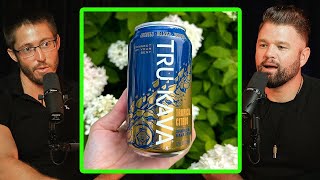
A conversational transcript from a YouTube interview (Josh Trent with Cameron) discussing kava as a therapeutic plant ally and a practical alternative to alcohol. Speakers describe kava’s effects—promoting focus, relaxation, and inspiration—its role as an approachable pharmacological pattern-interrupt that can help people move out of trauma/fight-or-flight responses, and contrast it with alcohol and heavier psychedelics. The conversation includes personal experience with addiction, reflections on potential lost to substance vices, and an emphasis on kava as a tool to support psychological clarity and recovery.
Chapters
Something like kava is such a tremendous relationship you can form with the plant and ally because it comes in and offers immediate support and immediate comfort to bring you into a state to which you can clear up some of that noise and actually be able to approach and formulate a strategy to soundly address whatever problem that you're addressing. That's how it was for me. Right. Meaning it's like, it's so easy when we're in any kind of degenerative or isolated state. Right? Right. Struggling physically with disease emotionally because of whatever breakups, this and that, or just living on planet Earth, you know, in the world we live in, et cetera, or psychologically. It's so easy to get paralyzed by the stress and trauma and anxiety of it all, where we end up out of our higher selves. We were talking about in that sort of big picture thinking that we get into through meditation practices, good people, support systems, all that kind of stuff. It's so easy to get into that reactionary fight or flight, isolated. Just try to survive. Who cares about all this spiritual shit, you know, like, look, I gotta pay my bills. And we've all been there. My. My spouse is dying from cancer, or I've got. You know, and it's like. And it's one of those things, whenever you start to hear all these deep strategies, people are just so paralyzed by, like, how do I even begin to start doing that? So what I noticed about a medicine like this was that we could give it to any patient, that it would actually help them feel better and get more into that expanded state to where they can actually start strateg energizing, and they feel it's inspired. You know, the three adjectives we use even on all the products are, you know, focused, relaxed, inspired. There's more that we could use, but it's basically, you know, because it helps to open the mind and focus the mind to clear. Also relaxes that sort of trauma response that keeps you in that paralyzing sort of fear like freeze or fight or flight or anything like that. And it opens up the mind to where you're kind of in this inspired state of mind. Right. Because you feel like more of yourself. And when you feel like more of yourself, you're inspired to. To express more of what's in you, you know, and to be. And to actualize your potential. Right. Which is the greatest ethical crime that anybody could commit against themselves is to not fulfill their potential as a human being and to be who they were meant to be. Fundamentally. Fuck yeah. You know, and. And Again, and you know, UCAVA as a tool and as a catalyst is a first sort of line of like when you look at therapeutics, it is, it is a pharmacological intervention of the mind. That's a pattern interrupt, which is so cool, right? Because it's something that almost anyone can tolerate where you are. Like again, like if, if you've never, if you're atrophied and you're in terrible shape and you're, and someone says you need to, you need to go, you need to, you know, get in shape or whatever, would it be smart to jump in the gym or you know, jump in a marathon the next day? You know. No, that's kind of what like just taking ayahuasca can be for some people. You. And it's like this medicine is such an approachable medicine that kind of gives people what they think they want out of alcohol. But alcohol is like the big, the kind of unkept promise. It's kind of like the, you know, it's sort of like it is kind of in many ways the opposite of what it's portrayed to be or what we believe that it is. Right? We believe that it's going to improve our sociability and improve our connection with others when really in many cases it does the opposite and it detracts from physical health across the board. There is no physical, you know, contribution that it makes to you. It only detracts, right? It's not a contribution.
And of course people right now are gonna be like, well, Cameron, what about like, you know, all these people that smoke cigarettes and drink soda and drink a beer a day and live to a hundred. It's like in any kind of path of evolution, there's always going to be outliers. So I don't believe in that shit where people say, oh, well, what about so and so? It's like, well yeah, what about like the literally 10 billion other people?
Well, but plus it's also that thing of like we talked about, you know, all these inspirational figures that had vices. What would their potential have been and what could they have reached as far as, well, roundedness in their life? You know, Alan Watts could have had, had his great wisdom and maybe what.
If he had 20 more years?
If he had 20 more years on Earth and he could have 50s, right?
50S, 60s.
Yeah. And maybe he could have had the best of both worlds of, through his desperation, gotten that sort of peak at the wisdom, but then also been able to get a level of existential happiness from long term good relationships. With his kids from being more balanced and not having the weakness and the vice and the. I don't pretend like I knew Alan Watts. I'm just saying it as, like a. As a thought.
I mean, I feel like I know him. I've listened to him in the shower for, like, 10 years.
Yeah. Yeah, me too. Right. So it's. It's. It's one of those things that when people say these kind of things, it's kind of like whenever people's. You know, you talk to people that still in 2023 are smoking cigarettes, which, you know. You know, to someone who's been down this road and is. Actually understands the. The magnitude and the impact of. It's just like. It's like, what? You know. Yeah. Why would you. Why would you ever do that? But I say that. But I fully understand, for all the reasons that we've talked about. White. It's not a judgment in any way.
Yeah.
Because I have done things. I've been immersed in addiction at different parts of my life, etc. Right. But I've also been on both sides of this thing, and trust me, I like this side a whole lot better.
That's so good. Okay, let me ask you this.
Check out some of the videos on this screen that are perfectly curated based on the video you just saw. Make sure you follow me, and I'll see you in the next video.