Khalil Rafati: How To Use Suffering For Growth
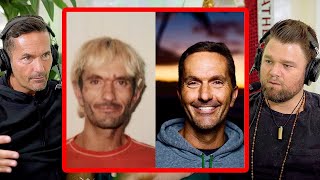
This is a transcript of a Josh Trent interview with Khalil Rafati about using suffering as a catalyst for spiritual and personal growth. Rafati describes pain as the touchstone for humility and transformation, recounting deep struggles: a painful father wound (his father said “good luck” as Rafati left), childhood parental neglect, homelessness, addiction, panic attacks, and agoraphobia. He credits ‘bottoming out’ with enabling breakthroughs, later reading The Alchemist, moving from Ohio to California with about $800, encountering notable figures (Slash, Axl Rose, Elizabeth Taylor, Shannon Hoon), and eventually rebuilding his life and business. The conversation also covers practical wellness and financial advice (daily meditation, hydration, supplements, organic food, saving/investing so money makes money), and reflections on divine energy and the role of suffering in growth.
Chapters
Do you find that there is always the need for deep, dark, painful contrast in order for people to grow? In other words, to the degree that you suffer, to the degree that you go through pain, to the degree that you experience the darkness of this world, does that always have to be the vacuum that. That grows God's love in your life and also the love you have for yourself and others?
So funny that you're asking me this, because me and. Is it Ebbs Britain, Eben Brittain, you know, the football player turned, like, Yogi.
Okay, him.
And I just had this conversation because he's trying to wrap his head around it. I can only speak for myself, and I can only say that in my life, pain truly is the touchstone of all spiritual growth. I cannot find the humility or the intelligence or the. Or the inspiration to have great breakthroughs. I just can't. I'm not wired like that. I don't have strong willpower. I'm not smart. I don't have, like, certain people just like. Like my girlfriend just. She's like. She gets up, she does her workout, she goes to work, she comes home, she cooks, she cleans, she's happy. Nothing bothers her. She comes over, she starts rubbing my shoulder like, what the is going on? I'm like, you don't have to do all that. And she's like, do what? I'm like, I struggle to get out of bed sometimes. I'm in a fucking fetal position, rocking back and forth, like, pondering the futility of our existence or the vastness of our existence, both which are very overwhelming if you really contemplate them. And for me, yeah, I gotta fucking fall down flat on my face. I've got to embarrass myself. I've got to fuck situations up in order to grow and in order to succeed and in order to have humility. Humility is not something that comes naturally to me. And I was a real asshole, like, I would say, the first three decades of my life. But when you become homeless and you lose everything and you. You concede to your innermost self that you made a complete fucking mess of your life, then you can't really have a whole lot of arrogance. And it still creeps in, you know, the arrogance, the hubris. It still creeps in. But bottoming out for me is absolutely paramount in order to have any type of breakthroughs.
I wish I could say that it's different, but literally, after almost 500 of these incredible conversations, I haven't found one story yet. And I'm open to that changing. I haven't found one story yet that didn't grow from the mud, really, that didn't have that vacuum as Alan Watts talks about. You know, nature abhors a vacuum, but vacuums from pain can bring life of love and pleasure as long as somebody's willing to go on the journey. Otherwise, they just disconnect from self. And then that's what we touched on, the beginning of this podcast. That's what addiction is. Disconnection from self and disconnection connection from you. So I wonder, because a lot of the concepts we're going to explore through your story, especially the father wound, this is a big one that we've had many people talk about. And I myself am still recovering from a father wound. Many men are, I think. I wonder if as we go through the waves of life, as you have gone through the waves of life, there is a certain point where everyone decides. There's an inner faculty of decision making where you just decide, all, all right, I'm not in control anymore. Some other energy is in control. How would you describe that energy?
Well, the energy is God. I mean, the energy is God or they or them or, you know, I don't know. I don't have a definition. I think the great cosmic joke is we may die and God may actually be a man with a beard.
I have no.
I have no fucking idea.
Chilling in the sky waiting for you.
I don't.
Come here, Pileo.
Yeah, I don't know. I mean, I. I tend to lean more towards God as a woman just because I'm. I'm obsessed with. With feminine energy and divine feminine energy. And it happens to be. The brand that was gifted to me came from divine feminine energy. So, yeah, it's. It's a. It's a loving energy that you have to consciously tap into and seek, and when you seek it, it seeks you. And I think most people stay in their shit and don't go anywhere and then get into whatever the opposite of an attitude of gratitude is. They just stay stuck. And I have people every day that DM me that, like, you know, I want this. I want to be successful. I want to be in great shape. I want to do this, I want to do that. You and I and probably half your listeners both know, like, okay, well, let's break this down. It's really not that difficult. You don't need to hire a coach, and you don't need to read any more books or buy any more books. In my case, you need to get up before the sun. You need to meditate every day, twice a day, for at least 20 minutes each time. You need to hydrate yourself and take proper supplementation like magnesium and vitamin D and zinc and all those things. You need to eat organic foods if you can afford them, and if you can't, keep working hard until you can put a lot of fruits and vegetables into your system. Be kind to everybody you meet because they're fighting a fierce battle just like you are. Work hard. Don't spend money you don't have. Save your money, invest your money. Get to the point where your money is making money for you. They never taught us that in grade.
School or middle school, right? No.
Get to the point where your money is making money for you. As we sit here right now, somebody's ordering that book. $7 is going into my account from Amazon. As we sit here right now, in three different states, in three different parts of this country, Someone is buying a Smoot smoothie right now, and I'll probably make a couple of pennies or a nickel or my company will anyway. I've actually never taken a K1 distribution from Sun Life, but that's a whole other story. But right now, I'm going to guess bitcoin is probably heading back up towards 44,000 or 45,000. So my money is making me money.
This intelligence that you're talking about, though, this financial intelligence, I used to think I've talked about this a couple times. Maybe you've heard this, maybe you haven't. I used to think that wellness was a quadrant. Physical, mental, emotional, spiritual. Wellness is a pentagon. Physical, mental, emotional, spiritual, financial. Yeah, but because we signed up to be here, Khalil, we're. We wanted to be here at this time, otherwise we wouldn't be here.
Right.
And so mastery of this time for self and for our families is mastery of finances as well.
Yeah.
And I think because of the money wound that so many of us have, that specifically, I think stems from either a mother or father wound and their money wound.
Or both.
Or both. Yeah.
In my case, the.
The layers of growth and the layers of both love and pain, dark and light, they propel us to have either intelligence and wisdom or to become victimized and to really let life happen to us. And this is the place where, as I talked about in the intro to this podcast, a lot of the concepts we're gonna explore are not for children. Right. So with love and with kindness, have your kids listen to another episode. This is not the one for the kids to listen to, because what I'm really talking about here is the beginning of journey. And the beginning of your journey, I felt from reading this book was when you were in the car finally leaving Ohio. You're in the car, and there have been multiple times where you were telling your friends, I'm going to leave. And they were like, no, you're not. And obviously, you guys read the book. It is one of the most. And I've read a lot of books as one of the most powerful stories.
Thank you.
And it's read by you. I recommend getting the audible version that I've ever experienced.
Thank you.
And when it came to me, I was like, I don't know if I was ready for it yet, because what I got from your book might be something different. And it really, for me, your story started with the father wound. Your story started with your father saying something to you that was really potent, and I want you to say it. But you were finally leaving, and you're in the car and you're about to go to California. I think you had, like, 400 bucks or something.
800.
800 bucks.
Yeah.
And you were like, I don't know what exactly I'm going to do, but I can't do this anymore. I won't be here anymore. What does your dad say to you in that moment where literally he could have never seen you again?
He said, good luck and walked away. And that was all the proof that I needed to know that he didn't love me and he didn't want me and he didn't care. And it was so dismissive, and it hurt so much. And I cried through three states as I drove, I drove and I drove and I drove, and I just kept crying and crying and crying. It's very, very challenging to really, truly come to terms with a parent that doesn't love you. In my case, it was both parents did not love me, and that doesn't make them bad people. And I love them dearly. And my father, who's still living, I wish all the best for him, and I've done everything I can to help him. It's never going to work. And at a certain point, I had to draw a boundary and just say, stop asking me for money and. And don't ever do that again. And his response was, I will never call you again. I'm like, wow, what I was looking for is, okay, son, sorry, I'll stop asking you for money, not I will never call you again. So, again, proof that our relationship was based on handouts from me, you know, and. And. And same thing with My. With. With my mom, like, I got to learn in a journey that I, I. My suspicions were correct that my mom really didn't love me. And. And that. And that hurt. It really, really hurt. What I also was able to find out is that she was suffering from Stockholm syndrome. She wasn't able to love me. It just wasn't. She didn't have the bandwidth, so, to go through that type of pain. And, you know, it wasn't just, like, I didn't make varsity football. It was, you know, I am a loser and a piece of. And I don't fit in anywhere, and so I'm gonna have to find a way to survive. And drugs and alcohol. Thank God for drugs and alcohol, because they were able to at least temporarily put, you know, some sort of a tourniquet on that. On that overwhelming and all encompassing fear and sadness and anxiety and, you know, I mean, you know, from the book. But the debilitating panic attacks that eventually became agoraphobic, the depression, the crushing depression, all of that stuff, had I not gone through it, I wouldn't be where I am today, and I wouldn't be doing what I'm doing today.
This is such the paradox that I was asking you about earlier. I'm like, if you didn't have the story you've had, would it have propelled you to create and serve in the capacity you do now? It's such a paradox. So mysterious, right? Because I think about this, Father. And then you went on to read the Alchemist. I think that might have even been when you were in Ohio. When did you first read the Alchemist?
So Alchemist was when I was working for Slash's Mechanic.
Okay.
And I read it in McDonald's.
Got it. So. So. And I love the Alchemist. It's one of my favorite books. And. And I was wondering at that time when you had finally moved out from Ohio to California, you got introduced to many people. Elizabeth Taylor, you started working for Slash. Axl rose, Lou Gossett Jr. It feels like God was bringing these people into your orbit.
Yeah.
But at the time, did you even understand what the hell was going on? Because it's a pretty crazy story that you would meet all of these superstars, some of the biggest names literally in the world. Axl Rose at that time was like creme de la creme. It's like, who was bigger than Axl Rose at that time? But you were meeting these people. Why do you think that happened for you, looking back? Like, what was that?
I don't. I really don't. Know, Josh, it was so strange. And it wasn't just meeting them. I mean, it was sort of working. Hanging out. I mean, as well. Yeah. I mean, not even. Even. Even though I was just like the car wash boy. It was like his housekeeper, you know, whatever she was. Governess, loved me and her boy loved me. And so they would invite me in all the time, and I would just be sitting there, and Axel would walk into the room. And one day, this guy Shannon walked into the room who I really hit it off with, who ended up being Shannon Hoon, who ended up being the singer for Blind Melon. And he and I ended up having this amazing. And Axel and I did not have an amazing relationship, but. But Slash and I did. He really took a liking to me. I. In fact, so much so that I really honestly thought that he thought I was somebody else.
You feel at that time that you were the boy from the Alchemist in some way? Because it's. It's really almost like an alchemist story.
I couldn't figure out what the. Was going on and what I was supposed to do and what all of it meant. And my biggest fear was that.
Check out some of the videos on this screen that are perfectly cur. Based on the video you just saw. Make sure you follow me, and I'll see you in the next video.
More from Josh






Your child's future start before pregnancy... and even before conception! #podcast

MD Reveals: Your Healing Creates Your Child's Reality (The Souls Coming In Need Strong Bodies)



