Life After Injury With Physiotherapist Caitlin Reid
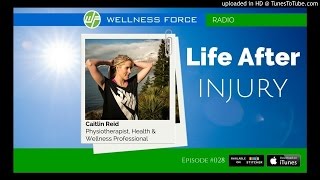
Podcast episode (Wellness Force Radio) in which host Josh Trent interviews physiotherapist Caitlin Reid (founder of Aprive Wellness) about her 2013 spinal injury (burst L1 vertebra after cliff jump), the acute hospital response, and her rehabilitation using Pilates, physiotherapy and progressive activity. The episode emphasizes emotional consequences of injury, the importance of community/support and clear communication with clinicians, and Reid’s shift toward accessible wellness offerings (retreats, online tools) to help others recover and build sustainable habits.
Chapters
Wellness force radio episode 28.
The medical community doesn't tell you what to do in that time that you're injured. You know, they say your bone will be fully healed in four months and then that's about all they say. Whereas there's so much you can do because otherwise you just feel so helpless and so frustrated.
Wellness Force Radio welcome back for another episode. I am your host Josh Trent and digital health coach. Thanks for sharing. Just a little slice of your day with me here on the podcast. If you're here for the first time, Wellness Force Radio is where I bring you the most inspiring and passionate experts in behavior change and wellness technology. These are the thought leaders. They dedicate their lives to empowering others with knowledge and tools that drive real transformation in our physical and emotional wellness. And this is one of my favorite parts of the entire show where I get to read an amazing review from itunes. This is by mg MG says loving this podcast. Awesome guest and great insights in the fitness industry and where it's headed. It's a podcast not just for fitness enthusiasts and professionals, but anyone wanting to take the leap and live fuller, happier and more productive lives. Josh's personal story of overcoming his challenges and fears is very inspirational. Keep up the great work providing us with invaluable information. MG you, are the man. Thank you for your amazing and heartfelt review. And if you guys haven't had a chance to hop on over to itunes, it takes just 60 seconds. You just push the show screen that's on your iOS phone right now. You'll see a word in purple that says leave a review. You push that, it'll take you right to wellnessforce.com review and you can leave an honest five star review right there on the show in 60 seconds or less. Now let's talk about the exciting guest today, Kaitlyn Reed. Caitlin Reed actually reached out to me from New Zealand and I had in the same week someone from Ireland reach out to me. It's exciting to see that Wellness Force Radio is scaling the oceans. Today on the show is the founder of a prive wellness as well as a qualified health professional with a background as a physiotherapist, personal trainer and Pilates instructor. Caitlin absolutely blew my mind today on the interview. You guys are going to love this. She talks about what it took for her to get through a serious back breaking injury to find essentially her holistic wellness journey with some amazing strategies and tips that we can all learn from. So without further waiting, let's bring on Caitlin. Caitlin, welcome to the show.
Thanks so much Josh, we're really excited.
To have you on. We are going to talk about some amazing things today. A prive wellness is your brand. And before we jump into coming back from an injury and mindset and physiotherapy and all these amazing topics today, I just want to ask you to tell the audience why a preve and what is a preve wellness.
Yeah, it's a bit of a strange word. It's a play on words from the French word for prive. So private wellness. I just added the A. It was easier to make it sort of marketable and copyright when it's a made up word. But my brand essentially is coming out from the experience that we'll talk about today and my background in health and fitness and physiotherapy and just trying to inspire people to live well and live happier, healthier lives without making them feel bad about doing the wrong things every so often.
It's interesting because I know everyone, everyone can relate to having some type of injury in their life. And today we're gonna dive into your injury, how that's impacted your life and your wellness practice and how you serve. But I'm curious if you could talk about just your early days, you know, what it was like before you had any kind of dance background, any kind of physiotherapy background. As I talked about in your bio before the show started, we know that you have a deep expertise in wellness and health. But what did it look like when you were a kid? Did you know that you would eventually be a performer and help?
I guess I didn't really know how it would evolve. I got into physiotherapy after having years of physiotherapy being a dancer, and I just found that the help that they gave me was so amazing and really helped me get back from injuries or maintain my strength and flexibility for competitions. And I really just love that interaction with my physio. And that's what really inspired me to then pursue physiotherapy and then really started this whole journey towards where I'm going and what we're doing now.
And tell the audience too, where you're calling from. I think they can obviously tell you're not from Southern California.
Absolutely. And I hope my accent's not too tricky to understand. I'm calling from New Zealand, but I'm Australian, so I have a bit of an interesting mix of an accent.
And it's really cool too, because obviously the podcast is reaching a global audience. When you reached out to me you mentioned that there was something we were missing and I really appreciated it. And it was people that are dealing with chronic back pain, people that are, that are having injuries, that are lost, that are feeling that pain of, oh my God, how do I get out of this well that I've fallen into. And you firsthand have a deep appreciation of the importance of health. Tell us what happened on boxing day in 2013.
Absolutely. So I do completely understand with injuries and how frustrating and lost and alone you can feel, because Boxing Day I was jumping off a high rock, I guess a cliff, you would say it's not super, super high. That I jumped off many times into water before really deep water, and I just landed badly. I didn't get my legs straight down in time and landed in a seated position and I compressed and burst one of the vertebrae in my back. So my L1. So your first lower back vertebrae. And when I landed in the water, I knew something was wrong. And because I was a physio already, I had that like, oh my God moment. There's a pain right in the middle my spine. So I just wiggled my feet and made sure I could feel everything, made sure I could move everything. And then I slowly. I was with my boyfriend and a group of friends and they slowly helped me doggy paddle over to the beach. And I was on my hands and knees and I thought, oh no. And I said to my friends, I think I've broken my back. Because I'd had patients who I treated who had done the exact same injury in the exact same way. So I guess I had a little bit of insight, which was lucky in a way because I just knew I had to get to the hospital. And we were down at this a bit of a remote place in New Zealand called Nelson and I had to get to the hospital and they said, you know, we can wait for a helicopter. And I said, look, I really just want to get out of here. And there was no other way to get out than climb back up the 12 meter cliff. So my boyfriend and his friends slowly helped me up and my legs were all bleeding and it was all very dramatic. I wasn't crying or anything. I was just trying to keep really calm because I'd broken bones and stuff before and I just really wanted to stay as calm as possible, which I think is something that can be really helpful when you've had an injury. Lots of deep breathing. And then I went to the hospital and had some emergency X rays and went from there and they found that I'd burst the vertebrae And I had a fragment just 10% away from my spinal cord. So I was very lucky.
So you're nauseous, you're on painkillers, you're spending weeks lying on your back. You have this huge brace on. But you knew how lucky you were. Tell us about that.
I did. I knew how incredible, incredibly lucky I was that I had had no permanent damage because it was just like a fracture, like breaking your wrist, and the bone would heal within eight weeks. But I just couldn't feel a little bit guilty. You know, I felt a bit guilty that I'd done something that was a bit risky and put my body in that situation. But at the same, I guess it's a balance between doing fun things and doing things that you push yourself and you enjoy and then also having an injury. But the painkillers I was on, like tramadol and codeine, I get really nauseous from. And I think a lot of people experience this. A real hard balance between being out of pain but also being nauseous. Because every time I was sick, the pain in my back, obviously would be quite severe. And it was just. Yeah, I was really down. And I think most people who experienced a serious injury really understand how horrible and just frustrating it is, especially when you have to lie on your back all day.
Yeah, absolutely. Now we look at the spectrum of injury, and besides just the physicality of an injury, there is a ton of emotional weight that comes with being hurt. If anyone is listening, that has a knee injury, a back injury, a hip injury, it can be debilitating not just to your body, but also to your mind. Talk about how your background really allowed you to catalyze healing. You know, we know that you've discovered Pilates over 15 years ago. You've taught and you've practiced physio and massage therapy and Pilates. Like, what. What did that do for you to recover within three months? How did you. How did you catalyze that?
This is where I've just. I've, you know, written about this story, because it's something I really want to share with everyone, is that no one tells you. The medical community doesn't tell you what to do in that time that you're injured. You know, they say your bone will be fully healed in four months, and then that's about all they say. Whereas there's so much you can do, because otherwise you just feel so helpless and so frustrated. As a Pilates instructor, I knew that my core supported my whole lumbar spine, my whole lower spine. So that the stronger I could make that, the better that my back would be and the stronger my vertebral column would be once I could come out of my brace. Because once I took my brace off, I was worried my spine would be like a noodle. So I wanted to make sure it was nice and strong. So I was able to do core exercises after a week, still in my back brace, just lying on my back, really basic Pilates. And then slowly progress that. And then as soon as I got my brace off, I was going to the gym. I was going to Pilates classes three times a week, just mat classes. I started doing gentle yoga and I was doing a lot of cardio strength because the strength in my lower legs had gotten really poor because the nerves that supply all those muscles come from the lumbar spine and that had had a real knock around. So I was so lucky to have that knowledge that I knew where to go and what to do. And I just want everyone to know there's so much you can do safely that just makes you feel less helpless and you feel like you're helping yourself get better. And I think that my knowledge of understanding the injury was really helpful too, because a broken back sounds so terrifying, but once you kind of think about it, it's just another broken bone. And if you know that you it's going to heal and the doctors have said it's going to heal, there's just so much you can do to make sure you have the best recovery. And I was back snowboarding within five months. And I'm just so grateful that I had great understanding and didn't develop chronic pain.
Now, for somebody that's listening that possibly has an injury right now and they're feeling depressed, they're feeling low, they don't have the background of 15 years in education and the different tools that you have, where do they begin, Caitlin? I mean, where does somebody go when they're injured and they're unjust sure as how to actually do what it is to get better?
I think it all starts with finding people to reach out to that can support you. Because I think support is the initial thing that you need before you can even start actively doing things. And if you can find a Pilates instructor that has experience in clinical Pilates, people who are injured or rehabilitating, or a good physical therapist who's rehabilitated, people with similar injuries to yours, like a knee specialist or spinal specialist, they can just help you understand exactly your injury so that you can understand you're not going to damage the tissues, if you start moving and movement is actually going to be the best thing for you, then from there, once you have someone to support you a little bit, if you don't have resources near you, like a Pilates class or anything, there's so many resources online. YouTube has some incredible videos you can do and they're free and you can access them and just start really gently and just making sure that you understand what movements you shouldn't be doing. Like for me, with my back, I wasn't able to flex, so I couldn't bend forward at all from the waist and I couldn't move my spine in a forward position. I could only just go gently back a few degrees. So as long as you know what you can and can't do, you're able to then move forward.
These tools that you're talking about, this community, let's be real, we're tribal beings. We cannot live this life on our own. And whether it's education, inspiration, tools to heal your body that's broken and we need a community. Right. I mean, talk about what that was for you. Like how did you establish the community that would help you heal when you're on that low point?
Absolutely. I think community is so, so important, especially for people who have things like depression and anxiety before an injury that do predispose you to a bit of a slower recovery. They've found in some of the evidence. And so if you are one of those people or even if you don't have anything that will make your recovery slightly slower, it's just about even finding forums or someone to speak to. And for me, I was in a really small town in New Zealand I wasn't from, and my boyfriend's family were there, but apart from that I didn't know anyone. And so I found a lot of solace from my neurosurgeon, actually, who luckily I didn't need surgery, but he consulted with me and because I was a physio, we chatted a lot. But he was really helpful at explaining things and explaining my X rays and then as well, I went to see a really good physio and so she was really helpful as well. And we chatted a lot and then again at the gym. So people in my Pilates class and just talking and conversing with them about what you're going through and even just having somewhere to go out of the house that's nearby that you can manage without too much pain, walking, like going to a Pilates class at a gym.
Can be really, really helpful from A vulnerable space. When you were lying on your back, you're on painkillers, what was going through your mind? I mean, what kind of mindset did have at that time? Were you afraid? Were you fearful? Like, what was the inner dialogue?
I think one of the things I did feel was definitely guilt for putting myself in a situation where I could have got so injured. And I was just so thankful that my injury turned out to be not as serious, not nearly as serious as it could have been. But also I just felt really helpless and frustrated because the painkillers management I found really hard with my nausea, and there's nothing I could really do. So I was lying on my back for 23 hours a day, and I could probably walk about 10 meters. I couldn't really go to the grocery store. I couldn't do anything. And I was lucky to be looked after with my boyfriend's family at the time. But it was really hard. You just feel so impotent. But at the same time, it also helped me realize a few things about my life. That life is so incredibly short, and you've really got to do what you want to do because it could change in an instant. So I moved in with my boyfriend, and I changed a few things about my life because it did really snap me awake and give me that realization. And I just hope other people don't have to have a serious injury to get that insight.
And this is something that comes up a lot with different guests. There's a point, a transition point in life, whether it's a family member dying, a serious injury, a car accident, whatever it might be, and in an instant, everything changes. The behavior of someone changes, their relationships to others change. What were some of the belief systems that you feel were keystones for you to get better? Because I think a lot of people that have been injured, maybe even once, twice, or multiple times, there can be this kind of cumulative effect of depression and of not wanting to move forward. So my question is, what did that look like for you?
I think that for me, the thing that has resonated the most, that someone told me years ago, my best friend in high school, actually I had knee surgery as a dancer when I was quite young. I was doing rehab with her in her pool. And she said, looking back, it'll seem like a tiny blip in your life this time that you're in pain and you're doing this rehabilitation. And it's so frustrating. And that's one thing I've always carried with me. And even with my back injury, that was Slower to rehabilitate and definitely slower for me to get back to doing things that I enjoyed. Just remembering that even though it's so hard at the time, it will be over and there is a time limit that you will improve and you'll look back and think, gosh, it was only three months. But at the time it just feels so overwhelming. So remembering that it won't go on forever and also remembering this is one thing that a lot of people forget is remembering your painkillers. I know mine made me feel nauseous, but I did find a balance with just some Tylenol and some anti inflammatory can find some painkillers that work for you. Don't be in pain because you feel like painkillers are bad or whatever. It's really crucial to your recovery to have that time out of pain because your brain really needs a rest and it can just really change from that emotional kind of sympathetic nervous system overload of just feeling so sick of everything. Painkillers can just really give you a bit of a rest.
So thank you for sharing that. This is a point where now you've recovered, you're serving other people, you're doing wellness retreats. Talk a little bit about what you do now with a prive and how you serve different communities on trips and with different retreats that you're into.
So I really, my experience from my back, but also my background just made me think, you know, there's super hardcore wellness people and then there's people who don't know anything about how they can live healthier, but they really want to. And so I wanted to bridge the gap and create accessible wellness that everyone can do that's about wellness and not weight. But you still get your weight management in there and you still have effective results. And because I'm a physio with a medical background, I really like effective solutions for wellness. So on my retreats I've got one coming up in November. I'm really excited and I'm collaborating with some experts. We're doing nutrition and yoga and Pilates, but we're having effective programs in that retreat so that people can go home and have some strategies that they can actually use in the future and that can actually help them live happier and healthier lives. We're having a mental health workshop as well. Because to me, mental health is extremely important for wellness. And I've seen the impact that mental health programs can have on my patients when they've been injured or they're struggling with weight loss or anything at all. And so yeah, I'm really trying to just make wellness theme rather than a romantic sort of lofty concept, just bring it down and make it accessible to everyone and inspiring and fun as well. So the retreat is going to be lots of fun. And I'm a guest retreat at a retreat in January in Australia, and I hope to expand out into Southeast Asia and try and just make wellness accessible and exciting for everyone with some really proven, effective strategies.
I want to go to Australia. That's on my bucket list. Can I come to one of your retreats?
Absolutely. That'd be wonderful.
What comes up for me when I hear you talk about the transition from the injury, the mindset, the recovery, then now look what you've created. Do you ever look back and think, wow, if I didn't get injured, maybe I wouldn't be doing what I'm doing now with retreats.
I do think that quite a bit, actually. And I think anyone who's had a serious injury or like that moment, that transition moment, I think you do think it was really pivotal to your life. And it was very important for me to realize what I thought was important and as I said, realize that life is so short. And so the changes that I made in my relationships and my work, getting into wellness retreats and all of that, I think it was really important for me to go through that. Even though it was pretty crappy and definitely not a fun experience, it was important for me and I am so thankful that I did go through it because now it's brought me to helping people in an accessible way rather than just physio in a medical way.
I liked what you said about the blip when you look back, even though the intense emotion of having an injury and the way that that affects us when we are injured and we can't move. But I love the way you put it when you said a blip, because when you look at life from a really high view, those injuries can become catalysts. And what I'm seeing that you did is you took this mindset of being a victor instead of a victim. You took the event and you said, yes, I am debilitated, yes, I am depressed, yes, I am sad, but I'm also going to catalyze some growth from this and I'm going to create this wellness retreat series where I'm helping people, you know, essentially across the globe. For somebody, though, that may not have the background that you had, where do you think they can go from an injury? For the average person that has, you know, a broken back, a broken knee, Whatever it might be, what do they have to look forward to?
Yeah, I understand the difficulty because I was so lucky with the knowledge. Even knowing as soon as I jumped, got in the water, you know, knowing that I had to check my feet and make sure I could move everything. Even that knowledge, you know, I'm just so thankful for because it helped me be less scared. And the thing that I've seen with patients when I was practicing physiotherapy is just the fear of not understanding. And so if you can, speak to your doctor or your health professional as much as possible, get them to explain every word in your X ray report. If you need, ask them any question that you can. Book a longer appointment so that you fully understand exactly what's going on with your injury. If there's soft tissue damage, ask them what that means, what actual muscles are damaged. Can you show me what that means? Because understanding is really the key to pain management and it's really the key to recovery because people with broken backs similar to mine with a great prognosis have then developed chronic pain because the anxiety of a back injury can just be so severe because it sounds so scary. So you can start with that understanding, ask your health professional and then go from there and look for active ways that you can help yourself recover. Try and go for walks. When you start being able to start going to a gym with a clinical physiotherapist who can help you rehabilitate in an active way, rather than just getting massages and reading things, you want to be active because that really helps you feel like you're making yourself improve, which is just so important for recovery.
I love the way you put that. I was on the blog last week and you wrote about your health, health being an asset. And it was interesting because you drew this parallel between the metaphor of a house and health. Something that you wrote was really, really profound to me. And you said knocking down crusty walls and replacing them with open space and modern design breathes new life and value into a property or a home. But the same goes for your health. Trying new superfoods, workout trends like bar experiencing evidence based wellness help freshen up and rejuvenate your health and well being. So adding this, Caitlin, this modern innovation, you're actually adding value to your health. What are some things that people can do as far as modern innovation to improve their health as they recover from an injury or just work their way towards better wellness?
I think the most exciting thing in the health and fitness and wellness world at the moment is the Integration of tech with wellness. And that's just so new and exciting and it can really help motivate people because I love going to the gym and working out and snowboarding and everything. But like anyone, I mean, there's days that you just don't want to do it. And so having something that makes you a bit accountable, like an app or something you know, will refresh your workout. You're not just going to do the same thing, even if it's your rehabilitation workout. You've had an ACL surgery repair and you need to do rehabilitation. You know, an app that you can have with new exercises every day or even that you record your exercises can be really inspiring and really help you stick to it because it's just not the same routine. And it's kind of neat as well, just using your phone as far as your workout, just because it brings the two worlds together and it's something different. I think the other thing as well is definitely, like I mentioned in the article, is trying new trends that are coming out because the wellness industry is just evolving so fast. Why not try Soul cycle? Like you've got a knee injury or a back injury, but you're allowed to cycle. And so why not try something that's kind of cool and high energy and a bit different and just do what you can manage. It's not about competing with others, it's just about competing with yourself and helping yourself improve. Or try chia seeds and make a chia pudding with some coconut milk or something. You know, it's just I find I get bored easily and so if I can try some of these things, it just makes it so much more interesting.
So if you have, if you're like me and it sounds like you and you have health ADD or you're constantly interested in the next thing coming out. What are some of the, the technologies that you found, whether it's a phone or a wearable or whatever it might be that you can share with the audience, a handful of things that have really helped you.
Sure. I think that there's a program called Yogaya. I think that's how you say it. It's an online subscription service, but you can do Pilates, yoga barre classes, all via your webcam with an instructor and get feedback from them. And that's really innovative and amazing. Their classes are wonderful. So that's been really good because I really like a balance between low impact exercise like Pilates and yoga, as well as running and stuff at the gym. I also like Fitbit. I think that's really quite a clever innovation. And I'd say any apps that help you with workout playlists, there's a few out there and they definitely help me with motivation because for me, I really need music if I'm going to do cardio. Definitely getting a good workout playlist. That's not always the same because otherwise you have to manage your playlist. So this is a good way to do it.
There's a really good one. Caitlin, Rock My Run. Have you heard of this?
I have, yeah.
That's a great one. And it actually changes with the output that you're putting on your run. If you're running faster, it'll increase or it'll decrease and increase the volume. So really intuitive to how you're working out.
Brilliant. And something that can actually interact with you. I mean, how cool is that?
Yeah, I totally agree. Well, thank you so much. I just want to thank you for being vulnerable, sharing the low points that you were in, talking about how to actually recover from that, with your background, with what you've been through and the people that you help around the world, knowing that your hands are in many different areas. What is wellness to you? What is your personal definition of wellness?
Oh, that's a tricky one to put into a sentence. I know.
I gotcha.
I think for me, my personal wellness is about living a happier, healthier life life. And so however you do that, but it's a happier, healthier life with balance. So however you do that, just not reprimanding yourself when you stray from your goals, just remembering to be kind to yourself, but also move forward. So it's just. It's all about balance, but it's all about happiness and health. It's not. Don't have the focus on weight loss, you know, don't have the focus on trying to eat less. I think. I think just understanding it's about happiness and health and if they're your goals, all those things like weight loss and everything will be a result.
I want to give people the option to reach out to you and a place where they can learn about you. Where can people go to experience what you're doing and learn more about your retreats?
Aprive wellness.com, so it's a P R I V e and then wellness.com so that's got lots of fun stuff about me and the upcoming retreat and I've also got social media links, so Instagram and Pinterest and Twitter and everything. And it's all the same aprbia wellness. So I'd love to connect with everyone and see what you're all up to as well.
I'll make sure to link everything in the show notes, Caitlin and something that I read on your site that I love is wellness doesn't have to be a romantic concept. And if you want to learn more about Caitlin, go check out her site at Aprive Wellness. We'll make sure to link her, email her social everything for you guys to check out. Caitlin Reed, thank you so much for coming on the show today today.
Thank you so much, Josh for having me and you. Have a nice night and I'm just going to start my day.
I loved that talk with Caitlyn. She had the best attitude for someone that has broken their back, didn't she? I mean, I've broken like my pinky toe and my rib but nothing even close to that. So anyone that's listening if this resonated with you, please reach out to me. Josh wellnessforce.com if you're still listening, I always save some little treats and in information at the end that can be extra valuable. So if you're listening and you're looking at losing 10 pounds, 20 pounds, whatever it might be, and you feel like there's something holding you back, well, I might have a program for you. I have one more week left with one scholarship spot in our digital health coaching beta group where you can get a paid spot. This is essentially an eight week program with webinars, tools and resources. I have a dedicated app where I can coach you through the app as well as join our community to hold you more accountable in achieving your goals. If this sounds like something that might be a good fit for you, please reach out to me. It's joshellnessforce.com and we'll have a quick chat and see if you're the scholarship winner and the person that I choose that can really get value from our group. Everything that you'll learn throughout the group will help you to be your best self in 2016. Now you get to go and use all the information, knowledge and tools that you learned from Kaitlyn as well as all our other guests here on Wellness Force Radio. And until I see you again, I'm wishing you love and wellness.
More from Josh






Your child's future start before pregnancy... and even before conception! #podcast

MD Reveals: Your Healing Creates Your Child's Reality (The Souls Coming In Need Strong Bodies)



