Master Coach: I Freed Myself From Depression Naturally! (Without Antidepressants)
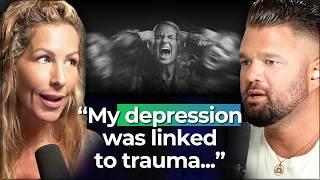
Transcript of a podcast interview (host Josh Trent) with Pixie Sia, a spiritual wellness coach who describes overcoming long-term depression via nutraceuticals (liposomal vitamins), breathwork, somatic healing, and community. Pixie recounts being placed on antidepressants at 14, later switching to liposomal nutraceuticals (reporting rapid improvements within weeks), and using breathwork, somatic practices, plant medicines and retreats to process childhood sexual trauma and reclaim her body. She advocates whole-body approaches (mind, body, spirit), runs multi-day retreats and a three-month Daily Dose Journal to build healthy routines.
Chapters
If you suffer from depression, you need nutraceuticals. I suffered from depression for a really long time and was put on antidepressants at 14. Fifteen years later, I started taking nutraceuticals and within weeks noticed a difference.
Pixie Asia is a spiritual wellness coach, motivational speaker, and fitness instructor. How do we essentially make nutraceuticals the new pill?
When you take an antidepressant, it's not affecting your gut. It's not affecting the serotonin in your gut. When you're taking nutraceuticals, you're affecting the brain and the gut with liposomal vitamins. Specifically, you actually absorb the nutrients. When you take a pill, you only get maybe 20 to 30%, but when you take liposomal, you get 80 to 90%. So you see and feel the difference. What is repressed will eventually get expressed as depression or disease. This man that had sexually abused me for so long is largely how I came into depression.
How have you turned your wound into wisdom? What is the real truth about nutraceuticals for depression?
I mean, I think what people don't know is that if you suffer from depression, you need nutraceuticals. You need to supplement. And in my personal experience, you know, I suffered from depression for a really long time and was put on antidepressants at 14. And, you know, about 15 years later, I decided to try a more holistic approach and I started taking nutraceuticals, specifically liposomal, specifically live on labs, and within weeks noticed a difference and made them a huge part of my routine. And ever since then, I've been an advocate for them. I think that everybody, whether you're on antidepressants or not, can see huge reward and benefits in taking nutraceuticals.
What exactly are nutraceuticals? I've heard a lot about these. What are they really at their core?
So nutraceuticals are functional foods in vitamin form, and so they're meant to be as good, if not better than pharmaceuticals.
I think about the pill for every ill. You know, there was that Netflix documentary about the pill mills and the OxyContin and just the insanity that happened there. And then I think about how we can make, you know, vegetables and fruit and healthy organic foods sexy and fun. That's really hard to do. How do we essentially make nutraceuticals the new pill? This is a really interesting topic for me personally. Like, how does that work out in your life where when somebody is healing depression, when they're overcoming depression, which is Essentially, I think depression is just rumination on the past, or the opposite of expression is depression. The nutrients from the nutraceuticals that are in food are many times far better than what's in a pill.
Yeah, I agree. And I think that with liposomal vitamins specifically, you actually absorb the nutrients, right? They make it into your system, they make it into your cells. When you take a pill, you only get maybe 20 to 30. But when you take liposomal, you get 80 to 90%. So you see and feel the difference, which is the goal.
The mood stabilization part's really interesting. How did that play out for you? You know, I think you said there was the two weeks that you really started to notice it. After two weeks. What do you notice when you're in the throes of depression, when you take the liposomals? Is it a mood lift? Is it. Is it more of a body openness? What exactly does that feel like or look like?
Well, it's a clarity. I think it's a clarity. And for me personally, when being on antidepressants, it felt like I didn't get to really feel my emotions. There was kind of like a numbness. And once I was off of the antidepressants and using the nutraceuticals religiously, I was able to feel my emotions but not live there. Right. So if I felt sadness, I wasn't stuck in the sadness. There was a clarity that would come through the fogginess, the cloudy days. There was a light at the end of the tunnel. And I think that the nutraceuticals are so important because, you know, they help not just build the foundational blocks in the brain, but also in the gut. And so you're attacking it at all levels, you know, and when you take an antidepressant, it's not affecting your gut. It's not affecting the serotonin in your gut. Right. When you're taking nutraceuticals, you're affecting the brain and the gut.
One of the things I think is really interesting about the liposomal. See, it's on the screen right now, y'.
All.
This is the brand that I swear by. You've been taking this for how long? How many years, Pixie?
12? 14. 14.
So for 14 years you've been taking this brand. I just love it because I remember when I was in my late 20s, that it was like the up and coming thing in the wellness space, because it was the first time that liposomal, that this nanotechnology was really coming on scene. But the taste for me was like so overwhelming. I'm like, wow, if it tastes that strong, it has to be good for me. Did you ever have that thought?
Absolutely, yeah. It shouldn't taste delicious, that's for sure. But when you take it with the water, you don't taste anything.
That's true. I'm old school though. I just like bite the pack and stick it in. In the scientific research, what I loved is that it actually helps vitamin C, liposomal in the conversion of dopamine to norepinephrine. But I know that there's like neuroprotective aspects. I'm not a scientist, neither are you. But I love the scientific research. I'm interested in how I feel. Like that's the biggest report card for me. What else should we know? What else do we get to know about liposomals when it comes to the brain or the body?
Yeah, I mean it's a mood stabilizer, it's neuroprotection. I feel like it's just the foundational building blocks of mental health in the brain.
And you had said earlier that people who don't even suffer from any kind of mental issue, whether it be anxiety or depression, need these building blocks. How so? How so? For somebody, let's say, who is struggling with depression, is it so important to take care foundationally of the body first?
Depression starts in the brain. Depression is an imbalance in the brain and also an effect of trauma that has been experienced, which is largely how I came into depression. But I mean, I think what's really important is that you, you can't out exercise or out meditate or out pray or you know, go to therapy and do all of these things if the building blocks aren't there, if the internal wellness isn't also happening. So you have to hit it from all areas. You know, it's, it has to be literally whole body wellness, mind, body, spirit, all of it. And so liposomals and nutraceuticals are the body part. It's essential to the healing. It's essential to giving the brain the support that it needs to not be depressed.
Especially the B12 and the B complex too. It's funny, you're so healthy now, but it wasn't that way forever. You used to be a vegan. Did that almost ruin your health?
I kind of giggle when I look back at my vegan journey because what I thought was going to be very healthy and what started out as a very healthy journey ended up being the opposite. And there was a big learning there for me. You Know, at first, all of a sudden, every single ingredient list, I was hyper aware of. And that was beautiful. I was way more in tuned and aware of what I was eating, what I was putting in my body. And this is something that I'd never had before, right? Because as you grow up, you're just like eating. You eat what your family eats, you eat what happens at functions, at weddings, at parties. You just eat to eat. And as a vegan, all of a sudden, every time you sit down, it's, well, what's in there? Well, well, what's in that? Well, can I read the ingredients? And so you're educating yourself on what you're actually eating, which is beautiful. And it becomes this kind of cleanse, really. And it made it more fun. Cause now I was trying new things on the menu. And, you know, then it was this big conversation piece too. Like, what do you mean you're not eating meat? Well, what do you mean you're not eating animal product? And I had, you know, gotten so attached and committed to the ideology of being vegan that, that I had made this, you know, these big statements on my social media. And I was doing it for compassion for the animals, and I was doing it for the health of the planet. And I was doing it for what I thought was for my own physical health. But actually what happened was the opposite. And in that time in my life, I was very big in the fitness industry and I was teaching at Soul Cycle 16, sometimes more classes, a week of extremely high intensity, so cycling classes. And my body was begging me for more nutrients. And my body was starting to break down and I was getting injuries and I was always tired and I was swollen and I was hungry beyond belief. And rather than checking in on like, what am I feeding myself, I would just eat more of what I was already eating. And I started to detach from how my body was feeling because I was so committed to the Persona that I had created, that I was vegan and that I cared about the animals. And if I ate this animal product, then I didn't care anymore and I would be a bad person. And all of the people that I was helping also along this vegan path, I would let them down. And so I actually detached from my body's own queuing, detached from. I started to do this for health and was doing it to keep up this Persona. Eventually, my thyroid shut down. I had to get on thyroid medication, and I was always tired. I was getting sick. And then one day I literally sat in front of a plate of chicken skin. That had been barbecued. And I watched my own hand reach across the table and grab the chicken skin and just put it in my mouth. No thought, just like, this is going in my body. And it was the most delicious thing I had ever eaten. And my body was literally saying thank you. Like, thank you. And then I went into just being a carnivore. I wanted medium rare, if not rare steaks, no burgers because it has been over processed. No chicken breast. I needed chicken on a bone. And I became this wild, carnivorous person. And my body felt incredible. And I will say, though, that after that, my knowledge on what I was eating at the table and the ingredients of things that I was eating, then adding animal protein, then I felt better than I've ever felt. So I think that it didn't ruin me completely, but it did teach me a lot. There was a huge learning there. And now I think that my diet is the best that it's ever been.
I know there is a diet for everyone. And, you know, on this podcast, I'm not here to tell y' all how to eat or what you should do with your life. We just bring on experts like yourself, Pixie, a master coach that's worked with enough people and had enough experience with herself to learn what doesn't sit well or feel well in your body. I do find it fascinating, though. And on the screen right now, there's a visual of this. There was a recent study about a mother that was vegan, and her placenta was like. It had hardly any blood flow. It was very almost pale or opaque in color. And then right next to it was the placenta of someone who really ate animal foods and someone that ate raw dairy and things like this. It was alive. It had a red color. The difference was very stark. So I just wonder the amount of people that are eating food because they have, like a dogma, or like you said, you didn't want to let your people down, which is beautiful because it's coming from compassion. You know, you're wanting to be a fitness model. You're wanting to be a model of health, actually, for these clients and these people. But you got to this place where enough was enough, and you had to let go of the dogma, essentially caring what other people would think. Do you find that caring what other people will think, whether it's the way you eat or the way that you act or the clothes that you wear, part and parcel could be the cause of a lot of people's depression.
100% wanting to be accepted and wanting to be loved and a part of something is, I think, a huge driving factor for why people care about what people think about them. I mean, I think it's human. It's human nature. We are hardwired for connection. And so if we view that making a choice or living our life a certain way is going to disconnect us, then we're going to do everything in our power to stay connected. And unfortunately, that might mean sacrificing our truth and ourselves and also finding ourselves, people pleasing and not creating boundaries.
The boundaries are a big one. It's probably another piece. If I looked at, in my opinion. I'm curious what yours is. If I looked at the cause of depression, yes, for some people, there's a proclivity because they have it in their genetic code. But I believe, epigenetically, that all of that can be healed.
I'm so with you on that.
Right?
Yes.
Then there's the dietary component. Right. If we're getting the right nutrients, if we're filling the building blocks, then there's the people that we hang out with and the activities that we do. And I find that if you're really paying attention to those four areas, and I probably missed a few, but if you at least fill those, you're less likely to experience a lack of expression, which is essentially depression. You yourself, the trauma that you experienced when you were growing up, it. It took something from you. But now you're in a place where you can actually teach. So what did your trauma take from you? And. And what did it teach you? The reason I'm asking is because I know that that was a source of your own depression.
You know, my. My trauma was a gift, and I can say that now. But before I could say that, my trauma took my. My innocence. It took my childhood, it took. It took my ability to connect with my body. It took my ability to create boundaries. And I wore my trauma for a really long time, like this heavy cross. I didn't know how to carry it. And so. But it wasn't something that I could put down. Right. It was a part of my story, but I didn't know how to carry my trauma. And I wore it as this heavy cross to bear. And I. I was carrying a lot of shame, and I was carrying a lot of guilt and a lot of sexual shame. And I was. You know, I covered my body in tattoos, and in the moment, I didn't realize that that was kind of a trauma response. But as I. As I went through my healing journey, I realized that my tattoos were a way of protecting myself and reclaiming my body. But after, you know, doing lots of healing work and really dedicating my life to becoming a victor and not a victim of my trauma, I learned that my trauma is actually one of my greatest gifts. And now I'm able to take my clients through the darkest parts of their lives or help them see why or how they can get through the darkest parts of their lives, you know, and it really was a gift, my trauma, and it's become my offerings, you know, helping people find forgiveness for the depths of the wrongdoings that have happened to them and their trauma. And also helping people reclaim their body and reclaim their orgasm and come back to having a relationship with their body where they're not riddled in shame and guilt because of what they've been through. And I realize that, you know, it's so important, once you've healed your. Your trauma, that it's important to. In safe and sacred spaces, to share your experience. Because that witnessing of somebody else witnessing you allows them to know and feel that, A, they're not alone, that B, they're going to survive it, and that there's light at the end of the tunnel, you know, and we don't go through our trauma. I believe that we don't go through our trauma in vain. You know, it's so that we can take our wounds and make them wisdom and really shine a light of healing through our story into somebody else's right, because we're not in it alone.
How have you turned your wound into wisdom? How'd you do that?
It's a long process, and it's a beautiful process. And it's sometimes a hard, dirty, shadowy process, but it's absolutely worth it. And I think that my biggest wound, if I was to just kind of paraphrase my biggest wound, was my body being taken from me and used for other people's pleasure and me having to physically detach from my body in order to endure the experiences that were happening as a child. And the wisdom now is coming back to my body and finding forgiveness and reclaiming my body and my nervous system and my sexual energy and my sensual energy and really embodying deep forgiveness. You know, that's a tool that we are always going to need in our tool belt. People are always going to wrong us. People are always going to let us down. And forgiveness is a huge muscle that we have to practice every day. And so I think that the biggest wisdoms or learnings that I have really, like, gleaned or yoked from my trauma is forgiveness and embodiment and sharing your story in sacred safe spaces.
The forgiveness is such a gift that, and I'm paraphrasing Tony Robbins and Oprah and Stephen Covey and all these people that have talked about forgiveness, including yourself. Forgiveness is a gift that we give to ourselves. It's not that we even need the other person to be alive many times or to even speak to us. You know, the. The man that wronged you, that transgressed against you, I'm guessing that he himself either was transgressed upon sexually or he went through something that made him hurt, which then hurt people, hurt people. Is that how it played out?
I don't know enough about his story. I. I did find forgiveness by embracing that, yes. Hurt people, hurt people. And also hurt people, heal people, right? Because it just depends on what part of the journey you're on. I was a hurt person, but I didn't hurt somebody. I am in fact doing the opposite and helping heal people. But part of the way that I logically accepted what happened to me is with the hurt people, hurt people. But beyond that, it's, God didn't have me go through this experience in vain. I don't believe that. I don't believe that this was just, ah, this is going to be your life experience. I also believe in soul contracts. And so I believe that I chose the journey and the lessons that I wanted to learn so that I could be a beacon of love and light and show up in the world that with God's love, you know, And I think that. I think that it was all a part of the plan and that it's greater than just the story of my experience. It's how I then get to transmute that energy and help. I mean, I know for fact just from a child, from coming out, speaking about it to my clients, to my retreats, to my offerings and finding breathwork that I have helped so many people move through their traumatic experiences because of mine. And so that makes it worth it. And I've had people ask me, you know, like, man, would you take it back? Like, if you could go back, would you get rid of it? And the answer is no. I would be a completely different person. I would have touched a fraction of the people that I have. And the answer is no. I know that this is part of my mission and part of my purpose, and I'm here for the assignment, you know, but forgiveness is really the biggest muscle and learning and takeaway from it.
There's so much there. The forgiveness is this Key that unlocks a door to the other. I guess you could say higher frequency emotions. Love and joy and acceptance. It's the Hawkins scale that is on the screen right now. I've talked about this many times, but it's so pivotal because you just described from your own life experience the frequency scale of emotions, with shame being the lowest and then authenticity and love being the highest. The key is hard, though, because in order for us to find the key of forgiveness that unlocks the door to the other emotions, there has to be an acceptance and the courage to accept what has happened. When I heard you say that you chose this and that you believe in contracts, I'm the same. But I also recognize that intellectually, it's a story I tell myself because that's what makes my body feel complete, feel whole, and feel good. If I just allowed my mind to take me on a journey disconnected from my body, I think they'd both drive each other crazy, which is probably why we're experiencing so much depression that's raising in America, is because there's no integration of mind and body. The mind body integration that you've gotten from breathwork is profound. I saw some clips of you speaking about it. I know you traveled across the world. What exactly did your body do from breath work? And how has your body developed itself to be able to have a true intelligence? In other words, what does your body do now that it couldn't do before breath work?
Well, I think that my body was always trying to speak to me and I wasn't able to hear it. And because I was so detached from it and it makes sense, I had to detach from my body in order to endure the things that I was going through. Breath work has re sensitized me to my body and physically, first of all, better orgasms. Before breath work, I would have a very hard time with partners having full body beautiful orgasms. And a lot of times, once I would achieve them, they would come with a flashback. And after breathwork, I was able to access parts of my body that I wasn't before. And I was able to have orgasms without the flashbacks of childhood coming in. So I really believe that breathwork resensitized me also. Breathwork accessed a different portal of divine guidance for me, a different kind of language within my cells. And when I do breath work, I'm able to just hear more clearly and tap into the knowledge of my cells and literally have downloads and memories and insight and spiritual gu and counsel from ancestors and animals and angels. And the breathwork just really opens you up beyond this dimension, you know? But I think if I was to summarize it, breathwork has re sensitized me to my body and given me direct access to intelligence that isn't just here when I'm sitting here talking. You know, it's like the deepest prayer, the deepest meditation, and lots of reframing. Lots of reframing.
When you say reframing, I love that because whether it's NLP or whether it's like we were talking about earlier, essentially everything's a story, right? And how does that story make me feel? I don't care if this sounds reductionistic, because it actually is true for me. I'm 45, and for the majority of my life, I was just believing all these stories that made me feel horrible. Like, absolutely horrible. They weren't happening for me. They were happening to me. So how have you used the art of breath? It's really an art and a science, right? Breathwork. I mean, 2016, I got introduced to breathwork. My life has never been the same. And how did the reframing concept come through for you? And what has breathwork taught you about reframing specifically?
I think it. It's almost like similar to psychedelics, where you might have a story in your mind that you've been thinking and talking and doing for so long, and then you have a breathwork session, and you go into this deep state, and you just have this new epiphany or idea or reframe of the situation. You just literally shift your perspective. It's like something that makes so much sense that you knew the whole time, but you didn't see it or metabolize it. And all of a sudden, it's just like this bloop, bloop. This download, you know, for example, I thought that I had changed my name consciously because it was, like, fun. I had this friend that cut my hair and my hair fell off or bleached my hair and my hair fell off. And it was really short for my senior picture. And I was devastated because I had to have my senior picture with this, like, a little, tiny, short blonde hair. So it was like a joke. He was like, you look like a pixie. And okay, that could have just been a thing. I attached and identified with that name and was like, that's it. That's my name. My name is pixie. And I thought, like, oh, it was just a fun thing. And in a breathwork session, I had a big download, and I asked, why did I change my name? And the download was Because Amber was too afraid and unsafe in the world. And so Pixi came in. And I remember when I got that download, I was like, what? What are you talking about? But I knew it was the truth, I didn't question it. And what's wild is that I did a three day trauma workshop and there were three other people there, so there's four of us total. And all of us had really similar sexual and physical abuse from our father, parental figures. And it wasn't until the end of the sessions that we decided to exchange Instagrams and phone numbers and. And we realized all of us had changed our name and it just solidified that other download. Yeah, I also had a download. Another example when I was processing this man that had, you know, sexually abused me for so long, I had a download and breathwork of which was part of my forgiveness. Why are you so focused on this one man and this one story when there are hundreds, thousands of incredible, amazing men that you have encountered in your life? So many amazing platonic friendships, teachers, coaches, relatives, strangers on the street. Like there are so many amazing men, safe, beautiful, incredible men in your life. Why are you focused on this one story, this one thing? And it was like, it was electrifying, this lightness, this levity that was just like this breath of like, oh yeah, why am I focused on that? Why am I not focused on all of these amazing, healthy, kind, generous, safe men in my life? And that helped also with some of that forgiveness. So the breathwork has really given me so much.
Wow. It's a different language. It's this somatic intelligence. First of all, thank you for sharing because if I had to guess, I would say that the far majority of people that suffer from depression are suffering because at some point their physical voice or their physical body was cut off from speaking. And that depression, which is really a lack of expression that I've come to know through ifs and through my own breath work, there is so much wisdom that the body doesn't have words for. I think you've even said in the past, when we've been chatting before that the body doesn't speak French, the body doesn't speak English, the body speaks safety. Can you go into that?
Yeah. I mean, your nervous system is always telling you your nervous system is looking for familiar situations to identify whether it's safe or not. And when we are used to stuffing it, when we're used to repressing it, we aren't attuned or listening to the body to know that we're safe or we're not safe. And then we'll end up finding ourselves in similar situations again. You know, I. I actually attracted the same kind of partner over and over again. And it wasn't until, you know, going through my healing journey that I realized, whoa, I'm the common denominator in that. Why am I the common denominator in that? Why do I keep attracting this person that wants to keep me secret or doesn't want to claim me? And I realized, oh, the first way that I experienced love as a little girl from my parental figure was in a dark, secret, shameful back room. And so I attracted that over and over again. And I think it was just the nervous system trying to right what was wrong.
The big piece that I got from that, that I've heard this from many people that have been through a similar yet uniquely different journey than yours is that. And Carl Jung even said it best. You know, our children are tasked with the unfinished business of their parents. And so it's somewhere in the line, this man and the millions of men that transgress on women, and occasionally women transgress on men. I don't think it's specifically gender, although it is predominantly men that are doing that just because of the physicality. The unfinished business is really the societal unfinished business. If you look at the way that women's bodies are objectified in the fitness industry, for sure, but definitely on Instagram, all on magazines. And it's getting even worse now with TikTok. I feel like the real antidote to all this and the answer to all of this sexual objectification of women, which really tacitly approves whether it's conscious or unconscious. The way that men treat women is actually for us to have a conversation that's real like this, where we just talk about what's really happening instead of pretending that it's not going on. It's almost like we need to throw up. We need to go through a nationwide ayahuasca ceremony and puke out the reality of what's happening. Do you feel like the chasing of the dopamine, maybe big wave surfers or people that chase, quote, quote, dopamine is really just a trauma response. Do you find that, you know, because you operate in LA and in the fitness space, and I was there too for a while. I felt it in my own self. I was running from a lot of my own demons. Do you see that as a way for people to really just ignore their own trauma response when they just chase highs and chase dopamine all the time?
I'm sure the answer to that is yes for many, many, many people. It's unfortunate. It's unfortunate that we are outsourcing so much of our joy and getting our dopamine hits from things that in the long run aren't healthy. Right. When we can access those things on our own and we can access those things in a healthier, cleaner, karmically more divine and clean way. You know, and it's simple. I mean, that's, it's, it's really essentially why I created the Daily Dose Journal. You know, in, in Covid, we went into lockdown and we had to be really careful because immediately the regular everyday routine was taken away. And so now it's like, how are people getting their fix? How are people getting their highs? How are people chasing the dopamine? And very quickly I created an online platform and was taking hundreds of people through monthly challenges to keep us all accountable. And part of that was working out three days a week and doing breath work and having ceremonies and meeting in community throughout the month. But then I created the Daily Dose Journal, which helped people figure out what routines were healthy and could help them achieve dopamine and oxytocin and serotonin and get their endorphins in a healthy way. Right? So we wouldn't put on the list like watch porn for a dopamine hit or, you know, post a third trap for a dopamine hit. It would be, you know, whatever they needed and they could fit in their morning routine that was realistic, whether that was going for a walk outside or working out or meditating or not looking at their phone or not doom scrolling or eating healthy foods or snuggling their animal or calling a friend and having a loving, deep conversation. So I think that yes, a trauma response can be avoiding and chasing a high for a lot of people. And also we can be so empowered by the choices that we make and create our own healthy way of achieving the dopamine, the serotonin, the oxygen and endorphins in the brain and the body.
I love that it's this iterative process. So the journal was built like a choose your own adventure. It's just a fun way to explore what works for your neurochemistry, what works for you. Because, you know, for some, for one person, taking a walk might make them feel like they're a movie star. I mean, they might be like, oh my God, I love my life. It's just by taking a walk, right? And then for some people, they would need a little bit more. But it depends on like their neurodivergence and the way that their brain is built. How exactly does the journal work? And did this come through in a breathwork? Was this a download in a breathwork or was this like requested by your clients?
No, actually it wasn't a download in breathwork, but it was just kind of an observation. Like, I noticed that, you know, part of it was like, okay, we're going to create these morning routines and evening routines. And it would be like, what do you think would work for you? And some people be like, I don't know, I mean, on Instagram, if I. It says if I do this or red light therapy or ice face cold plunge or five minute cold shower or whatever, Whatever. And so then there was no book out there that just kind of simplified it that was like, try this for a week. And also journal throughout the week. And then at the end of the week, there's a weekly recap, see how you feel. If you noticed improvement, stick with those routines. If you don't notice those improvements, then change your routine. And you know the journal is three months because I know on the Internet it says it's 21 days to make a habit, but actually it's 62 days to make a habit. So it's a three month journal so that you actually really do create that habit if it feels good to you. But it's also kind of low commitment because you're doing it a week at a time. So it really gives you the opportunity to see what works for you and what you need and then to change it up as you desire.
I love this. I think about animals in nature. Have you ever seen clips on National Geographic where a cheetah will chase, you know, a deer and the deer will survive and the deer will shake. And Peter Levine talks about this in Waking the Tiger. And we all know this when we oscillate, when we dance, when we use the didgeridoo, we're actually off gassing the somatic trauma response with the cells that live in the body. There's some actually really cool research that I'd love to point out. We're going to link in the show notes today. It's from a guy named Michael Edward Johnson, and he has this theory called the latch theory, where we know from Bessel van der Kolk that he writes the body keeps the score, but there hasn't been a way to quantify it yet. Well, Michael Edward Johnson has this theory of vasocomputation where between the smooth muscle and the fascial system. He actually knows that through specific palpitations that you can release these latches, which I think is utterly fascinating. It's finally a way that we can quantify that the body actually does keep the score. And it's trackable, it's measurable. The reason I'm bringing that up is because I think about how many people just need to go dance, need to go play, need to go laugh, that is so powerful for their depression, yet there's a block inside of them. There's a story inside of them that says, I'll look stupid. Who am I to go dance? I don't feel like reaching out to a friend, whatever it is. How did you specifically move through that block when you were at the lowest point in your depression?
That's an interesting question, because I definitely had so much sexual shame in my body that it was really hard for me to dance and move freely. And I was told my whole life. And I've later learned that it's my Scorpio Rising but. And my Black Lilith. But I've learned, I was told my whole life, you have so much sexual energy, you could bottle it up and sell it. Oh, you, you're so sexual. Oh, you must be a freak in bed. You're totally sexual. And, and those statements couldn't be further from the truth. And they just added to the layers of shame that I was carrying for my own sexual abuse. And so it was really hard for me to be fully embodied and fully dance and fully, you know, allow myself to feel embodied and sexy and sensual without feeling like I was trying to put that energy outward for other people to see in other people, to take from me. Because that's what I learned. They're going to take it from me. They're going to, they're going to use it and take it from me if they see it. So hide it. Or, or by acting, by being fully embodied and sexual. You asked for this. You know, I think that doing breath work and somatics and plant medicine and psilocybin and things like that really reconnected me with my body. And I was able to dissolve some of that shame so that I was able to show up fully in my sexual sensual energy in a clean way.
So what I heard from you is that it was really what Hawkins says. I think it's 20Hz or 30Hz. Shame is the lowest frequency we can ever experience as a human. And I find that in an old story when I was 280 pounds, when I was super depressed in my early twenties, I had so much shame that I didn't know what to do with it because no one ever taught me. There's no shame clearing 101 in high school. It doesn't exist, right? Like, no one. No one teaches us this stuff. Like, a friend of mine has this theory, and it's called the unconditional self. It's unconditionalself.org and it's this UST therapy, unconditional self therapy. And he wants to make therapy and somatic intelligence and what you and I are doing, which is having a conscious conversation, he wants to make that as literate as reading and writing and arithmetic, just like it's taught in schools, which I fully support. Because can you imagine, can you imagine, Pixie, if our parents had the intelligence or even the knowledge to be able to teach us about the somatic intelligence, to be able to teach us about breath work, that in my opinion, my children and definitely my grandchildren, it'll just be common knowledge at that point. Yet you and I were born in a generation that it was not common knowledge, and it was actually made fun of. Sensitivity was mocked. People that did breath work were made fun of. People that wanted to talk about wellness and nourishing the body were chastised as weirdos. And now we're celebrated. You know why? Because y' all are the ones that got us sick. Y' all are the ones that were sick yourselves, and then sick people make other people sick until someone comes along who's a cycle breaker. And this is my question for you. If you truly are a cycle breaker, which it seems like you are, because you could have gone another way. You could have gone and been a victim your whole life. You could have been on the street, and many people, God loved them, they end up that way. What is it about your soul contract that makes you a cycle breaker?
I don't think I had a choice. I. It was like carrying. Carrying the. The shame and the disappointment and the anger is like a poison. And I just couldn't live my life like that. And I had to find. I had to find the way out of it, and it had to be through forgiveness. So I think that as hard as it is to. To say it's not my fault, but it's my responsibility, that is the truth. It is my responsibility. And I have to be responsible for how I show up in the world, regardless of what has happened, regardless of what I've been through. And so there was no other option other than to be the cycle breaker and. And help people reconnect with Their bodies. You know, I think that our parents generation was the anti therapy era and so disconnected from our bodies. I mean, we've been taught to be disconnected from our bodies from the beginning. You know, sex is shameful. Pleasure is shameful. And I think that rewriting that story through, you know, somatic healing and breathwork and truth telling and holding safe, sacred spaces is just my life's work now. I don't think there was another option.
You were lovingly pushed into it. And if we are writing this story every day, because I know we are, we're either unconsciously writing our story or we're consciously writing our story. Either way, y', all, there's a story that's getting written and it all ends the same way we leave the earth. Okay, like that's, that's how it goes. What is the gift that you want to leave when you're gone? If you could wave a magic wand and leave, let's say the legacy of your work or the legacy of pixie to outlive you in physical form, what would be your greatest gift that you leave to the world?
I want to be remembered as a safe place, as a safe person. That's really important. Um, but I think that I would want to leave the world knowing that. I mean, I say it all the time, but community is the new currency and we need each other. And no matter how dark the story or how much shame or guilt you have, the only way you're going to heal it is by allowing it to be witnessed and moving it through you. You know, I think the reconnection to our body, the reconnection to our truth and our breath and somatics and spirit, is the pathway to deep forgiveness and a whole embodied life.
I love that it's currency. I feel like community and attention. About five years ago, I heard this phrase, attention is the new currency, which I believe attention, but also attention, like attention, people's attention are being day traded on social media. So attention is currency. But yes. And if being with community is a currency, and I think you're on the right point, I do. Because as intelligence of AI rises and as more screens are out there and the Internet of things grows more and more and more, being in community and like going to one of your retreats and doing breath work and traveling to an ocean and being a human being, like we were designed to be, barefoot, playing in the sand, these things are going to be so valuable that they're going to become a new currency in the next five to 10 years. I wonder how you See this playing out when it comes to the real gift, I believe, of community. And that is when we are empathetic and we are compassionate. It means that we're witnessing or we're being in the presence of another human being with zero judgment. It's that one piece that is so hard because all of us have our own projections that we may bring into a space. You as a facilitator, have to have a very clean hygiene when it comes to your own projections on your clients. What is the gift that you really see in community? Judging versus not. And how do you clean that from your system? How do you keep your system as a facilitator clean of your own judgment so that your clients can have the best retreats possible in the space of.
Compassion, to hold a safe container, you really have to honor that you are not there to fix or adjust anybody. You're there to witness and hold whatever is present with love and compassion, without judging or trying to fix just really a presence and witnessing. And when we come from that space, because there's no job to do, there's no fixing, there's no, I'm going to tell you how to fix this. Or then you're not coming from a place of judgment. You're coming from a place of let me just witness and be with whatever is present and in retreat. You know, my retreats are seven nights, eight days. And I am very stuck on that time frame because I've witnessed that the first four days, people aren't really even there. They're there, but they haven't unplugged from their life. They still have the mask on. They're still showing up in like the Persona that they think they are. And there hasn't been enough time for them to be kind of be worn down by whatever is happening, happening externally. Right? We're in a different climate, we're in a different time zone. Food is different, temperature, texture is different. We're with 15 to 30 other personalities that maybe we know some of them or we know none of them. And there's been no screening, so we have no idea like who is there. And so you're coming up against all of your own projections and stories and judgments within these people. But you're still wearing that mask of the person that you want to be. And after Wednesday, right, we get there Saturday, after Wednesday, you've been worn down. And so then the mask kind of comes off. And then this other part of you shows up, and then the real you shows up. And then we all get to witness the real person that's underneath the mask. And by the end of the retreat, everybody has finally let themselves be seen. And I say all the time, when you let people see you, you are so much easier to love. Period. When you let people see you, you are so lovable. But we are so focused on being the specific version that we aren't really showing up. So Wednesday, the mass comes off. Sunday, everybody is in love because they actually showed up fully as. As who they are versus who they think they are, who they say they are. Right?
I love community. I thrive in community. Yet there are times that I still get to do work on notice. I said get to, because, like, this is an ongoing process where I will hibernate and I will hide and try to do my best to figure it out by myself. But the whole reason I'm doing this podcast for a decade now is because I am seeking. I'm like you. I'm just seeking for the truth. I want to know the truth of who you are. I want to know the truth of who I am. And my journey has been very revealing when it comes to the sources of my own depression, of my own anxiety. You know, what I've really learned, and I wonder how you feel about this as we wind down. It wasn't what happened that was important, and it honestly wasn't even why it happened that was important for me. It was just acknowledging that it happened, which. Which is the ultimate truth for me. I just acknowledge. And I develop the courage in myself to let my unconscious self, to let my whole self and to let all the five sides of myself, my mental, physical, emotional, spiritual, and responsible financial side, just admit and just be honest that things occurred. And there's so much power in that. There's so much power in just saying, yes, something happened. And I'm committed to moving the energy or the emotion through my body and through my mind and my heart and soul to where I can be free of it, because then I can teach other people how to do it. And that's why I'm here. That's why you're here. That's why this conversation is so good, and that's why y' all get to share this, because we don't have to suffer as much as we do. If you were to cast one last almost get out of jail free card, because that's really what we're doing here, we're giving people a permission slip to get out of depression, what would be something else we get to know about either your own journey of healing depression or anything that you think is very important when it comes to someone who is struggling and suffering with depression.
I mean, what is repressed will eventually get expressed and it will show up in the body as depression or disease. And you can't run from it or sweep it under the rug. And it might not be your fault, but it is your responsibility. And the work is hard and sometimes dark and sticky and icky and painful, but the reward is so worth it. And you're not the first person to go through it, and sadly, you won't be the last. But you can be, like you said, a cycle breaker. You can be a catalyst for change. You can transmute it. And if you're going to go through it anyway, you might as well yoke it and get and squeeze the best gem out of it possible. Right? Don't let it happen in vain. Don't stay in the seat of the victim because that is poisonous to you and to everybody around you. And you're worth it. You're worth the time and the energy that it takes to get on the other side of your healing journey. And you're going to help other people by doing the work and finding your healing. You're going to help more people than you know. And somebody is always watching, right? The Littles are always watching. And so how can you really show up? And I mean, as cliche as it is, turn the wounds into wisdom.
I think it's beautiful. And I love cliches because they hold the greatest platitudes with the most significant weight. I've really enjoyed this conversation. Where can people go to learn more about your work?
Pixiesia.com, purposefulpixie on social media, y', all.
Make sure you take care of your physical first. That's why the physical is at the bottom of the Pentagon. I noticed at your retreats that you actually give people the liposomals. Is that like before they do surfing or before they do breath work?
Oh, I mean, I give them the liposomals at every single one of my events. I am a huge advocate. I give them all of my breathworks, all of my beach classes, all of my retreats. I just think that they are so crucial and so effective that I give them everywhere.
Yeah, if we don't have the blocks, it's hard to build on top of them. That's on the screen right now, too, y'. All. It's the link for live on labs. So make sure you build the body in the blocks that it was designed to have. Built for it. I really enjoyed your presence today, what I learned most from you was really courage, the courage to actually take the journey, like buy the ticket, take the ride, and look at what has occurred, because it's been a mirror of my own journey. So thank you for being my guest on the podcast.
Oh, thank you. It's been an honor to be here.
More from Josh






Your child's future start before pregnancy... and even before conception! #podcast

MD Reveals: Your Healing Creates Your Child's Reality (The Souls Coming In Need Strong Bodies)



