MASTERING the 4 PILLARS of HAPPINESS | Bedros Keuilian
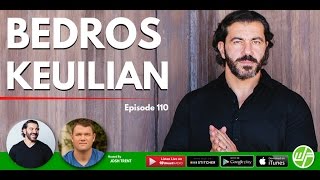
This is a transcript of a Wellness Force Radio (YouTube/podcast) interview (Episode 110) in which host Josh Trent interviews fitness entrepreneur Bedros Keuilian about his immigrant-origin story, the "immigrant edge" mentality, and the four pillars of happiness: money, meaning, health, and relationships. Bedros shares vivid early-life adversity (immigrated from Soviet Armenia in 1980 at age six; dumpster-scavenged food), entrepreneurial setbacks (early online business in 1997; a period around 2006–07 when he owed about $127,000 to a mentor), and psychological work (therapy, processing childhood trauma, building emotional resilience). He explains practical reframes (money as a point system and vehicle for impact), the necessity of self-care, "editing" family conversations, and the role of meaning and relationships in sustained wellbeing. He also mentions FitBody Boot Camp (Inc. 5000 recognition in 2016), charitable giving (supporting Shriners, 62 Compassion International-sponsored children), and a forthcoming book titled Man Up (planned for fall 2018).
Questions this video answers
Episode 110.
1980 at age 6.
Inc. 5000 recognition in 2016.
About $127,000 (around 2006–2007).
1997 (first online supplement company attempt).
Chapters
Wellness Force Radio Feelings are essential, but they can't dictate our actions. We literally infect each other with our emotions.
We came here for a special purpose. Let the purpose unveil itself. Knowing without doing is the same thing as not knowing.
They're not just trackers. I'm gonna wear this and it's gonna.
Help me do the right thing.
Wellness Force Radio episode 110 with fitness industry icon and inspiration Bedros Ku we.
Build our bodies through lifting weights constantly and stressing our bodies and muscles against heavier weights incrementally. To grow the muscles, you got to do that with your emotions and with your ability to deal with adversity. Those are the two big factors. If you can increase your emotional intelligence or emotional quotient and your adversity quotient, you will be a well rounded human.
What's up my friend? It's Josh Trent and welcome back to another episode. This is your weekly access to global experts in all things wellness, behavior change and new technologies. In this podcast, together we'll discover the connections between our emotions and healthy habits to live life well and enjoy the process. This podcast is brought to you by Perfect Supplements, a company who actually walks the talk with their values of pesticide free, non GMO real food supplements that fuel us for the wellness journey, save money, support the show, get more wellness in the process, head over to perfectsupplements.com wellnessforce Enter code wellnessforce to save 10% off your entire order. Sign up so it should not come as a big surprise. Creating happiness in our lives, especially in this fast paced, modern industrialized world, can be sometimes quite a challenge. And today on the podcast I am both honored and excited to share with you one of the most inspirational men I know in the health and fitness world, Bedros Kulian Bedros is here to share with us his incredible life story and leadership insights garnered from over two decades where he created what he calls the immigrant edge and the American Dream. Built on the four pillars of happiness that Bedros has learned apply to all of us. Money, meaning health and relationships, and the balance of all four is what truly creates a life of abundance and wellness that we all deserve. But getting there and working to maintain it is not the linear process for us, and definitely was not for Bedros, as you'll discover in this powerful conversation where he not only shares with us vulnerably, authentically and so powerfully about what he's overcome in life to create a global fitness empire, but how we can connect the dots and shine light on the contrast of our universal human journey that we all walk on this wellness path and how that's to overcome obstacles and the mindset and ways of being we all can apply, no matter what our past. Because the story ahead is the one we write with the pen in our hand in this moment, right here, right now. So if you're open to inspiration, I know this episode is going to deliver how we can become more emotionally resilient and apply these four fundamental pillars of happiness and in our lives, no matter what the context of this current reality. So let's drop in to this connected and uplifting conversation with Bedros Kulian. Bedros Kulian has spent the last 20 years as the genius behind some of the biggest names in the health and fitness industry. At the age of six in 1980, Bedros and his family immigrated to the USA from communist Russia in Armenia on a search of a brighter future and opportunity. It was in those next two decades where he faced incredible adversity and taught himself how to choose to forge a mindset of steel and grow a heart of service to others, to become known as one of the greatest mentors and successful business figures in the health and wellness world. As the CEO and founder of FitBody, recently listed as one of Inc. 5000's fastest growing businesses of 2016, Bedros truly practices what he preaches, implementing the same formula for success in his life as a dedicated father, husband and a pillar for his community that he brings to his fitness clients worldwide. Bedros, welcome to the show.
Thank you for having me, Josh. It's so great to be here.
You know, I got the pleasure of attending the 11th year of the Fitness Business Summit here in San Diego to get my cup of inspiration overflowing. So I wanted to thank you and the entire team for what you're creating in this world, supporting the growth of so many coaches and trainers and essentially healers. Thank you for what you do, dude.
I appreciate that and I appreciate what you do. I mean, look at the impact you're making. You went from a local business, a local fitness business, to now reaching people globally. So we're doing it together.
Thank you for saying that. You know, I'm excited to get you on the show today to share what I believe is one of the most fascinating and transformational stories in our health and wellness space. I mentioned in your bio a little bit about your story, but what strikes me the most about you is you have this balance between being heart centered but also getting shit done. And you've described yourself as having the immigrant edge and the American dream. Can you open up why you identify so much with that profound title?
Yeah, absolutely. So, as you said in your kind of opener there with me, I came from communist Soviet union, Armenia in 1980. I was six years old. My father decided we're going to escape the Soviet regime and we're going to come to the United States for freedom and opportunity. And he really believed in democracy, that the harder you work, the luckier you get. Having come to this country with the belief system that you could achieve anything you want, you have the freedom and opportunities. But when you come to this country broke, you now realize that you don't speak the language, you don't have the money, you don't understand the culture, you don't have the connections, you don't have the resources or the people or the information to make the leap into success, wealth, health, or in our case, just have food on the table and a roof over our head. So all of a sudden, you have to develop this immigrant edge mentality. And when I talk about the immigrant edge mentality, I look at people like Arnold Schwarzenegger. You look at people like Elon Musk, the founder of Tesla. You look at people like Gary Vaynerchuk and Mila Kunis from that 70s show, and of course, myself. People who come from countries that were otherwise oppressive, whether it was a Nazi country or a communist country, doesn't really much matter. They come from countries that were oppressive, and they come with a massive language barrier, really money to their name. They know that there's opportunity here, and they start doing this thing that I call the immigrant hustle. And the immigrant hustle is really knowing that, okay, I don't have the resources, so I have to get resourceful. So one example of that real quick is when we came to this country, we were so broke that we didn't have enough money to buy food. When my mom and dad worked three or four jobs apiece during the days, it was barely enough to pay for our rent, electricity, and water for the apartment. So it was my job to jump into the dumpsters behind the grocery stores and fish out the. The food that was expired or had gone bad but wasn't necessarily rotten yet. And we would literally eat out of dumpsters in the back of grocery stores. And that's how we survived the first year and a half, two years. And so that's a great example of when you don't have the resources, you get resourceful. So that is part of my immigrant edge mentality. And that's actually one of the seven pillars that I Talk about when I have this speech that I do called the immigrant edge, which is a whole different story. But when you have this immigrant edge mentality, that nothing will stop me, because if I don't have the resources, I'll get resourceful, you very quickly realize that no matter how bad things get here in the United States, they're still better than the circumstances anywhere else in the world. And so that's where I believe that I am also the American dream. Because while statistically speaking, according to Fast Company magazine, a survey they did last year, 76% of Americans believe the American dream is dead, yet I believe there's no better time to live the American dream than now. And I'm living proof of it, and so are so many other people who have subscribed to this mindset.
Wow, Bedros, thank you for this contrast of the hunger that I feel, feel from you in person and right now in this moment. Because you're right. I think a lot of Americans can get complacent where maybe there might be kind of an entitlement or a mindset where, hey, I have what's coming to me. But coming from this immigrant space, that is definitely an edge. How do you think that you're transferring that to people that have the entitlement syndrome or people that might be expecting something like it's coming in that one moment where they expect it to actually be in their lives versus earning it? What do you think that looks like? What's your mission with talking about this immigrant edge? What do you want to impart on people with that?
Dude, that's a really good question. And so I've even come to realize after doing over, like 1200 talks in front of people, large groups, massive groups, small groups, that when I talk about this immigrant edge mentality, and by the way, make no mistake about it, I recognize myself as an American. I bleed red, white, and blue. I'm American who happens to be Armenian from the Soviet Union. And I believe most all immigrants should look at themselves that way. I know my parents, who might even be watching this, might have an issue with that. And I say watching this because, Josh, I hope you're okay. I'm actually Facebook living this right now, giving you more exposure and getting exposure for myself.
Oh, fun. Thanks.
Yeah, no worries. But what's really nuts about this is it's not an entitlement thing. You hit the nail in the word when you said contrast. When all you grow up doing is one specific thing, and you're used to that one specific thing, you don't know an alternative until you are experiencing that alternative. And so I can't take people back to 1980 to Armenia and show them what it feels like when the KGB knocks on your door and they line up our entire family against the hallway wal and they inspect my dad's workspace to make sure that he didn't bring any work home and isn't making suits, which he was because he was a tailor. He was making suits on table and selling it for more money. That's how he was able to bribe the Russian government. See, that doesn't happen here. The CIA, FBI, no one's gonna come knocking on your door and say, hey, stand aside. We're gonna inspect the house. Well, I can't give people these experiences that create this massive contrast so that you go, gee, maybe we don't have it so bad in America. But an example I give my kids is we drove into Tijuana because, as you know, living in Southern California, we're close to the San Diego border. We drove into Tijuana, and my wife was like, why are we doing this? I said, we're doing this to give the kids the immigrant edge experience. And all of a sudden, when they see little kids their age selling Chiclets to cars that are trying to get through the border, they see, unfortunately, little kids with limbs missing, and they see the massive potholes, the bad conditions, service in the food restaurants and stores, and the bad conditions that people are living in. When we back across the border into Chula Vista, San Diego, all of a sudden they go, oh, you know what, Daddy? It isn't so bad here after all. It's contrast, man. My kids go to private school. They fly first class everywhere. And I realized unless I instill this immigrant edge into them, they're not going to have it. So I got to expose them to the contrast. So when I travel and when I speak to the masses, I can't obviously stack a whole bunch of people in my car and take them to Tijuana as much as I'd like to. Instead, my goal is, and that I always tell them, I said, in the next 59 minutes, by the time I walk off the stage, I will have installed the seven pillars of the immigrant edge and the immigrant mindset into you so that you can see the hidden opportunities in this wonderful country of ours by the time you walk out of the seminar in two days from now. Wow. That's what I leave them with. And I think that is my greater purpose in life.
Yeah, the word that comes up for me when I Experience you speaking in person is resilience. And you've talked about other situations where you had your hair washed with gasoline when you had lice, you were evicted from many apartments, you've been through a lot, but you continue to fortify emotional resilience in your life. How do you grow emotional resilience and how do you teach clients about emotional resilience?
Man, you're full of all the good questions right now. So this is great because anyone listening to this, the way you described it, wants to live better, be healthier, be more fit, or he's even a fitness coach. So how do we build physical resilience? We go to the gym and let's say we want to build stronger legs, we squat and we do lunges and we do deadlifts, et cetera. And the more we put our body under stress and resistance, the stronger and more resilient our body gets. And if you start doing intervals and sprints, the more resilient your cardiovascular system gets. Yet where emotional resilience is concerned, we don't really go and train our emotional muscles, do we? And so I tell people, even if you have a job, go start a side project, go be part of a charity, go do something, go build a house in a third world country. There's so many, like Habitat for Humanity where they'll take you to Costa Rica for a week and help you build a house. And you get to see the emotional hardship of how people live. When you experience that it's all about environmental exposure. We build our bodies through lifting weights constantly and stressing our bodies and muscles against heavier weights incrementally to grow the muscles. You got to do that with your emotions and with your ability to deal with adversity. Those are the two big factors. If you can increase your emotional intelligence or emotional quotient and your adversity quotient, you will be a well rounded human that can deal with any kind of adversity or suck factor. Not if, when it comes, because it is guaranteed to come.
Absolutely. And this is something that I know you share a lot of sentiments around Gary Vaynerchuk's work. He talks about when he hires someone, the very first thing he looks for is their emotional quotient. So thank you so much for mentioning that. And there's a clear connection between emotion and money. A lot of stories that people have around money that are completely not serving bedros. You said when you were a kid, your dad used to mention there are people that have money and there are people that don't. And we don't. How did you change that money story? I know it didn't happen overnight, but looking back, when did the news story start to emerge? Was there a narrative or an inspiration that gave you that power to change?
When my association with money changed is when I was able to understand what read reframing meant. So up until that point, if something bad would happen, let's say I remember the very first business I started, tried to start online was in 1997, which was an online supplement company. And the very first bad thing that happened was when I was able to make a website and actually found a way to accept payments online, was someone had stolen somebody else's credit card. They ordered $3,000 of supplements from my website. I, of course, trying to deliver the best service possible, shipped out those supplements right away and then later found out when the guy told his credit card company that it stolen, they did a chargeback. I lost the money and someone else got the supplements. And God knows what they did with it, but that's exactly it. So in that moment, see, I was an amateur entrepreneur then and I was like, oh man, I can't believe this happened to me. This kind of shit always happens to me. Why am I the one who's always, you know, having bad stuff happen where money's concerned? I'm never going to be rich. Today. The reframe of that is, oh, wow. The fact that someone came to my site and bought $3,000 worth of supplements with a stolen credit card, obviously they found my site, the site worked, the shopping cart worked, I was able to process their. But it was obviously a stolen credit card. This is a good thing. What can I do to make sure the site can make sure that it's not a stolen credit card? And that's where address verification started online and all that stuff years later. But today, when something bad happens, I look at it as. And I think Lewis Howe says this in his book the School of Greatness, Adversity is an Advantage. And so I started to reframe that. Anything bad that happens is actually a learning lesson towards something better. And so where I look at at money experiences, for me, it was easy to say, well, wait a minute. Instead of money's hard to come by. Money's for the rich. We run out of money before we run out of money. Like I've heard all those things, those are sayings that were normal around my household today. I look at money as a point system. I don't know how much impact I'm making on the trainers who are Gaining clients all over the world through my products and services. What I can tell you is the more money I make, that tells me I'm having a bigger influence on our industry and through the trainers and fitness professionals worldwide that I get to help. I help people, people that who'll never meet me, get in better shape, build their emotional resilience, their mindset, their health. And I love that. So to me now, money has become a reframe. It's a point system. And I try and accumulate as much money as I can because one, it's a barometer of how much impact I have, and two, it's a vehicle to freedom. And I love freedom.
And I love how you make it a game. And that's really what it is. I think sometimes we forget though, Bedros. We become so wrapped up in the busyness of our lives and the tension of our days. And even if we enjoy doing what we do and we love what we do, there are certain moments where I think many people can feel the strain. And I'm looking at the site, One of the things that you overcame was $120,000 that you were in debt to sustain your business, but you turned it around. How did you turn it around from 120k in debt to serving so many.
People now it was $127,000. And dude, the worst of it was I owed the money to one of my dearest clients. You know, he was a personal training client. His name is Jim Franco. He mentored me. You know this, when we do one on one training, usually in between the sets, there's a little chit chat happening and I would just pick his brain, right?
Yeah.
And so I picked his brain enough where I said, hey, Jim, I got this idea for this product called High Tech Trainer and I would love some seed money for it. And so he said, great, I'll be your business partner in it. And long story short, and he had also helped me start my first gym, which I was able to pay him back on my first personal training studio. But before I know it, you know, 40,000 is now 60,000, 60 is 80, 80 is 100, 100 is 127. And one day he called me and he said, hey, I need you to come into my office. We need to have a come to Jesus talk. And I knew exactly what that was. When I heard those words, come to Jesus talk, I knew exactly what it was. And I knew that the money coffers had dried up and my ability to grow High Tech Trainer was over. And the conversation was I'm going to give you $10,000 a month and you're going to give me high tech trainer, full equity and high tech trainer. And I'm going to have my technology people build it out and run it and sell it and you're going to be my employee selling it to the gyms worldwide for ten grand month. Or you need to pay me back this $127,000 over the next 12 months because I've stopping the funding of this project now. I knew deep down inside I cannot be someone's employee. I would forever resent them and I would resent that decision. And so I said, Jim, I will find a way. I got two brand new credit cards, one for five grand max and one for $7,000 max. And this time I used the money that I had. See, it's funny, people go, how did you turn it around? And this is why I'm not a big fan of borrowing money. You know, raising venture capital money. When people go, oh, we're on our third round of RA funds. Whose money did you squander? You're on your third round. I built Fit Body Boot Camp and all my businesses now that are eight figure empires all off my dime. Because when you're spending your money, Josh, make no mistake about it, you are gonna watch every penny and see where it goes and see what return on investment it brought in. Because it's easier to spend someone else's hard earned money than your hard earned money. Especially when it's off of credit cards that you don't even have the money in the bank to back. Up, up. And so what I really did was I said, all right, I've spent his money and have nothing to show for it. We were doing trade shows like Ursa and idea trade shows. Trying to sell software at a doggone trade show. Stupid idea. It was so stupid that I kept doing it year after year. Which by the way tells you that if some idiot like me can become rich and successful, anybody can. If you stick to it long enough and you figure out what you were doing wrong. And so I said, all right, now I've got these two credit cards and that's it. This is the Hail Mary. How am I going to use every penny wisely? Who else out there is selling online stuff? Software or downloadable stuff that I can model, mimic and reverse engineer. And so what I really did is I stopped spending money and I started doing research and I found companies that were selling information and software and I saw that they had a free month trial, but give us Your credit card and if you like it, you can stay on board. Okay, that's a good one. Great. Now how do you get them to sign up for a free month trial? Oh, it's an opt in. I get it. You give name, phone number, email address, et cetera, and they're going to follow up with you and make sure you go through more than just the 30 days.
What year was this, man? When was this going down? Was it like. Sounds like the early days?
Dude, it was early days. So we completed the building out of High tech trainer in 2004. By 2006, the coffers had dried up. So it was right around 2006, 2007 that I was trying to figure out how to make this work and pay the man back and make money.
And what I heard from you is that something you mentioned before, if you don't have resources, get resourceful. And I want to talk a little bit more about these four pillars of happiness that I got the pleasure of seeing live at the Fitness Business Summit. There's just one more question I want to ask you though, before we dive in and it's around your relationship with Craig Ballantyne. We had the unique pleasure of having Craig on the show last year. He spoke about you as somebody he respects for so many reasons. One of them is your ability to soften his edges and help him become a conscious businessman who takes heart centered actions. How did you develop this genius bedros of coaching others from your heart but also getting real results? What fuels you to be that way?
Dude, I don't have the answer to that. I think it's just my dad. My dad is so nurturing. So, you know, he came, we came to America after five years here. He opens up a little tailor shop. And check this out, somebody would walk in, a customer of his. You know, they call him Joseph because the name of the shop was called Joseph's Tailoring. And hey, Joseph, you know, my button popped off my pants. He go, okay, you go wait in the dressing room. Give me pants. I fix pants. And he would sew their button back on, hand it to them in the dressing room, and they go, joe, how much do we owe you? Don't worry, you come back next time. And he was just so nurturing, so generous. My mom would raise holy hell. She's like, dude, we just got this tiny little store. You're paying payments on it. You know, they're a paying customer. You should have charged them for that or the zipper or the hem. He goes, no, they've come here Before I've fixed five of their suits. This is a small little thing I'm doing. Sure as shit those people would come back, I'd see because, you know, I was pretty much raised in my dad's shop, tailor shop. And they would come back and they'd buy more clothes from him, they'd bring friends. And I saw how easy it was for him to build his. And I don't even think he meant to do this. He was just a generous, kind hearted, gentle person. And I saw how paying it forward today, of course, Robert Cialdini wrote a book about it in the book Influence. And this is one of the weapons of influence is reciprocity. When you do for them, they feel indebted to do more for you. So they would not only come back and do more business with him, but they would refer people to him. And so I don't know, I guess I just saw that it's a learned behavior. I can't tell you how else I can take someone like Craig Ballantyne or even a tough guy like Elliot Hulse, who's also a private coaching client and a few other people that are pretty notable in our industry and outside of our industry. A couple of New York Times best selling authors who are ego driven but can just turn into mush in front of me. And I think they can see that I'm genuine. I speak from the heart and I kind of expose all my flaws and chinks and chains by letting them know what happened to me. I won't go into great detail here with you, but between the ages of 4 and 6, a lot of bad things happened to me as a kid in Armenia and I'll open up to them. And I guess they can't help but open up. And before you know it, we bonded over a common thing. And then they let me smooth out the edges and give them the advices, as Arnold would say.
And I think this is why people trust you. You have beyond, I consider to just be a no like and trust factor. It's because you're not trying to hide anything. There's full transparency with who you are. And by the way, I didn't know too much about your tailor background that explains why the suits look good in the conference. Nice job on that one.
Thank you, sir.
And I think the real reason behind what you do, why you do, and what I'm feeling from you is that you know what it's like to suffer. You know what it's like to be in uncomfortable shoes. And so when people come to you and they're suffering. Do you feel that compelling reason to help them? I mean, it's not all about the money, but without the money we can't succeed.
You know, that's what it is, the money. The most brightest and brilliant people are those that suffer the most, man. And I remember reading a quote saying that those who have survived pain and suffering the most can do the greatest healing. I forget who said that quote. It's not my quote. I can't take credit for it. Today again, going back to a reframe. I could either him and ha and piss and cry about how unfortunate it was what happened to me as a kid and I lost all trust for adults and blah blah, blah and all this stuff or I can go thank God that happened. That gave me a new perspective on humanity and I can see almost deeper into someone's soul than other people and, and today I use it in my business, you know, that I can bring down the walls of some of the most ego driven or protected people who we consider thought leaders and gurus because they somehow, I don't know why, trust me to bring that wall down.
I think they feel that from you. And we've already talked so much about the first pillar. This is four things that you talk about being the pillars of happiness, money being one of them. We know that money doesn't bring happiness, but in my life and in my experience it's really hard to be happy and feel safe without consistent money coming in. I mean, is that why you chose it as number one?
That's exactly it. That's why I chose money as number one. And people go, but what about doing good? I said you can do more good short of Mother Teresa and Gandhi. God bless them. I wish we could all have their ability of reach without making money. The rest of us need money in order to do more good. My only goal with Shriners Children's Hospital, who is one of the biggest things that we contribute to is to out donate Justin Timberlake. He is Shriners number one donator. And my goal by the time I die is to have out donated Justin Timberlake for that to happen and for Shriners to go from 22 hospitals to 122 hospitals worldwide because they do so much good for kids and their families who don't have money. I need to work my ass off and make money to give Shriners a portion of that for me to keep adopting kids from Compassion international. We have 62 kids now that we've adopted through Compassion International. For me to make that 62,000 kids. I need to make more money. That's how my goodwill is going to grow. And so once people realize that money's not evil, money's evil. When you start snorting it, that's when money's evil. Evil. Otherwise, you can do so much good with money. And so money is number one and number two is meaning. And people say, well, wait a minute, just give me money and I'm happy. And I'll say, no, look at Robin Williams. The man had money. And we know so many other big time celebrities and actors and comedians, but he didn't have meaning because he wanted to grow outside of the comedic world, but the industry didn't allow him to, and so he killed himself. Unfortunately, the guy was like one of my most favorite actors and comedians. So money and meaning are number one and two. The third pillar is health. You need to keep your health up. You need to keep your health up so that you can keep making the money, you can keep making the impact and having meaning in the world. You can live long and prosper with your family. And health goes into many places. Physical health, mental health, emotional health, relational health. You know, you could be in great shape but be so closed off to people that you just don't let them in. And therefore, you've got this wall up. You're not in good health when that's happening. And so where health is concerned, there's those four other subcategories of health that we just talked about. And then finally, finally there's relationships. It would be a crying shame for me to have money and to have meaning and significance and to have great health, but have no one to share it with, have no one to come home to and go, look, honey, look what we did. Or, look, kids, this is the big impact we made. What do you guys think about this? And so those relationships, whether with family, whether with business partners and friends, like, Craig is a business partner, and I have Jeff Sherman as a business partner and several other business partners. Jason Capital, the dating coach. America's honest dating coach is a business partner. And to be able to connect with them about the big breakthroughs we're having and just celebrate them, Break bread, man. Those moments are special and magical. So if you don't have those relationships and that's that fourth pillar, you're still going to struggle.
It is no surprise if we're on point in taking care of our emotional health. It makes it so much easier to let go of old weight and have more energy throughout the day. But believe me when I say it's hard to treat other people well and think good thoughts if we're walking around Hangry One of the best ways to support our body's energy systems and help cure that satiety and satiation, AKA hangry is to add in collagen to your water, waters, shakes and foods. Over the past year I've been using powdered collagen from perfect supplements in my morning coffees, waters and post workout shakes to get some organic proteins I can feel good about eating. You know by now healthy cows eat grass and these sick cows from CAFOs eat corn. So beyond the healing powers of collagen for digestion and joint health, this 100% pasture raised organic hydrolyzed collagen has 20 grams of protein in two scoops which helps curb appetite and increase satiety and satiation from ethical harvesting. You can actually feel good about Collagen from grass fed cows has five times as much Omega 3s and twice as much CLA as found in grain fed beef. And best of all, you can sleep well at night knowing you're supporting the change we need for this broken food system. Get a box of single serve packets for on the Go Grass fed collagen or purchase it as part of the Wellness Force discounted bundle by clicking over to perfectsupplements.com wellnessforce and be sure to enter code wellnessforce to save 10% off your already discounted package. Yeah, and all these four pillars, they're consistently what I work on in my life experience and with clients and just everyone that I know. I think we're all kind of pouring water into these four cups at any given time. But I want to go back to point two when you talked about meaning, because something you said at your conference Family Giving and Serving. You told this story of dropping your daughter off at school and there was another dad that came up to you and he asked Pedros, you've done all these great things and you know you're making six, seven, eight figures. When is enough going to be enough? What was the answer you gave to him? I thought it was really profound.
So he asked me when is enough is enough? And I realized one where it's coming from. Sometimes people feel feel for no reason, nothing that you did. They just feel insignificant. Like they know they're not reaching their fullest potential in life. And when they see you happy, crushing your goals and having significance, what you're really doing is you're holding up a mirror in front of them. And so I believe that when people are not fulfilling their life and they know they could be doing more. When they see someone like you, Josh, who's doing more, you're holding up a mirror in front of them. So one, I knew there was part of that and the other part of it was I said, jack, enough is never enough. I'm just going to keep doing this forever and ever. And the reason for that is if I don't, if I don't just focus on dominating my path and my purpose, which is to help fitness entrepreneurs grow their small businesses so that through them I can help more people worldwide get fit and live healthier lives. And when you think about it, people go, where does that weird goal come from? Fitness and money? Where does that come from? I go, well, I was a fat kid because I grew up on garbage, literally. And then government food.
Oh yeah, me too. I was raised on welfare. Government cheese and kick cereal.
Yeah. And that made you fat, especially when you're not active. So I was a fat, inactive kid, no fitness and broke. Really, it's the most basic self care I could do is just keep helping people make more money and help them help more people get fit. And so why would I ever stop? The one thing that gives me satisfaction, intense, immense satisfaction and joy and a sense of purpose and meaning. Because the moment I stop doing that shit because I go, I've made enough money, I will go into the darkness and I will start going deep into my darkness and going, what happened to me is a, a kid. Why did I do that? Before you know it, the monster comes out. So I will keep doing this until I take my last breath.
What is the monster? I mean, I think a lot of people, when they're driving for success, we get to AKA face our shit, you know, for lack of a better term, as we do our personal development courses, there's been a lot of people that have come on the show, Bedros, A lot of world class leaders like yourself who have done mindset work, development conferences, but didn't really cross into this threshold of ultimate success until they dove deep into the subconscious to clear away memories, to clear away things that have happened. How do you feel about the importance of doing the inner work? To let go of anger and resentment from the past is to living a happy life and successful life.
That's mandatory because otherwise, look, here's what happened. Talk about transparency. So I went and got a therapist because I was having anxiety attacks. He taught me four letters that fix my anxiety attacks on the spot. Halt, H, A, L, T. Hungry, angry, lonely, tired. He said, bedros, when you're Hungry, angry, lonely, tired. You are going to have anxiety attacks because that's how your body is manifesting them. I said, no, you don't know what you're talking about. And I continued to work through, you know, I'm going to finish this email and then get go pee or I'm not going to drink water until I finish the sales copy or I'm not going to eat. I'm going to work through the night. Well, when you're hungry, angry, lonely, tired, for me, anxiety attacks happen. For the alcoholic, they relapse and they go back to drinking. For the sex addict, they go back to hookers. For the drug addict, they go back to drugs. And so that's just how my body dealt with it. So after he taught me this, he goes, well, we're done. Is there anything else you want to talk about? You know, I was like, no, everything's fine. Well, he goes, how was your childhood? I'm like, ah, childhood was fine. You know, I was raised in a communist family and, you know, I'm glad that I never was put on restriction. But every now and again my dad would slap me around, but that's okay. I got to go out and play instead of be put on restriction. I go, but what happened? There is nothing compared to what happened to me between the ages of 4 and 6. He goes, what happened? And then I just burst down crying, dude. I just shut down and I couldn't even look at him. And he had to verbally walk me through it. As I'm nodding my head yes or no, Josh. And really, what had happened was. And then when I was able to gather my composure, I go, look, but what happened to that little boy is done. I've dealt with it. I fixed it. I'm good, I'm fine. He goes, wait, I'm sorry, what happened to who? I go, that little boy. He goes, you mean you? I go, yeah, that little boy. He goes, that's called disassociation. I had disassociated myself of who I was, that little kid. So we spent the next year and a half, Josh, working on that, processing that, as you said, clearing that. It was so amazing to take this big, giant mountain that I had created in my subconscious mind of what had happened to me. And I was going through a cycle of anger. Anger, guilt and confusion and shame, those four things, and address each thing one at a time and realize now that happened to me, not that little boy, and it wasn't my fault. I shouldn't be ashamed of it. And the anger was Understandable. But I must let it go if I want to keep moving forward and dominating my path. Because staying in the state of anger is like driving a car but always looking in the rearview mirror. You're not going to get there. And so it is highly important to process your shit. Having said that. Right. Talk about the monster. It never really goes away. Like a virus scan on your computer, it kind of isolates the virus and puts it there, but it never kills the virus. The virus is there. We just have new software programming put on top. The moment you stop updating your software, that virus might just come back out again. So for me, I will keep dominating my path. And I tell all my clients who have issues and shit that they've processed and gone, gone through. Stay on your path of domination. Do good. Because the moment you don't. The human mind is very selfish. And we go inward into the darkness and try and find problems to fix, quote, unquote, fix. But in reality, we just delve deep into darkness and depression. And great example of that in our industry is Richard Simmons. The man has so much good, but he's off the radar now. No one knows where he's. I mean, they know he's in the Hollywood Hills. We don't know if he's gained weight. We don't know if he's doing drugs again. I hope he's okay. Uh, it's so unfortunate. The man has helped millions with his products, but the moment he stopped creating products and getting on TV shows and dominating his path, he went back into his darkness. And that's really unfortunate.
Pedra, so much gratitude for you sharing so openly and powerfully. And to be honest, it's the things that people try to keep dark that are the things that hold them back. And so the way you've opened up, I can't even imagine how many people are shaking their head, clutching their heart. So just want to acknowledge how radical and real you are, man. Really appreciate that. How this relates to the fourth pillars is without knowledge of self, we can't have any money, meaning health or relationships. One of the other really great things I heard you talk about is you can't cut our family, but you can edit the relationship we have with them. I think I can relate to that. I mean, we don't choose our family. We're born into it. But we can edit the relationship. What does that look like for people to edit their relationships?
Let's say that you're going to go open up a gym, and you opened up your gym and your family's like, why are you quitting this job where you're making $85,000 a year to open up a gym? Don't you know that there's a lot of risk? And what if the economy crashes? And what if the competition. Well, listen, you go and visit your family and you're excited about this new venture you're taking, but you expect them to be excited. That person's family, their crabs, their vampires, they maybe grew up in the Great Depression. They maybe never processed and worked through their shit, whatever it is. They have this negative mindset of entrepreneurs and they believe the risk versus reward is not worth it. They want you to stay in a job that's where you make an 85 grand and you have pension and all this stuff. And so you can either go there, get angry with them on Thanksgiving and on your birthday and during Mardi Gras or whatever you're visiting family, get angry. Or you can go there and not talk about your new business and instead talk about the weather, talk about how beautiful the lawn is, looks like the tomatoes are really, really growing this year, dad, et cetera, and talk about your business, the things you're excited about to people who are going to get excited with you. So you edit the things that you know are going to pretty much get you to fly off the handle. And don't talk about that stuff because they're not on your side, not because they don't want you to succeed. We just translate it that way because they look at the world through a different set of glasses than you do.
Man, I so resonate with what you're saying. I can think of how many edited conversations I've had with family members that are very close to me. And I think it's really, in other words, meeting people where they are and loving people exactly how they are. How do you think that relates to forgiveness? Because I think the child inside of a lot of people wants what they want. You know, the petulant child, as many authors have talked about. Ryan Holiday talks about that. And ego is the enemy. The petulance that we all have inside of us. How do we let go of that and edit these conversations with people that might trigger us, I mean, all of us, us get triggered from time to time. Unless, you know, you're a perfect robot, which I don't think anyone is, but with the triggering aspect, Bedros, if we're triggered, how do we calm and move forward with what we actually want to create?
That goes back to the first pieces of our conversation here on your podcast, which was Emotional resilience and building your emotional and adversity quotient. Because as you can build your resilience emotionally when they try and trigger you. So son, how is it going with opening up your gym? Have you seen how many other gyms are around you? I did a Google search and I saw there were 17 of them. Yeah. If you're resilient, you're going to react one way. If you are not emotionally resilient, you're going to lash out and then regret it on the drive home. Because that might be the last conversation you had with your mom or your dad before they had that heart attack.
Yeah, I just feel like maybe the thing that we're all looking for is just acceptance in that moment and I think fortifying these pillars, you know, going back to it again. Money, health, meaning relationships. I can't think of anything more important than the relationship we have with the people that are closest to us. I want to transition. This is the last part of the show, man. This is seven questions for seven answers. Are you ready?
Let's do it.
Now, I didn't tell you these up front, so these are going to be real. What is the greatest edge that you see in life right now? In other words, what's something big you're up to that scares you the most?
Oh, man. I'm writing a book called man up and it scares the turd out of me. Every Wednesday when I'm supposed to start writing my 2000 words, I look for a million reasons not to write it, but I finally get to doing it, but it scares the poop out of me.
Why does it scare the poop out of you?
It's a whole new world. I'm dominating, you know, publisher and writing a book and I want to become a New York Times bestseller. What if it doesn't? What if, what if, what if, what if myself to death.
How does your life change in regards to wellness habits once you became a dad? What changed about the wellness practices that you have?
Oh, man, my entire life rituals now, once I became a dad, revolve around my kids schedule. I wake up early before them, two hours before them, so I can get my work done, my magic time, as Craig Valentine has taught me. So that when my kids wake up at seven, I could be there in the kitchen as the whole family's, My wife's making food for them. I'm goofing off with them shooting this shit. So it used to be that I would wake up at 7am after having kids. Now I wake up especially now that they're 9 and 11 and so fun and playful. I wake up well ahead of them, get my work done so that I could be fully present for that hour or 45 minutes before they go to school. I make sure that I don't take any other calls or podcasts or anything after 4pm So I can get there at 5 o' clock when they get home from guitar practice and stuff. So my entire routine and ritual, ritual has evolved because of my kids. And I even tell my wife all the time I grew up and became an adult when we had kids, not when I turned 18.
That makes sense. What about support? What have you found to be the most in calling in the support you deserve the most beneficial. In other words, how do you get the right people to work with you and how do you enroll them in your vision?
Well, where support is concerned, where my team, like we have a team of 34 people who work with us here at the headquarters. I've got great leadership. Not only have I constantly evolved into a better leader and the evolution continues with me, but I've got two really good leaders, lieutenants who are just bar none, the best in our industry. I would say one of them is our compliance officer, Sean Kershaw. He's a military man and now our compliance officer. And then Joan Arca, which you've met, she is my operations officer. And without them, it's kind of a top down management. You know, I meet with them every day right before this podcast, in fact, I met with them, I got the download on our team, on our projects, on our path, and then they go and get the team to implement and where the vision is concerned. I make sure that every Monday I send out a Monday morning email to my entire team@fitbodybootcamp.com and it goes to all of our team members. And it's real simple, man. I just talk about the vision, where we're headed, what we need to do to get there, and why it's important that we get there. The why is so important. So it's my job to always explain the why. Because no one wants to work, just because. And that's where my team is concerned. Then of course I got great friends and business partners like Craig Valentine and of course a great family who understands what I do and is very forgiving when I travel the world and speak and, you know, do the FaceTime thing. Because for us a weekend might be on a Wednesday and Thursday, because I was traveling Saturday, Sunday, Monday, and got home on Tuesday. So we might be at Disneyland on Wednesday and Thursday, and that's okay.
Bedris, what makes you laugh the most in life? I mean, what cracks you up?
Oh, man. Just dirty, sick, twisted, inappropriate, politically incorrect humor. So Howard Stern.
Yes. Love Howard Stern. He's so good. Now, when we look at Overwhelm, a lot of people throughout their career, even when they're on mission, on Heart's purpose, they might have moments of overwhelm. If someone's listening right now and they're nodding their head, what do you do to coach people out of Overwhelm?
The same thing I do with myself. You know, I realize, all right, does this really have to get done right now just because I have three podcasts? Do all three have to get done, or is the third one going to be crappy because I'm so stressed and overwhelmed? And we often forget. See, Type A people forget that. You can cancel and reschedule things. That's okay. You don't have to forever put it off and procrastinate. But it's okay to cancel and reschedule or say, I'm sorry, I bit off more than I can chew. Can we put this off for two weeks? And so I have become so good at not burning the candle at both ends because, again, I was having anxiety attacks, and then those. Those led to essential tremors where my nervous system would shut down, and I go into these bodily shakes. And Overwhelm is just literally you having more on your plate and in an unorganized fashion and not knowing what to do about it. Effectively drinking out of the fire hose. And so let's just turn down the fire hose where it's drinkable. Yes.
I love that so much. And I'm curious about a mantra you might have. You go out your day, you go about your year. There's maybe moments where you tell yourself something. Do you have a mantra that you might repeat to yourself in a moment of tension?
In a moment of tension, I always try and get away from the headquarters as soon as I can, only because I don't want my team to see me in a dark, negative mood.
You just go and change your state as quickly as you can.
That's it. And it might be just getting in my car and again, turning on Howard Stern. Go across the street to Starbucks and get a nice coffee, but you nailed it. I changed my state. And I make sure I'm not around family and coworkers who don't need to deal with the crusty bee.
You have shared so much on this show, man. I'm so grateful for your perspective. And your insight. And my last question is about wellness. When you look at everything you've been through, from fitness, from your childhood and now as a father, as a pillar, what is wellness to you? How do you define wellness right now in your life?
Oh, man, that's a moving target. But right now, at the age of 42, with all that I've got going on in my life and writing a book that makes me nauseous, wellness to me is if I can get a good night of six and a half to seven hours of sleep and get my daily workout and eating in, that's wellness. Because I feel like right now I'm a fighter jet and I am at a time of war and battle and I just need to keep refueling, making sure it's refueled, it's tip top condition, the pilot's alert and awake. That is wellness today. What was wellness a year ago was every Monday I would go surfing Monday mornings. I'm in a phase of growth right now in my business where I can't go surfing Monday mornings. I miss my friends who I used to surf with. But I know that it's probably about six to eight months away, especially when I finished writing that book and turning my manuscript and Fit Body Boot camp, we move our headquarters to this new building that we bought. I'll be surfing again and wellness will have changed to, you know, more Zen like. But right now I'm in fighter jet battle mode.
And you know what's cool is Craig talked about how the seasons shift in our life. He mentioned that on last year's episode. Do you feel like right now you're giving yourself space to just be in that season of hard work, knowing that the leaves are going to turn color soon?
Absolutely. Because I've gone through the phases so many times, right. And the first time I went through this phase, I was like, oh, my God, this is what being an entrepreneur is like. And then you get to the point where you hire a good team, you're making good money, and you go, wow, I could step away and surf a couple days a week and everything's cool. But then great opportunities present themselves and your empire grows and you have to jump back in, into another phase of growth. And so, yeah, the seasons do shift, but there is a sense of comfort knowing that I've been through this before and this phase will end. And when it does, I'll be in a better place, making a bigger impact and still living the lifestyle that I want.
Well, the new book is going to be called man up, right? Tell us about the new book and how we can get involved in supporting you for that. What can Wellness Force community do to support you with the new book?
Yeah, it's called man up, cut the bullshit and dominate your path. And it's really made for entrepreneurs who know that they have bigger potential in their business, but know you, but don't know what's stopping them, what the bottleneck is to make that big leap, to make that quantum leap. And I figured out the four parts of what needs to happen or what is probably missing and I address it in the book. And of course the best way you can support me and I appreciate you offering that is as the book comes out in fall of 2018, if I can get back on your show and if you can get behind the book, if you see that it would add value to your listeners, I would appreciate you promoting that.
That's a definite yes. And I know a lot of people, myself included from time to time that can always use the clearing of the path and as so thank you so much. I want to honor your work and it was such a joy to meet you in person. So great to have you on the show. To spotlight what I believe are the most four important pillars we have in our lives. Is there anything you think we missed? Bedros, when we look at a busy parent, a mom, a fitness professional, just someone that wants to live life well, what do they get to focus on for the rest of 2017?
Here's the biggest thing I've learned is self care. And it sounds so foofy for me to say that, a big burly, hairy man. But I realized as a fighter jet and whether you're a mom, a house mom, an executive, it doesn't really much matter. We give, give, give. Everybody is plugged into us and we give, give, give. And for me, that self care is if I can just sleep six and a half to seven hours of good sleep, get my workout in because I'm still a meathead at heart, and then eat my four to five, six meals a day, that is my self care that centers me. Everyone has their thing that centers them. I don't know what it is, but if you can just find that one thing of self care that you could do each day, you could keep the world plugged into you and keep serving the people, people that you serve.
Bedros want to honor and acknowledge your work and not just in happiness, but in teaching other people to help as many people as they possibly can. I think your ripple effect is being felt not only from me, but all across the world. Thank you so much for being on the Wellness Force Radio podcast and for doing what you do, man.
Thank you for the opportunity Josh. I really appreciate it.
Hey my friend, thank you for hanging out and growing with me on today's show. Remember to hit subscribe and share this podcast with someone who you care about that gets to hear this message. And if today's guest sparks something in you, leave us a five star review on itunes for the podcast by just quickly tapping on your show artwork. On your iPhone, hit the link in purple that says review this podcast. It helps the show reach more conscious people like yourself and attracts world class guests. So let them hear your voice. For all the downloads, videos, links, giveaways and free resources mentioned on the episode that support you to live life well, go to wellnessforce.com forward and while you're at my house on the web, join the free Wellness Force newsletter on that page because I want to send you four free guides around staying healthy with your training and your travel. And if you're ready to take inspired action, don't let this conversation stop here. Join a group of people who care about what you do over at the Wellness Force Community Facebook page. Just search Wellness Force Community on Facebook. This is where we talk about the things that really matter. We share our way, wins, inspirations and our struggles and so much more. Tap the show artwork on your iPhone, hit the purple link that says join the Facebook group and I will welcome you at the door. Okay, now you get to go out into your world and create impact for the people you care about and be a positive force of wellness in their lives. So until I see you again real soon next week, I'm wishing you love and wellness.
Sam.
More from Josh






Your child's future start before pregnancy... and even before conception! #podcast

MD Reveals: Your Healing Creates Your Child's Reality (The Souls Coming In Need Strong Bodies)



