Matteo Franceschetti: Sleep Fitness & The Good Side of Technology | Wellness Force #Podcast
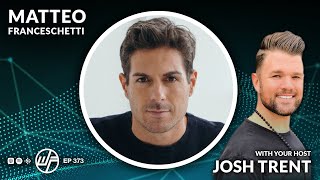
This content was created by Josh Trent. This content was uploaded by Josh Trent. This is a YouTube video titled "Matteo Franceschetti: Sleep Fitness & The Good Side of Technology | Wellness Force #Podcast" created on November 27, 2020. It features a conversation between Josh Trent and Matteo Franceschetti discussing the concept of sleep fitness, the role of technology in improving sleep quality, and the importance of sleep in overall wellness. They explore topics such as sleep stages, temperature regulation, and the impact of stress on sleep.
Chapters
People forget this and this is a really good thing to remind us all about. We don't actually grow stronger and recover when we're working out or when we stop working out. We actually heal when we're resting. And I think so many people, they just, it just never occurs to them, Matteo, like the thing that they sleep on is just as important as the way that they prepare for their sleep.
Sam.
Hello, everyone, it's Josh Trent. I'm here with a very special guest. We are live on Facebook. So as everybody comes to the party, let us know. Where are you joining in from? We're talking about something really, really important today, and I would say probably right now, the most important thing ever, and that is how do we sleep? You know, what is the quality of our sleep? This is a sleep fitness company that we're talking to the CEO with Matteo. Welcome to the show.
Thank you for having me. Super excited.
We've been looking forward to this for a while. You know, it's been about a year and a half, two years, Matteo, since we went on a deep dive for sleep. We talked about polysomnography with Dr. Kirk Parsley. We explored all the different ways we can have sleep hygiene. But this, this topic of sleep fitness, it's funny, I've never thought about it like that. You know, and I know that we're going to get into your story. We're going to get into the technology of this incredible product, really, this piece of wellness technology. Right? Technology that can help us live life well. But before we get in there, why did you even name the company eight Sleep? I assume it's maybe wanting people to have eight hours of sleep, but I could be totally wrong.
Yeah, kind of close. So we want to break the rule of the eight hours of sleep. We have this vision where we can compress sleep and we actually don't believe in the eight hour rule, which still applies to most of the people for now. But maybe in a few years from today, you will be able to sleep only six hours and get more rest than when you were sleeping eight.
That's fascinating. So sleeping less, but like sleeping smarter, right? Sleeping more fit.
Exactly.
So I think about the way that we used to live, you know, before technology really came online, before there was sensors and different devices that could help us. We're not in that world anymore. And I think that's really the stepping off point for this conversation. We are not in our grandfather's and our grandmother's world anymore, where we used to follow circadian rhythms for so long. But with all the demands of people working at home now and being in families and having lots of stress, that really hasn't been present before. I do believe that this kind of technology that can help us sleep more fit. Right. Sleep fitness is very beneficial right now. How did you even get into this line of work? Helping people sleep and helping people. Well, how did that even happen for you?
So when I was a teenager, I was. I was an athlete, so I was playing tennis tournaments and ski races, motorsports. So I was really, you know, into recovery, and sleep is a big piece of that. Then I became an entrepreneur, and I was the typical entrepreneur, working long hours, going to bed late, working until the last second. And so I started wondering why Elon Musk is taking me to Mars, but I still spend a third of my life on a piece of dumb foam. And I say, why? There is no technology in a third of my life. And that is how everything started.
Wow. So in pro athletics. Yeah, because people forget this, and this is a really good thing to remind us all about. We don't actually grow stronger and recover when we're working out or when we stop working out. We actually heal when we're resting. And I think so many people, it just never occurs to them, Mateo, like, the thing that they sleep on is just as important as the way that they prepare for their sleep. And we're gonna get into this too, because sleep hygiene is different than sleep fitness. Sleep hygiene is like our surroundings, our temperature, our light, our blue light, and, you know, maybe even stress that's going on. But sleep fitness, you know, how did this come online for you, and when did that term really start to make sense for you? Sleep fitness?
Yeah, we really came up with the term around two years, two years and a half ago. And it's very connected to what you're saying. The vision I always had is sleep is not a passive moment. It's an active for your body. Right. So you are training, you're doing something good for your body that is recovering and healing. And so you need to take care of that if you want to perform at your best. And it doesn't matter if you are an athlete, if you are a mom, or if you are a doctor. Sleep is extremely important to really recharge your body and make sure that tomorrow you will be at your peak.
A big part of this, too, that people don't understand is that most people. I mean, our audience is very smart, actually, because we've had many brands on the show that have talked about the way that they're allowing people to Discover more about themselves. But most people forget, actually, and I'd love for you to go into this. When it comes to the actual piece of bedding or the bed that you're sleeping on, what do most people get wrong? You know, when they look at beds? And I know your company isn't really even a mattress company or a bed company. This is a holistic company, really. It's a sleep fitness company. But when people look at the bed or the mattress they sleep on, what do they tend to get wrong? Right up front?
Yeah. So there are, I think, two things are probably the most common mistakes. So the first one is about temperature. You have heard probably multiple times saying, people. People saying, oh, you should sleep at 68 degrees, and that so a fixed temperature for the whole night is wrong. And then I can explain you why, but substantially the temperature need to change based on your sleep phases and your circadian rhythm, and that is one. The second is people tend to use their computer or their phone until really the last second. And so they don't give time to their brain to really relax. And so if your mind is still racing, you will struggle to fall asleep. So there are a couple of behaviors that you can adopt. Just a routine that helps you to relax before going to bed.
A big piece of this is obviously the temperature. And we've all heard of this, like sleep in a dark room. You know, make sure that you're not having your temperature too hot, because that's a big one. But that's fascinating, with the temperature changing throughout the night. Is that something that. And we're going to talk about the technology of sleep fitness as well. But I really want to cover the emotional side and the physical side first, because stress, Matteo, stress is like, I think on everyone's heart and mind right now in a major way. People are very stressed. How does stress impact hrv, body temperature, sleep quality? Before we even address the technology, let's talk about the stress first.
Yeah. In a couple of different ways. So first, you might struggle to fall asleep. Your mind is racing, you cannot disconnect, and you don't fall asleep. Second, which is probably even more common, you wake up in the middle of the night, even because you just want to go to the restroom or you want to have a glass of water, your mind starts racing, and then you don't fall asleep. And third, you could just have a very fragmented sleep because you toss and turns a lot. Right. You have these crazy dreams, and so your sleep efficiency is pretty low.
So sleep efficiency is different than sleep quality, right? Totally. Different way to talk about it.
Yeah. So sleep efficiency is really the time that you spend in bed. How much time is asleep? But it also includes, okay, what was the quality of sleep? For example, in my case, I toss and turns a lot. Historically, I toss and turns 40 times per night, while instead an average person does it 12. And so my sleep quality and efficiency, they are often below parents.
This is a big one too for people that are in relationships. Right. Because like one partner is sleeping very differently than the other partner. And there's a lot of beds out there that really just talk about the firmness.
Right.
It's like the firmness of your sleep. But to be able to regulate temperature, knowing that polysomnography studies, sleep studies and science, they're all pointing us towards temperature, light and noise. Those are the really big pieces when we talk about like sleeping well and sleeping in a healthy way. So let's go into this. Like, how did you come upon the science and how did you figure out how to change the temperature throughout the night? Because it seems like that is probably one of the core pillars of how this even works.
Yeah. So if we, if we forget sleep medical disorders, the biggest factor impacting your sleep quality is temperature. And temperature is extremely personal because light and noise, they are still relevant, but they are substantially the same for you and myself and anyone else. Right. It just needs to be dark and it just needs to be quiet, while instead temperature changes based on your metabolism or your gender, on your age, on your body fat percentage, and also your circadian cycle. So what we understood immediately when we started customer discovery in the sleep space was that there was no one really solving the problem of temperature. 50% of the couples, they fight around temperature because they have different preferences.
That sounds about right.
So we created a technology that combines hardware and software. So we created a thermal engine and we created this pod technology that comes in two different shapes, a whole bed or even a mattress cover that can be installed onto any mattress and through an app you can control it, or you can just rely on our machine learning algos and we adjust temperature for you during the night. What clinical studies say is that through thermoregulation, in particular cooling, you can fall asleep up to 20% faster, you can get up to 20% more deep sleep, and you can also increase your REM. Our data shows also that we reduce wake ups and also toss and turns.
You know, it's interesting to me is like we look at data as this linear thing, but as you and I both know, the data about the human body is never linear, it's never always predictable. Everyone's unique, right? We have this, we have a thumbprint on our thumb. The inside of our body is very unique as well from a physiological level. So no matter who you are, your stress level, depending on your caffeine intake, your light exposure, there's so many different factors that play into this that really, this is why I'm excited to talk with you on the show today. They're just not explored by the general public. And the way that you've worked with your science team and the way that you've done the R and D for this bed, I mean, how long did it take before you really felt confident on the data and that data's ability to give people a really personal experience?
Yeah. So now we are five years in. We have a scientific advisory board with professor from Harvard, Stanford, Mount Sinai, UPenn, and we are running three clinical studies with three of the major universities. It really takes time because first we had to nail the data. So our beds, they come with embedded sensors and we can track everything about your heart rate, about your respiration and about your sleep. So first we had to become accurate at that. Now, once we have reached this accuracy level compared to a medical grade device, we were finally ready to start adjusting temperature for you. But at that point we had to develop the technology to really thermoregulate each side of the bed. And now we can provide any temperature between 55 and 110 degrees for each side of the bed. So each side is completely independent with different sensors and different temperature settings.
This would play into accounts of people being able to see when they're getting sick or when their temperature is potentially making them giving them a signal that they're about to get sick or maybe they have the flu. You know, I used an OURA ring for a long time and there was definitely signals in the data that could have allowed me to have more understanding that I was actually getting sick. Is there a part of sleep fitness or what is the data of sleep fitness that really helps people prevent or maybe shorten the time of being sick?
Yeah, so usually, for example, let's say you're getting the flu and three, four days before your flu, your heart rate at rest will start going up. Because we have all your historical data, we will start seeing that day after day, your heart rate arrest is going up. We will notify you that you might be getting sick. We have a vision where in the future we might be able to prevent strokes. Because again, the beauty of our form factor compared To a wearable is you buy the pod and then you keep using it for six to 10 years. We really have this consistency of data where we will be able to see how you're aging and we will have so much data about you that we will see any anomaly. And then through science, we can first push you to talk to a doctor. Right. It's not that we are here to replace doctor, but second, we can also tell you what potential risk you might have.
Yeah, I love that you said that. Because in my opinion, this is a powerful tool. Right. Having a sleep fitness system is fantastic, but it's a tool that has to come from someone making a behavior change within themselves first. This is not gonna solve your sleep issues if you're staring at an iPad this close for an hour before you go to bed. But how do you work that into this? You know, like the behavior change component of sleep and having greater sleep fitness. How did you factor that in when you made the unit?
Yeah, so in the app. The app comes with content. So think of a peloton of sleep. And we have meditation, we have breathing exerc, we have stretching exercises. So kind of things that you could do and just look at before going to bed to relax your mind. And then we have what we call tips inside the app. And so based on, for example, you wake up and we see that your HRV is pretty low because you had a bad night or you didn't fully recover. Then we tell you what you should do during the day to maximize your recovery. We also tell you how much you should sleep.
That's interesting because the word should, you know, like you should be sleeping. We hear anywhere from like 8 to 9, sometimes people that have chronic health conditions, even 10 hours of sleep. But what's the science showing you now? Because earlier you mentioned we want to get people to sleep less, but sleep more fit. Is there a standard, Is there a gold standard when it comes to time of sleep, or is it really more about the quality of sleep?
So these standard dies and they just say, oh, you should sleep between seven and nine hours per day. But the reality is what you really need is a certain percentage of deep sleep and a certain percentage of rem. Light sleep is an inefficiency of your body to transition across the different stages. And that is where we believe we can compress your sleep and let you recover faster in less time by compressing light sleep at the end of the day strictly connected with your quality. If you can get your 20 to 25% deep and 20 to 25% REM, and you translate that in minutes. That is what you really need. Deep is more for your physical body, and REM is more for your mind.
People forget that there's stages, and I forget this too. You know, I just feel like, okay, I slept eight hours. I'm good. But it's actually not true. Right. We have these waves of sleep that we go through. Can you talk about the sleep stages? This is a really big one.
Yeah. So, I mean, oversimplified is no. You have your light sleep, and then you have DEEP and rem. Right. Deep. In the first half of the night, you tend to have more deep than REM and a certain percentage of light, while instead, in the second part of the night, you tend to have more REM and less deep. Deep is really important for your physical body, so for your physical recovery, while instead, the REM is the moment for your brain to readjust all the information and readjust the storage of the information in your own mind. And so the interesting thing that is connected to temperature is to maximize your deep sleep, you need a really cold environment, and that is what we provide. While instead, for rem, you need what is called thermal neutrality. And the reason is this. When you are in rem, your brain deactivates temperature control in your body. And so if it's too hot or too cold, it doesn't let you get REM because the brain is fearing that you might die. So thermal neutrality sends the signal to the brain, okay, everything is safe. You can get into rem. And that is why that temperature control is so important also for REM phase.
So for the people out there who are watching or listening, you talked about this thermoneutrality. What does that mean in common terms? It's a very scientific word, thermoneutrality.
In very simple words, it shouldn't be hot and it shouldn't be cold, while instead, in the first part of the night, for deep, you need a cold environment.
Yeah, it's interesting because I have always thought the colder the better, but it's not true. It has to go with the stages of sleep. And I think about the deep sleep component where I've measured it. This is something in your app which I think is fascinating. I for so long resisted technology because I thought, and I think a lot of people feel this way. Matteo, you know, why do we need technology? We've been sleeping great for thousands of years. As again I mentioned in the beginning of this podcast, we are not in that world anymore. We are in a world that we have totally different stressors than our ancestors had. Can you expound upon that a little bit?
Yeah. So when I think of technology for sleep, I think in two dimensions, right? One dimension is, yes, your phone with emails coming in, Slack Messages, text messages, WhatsApp. That gives you anxiety. That type of technology is bad because your mind keeps racing. Instead you just need to slow down. Our technology is a different concept. You don't see it is just embedded in the bed and it does some work for you, it enhances your sleep, but it's not. That brings extra anxiety. And so we are, in 2020, we just leveraged the power of sensors and machine learning to help our body recover faster behind the scene without impacting our brain and any sort of anxiety.
And I love it because most people, you know, we look at psychology, there's an internal locus of control and then there's an external locus of control. So setting a framework outside yourself so that you can actually do the things that you promise to yourself, like eat healthy food or sleep well, have good sleep fitness. So what is it about the actual sensors? And these sensors aren't harmful to the human body. Right. There's a PZO sensor for movement, but what are some of the other sensors that people may be hearing about for the very first time?
Yeah, absolutely. And let me step back for a second to say something that is really important to me. What I love of our form factor is you don't have to wear anything, you don't have to charge anything, you don't have to change your habits. So there is nothing that you need to remind to yourself. There are no obligations. You just keep doing what you were doing last night. But this time your bed is smart and it will improve your sleep. Nothing else is going to be different. In terms of sensors, we have these piezo sensors. They are at the chest level and they really work like a stethoscope. Imagine that your brain is a wi fi connected stethoscope. Through that we can pick any information about heart rate, respiration and sleep. Then we have temperature sensors in the bed. We know the temperature inside the bed. And then we have temperature and humidity sensors in the hub. That is this unit that sits next to the bed so we can have information about your bedroom temperature, information. And based on that, we can adjust the temperature while you are asleep.
It's honestly like having almost a second version of yourself, like observing yourself and then making it so you have literally the best sleep quality possible. Because there's been many nights where I live in Cardiff, here in Southern California. And I know you're talking to us from New York. You'll be moving to Florida, which is an amazing place. But a lot of times when there's areas where there's high humidity or low humidity that can drastically impact people and it doesn't always matter what's going on with the air conditioner. How does the humidity factor into this?
Yeah, so both humidity and temperature are super important. And so we are developing now making our machine learning models smarter. And so they collect data through an API from a weather API about the weather in your area. Plus we have our data about your own bedroom. And based on that, we recommend you the best temperature for you based on your historical data. That is what we are developing and testing in ours right now. Once we know the best temperature for you, we can also tell you if this is the best temperature for your comfort, or this is the best temperature for you to fall asleep faster, or this is the best temperature to slow down your heart rate. So you will have different modes and you decide if you want to have a performance mode, a comfort mode, or whatever you like the most.
The, the AI component is fascinating to me because I think sometimes when people hear AI, they're like, oh my God, AI. You know, Elon Musk and neuralink and Terminator and all these things. This is the softer side of AI. This is the, this is the good side. Share with us what that really means. Artificial intelligence to help us sleep better, to help us have more sleep fitness. What does that mean to you personally and how do you talk to people about it that might be a little wary of artificial intelligence?
Yeah, the simplified concept for something like this is a statistical analysis. We just see at what is the best temperature for your sleep based on your data. When there is this temperature. This is purely data and we just do the work for you. We do the math and we tell you, look, at this temperature based on three years of data, is the one where you fall asleep 10 minutes faster or at this temperature you get less? Toss and turns is an exercise that you could do on your own with an Excel, which just do the job for you.
So it's really having the data that your body's providing. Like we have this biochemistry. It's sensing the sleep. Is the bed sensing the sleep of our actual body as well, or is it more sensing the weather, the humidity in the room?
Both.
So it's all inclusive in there. And that's how it thermoregulates. So we have that neutrality. What about sweating a lot of people when they sleep? They sweat. Does it address that?
Yeah. So I would say the largest majority of our customers or a large majority of our customers, they tend to sweat at night. And that is the first problem that we solve. And that is how we improve their quality. Right. Almost 90% of our users, they report sleep improvement with the product. And for several of them, the number one issue was sweating at night, which then means they wake up, the toss and turns, and so they have a fragmented and not restful sleep.
The tossing and turning could be like many different things. But I would be safe to say, and I'm curious how you feel about this, it typically comes back to their racing mind. A lot of people have jaw tension when they sleep as well. I don't know if you watched the Joe Rogan podcast, but there was a gentleman on there and he was talking about he grinds his teeth so much when he sleeps. It was Alex Jones that was on his show and he was like, you know, you really got to just take a year off for people that can't take time off and they have so much stress that they're dealing with. How do you talk about this in your ecosystem? Because, yes, like, once we start supporting sleep, it's powerful. Quality sleep can take away stress, but it can't completely get rid of it. How do you address this with your users and just the discussion of stress in your community?
Yeah, it's an area that we want to keep developing and understand. Okay, how can we help them further? As I was saying, there is this content that you can use before going to bed to really relax and stretch. We also have content for the early morning, so when you wake up again, stretching or other meditation and breathing exercises to really wake up your own body. And then obviously, a key metric that our users look at is hrv. HRV obviously is strictly connected more to physical stress than mental stress. But maybe in the future we can figure out how to monitor and measure also mental stress.
I've heard of HRV being a factor for determining heart attacks and for determining many things. I remember I was at a paleo conference a while back and there was a physician. I forgot his name. Maybe somebody can help us and let us know in the comments or on social media. But he actually was using heart rate variability as a determinant of longevity. Your overall lifetime HRV score for five or 10 years, if nobody's heard of HRV before, what is it and how do you look at it yourself and how do you integrate it into sleep fitness?
Yeah, so as you know, we all have what is called heart rate at rest, which is how many heartbeats you have per minute. And it can range 60 to 100. Usually, people in great shape and super fit, they are between 40 and 60. But the heart rate variability is the variability in between the heartbeats. And the more this variability changes, the more recovered and refreshed you are. So usually what happens is, let's say that you go for a heavy workout today, your HRV will go down, and that means that you need time to recover. While instead, if you take a couple of days off, probably your HRV will go up, which means you are fresh and fully energized. That is how I use it. That is how a lot of athletes use it, substantially. When your HRV is high for your own, average for your own standards. So you need to look at your range. Everyone is different. That is when you can work out more and train harder, while instead, when it's low, you should take it easy or you could risk injuries.
This is so powerful. I want to really pause here and let this land. Because most people, we have been taught, let's be honest, we've been taught that, like, work hard, play hard. And I'm like, no, it's actually work hard, sleep hard. Like, that's really what we need to do. Because if we're not sleeping well, like deep and REM and the things you've already described, there is no way we can push the gas pedal down for years and years and years, whether it's in our life or our business. So when we understand, when we actually start understanding ourselves, that's what this is, this wellness technology. It's like a mirror of mindfulness. You know, we become more mindful because we know who we are through our own data. Did you personally go through any transformations yourself in learning about your own sleep fitness, your own sleep data? Like, how did that work for you?
Yeah, absolutely. So there are. There are days where, if I know that I didn't sleep well, I try to sleep longer. One change I did since COVID since the lockdown, I started sleeping nine hours a day and my HRV went up 14% on average. Just through that, if I have a chance, I try to take a power nap of 20 minutes just to reduce my adenosine levels in my brain in order to be a peak focus in the second part of the day.
Adenosine I have not talked about with sleep. That's fascinating. What's the role of that? Because that never came into my consciousness.
So adenosine is substantially this chemical substance that gets into your brain and is what makes you feel tired when you drink coffee. The reason why you don't feel tired anymore is that the coffee covers these adenosine feelings in your brain. And so it's mitigating the adenosine pressure that is on your brain already. So it's not that it's reducing adenosine, is just mitigating the feeling of that. So the best way for you to reduce adenosine during the day is just to take a quick nap. And that will help reduce the adenosine pressure on your brain and you will feel less tired during the rest of the day.
I love that. I want people to really understand that too. If you're watching here on Facebook, just let us know, like, what is your biggest challenge when it comes to sleeping well and to having sleep fitness? Because I look at some of the marketing and some of the messaging that you're putting out, it seems like a lot of athletes use your product. But this isn't just for athletes. I think we tend to try to model our lives off of athletes. But people forget, like when you're a professional basketball player, Matteo, you have a chef, a doctor, you have somebody checking your blood. You have all, you have a team to help you. But for the average person, what does this really mean? To start looking at sleep fitness for the average person versus the professional athlete?
Yeah, most of our users, they are health conscious people, right. And they usually are already into the regular fitness. They go to the gym, they go running, they already take care of their body. Where we want to help them is to educate them to understand that sleep is as important, if not more important than exercise. And the only thing that you need to do is to try to sleep between seven and nine hours per day. You will feel great, you will feel less stressed. And if you are an athlete, even an everyday athlete, you will be less subject to injuries. So take care of your sleep as much as you take care of your exercise and workout routine.
Do you feel like if somebody like for the lowest hanging fruit, Mateo, if somebody's listening right now and they're feeling inspired to actually finally relax and take a look at their sleep, would it be actually focusing on the sleep that would help them with their stress? Maybe some weight loss? Because most people focus on working out instead of working in is really the conversation here. I'm curious how you feel is really what we need to be doing as a collective and as somebody that wants to lose weight or reduce their stress? Is it the sleep? Yes, exercise is important. But if we're Pushing the gas pedal down too much with exercise and we're not sleeping. Does it even matter that we're working out?
No. So two important things here. First, health is based on three pillars. Sleep, exercise, and nutrition. But actually, exercise and nutrition, they don't matter. If you sleep two hours per night, right at that point, you're just gonna die. So actually, the first pillar is sleep. And the other two come. But I always like to prove things with facts. And so to everyone listening, try to sleep one hour more per day for a week. Just a week. Just trust me. One hour more per day. That is seven hours a week, which is like sleeping one more night. At the end of the week, you tell me how you feel. And that, I'm sure, will answer any question or any doubt that you have. You will feel great, you will feel energized. You will be there, not ready to go. And at the same time, behind the scene, you're giving more time to your body to recover, to digest stress, to process information. And so you will be living a healthier life.
Yeah, it's a beautiful reminder. But you know what? The thing is, it might seem simple to people where they go, okay, Mateo and science and so many humans in our wellness world, they're all telling us that sleep is probably the most important thing. But what is it, Mateo? Like, why do you think the collective is not sleeping? Is it a mindset? Is it learned behavior? Because it seems like it's such a simple thing to do. It's like, get your ass to sleep. You know, like, go to bed. What is it about our psyche that I think.
And it's a mistake I was making, too, before starting eight. Sleep is. People think, oh, I need more time. Let me gain time from sleep. Sleep is a waste of my time. Why do I need all that time? I can make it with four hours. This is what people say, and this is something that a lot of entrepreneurs, they used to say in the 80s or the 90s. But sleep deprivation is the new smoking. The reason why you need to take care of that is if you want to be at your peak performance, if quality matters more than quantity, you need to sleep to be at your peak. Energy, pick, focus. Then if you also want to read medical papers, clinical studies, you will see that by sleeping more, you will help your own health and your own longevity. You will reduce heart rate risks and attacks. You will reduce blood pressure. You will reduce risk of getting Parkinson's. You will just extend longevity across multiple factors. Plus, you will also reduce the risk of obesity. There is Plenty of evidence where all these sort of illnesses are strictly connected to the quality of your sleep.
Yeah. And this goes for people that have children or people that are single and maybe work hard and their work becomes their baby when we start sacrificing sleep. And I know this firsthand. I was reflecting data with the oura ring. I'm so excited. I'm so excited to really go deep for a month OR 2 using the eight sleep. For people that don't know about the ghrelin and the leptin. Right. When we don't sleep enough, we produce more ghrelin, which is like the hunger hormone. It makes us more hungry. When we're sleeping well, we have proper leptin. Leptin shows us that we're full. It's the feedback loop of being full. Can you talk a little bit about the ghrelin and the leptin in regards to appetite? Because I've seen research and we'll link this in the show notes. It can be upwards to 300 to 500 calories more per day that somebody eats when they're not sleeping well, which equates to about a pound of weight gain per week.
Yes. I like to use a metaphor to explain this. You know, when you exercise, when you work out, then you feel good and then you tend to eat healthier. Just because it's how you feel is the same concept with sleep. If you sleep well, if you had solid eight hours of sleep, good sleep, then when you wake up, there are some hormonal changes in your body where you will not crave carbs, you will not crave bad food, and you will very likely crave less food, which is exactly what you're saying. The point is, it's not a placebo in your mind, but there are hormones that are justifying these behaviors. While instead, when you are sleep deprived, you want to try to compensate that sleep deprivation and this lack of energy in your brain through food, in particular sort of junk food. Wow.
I mean, like, the science could not be more clear, too. I remember we had Rob Wolfe on the show and he wrote a book called Wired to Eat. And that's where I first learned Mateo about the leptin and ghrelin and how this can massively dictate the way that we actually gain or lose weight. So this is the hidden factor. It really is the hidden factor for most people. And if you're just joining us on Facebook and if you want to learn more right now, you can go over to wellnessforce.com 8sleep. You also gave us a huge discount. So thank you for the discount. It's a holiday time. It's like really important for us to get to sleep. So check the show notes right now. If you're watching on Facebook, just look right below us for the link. Matteo, as we wind down for sleep tonight. You know I talked about sleep hygiene earlier. The hygiene of our room is important. So yes, we're going to have a quality bed that's temperature controlled, that's using AI. But that's not the only thing like this works in concert with the way that you set up your room. What are the other things that we should be paying attention to besides the 8 sleep device? What are the other factors for sleep hygiene and quality?
So I spoke to hundreds of sleep doctors and the first thing they always say is you need to pay attention to your sleep consistency. Sleep consistency is the big deal. So you need to try to go to bed always at the same time. And even more important, you need to wake up at the same time. Also during the weekends, if you wake up always at the same time, you really train your body to wake up at that time. And so your body will just start doing it on its own. And you will wake up on your own even before the alarm goes off. That is the number one advice you would get. The second is start winding down at least 30 minutes before going to bed. An hour. If possible, use blue wave glasses. Change the color of the lights in your apartment to orange to stimulate melatonin. You can take melatonin from time to time. You can take magnesium. That helps to relax your muscles before going to bed. And another thing I do is I create the thermal shocks in my body before going to bed through hot and cold showers. So I do a five minute shower and I do 30 seconds really hot, 30 seconds really cold. And I keep switching this thermal shock helps me to relax and prepare for bed.
You do that for five minutes?
Yeah.
Is that something personal or do you have science to back that?
So there is science. The point is there are, there is science both supporting like a hot bath just to relax for others. Instead, the cold shower is what works best. And so at the end of the day, it's really personal. You should try both, but it's very likely that one of the two will work well for you.
One of the things I love is that, and I don't love this part of it, but I saw some research on your website and it was that 80, 80% or more of Americans, they suffer from temperature issues. That's like we're talking about almost 300 million people that are suffering and they're not knowing it. So this, this technology that the AI component is a big part of it, can actually cool the bed down to almost 55 degrees. Is that, is that realistic that somebody would ever even sleep at 55? Maybe temporarily. Right?
Yeah, temporarily. You cannot last the whole night. In particular, the second part of the night, you will be freezing. I think only 1% of our users, or close to 1% of our users are able to sleep at the coldest settings. The majority of the users sleeps just slightly cold.
Got it. Okay, so this solves the equation. If you're married, if you're in a relationship, if you're listening, give this a shot, because I think not only will it solve your sleep temperature issue, but when your partner's happy, you can be really happy too. Have you found use cases of that? If people said, hey, we're getting along now. We're sleeping well together.
Yeah, Yeah. A lot of people, they write us in, we send a survey for our NPS, and really probably 50 to 60% of the people, they say that this solved their problem with. With their partner because they had different preferences.
This is amazing. You know, we covered so much ground. We talked about weight loss and sleep. We talked about the quality of the artificial intelligence with sleep. We covered a lot of science ground on this as well. So, you know, please go to wellnessforce.com 8sleep if you want to give this a test drive. There's an incredible payment plan too. This is coming out live for everyone on Black Friday, so. So don't spend your money on junk. Don't do this. You guys, like, don't start Black Friday and buy a bunch of crap you don't need that's not making you sleep better. Do this instead. This is a very affordable bed, and it's a very affordable system. Really. When I look at the health impact of this, what did we miss? We covered so much ground in so many different areas. But is there anything that you really want to express to Wellness Forest or audience that we might have missed?
There is a feature our customers love that could be intriguing for your users. That is our thermal and vibration alarm. So we wake you up through temperature and vibration without any sound. And the reason is a lot of customers, they say, I hate the sound in the morning. I'm there, I'm dreaming in deep sleep, and this thing goes off. I hate it. We take you out of deep end REM by accelerating your heart rate through temperature. So we cool your bed and you just Wake up naturally.
That's pretty interesting. So you just, it. Does it oscillate? Does it actually shake you physically?
Yeah, there is a vibration in the bed and you feel this gentle vibration, plus it's really hot or really cold. You can pick one or the other and you just wake up without any sound.
This is fascinating, Matteo. I know that having a company like this and going to market and making people understand the quality of their sleep and just even the concept of sleep fitness can be challenging at times. What's one of the most challenging things that you've experienced in helping people understand sleep fitness? And how have you gotten through that?
I mean, I think that the most challenging part was really to build the device. Right. I had to move to China for multiple months to set up the whole supply chain. So I lived there for some months. But, you know, we had this vision and the dream of achieving that was what was driving us to overcome any obstacle.
And at the end of that road, it's people sleeping well, having better sleep fitness, and then they can make better choices with their loved ones, their partners. I mean, it's such a foundational piece. And I can't emphasize this enough. If we're going to live well and if we're going to have a life of wellness, sleep has to be, it gets to be a huge pillar, one of the three pillars, if not the number one. But as we say goodbye, Matteo, like, how would you describe this? How would you personally describe wellness? You know, if you had to define living your life well, living a life of wellness, how would Mateo tell people what he defines as wellness.
Is taking care of the three pillars of health. So sleep between seven and nine hours, eat well and monitor your glucose levels. With companies like levels and exercise for me is high intensity interval training and also just weightlifting. These three things to me are the three pillars of wellness.
Spoken like a true athlete. That's in your background as well, right? You're an athlete for quite some time. You still are in certain ways, right? Yes.
Yeah. In certain ways or I help athletes to be at their best.
Well, thank you for coming on the show. This was a great conversation and if anything, we just scratched the surface of the power of sleep and really this concept of sleep fitness. So again, go to wellnessforce.com 8sleep. There's a great discount, there's great payment plans. Like, I can't stress this enough. The best bed I think I've ever seen and there's so many companies out there. It's like we wanted to vet and get you the truth about what sleep fitness really is. So, Matteo, thank you for coming on the show. And until I see you, until Mateo and I see you again, we're both wishing you love and wellness and better sleep fitness. We'll talk to you guys soon.
Bye, Sam.
More from Josh






Your child's future start before pregnancy... and even before conception! #podcast

MD Reveals: Your Healing Creates Your Child's Reality (The Souls Coming In Need Strong Bodies)



