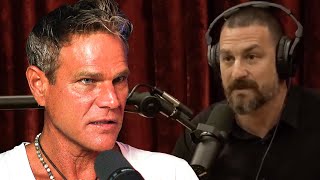
This is a YouTube interview (Dec 8, 2023) where Dr. John Lieurance discusses melatonin, responding to claims by Andrew Huberman and Peter Attia. He argues exogenous melatonin does not shut down endogenous production, emphasizes a strong safety profile and broad therapeutic potential (cancer inhibition, cardiovascular benefit, antiviral effects), cites a Canadian study claiming 40 mg/day reduced COVID spread, and disputes animal-based concerns about puberty/hormones as not applicable to humans. He also critiques inconsistent supplement labeling and advocates for higher-dose uses in some contexts; he authored the book The Melatonin Miracle Molecule.
Chapters
The melatonin conversation is really interesting. There's a lot of tinkering going on for different people. You've been testing it for like 20 plus years. You wrote the melatonin miracle. Like, this is a huge topic. When Andrew Huberman was asked by Joe Rogan, if taking melatonin shuts down your own production, he sidestepped the question, why did he do that?
It's a good question. I find that a lot of the conversations that I listen to that were a part of that interview with Joe Rogan are a lot of sidestepping. Melatonin does not shut down. If you take it exogenously, it does not shut down your own production. Right. So. So that's like that. He couldn't answer that statement because he knows or maybe he doesn't. He seems to be biased against taking melatonin in my thought would be because he said that he gets nightmares when he takes it. Right. And so if, if you're taking something and it's not working for you, you might have a negative effect to it. Right. So I think in general, the medical community has been biased against melatonin. And there's been a lot of misleading things during, I think, medical education that just gets a lot of doctors to be making statements like that it will shut down your own production or you may not want to monkey with that system. Right. Because you don't know what's really going to happen there. Right. And what is really interesting is when you look at the research on melatonin, it is incredibly safe. Like, the safety profile of melatonin is. I would, I would challenge anybody to, to bring me a molecule that has more testing showing safety than melatonin. There isn't. Every cell in your body makes it like, we need melatonin to survive. And there's been thousands and thousands of studies of the effects of taking exogenous melatonin on various disease patterns. Right. So melatonin with a conversation regarding sleep is just a narrow little sliver of why we even should be talking about melatonin. Like, what about the potential that melatonin shown to inhibit cancer? Right. What about its benefit in cardiovascular. What about even like. Like a Canadian study showed that 40 milligrams a day of melatonin prevented the spread of COVID You know, and then they. They've shown studies with melatonin as it relates to not just Covid, but other viruses and the survivability that that happens with that because it prevents that cytokine storm. And, you know, I'm. It's very sad to me that melatonin didn't get more spotlight through the whole pandemic because it there. There's not really another molecule that I think could have served a better. Served us more then not just melatonin, but higher doses of melatonin. In fact, some of the dosing schedules some of the experts are coming out with are in the hundreds of milligrams, which are kind of supporting some of the narratives that I've created in the melatonin Miracle molecule book, is that higher doses not only are safe, but they can start to have powerful effects on the body beyond sleep. And the reason being is that when we want to adapt and we can kind of go back to that conversation about endotoxins. Right. So if we're fighting that, constantly fighting this battle where we have microbes, bad microbes, we have good microbes, we have barriers where we have to keep things intact and we have to keep inflammation to a certain level, and there has to be this, what's called homeostasis within the body. And in order for us to maintain homeostasis, we have to adapt to certain stressors, and there's certain stressors that are going to exceed our ability to adapt, which could cause either disease or death. Well, melatonin sits and is produced by every mitochondria, and it prevents that adaptation response to shut down our energy production. And that's ultimately where we lose the battle, is when that inflammation, when those endotoxins exceed our ability to put that fire out. Right. We run out of water.
If you're like trying to.
If a house is on fire, you run out of water. Well, the house is going to burn. Right. So melatonin would be like that extra truck with water showing up. Fire truck. Right. And so it gives you this stress resilience. And that's, that's why I really love to take it when I travel. You know, especially traveling can be very stressful. Like I'm about to make a trip to Portugal. Yeah, right. To Nazare.
Yeah.
And you bet I'm going to be taking lots of melatonin on that trip.
So why is there so much confusion about this? Because, I mean, obviously, if they listen to our other three podcasts, maybe not. But if you're just learning about John's work now. So the book that he wrote is on the screen. The, the melatonin, the miracle molecule. You. You went so deep into the research. I'm like, how could he possibly write a 200 plus page book on one molecule? Well, you did. And there's some amazing, amazing research in there. This is not just anecdotal. What is the confusion? Why do all the little packages in Target and Kmart. Is Kmart even a thing? I'm dating the shit out of myself. I just said Kmart, y'. All. I was born in 1980, so that's why I said Kmart, Walmart, which is what I was thinking of. Why do all these packages have, like, 3 milligrams, 5 milligrams, 2 milligrams? You know, be careful. Don't exceed the recommended dose. Like, what's that all about?
Well, you know, this is where you kind of go to some of the concerns Peter Attia expresses. Right. So I think between Huberman and Peter Attia, I think we should address some really core points that they bring up. Number one is if you were to subscribe to this idea that melatonin was somehow harmful and that you wanted to really limit the amount of melatonin that you took, you'd want to take the minimal effective dose, Right. And homeopathy. So if. If mellow oral melatonin is 2 1/2% absorbed, right. You take 1 or 2 milligrams or 5 milligrams. It's homeopathic. Right. But the argument Peter Attia would make would be that if you test. Because the pineal melatonin, which is only 5% of the melatonin that we make, is a certain level in the blood, and you wouldn't want to exceed that. So because you want to be so precise and only take either a milligram or a half a milligram, you can't trust the supplement companies that make melatonin because he's pointing out to research showing that they tested all these different companies and that. That they had varying amounts of melatonin and sometimes a lot more than what they were stating on the label, which in his mind would be very dangerous. Right. But again, if you really look at the truth of melatonin and you really look at the research, there is there. There's no negative consequences to taking higher doses of melatonin, Right. So you would have to subscribe to this idea that you need to take these tiny doses to be in a safety zone. Right? So what's interesting is the study that he points out is on CBD gummies. Right. And I don't know about you, but, you know, I think cannabis companies probably are using their own product a little bit, and they might, yeah. Skew their results a little bit. If I were to trust like melatonin companies. I would rather go to, like, pure encapsulations or like go to some quality companies, but to just pick out random CBD gummies with melatonin in it and then say, oh, you know, all these CBD gummies that say they have 5 milligrams of melatonin actually had like 10 or 15. Super dangerous. I would recommend that you stay away from melatonin because it's that it, it, you know, it's just, it's just an insane mind. The, those dots just don't connect in my world at all. So it. You couldn't even have, I think, a legitimate conversation about this because you're not even on the same playing field, right? So with regards to Huberman, his argument is that it would delay puberty and then it had a negative effect. It would be anti androgenic, right? So it would shut down like, say, testosterone or sex hormones. So this idea that melatonin has a negative impact on sex hormones is based on a study on Siberian hamsters. Okay. And what you have to understand about Siberian hamsters is that they're on a breeding cycle that's, that's correlated to the seasons, right? So during the summer, they don't breed much, right? So their sex hormones are lower, melatonin's higher. So the melatonin is hardwired into stimulating these hamsters to either have their sex hormones higher or lower based on breeding cycles. We don't have that mechanism. In fact, there's been studies showing that humans do not have this mechanism at all. My question to in Dr. Huberman would be, show me one human trial that shows that there's a negative effect to delaying puberty. I mean, kids produce lots of melatonin. If melatonin inhibited puberty, we would have a real problem here, you know, and, and I can tell you my testosterone is fantastic. And I take a lot of melatonin and I have a lot of patients that I've been working with that have taken, you know, higher doses of melatonin. And we, we've not run into any of those problems. In fact, the. There's quite a few reference studies that show that it has a positive impact on sex hormones.
Check out some of the videos on this screen that are perfectly curated based on the video you just saw. Make sure you follow me and I'll see you in the next video.