MEN'S HEALTH: PHYSICAL & EMOTIONAL INTELLIGENCE | Josh Trent
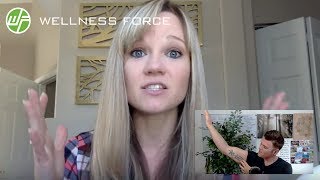
A recorded interview (YouTube) where host Bonnie interviews Josh Trent (Wellness Force) about emotional intelligence, balancing masculine and feminine energies, and using technology to support wellness. Trent emphasizes loving negative emotions, taking radical ownership, building accountability through tribe and micro-actions, breathwork and mindfulness, and wearable/monitoring tech (Fitbit, Muse, Spire) to keep promises to oneself. He offers a two-week Wellness Force app trial for listeners to monitor movement, sleep, and eating paired with coaching support.
Chapters
Hey guys. Welcome to another episode of the Emotional Revolution. I have Josh Trent with Wellness Force here with us today. He is not only wellnessforce.com, wellnessforce radio, he is an amazing health coach. But more than just that, he is a powerful influencer and he also is a tech guru when it comes to combining technology with your health and wellness. Now, Josh has become an amazing friend of mine over the last few years. He is so such a powerful force to be reckoned with and I am so proud and excited to bring him to you guys today. So. Hey, Josh.
Hey. So excited. Thank you for that beautiful intro.
Gosh, you are most welcome. So fill in the blanks. I mean, who is Josh Trent for those people who don't know your epicness?
Yeah. Josh Trent, at his core is a curious wellness coach who is interested in what things, what people, what experiences can allow us to live life well. I mean, that is really who I am at the core and it stems from quite a big story which I think you can link in other content as well. But I am happy to go wherever you want to go today that is going to serve that mission about how do we use our emotions, how do we use technology, how do we use wellness and the tools that are involved in that to live our life to the best possible way we can.
Yeah. And I love that you have this methodology around wellness that is more than just food and fitness. Do you want to talk about that for a moment?
Yeah. So diet and exercise are an old paradigm. And so I know people that are listening and that follow, you know all about paradigms. It's this belief that we have that is just old information that's pre programmed. Well, unfortunately for the past four decades in health and wellness, it's been all about calories in, calories out, eat less, exercise more. And we know based on science and psychology and habit loops that that could be not anything further from the truth. When we look at what really motivates people, what moves people towards a life of wellness. And, and so what I'm interested in, what I'm most passionate about right now is how do we use external frameworks of accountability, whether it's through technology, whether it's through coaching, different programs and what does that look like for us? You know, how can we actually use things that aren't a brace, that aren't a crutch, but that can empower us and give us better ways to track how we're showing up?
Right. And I'm going to get into that in a minute because I want to Hear. I love, love, love hearing some of your tech solutions to help us really kind of connect to that wellness. But before we get into that, let's talk about kind of what the emotional revolution means to you. And also, I want to dive into figuring out how the cycle of self sabotage plays into this. So where would you like to start?
Yeah, I think revolution, the word love is in there, which is really cool. And when I think of emotional revolution, it's quieting the voices in the brain, which I believe for my life, I've probably had loud voices ever since I could remember. And so those voices I know essentially are not true. However, sometimes I find myself, even as a coach, even as an influencer, somebody that helps other people, those voices are still there for me. And so what I've learned about emotional revolution is love. It's not tension, it's not being angry and trying to fight these voices that are in my brain. That's where we find ourselves in the habit loops. But if we can start loving these voices, I'll never forget this. Bonnie. I was interviewing Gay Hendricks on the podcast, and he was like, josh, when you're experiencing negative emotions, the most important thing you could do is you need to love your fear. And I was like, how do we. I interrupted him. Like, how do we do that? How do we love our fear? And he's like the same emotion that you have for your mom, for your loved ones, whatever it is, love your fear in the same way. Because there's a lesson in there. There's a lesson in the fear, there's a lesson in the tension. And I'll never forget when he said that. And that's really been a model of what I've tried to learn from.
You know, I. I'm going to use love in that sentence here, but I love that because, I mean, people couldn't see me in that moment. But, I mean, I took a deep breath, my eyes closed, I said, entered into my heart with that sentence. And it reminds me that, yeah, I mean, just with that same, you know, that same gentleness that we give to other people is in that moment where we. We need it the most. Because our fear can be so paralyzed and so big, and it's there to protect or to serve us in some way. And I love how you're saying, like, find that connection, find that reason and bring it inwards and allow it to be, like, loved in comfort versus something that just blocks us. I mean, powerful stuff.
Yeah. And I feel like with negative emotions, there's such a stigma around emotion. Especially for men. You know, we're in this paradigm shift right now where it's okay for men to start feeling.
Yes.
Like, it's not. It's not demasculinizing for a man to cry, for a man to show affection, for a man to love. Those are the things that get us in our body, out of our head, taking inspired action in life. And I just feel like the purpose of these emotions, these negative emotions, are really lessons. Like, there's some gem in there that we're trying to dig for, but if we're too angry that the lesson is there, we can't dig.
Yeah.
Can't find it.
Yeah. Defined anger to be a block many times.
Yeah. And then really, like, what's below anger.
Is sadness or hurt or disorder.
Nobody. When we go out in life and we're functioning in the world, you know, someone's angry, they cut us off, or we're in a coffee shop and somebody doesn't hold open the door or they snap at us. It's like, if I'm cognizant, if I'm practicing consciousness, I know they're just sad. They're not really angry at me. They're just sad about something that's going on in their life.
Right. You know, and I. This. Yeah. This is something for us to really be able to recognize. Like, if you can make that connection when you're upset, to really digging beyond that and saying, okay, what am I so hurt by? What am I so sad by? Or why do I feel the need to protect myself? Because it's a protection, Right. When we get angry, it's that fight flight and freeze.
Right.
That's the fighting aspect. I'm going to defend and punch and block and. And when we can get to it, it's really fear and sadness and hurt and, you know, something that is just. Is. Is blocking us, so.
Hundred percent.
Yeah. I mean, I want to go back to what you said, though, about men and emotions, Right. Like, you are bringing some masculine energy to a very. I mean, everything in my thing is feminine, Right. You saw female. Like, the pink. Like, even I'm proud of my dudes on this. Right. Like, you guys got pink banners, you got pink photos, and I'm like, you guys are representing.
I'm owning the pink, Bonnie. I'm owning it. I love it.
Well, my coach told me I needed to drop more into my feminine because I tend to be too masculine. And which. Most people, when you look at me and they're like, no way, Bonnie. But I am.
Shoot. Blonde woman. Yeah.
I know, right? I'm logical, linear, very, like, driven, go, grit, grind, Right? Like very masculine, especially in business. And so she's like, nope, finally, time to bring in some feminine energy. So let's talk about the masculine energy here for a second, Josh. And why has it been uncustomary for men to feel? And why is there this big revolution for them to allow them to feel now?
I love that. I feel like this is such a on time topic. There was an influencer that I can link for you, Maddie Moon. She reached out to me. She's like, I want you to write a blurb about why you feel there's this shift for men to actually own their feelings. And I think to your question, what's really happening is that the demands of men and how men are showing up for women now have never been higher. Those standards have never been as high as they are now. It's because we're in this evolving swirl of consciousness. Bonnie, there are people like you that are affecting hundreds of thousands of people that you are a splinter of the greater transformation that's happening in our space, in our wellness space. And so for men to step into the demands of really what is being asked of them from conscious women, from conscious society, they have to feel their feelings. If they're not feeling their feelings, and if they're going by the old adage of, well, I'll just turn on my effort and I'll just turn on my productivity lane, and then I'll be perfect, it doesn't work anymore. And there's a couple reasons why people are so privy and they have such a great bullshit meter now, especially online, right? Or anywhere that people feel what you're saying before it comes out of your mouth, they feel it from you before you utter any words. And for men especially, whether we're creators online, whether we're dating in person, like one. One of my edges right now is, you know, I'm seeking a conscious relationship. And so I'm practicing showing my emotions even when they're uncomfortable. And I'm not perfect, right? But I'm doing the best that I can. And I'm aware of this because I know that if I want somebody who's open and loving and connected and committed to doing their work, I need to be a mirror of that. And every man does, every man that wants something real and long lasting. You cannot just go from attraction. I mean, after the fire has died and the spark has. Has gone out, you're meeting that person for real. We all have six months or so when we meet each other, especially dating, or there's this honeymoon phase and everything's awesome. But then what? Then you're meeting that real person. And that's where it's most important for men to show their true emotions. Coming back to sustainable relationships, coming back to what it means to be a man in 2017 and 2018, it's way different than it was in the past. Way different.
Right. Well, and I think that's. I mean, I think that's true on both regards, too, because I think there's been a pendulum shift in female as well. You know, where we went from being servant to our spouses, you know, meaning, like we were supporting. And to being that shift where now all of sudden you hear this huge influx of girl boss, you, mom, boss, woman boss, entrepreneur, lady boss, you know, boss bitch. Right. Like, you see all of this stuff is coming up of females stepping into their power. But there's also got to be that balance where we still take part of that feminality, you know, and where we're balancing those two parts together just as well as what the men are being called to do as well. And it's really. And I think you and I both know Ryan Yacomi, and he often talks about. I know, just like that, that shift between the masculine and the feminine energies, really kind of balancing them out. And that's really. When you're talking, Josh, about getting in touch with that, that's what I hear. Like you're getting in touch with balancing those dual sides of yourself. And that's really the path that I'm on. Just on the opposite extreme.
Sure. And on the same note of going back to your question of, like, what does it mean to be a conscious man who's showing his emotions, he also needs to know that there's two sides of the sword. Like, a sword can either harm or it can protect and heal. So if we're using our emotions as a sword, are we knowing and having the wherewithal to pause and not. Not react to a situation and take that time to respond, or are we also willing to step into our masculine. Because as women's liberation and this pain body of so much suppression, so women. Women were suppressed for so long. Of course there's a ripple in the pain body. Of course. Like, the reason that so many women are in their masculine right now is because, first of all, it takes a lot of energy to create things in this world, in this current society. But then also there is that ripple, Bonnie. Like, there was a lot that happened to women, and so I get it. We all get it. But in order for us to have real relationships, women have to be able to lead with an open heart. Because if they're in their masculine, then what's the point of us being around?
Right. You know, and again, like, this is such a fun conversation right now because it speaks so true to where I'm at, you know, as a female entrepreneur. And, you know, for the longest time I had no idea that I was grounded in my masculine energy. But I grew up with a neighborhood of all boys, all brothers. Right. I grew up where, you know, being a girl, like, you couldn't play with Barbies, like you had a baseball bat or you had a bicycle and you were playing hockey. Like, that's what we did. Right. So it was natural to like, like always, like, draw more to that and be more like, grounded in that.
Yeah.
And now it's like, okay, wait a minute, you know, I don't have to be that to be included. I can really lead from love, to have my heart open and to really be able to connect. And I mean, Josh, like, you are such a shining inspiration. I mean, if I don't have 50 emails by the end of this with, like, can I date him? I will be surprised.
And I want to say one more thing. Thank you for that awesome compliment. It's like, think about the old paradigm since so many of your, of your listeners and the people are watching know about the paradigm thing. The paradigm in the past was money. If a man made money, then he would be like credible enough and worthy enough to have a relationship. Well, the money is like the spear. If you look way back, 10,000 years ago, if you were a hunter, we're still wired. We've only changed like 1% in our DNA, in our brain. You were able to hunt and kill and bring back something. So it's genetic for men to want to provide. And I'm not saying that women can't be providers, right? They obviously can be. But there's something in us, and I'll say this from a man who is connected. One foot in my spirituality, one foot in my beast mode, my physical body. Like, it is very important for us as mental health to have a purpose, have a line of a mission that we're bringing home the bacon for if we don't have that. That is what I found. When people are not purpose driven, especially men, when they don't have like a clear lane that they're going in, they're not going to have great relationships. They're going to use relationships as A way to numb, which is a topic that I know you talk about quite a bit.
Yeah. Yeah. Well, let's talk about that for a second. So when we're not connected to our emotions, we're not aware of our emotions. Like, why do people numb? And what are signs that you're numbed out?
Yeah, this is awesome. Because I really feel like. And something that I actually read in your book. I want to give you credit for this. I read your book when we interviewed first on the Wellness first podcast, and I took emotional inventory. I've been taking emotional inventories for a while, but just literally taking an inventory of what's not working, that's a big deal. That is probably, I would say, the most uncomfortable thing anybody could ever do is take a real emotional inventory of what's not working. Like, it almost takes, once we take a breath right now, just to think about that. Like, taking that true inventory where you look in an emotional mirror and you say, oh, my gosh, like, there's two big things in my life right now that are not working. How we know we're numbing is that we feel that, but then we notice noticing is also a skill set. We notice that we're eating late at night, we're watching porn, we're going on social media for seven hours, and we're distracting ourselves with lost. You know, like Netflix marathons and whatnot. So that's how you know. And that's a skillset, too, Bonnie, is the awareness. Noticing that there's something super uncomfortable inside of us, which takes work to notice, and then also noticing that we're doing all these numbing activities. And, you know, there's. There's so much science that supports this, it's incredible. Yeah.
So what do we do when we discover we're numbing? You know, now that we've make this connection, let's say that we begin to practice flexing. I call our mindfulness muscles. Right. Like, where you become aware of what it is that you are doing and why you're doing it. Like, what. What does somebody do once they recognize that they're numbing and distracting?
So you've done the emotional inventory. You're now at this point where you've. I like to call them blocking factors. When I coach clients and wellness, we identify blocking factors like toxic. Toxic products in the home, toxic people in their life, toxic behaviors like screen time at night. It's the same thing with our emotions. It's the same thing with the dialogue that's going on. So we've done the inventory we pick out one or two things. There might be more. There might be, like, five things we need to change, but that can be overwhelming. So I think picking one or two things to really dive deep into and then ask yourself, all right, I've done the inventory. I've been honest with myself. I've identified, like, one or two really powerful things that I get to do some work on. And now how can I fortify that? What's this bridge look like for me? Okay, I've done the work to identify. I've worked with a coach, I've worked with a group. But now that I've identified it, how do I walk the bridge between knowing and doing? Like, what does that look like? That's where I think this comes into practice. People watching this, people that are involved in Facebook groups, people that are fortifying themselves with a community, and people and things that lift them in the direction they want to go, which is, like, the question of, how do I walk this bridge between knowing and doing.
Wow. You know, I think you said something really powerful there. I get to. I get to change this. Instead of, like, I have to. Like, that's powerful words. Because people don't pay attention to the impact that their words are having on their motivation or on their drive, you know, to actually do and accomplish things. But that's a powerful. You know, I mean, you automatically. You didn't even think about that. And that right there shows how much you flex your muscles, right? And then. But the other thing as well is that, you know, it's about taking action. And Josh is telling you guys here to take small action, micro action, you know, to begin to make these changes. I mean, don't try to tackle every aspect of your life all at once. Talk about getting burnout, overwhelmed, and in breakdown, because it's just going to be too much change all at once, and your system will go into survival. And so, you know, I know you got some tech tools, dude, to, like, support this. So when someone's on this, you know, journey and they're ready to do this, like, what technology would you recommend for them to maybe enhance their awareness or mindfulness and to begin to dig a little bit deeper?
Love that. And quick caveat to the emotional intention behind any technology always trumps technology. Like, there is no tool. There was no app. There was no anything you'd ever pull into your life or set up for accountability that's ever going to take the place of doing that deep inner work, like people do with you, like people do with the inventory. So I just wanted to say that now the technology, there's three areas. There is the mindfulness piece, there's the physicality piece, and then there's, what am I doing with my time active versus my time sedentary. Those are three different categories. Let's go to the time sedentary and active. We have apps like Fitbit. There's a ton of different things out there. I really like the Fitbit. I think they were kind of like the grandfather app. They were here first so you can set up just wearing a simple wearable. I have the Fitbit blaze here, so you can have it just gently nudge you on the wrist. If you've made a promise to yourself that you're going to step into a life of wellness, part of that means that you could take movement breaks. It's keeping a promise to yourself. That's what this is really about. Technology allows you to keep promises to yourself, so it can nudge you on the wrist and let you know, hey, Bonnie, you haven't walked for two hours. You've been working hard at the desk. It's time for you to walk 250 steps. Oh, my gosh. Thank you so much. Thank you for helping me keep my promise. So that little reminder comes up, right? So that's one piece. We want to make sure that every hour or two. Absolutely. Every two hours, we're walking about 250 steps. Let's set ourselves up to win by using these little reminder systems. Whether you're technology focused or not, just having a gentle reminder for you to do something you already told yourself you wanted to do is awesome, Right? Whether you like technology or not. So that's one piece. The next one is your physical training. So we can go into a ultimate rabbit hole here. I think for the listeners and for the people watching, what's most important is to realize that you want to sweat 20 minutes a day. Now, I know you're probably thinking, dude, we already know that, right? But then do it. And I think that's the real piece. It's like, just because you know something doesn't mean it's actually going to execute, doesn't mean you're actually going to do it. And so how do you have the bridge? How do you have the bridge with emotions? How do you have the bridge with physicality? You can have reminders set up on your phone. You can have groups set up where you wear your Fitbit and you challenge each other to do workouts together. You can gamify, you can make it fun. So if you're a technology person or not, you can have these little pieces that remind you. And I think using a Fitbit or using a jawbone, there's like 50 wearables out there. It doesn't matter, honestly, which one you pick. I get that question a lot. Like, which wearable should I get? You know, what piece is going to be the best for me? And the better question is, what is my goal? What am I trying to accomplish? If I'm a man and I'm a hard gainer and I'm a really skinny man and I want to put on muscle, maybe the wearable isn't the best thing for you. But if you're a busy mom with a schedule that's jam packed and you have notifications going off all the time, would you like something that reminds you to keep your promises to yourself? And I think that's what makes a big difference. Going to the mindfulness part. Mindfulness is obviously the catalyst for everything else because if we're not mindful, why should we even care about moving every hour or being physical? So mindfulness meditation, doing this, taking a deep breath when we need it, like that's more powerful than the movement itself. So I use a technology piece called the Muse. And we know, based on scientific research that if we're in our Alpha 2 brainwave, when we meditate, that's kind of like the flow state. That's what drops us into flow. If we can, if we can be in flow and if we can do flow for maybe even 10 minutes a day, just 10 minutes of focused breathing, focused meditation, how could that transform and radically shift the rest of our lives? And so I found by wearing this headband. I'm a very like a type person. I like to track things. I enjoy seeing feedback on how I'm doing. And so I have an app on my phone. I wear this on the temporal lobe and it tracks me and it tells me, hey, when you did your last meditation or for the past week, when you've been meditating, were you actually in flow state or not? Were you too active with your brain? How many times did you recover? Did you watch the thought come by or did you cling onto it as it came by? And I think that's the powerful thing with the mindfulness piece. And of course, one of the devices that I love, we just had a giveaway that I gave way to a Wellness Force radio listener was Spire. And Spire is breath tracking. So it's a little piece you wear on your waist. And I think everybody can breathe more. I mean, I don't know anybody watching or listening that doesn't get to breathe more. And it allows you to set a reminder in your phone. Can you imagine being at work, you have a big presentation and you find yourself like doing upper chest breathing and you're freaking out. Imagine if you just got this little soft notification that said, hey, Nancy, breathe. And you were able to just take a breath. That's powerful. That's where technology can actually heal us. Because for so long, Bonnie, like, technology has made a sedentary. Technology has disconnected people. We see this right now with social media, all these fake friends, all these people that we have that we're not connected to. So, like the sword technology can help us and it can heal us, or if we're not mindful, then, yeah, it can harm us. But those are those three categories. The mindfulness, the physicality, how we're doing with our workouts, and then just how much we're moving throughout the day. I think those are the ways that we can really tap into this mirror for how we're showing up. I'm really excited about this. Non invasive glucose monitoring. Can you imagine if you wore a device for a month or two and when you ate food, your phone would tell you how it affected your metabolism?
Wow.
That's what's coming next. So we're going to start seeing these devices where people can actually see what types of foods are affecting their blood sugar levels, are affecting their metabolism. Like, that's really exciting.
Wow. You know, it's funny, I mean, I know technology is getting to a point where it's going to allow all of us to be healthy all the time. You know, it's going to really help us figure out, okay, like, how to be, you know, to be on track. And, you know, I love all this stuff, you know, every time talk to you, Josh, I mean, it truly gets me excited and reminds me, and it reminds me about how often I need to take a breath, how often I need to move, you know, because it can be very easy, like even putting this on. If you can imagine how many hundreds of hours went into sitting behind a computer, building all the webpages, connecting with all the interviews, sitting to do the interviews, you know, finding the speakers, like all, all of these elements where you're behind a computer, slunched over like this, you know, like doing, you know, doing the motions and having that technology that says, bonnie, get up and move, move, move. You know, I mean, we, we often were like, okay, walk, break, like, and me and my team just get up and walk out and we Go and talk about sweating. And how do you feel in California.
When you come back? Don't you feel chemically different a hundred times.
And what's interesting. So my. My assistant especially, she's going to love me for this, but she'll have so much resistance to walking. Like, I don't want to walk.
It's gonna break my concentration.
It wasn't even just that. It just more or less like, I don't want to go exercise, you know? All right, cool. And she's gonna die when she sees this. But I'm like, get. Like, let's go. And sure enough, like, we go around. We go around the block. It takes us 15 minutes, right. We come back in, and she's like, holy cow. I didn't know how much I needed that. And I said exactly. To be able to unplug to we looking at the houses. We're like, oh, I really like those shutters. Oh, look at those flowers. Oh, look at the sky. You know, like, you're just. You're appreciating things outside of you and you're breathing. Like you said, you're breathing when you're out there and you're not just so focused. And you guys, nowadays with standing desks, there's so many ways for us to be able to start getting more movement and as Josh often says, you know, getting out of the sitting epidemic that we're facing.
Yeah. And also, too, Bonnie, like, there is something to be said about injecting many challenges in our life.
Yeah.
I recently did this seal fit event where it was this 14 hour crucible, which the whole point of it is to get you so in your body that all the voices turned down. And that was incredible. Like, there were some tears. We did a marketing video which I'd love to share with your audience. And before I did it, I've never talked about this on the air, but because of what I've come through in my life, and just a really great reminder for me is to breathe. I actually got it tattooed on my arm here. Yeah. Because that's a big reminder for me is to breathe. And it's.
Is that English? Was that English?
This is Italian.
Okay. That's what I thought. I'm like, I can't read it.
Yeah. It's seposo resperare posto seguere. And what it means is, if I can breathe, I can choose.
Wow.
Yeah.
Oh, my gosh. I know. I actually have one of our coaches, she has just breathe written on her wrist, and another girlfriend of mine has surrender written on her wrist. And it's just such a powerful way, Josh, to like have this thing that just really is just permanently there to remind you of the most important piece and that is to be present. And when you breathe, you can't help but be present. And you know, what kind of an impact do you find breathing has on your emotional well being and your emotional self?
Oh my God, that's such a loaded question.
Intentional.
I think what comes up first is without breath, we don't have life. So there's some connection between our breath and us being alive with us having energy. So if we're not breathing, if we're caught up in the emotion, if we're so much in our cortex that we're not dropping into our physical body, if we have not activated our rest and digest part of our nervous system, this parasympathetic branch, this is all the things that happen autonomically. Like breathing, by the way, is the only autonomic response we have any control over. You don't digest your own food. Your body does that. You don't breathe yourself when you sleep, your body does that. It knows what to do without your head getting in the way. It just knows what to do. And so if we can get out of our head by breathing, I would think that's probably the best thing. I mean, since it's tattooed on my arm, like that's real for me. What's most real for me is how do I get out of my head? I breathe. Oh, how do I breathe? I set up things in my life to help me breathe. Experiences, people, this conversation. I've taken like seven deep breaths while we're talking. So, you know, fortifying is a word that comes to mind. What does breath do? Breath fortifies us to live.
Gosh, that's so powerful. And yeah, you're right, it was a loaded question because I wanted people to hear it.
And we just barely scratched the surface on the right.
But it's come up so many times in these videos, you know, and it's just one piece that people are just like, just take a breath. And it's been funny. I mean, you can see it. As soon as somebody even drops that sentence, I immediately go. And my whole everything changes. Right?
I just breathed and smiled. Yeah, no, it's a really big deal. And whether you're science focused or whether you're more woo woo. Which they're both cool. I like science and woo woo. They both give you the result at the end of the day, like, what's the biggest report card in Our lives. That's how we feel. How you feel. And in the process of you living your life well, are you able to enjoy that process?
Now, let's point this out. He said, how do you feel? Not what do you have? You know, And I think that's a big thing that we often forget in a world where we're striving for excellence, we're striving for more, we're striving for the life to have the car and the accounts in the house and all of these things that we give so much value and purpose. And though they are valuable and though they are great, you know, we have these technologies. I mean, amazing. But at the end of the day, is that truly giving you the ultimate thing that you desire, which, you know, Josh is reminding us, is how do you feel? Did it feel good to acquire that the whole way through, or just once you had it?
Yeah. And a big guidepost that I'd love to do a big plus sign on what you just said. Another guidepost for me came from a teacher that I had the lovely experience of being taught by about three years ago. His name is Michael Strasner. And he came on the podcast and he said, feelings are essential, but they can't dictate our actions. So just because we have these negative feelings that come up, they don't have to direct us. We don't have to allow them to direct us. And that is honestly my learning curve. It's still a learning curve. Any coach, any guru, any leader, anyone that's helping others that pretends like they don't have the same work they're doing themselves is not trustable. So that's a big one. That's a big plus sign on top of what you just said.
Right. Wow. So I want to kind of loop back to something you said, and then I want to actually dabble on emotional intelligence for a second, too, because I know you just are an expert around this, and, you know, it's my favorite topic, but you mentioned something both about keeping promises and accountability, and I want to really be able to emphasize what that means in emotional accountability or, you know, keeping emotional promises to ourselves. And I would love for to hear your ideas around that.
Yeah. So, okay, what is a promise? I don't know the Webster's definition, but, like, a promise is something. It's an expectation that we vocalized. It's something that we've claimed we've put out into consciousness. And so if we're saying to ourselves or our community, like, I promise myself that I will do this thing. Why? Why are you promising yourself that? It's because it's attached to your worth. So if you're making a promise and you are worth your promise, what disconnects you from keeping your promise? It's just a lack of self worth. That moment, it's like, how worthy do you feel in that moment? So what do we do when we're not feeling worthy? We get around people that remind us we are. We get in environments and we go to coaches and we fortify that group to remind us how great we're doing. And when we make a mistake or when we don't show up to our promise, there's two ways we can go. And you talked a lot about this in your book. It's going into a shame spiral or it's giving yourself grace and moving forward. That's the emotional intelligence. So you ask, how do we keep accountable? How do we keep emotionally intelligent in this decision point? It's like this flash point where we keep the promise or not. And if we don't, do we shame spiral or do we go into grace and breath and then move forward? And that takes more than just ourselves. We are biochemically wired, from a scientific perspective to be in a tribe. Like, we're meant to be in a tribe. We're not meant to walk the bridge of knowing and doing alone. There's no way we're wired for that. So how do we keep accountability when it comes to emotional intelligence? We keep it by being around people and putting ourselves in environments in places that allow us to walk that bridge. Even if it's scary, even if we don't exactly know what's going to happen on the bridge. Like get people and things in places and environments around you to fortify your trust as you walk the bridge.
Right?
That's. That's what it's really about, accountability, you.
Know, And I love that you're bringing up tribe. And I think I want to make a disclaimer here because I think a lot of people like, well, how do I find a tribe? And, you know, there's a lot of different ways you can. There's a lot of. I mean, meetup is a great way to start finding people, you know, going on to Facebook, finding Facebook groups, you know, finding online communities, you know, read it, listening to podcasts, you know, getting involved in whatever, you know, community groups, church groups, whatever. There's so many ways. But what I. Reminds me of an old prophecy that I just can't help but have to share right now, Josh. But, you know, when we're looking for a tribe, and that means getting rid of the tribe that we have sometimes, because maybe you were born into a tribe that only knows dysfunction, that only knows pain, that only knows suffering. And a lot of times we feel obligated to that tribe because of the heritage, because of the lineage. I can't say the word, but lineage, that's the word I'm going for. Right? So we feel obligated to that. You know, and when we talk about having this emotional accountability and this emotional revolution, we have to be willing to move out of this group. But there's a moment that'll happen where you move from that group where you have to go through a space of nothingness to acquire something more. And it's the state of nothingness that paralyzes us. And so that old prophecy is, you know, there's an old man wandering through the woods, and as he's wandering around, he's beginning to starve. And all of a sudden, he stumbles across a peanut, and he knows that this is his salvation. And he picks up this peanut and he clenches it in his hand, and he's thanking God. Thank you. Thank you. Thank you so much for this peanut. I'm saved. I'm saved. And as he's walking, he stumbles into a village, and he's disoriented, and he's just so far gone. And this little boy sees him and knows that he's suffering and runs home and comes back with a big, healthy meal, and he's like, please, mister, take this. And the guy looks at his hand, looks at the plate, looks at his hand and begins to walk. And the little boy runs after him. No, you don't understand. This is a gift. Take this. And the man just looks at him again, looks at his hands, shakes his head, and wanders off the woods, never to be seen up again. And the reason why he wasn't able to let go of that peanut, to accept that food was because for a brief moment, he would have nothing. And we stay in that survival, you know, where we like. No, I have to cling on to this tribe because it's all I know. And we're so afraid that if I let go of this, that you have to go through this bridge of nothing or this. This emptiness for a moment. But you can't have this fulfilling life changing, absolutely, like, gorgeous thing in your life if you're not willing to let go of everything that you know to acquire it. And that's what you're saying. And I'm Just like it melts my heart because people don't realize that even me. And I know you have went through moments of emptiness where we've let go of these old, you know, tribes and people that don't serve us. And it hurts and it sucks. But I mean, now our lives are filled. I mean, I get you in my life regularly. I'm like, hallelujah, right? Like, you're a great friend.
Oh my God, that story was so good. And it makes me feel that there's been probably every maybe five to seven years. Bonnie. Of this path. It's like every five or seven years, by the way, every seven years all of our cells turn over. So it kind of makes sense if you're, if you're watching or listening and you're thinking, wow, maybe my friend groups have shifted every five to seven years. It's because that's evolution. Like to really evolve, going back to emotional revolution, right? Love, to really practice self love. It requires letting go of some of these people and places and things that are not serving the current version of you. Like, and it can come, I hate to say this, but it can come from family the most. It can come from close high school friends the most. They'll sabotage you just because they want to keep you in their bubble. Like they don't want to go on, they want to stay in their beautiful little community. But you have your sights on something different. And if you're willing to go through that path and go there, the painful part is letting go of like lifelong friendships. Sometimes people that sabotage you knowingly or unknowingly, they don't knowing, they don't know they're doing it a lot of times. But it happens with diet, happens with emotions, it happens with everything. So such a rad story.
It's not in it. And I like that you mentioned too. You know, it's not from this place of like we're shaming them or we're making them wrong because they haven't evolved. You know, it's again, going back to love and grace, right? Like having that love and grace and still, you know, saying that, like, I understand, you know, however this is, this is what I need right now. And one of my favorite things to say is what's right for you isn't always what's right for everyone around you and still be willing to do it. Anyways.
You know, what came up for me just really quick, I'll share is around my relationships with my parents that what you're talking about, where we get to let go of Certain things. For so long, I was attached to an identity, an old paradigm about like, well, my parents didn't do this for me, and this is why I'm this way. But once I took radical ownership and inventory, I realized, oh, my God, like, my dad didn't have the best father either. My mom had her disease that she was dealing with, so that became an empowering, light and free way of being that was so much more beneficial to creating a life of wellness. And now at this point, I'm 37. Like, I talked to my mom. We're going to see her for Mother's Day here in a few days. And, you know, I have this relationship with my father. I just had a birthday and we hung out at my dad's house for the first time in my life recently. And I was never able to create that, ever. If I wasn't taking an honest look at the petulant child that was inside, that was a lot that was kind of like that. I was choosing to allow and dictate the path of my life. So the authentic self is way different. The authentic self is about real connection.
Right? You know, and this is. I want to make sure to point this out because you said radical ownership. And for all of those of you watching, go back and listen to Ella, you know, on Air with Ella podcast as well, because she. She mentioned the same first word, radical, but she called radical responsibility. And so the two of you are just like, really kind of put pushing this point home about how we can to truly unhinder and to live our best life. And the best expression of ourselves is this radical ownership, like Josh is saying. And you guys, I encourage you to heed this. I encourage you to connect with Josh. I mean, he's so easy to be able to connect with. You can listen to him anytime you want. You listen to them right now by going to wellnessforce.com and you can find me on there a coup times, right? You can find, you know, some of the other pod, you know, people, immovable heart. You know, we have David on there as well. I mean, you can find a lot of these amazing people and get longer interviews, you know, through Josh as well. But Josh, if somebody wants to connect with you socially, like, where's your jam? Are you Facebook, Instagram?
Where are you at all those things? And if you just type in Wellness Force on Google, I'll come up. If I said something in this, by the way, thank you so much for having me. This has been so much fun. If I. If I said something that irked you, or that made you more curious. Reach out to me. There are ways that I can help you create these external frameworks of accountability in regards to technology or coaching. If you have a wellness goal specifically that you're working on, odds are if you're working on emotional intelligence, you're probably also working on your wellness, they go hand in hand. So if you're open to technology, reach out to me. It's joshellnessforce.com yeah.
And so, Josh, I know you have an amazing gift for everybody who's listening, like, what is your treat for them? And so tell me what it is and who. Who absolutely needs this?
So it's two weeks for your entire audience if they want to use the Wellness Force app. I have a Wellness Force app. And we'll look at how you eat, move, and sleep on your app. And you can just wear a wearable. I'll read any wearable you have. I'll be able to coach you on the back end, and my assistant can help you. We just want to see how you're showing up for two weeks. So if you want to do this physical accountability and this physical inventory of how you're showing up while you work with Bonnie and while you work with someone else for your emotions, there's a nice interplay between the two. So you can get that. And who is it for? It's for anyone that wants to live their life well, which is, I hope, everyone, right? If they're. If they're here, if they're here, that question rings true for them. So it's for everyone watching, right?
And you know, the beautiful part about this, you guys, is that Josh is saying you get to monitor. You get a snapshot that's, like, where you don't actually have to do a lot to create, like, I mean, they're going to be able to kind of set it up and teach you how to do this monitoring and using these technology to help you do that so you can get the snapshot to figure out, okay, what's working well and what's not working well. And so we can start making mini tweaks, you know, micro actions is what I always say, to make big moves. And that requires that snapshot and understanding. So Josh is a very generous gift to help us kind of get that framework, the understanding. And like you said, he's in the background able to coach you guys, like, through this process, and his team's there to help you do that. And that's what's the beautiful part about it.
Thank you so much. Yeah. And it's honestly, for anyone that just wants to have something that they have in the background for a mirror. Do you want more of a mirror of accountability? Great.
Yeah. So, you guys, we make it easy for you to connect with Josh. All of his links are available below. We've Connected Wellness Force. You can have instant access to that right now. If you want to go towards the end of this page, or if you want to just sign up for it and Josh will deliver it to you in 48 hours. Just fill up it out the form below this. It takes two seconds, and within 48 hours, Josh is going to deliver that access information directly to you. So whichever way you want to do it, you could go down and click over to his site and fill out the information or just fill out the form and it just takes a little bit extra longer. But either way, he's here to support you, so I hope you snag that. And, Josh, thank you for your brilliance, your heart, your authenticity. I mean, you just showed up so powerful today, and I am just so grateful for you.
Mmm, likewise, Bonnie. Thanks for the opportunity and thank you for everything that you've taught me. You've been a great inspiration to me. So it was a pleasure to come on and talk to you.
Wonderful. Thank you so much, Shash.
Thanks.
More from Josh






Your child's future start before pregnancy... and even before conception! #podcast

MD Reveals: Your Healing Creates Your Child's Reality (The Souls Coming In Need Strong Bodies)



