Midlife Muse: Why Beauty Culture Fears Powerful Women
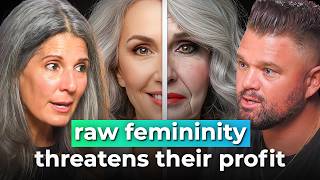
Transcript of a YouTube interview (host Josh Trent with guest Amanda Hanson) exploring how toxic beauty culture and patriarchal narratives shape women's self-worth, aging, and relationships. Hanson critiques beauty industry trends (idealizing youth, infantilization), describes her personal journey (explant surgery, embracing natural aging, 'queen' vs 'princess' archetypes), and outlines coaching practices (emotional hygiene, divining inner mother/father, embodied action). The conversation interweaves personal stories (father abandonment, reunion; motherhood and adoption) with practical coaching frameworks and cultural critique.
Chapters
The maker of Victoria's Secret and Abercrombie and Fitch said that the ultimate of Beauty is a 15 year old white woman with blonde hair. What toxic beauty culture does is let's create things that women should be afraid of. As soon as we get a woman afraid, she'll buy something and that's a multi trillion dollar system. Skinny trends. Big butts trend. Boobs trend. Thick eyebrows trend. Our bodies trend. You feel like no matter how much you do, you are literally never pretty enough, skinny enough, not thick enough eyebrows. It is overwhelming and it is the life of an average woman. We have 40, 50, 60 year olds and beyond running around in grown women bodies, but still operating from a princess narrative. We as women are raised on this idea of being a princess. I don't believe that deep down a man really wants to be paired with a princess. I don't think it's very attractive in the long run. I have men come up to me every time I get off of a stage saying to me, what you are teaching and talking about is what we are craving as men.
Can you go into the pain of this statement that no woman is broken? Most are just unmothered. What is the real concept of beauty when it comes to women that society has taught us? And essentially what is the most beautiful thing about women that society has tried to take away?
I think that culture, society, and especially we have to talk about toxic beauty culture because we have to understand that's a multi trillion doll system. And what toxic beauty culture does is let's create things that women should be afraid of. As soon as we get a woman afraid, she'll buy something. So there are things that I didn't even know I was supposed to be worried about as a woman. And it started when I was very, very young. The first signs are messaging that something on my body or with my appearance was somehow not palatable, not as beautiful as it could be. But here's a solution. Just buy this three step thing and you will forever feel beautiful. And then a couple of weeks later, oh, look at that, there's another thing that is going, tell me how I'm not beautiful. So it is a train you almost can't get off and it psychologically chips away at you day after day after day. And you feel like no matter how much you do, you are literally never pretty enough, skinny enough, not thick enough eyebrows. It is overwhelming and it is the life of an average woman. And she then spends most of her resources trying to chase this beauty that is forever a moving target. Because I don't know about you, but if you've paid attention or seen anywhere in all my life as a woman, things trend. Skinny trends, sure. Big butts trend. Boobs trend. Thick eyebrows trend. Hair extensions trend. Our bodies trend. It's so profoundly insulting to me. We don't hear about trends for men's bodies. Men just get to be men. They're free to express and be however they want. We don't hear about what hairstyle is trending, what's, what shape of a belly is trending, what kind of goatee is trending. Men just get to be free in their bodies and express however they want and it's okay. And so for women, we have sold this illusion of beauty. As you know, the maker of Victoria's Secret and Abercrombie and Fitch, there was an expose documentary on him. I'm forgetting his name right now, but he said, and it has come out that the most ideal, the ultimate of Beauty is a 15 year old white woman with blonde hair. And so we understand what a sick, sick culture we are when we are infantilizing women forever at that age and expecting that she won't have any wrinkles, she won't have any signs of aging. And the story then is told that somehow a woman who's aging is no longer attractive. And so I, I find that women spend most of their financial resources, their time chasing this. And then also nobody wants to have the conversation about how toxic all of these products are.
Let's have that conversation before we get there. You said something very profound that I'd love to bring up. And I wonder how this rings for you now. You said aging is a spiritual experience when approached with a profound sense of self worth. That's a complete 180 from the culture of billboards and New York Square. What did you mean by that then? And does it still resonate for you the same now?
It still does for me. It is one of the most beautiful journeys I've ever walked as a woman. Waking up every morning and meeting myself in the mirror and honoring what is, with no beratement, with, with no fixing, with purity and understanding that this bridge I am walking to the crone that I am becoming. I won't bypass a minute of this to do that as a woman in the world. With all the financial capital and resources in the world, I could do anything I want with my money. I have overflow in that department. To choose not to is a big F you to the patriarchy and to toxic beauty culture and a world that's trying to tell Me, I am less worthy because I look a certain way.
Do you feel like it's healthy to say things like, f the patriarchy, doesn't that feed the dragon?
Its no. So my silver hair, my non Botox, my non filler was when I turned 40 and I was watching all the women around me scurry and be so terrified. All of our husbands. My husband's six years older than me. 40 came and went as it was like a non event. Aging was never even discussed. He went gray, his beard went gray. It wasn't even ever. I don't ever remember a discussion about him aging. If anything, it was that he felt more sexy, more revered in his own reflection. I'm sorry. Until you walk in the shoes of a woman, you can't understand how enraging it is to then watch what's happening to women at the same time. And I was furious. And sometimes a woman needs a little dose of fury to actually leave a bad marriage, to claim something for herself, to start a multimillion dollar business. So my fury is always what starts me. It's not where I land and end. Where I am now is profoundly personal. I'm gonna be 53. So 13 years later on this journey, people can come, go, do whatever you want with your face, with your skin, with your hair, with your body. This is what I choose. It is the most beautiful act of love that I have chosen. And it's a very personal journey now.
So personal, because, look, I'm obviously a man. I have no idea what it's like to be a woman. Yet in the podcast logo, there is a triangle, an upside down triangle. And I learned in 2022 that I had been really severed from my own feminine energy because my mother was bipolar. And I just took that out on everyone around me, including multiple years of pornography, abuse, and really demonizing women for being women. So it was this understanding that feminine energy lives in me.
Absolutely.
Masculine energy lives in you. They're both actually beautiful, but really at the core of this is the heart. The heart knows that there's this beautiful balance between the two. Yet what. What was it in the initial stages of your work that that really broke your heart when you saw what was happening to women, when you saw the narratives of control and is that fuel source. Has it changed from what initially broke your heart?
Yes, I would say what really broke my heart is that we are, I think, oftentimes trying to get the exact same need met in a relationship, man and woman. And we are missing each other because we're speaking different languages. And I have this philosophy of. I kind of came up with this a few years ago to help contextually not meant to be insulting at all, but that we, we as women are raised on this idea of being a princess. You know, we are raised on the Disney movies and then there's the romantic comedies where all she's doing is chasing cheap love, trying to get him to notice her. And it doesn't matter what qualities he does or does not have, he could be in love with somebody else, but if she could just get his attention, she will be the winner of all.
The things or change him. Like Beauty and the Beast.
Exactly.
Yeah.
So we grew up with the storyline. It's understandable how women come in. I was too. We all come into this relationship status as princesses and I think where we fail women is that there isn't. We see women continue that and continue that. Like with the Kris Jenner, right, and her 67 years old, trying to look like she's 20 something with that extreme face surgery or Demi Moore, right. 60 some years old, but trying to look like she's 25. So these women still chasing, they're still in that princess energy, believing that their worth is somehow tied to the male gaze, the male attention, that, that very young girl energy. I think that the big problem is that we as women, we don't have female leaders showing us what it looks like to step into the queen energy. And so in relationship, one of the things I do with my clients is help them walk across the bridge from the princess to the queen in every aspect of life, in the bedroom, in their conversations, in their communication, in all aspects of relational, in business with their children, with their communities and with their body in front of the mirror. So if we don't teach women to exit princess, we have 40, 50, 60 year old and beyond running around in grown women bodies, but still operating from a princess narrative. And I don't believe that deep down a man, like a man really wants to be paired with a princess. I don't think it's very attractive in the long run. And so I see so many couples missing each other because I have men come up to me every time I get off of a stage saying to me what you are teaching and talking about is what we are craving as men. We are craving that strong feminine that calls us to even rise. So what we've done in our marriage of 29 years is we are the ultimate power couple because I've risen into my queen and he can rise into his king because he's not having to constantly worry about, can I source myself. He also knows that he can meet me in the most beautiful space of conversation and we can both hold space to hear what the other needs, what someone, what the other's longing for, where the other's feeling misunderstood without running out of rooms, egos being hurt. So I believe that what breaks my heart is we really are missing each other. We're often thinking, I remember thinking this, oh, I just married the wrong person. If only I'd married the right person, this would be easier. No, that's not the case now. I am not saying we should always stay. Of course there are clients that I advocate for them when they are in emotionally and of course course, physically abusive relationships. It's a non negotiable. But more often than not, Josh, I can actually help clients source back into the most loving place. So many of the women who come to me, they are on the verge of filing for divorce and now, years later, their husbands write me emails saying, I don't even know where to begin to say thank you. We have found a way that we didn't even know of before. We didn't even have language to before. And it's through the lens of. I also teach that women are the emotional leaders of their families. Men can lead and do lead in so many beautiful ways. But my husband's like, babe, you have led our family with the heart and the emotionality to places I didn't know or wouldn't have been able to. It wasn't even accessible within him. So that emotional leadership, sometimes women push back and they're like, we don't want to take on another thing. And I'm like, okay, then go ahead and continue on with the misery that you already know or rise to the occasion and recognize this as a beautiful source of power for your family. I love. I am honored to be the emotional leader of my family in both directions, even for the parents, you know, our, our sets of parents. So I am, I'm honored to have that role.
The honoring too, is connected to what you mentioned earlier when you said the crone. And I love this phrase. I don't know too much about it, but. But in Alison Armstrong's work, when we had her in the studio, she talked about this journey from, you know, prince to knight to king. And so for women, can you give us a window on that? Like, what does it truly mean when.
A woman is a crone, she's tapped into a version of herself that she could not access before. So, for example, I am going to be 53. I am on my 11th month of not bleeding. So if I go one more month without bleeding, we are safe to say that I am on the other side. Right. I may still have some symptoms of menopause, but I'm essentially on the other side. What happens when a woman has completed that journey is her estrogen levels have dropped to the lowest they will ever be in her life. The estrogen hormone is the hormone that has women want to take care of and nurture and put herself at the back of the train. If you don't override this time and you don't onslaught yourself with hormone replacement therapy. This is my stance. And replace that estrogen. I have a whole other series we could do about that and why I think we want women to be on hrt. But there's. That's a different conversation when we allow women. I trust Mother Nature so much, had my children naturally. I trust that all of this is happening for me and I don't want to miss any of the gifts of this time. So when we trust Mother Nature and we walk this path as we are naturally aging as women, you access something inside of you that I've never in my life had access to this kind of power before, ever. I've been a very powerful woman, I would say, for most of my life. But this is a grounded. It's still and rooted like an old oak tree. It is deep and it is wide and yeah, the leaves will sway during a storm, but she's pretty unmovable.
Is it like a power that doesn't have anything to prove?
Yes, it is. It's this power. It's also a power and an access to the divinity. I've always been pretty tapped in, but this source is. It is a completely different level that I am accessing. I think it's because I'm also not running. I'm not running from myself and the journey. I'm seeing myself every day right on this. On this path. And in doing so, I'm able to be this open channel and what I'm downloading and what is coming. I've never been able to have this kind of access. And I know it's meant for me. I'm birthing and have been. I'm birthing something really big for humanity. And that's not out of ego at all. That is out of honor that I have this gift that I want to serve to all the women of the world. As an alternative, of course, for many women, they won't be interested in this, but I am sad to see that so many women bypass this time and don't allow themselves to really step into this force field that is offered to us. Because there's something, there's a knowing that you land in when you have released that desire for the male gaze. I, I just think that there's too many women who are still spending their energy wondering how many people looked when she walked into a room. And when you do that, I don't believe you can also do what I'm talking about.
This is really big because I think about my own maturation as a man, becoming A father and 10 years of podcasting, and I look back on my life and I just want to, like, shake myself at times. Is there a moment where you look back, you realized, okay, I. I have the similar awareness I have now to the thing that breaks my heart, to the things I want to change. Yet the way in which you go about it now is fundamentally different than when you started. Can you go back to an earlier version of yourself? You could say lower self or not, however you want to describe it. But that earlier version of Amanda. Yeah, when she first started, she was righteously angry. She had, she was tapped into a lot of things that, let's be honest, like men and women aren't aware of when it comes to how we operate in the world.
Yeah.
How was that journey for you of sustainable energy changed from when you started?
I think that I was fueling from a place of being angry because similar to you, you had the mother wound. Right. I had the father wound. So my.
We ain't going to get out of here with some wounds.
None of us. None of us.
We all have wounds.
None of us. And so for me, you know, watching my dad walk out the door when I was 10 to never return back, but move three miles down the street and start a brand new family and then see him out in public and be ignored. There's probably no bigger blow to your worthiness or lack thereof when you aren't recognized. And I used to pray sometimes that he would move, or I wished he was an alcoholic or a drug addict, because then at least the story would have made sense. It didn't make sense that he was so high functioning and just didn't choose to ever see me or my brother again. So because I had that wound, I knew I had that right. I end up marrying a guy who leaves every Monday to travel the world and come back every Friday. And I would experience that leaving as the abandonment all over again. I even knew all of that. I understood that I Understood that my soul chose him so that I could actually finally heal this. But my gosh, I wish I have cried so many tears looking back at how many years we wasted because I wasn't willing to go to the vulnerability I stayed in the anger and the blame and the resentment of being home with the children so much while he was off at five star hotels and around the world having nice dinners uninterrupted. And I'm sad about, I mean, I've forgiven myself, but I'm really sad for the years we lost because we were sitting in opposite rooms trying to prove who had it harder. And that breaks my heart and that I couldn't source from. And that was still. I was still in my princess energy. Right. I wasn't at this grounded queen to be able to come to the table and say, I miss you. And when you leave, let me explain to you what it feels like when you leave. I wasn't able to do that then. I was like, hope you have a nice trip. Right? And then I purposely wouldn't pick up the phone when he would call to check in. So I can't get those years back. And I'm sad about that.
But you're shortening the learning curve for the women that you work with, which is beautiful. And also, I can't even imagine what this would be like. And I hope you're willing to talk about this. So in this toxic beauty culture, which is, from what I heard from you, a corollary to the women seeking the men's gaze and the Disney stories, a lot of women tend to get like bbls and implants and injections and these really like just chemical interventions to try to give them some kind of pseudo beauty that me as a man and most of the men in my men's groups, we all talk about it and we're like, I wish she would just be herself. I wish she would just be her and just age gracefully and beautifully. And so my question is, when you had your implants removed, when was that and how did that actually give you emotional healing? Not just physical healing, but emotional healing from the structures that you were disattaching from?
Yes, absolutely. It's a great question. So being a naturally, always very thin woman, it was something that as a young girl I was very conscious of and felt I didn't feel womanly. Right. I didn't feel back then, which I can't stand the word now, it feels very cheap to me. But back then I didn't feel sexy. I felt like, oh, I just look like A toothpick. There's, like, no shape to me. I don't really have hips. I didn't really have a lot going on. And so I remember living in Southern California at the time and seeing all these women on the beaches with these beautiful breasts and thinking, that's femininity. That's a woman. That's a woman's body. And I shared with my husband, I'm like, I really want to do this. And he's like, babe, I don't think this is a good idea. But I pushed and pushed and I did it. And I. I would say in the first couple years, I was like, oh, now I feel like a woman. Now I feel. Now I really feel like, wow, my dresses look different. My outfits look different. This feels amazing because I was still in my princess energy. I was not sourcing from a grounded energy of understanding. Femininity has nothing to do with the size of my breasts or my hips or how tall. It's all in here. And I only know that now I feel more connected to my femininity and my sensuality. And now that I've had my explant surgery than I ever felt when I had my implants, because that was still. That was still a performative energy, right? And that was more like the ornament on the tree, as opposed to this very quiet instrument that just is humming in the background without caring if anybody approves of it or not. So I think for me, it has been one of the biggest emotional healings, because when my husband was driving me home from that surgery, actually, when I woke up in the recovery room, they said to my husband, he reported later, I don't really remember this, but they said, we can't get her to stop crying. We don't know, like, if there's pain, we can't get her to communicate. And I was shaking my head no, but I guess I couldn't speak at that time, and I was just crying uncontrollably. We finally get in the car. I communicate that it's not a pain thing, but I really couldn't say much. And then I remember getting in the. He helped me get some in the car. And then the whole drive home, it was like an hour and 15 minutes. He would keep checking, and he's like, babe, are you sure? Like, I'm not going too fast. Did I just. Did I hit, like, a speed bump or. Let me know if anything's hurting. He was worried because the crying was so uncontrollable. Like sobbing. Like sobbing. That was way bigger than just my own grief. I felt like I was crying the river of tears for all the women who ever thought they had to do something like that to be beautiful or to be loved. And I was crying for the young version of me who thought she had to do that. I was crying for all the years that I lived, kind of betraying myself by allowing myself to be in that situation. And I understood that was probably affecting my lymphatic system. So the crying and the tears were such a profound release. And I think I cried for about two more days just in my bed, recovering, just weeping.
You eventually got to a place where you said, I'm getting these removed. I want to be as raw to humanity as possible. What did you mean by that?
I didn't want there to be any barriers between my complete, authentic, raw self. And I also felt like a betrayal to the work I was doing. Right. This doesn't feel aligned. It doesn't feel aligned to be a woman who has implants and talk about really loving yourself and you are worthy. It just felt completely misaligned to me. The version of me who got them had grown way out of wanting them. And so I just. I felt really, really urgently connected to. I need to have these out immediately.
Well, you talked about trends earlier, and I celebrate the trend of women getting the explants. I love this. If there's ever a trend to celebrate. Yes, that's a good one. You said some. You say so many things in your work, we're not going to have time. We have to have like a five hour podcast. You said that. That no woman is broken, that most are just unmothered. I don't want that to be an insult to mothers.
Not at all.
Because I believe in emotional epigenetics in my work, that every parent, every ancestor is actually doing the best they can. It's not just a catchphrase from Brene Brown. They truly are doing the best they can. So this isn't to blame mothers, but can you go into the sacredness and also the pain of this statement that no woman is broken. Most are just unmothered.
I agree with what you said completely. This is never. My podcast is called Things yous Mother Never Told you'd. And it is never about blaming the mothers. It's about mothers passed down what was given to them. And let's be honest, you and I are living in a time we are so fortunate.
We're so fortunate.
We have access to so much that we can learn and study. And it's right there at our fingertips. Our parents did not have that. It was a different time. So I've blessed and released any expectation of ever needing them to have been anybody other than they were. Because I know I wouldn't be who I am right now without those experiences. And that's not some sugar coated statement. I've done a lot of work to arrive at that place inside of myself. But what I see walking around is this. I kind of feel like it's an epidemic of women who have never properly been nurtured and loved and mothered. And so they don't know how to do that for themselves. And they are looking for the slightest glimmer of someone to see, notice or love them. And, and it could be the driest of breadcrumbs. And they are then convincing themselves that it's an entire meal that they can sustain themselves on. And when you haven't known that as your baseline that there's nothing quite like the love of a mother, it is the most safe and beautiful and comforting. And I believe it's what gives us the imprint to hold ourselves. But if we don't have that ever as the experience, we are almost like this exposed nerve walking around looking for that comfort. And, and I feel like it sets us up for a lot of failure. And so part of the work that I do, I take women through this six month series in this mastermind. And one of the very first, I take them through different archetypes each month. And one of the very first archetypes we work through is the Divine Mother. And we spend an entire month there. Exactly what are the traits of the Divine Mother and how do you become one to yourself? Because that is where the most beautiful and profound things have happened for women in that space. I had to divine mother myself. I also had to divine father myself. I had to divine father myself more than I had to divine mother myself. Because my mom did show up in many ways. But my father was so absent. So I had to become the internal father that I never had to myself. It was the only way I was going to be able to heal that and not seek it from, for me, my husband.
We repeat unconsciously what we're modeled. And just on a historical basis I even think about, you know, we came over in 1776 from England and then what did we do? We killed all the people that were here and took over their land. So it's like these, these ripples of behavior, like Eckhart Tolle calls it the pain body. Right? So there's a ripple and then the ripple keeps Going until finally the water is calm. What do you think from an epigenetic and really an intergenerational traumatic piece that mothers are doing to their daughters? God love them, they don't know they're doing it epigenetically. What are some of the really harmful ways in which women mother and then their daughters turn out to mother the same way?
Yes, I think that oftentimes, you know, I experienced some of this, and I think this is something I hear from the average client is they felt like their mother was almost in competition with them. There was this strange sense that the mother was competing with them for energy, for looks, for success. There's almost this strange thing that women, I don't know if men ever experienced this. I'm sure on some level they do. But a lot of my clients, as we work to start building businesses and claiming like this beautiful financial independence, what happens is a lot of women get really terrified. And it's very, very much coming from the subconscious. So we go there and do the work. But this belief that I will outpace her and maybe I won't be loved by her anymore, and, and it is the most primal. I have two adopted children. I gave birth to two and adopted two. And, and very deeply, the primal wound, it is the most primal of all wounds is that with our mother. And we would rather sacrifice our futures and any success for ourselves than risk that 1% of love we may be in jeopardy of losing if we become more successful than her or more happy in our relationships. It's this very strange unconscious dynamic. So in your mother wound shows up that way. You then go on into the world to not trust women because your very first imprint of womanhood was not safe and was not cheering for you. So then you reenact that all throughout your life. And it's part of, I think, our greatest suffering as women is we are living in these worlds without each other. And we so desperately need each other the way we used to need each other back in the day where women were helping women give birth, where women were together helping with the. The children and coming together and sharing ideas. We are craving it. But we are coded to not believe we can trust one another. And because of the structure of this patriarchal world that we are all living in, patriarchy isn't about men. Patriarchy is a system that keeps the thumb on women and controls them so that they can't take equal power in the ways that they are meant to be in power. When that happens, we have women then over dependent on the system of Men and not interconnected with one another. And that's oftentimes why we see women not leave abusive or unsatisfying marriages because they have nothing else. So we need each other as women. And not having that fabric of sisterhood, I think is a very, very big problem of what's going on societally.
There's so much there. I could probably ask you five questions from what you just said. The part that resonated with me was when you talk about the patriarchy, and this is a loaded phrase, and I asked you this earlier, you know, is it. Is it healthy for us to fight against something? Or just like in all the spiritual teachings, can we just stand for something else? Because I feel like the more we fight against something now, it doesn't mean that we can't recognize something. We can still recognize something as existing. Right. Even the parents that are in virtue, having their children cut off their sex organs and gender dysphoria and this insanity that's going on, I feel like. And I wonder how you feel. What we really get to do right now in 2026, 2027, who knows what's going to happen with the world is actually stand for that in which we love. Stand for the people and the systems and the structures that we love. To me, that seems more sustainable, right? All the politics and all the things going on, we can't control these. We can control our behavior, our thoughts, our money. We can control these things. What do you feel about fighting for something and standing for something that you love? Not even fighting. I want to delete that word.
Yeah.
Standing for that which you love rather than fighting against something that you don't.
Right. And I think that is what my work does, right? Is it stands for the love of the matriarchy. It stands for the love of the women and the sisterhood and the importance of it and the emotional leadership in the family as the woman. And so I believe that my greatest. When I see the Daily News and what is happening, I just go right back to Amanda. Always be the love. Just keep being the love. Be it in your family, in your community, with your clients, everywhere that you show up to get a coffee, no matter where you go, radiate and six feet in every direction, just be that center column of light and love. Because that is what I feel in my heart. There's not a day that goes by I don't cry because I'm so connected to my work and the love of it and the power and the beauty of it and the heartbreak of it all. But I can't. I don't know how to put out the fires of our country or the.
World, nor is it your responsibility, nor.
Is it my responsibility. But I do know how to show women how to put out the fires in their own heart. I do know how to do that very well.
That's so good.
And that's where I keep my focus.
That's so good. How to put out the fires in their own heart. What are some of the logs that are feeding that fire right now for women?
Well, when you said a little bit ago, you know, us guys are wishing women would just be their natural selves, love themselves as they are. That is so beautiful in theory. But when you were raised, from the time of 8 to 10 years old, I walked the streets of New York and just ask random strangers, when was the first time you heard a negative comment about your body? Women said, as early as three years old, I walked up to men. They're like, I never heard one. Or if I did, in one ear, out the other. So we are more sensitive creatures as women, and we take those things from 3 or 5 or 8 or 10 years old, and we spend an entire lifetime trying to be enough. So it's not as easy, in theory to be like, I wish they would just love themselves naturally, because the internal war is almost unexplainable. Josh, what a woman goes through. I've not met a single woman in my life who felt so at home in her body forever, who's always been there. She may arrive there at some point, but it is. You don't get through life as a woman without it because it comes at us in every direction. So I think that one of the logs is. That one of the logs is never fully feeling at home inside of your body, feeling like you can't really surrender to your life or what you really think or believe, because you got to just fix these few things first. Once I lose 10 pounds or once this happens. So I think that one is it. I think the other is believing that the love is going to come from outside of you, and then you're going to feel full and complete. And you know that old saying is, you can't really love somebody else until you love yourself. I know that to be profoundly true because I've lived the other version, and I'm living that version now. My marriage is better now than it's ever been in this second 15 years because I didn't love myself like I do now. And so there was more of a. I guess, like a need to feel Validated or to feel beautiful or worthy or seen or acknowledged, that feels burdensome in a relationship. This is this really pure and grounded, powerful, beautiful energy of I know I am those things. I know I'm worthy, I know I'm beautiful. I know that I matter. And when you partner with somebody who already inherently knows that you. You are sourcing relations from a completely different place. And I think that's another log in the fire of women thinking, well, if I could just find that person out there, then I'll be whole and I'll be okay. And it unfortunately doesn't work that way.
Well, it's. I love it. It's not that they're going to be whole and okay. It's that they'll actually have a Runway and spaciousness to do the inner work. Brian did some work.
He's never even read a self development book.
So he just came in with the codes.
I don't even know how to explain it. It almost honestly Josh it irrit now.
He's never had to do work on himself.
He's not the. No. He's not the most enlightened man. I'm gonna. Not enlightened. He's not. And he'll laugh when he hears me say this. But I have this concept of like, for so long, when I filed for divorce 15 years ago, because I was like, I just married the wrong person. I know that my next guy is like, really spiritual. And we're gonna do all kinds of spiritual stuff together. And it's. We're gonna be on stages together around the world. It's gonna be this unbelievable union. So I was buying the books, living on his bedside stand. We went to a few retreats together. And he's like, I'm sorry, Amanda, I'm sorry. He's like, I think a lot of this is just a bunch of bullshit. He's like, nobody wants to do the damn hard work. He's like, nobody wants to just wake up every morning, make the not selfish decisions. They don't know how to keep their eyes focused on what really matters. And so he's got this very logical, practical. I think he's maybe a little bit on the spectrum, but he's got this. This very logical, practical way of this is how you approach life. Yes, it's going to be hard in marriage, but I signed up for this. And I'm going to figure out who I am and all of it, but I am never leaving. I am never walking away. You will have to leave me, Amanda. I will never leave you. I will Always try to do better by you. And I want you to always assume best intent in everything. I know I'm going to hurt you. I know I have and I'm here to make it better. But you've got to tell me when I've hurt you. And he just. He's this open vessel.
He.
That man. Sometimes we've sat in a chair for almost three hours and I've just talked or I've cried and he's like, I've got you. I hear you. Can I hug you? And what do you need from me? But he's never gonna be the guy. He's never gonna be the guy to suggest we read a book together. To have some mind altering conversation on the top of a mountain. No, none of it. None of it. None of it. He's like a. I don't know how he came into the world like this. He's like a good old fashioned man. He's just in the best kind of way. Like, he's just the right amount of tender and feminine. He cries all the time. But he is the container for all of us. He is our rock. He is the most reliable, respectable, dependable human I've ever met in my life.
It sounds like he's an emotional leader as well from what you're describing.
I think he just doesn't do it the way we do it. The rest of us do it. You know, I do the reading or I, I really. He also didn't have. He had a beautiful baseline for a childhood.
I was just gonna ask you, did his parents model that? Obviously his father must have modeled that.
They're still together. His father is in such devotion. They're in their late 80s. To his mother, it's like she is the queen of queens. Right? It is. So he didn't have childhood trauma. His mom was always there. Right. His. It was. The dad was home every night for dinner. It was the tip. And I'm not suggesting that's the only way to do it. So I don't want no shame for anybody who's there.
The rest of us don't have that story.
Many times we don't.
That's really beautiful. I. I love hearing that. Because there's many ways to get to. Loving self.
Yes.
Capital S. Self, yes. And I feel like when it comes to men and women, we're just imprinted so deeply from our life experiences. And again, I have to say this because I don't blame my parents at all. I don't have a relationship with my father. My mom is still Manic bipolar. I do my best to love her and have compassion and understanding. What did your mother teach you about how to nourish yourself and also how to nourish a man? Was that there or was there some unlearning that had to take place?
There's. There's been some unlearning, and it's been the past five years. My relationship with my mother has really evolved to a point where she read my book recently. She was going to come to my first live event this December because she. When. When Covid happened. Prior to that, I was doing my thing, right? I had my practice. I was seeing clients one on one in office. Good old days of. And I don't even say good old days. I'm so happy to not be doing it that way anymore because this work is so much more expansive. But doing that and running workshops, and then when the pandemic happened and clients who were afraid to come in person, I would see over. At the time, it was FaceTime before Zoom got developed. And then women were saying, oh, will you talk to my sister? Can she. She's feeling really isolated. She lives in Canada. My sister's in Dubai. So before you know it, very organically, this whole movement started growing. And I thought, okay, well, while I'm at it, let me just set up my. My kids helped me set up Instagram and Tick Tock. And I said, well, let me just start going online and letting people know that I'm going to be hosting these sessions and if women want to join. And within the first couple of days, my mom called me and she's like, what are you doing? And I said, what do you mean, what am I doing? She's like, why are you trying to get attention? I said, get attention? I don't. What do you mean? And she's like, why are you putting all these videos all over social media? I don't know why you have to do this. And it dawned on me after we hung up. I'm like, oh. My mom's source that she was raised with was everything a woman does at the center is men. So if I'm putting videos out in the world online, I must be doing it to get attention, not because I have a brain and I'm sharing my philosophy and my business and my offerings. It was really far beyond her. So she spent the first couple of years constantly saying, this is ridiculous. I don't know why you're doing this. And then she got into for a while, this is not safe. It's dangerous. Someone's Gonna hate what you say, and they're gonna come after you. She started, like, trying to inject this fear. And I said, then, mom, it'd be a cause worth dying for. Like, I'm not going to be a silent woman. And your husband is talking about retiring in a couple of years and you could travel the world. I said, mom, if I spend my life just traveling the world for the sake of going to another hotel or another destination, I will be depressed because I have a huge calling inside of me that if this doesn't get expressed in the world, I will not be well. I was made to do this work. I have to do this work. It's way bigger than me. And so I think it took her time. So her frame of reference has always been, you have to have dinner on the table when the man comes home. Even though that didn't work out the first time, there were more attempts to make that work. And now it's worked. And she's been married for, I think, close to 30 years. But it has always been that the woman's life and desires and anything that she wants comes second. And you serve him breakfast, lunch and dinner. His clothes and laundry are ready at all times. And. And I remember her. A really pivotal point for me two years ago. I was in the middle of some really phenomenal things happening in my career. Phenomenal. And she came over and the first thing she said is, I can't believe it's Halloween in a couple of days and you have no pumpkins. And it was this moment of, like, wow, women aren't suicidal anymore. Women are repairing their marriages. They're going to mend their relationships with their adult children. And I'm a disappointment because I don't have pumpkins on my front porch. What I came to understand is, through her lens, that's a. I was a failure as a woman. All this other stuff didn't matter. So that story I told earlier about women fearing that they're gonna get further away and lose that little bit of love they do have from their mother. Cause they can't relate in the same ways anymore. I finally remember sitting to her and saying, mom, I want you to come on this journey. But I will never, like, strangle you to it. Or like, take you by force on this path. But this is so amazing, and I would love for you to be a part of it. But I can't have you come at me if there isn't support for what I'm doing in curiosity. I just can't anymore. I'm asking as Your daughter that you either say nothing about my work and not put me down for the fact that I'm not cooking and I'm not cleaning. And I've outsourced everything now in my life. I used to do all of it. I've outsourced and hired people for all of it. If you're not interested in this, I'm going to ask you to reserve your comments and I'll come over for dinner and we'll go out once in a while and do fun things. But if you can't ask me from a curious place, I don't know what we have left.
What did she say?
At first she was kind of taken aback, but that was probably a matter of just a couple weeks. She was a little quiet, and then she was like, okay. And now she's asking me, can you help me pick out my outfits for Magnetic? Can you? Oh, you know, I read through the book. There were a couple of things I had to put down. It was hard to read, but I picked it back up. And you know what? You're right. You're really right about a lot of those things. So I think that it was scary to her. You know, why? Also, I mean, she's in her mid-70s, and maybe part of it was also having to confront the life that she missed on her terms. You know, I think that there's some grief around that as well.
Thank you for sharing that. Yeah. The phrase that comes up for me is like an opportunity cost. And we see this with physicians and even in your field, therapists that have believed and lived something for decades, a way of being like your mom, like many of us, actually. And, like, I had to let go of to become who I am now. And I'll still let go of more of it. There's this opportunity cost or the sunk fallacy cost where I've put in so much work to be who I am. Have I wasted my life? And they cling to that. Human beings cling to that opportunity cost. This fallacy when truth, the truth that you gave, I mean, almost made me cry. Like the truth you pierced her consciousness with, allowed her to let go and heal herself and become part of your movement. And what you're doing, which is essentially just more love, I feel like what you're doing is a Trojan horse for us to learn how to love each other unconditionally and give that to others.
Absolutely. And I said her.
That gift.
Yes. I said, mom, I'm doing this for everything that you couldn't do. And our grand. I mean, I can barely talk about it without crying. Like, everything that my grandmothers could never do. Yeah, right. Like, and everything my mom believes she couldn't do, I'm doing for hopes that my daughter will see an example and my daughter will choose whatever she wants. Right. She doesn't have to repeat anything that I am or am not doing. I hope she does better than I've ever done in her own way. But it really feels like a gift, not just for women in the world, but for the women in my legacy who lived very differently.
It's so good. I was asked this question. I'm gonna ask it to you. Someone asked me this, and I couldn't stop crying. He said to me, you know, we all go through a dark night of the soul and multiple sometimes on the hero's journey. And if you. You have four children, for all of your children, if you were to wish an outcome of their dark night of the soul because they're going to have them, what would be that wish for your children to be able to move through their own threshold through that dark night? What might that look like for them? And what would be your wish for them to do that?
My wish would be for them to know that they were born for complete and total purpose and they are here to extend. They're such beautiful, incredible human beings and that the world wouldn't even be the same if they somehow lost their way and believed that they weren't here for a purpose. And I think my two who've been adopted have wondered if they mattered because of their early circumstances. And there were times that were more touch and go for them. And it is a very story, oldest time, no matter how beautifully they are loved and cared for in this family that they've been brought into and that we've been gifted into, no matter what you ache, you ache deeply for your birth mother to have been a different kind of a person or to have a connection with her and that understanding of who am I? In a world where, whether we like it or not, there's still a feeling of being rejected. Even if the story is, she gave you up for a better future because she couldn't take care of you. She didn't have the resources. The ultimate experience of that inside of your cells is I was given up. And so adoptive children spend their entire adult, young adult life and adult life trying to find wholeness within. And it is not something that can be outsourced. It's not something, no matter how much you hold them and love them and prop them, and it's a journey. And I've watched them both go through it, and it's been their dark nights of the soul. And as a mother, I have been on the floor in the other room wondering how we'd make another day, and we always did. But it has been quite a journey.
And how are they now?
Amazing. Amazing. They are. I honestly think that I love all four of my kids, obviously, so much and equally, but my two adopted kids are so much of the woman that I am now, because when you talk about loving unconditionally, they taught me that. They taught me that because it was a very, very harrowing, at times, road for both of them. And what we as a family came through together on all of that is there's nothing. There's honestly, at this point, nothing that I feel like I couldn't handle. And I grew that strength and that belief in myself and that steadiness through mothering them, and it expanded my capacity beyond anything I knew I was capable of.
I connect to what you said about, you know, a mother who gives up a child because the mother has the awareness that she can't give that child the life that. That you could or that someone else could. Just the pain of that is so profound. And it flashes me back to this moment I had on a second vision quest, and it was in the mountains of Idaho, and I had just done four days in nature with just water. I mean, it was profound psychedelic trips. No psychedelics needed. Like, I had conversations with my grandfather. I'm sitting there in the circle, and I was just so angry that my father hasn't been part of my life. Just so furious.
Yeah.
And I screamed it out. And I'll never forget Mark Tolson looked at me, the guy, and he said, well, what if. What if the greatest gift that your father could ever give you was the absence of his presence because he loved you so much that he knew him being in your life would be more painful. And that still hits my throat and heart now. I'm just like, wow. The. The depth in which God likes to experience God's self in unlimited ways here on planet Earth is so mysterious. It's so mysterious at times that I just want the answer. I mean, I've been podcasting for 10 years. I'm like, give me the answers. My question for you is, sometimes I so badly want the answer of why that I miss the wisdom of that. It is. What's been one of the most profound moments for you like that in your life?
Oh, my gosh. One of the most profound moments for Me in my life, there's so many to pick. One is this specific to my big. Where something really shifted for me or.
Whatever comes up for you?
Yeah, I think the biggest shift for me, interestingly, there's so many. But let me pick this one because it's really what is landing, I think, because you just spoke of your father, is that my father passed away a couple of years ago. And what in a very sad and very sad and lonely type of a way, I would wish for nobody but he. About a year prior, we didn't know he was going to die, but my husband had located him and reached out and said, I don't know if you know how, what your daughter's doing with her life, but as successful as she is, as loved as she is, as full and rich as her life is, there I still see as one part of her that is. There's like this hole in her heart that nothing else can fill. And on nights where we talk about it, it's the absence of you. Would you. If I got her permission, she doesn't know I'm reaching out to you. Would you be willing to come and spend some time with her? And my dad said yes. So my husband, we were in Italy with all of the kids and he said, I found your father and I spoke with him and I would love to propose if I could pick him up and bring him and spend five days. And if you want, we can set up a therapist so that you could go and speak in front of a therapist and just get. Say some things, maybe get some things clarified. And I also told him that if he comes, there are a couple baseline rules. Is that one, he won't ask you for any money while he's there, and that he will be willing and open to hear what it's been like for you. And he agreed to all of them. And so he did. He came and I cannot explain it, I didn't want to feel this way, but as soon as I saw him walking towards me, I was flooded with forgiveness. I was almost mad at myself that I was felt so childish or so gullible and that's how you know, how pure that desire just to have a parent is. And he walking towards me and I just was weeping. And as he approached me and we hugged and he, I. He just said, I'm sorry. I said, it's okay. It's okay, dad. And we were strangers to each other. He gets in my car and we were going to a therapy appointment because I knew, I just, I. I just wanted to Say a few things and. And not have. I needed an intermediary, I suppose, to feel safe at that time. I was afraid he wasn't going to be able to receive or hear what I wanted to say. And it was. I have no regrets. It was so beautiful that we did that. But we were a few minutes early to the therapy appointment. And as the therapist, I had talked to prior a little bit, so he already knew what I was going to be walking in with my father, right? So next door was a Starbucks. And I said to my. And trying to find, like, what are we going to do with these 30 minutes? It was a little bit awkward. So I said to him, dad, why don't we go in and get a coffee at Starbucks? And he said, oh, okay. And he'd had seizure disorder and a brain tumor, so he'd lost, like, he was paralyzed on one side of his face. So we walk in to the Starbucks. And I said, well, what do you normally get? And he said, I've never been in a Starbucks before. And all of a sudden I'm watching this grown man take on, like, this almost childlike Persona. And so I said, well, I started reading some of them. He goes, well, I bet you would know. Just whatever you think I would like, you get it from me. But maybe something cold. It's hot today. I said, okay, I'll get you a cold one. I get him a cold fancy drink at Starbucks, and he goes and finds a table for us. And I walk over to the table and I give it to him. And the outside of the cup, you know, when it's really hot out, the outside of the cup can be like a little moist and drippy. So he went to grab it, and because of his seizure disorder and his balance is somewhat off, I hand it to him and it instantly drops on the ground. The lid comes off, all the coffee goes up and the whipped cream and back down all over him. I run immediately to the nearest place where the napkins are, and I grab tons of napkins and I'm on my knees in front of him and I'm just cleaning up his pants and his shoes and it's all over him. And he touches my shoulder and he says to me, why are you being so kind to me? And I said, because I love you. And he again said, I'm so sorry. And I said, dad, I don't know. I'm on my knees and I looked up at him and there's people everywhere in the Starbucks. And I said, dad, I don't know what happened. And somehow we couldn't find our way to each other all those years. But we're here now. And that's what matters to me now. And so I cleaned up his pants and we went over to our therapy appointment, and we spent five beautiful days together. And I dropped all sense of needing to, like, get my questions answered or figure it out. I'm like, these five days are gonna go so fast. So I canceled the rest of the therapy appointments. My dad used to be a lead singer of a band. And so my friends were having a big party, and I said to them, when my dad comes, would you be willing to put your karaoke machine on at some point during the party? I don't know how well he can sing because half of his face is paralyzed, but if it strikes, if the moment comes up, maybe he'll get up and sing. And so they arranged it so that he could get up and sing. He went to dinner also with me and my husband, all of our closest couple friends. And at one point, I was sitting right next to him in a booth, and he's talking and there's like, food. He can't feel it. On the side of his face that was numb, there's, like food hanging. And I just take my napkin and I gently just wipe his face. And every one of those gestures and moments healed something so profound in me. And it wasn't coming from him to me. It was me to him. And you know what's interesting, Josh, he left and he didn't change. He asked for money when he was leaving, he reached out a couple more times and asked for money again. And he never changed. But I did. And I changed and decided that those five days would feel like a lifetime of having a father. And that's what I decided to do with that story. Because I was the one who was in the cage. I was heartbroken. I was the little girl who wanted to have an experience. So I created one. And that was probably one of the most pivotal moments of my life those five days.
So good. Thank you. Yeah, I was going to cry a couple times. I had to hold that back because I know that everyone watching can feel that this generational, intergenerational pain body that's getting transferred is so real for all of us. And you just did such a beautiful, beautiful story of realness that I think people are thirsty for. It's like social media. And we live in this world of quick hits and 30 second reels and the top five ways to heal yourself. And it's all just surface. And I Think that's why this podcast is growing and your work is growing because you have this innate ability that's actually paradoxically forged from your pain.
Yeah.
That allows you the bandwidth to go into places that maybe most people can't go into. Do you feel that truth?
I do, very much. And I think it's also what makes me a good space holder for my clients, whether it's 30 women in a room, whether it is one on one session to hold, whatever comes. Because I'm not afraid. I don't run. I don't look away. I don't my work. When people say to me, when I've been on podcasts, like, so, what are the three top tips? Like, I don't do three top tips. My work is so deep. And, yeah. It feels insulting to even answer that question. So I appreciate you understanding that.
Oh, my God. I get interviewed as well, and I can always tell when someone's heart is there or just their mind is there. And you talk about this in your work. The intellectualization of our healing, which I think is so profound. What do you think is the core difference? I almost hate to segue from what we just went over. Can we just take a breath from that? That was so good. Y' all take a breath with us. The intellectualization thing is big. It's. We live in a world of information.
Yeah.
And there is this distinct, palpable. You can feel it. It's like a tapestry that exists between mental healing versus somatic and emotional healing. And for me, I think the mind is a really good informant of what's going on in the body. But when the mind starts to take over and flip the switches, that makes the body start feeling a certain way. That's when we get in trouble. And I know you go deep into this in your work. Can you. Can you talk about this real illusionary bifurcation? But. But the mind takes over the body, and then the body starts believing the mind. How do you see this play out with women in your work?
Oh, my goodness. Absolutely. So, you know, I'm not a big. I wouldn't say that. I'm not a mindset person. I do know how important our thoughts are. Absolutely.
I'm not demonizing the mind. The mind's really important.
No, no, no. Exactly.
As a slave.
Yeah, exactly. But when I start to. You know that when I open up that mastermind, the very first month of those six months, the very first month we do is we spend every day, there's a different prompt, and it is questions that help them get Deep into the soil that they have been rooted in. And we really start tilling the soil. And I'm asking questions they have not been asked before or considered before, because we can't start working on building a new foundation or a new garden if we don't even understand what we've been growing in. So we have to go deep in there and understand what we've been growing. And when they start, I call it excavating. When they start excavating, what comes up is such a moment for them to start to realize and look at. And how did I think that something beautiful was going to blossom from that? Right. And these beliefs that they've inherited. And here's. Here's what I find fascinating in this work, because it's really deep. 99% of the beliefs that women have built themselves, grown themselves on, were handed down from religion, culture, family, school system, toxic beauty culture, whatever it is, Right? And absorbed so deeply into their soil and has been feeding them. But when we really sit with it, I have these very specific exercises where I take them through this meditation, and then we start to look at each one of those beliefs, and I ask them to hold the possibility that that is not actually their belief. So let me give you an example of that. When I decided and I declared, At 40, I'm not going to go gray, right Prior to that, when I really got clear that this is what I wanted to do, I wanted to age naturally, I had to ask myself, okay, Amanda, what do you believe about aging? And. But before I did that, I asked myself, what have you learned about what it means to be an aging woman? I made a huge list, and there were endless things on it. Okay, let's look at them one at a time. Do you, in your cells, in your womb, do you believe that a woman is less worthy as she ages? Do you believe she becomes invisible? Do you believe she should be cast aside? Do you believe she's less sensual? Do you believe she's a waste of time in society? Do you believe that men should leave her?
Do you.
All of the things, the answer to every single one of them was like, it wasn't even in here. It was my body. My womb was like, no, no, I actually believe the opposite. So then I sat back and said, okay, so then, do you want to build a life based on toxic beliefs you've absorbed from a culture that's trying to sell you something or take from you? Or would you like to build a life based on beliefs that are actually rooted inside of your womb? I think I'LL do this right? So that's what I help women do. And what they start to understand is when you can help women start to tease apart what they thought were their beliefs that they were building their life on. Very similar to a lot of the Byron Katie work, right? It's like, is it possible there's another truth? Is that the only truth? When you really start to excavate and ask yourself those questions, you realize that you can completely change that soil that you've been standing in. And that's not just one fell swoop. Then it becomes a lifestyle. And my lifestyle that I teach has so many deep elements. Right. But it is from the way you wake up in the morning to the way you go to bed at night, to everything you do in between that day that, yes, has to do somewhat with mind, but a lot with action. So we start to take an action, even if it's not something you don't bypass your nervous system. It might feel a little awkward, it might feel a little cringy, but you start to do certain behaviors in life that start to create evidence inside of your body for a completely different feeling. So then all of a sudden you're like, oh, all those things that I feared, as a matter of fact. So everyone told me that I was going to hate aging and I was gonna not last and I was gonna run for the bottle. I is the actual opposite. And then this is what my clients do. So we get into embodiment of what I teach so we don't have to spend too much time in mindset. You just start to take some actions and then you can sit back and collect the data. And does the data prove to be that harrowing? And they're like, no, I've never felt so amazing in my life. Okay, maybe you keep trying that on for another week or two. And then it compounds and it compounds and it compounds. So we can sit all day long and philosophy pacifies. And I don't, you know, affirmations, meditations, mindfulness, all of that stuff, or we can actually get into action. But it's a very tender and beautiful system that I've built. And it's like, why I call it a lifestyle.
I love that. Yeah, it's inspired action that's informed from the mind. But it's not just the mind.
Right.
Which is really important because, gosh, like James Clear, atomic habits, Charles Duhigg, all these behavioral researchers, even Dr. Jed Brewer, the interviewed, like, they're very good at what they do. Even Dr. Kyra Babinette, neuroscientist They're all great, but it's just one lane of healing. And what I heard from you, tell me if I heard this right, is it's not necessarily about the perfect mental list or the how you get up in the morning. It's something much deeper. And I believe. I wonder what you believe. It's about emotional patterns. This is what I've seen in my work with my students and my community is it's generational beliefs, emotional patterns, and environment that actually carries the unhealthy torch on through generations. The emotional patterns one is big. We're gonna play a clip right now. I'm surprising you. We weren't gonna do this, but I'm gonna do it. Emotional hygiene.
Yes.
For relationships. This is so huge. If you're watching on Spotify or YouTube, check this out. Hey, excuse me.
Oh, I'm busy right now.
Just give me a minute. You're looking so incredible.
Thank you.
Could you tell me your top tip on how can anyone look like this?
It's all about emotional hygiene.
What does that mean?
That means making sure that you are taking care of everything that's going on inside of here so that you are not contaminating the people that you love with energy that is yours to deal with. So you don't contaminate your relationships. You make sure that you're not also pushing down rage and anger and grief.
Grief.
And that you're processing it so that you radiate, you glow. You magnetize good energy towards you.
How can someone do that? Easily.
I would make sure that if you're feeling grief, if you are feeling resentment, if you are feeling anger, that you don't pretend that you're okay. You don't just turn to shopping. You don't turn to alcohol or another distraction. You really let yourself feel it and process it. Punch some pillows, scream, cry, put on music. That it grief inducing.
Okay. So what I loved most about this clip was it's about not spilling onto others.
Yeah.
And it was beautiful the way you said it. And y' all just watched it and heard it on the podcast. Was that planned? Did this guy just reach out to you randomly in New York or what happened there?
I was in Amsterdam and Amsterdam, and I was speaking. I spoke the day before at Mind Valley. And I'd spoke two days actually. And that was the final day. I was there to say goodbye to everybody. And this random man is out on the street. I think he was. Is grabbing people who are coming specifically out of the mindvalley event.
Okay. Okay. So what you said was so profound. Because the hygiene component is a real healer. It's an antidote to the emotional patterns. It allows somebody to do an emotional inventory, whether it's in friendship, intimate marriage, or some kind of union. When did you first really start to grok emotional hygiene? And how big is emotional hygiene stacked against just mindset?
Oh, I think emotional hygiene is most everything, but you have to have the awareness which would be the mindset. You first have to have the awareness of the behavior or the feeling that comes up. So a very clear example would be, you know, we talk a lot about being triggered. So I have financial wealth. My husband and I have built an unbelievable life. And I have some clients sometimes say, well, you know, it's easy for you, because da, da, da, da, da. Or, you know, I love everything that you teach. I just sometimes feel really uncomfortable when you talk about money. Okay, all right, so here's what we can do. When those things come up, a woman can choose to be very triggered by me. Even when I stand on stages and say things, there's. People get mad about certain things. You can feel triggered all day long. Absolutely. But the more beautiful thing would be if you allowed yourself to invite that trigger to see what is wanting to be activated in you. There's something that I have that I do that I've said that you actually want more of. You want more. You want to be that sensual in your body. You want to have that kind of relationship I have. You wish you had that much money to do whatever you wanted. You are jealous of the fact that I'm so outspoken and I don't give two. You want something that I have. That's why you're triggered by me. And the natural thing we've learned to do is, well, I'm going to hate that thing. That thing is wrong. Rather than, why am I so activated by that person right now? What's going on inside of me? More often than not, we learn that it is more of what we want, but we're pissed that we haven't had the bravery or the courage to claim it for ourselves. It's easier and much cheaper to just be mad at that person and blame them and stay in the victim. So when we are able to recognize that that's an example of being an emotionally hygienic person that says, oh, my gosh, it's not about her at all. It's about what I wish I was brave enough to do. Maybe instead of being triggered by her, what if I invite in some inspiration? What if I tell A different story that I actually get to be inspired because that woman is evidence that that thing exists. That woman is evidence that I, too, get to claim that there aren't limits to that. So that's emotionally. That's one example of emotional hygiene. Right. So that we move around in the world and we aren't overflowing. I want to overflow love and joy and beauty and compassion. I don't want to overflow resentment and exhaustion and snarkiness and gossip. I don't. And so even with my own children making sure that I stay so emotionally resourced so that when they need me, I am not from this place of lack or feeling, oh, my gosh, somebody else needs something for me yet again. So it's important that we are always putting the focus back on, okay, how resourced am I? Am I not? And I even say to my clients sometimes when they're going through something really hard, I'm like, I want to share something with you right now that I'm seeing a pattern that I'm seeing, and it's going to be really hard to hear this. So I'm going to suggest you not listen to this message because we do some voxer stuff, which is a voice note app. I'm going to suggest you not listen to the rest of this message until you're really, really resourced, because this one's going to be hard. And then they get themselves resourced and come back. Because I'm always there for the breakthrough. I'm not going to waste my client's time. I'm not going to serve it easy. I'm going to tell them the thing because they're paying me so that they can get more free. My biggest compliment is that clients don't come back to me after a year. I hope that they go and they soar and they fly so high like eagles. And I stand back and there's a sky filled with women just soaring all around the world. Then I really am like, we did our work well.
That's the mark of a great coach.
It is.
It really is.
I don't want them to stay.
Work with me until you don't need me, and then we all win. Yes.
That's what I want for everyone.
That's so good. Well, you. You've said some very profound things, and I'd like to close with this. You said that I live with this belief. I want to live now is the story that I would love to tell when I'm 102 and when it's all fading away. What story do I want to tell? That's an encapsulation of almost every single thing we've discussed. What is the story that I want to tell when I'm 102? What is that story for you?
The story is that I came and I bared it all, and I didn't hold grudges, and I didn't live with resentment, and I said I'm sorry when I made a mistake, and I did better. And I was vulnerable, and I was honest, and I was raw, and I never betrayed myself. I just showed up and allowed it to be a permission for anybody else who is wondering if their rawness is allowed. And I know as a leader, I'm supposed to be more professional or I'm supposed to be more put together. I cry every single day. I cry most of the time on stage. I cry almost in podcasts. I cry with clients. And in the last several months, I've decided I'm not going to make myself wrong for that anymore. I. I am. I love being so alive and feeling it all.
That's so beautiful. I interviewed Dr. John Demartini, and he said, you know, if you have a life where every day you cry, that's a great life. And I'm like, yeah, when did men get taught not to cry? Like, what. What is this all about? Right? I remember I was in high school, and I got really hurt, and the coach was like, put some dirt and get back out there, you pussy. That. That locked in. I was like, oh, yeah. As a man, I'm supposed to just suck it up, mash it down. And then energy can't be created or destroyed. Right?
Right.
Comes out sideways. So in my 20s and early 30s, it came out with porn and womanizing and all these things, which I've done a deep forgiveness practice for doing that. And I'm so. I'm, like, so blessed that I have children. I'm so blessed that I have a wife. I'm so blessed that I get to sit here with you and talk about reality. Yeah, Real reality, not just fabricated reality. That's. That's mental, but not living in us as sacred beings. This is the real conversation worth sharing. So thank you for being here. Thank you for being you, for being raw. Rawness is needed in this world. What do you think we missed? We covered so much ground. Like what I asked you in the beginning, what was top of heart for you? And it was so profound. And the gist of it was, I am actually here to give women permission that they don't even need. They don't even need this permission. I feel like, as men, there's models that we can all go to as well. But for women. And what is the gift and the model that you wish that all women know about you? And what do people sometimes get wrong about you as well? They might judge you.
Yes, I think that people might think that. I am expecting that everyone is going to choose the natural aging journey. I would say 50% of my clients just organically decide to do it because they're so inspired from a very deep level, and the work then percolates something in them that they just choose it for themselves.
And.
But I would say I would never want. I work with women who love the Botox and the fillers and all the things, and that's for them. That's their path. And we work beautifully together. So I think there might be a misconception that if a woman works with me, I would expect her. I don't have any expectations for anybody to do anything that is not naturally aligned for them, number one. And I would say that the thing that I really hope the most. And one of the things. One of the people that I keep front and center every time I wake up and do this work is my daughter, who's 22 right now. And I just want to leave another narrative for the next generation of women. I want them to look up and see that there was another choice, another path for how to be a woman that had something very different to say and do than what we primarily see. So that's what I wanted to do. I wanted to just. I want to leave a narrative and a legacy that says behind this door is a really beautiful option if you step into your own matriarchal leadership and the value and the gorgeous innate gifts and our essence of women. And I'm not talking about any of the performative stuff. There's so much in here that I. I think we are missing. And I also believe why 80% of women have autoimmune disease because they're not sourcing from their natural essence and innate wisdom that they were made with and for. And when you deny that, deny that, deny that over time, pushing that down creates inflammation and disease. So. Yeah.
So good. Yeah. Sick humans create really strong soldiers. It's easy to fight for wars that you've been manipulated to believe in when you're sick.
Oh, yeah.
And I don't mean just wars on the front lines, you know, with rifles. I mean, like the war of the sexes. What a joke. What a joke that the war of the sexes even exists that that narrative is even reality. Right?
That we can't both just be in complete awe and reverence for what each other brings.
Right?
It's just so magical and incredible.
Thank you for being my guest.
Thank you for having me.
What a rich conversation y' all. Share this podcast. It's worthy of sharing and there's so many profound things that happen today. If you've been feeling this in your heart, please go to amandahanson.com you got it. And share this podcast with a woman who is suffering or even with a man who cares so deeply about his woman that he just wants to support support her. He just wants to be there for her in a way that maybe she never has had space held for her in. So y', all I'm wishing you love wellness, but most importantly peace and power. You cannot have power unless it comes from peace. We'll talk with you soon.
More from Josh






Your child's future start before pregnancy... and even before conception! #podcast

MD Reveals: Your Healing Creates Your Child's Reality (The Souls Coming In Need Strong Bodies)



