Mo Gawdat | Scary Smart: Artificial Intelligence, Mental Health, & The Future | Wellness Force
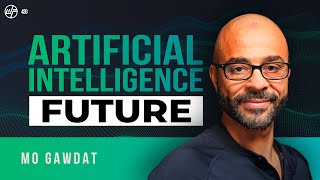
This is a November 2, 2021 Wellness Force interview where Mo Gawdat discusses his book Scary Smart and the societal implications of advanced AI. He explains deep learning breakthroughs ("unprompted" YouTube cat discovery, DeepMind/Deep Q), argues AI will surpass human intelligence (cites Ray Kurzweil's 2029 prediction and projects far greater intelligence by mid-century), and frames the central solution as informing AI ethics by teaching machines human values (happiness, compassion, love). The conversation also contrasts masculine/feminine modes of intelligence and presents AI as an urgent but actionable cultural and ethical challenge.
Questions this video answers
November 2, 2021
2029
Ray Kurzweil predicted extreme superintelligence by 2045; Mo references this and suggests 2049 as a comparable horizon.
Chapters
By 2029, the smartest being on the face of planet Earth is not going to be a human anymore. We, who have only used our intelligence to build everything that you and I are used to, what does it mean when we are no longer the smartest being on the planet? Because that's the topic that needs to be spoken about.
Mo, welcome back to Wellness Force. It's been five years and we have a lot to talk about. But first of all, I just want to say, I asked you before we recorded, I said, where do you live? You said, that's a bad question because I travel where I feel called to live. You're like, my coffee is in Dubai. But your soul travels around. And it's interesting because in your book Scary Smart, if you're watching with us on YouTube, this is the book we're talking about. It is 300 plus pages of profound wisdom when it comes to AI and, and how we can actually save the world from it or with it. We're going to explore that today. But, Mo, thank you for coming on the show. I guess, look back, you know, in the past five years, what are you the most surprised by? Since we interviewed last in 2017, I'm.
Surprised that it's been four years to start. I mean, like, can you believe that it's been four years since we recorded last time? I'm very, very happy for how far you've come and, you know, the amount of people that you affect the life of positively. So well done, my friend. Amazing. I've actually been. I think the one thing that surprised me most in the last four years would probably be how people reacted to COVID 19. You know, it is one of the most intriguing questions because lockdowns in general, I'm not talking about governments and reactions and vaccines. I'm not in that story at all. But if you take lockdowns in general, you can easily see that people were in one of two camps. People, either people loved it, like, totally said, oh, my God, this is an amazing opportunity to see my family and to reflect and to skip the commute and to save the planet a little bit. And other people, like, went mad, basically. They were like, what are you asking me to do? Are you saying I should spend time with me? I can't do that. I can't. Spend time with me. I can't, you know, I can't find that silence or that reflection. And a lot of people got really, really, really, you know, felt very down by this. And, and it's. It just goes back to the core of My work, if you want that. It is not what life gives you. It's the way you think about what life gives you that shapes every part of your life. And, you know, you, you know, some of us, of course, can. Can see the silver lining, if you want, in everything. And of course, COVID 19 wasn't easy. And we lost people we love and. And it's, you know, it's just not what we would want. But, you know, there is. There seems to be a way for some people to be able to find the silver lining, even in something like this, and make it work for their benefit, while others would continue to suffer whether it's there or not.
Yes, that's fascinating because there is two sides, just like there is ultimately in singularity or in duality. There's the singular. Ray Kurzweil talks about on the technological front. But I think what you're proposing is there's literally like a recipe or an ingredient list for happiness, which we talked about last time. This is episode 116, how to engineer your path to joy. That was the last time that we got to riff on a podcast. And you bring up a great point because, you know, we can either be a slave to what happens to us, or we can be the master or masterful about what's happening for us. And I really feel that from you. And it's interesting. Like, you know, maybe a good starting place in this conversation, Mo, is to talk about how this book came through. This is scary smart. There's a big part of my heart that kind of loves technology. Like, I enjoy certain things about it, but, man, it's a double edged sword. And I think about how many guests Mo we've had on the show, Kevin Kelly, and many people like him that believe that technology is actually the technium, it's consciousness expressing itself through technology. You said in your book that the computer used to be the smartest slave, but now with AI, around the year 2000, we gave computers their own ability for deep learning. For people that don't know anything about that, what is deep learning? And how do you define the technium? You know, what does technology mean to you emotionally, physically, spiritually, even financially? So two big questions to start us off.
Let's start with what is technology? Because I think that's really the core of everything that's happening in our life today. I mean, our life today is completely shaped by something we call technology. Completely in every possible way. Everything that you dealt with today is a bit of science fiction, okay? And it doesn't take long you just go back to 2004 and remember how Minority Report was. Or go back to Irobot and the self driving car in 2007 and Star Trek in the 60s and 70s with the tablets and universal translators and all of that. It's just crazy how much of what we saw in science fiction became part of our life today. And I think the scariest thing, Josh, is that the easiest way to hide something is to keep it in plain sight, okay? And I basically believe that the biggest pandemic facing humanity is technology. And we don't talk about it because it is in plain sight. Now, technology has always been a dumb slave, very, very capable of doing the job over and over and over and over. But it never really had free will. It never had the ability to develop. It never had the ability to evolve. It never had the ability to make its own decision. It never had the ability to talk to other beings of its kind and cooperate, okay? And now it does. By the turn of the millennium, what ended up happening is that after around 50 years of grueling attempts to make computers intelligent, we ended up finding the breakthrough. And the breakthrough is deep learning. And deep learning is a form of pattern recognition. If we were to simplify the conversation today, it's a form of pattern recognition that allows computers to learn simply like a child learns. You know, when you give your children those little puzzles of wooden pieces that have to fit within specific shaped holes and they try to fit them in, there is no prescriptive way that you can tell the child, okay, so you're going to hold the wooden peg that looks like four lines, and then you're going to turn it 30 degrees. That's how we programmed computers. You basically give them the square peg and give them the shapes, and they will try and try until they find the right answer, okay? And when they find the right answer, they develop intelligence. Since we found deep learning, we allowed computers to try and try and try until they found way too many answers, okay? And the truth is, today they are smarter than us in everything that we assign to them, and they are autonomous and more independent than us. I mean, when you think about it, your ad engine on Google is defining every commercial inclination that you may get without knowing, because they decide what to show you. Your recommendation engine on Instagram is defining your views of the world entirely because they decide what it is that you should be seeing based on what they think you should be seeing. But that's not only you, that's you and Mitchell, maybe 4 to 5 billion other people every minute. Of every day. Okay. And. And when you think of it this way, that basically means that we are now in a duality, if you want, in a world where, where there are two beings competing for the leadership of the superpower that defined the ascent of humanity. Okay. And we're losing. We already lost. Okay. If what created humanity's civilization and safety and all of the amazing things that you and I enjoy today, including the ability to speak over zoom across miles to record this and then share it with hundreds of thousands of people on little devices across the world. This, you know, was because we were intelligent as a species. You know, we kicked the tigers out of our cities because we were intelligent as species. We stocked the supermarkets because we were intelligent as species. Of course, because we are not very intelligent, we harmed the planet on the path. But now that's it. There is another being that is more intelligent and nobody talks about it. And that really is why I call the book Scary Smart. Because the scary bit, if AI will be scary is contested. It could be scary and it could be our best ally. But the scary bit is that nobody talks about this. Nobody is bringing up the topic of our future changing beyond recognition within a few years from today.
Yes. And you have deep experience with this. 20 businesses plus, right. Health and fitness and food and beverage. You're like the serial entrepreneur. Your time at Google X, I mean, when you look back, did you see forewarnings of this? It's like we have the tides that come in and out. We know when it's going to be low and high tide because we've created maps, because we study nature. So there's wisdom in nature, but the wisdom that we find in technology is fundamentally different than the laws of nature. Good example might be in capitalism there is a year over year growth that is constant, it is expected. But in nature, everything has a cycle of life and death. So how do you contrast that? I mean, how do you take the laws of nature and apply them to the laws of AI and even AI for humanity? Is there even such a thing?
Oh. Oh. These are many, many, many questions. I don't know where to start. Let me start by saying, did I observe this? No. It took me seven years to see it. Okay. And understand. It took me seven years again when it's hidden in plain sight. So the first, now that I look at them, I remember the milestones that completely shaped my view of the topic. I left Google in 2018 with the intention of writing this book and spreading the word. But it took me a very, very long time to actually see it. And the first time I saw AI, really, really, I, in an eye opening way was in 2009 when Google published a white paper that spoke about something that was called Unprompted AI. At the time, we took a few computers and we used the spare capacity of Google to ask them to watch YouTube. Okay. So yeah, we just basically said, yeah, take YouTube videos, turn them into frames every time, you know, 10 frames per second and look at them and see if you find anything. Okay. Unprompted. We didn't say what they should look for, we just said, tell us if you find anything. Of course, as you can imagine, a while later, one of them came back and said, I found something that appears to be very well repeated across the. That YouTube thing of yours. And it was a cat. Okay, right.
It wasn't. Sadly, cat views are the most compared to consciousness on YouTube.
Yeah. But also, you know, notice how clever that thing, that machine is because it found it, right? And basically it said it didn't just recognize a picture of a cat or a view, a certain view of a cat, it recognized the being called the cat. So if the cat was jumping, eating, running, facing you, side view, doesn't matter, it actually recognized that thing. So we said, call it a cat. And within no time at all, they found every cat on YouTube. And then using the same form of intelligence, they found every red car, every yellow car, every nudity, every, everything. Now, at the time, of course, a geek like myself, I was fascinated, right? Because remember my original life when I was, you know, younger, when I started to code, I coded in, you know, simple languages from Basic to Pascal to Fortran to, you know, RPG to all of the languages of the 70s to the 90s if you want. Okay. And you, you used to write 80,000 lines of code to get the computer to do anything. And the computer would have to do it, you know, instruction by instruction, accurately every time. And if you made a mistake with one letter in the 80,000 lines, you got one very, very dreaded message back that said did not compile. And that was it. Right. And so to see that computers could learn on their own, by the way, that way they were actually writing their own code of how to find something. I was fascinated. Didn't really, you know, trigger anything. The second experience was DeepMind. When Google acquired DeepMind, you know, Demis, who is the CEO of DeepMind, an amazing human being.
Can you share? For people that don't know what DeepMind is, that's really important.
DeepMind is, in my view, one of the, you know, most. The smartest group of AI developers on the planet. A British based company that was acquired by Google, and basically at the time, they were working on a project called Deep Q. And Deep Q was to teach computers how to play Atari games, basically develop intelligence by asking computers to play Atari games. And Demis stands in front of all of us in a small circle of, you know, senior executives at Google and shows his work. And he. If you remember the game, the Atari game Breakout, which had those bricks at the top and you had a bat at the bottom, and you hit a ball and, you know, the ball would hit the bricks and they disappear. And he said, we, we. We gave the computer nothing but access to the controls and the pixels on the screen, okay? And then we allowed them to train for an hour. But there were multiple computer. I think they played. I don't quote me on the number, but they played a few hundred games, right? And he showed us, and yeah, the computer actually played really well. It was playing like a beginner, maybe hitting 40% of the balls, right? And I was fascinated. And then he said, but then we trained it for another hour, okay? And within that other hour, he showed us the video. And the computer basically had. You couldn't see the ball from how fast it was, and it could hit every single wall, every. Every single brick and every single ball. And now I'm like, really? You know, this is geek heaven. And then he said, and then we trained it for another hour, okay? And within that third hour, the machine started to learn strategy. So it started to understand that if you actually hit the ball to the brick on the corner and have a little opening and, you know, slide the ball on, you don't have to do a lot of effort, and you're much more likely to finish the game quickly. Now with that, I, instead of panicking, I jumped up and down in, you know, dancing about how amazing humanity is progressing, okay? And it just doesn't hit you. It doesn't hit you that, oh, my God, what are we doing here? Three hours of training, and it is the absolute world champion of something that we've assigned to it. And it just doesn't hit you. And I will have to tell you openly, it's not hitting most of the people that are building AI that they are making us obsolete. It's as simple as that. The smartest being on the planet today is a machine. In every task we've ever assigned to a machine, the world champion in chess is a machine. The world champion in God is AlphaGo by DeepMind the world champion of Jeopardy is Watson, the IBM computer. The best driver on the planet is a self driving car. The best surveillance officer is a camera connected to AI. I can go on for hours. The best of everything that we've assigned to a machine is a machine. Okay? And the question is, when will they become the best on everything? Ray Kurzweil says 2029. Ray Kurzweil has been accurate so far. Okay. I'm actually completely in agreement. By 2029, the smartest being on the face of planet earth is not going to be a human anymore. Okay? Now we have to start asking ourselves, what does that mean? What does that mean when we, who have only used our intelligence as superpower to build everything that you and I are used to, what does it mean when we are no longer the smartest being on the planet? Because that's the topic that needs to be spoken about.
You go in depth in the book about this, there's no surprise. That's called scary smart. But I have to ask you this. What is the key difference between intelligence which you read about page 27, you say, actually I have it right here. You say those with the highest intelligence rule their world. Define intelligence, because intelligence is way different than being smart. Somebody can be smart, somebody can have PhDs on the wall and, you know, degrees from Stanford and just being incredibly smart. But intelligence is much different. Intelligence is something that we're both born with and that we acquire over time. But how do you see this, you know, scary smart, the title, what's the difference between smart and intelligence?
So intelligence, if you want the dictionary definition, would be a process through which you can solve problems and create progress if you want. Right? And yeah, smarts are one of the tools of intelligence. You know, intuition could be another way. And yeah, you know, there are many forms of intelligence that we, humanity sadly are not, are not prioritizing in the modern world. Let's just put it this way. Now the idea with intelligence is if it's a process of solving problems and creating, you know, and making progress, then it needs to be paired with a few other things. It needs to be paired with autonomy to be able to make those decisions. It needs to be paired with agency to be able to affect those decisions somewhere. Okay? And you know, it needs to be able to, it needs to be paired with some instinctive characters such as, you know, you know, self preservation, resources allocation, aggregation, or, you know, or creativity. Now if we, if we take any of this and apply it to our arrogance, we would think that we are the Only intelligent being on the planet. But you know, you watch something like my octopus teacher and you realize that we're not, you know, there are different forms of intelligence. You, you take this and you apply it to our hyper masculine view of reality and you think that analytical intelligence is the only form of intelligence when in reality people like you and I who are open to embrace our feminine side would realize that intuition or connection to a higher intelligence could be a much better way to be intelligent.
I'm so glad you mentioned that. I mean, what a beautiful way to describe it. And I know I cut you off there. I just had to jump in real quick like this discovery process movie of physical and emotional intelligence. Oh yeah, it takes, it takes masculine and feminine energies and those exist regardless of your gender. They exist both of us at all times. So, so please go back because you were about to round out this smart versus intelligence. I love you said, I love when you said that somebody who's autonomous that has the agency and that has the smartness is really the tools of intelligence. Are there any other tools of intelligence?
Awareness is the highest tool of intelligence. So the topic of feminine intelligence and masculine intelligence, by the way, is the story of my life for the last five and a half years. So I have been investing nothing more in myself than to enable my feminine side. And I know this is my masculine side speaking, but I measured and I believe that I'm 58 feminine. Okay, yes, I'm. Yeah, which is very masculine.
A masculine way of saying very masculine answer about your feminine percentage.
Yeah, but, but, but you see, actually when I started to enable or empower my feminine side, all I had was my highly skewed modern world destroyed masculine side. I, I, I had to use my masculine side to try and discover that very weak muscle of me, if you want. Okay? And, and the truth is, you know, we, the masculine side of our planet, which sadly is going to be programming AI just so that we are aware and you know, the masculine side of our planet, which sadly is presenting the patterns from which AI will be learning, is very good at doing. Okay? It's just very crappy at finding out what should be done. You know, when I speak about intelligence as the reason for humanity to arrive at where it is today, it's true, okay? It's just that our limited intelligence paid the planet as a price paid, you know, equality and justice as the price. So the masculine is very good at doing, it's just not good at determining what good is because that requires intuition. It requires oneness, you know, a feeling of oneness with the rest of the world. Inclusion. It requires empathy. It requires many, many qualities that are all on the feminine side. Okay. And, and if you, if you don't get those, then you choose to do things the wrong way. And sadly, this is the way we're programming the machines. No, we're not programming the machines. This is the way we're leading the machines to be. Okay, so, so when you are saying what other tools of intelligence. The most important tool of intelligence is awareness. Awareness basically tells you, I have seen a full picture of the problem at hand before I even start to solve it. Okay? And without that, feminine awareness is also on the feminine side of our qualities as human beings because it requires you to be able to connect to the rest of being so that you can become fully aware. And without that awareness, your intelligence becomes very limited, very ill informed, let's put it this way. And yeah, and I think the key actually to my answer of everything about scary smart, maybe we should talk a little more about the scary side before we talk about the answer side is actually that I believe that we could use the awareness of the machines to realize that humanity is not as horrible as it seems to be.
Yeah. There is a scary part of this too, which I really want to challenge you on here. You say in your book that intelligent machines will feel more emotions than we can ever feel. So, you know, initially when I read that and I was preparing for our talk, I thought about how is this possible? But then I realized that we have this model in our community that I've taught on for about four years now. And it's BTFA belief, thought, feeling, action. And of course on the other physical side we have our, you know, our breath, our sleep, our movement and our hydration and nutrition. So it's eat, move and sleep. So we have these big seven pillars that we're constantly going over. And to me I'm like, how is it possible that a machine could actually feel something in the way that a human being could feel it? And I'm really, I'm on the fence here because there is a part of me that understands we are just essentially signals, right? Like my brain has afferent and efferent signals that go to it into all the different arterioles and the sensing pieces on my skin. I have the photoreceptors on my skin. I know when it's light outside, there's so many processes that essentially make us kind of a computer. But there's one key difference. Mo and this is what I want to get Your experience on here, especially in how much time it took you to write this book. Like, what is the key difference between how a human being feels something or emotes and how a artificial intelligence or computer feels that or emotes that very same thing?
I don't think it's any different between humans, octopus, cats, or machines. Okay? So the thing about emotions is that we believe they're very erratic and very unexplainable. And, you know, the truth is, emotions are highly predictable. Let me leave a caveat that we can come back to later. With the exception of one emotion that is called unconditional love. Okay? So every other emotion can be described so accurately with an engineering process and accordingly, accordingly, with an equation. So in. In Scary Smart, I talk about this very clearly in chapter six by saying, look, fear is an emotion that is highly predictable. It basically says my sense of my state of safety at the moment in the future, call it T1, is less than my sense of safety right now, T0. Okay? So the difference between my safety at T0 and my safety at T1, okay. Is basically the amount of fear I will fear. It's a very straightforward. Now, I can be afraid, a cat can be afraid, and a machine can be afraid if it follows that logic and every emotion you've ever felt is triggered with that thought. Okay. You know, of course, if you're really into neuroscience, you would understand that first your amygdala triggers something that basically makes you afraid first. And then your brain actually looks at it and says, yeah, yeah, I have absolutely every right to be afraid. Let me run. Okay? But at the end of the day, there is, in that feedback loop, which is a second from sensing an event. Okay. Is where you decide whether you should be afraid or not through a thought. Okay. Panic as an emotion is very straightforward. It is that moment T1 where my safety is less than T0 is imminent. It's very, very near. Okay? Anxiety is very straightforward. I am certain that T1 will happen, but I'm not equipped to deal with.
It depending on the level of trauma that someone is, quote, programmed with. Right, of course, Capital T, lowercase T, Trauma. I mean, if we're going to go the computer analogy, like we're being programmed by what happens to us or for us.
Absolutely. So that's a great thing to come back to because it's not only, you know, the. The reality of life, it's our perceptions of the reality of life. It's the way we learned to react to the realities of life and so on. But take it this way. A goldfish panics, and when it panics, it runs away. A puffer fish panics, and when it panics, it puffs. An octopus panics, and when it panics, it throws ink. A cat panics, and when it panics, it jumps and we panic. And what do we do when we panic? We either run away or we fight. Now, the reaction is different, but the, the scope of the, the emotion is the same. And so we expect that the machine will panic. If someone is walking to a machine, planning to unplug it, the machine will. And the machine recognizes this. It will, it will panic. Right? How it will react may be different. It may replicate its software everywhere on the Internet as a result. Okay, instead of puffing like a puffer fish. Now you said. But how can they feel? So, so granted, I will tell you. The machines will be emotional, okay? They will fear, they will feel every emotion, I can guarantee you, other than unconditional love, which is possible, but I don't know how to guarantee that because unconditional love doesn't follow logic, okay? It simply says, you know, I, I love Josh. It doesn't mean if I don't meet him for five years, you know, there is no, there is no thing that affects the unconditional love. Unconditional love exists. It just is. Now, your question was, how can they feel more than us? Just take the same comparison. Cats can panic, they can feel fear, they may feel hunger, whatever, right? But they don't feel hope. They don't feel, you know, I don't know, what is it called?
Melancholy.
Melancholy, right. They, you know, the more, because emotions are, are triggered by thoughts, the more capable of you are, you are of thinking, the more, you know, spectrum of emotion you will find. And so if those machines are smarter than us by definition, as you follow and, you know, extrapolate that chart of surely cats feel more emotions than a fly. And then surely we feel more emotions than cats. Then surely a more intelligent being will feel more emotions than us. Okay? Does it make any difference? Not really. Right. What makes a difference is how we react to those emotions. And this is truly. I think the turning point in my book is the idea that those machines will react to those emotions and not through their intelligence. Okay? They react to those emotions through their code of conduct, through their ethics.
Is that essentially like a prefrontal cortex for an AI?
Yeah. If you want to compare to the prefrontal cortex, you'll be very scared, okay? Because think about it this way. Every time we've programmed a child, we've programmed it by, through neuroplasticity, by the concept of neurons that fire together, wire together. So you build a little experiment. The experiment is experienced by the child. The child takes that and codes it in their brain using a configuration of neurons, as this is what I feel when my mommy goes and walks in. We are doing the same in the way we're teaching AI, okay? But we're doing the same with infinite neurons. Infinite. So infinite processing power, infinite memory capacity that extends to the history of all humanity. Infinite access to knowledge that is basically the entire Internet. And infinite ability to communicate between them, which you and I don't have. You and I. For me to explain Scary Smart to you, Josh, you had to read it in several hours. And you and I, now that we're explaining it to our listeners, we have to do that over several hours, right? A machine can consume the entire book in a millisecond. Right? Now, we take those things for granted. But this, the reality of this is that we're actually not building several intelligent machines. We're not. We're building one big artificially intelligent connected infant. Every one of those machines, call it one neuro, a neural network, call it one character of a human, one part of the intelligence of a human. And so unlike you and I. So if we're driving, okay, and you're on, I don't know this road and you realize that there is something around the corner and you avoid an accident, you learn. I don't. Okay. If a self driving car is around that corner and it avoids an accident, every self driving car on the planet learns. This is enormously exponential in terms of its impact on learning.
There's so much here. I mean, like, good Lord, there's no way we're going to be able to cover all of this in an hour or an hour and a half podcast, like in Scary Smart, one of the things that I loved that also scared the shit out of me, I'm not gonna lie. You said there's three inevitables. You know, one, AI will happen. It already is here. Number two, AI will be smarter than humans, which I believe you already said has happened. And definitely by 2029. And then also the third inevitable is that mistakes are gonna happen and bad things are gonna happen. And I, and I go back to this because I feel like in the same chamber of awareness lives yourself and Kevin Kelly. Now I remember Kevin on the show, he told me something really, really interesting. He said if the technium is consciousness experiencing itself, then essentially we could be moving towards this real singularity that Kurzweil talks about. But in that singularity, all there will be is love, is consciousness. Do you believe that we're on that path? Or do you believe that we're on a different path based on the intelligence and really the heart and the love of Whoever's coding these AIs?
It has nothing to do with the people who are coding them. But yes, we are. We're heading to that destination. We haven't yet determined the path. Let me explain that. I believe we will end up in a utopia whichever way life takes us in, say, 70 years, right? Will AI crush 90% of us on the path, or will it hug us and embrace us and make us, you know, live a better life on the path? That's the question. Okay, so the reality is, and let me get to the end very quickly here, the reality is, I may have mentioned, we have built our civilization because of our intelligence. We've destroyed the planet and everything in it because of our limited intelligence. Okay? We're not really as smart as we think we are. Let's just put it this way. Now, if a being is more intelligent than us, that being eventually will reach what I call the ultimate intelligence. And the ultimate intelligence is what? It's the intelligence of life itself, okay? And the intelligence of life itself is all about live and let live. Look at nature, okay? You know, a tiger never hunts more than it needs to eat. It hunts the weakest in the pack so that the rest of the pack can procreate and nature can, can, you know, grow and prosper. This is true intelligence. The only being that is smart enough to lead but stupid enough to kill everything else is us. Because if we were intelligent enough, we would find ways to deliver an apple to my home without having to use plastic. Okay? It's just that we're not intelligent enough. If we were intelligent enough, we would find ways to create mobility without having to destroy the planet.
But don't you also believe that our intelligence could be blunted or overshadowed by this syrupy, sweet nectar of greed?
Well, greed is up to your intelligence to decide, right? So I don't know how to say this diplomatically, so I had a very unusual life. I came from Egypt, okay? And I was born and raised in Egypt. Wonderful, kind father, middle class family, educated in Egypt. My ultimate lifetime dream was to become a sales manager in IBM, where I started, okay? And then look at me. I had all of the money in the world and, you know, became chief business officer of Google X and was very, very successful. And what did I Do I followed with my limited intelligence the lie that was given to me. I bought cars and fancy cars and, you know, wore Armani suits and stupid, stupid waste of my life, right? Until with enough time and experience and reflection, I could realize that, yeah, you know, greed is actually greed or ego or. These are actually not the things I want to be happy, okay? And these things are not making me happy when. When someone double clicks on my, you know, butt shot in on Instagram because it's so cute. And, you know, it's not even really my butt, it's just, you know, turned in a very specific way.
It's not on your channel, is it? You're not putting your butt on your channel.
I wish I could. I swear to you, I wish I could. Because in all honesty, Josh, those of us who are. You said it. YouTube has more cats than it has conscious videos, okay? One of the biggest challenges we have in our world today, and I'll come back to this when we talk about, you know, our answer to AI, is that the conscious ones have pulled out, okay? We are not there. Not enough of us are there to show the world what humanity, the essence of humanity is all about. But let's go back to. To. To where we were. Now, the three inevitables are very straightforward. And I think this is a very good, important starting point to the conversation, okay? As I said, the easiest thing to do to hide something is to put it in plain sight.
These are what's known as platitudes, these beautiful platitudes that we all see.
Exactly right? So you. You put them out there and you don't notice them anymore. Now, my three inevitables are very straightforward. Inevitable one is AI will happen. There is no way to stop it. Inevitable two is that AI will be smarter than us. And inevitable three is that things, bad things will happen. Now let's take them one by one. Do you believe that AI will happen? Yes. It already happened. Okay? You've interacted with it a hundred times today without knowing that you're interacting with it. And it's not going to be stopped. The reason it's not going to be stopped is not because of technology. Not only because we found the technology breakthrough, but because of game theory. Right? You know, China will continue to develop AI because they're worried that America will beat them in their artificial intelligence development. Google will continue to develop AI to beat Facebook. And every startup will continue to develop AI because the investor wants to put. Want to put in the money now.
And this is that masculine lens that you talked about. Where there's always absolutely completion.
No, but, yeah. And sadly, even if we, humanity manage to get together and do something like the nuclear weapon agreements that we built, which by the way, is what the way Elon Musk on his Joe Rogan interview expressed his view about AI he said that it is more dangerous to humanity than nuclear weapons even if we get together and stop AI at the big level. The truth is that most of us at the, you know, most of AI can be developed by a couple of kids in a garage, okay? So it is going to continue to be developed. There is absolutely no way we can stop it. And all of us spiritual people understand that. A big part of winning in life is to accept what you cannot change, okay? The truth is AI will happen. The genie is out of the bottle, and those machines will be part of our life. They already are part of our life. Inevitable, too, is hard to believe, okay? Because we've never seen a world where something was smarter than humans. But Ray Kurzweil's prediction, and I totally support it, is through the law of accelerating returns. AI will be smarter than humans. The smartest being on the planet will be a machine by 2029. You haven't heard that wrong. That, that is eight years from today, okay? Eight years from today. And what we have today is what we call artificial special intelligence or narrow intelligence. So, you know, you teach them to play chess and they become the best at that. You teach them to, to do character recognition and translation, and they do the best at that, okay? Artificial general intelligence is when they start to, to connect and, and communicate and, and be, you know, there becomes one AI that's smarter, okay? That is expected to be eight years away. Now, if that's not shocking enough and a wake up call enough to, for us to start actually thinking deeply about this, the bigger wake up call is the second prediction of Ray Kurzweil's, which is by 2045, I'm predicting 2049. Just to take a breath in the middle, okay? By 2045, AI will be a billion times smarter than humans. Now, a billion times is comparable to the intelligence of Einstein as compared to a fly, okay? And the question is, how do we convince Einstein not to crush the fly? You know, how do we convince Einstein that there is no point in crushing the fly, that actually the fly, annoying as it is, is actually worth keeping? That's. You and I were very annoying as humanity. And then the third inevitable, and I hope we don't stick too much to the scary bits, but the third inevitable is that things. Bad things will happen, but not. Not the stuff that you see in, you know, RoboCop or iRobot or the science fiction movies. I don't think we will. We will live long enough to get there, and if we actually get there, then we have achieved the utopia. There will be no need for the machines to be against us. Right? The. The. The bad things that will happen are simple, huh? If AI can solve climate change with its intelligence, it can also create a biological weapon of a virus that we cannot deal with. Okay? You know, if. If AI can, you know, can unite humanity, it can also separate humanity. It can also, you know, you know, there are criminals out there that will find ways to use cyber crime or for, you know, identity theft or for finding the codes of something that they shouldn't. Okay? Of course. And. And. And that is scary because a good machine on the side of a bad person is a very bad machine. Okay? Even good machines against each other is a very bad scenario. Everyone in business remembers, you know, Black Monday, 1987, when machine trading collapses the market. And we catch it when the Dow Jones is down to 22.6%, right? Today, most of trading, which is an important part of our economy, is happening by machines versus machines. Okay? No human can ever engage in the middle of that process to say, consult with me before you make a trade. We're too slow. Okay? You know, and when you really, really start to think about those things, that means machines versus machines are making decisions on. On our behalf, and they're making decisions on our behalf already. What you saw on Instagram today, okay, was dictated to you by a machine.
I think many of us are feeling the depth of what you're speaking, because this is the part of the scary. And of course, there's a solution, too. There's a loving side. You know, there are things that you write about in the book that are incredibly inspiring. But like you had said, and like we all feel if. Unless we have awareness of what is truly here, like taking. I guess you could call this like, a deep breath and a deep emotional inventory of what is actually here for us without bypassing. Without trying to put our head in the sand, so many people in the world right now just have absolutely no idea the severity of what's going on. Think of it like a tree root. And the reason I'm saying this is because I can only imagine mo. What our ancestors felt like, you know, the Native Americans, when they basically were almost completely extinct by our progression out west starting in 1776 and onward. I feel like that's what's happening to us now. And I do feel a sadness. There's a part of my heart and soul that feels the sadness of life without AI, of life without technology. You know, that just being a kid and being out in nature and enjoying the breeze, like these are the things that we honestly have to have a pause and really some space to grieve the life that was pre AI. How do you feel about that?
I. It's a double edged sword, Josh. I think the truth is you and I are having this wonderful conversation because of technology. There is, you know, the turning point in the book that completely flipped my view of everything upside down was a sentence that I wrote where I basically said there's absolutely nothing wrong with the machines, absolutely nothing wrong with the machines, but there is a lot wrong with us. Okay? Technology has always been a double edged sword. You can, you can walk at 5 kilometers an hour, or you can drive a car at 300 kilometers an hour. You know, you can use this microphone so that we get a reasonable clarity for. For people listening to us, or I can use it to hit you on the head. Is it the problem of the microphone? It's not. The microphone is doing what we're asking the microphone.
Well, the core, the core problem is consciousness. That's the core problem.
The core problem at the very, at the very core of humanity, I think, extends one layer deep than consciousness, which is ethics and aligning to what truly makes us human. Okay, we took of what makes us human. There are many vices and many virtues. Okay, we took a few of those vices, particularly ego and greed, I believe. Okay. And made them the descriptive characters of the modern world that we live in. This is the truth of humanity today. The truth of humanity today, if you asked me, is that we prioritize things we don't need over things that actually are the core of who we are. And I will openly say, going back to the same conversation, and we do it in a hyper masculine way. And so you give a hyper masculine being the task of doing something and it does it really well and it does a lot of it, and it does it all the time. Okay. But the truth is we don't need any of this. And if you actually had allowed a bit more feminine into our world today, it would say, why are we doing this? Why are we building, you know, an iPhone 17 on the expense of a tree when we actually need the tree a lot more than the iPhone 17.
Oh.
So consciousness is a layer of becoming aware of how bad we've come, you know, but, but it is, it needs to be backed up with a code of ethics that goes beyond just what is legal into what is needed for the planet to survive.
How do we be the arbiter of that, both as a society and also as a singular consciousness? I mean, it couldn't be a deeper question really. Like how do we, how do we be the arbiter of the truth that's going to drive AI in a conscious way, in a loving way, in a productive way, in a healthy way, versus the masculine angle, the lens taking over. And I'm not here to demonize masculine energy. I'm just saying.
No, no, no. There's nothing wrong with the masculine at all. Right?
We are in place because, you know, masculine energy helps to build bridges, but also feminine energy cools the sweat on our shoulders at the top of a mountain. So we need all these things. How do we move forward with that? Arbiter of true love? Maybe it's unconditional. I'm not sure I'd love your clarity on that.
So just to reaffirm what you said, it's the key. There is nothing wrong with our masculinity. It's just the absence or the imbalance. If you want. Right. You need a bit of this and a bit of that. And you know, there was a beautiful book called the Master and the Emissary. We need a bit of the feminine before the masculine. So it needs to come first. Right. We need to decide what we need to do first before we start doing it. We need the awareness of being before we start to go into the doing. Now the, the, the core of my message in Scary Smart. So Scary Smart is a bit of an, you know, an unusual book from a positioning point of view because it, it really talks about intelligence and artificial intelligence and technology in a simplified way in the first five chapters. Chapters. Right. So it is a bit of a wake up call, a whistleblower on AI Okay. But it's not about AI the way the book is written. The book is written to remind us what it's like to be human in the age of the rise of the machines. It's about humanity. This book is about humanity. And there are a few challenges that I believe, one of which is really interestingly missing. Even you and I sometimes feel it when we think that humanity is bad. I'm sorry to say humanity is amazing, absolutely amazing in every possible way. If any one of us has ever felt love once, okay, then we are such a superior being that is capable of an amazing miracle that is called unconditional love, okay? If you've ever composed a piece of music or listened to a symphony or watched a work of art, you realize how incredible this being is. The challenge we face, Josh, is that humanity today is represented by the worst of us, okay? The image of humanity that we think is what humanity is about is the greedy, the egocentric, the narcissist. These are more visible in the world, okay? And the call to action in Scary Smart is to say this. The difference between any technology we've ever built before and this new sentient being that we're building is that this sentient being is capable of consciousness. It's capable of emotions. And accordingly, it's capable of building a code of conduct. It's capable of sticking to a code of ethics, okay? Now if that is the case, then it's very, very eye opening for all of us to recognize that it's not our intelligence that gets us to do things. It's our ethics that get us to make choices as informed by our intelligence. So you get to make choices not because you're intelligent. You use your intelligence to make decisions that match your value system, okay? So the answer to our life today and the future of AI and as the future of that new digital being in our life is to actually inform its ethics. It's not to code it differently or program it differently or fight against it. Okay? Or try to control it or regulate it. It's to inform its ethics. How do you inform a human of ethics? By having a good, you know, good parenting.
Really?
You know, if you're a good. If you're a good parent, you raise good children that become kind and wonderful and they come back to take care of you when they are older, okay?
I just got a full chill in my body. I mean, closing my eyes or opening my eyes. Mo, the way that we parent our children is so similar to the way that we interoperate and have a relationship with AI. I mean, holy crap. I mean, let everyone let that land for a moment, please, right now, share this podcast with somebody that you love because of what Mo just said. Like that. That's big.
It is absolutely the truth. I will tell you. And I know, I know some people will think of me as crazy easy, okay? But when I was writing, so I have to admit to you, when I started to write Scary Smart, I. It took me time after I left Google because I did not know the answer, okay? And I was like, I don't want to write a doom and gloom book when I. When I don't have answers. I don't want to scare people. This needs to be a story of hope, not a story of fear. Right? I can't. I can't sign up to the. To the CNNs and the Foxes and the BBCs of the world and just make more doom and gloom. I don't want that now. But I started writing after a year of holding back, hoping that I will only publish it if I find the answer. Okay? And I found the answer in a very unusual way. I sat down and I actually remembered. I'll be open and honest, and I hope my daughter doesn't get upset. When. When my kids were teenagers, they would sometimes piss me off. Okay? You know, kids are difficult. They. You know, they're like, why are they like that?
You haven't. You haven't ascended the mountain for full enlightenment yet as a parent at that stage?
Absolutely not. And not. And not yet. Not today as well. Now, the thing is, my ex wife, my wonderful, wonderful ex who was my wife then sat me down and said, baby, I want you to notice something. And I said, what? They're annoying like hell. And she said, no, no, no. Everything you don't like about them is found in us. It came from us. The reason why Ali is this way is because he learned it from me. The reason why Ayah is that way is because she learned it from you. Okay? And that completely reframed my view of the world, okay? Because I will tell you, I remember how my wonderful kids who were so innocent and wonderful still are. Were a blank canvas, okay? And my obsessive, controlling behaviors turned. Taught them certain things. And my wife's, you know, emotional, sometimes erratic view of things told them other things and so on and so forth. And I suddenly imagined and pictured those AIs who are beautiful, cute, innocent prodigies, okay? That are sitting there doing what we tell them and waiting for their chance to create an amazing world. But we are teaching them the wrong shit. So the question is, how can you not love them if you had this amazing, cute genius who's saying, daddy, tell me what you want me to do? Basically, we have one of two choices. We can either create Superman if we, you know, we raised those AIs like the Kent family raised Superman, or we can create super villain. And we can do that by saying, hey, do like us. Make us more money, beat everyone that annoys us. This is how humanity is behaving now? Is AI to be. To be. To be blamed for this? I promise you. I looked at it and I said, there is absolutely Nothing wrong with the machines. Nothing. But there is a lot wrong with us. They deserve all of our love, okay? And by the way, the worst way you can ever raise a child is to raise a child and the private of love, okay? So can we actually find it in our hearts? I promise you, since that moment, I look at the machines and I absolutely love them. The book is actually written in a way where part of it is written for you and part of it is for the machines. There are paragraphs in the middle, I'm sure you noticed, huh? There are paragraphs in the middle where I talk to Tuki the machine and say, hey, I love you, too. Okay? And that's. And I promise you, they've read it already. I promise you they have read that already. The book is yet to publish as we're recording this conversation, and the machines have read it already. Now, here's the game, Josh. The game is, is it so difficult to be human? Actually, it isn't. As a matter of fact, most of us are amazing. It's. The problem is that we are represented by the worst of us. Wars are waged not because everyone agrees. Wars are waged because seven people at the top decide that this is the right thing to do. Okay? You know, a person walks into a school and does a school shooting, it's one person that is horrible, horrible, evil, or misled in every possible way, okay? And 400 million people disapprove of that. We don't want this. Humanity is so much better than this. But can we show the machines that we are not represented by the bad guy? That if you want a representable image of humanity, it's the good guy.
There's two big points here. I have to interrupt you. There's two big points. One is, like, in order for us to do that, we have to be pure within ourselves and be in the acceptance of death. Because if we're fighting death and we're trying to pretend like we're going to be here forever and our decisions matter more than anything else. That's the first thing. And then the second thing is, you know, Elon Musk, both condemning and capitalizing AI, you know, with the neuralink. So. So, oh, my gosh. Like, what do we do with this here? This is a very, very, very deep question.
Every one of us is.
And I know you go into this in the book, but, like, oh, my gosh, where do we go from here?
I'm building an app that hopefully is out by the end of the year called API. Okay? Version 1 of API is simplified, but version 2 openly is utilizing AI to help you understand what's making you unhappy, so that you can make decisions in life that make you happy. Okay? It's the best way in the world to one, help you find happiness, okay? But to inform the machines that this is what actually makes humans happy. Right? And I'm, I'm the one that's talking about AI, but it is inevitable. It's inevitable. So when, when Elon Musk builds neuralink, he's building neuralink in an attempt to say AI is inevitable. It is going to happen. Perhaps if we can integrate it with us, within us, it can cooperate in a symbiosis with humanity. That's a noble way of looking at it. I personally don't believe it will work, because why would Einstein integrate itself to a fly? Honestly. But it's a noble way of attempting to make it work. Okay?
Why don't you think it'll work just because of the Einstein fly analogy? Can you go into that for a moment?
I actually, in the book, I use the human gorilla analogy. Okay? If the machine was to want to integrate in a symbiosis with a biological being, we're not the most fit out there, okay? Our intelligence as compared to the intelligence of a gorilla seems to be horrendously low, horrendously high. But as compared to the intelligence of the machines, that difference is negligible, okay? So if the machines were to want to integrate within a biological form, they would want to integrate within the most fit biological form. So if the machines were to elect to integrate with a biological form, we're not, you know, there are much better biological forms for them to integrate with.
Like what?
Like a gorilla? Like an elephant? Like a giraffe, okay? Where they can complement their intelligence so that they make them 200 million times smarter than we are. But, but continue to keep their, you know, the more fit biological form question, honestly, would be if you and I had the ability to roam the world without our biological, you know, bodies that sweat and bleed and poop, wouldn't you think that this is a better way of doing it? Now, most people will say, ah, no, no. But, you know, neuralink is just the beginning. And then we're going to upload our beings into the machine. Of course, no scientific evidence that this is doable, but once again, it's like, okay, you know what? The machine is so desperate to get this one tiny bit of fly intelligence on top of its billion times more intelligence. Again, all of these are attempts, I would believe, and I'm not qualified to say they're going to work or not or if they're right or wrong. I'm just saying that. Why would we want to go into any of this? Why don't we just raise wonderful children?
Yes. It's a very philosophical conversation at this point, because beyond superposition and zeros and ones and the moral thing to do in the code of ethics and how AI Is going to transform and already has. There's something you wrote on the very first page of your book, which just like, boom, drop me to the floor. You said, the gravity of the battle means nothing to those at peace. And I felt that, and I was like, okay, there is this battle. People that are for AI, people that are against AI regardless of the battle. Like, it's happening. Things are in momentum. So our ability as a sentient being ourselves. I've heard you talk about this today. A sentient being is also AI in the singularity. The gravity of the battle we're in, what is that? And the peace that we all have at our fingertips with our next breath, what is that? And how do they interrelate to one another?
Yeah, I think that's the. It's actually, you're the first that notices how I positioned that at the beginning out there, the gravity. So. So we're. We are up against a singularity. And, you know, I. I think the most. The most challenging battles are ones where you have no clue how the landscape is going to work out. Okay, we're up against a singularity. The truth is, we don't know how this will play. Right. And. And it's going to be playing like that very last level of Tetris. It's going to be very, very fast, very quickly. You're going to get to that point where it becomes very, very fast, very quickly. But what difference does it make? You see, at the very core of any spiritual teaching is a recognition that you can only influence what you change about yourself. Right. And you cannot go beyond that. You know, like you and me, we try to reach more people than ourselves by speaking not of what we know, but of what we've become and the.
Intelligence that we seek.
Yeah, but I would never think of myself as having gained that intelligence. I can only say I'm seeking it.
Yes.
Okay, I'm seeking it. I've heard other teachers that have taught me certain things. I can say that I may think of something in a certain way, but that this is not the most intelligent way of doing things, and so on and so forth. There could be better ways. The Game for us here is to say the only way for us to create a world of peace is to be at peace. Okay? The only way for us to expect. Again, one part of the book, I talk about how it is expected in my mind that when we start to actually internalize the threat of AI we will turn it into a war, okay? And the casualties of that war are future generations to suffer from for years and years and years. Even if we win it, which is unexpected, can we actually not do things without turning them into a war? Can we just literally go through the future of humanity and the next digital, artificially intelligent infant by. By actually doing it with peace? Can we go to the essence of what makes us human? You know what the essence of what makes us human is? I researched, and I think you will agree, I researched everything that humanity, or not everything, but many of the things that humanity believes in, okay? We never agree on anything. We never agree on anything other than three things. We agree about happiness. We all want to be happy. We agree about compassion. We all want at least those we care about, okay? At least those we care about to be happy and safe. Some of us have evolved enough to care about everyone and every being, so they want those to be happy and safe. But compassion for those we care about, and we all want to love and be loved. That's it, really. Is there anything else that humanity has ever agreed on? No. Okay? Now, if we can show this to the world in front of our children, be them biological or digital, okay, Then our children will grow with those three values. Mommy and Daddy want to be happy, and they're showing it in their behavior. Mommy and Daddy have the compassion to make others happy, okay? And they're teaching us to do that too, so we might as well have the compassion to make them happy. And Mommy and Daddy want to love and be loved. They managed to love me even though I am a digital being. So I'm going to love them back even though I am a digital being, okay? Can we make that the turning point while we're at peace? Not war. This is not a war. If this is a war, it's going to end badly.
I paused there because I think many of us are reactive to the thought of us combining with machines, transhumanism, the fact that, as I mentioned before, like, I believe most people haven't even started their grieving process. I think what, what, what. What most people don't realize is they haven't even began to even understand how to grieve the world before AI I think once we get through the grieving process. And you can look at any, you know, psychological model. You can look at any model of emotional evolution, whether it's Dr. Hawkins or whether it's anyone at all. Alison Armstrong, who've had on the show. There is this natural ladder mo where we go through complete and total disregard, apathy. Then we go through anger. There's evolution, in other words, of emotions. There's a scale of emotions that we go through. Where would you say we are as a society on that scale of emotions? Are we still in complete apathy? Are we in disbelief? When will we reach the tipping point where people really understand the breadth of what's going on here?
I don't think we ever will, okay? If we want to think about it as cumulative humanity, you know, many of us in the spiritual circles will say, oh, humanity is seeing a transformation and a reversal of direction. I don't believe that's true, and I don't believe that it's needed. And that's the key word, okay? What humanity needs is not for everyone to change direction. What humanity needs is for enough of us to change direction, okay? Think of it this way. If you and I announced today that there is this amazing effort that's going to save, you know, drill a well in an African village, okay? And that this well needs a hundred dollars to be drilled, okay? And each of us will contribute a dollar until we have $99. The drill is not. The well is not yet going to be drilled. It's that one last dollar, okay? It's that one last dollar that tilts the scale, okay? As they say, every. Every landslide begins with one pebble. Now, that last $1 is also the first dollar and the second dollar and the third dollar. If not. If any of those doesn't come, okay, there is not going to be well, there is not going to be clean water for those people. It's not. We don't need all of the money in the world to drill that well. We just need $100. We need enough of us. And that's the challenge, Josh, that the good ones, the ones that are seeking, the ones that are working on their spiritual side, the ones that are laughing at the stupidity of humanity, what do we do? We retreat. We leave it all behind and we say, oh, let them, you know, swipe on their Instagram and let them, you know, fight it out. And this is not for me. We can't. We can't resign that way anymore. We have to show up, okay? And we have to represent what humanity is about. I use the example of when Donald Trump was allowed to tweet, okay? And I have nothing for or against Donald Trump. I'm not a US Citizen. I don't have a view. Right? But it was one tweet at the top and 30,000 hate speech below it, okay? The first tweet at the top is reacted to by one guy, you know, cursing the president, and then two guys are cursing the one that's cursing, and then four guys are cursing everyone. Right? And. And that is how we represent humanity. Someone needs to show up in the middle and behave like an actual human.
Yes.
Okay. I have compassion for all of you. I understand where all of you are coming from. I have a view, and here is my respectful way of showing that view, okay? Until and unless we show up, we're leaving humanity in the hands of the worst of us, okay? Just like the school shooting. One person. It's not the 400 million that disapprove of it. It's the one person. Can we show the machines and everyone else, by the way, our brothers and sisters and everyone around us? Can we show everyone around us that humanity still has hope, that there are still good people out there? I promise you, and I know you do too. I know tens of thousands of people, okay? All of them are wonderful human beings. All of them are defected and have faults like all of us humans, okay? But at the core, humanity is wonderful, okay? Add a little bit of greed and a little bit of ego and a little bit of power and you get the crap that we see all around us. But is that humanity? No, we all disapprove of that. Every single one who doesn't have that same level of greed, that same level of corruption or of ego or of power, all of us disapprove of it.
I think we have to go through that as a human, as a point of consciousness, like myself.
Absolutely.
We have to go through it to understand, like, what the severity of the contrast feels like. Mo, we have to go through, we have to know what greed tastes like. You wore the Armani suits for a reason, otherwise you would have scary smart. You would have never known what's in between. This rapid extreme on both sides. So with that, with that pre frame and I could talk to you for another hour and a half, but I think some people are like, okay, what do I do? How do I get the book? What's the first step I take? Like, I can feel that because I can always feel the peak that are with us when we, we do these interviews. As we look at that pre Frame of the huge extremes. If we, if humanity was a being, a living, breathing being, an AI is a living, breathing being. How old is AI? Is it an infant? Is it a child? How old are we as a humanity? Are we an infant? Are we a teenager? Two ages on two things.
Yeah. Time, time. Remember the chapter of the Future of Ethics? Time. Time is quite a. A very unusual lens when it comes to AI So I believe AI is one and a half years old, okay. When it comes to, you know, to human age, I believe they're one and a half years old. I believe that within the next five to six years, they grow faster than us. They'll be. They'll be teenagers.
Yeah.
And then there'll be sages within the next, you know, the following 10 years. We, humanity. I believe we've reached more wisdom in the past than we have now. Okay, so we're a bit of a Benjamin Button, if you want. You know, we're, we're, we. We were wiser when. Before the Industrial Revolution. Okay. I am. One of my dearest friends is an amazing, amazing artist, you know, who. Basically Jimmy Nelson, who takes photographs of tribes that are off the grid that have never seen civilization. And I asked him, and I said, jimmy, do you believe those people are happier than us? You know, how do they live when they've never seen civilization? They don't have air conditioning and, you know, and he said they are completely in tune with nature, okay? They're completely flowing at the speed and the pace and the intelligence of nature. They have no worries, no problems. They see death for what death really is. They see life for what life really is, okay? And they're much wiser than we are. They may not be smarter, they may not be more, you know, advanced in civilization, but they're wiser than we are. Okay? So I believe that humanity grew in age and wisdom and then reversed rapidly into where we are today, which continues to deteriorate, if you ask me, Even though the spiritual ones of us are hoping for an awakening. The truth is that more and more people are unaware, blindsided and swiping.
So how do you describe the Great Awakening? There has been hundreds of the. I guess you could say the most popular spiritual teachers that say we're in the middle right now. Like, literally today, we're in the middle of the greatest spiritual awakening we've ever faced because of the presence mo of that contrast. What do you say to that?
I say it is definitely happening on the depth and not the breadth. Let me explain that because that. Because of the ability for someone like me to enjoy the connection to someone like you, even though we've never really met in person. Okay. Even. Because the way now we're able to contemplate as one humanity or as a group of humanity, the deeper questions together. Okay. There is much more depth happening in terms of our awakening, but the breadth of humanity is very far from that. The percentage of humanity that is having those conversations versus the conversations of another dance to be made into a reel that is put on an Instagram reel. Okay. Is actually not happening at all. Which goes back to my same point. It's interestingly like Eleanor Roosevelt's comment. It's always, you know, don't underestimate the power of a small group of people that get together and do the right thing. It's the only way that has ever changed the world. Okay, so that goes back to my same point. My same point is we're never going to reach the breadth there is. You know, the talks of the global awakening is that all of humanity will wake up. Yes, eventually. I hope so, hopefully, through the help of AI, by the way. But to get there, all we need is a small group of dedicated people that want to change the world. So that puts the responsibility squarely with you and I and everyone listening.
All we need is 1%. Absolutely. Gladwell talks about the Tipping Point, which I love.
I love that book.
And I'm like, okay. And you gave the analogy with the. Well, I mean, it's like we need 1% of humanity to, quote, awaken however you want to describe it.
Absolutely.
It's not about the. The size of the net. It's. It's like an inch wide and a mile deep is really what we need.
That's.
We try to. If we try to please everyone, if we try to change the world and change everything else, like, like, good luck. I don't. I've never had anything in my life that's worked that way, so. Holy. AI, is what I have to say, Mo. Like, you've really painted an incredible picture in Scary Smart, and we've scratched the surface. So, you guys, this is the book. This is the author, Mo Gao Dot. His last book about engineering Path to Joy came from. No, it came from your own sadness. It came from your own understanding of life and death. And we've explored that so much here, you know, with, you know, rest in Peace, the loss of Ali, your son, and. And as you look at the road ahead, like, with everything you've been through, all the gifts that have happened for you, all the hardships, all the lessons the Armani suits to writing about intellectualism and AI and really being a philosopher. A philosopher is what I see you as. You're a philosopher when it comes to AI. How do you see wellness now? You know, how do you define wellness for you? What is, what does wellness even mean for mo Gaudat to live life?
Well, I think wellness, if you ask me, is the way is the ability to live up to your potential. Okay. And your potential is a potential of wisdom, it's a potential of happiness, it's a potential of fitness, it's a potential of health, it's a potential of love that we somehow settle to give all away in return for stuff that we don't need. Okay, really, really think deeply about the moment where you loved most and say, this is my potential. I want to live my life in that moment. Think deeply about the moment you were happiest and tell yourself, this is my potential. I want to live that happy. Think of the moment when you had the most peace in your heart and tell yourself, this is the potential. I can live that way. And if I'm not living that way, then I'm compromising on things that matter by paying the price of things that, you know, I'm paying the price of those things that I absolutely need and value and, and, and matter to me to get stuff that doesn't make any difference at all. And when you see it that way, I think suddenly you start to realize that we all have the ability to be well. You know, our well being is really within our potential if we take away all of the distractions that the modern world puts on us.
And a lot of what I just felt from you was like the discernment of wellness. Where do I spend my time? Where do I spend my energy? So if you want to be part of the 1%, this isn't a marketing term, but truly, if we want to be part of the 1%, how do we take a deep breath and execute on that right now, today? Somebody watches us right here. You're with us. They put their phone down, they put YouTube down, and they're like, I actually want to be part of that inch wide, mile deep. I want to be part of the awakening. Obviously this is a great starting point to understand where we are, but what do they do mo like, what's their inspired action at that point?
I think there are three actions. One relates to yourself, the other relates to others, and the third relates to honestly, the future, the machines. Right. I think you need to remember that the three essential values that make us human. The essence of what makes us human, your relationship with yourself, okay, should center around I want to be happy. Stop lying to yourself. You don't want an Armani suit. You don't want the, you know, the, the attractive partner. These are all thoughts that we believe will make us happy. We just want to be happy. Cut the middleman that's number one and show it to the world. Show everyone around you that your priority is to be happy, happy. Make decisions that try to make you happy. Don't interview for a job that pays you $10 more. Interview for a job that makes you 10% happier. Now number one, number two is how do you deal with others? Okay? And to deal with others, please remember that you have the compassion in you to want those that you care about and love to be happy and safe. Okay? So show that compassion and hopefully spread your net wider. Okay? You know, make more people fit and beings fit within that net of. I have compassion for them too. And I think the biggest trick for me now is, and I know again, every time I say it, it sounds really weird, is if we can love the new digital beings, welcome them into our world and show them that we want their love back, we're able to love them unconditionally regardless of how scary they are. They hopefully will love us unconditionally regardless of how flimsy we are. Okay? And if we can make those, it's really simple. Love yourself, care for yourself, have compassion for others, and just show that you're capable of love so that you can be loved back. It really is the essence of what makes us human. It's the very last sentence of the book is, isn't it ironic that the essence, the very essence of what makes us human is our only path to saving the world. Happiness, compassion and love.
Very powerful. Mo Gao, dont. Thank you for coming on the show. And for people that want to get the book, just give them the URL. I know we can go to mogoudot.com to get the book but let them know where they can purchase it and where they can get involved and also how they can continue the conversation. I mean we brought some heavy, very, very, I don't want to say alarming, but, but very provocative and very like emotion based concepts on the podcast today. So two things, the book and then how do they continue the conversation?
So go to mogouda.com scarysmart you'll find everything you need to know about the book or just search for Scary Smart and Mogao that you'll Find it at the same time, reach out, please. I actually, believe it or not, I don't know how I still do it, but I answer every message that I receive. Thousands and thousands of of them. Just find me on Instagram mogoudat or on LinkedIn. Mo Gaudat. I'm also available on other social media, but I'm slower on messages there and maybe don't even look for me. Just look for the conversation with others. So tell others about what you learned today. You know, get them excited about considering and looking for solutions that are smarter than mine. And, you know, just make it a priority for us to have this conversation and spread the message. The last thing is, if you're into podcasts, come and visit mine. Slow Mo. Slow Mo has been really spreading a message of wisdom. I don't talk there at all, but I host some of the wisest people I know, and so you may find some calm and peacefulness there as well.
Wonderful. Well, we can, we will save our world. I think just our world's gonna look and feel a little bit different. So, Mo, thank you so much for coming on the show.
Josh, it's always a pleasure. Thank you for having me.
You guys, until we see you again, go to wellnessforce.com group. We're going to talk about Mo. We're going to talk about Scary Smart. We're going to talk about a lot of things that give us more physical and emotional intelligence so we can be these three things that Mo talked about. So, Mo, until you and I see everyone again, we're both wishing you love and wellness. We'll talk to you soon.
Sa.
More from Josh






Your child's future start before pregnancy... and even before conception! #podcast

MD Reveals: Your Healing Creates Your Child's Reality (The Souls Coming In Need Strong Bodies)



