Natural Cure For Anxiety + Depression? Try Kanna! | Wellness + Wisdom
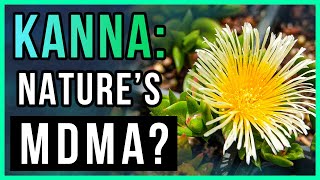
Transcript of Wellness & Wisdom podcast episode (host Josh Trent, guest Bandit from LiftMode) focused on Kanna (Sceletium tortuosum) as a natural aid for anxiety, depression, cognition and social ease. The conversation covers Kanna’s ethnobotanical history (first written account cited as 1662), biochemical actions (PDE4 inhibition and serotonin reuptake modulation), varied dosing and product formulations by LiftMode, third‑party lab testing practices, user anecdotes including rapid onset (minutes), and potential therapeutic and spiritual effects. Discussion balances anecdotal reports (heart‑opening experiences, micro/macro dosing) with references to clinical research and safety considerations.
Questions this video answers
1662 (Jean van Rebeck cited)
Episode 500
About 5–10 minutes after dosing (hosts report feeling effects within ~5 minutes)
Active effects cited as low as 15–20 milligrams (for certain products)
Yes — they send raw materials for independent lab testing (HPLC and specialized university testing) and compare results between labs.
Chapters
Do you think that Kanna is nature's mdma?
I think it's one of the closest things. It is something that helps to pull serotonin. It really works on a biochemical level to just really keep those good hormones flowing around. But it's gentle enough so you don't have to worry about things like serotonin syndrome.
I was actually looking at the research on this. South African hunter gatherers used this substance in prehistoric times. The first written account of the plant was in 1662. That's some old school wisdom. What is your fascination with Kanna?
The Khoikhoi tribe was trading this to the Dutch. You know, they're like, what can we trade? What is the most valuable to us? And that time it was, they traded sheep and they traded Kana.
The shift that we're all looking for, it comes from within. It comes from our decision to actually take an honest look at what's causing us the depression and anxiety in the first place. Sometimes it can be so powerful to have this external locus of control, whether it be an adaptogen or a supplement like Kanna, to actually give us some insight as to what life would even feel like without the constant barrage of anxiety and depression so we can make a better choice from that space. Bandit, welcome to Wellness and Wisdom.
Thank you for having me.
We just started some breath work because of the technical difficulties, but guess what, you guys, I'm so excited. This is episode 500, 500 shows on the Wellness and Wisdom podcast. We're doing a huge giveaway. One of our partners is Bandit's company, lyftmo. Today we're talking about all this suite of products and specifically Kanna, this incredible product that I've been trying for about 45 days or so now. It's been awesome. We're going to unpack how it can actually help us when we look at anxiety and depression. But, Bandit, for, thank you so much for your partnership. You know, it's pretty rare that I partner with companies. When it came to Lyft Mode, it was an easy yes for people that don't know just on a 30,000 foot view. Bandit, tell us a little bit about Lift Mode and how it relates to giving people greater ease, greater peace in their nervous system and in their body, just on a really high level.
Yeah. Lift mode is, you know, is the brainchild of. We had Armand and Marek, who are directors and they are biochemists. They are just, you know, sometimes I feel humbled to be in those conversations with them because they are just, they're speaking Such high level organic chemistry that sometimes I'm like taking notes, you know. So they are so passionate about it and they are just, they're really interested in developing things that help people to, to live better, to, to feel better and you know, to just, just like, you know, they get into the nootropics area as well. So they're really interested in and bringing things to the market that are a little bit more novel, kind of pushing the envelope a little bit, having things that other people don't have and things that just really allow people to just push cognition, push memory, push human performance to the maximum and keeping it as natural as possible. Everything we make, you will like it comes with a little package and you'll open that up and you'll find one of the first things you see is a coa. The one thing we are absolutely hardcore on is anytime we get a raw material in, we send it to a third party independent lab for testing. So HPLC testing in some cases, like for the Kanna, which I am thrilled that you got a chance to try.
Yeah, it's my favorite.
I mean the, like the, the alkaloids and kanna are very hard to detect. So you know, the lab we use is actually we, we, we get this stuff from South Africa, like, you know, directly picked from, from South Africa, where it just grows, you know, wonderfully over there. And we end up getting it all the way from South Africa to the US we check it, we do a couple of quality tests, and then we send it all the way back to a university that does specialized testing for us so we can find out, you know, exactly how many, exactly the level of alkaloids in it. And because it's so hard to detect, we also send that to another lab in the US so that we can compare and contrast those. We report everything kind of the median between those two labs because sometimes it can spike a little bit, sometimes it can come in a little low. And we're like, that doesn't seem about right. So we always double lab test it. Always independent lab testing.
Yeah. We can't perform well unless we're in a state of ease or really homeostasis. We have to be centered in our biology. And when I looked at the scalicium and the mesenbrain and all the different things that we're going to talk about today in the actual Kanna itself and also in the Mood Lift product and in the neurolift, there's a really cool amalgam of ancient wisdom in here. And this is what I was so excited About. I was looking at our editorial calendar. We plan shows, like months out, and it just so happened. Honestly, I feel like in divine intervention, I feel like this was really the perfect timing for us to talk about anxiety and depression and using natural remedies, natural herbs that are found in these really beautiful places in the world, like Africa. And I'm sure you can tell us about the history of where the shrub is grown, how natural it is. In some of my research, this is the part that was really cool. I was actually looking at the research on this. South African hunter gatherers use this substance in prehistoric times. And it was actually the first written account of the plant was in 1662 by Jean van Rebeck. A traditionally prepared dried scalicium was often chewed and the saliva swallowed, but it's also made its way into gel caps, tears and tinctures, snuffed and smoked. 1662 too. I mean, that's some. Seriously, that's some old school wisdom. Let's go on a high level as we unroll the conversation. I know that you're, you know, a scientist in your heart, and you're also a marketer and you also wear many hats at the company. But tell us on a really high level, what is your fascination with Kanna and with the scalicium?
You get some pharmaceuticals, you get some products out there, and they're like, this has been long tested. You're looking at like, you know, 20 years for pharmaceutical trials. We're talking. Yeah. As you say, 1662, you know, it was the first trade. The Koikoi tribe was trading this to the Dutch. You know, they're like, what can we trade? What is the most valuable to us? In that time, it was they treated sheep and they traded kana. And, you know, there's actually another name for this. It's like kagoid, and it just literally means good chewing. So this is like a little African shrub that, you know, people were just pulling straight out of the earth and chewing on. And it's worth noting that, you know, these were hunter gatherers. These were. These were African tribes that, you know, are famous for, you know, running for days on end after prey. And, you know, you get hungry. It's easy for your mood to dip, you know, when everybody gets hangry. Right. But one of the amazing things is that, you know, they were chewing this to keep them energized, to keep them positive and focused on it, enhancing cognition as well. A lot of people are going out there. You know, we've got people on Wall street that are that are using a little bit of Kana just to of keep it like it gives you a little bit of energy, it gives you that drive it, it keeps you feeling optimistic about what you're doing. So I mean you've got hundreds of years of use of this. So you know, that, that, that, that really says something. You know, there are some companies that are doing research of this for its potential as like it's just a minor appetite suppressant as well. I think there are a lot of products out there, even natural ones that I don't want to speak poorly of too many, too many other products out there. But like, let's think of something that people take for, for depression. Like, like St. John's Wort, I think, I think St. John's Wort is fantastic. But even as a natural product, you know, you've got to take it seriously. That's something that, you know, you take for a few months on end before you really start coming into that effective period for it. And you know, even with the most natural of things, you, you've got to be careful when you taper off this kind of stuff because you get rebound effects. You can have rebound depression, say this kind of stuff.
What do you mean by that?
This kind of stuff specific, specifically like St. John's Wort for example, which is a really popular one people take for depression. But some people get, you know, light sensitivity and it's something that you've got to really take seriously even though it's a, it's a natural product. Whereas Connor is one of these things where you know, if you are, if you are using the, the powder sublingually, you're using like a liquid, like one of our elixirs that you know, we flavor. You can add it to drinks even. This is something you can feel within 10 minutes.
Yes. I mean I feel it within like five minutes. I know everyone's thumbprint is unique so like they'll never be another bandit thumbprint or Josh thumbprint and the same thing on the inside. And I'm even thinking and feeling about the people with us here in audio and video that are actually dealing with the occasional, or maybe not the occasional, the all the time anxiety and depression. And I'm really sensing for them and for me the shift that we're all looking for. It comes from within. It comes from our decision to actually take an honest look at what's causing us the depression and anxiety in the first place. But sometimes, and I want to know what you feel about this, sometimes it can be so powerful to have this external locus of control, whether it be an adaptogen or a supplement like Kanna, to actually give us some insight as to what life would even feel like without the constant barrage of anxiety and depression. So we can make a better choice from that space. Have your users reported this? Have you felt this? What I'm talking about, just this break from the incessancy of the anxiety and depression to focus on the rumination of the past or the focus on anxiety in the future. Have you yourself felt this? Have your customers talked about this with Kanna? Because I'll tell you what, we felt it. I did a ceremony with this with Carrie. I can't believe that the FDA and USDA haven't come down from the mountains and tried to make this illegal. It's so powerful, it's so beautiful. It literally feels like a plant medicine ceremony, but it's totally safe and totally legal. What are your thoughts on that personally and also with your customer base?
Yeah, I mean, I love being in the lab and I love developing products, but what gets me up in the morning is, you know, going on Reddit, looking at our customer reviews, reading the emails that we're getting from customers, how life changing this stuff can be. You know, and what's really interesting with Kanna in particular is that depending on the dosage, you know, like this stuff is. Is active at as low as like, you know, 15 to 20 milligrams, because that's the strength of the stuff we have. But the experience someone can have on 20 milligrams versus, you know, 50 milligrams, it's. There's such a wide variety of applications you can have. So, like, for example, I know a lot of people who like to use it recreationally as like a social lubricant or an alcohol alternative. You know, something that they go out and they're like, no, I'm not drinking tonight. But, you know, I'm going to get into the conversation, I'm going to feel confident, I'm going to be my best self. That's why we make the liquids. You know, you can add it to drinks and sort of just have a healthy night out. Whereas, you know, some people go for the highest strength and that euphoria, they get that kind of antigen, you know, changing my, my consciousness type of thing, really getting that kind of maximum positivity. So there is a range of experiences we get and it is always positive, which is. Yeah. Which is fantastic.
How about you personally, Bandit? Have you. What's been your own experience? You started out as a customer which is amazing. You know, plus, three years ago. Yeah.
Way back.
And then you got into the formulations, and now you actually work for the company. So if it was good enough for you as a customer that attracted you so much, that made you actually join the company, what was that? In your heart, what did you feel? Why did you join the company? You must have felt very strongly about these products.
Oh, yeah, I chased them down. I gave them an offer they couldn't refuse.
It was like the Godfather.
No, no. Really?
Yeah, exactly.
What really drew me was, you know, like, I started about, you know, over 10 years ago working in. Working in supplements, being a brand manager for a couple of brands in New Zealand, where I'm originally from. And I just had so much dissatisfaction with. With some of the brands out there. I was looking at some of these formulations, just thinking, this just doesn't make, you know, like, you. You have some ingredients in there that are actually countering each other or ingredients that don't standardize, that don't actually test anything. And when you get a natural ingredient, kind of being one of them, if you get, you know, any botanical extract, you are completely kind of at the mercy of the growing season. How well that was handled, how long did they take before they harvested that and they actually dried it out? What techniques did they use? And I was so unhappy with them, and I was just always looking for a brand, and I found myself buying Lift Mode products because it was just always the best on the market. So that's. That's what drew me to the company. And then kind of actually came a little bit later in our development process. We were. We were so thrilled to find something like this, and we ended up having to. It was a. It was a process going through a lot of different suppliers and finding the one that we thought was just the best to offer our customers. But my own personal journey with it is I've tried it at all the different levels of effect. I actually. The first time I tried it was with another guy in the company, and he loves insufflating it because actually, even the tribesmen back in the day, they used to either chew it or just insufflate as snuff.
Right, the snuff.
Yeah. I tried it that way, and I was like, okay, I can see how people appreciate that. This is a real upper. This is an energy boost. Like, I. I can feel it.
Yeah.
But at the same time, it wasn't for me. And I almost gave up on it. I almost gave up on it just because it wasn't Feeling right for me. Then I, then I looked at some more of the research on like, you know, which of the alkaloids worked for different, for different reasons. You got mesembrene, which is the, the energizing one, and you've got mesembranone, which is more the calming one. And I was like, okay, let's try some more on that spectrum. Let's try a lower dosage. And I ended up trying it like on a day to day basis, a slightly lower dosage one. And I found that it was a completely different experience. It was calming, it still lifted my mood up. It seemed to stabilize my mood. And then I was like, okay, I can see that there is real potential here for a number of different kinds of customers.
I think it's fascinating because so many of the things out there, even if you look at ketamine or now Kanna, have been coming into my awareness since I would say the beginning of 2018, maybe even the end of 2017. And it just fascinates me how the FDA and USDA are just waiting in the wings. It's almost like they know that they can't patent an African shrub because it grows naturally in nature. And that makes me both excited. They've tried. It makes me both excited and it makes me cautious because, you know, we're. You and I are in a world where every single thing involving health and wellness is always attempted to be monetized. And when I look at the triangle between the pharmaceuticals, the hospitals, the insurance companies, and how everyone feeds each other, it's like a very black snake that eats its own tail on a continuous basis. I think about why I'm so excited about Lyft mode and why, why personally I'm excited about Kanna is because of my own experience. Now we had our three year anniversary. I haven't told you this yet. And we went down to the lake and we did the Kanna, the powder. And I felt an incredible large heart opening experience. It was very, very similar for me to, to any kind of entheogen or psychedelic. It was very similar. Now my audience knows. And if you're hearing us for the first time, I'm very cautious and very safe in the products that I recommend that are in any way altering someone's central nervous system. And I'll tell you guys that this experience. And I'll. And I'll tell you too, Bandit, this experience was so beautiful for me. I ended up having my heart open. I was crying. I was talking to Carrie, she started crying. And we had, we had A healing in the relationship. We had this beautiful healing and I thought about, wow, if it can create this with two people, how could someone use this in a micro or even a macro dosing regimen so that over the course of time, 30, 60, 90, 120 days. So we're hearing this in December. What if someone started this mid December, how could they actually feel an improvement in the symptoms of their occasional or their chronic anxiety and depression? What do you think about that?
Yeah, I mean, first of all, it's great to hear you had that experience. Like that's, I think, you know, in one of our earlier phone calls we were talking about, I think you, you were asking me, you know, is this, is this, would you consider this, consider this an entheogen? And at first I was like kind of questioning that because, because these days, you know, like technically an entheogen, you know, it can change your perception, but it's also anything that's like mood altering or cognition enhan, you could also say it's an antigen. So took me a little while to think on that because I don't, I don't like to think of Kanna as as much of a psychedelic person.
It's not, it's definitely not a psychedelic.
Sometimes antigen for some people is kind of a, it's kind of like a tarnished term. But, but ultimately it does fulfill some of those. It can change your perception, it changes your mood, it changes your, your outlook on life. And it's really like, I would call it an intactogenic, you know, so, so in the same way that some people use like, well, they used to use like, like MDMA and therapy, you know, it's an amazing therapeutic tool. Not at all, you know, say promoting that on, on this podcast. But in a similar manner, if you're using this with, with a loved one, you're using it to open up, you know, like it's a very powerful tool like that. But, but going back to what you said about, you know, something as a sort of a daily help for, for occasional anxiety. I mean that's why I even have it in the background. That's why, that's why I developed this. Like we had the mess and Bright and the messenger. Bright is something that I really developed because was kind of like the pure kind of powders, they can get a little pricey. So I'm sort of tempted to say that if you're wanting something for a daily long term help, for calming, for reassuring and for you know, occasional anxiety, the meson Bright would be the one to go for rather than the pure powder, the pure powder is, you know, you need such a small amount of that. Whereas we have tailored the messenger bright capsules to be just like right on the perfect balance of those alkaloids for daily use so that you can raise your mood. But if you want to come off it, there's no drop, there's no massive cost involved in terms of like your serotonin, your epinephrine, you know, like, yeah, I would push mass and bright for that. I think I'm really proud of that product. We also mix that with just a little bit of inositol. So it's kind of a mood stabilizing ingredient that seems to, seems to really synergize well with it and get you that long kind of all day effect.
Do you think that Kanna is nature's mdma?
I think it's one of the closest things, yeah. If you're having it at that slightly higher sort of recreational dose and you're going for the pure powders that we offer, I think it's one of the closest things out there for sure.
Why is that?
Well, to get into the technical side of it, it is a, it is a PDE4 inhibitor and it has very similar effects to something like an ssri. So you know, a serotonin reuptake inhibitor. So it is something that helps to, to pull serotonin. And yeah, it really, it really works on a, on a, like a biochemical level to just really keep those good hormones flowing around. But it's gentle enough so you don't have to worry about things like serotonin syndrome which you can get with, you know, the rec or even some of the stronger pharmaceutical options out there.
So looking at the way that this is very similar scientifically to mdma, one thing that was fascinating to me was I was looking at this PubMed study, the National Library of Medicine, it was actually PubMed Central and it said acute effects of the tortoise, the dual 5ht reuptake and PDE4 inhibitor in the human amygdala and its connection to the hypothalamus. This was really interesting to me. It said the results demonstrate for the first time the attenuate effects of Kanna on the threat circuitry of the human brain provides supporting evidence this might have anxiolytic potential, calming potential, attenuating subcortical threat responsivity. So basically this was proved through a private cohort in a way that was not. It was a blinded, I believe double blinded. And I'll link This in the show notes here. I love to go into the science because a lot of the anecdotal experiences can be just user identified. But when you look at true science blended with anecdotes, eventually the truth is going to start to bubble up. So this is really cool. The hypothalamus, the amygdala, from a science lens, how is this actually providing a space inside of ourselves that's very, very similar to mdma?
I mean, mdma, you know, there is a huge cost. Everybody knows the feeling like the day after or two days after you just feel that absolute crash. So I'd say that it's the fact that it's not just an ssri. It's not just kind of really, really trenching all of your natural serotonin and pulling everything you have. It's that combination between the PDE4 inhibitor and those SSRI similar effects. I'm really glad you looked at the research there because the research that we looked at, we were also in our formulations, period. We looked at the clinical research that had been done on it and we were just shocked, honestly, that we saw that those effects were being so well documented. Because, I mean, I've got a sheet to me here that I often use as like our cheat sheet. I can tell you that the company, I'm not going to use the name of the company, but it is one of the more well known therapeutic skeletium tortuosum suppliers. But this research that they did, when we're talking about mesembrene, the amount that they actually used to get those results was 0.02 milligrams. That was the total amount of mesenbrine. And you know, when you're looking at our kind of powder, we've got 1.5 milligrams. It is just like, it's, it's just, it's just on a different level. And the messenger bright product that I made, again it's the, the lighter one that I recommended for the more therapeutic, everyday, maybe entry level use even that is 0.58 milligrams. So it is just so much higher when we're looking at the mesembranone, which is the, you know, the calmer, the more calming kind of side of it. And the research that that company did to get those clinical results that you were just talking about, they were looking at 0.02 milligrams, sorry, 0.06 milligrams. Whereas in our powders we've got 0.36 milligrams. And in the Methembrite, we've got a little bit higher at 0.5. So it is, you know, we're looking at, you know, tenfold increases even in our more gentle. More gentle products. We get to the stage now of doing some clinical trials of our own. We are building out our lab and we're building out our capabilities in that sense. I am. I think it's going to be world changing when we actually are able to put our products through. The pharmacology of it is a little bit different from mdma. It's, I'd say the. The messenger bright and the mess and breen that we have in our counter is. It's really important that it's more kind of full spectrum as well. I think of all the natural alternatives that you have out there, this is the closest thing you can have to all the positive effects of mdma. It is something that is going to be opening. It's going to be something that you can share with a loved one. It is something that's going to open up your emotions, make you change, really change your perception of things. I really challenge anyone to try this and come out the other end, you know, exactly the same as they were.
Yes. One thing that I really love, too, is when people say, well, what kind of drug is Kana? It's not exactly a drug. It's. It's a herbal remedy. That's essentially what this is. You could, if you wanted to jump in a plane, you could fly to Africa, you could pick. You could pick the Kana yourself. You could try to formulate it. Right. Obviously you wouldn't want to do that because there's a safety protocol involved and you have to go through many checks and whatnot. But it's so fascinating to me, Bandit, why people turn their cheek to natural herbal remedies that are so potent and so powerful and so healing. So when we look at the. The question of anxiety and depression, obviously you and I know there's a ton of reasons why anxiety and depression exist in the first place. But this, this natural herbal remedy, this bush that grows in Africa, how do you see this really impacting people from getting out of the past, rumination, depression, or getting out of the future, anxiety, fear. And just being here right now, just being with themselves, especially right now, with the turn of the year and the new year coming and the old year going away, how does this really help people be in the present moment and not be in the past or in the future?
I mean, I could talk about my first experience with With Messenbright taking it, you know, over three to four days, I just noticed there was this one point where I just, I stood out my balcony, you know, it was rainy. I wasn't having the best day. And just all of a sudden it just felt like I put on a pair of sunglasses, you know, like, like literally the rose tinted glasses. I was viewing things in a different way. I was like, yeah, you know, the sound of this rain is beautiful. I'm so, I'm so lucky to be here. I'm so. I was just in this state of mindfulness and I think there's so many people that that mindfulness that, that sense of appreciation, I think that can be really, you know, emotionally shifting. I think it can really shift some people with long term trauma, you know, who maybe are not in the best places with their, with their job, with their lifestyle. You know, it's a tool. It's a tool you need to do the work yourself. You need to, you know, make sure you're, you' you know, personal care. But this is a tool that's just going to add so much more to people's journey and to just, just living better.
It's a way that I was fascinated by in the research that the kind of naturally bolsters serotonin reuptake. But it's a natural. It's not like you're using a pharmacological agent where it's going to deplete the serotonin. And we've all, if you've ever experienced any of this from using illegal drugs. And I say illegal because I'm not condoning that anybody goes out and does mdma, right, or mda, you know, te own devices. And I have the courage to stay on my show and to the public like those things can be incredibly healing, incredibly profound, but you can't do them every day. It's not. These things were not meant to be done, you know, on your lunch break and then go back for your business meeting. So I think about the reuptake. The, the strengthening mechanisms of attention and memory, the boosting of the mood, promoting of the cognitive function beyond the heart opening and, and really the tearing down of the walls that tends to separate us as we look at our wives, our husbands, our family members, all the ways that we disconnect from really ourselves, the love inside of ourselves. And we don't see, we get blocked of seeing the love in the people that we actually love. And it's just this crazy cycle that we're all figuring out here on planet Earth beyond That though, you know, we've talked quite a bit about the emotional regulation and the emotional benefits of this. What about the neuroprotectant? What about the brain health aspects of Kanna? Have you studied that? And if so, what did you find?
Yeah, I mean, we have a lot of ingredients would say are neuroprotective. I wouldn't really, I wouldn't go so far. I don't want to oversell it. You know, I want to, want to make sure we're giving a really clear picture of what Kanna does. It's not so much a neuroprotective in itself, but it certainly just doesn't have that cost associated. You know, like, I've tried a few days at the recreational dose and the next day it's just, just, it was business as usual. You know, there was no, I didn't feel any, any huge crash. So that's something that's really beneficial with it. I've also personally tested, you know, taking Mess and Bright, for example, which is a long term formula for, you know, three months at a time. And coming up, I tend to, even though I really feel you could take this for a long period for anything herbal, you know, our bodies build up tolerances to everything. I always recommend, no matter what it is, go for three months, months, take a week off, come back into it. Just make sure you're always getting the best from it. So, you know, there are, there are other neuroprotective things out there, but I would definitely say that, that there are a lot of people using this for, for, you know, enhancing cognition as well.
I mean, going back to 1662, 1662 is. That's pretty old school. I mean, this is a really, it's a plant medicine, but we can't call it a medicine because in the digital world or in the FDA's lens or the USDA's lens, if you call something a medicine, then it could be come and it could be confiscated, which is unfortunate. So we can't necessarily sit here on this podcast and say it's a medicine, or at least you can. But I could, I could say that for me, I could say that for me, this is a medicine. And I would say that for the handful of friends here that I've shared it with, that they feel it's a medicine too. And I was thinking about something we talked about earlier when we were talking about entheogens, right? And I had described on a previous podcast that an entheogen is a plant compound that gives you some different state of reality or an altered state of consciousness that doesn't always have to be psychedelic. Now when I look at the definition online from Oxford, it says a chemical substance typically of plant origin that is ingested to produce a non ordinary state of consciousness. And it specifically says for religious or spiritual purposes, which I think is interesting if you look at the etymology and maybe why entheogen existed in the first place. There is a lot of talk about the stone date theory or the amanita muscaria mushroom and the story of Santa Claus. There's also a lot of research about the mushrooms being in the Bible. And so I, I think that whether or not you're spiritual or scientific, everyone knows that there is something else out there that we don't understand. I call it God or great Spirit. What are your beliefs about the spiritual quotient when it comes to what I would describe as a medicine like Kana? In other words, do you feel this could bring people to a higher level of spiritual intelligence, to have a higher conn. To the energy that's outside of them, that's loving and guiding them and that loves and guides all things?
Among some of my friends, I'd be, I'd be considered sort of a little bit more like, you know, research driven. Very, very much interested in clinical research and that, that's what brought me to Lyft mode, because that's what we're all about. But yes, I mean, if I looked at some of my more perhaps considered far out beliefs, you know, for me, my, my, my belief is that, you know, I think that there is so much that we are uncovering in nature. I think that for every ailment we have, I truly believe that there is something out there that we just haven't discovered yet. There's something there in botanicals and in nature that is going to be the key for, you know, sorting out our diseases, our ailments, our even, you know, psychological disorders. So like, in a sense, I often, you know, I tell people, you know, what if the cure to cancer is in the polar bears gallbladder? And you know, if they're gone, they're gone, you know, so like that's. It gives me a, it gives me a special kind of motivation to, to think about the environment as well. Because, you know, we like to think that we have discovered all there is to know. We always have this kind of almost arrogance about it. You know, we've come this far, we've got smartphones, we got, you know, microchips. But you know, it's, it's we are still in an infantile stage of understanding of our environment, and I am just thrilled to see it continuing to develop. And I don't think. I don't think if it wasn't for companies like us and people like you and people like your listeners, that I don't think there'd be that motivation to keep going. I think all of us as part of this industry, whether a consumer or a producer, you know, we are driving towards improving humanity by. By continuing to explore. And sometimes that exploration is, you know, it's within ourselves. It's finding what is it that's going to open us up, what is it that's going to improve, you know, our ability to connect with each other. And I think that's incredibly important.
And as we connect with each other, we create more space for memories that matter, for experiences that matter. It's such a paradox, though, and I know I'm getting into the spiritual part of our teachings, which is really the pentagon of wellness that I've been talking about for years now. Mental, physical, emotional, spiritual, and financial wellness. We signed up here to be on planet Earth this time Bandit. So we all have to fill those aspects of ourselves. Otherwise, life gets harder.
Right.
And so the question I've been wanting to ask you for quite some time and also the question that I've been pondering since 2015 and probably way before then, is, how do I live my life? Well, you know, when we look at Kanna, and I can say this as a medicine, because I've also. This is an anecdote. When I've been in different psychedelic ceremonies, Kanna was actually used as a precursor with some of these other entheogens. Now, I know Kanna itself is not a psychedelic, but there is some beautiful aspects of this that can allow us to create more space so that we can fill all those sides of the pentagon. So at the end of the day, we can live our life well. So how do you, Tobias, how do you live your life well? What does that even mean to you to have a life well lived? You know, this is the fifth hundredth episode on this podcast, and I think about me asking that question to 500 different human beings. I'm curious for you. What is your ingredient list when it comes to living your life well? How do you define wellness?
She's a big question, but I'm glad you asked it. Yeah. For me, wellness is just finding out what fills your cup, you know, and understanding that some of the habits, some of the easier ways to be, are not always good for. For for your health, not good for your, for your mental health. So it's really about, for me, it's about discipline. It's about constant reflection on your behavior, your habits, you know, your weaknesses, your, your, your opportunities for improvement. And, and sometimes when you identify those, you think, okay, well maybe I need to try something like Kanna or I need to try neurolift balance or something. You know, maybe I'm lacking a little something there. And just, just keep experimenting, keep exploring and finding, finding what works for you because a lot of wellness is going to come from inside as well. But you know, use, use the technology we have, use the, the research that we have out there and there, there are things in there that are going to work a lot better for you than it's going to work for me. But wellness is, you know, for me, mindfulness and constant gratefulness because I can get really sick and I can still consider myself to be emotionally well. You know, sometimes even on those hardships, it brings it more into perspective. At least I have this, you know, at least I know to take care of myself. At least I can make little time. So I think of wellness in a really holistic sense. You know, it's not just not being sick, it's. It's living your best, I think.
And I feel that on such a deep level as we say goodbye, because it has been an ongoing journey for me, for you, for all of us to maintain these aspects of the Pentagon so that we can live well and the things that we perceive to get in the way. It's usually our perception of what's happening that's way worse than the things that are actually happening. In other words, you know, I'm the lens you're looking through. Right? In other words, I'm sick, but. But I'm sick. But I'm also excited about being well. I'm sick, but I'm also excited about the way that my immune system can fight off invaders. I have a fever, but I'm so fortunate. I'm so happy that my body has this fail safe system to get the bad stuff out so I can breathe in the good.
You got a fever. Your body is working hard, you know, like that's it. It's all.
Yeah, we covered a lot of ground. Is there anything you think we missed? When we look at the anxiety, the depression and some of these natural remedies that lift mode stands for, that can really support.
I mean, did we, did we send you some of our neurolift balance? I think I might have included that.
I think so.
When you first reached out. Okay, yeah. Yes. I mean, that, that, you know, we're here to talk about Kanna, but that, that's one of my babies. That is my, that is one of my proudest formulations, you know. You know, for me, one of the things that really got me into this, into this track of experimenting and finding what works for me is, you know, when I was a kid, I got a, I got an ADHD diagnosis. And you know, at that time, basically what happens is they, they just give you stimulants, they send you home, they tell your parents, your parents tell a school, and they're like, all right, okay. You know, and I kept that quiet for like 10 years because I had this sort of stigma that, that ADHD is just, you know, something that bad kids get or they're not parented probably. It's just kind of a sticker you get. And I think it's amazing that in this day and age, you know, people are getting so much more advice and help about the, the other things that happen is not just, it's not just an intentional thing. There are so many things like you can have rejection sensitivity, it can, it can affect your life in so many ways. And I found that, you know, I. Nothing wrong with medicating. There's a lot of good stimulants and non stimulant options out there if you can get past the nausea and things like that. But for me, I did 10 years of, of looking at things like, okay, so tyrosine is going to help with my dopamine levels. You know, okay, there's two different kinds. We've got an acetyl tyrosine as well. Both of them work incredibly well together. A little bit of, you know, a little bit of phenylalanine as well is helping me with my cognition, with my memory. And I came to this, this, I came to this perfect formulation and I was dumping them in pouches of powders and like consuming them every day. And it was just like, I found this focus. I found this was so life changing for me. And when I joined this company, I just felt absolutely blessed to be able to put that into a formula and put it out there. And you know, like I mentioned before, we can't say things like, this is for adhd. We, we saw it as, this is a cognition enhancing, this is a calming agent. But you know, the day that I woke up and look on Reddit and see that somebody else had discovered this and said, I'm using this for, for adhd, I've come off my medication. I've. This is the best thing I've ever had. You know, I. It was. I was in tears. You know, that, that is, that is, that is a beautiful thing as a formulator to find out. So, you know, like, whoever it is out there as well, that's one of my babies. The neurolift balance, I think it's a fantastic product and I hope, I hope you get a chance to use it. Even if you are, you know, neurotypical. It think that is just going to help with memory, concentration, focus, and just sort of that calm kind of mindfulness state. So, yeah, just have a look at our catalog and have a look and know everything is, you know, safety research is number one. And yeah, I think that's the only thing, that's the only thing we miss. And I feel it's a little self indulgent because it's my formula, but I'm glad to get to share that as well.
Amazing. Well, thank you for the discount code, you guys go to joshtred.com forward/lift mode. Use the code Josh10. Actually, if you go right now, I believe for just a limited time, like a very short window, you actually get 20% off. So you can use the code Josh. 20, you get 20% off. So like holidays, New Year, even Valentine's Day, that's coming. Think about that. How can you do a n equals one experiment, 30, 60, 90 days of you really investing in your own mental health, your emotional health, by having a window that can actually give you a different barometer, a different baseline of how you actually should be feeling instead of being pulled in the past by depression or pushed by fear into the future. So, Bandit, thank you for coming on the podcast. Episode number 500. It was really incredible. I love the ways in which you shared about your own personal story. What brought you to these compounds? I call them medicines. You call them compounds. So thank you, man. Thank you for what you guys do, becoming one of our, our really trusted partners. I've taken these myself. I shared my journey on the podcast now. So we appreciate you. Thank you for coming on the show. From my heart to yours, thank you for coming on the show, the audience, the people that make this even possible, the people that for the past 500 episodes, you know, eight years now, that we've been having these incredible conversations that allow us to live life well. So until Bandit and I see you again, we're both wishing you love and wellness and we'll see you for another 500 episodes. All right, y', all, Peace.
Hey, thanks for watching this video. If you love this video, hit subscribe. That way you'll be automatically notified when new videos come out, new episodes, and also share this video with a friend. If you loved it, they're gonna love it too. Check out some of the videos on this screen that are perfectly curated based on the video you just saw. Make sure you follow me and I'll see you in the next video.
More from Josh






Your child's future start before pregnancy... and even before conception! #podcast

MD Reveals: Your Healing Creates Your Child's Reality (The Souls Coming In Need Strong Bodies)



