Navy SEAL Doctor: SLEEP Is More Important Than Any Diet or Supplement
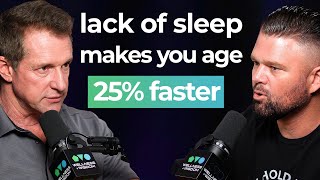
This is a transcript of a YouTube interview (Josh Trent with Dr. Kirk Parsley) focused on the primacy of sleep for health and performance. Parsley—retired Navy SEAL and physician—describes discovering widespread Ambien/Z-drug use among SEALs, associated lab abnormalities (low testosterone, high inflammation/oxidation, poor insulin sensitivity), and dramatic lab improvements after stopping sleep drugs and improving sleep (claims: testosterone and growth hormone increased 3–4x; inflammation/oxidation decreased ~99%; fasting insulin reduced from 25 to 2). He explains sleep physiology (GABA, REM/deep sleep, glymphatic clearance), cites that Z-drugs may shorten sleep latency by ~13 minutes and add ~37 minutes of sleep while reducing REM by ~80% and deep sleep by ~20%, and recommends behavioral approaches (sleep hygiene, limiting alcohol, supplements, meditation/non-sleep deep rest). The discussion links sleep loss to psychiatric, metabolic and neurodegenerative risk and describes practical coaching used with operators and civilians.
Questions this video answers
98 lab markers (drawn across ~17 vials), cost about $3,500 per person.
He stated the best-case effect was falling asleep ~13 minutes faster, sleeping ~37 minutes longer, but reducing REM sleep by ~80% and deep sleep by ~20%.
About 85% attrition rate.
Chapters
When you don't sleep very well, you don't emotionally categorize very well, you're more likely to have an affair, you're more likely to overeat, you're more likely to crash your car, you're more likely to go through bankruptcy, you're more likely to overspend. Dr. Kirk Parsley is a retired Navy SEAL and medical doctor who advocates for the healing power of sleep. I started working with the seals and that's how I found out what Ambien really did. Their labs look like a 55 year old guy who's 30 pounds overweight and pre diabetic guy sitting in front of me, he's 28 years old, got six pack abs, he's muscled, ripped, right? Every single symptom they're having could be explained by poor sleep. So I said, let's get him off his Ambien. All the guys start coming back, redoing their labs. Testosterone, triple growth hormone, triple, quadruple inflammation, 99% decrease. Oxidation, 99% decrease. All that changed with sleep and getting off of the sleep drugs.
The pharmaceutical industry pushes, I think 3 billion plus dollars in sales for sleep drugs. Are we just putting a band aid on something so severe that we don't even know what we're doing as a nation? We know that the pharmaceutical industry pushes, I think 3 billion plus dollars in sales for sleep drugs. Are we really medicating or are we just putting a band aid on something so severe that we don't even know what we're doing as a nation?
I mean the pharmaceutical industry in general is of physiologic tricks, right? So the way I like to try to divide things out when I talk to people about, you know, there's supplements, which by definition are supplemental. These are things that are already in your body and maybe if you concentrate these things you might get some benefit from them, right? That's a supplement. We're trying to support functions that are there. What the pharmaceutical industry does is they'll say, hey, there's this pathway that goes like this, this binds that that happens, this happens. And if we take this one step right here, right, and we make that 100 times more powerful or a thousand times more powerful, we then we can get a better effect out of here, right? That's what they do with sleep drugs, right? So one of the, so after melatonin is secreted and a bunch of cascades change, one of the primary things that happens is neuropeptide, gaba, capital G, A, B A that starts getting produced in Huge volumes. And that slows down the brain, right? So really, the best definition of being asleep is not being awake, right? So what happens is, like, all your sensory still working, right? Your motor still, like, you can still feel, smell, touch, see, like, everything still works. Your brain's just not paying attention to it. And that's because of gaba. It lowers what we call the resting potential of a cell. So you think of it like a capacitor. Capacitor. You put in a tiny little bit of voltage, and bam, you get a huge. Right, well, we lowered that energy. It's like, well, now you got to put in five times as much energy to get that capacitor to fire. So it lowers the resting potential of a cell. That's what GABA does. Well, benzodiazepine, like Valium or Xanax, that binds a GABA receptor. Different molecule looks to the receptor kind of like GABA, it binds that receptor and has 100 times the effect of GABA. A Z drug like Lunesta, Ambien, 1000 times the effect of GABA. So all they're doing is saying, we're shutting the brain off. That's not what sleep is, right? Like I said, that's one of the things that happens, is the best definition as far as, like, what we can perceive is that we're no longer paying attention to our environment. We're not interacting with our environment. But that's just a piece of it, right? It's almost a byproduct of all of the cascades that are going on. The benefit of sleep is the hormone production, the repair, the acceleration of your immune system, the consolidation of memories, the categorization of emotional events. All of that crap has nothing to do with gaba, right? Has nothing to do with that. That's all sorts of different neurotransmitters, all different changes in the br. And so what it really did is what sleep drugs really do is they dissociate your brain. So it leaves you with the lizard brain, right? The four Fs, the fighting, fleeing, fornicating and freezing, right? So. And it leads to animalistic behavior. So when the pharmaceutical industry wants to get a drug approved, they do the research, they come up with the idea, and they go, hey, I wonder if this would work? And then they do the research. And then they say to the fda, hey, this really works. Here's the research. There's some over here, but we promise it's the same.
This is where cherry picking comes in.
This is the representative stuff. This is all you really need to do.
These are the scientists.
They pay right? Now once they get sued. Now, we had to get. All right, let's see if you're hiding everything. Now we pull in all the research. So that had happened right before I started working with the seals. And that's how I found out what. What Ambien really did, right? So what was happening is, guys, the worst cases were people who lived in places like Vegas, right? Because they were taking this drug. It was completely dissociating their brain. And then they would go to a casino, and they would gamble away their life savings, and they would come home and get back in bed, and they'd wake up the next morning with no memory whatsoever of going to the casino. And all of a sudden they'd be like, what do you mean, my bank's overdrawn? What are you talking about? Or they go pick up prostitutes, or they go to the all you could eat buffet, right? Animalistic behavior, right? And so that's when we get to find out, okay, what is Ambien really doing? Just dissociating the brain and making you think you're asleep. Legions of sleep studies where, you know, a guy takes Ambien every night, and you're like, okay, well, take your Ambien when we do your sleep study tonight, because we're trying to find out if you have sleep apnea, right? We're not trying to figure out if you sleep or not. We're trying to figure out if you have sleep apnea. So go ahead and take what you normally take. And guys would lay in bed, get up and do things, whatever, and they would have no recollection. So after a while, the doctors are kind of figuring out this. Like, you realize you were only in bed two hours, right? Like, you were up doing. And patients like, what are you talking about? Like, I. I got in bed at 10, and I got up at 6. It's like, oh, no, no, you've got. In bed. You laid there. You got up. You started looking at your phone. You did this on your. Like, we came in there and told you to lay back down. All this. No recollection of it whatsoever. So once. Once we've really got the research, it showed that the best case that they actually had for. For the Z drug was that you would fall asleep 13 minutes faster, you would sleep for 37 minutes longer. But reduces REM sleep by 80% and it reduces deep sleep by 20%. So it's a huge net loss, right? You're getting 37 extra minutes of sleep with almost no REM well, you lost a lot of sleep, right? You would be better to get 37 minutes less than 80 and 100% of the room that you were going to get. And then if you use alcohol, alcohol does exactly the opposite. So alcohol decreases deep sleep by 80% and REM sleep by 20%. So when you take your Ambien with alcohol, which is what all the seals were doing when I got started in this game, I would send them in for sleep studies, and their sleep studies came back 99.9% stage two sleep. And every sleep physiologist, every sleep doctor would tell you, that's not possible. They couldn't possibly survive that. Like, there has to be something wrong with the study. But every single SEAL I studied had that. And so, you know, in those days, I mean, I know you're. You're in that scene too, like into kind of that early paleo kind of crossfit crazy.
Yeah. I did the 20x with Mark Devine. I used to go to the steelfit center in Encinitas.
Yeah.
I mean, I wasn't in the service, but I knew a lot of the guys.
But you knew all the things everybody talked about, Rob Wolf's podcast, and everybody talking about, you know, the Zone diet and paleo diet and CrossFit, and nobody was talking about sleep. And I came in and started talking about sleep and said, hey, man, I learned this because I had to, because the SEALs needed the help and I didn't know how to help them. And I figured out, hey, I think this Ambien might be a problem. Let's get guys off of Ambien. But, yeah, we could go through the stages if you want to. But obviously you're rebalancing all of your hormones, you're repairing, you're restoring, you're replenish all sorts of. There's all sorts of beneficial things going on. Nobody knew.
I want to go deep into that with you because it's been five plus years since we podcasted last. And I remembered looking at the analytics yesterday, and, like, tens of thousands of people listened to our last episode. Now we're a lot bigger, so the impact can be a lot stronger. But I find it fascinating that, like, did the government hire you? Did. Did the Navy hire you to figure out why their investments in these seals were. Weren't paying off? Essentially, like, they were like, hey, we have these elite special forces people, yet their sleep is tanked, and then they can't perform for us. So it begs the question, like, how much is each SEAL who's been through buds. Who's in active duty, how much are they actually worth? Like what's the investment from the government in these guys, man?
That would be so beautiful if they had that kind of foresight.
It's gotta be over a million dollars per seal.
It's way more. Right? So the SEAL teams are plagued by a few things, right? And one of the biggest ones is the 85, 85 ish percent attrition rate.
Right?
So people go, well, that's cool. I mean just, you know, the guys who make it are the right guys. Right? It's a really hardcore. Okay. But what it really means is that 85 cents of every dollar you spend training is wasted. Yeah, right.
I'm sure they're interested in that, right?
So you get 200, you get 200 guys to start a buds class and 25 of them finish and you're like all of that money you put into those other guys, like other 175 is 100% wasted. Because there's not like second tier seal or like almost seal, like there's nothing. It's like if you don't make it through SEAL training, you go do something totally different. Completely non related. Yeah. And so really since the beginning of SEAL training, they've been trying to crack that nut. Like what, what makes somebody successful? Nobody's been able to predict success. What people are getting much closer to is predicting failure. And really what it's kind of turning out to be, not surprising to anybody who's a seal. It's like the more adversity you've been through in your life, the more likely you are to make it through SEAL training. So if like the worst thing that's ever happened to you is your parents got divorced, you're probably gonna have a tough time at buds, man. Right? Like, it's probably like, I'm not saying you won't make it, but I'm just saying like if we're betting, you're not the guy I'm betting on, right? I'm betting on the guy who had like a totally, you know, desperate life situation growing up and abuse and homelessness and drugs and who knows what else, right? All kinds of crazy stuff. But to answer your question, you know, it's millions of dollars. If you divide up all the people who didn't make it, you're getting 26 guys out of 200. You've put millions of dollars into those 26 guys. They aren't even close to being SEALs. They just, they just made it through the basic training. They Made it through the training that says, oh, we believe we can train you to be a SEAL because you've been through this. Right now we've got millions of dollars more of training to make you into a seal, and millions and millions more to make you, like, a truly proficient seal. So the guys who are coming to see me, you know, I was there to do sports medicine. I was in charge of the sports medicine facility. But we had brilliant orthopedic surgeons and neurologists and PTs and ATCs and, like, people who were better suited for that than me. And seals are. They're like professional athletes. The worst thing you can do is put them on the bench, right? So when they. And the person they trust the least is the medical community, because the medical community is the person who'll put you on the bench, right? They say, well, we tested this. That's not right. You need to sit out until we figure it out. So they don't tell their doctors the truth. Now, because I'd been a seal, and there were plenty of guys still at the teams that I had trained with and deployed with and who knew me and trusted me. And so they would come in and go, hey, let me tell you what's going on with me. And these are guys who are closer to my age. They're still younger than me, you know, guys, guys. About 10 years into the teams is when kind of the wheels start falling off the wagon, man. And so they came in and they start. They list out all these symptoms, man. It's like I can't concentrate, you know, Like, I'm giving the brief. I can't pay attention, right? Like, I get. I. I walk in a room. I don't know why I'm there. I turn around and walk out. I remember, I walk, I forget, right? I leave my house five times every day because, like, I get my car back. Ah, I forgot this. My motivation sucks. I'm moody. I snap in my wife. I'm intolerant with my kids. I'm snapping my co workers. I don't feel motivated. I'm getting fatter, I'm getting weaker, I'm getting slower. Nobody, not a single guy, complained about sleep. Not one. It's part of our training. We go a whole week without sleep just. Just to prove that sleep's a luxury that you don't really need. If you're hard enough, you just push past it, right? And that was the mentality. And so they come and tell me all these symptoms. I'm a western trained physician, right? I've been to A western medical school. I know how to recognize and treat diseases, which is largely, as we know, guided by the pharmaceutical industry, runs medical education. So I know if I get this lab and you have this disease, I give you that pill or you go get this procedure. They don't have any diseases, right? They aren't performing as well as they'd like. And they're seals, so they're already performing up here. They expect to perform up here. Like, you know, Joe blows down here. Like these guys, they're performing great for the general population, for their, you know, for their cohort. They're not performing well. And so like what do you do with that? And honestly, I had no idea. And I said, well, I'll, we'll figure it out. Like I'm, I'm here to help you. Like you're my brother, right? Like the SEAL team is my brotherhood. Like that I'm closer to that as any one group. Like I'm closer to that group than I am my, like my extended family, not my own kids, but like, but my brothers and sisters. And like I'm closer to seals, right? Like it's that it is a brotherhood. And I'm like, I'm going to help you. And so I sent them to the hospital to get labs. This is not an exaggeration. I literally had them draw every lab that I knew how to interpret. And just because I was like, I don't know, let's just see what's there. And so they were going out. It was 98 lab markers or 17 vials of blood. Cost about 3, 500. 3,500 bucks per guy. So that's the first thing the Navy cracked down on me. They, they weren't a big fan of me doing that 400 times. But it come back. All the anabolic hormones are low. All the catabolic hormones, high inflammation, high oxidation, high. Insulin sensitivity poor. So their labs look like a 55 year old guy who's 30 pounds overweight and pre diabetic. The guy sit in front of me, he's 28 years old, he's got six pack abs, he's muscled ripped. Right now the SEAL leadership knew that the testosterone and seals were low. And they'd known this for a long time before I got there. And they just kind of waved their hands off and said, well you know what, talk to an endocrinologist. Endocrinologist say, hey man, it's in that range, right? The range is 250 nanograms per deciliter to 1100. Pretty big range, right? Anything in there normal, that's absolute nonsense. That's a disease based model, right? So if you were, you know, 200 pounds and you're carrying 100 pounds and you're jumping over walls and kicking indoors and fighting and climbing and you're not doing that with 250, right? Like you're a guy who should be around 1100, right? That, that's the way the world really works. But they don't stratify it like that in the medicine world. So they already knew the problem existed and they're without any evidence. The leadership had just come to a consensus. Well, that's guys who abuse steroids when they were younger and now they're having this problem. Now, first of all, that, that doesn't even make any sense because 10 years later that problem's not going to be there, right? Like if you, if you want to say they're currently abusing steroids, well then where are the high values when they've been abusing them? We don't ever find those. And, and, and how are they smart enough to sneak these steroids through, but they're not smart enough to know how to recover from them? Like, like basic Gold's gym bro knows how to recover from his steroid cycle. And the Seals would have been smart enough. But besides that, I knew a lot of these guys. Like, and I, like, I'd known them since I was a kid. Like I'd known him since I was 18 years old. And you know who the guys are who do that kind of stuff. And it's really not that prevalent. It's way less prevalent in the SEAL teams than you would think. And I knew who those guys were and I knew that the guy sit in front of me like, there's absolutely no way in the world this guy has ever taken steroids. Like, I will bet you anything I own that's true. And they just kind of waved it off, right? And I didn't know either. I was just like, no idea. And what happened was after so many guys had come in the room and told me what was going on with them, it was so similar. I could have told them the story. Like after 10 guys, I could just said to them, like, all right, you're going to say. And I could have just read the last guy and they'd be like, yeah, that's what's going on with me. I dubbed that the SEAL syndrome. It's now in the medical literature. It's been validated through a bunch of PhDs and all sorts of research over the last 15 years. And they call it the operator syndrome now to, you know, to not to be inclusive, right? Not everybody's a SEAL that has this problem. I was looking at this. Looking at this combination of symptoms, and I'm like, I don't know, maybe this. Like, I've heard of shell. This is 2009, right? So eight years of combat. I'm like, maybe it's that shell shock thing you hear about from old wars or battle fatigue, Combat fatigue. Like these phrases you know, you'd heard, but I didn't know what those things were. So I look those up. It's of no help, because nobody knows what it is, right? It's just kind of a syndrome. But, you know, it took a while. I mean, I'll go ahead and eat some humble pie here. Probably 40 or 50 guys had come in my office and told me the story before this light bulb went off on my head. And I was like, huh. Seems like a lot of guys have said they're taking Ambien. And I. I remember it clearly. Like, you just. You know, sometimes you just have memories of an event. And I'm like, I remember where I was sitting and how I was sitting, and, like, I remember brightness in the margin. And when he left, I go through my files, and I look through every single guy who's been in my office is on Ambien. And I'm like, well, that's a hell of a coincidence, isn't it? Let me see. First of all, the first thing I did is I pulled the prevalence of my command. 85% of my command is taking ambient because it's thought to be completely benign, man. It's like taking. It's like eating an M and M, right? Just take this, you know, you're flying, you're traveling. Just take this. You'll be fine. And so, again, I've been to a Western medical school. I haven't had a single class on sleep. I don't know anything about sleep that the SEAL doesn't know. I don't know what's going on to sleep. And I don't really know what's going on with the sleep drugs. I remember in pharmacology, they said, you know, Ambien is a gab analogy, okay? Like, I know what GABA is. I know what analog means. That that was how much I know. But what I did have going for me was that the seals kind of had a celebrity status already, right? They'd done a lot of stuff. They'd been in the media. Rumsfeld, number one. Directive was to make 3,000 seals and, like, give us a big thing. So I see somebody's TED Talk, hear somebody lecture, read somebody's book, and I just call them up and be like, hey, I'm the doctor for the West Coast SEAL teams. I'm having some problems wondering if I could train with you, Could I consult with you? Could I come to your office and train with you? Whatever. Just everybody was helpful. Like, not a single person turned me down on that. Not a single person charged me. And I. And so I got to learn a lot really quick. And once I found out what was going on with sleep, I was like, all right, man. Like, this sleep issue could explain every single symptom. Like, I didn't think it would, right? That'd be naive. I didn't think, oh, this is going to be everything. But. But I said, this could explain every single symptom they're having could be explained by poor sleep. So I said, let's get them off of Ambien. So get them off of Ambien. With a combination of supplements, nothing fancy. Like, I didn't have some inspirational genius. I went to, like, cochrane database and PubMed.
You had to figure this out yourself. Like, you had to go and to the actual supplement companies.
I was battling the Navy and the Bureau of Medicine, which oversees military medicine. They didn't want me doing this. This wasn't what they hired me to do. They hired me to run this rehab facility and do sick call. And so I kept getting. I kept getting my hand, my finger smashed for, oh, you can't do that. You can't do that. Quit focusing on that. Do this, do that. But I was there for the seals, not for this medical leadership, folks, right? I didn't care what they said, so I was going to help my brothers. And so that's what we did, and we just came up with. I mean, there are certain nutrients that are involved in the production of melatonin, and melatonin obviously is one of the triggers for starting sleep. And then we already talked about gaba, and there's some things that we know that's already in your body that are involved in sleep. So let's put those in there. Like, what has been proven to help with sleep and why? And with the help of having 100 dudes who are super motivated and journaling and wearables had just kind of started coming around. We had some actigraphy, and with. With their help, we figured out, okay, how much of each one, like, which brands work the best. It took probably about six Months to figure it out. And then I had this handout pre Amazon prime, right? And it's like, here's your handout. And they had to drive around all the health food stores in San Diego and find these things. And. But then anyway, I had to give them something because they were taking ambient because they couldn't sleep, obviously. So I couldn't just take the ambient and say sleep anyway, right? And you know, the other thing I did was curb alcohol, right? I didn't tell them not to drink, but, you know, limit. Let's, you know, cut that down a little bit, pull it as far away from bed as you can, all that. And then I was giving them some. Some daytime supplements like hormone support, things like DHEA and pregnant alone and zinc and, you know, just basic stuff like this is all very traditional medical stuff, especially in what was the functional medicine world at that time, right? And all the guys start coming back, redoing their labs. Testosterone, triple quadruple, growth hormone, triple, quadruple, you know, inflammation 99 decrease. Oxidation 99 decrease. Go from a fasting insulin of 25 to fasting insulin of 2. All that changed was sleep and getting off of the sleep drugs. And so then I had some buy in, right? And then the leadership started getting behind me and putting me in front of groups of seals to lecture. And we brought in guest lecturers for various things. Guys like Rob Wolf and John Welborne and Mark Sisson, like all that, all those usual players. And those guys would listen to my lecture and be like, hey, man, I've never heard anybody talk about that. And they started inviting me out to do podcasts and lectures or whatever, and just by default became the sleep guy. But what I worked with the seals and what I still do to this day is like all aspects of performance. So anything that will enhance your performance, and I break it in. I used to say there are four pillars. I used to say there's sleep, nutrition, exercise and stress mitigation, right? But now I say, well, there's exercise, nutrition and stress mitigation, but they sit on the platform of sleep because sleep impacts all of those pillars more than those pillars impact themselves and more than those pillars impact each other.
Dude, this is so good. Because whether somebody is in the military or whether somebody leads their life like they're in the military, everything you've mentioned applies, right? In other words, and I'm sure you've been asked somewhat of this question before, so if somebody's like a CEO or even a pro athlete, anybody that has that a type personality, Whether it's driven from trauma or not.
Right.
And I'd love to go into your story, because what fueled you back in the day doesn't fuel you anymore. Your trauma, your childhood, your stuff. There's a switch that flicked for you, and I'd love to know what that is. But all of us go through our own journey about, like, we reach this complete bottom burnout state, Whether we're an operator, whether we're a high performer, and all the time, people deal with the same issue, and that is they're just not living the way that nature, or I guess you could say God, our creator, intended us to do so. So I find it utterly fascinating that you went so deep into the SEAL community, but then now all these people want to learn from you that aren't seals and aren't in the military at all. Do you find that fascinating if civilians and operators and people in the military, we all deal with the same stuff when it comes to health and sleep.
When I first started doing it, I thought it was going to be something that was pretty unique to the SEAL teams.
Yeah.
But then, as you say, it's like any. Like, anybody who's, you know, go getter, hard charger, entrepreneur, right? Like, these type of people, they're doing the same things, right? They're. They're. They're sacrificing. They're trading their health for success, essentially. Right? And it's a. And it's an easy trade when you're 20, and when you're 25, because you're so damn resilient, it's like, yeah, maybe I'm 2%, 5% slower. Whatever. I'm still, okay.
I've done that.
But then you get a little older, and you get a little older, and you get a little. And it gets harder and harder and harder. You know, there's consequences. You are damaging yourself. And those damages added up. And then, you know, when I. When I left the Navy, you know, I kind of left a void where the SEAL for the seals, because they're like, well, what are we gonna do now? Like, because they're just gonna replace me with Joe Blow, Dr. I was like, I just keep calling me, right? And so I. I just figured out a way. It's like, I'll do private consulting, and I'll make enough money to where I don't have to charge. And so that's what I did. And then probably about five or six years ago, several foundations approached me and said, hey, we know you do this kind of work, and we need guys treated and we're paying other guys. Like, could we send guys to you? And so now the deal is, like, I still don't charge for my time, but the foundations will pay for their hormones or hyperbarics or peptides or psychedelics or whatever the hell we do. Like, they'll pay. The foundations will pay for all of it. And then I don't charge for my time. So the guys are still getting and all that, all the same treatment. But, you know, when I got into private consulting, I thought, you know, I'm going to be dealing with whiny little people who have minimal. Minimal problems.
Silicon Valley.
Exact.
Who wants to perform better, right?
Yeah. But what it ended up being was almost identical. Right? The guys are usually a little older. Right. The seals break down faster. It's. It's an accelerated aging process. Right. It's just. It's a hard life. Stress is what ages us. Stress hormones are what ages. The best compensator for stress is sleep. It's chaotic sleep environment at best, on the seal teams. And so you just break down faster. But it's the same thing, man. It's the same thing. And I used to work with men and women. Women are far more complex in every fashion, and their hormones and metabolic health is no different. And so, unfortunately, married to a very smart nurse practitioner who does the same type of work I do, and she focuses on the wives and the women. But it's a Western phenomenon, really. Right. It's some. You know, it all started going downhill with rural electrification, right, when you had the ability to stay up after the sun went down. And then, you know, with the industrial age, right? When time became money, when, you know, when a large portion of the population was working at a factory and they could pull another shift, they could work a few more hours, they could get that refrigerator they wanted, whatever. And so they started trading time for money. And that's when that phrase came about. You know, time is money. And so if I sleep five hours less, I can go in early and get this extra shift and I can make more money and I can get this for my kids or, you know, get that or whatever. And, you know, the more extreme you are with that, the more it impacts you. Of course, there's genetic variability like there is to anything else.
It's almost like we have a certain. I don't know if you'd call it a genetic or epigenetic bank account where, like, some people. I heard a clip of you talking on the Jocko podcast, and he was like, I just need six hours I don't need any more than that. And you're like, well, the odds of you being that are like getting hit by lightning while being attacked by a shark.
Yeah.
And I'm just like, that sounds about right. Because whether it's myself or my lady or just my children need lots of sleep. I'd love to talk about pediatric sleep, too. Everybody needs a certain amount of sleep, but the quality of the sleep is just as important as the length of. And we live in this world of like, you know, biohacking and red light therapy and all these things that are kind of band aids on the outside. But I find it really cool that you actually were a trailblazer where you're like, hey, this Ambien, this like pushing drugs doesn't work.
Right.
For the people that are operating at the highest level. What are the actual ingredients that make people sleep well? But then you found that it wasn't just the pills, it wasn't just the supplements. It was also temperature, it was light, it was creating a sleep barrier. I think I remember you saying that years ago. So how has this changed for you, this ingredient list for sleep over time?
Yeah.
Has it changed since, you know, you were working with special operators? I know you still do.
Yeah.
Has anything in sleep research that you've come across surprised you lately? Or in other words, what's trending right now when it comes to real healthy sleep for all of us?
Nothing major in the research has changed how I advocate how I train people to sleep better. What I've had to contend with the most. This is barrage of wearable data. Yeah. That is largely in actionable, like I.
But you wear an aura.
Yeah. No, that's just a roller. That's a rubber ring.
You were using an aura the last time I interviewed you.
I've never had an aura because they, they don't have my size as one size. I, I did have a pink. They gave me a pink earring once. Okay. I wore for like a few weeks. This is a Garmin. But I don't wear it when I sleep. I wear this for my exercise training. Got it.
You're device free when it comes to your own sleep.
Yeah, yeah. And I don't advocate that necessarily, but if the wearable data is going to stress you out, then the wearable data is not the right thing for you. Right. And you don't need wearable. You can't change anything. You don't measure. Right. You have to be able to quantify it to figure out if you're doing it well or Not. So there's some sort of tracking that needs to be done. But you know, I have 75 year old patients and they have a journal and they write down what time they went to sleep and they write down what time they woke up and they write down if they woke up in the middle of the night, if they remember anything, and then they write down how they felt that day and then they do it the next day. Right. And we can, we can track it that way too. So but you, you have these wearables and they're, and everybody has their own algorithm and they're calling things deep sleep and light sleep and REM sleep and, and people think they're supposed to get a certain ratio and how can I increase this? And like they want designer sleep. Right. Well, I want, you know, 20, 25% more deep and 34 more REM. I was like, it doesn't work that way. So that, that's something I have to battle against since I've started all this, the whole super sleeper gene training. Right. I think there's seven, I think seven genes now that they're, that they're including into this, this collage of super sleepers. And these are guys like Trump who say, I sleep three, four hours and I'm fine. Right. And that does exist. And like I said to Jocko, which is true, the odds of you having all those genes are the, are statistically the same as being struck by lightning while being attacked by a shark. Like, almost nobody has this.
Yeah.
However, more importantly than that, those, those genes do not say that you need less than eight hours of sleep. They say that you suffer less than most people when you don't sleep eight hours. That's all it says. Right. If you and I both go and run 10 miles, we're going to suffer differently. Some of that's how much we train.
Sure.
That's our mechanics, some of that's our genetics. There's a lot of factors in how much we're going to suffer. If there was a set of genes that said, hey, you're likely to suffer 30% less than Kirk when you run, you're 30% more likely to me to run 10 miles. Right. @ least. And that's really what the super sleeper genes are. But as far as like, what, what I advocate for people, the only, the only thing that I really changed is there used to be this idea of not associating your bedroom with insomnia. And so it was like all these behavioral rituals to get ready for sleep, all these behavioral techniques to do and Think about when you're in bed and if you, if you don't sleep, only spend X number of minutes trying to sleep and then get up and go read or watch television or stretch or something like that. And that was the going advice. And it's still the going advice, but it is not the most, it's not the most impactful way to do it at.
All. How so? Why is.
That? Because what I figured out was, and actually, I think in the last year or so, Andrew Huberman has been talking about something that he calls non sleep deep rest.
Right? Which is, was that like.
Napping? No, it's not. It's like meditation or something, right. And it's like, you know, a really good meditator, like a really well trained, well practiced meditator can get in a theta brainwave state, which is a brainwave that's dominant in deep sleep. So where I changed, and I can't remember when I changed, but it's been probably six, seven years now. When I started changing my advice, it was with one client and it was just something that I tried. I'd been doing a lot of mindfulness work with him. Again, like I said, stress. Stress is, you know, a major contributing factor to every disease, if not the cause of every disease. And so I'd been working a lot of the stress and he was still having a middle of the night's insomnia. So I'm like, you know what, instead of getting out of bed, just meditate, right? Just lay in bed, meditate. And if you fall back asleep, great. If you don't, just keep meditating until your alarm goes off, right? And it was just like a one of one trial with this guy. And it worked like magic, right? It took about three weeks and then it was like, I mean, a flick of a switch and all of a sudden, no problem sleeping for the first time probably in 15 years. And so, so the, all the sleep ritualization, like all the preparation for bed and we can go over that. That's just evolution. That's how you're designed. So you just mimic the way your ancestors got ready for bed, essentially, right? You have an alarm clock to say it's time to get ready for, to go to bed. And you have an alarm clock that says time to get up and start getting ready for your day, right? Those are the only two time points you need. Everything in between doesn't matter, right? So my alarm, let's say I set an alarm clock for 9pm I'm going to be in bed by 10. So at 9pm I'm going to start getting ready for bed. I'm going to decrease the blue light, I'm going to decrease activity, I'm going to lower the temperature, I'm going to right all the stuff everybody knows and then I'm going to get in bed and then I'm going to lay down in bed and I'm going to start doing breath work or meditation, progressive muscle relaxation, prayer, whatever it is I do to kind of relax myself as deeply as I can relax myself. And I'm going to do that until my alarm clock goes off. All right, So I lay down and start meditating. Well, I'm going to fall asleep, obviously, right? When do I fall asleep? I don't care. Whenever you fall asleep. And then I wake up in the middle of the night, I need to go to the bathroom. When I get up, you go to the bathroom. I come back, I lay down, I meditate. Till when? Till the alarm clock goes off? If my alarm clock's not going to go off for four hours, I'm going to fall back asleep. If my alarm clock goes off 15 minutes later, all right, I got seven hours and 45 minutes of sleep and I got 15 minutes of meditation. It's time to go. But where that makes the most sense is when people understand that, you know, I have people make a list and, and so you take a, put a line down, vertically down piece of notebook paper. One side is your to do list and the other side is your to worry list. The to do list, self.
Explanatory.
Right. But you write that out for as long as you're likely to worry. Right. So for me, like noon tomorrow. Right. Like I did not think days and months and weeks ahead. Lots of people do. Good for you. So as far as if you do lay it out there, the to worry are things that you worry about that you don't have any control over. Right. Like is the IRS going to audit me? Right. Am I going through bankruptcy, whatever. Right. Things that I really don't have any control over, but I'm going to worry about, I'm going to think about them. And so you educate people on the value of sleep and then you say, okay, so why are you sleeping? Once you understand what sleep is, why are you doing this? Well, I'm doing this so that I can succeed in my life, so that tomorrow morning I can get up and I can make the best decisions and take the the best actions that I can that are most likely to drive me towards the future that I have envisioned for myself. As being ideal or my purpose. And I want to move towards that with as little upset as possible. So I want to be the best me I can possibly be. Well, that's after you've rested. That's after a good night's sleep is the most capable you will ever be, no doubt. So why would you do anything else in the interim? So from the time you get in bed until that alarm clock goes off in the morning, you don't think about that list. That's why the list is there. If you. That comes on your mind, you're like, no, no, I'm going to handle that. When I'm at my best, it'd be like if I said, hey, man, you got to fight Mike Tyson. I'm going to give you eight weeks to prepare, like. And you're like, all right, I'm going to get killed, but I'm going to train as hard as I can so that eight weeks from now, I'm going to do the best I can possibly do. Would you at some point go, you know, six weeks is fine or four weeks or.
Something? No, of course.
Not. No, you wouldn't. That's what people are doing with sleep. So that list is your Mike Tyson for you. Right. Like, that list is. By definition, that list is everything that's important to.
You. Did you ever think that you'd be a life coach and a performance doctor? Because it sounds like you're doing life.
Coaching? That's. That's all I do. I am a life coach that can prescribe. Yeah. That's what I do.
Right. Because to be at high performance, it requires the integration of mind, body, physical, emotional. It's all in.
There.
Absolutely. There's no way you can get around.
It. And I don't, I'm not denigrating anybody's career, but I don't find any excitement in managing people's diseases. Like, I just don't. I'm like, I'm, I'm. I'm sad for people that have diseases, and if I can help them, I will, obviously. But. But I am much more impassioned by taking people who are doing pretty well, but they want to do better. Right. Or, you know, they were doing pretty well and they're, you know, they've crushed themselves. And so, like, about 70% of my time, I'm working with SEALs after their career. So they get out of the military, they've had a dozen surgeries, they have 500 head injuries, they've chronic pain, they've got emotional issues, like, all kinds of stuff going on and I spent a year helping these guys recover from their career. So that because they're retiring at like 42 years old. Right. So they have time for another career. But if they don't get that repair then it's pretty.
Hard.
Right. They're going from being the best in the world or something to like being a nobody and competing with a 25 year old in a cubicle, that's tough enough. Right. But to do that with a damaged brain and all sorts of joint pains and limbs and. Right. And all the metabolic disruption and hormonal disruption and all the stuff these guys have, like you're setting them up for failure. And so that's exciting to me, right, Because I like again, these are my brothers. But I also think it's just an exceptionally. It's an amazing group of men, it really.
Is. Who doesn't want to go from good to great. I mean if you're really good at something and then you have TBI or you have things going on. That's why I think there's so many corollaries between your way that you've served military and special operators to the high performing people in the world. Like there's a definite crossover there, but it also applies to people that are just feeling tired, feeling sluggish. One thing that fascinates the hell out of me, and I didn't know this until we interviewed and then I heard it again from Dr. John Laurence, is the brain has this washing system, almost like a washing machine for the brain. Yeah, the glymphatic system. And so it's literally we're swimming in our own excrement if we don't sleep well. So I don't care if you're a military person or if you're an everyday mom or dad. Well, for moms and dads, as you know, you have kids, there's like five years where you don't get good.
Sleep. Every kid, the first two years of every kid's life, the parents lose six months of.
Sleep. Well, that explains why I put on like £30 when I had my first.
Job. Absolutely true, absolutely.
True. So my brain was swimming in its own excrement and then that made me lose six months of sleep. How do I recover.
That? How do I get that back as fast as you can.
Man. So like a credit card where I have a balance with.
Interest. It's not, it's not that simple.
Simple. It's.
Not. It's analogous that. But I like to tell people is I give a metaphor like if you break your Leg right now, right? Something unfortunate happens. You break your. Your tibia, fiber your shin, right? And. And you go, you know what? I'm a really busy guy. I don't have time to mess around with this. I'm just going to keep going with my life. What's your leg going to be like a year from.
Now? Pretty jacked.
Up. It's gonna be a mess, right? Yeah. You know, you might have open sores. It'd be crooked. You might be limping. It might even be in pain. Like, who knows? Like, it's probably not gonna be all that great. But if you say, I broke my leg, I'm going to the hospital. I'm gonna work with a doctor. He's gonna set. He's gonna line it perfect, maybe pen it, put a cast on it. I'm gonna use all the. Like, I'm gonna use hormones and repair. I'm gonna use a bone stimulator. I'm gonna do hyperbaric. I'm doing all this stuff. A year from now, you probably won't. You might not even be able to remember which leg you broke. But I could do an X ray, and it's like, you know what? This is the leg you broke, and right here's where you broke it. There's a scar there, right? So there was some damage from it. And the sleep deprivation is the same thing. So the way it works out, the way we were created, you can argue it all you want to. It's not arguable. I mean, everything's arguable. But there's no rational argument to it. It takes eight hours to recover from being awake for 16 hours. That's it. I mean, it just does. If you choose to do six hours, tomorrow comes at exactly the same time. You aren't as ready as you would have been. You haven't recovered as much as you should have. As far as, like, the waste product thing that you talked about, I find fascinating and is actually because of the glymphatics that I came up with this idea of explaining this to people. Because you always hear about, I'm going to detox. I got it. And it's like, what the hell is detox? What does that mean? Like, what I got stored up in me? Where is it stored and why? Okay, well, you are actually trillions of cells. You're something like 3 trillion cells. Well, every cell is. Is a little you, right? It takes in nutrients, it takes in oxygen. It does work, and it produces waste 3 trillion times. And that's what you are. And what do you do, you wake up, right? You take in oxygen, you take in food, you do work, you consume energy and you produce waste. And so you have to clear the waste, right? We know how we do it as humans, but in your cells, like that's happening inside your body, right? And so how do you get that out of that? Well, there's systems to get that out of there, but there's a time where that system is ramped up and that's that. That time is when you're asleep. And the brain, specifically, like the brain, obviously everybody knows, or most everybody knows, the highest energy consumption of your body is your brain.
Right?
Yeah. It's 2% of your body mass and 20, 20, 25% of your energy. So you produce a lot of waste products and there's not a lot. Like that cerebral spinal fluid that you're building, your brain is bathed in. That's where you're getting a lot of your nutrients and clearing your waste. But that's, that's not flowing like blood, right? There's no, like your heart's not pumping, you know, your cerebral spine, spinal fluid like that, you know, that's pretty stagnant. So what happens when you, when you first go to sleep is the, the neurons that hold this kind of the structure of the brain, they contract about 30% and they create little channels and for the cerebral spinal fluid to flow through. And then because you're lying flat, like, you know, pressure, pressure systems with lymphatics and blood pressure, everything kind of plays into this and that will. That system flows and then there's ways for it to clear and get out outside of, outside of the blood, brain barrier and get, get rid of your waste products. Well, if you don't, if you don't clear that, whether that's in your brain or in your muscle or in your liver and your kidney or wherever, if you don't clear that it's, it's toxic, right? It's. It's a waste product. It'd be like if you leave feces in your living room, you don't get rid of it. It's toxic, it's gross. Things are going to happen, right? And what happens is your brain or your body attacks it. It's like a foreign object, right? So it's an infl. It's an inflammatory response. So now I have inflammation around this. If I, if that happens in my arteries, right? Like when I, when I damage my arteries a little bit, the byproducts of that inflammation kind of become waste products. And then if that inflammation is chronic. My body gets tired of messing with it. It's, it's expensive, right? The immune system is expensive. Like you're using the inflammatory response. It's an, it's an expensive system. So my body would say, well, let's just lay down this brick wall right here. We do it with calcium and then that's a calcified plaque. And that's what you see like when you do a CTA on somebody and you say, do you have atherosclerosis? Well, do you have calcium that's walled off in inflammation? Well, in our brains that are beta amyloid plaques, so it's not calcium, but it's a type of protein that are, that our brains lay down to get rid of fighting this inflammation. They're like, hey, we've been fighting this same damn spot for three weeks now. Let's just put some protein over it. We'll build a wall around it and then we'll leave it.
Alone. Would it be safe to say that people that are chronically underslept are at risk 10, 5, 10 times more for Alzheimer's and.
Neurodegeneration? All neurological.
Disease? What's the research on that? If you're chronically sleep.
Deprived? Well, so if you're chronically sleep deprived, well, there's all sorts of interesting things. So one thing is that every psychiatric illness that you can think of, bipolar, depression, all schizophrenia, all of that is highly impacted by sleep. There's no such thing as a psychotic break without sleep deprivation before it. There's no such thing as a bipolar switch without sleep deprivation being part of it. So we know that sleep deprivation is stressing the brain. And if you have some sort of issues you're stressing, if you have some sort of issue that's like barely under the. Simmering under the surface. And I think this is one of the reasons the military does what they do do, because the most, most likely ages you are to kind of reveal that is like you're between like 16 and 25, kind of, which is when guys are going to the military. So you sleep deprived them to see if that's their personal philosophy. I don't know. I don't know for.
Sure. That makes sense. They're pressurizing them and see if they can handle.
It. Yeah, yeah, so, so we know. So we know that sleep is important for maintaining psychiatric health by definition. Right? Because if I take away, no doubt there's, there's a area of biology, of sleep science now called chronobiology, which is just all about what it Sounds like time, the, the timing of biology. So you think of a circadian rhythm on top of ultradian rhythms, on top of biorhythms and like, and, and what they, what they found. And this was one of the many fascinating things that happens in science, real world examples, people in inpatient psychiatric wards going out in the morning and going for walks in the sunshine, all of a sudden get off of their sleep meds, they start sleeping better, get off their sleep meds, get off their psychiatric meds. And there's this an explosion over about five years in like Ivy League level inpatient psychiatric wards where they were getting people who have been on psychiatric medication for a decade to be off of all medication simply by regulating their sleep and their light wake cycles. So that's one aspect of it. But as I was saying, being awake right now, it's what we call catabolic, right? So anabolic, you think of Arnold Schwarzenegger and anabolic steroids build big muscles, right? So anabolic, you take small simple things like amino acids and you build big complex things like a muscle. Catabolic is the opposite. You start starving that bodybuilder with all of his muscles. He's getting no protein. His cells need amino acids. They eat the muscle, take the muscle and break it down into amino acids. So anabolic and catabolic is always going on in your body, right? Different regions, different cells, different times. It's always a balanced system. But being awake is primarily catabolic and being asleep is primarily anabolic. In fact, the most anabolic time of your life is deep sleep. By no small coincidence, the lowest stress hormones you will ever have in any 24 hour period is deep sleep. Because stress hormones are catabolic. You go into fight or flight, you're superhuman, man. You're faster, you're stronger, reflexes are faster, your vision's better, your respiratory is better, your blood pressure is higher, your blood glucose. You can do all sorts of amazing things under fight or flight, but you're eating yourself. Like live that way for 48 hours, you'll be dead because you're just, you're eating yourself as the fuel system. And so when you go to sleep, you're repairing anabolically all of the catabolic damage that you're doing to your brain and your body, right? So if I work out, I'm damaging my tissues, right? I'm depleting nutrients, I'm depleting glycogen, I'm stressing my nervous system, I'm stressing tendons and ligaments, I'M causing inflammation. If I go to the gym and I do a workout that's worth doing, I come out of the gym weaker, right? When do I get stronger? I get stronger when I go to sleep. When I go to sleep, my brain and my body use today as the template to say, hey, if we're going to do that tomorrow, let's try to build this up to where this muscle will be stronger and it won't damage just so much to do the same thing tomorrow. This happens with everything, right? So everything that you're every. In every way, you're taxing your body right now. Your brain and your body are going to conspire tonight to say, hey, let's try to be able to do that better Tomorrow when we go into sleep, let's repair this rebalance. Let's put a little more of this nutrient in there. Let's get a little bit more of this cell function in there to try to compensate so that when we do the same thing tomorrow, we'll be better. And when you're younger, that works. Yeah, right. When you're a kid, you have kids, your kids go to sleep, they wake up taller and smarter and stronger and faster, and you're like, wow. And it happens fast. And then we plateau, you know, somewhere between like 25 and 35 kind of plateau. And then after that, it's like, well, I didn't, I didn't quite wake up at nine. I didn't wait. I didn't wake up at 100. I woke up at like 99.999. Right. And that's essentially aging, right? Because if I could repair a hundred percent and restock and prepare everything 100, I'd wake up exactly the same every day and I'd never age, right? So to the fact, to this, to the point that I can't repair, I can't restore, that's. That's the extent I'm aging. And what we know is that that process takes eight hours. So I need to be awake for 16 hours. If I stay up for 20 hours, I've added four hours of damage. And now if I go sleep four hours, I only got half the recovery. So I'm bringing some of that damage and lack of function to the next day. And if I do that consistently, I'm aging myself 25% faster, right? Because it takes eight hours to recover. I'm only sleeping six. I'm aging 25% faster. My brain is aging 25% faster. If you live long enough, you will get neurological decline. It just happens and so you're choosing to age faster. And we can see this because your brain is actually building beta amyloid plaques right now. Like, we're both doing it right now because we're stressing out, we're building up toxins, we're building up waste products in there that we can't flush out just yet. And when we go to sleep tonight, if we sleep perfectly, ideally, we could flush out 100% of it. And at our age, we won't. If we were 25, we would. Right? If we were 15, we definitely would. But that's how it's associated with neurological decline. So it's not as simple as just saying, well, it's going to damage this region of the brain or that region of the brain. Now, what's more important? Like I said, eight hours to recover from being awake for 16 hours. I choose to do six. What time does the sun come up tomorrow? If I sleep six hours, exactly the same time, what are my responsibilities tomorrow? If I only sleep six, exactly the same. So I didn't recover 100%, I didn't prepare a hundred percent tomorrow, still going to require 100%. How do I get that? Extra 25% would be your.
Guess. Sleep more on the.
Weekend. I release stress.
Hormones. Oh.
Right. So stress hormones. People think of stress hormones as like anxiety, stress, tension. That's not it. So cortisol keeps you alert in proportion to your environment. Right. Cortisol is the main stress hormone. We'll talk about. It's just an easy way to talk about it. When I go to sleep, I had the lowest, like I said, deep sleep, lowest stress hormones I'll ever have. Sympathetic. You've heard of the autonomic nervous system? Sympathetic. Sympathetic. Parasympathetic. Sympathetic is driven by stress hormones. Right. So cortisol is a stress response. So I want the lowest amount of sympathetic tone. I want the lowest amount of stress hormones. When I'm in deep sleep, that's when all my hormones are going to be rebalanced and measured. My brain's going to tell my endocrine organs to make more or less of hormones. My immune system is going to fight off infections and it's going to start repairing my damaged tissues and I'm going to flush the toxins out of my brain. I'm going to flush the toxins out of my lymphatic system and I'm going to start repairing my body. I'm going to. I'm going to go through REM and I'm going to rehearse everything. I'VE heard and thought about during that day. I'm going to decide if it's important or not. If it is, I'm going to move it into long term memory. And I'm like, that's a sleep cycle, right? And so I need those stress hormones to be really low because I need my anabolic function to be really high. And like I said, fight or flight. No anabolic function, all catabolic function. So as low as I can possibly get, a maximum anabolic function, all right? I didn't do it because I didn't want to. I didn't have the time. Whatever. I drank a bunch of alcohol. I did whatever I did, I didn't do it. Tomorrow still comes. I still need that function. Where am I going to get it? I'm going to move towards some. I'm going to move towards that fight or flight. I mean, right? I'm going to drive my stress hormones up. I just told you they're catabolic. That's what's aging you, right? They lead to inflammation, they lead to poor insulin sensitivity, they lead to fat storage. The only animal on this planet that sleep deprives itself on purpose is us. Every other animal will only shorten their sleep if they're being preyed upon, like if they're being stalked or if they're starving and they need to be able to get up earlier and travel farther, right? And so it not nothing you could ever prove, but it makes physiologic sense, evolutionary sense, that our brains perceive lack of sleep as famine or threat, right? There's some kind of stressor going on. And you look at the amygdala, right? The stress in our people's brains, people who don't sleep well or don't sleep enough or don't sleep regularly, they have higher amygdala tone, they have higher stress.
Hormones. I turn into an when I don't. I'm 44, so like I know exactly what you're saying. When I was in my late 20s, early 30s, I could kind of act how I want, right? But now I cannot around at all. If I don't get proper sleep, I can't function. I actually this is my next question for you parents because you talked about weight gain and everything else. Moms deal with this on the regular like they're. Especially if they're co sleeping, right? I wonder how you'd organize something for a parent who's listening, right? You've been through this yourself as a dad. You have two kids.
Three. Three kids, all.
Adults. Now did you did you do co sleeping with them and if so, what do you feel about that from a sleep and health perspective? What did that look like for you? Because we know the research shows that it's good for them and their attachment style. Then it crushes the parents.
Right? Yeah. So the short of it is there's consequences to everything you do and having kids. There's consequences to having kids. It depends on what you're considering, your goals for your children to be. Right. If you want a well developed citizen, socially responsible little sergeant, well, probably co sleeping isn't necessary if you're much more into. No, I want my kids to be. I want a strong family bond, loving connection. Like that's what I care about more than whether they're exemplary models of academic. The people who are just falling into the mold and filing and marching to the step, the Spartans of society. That's much more of a disciplinary thing. And you're gonna, you're gonna build kids who are probably more apt to do.
That. Is that what you.
Did? No, my kids were all two years apart. I started having kids my last year of college before medical school. So I had all my kids and like, and the tail end of college while I was trying to get into medical school and working part time and then in medical school and then.
Residency. So wow, it sounds.
Easy. So I had no patience for anything like crip training or anything like that. And so like, and they've done this research, it's. It intuitively makes sense. Everybody would be able to guess it. But there are, there are hunter gatherer tribes all over the planet. Right. That still exists. They've never, never seen artificial light. They've never experienced electricity and how they sleep. One rug, whole family. Right. Everybody just piles on top of each other. They fall asleep two or three hours after the sun goes down. They wake up about the same time the sun's come up. They do it every day. Like there's no, there's no fuss, no muss. And that's how we avoid.
Evolved.
Yeah. Yeah. So it is a normal way of living, right? It's not a normal, it's not the ideal societal Prussian school system, kind of westernized thing that we've designed to make, to make the little Spartans. But it's how we evolved. And so I think there's health benefits, I think beyond, beyond societal benefits. Right. I would, I would lean towards the coast.
Leaping. What's the trade off though? Because like this is really awesome. It's pretty rare that we could go this deep on the health aspect. Of sleep specifically for parents. Like as I've become a parent, a lot more of my audience are parents. Right. And you're a dad of three. So what's the trade off from a physiological, neurological risk perspective when we look @co sleeping versus, you know, is there a proper age where we can send them off to their own rooms? Like how do you weigh the risk and the cost of this for parent health and also for child attachment.
Style? Yeah, I would say, you know, the kids need to exit the bedroom more for psychosocial reasons than any sort of physiologic reason. Right. So their social development. At some point they need, you know, they need to start having their.
Independence. What age do you think that.
Is? I think it depends a lot on the kid. Right. But like I had my oldest son, I would say he intermittently, not, not consistently, but intermittently. He was probably, he was probably still getting better with us at 6. My younger son, not that kind of kid, man. He was just like, I'm going to bed, you know, just take himself to.
Bed. He was trying to be a.
Spartan and like he, and he went to, you know, grew to 6 foot 4, 300 pounds and went play division one. Okay. That was just, that was his personality. That's who he was. And my daughter, my daughter was relatively independent. She co, she co. Slept until about 2 and then 2, 3 and then she's like, yeah, I want, I want my own bed. Right. I think the, I think she requested it. Yeah, okay. She was like, I want my bed, I want my stuffed animals. I want to be surrounded by this and that, whatever, you know, and I don't, I don't necessarily think there's a right answer. Obviously. I think it's weird for Everybody if you're 14 year old boy sleeping with you or something like that, you know, things are going.
To. I've heard seven from many different.
Scientists. Yeah, I would, you know, I was going to say, I think somewhere around 6 would be my. Okay would be my instincts. But there, you know, there's different rates of development too. Right. So like if, if you're, I don't know if you pushed it to eight, I wouldn't think it was weird. And if it went down to four, it's definitely not, you're definitely not being, you know, a prick to your kids or.
Something.
Right. It's just like, you know, kids, kids develop.
Differently. Well, in the vein of optimization, because that's essentially like I think you said before we recorded, sleep is like 25% of what you.
Do.
Yeah. You probably are one of the most educated people in sleep on the.
Planet. Yeah.
Yeah. There's this other 75% that's really important to talk.
About.
Right. So I think about the way in which. I think you were 17 when you enlisted. Was that how old you.
Were? Yeah.
17. It was a very challenging upbringing, like, super challenging. And you had a lot of anger. It drove you in football. Like, there was a lot going on internally, psychologically, that probably made you a great.
Seal.
Right. But yet later on, you had to untether for that. You had to break the bond of, like. Well, with the anger and the drive. That fueled me, maybe even partially fueled you to be an.
Md.
Yeah. At some point, like you said, even for seals, the wheels fall off the wagon. So, like, that had to have happened for you. When did your wheels fall off your wagon to where you wanted to be successful from a different fuel substrate? Call it self love, call it self care. I don't know. What did that look like for.
You? Yeah, the wheels fell off the wagon for me in medical school, actually. So I. I started medical school at 30. And so I want to say, is that considered late? I mean, most. Most people go straight through. Right. So you go to college, you go to high school, you go to.
College. 15.
Years. Right. But obviously, you know, I dropped out of high school, joined the Navy. So that. That was about a little, you know, six and a half years kind of between high school and starting college. I didn't have a high school diploma, so I had to start in junior college. I was still pretty. That's still a little hard. That's still pretty hard around the edges. I was still pretty.
Angry. You were still carrying a lot of the childhood.
Stuff. Yeah, I didn't really. I've definitely. I definitely did a really, really good job of repressing it. And to this day, I. I know there's some stuff repressed. I have not been able to access it, even going through psychedelics, like. But it just has to be there. Rationally, it has to be.
There. But I.
Just. I just. Could. I. Yeah, like, I definitely have found some trauma. I have worked through my own crap, but I know there's more there that I haven't been able to access for whatever reason. And obviously it's having some impact on me, and I don't. I don't know to what extent. Maybe it's good, maybe it's bad, but whatever it is. But, yeah, so. So when I. I got married, like, six months after getting out of the Navy. Right. So When I was 25, I was married and I was working probably 30 hours a week at a, at a sports medicine facility. And I was going to college full time, not, not with the goal of being a doctor yet. But then that, that pretty quickly shifted into becoming a doctor. And then like I said, a few years after that I had a kid and I was married and I was working almost full time and going to college full time and trying to get into medical school. So having to do exceptionally well in college and because I was a seal, I knew that sleep was a luxury. I didn't really need to do any of that. So I pulled all nighters all the time. I, I mean I probably averaged all through college. I would say I probably averaged about five hours a night. I would, you know, I'd sleep in on weekends when I could and take naps and things like that, try to compensate. And then when I got to medical school, I already had two kids. I had a third kid on my, my third year medical school and again because I was a SEAL and I knew I needed to stay in shape and I was going to be smart and hard and all that. And I, and I wanted to have some time with my family. I actually had a buddy who's kind of in the same boat with me. He's a little younger than me, but he had similar number of kids and wife and all that. And so, and we lived, we lived 45 minutes for school or something. So we got up at 3am every day and we left, we carpooled and we, and we got to, and in the morning we could get to school in 30 minutes. So we get up at 3am, we'd leave at 3:30, one of us would pick the other one up, we'd be to school by 4, work out from 4 to 4:30, change our clothes, get up into the library or the lab or whatever by 4:45 and then never did anything else but study. If I didn't have to go to class, I didn't go to the class. I, I stayed and studied. Lab classes. You had to go to whatever. 4:30 we get in our car, car pull home, we could take the transit lane home, we could get home in 30 minutes again, spend time with my family, give my wife a break, take, take care of the.
Kids. Do your second.
Shift. Yeah, yeah, spend my time with the kids. I'd cook dinner, I'd clean the kitchen up, I'd bathe my kids, I'd read them stories, I'd put them to bed. I'd be lucky to get in bed by 10. That was always my goal to get in bed by 10. Usually is more like 11. Get up again to 3 o' clock the next day, did that 6 days a week. Sundays I got up at 3 and I went down to the basement and I studied until the kids started getting up. And then I took the kids that my wife could sleep in on Sunday. And, and then, and then I got into, you know, it'd be a, it'd be a whole long story, but basically some military disciplinary legal action over a leave policy that was, it was all, it was all theater. And I was, I was being made the example because I was the big Navy SEAL with all the stuff on his uniform. And like, that's the good example to crack down on. And at that point, by, you know, by my third year medical school, you're looking at about nine years of averaging at best, five hours of sleep, probably closer to four by the time we get to that stage. And man, I mean, I was weak. I was in pain all the time. I was losing my hair. I was smooth. I have some, I have some sort of weird genetic set point with my body weight where it doesn't change. Like, I, I can, I can be doughy and fat and I'm 240 and I can be ripped and muscular and I'm two hundred and forty. Like, it's just the way it is. So my body weight didn't change, but my body comp shifted. I looked like crap, you know, could no longer function. I remember, I remember reading the same page in a book for an hour and a half, two hours. But being, you know, being a hard Navy seal, I wasn't going to quit. I just. I'll do it again. I'll do it again. No, I'm, that's not hyperbole. I would, I would try to read the same page for an hour and a half and not, not even get up and go get water or anything like that. Just like, no, I'm. I'm going to do this. I'm going to do this. I'm going to do this. And I, I mean, I just totally crushed myself. Fortunately, medical school ended before I like, completely collapsed. And then I went to the hospitals and that, you know, for the first year of residency, which was ironically, kind of a little more humane because there wasn't, there weren't tests to be done. And we'd moved back to San Diego where my wife's family was and all that. And so it was a little, a little easier. And then I, and then I got a reprieve because in the Navy you do your first year residency and then they send you out to the fleet to be a general practitioner. That's how they have general practitioners. Otherwise everybody just specializes and stays in hospital. So in order for me to go back to the SEAL teams, I had to go through dive school. And then that was just kind of like being a 25 year old kid again. Yeah, it's like you're doing early morning PT and you're taking kind of simple classes. You're doing like, whatever, hanging out with guys, you know, having a good time, getting plenty of sleep and all that. So I got it just kind of forced on me. Like, just timing kind of saved me. And then when I got back to the SEAL teams, I really kind of started back down that tough grind, kind of doing what I'd. What I'd always done, beating myself up. But then the seals saved me as I. Like, we saved each other, right? Because they came in and started telling me about their problems. And as I understood what was going on with them, you were like, that's me. I was like, you know what? And I remember this is kind of like the day I noted the ambient. I remember I called it my old man walk. I didn't run anymore, but I'd go down Coronado Beach. It was a four mile walk down to the fence and back, and I did that every day. And I remember being on my old man walk coming back, and I remember you just got your light bulb going off my head and going, you know, I should probably start practicing what I've been teaching all these guys to do. Because I just remember, like, my hip was hurting and my ankle was hurting and I was feeling slow and tired and I was looking at my watch and I was like, man, I just don't feel good. Yeah. And I thought, well, you know, maybe I'm suffering from this. And I hadn't done my own labs, any of that stuff. And so then I went and looked at myself and I looked just like they did, you know, what about the emotional.
Load? Because like on the podcast, it's on the screen right now. Physical, mental, emotional, spiritual, and financial. I feel like if we're. I call it the Wellness Pentagon, right? You have. Everybody has their system of how they nourish themselves. The emotional load of sleep. We've gone very deep into the physiological stuff and the glymphatic and the cleaning. The emotional intelligence is not present if you're not sleeping well, it's just not there. Do you feel how Many relationships, do you think, split up because people don't know, they don't know how to sleep. Did that happen to your first marriage? Was, was the strain of not sleeping part of what broke you guys up, or was it some other karmic.
Thing? For sure, for sure. I mean, I couldn't even tell you what broke up my first marriage just because I, I feel like I was such a mess, you know, metabolically, physically, which leads, you know, to a lot of pride issues and then some social issues between my.
Wife. But also, when you're under slept, it's easier to lash out. It's either easier to be.
Tired. And the research is very consistent on this. And you see all the bickering on social media about nutritional science. Like, there's no bickering about sleep. Like, all the sleep research points to the same stuff, right? It all, it all says you needed eight hours and it all says you suffer. And here's, here's how you suffer. Yeah, there's money to be made in making it sound complex, more complex than it is, but it's not. But the research, the legions of research where you go, there's something called the couples trials that I think William Dement, who's like the kind of the grandfather of sleep medicine, I'm pretty sure it was his study at Stanford that did this, or if not, it was somebody that worked for him that did it. And it's been duplicated dozens of times at this point. But they took couples. And I'm pretty sure they were all married. If they weren't, they were long term monogamists, but I'm pretty sure they were married couples. And they said, hey, we want you to be a part of this research. We want you to come in on this weekend night, whatever, and you're going to sleep at the, you're going to sleep at the research facility, whatever. And then the next day we're going to give you money and like, we've got resources to take care of anything that needs to be done for you. Like, we're going to take away any, any pain point you have. Your yard needs to be mowed. We're going to send somebody, like, whatever it is, you need daycare, we're going to handle it, we're going to do whatever. And so then you two just go out and spend the day however you want to. And then we ask you to come back at the end of the day and sit through some questioning. And then what they did, and these were. So they prepped them with both partners and the Couples sleeping eight hours a night, right? Traditionally, or whatever their normal was somewhere in that ballpark. And then the night before their day together, one of the partners only got to sleep six hours and the other one slept eight hours. And then they go and they have the day, and then you bring them back at the end of the day and separate them, put them in separate rooms, and you say, tell me about your partner today. Like, how did it go? How was his emotion? Like, how was his connection? Would he feel? Did you feel affectionate? Was it loved there? Was it like, you know, just rate them, rate them. Long, detailed questions. It doesn't matter which one you sleep deprive. They both rate each other worse. And it's because of that amygdala thing. I saw that, right? If I don't sleep enough, I make myself more awake tomorrow by producing more stress hormones. Sympathetic tone, amygdala tone. Stress impairs the prefrontal cortex. And the prefrontal cortex is our executive functioning and our real processor, a real simulator of the world. So what am I making out of your eye contact? Like, you know, are you looking at me like I'm prey. Are you looking at me like you're. I'm your friend. Wait, that's. That's the decision I make, right? There's no objective reality to that. And then when you. When you and I are talking, what. What am I making of the into inflection, the intonation, the cadence, your word choice? Like, what, Are you being aggressive towards me? Are you just stating facts? Are we arguing? Are we just having a discussion? Again, there's no objective measure of that. And so because I'm more stressed, I perceive everything that my partner is doing as being slightly less affectionate and caring towards me, slightly more threatening towards.
Me.
Right? So what's the threat your spouse has? I don't love you anymore. I'm not gonna be a part of this anymore. Right? That's the major. That's the. Right. That's the biggest threat. So everything gets. Everything gets way heavier in that lens. So everything she says, every way she looks at you, that touch, like all the communication gets skewed. And because if she's the sleep deprived one, she's acting differently towards you, and you don't know what the hell it.
Means. She's more sleep deprived, so.
You. So you're perceiving it, right? So if you're in the couple's study, I take the sleep away from her. Of course she's going to perceive you differently. She's stressed, but she's going to act differently because she's perceiving you differently. And you're going to see that she's acting differently and you're not going to know what the hell that means. And you're going to start wondering what's going on. And now you're going to perceive her differently. And so we know that short sleep is stressful. We know that diet is like calorie restricted diet is stressful. We know that certain work schedules are stressful. And what Kelly McGonagall's book on stress proved, she listed all sorts of research. Like when you're under stress, you're more likely to have an affair, you're more likely to overeat, you're more likely to crash your car, you're more likely to go through bankruptcy, you're more likely to overspend. Every kind of impulse control, everything that deals with willpower, everything that deals with emotional control is all impaired when you're under more stress. And the biggest, the fastest way to stress anybody out is to take sleep away from them. There's a reason it's used as an interrogation technique, it's used as a torture technique because nothing breaks you faster than that. Like you can pull people's fingernails out and do all the stuff you see in the movies and you hurt those people. But like, you don't get good information that way because you just, you're destroying that person as a person. But that's not as stressful as keeping. You put them under these big bright lights and you chain them to a chair and you have bright light and you have loud music and you don't let them sleep for two days. And then you ask them questions. They'll do any like, whatever.
Whatever. Your study you mentioned literally describes the past. My son's going to be four this year and like for four years it's been this roller coaster of like what did you say? Well, what did you say? And it's. I always break it down to like. I mean I have the data on my ultra human ring. If I don't sleep well, I notice that I perceive her as more threatening and I know know she's feeling on her side. It dovetails back to that question. I don't know if you have at this stage of the game like parents that are coming to you or is it more special forces, high level people, Performance based.
Medicine. All my private clients are patient. They're just, they're business owners, C level.
Executives. Did you ever find a common thread with the performance medicine patients that came to you that had children, if anybody at any stage of their life is a high performer and they have children, is there a, a through line that helps all people really design their lifestyle, that allows them to not be at war with each other? What does that look.
Like? Well, I mean, I, I think that it really doesn't matter how you break down demographically. Life, lifestyle is life, lifestyle is lifestyle the.
Like. Again, I'm looking for a cheat code, but maybe it's not a cheat.
Code. The movie. The most important aspect to your, your communication with your wife, with anybody else, is how well your brain's functioning, which is determined while you're asleep. Now, the long term communication between you and your children and you and your wife, that's all weighed and measured at night, right? So every conversation, right? So you, let's say you go to the house and you and your wife have a spatter, dirty dishes in the sink. Well, that's a stupid.
Argument.
Right? But it happens. That's the way the world works. You have that. When should the stress of that argument be over? Like as soon as that argument's over. Right. Because it's dumb. Who cares? That's a nothing burger. You shouldn't ever think about that again. Right. It's ridiculous on his face to think that that would impact your relationship. Yeah. However, if you go to sleep tonight and you sleep six hours instead of eight hours, when are you emotionally categorizing it? I told you, you're going to rehearse everything. You're going to rehearse that fight. You're probably going to rehearse that fight four or five times. Your brain is going to decide whether or not you want to hold on to that. Right. Are you going to forget that fight? Are you just going to. Whatever. That's what's called pruning, Right. So your neurons actually have a little prune, just like, just like a bush does in the spring. It starts getting a little butt off to the side. And that, that neuron's a potential connection to somewhere else, that fight. Now when you go through REM sleep and you rehearse it and you go, nothing. Okay, prune it. You go through sleeping, like, I don't know, maybe there was something there, right. And you get a little growth. Well, you have multiple cycles of rem. And what happens if you decide to hold on to something? That connection starts growing. And then you take that from your short term memory to your long term memory. So now you're more likely to remember that fight. But more importantly, you also emotionally categorize things. And we think this is one of the big things that goes on with ptsd. Right. People who go through a very traumatic episode usually don't sleep very well afterwards. And when you don't sleep very well, you don't emotionally categorize very well. And so something as silly as having a spat about dirty dishes in the sink, you should emotionally categorize that. With dirty socks on the floor, chewing with your mouth open like stupid, who cares? Things. But if you don't sleep well, you maybe don't. Maybe you don't put it there. Maybe you put it there. You, you put it in the same basket with, you know, the time she told you she was at her girlfriend's house and she really went to, you know, to the gym or whatever. Like, I don't know, like something that's a little, a little bit higher. And the same thing happens with your kids, like how you interacted with your kids and your evaluation of how you acted with your kids and whether or not you were right. Right. Because there's always that battle of with yourself, like, did I do the right thing? And then like, yeah, damn it, he was. Yeah, I did the right. Right. And so you, not only are you more likely to remember trivial things that you should be forgetting, but you're more likely to miscategorize those things. And then if you're sleep deprived the next day, you're not going to communicate very well and you're not going to receive their communication very well. So again, the worst sales pitch in the world is like this. This is the most important thing for everything. But sleep is the most important thing for.
Everything. It really is. It sounds like the biggest slippery slope. It's almost like once you. It's almost like in Star wars there was a monster and if you got caught in there, you were dead. It can kind of feel like that for people because it sounds like what I heard from you is it's this self limiting but also self fulfilling.
Prophecy.
Yeah. Of when my emotional debt is so high I miss out on the pruning from the.
Rem.
Right. Which then has me show up the next day with poor attitude because my hormones are off and I'm not slept. Which then begets more arguments. It can almost be like this self fulfilling prophetic loop. How do you break that? I mean, is it simple as just going to.
Bed? Well, or it would be nice if it is. So, unfortunately, what happens, we didn't go into great detail. I said during deep sleep your hormones are rebalanced, so the hormones are in your bloodstream, they're traveling through your brain. There's a region of your brain that's measuring them, and then there's a region of your brain that's responding to that measure. And it's saying, okay, we need more of this. And then your pituitary will secrete something like luteinizing hormone that will go to your testicles, make your testicles make more testosterone or, you know, thyroid stimulating hormone. Make more thyroid. Right, Whatever. Right. So it all gets rebalanced while you're, while you're asleep. If you aren't sleeping, if you aren't getting quality sleep, if you're using alcohol, if you aren't sleeping enough. Well, that's off too, right? So now all like, all that, all that anabolic function, like just your ability to be healthy and to be you and to be productive, that affects your mood, that affects your verbal fluency, that affects your ability to concentrate, it affects your perceived effort. I mean, there, there's, I mean, myriad things that, that, that are like, you just, you just can't measure. And then like, like we've already talked about the stress hormones being the catabolic, and that's gonna, that's gonna balance out the next day. And so when we're, when we're going through REM sleep and we're rehearsing everything and we're putting everything in the category that we think that that should be in, and we're converting that from short term memory to long term memory, saying, that's something important. And now the next day, our ability to communicate is based on our emotional what we did emotionally, what we did cognitive, but also what we did physically. Right. If I cut your testosterone down 65, if I take two thirds of your testosterone away, you're, you're a different guy. Like you. Yeah. You think differently, you talk differently. Right. You communicate differently, you perceive everything.
Differently. Yeah, it's, it's literally the domino that affects all the other.
Dominoes.
Right. And man, I can't let you go without going back to that other question, because as you, you show up very healthy, you have a strong constitution. I don't know if you, if you hinge that on just your mother and father having solid genes like your physical constitution, your ability to go through hell, not only in buds, but although it sounds like through medical school and everything else also, life deals us uppercuts. I'm sure you had a few of those. Do you understand the epigenetics around how you were birthed into the world? Because it seems like from your Story that I've read and that I've heard, it might have broken most people. Do you find that you have just a different constitution physically, physiologically, neurologic, neurologically, because you went through hell way before you even got into the.
Navy? Yeah, well, with the, what we kind of opened up talking about was being able to predict success in buds, right. Like I said, we don't think we can do it very well, but predicting failures, like, you know, people who don't have a lot. Yeah, so you, you could flip that on his head a little bit. And what has been said by, and I mean, it's at least a dozen different organizations now who have come in as consultants to try to solve this with psychiatrists, psychologists, like all kinds of big data people, think tanks. We've got all kinds of people to try to solve this. And one thing that we consistently hear is that you're selecting. You're probably not making seals, you're probably finding seals, and that you're finding people who are exceptionally good at suffering. And that's when you think about SEAL training, that's really what SEAL training is. It's just a beat down. Right. There's no such thing as being in good enough shape to where SEAL training is even doable. Everybody's always easy. It's like, yes, you're never gonna make it easy, but you aren't even gonna make it possible. Like, it's not possible to do what you're tasked with doing. And that's part of, that's part of the stressor. It's like they make you believe that they expect you to be able to do all of this and you really can't. So. But if you ever give up on trying, then they know you're not, you know, they're not your guy. So. So I would like, I would say that would be. If there's anything in my life that would lead me to believe that I have any exceptional skill is it would be my ability to suffer. Right. And whether that's built into me or not, I don't know. I think there's definitely, there's definitely a huge genetic component to it.
Right. Were your parents muscular and big and.
Strong? Yeah, my dad's a big strong guy. His brothers, all big strong guys. Like, I'm actually the smallest man in the family to all. All really big, muscular, durable guys. I was a terrible runner in buds. You know, it's a very endurance oriented thing. And so when I went through SEAL training, man, probably 80% of the class was 150 150, 160 pound dudes at, @ most, right. I come to, I show up about just £230 and got down to £185 just because of all the running and all the endurance activity. But interestingly, when we went through Hell Week, I came out of Hell Week. I was the only guy in my class that could still run and I could run just as fast as I could before I went into Hell Week, right. So I definitely had like some kind of durability built.
In there. Yeah, it seems.
Like that. Yeah. Just. But, but yeah, I mean, I, otherwise, I mean, I think I suffer as much as everybody else. We never really covered that, that topic of kind of the, the switch in.
My life. But there was, that's what I'm.
Getting at. There was a switch in my life where I, I guess I just kind of gave, I gave name to and accepted the fact that suffering was just a really big part of life and that there's nothing inherently wrong with it. There's nothing inherently really even anything bad about it. Right. Like, like I, I, I believe that there's a, that there's a path for me, right, that preceded me, that I'm on this path and along that path is suffering. And I can make decisions and make the suffering more. I can make decisions, make the suffering less. And I can think I'm going right here and I can go through all kinds of hell to get there and actually not go there, end up over here. And I could consider that a suffering point too, right. I don't know if it was a consequence of enlightenment from psychedelics. I don't know if it's a consequence of the struggles of my life, you know, but at some point I've just, I'd say it was probably about five or six years ago. I just, I kind of just hit this point where like, I don't suffer anymore, even when I'm suffering, if that makes sense. Right. It's like I just don't mind it. I just don't mind the suffering. It's just like it's the same, it's the same as everything else to me. Like, it just, it just doesn't matter because I don't attach to it any meaning to it. And it's just like, okay, like I'm 55, right. I hurt a lot of days. I get up, things hurt. Like, I can work out today, have a great workout tomorrow. I can't work out because my, like something hurts too bad and I can't do the.
Same.
Thing. Yeah. And, and and it doesn't have anything to do with me working out today. Right. It's just like. It's just the way the world works. And I go, oh, well, today's not the day I do that. Right. Or, you know, I. I can't sleep because my shoulders are bothering me because I have terrible shoulder injuries. I didn't get a great night's sleep. Well, you know, it just. It's just. It's all a part of.
Life, man. The reason I'm so interested in that. One of the things I love most about podcasting is understanding someone's, for lack of a better term, soul path. You even said it. This was predetermined for me, and the suffering is actually just going.
To.
Happen. Right. But why I'm so fascinated with you, being able to be you, because you show up, like, and I say this with respect, like, you show up as an inspiring guy, like, take care of yourself. You're in your 50s. You're helping all these people. Yet what drove you. This is at the core of my question. I'm gonna go back one more time. What drove you for so long, even to be successful in the seals.
Was.
Anger. Anger. Even in your football career, you had mentioned, like, I just love to crush people. It was a way for me to get out the anger. And so this isn't a therapy session. This is me being really curious about how I can learn. How we all can learn how to deal with suffering and replace suffering from a. From a point of anger as a fuel source to a place of self care, self love, self acceptance. How did you.
Do that? All right, I got it.
Now. Yeah. Because what got you to there won't get you to there. You know what.
I mean? Right. So the. I. I'll expect you'll agree to me. Agree with me on this. There's really only two emotions is love.
And fear.
That's it. Love.
And fear. Right. It's.
The truth. I grew up fearful. I grew up in a very dangerous world. Everything about my life was dangerous. Every. Every minute of my life was danger. And I responded with anger. That's how I. That's how I channeled. That's how I dealt with my fear, was through anger. Yeah. And I did it through physically aggressive anger because I was a big, strong guy. And that's how it worked best for me. Right. At some point in my life, I realized that there's only two emotions. Love and.
Fear.
Right. Yeah. And. And I decided that being fearful was weak and that I didn't want to live in Fear. Because what the hell do I have to be afraid of, right? I've lived longer than I ever expected to live. I made more money than I ever thought I'd ever make. I have more relationships, more success, more influence, more love, more happiness in my life than I ever thought possible. What the hell am I gonna be afraid of? Like, I could. I could die right now, right now. I'm not joking. I could die this moment. I wouldn't care. I'd be like, all right, that's. That's what the ride was like. I'm happy. I'm happy with everything that's gone on with my life, and I'm happy that there's a tomorrow, if there's a tomorrow, and if there's a next year, if there's a next decade, awesome. I want it. I don't want to go. I'm willing to go, like, whatever. I feel like fear.
Is.
All. All. The only thing that fear has ever done for me is take me out of enjoying the moment that I'm in. And whether I'm expressing that as anger or actually living it as fear doesn't really matter. I don't think the past is important. I don't know where it is. I can't find it. It's some imagination in here. I don't think the. I don't think the future is all that important because I don't know where that is either, right? Like, I. I have relationships and things that matter to me that I want to nourish, and I'm going to nourish those and work on those today. And that's 100% love. That's the only thing. That's the only thing is there. Like, why do I. Why do I. Why do I spend 70% of my time giving it away to Navy SEALs? Because I love this guy, says, my brothers, right? Why do I take care of myself? Because I love myself. I love my body. I take care of myself for my wife, too, right? Because I want her to have a husband she's proud of, because I love her. So everything that matters to me is being driven by love. And my wife and I actually had this, I don't know if you call it running joke. It's a behavioral modification technique. Anytime and anytime I get angry, she goes, beta, beta male, right? Sure. You're.
Like, ah. Like you're.
In fear. Like, that's weak. Because the anger is fear. She knows the anger sphere. Yeah, I know the anger sphere. It's like, what are you afraid of? Like, and what do you get angry at like, what do people typically eat? Stupid stuff like traffic. Right? Oh, the guy cut me off and. Right. Has that never happened before? Is that not going to happen 3,000 more times? Why are you going to allow yourself to, why are you going to allow yourself to get into that anger spot? Right. It's because you're afraid, right? It's a fear. It's like, will you cut me off? You could. This could have happened. I could, I was, I was driving on this wavy two lane road the other day to two clowns coming to pick up trucks the other way, chasing each other around or something. Come all the way over in my lane. I have all four wheels off the road. He's so far in my lane, his side mirror hits my side mirror and man, did I want to turn around and chase that guy down into, you know. But that lasted like a second, maybe, maybe two seconds. I, I seriously considered it for two seconds. Like, like, all right, no, I'm not gonna do that. And then I just went about my way and you know what, 30 seconds later I'd all, I'd so forgotten about it that I didn't mention it to my wife until the next day when we were driving down the road and I was like, oh, I was driving down here yesterday. Right. Because what all that was was fear. Like I was afraid that I, I was afraid that dude almost killed me. Like. Right. But where was the growth and where was the opportunity for anything in that? Like there was nothing like that was, that happened and it happened and I didn't die and.
Keep going. Do you believe in a.
Higher.
Power? Absolutely. That's guided you along this.
Journey? Yeah. And how does that, in.
Spite of me, how does that higher power guide you now from a place of love and care, which is still powerful, by.
The.
Way. Yeah. Compared to the fear that used to.
Drive you. You know, I get up, so, so I like, I wouldn't say I have super like highly educated or profound religious beliefs, but, but I have sincere religious, religious beliefs. And I, I, I do believe that, you know, that God exists. I don't know what I think that is other than everything. Right.
It's everything. At least we.
Know that. Right? Right. God is everything. It's. What I do know is it's far beyond.
My.
Comprehension. Yeah. Right. And I know for a fact that I can, I cannot plan my way out of a wet paper sack. Like, I'm terrible at that. Yet I still have this remarkably successful life. So how the hell did that happen? I didn't do that. Right. It doesn't make any sense that there's some dude with a gravy beard and a robe, like, moving us around like chess pieces. That doesn't make any sense. Yeah. What makes sense is that, like, eternity means everything simultaneously, and everything is going on all the time simultaneously, and it's 99.9999 outside of our control. And the only thing we have any control over is how we. How we react.
To.
It. Right. And I, you know, because of my childhood, I disowned God as a. As a child because I was like, hey, man, I pray to you all the time. You never helped me. So, yeah, I got it, like, from here on.
Out.
Right? Yeah. And then I ran around saying that I didn't believe in God, which was a lie. I believe in God. I just was pissed off at God and I didn't. I didn't want. I didn't trust him and I didn't want to deal with him same. And then I got a little bit like, okay, well, how can I be pissed off at a guy that I don't believe in? Obviously, right? And so at some point in my life, I just said, hey, like, obviously this higher power has been with me helping me all along, or I wouldn't be here. Like, I. I couldn't have done this. 99% of the things I think I want is not the best thing for me. And when I don't get them, it turns out to be far better than anything I could have possibly imagined. So I get up every day with, like, again, there's people with all sorts of complex beliefs and prayer structure and all this, and I get up every day, it's just like, help me see the path and give me the courage to follow it. That's it. And the path is, however far it is, man, it might be from here to my truck, and it might be from here to California. I don't know. Whatever the path is today is what the path is, and nothing else matters, because everything that's important today is going to be on that path. And if it's not on that path today, it's not.
Important today. I love that you can come on this podcast and feel real emotion, because, like, from my training, like, I was in football, too. I grew up in East County, San Diego. My dad left home super early. I have distinct memories of me saying, fuck you, God. You can't fix my mom's bipolar. You can't make life good. Like, but there I was. It was a beautiful reminder. I was yelling at something that I thought didn't exist, but I was still yelling at it. Right? Such a paradox, right? And so it sounds like. And tell me if I'm wrong. There wasn't like one moment where you're on your knees in a cornfield having a spiritual experience. It was this amalgamation of like life just pulling you. Is there a memory where you finally just said, okay, enough with the fear, I'm going to go to the love? Or was it more of like a.
Cumulative process? Actually, it was cumulative, but there was, there was a really big block that the last piece fell into place in a big way. And it was actually when I was. I got asked to evaluate a psilocybin program for one of the foundations that helped veterans and they said, hey, would you go, you know, go go check this out, check the people out. You know, participate if you want to do, like do, you know, do as much as you want, but just let go. Let us know what you think about it. And so I went and I, and I participated in. And it was two nights of psilocybin with a night in between them. And the first night I keep seeing all these snake things like the ceiling snakes and the ground snakes, and I actually see snakes. And then I can't remember much of the experience that night. It was mainly just confusion. Like, I really didn't know what to make out of it, but it was kind of confusing. I think I maybe got a little underdosed and, and I talked to some of the facilitators there and I was like, what's the deal with the snakes? And they gave me some airy fairy woo woo thing about it. And I was like, okay, I don't have to think about that. So then the next night I decided, well, probably I didn't have a great experience because I didn't have any intention because I just went in there and just said, well, I'm just going to take this and see what happens. I literally had no goal, no plan whatsoever. So I said, you know what? Tonight I'm going to go in with an intention, right? So I sat around, I thought about it, I thought about it. I said, I would like to know. I kept going into darkness that first night, and when I went into darkness, I felt really confused and I was like, like, is my fear, like, losing my intellectual capabilities is like, is that, is that my primary fear? Like, and can I control that? Like, is there anything that I can do? Like, can I be in dark darkness and be. And be happy? Like, could I be in a room full of demons? And still be happy, like. And so I was like, that's going to be my intention. So I said, I want to know two things. I want to know what would the world look like if God didn't exist? And is it possible for me to feel happy? For lack of a better word? I don't know if I use the word happy or safe. Yeah. Is it, is it, is it happy? Is it possible for me to not feel fear while being in the darkness? I think kind of was more what it was. And so I had this. I have a couple of like really beautiful memories of my daughter. Like when, when she was a girl Scout and I used to take her out selling girl Scout cookies. And then, and, and yeah, there's a couple of pictures of us doing that that I, I focus on her face when I want to bring, like, bring myself back to light and love and happiness. Right? And, and, and my wife's face too. And then what I realized the second night when I went in there is like, I kept getting pulled into the darkness. And when I got pulled into the darkness, I couldn't see my daughter's face anymore. And I couldn't. And I couldn't remember her name and I couldn't remember my wife's name. I couldn't remember my wife's face. And they kept being these snakes and then there's. It's a snake theme. Snake thing. Snake thing. And I was like, what the hell is with the snakes? And then all of a sudden I get this like aha feeling moment. And this is like so woo woo and wacky. I don't think I've never shared this before, but I, I remember going, well, this is, this is Satan trying to scare me. And I was like, do you realize I'm not afraid of snakes, right? Because the. I think that's what's going on here. I'm not afraid of snakes. You should stop doing that if that's your goal. Right? And then I just had, I completely worked this up in my mind And I was 100 convinced that Satan was trying to scare me the whole night. And he kept showing me snakes and snakes. And I'm like, I'm not afraid of snakes. And then I was in a room like this size, like buried under snakes. I was like, I'm not afraid of snakes. Like, I don't know how many times I have to tell you, like, why do you keep trying the same thing? And then it was. And then he started saying, oh, yeah, but what about this? And he starts showing me all the seals that I've worked with or know that have died or been disfigured, lost limbs, like all this other stuff. And he's, what about this, what about this pain? What about the suffering? What about. And like, showing me these really ugly things in my life, and I'm like, yeah. But all that worked out. Like, oh. Like, he shows me this one, this one guy, this one seal who, who I know, who lost both of his legs first night of his first op of his first platoon, like, over overseas. And, And I, I go, yeah. But the last time I saw him, I was. I was with a panel of six guys and we were writing him a letter for Duke Business School after he'd gotten six gold medals in the Paralympics, married his physical therapist and had three kids. So that's the best you got? Really? That's it? Like, like, that's, that's what I'm supposed to be afraid of. And, and I was there with other seals, and then it, and then it just occurred to me. I was like, oh. I pulled up my eye mask and I looked around, I saw the other seals. I was like, you got nothing on me. And I came out of, I came out of that night going, everything that Satan tries to scare you with is. It's a lie. Like, and it's, and it's childish. I mean, I, I got to the point, like, I can't remember it all that clearly now, how it all went, how it unfolded, but I got to the point where I was literally just taunting Satan going, really? Is it like you're. You're like a three year old trying to scare me, right? This is stupid. This is the best you have. And it didn't change. It didn't change my. I don't think it really impacted my belief in God or spirituality, but changed how it changed how I thought about fear because I thought, like, all fear is a lie. Really? I mean, like, what, Like, I, I can't think of anything that you should did that it makes sense to be afraid of, right? Like, what if, like, am I afraid of pain? Like, well, pain. Just pain. And then it goes away. Am I afraid of death? Like, no, I'm gonna die. I'm 100% sure of that. Like, that's gonna happen. So why would I be afraid of that? Like, what, like, what am I afraid of? Like, what, what, what, what out there? What's out there? That fear benefits me. Like, applying fear to it would benefit me. I can't think of a single thing. And so that night was super impactful for that And. And ever since then, I've heard a lot. I've had a lot fewer betas from my wife. You know, I came back and I told her that story, and she's like. She's like, oh, my God, that's perfect. Right? And she's like. She's like.
Yeah.
That. That. That's perfect. And. Yeah. And. Yeah. And I. I think now that we agree that love and fear are the only emotions, but only love is real. Like, fear. Fear is a lie. Like, fear is always a lie. Yeah. Because no matter what. No matter what happens, you, like, you can. No matter what happens, it can be great for you. Right. You could say the last thing I want to happen is for the IRS to audit me and take my house away. That would be the worst thing. And then that could literally turn out to be the best thing that's ever happened to you in your life. And you know that. We all know that. Yeah. So what the hell are we afraid of? Like, it doesn't make any sense whatsoever. Everything you're afraid of is fake. Like, you're free. Like, I have. I have all kinds of friends who are missing limbs and eyes and also, like, okay, I used to be afraid of that, but, like, I know a ton of dudes who do it and have, like, perfectly healthy, successful, normal lives after that. So why am I afraid of that? Why am I afraid of death? Right. Like, I. I don't know what there is to be afraid.
Of anymore. Man. I just so appreciate your heart, your realness, like, how refreshing that is, especially a man who's done the things you've done. This is not the normal conversation you're gonna have.
With.
Seals. Yeah. So I appreciate you just being able to share this powerful side of you. It makes me feel your power even more when you're able to.
Go.
There. Yeah. Because everybody sees, like, the physical stuff and your IG and all that, but this part of you is so valuable. And this is like, I feel, in a way, you just described a lot of religious, metaphysical teachings. Zen Buddhism, the path of suffering, the spiritual way. I mean, filled in.
The.
Blank. Right. You just described that in probably one of the most practical, real ways that I think we can all feel. So I just really appreciate you.
Sharing that. Well.
Thank you. Appreciate that.
So.
Much. Yeah. And it's. I find it ironic that, you know, you go to seals, you come out, you become a doctor, you go through relationships, you. You experience all this hardship to come to this mushroom journey where there's the snakes, and then you realize.
What the am I afraid of.
Right, right. Because the suffering has been. Been there, the whole path, like it is for you and all of us, to certain degrees or higher and lower. But, man, if we can just. And maybe we all find it in our own unique mushroom journey or.
Multiple journeys. Gosh. Well, I mean, I think, you know, the whole Buddhist philosophy about, you know, detaching yourself from suffering, you know, I identified that with that for a while. You know, it's like, well, you know, you're either suffering because, you know, you tried hard, not you really. You tried really hard for something not to happen and.
It.
Happened. Yeah. Or you really wanted something and it didn't happen, or you have exactly what you want and it's going away. Like, there's every. Everything falls into one of those three buckets. Right. Like, that's where all suffering is coming from. And, you know, there's this philosophy like, well, you just have to detach from that. And something that I always heard with that was like, but you have to. You have to suffer. Like, you have to choose to suffer for something or there's no point in being here. And I believed that for a long time, but I don't believe that anymore because I'm like, well, love isn't suffering. And if you're telling me it's not worth being here, to experience love every day, all day, to expand my connection with other humans, to help other, like, that, that's not suffering. And that's definitely worth being here for. In fact, that's my favorite thing to be here for. Yeah. So I, like, I. I think. I think if you can kill fear, that kills suffering. Right. And, you know, and I, I, like I said, I. I grew up in a very dangerous world, and I chose a dangerous job. And then, you know, and so I. I kind of thrust all that upon myself aft after the fact. And, you know, maybe that was my lesson. Maybe that was my major journey. Maybe this podcast is the culmination of all that. And I'm gonna die tonight. Like.
Who knows? No, knock on wood, that ain't gonna happen. But I love that you.
Said I could die right now and.
I would feel happy, I would feel fulfilled. Like, that type of spiritual leadership, for lack of a better term, is what we as men and women. I'll just speak for.
The.
Men. Right. That's definitely what I'm still seeking in.
My.
Life. Yeah. Like, I interviewed Paul Check, and I don't know if, you know, Paul Checks where he spoke at Paleo a couple of years, and he was just sharing, like, well, what you don't realize is that, like, it's eternal because whatever created us has always been. And to give homage to my grandpa, he's on the table right now, like, the first Italian American to become a Brigadier General in the Marine Corps. Like, what an amazing thing. How much pain and suffering did he go through? And he left such a gift. And I'll share this as we close our podcast. And I wonder how you feel about this. I was like, 10 or 11 years old, and he stops me in Mount Helix in La Mesa. This is where my grandpa lives. Yeah. He's buried at Fort Rosecrans, and so is my grandma. And he says, josh, you going to church? Like, with a brigadier general voice? And I said, no, Grandpa. Even very young, I was angry at God. And I was like, yeah, they speak in tongues and they put their hands up like this. I just don't like it. And he goes, well, why don't you believe in God? And I said, I just don't think that something could occur, exist like that. And he's like, what you don't understand about the mind of man is that the mind of man always says there must be a beginning, middle, and end. But what if I told you, Joshua, that there's no such thing and that God has always been, and there is no beginning, middle, and end? He dropped that on me at, like, a 10, 11 years old. I'm still. This is probably the third or fourth time I've mentioned it on the podcast. And coming from the suffering that he went through in the Marine Corps, you know, his parents coming to Ellis island and like. Like, there was mass suffering for him to be able to achieve what.
He.
Achieved. Sure. The wake of that suffering is something that I'm really interested in, how it impacts our epigenetics and how we can actually heal by going through the journey you've gone through so that your kids don't have to suffer as much, or maybe they get to suffer in a different way for more creative pursuits. Not. Not just so, like, bottom of the Maslow's triangle. Suffering is what.
I'm.
Saying. Yeah. What do you think the gift is of your suffering to.
Your children? Sort of. My. My goal as a parent has always been for them to be able to see the world the way I see it in that and not in, you know, not in the cheerleader rah rah sort of way. But you can handle anything. Like, you can. Even when you think you can't, and even when everybody else thinks you can't, you can, and everybody can. Handle all sorts of things that they have no idea that they can handle that seem things, things that we think will kill us, won't even scratch us a lot of times, right? And so I've always just tried to be an example to my kids, to be like, hey, whatever's going on right now is okay, and if you want to make it better, you can make it better. Right? There's ways that things are, and everything's temporary and like, you don't need, you don't need to stress about this. Like, their mother is exactly the opposite of me. Like, she's the, she's the real planner and like everything has to, to be in this order and everything's really systematized and there's a right and there's a wrong and there's a step after that step, and there's this step and I'm like, I don't really know about that. One of my kids didn't finish college and he had every opportunity to finish college. He went to college to play football. He got done playing football and he quit going to college. Man. Terrible, terrible. His mom's whole side of the family, like, oh, no, that's an awful thing. I'm like, really? Why? I mean, like, you know, it is there really, is there really a right way to go through the world? Like, you know, and, and I, I just, I, I think that that's, you know, as we've talked about ad nauseam, when you're like that, that's the life I live. Like, I, I grew up like, you know, you look at the 8 year old Kirk and 12 year old Kirk and 15 to 16 and, you know, maybe 20 year old Kirk and like, no, no way does that guy even make it, you know, like, definitely doesn't make it to where this is. And like, and I don't know how, like, I didn't, I, I didn't know how to make that happen. Like, right? How many, how many people don't graduate high school and become doctors, right? Like, sure, people would say that that's not a thing. Well, of course that's a thing. Like you can do. Like, everything's okay, right? Like everything's okay. And, and I think, you know, the con, the consequence of my suffering is I just got tired of suffering and saying this is like, I don't, I don't need to suffer just because this is happening. Right? Like, that's kind of what SEAL training was about. It's like, yeah, I'm tired and there's boats on my head and it hurts and this hurts and that I'm at sand in my crotch, and I'm. I'm miserable and I can hardly breathe, but my legs are still working and I'm still going, right? And, like. And I can sit here and be whiny about it and, like, pity myself for what I'm going through, or I can just go, so what? Like, my goal is to get through this training. And so it doesn't matter that the boat hurts, and it doesn't matter that I got sand in my crotch. It doesn't matter I have blisters on my feet. It doesn't matter that I'm cold. It doesn't matter that I'm like, what does that matter? None of that matters. And I think I just, you know, and I'm not saying I was there then, but I would, you know, like, I'm there now. I see it that way now. And I think it's just. It's just a consequence of a lot of suffering to where I just realized the futility of the. The actual suffering part of the. Of the. Of the discomfort. And it's like, yeah, okay, it's uncomfortable. Big deal. Yeah, well, it won't always.
Be, man. Super inspired by your story and your presence. Because a lot of people go through hell, go through buds, do tours of duty, and they come back absolutely broken and fear runs their life till the day.
They.
Die. Yeah. So just thanks for being an example of knowing how to die well. Knowing how to die well, man, I appreciate you coming on.
The podcast. We'll see. Hopefully I don't whine like a baby on my deathbed. I don't take.
It back. Something tells me.
You won't. I.
Don'T think. All right, y', all, get to sleep. Come on, get to sleep. It's on the screen right now. Joshtrend.com forward/sleep. And thank you for the discount. I know these products aren't cheap to make sleep well. You don't have to slam yourself with melatonin. Like the ingredients that you found. They can really help people sleep well so they can suffer better or maybe in.
A.
Way. Right. I just thought of that right now. That wasn't pre planned. I think we can suffer a lot better if we.
Sleep well. You can handle the discomfort without.
Suffering even. All right, man. Thank you for being here until we see you again. I'm wishing you love and wellness, but most importantly, peace and power. You cannot have power unless it comes from peace. We'll talk with.
More from Josh






Your child's future start before pregnancy... and even before conception! #podcast

MD Reveals: Your Healing Creates Your Child's Reality (The Souls Coming In Need Strong Bodies)



