Oral Surgeon: What's Hiding in Your Mouth Can Destroy Your Health!
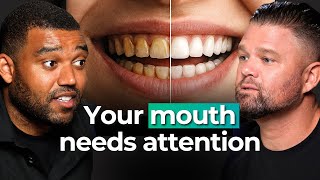
Transcript of a YouTube interview (Josh Trent with Dr. Kenny Brown, oral surgeon and Fino Oral Care CEO) about the importance of oral hygiene, the mouth’s role as a gateway to systemic health, and Fino’s AI-driven, mouthpiece toothbrush that scans the mouth and captures tongue data. Major themes: tongue diagnostics and saliva/microbiome signals, connections between poor oral care and pneumonia/brain abscess/Alzheimer’s/pregnancy outcomes, product design using generative AI and computer vision, preventative care and behavior change, alternatives to fluoride (xylitol, hydroxyapatite), and pediatric and family use.
Chapters
So a lot of times for hospital patients, when they don't have proper oral care, they can get pneumonia. They're coming in and they're losing teeth. For something that's preventable, it's like, wait, why, why, why are you here? People don't really realize that their mouth is the gateway to their overall body.
Dr. Kenny Brown is an oral surgeon and co founder and CEO of Fino Oral Care. There's the band aid approach to not just oral care, but to the body.
Yes. Our health journey actually starts with brushing our teeth. The mouth has tons of blood vessels. It's like a sponge. Right. But it's also like a sponge for bacteria as well. Yeah. So the bacteria and the toxins can definitely go in and then spread to the rest of the body. The mouth is constantly overlooked. What if you had an easy step to just make sure at least that part was taken care of?
In the future, you'll be able to know the microbiome status of the mouth through the device. What is the hidden mystery or secrets about tongue health and the way our tongue shows up.
Yeah.
That most doctors and dentists don't ever know.
Right. And it has been done for hundreds of years. Right. Chinese medicine, One of the first things that they'll do is they stick out your tongue. Right. And then so they can see what's going on. But the tongue actually has a lot of signs and signals about what's going on, all the way from, like, leukemia. Right. From cancer to, you know, just irritation. Right. Is a toothpaste you're using burning you? Is it not really helping you? Right. And so it can show up in a lot of different ways, which is why, you know, as we were thinking about, the company that we're building is like, hey, we need to capture the tongue. And not only that, but work with providers and institutions who value the tongue and the data that it shows you.
Yeah.
So Singapore Health is like, one of them. That's the largest repository of tongue data, believe it or not. In Singapore.
No. There was such a thing.
Yeah. Because. Because they're constantly looking at it and then they're tying it, basically. Think of it this way. Like, okay, what does the tongue look like for someone who's pregnant? What does the tongue look like for someone who maybe is malnourished? Malnourished in a certain, you know, certain minerals or certain vitamins? And how does that show up? Right. We have different patterns on our tongue, believe it or not, whether we call it geographic tongue. So certain areas of the tongue will look raised and inflamed the, the taste buds or the papilla on the tongue could be smooth and red or. You know what I mean? So there's a lot of different things that the tongue can show you.
What if somebody's tongue is white? Like when I got the kit from Fino, it's amaz. Did such a good job, by the way.
Thank you. Thank you.
It's actually toothpaste that doesn't suck.
Right.
I think it's xylitol. You.
Xylitol based toothpaste, which is a whole.
Other benefits we can go into rather than just like fluoride based kind of talcum powder tasting toothpaste.
Yeah. And grit.
Basically eating chalk.
Yeah.
But I noticed I do it first thing in the morning per recommendations. And when I scrape it, there is this. It almost looks like, sorry to gross y' all out, like snot and like crud and skin. And if I were to not do that in the morning, I would essentially just be eating and passing that bacteria into my physiology.
Yeah. So think about it. So the, the, the tongue is a shag carpet. It is not a smooth table. It's a shag carpet. Yeah. So we have crevices in there. Right. And that all the food that we eat, the snot, the drainage, the bacteria, it can tuck into those crevices. And so what you see over time is that white layer on top of the tongue and that is a lot of the source of bad breath. We get a lot of fungal infections. There's a condition which you guys can google or chat. It's called hairy tongue.
Hairy tongue.
Prepare yourself. When you look, when you look at the images. But, yeah, but like, basically the tongue can serve as like a bed of growth of all the things that we don't, we want to avoid. So cleaning it on a routine basis is absolutely necessary. And most people don't do it. Right. Yeah.
Why is this something that's not or is it taught in traditional dentistry school? It's taught.
It's just not what we, what has happened is we've, we've, you know, education gets lost. It's like so much bombarding when it comes to, like the, when, when someone's talking to you, the dentist is talking to you in the chair and they're just kind of scolding you. And, and I think what we're missing in general in healthcare is like, I think that as providers, we need to meet patients where they're at. Where are you? Where do you show up? For so long we've been so what does the book tell us? What is the highest efficacy? Show us. Yeah, but it. But I'll give you an example. If you take a medicine four times a day, right? 100% effective, fantastic drug, right. Will do everything for you. Limited side effects, all the great things, but you take it four times a day, so therefore, nobody takes it, right? Versus. If I give you a medicine that's one time a day, it's half as efficacious, but everybody takes it. Which one actually has the biggest impact? The one that's less efficacious, but everybody complies with. Right? And then you can get them graduating on what the next step is. But for so long, we're just like, oh, no, no. This is the only way to do it. If you don't do it, you fail. And I think people felt bad and, like, you know, it's just. So meeting patients where they're at is. It is a very critical part about being a provider. And that's why, even as a company, we're going direct to the consumer, because it's like, we need to meet you where you're at.
Yeah. Did you start out? It's on the screen right now, y'.
All.
It's this amazing. I forget even how I think Lauren, my assistant, found it, and she was like, this looks. This looks so cool. Is this real?
Yeah.
And it is real. And it's got A.I.
Yes.
You actually scan your mouth. It checks out your teeth. It checks out your gums. It talks about inflammation. Like, this is the beauty of technology.
Yes.
Y' all have cracked the code on this.
Well, it's. It's about, you know, again, meeting the patients, where they're at. What are the issues? Right? So one is time and technique. People want to just, like, slam their toothbrush in their mouth. They don't want to do. For the recommended two minutes. Should I blame them? No. Right? Yeah. They don't know how to brush. You know, from the very early. We stick a. When you were kids, five years old, right? We just put it in our mouth, and we're like, chewing on it. We're like, okay, I think we're doing it right. We taste the toothpaste, taste the menthol. We're like, okay, it's clean, right? But we carry that into adulthood, right? And we just carry those bad habits all the way through. So time and technique. So that's why we created the brush that brushes all your teeth. The technique is built into the brush. Believe it or not, we actually used AI to design the mouthpiece how? So How'd you do that? So we took tens of thousands of patient scans, impressions, molds, models of people's mouth. Threw in a generative model, allowed it to iterate. And I put parameters in each time, like, okay, I need it to be 45 degree angles here. This is the pressure we want. This is the amount of sweep I want on this bristle. And basically spit out a design went through a hundred thousand iterations. So you couldn't do that five years. You couldn't do that 10 years ago. Right. A hundred thousand iterations. And then we took the best ones, printed them, tested them, and then that's how we ended up getting to our design. Yeah. Right. So over and over and over again. So imagine like 10 years ago, you would have had to basically make a hundred thousand of them to get the right shape.
Right.
And what we're doing is we're testing for the optimal contact of that bristle to your gum line and your tooth surface. Yeah, Right. So a lot of people don't think, like, this is the. You know, they kind of write this off, but it's actually a ton of tech in this. And then the next thing is access and awareness. People don't really realize that their mouth is the gateway to their overall body. Yeah, Right. And it has signs and signals that we need to pay attention to. So then that's where we took the next step. We said, look, okay, let's put a scanner in a device. Now we can use computer vision models to help us basically give you an exam through the device, right? Yes. And you can get that on a routine basis when you're brushing your teeth.
It's literally the Oura ring for your mouth. I know. You said that.
Yeah, yeah.
I wear a ring, I wear a superhuman. And the first thing I do when I wake up is I check my sleep just to know how I can adjust my sleep pressure to get to bed at a certain time. Or any smart supplementation. But I've never seen anything like. It's the first time I've ever been really amazed because we had many a couple other dentists on the show, and one of them I want to introduce you to. His name is Dr. Dominic Nishwitz.
Okay.
He's a biological dentist.
Yes.
Absolutely. Incredible. He just spoke at an event here in Austin. But I need to show him your technology because, you know, there's so much BS out there about how you should care for your mouth.
Right.
What good teeth look like. The whitening, the fluoride, which we'll get into Today, Yes. But I want to go a little bit higher level. So when you were going through school and what did you see that made you create the Fino? And why'd you name it Fino?
Yeah. Yeah. Okay, so let's start with Feno. The name, yes, actually came much later. So when the team was working on the mouth shapes, like, oh, my gosh, we didn't realize there were so many mouth shapes. Yeah, this is why we have to design it this way. We have to have so much leeway. And it's like, okay, it's like an expression of your genes, which is phenotype. Oh, yeah, right. Someone's like, oh, pheno. Phenotype. And then so we cut. We cut it in half and we put F instead of ph.
Because every mouth is different.
Every mouth is different no matter what. And so that's, It's. It's designed to Chuck, you know, kind of hint on the customization, the way that our genes work and how they're expressed. And as we branch into salivary diagnostics, salivary microbiome, and things of that nature, which is a part of the roadmap for the company, you'll be able to see that, oh, wow, this is truly like a health tech company. It's not just like a toothbrush.
Like, in the future, you'll be able to know the microbiome status of the mouth through the device. There'll be different sensors inside of it.
Yeah, yeah. So, like, so some of the early things, like we built a prototype that can test micronutrients, metabolites, analytes through the brush. So imagine brushing your teeth and getting like a glucose reading or a sodium, like, oh, you're dehydrated, like, you know, I mean, like from brushing your teeth. So, you know, and I think the thing is, like, about the mouth is so overlooked that time, that routine is so overlooked. It's like we're not necessarily having you create new habits of like, drawing blood every six weeks or you gotta get a pre nouveau scan. Those things are fantastic.
Yeah.
But not everybody can get there. Sure. So how do we. Which is my biggest mission is like, how do we scale care? How do we scale it so that you could be the ultimate biohacker or you could be like, hey, I'm just trying to do the best for myself today. And Feno is a great solution for that.
When you were training to be a surgeon, what was the biggest pain point for you you saw with all your patients? Was it frequency, was it style, was it type?
The fact that they're coming in, and they're losing teeth for something that's preventable. It's like, wait, why? Why. Why are you here? And it really hit me. The connection really hit me. You learn about it in school, but one of the first pages I got, so I'm in the hospital, you know, it's like a dentist. Like, in the world of, like, trauma surgeons. You're like, wait, what am I doing here? You know? But you. You learn very quickly while you're there, but you get to pay. You have a pager, get paged, and it's the medical icu. And I'm like, what? I was like, is this a mistake? So I call it, like, thinking like, hey, this is oral surgery. Did you mean to page us? He's like, yeah, we have a patient, gentleman in his 40s here for a brain abscess. We've ruled out everything. The infection is coming from the mouth in the ICU on breathing tubes, has no consciousness, hooked up to tons of IVs. The brain abscess from his mouth. And I was like, oh, my gosh. And then the tenants think that that's not abnormal, that they think that. Okay, well, the next day, I'm talking to cardiology, and they're trying to replace someone's valve, and they're like, hey, the mouth is too dirty. We got it. We got to clean it up. So we got to take out all the teeth because we can't risk this valve on the surgery. I'm like, oh, what is happening here? Right. I thought we were taking out wisdom teeth, but, you know, so then it's like you. It really starts to sink in. What, how this affects the rest of our body. Yeah. And in somewhat extreme cases, but this is actually happening on a routine basis now. We're starting to see the articles that are like, a mouth is connected to the brain. Alzheimer's, dementia, gut health. Right. Where does the gut start? Here. Right. So I think that was, like, the.
Aha.
Like, oh, my gosh, this is. This is really serious.
And that could have been prevented, this abscess? How could it have been prevented?
Well, proper oral hygiene. So it starts with brushing your teeth. Right. And then early action and prevention. Right. So this is why we build this in there. Hey, if there's a sign of inflammation, let's get it taken care of. Is there something that you could do at home? Is there something we could send you at home? Hey, clean it up with this. This little mouthwash, and you're done. Boom. Problem inverted. Yeah, right. Same with pregnant women. Right. I'm not sure if, you know, a lot of people don't know this, but, like, when pregnant women, their hormones are fluctuating like crazy, and so their gums a lot of times will get really irritated, really red, come pregnancy tumors. Right. But that infection is basically slowly poisoning, and the risk of preterm, Preterm labor or low birth weight baby is like five times higher.
And this is scientifically studied?
Yeah. Oh, yeah, Yeah. I mean, you'll see it. Yeah. We could. We could. We could share all the research. We'll put it on the screen. Right.
Yeah. A picture of what a mouth looks like that has this condition you're speaking of, just so y' all can see it if you're watching on Spotify or YouTube. So that what we're seeing in the photo right now could impact the heart and also the uterus and the whole physiology.
Yeah.
How would a person know?
Well, starts with, like, the mouth just paying attention. Do you have bleeding gums? Are they red? Are they tender? You know, and this is. These are like the early signs of basically that slow poisoning.
Wow.
Right. Because the mouth has tons of blood vessels. Tons. Right. We've all seen the movies where people are, you know, using drugs, where they're like, rubbing it in their mouth. Right. Or we, you know, they have like, the snooze or like the nicotine patches or even, like, the mouth is highly absorbable or even nitrate. Like, for people with chest pain. Sure. They put a tab under their tongue to relieve chest pain because it's super fast. So it's like. It's like very. It's like a sponge. Right. But it's also allows back to like a sponge for bacteria as well. Yeah. So the bacteria and the toxins can definitely go in and then spread to the rest of the body.
So is this part of an OB GYN check? Do they actually scan the mouth before the woman?
You know, I have three children myself, so I've had a few. The. Our first one. No. The second one for the second and third. Yes. They mentioned, oh, you should go to the dentist. Right. Not knowing that what I. What I did. But they'll say, hey, make sure you go to the dentist. Right. So, you know, I think it's hit or miss. Right. Which is a shame that, you know, this should be a part of our normal routine.
Well, this is why we're here talking about it. You know, when I use the Feno for the first week or so, my gums actually bled a little bit.
Yeah.
And I was like, am I okay. And then it calmed down. And then I actually, for lack of a better term, felt like I had built my gum as a muscle.
Sure.
How does that work? When we build our gums through regular. I guess you could say not abrasion, but just moving it with the muscle.
Yeah. So, yeah. So the thing is that it probably bleeds because it hasn't been brushed that well and. Right. So just, like, when we floss and it bleeds. It's not supposed to bleed when you floss. It's because there's some inflammation in the area. Okay. So it's the same thing that's happening. It's getting cleaned. And then over the course of time, it improves. Right, because now you've kind of got that bacteria. Yeah, no, because you got the bacteria gone. And then also, like, some people have sensitive gums. So that's why we made it adjustable so it can go higher, more rigorous or less rigorous. So that is something of note. But because there is a sensitivity factor there. Yeah, but, yeah, it's really. Because there's signs of inflammation and it may not have been touched the way that it. It's like touching a muscle that, like, you know, you get a massage, you're like, oh, oh, oh, that kind of hurts. But, like, okay, you probably need it right there.
Yeah, that's actually really true. Whenever I get a massage, I'm like, I didn't know how sore I was. Or, like, she'll touch me. And I've actually. I've actually cried before. I've had emotional release from that, too. So are the gums a muscle or are the gums a fibrous tissue? Or what's the understanding more of a fibrous tissue? And how do we strengthen the gum? Is it by just using the 360 design of the bristles?
So basically, brushing the gums is extremely important, not only for removing that bacteria, but blood circulation. Think about it. The more circulation we get, just like when we walk or, you know, with, like, the Hyper S or NormaTec boots. Right. Circulation is key. We need circulation to, like, move the toxins, clear things out. Right. So it needs to be brushed just like. Just like anything else. And so that all helps that inflammation wash away.
Yeah. So when I was a kid, I had this, like, I don't know, plastic fishing pole with, like, some bristly hard stuff. And I remember brushing as fast as I could.
Yes.
Because I think my mom would be like, you gotta brush your teeth. And I'd be like, okay, I'm done.
Yeah.
Is this something that Children can use. Do you have mouthpieces for children?
Yeah. So we're coming out with the kids version soon and we're sort of.
My son loves me.
Daddy, do the thing. Yeah. I tested with my oldest son. The biggest thing is we just want to make sure that we get the right size. Right. So that it's adequate. The other thing is making sure that we, we're going to modify the motor a little bit, make it a little bit more fun for them. But yeah, absolutely. Kids are a huge piece and like them learning how to brush correctly and what correctly feels like.
Right.
And I'm sure you've noticed, like when you brush, sometimes you want to do it twice because you're like, dang, okay, how clean can my teeth get? And you kind of rub your tongue over. You're like, oh, I actually felt like I went to the dentist.
Yeah.
Right. And that's like, that, that's what it should feel like every time, not just only when you go every six months or four years.
Well, I think what we're dealing with, and I'd love to know how you feel about this. When people go to the grocery store, there's probably like 200 or 300 toothbrushes.
Yeah.
That they have to choose from.
Yeah.
And then each toothbrush is like 10 to 20. I've even seen like $50 toothbrushes.
Right.
And they have like a little motor on them, but there's no real science. It's more like a gimmick.
Yes.
How do you walk people from like a 10 buck, 20 buck thing every couple of weeks or month to a more significant investment that can actually address the inside upper, lower, the whole thing in 20 seconds a few times a day. It seems like a no brainer to me, but how do you broach that conversation?
Yeah, it's, it's, it's more about like, what does FINO stand for? It stands for the, it's connection between oral health and overall health. Right. It's an awareness in addition to a better practice. And it's a, it's a matter of bringing that to you in a way that you can feel confident each and every day. Right. So if you get one of those brushes, fine. Right. But you got to make sure you do it right each and every time. Right. With our device, you're going to do it right each and every time. And instead of having that thousand dollar bill, dental bill, it's going to be a routine cleaning for $150. Right. Yeah. And that's, that's, that's Sort of the investment that you make up front so that you can save on the back end.
I think it's a price thing because people go, I don't want to spend this much money. But I'm like, wait, aren't you drinking on the weekend? Aren't you buying all these things and hanging out with people that you want to impress that you don't even care about? If people could just take a breath, Kenny, and just like pull way back from their lives. Just do this thought experiment. Y' all just go through your bank account and be like, okay, let me go and find a couple hundred bucks or 300 bucks that I know I'm wasting anyways.
Yeah.
That I can just be honest with myself about.
Yeah.
Spending things that are deleterious to my health and let me just do something that's so much better for me.
Just an investment back in yourself. Right. I mean, you know, talk about money management and, like, where that money should go and. But I think in general, regardless of what your practices are, some of it's got to go back into what's going to help you thrive, what's going to help you grow. And so. And we've done everything we can to make it as easy as possible. Right. Because we know it's hard to. It's hard to be compliant. It's hard to take all the supplements in the daytime and the nighttime with food. Without food, which one's the best? You know, it's hard. Right. And we're not looking to add hard to your journey. We're looking at easy to your journey. And that's really kind of when we design this, our approach, our message is about it being convenient to you, easy to you, because it should be. It's a part of your daily routine.
We've had some behavioral scientists on the show, and no matter who it is, could be Near Ayal.
Yeah.
Could be Dr. Judd Brewer.
Yeah.
They all say the same thing. When it comes to behavior change, you have to reduce the friction up front so that there can be like a long term adherence.
Yeah.
And so how does this work? Like at first audible, when I heard about it, I'm like, you mean I only need to do this 20 seconds, 30 seconds? How is that possible? Yeah, because I had been told you have to sit there and brush all the sides. So how did you actually take the manual and make it the AI?
Yeah.
So that it gives the benefit in 30 seconds. That's wild.
By the way, near was one of the first calls we made. He. He went. He's A Stanford guy as well. So like we talked about.
So intelligent.
Yes, yes. Talked about this because it's like, hey, we got to make it easy, easy. You know, I mean, like, so he was. He was a really great sounding board for. But yeah. So the biggest thing is addressing the whole mouth at the same time, right? Putting the technique into the brush. What can I do for you that you don't need to do? And then what do you still want to have? Right? And that's why you can't just make this in a year. It takes five plus years to make something like this.
A hundred thousand iterations.
A hundred thousand iterations and a lot of money. Right. And it's because the technique has been on the brush. So, like, when I tell you that you should have a 45 degree angle, you're like, what? You have a 45 degree out.
My measurement tool as I brush my teeth.
So why don't I do this? Why don't I just put the 45 degree angle in the brush so that when you put on it, it's there, Right? When I say you need to touch this area, that area and this area, why don't I just put the bristles there? Right? So when we're putting the parameters into the generative algorithm, we're saying all the things that need to happen, right? If I put press parameter, this parameter, this parameter, this parameter on this design, and hey, I can do this. It's phenomenal, Right. Obviously there's a lot of thought that has to go into, like, what the parameters we put and how we test it. But that's it. It's like, it's a matter of being like, okay, well, if we can put the technique into the brush, I'm not relying on you to do it. All right. All I want you to do is to move it around a little bit. Choose your speed so you still have control. You might want to, like, focus on an area. You might want to focus on the top, then focus on the bottom. But just giving you the better tools. I think that's what it is. It's a better tool in general. Yeah.
We have smart devices. I mean, how many apps do we have on our phones now?
Right?
Hundreds. Right. And so I'll speak to the elephant in my room. I was like, wait, another app? But here's the thing that's cool. I have apps that remind me when to turn off the pool water, right? So I don't waste money. When to, like for my son's school or for family events. Like, I have app. I Don't want to miss these things. They're super important to me.
Right.
So can you just, on a high level, explain why having another app on the phone would actually be something super important, as important as a child's appointment?
Yeah. And because this will. This will hopefully save you money down the line and save your health down the line. Right. But the app, you know, I don't want to over index on it just being another app. Right. Just like we track our steps, we track our sleep, we track our things. Like we should be tracking the things that have a dramatic impact on our health. That's what, that's what the app is doing for you. Right. Is giving you relaying that information. And aside from that, it's actually a functional device that you're going to use.
Yeah.
Right.
It's not just the app.
It's not. Yeah, it's not just. It's not. It's not just the app. It's not just the data. It's the data and it functions. Right. It's. It's a little bit of both. And so it's very thoughtful about our approach because we know there's a lot of decision fatigue, there's a lot of app fatigue, but it's like, okay, well, how do we actually just provide you value that you can use? And this is like, okay, pay attention to what's happening in your mouth. We can get alert, say, hey, something's going on. You got some inflammation. You want to get taken care of. You want to take a deeper dive. You can go a deeper dive. You can let your provider know, you know, and we can provide suggestions. Just make it easy. Yeah.
How have you seen this play out with families like moms, dads? You're building the kids version, which is super cool. I cannot wait for that for my son. Yeah, I will be the first one to get that because he just does like this and he sucks the toothpaste and puts it down. So I think that's a really big, honestly needed white space for families because oral care starts super young. Dr. Dom told us that I think it was three to four years old. That you really want to start paying attention to kids dental care. Is that true?
Yes. Yes. All the teeth are in. You could start earlier, but like, all the teeth are in and then the adult teeth are starting to grow in. And so an infection on a some. This is, this is like really sad, but like, a lot of people, like, oh, the teeth is going to fall out. So it's okay if there's a cavity? No, that Infection can affect the permanent tooth that's above it. The permanent teeth are developing. When we see those little cute baby teeth, the permanent teeth are actually developing underneath it. And so if there's an infection there, which you will, a lot of times happens, you'll have weakened enamel, you'll have deformed teeth, and they'll end up just getting cavities. It's just a death spiral for the tooth.
Yeah.
Even starting that young. So it actually is very important to take care of your children's teeth. And as hard as it is. Right. As much as you to, like, try to entertain them, play a game, play a song, whatever you have to do. And hopefully we'll be able to do these things with our device. But it's put them in a headlock. Right. Sometimes you just gotta. You just gotta do it.
Right.
You just gotta get it. Hey, I need to get this in there. And we gotta brush the teeth. So, yeah, it's extremely important they watch what we do.
They don't always listen to what we say.
Exactly.
They watch us. Right. That's why my son's like, daddy, do the brush thing. He likes it. You know, there's early life, and then there's midlife, and then there's end of life. And I think about Alzheimer's specifically. I was looking at some research before our podcast about early Alzheimer's that could have been prevented because of one of the Ganesh gateways, the oral system. How have you seen that play out clinically, as a surgeon, the Alzheimer's risk with low oral care.
Yes. So what's. What's. You know, we talk about this. So a little bit more scientifically, there's actually no valves from. In the bloodstream. So we have valves, like gateways in all of our bloodstream. There's no valves that. From the mouth of the brain, just a straight highway. So we have certain bacteria that release toxins. Those toxins then go. And they free pass up to the. Up to the brain. And so what a lot of the study is showing is like, okay, when we go into the. The patient's brains and we see the plaques, right. With the areas that are affected, it's the same toxins that are tied to the mouth. And so that's where that correlation is coming in. Right. Same with that brain abscess. Right. That brain has that fish. So it's like, oh, wow. Like, this is a. This is a big deal. So not only are we seeing from a microbiology level, but also like a functional level. So like, let's say I see a patient in the chair and I'm like, in. You know, mom or son or somebody is bringing them in and you say, okay. Like, well, they're not all there. It's like, well, what's going on? And you look in their mouth, like missing half their teeth. It's like these care facilities aren't really doing it. The hospitals aren't really doing it. And it's just like they make pain. Right. It's just constant inflammation. We know inflammation is the root of all evil when it comes to our body. Right?
Yeah.
And it's just a source. It's like an open wound. Think of it as an open wound that's constantly getting dumped on. And it's really sad. And so not only that, but think about this. When you have those infections and then you lose your teeth, now what's your nutrition going to be like? Can't chew. You know, at the end of life, we only have a few things. We got family, we got, you know, we got food. Right. So food could be enjoyable. So your quality of life tanks. Right. But that's. That doesn't happen overnight. It's happened when they're in their 30s and they got a tooth taken out in the 40s. Right. Like, it just happens over the course of time.
My dad's mom had an issue later in life. She had really dry mouth, super low salivation. The glands in the mouth that produce the saliva.
Yeah.
Is there a way to prevent that from happening from proper oral care or is that genetic atrophy?
Yeah. So like, so sometimes, unfortunately, a lot of medications to be a big side effect. So when our. When patients have multiple conditions, it becomes a big side. And they're taking multiple medications. It becomes a bedside effect that their salivary glands just kind of dry up.
Okay.
Obviously radiation and things of that nature. And saliva is a natural, like, cleanser for our mouth. Right. And it kind of stabilizes things. So it is extremely important to have healthy saliva. And. Yeah. Because it's the dryer teeth and they get decay, they get brittle. It's just not a good look.
Is that something with the use of the feno and also just proper going to a clinic that could be prevented. Let's just take out the pharmacological.
Yeah.
Be prevented.
I'm not sure that it could be prevented by brushing your teeth. I think it's just one of those. It's one of those connections that it's probably the other way where systemic health is affecting your mouth. Right. So there's. There's goes both Ways, Yeah. So oral health affects your overall health and your, in your systemic health affects your oral health. And they go both ways. Okay, Right. So sometimes, yeah, so sometimes it originates in the mouth or sometimes it originates in the gut. Right. Or sometimes it originates in the blood pressure, whatever it may be. And so it goes both ways. So it's just a matter of like paying attention to the signs. Diabetes goes both ways. Right. So uncontrolled glucose, the gums get really inflamed. Really inflamed gums, high glucose. So it's like, it's like it's a two way street. So that's, that's a lot of times what we see. And that salivary glands and things of that nature I think is more of a systemic issue that's showing up in the mouth.
This is fascinating. There's so much stuff I don't know. This is why I love podcasting, especially somebody of your stature. So when it comes to gut, brain access and digestion, obviously this is a doorway. So the digestive process starts with the saliva. There's the protease, amylase and I believe lipase that's naturally found in saliva.
Right.
So if our microbiome is off, then those early digestive enzymes won't break down the food properly to even go through the HCL and then get to the colon.
Exactly.
How does that work?
So it's a microbiome of the mouth. Right. And if we have it, we call dysbiosis. So basically out of whack. Yeah, if it's out of whack, how can it properly function? Right. So you don't digest your food, you don't extract the nutrients. Right. Also, the toxins that are found in the mouth, Right. Because it's pretty dirty, can travel down to other areas. So even to the lungs or the gut. So imagine bacteria that ends up in the lungs. So a lot of times for hospital patients, when they don't have proper oral care, they can get pneumonia from the mouth because the bacteria basically. Think about it, you're like breathing it in, right? You're breathing, you're constantly breathing it.
Well, hopefully they're not, hopefully they're nasal breathing. They've been taught how to breathe through their nose.
You know, you wish, you hope, you hope, but it's what happens that breathes them out and settles in the lungs and get pneumonia just so they don't brush your teeth. Right. When they're in hospital. And then same thing with the gut. That toxin is not meant to be be down here. So it Throws it on dysbiosis, which means it's out of whack. And then you can't get. You get the bloating, you get the indigestion, you know, go down the whole line. Right. Including immune system affection. Right. So like it's just, it's all connected. Right. And it's just, it's just a part of. And so like, that's the thing is like the mouth is constantly overlooked. What if you had an easy step to just make sure at least that part was taken care of?
Yeah. It's lowering the friction. Like near says. Yeah, if we lower the friction in anything. And by the way, it's the same thing like trying to get kids to eat food.
Yes.
Healthy food. We like stick it in their smoothies.
Right, right, right.
I'm sure you do that with your kids. Like, let me put some organs in this smoothie. And so if I had something for myself and for my family that allowed us to just have super easy, frictionless compliance when it comes to brushing.
Right.
It's a no brainer.
It's a no brainer.
Such a no brainer.
Yeah.
Do you find that people don't even know that they don't know this exists because you're pretty early in the scene.
Yeah, I think it's, it's, it's an education as anything. But I think what, what we, what the world in general is accepting is how connected our body is in general. We're accepting like, oh, wow. We need to be paying more attention to our health and what's happening.
Yes.
And so I think that has opened up the conversation in the acceptance of being like, oh, you're right, the mouth. And then. And the other big. Another big aha was Covid when people started swabbing their mouths for covet tests. They're like, wait, it's in my mouth. You know, I mean, like, hell yeah. So like the mouth is a gateway. Like you, it's. Things are showing up in the mouth.
Yes. Now, what about if you're kissing people and they have crud in their mouth and you know, for all the single peeps out there that are swiping, I'm so glad I'm not single anymore. What a crazy world that is. But when you kiss someone that has really bad dysbiosis, can that impact your mouth? And then could brushing with the feno wipe it out?
Yes. So one is great oral hygiene will wipe all that stuff out.
Okay, good.
So absolutely. And yes, it's absolutely. You gotta pay attention to who you're kissing and what's happening there?
Give them a feno as a Valentine's Day gift.
Exactly. We should put a feto certified on their dating profile or something like that. You know, but even more innocent than that, mothers kissing their children actually have been shown to pass cavities. Right. Yeah. How does that work? Because it's, you know, it's the mouth. Right. They're just. They're kissing their. They're kissing their babies, and the babies don't otherwise have it. Right. And they're just. Because they're not really eating food. Right. They're not consuming sugar the same way that we are.
Right.
They're not consuming it, but, you know, it's. It's being passed from mother to baby.
Is it a good idea? Like, let's say we go off the rails and we eat some sugar. Maybe somebody takes their kids to Disneyland or something. Do you brush within a certain amount of time? That would negate any negative impact of sugar in the mouth. Is there a half life of sugar in the mouth there?
Well, the longer it stays, the worse it is. So that's why caramel chewy stuff, because it sticks around longer.
Right.
It's more deleterious if you go. If you go nuts on Disneyland. If you can rinse your mouth, you're gonna. You. You have a big leg up. You've neutralized the acid. You've washed some of the sugar away. It's not quite the friction that you're going to get with a brush. Yeah, but you've at least neutralized. You've at least neutralized the environment. Okay. Right. And so by not brushing your teeth at night, like, that's going to be an issue. But if you brush your teeth at night, like, it's. You're only stacking. It's like, kind of stacking in your favor. So if you just wash it or even just rinse it out, it's a benefit. It's a noticeable benefit.
Doing water is easier than coconut oil. We attempted to do the coconut oil path, and there was just friction. Kenny. It's like it spilled one day, and then it gets, like, gummy in the shower. I tried doing it in the shower and, like. I understand. And maybe you can share this, like the. The eastern view of coconut oil pulling.
Yeah.
Versus mouthwash, et cetera, et cetera. Which one should we do and why?
I think. I think oil pulling works. Yeah, I think it works. There's no issue with it. But again, I'm gonna go back to what can you do consistently? Sure. Right. What has that friction. Because if you do, oil pulling requires extreme consistency to work. Right. So if you. If you're not able to do it consistent, then, like, what is it? What help is it doing? Right? Yes. So that's why finding things that you can actually do. That's why I was talking about the four times a day versus one times a day. Oil pulling can work if you. If you are a disciplined person and you want to jump on that, hey, have at it. I think it's going to help you. But if you can't, which most of the people are, Most people aren't even brushing their teeth. So it's like, if you can't do that, like, then, you know, we need to think about ways to reduce the friction.
You've been in the clinic for over a decade.
Yes.
And you've seen everything from like loose baby teeth, impacted baby teeth, all the way up to a bear that swiped out someone's mouth. So you have a wide view on this landscape. What is the one thing that people don't know about their mouth and the way to care for it that you.
Really wish they did? Yeah. One that is all preventable. Brushing your teeth. It's why I went into this hyper specialty, just to go back to the basics, you know what I mean? And just express how important the basics are. Right. And that's like a big thing for me. The one thing I wish people knew about their mouth is that it truly affects your overall health. You know, I want you to. I don't. It's not to scare you. It's meant to be like an awareness. Like, hey, it's an open wound that's constantly feeding the rest of your bloodstream and that goes to all your organs. That goes to everything. So why would we not pay attention to it? And it doesn't have to be hard. That's the other thing. It doesn't have to be hard. Right. I know that there are some great folks out there that are talking about changing habits and, you know, whether it be meditation or song, like, all these things are fantastic. What I want to do for the mouth is try to make it as easy as possible because we have other decisions, you know, we have other things that we need to be. Like, how can I make it as easy as possible for you? You. But so the mouth is connected to the rest of the body. That's what I really want people to know. And that is all preventable.
I want to advocate for the other side. I'm not a part of this other side, but I just want to advocate for them. Just for conversation. Fun.
Yeah.
There are some people in the health world that say all you really need to do is just swish your mouth with water and just eat healthy, clean food. Now, I guess that could be true. If you were never eating sugar at all, and if, I don't know, you were gargling with sodium bicarbonate or arm and hammer, what do you say to the alternative health world that says, oh, we should. We don't even need to brush and we don't need to floss? And could that ever be true? And if so, in what world would that ever be true again?
I think there is probably some truth to it, right? I definitely do. If you were eating raw vegetables.
Oh, I didn't expect you to say that.
I mean, look, I think there could be some truth to it. If you're eating raw vegetables and only water, like, okay, but again, can people do that? Are people doing that? Right. Are we saying that just to make someone feel like. Are we just saying it just to get a headline, or are we saying that you actually help someone? Yeah, that's what, like, we got to meet people where they're at. It's our job as providers. We've been trained. We've had this mindset. We got to meet people where they're at and serve them. Right. This is all about giving. Right. You are constantly giving to your audience. You're making them aware of certain things that are. They can do to improve their lives on each and every day that are so easy. That are so easy. We're all meant to contribute. And providers, our contribution is to care. Right. And sure, there's probably some sense in that. Same thing with fluoride. Right. Fluoride has worked, but it also has some downsides to it. And so if we have an alternative that doesn't have the downsides but still has the upside, why would we not?
Yeah, no doubt.
Why are we fighting it?
Right.
You know, like, it's just. It's just very simple. It doesn't have to be so extreme all the time. And I think too, too often we're playing in the extremes.
Yeah.
And I think that will cause one group not to do it or someone else. Not that. And I don't think we're serving ourselves that way.
One thing I learned from near, and I mentioned him because you said you had some consulting with him, is that there can be this illusionary bifurcation of people's proclivities towards behavior. So if one side recognizes with, like, paleo carnivore extreme alternative health, then that's part of their tribe. It's actually an identity for them that they quote, don't brush their teeth. Then there's the other side where it's like fluoride all day, Right. I think the middle way, as spoken about in the dao is really the best path. And actually most religions speak of the middle way, right? What is the middle way when it comes to all human beings about dental care and oral care? Is it quite as simple as just brushing morning and night and doing it the right way?
That's it.
Could it be that simple?
I think it's that simple. Which is like making it that simple. Right? And then, and then the reason why we add the app and so I'll touch on that to make it that simple, even in the center way, is to say, well, we can alert you, we can let you know. We're not having you do anything. You're not a biohacker just because you buy this. You can be a biohacker. You could dive as deep as. We could dive as deep as you want to dive, right? Pathways, all that kind of stuff in your mouth. We could dive that deep. Or we could just be like, hey, you got some redness here. Go to dentist, right? Like so. I think so. Just brushing every day the right way and having some awareness. That's it.
Yes.
Solution.
The biohacking world talks a lot about red light therapy and contrast therapy and. But it's only been, let's be real, Kenny, in the past year or two maybe that oral care has been a part of the biohacking conversation. Why do you think it took so long?
Awareness, Awareness. I think the science took some time, right. A lot of times we lump in, like health and then like benefits, right? Like health and then dental and vision, right? It's like on the side, right? Or for so long we've been talking about it's just white, straight teeth. White, straight teeth. White, straight teeth. It's not about white, straight teeth. Matter of fact, sometimes that hurts you. So, like, let's just make sure we take care of the foundation, the microbiome, the gum tissue, the bone that's supporting it. And that's what we really need to be paying attention to because that's what makes a healthy smile, right? Not just about a straight white Hollywood smile. It's about a healthy smile.
The straight white teeth Hollywood smile is oftentimes veneers that just get pushed over teeth. Do veneers alter the microbiome of the mouth because the teeth aren't Naturally intended the way our creator made them.
So think about it. There's more and more false man made material that's going in your mouth.
Right.
You actually have to shave the teeth, put a piece of porcelain or some other sort of material on top of it. So anyway, it's just like more and more man made material that's in a biological environment.
Could the body reject that material in some way?
What it is, is like it will never get clean the same way that you can clean your natural teeth. So a lot of times the edges of veneers, that's where the, the cavity start to creep in. You actually need to take better care of your teeth. When you start to get stuff, it doesn't solve anything. You actually need to take better care.
Like buying a Lamborghini or something.
Exactly. If you get a crown, there's a margin there where your, your natural tooth meets the false, you know, the cap. And that is an area of vulnerability that you didn't have when you had a solid tooth. So actually you need to take more the more treatment you get. It's a spiral. It's a death spiral.
I would have never thought that. So in the crevices between the veneer and the natural tooth, more bacteria can grow.
Exactly. It can look good. But think about it. We're now opening up the Pandora's box for more opportunity.
This is so wild. This is why I love going deep into a subject. So then you had said earlier that the straight white teeth chasing it could actually hurt you.
Yeah.
Beyond just that space between the veneer. What if people get Invisalign and they're using like the bleaching products and there's so much vanity when it comes to the mouth.
Yeah.
How can we brighten it without hurting us?
Yeah, Go slower. It doesn't have to be overnight. Yeah, right. That stuff is, look, at the end of the day, it's toxic. You never swallow it. So if you never swallow that, you think twice. Like, wait, is this okay for me?
Right.
So it's like, you know, nothing's wrong with trying to whiten your teeth. You know, I'm not, not condemning that. Just, just be mindful. Right. And it's not just about going fast. It doesn't make everything, doesn't solve everything. Doesn't solve the core problem. It doesn't solve the purpose of the mouth either. Right. So we just need to be mindful about what's happening and it's our job to give you tools to do that. Yeah, right. And make you informed and help you make better decisions and just be aware.
What if somebody has, like, a really vain streak and they go, well, Dr. Kenny, I still want to have white teeth. What would you tell them?
Go, go for it, but make sure you take care of it.
Okay. How would they do that?
Well, I think brushing, flossing, and make sure you go get checked. Right. Because a lot of times, especially for veneers and things, there's certain places you can't see immediately that might be vulnerable. Okay. And they do that on purpose, because if you see it, you don't want to look at some teeth. Like, wait, I can see this line there. What's that? Right. They hide it on purpose so that it looks uniform, it looks beautiful. Right. So you need to make sure that somebody's watching those areas so that you don't end up with a crown when you didn't really need it or, you know, you could have prevented it.
Yes.
So that. That's really. So there's no shame in doing it. It's fine. It's great treatments. People do a very good job with it. But just be mindful that it. You are vulnerable for cavities.
So when people walk into a CVS and they buy those strips, is that helping them or harming them?
So it depends. If they. If they go out of whack and they get really sensitive, then it's harming them.
Okay. So you would know your teeth would start hurting.
They start hurting. Right. And they get rid of it. Correct. Or if it gets too much on the gum tissue, it'll start burning it. It'll start, like, sloughing off. I'm not sure if some. Some toothpaste out there will, like, start burning tissue and, like, stop immediately.
Stop.
Yeah, it'll start burning it, which is crazy to think about.
There's the band aid approach to not just oral care, but to the body.
Yes.
Like, for example, have you seen these? I think her name's Blake. Sarah Blake. She has, like, these spandex that women wear. That sucks.
Yeah.
It's like, well, that's a band aid. But, like, when you're naked, you still.
Are who you are. Right.
And it's the same thing with the mouth.
Yeah.
You could slam veneers up there or try to bleach your teeth, but everything always comes at a cost.
It comes at a cost.
And so what is the cost of vanity when it comes to oral care? Without doing it from the basics? Yeah.
Well, if you take care of it, then you're good. But if you don't, just, like, you Said like a Lamborghini is like, hey, you can get a really fast, really high performance car, but if you don't maintain that engine, if you don't change the tires, it's not going to perform well and it's going to bad. Yes, right. Same thing. If you take great care of it, it's going to. It's going to serve you. It's going to. Because a lot of the work, that's another thing, like Dennis are really craftsmen and women. That it's a. It's a. It's an art as much as it is a science. And so what they are able to do with these teeth and shape them and mold them, it's like some fantastic. There's an incredible talent out there. And so. But you have to take care of that. Right. It's like if you had a Picasso. It's like you can't just like have it hanging outside. You can't have direct sunlight because it's gonna start to. You know what I mean? Like.
Yeah.
You gotta have certain parameters to make sure you take care of that equipment or what's what, you know, the. The masterpiece. Sure. And that's, that's really. That's all I was like, hey, you can't shortcut it. So you think you're just going to get a discount by going somewhere and, you know, no, you can't shortcut it and you need to take care of it.
Every shortcut in my life has always turned into a long cut. I don't care if it's relationships or business or health. I used to be 280 pounds, okay? And so I. I know you're a basketball player, you're an athlete in school. Have you noticed your own oral care practices being solid the whole time? Or did you, as a surgeon ever even have issues with.
Absolutely. Yeah. Yeah. Absolutely not. I definitely learned along the way.
You did? Oh, yeah. What'd you learn the most?
1. I didn't know that there was a technique to brushing your teeth. I had no idea. Until I got dental school, I had no idea. Like, I had no idea you had to brush your gums. No idea that you. And then no idea that it was connected to the rest of the body to the degree that it was. No idea that, like, you know, it's just like all these things are relatively like a part of my journey, just like anybody else. Right. Just because now I'm an expert doesn't mean that, like, I was all. Have always been there. Always been like super anal about my teeth. No, like, just like Anybody else, Right. Like I had braces, had my wisdom teeth out. Like I had, you know, I mean, like I've done the whole thing, right. And it's like, oh, okay, well. Oh, wow, okay, this is. Oh, now I get it. You know, I mean, like, so it's, it's been a, it's been a journey just like anyone else. Yeah.
That's honest. I love that you say you could have been like, nope, ever since I was a kid. Perfect. But that's not, that's not honest. I had a client when I was a personal trainer and very wealthy, successful guy, house on the beach in La Jolla, California. And he came in one day and he was wearing braces. And I'm like, why is this 50 year old wearing braces? He's like, well, I grind my teeth at night and I cracked a tooth from grinding it. And I didn't know anything then about holistic health or about energetics or bioenergetics at all. And at the time I think I was like 24 years old, I was like, I think he's just really stressed. If you're grinding your teeth at night to break them.
Yeah.
There's no easy way out of stress reduction. We all have allostatic load. And so have you seen this in the clinical space where people will come in with a vanity concern, but really you have to talk to them about their lifestyle and stress management.
Man. And what has been the most alarming to me is the age, it's getting younger and younger that I'm seeing these.
Stress signs like grinding teeth and cracking teeth.
And cracking teeth. 15 year old, 15 year old, like from school, she's like worried about her test and her grades and what's going to happen and social situations and like to see the amount of pressure that this person is under. And I'm like, golly, is it that serious? You know, like in my, in my head I'm like, whoa, is it that serious? And yes, you see it all the time, the stress. Right. So the grinding. And then for, for a person like that, they might not be sleeping. It may be an airway issue. Right. Someone's cracks teeth, it may be an airway issue. Meaning that they're like struggling to breathe at night and they're crying and their whole body's just so tense.
Yeah.
And that's why they're grinding is because they actually can't breathe. Which is why we, you know, when we're now seeing this, you know, the nasal breathing movement and it's, it's, yeah, it's real. Yes. Right. But if your airway literally is like constricted and you can't breathe, you just end the stress that you're under and you're going to crack your teeth. So you're thinking like, oh, I'm cracking tooth. Oh, I have to get another crown. But really, like, dude, you're not sleeping.
Yeah.
You're not breathing at night.
Oh, okay. So symptomatically it might present as teeth crack and grinding. What are the, what are the different things that might make that symptom appearance?
Well, snoring is one. What do you mean? Outside of the clamps. Oh, tmj. Waking up with a headache. Okay, so tenderness, like in the Masters, which is on the side. Think about the muscle in front of your ear for those who can't see. Or on the sides of your head. Right. Sometimes in the shoulders and sometimes in the back of the, in the back of the head and occiput, like kind of behind your ears. That also could be signs. A lot of times this is what gets stressed when we're clenching and grinding. We don't only do it at night, we do it during the day. Right. So sometimes catching yourself and realizing, oh, I'm doing this during the day, like, what am I dealing with? And there's a lot of it's subconscious, like you said. It's like some of it is just trauma that we're constantly dealing with and with whatever the stress is happening and it's just manifesting this way.
Yeah. So I have a thousand students in my breathe program and I've been practicing breathwork since 2016. The very first thing I do when I set the space with, with a client or with a group is I have everyone roll their neck six times in each direction and I have them physically grab their bottom teeth and stretch. And most people will take a deep breath because their jaw can finally release. I don't know the research. I wonder if you could make an educated guess how many of us are walking around clenching our jaw. If you had to guess.
Oh, throughout the day. I, I mean, it's about to be close to 50.
Those probably more than half people.
More than. I mean. Yeah. Especially now it's getting worse. Right. This is like, you know, I know. Like for my wife, like even if I just massage her, like on her masseters or her whole body, just like. Right. Like she feels like she got a full like 3 hour massage. Only if I massage like this, this area on her mouth, that's it. And this is very true for a lot of women, a lot more women than probably they think think it's normal. But a lot of women are struggling with this.
Yeah.
Right. But to your point, the breath work is extreme. If we're not breathing, we're just kind of like constantly in that shallow, it starts to manifest itself.
Here I could see, and I definitely want your perspective on this. I could see how, you know, upstream, if you're not breathing through your nose and your mouth breathing, you're introducing more bacteria. Then on top of that, you're not brushing. You don't have a device like the Feno to make it super easy. Give yourself 30 seconds a couple times a day. Then you also are overweight and you also hate your relationship.
Yeah.
And your life is put you in a position of work that you don't love. I mean, the allostatic load on that is so intense that obviously downstream you're just going to get disease somehow some way.
Yeah.
So would the impact of literally just doing the most simple thing start to course? Correct. And unwind some of these other dysbiosis of microbiota and stress in general just from doing the simplicity of that practice?
Correct. Absolutely. But I mean, we can go to hypertension. Right. That's where I'm like, that's like one of the biggest things I'm so excited about. It's like, hey, it could start with brushing your teeth is it can start the way you start and you end your day. You're giving yourself the best chance to be healthy and successful the way you start. And you end your day in the bathroom, brushing your teeth on your own, like, doesn't matter what's up, you know, you could do it. And matter of fact, now it only could take 20, 30 seconds. Right.
We all have 20 to 30 seconds. If you don't, you deserve a life inventory if you don't have 30 seconds.
At the end of the day. Right. And so that's, that's the thing is like the health journey should start in the back. It's like, it's like one of the most intimate spaces that we all need to kind of like visit. And, you know, and then that's what I'm. That's, that's sort of like where I, where FINO is really at. It's like I feel like I almost became a dentist to, to spread this message to say, like, oh, no, actually health can start here because I was like deep into. I was really interested in cardiovascular surgery when I was in school, but I almost felt like now I became a. Now I know Why I became a dentist. Right. It's because it's not about, hey, our health journey actually starts with brushing our teeth.
I love this and I also love alternative sources to fluoride. I totally respect your stance on it. I just, I've seen so much and we've had so many other professionals like yourself.
Yeah.
Talk about it. I love that you use xylitol. Can you talk about xylitol?
Yeah.
I did it as a sinus flush. I had chronic sinusitis for a while. I had a lot of breathing issues myself.
Yeah.
Knock on wood. I don't have any cavities.
Right.
From my knowledge. I go to the dentist twice a year and I don't have any cavities, which is great. But I could see that if I wasn't breathing through my nose and if I never healed my sinus issues, one of them that I actually used was a xylitol rinse to help me heal my sinuses because of its antibacterial effects. Why'd you choose xylitol for the foam?
I wanted to go regenerative. I wanted to start pushing that way. How do we start? I want to innovate on every single aspect that makes it better and easier for us to do. Right. So like I was saying before, fluoride has shown to work. We've shown caries reduction. But it has all this baggage.
Yes.
So why do, why do we have to accept that baggage? Why can't we push the threshold and I can innovate and do more? So xylitol, just time and time, no matter. I don't care what you read, take some time to read through it. If you guys haven't xylitol or just do a chat, tell me the benefits of xylitol. Just do a chat GPT search because not like regenerative from, from remineralizing teeth to antibacterial to anti inflammation to. I mean it's just like. And it's a sweetener, plant based sweetener. On top of all that, it's like, man, God gave us the jackpot here. Right. And so that was like, it was a no brainer for me. It's like it was just thing after thing was just like, okay, what are we attacking in the mouth? We're attacking inflammation. We want to remineralize teeth because that's kind of what reinforces all these like micro, micro cavities if you want to call them. But you kind of fill in it, you kind of pack it in with reinforced material with the so stacking that allows us to have a healthier mouth. It's like, okay, so like just getting the. So with Zeitol you kind of like to be consistent with it and so why not in the toothpaste? Makes sense. Right. Some other things that are interesting alternatives are hydroxy appetite. Have you heard of that?
I've not heard of that.
Okay. Hydroxyapatite or nano hydroxyapatite. It's just a compound that basically reinforces the teeth. So like fluoride's like a mineral, right? That. So think about this way. Your teeth get broken down and they have like these pores or holes. And the idea is that fluoride goes into those and reinforces it. So it's like a patch. Right. But the issue was, okay, well the floor, we're ingesting it and it has all this other, this other baggage with it. So what other things can we patch it with? So xylitol, nano hydroxyapatite or hydroxyapatite, all these minerals and compounds that basically can create that patch and reinforce the teeth and make it strong. Right. So it's like, okay, we have alternatives. Like, like why accept the baggage when we have something better?
Do you know where that's sourced from, the hydroxy?
I don't, I actually don't know. I think it could be sourced from a variety of areas.
Is it from nature or is it lab?
I know, I think it's lab.
It's lab.
I think it's lab.
Xylitol is from nature, I believe.
Plant based.
It's a bush or a tree. Yeah, something like that.
Yeah, yeah.
I'm not a botanist.
No, no, neither am I. But, but my, but, but when I look at the research and when you look at the benefits of it, it's just mind boggling.
Yes. Okay, so we've covered a lot of ground.
Yeah.
And I asked you this question before we recorded what, what is the top of heart for you after a decade plus in the clinical space, seeing everything from the child, the baby with the loose tooth to the bear.
Yeah.
The surgeries you perform are quite complex. You've had a lot of history with a lot of mouths. If there was something beyond just the brushing conversation, Is there any other oral care systems that we can put in place for us to be really healthy and avoid a hundred thousand dollar dental bill in our 60s?
Yeah. I think the biggest thing is awareness. So like aside from brushing is paying attention to what's happening in the mouth, the bleeding gums, the inflammation, which is why we have that Scanner is. Because that is such a critical piece. Awareness is such a critical piece. You could be brushing your teeth, but you still have gum disease. You could be brushing your teeth and still have an infection. You could be brushing your teeth and still have cancer or some sort. But if we're not looking or paying attention, then it doesn't become all for not. But, you know, we kind of lose the benefit there. So it's really kind of paying attention. The awareness that, hey, the mouth is important. I need to take a look at it. What's happening there. Yes, because it's a critical part. It's like, you know, in a lot of ways, it's like another limb, like, just like walking with your legs. Right. We got to digest our food. We got to eat. We want to smile, we want to be able to relate. We want to be able to talk to people. And this is. It's a core part of who we are as humans or just living beings. Quite frankly, I always.
I almost wonder not to knock on British people, no offense, but, like, they drink a lot of tea.
Yes.
And their teeth are brown.
Right.
A lot of them. I know it's a reductionized statement, but when you start, there is an emotional component to this. When you stop yourself from smiling because you're insecure about your teeth, it starts to impact how you view yourself.
Right.
Have you talked about this before?
I mean, we could talk about the dopamine hits that people get when the. Right. When. When someone smiles at you. Yeah. It's been compared to like getting $500. Huh. Is like someone. That person smiling at you?
Yeah.
It's been compared to, like, don't mean him. Like, getting $500. So it's like, it's incredible. So that's like, as we, especially in this world of technology and like, maybe we're losing some personal touch, but there's nothing like that human connection. When someone looks at you and they smile at you and they feel, you know, it's like, oh, wow, that was. This is a human connection. Right. It doesn't always have to be romantic. Right. It's just. It's just a human connection. But the. So that affects so much. Right. Straight teeth, you know, whatever it may be. But like that smile and being able to communicate to someone without any words, you don't need the same language. You know what I mean? You don't need. And sometimes, I mean, I'm not sure if you're an animal person, but like, even animals, like, if you, you. If you sometimes like animals, I feel like, can can feel that. Right?
Yeah. Dogs know when you're smiling.
Yes. Yeah.
They smile back.
Yeah. So. So it's like the smile is so powerful. So powerful. And if you have pain, you're not gonna smile. If you have infection, you're not gonna smile. If your breath is bad, maybe not just because you have. Just because you ate onions, but because there's an infection or because something deeper. Right. There's people who, who I have not mastered this, but there's people who will say that they can detect conditions based off of breath. Now there are certain conditions that I could tell based off of someone's breath what's going on.
What would be one?
Diabetes for sure. Okay.
What does it smell like if somebody has diabetes?
It's like sweet, like, it's like a. Almost like a fruit. Like a Welch's fruit. Like the gummy snacks.
Oh, gummies.
Okay. Yeah, it's almost like that.
Interesting.
Right? There's certain bacteria from periodontal disease that I could tell. Oh, okay, you're suffering from this. There's certain. Some people will say they could smell cancer. And there is something. I haven't been able to nail it down, but like, there is definitely a different smell from someone's breath. Right. So there are people who, who kind of have mastered this. But, you know, you're not going to smile if you, if you notice that, if you, you know, if you're self conscious about that.
Yeah.
And so the, the connection that you get to miss out on or the, the little dopamine hits that you get to miss out on from very, you know, very wholesome dopamine hits.
You know, you're been in a sauna with somebody that has bad breath. It is the worst because it's hot. And I've actually had to just tell a friend, like, hey, I love you. This isn't personal, but like, your breath kind of stinks.
Yeah.
You might want to get that looked at.
Yeah.
And of course, it's hard for me to deliver that. And they might have a process emotionally about receiving it, but the truth is the truth.
Yeah.
Right. And if your breath is stinking, then it's pointing towards something in your body because it's the doorway.
Or the tongue.
Or the tongue.
Right.
Even worse.
Right.
I can't let you go with that question. I use the nicotine pouches.
Okay.
Right. And I've chatted about it with Chat.
Yeah.
And there's conflicting. There's conflicting evidence about how that may or may not damage a tooth. What is your take on nicotine pouches and tooth.
Yeah. So what you're doing, where you get concerned about nicotine pouches is that rubbing that constant friction and irritation against the gum tissue. So that gum tissue, as it gets irritated, it'll start to recede and loosen. When that recedes and loosen, we lose support of that tooth and it can become loose, and then we. That's it. There's nothing you can do about it. Okay. So if you're going to use them, move it around. A lot of people only like it in one spot.
Yeah.
But you need to move it around because if you think about it, it's just like that. Constant irritation in that one area is going to cause it to wear down just like anywhere. Like, just like on your keyboard.
Right.
You like the ones you type the paint wears off or whatever.
Yeah.
Your tires. Right. So the same thing. Move it around. If you're going to do it. Move it around. That's it.
That's so good.
All right.
You just gave me a deep breath on that one.
Look again, I'm about meeting the patient where they're at. What can we do to improve it today? I'm not going to say, oh, free reign is the best thing for you. It's never going to hurt you.
You.
I'll say, if you choose to use it, this is how we're going to use it.
That's great. Thank you. Wow. So much light you have shined on oral world today. On the oral world that we sometimes forget is there. I just think as humans, we do all these things. We buy these $2,000 red lights.
Yes.
And it ain't helping because you've got some really bad dysbiosis in your mouth. I think this is a really early entry point for people, and it's so freaking easy to do.
Yes.
And you've made it so much more easy. So thank you for what you do. You could have done a lot of things in your life, but you chose to do this.
Yeah.
I can't let you go without this last question. I know you're a man of faith and being an entrepreneur and a surgeon at the same time.
Yeah.
Hard to hold those two worlds, I would assure.
Sure.
How does your connection to a higher power fuel Feno.
Yeah. It's the calling. It's my why. Right. I could go off and do surgery, just make, you know, money, live. Live our life. But I've been called to serve. I think we're all called to serve. I think, you know, I point to Jesus as the ultimate servant leader, and I think that's where we need to be. So it's about what we can give, not receive. And that's like the ultimate gift. And so I've been placed in a position to be able to do this. And it's, and it's, it's fun. It's, it's not by design. Not by my design, for sure. By God's design. I believe it's like, like I said before, this is why I became a dentist. I was, I was like all into cardiothoracic. I was like, oh yeah, it hearts, that's pretty cool. Like open up the chest and like. But it's like I became a dentist, right, And I was working on teeth and I was like, what am I doing here? Right? Multiple times I thought about stopping dental school, stopping residency, because I had this big. And I couldn't shake it. I was like, I didn't even, I'm like, want something bigger, something to serve more people, more people. And entrepreneurship became that outlet. And I'm just grateful to be here. And it is truly a calling for me.
I can feel that you bring a light heartedness to a somewhat can be serious practice. There's a lot of ego in the western dental world, right?
Sure.
I'm a doctor. You need to respect me. There's almost a lack of breath and posturing from them, but you don't have that.
Well, yeah, yeah, because it's, I, I, it's, it's a gift to me. It's, it's a calling for me. Right? And I think it's like, it's a service. And, and I think my faith has taught me that. I think Jesus has taught me that. The, the best. You got to meet people where they're at, that's where they get saved. That's where they make the change, is when they realize you're listening, you care. You're not talking from a pedestal. You're talking, you know, eye to eye.
As a human, as a human to another human. Well, that's very, it's noble and I appreciate you being here.
It's awesome.
We totally believe in you. It's on the screen right now, y'.
All.
If you're watching on Spotify or YouTube or if you're listening, just go over to JoshTrend.com forward/fino. That's f e, n o and thank you. 50 bucks off the device. That's amazing.
Yeah, yeah.
Just use the code, Josh, y'. All. Your mouth will thank you. The people in the sauna will thank you. But most importantly, you know, start upstream with the most easy thing possible and let the downstream be healthy.
Absolutely.
Let's just make it easy. Thank you for making it easy, man.
I appreciate it. Thanks for having me. Thanks for the questions. Really good stuff.
Yeah, I appreciate you.
Yeah.
Guys, share the podcast with somebody who has bad breath. I know that's a little alarming and confronting, but more so share the podcast because worthy of sharing. These are such simple strategies to deploy. Like Kenny said, we don't have to make this so hard. It can be hard though, if you make it hard. You can make it easy by just heading over to the show notes page today. And until we see you again, another podcast, I'm wishing you love, wellness, but most importantly, peace and power. You cannot have power unless it comes from peace. We'll talk with you soon.
More from Josh






Your child's future start before pregnancy... and even before conception! #podcast

MD Reveals: Your Healing Creates Your Child's Reality (The Souls Coming In Need Strong Bodies)



