Pick Safe Skincare | Big Skincare Company TOXIC Secrets | Emilie Toups @WellnessAndWisdom
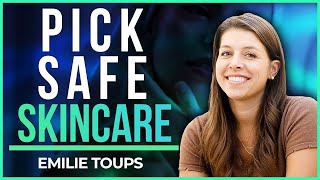
YouTube interview (Apr 11, 2022) featuring Josh Trent and Emilie Toups (co-founder of Toups & Co). Emilie explains she entered skincare after her daughter’s severe eczema and that rendered grass-fed tallow (beef fat) helped; tallow is presented as ~98% bioidentical to human sebum and rich in fat-soluble vitamins. The conversation shifts to critiques of the skincare industry: weak US regulation, use of low-cost synthetic ingredients (fragrance blends, parabens, phenoxyethanol), marketing/celebrity influence, and the hidden chemical load (claims: average woman uses ~12 products/day = ~168 chemicals; up to ~200 chemicals found in umbilical cord blood). Emilie recommends simpler, cleaner routines (deodorant swap, gentle cleansing, tallow balm) and flags mascara and aluminum/fragrance-heavy deodorants as common problem products. The interview closes on lifestyle, parenting, and wellness values.
Questions this video answers
April 11, 2022
98% (claimed)
Average woman uses ~12 products/day, about 168 chemicals (claimed)
Chapters
People love cosmetics. It is a multi billion dollar industry. They make us look and feel and smell better. But these chemicals are. They're easy to access and make. You can make them cheaply. In the US there's very, very little regulation on skin care and people don't realize that. So many people say this phrase to me that it's sold at XYZ Box store, then it must be safe. It couldn't go on the shelf if it wasn't safe. That is completely untrue.
Emily, welcome to the podcast.
Thank you, Josh.
It's been a long time coming. I've been excited about this. You know, I don't wear makeup or have a lot of skincare products myself. However, my woman, my partner, and so many people that listen to the show. This episode is so much deeper than skin. You know, it starts with skin. People know you as the co founder of Toups and Co and tell people just how you even got into this world of skin care. This was something that we all know. The epidermis is the largest. It is literally the largest organ that we have, our entire body in the entire body. And people just don't think about this, Emily. They don't think about what they put on their skin. It's literally drinking whatever we're putting on our skin. So give us the quick story, not the deep one, just the quick story of how you came into this world of tubes and company.
Yeah, well, someone would have told us 10 years ago that we would be running a skincare company. Like what? It definitely wasn't the trajectory that we were on, but we had our first daughter and she had severe eczema. You know, it had us looking for something else, other answers and not being satisfied with the answers that we were getting. So, you know, like a concerned mother will do. I just dove deep into researching and I had to know, like, there's. There's got to be another way. She had, you know, cracking and bleeding skin, and we had gone to the doctor, we did the traditional routes, steroids, petroleum creams, and all the things, and it just wasn't working. And we weren't satisfied with that. And, you know, my husband and I multiple times looked at each other and there was like, there's got to be something else that we can do. And through my research, I found tallow and just started making some products for her. She not only had eczema, but a lot of allergies, like topical allergies. And so, you know, we started with the basics, just tallow on her skin. And it was Just incredible. It's helping with the inflammation. And I started to make those products. People love them. I gave them away, friends and family. And that's just the beginning of how we got started, which is just, it was just a God thing. It was there when, you know, we filled a need when we saw it and that's how we got started.
It's wild because I think about how many people on the path of healing or of making themselves well or their family well. It starts with their own journey. It starts with something where they had to actually figure it out they self. They had to really get down in the weeds and be like, okay, I'm experiencing something. I'm not finding the answers in the traditional system. How old was your. It was your daughter, correct, that was dealing with the issues. How old was. Was she when these started to come to fruition, these skin issues?
Oh, she had them like from birth. And it took until she was almost two for me to even start to question like there's some, there's got to be something else we can do. The a cousin of mine, we were at some event and I was holding her and I was feeding her, you know, boxed rice cereal and she looked at me and not in a condon, condemning, condemning way at all, but was like, maybe she's having issues like with what you're feeding her. And, and I kid you not, like a light bulb went off because we were doing the standard American life and diet and everything else. And I went home and really did some research, threw away a lot of things that she was eating. And it really just took someone whispering the one thing like maybe it's what she's eating for me to realize that not only do I have to worry about what is going on her skin, but you know, our entire lifestyle is promoting either health or not.
What were you doing then compared to what you're doing now? Like what was a day in the life of Emily back then when she was having the skin issues compared to now?
So I was working for my parents, they own a construction company and I was, my husband was a paramedic. He worked kind of in the medical field and that was our life. We had one child and I was driving back and forth to my parents house and just not questioning the narrative in on anything really. And my mom is an herbalist and definitely more hippie in her views. But for some reason I just was like, you know, I kind of thought that what she knew or what she believed was just her and her little hippie herbally ways.
Wow, that's so interesting how we in our own experiences and our own hardships, we search for solutions and then maybe we go back to some information that we kind of poo pooed or that we dismissed before. It sounds like that was the case with your mom. Is she still involved in that world now?
Oh, absolutely, 100%. Our entire family now. But it took just having issues and having a pain point in my own life to do the research for myself. Another example of that is we had our first child in the hospital and we did all of the things the traditional hospital way and after that just having a less than great experience. And my mom had home births at home and I was like, I'm not doing that. I'm going to do what society says. And it took time to just undo and relearn lots of things to decide what's actual health and what's not.
A lot of people would be like, wait, tallow, doesn't that come from beef? Why would you put that on your skin? I mean you've served people across the planet with tubes and co organics. So if people don't know the benefits of tallow, let's start there. Then we'll unpack some of the ways that these things that I didn't even know, by the way, before we met, before I got introduced to you, all the fragrances and the parabens and a bunch of chemicals that I can barely pronounce are in these skincare products. And I don't think moms and dads know. I just literally don't think they know. I think it's just something where it's like out of sight, out of mind before we get into that. Tallow is tallow for everyone. I mean, is it literally something that everyone can put on their skin? And what is the benefit of that? Because that's at the core of tubes is the tallow. Yes.
Right. So tallow is rendered beef fat. And often people will come up to me and say what's tallow? And I was like, you know, do you have any idea at all? And kind of feel them out before I'm like, it is rendered beef fat, but it is 98% bioidentical to our own skin's oils, our own sebum. And so that makes it incredibly nourishing. It's full of fat soluble vitamins. And before the industrial revolution where we could extract plant oils, the only oils available were animal fats. And then things like olive oil and maybe like coconut oil, that 1 are shelf stable and 2 easily extracted from the from the plant. So everyone used tallow and lard and it was very common. And it's ancestral skin care. And so it's incredibly nourishing. It really is good for all skin types because it's so close. And I will mention that that is grass fed tallow, not from cows, pumped full of who knows what and all these toxins and in confinement and just not unhealthy animals, but from regenerative farms, pasture raised and grass fed. And it's just such a beautiful thing. It's like we call it liquid gold. It's beautiful and golden. And we render the tallow ourselves. And it's just kind of the core of Toots & Co. And it's what made such an impact in our lives and on our daughter that it's. We continue to render it ourselves because it's so important to me that it be the best quality and very stable and like rendered at low temperatures. And just really protecting and honoring that as something that's really.
Important. Is your mom in favor of using the cows in a very beautiful way for skincare? Because some people, they feel indifferent about that and some people have a very strong opinion about using animal products for skin care. How does your mom feel about.
That? She is 100% for it. I think that's probably all she uses. And she requests mason jars full, not just what we.
Sell. That's so cool. Is there a specific. You mentioned the sebum. And for people that don't know, maybe just unpack what sebum is. And this is for men and women, by the.
Way. Yes, it's just the oil that our skin makes on its own. And so like the human body regulates and makes oil to nourish and keep our skin protected. It's kind of the layer on top of our epidermis that protects it from everything else. And we are constantly washing that away with soaps that are detergents and just stripping it off and really replacing it. And keeping our skin as a barrier to everything else in life is actually pretty important. Our skin has microbiome and it's what is our protective layer. So our skin has all these bacteria and even yeast on it. And when in a healthy balance creates healthy, vibrant skin. And when that's thrown off, then we're having rashes or irritation or dry skin and all these things. People have so many skin issues and just having a healthy microbiome on our skin and nourishing it with something that is protective can solve a lot of those of those.
Problems. So people might See the word natural, quote, quote. And we'll talk about this later in the podcast. The terms organic and natural, there is a lot of wiggle in there, and there's also a lot of regulations that I didn't know about before we chatted. So I want to go right to the core issue here. What's happening with the fragrances and the parabens? And I believe it's called phenooxyethanol, the fake natural stuff. There's about three things in skincare that in my research, in our conversations, I was really surprised by, and they're in almost everything. So let's talk about those. And if you had to guess, what is the percentage of men and women, Obviously, women wear more makeup and use more skincare than men, but men do as well. What is the percentage of people that are probably using, quote, natural things that have a ton of fragrances, parabens, and the nasty chemicals in it? If you had to.
Guess? Oh, almost everyone. When I run into people and, you know, they're asking me about skincare, they are questioning what I know. And they're just interested just a little. And I ask them what, you know, what are they using? And it's always, always some kind of detergent, something full of fragrances and parabens. And most people, their eyes start to open when they have their own pain points. They're having an issue themselves. And that is. That's why they most often reach out, reach out to me and ask me questions. And I try to just make it as simple as possible. But just explaining that there are. The average woman uses 12 products a day, and they, on average, 168 chemicals every morning, which is an incredible amount. And there is other research that has found up to 200 chemicals in umbilical cord blood. And so that means that what we're putting on our skin on the exterior, we think we're not eating it, but we're putting on our skin on exterior is not only crossing into our bloodstream, but can also cross into a developing fetus. And it's just so important that we realize that every aspect of our life affects us in a way that we might not feel right away. So we, you know, we smell the fragrance or we used a soap or we use some kind of deodorant, and, you know, tomorrow I feel fine. But the progression over years of using a product daily, you know, day after day, and more than one product a day just compounds and a lot of those chemicals are very difficult to detox from our body. So they continue to build up in our systems and our. So I want to tell you about the main three. We can talk about the main three chemicals that I think are probably the top offenders in products. Obviously, the first one is fragrance, because fragrance is just a word that hides this concoction of up to 4,000 chemicals. And they can hide it behind the word fragrance because of the Fair Packaging and Labeling act, which just protects trade secrets. And so you can make your own fragrance out of a long, long list of toxic chemicals and then call it just the word fragrance on the package, because your trade secret of your scent, what you created, is protected under that law. And so people see the word fragrance, it's something they can pronounce, they recognize it, and they just assume that it's just a.
Smell. You know, I'm having a brain melt with you right now. It's the same thing with food where they say natural.
Flavors.
Right? Same thing.
Right? Exactly the.
Same. GRAs list generally regarded as safe. Or the FDA has, like, thousands of food chemicals. I had no idea. So the same thing applies to skin and to.
Makeup.
Yes. Skin.
Care. And, you know, it's actually very sad because it's. It takes education on your part to understand that it's not always general knowledge, even though when you've been in the natural health space for so long, sometimes you assume that it is general knowledge, and people know that until you speak with people and they. And they don't know. And, you know, these. Lots of these chemicals are hormone disruptors. They throw our hormones out of balance. And so many people are dealing with that. I was. I would. Four out of five women probably have a hormone imbalance, and they're trying to correct it, you know, and when your hormones are out of balance, you know, we see mood swings and anxiety and weight gain, loss of sleep and skin issues. And, you know, some of these chemicals even contribute to cancer. And we're seeing a rise, rise in all of these issues in men and in women, and they just. They don't know why. And there aren't any answers out there in the traditional medical.
Space. So then why are these chemicals allowed to be put in there? And let's really let it rip here because we've never done a show this deep into the epidermis, which is so crazy. I'm like, I don't know why I haven't thought of it before. It's the largest or it's bigger than our liver, it's bigger than our brain, skin, epidermis. It is the biggest thing that we can do. To take in moisture and to relieve moisture as well. Yet we just don't think about it. It's just not something that we think about. So then why are we drinking these fragrances and parabens and all these things? Why are they even allowed to be there in the first.
Place? Well, people love cosmetics. It is a multi billion dollar industry. They make us look and feel and smell better. But these chemicals are, they're easy to access and make. You can make them cheaply and real ingredients and the smell from real plants take time and energy and they're more expensive. And so people want cheap and companies want to create as cheap as possible just for profit. And so, you know, in the US there's very, very little regulation on skincare and people don't realize that. Um, so many people say this phrase to me that sold at XYZ box store, then it must be safe because it's sold there. Or this store wouldn't sell.
It. If it even at Whole.
Foods. Yeah, they wouldn't sell it. It couldn't go on the shelf if it wasn't safe. And that is completely untrue. As you can tell just from research, all of these lawsuits and all these companies and things, they can create a product, a lab or a manufacturer can make a product. And sometimes there's testing done internally in the inside of the company and sometimes there's not. But they can put that on the shelf and it can be sold without ever being tested. And the only time that they'll go and test it or it will be regulated by any kind of government entity is if there's a certain amount of complaints against the product. And that's a two edged sword. It's good and it's bad because that means that we have to be educated on what we buy and what we consume off the store shelf. So there's tons of, you know, pro legislation out there. People want more legislation. They want us to ban more ingredients and have more insight and oversight over cosmetics. And I actually totally disagree with that because that just makes it to where we have less options. So these small companies, myself included, they have more hoops to jump through and more money to spend to be compliant with a government entity or the.
Fda. Yeah, I mean, let's talk about the elephants in the room. And I say plural. There's a revolving door that no one needs to have a conspiracy theory mindset to understand between the fda, the usda, the pharmaceutical company, the agriculture institution that we have here, the Big Ag and even big Food, all of these companies, the Executives. If you just do a quick search online, it's not like you have to go further than the first page. They all trade executives. So somebody that works at Monsanto can then work for the fda, and then somebody that works for USDA then can work for a pharmaceutical company. I mean, it's wild, it's crazy. And it leads us to this really uncomfortable part of the conversation, and that is follow the money. Because if you really want to take care of yourself, you have to not be duped by marketing that tells you something is good for you when it's really not good for you at all. And I used to wear cologne back in the day. We haven't talked about this. I used to wear cologne and I was like, oh, it's no big deal. I'm just spraying it on my, my, my T shirt. No, I'm breathing in that vapor all day long. So now I use an organic, non toxic cologne. Maybe it doesn't have the same smell as like a Louis Vuitton or whatever, but I don't care. Like, I don't, I don't want to be breathing that in all day. So when we look at the financial interests that are driving really, these chemicals to be in the products, like you said, it's because they're cheaper and it's because they can be done at scale. Can you share some of your research and maybe just some of your own personal, anecdotal thoughts about some of the things that are happening in your space? In skincare, it's not just makeup. This is skin care also for men and women. What do you see, like, what do you see in the landscape that makes you frustrated, sad, that makes you feel like you really need to shout from the rooftops and tell people this, this shouldn't be.
Here. Well, most skincare companies are owned, you know, by gigantic conglomerates. So there are multiple, multiple different brands and most of them have the same corporate owner. And so, you know, they're manufacturing in the same places and they're using the same ingredients that they've used forever. And they shroud the research and make it look like they're safe, especially speaking with scientists. And things they see, well, this study says that this is proven safe. But then there's another study mirrored right behind it, maybe done in Europe or in another country that says it's actually not safe. And you know, there, okay, so recently there was the Olaplex lawsuit and there was an ingredient that I believe was a part of the fragrance that is banned in Europe and in other countries. That they were using. And it was, you know, causes infertility and reproductive organ problems. And they were using this, they were using those, those ingredients knowingly, knowingly in putting them in the formulations, knowing that they cause harm in, like certain doses. But it was something that they wanted to use. And, you know, of course, their response to these lawsuits are, we are removing the product, that ingredient. We were unaware of the studies that show, et cetera, et cetera. And that's just not true. These companies do massive research and they have top leading scientists, you know, making these formulations. They aren't unaware. And so it's just about the money. It's just about how they can get these products out. They market them to especially young people. Olaplex is very popular in a younger crowd. And these women are. They're growing up and they are. Their reproductive system is still maturing. They're going through their teens and into their 20s, constantly using a product that's harming them. And it's. It just blows my mind that the marketing is so strong and so great that I've run into so many people and they're like, well, I actually know that it's not the best, but I'm using it because it works better. And I'm like, does it actually work better? And the answer is always no. It's just coating the hair or the skin or anything in some kind of petroleum.
Placebo. It's a placebo where they've been told so many times on Instagram, Facebook television, cable, super bowl ads that it is better. So then the subconscious just goes, oh, yeah, it's better. Who cares if it's toxic? I mean, that makes me sad. That makes me.
Sad. And what I really try to do is provide education around the amazing ingredients, you know, cold pressed, beautiful, organic, nurturing ingredients from the earth. They work a thousand times better. And so there just needs to be more education on reading labels. And even in. It is difficult because even in the natural space, there are tons of people that are trying to get into this billion dollar industry and they're saying things like natural, organic ingredients, et cetera, et cetera. And it takes time and effort to recognize the ingredients and be able to read a label and say no, or say, this actually does sound.
Good. Yeah, wow, there's so much to unpack here. So the first thing is, and I really want to treat this with respect, but also seriousness, because, gosh, the more I see on YouTube and on media, there is this just disregard for the core family unit, for the safety Sanctity and health of the core family unit. There's also, from what you've shared and from what we're going to link in the show notes here, it's a top class action lawsuit that's titled Oil free Skincare Lawsuits pile up. It's in the show notes. There's some of the brands that are like the biggest brands in the world and they're linked in this report. And it's this quote of oil free skin care products that have a ton of these really, really harmful additives inside of them. And I wonder if the scientists at the companies know that they're harmful and the CEOs at the company knows that they're harmful. And basically everyone knows they're harmful, but they're just turning the cheek to it. Don't you think that that's willfully attacking the health of young women.
Specifically? Absolutely. I definitely see just in the world in general, just this war on family, this war on health, especially young people. I have two sisters who are both in their 20s and they grew up knowing what is healthy and what's not. You know, lots of education, especially because I had already had children and I was living a more natural lifestyle and my mom and. But seeing these things like from different influencers and just bombarded with the advertising that, you know, these chemicals are better. They were being poisoned by buying these products. And so then they would turn to me and be like, what's the alternative? And there's always an alternative. There are so many amazing skincare companies out there that are doing the opposite of this and just, you know, using beautiful ingredients and just from the earth and the whole plants and these pure extracted oils and they work just as good. Just maybe they don't have, you know, they don't have the marketing that these massive conglomerates.
Have. Yeah, and maybe for a lot of people too, they want to emulate the movie star they're seeing or they want to emulate. They want to be accepted. I mean, you guys know how it is. Like when you grow up, you want to be accepted. It's, it's like a core part of adolescence. You want acceptance. So if you're a movie star or if your favorite speaker, whoever is like wearing the makeup or using the products, even if they're bad for you, you're going to do it. So like, what, what part of this really sets you on fire actually, or makes you want to serve even deeper with tubes and co? What part of this do you see where it's a clear attack? Or what do you make of this. Like, if this is going to continue to go on, how do we make sense of this and what do we do about.
This? You know, I see so many young women and people my age just really struggling with their health. They're struggling with hormones, they're struggling with, you know, autoimmune issues and things, and they just want them to realize, to understand, to be educated enough to know what a paraben is. Parabens are preservatives in cosmetics. They've been, you know, preservatives since the 20s. And being able to read what they are, know what they are, and then make better choices or just have enough information to even know that they should read the label, turn the package around on everything that you buy and say, you know, maybe I let me read the ingredient list on this. Or sometimes the ingredient list is not even listed or it's, you know, a sticker behind something. Or if you go on someone's website and you're trying to read their ingredient list and they're not there, you have to email them to ask them what the ingredients are. That's red flags. Those are red flags. And just educating this. This younger population to. They're just been. They're being bombarded daily with so many products. Education around, reading the labels and understanding that because our favorite influencer uses this or that product doesn't mean that it's. They're probably not even using it. The influencers probably not even using actual product. They're just being paid to use.
It. Exactly. Prime offender being the Kardashians, by the way. Which. Which, let's talk about this. And I want. I want to let you wrap up, but we're definitely going to talk about the Kardashian.
Thing. It just kind of rubs me rough that the Kardashians, who own a skincare brand full of toxic chemicals, are in D.C. and I think they were there in, like, 2018 lobbying for pro, you know, regulation on skin care companies. And at first I kind of even thought, like, maybe it's a great thing we do, maybe need to ban some of these ingredients. But the legislation wasn't even on banning specific ingredients. It was just on oversight on manufacturers and skincare companies. And I was like, okay, so we had kind of gone through some hoops of doing some organic certifications and realizing the amount of paperwork and money that it takes to get a skincare product organic certified just kind of open my eyes to what all of these certifications mean, what kind of government oversight is involved in it, and which is not really A lot. And so being pro regulation on these skincare companies is just going to make all of the skincare companies you see at Walmart target. They will be able to jump through the hoops or figure out a way around it. And then everyone else that's left, your great choices that are these small indie brands that are using great ingredients, they won't be able to jump through the hoops. And so then they'll disappear, and you have less and less choice. And so, you know, it's just an act, which we like to, you know, it makes us happier, it gives us. It evokes a feeling of security when you see some kind of influencer celebrity doing something that looks like it's good, but it actually, you know, there's always another, an alternative.
Motive. And we're in. We're in. I feel like it's. We're in the best of times, we're in the worst of times when it comes to almost everything in health and wellness, period. Whether you look at food and we're talking about skincare and cosmetics today, the good thing is that there is natural products out there. And the more that we can have conversations like this, the more that moms that are dealing with skin issues or their children are dealing with skin issues can actually let that go, can heal and move forward. But there is this mental construct, Emily, and the mental construct is, as long as it doesn't bother me right now, then it probably won't bother me ever. But it's simply not true. It's almost like if we had an hourglass and there was grains of sand. So every time you put the cosmetics or the skincare products on that have the harmful parabens or the chemicals, it might just be a few grains of sand, but over the course of like three to five years, you could fill an entire scope with sand. You could fill an entire hourglass with sand. And I think that's what I really want people to understand from this. It's not about just like buying a cool skincare brand. Although, like, I would definitely buy the brand just because I like to have animal products on my skin, because it's the exact same sebum as my skin, that's pretty badass. But in a different conversation, there's the darker side, where if the Kardashians are selling stuff and they're really just in it for the money, and we know they are, what do you think it is about the human psyche? Or what do you think it is about just humanity in general, where we're easily duped in that way. Why are we so duped in that way? Why do we keep giving these people essentially our money, our.
Choice? We just want something that makes us look good and feel good. You know, we want to be better and that, that's why the cosmetic industry is so large. Very. It's more often that we want to look prettier, feel better than we actually want our skin to be better. And also, you know, I think especially in hair care, we, our diet is so poor that on the exterior we're seeing the results of years and years of a poor diet which is unhealthy hair, nails and unhealthy. And so people, they want to look like what they see on tv. And these people have, you know, hair extensions and all, you know, fake everything and.
So. Fake.
Everything? Yeah, we see this version of a human that's not even real. You know, what, what does a real human look like? And they are, you know, they have imperfections and that's just the way that we were made. And but more, but even deeper than that is just we have a society that is more unhealthy than we've seen ever. And we want to fix it and we want a quick fix for it. And then we have products that are promising a quick fix. And so we buy them because that's what we want. We want shiny, beautiful long hair and we want, you know, beautiful nails and flawless skin. And there's all these products on the market that can give that illusion to us. And so we buy them because they're marketed for that. And the real, it's always, it's a band aid. The real root cause is something in our body, a hormone deficiency or imbalance or mineral deficiency or imbalance. And if we can clean up our diet and use skin care that feeds our skin and nourishes our body, then we'll see the true version of health, which is beauty that comes from within. And it's, it's, you know, it's very difficult to know that if someone doesn't tell you because the media says the exact opposite of it. You know, and there's huge multi billion dollar industry and stores promoted to just giving us fake products that give us the illusion of what we think beauty really.
Is. It's even some of these companies like the Rodan and Fields, you know, these massive company that are experiencing lawsuits and legal issues as well. I mean, we could sit here, we're not going to, but we could sit here and we could list lawsuit after lawsuit after lawsuit that are happening every single Year especially, I noticed there was more lawsuits in 2020 and 2021 than ever before. And I think it's because people were at home trying to feel better about themselves, buying all these makeup, buying all these products. And it's like, you guys, we need to take a deep breath and just remember, like you were saying, Emily, like, the human body has natural imperfections. When you're. Whether you're a man or woman, when you're buying skincare products or cosmetics at all, you're not trying to be perfect. You're just trying to feel and look your best. And I think that's a really big demarcation that we need to talk about here. This striving for perfection. It unravels into all phases of society, how kids and teenagers and young adults treat each other. And there's really, like, this moral fiber that's decaying because of this projected image of perfection that these companies make billions and billions of dollars off of. Can you speak on.
That? Yeah. You know, they make so much money on selling products that make us look more beautiful, make us look like everyone else, make us feel like we look like what we see on television. And I think there's a skewed view of what real beauty is. Real beauty is health. People have beautiful, vibrant skin and clear eyes and can think clearly and feel good from real health. And real health comes from within. And it's a food and mind and body connection all together. Yes. And spiritual, for sure. So when I meet people who have true health, I find that incredibly beautiful. I have friends that take care of themselves, their mind and their body and their spirituality. And the food that they eat is all healthy. They, you know, they radiate beauty. And, you know, when people come to me and they're struggling, it's never one thing. It's never just the skincare they're using or the food they're eating or, you know, their state of mind or the state of their spirituality. It's all of these things because they're all connected, because we are incredible beings that are. Every part of our body is connected. And so it takes wanting to know the information first, because someone can come to you and ask you the questions. They're not feeling well, or they want this and they're looking for that. And you can give them the answer, but unless they want to really know the answer, they don't listen, and they don't. They can't accept it. They have to almost research it on their own and then come to me, and then. Or they have to have Like a pain point that they're really driven to want to know the information. Once their eyes are opened and they're driven to, you know, they desire the information, then they can take it in and those areas just all start to fix themselves and the blocks start to stack, you know, in a neat row instead of just having it kind of falling.
Apart. Sometimes we wait until we're really sick to.
Change. Or that was the case for myself. You know, we were, you know, especially as a parent with your first child and you're seeing them with, you know, eczema and bleeding, itching and crying. And it was just, I was crying and she was crying and it was like a very low point where I was like, I've got to figure this out. I've got to get somewhere else. Was it not for that, maybe I would still be on the same, you know, in the same lifestyle. I don't know. And so while it was a difficult thing to go through, it changed our life for the better. So I'm very thankful for that. And she has vibrant skin and health now. And I'm just so thankful that I went through that pain to get to where we are now and telling that story and just explaining to people sometimes will open their eyes without them having to experience their own pain. But I do feel with so many mothers that email me and they send me photos of their children and it just, it hits me very personally. And so, you know, I can, all I can do is share with them the truth and really nourishing, you know, health ingredients and tallow and all of these fat soluble vitamins and give that to them and let them see, you know, but I always do. It's not. I own a skincare company, so I don't just like throw tallow at them and say this is the answer to that. But I always just kind of put a note in there about, you know, what is their diet or you know, what's the atmosphere that they're living in. And just to spark a light bulb for someone to do more research for.
Themselves. Yes. Well, I love it because I'm gonna be 42 this year. And I actually had my first facial recently and she was like, what skincare products do you use? And I was like, none. I don't use any skincare products. So for the men out there, and I know that this conversation has been, you know, let's be honest, primarily for the women, because women, that's the majority of the cosmetics and the beauty industry is women. But for the men listening, you know, how do they make sense of this too? Like, are there a few products for men that they should definitely be putting on their skin on a daily basis? Let's go to the.
Practical. Okay, so, you know, always start with deodorant because deodorant can be one of the most toxic products that we're using. We put it on every day. People might. They might forget to wash their face, or they might not put on makeup, but people are putting on their deodorant on a daily basis. And so these aluminum deodorants that are full of fragrance and scent. I mean, Axe and Old Spice and all this stuff. I even got my dad a faithful probably like for 20 years. Use old Spice to switch out his deodorant. I literally went in the bathroom, I was like, do a switch, dad. Use this. But they work. You know, natural products work just as well. And so the tallow is amazing for men's face. So my husband, you know, it's so funny because he will talk with his friends and he's like switched them over to using, like this pure soap bar that he uses to wash his hair and his body. And then he puts a towel on after he shaves and on his neck. And he's like, man, you gotta use this. But because it's so nourishing and people, other men try it, they're like, wow, man, I should have been using.
This. Yeah, I love it. I'm gonna try the balsam fern cedarwood. You have an extra strength deodorant too, right? People that really stank. Okay, so for all the people that work out out there. And so the deodorant's a big one because I've heard of aluminum and gosh, it's probably been 20 years since I've used an aluminum deodorant. I just don't. Simply don't use them. What else? When it comes to. So deodorant and then the balm on the face for men, the tallow balm. So those are like the big two, the deodorant and the tallow.
Balm. And then men use shaving cream often, every day, sometimes. And so like a soap bar with a brush and like the old school shave soap would replace that. And then you want, you know, you're putting the tallow on top of that and just protecting your skin, nourishing your face and your beard, if you have one, and just taking care of your face in a way that men don't normally do. Can. My husband is. He'll be 42 this year. Also, and he spent a tour in Iraq and just had so much sun damage on his face from just the heat and the sun on a daily basis for a really long time. And I'm telling you that that tallow has, like, changed the texture of his face on the side where he just had so much sun damage. And so now that's, like, his selling point to other men. It's like, man, you got to try this tallow bomb. I know, it's. No, it sounds.
Different. Yeah, men want to look good, too. Yeah, we want to look good, too. Okay, so then let's shift to the lady. So what are, like, the two or three core products for women when it comes to, you know, hydration, care, cleanliness of the.
Skin? So our top seller is mascara in our makeup. In our makeup line. And mascara has so many toxins in it. So many people email me on a daily basis and say, I can't use any mascara. They make my eyelids swell. They're especially like waterproof mascaras. There are no natural waterproof mascaras. So if you're using one and it says natural on it, flip it around or find the box and read the ingredients on that, because I can almost guarantee you that it's not natural. So mascara is a big one. And just the tallow, I mean, tallow so amazing, and it's so simple that it seems like there must be something else. People are used to, like, multi regimens of, like, multi products, and each product does something different. And really that's just to sell you more products. But our main, you know, you want to cleanse the face. If you have dry skin, you don't want to use a soap, so you'll use an oil cleanser, a toner, tallow. And it seems very basic and simple, but it's the best thing for our skin. We're never stripping the oils off our skin. We're always replenishing them. Anytime you wash your face, we're moisturizing and keeping that barrier on our face, and it just brings kind of a natural, healthy.
Glow. So it's three or four products instead of 12, I think earlier in the podcast, you said it was 12 products with, like, 150 plus chemicals. We're talking about, like, three or four products that are just three or four.
Products. Really basic. You need deodorant. Wash your face and.
Moisturize. Okay. This is incredible. Like, I'll tell you, it's not something that I've been passionate about, but I am passionate about wellness, and I can learn from you. And this is why I love podcasting. And this is why every single person right now go to joshtrant.com toops and it's t O u P S and you just use the code Josh. Emily, thank you for the discount, by the way. You gave us 15% off, which is incredible. We know that you're a small company, so we totally respect the value that you're giving people and then your generosity. That's joshtrent.com t o u p s use the code, Josh. But before we say goodbye, I want to ask you a big question, and it's about parenting, because my. My son's 8 months old and we've had conversations about having another child. And you mentioned earlier in the podcast that you took the traditional route when you went to the.
Hospital.
What. What shifted for you there? Like, what shifted based on your first experience where you're like, I'm never doing this again, and this is my path moving forward. You know, as a parent here, a lot of parents listen to this.
Huge question, but it all boils down to just as simple, as simple as possible, and going to the hospital and being induced and then having, you know, I was at the brink of a C section and then they use a forceps, and it was just a very unnatural experience. And our oldest has some issues that none of our other kids have. And it was because I had a standard American pregnancy and delivery and all of these things. And I just researched and I'm very much of the know better, do better. And so, you know, I have four children. I had three of them at home and one at the hospital. And I will never go back because the just, you know, if we're talking about kids, just the experience of having your baby at home and it just being peaceful and quiet and just. It was just an amazing experience. We did different because we knew better and we learned more. And, you know, for us, for us, it was the perfect decision. And it just was. I was healthy and strong and was able to do what my body was made to.
Do. I love the way you said that, you know, you take a different path because of now, something new that, you know, I love the way that you.
Put. And I have no problem changing my opinion. And, you know, I can't say that in five years I'll feel exactly the same about everything that I know because I know more. The more I learn might change my.
Mind. I reserve the right, we all do to change our mind when we get new information that brings us closer to what I believe is the truth. And I Think the truth is that all is love because all is God. And then if you look behind that, you have to ask yourself, okay, if there's all these distractions in our world, skincare and makeup being one of them, you know, media being another, and then what we quote, should and should not do as far as birthing and parenthood and all these things. What does your spirituality look like? What does it look like for you to lead your family and really to protect your family? I mean, that's really what this is. You're protecting your family from not just toxic chemicals, but toxic thinking and toxic way of.
Being. Yeah, well, we homeschool our four kids, and my husband and I are very much involved in their day to day in their life. You know, we run this business, so we're able, we're so blessed and so able to be home, which not every family has that privilege. But because we do, we are very intentional of making sure that they are exposed just to life and to vibrancy and knowing that they can do. There's so many things that they can do that maybe being in a traditional school setting, they wouldn't believe that they could. And, you know, obviously the Lord has directed our path from the very beginning of my husband and I's marriage. We've been. We'll be married 13 years this year. We have four very beautiful children. And, you know, every decision that we make, we make, you know, in prayer and in just together. Every decision we make, we make together. We pray about it. And it's. Our path has been directed, you know, just by the Lord. And I'm just, I feel very blessed to be in the situation that we are. We live in America and I make sure that my kids know that we are blessed to live in this country and that there are other people living in other countries right now. You know, the war with Russia and Ukraine, and they are struggling and they're going through a lot of difficulty and just recognizing that we're incredibly blessed to be in the situation, in this.
Situation. We really are. And I think about this, this element of protection, like a great parent or just a parent of yourself. You can be a parent of children. You can also just be a parent of the inner child that's living in all of us. Every single human being has a little boy and a little girl inside. So for me, the way that I protect myself and my family from toxic chemicals, toxic people, toxic things, is I just stay curious. I just keep asking questions like, hey, what result does this bring? Or let me look at the truth of this matter or let me see behind the curtain that everyone else is believing. Do you have a North Star for you and your family? Like, do you have a family mantra? Do you have something where no matter what, you guys will move in this direction because of this.
Reason? Well, we always ask questions. So if someone says, you know, you should do this, this is amazing, my husband will be like, well, why is that so amazing? Or let me find out myself, you know, the truth behind that. And so we just take everything with a grain of salt and nothing is matter of fact until it's what is great for us. And that's in every aspect of our life. We kind of do things not on the mainstream, different from most people and that, you know, lots of people say, you know, or make comments and say, you know, the tupes, they're crazy. They live on this farm. They do everything so different. Like, why would you do that? And it is so funny because we milk cows and we have chickens and we farm and we homeschool and we own our own business and all these things, just not the mainstream. And it is because we have asked questions, stay curious like you say, and just there is not one size that fits all. Everyone has a different path. And what is good for me might not be good for.
You. You know, it's interesting as we round out and say goodbye, I'll share this. I used to think that wellness was for things mental, physical, emotional and spiritual. And now I know that wellness is actually, it's moved for me from a box Emily to a pentagon. Because that fifth part of wellness is financial health. And if we look at the way that we tend to our garden, like financially, mentally, physically, emotionally, spiritually, all of these things need constant attention at all times. And so in my opinion, I'm curious how you feel about this. When we look at the financial, you know, where we spend our money, it might seem cheaper or quote, easier to go to McDonald's. It might seem cheaper or easier to buy skincare that's like five bucks cheaper but poisons your skin. How do you make sense of that and how do you speak about that, you know, perceived easiness versus long term.
Cost? Well, I don't do anything the easy way. I mean, we have to, you know, walk half an acre to just collect eggs to eat breakfast. Because when we spend more money on something because it's better for us or healthier, you know, at the same time, we're not spending money on other things that people might. We choose to spend our money in a very intentional way. And so when people say, oh, well, you know, you eat organic and that's expensive, or you buy, you know, clean skincare and that is more expensive, well, we also don't indulge in, you know, we don't eat out and we don't do other things or we choose to spend our money in ways that benefit us. And so it's just about what your priorities are. And our priorities might look different than somebody else, but we prioritize health over many other things. And if that means that we can't do other things, like maybe go on vacation, you know, and do other, you know, we take that money and we spend it to invest in our family for long term health and long term.
Happiness. That's the kind of bank account that I like. Emily, this has been great. I've really enjoyed this. We went in a few directions that I was, you know, pleasantly surprised. We went in. There's a ton more to talk about. We're talking more about this at the post right below this video. Wherever you're watching, you can go to joshtrant.com t o u p s the code is Josh. Thank you, Emily, for the 15% off. It's amazing. And it's for the men and women too, as we say goodbye. How would you define where we are in the world for yourself, for your family, for us? What does it mean to live well, especially in this modern day and age with so many distractions? How would you define wellness? What does wellness mean to.
You? Wellness is a state of mind. And even living in, like this modern earth, we have more choices and more availability than we have ever had before before. So while we have more distractions, we also have more choice. And there are more and more products and things that we can buy our easy way out available to us now than there's ever been before. If you wanted clean skincare, you might have had to make it yourself in your kitchen. Or if you wanted organic pastured pork, then you had to raise your own pig. But now there are so many choices and I think we live in an incredible day and age. And I'm just, it's, it's amazing. And I'm blessed. We're all blessed to live in.
2022. We are. It's the year of looking at ourselves, right? 2022. I'm looking at me, I'm looking at you. We're looking at each other this year. It's like the year of inventory. So, Emily, thank you for coming. Where can people learn more about you? Specifically, are you on IG or do you want them to just go to tubesandco.com like, how do they get involved. Involved in the conversation outside of just buying your.
Products? So if you want to follow me personally, I am on Instagram. It's just Emily, just me. And I'll show, you know, share a little more of our day to day and things that we do and believe. And then obviously on Tubes and Co, there's a contact form on there, people can email me. And I try my best to get back to those emails as quickly as possible. But I really do enjoy giving as much information as I can when people have.
Questions. Well, I feel like this was a huge bevy of information. So until Emily and I see you guys again soon, we're both wishing you love and wellness. We'll talk to you then.
More from Josh






Your child's future start before pregnancy... and even before conception! #podcast

MD Reveals: Your Healing Creates Your Child's Reality (The Souls Coming In Need Strong Bodies)



