PRIMAL LIVING IN THE MODERN WORLD | MARK SISSON
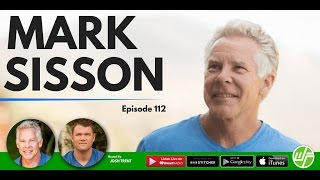
This content was created by Josh Trent. This content was uploaded by Josh Trent. This is a YouTube video titled "PRIMAL LIVING IN THE MODERN WORLD | MARK SISSON" featuring a conversation between Josh Trent and Mark Sisson. The discussion, recorded on May 16, 2017, explores topics related to wellness, primal living, and the impact of modern technology on health. Josh Trent hosts the conversation, delving into Mark Sisson's insights on primal lifestyle, gene expression, and health optimization strategies.
Chapters
Wellness Force Radio Feelings are essential, but they can't dictate our actions.
We literally infect each other with our emotions. We came here for a special purpose. Let the purpose unveil itself. Knowing without doing is the same thing as not knowing. They're not just trackers. I'm gonna wear this and it's gonna help me do the right thing.
Wellness force radio episode 112 with health and fitness icon Mark Sisson the problem.
In Moder is that we don't necessarily honor the expectations of these genes that want to build a strong, lean, fit, happy, healthy human. It's developing that skill that you are in touch with your body and you're in touch with your emotions. You're in touch with all of those things that we draw on to enjoy life. Because at the base of all of this is the fact that I'm only trying to give people advice on choices they can make to help them enjoy life more. More. I want people to extract the greatest amount of pleasure and satisfaction of fulfillment and contentment and awesomeness out of life as possible. In fact, the tagline of my company is Live Awesome.
What's up my friend? It's Josh Trent and welcome back to another episode. This is your weekly access to global experts in all things wellness, behavior change and new technologies. In this podcast together we'll discover the connections between our emotions and healthy habits to live life well and enjoy the process. This podcast is brought to you by Perfect Supplements, a company who actually walks the talk with their values of pesticide free non GMO real food supplements that fuel us for the wellness journey, save money, support the show, get more wellness. In the process, head over to perfectsupplements.com wellnessforce Enter code wellnessforce to save 10% off your entire order. In our modern and tech focused society, this episode could not come in a better time because if you're like me, you've been using technology more and more every day for your wellness, health and fitness, but also online through social media to connect with people. But in this world of online likes, shares and Facebook friends, as well as conscious health tracking through wearables, a bigger question arises. Have we lost touch with our most primal selves? The part of us that intuitively knows exactly how to form real face to face personal connections in our ways of eating, moving and sleeping for a life of wellness? Today on the podcast we're answering these questions and learning about how to create and sustain a primal lifestyle in this modern world from health and fitness expert Mark Sisson. Get ready for an in depth and thought provoking conversation with one of the most popular and profound influencers in our wellness world, where we dive into topics like carbohydrate intake, fat adaptation, gene signaling and epigenetics as well as Mark's personal ethos and story about how he overcame his own health issues to found Mark's Daily Apple, Primal Blueprint and Primal Kitchen. If you'll be at Paleo FX this week, let me know. I'd love to meet you in person this weekend in Austin. If you can't make it to the conference, no worries. Our friends at Paleo FX are offering a free livestream where you can learn from world class speakers like Mark Sisson, Rob Wolff, Dave Asprey, and many, many more to empower yourself to be vibrantly healthy. Just tap your show artwork right now and click the link that says livestream. Sign up for the free livestream now and and and three ands. Make sure you listen all the way till the end of the episode where Mark shares about the emotional connection to Primal living as well as a big announcement for the $200 giveaway from Primal Kitchen for the Wellness Force Radio audience. At the end of the show, you'll be able to enter to win $200 worth of free Primal Kitchen product delivered right to your door. Okay, no more waiting. Let's drop into the conversation with Mark Sisson. Mark Sisson is the creator of Mark's Daily Apple and the best selling author of the Primal Blueprint as well as several other books. He's a sought after speaker and in 2015 he founded the Primal Kitchen together with his team on a mission to change the lives of 10 million people. A former elite endurance athlete who's made health and fitness his life's work, he founded Mark's Daily Apple in 2006 after competing in professional athletics to fulfill his deeper personal mission to empower people to take full responsibility of their own health and enjoyment of life by investigating, discussing and critically rethinking everything we've assumed to be true about health and wellness. Beyond his reputation as one of the founding fathers of the Paleo and Primal Living movements, his true genius is an independent researcher, motivator and communicator. Mark, welcome to the show.
Hey Josh, thanks for having me man.
I'm so excited. This is a timely conversation. Paleo FX is coming up this weekend, next week in Austin. I think a hot topic Mark, on most people's minds is that there's a lot of technology out there. The speed of our lives are increasing exponentially. What I'm excited to learn about from you today is how we can use this primal blueprint and primal living to not just meet these demands of the modern world, but how we can use that primal living to thrive as well. So thanks so much for coming on, man. And my first question for you is most people know about your work. Most people listening to this show have heard of you. There's a decade of content from you online, many more years on bookshelves. Can you share with us something that most people might not know about you?
That's a good question. I'm mostly an introvert. I can be extroverted at times, but I really value quiet time and alone time. And that's when I get most of my best work done, my best thinking done, my best time meditating on quality of life, on gratitude, things like that. So maybe that would pique some curiosity, I think.
So now, what is your normal wake time? I think a lot of people try to go with the circadian rhythm, rise and fall with the sun. Do you follow that same paradigm?
Fair amount? Yeah. I arise at 6:51. It's literally about that precise, depending on the time of year, plus or minus given again when the sun's coming up. But I found that I don't like to sleep late. I'm not really an early riser. So, you know, that window of 6:50 to 7:00am is the time I get up most days and I try to get get to bed 10:30 to no later than 11 to get those restful sleeping hours in.
Well, I want to go in and out of the journey with you. You were 12 and you were holding one boy track meets in your backyard, running laps around the block. Years later, you became this powerful creator that you are today. You're serving millions of people. I think a lot of people, Mark, when they just start their journey, they may come across your work and see someone that they perceive as always having the perfect health. But in the primal Blueprint, you talked about how in your championship years in marathons, endurance sports, you looked healthy on the outside, but on the inside, your body was actually falling apart from inflammation and carbohydrate, dependency, suppressed immune function. You had a lot of chronic training patterns back then. Can you take us back to your training years? Because I think it's one of the clear starting points for why you do what you do now.
Sure. And to kind of reiterate. Yeah, I started reading about health and fitness when I was 12, part of that journey, which was to seek health. And I must be clear on that. The original intent Was to be healthy and live a long life. Somehow I got the anti aging bug in me at a very early age and started reading all of the books I could. Those books led me to things like Ken Cooper's aerobics book. Right. So that came out in 68. I'd held these one man track meets and one boy track meets in my backyard because my dad had been a track star, so he was a high jumper and a sprinter. So I set up a little high jump pit in my backyard. I actually set up a pole vault pit. I had this great little block that I would run around and do laps around. So I had been leaning toward running and track and field is kind of an avocation. And then when I read the aerobics book by Cooper, who said, you know, the more that you run, the longer you're going to live. There was this whole thing about adding up points because the amount of heartbeats that you were able to put out in a given amount of time. And somehow the term cardio started to arise in those days. And we talked about endurance training as a means to longevity. So I bought into that and I started running a lot. Seemed like the more the better. I also started reading books like Adele Davis's book and people that were advocating a complex carbohydrate diet as a means of fueling all of those miles. So the next thing you know, I'm eating a very complex carbohydrate diet, which means lots of, quote, heart healthy grains. And by the way, not some, some also not so healthy carbohydrate sources.
You're dabbling in the pizza food group, okay?
Oh, dabbling, yeah, the pizza, bread, pasta. Of course, everyone was, you know, carbo loading. And before any, every race in the 70s and 80s, you'd have a pasta party the night before because that seemed the conventional wisdom on how to load up your glycogen stores and get ready for the race the next day. Anyway, over the years, I put in a lot of miles. I was averaging 100 miles a week of training during my heyday, with high mileage weeks of 125, I was consuming 4 to 7,000 calories a day of food, and much of it in the form of carbohydrates. So anywhere from 700 to 1000 grams of carbs a day. I wasn't fat. I mean, I weighed literally 30 pounds less than I weigh now. I was pretty much skinny, but I was running all these miles and burning, apparently burning off all of the calories. But so I got fast and I, you know, I looked pretty fit on the outside and made the COVID Runner's World magazine three times, but I was falling apart on the inside. I was, I had this inflammation that was gathering inside me. I had osteoarthritis in my feet, I had tendonitis in my hips. I had irritable bowel syndrome. That really pretty much dictated my life. Like, if I was driving to the airport, I'd have to figure out where the closest gas station with a bathroom was. On the way, I had to kind of plot my strategy. I had, you know, many several upper respiratory tract infections every year. I had gerd, you know, gastroesophageal reflux or heartburn frequently. It was like, wait a minute, wait a minute. I started doing this so I could be healthy, and all of a sudden I'm like, as unhealthy as I've ever been in my life. What's going on here? And that's really. In my late 20s, when I started to fall apart as a runner, literally, I started to. I got so injured and the itises would creep up on me to the point that I couldn't train as much as I. As I wanted to. I had to cut way back on my mileage. And I thought, well, this is ridiculous. I'm gonna take a step back and figure out how I can be strong and lean and fit and healthy without all this pain and suffering and sacrifice. And, you know, maybe I've been going about it all wrong. And thus began my journey of, you know, 30 plus years now of looking into ways in which the human body works, how genes turn on and off in response to the signals that we give them. Those signals are generated by the foods we eat, the actions, the movement we make throughout the day, the amount of sun exposure we get, the amount of sleep we get, the amount of play we get. All of these things affect how genes turn on and off and how in fact, genes rebuild, renew, recreate, regenerate us on a minute by minute basis every day. And that's really been the direction of my work ever since.
And I think in this modern world, I don't know anyone, Mark, who's less busy than they were last year or even last month. So the veracity of activities that people are doing, they're going to continually increase. What do you see out there from a technology perspective that we can actually apply to ancestral living? You know, Dan Pardee's talked about this on the show. Where we can blend quantified self. There is some technology that can help people Return back to those primal roots. Do you come across technology pieces that you think are interesting in regards to getting people back home to those movements and sleep and things they can do for more primal living?
I have to claim, being a Luddite in this area, I am not a fan of wearable tech that much. I am much more a fan of intuition, of developing a sense, an innate sense of what you need to do, what you need to eat, what's going to taste good at this time, what's going to serve you well at this time. I'm an investor in a company that's making, for instance, a cooling pad that goes on your bed so you can sleep on a cool surface. Why? Because it seems that humans for two and a half million years were sleeping on cool ground covered with a layer of warmth on top. It fascinates me to see that There are now 35 different wearable devices that tell you how poorly you slept last night, but nothing to really address the problem or few things to really address a problem in a way that it ought to be addressed. So in terms of measuring how poorly I slept, I know how poorly I slept. I've developed an intuitive sense to be able to go, you know, what, probably ate too much too late last night, or the room temperature was just not suitable to ideal sleeping, or I'm in a hotel room and there was the garbage trucks in New York City backing up at 3:30 in the morning kept me awake. I mean, I know all those things and therefore I know what the fix is. I try to develop an intuitive sense and that's what I try to coach people on doing in their own lives. There are times when a lot of exercise is great and there are times when no exercise is great, and consistency can sometimes be almost detrimental, depending on your perspective and your point of view. So I try to develop within people this ability to identify things. Like, for instance, people tend to overeat at just about every meal. Not your audience, Josh, but you know, other people.
No, everyone listening is actually perfect. We've already talked.
So that's a normal natural tendency when there's an abundance of food for people to eat more than they probably ought to. It's just hardwired into the brain. So I like to help people develop the skill of being able to sit back and go, you know what, Am I really hungry for the next bite? Not am I full? But am I really hungry for the next bite? And it's a skill that we can develop. And over time you go, well, wait a minute, I don't need to finish what's on my plate, I don't need. Just because I paid for this meal at a restaurant, I don't have to finish it. I could box it up and take it home. I could, you know, give it to my dog. I could leave it on the plate and let them dispose of it. But that's an intuitive ability that I try to develop in people so that they leave the table sated but not over full. And so they leave the table with enough energy and enough. And certainly having experienced the gustatory pleasure of that meal to its fullest extent without overdoing it. And that's, you know, the sort of thing that. Yeah, you could measure the effects of that in increased respiration, increased heart rate, increased secretion of insulin, you know, catecholamine secretion, all of the things that you might be able to measure after overeating a meal. But, hey, the truth is, you know, when you've overeaten, you know, when you've had too much. And so let's just dial that feeling in and let's recognize it and let's not go there too often.
Yeah. I think what I'm hearing from you is the intuitive sword can be sharpened. Right. And I feel like in this age where we are having so much attachment to our phones and technology, I mean, look at all the pieces of wearables that are out there that combine the endurance industry with the fitness industry and even in the paleo industry. You know, Keith Norris has some different technology as far as gym equipment. I believe he's going to be showing at PaleoFX. And a lot of it has to do with tracking. So I think meeting somebody mark at their deepest need, building that intuitive edge, it doesn't always come from the beginning. And when we look at this primal living piece, I mean, primal living to you is probably something that's very clear. You've honed it over the past three decades. But somebody starting out, they don't know anything about primal living. How do they get in touch with their intuition? And what. What does primal living mean to you?
Yeah, well, let's just take that a step back. So you're defending the use of wearables, and I applaud that. And I would suggest, for instance, that somebody who's just starting out in an exercise program would be well advised to wear a heart monitor as an example. So a heart monitor keeps you in an honest zone. You know, that you're working at the level at which you're maximizing the burning of fats, for instance. So as you start out, you get a sense of what that feels like. And you're wearing your heart monitor and you're wearing your wearable device. But over time, you develop the intuitive sense to know where that line is. And you don't need to look down at a device to tell you how hard you're working. You know exactly how hard you're working. I don't want to discount the use of wearable devices, but getting back to what does Primal Living mean to me does mean that you've dialed in all of these different aspects of your life, that you don't have to stop and ask a device, what do I do now? You get to the point where you know what to do, what choices to make that are going to serve you in that moment in the best way possible. And sometimes, by the way, that choice might be, yeah, you know what? I'm going to have a piece of that chocolate cake because, damn, that looks really good. And I know that if I have, you know, three or four bites, I'll get the full experience. If I have a 17 bites or 75 bites, you know, I'll pay for it. But it's knowing where the line is, it's developing that skill that you are in touch with your body and you're in touch with your emotions. You're in touch with all of those things that we draw on to enjoy life. Because at the base of all of this is the fact that I'm only trying to give people advice on choices they can make to help them enjoy life more. I want people to extract the greatest amount of pleasure and satisfaction, of fulfillment and contentment and awesomeness out of life as possible. In fact, the tagline of my company is live awesome. So to the extent that we can do that without having to rely on a device to tell us we screwed up or we didn't do enough or we did too much without having the guilt of not achieving a number the device was supposed to be creating for us. That's where it could be a little bit run astray of an optimal, enjoyable, fantastic life.
Yeah, and I should have known, right? Talking to the founder of the Primal Blueprint about technology, there was probably going to be a curated opinion. So I totally understand that. And when I look at Primal Living for me, I've in my life gained and lost a lot of weight. I think at one point in my life I was £280 mark. And when I found fitness, it was this catalyzing moment for me. And I think a lot of people step into health and wellness by that fitness route first. But when you wrote the primal blueprint, you had these 10 laws that you talked about. We're not going to have time to get deep into each one. But can you explain the general guidelines of someone who maybe has started to work out, they've lost some weight, they come across your work. What is the primal blueprint ethos?
Well, it's basically to feed your genes what your genes expect to be fed so that you can manifest the happiest, healthiest, strongest, fittest person you possibly can. Your genes, those genes have been around for, you know, millions of years as humans and then hundreds of millions of years as mammals, and then billions of years as single celled organisms before that. So the genes are pretty adept at knowing what is optimal for the environment into which we have arrived. The problem in modern times is that we don't necessarily honor the expectations of these genes that want to build a strong, lean, fit, happy, healthy human. And so the primal blueprint laws are based around commonalities that every human that's lived in the last two and a half million years has experienced. Eat lots of plants and animals. You know, that's pretty self explanatory. You eat plants and you eat animals. You don't eat manufactured crap, so you avoid poisonous things, which is more of that manufactured crap stuff. Don't be consuming sugar or foods that are made with sugar added or the industrial seed oils which are exemplified by trans fats, for instance. Movement around a lot at a slow pace. In other words, it isn't about burning calories. You don't have to burn calories. You don't have to look down at the readout on the treadmill and say, oh Geez, I did 450 calories today. Dang, I was hoping to do 500. It's about the movement, it's just about moving. It's not about burning calories. One of the other laws is lift heavy things. Every human that ever preceded us had to lift rocks and logs and carry carcasses back to camp and lug the babies around and climb trees to get a better lookout. So we need to honor the expectation of our hunter gatherer genes in order to manifest the kind of muscle strength that we want to have. Sprint once in a while. You know, that was one of my early primal blueprint laws. Well, why would anyone want to sprint once in a while? Well, it turns out that our ancestors, you know, got the dickens scared out of them a couple times a week, probably by a life or death encounter with an animal or something else and had to run for their lives as fast as they could for a short period of time. And what that did was it caused the release of certain biochemicals that fostered growth hormone and testosterone, which helped you recover and repair from that short term experience so that the next time that happened, you were even better prepared to survive. You know, Nietzsche said, that which doesn't kill me makes me stronger. Well, that's where that comes from. Get adequate sleep. You know, humans are very reliant on sleep, and it's probably one of the greatest overlooked aspects of good health, is not getting enough sleep. As I said at the opening of the show, I'm a big fan of getting enough sleep. I'm a big fan of regular adequate sleep. Traveling across the country or across the world and hitting different time zones is one of the most stressful things we can do to our bodies. And I think people just don't pay it that much attention and go, ah, you know, whatever. I'll, you know, sleep when I'm dead. It's just the wrong attitude. I think sleep is huge. So those are a few of the things that we talk about in honoring these hunter gatherer genes that we still have in each one of us. The genes expect us to give them certain input so they can turn on. See, there's certain genes we can turn on to build muscle, Certain other genes we turn on to strengthen an immune system. Certain other genes we can turn off so they stop storing so much fat. We can turn off genes that cause systemic inflammation. It's just a really powerful kind of thing to recognize that we have this personal ability to alter how our genes recreate us every day.
And there's so much proof in evolutionary biology when you look at the protein markers and the different things that are in the bones. What type of research you've been studying for over 30 years about nutrition and, you know, just the physical condition, the human condition. What have you found in evolutionary biology that has just fascinated you?
It's all fascinated me. And what we see now is that every scientific study that's done on the human body, or on pigs, on mice, on any animal, really looks at the effect that that variable has at the level of gene expression. Now that we've mapped the genome and we have access to ever increasing array of genetic spectrums, we can kind of look at the effect of a new drug or effect of a workout, or the effect of sunlight, or the effect of a change in diet on the level of gene expression and which genes are turning on and Off. And all of this again, it's based on our evolution as humans and then prior to that, our evolution as mammals to adapt to the environment and to be able to survive the current conditions in order to pass the genetic material along to the next generation.
I think there's a lot of distraction for people. These 10 we'll list in the show notes today, and they're very powerful, but they're also very kind of intuitive. I think when you mentioned them, I was nodding my head and someone listening is like, yeah, Mark, we know. But on the outside, they're dealing with all these things that, quote, get in the way. You've coached thousands of people who have also coached hundred thousands of people, and in over 30 years. Is there a commonality, is there a thread between most people's reasons as to why these 10 parts can't be intuitively placed in their life?
Commonality is that we were raised with artificial foods. Too much refined carbohydrate early on in our diets. I mean, from, like, the first thing we could eat after. After breast milk.
Yeah.
You know, we've become creatures of the comfortable life of being able to be driven to school as opposed to walking to school. You know, we work at desks now instead of hard labor in the field. For most of us, we've got a pretty cushy life. And while it seems like it's not wearing us down because we're not out doing manual labor, we're sitting at a desk or we're not walking a couple of miles to school each way, we're actually taking a bus or driving a car or commuting to work. Those have their own physical tolls. And the inactivity has its toll. And just the position of the body when you sit at a desk all day has a tremendous physical toll on. So the commonality is that, you know, everybody kind of grew up, or at least in the United States, grew up in a society where there was an overabundance of food. There was certainly an overabundance of Franken food, manufactured food, which was antithetical to health. There's a tendency toward malaise of not wanting to do much of, again, sitting at a desk all day or sitting on a couch and watching TV all night, or now being focused on our digital devices. We have this iconic caveman logo. His name is Grok, and Grok lived 10 or 20,000 years ago. And he's, you know, we talk about, what would Grok do? Well, Grok would do all the things that we're doing right now, he would want to be lazy, he would want to eat. He would want to eat refined foods, because all those foods taste great. They taste crunchy, salty, fatty, sweet. He wouldn't want to work much because the life of a hunter gatherer was so there's so much energy expended that it was really about managing that energy expenditure when in the face of fewer and fewer calories, that you were able to survive. So we share this commonality that we're all wired to be slothful and to eat sugar and candy and do all this stuff, because all of those things were so rare in our evolution that they were not problems now. They're entirely problematic.
You can't drive down the road anywhere without being just completely inundated with advertisements and just companies that spend millions, sometimes billions over the course of decades of dollars on catering to people's wiring, this genetic wiring. So we know that there's epigenetics. We've talked about this on the show a little bit, and that's kind of what I've heard from you. You know, we have these genes, they're either going to be turned on or off depending on our environment. What are things that turn on the bad portions of epigenetics? Do you feel like some people are born to just be heavier than others?
So, yeah, I think some people are genetically predisposed to gaining weight. That's a familial genetic trait. You know, could go back in their family history that had some period of starvation, and over time, those genes adapted to getting by on smaller and smaller amounts of food, so that when you finally get an individual who is born with that same gene set and has access to unlimited amounts of food, they gain weight very, very quickly and keep it on for a long time. That's an example. But that's be clear. I don't want to ascribe good or bad to genes. Genes are just doing what they're told to do. When you develop type 2 diabetes, that's not bad genetics. That's human genes addressing a problem that you've created with your eating habits and your movement habits. That's just your body trying to prevent you from dying from too much sugar too soon. So it's not that these are bad genes. There are some genes that respond to an input from omega 6 fats that cause inflammation. Well, inflammation is seen as a bad thing throughout the Paleo community, and you want to try and avoid chronic systemic inflammation, and that's accurate. But inflammation isn't necessarily a bad thing in the context of survival. If you get clawed by a saber toothed tiger, inflammation is something that's going to help you recover from that. We don't talk so much in terms of good and bad genes as we just say, look, the genes are just doing what they're programmed to do. And so if we can find workarounds to turn certain genes off and turn other ones on, to the extent that we can do that, and to the extent that we can discover what those things are through modern genetic science and evolutionary biology, hey, let's take advantage of all that knowledge.
So coffee is great, but what do you do if you've hit a daily limit for your caffeine and you still require more energy to meet the demands and responsibilities in front of you? Over the past two years, I've personally been doing an N equals one experiment while studying what supplements work to yield energy and balance in my wellness without a bunch of stimulants. That's why I'm excited to talk to you about Perfect Acai Revive this energy boosting blend of Acai berry, cordyceps, Rhodiola, rosea and grape extract which work together synergistically to increase endurance athletic performance and boost cognitive function. This Perfect Acai revive is a 4 in 1 upgrade in one perfect blend of organic, organic, pesticide free real food supplementation that delivers sustained energy and focus throughout the day without those jitters and the caffeine crash. Pick up your four in one supplement. Make it easier to get the energy you need for your busy day by clicking over to perfectsupplements.com wellnessforce grab your Asahi revive. Make sure to enter code wellnessforce to get 10% off your entire order. We had a question on Facebook. There's a few questions actually. One of them was from Chrissy. She asked Mark Mark, I've been moving and traveling so much lately. I'd love to hear about the best types of workouts when I'm on the go. When I have long working hours but I can't get to a gym, I.
Have this surgical tubing with two handles on either end of it. You know one of those workout bands, I can get the most amazing pump from that. So I might do a workout that has, you know, 50 air squats, 25 pushups and then a bunch of movements centered around the shoulder with that bungee core apparatus and then doing three sets of that and be finished in less than 20 minutes and I swear get a better pump than I would have gotten had I spent an hour at the gym. Do it in a hotel room Just before breakfast and then not worry about anything else for the rest of the day. When you're on the road, you're probably not going to get your ideal workout. You just want to get kind of a something that keeps your status quo so you don't lose conditioning. Most people don't hope to build conditioning while they're on a business trip. They just say, well, I just hope I don't get unconditioned or deconditioned.
Right. Unless they're a pro bodybuilder or something. Yeah. And then, you know, people that are traveling, they have a lot of other demands that are on them. One of the things to circle back to this technology component is when people are out of circadian rhythm. There are devices out there like Retimer. Retimer is something that you can shine light into your eyes to kind of reset you. Let's say you fly from here all the way to Brussels and it takes people a little bit of time to get used to a new time zone. What do you think, Mark, about people that can actually get better sleep when they travel? Are there certain things that are a go to for you? What do you take with you to help you sleep when you travel?
Gets back to that intuitive thing. I am not affected by jet lag. I've discovered over the years. I've done lots of traveling. Europe many, many times, Asia many, many times, cross country flights, you know, hundreds of times. I've discovered that when I fly, you know, like if I go from California to Europe, I'm basically encountering two short days. There are going to be two days that are shortened by a short night. So, you know, I might sleep a little bit on the plane. Not, not a lot. I might sleep if it's typically from California, they're a night flight. So for instance, a flight might leave at 9:00 or 10:00 at night. So I'll watch a movie or two, then I'll get three or four hours of sleep. But typically then you show up in Europe, Brussels in your case, and it's already in the afternoon.
Yeah.
So the key is don't take a nap. Immediately adjust to the time zone that you're in. You know, stay up until it's time to go to bed there so that you are on their sunlight schedule. And then I carry melatonin and I've been using melatonin for 20 years. And so I take 6 milligrams of melatonin an hour before I'm intending to go to sleep. Sleep that first night and then I go to sleep and I sleep like a baby. And then the next night I might take another six and on the third night I might take three and then I might completely tighter off once I'm there. It's just being strategic about when you sleep and certainly when you don't sleep. Because sometimes taking a nap is the worst thing you can do when you cross time zones.
Yeah.
Conversely, if I'm coming back from, or say I'm going to Australia or New Zealand or Thailand, then that's typically a long day, a one long day. Right. It's a 30 hour day because you're following the sunlight the whole way.
We've had many guests on this show to talk about fat and protein consumption when traveling and also intermittent fasting when traveling. I think most people that have a busy schedule could do a lot more with feeling satiated and having satiety throughout the day. So when we look at the fat and protein when traveling piece, how do you plug that in for yourself? Are you still doing intermittent fasting?
Yeah, I mean, I sometimes take those trips as an opportunity to extend a fast a little bit. I'm okay not eating on a plane. I'm okay just, you know, having, having some water to drink or whatever and then maybe taking a nap and doing some stuff. One of the things that we talk about in the Primal Blueprint generally, and I'm now talking about specifically in my new book Go Keto, is this. The importance of metabolic flexibility. How important it is for humans to develop this skill at burning fat, clearly this skill at utilizing ketones in place of glucose when it's forced upon us or when we choose to do it. But this metabolic flexibility is an important part of, of our ability to live a life where we're not completely beholden to a schedule that says you must have breakfast, you must have lunch at this time, you must have dinner at this time. But to be able to change on a whim and adjust your meal strategy on the fly and not have it, not only not have it negatively impact you, but sometimes have it positively impact you because you might go 30 hours without eating and then, you know, have, have a ketchup meal and benefit from that strategy, rather than in the old days of, certainly when I was an athlete and a sugar burner, I couldn't go six hours without eating, without ripping someone's head off.
And there's a transition time too. I mean, someone has a regular diet where I think the Average American is 200 to 300 grams of carbohydrates a day. When they transition over to the Primal Blueprint, what does that timeframe look like when they start going from sugar to fat burning?
You know, it's not that long a time. I mean, I have a book called the 21 Day Total Body Transformation. The secret is you really don't completely transform your body in 21 days. Come on. But what you do is you transform your energy systems in 21 days. You can upregulate enzyme systems so that you're better at burning fat, you're better at accessing ketones, you're less reliant on glucose carbohydrate. So 21 days is enough time for you to make that shift, for you to get out of that space where you're reliant on eating every couple of hours to keep your blood sugar up. And in fact, you're so good at burning fat. One of the comments we get throughout the Primal and Paleo community is, you know, become a fat burning bee. Now, when I don't eat, it's a not. It's not a big deal. And sometimes I look at my watch and I go, hey, oh my goodness, it's 2:30 in the afternoon. I haven't eaten yet today. Maybe I should have something to eat again. Another great skill to have developed to not be beholden to some artificially dictated mealtime. That's literally an artifact of the agricultural revolution and then the industrial revolution where we fed workers calories to keep them grunting and groaning and straining in the fields as long as we could.
This is where, like the burritos and possibly the huge, huge ham sandwiches came from. Right. This is like people that needed calories, but it wasn't necessarily nutrients.
Correct, Correct, yeah. It was just, I mean, I mean, tea time, you know, in England was basically sugar and tea to, you know, to get you back on your feet to finish working the rest of the day.
Well, let's go back to the carbohydrate peaks because this is something that people really get angry at each other about. And of course, we're not here to deliberate carbohydrates. I think everyone has a range. Rob wolf talks about 75 to 150 grams. He uses a tracker, like a continuous blood glucose monitor to see what types of nutrients actually change his insulin, change his blood sugar levels. What's worked for you and your coaches? What do you guys talk about for Primal Blueprint as far as a daily carbohydrate load?
I developed the Primal blueprint carbohydrate curve 11 years ago. It really broke this Whole concept into, you know, 150 was what I determined sort of the most amount of carbohydrates that anyone, even a reasonably active athlete or somebody working a manual labor job. It's kind of the high end. You could go up to 200 grams a day, but nobody needs 300 grams of carbs a day. Nobody. It gets you into the danger zone. So I had this scale of 0 to 50, which puts you in the keto area 50 to 100, which is what we call the weight loss sweet spot. And 100 to 150 grams a day, which I use and most of my people now use for it, what we call effortless weight maintenance. So there's this range of carbohydrate intake. And yes, it can depend on your background and your size and on your sex and a number of things.
How much sex you have or if you're a man or a woman.
A little of both. Having said that, I'm doing this keto book now. So I've been in ketosis for seven weeks, I guess, and I measure my blood ketones, I measure my blood glucose. I'm playing around with what happens after a meal or what happens waking up fasted or what happens after. I take an exogenous ketone supplement before and after after a workout, and I'm having a lot of fun with it, but it doesn't change the fact that I still feel great. So I might look at my blood glucose and ketones and go, well, that doesn't make sense because I feel great. Well, you know, if I feel great, why am I even checking my ketones? In our new book, we talk about the use of some of these measuring devices. But the bottom line is, when you get ready to go keto, you're going to get to the point where you've been preparing for it by lowering your carbs. Carbs. You've been preparing for it with certain types of workout strategies so that one day you wake up and you go, you know what? I'm just going to see how long I can go today without eating and not have it bother me.
And there's so many benefits. I mean, cellular cleanup is one. So with the autophagy, this is something where you can actually have a healthier body if you fast once a week. How many times a month would you recommend somebody to fast if they're just starting out?
You know, it depends on the person and what you're trying to accomplish. If you're in great health and you're a bodybuilder, probably very Little. If you're, you know, if you've got neurological issues, probably a lot. If you're somebody who's trying to lose 50 or 60 or 70 pounds somewhere in between. I mean, they're all. What we talk about here is again, understanding how the human body works so that you can tailor a program to your own specific needs. So I don't have a thing where I'd say, okay, I think you should fast, Josh, you should fast once a week and everybody should. I don't, I'm not going to say that because some people might do it automatically. Some people might say, you know what? I'd rather do a three day fast once a month, month, Because I think I get more benefit from that. And if you've done the metabolic work, if you've rebuilt the metabolic machinery, then that's great, maybe that's perfect for you. It was a three day fast once a month. I like to eat too much. I don't have health issues that would prompt me to go, well, why would I not want to eat for three days other than, you know, to experiment, which I do. So. But I do, you know, I do a compressed eating window. I eat. Some people now call it intermittent fasting, although I don't, I don't like that term for what I do. But I had my first meal at 1pm and my last meal at 7pm so I have 18 hours a day where I don't eat and I wake up and I'm fine and I might have a cup of coffee, but nothing in it, by the way. It's not like I'm drinking calories. I go to the gym, fasted, do a hard workout, fast, come back and not eat for another three hours. And I maintain my muscle mass and I maintain my energy and, you know, I'm doing little pieces of fasting just about every day. That works for me.
I love the fact that you brought up people that are interested in keto. I feel like we've seen so many companies, you know, ketoforce and Pruvit, a lot of exogenous ketones out there. We've talked about this on the show where people that just dive in to keto, they get keto fog to the point where they'll never try keto again. But I think it's really valuable to point out where you said there's a process and there's a progression for you to actually going into a ketotic state. That progression is different for every single person. Is there a resource or a certain supplement that you're using right now around ketosis, exogenous ketones.
Anything Dominic d' Agostino has ever written is a good resource. I'm doing a book as a resource, so that'll. That book will be out in October. And that's one of the reasons I'm doing it is I don't think there's a great resource for people who want to do it systematically and do it in a way where they're again, they're being as intuitive as possible, so they're doing what's right for them given their set of circumstances. In terms of exogenous ketones. It's kind of funny, I play around with them a little bit. First of all, I think that if you haven't done the work to build the metabolic machinery to burn ketones, in other words, if you haven't gone on a low carb preparatory strategy and you've dropped the carbs way down and you've prompted your body to build more mitochondria, in other words, you've upregulated those genes involved in mitochondrial biogenesis. And then you've also prompted the mitochondrial genes because mitochondria had their own DNA, to become more efficient at burning fats and ketones. Then it doesn't serve you that well to just take a ketone supplement if you haven't built the metabolic machinery to burn it. It's like putting nitro burning funny car fuel in a Prius. It's just not ready to burn. To use that kind of high octane fuel doesn't mean it's a bad thing or it's going to kill you. But it doesn't serve the individual to try and cheat their way into a state of ketosis by not doing some of the work.
And my last question for you around the differentiation is between Paleo and primal. What would you say the main differences are? For people that might be confused about that, they're converging.
Initially, Paleo was a diet only that looked at no dairy, dairy, no alcohol, very, very low in saturated fats, fairly restrictive. When I came up with a primal blueprint, I wanted a place where people could go and feel invited. Not excluded, but invited. So we tried to include as many foods as made sense. So we're not so down on dairy. Now there's certain dairy, skim milk, pasteurized homogenized stuff, you can get rid of that. But cream, butter, even whole milk for certain people, certainly artisanal cheeses, they're all included in the primal blueprint and they're still not to My knowledge really, truly included in the Paleo diet, saturated fat. I mean, more and more research looks at saturated fat as not being the proximate cause of heart disease. Never was, was never the issue that people made it out to be. We've always been sort of fine with an amount of saturated fat that was reasonable, you know, given the choice of animal products that we might be eating. Whereas I think the original Paleo advice was stay away from saturated fat. You know, only eat lean game and things like that.
Yeah.
And then ultimately Primal became about the lifestyle. It became about the 10 Primal Blueprint laws. It became about slee and sun exposure and play and stress relief and stuff you do in the gym, how you move. And now Paleo is, I think, coming around. It's starting to converge in that area as well. But Paleo was originally pretty much about the diet. Primal was really always about the complete totality of the lifestyle.
You've done such an incredible job of explaining the nuts and bolts of this actual plan, but there's a missing piece that I wanted to ask you about, and it's our emotions. You know, your wife, Carrie, is heavily involved in exploring the mind and consciousness and how our thoughts mark affect, well being. Have you learned anything from her that you apply in your own life or in your work with the Primal Blueprint?
Oh my God, yeah. I mean, I've learned a lot from her because that was the missing link in my own life was this inability to recognize my thoughts as just what they were. Just thoughts. They're not reality. So my worrying about a business decision that's going to maybe take place in a week or a month, or my agonizing over something I said or did a month ago, those don't exist. Those are just. They only exist in my mind, in my imagination, in my thoughts. And yet, as she keeps pointing out, for me to let those thoughts dictate how I feel in the present moment takes me out of the present moment. So she's been very instrumental in getting me to kind of incorporate that part of my spirituality, if you will, into my life.
Do you feel like that might impact your work with the Keto book and your maybe modifications that you'll make to the Primal lifestyle?
I think so. More importantly, she's writing a book now called Primal Life Woman. And I think she's. I'm going to let her really be the first one to kind of talk.
About that now with Primal Blueprint. Did Primal Kitchen come in the past two years from requests from people that were reading your material or was that something you just saw that needed a gap to be filled on?
Yeah, that's it. I just saw. I was writing about food and have been writing about the importance of food for the last 10 years. Part of my frustration has been things like, you know, having a recipe every Saturday in which part of it calls for making mayonnaise. Well, you have to go make your own mayonnaise because there's no good mayonnaise available anywhere in the marketplace. And and so, you know, I thought, well, wait a minute, why don't I start making some of these condiments and dressings and toppings and the things that you put on food that make the food taste even better, but do it in a way that fits the primal blueprint spec sheet, which is, you know, healthy fats and oils and clean, lean sources of protein and functional foods and no artificial crap of any kind. And that's really what kind of became the impetus for this primal kitchen food line.
How did you come up with this recipe for the mayo? I think the mayo's got to be your best seller.
Oh, it is our best seller. The mayo recipe was based basically one of sitting down and going, okay, currently mayo is made from canola or soy or corn oil or some derivation, sometimes made with, you know, grapeseed or other things. But what's the healthiest possible oil that we could make a mayonnaise out of? You know, we tried coconut oil, but coconut oil, for all its benefits, doesn't taste great in mayonnaise, if you ask me. So we started using avocado oil and organic cage free eggs, organic vinegar from non GMO beef, and organic sea salt. And the next thing you know, we had this amazing, great tasting mayo that's also so healthful that we literally make the claim that the more you put on your food, the healthier the meal becomes, not conversely, in the. You know, up to now it was like, oh, be sure you use the mayo sparingly because it's bad for you. Well, I have people, you know, spooning the mayo out of the jar because instead of yogurt, for instance, because they like it so much.
Mark, this is the last section of the show. It's seven fast questions. First up, when was the last time you did something for the first time?
And what was it that's bad because I can't remember what it would be because I'm so sick in my routine. Okay, so.
So the routine is stuck now. When you became a dad, what changed about your health habits once you became a parent?
First thing I did was I sold my bike. I'd been a road cyclist for 15, 20 years before that. I sold my bike because I wanted to watch my kids grow up. I live in Los Angeles, near Pacificos highway, where there's, you know, cars whizzing by all the time. And I thought, you know what? This is one of those things that I'm going to do for my own health because I don't want to ride on the road and jeopardize my experiencing my kids growing up. I know it sounds kind of maudlin, and there's a lot of people who ride bikes, but, you know, I still ride a bike in the gym under safer conditions.
What cracks you up in life, Mark? What makes you laugh the most?
Well, my taking myself too seriously all the time cracks me up because whenever I stop and think about it, I just. I do have to chuckle.
What's the first mistake that most people make when they start out on primal living path?
They eat too much fat. They think, oh, Mark says, fat's great. Good, I'm going to start eating fat. And then. And they don't cut back on their sugar at the same time. So they buy into the whole fat thing, but they don't buy off on the sugar thing.
What is a go to snack that's in alignment with primal living? When someone's feeling stressed, go to snack.
Is a spoonful of coconut butter. Not the coconut oil, but coconut butter actually, like, you know, like Artisana makes a great coconut butter.
How do you get it to not be clumpy, though?
Keep it in the cupboard or something. Keep it at room temperature, last forever? Well, it doesn't last forever in my house because it's my go to snack.
You've blogged every day since 2006. How do you keep the fire of curiosity and service to others burning?
I'm just interested in what I do. I mean, I wake up every morning, I got a list of things to do that's always too long, and that's what keeps me going. It's like, I got to do this, I got to do that. And all of them are, by the way, contemplated to be in service to whether it's creating a product, whether it's writing a blog post, whether it's disseminating an idea through a book, whatever it is. I'm just really interested in this pursuit of health and wellness.
If you were hired and consulted by the National Institute for Health in Washington, and they asked you, Mark, we want you to lead an initiative of your choice to lower obesity in the United states, what might you do?
I would say I'd rewrite the food pyramid. I'd get rid of sugar, sugary drinks, anything. You know, I wouldn't get rid of them. But I advise people to cut way back down on those. I absolutely put the kibosh on industrial seed oils. I think. I think they're insidious and I'd encourage people to get out and walk.
With all you've been through and the amount of things you've created for the industry, what is wellness to you now at this age and at this time in your life, how do you define wellness?
So wellness is a state of mind more than a physical presence. It's actually, and this goes back to what we talked about with my wife and the thoughts you think. It's sort of that serenity, that peace, that ability to not be caught up in worry or angst or anger or rethinking decisions or mistakes, but being present in the moment and therefore being able to extract the greatest amount of pleasure, contentment, joy, fulfillment from now as opposed to, well, when I finish this project, then I'll be able to experience contentment.
Mark, thanks so much for coming on this show. I know Paleo FX is coming up in just a few days here, tell people what you're speaking about and maybe some parting guidance for your book on ketosis.
I'm going to be talking about how to turn your passion into a career career and I'm going to detail how I all of the circuitous routes and all of the doors that closed and other ones that opened as I got to where I am today and kind of maybe give some advice on how other people might explore those paths. Ketosis is a very cool strategy. It's a tool in our toolbox for achieving greater metabolic flexibility. I'm not promoting ketosis as a lifestyle. You can be, and it can be a great one for a lot of people. But I'm prepared component it as one more strategy that you could do to increase your metabolic flexibility so that you can enjoy life that much better. So any amount of time that you spend in ketosis, you're going to ramp up your metabolic flexibility just that much greater so you'll be better at burning fat, less reliant on glucose, probably age more gracefully as a result of that. And then it's up to you to choose how often or not you want to do it.
Mark, so enjoyed talking with you and I'm so stoked for the Wellness Force audience. You were kind enough to give us 10% off all the primal kitchen products, including that mayonnaise we can eat with the spoon by using code Wellnessforce on the next order. And this is a big and the entire team at Primal Kitchen is giving away $200 worth of product for the audience. All you have to do to enter to win is follow Elnessforce and follow primalkitchenfoods on Instagram. Just comment, tag a friend and you're in. You can win. We'll select a winner right after Paleo fx, so just be sure to enter. Tell your friends who want some delicious healthy foods for free, head over to Instagram and enter Mark, I want to thank you so much for coming on the show. We will be following you for the entire year and beyond. Thanks for coming on the show.
Thanks Josh. Thanks for having me.
Hey my friend, thank you for hanging out and growing with me on today's show. Remember to hit subscribe and share this podcast with someone you care about that gets to hear this message. And if today's guest sparks something in you, leave us a 5 star review on iTunes for the podcast by just quickly tapping on your show artwork. On your iPhone, hit the link in purple that says Review this podcast. It helps the show reach more conscious people like yourself and attracts world class guests so let them hear your voice. For all the downloads, videos, links, giveaways and free resources mentioned on the episode that support you to live life well, go to wellnessforce.com radio and while you're at my house on the web, join the free Wellness Force newsletter on that page because I want to send you four free guides around staying healthy with your training and your travel. And if you're ready to take inspired action, don't let this conversation stop here. Join a group of people who care about what you do over at the Wellness Force Community Facebook page. Just search Wellness Force Community on Facebook. This is where we talk about the things that really matter. We share our wins, inspirations and our struggles and so much more. Tap the show artwork on your iPhone, hit the purple link that says Join the Facebook Group and I will welcome you at the door. Okay, now you get to go out into your world and create impact for the people you care about and be a positive force of wellness in their lives. So until I see you again real soon next week, I'm wishing you love and wellness.
More from Josh






Your child's future start before pregnancy... and even before conception! #podcast

MD Reveals: Your Healing Creates Your Child's Reality (The Souls Coming In Need Strong Bodies)



