Primal Posture | Wellness | Esther Gokhale: Wellness Force Radio 102
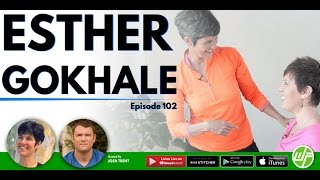
YouTube interview (Wellness Force Radio #102) between host Josh Trent and Esther Gokhale about posture, the Gokhale Method, and how everyday posture impacts physical and emotional wellness. Esther describes common misconceptions ("chin up, chest out"), practical techniques (shoulder roll, elongating the neck, stretch‑sitting using a thoracic pad), the idea that good posture makes daily life be therapeutic, and her mission to create a healthy posture culture. The conversation also covers standing vs. sitting tradeoffs, habit formation, and brief case examples and user reports about reduced back pain after applying her methods.
Chapters
Wellness Force Radio Feelings are essential, but they can't dictate our actions.
We literally infect each other with our emotions.
We came here for a special purpose.
Let the purpose unveil itself. Knowing without doing is the same thing as not knowing. They're not just trackers.
I'm gonna wear this and it's gonna.
Help me do the right thing.
Wellness force radio episode 102 with the founder of the Gokhle Postural Method, Esther Gokhlay.
When you have good posture, then your everyday life, your everyday activities become your exercise and your therapy. Every bend, every step becomes a rep, becomes a stretch and you're taking care of a lot of your exercise needs. Stretch and strengthen. With poor posture, not only are you missing out on those three stretches and strengthening repetitions, but you're actually then causing wear and tear in your joints because you know, we are a precision instrument.
What's up my friend? It's Josh Trent and welcome back to another episode. This is your weekly access to global experts in all things wellness, behavior change and new technologies. In this podcast, together we'll discover the connections between our emotions and healthy habits to live life well and enjoy the process. This podcast is brought to you by Perfect Supplements, a company who actually walks the talk with their values of pesticide free, non GMO real food supplements that fuel us for the wellness journey, save money, support the show, get more wellness. In the process, head over to perfectsupplements.com wellnessforce Enter code wellnessforce to save 10% off your entire order. Have you ever wondered how you can improve your back's posture at your desk or in the car with a standing desk or seated? That's bent best for you. Well, today we're talking with a sought after teacher and presenter in Postural health, Esther Goklay, about taking us back home to the body we were all gifted with and learning about primal posture for our wellness. I think you're really going to enjoy this conversation with Esther. She is not your typical practitioner with a rich and deep background in acupuncture and oriental medicine as well as biochemistry from Harvard. This is a woman whose life's work is helping people stand, sit and move well, which is in perfect alignment with many things we talk about in this podcast, the tools and things that give us that life. Well lived well. What I loved most about the talk with Esther was not only did we dive deep into moving pain free and the variations in efficacy of standing versus sitting desks in our workspace, especially if you sit at the computer and work a lot online like me, she challenges this conventional thinking we've heard about from so many people, where she uncovers how sitting may not be the new smoking and how standing could be. This episode may blow your mind if you're a movement or health professional, especially giving you that new perspective on how posture plays not only a big role in your personal wellness, but how it can take you back home emotionally to your primal roots. Whether you believe in Paleo or not, it is in our genetic code to all move pain free. So let's jump in to this uniquely blended conversation of posture and wellness with Esther Gokhlay. Esther Gokhlay has been involved in integrative therapies all her life. As a young girl growing up in India, she helped her mother, a registered nurse, treat abandoned babies waiting to be adopted. This early interest led her to study biochemistry at Harvard and Princeton, while later acupuncture at the San Francisco School of Oriental Medicine. After crippling back pain during her first pregnancy and unsuccessful back surgery, she began her lifelong crusade to find a solution to back pain. Her studies at the Aplom Institute in Paris and years of research in Burkina Faso, India, Portugal, and elsewhere led her to develop the Go Clay method, which she has been teaching at her Palo Alto Wellness center for over 15 years. She gives lectures for the Ancestral Health Symposium, TEDx, Google, and many more large organizations interested in posture's effect on health, wellness, and work. Esther, welcome to the show.
Delighted to be here.
This is gonna be such a unique conversation. You know, we were talking before the recording. I let you know, 10 years in gyms and over 10,000 sessions working one on one with clients. I think I've probably given hundreds of thousands of postural cues at this point. So I'm really excited to dive into this subject, which I think a lot of people hear about. You know, pull your shoulders back, chin up, that posture is such a good thing. But today, we're diving into how posture affects our wellness. So to start us off, Esther, what is a misconception out there that a lot of people hear in regards to posture that just simply isn't true?
Well, the moment I enter a room, people sort of straighten up in this exaggerated fashion. They thrust out their chests and sit up straight. But what we really want to do is sit up straight, smart. And that's done very differently from tensing up the erector spinae back muscles and thrusting out the chest. So that's a very common misconception. And then how to fix poor posture. There are a lot of misconceptions. It's sort of striking how a lot of the conventional ways of getting good posture are counterproductive. Chin up, chest out, s shaped spine, tuck your pelvis, shoulders back. You know, they're all counterproductive. It's not just not useful, it's the opposite of useful.
That is fascinating to me because I've always been in the mindset of shoulders back, chin up. I mean, I probably gave those postural cues with clients hundreds of thousands of times. So tell us about this one part before we get into your story. We're going to talk a little bit about what you went through in order to teach so many people. But when we look at that shoulders back and the chin up piece, is that not what we should be doing?
See, chin up, it usually translates as tense up these muscles in the back of your neck to pull your chin up. It's tension in the back of the neck that's being called into action, and that's not healthy. The chin wants to angle down. I teach people to elongate the back of their neck. You know, pull on the hair at the back of their skull, and then the chin naturally angles down. So chin up is the opposite of what I'm teaching shoulders back. Now, you do want your shoulders to settle further back than most people carry them. But the way you get there is important. If you pull back, it usually lasts, what, 10 seconds? And then people go back to slumping, right? And then they blame themselves for not being diligent enough and pulling their shoulder, you know, holding themselves correctly. It's not practical, it's not sustainable, and it's not even healthy, because what you're doing is again, calling in a muscle to tighten up tense over a long period of time. The rhomboid muscle, in this case. So that's what's pulling the shoulders together. And then people even go through the trouble of strengthening their rhomboids so they can do this in a more sustained, stronger fashion. But I think it's misguided because you don't want to count on some muscle tensing to hold you in a right position. So I don't want people to arch their backs. And as a way of getting rid of their slumping, that's even worse. Now you've got two problems. You haven't really addressed the hunching, but you've added an arched lower back, and now you've got an even worse problem, really, in the lower back. And so the way I teach people to improve their shoulder architecture, that is actually one of the easiest things I teach is a shoulder Roll. So you take one shoulder at a time, and you go a little forward, a little up, a lot back, and then totally relax.
I'm trying to do it with you here. Now, if someone's driving, obviously, like, they can't do this while they're driving.
So you're going forward with one shoulder. Then you're going up a little bit. Up, up, up. Now you're going back, back, back, back, back. Here's where you want to be adventurous. And now you want to relax. Almost like slipping the shoulder soft tissues back a notch or two. It's almost like you have a gear mechanism in your shoulder. Shoulder joint is very craggy architecture. A lot of bony outcroppings and little ridges and valleys. And you're taking your soft tissue out of its current location and you're ratcheting it back a notch or two. And because of the craggy architecture in that joint, it just stays in place. You know, it's held in place. And even after people relax, the shoulders don't slump forward. You're sort of taking advantage of the bony architecture there to hold the soft tissue back in place. And now the brain gets used to that architecture. And the muscles in front, the pecs, which may have become short and tight from years of hunching, get used to being a little longer, more relaxed, and that becomes your new way, which is actually your old way.
And just that one exercise we did together here on video, I actually felt a lot of relaxation. I was tensing my rhomboids just as we were talking. So I made that mind to muscle connection. And it's interesting because the muscles that are tense when we're at rest, we may or may not be aware of unless we have some kind of mind to muscle connection. Now, you talked with Dr. Mercola, and one of the things he mentioned was that if he had to pick one, either being really fit and exercising a lot, or having the right posture and just engaging gravity in the proper way, he would choose the latter. Can you tell us a little bit about that sentence and what that might mean for people that are listening?
You know, it was very perceptive of him, actually, because when you have good posture, then your everyday life, your everyday activities become your exercise and your therapy. Every bend, every step becomes a rep, becomes a stretch, and you're taking care of a lot of your exercise needs. Stretch and strengthen. With poor posture, not only are you missing out on those stretches and strengthening repetitions, but you're actually then causing wear and tear in your joints because, you know we are a precision instrument. And if you bend with a slightly rounded back, you are putting a lot of load on your spinal discs and you are missing out on your hamstring stretch. I could go on for quite a while. Each movement in everyday life provides a natural exercise. It makes sense if you look at tribal Africans and village Portuguese and so on, they're not doing five reps of this and a half an hour of that. And it's their everyday life that is their exercise. Now, it's true that we've become so sedentary in modern times that we need something additional, rarefied everyday activities. Everybody gets up and goes to the bathroom and gets up and gets a drink of water and walks to their car or, you know, and hopefully more than that. And the way you do each of those steps and each time you are bending down to get your shoes, you know, could be a very significant contributor to your wellness.
And I feel like that's when most people hurt themselves, is reaching for a bottle of shampoo in the shower or something very minuscule compared to a deadlifter in a CrossFit studio who might be doing £400. Do you think that the structural integrity of the body and how the kinetic chain is aligned is something that deserves more attention throughout the day, or can it be healed through an hour of focused attention three or five times a week?
You're asking a really good question. You know, I've actually often taught at CR CrossFit gyms. You know, I travel around and we offer our course in all kinds of cities around the world. We will usually rent space, and it's quite often a CrossFit gym. You know, they have a tight schedule, and I often get to see the end of a class as I'm about to set up for my free open workshop. And so I get to observe them. And there's a rather large disconnect on average between what they're doing when they're exercising formally, they're about to lift up that weight and so on. Then they have not always, unfortunately, but often good form. And then they go and pick up their shoes or their sweater, and then it's completely careless. Now, you would like to be careless all the time, actually. You know, with good habits. You know, it's not the village Africans are paying attention to the way they bend, but they have these very, very wonderful habits in place. They hip hinge, you know, the way a crossfitter would go to pick up their barbell. So you want to pay attention until you develop this habit in the gokhley method that we teach, we define four levels of learning. The first one being, you have an intellectual understanding of what it is you want to do. Second is you can do it when a teacher is helping you. The third is you can do it when you remember to do it. And then the fourth is it's become habit and you want to progress yourself through those phases on all these different little posture activities.
I loved how you mentioned making it a habit because we know that the synapses are pruned or enforced in the brain based on habitual behavior. So when we look at the way that our emotions might have a habit, you know, if somebody has a personality trait, are there certain people that have better posture in a genetic space, like genetically? Are there certain blood types, are there certain mesomorph, endomorph, ectomorphs that have just genetically better posture? Or is this more of an environmental thing that adjust posture good or bad?
I feel very strongly that it's an environmental thing. There are a few people who are genetically compromised, you know, who sadly are born with like such extreme scoliosis that, you know, it's hard for their organs to function or so. But on average, people have really good design and great structure. You look at kids and they all look pretty good, you know, you're very young kids. And then it's up to the culture to either nurture and support this design and this architecture, this primal natural architecture that we're born with, or to destroy it, you know, with poorly designed furniture, which we have plenty, including the ergonomic chairs and stuff that's supposed to be healthy for you. Also the directions we give people, like I was saying earlier, chin up, chest out, sit up straight, stand up straight. And now we even have little buzzy things to buzz us into an upright posture that isn't actually healthy, that is unhealthy in a different way than slouching is. You know, the culture is critical and my mission in life is to change the culture. That's my long term goal, is to create a healthy posture culture for modern people. It's so doable. You know, we have so many advantages in life over the people who I present as models.
What would you say is the main positive affects of the advantages we have over people from our past?
You know, we blame sitting. We're calling sitting the new smoking. Sitting is actually incredibly gentle on the body. You know, of course you shouldn't just sit like a lump. And of course you shouldn't slump sit or arch situation, or sit with unhealthy Posture in unhealthy furniture. But if you sit well and you have half decent furniture and you're sitting for moderate periods of time, I think it's really gentle on the system. And of course you want to get up and change it up and you want to do some sport and activity that you like. But sitting, I mean, it's one of the things that I think is helpful in modern times is that it's very easy on the joints. It's very easy on the architecture. We have so many tools to help us as well. You know, you have access to the best of bodywork. You have all these methods and technology. I think it's just fantastic.
You know, talk about this one piece because Dr. Kelly Starrett, I know you've spoken with him before, many times, and he is a big proponent of standing desks in schools for kids. It improves cognition. It improves focused attention when the students are standing with their teachers. Is there a time limit that we should or should not be standing versus sitting as we work? I mean, I'm at the computer a lot. So tell us about that.
You know, the research shows that prolonged standing has problems associated with it, including increased hospitalization due to varicose veins. You know, you don't expect that in little kids, but if you're forcing people to stand all day, I mean, one generation ago or two generations ago, that's what people were doing.
Isn't that why chairs were invented?
Basically to give people some rest and ease? You know, there were a slew of problems associated with being forced to stand all day. Also increased atherosclerosis. And talking about cognition, there's studies showing that certain kinds of focus happen better with sitting, and it's why meditation, traditionally throughout the world, I mean, these are professional thinkers and focusers, and they chose sitting. They also get up and have standing meditation, but most of the effort is in sitting in seated, but a very healthy seated position. So I think there's a lot of merit in sitting in moderation. It's restful, it allows deeper thought. It allows manual dexterity. Like you're not going to be able to do certain kinds of fine work standing. You won't do it as well. And I think it's a pity to miss out. You can't play the piano standing. What's the label? Is that like all these hours that someone is spending practicing at the piano, is that foolishly undertaken? I don't think so. I think it's all healthy. But it depends how it's done, and it needs to be done in Moderation. We're so well adapted to sit, stand, walk, lie down, lift, dance, the works.
I want to dig into this because this is fascinating to me. You're telling me that sitting might not be the new smoking as long as we're doing sitting, standing and moving in moderation of all three.
That's exactly what I'm saying. And I would add to that, you know, sitting with good form and having good furniture.
Okay.
There's a lot of modern furniture, really encourages you to slump, to tuck the pelvis, to arch the back. Like it begins with infant car seats, which have this kind of C shape, you know. And you see these poor little infants, and they're kind of in this fetal position. It's really misguided.
And this is what's contributing to a lifelong of back pain. I mean, the data is in. I love that you mentioned data about standing and the data about back pain is that 90% of people, almost 90% of people at some point in their life are gonna deal with either moderate or severe back pain. I'm seeing that there's a lot of attention being put towards this. But what is the real cause? Is it that we're sitting at the workplace or is it that we're driving? What is there one or two things that are really contributing to this growing number?
Posture. Whether you're sitting or standing, you know, standing all day with poor posture is going to be as detrimental as sitting all day with poor posture. In my mind, you can park your hips forward, block your circulation to and from your legs, and so on, and then that's going to be detrimental. Walking with poor posture, you know, if you're landing heavily with every step, every. And jangling every joint in your body and causing osteoarthritic change because of the stress in your joints, that's damaging too. You know, sitting's looking bad, Standing is looking bad. You know, you can make everything look bad if you do it poorly. And then you have people adopt this phrase that the best position is the next position, which for me is really lame. That's giving up. You know, that's saying every position is bad. And you just have to escape from that position as quickly as you can to the next to not do too much damage. We're much better designed than that.
Well, babies have great posture out of the womb, most of them. And then also people in tribes have moved for millennia without pain, completely pain free. What are they doing that people in modern industrialized society aren't doing?
So I think it comes if you want to boil it down to a few general principles. Number one, they keep good length in their spines. Then number two is good shape in their spines and that goes beyond their spine. A good stacking of the bones so that the muscles at baseline are largely relaxed and then poised to work. Kind of like a lion, you want to mostly relax, and then when you need to go, you're powerful and available, so you want your muscles to be like that. Relax and then will really work. You want circulation to be good and so on. So it's good length, good shape, good strength, and then good movement patterns.
What is the go Clay method? I think a lot of people have heard about this and we're going to link a lot of information in the show notes today. But if you had to describe it to someone in the elevator who maybe was frantic and they weren't even paying attention, but you had to say something to them to spark their interest in the go Clay method, what would that be?
So you're learning to go back to the architecture, the body posture you used to have when you were a little kid. And that's associated with being pain free, living your best life.
This is something that is innate to all of us. I mean, we're born with an internal blueprint, but as we go through life, there's no book. I mean, you've written a book, so we can read that, but there's no book for us to every year kind of reassess how we're doing in our posture. Is it the mindlessness? Is it the weapons of mass distraction that are making us leave our body? Or is it something that we just stop caring? Like, why do we stop caring? It's not because we don't care. It's because there's many other things that are taking us away. How do we flip the script on that?
No, I don't think it's, you know, I don't think posture is something people in other cultures, in these traditional cultures are paying a great deal of attention to. You want to not have to pay attention. You want it to be just there. So it's about your upbringing. It's about culture. Every culture models and molds their kids to be a certain way. You know, the way your mother carries you, your car seat, the way your grandfather is bending in the fields outside, you are mimicking. Whether you know it or not, that's what shapes you. We have all these words in the English language that are very suggestive, right? We talk about being shaped. And I think that's literally what happens. There's a physicality that you learn.
I'm also feeling like when I'm hearing you talk about our environment. We touched on this earlier in the show. The environment has so much to do with what we do out of the environment. I'm at a standing desk right now. As I was doing research for the show, I was thinking, you know, should I be getting a desk that moves up and down? Should I be scheduling breaks in my phone so that I just go out and take my movement breaks or my foam roller or whatever it might be? Is there something about our environment that applies to everyone as far as possibly scheduling? Can we schedule or can we set up our environment, our workstation, so that not only we're dropping into what good posture is, but that we're not using tension to hold ourselves in place?
Yeah, so you reminded me to get up and stand, and here I am. And I'm doing more than that. I'm also moving around and doing a little samba, which is something I like to do when I'm on Skype. Because your head stays more or less steady, you can still have all this movement, and it's really fun. I actually think dance is a missing piece in corporate culture because corporate jobs tend to keep people at the desk or at their computers for very long periods. You know, if they're not, dance breaks would be marvelous. That's one of my many missions in life. I think it particularly complements the particular postural deficits.
Plus, that's so much more fun. Now, I'm curious if Google's interested in that. You've presented Google. Many companies are interested in your work in regards to how that relates to their employees health and their work wellness. Is that something that implemented successfully at Google? I mean, have you done these dance breaks?
I have not done dance breaks at Google. Google has a pretty good dance program, but they haven't integrated it into their workspace. And to me, that's a critical thing that needs to happen. But acceptance is slow. Like, you know, in our culture, males feel very shy of dancing. Often a lot of people are embarrassed. They feel they have two left feet. And I believe everybody has a dancer in them. You might have to scratch a little deeper to bring it out, but it's there. And there isn't anything so wonderful as dance and efficient as dance to stretch, strengthen, move. You bring out the artist in you, let you have couple time, community time. There's research showing it's the best thing to prevent dementia because it keeps all the brain circuits challenged enough to fire better. And the busier we are and we are very busy in modern times. The more important it is to have efficient ways of getting all these exercise and emotional health needs met.
I'm feeling that there's so many people listening that are either in a car driving or they're at a desk and, you know, you're moving a little bit. I have my standing station here. Is there something that applies to everyone? And I want to circle back to this question because I think a lot of people are listening and they're sparked by the curiosity of, hey, should I be standing? And if so, how many hours does that look like for me, or should I be sitting? And is there this proper way to sit? Maybe we can touch on sitting in a primal way.
If you're sitting and there's a backrest, there's a wonderful technique to allow you to improve your spine as you sit. I call it stretch sitting. And the basic idea is that you put your back in traction, you sort of lengthen it and then stick it to a part of the back rest that comes out to meet you and is maybe a little frictiony sticky nubs or frictiony towel or so. And you're kind of sticking your back to the backrest. And then part of your weight hangs from that attachment instead of all of it being just kind of loaded on the bottom of the heap. L5s1, L4, L5, which tend to be our most damaged discs, basically sitting with gentle traction. And the technique is simple. And if your listeners are at a stoplight, they can experiment with implementing it. It help to have something behind your mid back. And I've actually designed a cushion with little sticky nubs. We call it the stretch sit cushion. This was the first product that I designed and it has these little nubs that protrude from a foam pad. So it hangs like a necklace. It's got these extension straps and it can hang like a necklace from the headrest of the car seat so that it meets your mid back. So it's just hanging there. It not only provides this stretch, but it also serves as a reminder. The moment people see it and they know what to do, it reminds them to stretch, sit. So you come away from the back rest, you slightly curve forward, you kind of curl forward like in a crunch. And then while maintaining this curling forward, use your hands to further push your back into an elongated position. So it's curled forward and it's stretched out. And now you hinge back to find the nubs or the towel that's placed behind you. And now you will feel that your Back gets this gentle stretch, and that is equivalent to sitting on someone's expensive machine in an office getting traction, except you've done it yourself in one second with minimal expense or no expense and no time out of your busy life. And you can get it for hours if you are sitting in the car or on an airplane or at your desk. For people who have an arched back, a sway back, this is hugely useful because it takes a second and you get hours of benefit. And for me, it fixed my very swayed back. That got me into big trouble. I got into enormous trouble, including needing back surgery in my mid-20s. Part of that was that I used to systematically arch my back as a yogi and as a gymnast when I was a kid. So it took quite some time. But this stretching of the back every time I sit down, and it can also be done when you're lying on your back. You can stretch, lie, I call it. So stretch sitting, stretch, lying. Potentially 15 hours of traction a day, and that adds up. Now my back is just permanently stretched out. No more sway.
This is so unique because it's for people that aren't watching the video. It's a small block. You place it at the thoracic spine or above the thoracic spine, kind of.
Right in that area at like below the shoulder blades.
Below the shoulder blades. And this is essentially elongating the spine so that we don't have to have that tension in our rhomboids by pulling our shoulders back. Is that what I'm hearing, to not.
Have to pull your shoulders back? You do a shoulder roll, but by lengthening your spine, you are easing tension. In the low back, you're stretching for an extended period. You're stretching the lower back, the erector spinae muscles, the long back musc, those are getting stretched out and they become longer at their baseline. So your spine is no longer so exaggeratedly curved.
Now, one of the things that happens with people is they become with people that might have upper cross syndrome, they'll be very tight in their anterior chest and their delt and they'll get long in their back, almost like people that have a bow in their back, like a big bubble in their back. And that actually a lot of people don't know this. That contributes to a little bit of toxic toxicity in their breathing and that can develop health complications from their posture. Can you talk a little bit about people that might have this flexed posture and how they can get through that?
The origin of that could be various. It could be that the back is swayed, you know, and if you have a big arch in your low back, then that tends to carry through into a big kyphosis in the thoracic spine. Now you got your shoulders forward and that will certainly impede the breathing. Your pecs become short and tight, and now the lungs have to fight those tight pecs to expand in that direction. Doesn't happen. You become a shallow breather and so on. It can also be the result of the pelvis not being set well. You know, I teach that your behind is actually made to be behind you. It's called a behind for a reason. And you know, if people imagine they have tails, the imaginary tail wants to be out behind. You don't want to be sitting on your tail though. We're taught to tuck our pelvis. I think it's one of the big wrong turns we took along the way. And people are taught to tuck the pelvis and it's equivalent in the animal world is like put your tail between your legs and it's not healthy. And that sets the upper spine up for a dysfunction that usually correlates with a very rounded upper back. So you want to get to the root cause by learning how to elongate the lumbar spine, learning how to put the behind out behind and so on. So the rest stacks effortlessly. But you also want to, once you've developed this kind of rounding, you want to address it directly as well. And for that, I like our roller, you know, that will kind of mobilize every pair of vertebrae in the thoracic spine, which sometimes has become a little rigid from years of being curved. So that's one technique I like to teach. The shoulder roll is very useful because at least you now don't have the weight of your entire arms pulling forward. Shoulder roll, easy to execute. Head and neck drawn back is helpful. Grabbing the hair at the base of the skull and gently pulling back and elongating the back of the neck, allowing the chin to rest down. And all of these changes feel strange. You know, people need to anticipate that. It feels weird to change, feels strange. You have to embrace that.
It is no surprise if we're on point in taking care of our emotional health. It makes it so much easier to let go of old weight and have more energy throughout the day. But believe me when I say it's hard to treat other people well and think good thoughts if we're walking around hangry. One of the best ways to support our body's energy systems and help keep cure that satiety and satiation, AKA hangry is to add in collagen to your waters, shakes and foods. Over the past year I've been using powdered collagen from perfect supplements in my morning coffees, waters and post workout shakes to get some organic proteins I can feel good about eating. You know by now healthy cows eat grass and these sick cows from CAFOs eat corn. So beyond the healing powers of collagen for digestion and joint health, this 100% pasture raised or grass organic hydrolyzed collagen has 20 grams of protein in two scoops which helps curb appetite and increase satiety and satiation from ethical harvesting. You can actually feel good about collagen from grass fed cows has five times as much omega 3s and twice as much CLA as found in grain fed beef. And best of all you can sleep well at night knowing you're supporting the change we need for this broken food system. Get a box of single serve packets for on the go grass fed collagen or purchase it as part of the Wellness Force discounted bundle by clicking over to perfectsupplements.com wellnessforce and be sure to enter code wellnessforce to save 10% off your already discounted package. And what I'm getting from your explanations is obviously, I think it goes without saying there's not a one size fits all. I mean people need to get professionally assessed to see what muscles need to be lengthened, what muscles need to be shortened. In your experience with, you know, writing this book, tell us a little bit about the book, the Natural Posture Solutions. How do people get rid of pain overall? Is it something where they need to go to a professional or can they self learn?
You know, people learn remarkable amounts from the book. It has over 1100 pictures step by step, instructions, illustrations, photographs from all these cultures that provide examples of healthy posture. So if you look at Amazon, you know, overwhelmingly positive reviews and people I've never met saying like, oh, I got rid of 10 years of back problems just on the first day of reading the book or you know, things like that, quite a few of those. So some people manage to get really striking results just reading the book. More power to them. You know, that's how I wished it would be. But most people require kinesthetic guidance, you know, hands on guidance and a little tailor made. You know, it's like okay, you're moving the shoulder the wrong direction or no, no, don't thrust your chest out, do it this. And you know, they need tweaks and like I said, change feels strange and it's hard to Embrace that, you know, so they usually need assurance from the teacher that, oh, this is actually right. It might feel weird, but here's a photograph of you. You're lined up just fine. You know, you may feel like you're kind of leaning forward and you feel like a gorilla, but you're not looking like one. It's just because you're used to sort of bending backwards that straight up and down feels weird.
The stretching, like you call it sit stretching and tall standing and hip hinging. And there's all these different pieces in your book that people can learn about. When we look at the strengthening portion, though, I understand the stretching, strengthening all these intrinsic muscles. You know, we have this transverse abdominis that's like this girdle that kind of ties together our internal organs as well as our body. How does that work? How do we strengthen that on a regular, daily basis, in or out of the gym?
See, again, it's an everyday activity. Ideally, like, every time you lift an object or you do anything that might be stressful for the spine, it's natural to engage what I call the inner core set. And I teach people how to engage those, how to find those muscles. Initially, we have an exercise where you sort of reach up high, high, high, and then imagine you're going up and around a bar at chest height and you're reaching for a high shelf, and that automatically pulls in approximately the right combination of muscles that would be used by a villager in Burkina Faso in Africa. Now, once you've identified that set of muscles, which is different from what most people call the core, you know, when people talk about core, very often they include tucking the pelvis, which really shouldn't belong in this basic engaging the deeper abdominal muscle action. So now every time you're going to twist or you're going to do something that might distort the spine, like put your luggage in the overhead compartment, there's a tendency to arch. You want to actually engage muscles to prevent that arching. And if there's weight involved, you want all of that inner core set engaged to make you slenderer, make you taller, prevent injury to your discs and nerves. But also, incidentally, that becomes your exercise.
I think one of the most popular exercises that people do is the plank. Is there a way that you cue clients properly plank to strengthen that girdle?
Totally. What's important is to keep the shoulders in their home base position, like do a shoulder roll and then keep the shoulders back. Because often I see people kind of curving forward while they're doing their planks. And rounding their backs, straining their necks and so on. You really want the same position throughout your spine and shoulder girdle that you had when you were standing. And then you add muscles to maintain that if you're standing. It doesn't take much strength to keep that position. But in the plank takes a lot of deep abdominal work.
And I think you did a beautiful job of explaining that. Now I'm thinking about when people are standing. So going through life, is the. Is there a proper way to stand in regards to posterior pelvic tilt, anterior pelvic tilt? Do we want to be neutral? Do we want to have a slight tilt? You mentioned the bottom is meant to be behind. So how do we stand? Where is our center when we're standing?
You know, I avoid the vocabulary of neutral pelvis and anterior pelvic tilt and so on because that's been co opted to mean a whole family of positions that are not distinguished one from the other. Some of them are healthy, some of them are unhealthy. And I wrote a blog post on this. You know, if you go to my website goklemethod.com, then there's a post on pelvis, you know, forward pelvis. I think I described pretty well with images, you know, what the distinctions are. So yes, you want the pelvis and only the pelvis to be tipped forward. So that angle, that arch would be at L5S1 up higher in the spine where most people have curvature and that curvature is thought to be normal. You know, it's kind of an arch in the back and it's part of this so called normal S shaped spine. I teach that you want to be flatter, more elongated, so that the spine comes out shaped more like a J, like a modern stylized J, like a hockey stick. So your bum is out behind you, but only your bum and then just above your bum, it's pretty flat. There's not a big arch and you wouldn't want to have lumbar support. See, this is what I complain about. In all the ergonomic furniture, there's arch support for the back. There's, you know, lumbar adjustments in the car seats and so on. And I think it's misguided because people really want to straighten out what curvature they have usually and rather than add to it.
Why is that so important?
Because the discs in the lumbar spine are the most vulnerable. L4, L5 is the most frequently damaged one. L5 S1 that was mine second most frequently damaged one. I think it's because we systematically hold that part of our spine incorrectly. So we're loading those discs all day and all night and sometimes additionally so, like when we also do a twist and go to pick up the shampoo, like you were saying, you know, and then the back goes, whoa, this is crazy. This person doesn't know what they're doing. Let's freeze them before they do worse damage. So we hold that part of our body wrong, and we have notions of how we should be holding that part of the body that are also wrong. And so I teach this J spine, and step one is to elongate the lumbar area. So that's why I like to begin in our lesson one. We have six lessons in our Gokhley Method foundation school course. Lesson one is dedicated to stretch. Sitting and stretch, lying on the back. And right there, people are putting their backs in 15 hours of traction. They come back, people are shocked that they fell asleep on their back and stayed that way and woke up that way. It's like, whoa, I never fell asleep in my back in my life. This is crazy. This is amazing. And I feel really good. And my pain went away, and I don't have my sciatic stuff going on. And pretty commonly we hear this after lesson one and it goes on, you know. Lesson two, they learn to make a J spine and stack sit, because you don't always want to be stuck against the back. Rest. And we teach them how to stretch, lie on their side. Then we proceed to teach them tall standing, which feels really weird, you know, without a teacher. Really hard to believe that that's the way you want to stand.
And what I hear from you throughout our talk today is that there is a learning curve involved.
There is.
You know, unfortunately, I found, Esther, that people will make a change only when they're going through extreme pain most of the time. But this is an opportunity to invite everyone listening to just get involved and be proactive. Because proactive health is so much easier than reactive health. Right.
It's not drudgery. You know, these things are relatively easy to learn. You get immediate gratification. It feels good, even if it feels strange and it looks good. You increase your energy and stuff. So it's what we're trying. And we invite people. We have free online workshops that teach the basics to get people going. And just come to our website, goklimethod.com and start there costs nothing. You can ask questions. I show you a little something. I coach you on how to get going, and then you can go from there.
This has been so much fun. And I want to ask you seven really fast questions so everybody can get to know you a little bit more than they already have, which you've been very open. So thank you. But this is just seven answers that come up first. Are you ready? All right, the first one is there's so many things you know about the body, and if someone had to pick one, maybe they'd pick more than one. But if they had to pick one thing to do to drop back home into their body, what would that be?
Movement with the breath. Like you want to have your muscles relaxed enough, pliable enough, that when you breathe, your body is available for movement. So it's not that just because you're sitting, everything is shut down, you know, even while you're sitting in the background, because you're breathing, your back is breathing as well. It's lengthening with the inhalation, it's settling with the exhalation. If you can find that in your body while you sit, while you stand, while you walk, then you got this healing mechanism in the background all day long.
For someone listening to you that might feel a little overwhelmed or might feel timid about starting. Is there something you can tell them about how posture affects emotional health to motivate?
You know, again, there's a lot of research showing the connection between posture and your psychological health. You improve your upper body posture and it's become clear that you have lower cortisol levels. That means less stress, higher testosterone levels, which means more oomph.
I like that.
Who doesn't need that?
What motivates you now? Who is one of your mentors either in life or in your work?
You know, I've just come back from India. It's my roots, it's my country of origin, but I haven't really lived there for 40, more than 40 years now. And so going back and seeing, you know, like there were a couple of examples of people being really rooted, very positive, like a feeling of being right, you know, not an arrogant stance, but a positive stance. That's the name of our newsletter, Positive stance. And I learned that in a deep way once again, because I think in western culture, you know, my mother's Dutch, my father's Indian and my mother has some Calvinistic roots, you know, so there's a lot of self doubt that's introduced into the system and this feeling of being right, you know, which I have experienced just viscerally from having really good posture. Like, this is the space I occupy, this is my space. There's no debate about it, I'm right in this space. That's a wonderful baseline. So I would say, you know, my revisiting my Indian cultural mentors. There was the mother of one of our teachers who is just a very wonderful, deeply rooted person, dedicated to others and just very, very affirming.
What makes you laugh the most in life? I mean, what really cracks you up?
Oh, I have this husband that is really adorable. You told me to just be free, not have any constraints. Well, he is really funny. He's got Monty Python kind of humor, Ministry of Silly Walks, and it's reserved for very few people. And I'm one of the lucky recipients that I get to enjoy his humor.
What has been one of the people you've worked with, with, and I know you've worked with so many, but is there one or two case studies that come up in your brain where you were so excited about the healing they.
Got right off the bat? One of the people that comes up is Kala Ramnath. She is a virtuoso Indian violinist. So her family were court musicians for seven generations. She had a severe back problem that developed over some time and came to the point where she had to be lifted off stage. You know, in Indian violin, you're sitting cross legged on the ground and playing and she couldn't get up. And then once she was being given an award in India and she was in Heathrow Airport crawling in the corridors because of her back, and she was thinking she would have to give up her profession. And she took our six lesson course. She did it privately over 10 days. So six lessons over 10 days. And we've got her testimonial on the website, actually. She says at the end, you know, sometimes I have to pinch myself. Am I really without pain? Because like, hers went to zero. Every now and then I get an email from her. She's on tour, you know, she performs with Zakir Hussain and with the Kronos String Quartet. She's amazing and she's also just a delightful person. And it gives me a lot of delight when I help people like that who are dear and capable and bring joy to others or service to others. That's very gratifying. You know, Desmond Tutu, Joan Baez, you know, people who really are available to other people and then, you know, when they get benefit, a whole bunch of people are benefited. That gives me lot of delight.
What's an exercise that you love doing? You feel one of the top five exercises that benefit your corset strength, as you had mentioned.
What's something that you love samba, so here I am. 1, 2, 3, and 1, 2, 3 with the shoulder roll and stepping back. You know, I'm getting like dozen exercises in one, so that's my very favorite.
You're making me want to dance, too. Hopefully people will watch the YouTube of this video. Our last question for the show.
This.
This has been such a unique conversation around posture. You told me some things that really blew my mind. I think I'm going to have to research after this. My last question for you is, what is wellness to you? With your background and the way that you help people through postural healing, what is your definition of wellness?
I think when you feel centered in yourself and very available to life, you're not held back because you're weak or in pain or tired, but, you know, truly available. That's, I think life is amazing and there's so much to do and learn and, you know, and you want to be fully available while at the same time having some strong center.
Esther Gokhlay, the author of eight Steps to a Pain Free Back. You can find more about her@gokhlaymethod.com, we'll link that in the show notes today. Also, if you're watching on YouTube, she just held up a copy of the book. Esther, thank you so much. I want to pause for just a second and thank you for healing people's posture. I think it's something that's overlooked a lot in the wellness industry. There's a lot of focus on nutrition and fitness. But what I'm hearing from you and what I've learned all throughout our conversation today is if the body and the structure of the body is not sound, it's going to be hard for nutrition and fitness to even create an impact. So thank you so much for what you do.
Thank you.
That wraps episode 102 with Esther Gokhlay here in the podcast. Did you you find yourself curious during this episode? Join us if you had any questions about today's episode at the Facebook group search Wellness Force Community on Facebook. You can also just go to wellnessforce.com group. I will add you to a private Facebook group. This is where we have some fun and sometimes very vulnerable conversations, but always authentic threads about the guests and the topics that matter most to us. So join us. Be a part of that community. Community. I want to hear your voice. I want to see what you think about the topics and things we get to dive deeper into. For 2017 here on the show, just simply search Wellness Force Community on Facebook and I will add you to our group. You know, the biggest takeaway I had from listening to Esther on the show today was not around how many hours I should sit or how many hours I should stand. It was to be constantly moving and be varied in my movements. There is some incredible resources we've linked over at the Show Notes page today@wellnessforce.com primalposture so go to wellnessforce.com primalposture if you want to get some more information about Esther's book, videos and tools that'll allow you to sit in a comfortable and postural friendly position. But what made an impact on me was a reminder that I already do. By using technology with the Fitbit or whatever device you have, you can set these devices to nudge you to allow you to get up and move in, dance and walk or whatever it might be. Sometimes we just need that reminder throughout our day as our mind is focused on the task at hand to get us back into our body. So check out some of the notes we put on the Show Notes page for that and more. Now, the last thing before we say goodbye is I want to remind you that you have one more week to win from $2,000 in wellness prize packs, one of five prizes that I honestly dork out on, and I know you do too, including the Muse Brain Sensing headband, the spire breath tracker, six best selling books, wellness coaching packages. Check it out wellnessforce.com 100 and make sure you enter with just seven days left. All entries will be tracked on iTunes ending March 13th and the winner will be decided March 14th in the morning on the Wellness Force Facebook page. So make sure you get in your last entries in this next week. Okay, my friend, this is, this is it now from Esther and all the other guests we've listened to and learned from on the show. You get to go out and create an amazing day for the people you care about. So until I see you again real soon, I'm wishing you love and wellness.
More from Josh






Your child's future start before pregnancy... and even before conception! #podcast

MD Reveals: Your Healing Creates Your Child's Reality (The Souls Coming In Need Strong Bodies)



