RISING ABOVE Your Circumstances With Bridgette Mayer
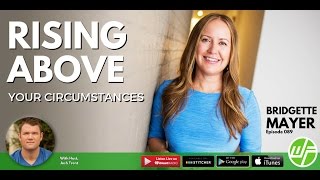
Podcast episode (Wellness Force Radio, ep. 89) hosted by Josh Trent featuring Bridgette Mayer, art dealer and author of the memoir The Art Cure. The episode traces Mayer’s childhood in neglect and foster care, the discovery of art (first creative moment with a bag of makeup), her progression through college and early gallery work, founding her gallery by age 27, and ultimately selling over $20 million in artwork for high-profile clients. Major themes: transforming trauma into purpose, forgiveness as a practical healing tool, listening to an inner voice/North Star, saying yes to opportunities (10-yes commitment leading to CNN appearance), daily routines for emotional wellness (meditation, gratitude, vision statements), coaching/mentorship, and plans for legacy work with artists and youth.
Questions this video answers
Episode 89
The Art Cure
Nicolas Cage; Seth Godin
Over $20 million
December 13, 2016
Chapters
Wellness Force Radio Feelings are essential, but they can't dictate.
Our actions literally infect each other with our emotions.
We came here for a special purpose.
Let the purpose unveil itself.
Knowing without doing is the same thing as not knowing. They're not just trackers. I'm gonna wear this and it's gonna help me do the right thing. Wellness force radio episode 89 with author, speaker and artist Bridget Mair.
Faith is. Faith is like working out and going for a run. If you don't do it, if you don't run and you try to go out for a one or two mile run, you're gonna sweat, you're not gonna want to do it. It's gonna be uncomfortable. If you can step into having faith when you can't see the end and you don't know what the end is going to be, then that's something that you can build every single day. And through building it, you'll have more of it and then you can rely on it.
Welcome back to another episode, my friend. I am your host, Josh Trent and thank you for spending your time with me here on the podcast. This is where every week I'm bringing you access to global experts in all things wellness, behavior change and new technologies. On this podcast you'll learn from exceptional people who are dedicating their lives to being a positive force for our physical and emotional wellness. My intention with the show is that together we'll discover the connections between our emotions and healthy habits to live our best life and enjoy the process. This episode is brought to you by Perfect Supplements, a company I'm stoked to partner with who actually walks the talk with their values of non GMO pesticide free real food supplements that fuel us for the wellness journey. Head on over to perfectsupplements.com wellnessforce. Enter code wellnessforce to save 10% off your entire order for episode 89. We're learning and being inspired from my new friend and best selling author, Bridget Maier. I think you're really gonna love this episode if you resonated with Bonnie Kelly's work because Bridget has her own unique and powerful story of overcoming odds that would cripple most people for life. What really sparked motivation in me and some introspection was after reading her book the Art Cure which we're going to dive deep into today, she took a past story that should have programmed her brain for failure, but she turned it into massive success and became this world class art dealer and tuned into her intuitive self to listen to the voice inside you know the voice that taps us on the shoulder, directs us where to go. Well, today on the show, Bridget is going to show all of us how we can overcome obstacles that come into our lives, including blocks for our wellness. A little bit more about her Work Bridget Maier is an accomplished art dealer in Philadelphia representing artists from around the world with clients like Nicolas Cage and Seth Godin. She is an accomplished art advisor who deals in secondary market artwork, provides consulting services and curates exhibitions and projects all across the United States and the world. Bridget turned to art as a means of escape during a childhood filled with turmoil and she now helps others find their own redemption and by speaking nationally about her story. By following her passion for art, Mayer's interests evolved from a deep means of escape into her salvation. She used an inherent self assurance and scraped together work ethic to overcome damages inflicted to her as a child and create a harmonious, rewarding and charitable life for herself and the artists she represents. Now, before we get into this inspiring conversation with Bridget, I want to read you this five star review from iTunes this week titled this is a Life Changing Podcast Unlike any Other. Not only does Josh put his authentic heart and soul into this podcast, he uses his extensive training, coaching experience and networking skills to ensure each episode brings tremendous value to the listener. He and his guests cover all aspects of health and wellness, leaving no area unexplored. I know I'm not alone when I say how deeply grateful I am for all the time and effort he devotes to each episode. Podcasts are not easy to produce and they are not profit generating platforms. In spite of this, he clearly strives to help people elevate their lives. I'm certain he's accomplishing exactly that. The world needs more people like Josh and more podcasts like Wellness Force Radio. Happy Runner girl. I hope you can feel my gratitude through the earbuds through the microphone. Thank you so much for your powerful voice. That means a lot to me and to the people that listen to the show who are resonating with this message through Wellness Force. Support the show and leave your five star review at wellnessforce.com review. Create the ripple effect you want to see in the world. I would love to read your voice live to the iTunes world. All right, no further waiting. Let's sit down with my friend Bridget Mair and talk about overcoming obstacles and the power of doing the inner work and authenticity on our wellness. Bridget, welcome to the show.
Thank you Josh. Great to be on your show.
This is so exciting. You know we were connected by our former guest Jake Ducey, good friend of yours? Good friend of mine, yes. And I read your book over this past month. I was literally just enamored with your story, what you've overcome. So many guests that have come on the show, Bridget, are talking about the mental side of fitness and wellness, doing the inner work and authenticity. And I thought, how beautiful is this mirror in your book, the Art Cure? It's this memoir of abuse and fortune. It's really about what's possible. I got that. The old stories that we have, well, we get to create a new one. But it was not, like, so easy for you to create this. I mean, now you're an art gallery owner. You open up your own art gallery at 27, you've sold $20 million of artwork plus and had clients like Seth Godin and Nicolas Cage. But as I mentioned, it is not always that easy. People see you now, but there's a deeper story. I think the painting of the context of your story really tell the beautiful journey and kind of the sad journey as well, about what you drove into right now with your success in art. So take us back to when you were five. You were this middle child. What was that like then?
Well, that was great. Thank you. It was a challenging time. It was a scary time. Challenging time. Confusing time. My mom would leave us for days, and we wouldn't know when she was coming back. We didn't have food. We had very meager surroundings, basically a mattress and where six of us would sleep. It was just very challenging and uncertain. And really, for the first nine years of my life, my life was incredibly uncertain.
And it was this stage of kind of constant fight or flight. And so many guests that have come on the show have talked about our sympathetic nervous system versus our parasympathetic nervous system. You know, the rest and digest or fight or fl. And so what I read and what I felt from your story is that up until the age of nine and even past that, but specifically ages zero through nine, it was a constant fight or flight situation. I mean, you wrote in your book that there was no furniture, you were locked in the apartment, you had no toys, and at one point, you were kind of making a game with ice cubes. You were dropping ice cubes out the window. What was this context with your mom? I mean, what was your mom struggling with at that time, your birth mom, with her addiction?
I was so young that I did not fully know she had a drug addiction and she was an alcoholic. And I believe she must have had some mental issues as well with her Abuse towards us. And she would go into these rages. So she was dealing with a lot of mental and substance abuse issues and really poverty and not working. And so there was a lot happening. I never knew my father growing up. There were two fathers, and we didn't really know them. For me, it was fight or flight in the sense that she would often be the fighter. And I would have to flee inside my head and inside my body and really go into shutdown mode to get through it. Because there were abusive physical episodes where I was a small child. I couldn't really fight back or control what was happening to me. So my way of. I learned how to control it by controlling my mind and controlling my emotions, and to the point where I wouldn't even cry when she would be beating me. So that was how I was able to start using my mind to help me at that time.
I felt this so much in your book, and I know you've been doing a lot of interviews. Your book is taking off. People are connecting with the message. And the message is that we have these old stories. We can create the new story. And I feel like a transition point for you was at age. Finally, I think a neighbor or somebody in your neighborhood realized, hey, these kids are being neglected, they're being abused, and you were sent to a foster place, foster care. Tell us about that when you were nine and what that was like.
Yeah, so. And just to put a little more context to it, I was in and out of foster care from infancy through nine years old. And what would happen is someone would report that a bunch of kids were locked in an apartment with no parent. The state would show up and take us and find foster homes, homes for us, usually in the vicinity of Jersey City. And they try to place you with homes that were in their area because they were often short and temporary placements. It might be a few days or a few weeks. This one particular time was actually when I was seven. My mother had disappeared, and one of the neighbors reported that we were alone. So we were picked up by dyfus, the Division of Youth and Family Services in New Jersey. They picked us up on a Thursday and basically had until the next day to find a home for us. So they would usually look within an hour radius, and they couldn't find a home that quickly. So they kept widening the net and ultimately widen it a few hours away to Hunterdon county, where someone was registered in a database to want to foster young girls. So that's how they found our foster parents and moved myself and a younger Sister into this home. And so I basically. At the time, I didn't really know what was happening. I just know that I was being moved again. I was brought. We barely had any belongings. I think the clothes on her back and maybe a trash bag with some stuff in it. And basically, the agent took us and drove us a few hours away. And I could see as we left the city, that the landscape was starting to change, which was fascinating to me, because I hadn't really been in a car that had left the city at that point and had gone outside of the area we lived in, which was a tenement building. And it was a pretty poor area. And so that experience was quite interesting. And I remember seeing the trees and seeing the landscape, and we just kept driving and driving, and it felt like a very long time. And I remember feeling excited because I didn't know what was happening. But I knew, based around the surroundings, that it was getting nicer and nicer as we kept driving.
Yeah, and it seems like you went from literally hell to heaven. And there was actually a couple more times, though, you know, you're in this space. You get there, it's a farm, and there's a garden. There's animals, there's space, There's a nurturing environment. But you were snatched back. I mean, there's laws that exist in New Jersey that aren't exactly friendly at that time to the welfare of the kids. They really fall on the side of the parents, no matter how abusive the parents are. So how many times did you go back and what finally happened to where your new mom, the Mayer family, actually had you for good?
What would happen is my birth mother would get cleaned up, and the state would say, okay, we're gonna bring you back to your mom. And so it was quite a while that that happened. I think they really wanted her to try to get clean from her drug addiction. So we were with the Mayer family over a year. Because I had started school. I didn't know how to read at that point. So it was the first time I had gone to school at the age of seven. And I was really settling into a normal life there. And I remember that my adopted mom, Elaine, got a phone call saying that they needed to take us back to our mother. And I remember being in shock and just heartbroken. And so we went back to her for. It wasn't even that long, and she was back in the same situation. And. And so we, within probably a few months, went back to the Mayer family. And I think she, my adoptive mom, realized that if she didn't take a stand for us and actually try to fight to adopt us, that the cycle would keep continuing. And she didn't want to keep having that happen in her life as well, because it was really traumatic.
Yeah. And I can't imagine something more challenging to the brain. You know, when we're young, the brain is so moldable, and the way that our nervous system gets shaped, but somehow, some way, maybe it was divine intervention. Bridget, you found a bag of your mom's makeup, your biological mom. That's how you've got this genesis for your art. You found the bag of makeup. You started using the makeup to create artwork on the wall. Tell us about that.
Yeah. And I share this full story in my book, and I had never really shared it before, but I found a bag of makeup one day in the bathroom. I didn't really know what it was, and I opened it, and there were eyeshadows and lipsticks and eyeliner, and I was fascinated. And again, because we didn't have any toys or materials, it felt really exciting. So I somehow knew to take it to one of the walls in the apartment and start making a very messy lipstick and eyeshadow mural and had an incredible time doing that. And I had a sense when I was done that it was very liberating, very exciting. But I also knew in the pit of my stomach that I was going to get in trouble, which I did. And so probably one of the reasons I haven't shared the story is because I was beat up pretty badly when my mom discovered what I had done. But that was a moment for me where I really connected in with the ability to make something, and that I did have that opportunity for these moments of freedom and creation in my life that were available. And I was always looking for that. And so I found it in this bag of makeup. And that was my first moment of really true bliss and solace with making something. And that stayed with me even to this day.
Yeah. And I know in your words, you said before, there's no right or wrong in making art. It's just about being.
Yeah.
At that age, you were just feeling that you are connected to that. And that feeling would kind of bunny hop, and it would go into your teens and twenties, into college. So you're in this situation now where it's a loving environment. You've transcended all that pain, but the emotional body, the pain body, is still in there. You're at Bucknell. It was an engineering school, but you followed your passion for art history. You got a Couple jobs in college. One of them was an art G and you were making theater posters. But what was that like then? I mean, how was your emotional body growing? What kind of work were you doing in college? Or were you just focusing on getting successful and just making something of yourself?
It was a little bit of everything, actually. I really immersed myself into all aspects of Bucknell. I was a student athlete, so I ran cross country and track actively there. Three seasons for a three year period. I had two jobs in college. I really loved the art program at Bucknell. The professors were incredible, and I just loved it. So I was doing everything. I was working, I had great friends, I was making art, and I was really exploring educationally all the various art movements and what I enjoyed. And I realized that I really loved contemporary art and felt a connection to that. So I was making a lot of abstract and contemporary, more conceptual pieces at the time. When I was in college.
How did you feel like the first two decades almost of your life, you know, all of that emotional weight translated into what you were painting on the canvas.
It felt good. And then I remember realizing at a certain point, how much do I really want to, like, how deep do I want to go and how much do I want to expose in my emotional world? And I was worried it might be a Pandora's box where I wouldn't be able to turn it off. So I always kind of kept the lid on what I was making, in a sense. And then I realized really after college that my passion was really in the art world and working with artists and promoting and selling their art and not fully in making it. So I did make a transition with all of that.
The first kind of section of your book is really intense. I mean, there was a couple moments where I would put the book down and I would kind of reflect on what I just read. And I'm curious with the intensity of that first couple decades of your life, once you actually did your traveling, you went to Taiwan, you worked overseas, you came back, though, and in New York, I think you were making like 10 bucks an hour. Right. You're kind of the quasi starving artist. Starving artist. So based on the intensity of that first window into life, how did that fuel you to overcome this? $10 an hour? And what was that transition like where you had this moment where you said, I realized the only ones making money in these galleries were the artists or the gallery owners?
Yeah, I had like, this very hardcore work ethic and I could just work really hard and get it done. And I did that in athletics and running. One of my specialties was the 10k on the, you know, 6.2 miles. That's a lot of laps on a track. And I would just power down and run it. And I had this ability to work hard and be in the zone. And I realized I was just doing that and doing that and not really having the expansion that I wanted. And I was working in a gallery at the time. It was a startup. And I made a conscious choice to work in a startup versus an established gallery as I wanted to test my business acumen and see if I could help the owners start up their business from the ground up. And I was not making a lot of money. And I think after taxes, it was under 10 bucks an hour. And I was feeling really frustrated. And I was in a moment where I was looking at having to get a second job to pay my bills. And that had been really the same process I had been in since I graduated from college. And it was one of those moments where I asked myself, who is making money in my industry? Is everyone operating this way? Is everyone starving? Is this going to be my life? And this doesn't feel good. And maybe I really need to look at the bigger picture. And maybe everyone was right. I can't make any money in the art world. And so I just started analyzing it and I started looking around and researching. And what I realized is that, okay, it's pretty simple. It's the business owners that are making more money. I remember selling a $10,000 piece of art and it took me a few hours. And I did the invoice, so I know how much the owner made, which was $5,000, and I know how much I made to make that sale, which was $30.
And $30 from $10,000.
Oh, yeah. Like, I wasn't on commission. I was just on an hourly wage.
I think at that point I would have just thrown in my name tag.
Well, and that's when, you know, I started waking up and saying, okay, come on, you're doing this and that and you're not getting paid anything and you're not getting paid what you're worth. So you have a choice. Like I had to decide, like, do I want to be a worker, do I want to be an owner and. Or do I want to be a well known artist? Because they were making money as well in the industry. The good artists were getting paid good money to sell their art. So that was my big moment and I decided to go get a business book and I went to look at business books in Barnes and Noble. And I felt overwhelmed by the selection. And I said, okay, I have a few parameters. I'm going to find a small book that's not too long, and I'm going to pick a book with an interesting title or a good design on the COVID And so my eye landed on Michael Gerber's the E. Myth, and I thought, okay, that's my book. So I grabbed it. I didn't know what I was even picking up, and I read it in two days, and that was my answer, because Michael talks about the difference between workers and owners. And I realized pretty clearly I had operated in my previous jobs as an owner, and that's how I was showing up. And that's why I was frustrated that I wasn't getting paid on that level.
So in this moment, though, of you going kind of almost like having no path, really, going into Barnes and Noble, which is honestly the story of so many people. They're curious about something, they want to go read about it. But what was the Beacon? I mean, we talked in the beginning of the show about authenticity and about really feeling that kind of North Star. How did you find your North Star? How did you follow it? What does that feel like to you at that age, in that place of being broke and not really kind of having a lot of stress? What was the North Star? How'd you connect with that?
It's quite interesting because I sometimes think that things are lining up for us, and we're not even aware of it at the time. And so things have been snowballing in my current job for me, I was getting asked to curate some shows in the Philadelphia community, and I was told that I couldn't do this with my current job, even though I wasn't working full time, and if I did do it, I would have to use the gallery's name. And I thought, well, what I'm going to curate is the complete opposite of what you're showing, and it's a mismatch for me. And so, authentically speaking, I can't put your name on what I'm doing, because what you're doing doesn't match what my interest is. So we had a pretty open conversation, and basically we had a parting of ways. So that was the North Star kind of pointing me back to myself, saying, okay, now what are you going to do? Now you're on your own. And that's what I stepped into.
And you had a consulting business out of your apartment. And I think at one point now was the consulting business out of the shoebox apartment. Or did you move into a new one at that point?
No, the shoebox was in New York City, but I was living in my second shoebox in Philadelphia.
Okay, okay.
And literally the day after I quit, Slash was fired from this gallery job, I got a call to work on a consulting project for a client on Broad Street. And it was a big restaurant, the Capital Grill. And so, you know, for me, things kept happening like that where I was afraid, I was stressed out. What am I going to do? And then, boom, a project would land in my lap, or I would sell a piece of art to a cab driver, which I talk about in the book. So the universe for me kept showing up. Okay, you're on the right path. And I remember the first two weeks after leaving my gallery job, I made more in two weeks than I had made in probably a month and a half of getting paid and working almost full time. So that was eye opening for me. And I really started to get excited and really understand what was possible for me financially with being in charge of my own destiny.
So, Bridget, I know someone's listening, and they have a probably mirrored story where obviously the details aren't the same, but the framework might be similar because all of us at some point on the journey, go through this space of just not knowing and kind of looking for that North Star. Do you feel like at that time you had a specific mindset that helped you? I mean, what was the work you had done up to that point? And what mindset did you have as you opened up the consulting business from the shoebox?
My mindset was really, at the time, work hard and be honest and authentic and give everything that you're doing your best shot. Later on, I started coming into contact with people like Tony Robbins and more information with people like Michael Gerber and these business gurus where I started really fine tuning my systems and finances and accounting and things of that nature. But it was really at the time, just very earnest and very basic. And it was be honest, be authentic, and work hard, and give everything and everyone your best shot. And so if I would get hired to do a job, I would over deliver. And that was always my M.O. give them more than they're expecting. And that built very loyal clients that if they had another project or needed someone, they would call me. And that's how I started building my client base. It was really built one by one.
I want to pause right here because the transition that we've talked about did not happen overnight. This is a decade plus. Right. So there's also some Work that we all can do as we're stepping into being open, Bridget, to even hearing North Star, to even receiving in this Law of Attraction piece. But the work that you did, you know, a month ago we talked on the phone and you just talked about this letter that you wrote to your birth mom. And it was telling her all the things that you'd never said out loud. We had Bonnie Kelly on the show and she told us about some of the action steps for writing and releasing. What did you do with that 10 page letter and what did that look like for you?
I had done a seminar and one of the. For the weekend in Philadelphia, one of the assignments was to write a letter to someone that you hadn't forgiven for something painful that they had done to you. And the first person to pop up in my mind was my birth mother. And at the time, I was still feeling like I was struggling, and I was blaming that on her at the time. And so I wrote this letter basically releasing all the pain, all the abuse, everything she had done to me as a young child for the first nine years of my life, letting her know how she betrayed me and how she didn't show up for me as a mother, and how that is at the time, how it impacted my life and the struggles that I was dealing with. And then the second part was after expressing it, letting them know that the person that I had forgiven them and why and stepping into forgiveness. So that was the second part of the letter. And so I wrote it. And then to complete the assignment, the people running the workshop wanted the participants to actually find the person and read the letter to them or give the letter to them. And I told the instructor, hey, I can't do this part of the assignment because, number one, I'm not getting in touch with my mom. She's terrifying and I don't even know where she is. And I'm not opening that can of worms, so I can't complete it. I did this much and I'm done. And they said, you know what, you have to find someone to, you know, how about your current, your adopted parents? And so I ended up sharing the letter with my parents and my adoptive parents. And they had some good friends that were visiting them. And it turned into this very emotional moment with my parents and I and their friends. And I was able to release a lot of pain. And my dad's friend that was there was an Episcopalian priest, and he was very high up in the church and ran the American Cathedral in Paris. And he ended up taking the letter Sharing it with his congregation as a lesson in forgiveness and burning it and helping me complete this healing process.
Were you there in the audience when he burned it?
I wasn't there, but I can tell you from that experience of being with them, being with my parents, being with him, and having him use the letter to teach around forgiveness and giving it as an offering, I did feel something release in me. And a few months later I found out my birth mother had passed away from lung cancer. She was a crazy smoker. So in my mind I was like, wow, it's really interesting that I was able to actually put that out there and clear my space while she was still alive, even though I didn't see her. So it was a powerful clearing for me.
A big part of our emotional health comes from how we feel in our body and how satiated we are throughout the day. I mean, it's hard to treat other people well and think good thoughts if you're walking around hangry. One of the best ways to cure satiety and satiation is to add in powdered collagen to your drinks, your waters and into your foods. I use perfect supplements collagen. It's sourced from 100% grass fed cows. That means there's no hormones, pesticides or synthetics because these are healthy cows that eat grass while the sick cows eat corn. So beyond these healing powers of collagen for digestion and joint health, it also has 20 grams of protein in two scoops, which helps to curb appetite and increase that satiety. One of the cool things about this collagen is that there's individual packets you can mix in water and you know what? It tastes like water. I mean, all of a sudden my glass has 10 grams, 20 grams of protein and all the health benefits of having this non GMO pasture raised collagen in my bloodstream. So don't walk around hangry. Pick up your grass fed collagen. Feel better in your emotional body and your physical body every day. It's part of the Wellness Force Radio Bund and it's heavily discounted just for you. Click over to perfectsupplements.com wellnessforce to save 10% off the already discounted package and get more wellness in the process. I think what stops a lot of people is not forgiving. And there are many successful people that have gotten to a certain point maybe from anger, but what really breaks people from going to the next level is anger and blame. Like you said, I was blaming my mom at the time and I've gone through this too. I've done multiple workshops and gosh, Bridget, I'm just feeling this sense of in the way that you put out forgiveness is the degree that we'll all achieve success. I mean, how do you think, besides just that one incident, that you've used forgiveness as a catalyst to be able to serve these high profile clients?
Wow, that's a good question. I'm a very sensitive, emotional person and I'm sensitive around other people. I'm sensitive to how they're feeling and their needs because of, really because of the neglect and abuse I was raised in. And I've always had a super alert awareness about people's emotional states. And one of my missions with people in my life is to be a force for good, be a positive role model, be a generous, loving person. And I think for many people in business, they kind of put up a wall between themselves and their product or service and their cl. For me, it was, I want to have deep lifetime relationships with my clients and really create these connections. And so part of that is caring about other people and being in their world. And those experiences for me, business wise, have helped illuminate how really there isn't room in these types of relationships to harbor any mistrust or anger. And I've certainly had frustrating moments with artists and clients. But part of it's moving through that and the greater purpose of being a force for good and what I'm up to on a bigger level. So I think those things have helped me connect with my business and my clients and my purpose.
What do you do now to cultivate emotional wellness? I mean, with your story, this incredible story that you had many roadblocks, what do you do now on a daily basis as a professional to cultivate that emotional health, that mental health?
Well, I do a lot of different things. I love meditation. I meditate once a day. I have different morning routines that I like to do. And a lot of successful people talk about their routines. People like Tony Robbins. He calls it priming. His thing is to jump in cold.
Water and he has the cold plunge. That's incredible. He has, I think, the most. He has the most intense morning ritual, doesn't he? I know.
My thing is I love tuning into my brain. Your brain is incredibly sensitive when you wake up in the morning and when you go to sleep at night. So I have a gratitude ritual I do right when I wake up. I meditate and I work out and I have a lot of positive affirmation type statements that I feed myself. I have a vision statement for My life that I read every single morning. And so that's. I think of your brain as something that needs nourishment and food, and so the thoughts that you put into it can either either feed it or hurt it. So I like putting healthy stuff into my mind, so that's part of my morning routine. And I also like connecting with people. And before I'm talking to someone or before I'm meeting with someone, I like to express gratitude in my mind about the particular person. And that helps me connect in with people also on a deeper level and feel better. And I love having conversations where my positive energy can turn someone's day around or make put them in a better place. And I certainly try to do that well.
I think that's what we're all feeling right now. And I want to shift, because no matter what point we're at in the journey, and I think there's no finish line until we, you know, go to the next universe. There are levels of fear. Let's transition into this, because fear of anything. Public speaking, fear of being seen, fear of failure, fear of success. A lot of us, I think every human deals with fear. I mean, this is just the human experience. So. So you actually had this moment where you took a stand. You promised yourself that 10 things that come your way, you would say yes to. Because you kept kind of being so afraid of being seen at a certain point in your journey that you said, you know What? The next 10 things that come my way, I'm gonna say yes to. And then something really incredible happened that next day. Tell us about this.
Yeah, it's great. I was sitting at my desk in tears. I had said no to do a panel talk for the University of Pennsylvania. And I just didn't feel confident, and I didn't want people to know that I wasn't a good public speaker. And so I had this moment of frustration, and I said to myself, the next 10 things that I'm asked to do, I'm just going to say yes and figure it out. And literally the next day, I got a call from Anderson Cooper's producer on cnn, and they were working on a program profiling young business people that were doing great things in various industries. They had seen an article about me in a newspaper, and they said, we want to put you on the show called on the Rise. And I was at my desk, and I was thinking, is this a joke? I didn't tell anyone, and CNN's really calling me. I put the phone on pause to look at the number, and I Came back and I said, is this for real? And they said, yeah, don't hang up. We're for real. And so that was the first thing to show up after I declared. And literally within two weeks, my calendar was full with the other nine things that I was going to speak at.
Oh, my gosh. How can you not say that there is a law of attraction or a law of vibration? Because that's almost like something that you'd see in a movie. And by the way, I kind of feel like I don't know if you've ever done this. Have you approached any movie studios or any companies to make this a movie?
I would love to. And I've had a few people tell me that they feel that this would be a great movie. And I saw this movie called Room. I don't know if you've seen it. And they won an Academy Award. It's an independent film. And I watched it, and it's a really interesting psychological movie. And I'm like, wow. My life was. Was similar to that, 20 times harder. And so I would love that.
What do you think people can do when they're experiencing fear? Fear of public speaking, fear of success, fear of failure, whatever it is. I mean, you got a coach who specialized in actresses and actors to help them deal with that tension about being on stage and being seen. But besides just getting a coach or getting a support role model, what else can people do from an action perspective when they're experiencing fear?
Yeah, that's good. It was really hard for me to step into it. We're talking about. For two years, I had said no to every single speaking event I was asked to do. So I had a wall built up around me that, nope, I can't speak. I have panic attacks. And to actually step over that, I knew was gonna be really challenging. And I think sometimes people make decisions and they decide, nope, I'm not a public speaker or I'm not someone that speaks. But I kept hearing this little voice inside of me saying, no, no, you need to be doing this. And I'm someone that I tune in and I listen to what I'm hearing from my inner voice. And the inner voice said to me, if you keep doing this, you're not going to grow professionally. You're actually going to shrink. And that actually scared me. And I was like, well, my business was tough enough already starting it up. Do I really want to make it harder? So I really would encourage people to listen to the messages that you're getting on a deep inner level, because that's where the authentic voice that resides in all of us is sitting and it's giving us our roadmap. But most people are ignoring it and sometimes you have to be hit over the head. And me sitting at my desk in tears, that was my moment of saying, enough, this is not who I am. And I want to be more and I want to show up for the people my business and for myself on a higher level. And so I would say if you can be honest with yourself and listen in and then just know that you don't have to have the perfect roadmap. All you have to do is take one step. First step was saying, okay, screw this, the next 10 things. And I said it in anger. And I was so angry at myself and I said it. And then once I said it, I wanted to keep my word to myself and my self integrity. So I was kind of like, okay, well I declared it and now I have to stick to it. So maybe that's another step for someone. And then I was like, okay, well what do people do when they have to public speak? And I started researching. I'm like, okay, I'm going to read this book, I'm going to hire a coach, I'm going to start practicing, I'm going to join Toastmasters. And I had a fire to light, me to push me, because CNN wanted me on the show and I didn't have a lot of time to prepare. So if that hadn't have happened at that time, it might have taken me a little bit longer. But I think just taking small steps in the direction of what you want to do, it feels good. I mean, even though I was afraid, it felt better to be taking a step forward than sitting there going backwards.
And what comes up for me is that we have this place of desperation. I think so many people can relate to like being hopeless and feeling like stuck. But you said in chapter on evolution, right? You have your book. I believe also anger is a lot more healthy than despair. I mean if you're in despair, if you're hopeless, you're kind of stuck, right? You're not doing anything. So you're sitting at your desk, you're crying and you get angry. That makes you take action. A lot of times people don't want to feel the anger. But I believe that anger is a lot more healthy than despair.
I agree with you. I mean, they talk about this with people that suffer from depression. Instead of being in despair. If they can actually get angry, that's a more proactive emotion. So. So I've used anger and I've also used fear to propel me forward. And I've learned how to use both of them pretty well at this point. And I do think, I mean, I'm in sales, and early on I was just getting rejected and shut down left and right. And I remember I would find out that a corporate client or a project hired someone else or a client went with another artist. And I would get really angry. And I wouldn't get sad, I'd get pissed off. And I would say, okay, I'm going to use this to get better. What did I miss? Why didn't I get this project? What did they do that I didn't do? What can I do to improve? Was it my marketing materials? Was it my presentation? How did I miss the mark with the client? And so, so I kept using my anger to fuel my knowledge and to help me get organized to be better.
A lot of people kind of give up right before something amazing might happen. Bridget but how does someone know on using their North Star being authentic, how do they know when to quit or when to keep going with their dream?
This is really big in my industry. I work with a lot of artists and creative types, entrepreneurs, and someone will have a great idea and maybe it's not selling. Maybe people aren't responding to it. And there's a lot of. There can be a lot of frustration with that. And often artists will just give up. Really, it's just checking in with yourself. How does whatever I'm doing, how does it feel? Is this really what I want to be doing? Does this feel good? Do I want to keep doing this, or am I being called to do something else? And actually, when you ask the question, sitting there and listening to the answer that you get back and then trusting yourself and having faith to follow the answer. Because a lot of artists are struggling, but they're really passionate and many of them are so talented, but it's, it's not happening yet. And so if you're truly called to be that in this industry, you have to stick it out. And that's part of getting to the other side or in any industry.
Right? I mean, no matter what we're doing, even if it's someone who dreams of being a successful health coach or fitness professional, so they're on the path and they're evolving. Maybe somebody struck it and they're making good money and they're passionate for a decade. But then, then I think at some point we go through these, as David Dieta calls it, layers of purpose. We go 10 years, and then it just loses its luster. And that creative spark, have you dealt with that or with the clients you work with? How do you coach? Or have you felt in your own body recreating the fire and knowing when to shift purpose, layers?
Oh, that's great. I love being challenged, and I love challenging myself. And. And what happens for me personally is I do things, and when it gets too easy for me and I can do it too easily, I like the next challenge. And through that process, I've come in touch with my deeper purpose. And I think a lot of people are searching for their life purpose. I know that I was meant to be in the art world. I always knew that was my purpose on the planet. And I've been deepening what I'm doing in the art world and going through the layers of that. And right now, I'm at a moment where. And part of this was writing my memoir. I wanted people to know my story, know where I came from, know that I didn't have success handed to me and that I took, you know, my disadvantages and I turned them into opportunities and. And created an incredible career. I've had incredible coaches. I've done a lot of personal development work and workshops, and I've read a lot. I've worked on my business for 18 years now. And so now my purpose is to take everything I've learned and to help artists, entrepreneurs, and creative types figure out their true passion and purpose, how to operate their businesses, their art careers on a larger scale, get people writing vision statements and getting them in touch with their deeper purpose of why they're making their art. And so that's what I'm excited about. And the next evolution of that is going to be doing bigger projects in communities that impact young women and younger people through a foundation I'm going to be setting up. And so I know that's another layer of my purpose and doing legacy projects with artists and with communities to empower people individually and communities overall. And so I will be evolving into that as I keep going down this path.
What I'm hearing from you is that there was multiple steps. There was going through your life experience, there was getting clarity on what your purpose was. Then there was getting tested on how you're going to stick to that purpose. And then there's living that purpose and then transcending the next layer. So. So constantly thinking to yourself, how can I improve this? How can I leave a greater legacy to other people? But I'm curious, and this is kind of my last question, for you, as we go towards the end of the show, you're someone that has dealt with a lot of hurdles and your siblings, a lot of them, still currently deal with addiction. And you came out very different. Bridget, what do you think your mindset was, what was the difference between you and the rest of the people you grew up with that transcended you to the next level?
I would have to say it was being in touch with the voice in my head that I heard when I was maybe 3 or 4 years old that said, this is not going to be my life. I don't accept this life and I will have a different life. And that became my mantra. And I think through the repetition of that and through having a bigger desire to do more, I attracted this incredible family that adopted me. And I've continued to define what my life will be for myself, and it's different for everyone. And I haven't been willing to let people push me off my path. And so I think that voice that everyone has inside of them, that's telling them the life that they want to live, really tuning into that and in living and coming from that place, what.
Blocks people from hearing it?
They don't believe it. They don't have enough faith in themselves or the voice. And faith is a muscle. Faith is like working out and going for a run. If you don't do it, if you don't run and you try to go out for a one or two mile run, you're going to sweat. You're not going to want to do it. It's going to be uncomfortable. If you can step into having faith when you can't see the end and you don't know what the end is going to be, then that's something that you can build every single day. And through building it, you'll have more of it and then you can rely on it.
I feel like you can drop the mic now. We're done with the interview. That was one of the most powerful things I've heard since we've had conversations. Thank you for sharing this incredible story. Your wisdom. There is a last section and this is seven fast questions. Kind of like a fun lightning round. It's seven unscripted answers. Are you game?
I'm game.
If there was one thing you could change about your current industry, what would it be and why?
I would like people to operate on a deeper level, less superficial. And there's a lot of superficiality in the art world that has absolutely nothing to do with why artists make art.
Why do artists make art?
They make art to empower and enliven people on many levels. And people often will buy it for investment purposes or the wrong reason. So I'd love to see more authenticity in my industry.
Who's been one of your powerful mentors, or maybe one.
My favorite person on the planet is Tony Robbins.
Got it.
I love him.
What does a bestselling author like you read? What's a recent book you've read that's cultivated positive emotions for you?
Gosh. I'm reading a book by Jack and Susie Welsh, and I love these guys, and it's called Real Life mba. And they talk about things that I've done for years. So it's just. It's a great book. And one of my clients is Seth Godin. And Seth is awesome. He's written incredible books. And my favorite by him is called the Purple Cow.
I've been hearing about this book. I get to read this now. I get to read this book.
That's awesome.
So if someone's listening and they wanna do one action tomorrow morning to begin listening to that voice, you know, three or four times. Bridget, you've mentioned this voice that's really guided you. How do they get in touch with that voice tomorrow morning, they could sit.
On their bed in a quiet space and breathe in and out a few times and ask, who am I? And listen for what comes back. And then they could ask, why am I here? Or what is my purpose? Or what's something incredible I can do today that would make an impact on my life or someone else's life? I'm telling you, you gotta try it. It's just really cool, the stuff that will come up and it's all there below the surface, and it's different for everyone.
The answers are all inside. It's just if we're willing to actually look. When you feel stress or when you encounter a roadblock, do you have a message or a mantra that you repeat to yourself if you're having a moment of stress or a rough day?
I like to go outside or change my state. If I'm working at home, I'll play with my dogs. If I'm outside, I might take a quick walk. And it's more relaxing my mind and realizing that whatever's happening, I'm bigger than whatever is happening.
I love that I'm bigger than whatever's happening. What's fresh for you now? I mean, what legacy do you want to leave when you're not on the planet anymore?
I want to leave a legacy that it is possible to create and curate your life exactly as you imagine it. And to teach younger people that message when they're young and they're developing their minds and what's possible for them because parents often are giving messages, especially in the art world, that it's tough. Don't do it. Don't be a starving artist. And so everyone has their own unique talents. So I would love to leave a legacy of kids knowing with great certainty when they're 5, 6 or 7 that they can create their life's destiny.
What is wellness to you? Do you have a definition of how you would describe wellness?
Yeah. Wellness to me has changed over the years. I think when I was younger, it was wellness was being able to run a sub 3 marathon and that was wellness and health. And now for me, it's a lot different. I'm in my early 40s and it's really just feeling in balance with all the areas of my life, my business, my family, my friends, my relationships, my health and doing things every day to take care of all the areas of my life that are important to me. And that to me is wellness.
Bridget, thank you so much for sharing this message. You know, you wrote this book, the art cure. Everyone can pick up this book today. It's live, it's out there. Shownotes from today are gonna be@wellnessforce.com theartcure but if Bridget inspired you, if she sparked emotion in you, reach out to her. Her website is bridgetmayer.com Is there anything we miss? Bridget, for somebody that is seeking this transformation, listening to the voice, feeling the authentic path, what do you have to say to them for parting guidance?
I would say follow your bliss and follow the inner voice. And I'm doing coaching right now with people that are trying to do that in the arts or creative entrepreneurial areas of work. And I'd love to connect with people and really help them figure out their vision and passion for life.
From social services and foster care to multi million dollar art galleries. Thank you for being on Wellness Force radio. Thank you for sharing your energy with us.
Thanks, Josh. This is great.
That finishes episode 89. Thank you, my friend, for making it to the end of the show. What an incredible story. I mean, were there times where you deep breathed during that episode like me? Check out her book. It's the art cure, A memoir of abuse and fortune. We're gonna link everything at the show notes today. Wellness Force.com TheArtcure A few big takeaways from this show for me was feeling the fear and doing it anyways. One of my Favorite quotes is by Ralph Waldo Emerson. It's on my Facebook page. It's something I talk about a lot and it's do the thing and you'll have the power. And that is exactly what I got, not only from Bridget's life and her work, but her book, the Art Cure. The second thing that came up for me was that take a stand moment where she talked about these being at the desk, being in tears. Tony Robbins mentions this in his work where he talks about people are either going towards pleasure or away from pain. Well, once we experience enough pain in our lives, we get to then take that stand. That take a stand moment. That is a moment that's unique for all of us. I think journaling about our take a stand moment, like, when are things going to be enough to where the pain of changing is less than the pain of staying the same. That is the real moment where we get to all take a stand. So she talks about that in her book. And I want to challenge you to take a stand in 2017. Take a stand. Feel whatever you're feeling that's not working. Give yourself the courage, create the network and support environment to make that change. Lastly, this goes with number two. Ask yourself in silence, in meditation, in whatever way you're creating that space for you to get clear. What do I love to do? And create some space for that. We're so busy in this modern world. I mean, how many times, how many times this week have you given yourself permission to put down the phone, take a breath and do something that just creates space for your mind? I will be the first to admit that it is challenging to get clarity on anything if we're too busy preoccupied with the noise of what is now. So to get more clear, ask yourself in silence, through meditation, taking that breath, doing your box, breathing. What do I love to do? If this episode helped you find that, please tweet me Elnessforce or email me josh wellnessforce.com if you're interested in working with Bridget, you can reach out to her through the Show Notes page or at her website, bridgetmayerart.com now, there's just one final thing for you to do today and every day moving forward, and that is go out there and create an amazing experience for yourself and the people you care about. So until I see you again real soon, I'm wishing you love and wellness.
Ra.
More from Josh






Your child's future start before pregnancy... and even before conception! #podcast

MD Reveals: Your Healing Creates Your Child's Reality (The Souls Coming In Need Strong Bodies)



