Running For WELLNESS w/ Tina Muir
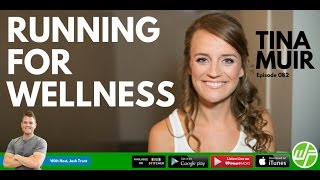
Transcript of a Wellness Force Radio episode (host Josh Trent) interviewing elite runner Tina Muir about "running for wellness." The conversation mixes personal anecdotes (Tina's background, panic attack in a race, love of sweets and Backstreet Boys) with practical guidance: beginner tips (run–walk, short intervals), strength training (glute/hip focus) to prevent injury, body-type considerations (intervals vs long steady runs), goal-setting and healthy competition, and the mental/emotional benefits of running and community. Multiple show-note resources (Tina's blog posts, Run to the Top podcast, Runners Connect) are referenced for deeper reading.
Chapters
Wellness Force Radio Feelings are essential, but they can't dictate our actions. We literally inspect each other with our emotions. We came here for a special purpose.
Let the purpose unveil itself.
Knowing without dueling is the same thing as not knowing. They're not just trackers. I'm gonna wear this and it's gonna help me do the right thing. Wellness force radio episode 82 with professional athlete and elite runner Tina Muir.
If you overcome those struggles during that run where your voice is saying to you in your head, you can't do this. You're not good enough for this. You're too slow, you're out of shape, whatever it is, the more of those battles you fight, the better you're going to feel when you do make it through that barrier. And it doesn't get any easier, but it does get to the point to where you start noticing changes very quickly.
Welcome back to another episode, my friend. I am your host and wellness coach, Josh Trent. Thank you for spending your time with me here on the podcast. This is Where Everyone Week I bring you access to global experts in wellness, behavior change and technology. On this podcast, you'll learn from exceptional people who are dedicating their lives to driving real transformations in our physical and emotional wellness. My intention with the show is that together we'll discover the connections between your emotions and healthy habits to live your best life and enjoy the process. This episode is brought to you by Perfect Supplements, a company I'm excited to stand with who walks the talk of non GMO pesticide free real food supplements that support us on the wellness journey. Head on over to perfectsupplements.com WellnessForce Enter your special audience code, discount WellnessForce and save 10% off all your real food supplements at checkout. I am so glad you're here for today's brand new show. This is about running. And not just running, but running for wellness. In my life, I've done a lot of running. I found that there's certain ways of running that work best for me. Well, on today's show, if you're a runner, if you're interested in running or if you're kind of looking at it and you're on the fence, this is going to be a phenomenal episode because on today's show we're going to talk about how to begin running, how to figure out what body type is best for what running strategy, if you should run or not, how to run for wellness, how to create healthy competition with ourselves and with friends. I mean, let's face it we could all use more healthy competition and fun in our life. Running for weight loss, running for more energy and setting long term goals. We'll also talk about how to create that support network and to prevent injuries. Definitely a good podcast to go for a run today. So if you're feeling like running, go on a little jog, listen to this podcast and after your run, make sure you stop by the Wellness force website for wellnessforce.com run. You can learn more about Tina and read her entire in depth blog post exclusively written for the Wellness Force radio audience. A little bit more about Tina. She is a saucony sponsored professional athlete. She's an elite runner who represented Great Britain this year in the World Half Marathon Championships. She's got incredible energy. She's the community manager for Runners Connect, one of the top websites for running in the world. And she also hosts Run to the Top, which is the number one podcast. Get this number one podcast for running. I didn't know there were so many runners. Did you know how many hundreds of thousands of runners there are? Well, that's why today's show is so important and so powerful because running right for your body type with the right kind of strength training can be an incredible tool to give you more progress on your wellness journey. And on today's show, she's going to share what it takes for us to build a strong body and mind through this catalyst of running for wellness. Let's jump into this powerful episode with Tina Muir. Tina, welcome to the show.
Thank you so much for having me. It's an honor to be here.
I am so pumped for this. We have not done a show yet on running and especially running for wellness today. It's this beautiful combination of the physicality and the psychology of running and how to be well while we run. So I want to start off this episode because I've been doing, doing a lot of digging about you, Tina. You post a lot of truth about yourself online at your blog. We're going to link everything in the show notes today. I'm going to mention this multiple times. It's wellnessforce.com run but share with us something fun, Tina, that maybe no one knows about you.
Well, firstly, I'm kind of a little bit, when you said about digging, I tend to share too much. In fact, my family have often said that. So I'm kind of a little bit concerned of what you found because sometimes I swear I, I publish things and I haven't even thought them through. So this is going to be interesting. Well, I'll give you Two things. One, I've mentioned quite a lot in interviews, but it always seems to surprise people, which is I'm one of those people that if you gave me a tub of frosting, I could eat the whole thing with a spoon in one go. I have no limit on my sweet tooth. There is no, like, too rich, too, too much for me. The other fun thing, I guess one of my favorite things to do is I love singing in the car. I'm tone deaf. I didn't know it, but I love turning the music up so loud that I can't hear my tone deaf voice and just driving along, singing. So if I'm ever stressed, that's something people can often find me doing.
Love that. What's your favorite music to sing to?
Backstreet Boys. And I'm not embarrassed to admit it anymore. So. Yeah, exactly. Everyone's choice. But I love my Backstreet Boys.
Well, thank you for getting us in our heads about Backstreets back. All right. I'm sure everyone's playing that song right now in their head. You have this beautiful story, and it's filled with a lot of movement. I mean, you have lived. You lived in Indiana for three years as a kid. You lived in Cali, you lived in Michigan. Philly, you're in Lexington, Kentucky now. Your husband's a running coach. But tell us just briefly about what that was like, kind of moving around so much, and then we'll get into your running story, how that relates to wellness.
Well, first I want to add one more in there which people could probably tell from my accent, which is Great Britain. I am from England. It is kind of crazy when you say it like that because I really don't think about it that way, of how much I've traveled, especially when I do live in the US where, especially around here. A lot of people, you know, may not even go beyond two states, beyond this. And I've lived in all these different places, but I don't know. I mean, my family always loved America from when we did live in Indiana for three years. My dad worked for Ford and they did like a. They were setting up a new plant and he needed to be there while they set it up. So I guess that kind of put America in my head, maybe even subconsciously. I wasn't aware of it at the time, but we did come back to go on vacations, and we're still very close to the neighbors in. In that little cul de sac where we lived. Even though I was only 2 to 5 years old when I was offered the scholarship because of my running. That was what initiated the first trip to America of where I thought, could I live here? And yet it turned out to be California where I went. And I remember the moment where I was like, thought to myself, I love it here. I want to be in the US And I just loved the supportiveness. I loved the access to resources. I loved that everyone was so, like, welcoming and warm and, and, yeah, okay, sometimes that might not be completely genuine, but I. I just loved the. The kind of people that I met through that time in California. And it just kind of showed me that I wanted to stay in the US and from there I was going to kind of follow my journey and see where it ended up. But, yeah, I was just honored to be here.
You know, one of the things that we focus so show Tina is behavior change. And I think when we look at our behaviors, it's this mental piece that is the most important. So beyond just what we'll talk about today with the physicality of running, I think what's really exciting to me is that you have done a lot of mental work. I mean, at your blog and on Runners Connect, there's many posts. I think you post three, four, sometimes even five times a week. What is your. As we start this conversation of wellness and running, what is your genesis of trying every day the best you can? And how does that relate to running?
Well, I mean, I'm sure most people have heard, whether you're a runner or not, that running is 90% mental. And it is surprising when we think about it, about how, you know, whatever it is you're doing, you can spend hours and hours training or doing what you need to be doing, putting in the hard work, but you can so easily neglect the mental part, which makes all the difference, especially in a sport like running, whether you are a runner or not, you know that how it feels when you are out there running and that little voice in your head is saying, I don't want to do this or I can't do this, I'm too tired, I'm. Whatever. Give yourself all these excuses, and if you haven't developed that mental strength, you're just going to keep giving up. And people often think that there's a point where it just gets easy, but it doesn't. Running is always hard. Every run I do, I spend at least a few minutes thinking, I don't want to do this. I'm just going to stop. And that's me as a professional runner. So, you know, everyone does it, but you have to Build up that mental strength. And, you know, I've kind of realized with. With so many things, of just how important that mental side of things is, especially as, you know, we're so kind and supportive and loving to those around us, but to ourselves, we're bullies. We absolutely are nasty to ourselves. And, you know, I've kind of realized over time that I'm. I'm a nice person. I really people, I'll do anything to help them. But it was only when I started working with my sports psychologist, Evie, that I realized that we need to be kinder to ourselves. And that applies in every aspect of our lives, let alone, and especially in running, because you can so easily tell yourself you're not good enough or you can't do this, but if you have that kindness in the way that you would treat a sister or a friend or someone you care about, you're just gonna, A, you're gonna go so much further, but B, you're gonna feel better while you'. So it's just kind of made me realize how important that actually is.
This is fundamental breakthroughs, and thank you so much for sharing that because it's interesting, too. Tina, you know, you haven't always loved running. In one of the posts that you shared, you said, after reading about my running accolades, you may not believe me when I say this, but I've not always enjoyed running. I've hated it, in fact. Tell us about that a little bit.
Yeah, well, and even when I say that, it's not past tense. I mean, sometimes some runs, I literally think to myself, I don't want to do this anymore. A few races ago, I finished. I had a really bad day. I didn't want to do it. And I called my husband and I said, I don't want to do this anymore. And, you know, I knew, I knew that wasn't the case, but it's still there. I didn't enjoy running at the very beginning. I kind of saw it the same thing as I think most teenagers would, which is where you're in cross country practice and you just, you're out there running and it's not cool to be running, and it's, it's hard and it's tiring and it's challenging you in a way. You don't really want to be challenged, and it's messing up your hair and all those silly, like, silly little things we think to ourselves. But. But yeah, a lot of the time, it, it isn't fun. But as with life, the more you kind of persevere through those moments, the better it feels afterwards. And that was when I kind of. It started coming together for me, realizing that if I could persevere better than most people, I would feel so much better knowing that I, like, overcame those mental demons while I was running.
The power of this is that, you know, you represented Great Britain in the World Half Marathon Championships, and you started off where you weren't even sure if this is something that you were loving and that you're passionate about. What do you think for somebody that's never run and maybe somebody that's interested in running? I mean, where do they go mentally when they begin running in that first couple weeks? What have you seen from clients that you coach and people that are in your life for these new runners? I mean, what goes through their mind in those first couple of weeks?
Yeah, I mean, I have this very fresh in my mind as my sister, bless her heart, she growing up, kind of lived in my shadow. People would call her Mini Tina. You know, everyone would say, you know, your sister's so good at running. Why aren't you good at running? So she just resented running, hated it, anything about it, to the point to where, when we were teenagers, she wouldn't come watch me race because she just despised the fact that it kind of had turned her into just in my shadow and she couldn't be her own person. But recently, about two years ago, she decided that she wanted to try it for the reason most people do, which is, I want to lose a bit of weight, and running is the best way to do that. So she started that. And, you know, there was obviously a lot of doubts in her mind. She didn't want to run where anyone could see her. She would go to the same place, do the same loop every day where she knew it was quiet and no one would be looking at her and laughing at her. I think a lot of it when you're a new runner is you're thinking that everyone is staring at you. Everyone is thinking, oh, you're going so slow. And again, that's more of those mental demons in your head that make you think that everyone is laughing at you. When what I like to tell people is, okay, so you think everyone is laughing at you because your form is bad or because you're running slow. But realistically, if people aren't runners, they probably haven't even noticed you exist because they're too busy thinking about their own lives and what they're doing. If they have noticed you, there's two situations. One, maybe they're checking you out and thinking, oh, look at them. Or two, if they're a runner, they're probably thinking, getting this pang of guilt as like, oh, I should be running right now, or I want to run right now. And so, you know, it's actually us again, sabotaging ourselves, thinking that everyone is kind of staring at us and laughing at us. So I think a lot of it is that remembering that you're doing it for yourself, no one is really paying attention to you. And if they are, it's for good reasons. And just remembering that it is a struggle. Running is hard, it's not easy. But then that's the hard part to where you get the benefits, which is that you lose the weight, you feel good, the run is high, the endorphin rush when you finish. Because if you overcome those struggles during that run, where your voice is saying to you in your head, you can't do this. You're not good enough for this. You're too slow, you're out of shape, whatever it is, the more of those battles you fight, the better you're going to feel when you do make it through that barrier. And it doesn't get any easier, but it does get to the point to where you start noticing changes very quickly.
So, especially with your sister, I mean, she's a teacher. She has a busy schedule. You saw her adjust her time. I mean, how did she adjust when she was just beginning this running process? What did her training look like? And for somebody that's maybe wanting to do the same thing, who has a busy day, how would they do this, Tina? I mean, what are a few steps where they can begin running?
Yeah, I mean, Jess was just the perfect example, like you said she was. She's a teacher. Yeah, that's. That's long days, that's tiring days. You know, you get two days off on the weekend, but you can't do everything on the weekend. So I noticed at the beginning it was kind of. I had to keep encouraging her, and I had to say, I gave her a training schedule, which is a huge part of it. I would say either get a training schedule or find a coach, preferably. But obviously I understand not everyone wants to start with a coach, but have someone to keep you accountable. So someone write you a timetable or someone check in with you to make sure you're doing it. And that's what I had to do with her at first. And it was a lot of, you know, support. And, you know, she would come back saying. With excuses, saying, you know, this was too hard or I can't do this, or whatever it was. And I had to just be very supportive and loving and remind her that, you know, this was going to pay off. And once you get through those first few weeks, you start seeing the changes pretty quickly, and I think that helps. But pretty soon I noticed that she was doing it for more than just weight loss and more than just keeping me happy. She started to notice that her stress level went down when she'd had a bad day at work. She wanted to go for a run because it allowed her to process her thoughts, or she would wake up at 5am to get her run in, because then it left her feeling really good and positive and confident about herself for the rest of the day. So I think a lot like, it will pretty soon take. Take over itself, and you kind of get addicted to it. She's actually pregnant right now, so she's kind of stopped. But I definitely think once she has this baby, she will. Will be going back to it because it just. Once you start to notice those internal benefits that just go so far beyond the materialistic and the appearance things, then you will really start to see just what running is all about.
Yeah, And I love hearing this story too, Tina, because everybody wants to look good naked. Yes. And that might be part of the reason. There's nothing wrong with that. There's nothing wrong with looking good naked, but the emotional side of running and kind of figuring out if someone should run or not. You know, so many guests we've had on the show have been strength coaches, exercise physiologists, practitioners, and there's kind of a push and pull when it comes to running being accepted by the health and fitness industry for everybody who's an ectomorph, a mesomorph, or an endomorph. So I am an endomorph. I have more muscle than most people. I ran a Marathon in 2006. So I have a lot of respect for endurance athletes. But I know for my body, that long, steady state cardio, it's just not a fit for me. Tina, how does someone figure out if they should run? And how do they tell what type of running they should do?
When you say, you know, it's not a fit for you, I almost disagree with that part of it. I think a lot of it comes down to, you know, if you really give it a try, kind of like I mentioned with what my sister did, and you just kind of know in your heart that, you know, this, this just isn't for me. Like, I really enjoy the strength Training. I enjoy the lifting. I enjoy this aspect of which you did. You gave it a realistic. Go with the marathon. You did a marathon. So, you know, you. You saw the accomplishment you had from crossing the finish line of that race.
I cried. I crossed the finish line. I cried. This is.
True story.
True story. It was amazing.
And it is like. It is such a big accomplishment. It is something to be incredibly proud of. It doesn't matter what speed you run at. Everyone crosses that line exhausted and exhilarated and just. There's so many emotions going around. But you did that. You gave it a chance. And I'd say most people need to give it maybe two to three months to see if this is for them. But if you. I'm a big believer in just following your heart, and if in your heart it's telling you, I really just. I'm not seeing what the big deal is. I really prefer something else, then follow that dream. Follow that instead. I'm really a big believer in just doing things because you enjoy them. Yeah. You may not enjoy during the motion of it, but if you enjoy it afterwards and that's enough to keep you going, then that's great. And I don't feel like it has to be one or the other. I do strength training twice a week for an hour. We do heavy lifting. I actually just got back from that. And so I do believe they can work together. And the strength training is a huge part of why I've managed to stay healthy and not have injuries. But if someone out there is just, you know, not sure about running, I'd say give it a try. Give it, you know, a few months to see if you can see what everyone else who is a runner sees. But if you don't see it, then there's nothing wrong with that, you know, it's not for you. And I think that takes a lot of courage to be able to say, I tried it, and it just wasn't for me.
But I think the good thing that I'm hearing you say is that you actually put on the sweater to see if it itched or not. I mean, because some things are a fit and some aren't. So for. For chronic cardio versus intervals or steady state, maybe for an ectomorph, you know, someone who's more on the skinny side or a meso in the middle. But for an endo like myself, you know, maybe somebody who's carrying more muscle and a little bit more body fat. Do you have a way that you approach that in training, Tina? I mean, how do the different body types train. And what does that look like in the beginning?
Yeah, I mean I think it's just going to be kind of a case of if you are carrying more weight, which you will if you, you know, have a lot of muscle or you have a bit of extra, you know, body fat, the longer distance is going to kind of get you a bit quicker with injuries and with overtraining because you're, but you're carry around the extra load. So I would say if you're, you know, in the early stages of running or if you are, you know, a heavier runner, then maybe those shorter, like you mentioned, quick intervals are better. And actually those are the ones that help to like blast the calories as well. So for example, one thing I had my sister do was doing just five by one minute. She did like a 10 minute warm up jog, very easy, as easy as she could go and then 5 by 1 minute hard with 2 to 3 minutes walk in between and then 10 minute just easy jog or 5 minute easy jog afterwards. And then you can kind of play around with those numbers. Maybe do 3 by 3 minutes with 2 minutes walk or whatever it may be. But I think people are afraid of using the run walk method and there's really nothing wrong with that. I mean even I do things a lot now where I'll do, you know, intervals with walking breaks in between and there's nothing wrong with, with running, with taking walk breaks in between. And if you are someone whose body just doesn't seem to be a fit for running or you keep ending up injured, then maybe doing the short sharp intervals are what is going to work best for you.
Yeah, and I love that you brought that up because everyone is different. So we've talked a lot already about the mindset piece, but the physicality and the changes that need to be looked at there are just as important. What are some of the injuries you see for people and how can they prevent injuries when starting this journey, whatever body type they have?
Well, I'm sure there's one injury that most people have come to mind when they first start running, which is shin splints, that seems to be the common one. And shin splints that can occur for a number of reasons. But when it comes down to it, most of the time it is usually just doing too much too soon and the body is kind of overloaded. There are some running form things and I can send a link to you to put in the show notes about over striding. That's probably the biggest one with shin splints, especially as that's, you know, makes it definitely worse than anything else. The other injuries that people see are, you know, knee problems, maybe Achilles problems or plantar fasciitis. But interestingly, for anyone, I would say the biggest thing you can do to prevent injury is to add in that strength training to, you know, people think, you know, I want to be able to do more, but so I need to run more or I need to train harder. But realistically, the strength training is critical, especially building up those glutes and the hips, because if those, if your glutes and hips are strong, they're going to take the strain off those lower limbs, which is where the weaknesses usually are.
Oh, my gosh. This is something I always say to my friends. You know, if the glutes are healthy, the pelvic floor is going to be healthy, the core is going to be healthy, and everything ripples out from the glutes. So I love what you're saying here because one of the things I used to notice in gyms, you know, I was in gyms for almost a decade and I would see people that had knee tracking problems and honestly, nine times out of 10, Tina, it would always come down to the glutes being too long and being too weak. So thank you for mentioning that. Basically everyone gets to train their butt because we sit on it a lot, so it's a big deal. Now, when we look at the running component in regards to goals, I mean, you've done incredible things. It took you 10 plus years to achieve the accolades you got. But what about healthy competition? How does healthy competition and running go into setting goals? And what does that look like for people's wellness, for healthy competition with themselves or with people that they care about?
I think that's something that is underrated, especially in the beginning stages, because we all know that having a goal really, you know, drives you. And I know for me, having that running for Great Britain carrot in front of me was what really got me out of bed on those days. I didn't want to.
It's a really big carrot.
It was a big carrot. And it took me a long time to get there as well. Like, I. I would just think about it all the time. Anytime I was struggling in a run, I'd just say, like, gb, gb. That was something that was an ultimate goal for me. And I think people shouldn't be afraid of setting something out there that seems utterly impossible to start with. But as long as you're prepared to work at it and you Know, like I said, it was 10, 12 years for me to get to that goal. But I knew somehow, some way I was going to do it. And so I don't think, you know, let's say you have run a marathon and you've run 4 hours and 57 minutes or something. I don't think it's completely out of this world to say I want to run a Boston qualifier someday. And you know, it may take a different form. It may not be the around 3:30 or whatever it is for your age group right now, but maybe you do that as a master's athlete. But it doesn't, you know, the world works in mysterious ways in that, you know, if you set a big goal, if you set enough time to achieve it and you put in the work year after year, I do believe people can, can accomplish it. And you know, let's say someone says, okay, well I want to, I want to be a sponsored runner or I want to be a sponsored athlete. Okay, that may not be realistic if you're shooting for Nike, but maybe you get one of the compression socks companies to sponsor you. That's still technically answering your goal here. So I don't think people should be afraid, just be open minded to kind of, they say be careful what you wish for, but to examine the words that you've used that maybe they may manifest in a different way to what you expect. So I would firstly set one big goal and I would, you know, be prepared to work for it year after year. But yeah, you want to set other goals along the way. And that is like you said, where competition comes in and you know, having a personal best that you just want to be, and you just want to run faster than you did last time or like you said, having, having competition is huge. Having people around you, having a group, maybe if you have a group you can, you can train with that, that's going to make a huge difference and it's going to keep you accountable. You know, we're closing in on the winter now where it gets dark early and it can be easy to say, oh, I'm just going to stay in the warm.
It's so warm in bed. It's so nice.
Yeah, yeah. If you have that person there who you've arranged to meet or that, you know, maybe you have a little, with your work friends, you have a little group and you're all trying to beat one another in how many miles you can run that week or you know, how many minutes of training you can get in, then you know, those kind of things keep you accountable and what is going to allow that big goal to be reached eventually because of those days, day after day that you you've had the excuse but you overcome that excuse and kept doing it anyway.
We'll be right back with Tina taking personal responsibility and stepping into the healthiest life and body we've ever had. Starts with the foods and supplements that we eat and with our jam packed schedules. It's more important than ever to practice self care and self love for the body and mind and to be at our very best. I've chosen my top top three superfoods from Perfect Supplements in a special bundle for the Wellness Force Radio audience. Inside the bundle you'll have Rhodiola Rosea to elevate mood and calm stress prescript assist prebiotic and probiotic to keep your gut squeaky clean and healthy. And lastly, 100 grass fed hydrolyzed collagen for satiety, skin and joint health. If you've already been following a Paleo or a Weston A Price type diet, you're super familiar with bone broth. It's the nutrient dense gelatin that's produced when you cook the broth and collagen is vitally important for healthy and youthful looking skin. Pick up the specially discounted Wellness Force Bundle over@perfectsupplements.com WellnessForce Click on the Wellness Bundle and do not forget to put your special audience discount Wellness Force in the cart at checkout to save 10% off your entire organic superfoods order. All right, let's get back to Running for Wellness with Tina Muir. There's a blog you wrote. It's called the privilege of exhaustion and chasing your dreams and it was just a few days ago. We're gonna link that in the show notes as well@wellnessforce.com run but Tina, one of the things that I was so happy to see is that you talking about your act mindset. I mean you are an elite runner. You're an athlete, you compete at a very high level, yet you still have some of the mental hurdles and obstacles that somebody who's just beginning has. Can you tell us why you wrote this post and maybe just unpack some of the common things that people deal with as runners or as people on the wellness path like you.
I've never really understood how, why I guess elite runners or anyone else is kind of afraid of showing their vulnerability. Like there's we live in this world where we have to paint this perfect picture that everything is going great and and it leaves us feeling very isolated like, we just. You know, you see those photos of someone with their feet by the pool with a Starbucks in their hand, and, you know, I just got back from the most wonderful training session, and I felt great, and I ran faster than ever before. And it leaves you thinking, well, I really had a hard day today, and I barely made it through. And, you know, I. I got my coffee, but I spilled it all over my pants on the way or whatever. So, you know, we live in this world where we're just constantly bombarded with these perfect images, and I have never felt that way. I've always kind of prided myself on allowing that vulnerability and almost using it as humor, like telling people funny things that I did wrong or stupid things that I did, because it helps people to feel, like, more included and not feel so alone. And I think, especially in a sport like running, where you are. I don't care who you are, you're gonna struggle, and you're gonna go through moments where you just want to walk off and just say, you know what? I don't want to do this. I'm just gonna go home and get in bed, because what does it really matter? But other people are so afraid of showing that. But I've just felt, you know what? I have done this voice to show it, and I don't mind showing it, and I don't mind helping other people feel better about themselves at my own expense. So I'm going to keep doing it. So, yeah, I. I do that quite regularly. I call it revealing too much. And often my family are like, do you really need to say that much?
It's like this perfectly imperfect human moment where you're just showing that you're also a human, besides being an athlete. You know, you have an honesty section on your website, and you shared about a, you know, an event that happened. It was a panic attack. It was one of your races. It was one mile to go. You were in the lead, and then all of a sudden, you couldn't breathe. So for anyone that's ever experienced a panic attack, I had one of Those in my mid-20s from some emotional things that I wasn't looking at. What happened for you there? How can people relate to you having this panic attack and what happened in that race? Tina?
Yeah, so that was. I mean, it's still very, like, raw memory for me, especially as we are closing in on Thanksgiving, and I'm thinking about doing that race again. Every time we drive over that bridge where it happened, I think about it, and I can feel it for a second but, yeah, I've never had a panic attack before. And like, you mentioned about some emotional stuff. Looking back, there was some things I was definitely very emotionally attached to, and I can kind of see why it happened like it did. But, yeah, it was absolutely terrifying. When you're running, you always struggle to breathe. That's pretty normal. But this was. Because this was a thing of, you know, I'm going to die. Like, I can't breathe, I can't. It wasn't even like, you know, the kind of usual, I'm going to die, this is so hard, blah, blah, blah, that you usually think this was a genuine fear. And, you know, I technically dropped out of that race three times, but because we were going out of a bridge, going across a bridge, there was nowhere to go but to keep going along the course. So I was just walking along and, like, kept putting my hands on the side of the. The railing and trying to catch my breath. And. And then this, like, fire rose in me and said, you know what? You're going to finish this no matter what. And that was that, you know, the grit that I. I pride myself on. I just wanted to show people that even someone at my level and can go through this, and everyone goes through this. But it's not just that. It, you know, people think, oh, well, you still won the race. And I did, and I cannot believe I did because the speed I was moving was. Was barely, barely faster than a walk coming down that straightaway people were staring at me because of the way I was breathing. So it may have looked from pictures or from the fact, the results, that everything was great, but it just once again shows that under the surface, things do go wrong, and it's just how you handle them that really, like, sets you apart.
What was it, Tina, I mean, what was in there that you think was kind of the tension around the panic attack?
Well, I think part of it was I had run my big race two weeks before that, and I wanted to take my. I always take a week to two weeks off after a big race. And we decided to push it backwards because we had our honeymoon coming, but I wanted to take my time off there. And so I wasn't really. My head wasn't in it in the two weeks before the race. And I just was really running along, kind of just giving half effort. So I knew that I wasn't in a great place mentally. I was very weak in my own level, very weak mentally and giving in. And so I think that was part of it, but I think another part of it Was we were going on a honeymoon. We were leaving to go to Australia for a month. I had so much work that I wanted to get in place and ready to go ahead of that leaving date, which was just a few days away. And I think I remember a few days after that having a bit of a meltdown with my family saying, you know, they were calling me and I said, just, just leave me alone. I'm too stressed. I don't have the time to talk to you. So I think I was just in a high pressure situation from myself to get everything ready to go.
Yeah, it sounds like there was a case of Bridezilla. Right. Just a lot of tension from the upcoming wedd, so. Well, thank you for sharing that because, I mean, I have had moments in training and I know a lot of people, whether you've worked out for years or you're just starting, running can be a really powerful tool, but it's not easy all the time. But the benefits, Tina, I mean, what are some of the benefits that you've had? Not just physically. I mean, obviously it's a way to let go of old weight and to increase energy. But what are some of the things that come up for you that have made your heart grow, your emotional intelligence grow, and your resilience to life improve through running?
Yeah, absolutely. I know you are friends with, or listen to the podcast episode I did with Dr. Jason Karp.
Yes, he's here in San Diego.
Yeah. Wrote the book the Inner Runner, which really describes that. And it just brings home, you know, all those beautiful things that running brings. Because, you know, if you look at running on the surface as someone who doesn't know it and doesn't understand it, they're going to say, why would you run it? It's uncomfortable, it hurts, it is just boring or whatever. But once you kind of get into the world of it, you realize just how much that it brings. And the first thing that comes to mind for me is the community. Like, the group of runners that are in this world are just so supportive. And I see so many situations of just love and just genuine, authentic people who just care so much about one another and. And just there's only. This is the only sport I can think of where people of all levels and all speeds and all goals and all walks of life and all different places in their life can be in the same place, all shooting for the same thing to cross that finish line, overcoming different demons, overcoming their biggest fears in that moment. And you're all going out there together, and you know, it doesn't matter what time you're running. You know, I may run a 2:30 something marathon and then there's people running a five hour marathon. But we both cover the same ground, we both go through struggles and you know, we both make it through the other side with that same pride. So I love that we can all be out there together because most sports and most things are so separated and you just, you know, even if you're in the gym, you're doing a completely different workout to everyone else.
Sure.
Whereas this is something we kind of all band together like soldiers, all with the same goal. And people say running is an individual sport, but I just disagree. And I see so much support and love within this community and it's just, it's just great. And then there's just the other parts of it of like how it makes you feel. You know, when you start off a day with a run, you're out there and you know, you get to discover new places, explore your town, your neighborhood, and find things that you never would have discovered just because you get to travel so much faster. So you get to go further. And there's like a peace at that time in the morning or even at night if you're going at night, there's a different kind of peace. But you get to be out there and just be with nature and kind of look around and see what you see. And then you get back and you feel so accomplished and. And you can walk into work that day and look around you and just feel so accomplished knowing that you have got out there, got your workout in, done everything you needed to do and you can. Whereas everyone else has stumbled out of bed, grabbed their coffee and headed into work. So just it brings so many good behaviors, good feelings and just confidence in yourself knowing that you. And it's all about overcoming those demons. Because I just think running more than any other sport is the one where it's you and your thoughts. You know, most things are very quick movements like most sports, most activities are. You know, you only have to battle that thought for a second because then you're onto the next rep or you're onto the next direction or your mind is being distracted. Whereas running, it's just you and your thoughts and it's just how you, how you handle that that truly allows you to discover who you are.
And this running is an amazing metaphor for life. Whether it is running, by the way, or strength training or whatever we're doing, as long as we're getting up and doing part of being a human is A human being. Right. But we're also human doings at the same time. And I think this is the power that actually changes our construct of our mind. I mean how we progress in our physicality and how we run, how we train, this makes a dramatic impact in our relationships to ourselves and to people we care about. I want to transition. This is the last part of the show. This is seven for seven. It's seven fun questions for seven, fast answers. Are you ready?
I am ready.
If you could sit across the table from your 18 year old self, what might you tell her? And at that age, I mean do you even think she would listen?
I think I would listen, yeah. I was not one of the rebellious teenagers. I would say to be kind to yourself, don't take things so seriously to where you just are beating yourselves up for things. Be grateful for the moment you're in, in that moment and just be kind that you are doing the best that you can in this moment.
What makes you laugh the most in life? What really cracks you up?
I do love British comedies. Not the typical Monty Python or I'm probably going to offend some people here. Not the typical Monty Python kind of things but just, just British comedians, they just can make me. Michael McIntyre is the one that comes to mind to me, can make me just belly laugh like nothing else.
What's your favorite thing to eat after a workout if you've really given it your all?
Oh, anything with sugar. I will have to get you to link up. There's a thing called a freak shake that I had after the London Marathon this year. I think you would feel sick looking at it it but I'll have to get you to put a link to it. But it was a milkshake with a brownie on top, ice cream. It had Oreos all over it and it just is so sickening. But I just love my sugar. So that was my go to.
This brings up, you know, you actually you were quoted. You said for me I could lose a few extra pounds but then I'd rip sending myself down a dark obsessive path and it would mean I would not get to enjoy the cake and ice cream that does make me happy. So I would rather stay as I am but knowing I'm enjoying my food and staying healthy as a runner. This was from a post that was really popular. It was called do youo Look Like a Runner? I know this is kind of a segue from our 7 for 7, but it's really important. I mean this, do you look like a runner? And look at the joy that it gave you to tell me about the freakshake. I mean, you know, what. What is this like for people that are running and using running as a way to let go of weight? And then also, how do they find that balance as they do it with food?
I'm so glad you brought that up, because so many people think, well, one of two things. People either think I just eat salad and vegetables all day long. And I do eat very well. I eat very clean, I'm very healthy with my choices. But I just think so many people get so addicted to making everything clean. And I just feel like life is for living. And if I want to eat those disgusting mellow cream pumpkins that come out at Halloween, I'm going to eat them because they make me happy and they bring me joy beyond just the sugar high. And so I just feel life is for living. If you love pizza, don't completely cut out pizza. You know, make your other choices in the day happy, happy, clean. But, you know, if pizza makes you happy, if that's your thing or if beer is your thing, then don't cut it out. Just make sure you that the rest of it is good. And then, yeah, the looking like a runner thing, that's something I'm so passionate about because I feel like everyone thinks they don't look like a runner. And I'm not gonna lie, I stand on the start line and I will look at the other women and I will think, whoa, they've got a ripped six pack. Look at their arms, they're so cut. Or I will look, and this is me. And I'm sure, you know, some people listening or some people who read my blog think, wow, she has the perfect figure. But I'm still looking sideways at other people, and everyone is so. So there is no way of looking, especially for a runner. Like, we come in all shapes and sizes, and I just feel like we're always striving for an impossible perfection that we can never reach, no matter what we do or, you know, and if you do reach it, you're going to be miserable because now you've removed every part of the joy of eating by striving to get that perfection. And the chances are you're still going to be looking at other people thinking you wish you look more like them.
It brings up a quote I've heard many times, and it's completely, comparison is the thief of joy. So you're talking about doing what's right for you based on your values. And, you know, the cool part about this question is that I didn't know we were going to go that direction, but I'm so glad we did. Tina, what's one of the biggest myths in health and wellness about running that you feel deserves some greater truth?
Running is bad for your knees. Again, I get that one all the time, and it's just not true. There's been so many studies and things that have shown that running is very good for your body in so many ways. And obviously injuries aren't, but the running is bad for your knees thing is just not true. Yeah.
You know what's worse for your knees is sitting on the couch and never doing anything. That's probably what's worse for your knees. Do you have a mantra or a message that you might repeat to yourself if life gets really challenging?
Well, my favorite quote, I guess so I just take a little snippet of it is the Rocky Balboa. The quote he did about it ain't about how hard you hit. I love that one. So for me, it would just be keep moving forward, because that makes me think about what he. What he said there.
I think it's so cool that you're from the UK and you just quoted a Rocky quote that helps you in running.
Do you want to know something funny about that? So I, I honestly think about, I'd say like 40%. I know that's very specific, but a good chunk of the percentage of the reason I ended up in Philadelphia was because of Rocky. I'm not lying about that. I love those movies so much, and I think that's part of the reason I wanted to be in Philly.
That is so inspiring too, because, I mean, now, have you been to the statue? You take photos by the statue as well?
Yes, I would run up those steps like a few times a week. I loved being there. And yeah, the statue, anytime anyone came, I took them straight there.
If you had to tell people to do three things to support themselves by creating an environment of people that care about them, what are three ways that people can create a positive support network about running and running for wellness?
Talk to yourself as if you are talking to a best friend or sister, you know, so being kind to yourself, giving yourself the support that you would give to others. I would say to give things to others, to join a community, be it an online community like Runners Connect, or be it a Facebook group or be an in person running group, but give support to other people and run with other people, being kind to them and supporting them, and that will bring more into you and Then something just a bit materialistic. I'd say get yourself a nice pair of shoes or a nice new top or something that gets you excited about going out there and doing it.
I love that too. And who doesn't like to buy new things, especially when it's around their wellness, right? Tina, this has been fantastic. This is the last question and I'm so excited for your answer. You have a unique story. You can't across the pond, across the world from the UK you've lived in many places and you've achieved a lot. But with your background, what is wellness to you? If you had to define wellness, what is your personal definition of a life of wellness?
Oh, good question. I would say to be at peace with where you are both mentally feeling that you are making good choices in your day to day life and you are happy with where you are at that spiritually you feel that the direction you are headed in is what's right for you within your job and within your life and physically that you go to bed tired but with a smile on your face knowing that you accomplished something and you took a step to make your body in a good place.
I love that answer. People can learn more about you at Runners Connect. There's tons of links today@wellnessforce.com run but Tina, tell us about the Run to the Top podcast. You know, almost a million downloads, maybe it's surpassed a million downloads now and you've had on some amazing people. There's actually an interview that I'm gonna download and link as well. I thought was a really, really powerful topic and it was how a man used running to get through a 16 year heroin addiction. But tell us more about the Run to the Top podcast.
Yeah, so in when I first started working for Runners Connect, my boss told me he wanted to me to take over the podcast. I didn't know what a podcast was, so I was terrified. But I kind of took it as a challenge as with everything, like I want to make this the best it can be. And yeah, so it's a running podcast. I interview people from kind of all walks of life. You know, we've got the scientists who give you the real research on what's going on. We've got the sports psychologists, we've got physical therapists to tell you how to deal with injuries. We've got inspirational people, we've got elite runners, we've got got all kind of different areas of everything you could ever ask about running. But I also love to have everyday people on there. I hate using that word. But that's what a lot of people describe themselves as, which was what you mentioned about Perry Newburn, who overcame a 16 year battle with heroin and running helped him do that. And he's now running across the U.S. he did that for his 60th birthday. And, you know, this is just a quote unquote, normal guy. And so I love hearing every runner has their own story. And it's just great to be able to share these stories and what people have learned throughout their lives about running and how we can apply it to our own lives.
Well, I will definitely link that episode and the link for your podcast. It's an amazing podcast. It's the number one rated podcast for running on itunes. So it was such a joy, Tina, to have you on the show today. We've connected a few times over the past three months and you have such a genuine energy and spirit about you. And I really value what you're doing for not just the running community, but I want to pause for what you're doing for the wellness community because wellness is this combination, I feel like, between body, mind and spirit. So running can definitely help us all get there. So thanks so much for what you do.
Oh, thank you, Josh. It's been an absolute pleasure. And this was really fun.
You made it to the end of the show with Tina Muir. Didn't she have fun energy? I don't think it's just because she's a runner. I think she was born like that. You know, Tina wrote an incredible blog post about her journey in depth. There's a lot more topics in that blog post that she covers that we didn't get to on the podcast. We're going to link that in the show notes today. And I already mentioned that@wellnessforce.com run a couple things from this podcast that you can take on your runs no matter if you're starting or if you're a seasoned runner. Number one, identify your bug body type. Are you an endomorph, an ectomorph or a mesomorph? Do you have more body fat? Do you have more weight? Look at getting a coach. Look at somebody who can actually help you with your training plan. Number two, make sure you're doing strength training with your running. Tina talked a lot about the benefits of weight loss and energy and vitality and a lot of mental clarity that comes from running. But also to support that running, we gotta work on the butt. We get to work on our glute health. I mean, we talked about in the show if we have healthy glutes glutes, it's going to give you less knee pain, you're going to have less issues with your ankles and it's going to all over just benefit your body so much more. When you're setting long term goals, make sure that you pick something that's far in the distance. Have that long term goal that's burning for you. Maybe it's a marathon, Maybe it's shedding £40, £50, £60. Just make sure that it's something that gets you excited. I mean, if you're not feeling excited, how hard is that going to be for you to actually do the thing every single day? Keep those promises to your yourself that aren't sexy. So as Tina said, make sure when you set those long term goals, do it where you have the privilege of working for it and chasing down that dream. Not being so committed to the exact time that it's going to happen, but just that one day when you put in the work and you're coming from that genuine place that it will happen. Last thing is creating that support network. Find the right people that you can surround yourself with that believe in your journey. Maybe your journey's weight loss, maybe your journey is to be able to hike Mount Kilimanjaro. Whatever it is, find the right people that are going to support you emotionally and socially. Make sure you keep your eyes open for friends that might consciously or subconsciously sabotage your progress. And lastly, treat yourself like your own best friend. Be kind to yourself. The internal dialogue that we have, the internal narrative that we have, cannot be more important than it is now. Especially when we're working towards our wellness goals because they're not always that easy. And so the words that we tell ourselves hold a lot of weight and let us let go of old weight that we don't want anymore. So now all you have to do is go out and create an amazing day. And if you've been running to this podcast, stop at the end of the show. Take a breath because you are awesome and I'm glad you're here and you're doing a great job. So until I see you again real soon, I'm wishing you love and wellness.
More from Josh






Your child's future start before pregnancy... and even before conception! #podcast

MD Reveals: Your Healing Creates Your Child's Reality (The Souls Coming In Need Strong Bodies)



