Shawn Wells: Ingredients For Healing, Self Love, & Mental Health | Wellness Force #Podcast
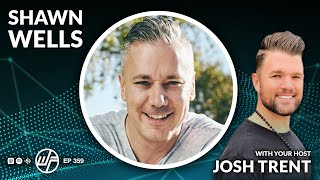
Podcast interview (Wellness Force) between host Josh Trent and guest Shawn Wells ("ingredientologist"), recorded Aug 25, 2020. Covers Shawn's personal story—from childhood bullying, weight struggles, and academic ambitions to severe health setbacks (Epstein-Barr virus, chronic fatigue, Hashimoto's, fibromyalgia), recovery efforts (ketogenic diet, supplements), and career in nutritional biochemistry and formulation. The conversation emphasizes mental health themes: fear as root of suffering, importance of connection and hugging, listening as power, vulnerability in modern masculinity, self-love and granting oneself grace, therapy/coaching, and practical biohacks (sunlight, grounding, vitamin D). They also critique modern media/marketing (psychographics, algorithmic targeting, clickbait) and encourage active listening, empathy, and personal work. Shawn shares resources at ShawnWells.com and offers free guides on keto, fasting, vitamin D/C, mushrooms, immunity, and more.
Questions this video answers
August 25, 2020
Epstein-Barr virus; chronic fatigue syndrome; Hashimoto's; fibromyalgia
ShawnWells.com
Chapters
You know, that's like people that are projecting their own fear and insecurity on you.
Yeah.
All the time. You don't. If you're always out there trying to prove, then you got to rethink. We are getting fear projected on us, and we're projecting things back out. Sam.
Hey, everyone. Hello, friends across the globe. It's Josh Trent from Wellness Force. I'm here with a brother, a friend, a colleague, Sean Wells, the ingredientologist. Sean, how you doing today, man?
I'm doing so good. It's good to be on the show, brother.
This has been a long time coming. You know, I can flash back before I had many of my spiritual thresholds, which, by the way, if everyone you're watching across the world let us know where you're watching from, because we're all up leveling. Can you feel it? Everybody? I know fricking everyone across the world is like, going through something. And we're gonna talk about this today with Sean. Mental health biohacking as it relates to being a whole human, a human of wellness, and really this mental health concept. Sean, like, so many people are aware of mental health. I think last month was Mental health awareness month. Right. May was mental health awareness month.
Yeah.
But when it comes to real mental health, like, people see you out in the public and they're like, oh, this guy's got it all together. He's worked with all these amazing beings. He's formulated products for companies that went on to sell multiple millions of dollars. Like, people might look at you and they'd say, he's got it all together. But you have a unique story, man, and it's a true honor to be able to be with you today, because the last time we spoke, people don't know this. We basically had a podcast that we didn't record. And so here we are. That's right about to record this one, and it's going to be a duplication. You know, my attention with Wellness Force is always about discovering. Discovering physical and emotional intelligence. So before we dig into you, man, like, just share with people what's top of heart for you, what's top of mind for you right now in the world in wellness and health and everything? Like, what do you believe is a message that's coming through you right now that is most important for people to know about you?
You know, I just watched the entire Star wars series, and I think it's like Yoda, that fear leads to pain, pain leads to suffering, and suffering is the path to the dark side. And I just see and I had another friend that I kind of connected that with that told me the opposite of love is not hate, but fear. And I feel like with the masks, with the rioting, with the worries about COVID the worries about jobs, the worries about socioeconomic status, the worries about safety, the worries about relationships right now being too close or too far apart from the ones you love, it's just generated so much fear and therefore pain and anger and suffering. And. And that really resonates with me right now. Like, I'm a deep empath, and I think we've talked about that. And, yeah, I just. I feel like I'm suffering a bit myself. Like, I've taken on a lot of this energy, and. And it's left me struggling. It's left me, like, angry at, like, why can't the world just, you know, pull it back together? Why can't we just hug it out? You know, I watched, like, I rewatched the Office because I. I struggle sometimes. Like, when it's really dark and depressing. Like, I don't want to, like, watch dark and depressing things. So I was watching the Office and Michael Scott, like, his way of, like, fixing things, like, you know, Dwight kind of did something underhanded to him, and he said, hug it out, bitch. And that was his solution. He's like, you know, whenever I have a problem, that's what I say to another man. And it just seems to work.
Yeah.
And, man, like, you know that feeling of, like, there's that first 30 seconds of fear, right? Like, because you're being held. I mean, it's just like, everyone. I have a little dog, and people want to pick up my little dog, thinking it's a puppy all the time. And there's fear that's generated from that. Like, why are you, like, picking me up? Why are you, like, holding me? Now I'm in a position where I have no control. And so when somebody embraces you tightly, there is a moment of fear, but there's that 30 seconds in when your whole body releases and the oxytocin goes, and you settle in. And you hear it every single time. You hear that, and you feel the body release. And this is when two men are hugging, you know, women, male and female, whatever, that there's a fear at first, and it's just natural, but then, like, we really release, and it is the best feeling. And I feel like, God, like, if we could all just hug each other. If we could all just talk to each other, you know, just have a conversation. I mean, all of this Stuff is revolving around fear, and I just want people to just talk to each other and hug it out. Bitch.
All right, well, I love this for, like five different reasons. The first two being the oxytocin component. Like, we all know what it feels like to give a hug and to receive a hug. I think right now because of what you'd mentioned with the mask wearing and like the forced isolation, the forced lockdowns and all these laws that are really dehumanizing, they're taking away people's worthiness and dignity. And I think what we're all experiencing is this as. As Eckhart Tolle calls it, like the pain body is still rippling from this. It just happened. You know, everybody's trying to pretend like everything's okay and put on your good face. And I don't think it's time for that yet. I really don't think it's time for that yet. I think we're actually in the middle of the lesson. We're actually in the middle of the journey, man. And so I love that we start the show with like a nutrition and health professional who's just raising his hand and saying, hey, I'm hurting too. And that's the truth, you know, because so many people have been like, writing in from wellness for us. We have people watching from Portugal, Texas, Australia, Minnesota. Um, hello, everybody who's watching here. Let us know, like, what are you struggling with right now? Because this is a world renowned expert of formulations. You know, it's funny, Sean, like, the ingredients for tasty foods and the ingredients for health products that will actually serve people on a nutrient basis. We have the same damn requirements when it comes to emotional health. You know, we need certain emotional nutrients. What do you think that recipe is when it comes to emotional nutrients, emotional satisfaction, and how are you putting that into your life right now, man, that's so hard.
And, you know, I really do feel for people that there's nothing. If the greatest thing is love and connection, then the worst thing is loneliness and fear. And for me, it's going to be connection. And it's a blessing just right now to be connecting with you and someone who's heart centered. And I would challenge people right now to get a life coach, to get a therapist. Like, I just started working with a psychiatrist. I do have mentors and coaches and people I call. I do have people like you. I've connected with and have deep conversations with very vulnerable conversations. Now is not the time to be superficial. I mean, it never really is, but now is the time to get that connection. I also think the connection with Mother Earth is so important right now. And getting your sunlight, getting your grounding, you know, getting out there and getting just fresh air and the geomagnetic forces and. And, you know, the vitamin D that's been shown to be so important. But, you know, it's just a primal thing for us to connect and for us to be outside. And so make sure that you're not isolating more than you need to. You're not just sitting inside and only watching Netflix and not connecting with people like you can, you know, potentially on video, and if you do it on video, sit outside, if you can sit outside or, you know, go take a walk. But those things are so critical, like your neurotransmitters, like serotonin, dopamine, gaba, you know, acetylcholine, like, all these things, like, you know, need to be active. And I feel like. I mean, we know that fear can shut your immune system down by over 50%. So just staying in that fear mode, you know, which is amplified by masks, by the news, the news wants. I mean, what. Like, what easier way to capitalize on, you know, clickbait than fear? So, you know, Trump, blah, blah, blah, Covid, masks, black lives matter. You know, riots, racism.
It's like everybody's trying to be forced to pick aside this division, this, like, illusion of separation that's being belched out of a megaphone that's trying to put people out here.
And. And here's the thing is there's people that are Trump followers and. And people that are, you know, pro Biden or whatever, that we're like one being. We're like one sentient being. It's literally. It's like trying to separate out cells from the body and say, you don't belong here. You're a bad cell. And, you know, whatever. Like, we're meant to be part of the same body, and we. If we could hug it out, if we could take a walk with each other, if we could really connect and hear each other, I think that would be a powerful conversation. I don't know if you've ever seen the video by Joyner Lucas. I'm not a racist.
No, I haven't.
He's an incredible rapper, and he takes the perspective of both the white person and the black person on many of these topics. And in the video, it's kind of like a good old boy that's, you know, rapping to his first part of the rap. Good old, you know, white boy. And then like, and then a, you know, black guy, and, you know, both are actually his parts, but it's really brilliantly done. And at the end, you know what they do? They hug it out. Bitch.
That's right.
And they really do. And they. And they say some kind of, like, nasty stuff. But you know what? There's truth in all of it. You know, much as there's lies and manipulation, there's truth in all of it, too. And that's why all of it persists. And all of it raises our fear. And if we just have the conversations and say, we don't have to completely agree, but I understand where you're coming from, man. That's like, a huge leap forward.
This is the great pause, Sean. I've heard, like, many people in our world describe this time right now as the great pause. And what do we do when people are speaking and, like, someone goes like this? We all kind of lean in. We all kind of, like, pay attention because we're wondering what's coming next. And I feel like, as a collective, we really get to take this pause together right now and ask ourselves, what are we willing to fight for? Because there is this phrase that I think you and I have heard a lot, and it's like, love is greater than fear, or all there is is love. And that's the truth. Like, these aren't just platitudes, but also, love does more things than just sit and wait. Like, love takes action sometimes. Love defends for its family. Love goes out and hunts food and brings it in. Love goes out and love bees. Yes. Love is a be, do have system. Like, I totally believe that. But we also get to do certain things from a doing perspective. What do you think for mental health specifically? And we're going to dig into your story, man, because I really want to open up people to your heart and your story and your thresholds. But as we transition into that, like, what do you believe the recipe is right now for us to do from a place of love?
Man, I'll tell you what. I had this thought the other day that most people want to be the loudest voice in the room, want to be heard. And I feel like. And they think the most powerful person is that loudest voice in the room is the talker. The most powerful person in the room is the listener, the great listener. It's powerful. It's so powerful. The great listener can be the great talker. Because, like you said, that pause people lean in. They can be quiet the whole night, and then when they finally say something People want to hear. You know why? Because they've been assimilating, they've been thinking, they've been feeling, They've been putting the pieces together. Instead of just trying to talk over someone, they're listening. And listening is becoming a lost art. People have their cell phones out, and whether they're looking at it or not, it makes a statement that I'm prioritizing certain things. Besides you, the most important thing you can do is fully engage with someone, stare them in the eyes and say, you have my full attention. And I will listen to you because you are what matters most right now in my life. I'm in the here and now. Your words are what I'm going to focus on. I'm not going to wait to get my point across. I'm not going to wait to win you over. Wait to tell you why I'm right. Wait to tell you why you should love me more. Wait to tell me, well, tell you why I'm better than you on socioeconomic status, on a number of things, why I can lift more weight, why I have more money, why I'm this or that. I'm going to listen to you. And that is power. True power is in the listening.
I'll never forget this moment I had in an ayahuasca ceremony last year. I was throwing up, I was crying. I had snot coming out of my nose. I was crying, and I was throwing up at the same time. I mean, talk about getting, like, beat down to my knees, you know? But I remember, like, mother Ayahuasca, she was just saying this message over and over and over again, and she was like, are you listening? Are you listening? And just kept saying it. And finally I just opened up with snot and vomit on my mouth, and I was like, I'm listening. I, like, screamed it out. And what I heard was, oh, I am actually doing the work in the world that's needed if I have the courage, if I can believe that I'm worthy enough to do it. And that right there is, like, the path I'm going to walk for the rest of my life. And it's because in that moment, I was given a decision point, like an inflection point. We all get beat down to our knees at some point in life, maybe multiple times, man. And, you know, whether or not everything happens for a reason, which I'm curious how you feel about this. Your health problems took you down a path that did happen for a reason. Because now you're here with me now, and we get to have this Conversation as brothers now. So take us to the beginning of this journey of supplementation. Becoming, you know, a world renowned ingredient specialist, to be able to give people healthy products and then having your own health struggles. I feel like this is the same thing for all of us, Sean. It's like the wounded healer then becomes the healer who goes up the mountain, who shares the journey with everyone else. So walk us on that journey, man, like, from whatever point feels right. How you even got into health, I know you went to college for, like, business and marketing, but then you're like, hey, I actually enjoy health. I like health more than business and marketing. But then on that path, man, you had some serious health concerns that at some point took you down a path of real darkness. So share that with us, man, so we understand you, please.
Yeah, you know, I had my brothers, you know, run away at an early age. Bit of a chaotic house. And I had a lot of bullying at school for being overweight, obese, made fun of. I had a large rear end, which kind of made it worse. I got called, you know, fat ass and, you know, like, made fun of, like I was some girl. Like, never really got to date much. Like, had to become a class clown to kind of compensate, but certainly got deeply insecure about my body, Felt judged and inferior in every kind of alpha male scenario. I was smart, but never wanted to truly assert myself in the strongest way because I felt like the weakest, most unloved person in the room and most unworthy person in the room. And so food and depression kind of became my focus, but also trying to be like, you know, the funny guy. And I think you see that time and time again. I can relate to the Chris Farley, the. What's his name? Robin Williams, you know, like a lot of these people, like, even. Even when I see videos of Chester Bennington from Linkin park, you know, like, he was kind of the clown of the group. And, you know, it's like the tears of the clown thing, right?
I think there was a song in that, right?
Tears of the Clown, right? Yeah, yeah, exactly. It's just there's a lot of pain on the inside that you're trying to compensate for. But I got into college and got into the top business school in the country. And, you know, everyone told me that's what I need to do, is just go into business, go make money, get a real job. And I started working out, I started getting in shape, I started getting noticed. I started becoming an expert of sorts as people saw my transformation. And, you know, people were no longer laughing at me, but asking me, you know, lots of questions. And I went to the doctor to get a physical for my next year's school. And I was telling him about my passion for nutrition and sports nutrition. And it was just when creatine had come out and combining it with whey protein, and again, I was just getting these amazing results. And he drew up this lifeline for me. I was 20 at the time to 80. And he said, why not be happy between here and here? And that literally changed my life path. Josh like it. And it's just crazy that, you know, you want to talk about listening, that listening changed my life. He didn't have to listen. He didn't have to tell me that. But that moment changed my life. And you never know when your words are literally going to change someone's life path. And he could have said, you know, supplements are stupid. Like, you know, that's what I expect most doctors to say, especially 20 years ago or more than that.
Sure.
And for him to kind of see me, see deeply into me and, like, tell me that, I mean, that was powerful. But then, you know, so, like, I ended up finishing up my business degree and then deciding I'm going to go back to school to get all the prereqs I need to get into Chapel Hill, which was my dream school, to get my master's in nutritional biochemistry, be the supplement formulator, all this crazy stuff. My parents were down in North Carolina at the time, so I thought I could get in school at Greensboro and then kind of establish from there. I went to the guidance counselor there, and he told me that you're a business student and you need 26 credit hours a semester to do this of pure sciences with labs you're going to fail, and you'll fail miserably. And I left his office crying, sobbing, and almost used a full bottle of alcohol and pills that night. To kill myself is the dream I had been working two years for, that I had believed in that I felt alone in the world in that I was ready to just put on a credit card to do anything he took away from me. And again, the power of words. I don't know how many dreams he had broken in his lifetime, but he had certainly broken mine. But, you know, luckily I didn't kill myself. And I did decide to put everything on a credit card and take this, like, crazy chance. And I did it in two years. I got straight A's. I thought of it every day, what he said to me, and it was honestly, kind of hate that Fueled me. Wasn't the healthiest thing at the time, but, you know, it kept me from going out and partying. It kept me from doing all these different things. And I ended up getting into Chapel Hill and getting into that master's program that was one of the top in the country. And that was satisfying. But I've always thought about how one man kind of made my dreams and another man almost took them away and almost took my life away. I've thought about the power of my words a lot when I speak to people. And really, while I was at Chapel Hill, I ended up getting very sick, getting Epstein Barr virus, Chronic Fatigue syndrome, Hashimoto's fibromyalgia.
Wait, wait. All these things all at once?
All at once.
Why do you feel, looking back, they happened all at once? Because every emotional undealt lesson has some kind of physical symptom. What was emotionally going on at that time? Why do you think all these things stacked all at once? I mean, that's pretty heavy for anybody to bear.
Yeah. You know, I was. I felt very lonely at the time, and I was drinking probably six nights a week and going out and trying to find love and connection. I was doing fairly well in my program. I think I've always done well with academic matters, but not emotional matters. So I was able to go out all the time, but still do great in my classes. I mean, even advanced biochem and all this stuff. But I think that's what it was. I was just. I was pushing my body, and, you know, I also got anorexic and orthorexic at certain points in there, too.
Yeah, I think you told me you were, like, 150 pounds, and then you were 300 pounds. I can relate. I was 280 and then I went down to 180, and now I'm like 215. And I'm, like, pretty good between 205 and 215. But you were like, man, you were like 300 to 150. I mean, that's insane.
Yeah, it is. It is. I looked like a bag of bones. And. And I literally remember, like, getting on a scale, like, right after I would pee and say, oh, I'm a half pound lighter. I mean, I was obsessed.
What creates that?
I mean, just complete body dysmorphia. Yeah. And just never, like, literally, I couldn't get skinny enough, you know? Like, I remember, like, we looked at this case when I was in school for nutrition of this lady that chronicled her path to death, and she couldn't stop her anorexia, and she knew that she would eventually die from it. But she chronicled the photos and the way she was feeling, and she did eventually die. But I thought, damn, that's so powerful to know that you can't even stop it. Like, you know, that's. That's rough. And then there was a period that. That I had orthorexia that I was, like, working out, like, four hours a day became. Because that became my identity. I mean, I was just desperately seeking some kind of love, and body was the biggest challenge when I was growing up. So Bodi became the focus for me when I was trying to connect with guys and be athletic and when I was trying to get dates with girls and be attractive. And I was tired of being the, you know, acne, fat ass that, you know, girls laughed at and guys didn't want to hang out with.
Man, I've gone down this road because this show is about spotlighting you and mental health in your story. And I'll just interject a little piece here because, man, this is why you and I understand one another. I was bullied. I was overweight. I took a lot of emotional abuse on that I didn't know at the time was emotional abuse. And now, at 40, I'm, like, reconstructing the story about why things happened for me instead of things happening to me. And it's not just lip service. It's not just like, oh, I'm going to put some spiritual facade on my life. And, you know, all these things have. Have happened in the greater good. Yes, they actually have, because I'm doing the work to understand that. I went through a phase where I took out a bunch of hatred on the feminine. I was totally unconscious in my twenties.
Me too.
And, you know, like, having sex with women without loving them and, like, really just taking so much for granted about sexuality itself. And now this new masculine. You and I are the voice. We're one of the many hundreds of thousands of voices that are really leading the new masculine. But we have to lead. As John Wineland says, we lead from our wounds, but our wounds don't lead us. How do you see that multiplying with your story?
Man, that's. That is such a great question. And that reminds me of, like, the. The book, like, Mask of Masculinity that Lewis Howes put out. And, you know, it's so true. Like, we grow up, like, I grew up with, you know, faggot, Faggot this gay that, you know, like, just, like, you had to be, like, Ultra male. And, you know, it was Arnold Schwartz.
What are you, a pussy? Smear the queer in high school. Smear the queer in middle school. If you were you. If you had the ball, you would smear the queer. It's like, what? Like, I'm even unpacking that now as a man. I'm like, why did we do that? What was that?
Right, right. And crying meant you were a girl. Crying meant you were a faggot or a pussy. I mean, this stuff did get thrown around so much that it's hard to undo that. To have emotions, to be empathetic, to connect on a deeper level, to listen and not just try and like, you know, like, alpha male, like, shoot up the room. Like, you know, those. Those were our role models was the, you know, the Bruce Willis and the. And the, you know, Arnold Schwarzenegger and Sylvester Stallone. Yeah. Rambo and Predator, you know, and all these things. And like, I mean, you know, the. The one guy that I remember really admiring in the media, like, when I was growing up was. Was just Little House on the Prairie. And. And, you know, the way Paul, like, Ingalls act, acted and, you know, like, I felt like, you know, looking back, like, I feel like that's the way, like, a man can have manners. A man can be traditional in values.
Yeah.
And, you know, treat people with respect and it's not a disrespect. And, you know, a man can. Can be that quietest person in the room, but be the strongest person in the room.
Why do you think that that Gentleman Jim was so strong? Because he was a gentle man. And this is, I love where we are in our conversation and in our friendship, man. Because it takes real vulnerability, which is also power. I don't care if you've listened to Alison Armstrong or Brene Brown. There's a reason these women have millions and millions and millions of followers. It's because everyone is recognizing now, man, to be vulnerable, to be a gentle man. When we look at masculinity, that actually gives us that space between the head and the heart that's closed. I can even think back to you and even me being bullied and getting so much emotional abuse. Disconnection from our head to heart was imminent. How were we supposed to be connected to our head to heart when that meant us being in pain? The soul leaves the body when it's in pain. Do you feel the same way when you look back, Sean, about the separation of head to heart? And do you feel like you're in the path right now of Closing that separation from head to heart.
Oh, 100% like, yeah, 100% like, pain got to be so dark and deep that, you know, when I felt like left alone with my thoughts, that's when it would get dark and suicidal. And there were several points that I got suicidal, including, like I said that time, like, right after the guidance counselor, and then that time when I got hit with all those autoimmune issues that I felt like I'd never be able to get out of bed, that I would be in pain for the rest of my life. And luckily I stumbled into the ketogenic diet and did all these supplements and, you know, did many of the things that I've been known for today and, you know, ahead of my time on, but it was out of, like, desperation and need. But yeah, 100% like, that is. And you know what's been one of the most powerful things for me is finally connecting with high level achieving men and seeing that they're all hurting too. When I got in my first mastermind, I did School of Greatness with Lewis Howes, and I had this imposter syndrome. When I walked in, all these people are saying, I make millions of dollars and I have millions of followers on Instagram and I'm, I'm, I'm, I'm, I'm, I'm, I'm. And I've always been this overachiever trying to compensate, you know, for that pain. And that's where I plugged myself in. 80 hours a week and grinding. But I realized quickly that, oh my God, everyone in this room has imposter syndrome. And it becomes like, yeah, it's a calling card almost of overachievement. And then I've gotten into more masterminds with other people. I've been in the rooms with several billionaires now, and you think, wow, I mean, like, these guys got it all figured out and they're the ones sobbing and, you know, enough with the must be nice crap, you know, because I get that too. Must be nice, you know, must be nice to. And we're not listening and we're not having empathy. Everyone hurts. And the most successful people, the most achieved people, often I have found, are some of the most hurting people. They're not content. Money, not success. Happiness is success. So don't get it twisted. This person that has millions, tens of millions, hundreds of millions, billions, can be some of the most hurting people in the room. I would say that more than 40% of these high level achieving men that I've talked to have been molested yeah.
Why do you think that is and.
You don't hear about that?
Why do you think that is?
Back to the masculinity thing, right?
This is something we all have heard, too, is like, sexual abuse is a big one for people that are high achievers.
Yeah, yeah. Oh, I mean, because now it's all messed up because you don't feel like you can be the protector for the female. You don't feel like the alpha male anymore. Like, you feel like your innocence has been violated, but also your ability to be the man has been violated.
Yeah. And what does that even mean anymore, Sean? To be the man? You know? Like, I think to be the man. I'm curious how you feel. To be the man now means that we can hold space, we can chop wood and carry water, but we can also have the emotional intelligence to tune into what's real. Like, there's a pretty big demand on the conscious male right now. Back in the day, it was the old school patriarchy mail where it's like, shut up, cook my meal and do what you're told. I'll make all the money, I control things, and I use your last name to transfer land and title. That ain't going to work anymore. We're in a totally different world, man. Do you feel like the world is those three things I mentioned, the conscious man world?
Yeah, absolutely. I mean, you and I are always, like, synced up on that, and I think. I think that the conscious male can still be. Like, we don't have to be the new PC. Like, we're stripped of what makes us male.
Exactly.
We don't have to be. We can still be strong and again, be strong, but great listeners. Be strong and have great manners. Be strong and, you know, have physical strength, but also not need to apply that physical strength, you know? Like, I mean, that's. That's like the Superman, Clark Kent thing, you know, it's like we have the ability, you know, like, I've got a fast car that I've been blessed with that, you know, it's like most of the time, like, you know, people come racing up beside me, and I don't feel like the need to do anything because I'm like, I've got the car. Like, you know, it's fast enough. I don't need to prove anything. And, you know, it's like, most of the time, we don't need to prove ourselves. Like, we just need to show up. You know, that's like people that are projecting their own fear and insecurity on you. Yeah, all the time. You don't. If you're always out there trying to prove, then you got to rethink. We are getting fear projected on us, and we're projecting things back out. So instead of seeing, like, if. You're saying, if. The script in your head's always saying, oh, man, this guy ain't shit. Like, I'm the man. Like, this guy ain't this. Like, oh, he's weaker than me. He makes less money than me. He's not. He can't dunk a ball like I can. He can't do that. He can't go to the school I went to. He can't roll in the hood that I'm from. He's not tough. He's not this. He's not. Man, if you're thinking all those things, you're really insecure. You are really insecure, you know, And. And I learned that from the four agreements that, like, the second agreement, I believe, is about the projecting out, you know, like, with.
You know, not taking anything personal.
Not taking anything personally. Exactly. And. But, you know, an interesting thing that I've learned lately as my personality is starting to shift, is people are telling me, like, man, Sean, like, you get, like, the best compliments. Like. Like, you make me feel good. Like, you. You say all these, like, incredible things. Like, you really lift me up. And then people started telling me, it's like, you know, you're reflecting yourself back. Like, you're seeing things in other people that you actually see in yourself.
Oh, man.
And then I was like, whoa, okay, so this is like, you know, that four agreements thing was a huge shift for me that people are projecting negativity out on me and that I do that to other people. But then, like, to also think about it in the flip of, like, I can project positivity out. And there's even, like, this way of doing marketing, like, where you learn about yourself. This guy taught me this. Where you talk about the three people, dead or alive, that you would love to have dinner with, and then you talk about the three traits that you really admire about them. And then the last thing you do is talk about the one person you would not have come to that dinner. And then the three traits that really piss you off about that person. And you know what all that is? It's you. It's you. You make this list of da Vinci, Jesus, like, Elon Musk and whoever I.
Was thinking.
And you say creativity, maverick. Like, empathetic. Like, really compassionate, blah, blah, blah. These are the traits that you admire about Yourself. And then that. That person that you like hate, and the traits that they have are the things that you've struggled with about yourself. It's all about yourself, always.
This is not uncommon, this narrative too, Sean, because I can think back to when I was bullied. There was a guy named Tony, and it was this black kid. And I was super young. I think I was like, 13. What are you right before high school? Like fifth grade? What are you, like, 12, 11? Something like that? Yeah, so. So I remember I was like. I was getting spit on. I was getting bullied. Like, he would. He threw like a. A lock, you know, like a master lock at me. And I was just like, always getting beat up and in fights and just so bullied. And I think I developed the beginnings of racism toward African Americans right then because I was like, oh, okay, well, if that's how black kids are, then I just planted a little seed in my mind that, like, well, that's how most black people are. It took me many years to get through that and to develop compassion for him. And just think about, can you imagine how challenging life was for him being a black kid in the 90s in East County, La Mesa, which is not exactly a very welcoming place. So anybody who wasn't, like, white had an American flag in a pickup truck. And we're at this really, honestly beautiful and also painful birthing of some new understanding where it's really not a new understanding, it's an old understanding. It's an all being, all encompassing understanding that we are all the same. There is no separation. Everything that you've been talking about today isn't just true now. It's always been true. That's the big illusion that somehow because of my skin color or because of how much money I make or whatever it is, that we're supposed to, quote, treat each other differently. But we're really looking at. And I'm curious how you feel about this. We're really looking at how racism, homophobia, and just judging people by anything else other than the fact that we're all the same has been layered, Sean, on top of economic policy that puppeteers us and plays us like we are left versus right, pro versus choice, Democrat versus Republican, pro mask, anti mask. We're all being played here. It's a big fucking sham. And that's what lights me up.
The more we can be separated, the more we can be controlled. If, like, it's, you know, the. And it's not even the rich, that's. That's bad. Again, like. And it's and it's not even people that are necessarily politicians, but there is a small number of people that are, like you said, puppeteering a lot of this, that stand to gain from it. And the easiest way to do that is to make us believe that we're not all together, that we can be separated. And anger, because when we're angry, we're not talking. And so when you look at someone's Facebook, they tend to have all the same people, the same values, the same ideas, and then they get rid of the people that have different ideas. There was even a study that they did this once where they made someone's Facebook wall be the exact opposite political views. And they found that people shifted their tolerance after such a period of time. Again, it's crazy to me to think that to dehumanize someone because they're a Trump supporter, to dehumanize someone because they're a left wing person, this is exactly what's done in war.
Yeah.
You know, we dehumanize the enemy. So it makes it palatable and makes it doable. Because if we have conversations, if we have empathy, it's so different and it's so simple. But it's so hard to do because of this division, because of the message. I mean, capitalism as a notion isn't wrong. It drives the economy. But leveraged marketing through capitalism is creation of insecurity through psychographics.
Okay, can you go a little bit deeper into that? Because there's the lens of mental health right there. Can you drop down into the specifics of what you just said?
Sure, sure. I mean, the idea of marketing, my undergrad was in this, and I love science. The idea of marketing, it started with demographics, so like age, gender, you know, things like that and trying to put us in groups. But then psychographics became the next science. And psychographics is, well, what motivates you and what gives you fear and what gives you feelings of love. And brands identify with these brands create these, what's called avatars of their avatar is Ms. Nancy Smith. And Ms. Nancy Smith is a 35 year old, you know, female, that's white, that makes $45,000 a year and she lives in Oklahoma and she's, you know, she owns a Jeep Cherokee that's 8 years old. They literally go into like the, every brand she has, like, and then they, they start looking through that lens. But as we start using Facebook, as we use our phones, you know, Apple and Google and all these algorithms, the searches we do, where we're at when we're Making decisions. They look at like, they. That camera's always on. The camera looks at, like, your pupil size, your emotions on your face.
The camera looks at your pupil size. I've never heard that.
Oh, man. Like, everything. Everything is allowed. Everything in those Eulas that we've given rights to.
Wow.
Everything is allowed.
Everyone share this right now. Everyone share this right now.
Because contact tracing. Contact tracing. Apple and Google are working together so that, like, it's under the lens of COVID right, To keep us safe. But, you know, it's like we can say you were within four feet of this person and, you know, so think about it. So, like, I'm having this emotion. I'm making this. These searches. I'm in this location. I'm with this certain friend, feeling this way in this vehicle, moving this amount of miles per hour over the speed limit. So that means emotionally I'm in this state. This is what's being played on the radio because it's always listening. If you look at your ads, it's always listening. The ads are based on what you're, like, listening to and what you're saying. So think about how intricate the algorithms are getting to advertise to you so that you're like. I mean, I don't know about you, but it's like more and more and more. It's like, holy crap, this thing is, like, dead on. That's what I was talking about. Like, that's what I was thinking about. That's what I really wanted.
Yeah.
And so they leverage that. So it becomes. Not only is it the things you want, but it's leveraging impulse. Impulse is going to be based on love or fear, the erotic and thanatoptic, like, literally, like the two poles. Right? And it's. And it's getting you to make impulse decisions, because impulse is what's going to drive buying behavior. And so those are powerful, powerful things. Emotion drives buying behavior. So they're leveraging emotion. And if you think like clickbait, I mean, was 10 years ago, like, on Google searches and whatever, like your news and kind of the homepage for Bing or whatever it was you were using. And now it's. I mean, it's what people are using on their posts for Instagram, for everything, Sean.
It's what I'm going to use for this podcast, man. I'm going to use the same thing used on cnn. Conscious clickbait.
Exactly, exactly. So we're all leveraging it in everything, right? Like in a. In a rating scale has to be 0 or 10, or you know 1 or 5 stars. Like, we don't have moderate anymore. We want to be heard. We want to be extreme. And the only way to stand out now is to be extreme. The only way to stand out, to be the loudest voice in the room. And I'm asking you, can you be a little bit more agnostic? Can you be a little bit more libertarian? Can you be a little bit more pensive? Can you be the thinking, rational, listening person and take a moment and breathe and see all the things that we have in common? I mean, we have 99% of the same genesis in common with a chimpanzee. And think about how much we have in common with each other. Me to you, to someone in Dubai, to someone in Africa that's in a tribe. What do we want? We just want to be loved. We just want to feel important. We want to feel like our life has purpose and relevance, no matter. Like what your religion, what your nation is, no matter what your upbringing is, no matter whether you're fat or thin or black or white or gay or straight or male or female. It's what we all want. So we have so much in common. Why is it so hard? And it's. As these puppeteers get more savvy, they'll get better at separating us and making us feel fear and anger and love at moments and just be completely manipulated to where we're just emotional roller coasters or numb, but never were allowed to be listeners or empathetic.
Let's pause right there, because that in itself. Rewind this. Share this because we have the choice. I'm visualizing this meme that I've seen where there's an elephant. I was a horse, actually, and the horse was tied to a plastic chair. And ever since that horse was a little tiny pony, it had been trained that when you have a rope around your noose, you are tied to something. Of course, the horse knows that it has to be there because it was taught that way ever since it was a child. The children in our nation are being taught by these advanced AI algorithms. You and I are talking about them. Well, the choice is here, right now. And that's what lights me. I just got a full body rush, Sean, because if we can all just take this in right now, what would love do in this moment? This isn't a hippie thing. We're not around the fire right now. Like, this is love in action. Love listens, as you said. Which man? That was so good. Like, if you look at the best shows on the planet, it's the gaps, it's the listening. I'm not trying to talk over you, you're not trying to talk over me. We're here with each other, we're listening to one another. We're having a real dynamic back and forth conversation that involves pausing and reflecting. And I think what's going on is we have so many overlapping negative sources, the puppeteers, unconscious capitalism, the way that we're hurting Mother Earth. There's so much of the get me what I need right now that we forget to listen to what our brothers and sisters need. That's what's really happening. And so what you're talking about with the awareness about the cell phone, the awareness about the Google algorithms, that's where it all begins. Like, sharing is awareness. When I share on a podcast or when you share and when we share with our friends and family, like, that is what promotes awareness. So if you could wave a magic wand, dude, and like you are in this show, if you could wave a wand, how would you change the narrative? Like, what would you say to not only just the kids coming up, but the parents of these kids and the conscious men that are leading this new wave of being in balance, masculine and feminine? What's the magic wand that you have? What would you create in this world?
It's gotta start with loving yourself. It goes back to that the four agreements kind of concept and us projecting out on others. It's got to start with loving yourself. You have to figure out ways to tell yourself that you're enough. And that includes literally saying that to yourself with affirmations, creating a vision board so that you have some goals in front of you that allow you to chase your passions and dreams. Yes. And it's okay to find things that light you up. And maybe, you know, you can't work at that light you up job right now, but start making steps towards it. And maybe you can't get rid of all these people that are negative influences in your life right now, but start taking steps towards it. Those steps are going to be game changers. You know, you're a product of the five people around you. You'll never work a day in your life if you love what you do. All these things that people say, they're true. Like, but you have to find ways to love you to fill that empty hole or else you will just be filling it with bullshit and hurt and pain and projecting that emptiness and hurt out on others. And until you start really doing. You know, I hear about authenticity all the time, and that is one of the Most important things, to show up and be authentic. But you can't be authentic if you don't know who the fuck you are. You have to do deep self work to be authentic, to show up and be real. And that's going to be painful work, to dig into all your hurt and be honest about it.
The matrix is alive and well, but it doesn't mean that we're stuck, you know, it doesn't mean that we have to be pulled on by these strings for so much longer. It starts right now. It starts in this moment. That's why podcast is really the renaissance of media, and that's why having these type of conversations where this is live, this isn't edited. Like, you're here with us. We're not going to edit this. We're just going to put it on itunes and we're going to put it on YouTube, and y' all are here with us right now. We have people across the world that are writing us messages and tuning in. Like, we all need this medicine. We all crave this medicine of, like, real conversation that hasn't been cut and snipped and chopped. Yes, I will turn this into some conscious clickbait so that I can get our brothers and sisters who are under the spell and get them over to the conversation we're having. Sean, this even idea of living our life well, it's what drives me, man. You know, the love that you're talking about and, like, loving myself, that is the ultimate journey. And I am still at 40 years old learning lessons every day about how I can love myself better and how I can look in the mirror. You know, you talked about the vision board, which is a great tool. On my mirror, in the bathroom, in our master bath, I have trust, breathe, and listen. Those are the three words every single day. When I brush my teeth, how do I trust? How do I breathe? Which goes with our breath work and the Breathe program, and then how do I listen? So I love this man that you're talking about listening. When my mouth is closed, I'm breathing through my nose. When I'm breathing through my nose, I'm connected to my diaphragm. When I'm connected to my diaphragm, I can hear what you're saying, and that's some magic right there. So everyone, please trust, breathe, and listen more. But as I go down this path of living my life well, which is the whole point of this podcast, is sharing that journey, how would you define this? You know, if you were to put a label or just Sean's explanation or definition on living his life. Well, what does wellness mean to you? Like, how would you define wellness?
The ability to grant oneself grace. I think that's it. Like, that's what I've learned. Like, you know, we're so worried about making mistakes. We're so worried about how we'll be viewed, about being laughed at because I'm too fat, I'm too thin, I'm too rich, I'm too poor, I'm too white, I'm too black, I'm too southern, I'm too northern, I'm too American, I'm too foreign. There's so many reasons we can be divided, and there's so many reasons that people can judge us. But once you start granting yourself grace and saying it's okay, you're doing your best, because we're all out there doing our best. Project that out on people. See that guy? Maybe he's in an alleyway in a box, and you know, that's where he's at. He's doing his best. Maybe he just screwed you over in a business deal. Where's he at in his life? You reap what you sow. He's hurting. He's doing his best. We're all out there trying to do our best. It's just a natural state of being. So grant yourself some grace and say it's okay. And once you do that, you'll leave yourself space to achieve your best life.
Sean, you gave me chills like, three times during this podcast, which felt more like you and I in my living room. I have so much love and respect for you, brother, with what you've created in health. And it's funny, like, you're known as the ingredientologist. We didn't talk about anything nutrition at all today, but we did talk about the nutrients of the mind, the nutrients of the heart, and share with people how they can connect with you. And also, man, how they can get involved in all the free things. You spend hundreds of thousands of dollars giving away free education every year to people. Share those couple things, how they can connect with you and how they can download the free things so they can biohack their self love, which, let's be honest, self love is the ultimate biohack. We were gonna talk about biohacking today. Really? We're talking about healing, mental health, and self love. Self love is more powerful than a juv light.
All right?
Self love is more powerful than supplements. This is about self love, and that's the real journey, man. So please share.
I totally agree with that. Shawnwells.com, s h a w n Seanwells.com and then ngredientologist everywhere else you can look up Shaun Wells, but Instagram and all those things. I have a, a pretty good Instagram platform with a lot of cool stuff. At SeanWells.com, there's all kinds of free guides like cited five to ten page guides on keto. On keto and women fasting in women, Paleo, vitamin C, vitamin D, three mushrooms, all kinds of things and immunity. Just tons of topics, great papers, the latest research. And then if you have any questions, whether it's related to my depression and suicide battles or whether it's on ingredients and biochemistry or products, please just shoot them my way. Like, I love to answer questions. I never charge anything for anything. Everything is just from my heart.
Well, thank you very much, man. Seanwells.com Just a deep bow, a deep breath. Thank you, Sean, for coming on the show, for being a friend and for giving people the choice to not be the victim. That's what this conversation reminds me of. You know, we're not victims here. We all chose to come down on a soul contract and we're unfolding that as best we can. And the wellness that you talked about being our ability to grant grace, that's powerful, man. So thanks for coming on the show. Thanks for everybody for joining us. And Sean, we'll talk to you soon. Until we do, man, I and we and all of us, my eyes, look at your eyes and we're all the same. So we're wishing you love and wellness.
Love you, brother. Thank you.
More from Josh






Your child's future start before pregnancy... and even before conception! #podcast

MD Reveals: Your Healing Creates Your Child's Reality (The Souls Coming In Need Strong Bodies)



