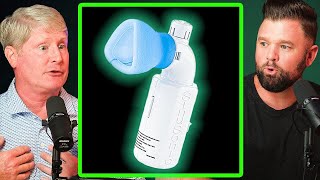
This is a YouTube interview by Josh Trent describing his lifelong sinus problems and his recent recovery after a sinuplasty aided by a consumer device called SinuSonic. Josh says a team member (Lauren) found the device; his surgeon and office staff examined the product and approved its use during recovery. He reports the device’s positive pressure (and acoustic) action felt far more effective than standard nasal irrigation. Other speakers compare the device to positive expiratory pressure/flutter devices used in cystic fibrosis and lung care—explaining the idea that oscillatory/positive pressure helps cilia move mucus out.
Chapters
When I. I'll tell you when I first came across this, Lauren, from our team, shout out to Lauren. She found this device. I was about to go through surgery myself. And the jumping off point for the science of this conversation and also the story through David is this. I had struggled with sinus issues my entire waking life, you guys. I mean, like, forever, ever since I was a little boy. And you name it, I've done it, right? Like, whether it's the turbinate reduction or the balloon sinuplasty or the multiple rounds of antibiotics, like, it was really a struggle. And I came across this at the perfect time because I had just gotten a sinuplasty done where they actually bored out the nasal passages. And I'm in the office. I will never forget this. It was like one of those breadcrumbs from God. I'm sure we all can feel a moment like this. I was in the office, and the physician was like, hey, you know, well, when you recover, here's your recovery protocol. And I pulled out the box of sinusonic. It's on the screen right now for everybody watching. And he's like, wow, what is this? I've never seen this before. And he's like, can I take this back to the main surgeon? He takes the box back to the main surgeon. 15 minutes go by. He comes back and he says, hey, we had the chief pharmacological director. We had the surgeon. We had a couple other office members in there. We've never seen this before, but we think it's amazing, and we're actually going to look into it. And he's like, the answer was, yes, you can totally use this to aid in your recovery of your sinus surgery. And it was absolutely incredible. I did ozone. I did some hydrogen therapy. I obviously went through their medical protocol, but I got to say, like, when I use this, that positive pressure that we can talk about, it was a total game changer. And this is coming from a guy who's 43 years old. Literally, for over 30 years, I've been dealing with sinus issues. This, to me, seems like something way different, way more powerful than just nasal irrigation. So let's. Let's kick it off right there, and then we'll go to Rod.
Yeah. So I had an interesting career with sleep and other things. And what was so interesting, when Dr. Bogan says, hey, when I do this, when you start looking up the science of the two items and the two items that make the technology, this is one version of a positive expiratory pressure device. Can they see this?
Yeah.
So with. And Rod said this, when you have cystic fibrosis or other lung things, and a lot of people have had a relative in the hospital, and you go in there and they're blowing on that, and it creates a flutter. And the theory behind that, Rod can tell me. I'm not a. I'm not a doctor. So you have cilia that are. Line your, you know, down to your lungs.
They're like little hairs, right?
Absolutely.
Like little hairs, yeah.
And the idea of this, this is simplified, but you really want those hairs to work like oars together to get the mucus up and out of your lungs. So specifically, cystic fibrosis patients don't clear their lungs well, but so do a lot of other lung conditions.
Check out some of the videos on this screen that are perfectly curated based on the video you just saw. Make sure you follow me and I'll see you in the next video.