Speak Like the Top 1%: These 5 Common Words Are Secretly Sabotaging Your Success
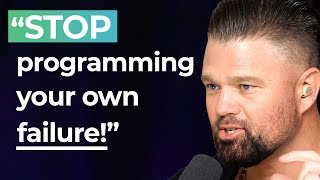
This YouTube podcast episode (Josh Trent with Mar) explains how everyday language programs the unconscious (via NLP/neuroplasticity) and can disempower people. Josh identifies five common 'soft-talk'/disempowering words or phrases (I have to; I don't know; I should; try; maybe), gives science and etymology (e.g., 'should' from Old English obligation), offers specific phrase-replacements (I get to; I’m figuring it out; curiosity-based phrasing; I will / I will do my best; I commit / I believe), and prescribes a 24-hour noticing practice plus concrete examples and anecdotes to illustrate how shifting language builds agency and change.
Chapters
What if I told you that the way you talk to yourself is the reason that you're still stuck? We're talking about this and so much more on this Liberated Life series on the Wellness and Wisdom podcast. Mar, check this out. The words that we say are literally spells. They're little prayers, right? Have you ever found yourself in a moment in life where you realize that your narrative in your own mind was hurting you? Have you felt this before?
All the time, and I'm still working on it. But one of the major lessons, I would say, is when I get sick or I have pain and I'm telling myself, oh, I don't feel good. Or, like, this is really painful. And then people ask, like, how are you? And I'm like, oh, I have so much back pain lately. And I just keep myself stuck in that narrative. So I've been teaching myself, relearning how to actually talk about it. So instead of, oh, I'm in pain or I don't feel good, I'm saying I'm healing, or, like, it's getting better, or just keeping it more positive and thinking of the actual outcome that I want to have, which is to be pain free or to feel good.
Yeah, the word literally, y'. All. The words that we tell ourselves, that we speak to ourselves, they are being listened to by the most important part of you, and that is your unconscious mind. We're going to go deep today. There's a reason that you clicked on this. There's a reason that you resonate with this title, this topic, this understanding, because this is timeless. I mean, since the dawn of time when, like, apes figured out how to make food on a fire, we've been dealing with internal narrative, like, this is not a new thing. Yet we are afforded through this podcast, this free podcast for you to literally and neurologically change your mind. This is not just lip service. I've lived this for over 10 years, almost 750 episodes now. And this Liberated Life series is about allowing this lens to see life through that's completely different than any way you've ever seen life or heard life before. This is the Wellness and Wisdom podcast, and we always talk about what's on the screen right now. This is the lens that we see life through. It's mental, physical, emotional, spiritual, and financial. It's the Wellness Pentagon. So if you're just joining us for the first time, this is where all the conversations, all the healing, all the value, all the ability and capacity for you to change your life comes from seeing life through this lens. The more you nourish these sides of yourself, the more, the better you're gonna feel, the better life you're gonna have. Now when it comes to mental health, one thing that I think is so, so sublime is the way we speak to each other. And the way we speak to ourselves can be really harmful or really healing. And I use the word sublime because it's literally the power that we have to change our life. Yet our parents didn't know unless they're super conscious, our grandparents didn't know and school systems and religion they actually knew. But they use the dark side of what we're going to go into today and that's called conditioning and neuro linguistic programming. Most people, they unknowingly program their own failure, let's get real just by the words they use every single day. So it's not the same like woo, woo, law of attraction thing. It's science. Your brain is always listening and the words that you speak to yourself shape the fabric of your life. They literally become your identity. A lot of what we're talking about with these world class guests on the podcast Mar is like how they went from A and how they got to B. How they went from suicidal and disempowered to being a multimillion dollar author. And the common thread that I've seen is they all had to go through a shedding process of the way not only that they speak to other people, but most importantly like hands down, the way they speak to themselves. And so let's go into this, the disempowering language that keeps people trapped in self doubt or victimhood or really just inaction starts with things like this. I can't, I should, I'm bad, I'm not smart enough. And this is what solidifies over time the unconscious belief that turns into conscious that we actually speak out that says oh I'm John and in my family we're alcoholics. Oh I'm Nancy and in my family we're all obese and we hear these things. Mar, I don't know if you ever dealt with this in your family tree where somebody would say oh well your grandpa was like that and I'm like that and so you'll be like that too. Was that ever a thing for you?
I believe so. I don't really recall anything specific like especially disease related, like we haven't really been attaching to it as much, which is good. But there's been certain beliefs that I would say have been passed from generation to generation, especially about money and about certain, I don't know, maybe political stuff, even things like that.
Yeah.
But I do feel like when we keep repeating these negative things about ourselves or what we should do or shouldn't do or have to do, I feel like it becomes a self fulfilling prophecy. So we basically manifest into real life.
Yes, and the weight of your words is profound because manifestation is not just law of attraction. And we've actually talked about law of attraction multiple times. We'll link it on the screen right now if you're watching on YouTube and on Spotify, you can just search as well on our channel. But here's the key that I really want to get down to. The science on NLP states. Our brain gets 11 million bits of information per second, yet we can only process 50 to 120. So what does that mean, y'? All? If we're getting 11 million bits of information fed to us either by words or environment or our own internal thought, and we can only process a fraction of a fraction of a fraction of a percentage, which is 50 to 100 bits, then how easy over time would it be to believe something like this? Success is too hard. Rich people that make money are bad. I expect the worst to happen. Oh, it always happens like this. You can see how easy this would be to believe. But this isn't just mumbo jumbo, spiritual esoteric stuff. This is actually neurological science. The neurology of our brain is like pathways in a park. Y' all have gone on hikes and you know, everybody goes in a certain path and the grass gets worn down and everybody walks that certain way. Well, your brain is the same. We have this neuroplasticity in our brain where the little axons and dendrites communicate through an action potential. And the more that we think good thoughts, loving thoughts, the more that those grooves get actually wired into our neurology. That's why it's called neuroplasticity. It's plastic or malleable. And so the power of this comes through a very simple exercise. And the exercise is practice for 24 hours. Noticing the way you speak to yourself. So are you using language that disempowers you? Just notice yourself doing it. I'm not saying you have to change it yet. Right? Baby steps. Just notice for 24 hours, do this thought experiment that for one day you're just going to notice the thoughts that you're allowing yourself to believe, the narrative that you say to yourself, and also the way that you speak to others. This is a really good way for you to check in on self judgment. It's a really good way for you to check in on how you judge others. I just had a pretty powerful experience looking in the mirror last week where I did my first dose of ketamine I've ever done in person by myself. And it was quite profound. I actually saw myself in the mirror. And by the way, I'm not a proponent of you doing any type of entheogens or psychedelics or ketamine solo. Unless you're ready for that, you must be spiritually mature to handle it. I'm not saying that you should go out and do ketamine. I'm just sharing my own experience through the hedonic calendar that I got to where I could actually handle it. I'm looking in the mirror and I completely forget where I am. And I'm seeing Josh as this whole loving, beautiful self, this fully loved, always loved, incredibly beautiful being. And I'm just in awe of this person. Not from an egoic place, but just from a place of truly loving him. But here's the kicker, y'.
All.
When I was looking at myself, I was watching the 3D Josh Judge, the whole loving Josh. I was picking apart his teeth, I was picking apart his clothes. Oh, these little thoughts that I had. And I realized in that moment, that's the exact judgment that I give to my woman, that I give to my friends, that I give, that I give to other people. I'm not immune from the concepts we're exploring today. I'm just much further along the path than I was 10 years ago. So that's why the value of this is so, so supreme. Because when we start to take either through an entheogen pathway or just a self awareness pathway of actually looking in the mirror, being honest with what we see, and really, most importantly, how we think about what we see and the words that we describe about ourselves, you can really start to get down to the core of how you show up for others. And the results of your life are a byproduct of your thoughts. You don't have to be Napoleon Hill to know this. This is literally science and also spirituality. So there's just one more phrase, Mari, before we get into the next unpacking, which is a little more science and etymology. And it is this curse of I have to, I have to, I have to. I'm curious for you. Have you ever dealt with I have to in your life versus I get to. Has that been a thing for you?
Every single day. And I'm really, really putting effort into not saying it as much because this is basically what I've been learning with you. Like since you've gone through the NLP program, you've been teaching the whole team about how to have a more empowered language. So I have to re switch it for, I guess, you. But sometimes it just sounds so unnatural and even a little crazy. Especially when you take it out of the context of our business where we all understand and you take it to the real world and instead of I have to, you say I get you and people just look at you like you're crazy. So it's just learning that that's normal, that it's going to happen and it doesn't really mean anything. In some cases it just doesn't seem like it's fitting because sometimes I really feel like I have to do it. I don't really feel that it's like I get to. I get the opportunity to do it. But sometimes I really feel the weight of like I really have to do it. I have no other choice.
This is a really important point. The I haven't taught my son how to ride a bike yet without training wheels. But I'm sure in his mind he will struggle in learning how to ride a bike. In other words, when you do something brand new, when you have a new way of acting or being or thinking, it's always going to feel super uncomfortable, awkward. And it's most likely is going to feel super counterintuitive. Whenever we learn something new in life, it is always going to feel crunchy. It's always going to feel counterintuitive. Like for me when I start, when I first started learning about nlp, I felt the same. Like this is kind of silly. I was watching the judger in myself sabotage myself. My higher self being being actualized by blaming and shaming that this NLP isn't real or it's too heady or fill in the blank, right? But then what are the results of my life? What do I actually want to become versus where do I recognize I am now? And we know that the same thinking that got us to any situation will not get us to a new one. So I just want to preface that for you, for me, for all of us. It feels awkward, it feels weird because it's probably most likely going to work because it's completely brand new. So of course we live in a society where terms like oh, I have to go to work, I should do this, I should call my mom more, I should be kinder. And they're just such fluffy soft talk language that doesn't mean anything. But actually it does. Because on the flip side of this soft talk that our brain is always listening to, remember, we get 11 million bits and we only process 50 to 120. We're always listening to ourselves in the way that we speak. And this is so important because when I'm soft talking myself and when I'm soft talking others, I'm actually believing that I'm not worthy of the new language. I'm believing that I'm not worthy of the new result. I learned a lot about this in the NLP program, for sure.
I actually have a question before we go more into the I have to. And the other words that we're going to discuss today. Have you actually noticed that the NLP has changed your personal relationships? I know business is one thing, but what about the personal relationships, too?
Yeah. I would say that when I apply it in my personal relationships, it's met with the same resistance that you shared where people will say, what do you mean? You get to. What do you mean by that? You get to do it. And I just refrain from being their coach. I'm not holier than. I'm not better than. But I just ask people when they resist, should versus get. I just say, well, what does it feel like when you say I should do that or I have to do that? And they'll typically say that it feels heavy or it feels depressive or, you know, it has a weight to it. Now I would say, great. Well, when you say I get to go to work or I get to do this thing, that's a scaffolding towards my purpose or I get to do it, how does that feel? And always they'll say, well, I guess it feels a lot better. And then I'll say, well, don't you want to do the one that feels better? Because it's all just a video game anyways. The way that we learn how to communicate to each other is an amalgamation of what we learn from our parents speaking, and then they learn that from their grandparents. This is why emotional epigenetics are such a big speaking point in our liberated life tribe and our community. Because the way in which our emotions are passed down or our emotional predisposition is passed down through generations. It's the same thing with our language. And actually, it shows up physically, too. You see a lot of family members that for, you know, generations struggle with obesity or many families that struggle for generations with addiction. Well, it's actually the words that they're using that's the core of it. The words that you use inform the thoughts that you think, which then informs everything else in the byproduct of the quality of your life. So, yeah, it's not easy. More like I. And I still slip all the time. Like, we have meetings where you'll be like, hey, you just said something that actually was disempowering, and I'll do it to you. And so I think it's an ongoing process of reconditioning our mind. And to actually use language that's empowering.
Yeah, it just makes me think, why wouldn't we use it in the first place? Like, who came up with these disempowering words? And we were conditioned to use them instead of the empowering words, Right?
Well, it goes back to the etymology. The etymology of the word should is really powerful. So think about this. The word should originates from the Old English word which means debt, obligation, or duty. Over centuries, the meaning evolved into the modern concept of obligation, expectation, or moral responsibility. And here's why. The word should is the most disempowering word out there, I think should and have to are two of the phrases that really make us stuck the most. When we create this external control, there's this implicit sense of obligation which actually weakens our internal agency and intrinsic motivation. Right. There's in. In psychology, there's external motivation and there's intrinsic motivation. Intrinsic motivation is basically who you are, and it's your constitution and it's your emotional resilience. So when you say out loud, I should do this or I have to do this, it's actually baked into the old English etymology itself. And by the way, if you think about how people were controlled in the 1700s and before. Before we came over, I say we because that's part of our lineage here in America. In 1776, we were running from being controlled. We were running. We were trying to escape tyrannical control. Well, let me ask you this, Mara. I'm gonna put you on the spot. What do you think is the most powerful piece of propaganda that allows people to be controlled? What do you think that might be?
Well, since we're talking about language, let's go with language.
It's language. Propaganda is nothing without language. Like, you hit it on the head. So if it goes back, if the etymology of the word should, that's very disempowering. Goes back to Old English, Goes back to when there was, you know, tyrannical control and kings that would basically kill people, which then goes way back to the Egyptians and the Essenes and goes back to the pyramid times, language was the source of all propaganda. And so your question, where did that start and what are we doing here? We're unraveling thousands and thousands of years of disempowering language. Of course, in your physiology and neurology, it's going to feel uncomfortable. It's literally been encoded in the way that we think and believe about ourselves. So you can be scientific, you can be spiritual about this. Either way, when you sit at the table of truth, you must take inventory. You get to take inventory of the fact that. That the words your parents, grandparents, and great, great grandparents used and were taught to use were fundamentally disempowering. Now, this can be a hard pill to swallow, but I would much rather take the red pill than the blue pill. I would much rather take the path of truth and learn how to speak to myself and others in an empowering way. Because then everything else comes from there. Right. The way that we think and speak to ourselves informs everything about our life. So I think it's a curse, personally, I think I have to, when I should, is an ultimate curse.
Yeah. So to wrap up, I have to. So the best way to replace I have to would be I get to. I get to do that. Which basically shifts the obligation into an opportunity.
That's beautiful. That's a really cool alliteration, too. Yeah. Because if I'm obligated to do something, it's actually going against what I want to do. Right. And so, yes, a lot of times in life, and even in, like, if you're in a job right now and you're listening to this or watching this, and you're like, I hate my job. Right. There's truth in that. You may very well hate your job. But let me ask you this. If you hate your job and you have to do it, where is there ever space and curiosity for you to get unstuck, for you to choose a new path, for you to actually see this as something that's moving you in the direction of your dreams. And how simple is it to just replace one word? And by you saying, oh, I get to do this job, because then it opens up the spaciousness for me to use this job as a financial lever to move me in the direction of what my soul actually wants to do. Like, for example, if you want to be a riding instructor on a horse, to quote Alan Watts, he had a student that came to him and his student says, well, I really love horses, but, you know, I can't make any money with that. And he looked at his student and he said, well, what really makes you itch? What is something that, even if you didn't get paid for it, you would love to do, then go do that, and then meet yourself in the process of figuring out how to be so good and have so much talent and be so consummate about what you're actually bringing to the world that you could then open up a writing school and you could teach kids how to ride horses, and you can make something that you love and something that you do, something that you are. But what blocks us is I have to or I get to. You can see how it's just like, it's such a simple shift, and it feels fundamentally, you know, awkward because we're overcoming thousands of years of etymological conditioning from Old English and honestly, going back to the dawn of time.
Yeah. Okay, let's get into the next one. The next one we have is. I don't know, which I really feel like takes away our power in a sense of, like, we don't trust ourselves enough to make a choice or to give the wrong answer. So I would say it's based on fear of. Fear of being judged, fear of making a mistake. What do you think, Josh?
Yeah, I think you're right. I think when. When. When people say the phrase I don't know, it's actually not true, because I don't know is a definite response, right? When someone says, I don't know, there's a definiteness. There's a certainty there. Well, hey, I'm presented with these two options, which, by the way, are typically a false construct. We went over this a couple weeks ago. It's called a false dichotomy. A false dichotomy is when I only give someone two choices, but there's actually always three choices and sometimes more. So if someone said, you can either work this job you hate, or you can jump off the cliff, go into bankruptcy, and find your soul's purpose. Nope. That's a false dichotomy. Right. A financial teacher might say, well, you can be in finance for a big company, but you could never be an entrepreneur and do finances for yourself because it doesn't pay enough money. That's a false dichotomy. So when someone is in that space, and we talked about this with Ann Lore when we talked about these liminal spaces on the podcast that's coming out, I believe it'll be out by the time this LLS comes out. And these liminal spaces are so powerful because the gift that you give yourself in a liminal Space, or in a space of not knowing is actually the curiosity to figure out where you're going next. But if you tell yourself with word I don't know, then it robs you of any kind of curiousness or spaciousness to say a more empowering phrase. And a more empowering phrase other than I don't know is I'm figuring it out. I'm learning how. I'm figuring it out. I'm learning how. It doesn't mean that you don't know. It means that you haven't figured it out yet or you're learning how to do it. My son actually had a moment. I'll share. And he was in our driveway and he was trying to get his toy out of a little crevice. And he's like, I can't do it, Daddy. I can't do it. And I'm like, no. And I really wanted this to be a teaching moment. I grabbed him and I was like, nova, you say, I'm figuring it out. I'm figuring it out. I'm figuring out how to move the toy. Let's try this and let's try this and let's try. And eventually he got it. But if I would have just let him see, this is how early the conditioning starts. Right? It starts at childhood. And really it starts epigenetically through our lineage. If I as a parent would have just said, okay, baby, I'll do it for you. How terrible. I'm robbing him of his own agency that he's bringing online. And this is what happens with so many parents is their do gooders where they want to assuage the burden of their child going through stress. No, we actually must train our children to go through the thing that they are figuring out how to do. It's not that they don't know, it's that they're interested in learning how or they're in the process of figuring it out. And I think whether it's for children or adults, if we can apply that mindset, your life can completely shift. Like replacing I have to. With I get to replacing. I don't know. With I'm figuring it out. Replacing I should with I'm curious if I did this, what would happen? Or instead of saying I should text my mom, it's like, you know, I'm really going to make an effort to text my mom on Tuesday. You can see there's definitive language versus soft talk language. And this is the part of NLP that I absolutely love. I think it can change the world. And I think it is in many ways.
I also feel like when it comes to, I don't know, it could also be interpreted as I don't have the connection with my intuition enough to actually trust myself and provide an answer, even if it's an answer just to myself or to somebody else. I feel like there's this component of intuition as well. So another option could be like, I'm learning to tap into my intuition. I think that's a really nice one. That's the one that I really want to use.
That's a really good one. It may not work for a child, but it definitely, like adults, have some understanding of what intuition is. The point I'm getting at here is when we, when we replace definitiveness with curiosity, when we replace disempowering words with more curious words, it actually is that simple. I'm giving you all the ultimate cheat code. If you get one thing from this podcast today, just get this one thing. When you're doing that 24 hour thought experiment that we shared earlier, where you're not changing anything, you're just noticing. Maybe you write it down on a piece of paper, maybe you put it in your phone and just take a. Take an inventory of how many times throughout the day you speak to yourself or you speak to others in ways that are hurtful or disempowering, full stop. Just do that. And then the second part of this exercise would be for you to actually write down in your phone or on a piece of paper a more curious word, a more empowering word. And I promise you, this is the foundation that your entire life can shift from. Because when you put curiosity in any situation, like, have you ever had an argument with a past partner, Mark?
Oh, many times. Yeah, of course.
Of course. Right? Like when we're in arguments, the reason that curiosity leaves the building is because we get triggered. Our prefrontal cortex, which is the rational thinking part of the brain, has no blood in it. And curiosity gets replaced with trauma or trigger or judgment or pointing the finger at someone else. But, you know, the ultimate spiritual teaching here is really when I'm replacing the disempowering language with curiosity, anything's possible. Anything in relational arguments is possible. Anything in business is possible. Anything is possible. When I train myself over time and give yourself grace, because it's going to take some time, but this is the foundation where everything can shift from when you give yourself grace, to practice this one thing over time, just taking an inventory of how you speak versus replacing those disempowering words with Something curious. For all you know, two weeks later, you could meet the man or woman of your dreams and you could start practicing this with them. And then your whole relationship could be around empowering each other. I mean, how cool is that? How cool is that? How fun would that be to be with a man or woman? And you just practice using powerful language with each other. And you're dorks. You're total dorks. And like, this is what we are. We're all dorks that care about this stuff.
Yeah, that's what I've been doing lately, too.
Why not? I mean, dorks run the world, right? The most. To be a dork is really like, you know, in high school, there's like the jocks and the dorks. The dorks are way more powerful than the jocks. They are. The jocks are like, you know, the football captain wearing the letterman jacket. And the dork is like, gonna launch a multi million dollar company in AI. So you tell me, like, which one is actually being of service more, the one in pride or the one in curiosity? Dorks thrive in curiosity. And I'm a dork. I'm a fucking dork. I geek out on all this stuff. I love all the topics we go over because they make my life better. You know, they. They make my life better over time. So I. I'm a dork. I'll fly a flag of a dork anytime.
Something you learned about you today. But let's look into two more words that we have. And one of them, which is for me, that has been the easiest one to remove from my vocabulary was try. And I feel like that's a word that just immediately sets you up for failure. Because in the try, okay, it's implied that there's a big option for you to choose not to do it, not to even try to do it, or to fail doing that.
Yeah, this is so good. This happens all the time in. Check this out, y'. All. The next time that you're doing this 24 hour thought experiment, just notice how many times people say the word try. It's probably going to be like 10, 20, 30 times a day. It's been baked into our epigenome. It's. It's not your fault, but it is your loving responsibility to shift this. And so the way I could describe this that everybody would understand is. I don't know, Mar. Have you ever seen that movie Star Wars?
Oh, of course. Yeah. It was our favorite movie when we were children.
Right? Because we're dorks. So. So in Star wars, yoda, says try because Luke Skywalker was trying, trying to get the ship out of the water. He goes, try. There is no try. Either do or do not. And it's so profound. Like, the. The amount of spiritual teaching in Star wars is like. That's why people love it so much. Yes, it's entertaining, but it's like, there's so much spirituality wrapped in this. When our brain, when our unconscious mind hears the word try, there's already an excuse to walk out the back door of not doing it. That's really the core of this teaching of the word. The word I'll try means that I'm giving myself an excuse or a backdoor to not be successful, to not get to the thing that I really want. And what's really sabotaging is that when we say the word try, it actually allows other people to lose trust in us as well. Like, if, for example, more if I was like, hey, I'll try to pay you this month, you'd be like, what? If I was going to pay the house payment on my house, and I wrote to the company and I said, hey, I'll try to pay the house payment this month, it wouldn't register right. So we have these pieces in life that we never would say try to other people or to responsibilities that don't involve not doing them. But why is it then that we ourselves give us the excuse to try to do something when really it's pointing at a deeper issue? When I use the word try, it means that I don't believe in myself enough yet. Yet to accomplish the thing that I say I really desire. Because even though I'm saying that I really desire, that desire is not embodied yet. I don't believe that I'm the type of person that can actually actualize or fulfill this thing that I desire. And so a better word to put. Or a better phrase to put in place of the word try is, Hmm. I see ahead that this is gonna be something that's fun, that's challenging, and that's gonna push me to my limit. You know what? I'm gonna do my very best to accomplish this goal. And no matter what happens, I'm gonna stay committed to the end result, and I'm gonna learn a lot about myself in the process. Boom. Can you imagine if people heard that from you, the amount of trust they'd put in you and the amount of certainty they'd put in you. So replace the word try with, I'm going to do my absolute best. I'm going to do my very Best, we're going to put a clip right here, right now that I want you to listen to and that I want you to watch. It's a football coach who's teaching a football athlete, and he's doing bear crawls. And the kid says, try, I'm going to try. And he says, no, you're going to do your very best. You're going to do your very best. And the athlete ends up bear crawling 100 yards. So check this out. We're gonna listen.
Now, I want to see you do the death crawl again, except I want to see your absolute best.
What, you want me to go the 30?
I think you can go the 50.
50? I can go the 50 if nobody's on my back thinking, do it with.
Jeremy on your back. But even if you can, I want you to promise me you're gonna do your best.
All right?
You gonna give me your best?
I'm gonna give you my best.
All right.
Let's go, Brock. Keep your knees off the ground. Just your hands and feet. There you go. A little bit left. It's gonna be good effort. Keep moving, Brock. That's it.
That's it.
That's it. Keep going. I want everything you got. Come on, keep going.
Hurts.
Don't quit on me. You very best. Keep driving. You keep going. You're doing good. You keep going. You not quit on me. Keep going. I know it hurts. You keep going. You keep going. It's all hard from here.
Look up, Brock. You're in the end zone. Okay, so you saw the lesson. We are so much more capable of what we think we're capable of. The. The tries and the I shoulds and all this stuff. It's literally just a program that we're running. He went 100 yards. He went 100 yards. Bear crawling. And he didn't think he could do it, but when his coach stood there and reminded him of what his capacity was, he went 100 yards. Now, he could have never done that if he didn't have that external source of reminder that his internal language is so powerful. And we can all be that kid. Bear crawling. We can all be that person. Maybe it's a financial hurdle. Maybe it's a relationship struggle. Maybe it's a health struggle. When you tell yourself, you try, you must replace it, you get to replace it with, I will, or I'm going to do my very best. I will, or I'm going to do my very best. And these are subtle yet powerful shifts that we can make over time that will literally I'm Living proof of this. Transform your life, allow you to go from being $80,000 in debt like I was when I started the podcast, to now reaching tens of millions of people in the podcast career and earning multiple six figures for my family. I don't say that so you can be like, oh, look how cool Josh is. I'm saying that because that's what we all want. We want freedom, we want peace, we want fulfillment. But on the other side of peace and fulfillment and freedom is the work that we get to do in order to fulfill that. So that's really what we're talking about here.
I wonder, do you remember 10 years ago, before you started the podcast, were you talking yourself that way where you said, maybe I'll try to launch a podcast? Is that how you talk to yourself? Or were you really definitive about, like, yes, I will do that?
I sat on the podcast idea for three years, and I was working in a safe corporate job, and I hated it. And I told myself I had to do it just for money, and I had no space of curiosity. And then the ultimate equation here is when I experienced enough pain and when I had really a dark night of the soul where in six months, I put my mom in a mental home, I broke up with a woman I thought I was going to be with, and I got fired from a safe job. That was when the wheels fell off the wagon. That's when I was forced to look at the way I spoke to myself. That's when I was forced to. To actually speak to God and to ask God for support and to get out of my pride. I think really what keeps us stuck in pride is not enough adversity, not enough pain. We have to experience adversity and pain so that we can have pride. Give us the access to courage and then acceptance and then willingness and then the power to change. So, yeah, I had to experience grappling with. I should I try. I mean, I was definitely a user of soft talk for a long time. And even so, like, five, seven years into the podcast, before I met Scott Jackson, who is the master trainer I learned from, I was just completely amazed at how I had been casting a spell on myself for so many years. I had literally been disempowering myself and casting a fucking spell on myself from the words and the language that I was using inside my mind. And that came out of my mouth and am I a longer way on the journey? For sure. But there's still work to do. I still get to do more work on this, right? Because I catch Myself. And we catch each other, you know, in our team meetings. And I notice it even with podcast guests, too, or people that are really successful, people that have created eight, nine figure businesses. I'll notice them saying these disempowering words. And if I have a friendship with them, I'll actually share, like, hey, I heard you say try, or I heard you say should. Did you really mean that? Or was it something else? And they'll appreciate it. They'll say, yeah, thank you for checking me on my language. Thank you for bringing this up to me. So I think there's a kind way to do this. There's an empowering way to do this. And you know where it all comes from? It comes from letting go of pride and being curious. Can we let go of pride about having to be right, about having to be perfect? And can we just be curious?
Yeah. I feel like the whole process of figuring it out and learning, like, if we all had it all figured out, what would be the point of even being here and learning more or experiencing things? If there's no goal to progress and to grow a little more, I feel like there would be not much fun for us in it anymore. So the last of the soft talk words, or for me, it's the softest of them all, is maybe. And I feel like it's just stealing our ability to take action. And we use it so much. And I catch myself using it actually very often, especially in our meetings. I'm very conscious of when I say it and notice that when I say it, I'm usually not convinced entirely by what I'm saying. I'm not truly believing that my choice is the right choice. So I feel like I'm putting that maybe they're just in case I'm not right as a safety net in case I'm wrong.
It's so good. So feel into this, y'. All. When you hear me say, maybe we'll have an episode next week, do you believe we'll have one? Or are you not sure? You're not sure? If I came to my lady and I said, maybe I'll be home for dinner, she'd be like, what? Right. Well, then why do we give ourselves the excuses? Why do we choose to give ourselves the excuses to say maybe to everything else in our life or to many other things in our life, it's because we just have low standards now? This isn't a judgment, by the way. I think that standards can always be changed. Right? So when I say that we have low standards, I just mean that for the truth of what it is, we've all been trained by society, by school, specifically by school, to have low standards, standards of disempowerment. So maybe is actually a byproduct of not believing in oneself. And it's not to shame you or I or any of us that say the word maybe. Because maybe, sometimes maybe would be a good word to say. Maybe we'll have curiosity about that right now and figure it out. But I would say 99.999% of the time, the word maybe can always be replaced with take a deep breath and say, I commit to doing this thing, or I believe that this thing is the best for us to do, and here's why. So you can see how there's just. Your spine is straight, your presence is felt, there's a conviction in your words. Now, it doesn't mean just because you have a conviction in your words of instead of saying maybe that you say we will or I will or I believe this is. Those three phrases can always, 100% of the time replace maybe. But there's a caveat here, because whenever we speak with conviction, we also have to be open to us being wrong or to us having an option that we didn't quite see. But I think what all of us deserve instead of maybe is these empowering words. Because if I was in a team meeting or if I was sharing an idea and I had soft talk and I mumbled at something like this, well, maybe we should kind of tweak and do it sort of like this. Like, there's just nothing that's about leadership in that phrase. There's nothing trustable in that phrase. But if I said, hey, based on what I've learned and the factors that are coming in, I've taken time to think on this and reflect on this. I believe that we get to do it this way because I believe it'll produce this end result. What do you think? It's such a better conversation. It's such a more high level, higher standard conversation. And it's not about low and high standards specifically. It's that if I have a high standard for myself and the way that I speak, it actually affords me more freedom. Some people might think that having a high standard of speaking or having a high standard of communication might somehow be dogmatic or robotic, but it's actually the opposite. It's like Jocko the podcaster famously says, discipline is freedom. Well, at first audible, you might be like, what? How could discipline ever be freedom? Because with discipline, I have to. But We've already talked about this. If you replace the I have to with I get to, I get to be disciplined, then you don't have to have. This is the big point. You don't have to have this war going on inside of yourself that says should I, should I not? Maybe I should do it, maybe I shouldn't. There's such an energy cost internally when we go through this false dichotomy of back and forth, back and forth, back and forth. When you breathe into the high standard of who you are and you transcend the low standard of somebody that you think you should or should not be, you have so much more energy. There's so much more energy available because you've just set the bar where you don't have to think about it anymore. A really good example of this was Steve Jobs. And if you like him or if you don't, that's of no concern. He would wear the same outfit every day. Well, it wasn't just to combat decision fatigue because we know that decision fatigue states that we only get a high 150 number level of high level decisions every day. So there's an energy cost to making decisions. Well, if the same energy cost applies to the clothes that we wear, how couldn't it not also apply to the words that we speak? So if I have a high standard of communication where I speak in empowering words, then I don't have to worry about things that I might say or things that I maybe will say because I just hold myself to a high standard and will that standard perfectly be met 24 7, 365? Maybe, maybe not. That's why I'm saying 99.99999% of the time the word maybe doesn't apply. And so replacing maybe almost 100% of the time is the most empowering thing. But also we have to leave space for grace. So we can also replace maybe with the grace of the high standard. Maybe sometimes giving ourselves grace or choosing to give ourselves grace, that we maybe don't hit that standard 100% of the time. Leave a little room of grace for yourself where you don't have to go into a shame spiral because you said something that wasn't empowering. Right? Give yourself some spaciousness to learn is what I'm saying. Give yourself some spaciousness for grace.
I was just gonna say that I was thinking the same thing. Because usually when we learn something new, especially in this self development area, tend to judge ourselves so much because we fail so many times. But it's part of it. I have this. I don't know if it's a philosophy, but something that I believe that every time you fail, you get closer to actually achieving the outcome that you desire. So it's basically practice. So the failure is always a practice that gets you closer to the dream or to the goal.
Amen. Put that on a social media post. Yes. Yes. And so look, I hope y' all really enjoyed this share this episode with somebody that has been struggling with words, that has been struggling with understanding that if you want to speak like the top 1% of people in the world, these five common words that are secretly sabotaging your success. It's only five. You have five fingers on your hand, right? Start simple. Start with just reorganizing your mind out of these five words. And here's the thing. You don't have to do it alone, right? We're built for community. We're built for tribe like we're not lone wolves. So if you're ready to let these words stop being in your mind and stop self sabotaging and actually have the desire and the clear intention to speak your life into power, then it's time to go deeper. This is what we're doing at the Liberated Life tribe. It's an online community. It's completely free. There's people in there just like you and I that are curious, that want to use empowering language, that are tired of people saying things like, I try. It's a rewiring, right? And so this is what we talk about in the tribe. It's this free online community. It's where we all can access our highest potential and give ourselves grace in the space to do so. So head over there, be part of our tribe. It's@liberatedlife.com and until we see you again, I'm wishing you love, wellness, but most importantly, peace and power. You cannot have power unless it comes from peace. We'll talk with you soon.
More from Josh






Your child's future start before pregnancy... and even before conception! #podcast

MD Reveals: Your Healing Creates Your Child's Reality (The Souls Coming In Need Strong Bodies)



