Special Encore Release: Dr. Dan Engle | The Medicine & The Truth
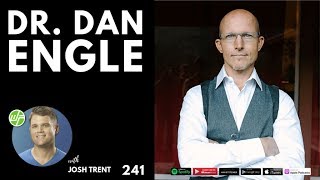
A recorded interview (Feb 19, 2019) where Dr. Dan Engle—psychiatrist/neurologist focused on regenerative neurology, psychedelic research, and integrative healing—discusses his personal recovery from multiple traumatic brain injuries and his clinical perspective on mental‑health crises. Topics include integrity and authenticity, the loneliness/anxiety/depression/addiction epidemics, a hierarchy of psychoactive medicines (level 1–3), the importance of screening/preparation/setting/integration for psychedelic work, float/sensory deprivation and meditation as preparatory tools, and the Satori full‑spectrum medicine approach.
Chapters
When I'm working with people, I'm curious about what are their motivating values and virtues and principles for life. And then the next sort of question is, now that I'm clear with how I choose to live my life, am I actually doing that? And if there's a wide gap between what I choose for my life and what I'm actually doing, then I'm living out of integrity. And it's kind of like skiing when we're learning how to ski ski. If we've got our skis next to each other, then we can propel down the hill in a really graceful arc. But oftentimes skis start to separate, then it becomes really uncomfortable. And the widening gap between how we choose to live in harmony and ideally in right relationship with everybody, including the planet, if that's how we're choosing to live, but we're actually living day to day in a very different way, then that gap gets wider and the discomfort gets wider.
In this podcast we're talking with Dr. Dan Engel, the one and only world renowned psychiatrist and neurologist in regenerative neurology. He's a psychedelic researcher, a peak performance coach, and an integrative spiritualist. He calls himself I love this. The ever Unfolding human. Wow. That is my story too. I'm also the ever unfolding human as so are you, my friend. Now, this doctor who's coming on the show today, he is not just vastly steeped in psychedelic research and all things plant medicine. He also has a unique background and passion for concussions, stemming from his own three decade investigation into the many modalities for healing his own traumas. Which is why today we're focused on healing the human in this sometimes overwhelming modern world. And what's fascinating most about this episode is that, yes, there is the right side of the page that says the goal of medicine is to facilitate the innate healing of the body and mind. But that is not the current Western construct. We're seeing this rapidly evolve. And Dr. Dan is on that edge of medical whole body evolution when we look at medicine, because as you'll see on the podcast today, he really understands what it means to have physical and psychic integrity in the human experience of our modern world. We also explore the Satori method. It's a way that Dr. Dan is helping people heal and have long term positive change, not just mentally and emotionally, but also physically. Tying in these three components of wellness. We also learn how he's helping A new blueprint for psychiatric healing to help decrease addiction, depression, trauma and the ever present numbers that are out there around ptsd, especially with or war veterans. I enjoyed this podcast so much. I've been looking forward to this for months. So I was so stoked to get on the call with Dan and explore this intersection of healing the human through different modalities. We talk about plants and entheogens, float tank, sensory deprivation, breath work, holotropic breathing, neurofeedback, meditation, vipassana. There is not many areas of healing healing the human that we did not explore. We also talk about Dan's specific approach to screening, the preparation for psychedelics and also the setting, supervision and most importantly the integration. If you yourself are on a healing journey or if you have a friend or a family member that is looking for deeper healing within themselves to really address the systemic root cause which is where most if not all issues originate from. Share this podcast with them. Share this to make sure that they can have a tool that can help them in their process in their healing journey. You can learn more about Dr. Dan Engel and our shownotes page at wellnessforce.com241 and if you are not a part of the Wellness Warrior VIP club, this is your chance. Go to wellnessforce.com VIP we're giving away unique discounts things that we do not publish to our email list or on social at all. This is going to be awesome gems for you to take and integrate into your wellness journey. Now let's dig in and with Dr. Dan Engel, the one and only right here, right now on Wellness Force. I am Josh Trent. This is Wellness Force. My guest today is a world famous psychiatrist and neurologist in regenerative neurology, a psychedelic researcher, peak performance coach, and an integrative spiritualist who calls himself the Ever Unfolding Human. He is the Medical Director for Revive Centers, a neurological rehabilitation center in Colorado focused in tbi, stroke, PTSD and other neurodegenerative disorders, and the medical consultation for onit, a company we know well, Human Optimization out of Boston, Texas. But our guest is widely known for his powerful and cutting edge work at an intersection of mental health, brain health and consciousness, but through his own journey of healing himself after six traumatic brain injuries, one of which happened just two weeks out from medical school, he found himself searching for the answers and eventually lost faith with traditional medicine to spend the next 20 years and over $300,000 to find those answers, which led to a deeper gravitas within himself, in part through the ancient technology of entheogenic plant medicines. Welcome to Wellness Forest. Dr. Dan Engel.
Excellent Josh, great to be with you today.
You know, this has been, as I was mentioning before, we recorded one of my most favorite research projects. Getting ready for this conversation. Two decades of work you've had, Dan, in some of the most fascinating healing modalities for us as humans. I love these conversations so much. So excited to talk about, you know, not just your personal journ, but for you to share with us your wisdom, this real clarity on the tools for healing humans that are out there not just for tbi, but also the human spirit. Dan, I believe the human spirit right now is being tested more than ever. I know you're in preparation. You're about to leave for something. Speaking of the human Spirit, this Vision 2020 conference in Sacramento, why did you choose to participate in this conference? I hadn't heard of it until doing research for us.
Yeah, it's a excellent opportunity to share the platform with a variety of different thought leaders in various sectors of innovation, technology, social justice, environmental sustainability, and frontier medical technologies. And this is where the psychedelic medicines come in. And when they invited me on board, actually it was through a friend of a friend. And I didn't really know the scope of the platform, but as I got to understand and explore it further, I just got more and more excited about.
Being a part one of the speakers. There is someone we know very well. It's Dr. Michael Beckwith. And also Marianne Williamson is going to be there. Have you had time to talk to them about the subject you'll be exploring? Have you ever come into any conferences with them before?
No. We've intersected again through Friends of Friends and even more recently with Michael Beckwith being affiliated with one of the medicine centers in Costa Rica that I've become familiar with. And I consult with similar centers in that same region. And so our Venn diagrams have been kind of circling around each other. So if we have the opportunity to talk, I think it'll be a rich conversation.
It's so fascinating to me how you said the Venn diagram because it's where the circles do overlap. And something that has overlapped for you in life is healing yourself and then taking that knowledge through your academia and also personal experience and truly walking a hero's journey. I flashback to this con we had with Kyle Kingsbury from Onnit, who I know you have a deep friendship with. And I believe it was his experiences through moving through some very, very uncomfortable thresholds that actually allowed him to be the Director of Human Optimization. Now, your role with ONNIT is quite different because from a medical perspective, Tell us exactly what you do for Onnit for people that don't know.
Yeah, it's been multi leveled in regards to the front facing business sector, so to speak. It's been in terms of product development. So I've helped develop a good number of their products that are on the market today. And then also more behind the scenes. It's been in team management support to the growing organization itself and in direct one on one as well as small group formats where one on one I've gotten to know a huge number of team members and then small group formats. We've shared retreats and these optimization retreats. We're going through shared processes of digging deep, exhuming the shadow, so to speak, bringing that into the light, having transcendent experiences that might be through breathwork or through hikes and vision quests, or through peak performance methodologies. And when we're in a shared experience and we're going through a transformational process, it really tightens the web of everybody involved.
The interesting part is I can distinctly remember we're walking around Paul Check's home. We did an interview with him at his heaven house and he said that the rock stacking area was very sacred. I'd love for you to talk to us about your relationship with Paul. He's one of our most trusted advisors when we look at this physical and emotional intelligence. How did you come to meet Paul?
I met him also through onnit. I happened to be in Austin and I was having a conference with Aubrey and some of the optimization team and it just happened that Paul and I overlapped at that same time when Paul was visiting the facility and bald brothers just kind of like instantly recognized each other and we just dropped into a variety of really cool next level conversations and there was so much synergy and resonance that we knew that we were going to develop a good friendship over time. And then I spent a few days with Aubrey and Kyle at Paul's place earlier this year, I think it was about six, eight months ago now and saw that heaven house and it's just he's got a really beautiful arena there and his library is gorgeous.
Right.
The different realms of consciousness and performance on multiple levels. And when I think of like body, mind, heart and soul, he's very tapped into all of those arenas. And when I got to know his personal development platform in the health coaching arena, also really impressed with the breadth and depth of it because I haven't seen many if any developmental platforms for performance that have been codified as well as his and I think that's one of the reasons that he's really trusted and recognized in the industry as one of the thought leaders.
Well, and I could say the same for you, man, because, you know, in preparation for this, just noticing the multitude of shows you've been on, and, you know, I mentioned a couple minutes ago, I think the human spirit is being stretched and tested now more than ever. Specifically people who have a voice at the leading edge of what this world needs, which I believe is a higher state of consciousness. It's not about just going to a place where we can take an antheogen, we can take a plant medicine. There's many different ways to get us to that higher state of consciousness. And then, of course, once we're there, then we can actually look around and see what else is possible. Because let's be honest, and I'd love your take on this, the current state of affairs in America, this revolution that we talked about with Paul. It's coming, and it's coming through some of these tools. What do you see? The revolution. What does that mean to you, the actual consciousness revolution that's happening right now?
Well, crisis precedes transformation every time, individually and collectively. So it depends on your perspective of what we're assessing, like the current state of affairs. In many ways, we're more abundant than we've ever been, and we're better off than we've ever been. There's more information that's being shared instantaneously. There's less pestilence and famine. There's more opportunity in a variety of sectors where there weren't before. There's less war. So those are all more like the abundance measures. What I see, though, in my perspective, because my pulse is on the thumb of mental health, or my thumb is on the pulse of mental health, I guess it could go the other way around as well. And in that arena, we're seeing more crises than we've ever seen. There's an anxiety and depression epidemic, especially in our youth. 200% increase in suicide in young girls 10 to 14 years old. Astronomical 22 to 35 veterans commit suicide every day. There's an opiate epidemic that is spanning the age gap. Used to it was like 20 to 40, mostly heroin abusers, and now it's younger and younger and older and older. A geriatric population that's getting stuck on opiate or pain medications. We have 5% of the world's population, and we consume 80% of the world's prescription opiates. Right. So there's this massive acceleration of mental health epidemic and a very interesting time to be on the planet because we can connect with people quicker and more easily and readily than ever before, but that's through a virtual and digital platform. So we're more digitally connected than we've ever been, but we're less socially connected than we've ever been. And there's this gap that's widening. And I believe we, as social beings bonded for connection, are finding a loneliness epidemic. And Vivek Murthy, the previous surgeon General under Barack Obama, actually coined that term. There's this loneliness epidemic, and we've seen escalating numbers of adults just feel lonely and disconnected. And it might be that. That the core issue that's driving all of these other psychiatric symptoms, including pain, addiction, ptsd, anxiety, and depression.
I love the way you explain that because I think about Gabor Mate, who is also connected to a center I know in Costa Rica. He has this in the realm of hungry ghosts. These hungry ghosts that really possibly are in alignment with what you said. This epidemic of loneliness. If something is in the dark, it just thrives and grows. But if we shine light on loneliness, if we shine light on what the suffering and the hurting that people are actually going through, that's where it can't live. And we can't take something that thrives in the dark, shine light on it, and expect it to flourish. This paradigm flip of loneliness, why do you think this is? Is it because the rise of social. Or what do you think is the contributing factor to this loneliness epidemic?
That's an excellent question. I think there are a variety of different ways that we could look at it and a variety of different causative factors. One is this digital age and social media and how we present ourselves in a particular way that is oftentimes inauthentic to actually how we're living our lives. So it's great to post our best stuff on Instagram and Facebook, but is that how we actually feel about our life? And when there's a disconnect between what we're presenting and what we're feeling, then we're experiencing deeper degrees of inauthenticity and a lack of inner truth and integrity. And when we're out of integrity, there's an effect mentally, emotionally, and psychically. So this digital age is just a fast. I mean, there's a lot of benefits, and there's some shadow sides, too. We also live in a really accelerated quickening of time urgency. And so, for example, if somebody's texting me a question and I don't get back to them right away. Oftentimes the response is either like, are you upset? Or is something wrong? Or what happened?
I've caught myself in that space before and it's like, wait a minute, I actually am aware, I'm watching myself be upset that somebody didn't text me back. And I'm just like, what's going on here?
Right? And that's the zeitgeist. That's the current cultural milieu, that's the environment that we live in. And just as Gabor Mate says, you can't separate the mind from the body, you can't separate the individual from the environment. So we live in an environment that's accelerating in time urgency. The number one cause for stress is time urgency. The number one cause for chronic disease is stress. So there's this linear relationship between this accelerated, fast paced digital age that our nervous system has not genetically evolved to be able to adequately engage or adequately process without some negative ramification. So people have higher degrees of insomnia all the time because of this. Whether we talk about like blue junk, light kind of exposure at night, or the restlessness of feeling like we're not getting enough done or starting our. I think it was something like 65, 70% of people start their cell phone within 5 minutes of waking up, right? So there's just this accelerated experience of a disconnect from the natural rhythm and the natural pace that we're genetically programmed to, which is essentially the pace of nature. And for me, when I lived in the jungle for a year and I went deep in the medicine space to learn about ayahuasca and to learn about the lineage and the tradition that it comes from, I was living off grid, no running water, no electricity, no other gringos. It was really a tucked away time. And I was very much living in the pace of nature. And then I came back into the States and it was this just assault on the senses. And I ended up living in a tent for a year just to get my like energy body recalibrated to the current pace. And it was one of those reflections for me, like a real world reflection, like, wow, we as a society are really living outside of the natural order that we're used to coming from. And yes, over the last 170 years, since the industrial revolution, we've been quickening our pace and there's still a lag time for our nervous system to catch up because the time urgency is only accelerating.
You bring up something fascinating about integrity. You know, you mentioned the physical and the psychic integrity. How would you define that? Because I think for some time now we've realized as a collective that we are out of integrity. And we're using a lot of different things to cover it up, to kind of salve it. How would you define that? The psychic Integrity.
I think about integrity being a sense of wholeness and a sense of truth. So to be integrated. When a system is integrated, it's connected and woven together, and there's usually a harmony or a sacred order to it. In regards to integrity with truth, it's integrity with our word, it's integrity in following through with our commitments to ourselves, not just our commitments to one another, which are also important and being good with our word, it's also the integrity to the things that we find most valuable. And when we, and many people don't even know or haven't really done the internal investigation because they either weren't taught to or weren't just, like, driven to, it's something I geek out on a lot. I'm constantly. When I'm. Particularly when I'm working with people, I'm curious about what are their motivating values and virtues and principles for life. And oftentimes when we start to noodle that or get more clear around what those are, then the next sort of question is, now that I'm clear with how I choose to live my life, am I actually doing that? And if there's a wide gap between what I choose for my life and what I'm actually doing, then I'm living out of integrity. And it's kind of like skiing. When we're learning how to ski, if we've got our skis next to each other, then we can propel down the hill in a really graceful arc. But oftentimes when we're learning how to ski and skis start to separate, then it becomes really uncomfortable. And the widening gap between how we choose to live in harmony and ideally, in right relationship with everybody, including the planet. If that's how we're choosing to live, but we're actually living day to day in a very different way, then that gap gets wider and the discomfort gets wider.
I love the analogy, too, of skis widening. We can only use our groin, our adductors, to hold that for so long before we do the splits and get injured. And I think collectively, what's going on right now, we have an economic modality that isn't serving in an egalitarian way. I think there is a stronger way to have capitalism be more egalitarian. Then we also see this Widening of the legs as you've talked about, and this spiritual malady that so many people experience where alcohol, marijuana, any kind of drug, even shopping, whatever it is. Dr. Dan like these things come in to give people just a brief respite, just a tiny bit of breath that they really truly need. And what's interesting about this is that you talk from this place of 20 years of actually healing yourself TBI. Speaking of skiing, like skiing was one of your TBIs. And this voice that you have, it comes from this place of actually going through. Man, I can't even imagine what it would be like to have six head injuries, six traumatic brain injuries when you were in medical school. Like the two weeks that you had before medical school started, you did this peer dive, you had an injury. Did you even think at that time, did it ever even come into your consciousness that you would go through the path you did? In other words, going into a field that's involving brain and neurology and then having to heal that yourself, was that ever even a thing in your consciousness?
Not at all, no. I went to college to play soccer and we had a great team who were one of the best in the nation. And that was like my goal. I'd been groomed to play soccer my whole life and college and potentially going pro was the goal. And then halfway through my college career, my advisor asked me what I was going to do with my chemistry degree and I was like, I don't know. And he actually recommended medicine. And the more I thought about it and looked into it, the more I enjoyed the idea of getting into either emergency care medicine or surgical care. Because it's quick, it's high paced. When you go in, you know what the situation is. It's hands on. When you leave, you know if you succeeded or not. It was, I was super type A, very goal directed, captain of the team, 4.0. You know, just like I cut you off the team if you were even a whiner. It was just this like really intense time. I was really intense in high school and college. And then when I broke my neck two weeks before medical school, it completely changed the trajectory. Wearing that halo for three months as I started med school was finally a process of slowing down and then realizing I had been living my life according to others expectations and trying to fulfill others desires for me, which became my own over time, which is what kids do, they adopt their parents expectations or the society and environmental expectations finally started to slow me down. And I became more reflective during medical school and I realized that I Didn't want to be married to my job. I didn't want to be in the hospital for 100 hours a week. I'm glad there are people that do that. But. But when I really got in touch with what was true for me, I realized that that wasn't the right fit. And because I had had numerous head injuries and almost a spinal cord transection and was paralyzed, I was really curious about neurology. So then I eventually got into psychiatry and neurology, and even at that point, I didn't know what I would eventually get into. So I did all my neurology and psychiatry training, got board certified, was running a clinic, and then I was introduced to ayahuasca. And then in one weekend workshop, I learned more about myself than in a whole decade of psychotherapy. And I was like, holy cow. What is this fascinating medicine that's creating this awakening experience that I've never heard of after spending half of my life studying the mind? No one's ever mentioned anything about this.
You were in school. You were actually healing yourself while you were taking the academic literature about the brain. What was the frustrating part, though, because you mentioned online that you didn't get the answers you were looking for. Like, what did you receive as far as how to heal yourself? That didn't work.
Well, the medical paradigm is a good. Is good for acute care management. We're good on the battlefield. We're good in the emergency department. We're good in triage care. And that's where pharmaceuticals are good. They're big sledgehammers that arrest pain, including psychic pain or psychiatric symptoms, depression, anxiety, addiction, et cetera. But psychopharmacology, or the prescription medicines will not get to the core issues. They're not designed to do that. They're actually designed to calm the symptoms, which tends to distance us from the core issue. And I just. I wasn't very excited about the transition that psychiatry was taking during my training. It went from psychodynamic psychotherapy, which is more humanistic and inquisitive about core issues, into psychopharmacology and everything we. Our department had changed everything went over to medication research. And I was like, yes, medications are. They have their place, but they have a minority of the place. Yes, it's helpful to help people relieve their suffering, but it's my belief that we do that only while we're looking for the core issue and the causative agent. Otherwise, we're. We're assigning somebody a prescription for life, or we're hoping that it just spontaneously.
Remits I'm sorry to interrupt you because I had a burning question here. Why do you think you mentioned the core issue isn't addressed in the way that the psychopharmacology is addressed? Why is that? What is it about our current model in psychopharmacology versus that core issue exploration? Why isn't the core issue explored more?
Well, it's a challenged system. The current amount of time that your average physician is able to spend with their clients is like 11 or 12 minutes. And that's because of insurance reimbursement rates and the entire medical architecture. With psychiatry, the usual treatment models are cognitive behavioral therapy and talk therapy. And what talk therapy does well is it re establishes a trusting relationship with a person that's ideally altruistically serving our better outcome without bias, just presence, curiosity, inquisition. We get into the material, but it's challenging because in developmental child psychiatry research, we see that the majority of the personality is set by the time we're five years old. Which means, like by the time we get into school, we're mostly kind of who we are going to be as a personality construct until we start doing the deeper work and getting more clear on what makes us who we are and why we're believing the things that we do about ourselves in life. And before five years old, we haven't connected the language center with the memory center. So if most of what makes us who we are is solidified even before we have a connection between language and memory, then it's going to be hard to just talk about the issue because we don't have recall. There's not a narrative. So it's a challenge system kind of just straight out of the gate. And then with what doesn't work for therapy, like if we can't talk it through, then we rely on pharmaceuticals to manage the symptoms. So it's a system that's built for acute care management, but it's horrible at chronic care support and core issue resolution. Hence my excitement about working and supporting the legalization and the right sharing and availability of the psychedelic medicines, because many of the medicines are good for the core issues were psychiatry's weak. The core five primary archetypes of psychiatric symptoms. Depression, anxiety, ptsd, addiction and pain. Many of the psychedelics are good for one, if not all of those. Psilocybin, MDMA, LSD, LSD has 40,000 case reports of benefit in the 50s, 60s and 70s. But there was this cultural backlash because people started misusing it.
Yes, this is really what comes up for me when you're speaking about these Entheogens and these different psychedelics being a tool because they're not for everyone. Dr. Dan like, we understand that they have incredible power, but there's also a respect that they deserve and a caution that they deserve. There are habits to success, and whether you're trying to achieve a better level of wellness or go through a healing journey, the power is in the plants. We've talked about this a lot on many podcasts, but what makes the biggest difference in my life is feeding my body on a cellular level, the micronutrients it deserves. This is why for the entire year and then some, we've partnered with Organifi, our show sponsor, to bring you not just the red and the green juice, but also the gold this entire day system. Green in the morning, red in the afternoon, gold in night. To help you sleep. All of these juices have plant compounds called adaptogens. Adaptogens are very ancient intelligence that'll get down into the roots of your system and give you the energy that your body needs. With the green and the ashwagandha and the red and the cordyceps and the gold. With a lemon balm, we're talking about energy when you need it and restful sleep when it's most important. Head over to Organifi.com WellnessForce. Use code WellnessForce. You get 20% off your bundle. Get the superfood bundle to get the deepest discount possible on the red, green and gold juice so you can have energy and rest when it matters the Most. Go to Organifi.com WellnessForce. You're part of this crew, part of the Wellness Force audience. You get a big 20% deep discount by using code WellnessForce. Now let's jump back in with Dr. Dan Engel. Have you seen experimental things coming through the woodwork now where you're a little concerned about them? In other words, you know, ayahuasca, a lot of plant medicines. I think all plant medicines are schedule one. If we just all of a sudden make them legal, don't you think that we need a little bit more of a learning curve as a collective before they become completely legal?
I do. And that's where I get into these really fiery debates with other people in the field, because some people believe that it's our right to be able to use what comes from nature. Right. Ayahuasca, straight from nature. Iboga, straight from nature. Psilocybin straight from nature. Cannabis is straight from nature. I mean, it's also just ludicrous that cannabis is still federally Schedule 1. And Schedule 1 means there's no known medical benefit and it's highly addictive. Well, we know that most of the medicines we just spoke about have extraordinarily good medical benefit and they're much less addictive than even something like nicotine, alcohol or caffeine. When you look at the safety profile, LSD and psilocybin have no known lethal dose and they're actually supportive for addiction recovery. So just from a safety standpoint, they don't meet the criteria for schedule one and they're extraordinarily beneficial. And your points vary. True. I don't believe everybody's ready to have a big experience in a psychedelic medicine space. So there is an arc of preparation and integration. Those are the two bookends for the experience itself. And so there's an initiative on the Oregon ballot for 2020 for people to be able to vote in legalization of psilocybin. And I think it's a very well orchestrated proposition. It's from ops, the Oregon Psilocybin Society, and it is supporting legalization for therapeutic use for people that are over 21 that have had medical clearance at registered centers with trained providers in a three minimum session arc. That means one session, four preparation, one session for experience, one session for integration. And the curious thing, one of the cool things about this proposition, I don't have any attachments or affiliations with them. I just saw it and was like, oh, that's really well thought out. It's as a hybrid model between recreational use and medical use. So it allows people to opt in to have an experience after being medically cleared, which means that they've been assessed by a psychiatrist that understands these kinds of experiences. They've been deemed safe and ready to participate. They have an inclusion of preparation to understand what they're getting into. And oftentimes many people that would be curious have already had experiences. So they have some kind of platform and background. But how it's different from medical legalization is that you don't have to meet a particular criteria. You don't have to have florid depression, anxiety, ptsd, addiction or pain. You can simply opt in if you choose to, under the care of a registered center with trained providers.
This seems the most exciting to me because then there's, like you said, there's a screening, there's a preparation, especially like, I don't even know for, you know, if there's anything like this for ayahuasca or for any of the plant medicines that you might drink. But, you know, there's a specific diet that you prepare for as well this benefit to risk ratio I've heard you talk about for plant medicines and entheogens. When we look at ayahuasca specifically, what is the path of preparation for this? What is that arc of preparation? Because we know that if somebody's never had any meditation, no one's ever spent any time with themselves, just with their soul, it's probably not the best idea to go into the jungle and do five days of ayahuasca.
Very true. Although I do think there's something to be said for the pilgrimage down to a center to have that experience when somebody is ready. One place that I consult with is called the Temple of the Way of Light and they are essentially the largest ayahuasca center in the world. They've seen over 5,000 people come through their facility over the last 10 years and they've only had a handful of negative outcomes. And those are usually because people were either on psychiatric medications that didn't say anything, or they had a previous history of psychosis and mania and didn't say anything. So, yes, there are clear psychiatric and medical contraindications and reasons that people definitely should not do that work. That's just one example. Yeah. And then in the preparation, when we get in touch with people's readiness, I think of the medicines in a hierarchy. A level 1, 2, 3 experience or process or level system. Level 1 medicines are fairly easy entry point, fairly low side effect potential if held in the right set and setting, which is a safe setting. It's meant for deep work. It's not like tripping on psilocybin at a rave, which is a completely chaotic experience, or going to Burning man and drop an L for the first time, which is a completely chaotic experience. So the therapeutic window is set and the setting, and it's being supported by somebody that is caring and can at least intervene if necessary. So some kind of sitter or ideally a trained facilitator or therapist. And the level one medicines would be like lsd, low dose, because high dose LSD can break the glass ceiling and have really bad negative impacts. And I've seen that happen. Low dose lsd, low dose psilocybin, mdma, ketamine, cannabis, those are all relatively easy entry points. Still, I have to just say for your entire readership and listenership, all of those are still Schedule 1, except ketamine and cannabis. Those are actually legal. But I'm not advocating people just randomly opt into an experience. I'm just giving you the kind of the hierarchy. So that's Level one. Level two is like ayahuasca, peyote, San Pedro. The reason I put those in level two is because those come from lineage and years, decades, centuries of trained facilitation passed on and people being trained, oftentimes since they were young, to be in this facilitation role. So instead of going to, like, Western grade school, they're learning shamanism and energetic medicine and how to intervene physiologically and energetically on the behalf of one of their clients. So there's a level of sophistication that goes into providing and supporting people through that process. And then level three is ibogaine and dmt because the experiences are really strong. With ibogaine, it actually lasts a long time and there can be some cardiac risks associated with it. So there's more oversight that's necessary.
These three phases, I love the way you laid those out. These are linked in our Show Notes today. So, guys, obviously you're excited about this. You're enthralled with this information, just like all of us. Go to go to the Show Notes page right now, wellnessforce.com radio we're gonna link a few videos. Dan. One of them was the documentary that you did with Aubrey where you guys went down to the jungle. Another one, though, is where you actually talked about these bookends of the screening, the prep, the setting, the supervision. And I wanna go back to this because, you know, the caveat here is I am not an advocate for everyone, just using these human healing tools in a haphazard way. This has to be a very sacred process. It brings me to something that you actually posted on. And the quote is very short, but it's very succinct. One of your favorite quotes, you said, everything is sacred, and it's from Taiku Wakin Wanicello, I believe, is how you pronounce the name. This sacredness about this system of healing. Can you share with us what that actually means to you? Like, why is that quote on your Facebook and why do you believe that this is such a sacred pathway for people?
Yeah, that really is just one of the core questions and the core essence of this entire conversation. And I appreciate the depth and the meaning of your question. So Taku wa ka waniche lo is Lakota, and it translates into everything is sacred. And I've studied a variety of different paths because I get curious about different cosmologies and spiritual practices and consciousness tools and technologies. And so I've studied Tibetan Buddhism and Zen Buddhism and Lakota medicine and Ayahuasca shamanism and A variety of different arenas. And we see that the major spiritual disciplines and traditional paths all speak about the same goal. The Dalai Lama says this too. Everybody's seeking the same thing. Happiness, fulfillment, peace in their minds, harmony in their relationships, fulfillment. We're all going to the same mountaintop. We're all starting at different places and we're taking different paths, but we're all going to the same thing. And when we start to even look at the field of quantum mechanics and morphogenic resonance in Rupert Sheldrake's description of morphogenic resonance, and the fact that at the quantum level, as above, so below in the microscopic level, things have a level of interaction that can't be readily explained easily by our fancy scientific tools and technologies. Einstein even described these effects as spooky because he was like, I don't know what they are, but something's happening. And it's my belief that everything can be oriented towards a sacred process, even my suffering. One of my favorite books is Man's Search for Meaning, Viktor Frankl. And in that it distills down to one summary statement. I mean, it's probably not fair to say only one statement, but there's one quote that is the summation of much of that book and that is the last of the great human freedoms is the ability to choose one's attitude in any given circumstance. And for me, that was super powerful. When I was reading that book and it was in that year of integration and transition back from the jungle into like society and I was having a hard time and I was actually suicidal, I was ready to cash in my golden ticket. Why?
Why were you suicidal? Like, what was that?
It was the fact that I had gone so deep in the medicine space and I was so disconnected from who I had been like, who. So much of my identity was wrapped up in these expectations of who I was as a physician and as a partner and as a son and as a previous husband and X, Y and Z. And I was realizing, like, I have adopted so many other people's expectations that they've become stuck like these imprints on my own self view. And the more I went into the medicine space and I was releasing all of these previous identifications, it came back to the point that I was really essentially kind of like when you get your cast removed and the skin is really sensitive underneath until it kind of gets worked again. That's how I was coming out of the jungle. I was super sensitive and I wasn't sure yet who I was going to become. I was in this Bardo phase. The bardo is a Tibetan word for in between the lives or in between the worlds. And I was very much in like the cocoon. I was no longer the caterpillar and I had yet to become a butterfly. Not to say that I'm a butterfly now. Sure. Still a butterfly in process, as we all are. And I was in this deep phase of shadow, the dark night. Thomas Aquinas, speaking of the dark night of the soul. It's my belief the dark night of the soul is extraordinarily important, very beautiful, quite suffering. And it can be impactful and important for us gaining more clarity about who we are actually who we choose to be internally and externally and what we're here to do, to share our own unique genius and blueprint for life with the rest of the world. Because it's still fascinating to me that every snowflake is unique. When you look at it microscopically, it's like an unfathomable data point in nature. And I also believe that every human is unique. We all have this unique aspect and fractal of life force energy. There was one inception point in life. We all live on this place that we share with other species in this earth that we call home. And ideally we get to come back to a place of harmony with all of our relationships, not just seeing ourselves as the privileged apex predator, to the exclusion of the 150 to 200 species that go extinct every day. So when we come back into harmony, I do believe we're going to be able to start reaching our full potential. Our intellectual potential is already like rampant. We're really creative. We do new novel things all the time, better than other species can because of this glorious brain. That may have come from the stone.
Ape theory, but the brain gets us in trouble because so much of this conversation is tied around that question. Everything is sacred and why? Well, the sacredness, it's such a huge part of our existence here in the, in this meat suit. We just happen to be like a spirit inside of it, a consciousness inside of it. And I think about a phrase that you also talk about too. And it's in this version of medicine that I haven't really explored too much. Full spectrum medicine. It's the satori. The satori, from what I heard Alan Watts talk about. I used to listen to Alan Watts every morning when I was in the shower. And I remember him saying that satori and how this might relate to medicine. I'm curious about your opinion on this. It's really about seeing oneself, you know, enlightenment to satori, to see oneself, this satori, there's a full spectrum medicine. You actually use the Satori method for the multi level healing. What is this to you? Why did you choose that name Satori method?
I really appreciate you bringing it back around to Alan Watts. I didn't actually know that he had ever spoke about satori. So that makes me even more excited to be able to codify this system of personal development which is essentially orienting and clarifying our personal truth and being able to more readily actualize that truth for ourselves and into the world. But coming to truth is not a comfortable path. It's not an easy path. We don't do this work because it's easy. We do this work because it's the path towards our liberation, for lack of a better term, our greatest fulfillment, our greatest expression, our authenticity, beauty being readily available. And you know, there's this idea of radical honesty which I agree, like, yes, let's be authentic and expressed and let's do that with mindfulness and skill so that we're not just being jerks because we're just being authentic with ourselves, but to the exclusion of other people's feelings and experiences. I think there's an evolution of our consciousness that moves closer and closer towards compassion and presence and service for others, reciprocity and forgiveness and love. We gradually move from children to wiser adults through this developmental arc. And hopefully we move more and more from the me, mine and I to the us and the weight. And there's a process that these medicines consistently support in bringing up our shadow and our core wounds onto the mental landscape so that we can learn from them.
You said that before the age of five, you know, from conception to five, that's where basically the fabric of our human, of our psyche is formed. And then through this satori experience, are we going back to those first five years and possibly seeing the light and the truth for how things really are?
Exactly, exactly. And we're doing it from the perspective of our wiser self as well. So we're healing these different aspects of ourselves. Many people at times of confusion or trauma have split off from certain aspects of themselves. This is the parts analogy of psychology that actually has a lot of merit. When we have different parts of ourselves that are being expressed, these different archetypes, these different attitudes, these different energies. It's kind of like we are made of a symphony of selves. Actually that's a term from Jim Fadiman, who's another amazing researcher and thought leader in this medicine arena. And these symphony of Selves ultimately codify into a conductor or an over self experience where we can, if we can recognize that there's a rebel and a child and a driver, like an entrepreneurial thought leader and a lover and a king or a queen and the joker, the jester and the warrior. When we're made up of, each of us is made up of different parts and selves. And when those parts and selves are all acknowledged and made valid and given voice and expression in a good way, then we become more whole through that process, we become more available to be authentic and to honor everything that's choosing to move through. And we can do that better and better over time because those parts of ourselves that haven't been acknowledged are going to be coming out in repressed ways behaviorally or through our belief systems.
This is about personal empowerment and fulfillment. It's interesting because the way that you've described this on the website, we'll link this full spectrum medicine document. There's short term therapies and then there's more of the integration and a longer term lifestyle. Can you paint that picture just on a high level for people of what this experience actually is?
So going through a process of truth or satori or becoming more integrated as a whole human, there's a lot of different ways to do that. Medicine work is one of those. As well as experiencing other altered states through various practices like holotropic breath work or vision quests up on the mountain or extended periods of fasting or deep states of meditation or shamanic trance dancing. You know, there's a whole lot of different ways that we engage practices that alter our state ecstasis. Right. Jamie Wheel and Steven Kotler wrote this great book, Stealing Fire, which is kind of a treatise on our drive for altered states. Joseph Chilton Pierce wrote a book called Biology of Transcendence where he talks about like our hardwire for transcendence and when it's not expressed, it comes out as violence.
Yeah.
We are coded genetically to be novelty seeking and to experience these ecstatic states when we get clear with who we are and we bring our shadow into the light. Like you were talking about that analogy before, which I like that analogy. Bringing the shadow into the light so we get to know it. And then through that process it oftentimes helps in the integration to work with the healing. Because the medicines don't fix us and they're not designed to fix us. This is our work to do. The medicines help us get clear with our truth. Truth and they get clear on the direction of being Able to actualize that truth, like next steps and orientation. But they don't do the work for us. It's not a quick fix.
Yes, they open the door. I mean, these experiences of higher consciousness in psychedelics, they open a door for us, but it's our soul's decision to actually walk through the threshold to actually do the work. So all the things we've explored today, they're tools. Right. And so I believe that that plant medicines and entheogens are one of those tools. Before we say goodbye, though, I'd love for you to talk about sensory deprivation and meditation, specifically those two pieces. How are you integrating those into the center in Colorado and then also in your own practice just outside of that center? What do those things look like from a practical standpoint?
I am excited at flotation therapy as much as I am about psychedelic medicine because they serve such a great foundation for people to get in touch with the shadow or to drop into a personal reflection and being able to find their inner central column where they're like their core. And if somebody can't hold it together in a float tank, they're going to have a hard time holding it together in a medicine experience. If somebody's curious about having an experience, they'll say, do you float? Do you know how to float? Have you floated? Float at least a handful of times, and then you'll be much more ready to have an experience.
Yes.
And they also physiologically recalibrate the neuroendocrine system, or they reestablish better connection and optimized function in the brain and the nervous system and in the hormonal system. So if somebody's been jacked up in fight or flight and their cortisol is high, then being able to go into the tank rests and rehabilitates that pattern. It recalibrates the system towards optimal function. I've had clients being able to cure their anxiety in the tank, come off of prescription pain medications in the tank, because it starts to stimulate our own endogenous opioid production. There's a variety of different ways that float tanks are extraordinarily amazing. And another great thing about is everybody can float. It doesn't matter how old you are. It doesn't matter if you're on medications. There's really no contraindications to floating. So it's one of those tools that the benefit is extraordinarily high. There's very little risk. And for the vast majority of people, when they float over a period of time, they usually do a float Stack, which is like six or ten in a two or three week period. And on the other side you will feel different. Everybody does.
And that feeling is a re patterning, a re imprinting of what a normal operating code of the nervous system gets to be. This is so fascinating to me, Dan and I know we're getting to the end of the podcast here. I'd love for us to end with your view on meditation because we know that there's a preparatory phase for psychedelics through floating and sensory deprivation. But what about meditation and vipassana?
I think meditation is another extraordinarily good platform. I see flotation as meditation on steroids. Now the only Chad, the one area where meditation is not great, or mindfulness based meditation. There's a variety of different meditation styles. I think each of them has their place. Mindfulness meditation can be extraordinarily helpful, but the one area that it can be potentially harmful or detrimental is if somebody's very traumatized, if somebody has active ptsd and essentially if they're being mindful of their thoughts and their feelings, then they can get trapped in this cycle of just going through and through and through the trauma experience. So it's a re experiencing pattern. So meditation in that arena would be more guided and supported and directed, like visualization, progressive muscle relaxation, being able to follow breath cadence, like with heart rate variability. Those are more externally guided and oriented. So meditation extraordinarily good platform. I think it has its indications and sweet spots for different people at different time. But again, you're bringing up a good point, which is if we can solidify the foundation to be able to self regulate better and better, then when we do come up in close with our core issues and our shadow material, then we're more willing and ready and able to process it, learn from it, heal it, integrate it and become more whole.
And I love the visual. This is why I love audio, because people are visualizing. Okay, Dr. Dan, like I know that maybe in my future psychedelics are going to be a healing capacity for me, but I get to give myself this arc of learning where I sit with myself. I do sensory deprivation and floating. Maybe I do some breath work and maybe I even use, you know, some self, some cranial stimulation, things like this. There's a way to get people into this. And this is why I wanted to bring you on the show. And I'm so excited about the work you're doing in the world. I cannot believe how fast our hour went. Like I am, I'm looking at my notes. We like Scratch the surface on your work, man. But we know you got to get to this conference to take a breath here and to actually allow this to unfold. How do you see wellness? What's your definition of wellness? With all you've been through and all the ways that you use your expertise to help humans Heal, how does Dr. Dan Engel see wellness? What is your definition of that?
That's a great question. I don't know if anybody's ever asked me that question. So as I just shoot from the hip, I think about wellness in the arena of integrity. And there's that term again. Integrity and optimization in our core four levels of experience, body, mind, heart and soul. And when we're integrated in all those aspects and what Paul Check would say, they're marching in step with one another. They're oriented towards values and virtues that are aligned for particular mission or service or a fulfillment in giving back. When we're aligned energetically in that regard and we're also optimized in function in that regard, all aspects of ourselves are online and serving a particular outcome, then I think wellness is just the natural product. I think it organically unfolds.
Thank you so much for sharing your answer. You know, this intersection of physical and emotional. Dr. Dan, it's where we like to explore the most and we've been so fascinated with what you've been sharing. And I want to end our podcast with a quote from the homepage of your website. DrDanAngle.com is where we're going to link all the information people can explore more about the work you do. And you say very eloquently here, very succinct. The true goal of medicine is to facilitate the innate healing of the body and mind and thus support you to become whole, happy and free. Dan Angle, thanks so much for coming on the show man.
It's been great. Josh. I look forward to our next conversation.
Hey my friend, thank you for hanging out and growing with me today. Everything you learned on this podcast starts with your morning practices. So from over 200 world class guests and counting, we've distilled the gems, the best of the best science backed practices down into a 21 minute morning system guaranteed to increase the positive flow in your day. Get this free and powerful 20 minute, 21 minute life changing system over@wellnessforce.com M21 if you enjoyed this episode, tap your phone, share it with someone you care about because that is how we all get better together. Supporting the show is easy. Leave us a five star review right now from your phone. It helps us reach other smart and conscious people like you. Either tap your phone and hit the link in purple that says review this podcast or go to wellnessforce.com review. And this show doesn't stop here. We're continuing the discovering process in our private Facebook group. You can be a part of it. All you have to do is go to wellnessforce.com group and I'll welcome you at the door. Okay. Now you get to go out into your world and live your life well. So until I see you again real soon, I'm wishing you love and wellness.
More from Josh






Your child's future start before pregnancy... and even before conception! #podcast

MD Reveals: Your Healing Creates Your Child's Reality (The Souls Coming In Need Strong Bodies)



