Special Release: Anders Varner & Doug Larson From Barbell Shrugged
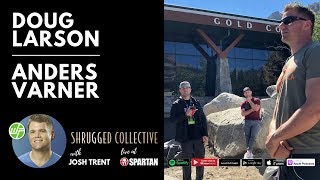
Live special-release podcast episode recorded at the Spartan World Championships (Lake Tahoe) featuring Josh Trent interviewing Doug Larson and Anders Varner (Barbell Shrugged / Shrug Collective). The conversation mixes on-site color (race, recovery, events) with deeper discussion of fitness culture, shared suffering as social bonding, entrepreneurship (origins and team structure of Barbell Shrugged/Shrug Collective), parenting and time allocation, habits for health (daily training, sleep, diet), emotional intelligence (ego vs. soul, meditation, vulnerability), personality frameworks (Gretchen Rubin’s Four Tendencies; Myers-Briggs/Big Five), and definitions of wellness (inner peace, attention/intention/manifestation). The episode closes with promotion for Wellness Force resources and guest contact links.
Chapters
Everyone, in every choice or decision you make in life, there are positive and negative drivers of those decisions. There's kind of like the love based, positive, I'm doing this for positive reasons. Then there's like the negative side of it where you're doing it out of fear. All those things are going to be simultaneously competing for your attention. The more emotionally stable and happy you are in your life, the more honest you are, the more respectful you are to other people. The more you. You're kind of true to yourself, like we talked about earlier, the more likely you are to be doing things for positive reasons and not be doing them out of fear and frustration and anger.
You go through business and you go through training and you go through life and you could just talk about the metals and the things you've conquered.
Yeah.
But there's no good story to it until you start at the beginning. And it's like we were here, we worked really hard. Here's what we learned about ourselves, here's the pitfalls, and then here's how we overcame it and how we grew as people. The Emotional intelligence piece is like the growing piece of the entire story.
That is Doug Larson and Anders Varner from the Shrug Collective. And this is a special release episode on Wellness Force Radio where we discover the physical and emotional intelligence to live life well. In this special release podcast, we bring you Doug Larson and Anders Varner live from the Spartan World Championships in Lake Tahoe, California. Now, Anders and Doug are friends of mine. I've got to know them over the past, actually more than three years. They are both hosts of the Barbell Shrug podcast, which is part of the Shrug Collective. If you haven't heard of the Shrug Collective, this is a network of fitness, health and performance shows that really helps people achieve their physical and mental health goals. Now, I love this because the physical and the emotional is where we play at Wellness Force. And so I really love these guys. They went many different places in this conversation. We got to record this at the finish line when where there was like music in the background and there was people finishing the Spartan race. And it was just this hotbed and kind of this swirling energy of creativity and conversation and connection, which is where Doug and Anders and myself really went. This was one of those triangulated conversations where we all talked with and through each other because their lessons over 40 plus years combined in SNC and strength and fitness. I had been looking forward to actually interviewing with both of them for a long time. So this was a cool moment that it got to happen live. For your listening pleasure so we can explore this intersection of the phys physical and the emotional. We talked about what it's like to actually be instead of doing in the fitness world, how mindfulness and meditation and also just conscientiousness play into the ever unfolding world of wellness. I share a little bit about my story and my vantage point on the wellness industry, as well as how we can actually navigate this tricky world of health and fitness in the modern world. Because let's face it, we're not getting any less busy. Our lives are consistently more full. So it's up to us to take this responsibility, to really know our tendency type, to understand who we are at a fundamental and basic level so that we can celebrate that. This episode was great for me because I got the excitement of co creating this wonderful conversation with two guys that have been in the health and fitness industry for so long. And I'm really stoked to hear your feedback on this podcast. We're talking about it in the Wellness force group@wellnessforce.com group and if you have not signed up for our VIP club, the Wellness Warrior VIP Club, this is your opportunity. Go to wellnessforce.com VIP we're going to be releasing some special content there in the next few months, as well as early access to events and first in line for podcasts. So go to wellnessforce.com VIP and I will welcome you at the door. I think you're going to love Doug and Anders personality. They are kind of like movie characters. And you'll see in this conversation where we go to some interesting places as Doug is the analytical side while Anders brings the smile and the energy. They both have this synergy between them that I believe is why Barbell Shrugged and the Shrug Collective is so special. Make sure you head over to shrugcollective.com, check out the Barbell Shrug podcast and then take a deep breath because here comes Doug Larson and Anders Varner live from the Spartan Race in Lake Tahoe, California, on this special edition of Wellness Force.
Are we recording?
Sure are. Now we're rolling. Let's do it.
Welcome to Barbell Shrugged. I'm Anders Barner hanging out with Doug Larson. And we can also say, how do you intro your show?
Welcome to Wellness Force Radio. This is Josh Trent.
Like that. We're doing the co show today. We are here in Lake Tahoe. Doug and I recovering. Everyone's in recovery mode right now, right?
For more than one reason.
I am recovering. My feet are a little beat up. We ran 13 miles. Doug Larson, recovering 13 and a half miles. Josh Trent. Thirteen and a half thousand beers last night.
The handful of times I drink a year, this was one of them. So I'm like, first time ever doing a podcast. A little bit feeling when you let.
When you take the cage away from your own life, things get carried away.
Your first hungover podcast. Congratulations, dude.
Thank you.
That's a big milestone.
Thank you. I appreciate it.
You're a real podcaster now.
Yeah, we had a big. We had a big night last night. Hanging out with the Mind Pump guys.
Fit Aid guys.
Fit Aid guys. We are at the fit 8 booth. All the people are hanging out. It's super awesome here. What have you been. What have you been learning in. Is this your first Spartan?
This is my second year Spartan.
You did last year.
Last year was really cool. This year was a lot more organized. I feel like they have all their T's and I's dotted and crossed. You know, I've really been learning, though, is like, these people that suffer, man, they love to suffer together, and that's a continuing threat.
Isn't that everybody? Like, that's the CrossFit world. That's the marathon world.
I think we all share that. It's like, I enjoy taking my body to places where I kind of feel like I want to cry, and then I feel the gratitude afterwards.
Well, the easiest way for me to make friends is to do something like this.
Yeah.
Like, yesterday we went running with Cali Bundy and. And Evan DeMarco from Omax. And, like, I. I know those guys. I'd already met Evan, and we did a really awesome show together and whatnot. But, like, after running on the mountain for five hours, just, like, hanging out, casual conversation, like, enduring the. The suffering that comes with fucking hiking to the top of a actual real mountain here in Tahoe and then getting done and grabbing beers and doing a show, like, yeah, I feel like, you know, 12 hours is a huge difference in how well I know those people. And if I was just, like, hanging out, like, at dinner, like, just. Just talking or like, at my house, like, sitting on the couch, like, it wouldn't be the same.
Well, it's a common thread. It's like you share this suffering together so that you can grow through the suffering. I mean, how many things in life are like that? Like, you guys have Mark Divine on the show.
I actually have never talked to Mark Divine.
Oh, you haven't had Mark Divine in the show?
Well, we have. He's been on the show two or three times. It's not standard Mark, come and hang out with. We thought we talked him this weekend.
But yeah, we're a big threat of his personality, man. I think he's gone already, though.
Yeah, he, like, had to leave already. Yeah, yeah, we'll snag him and that's the news sometime.
Yeah, we. Yeah, we were supposed to hang out with him, but we got. Man, it's been an awesome event. We've talked to some really cool people. The people you want to talk about, people suffering. You heard about the. The people that the locked and loaded. They threw the people in the cage with nothing but.
24 hours.
24 hours sensory deprivation, complete sense sensory.
Deprivation for mental health awareness.
Yes. Did you hear about this?
Yeah, incredible. I mean, I can't. What was the guy's name that did it? He was like an old war veteran, I believe.
Tosh Crooked Butterfly.
Very intense human being in person.
Did you interview him?
I have not.
I.
Fascinating conversation.
His story is, dude, savage. Like, fighting people with their hands, taking their own guns away, and then killing. Oh, man. Like one of those stories. You're like, people like you exist. Like, we put everyone in the room and like, all the things started going really poorly. Everyone would just look at him, be like, what do we do? There's only one guy that has the answer.
So he was being shot at. Instead of running away, he ran at the people he was in, took their guns and killed them.
I read this story, I want to say, call it five years ago, six years ago. The way I remember the story is that he was in Afghanistan and they were his. His group of people, the seals were in a very bad place and getting. Taking fire from, like, it just wasn't good. And wherever he was at, he ran out of ammunition. And instead of running away, he just started running at the enemy, fighting them with his hands, took their guns, and then just started annihilating people with their own weapons.
That's the original definition of beast mode.
Yeah, like, you're just a savage.
Yeah, that's. I feel like there's a lot of movie characters and cartoon characters here, which, by the way, both of you guys are as well, unique, dynamic, powerful personalities that you just. Once you experience them, you're like, wow, that's kind of a character in a movie. Is there any. Anybody you guys interviewed where was like, whoa, this. This guy's really intense, or this gal's really intense.
Charlie Angle.
There was a guy last time.
Charlie Angle, for sure.
Yeah. He was wearing a cowboy hat with an American fly flag stamp.
Oh, Hunter McIntyre.
Hunter McIntyre. Everyone he is like, the biggest movie character. I asked him, how do you know Adam? And he's like, oh, I. I do lighting for Adam in porn shoots. He's got a really nice dick. And I'm like, what? That's the way this guy talks. What, Adam from Mind Pump?
Oh, nice.
Yeah. But, yeah, unique personalities here, man. Like, unforgettable people.
He's the guy we got drunk with and did two and a half hours.
We literally, the whole thing rolled so easy, too. Like, there was no dead space. It just. Just flowed for two and a half hours. He's fast.
Village here at Squaw was empty. We had one that blue strobe light pointing down at the table, and we were just out here drinking. These things you don't think about, and then you're like, a bear could have showed up so easily.
Yes.
And we saw bears yesterday.
I think it's fascinating. I don't know how you guys feel about this. Like, health events. This is a health event. Yeah. There's drinking and craziness, health practices and the same thing. Paleo effects. It's like, these events, they bring out kind of the best and the worst in health.
The fitness industry has a lot of healthy things associated with it. The fitness industry also has some. Some very unhealthy practices associated with it.
Yeah, it does.
But everyone likes to just, like, hang out and have it, have a beer. Like, I don't consider that to be, like, radically unhealthy to have. Go to a fun event and, like, have a beer with a friend. Because it's not, like, an everyday occurrence. Like, how often do I drink beer? Like, not very often. When I come to something like this and I see people that I. That I don't see very often, want to go grab a beer, do a Show with Hunter McIntyre and drink an IPA. It's a good time. Yeah.
I'm more unhealthy at these things than I am in my real life. By, like, a hundredfold, I think. So I usually go home from them and I'm like, I can't wait to get back to living a healthier life. Like, I feel terrible right now. There's canola oil and everything.
I eat everything.
Just. Yeah.
When I'm at home, I eat zero unhealthy food. Yeah. It just doesn't happen. So I'm on. When I'm on the road, like, I'm a little more flexible.
You're one of these guys, too. I was telling you last night, it was always hard to get a pulse on you when I first met you, I've known of you and had conversations with you a little bit here and there for like two years. And you seem like this pillar of American flag apple pie Chevrolet, like, very discipline going very, very solid, like both feet on the ground. But yet. Actually, I was telling you last night I thought you were a business major, but you're a kinesiology major.
That's right.
But yet you're so talented in business, man. I want to know, and I know people listening want to know, too, how the hell did you actually go and formulate this success path for barbell? Shrug for barbell. Business, like, this is big, man.
This guy's taking over the show. He just took over.
All right. It's. Well, in the sports radio show.
It is, it is. We're loud, man. I didn't have a degree or I don't have a degree in business at all, but. But I've been running my own company, various companies, for 10 years now. So I certainly have some level of experience. And there's. There's certainly many things that I don't know, but I wish I would have taken more classes in business in undergrad, in graduate school. I actually remember playing football and being an exercise science major. And the business majors were. Because I was also pre med back then. So all the people that were taking, like, biochemistry and O chem and like, the hard kind of classes that weed people out for medical school, they made fun of the business majors because, like, oh, they're taking the easy classes. And so it was this weird dynamic where it wasn't like, are they taking things that are useful? It's like, how hard is the class? If you didn't take the hardest class, then you were just being a bitch.
Wow.
That was like. That was like the mentality. And so, like, a lot of the. The chemistry majors would make fun of the business majors because, like, their classes are, quote, unquote, so easy.
I don't think business has ever been easy for me. That's why I'm like, I'm like, genuinely stoked to learn how you did this.
It's really funny that it was. It was the. The easy. You guys viewed it as the easy way because I was in there and I thought it was really easy. Yeah, I thought business school, not NBA, was challenging, but, like, drinking was like, a big part of the NBA. And like, going to the bar and talking about, like, how to create businesses.
Well, how is that a reflection of real life? Like, most of the connections and relationships are made over dinner at a bar. Socially rather than in a business setting.
School is just like a game that you can play. School can be really easy if you.
Want it to be.
I never was, like, the person that was like, did you read the book or did you just take the test?
Me personally?
Yeah. Just generally, like, I. I typically would.
Cram the night before. Yeah. I still got honor roll.
Yeah.
I can only imagine, like, what would have happened if I applied myself.
Yeah, I had, like, a 3. 0 going into my senior year. And then I really worked hard, and I walked out with a 26 because I had, like, cranked out, like, a 24 and a 2 3. My last two semesters was like, God, I'm pathetic. Why am I doing literally nothing right now? Just wasting everyone's money. That's who chose to be your partner on the show.
I just got to know you that much better. Maybe I made a mistake.
Well, I've always. I've always considered you, Doug, as the brain. Like, the way that you have moved this ship forward, this Barbell shrug ship. Now it's this collective shrug collective. But I'm genuinely curious. Like, business for me has always been a learning curve. Wellness Force is growing. But, like, I see what you guys have done done, and it's really admirable. Like, I really respect the kind of empire. It's like, almost like a barbell empire that you've created. What about your personality, man? Do you. Can you lean on and say, you know what? I think that's. That's the part of my soul that drove the business.
I think from the beginning, we were really fortunate that we. Since we had our CrossFit, Jim CrossFit, Memphis faction strength and Conditioning. We had that business before Barbell Shrug. We were able to go into the Barbell Shrug thing with a big team from the beginning because it was basically like our staff from the gym, we're all being involved in starting Barbell Shrug. And so me, Mike and Rob were all business partners. CTP was already. Was already working at the gym as an intern. Then we brought him into. Into Barbell Shrug as an. As an owner. And then we had Chris Moore was always there hanging out, lifting weights. He's been a good friend of ours for a long time. So at a minimum, we had, like, those five people. So we had. We had five people that were, like, super bought in and dedicated from day one and recognizing that we can't do it by ourselves. And it's going to be way better and way more fun to do this with a group of people that we enjoy hanging out with. Which still. That's the reason we're still doing to this day, because I get to hang out with people like you and go to places like this. We're hanging out the Spartan World Championships in Tahoe. Hanging out with people that like you. Like some of the greatest people that I know. Like, this is like, it couldn't be better. Like. Yes, as far as far as having, like a business where. Where it's really fun, traveling the world with your friends and fucking hanging out, talking on microphones is a pretty kick ass way to do it.
Well, I don't know if you've mentioned this before. I was. I was talking to Doug and I was learning, like, you know, you came from a household where your mom's parents, like, told her how to do everything, so she left you with an open reign, right? Let you explore in life. Do you think that that is actually what allowed you to create in business that open space?
Yeah, I think to some extent, like, as you said, like, my mom, her dad made all her decisions for her. Like, when she, when she went to go to college, like, he got the application, he filled it out and he said, here, you're going to this university. And there was, like, no conversation about it. And that was like, how her whole life was. So my life was the opposite. She was just like, never told me what to do. Like, you're. You're an intelligent person. You go figure it out. Of course, when I was 6, 7, 8, whatever, like when I was young, like, she would guide me, but, like.
She'S not gonna let you run in traffic.
Yeah, yeah. Once I was like, in high school and college, like, there was no. I had some, some boundaries, of course, but, like, she really let me. Both my parents, my mom and my dad really let me make my own decisions. And I think that was like, the best thing that ever could have happened to me. And now that, now that I'm an adult, like, I feel like I have to be an entrepreneur because I just want to do whatever the hell I want all the time. If I went to go get a job, it's like, it's this, like, state break, like, total disconnect. Like, why is this person telling me what to do? That's not how life is supposed to be. And I had that conflict with my wife a little bit where she tells me what to do, and I'm just like, what the fuck is going on? No, this is not. This is not what's supposed to be happening.
You're supposed to ask, not telling.
Yeah, yeah, we Came from very different backgrounds, me and wife. So we've had that conversation many times. I just want ultimate freedom, and she wants ultimate stability, which I think is a kind of a normal dynamic in a lot. In a lot of cases between men and women are the masculine, the feminine, so to speak. You're living in that house, raising his hand, just had a baby.
Like, you literally are bringing a life into the world with your life.
It actually was not a thing. And then my wife did this thing, and now we have a thing.
Are you. How did you feel? Were you nervous? Were you scared? Scared? Like, seeing how great Doug turned out, like, how are you going to design this life for the baby?
This guy's pumping my tires over here, right?
Yo. Having a kid is super cool. I. In all honesty, I feel like my. My entire life, I'm like, okay, we'll figure it out. Like, the kid's going to live. They're very resilient little humans. And I think I'm gonna be a good dad because I live my life with a pretty good sense of, like, purpose and understanding, and I feel like I'm a good human being. I love my life. What better environment would you want a kid to grow up and then around people that are genuinely filled with, like, love and happiness and doing something they.
Feel is on purpose?
Yeah, Like, I mean, she can't talk. She can't understand me, but I. All I ever talk to her about is, like, living a life with purpose and, like, effort matters, and she can't understand shit. But if I start now telling her that she's capable of doing whatever the hell she wants, assuming she wants to work really hard for it, I think it's a pretty good start.
Well, I'm not even dating someone right now. I'm just, like, really focused on Wellness Force. But I do have this burning ember for, like, bringing a life into the world. And you have. How many kids do you have, Doug?
I have three.
You have three?
Three boys.
What did you notice about yourself in the way that you approached business when you had kids? Like, what changed about you and the way you approached your business life? The balancing act.
I'm not good at the balance thing. I try. I try hard. What changed with how I view business as a result of having kids? I don't have a good answer for that at the moment, but I'll definitely think about it. But business became much more difficult because now I have a second job, so to speak. I just have so much more responsibility outside of business to be helping my wife raise Three kids. I have three kids under three and a half years old. So that's a heavy load of my wife to be doing all the time, which she handles like a champ. But I have to be that much more efficient with the time that I have to spend training and, or, and, or on the business. So really working hard to delegate and to make sure that I'm only focusing on my highest priority tasks because there's no time to waste.
Yeah. I feel like there's like a, you know, that there's something else that's very important that you could be doing. And sometimes that comes with like a lot of negativity in your brain. It's like, yes, you should be spending a lot of extra time with your wife and all these things. But when it's just your wife, you're like, oh, we have so much time together. But now when you have like a little kid downstairs and she's, you want to play and you want to go do all the things that little kids do, and you're like, but I have to go upstairs and work.
Yes.
And then you're like, man, do I really need to go work? Do I really have to go do this? It does make you much more efficient. You have significantly less time. You don't know how much time you have right now in your life. That's just free time. Free fuck off time. I'll just do nothing right now.
It's fascinating you said that because, like, I'll do a show and I'll be talking about like a health behavior or interviewing an expert and I'll think, yeah, for all the parents out there. And then I think, well, I don't even have kids. Like, I can't really speak from a place of truly knowing what it's like. However, I do have nieces and nephews and I remember like changing their diapers and getting poop sprayed on me. And so like, I can understand the sacrifice.
Yeah.
Yet I think there's something that happens to the human spirit when you bring a life into the world.
They're cool, dude. Like, you want to hang out with them. Yeah. Like, I really enjoy the time just going down and like watching the thing's arms freak out and, and like they start talking a little bit. Like the, the noises that come out and you feel like you're having a conversation. You're not, but it feels like it and it's cool. Yeah. But dude, it changes, it changes the game. I think the free time thing really is the thing that I'm like, whoa. Used to be Able to go from, like, work, create a little bit of space in life, go downstairs, hang with the wife, do whatever we need to do, go to the gym. And now it's like, I have 24 hours, and now I've got 30 hours of work. How do we do this thing?
Don't you guys think that we're all. Every human being is looking for minimum effort, maximum results. Like, we're all trying to kind of hack the game in health, wealth, and relationships. What do you guys do for that? And what do you guys do to balance, like, the health aspect? Like, do you always train in the morning?
Oh, no, that's the easiest part to me. Like, I don't even think about it. That's, like, just mandatory. Getting out of bed. Yeah, I'm going. I train seven days a week. I eat the same shit every single day, eat at the same time. And it's. That's like the. If there was like, a flowchart or if there was like a thing in the very middle of it is always like, I have to train, I have to eat well, and, God, I hope I can sleep well. And then everything else stems out of there. Like, there's like a commitment to the gym and physical, just physicality, I think that I have to have in order for everything else to work. Like, I have to go. And if I don't, it's kind of like everything else would suffer if I was not able to do it every day.
So it's more of like a life practicum. You're not chasing a specific goal. Like, you're not trying to get jacked and yoked right now and tan.
No. Literally everything is built off of me training.
Yeah.
My entire. Like, the entire structure of life is built off of training. So it has to happen or it gets really, really unstable in my brain. I get really, really stressed out. I'm not present anywhere. And that's really when problems happen.
I find that if I don't work out, I get more emotional, I'll get more testy, and I'll actually feel like. Like more sad as well. Like, more depressed. For a long time in my life, I fought depression, anxiety, like, pretty severe bouts of it. My mom was manic bipolar, so I kind of grew up in an environment where it wasn't really safe. And when I found football in high school, I was like, oh, a team that needs me, people that want to be around me, something that makes me feel alive. Kind of going back to the shared suffering thing. But when I left high school, I kept eating Like, I was playing sports. So I went up all the way to £280, man.
Oh, dang. I didn't know that.
It was insane. And then I got to this place where I was drinking and I threw down a red party cup at 21, and I was like, there's more to life than this. Yeah. I ran home drunk for three miles and I typed in the computer, like, how do I be healthy? And then it was like 18 more months of me experimenting how to actually be a healthy body.
Don't we do that? We get to, like, this weird point. Like, I feel like you started wanting to have a business. Yeah, I did not. Like, I didn't know that, like, that was a possibility almost.
It was more like I started not wanting to have to get a job.
Yeah, we could call that. That's fine.
Those are kind of the same thing.
But yeah, like, I was. I was fantastic at partying, but I realized one day that it was like, this shit's gotta stop.
Yeah.
I can direct all of this energy towards a thing that's going to actually create value because you start getting into some weird things. Like, I was. I don't. I was never. Like, when people. When you hear people that are like, really alcoholics, you're like, oh, I was never even freaking close.
Right. The ones that drink in the morning.
I was feeling, like, bad about things that I was doing. Like, you black out once or twice, and then it becomes, like, more regular. And then all of a sudden you're like, dude, this is done. I need new friends. I need new everything. And I had been in the gym my whole life, and I was like, I'm gonna give that thing a shot. That one over there. If I go to the gym all the time, I can make that a thing.
Well, a lot of it has to do. It's a lower vibration. It's like drinking and getting fucked up. It's a very low consciousness, low vibration activity. Yet in the right context, it can be fun because you're celebrating, but I'll raise my hand and.
Except for last night. Last night was very high vibration. Good vibes.
It was good. It was all very good.
No, there's a time and a place. But when I was drinking and kind of like disassembled, dissociating from my emotions, it didn't make sense to my heart. And I think because my. The heart is what drives all of us. Your soul, your heart. As much as you guys talk about strength and fitness and there's like a robustness to your presence, I Know that there's the soul in the heart that drives the whole thing.
Do you think that your partying days help what you do now, though?
Oh, yeah, Because I got the contrast of feeling like, enough.
Ah, see, that's not even what I.
Take out of it.
I honestly, when. If you put me in the room when I was from 18 to 26 years old, if you put me in the room where everybody was, like, drinking and having a good time, it was like, oh, this is like an audience. Like, I get to get drunk and, like, have fun with all these people, and it's going to be the funniest night of our lives. And we can always, like, elevate this. This feeling, and it's going to be the cool kind of performing. But I was hammered while I was doing it.
Okay.
Non stop performing.
So do you feel like that made you a better podcaster?
It made me a better coach first, yeah. And then when I became a coach and I realized that I had responsibility, then I really was able to, like, hone that skill that I didn't know I was developing to actually being able to create a message that mattered. And then now I can structure that a little bit better and make it at least someone you want to be around.
I've never had somebody ask me, what did you garner from your partying?
That's such an interesting question. I feel like, literally, like, that's like a real thing, though. Like, I was. I was like the performing guy. Like, it was like, the bigger, louder, like, more party we can do right now, the better.
Yeah.
So it's like constantly elevating. What you're doing is like, you're riding on people's vibrations and you're riding on the energy of the party. And, like, can we make it better? Can we steer it some way? And, like, I was just in the room, always trying to make it cooler, make it more fun. And then I got in the gym and I was like, oh, shit, the music matters. Like, oh, that's a thing. And you start just piecing all the little widgets together. That made for a really fun party to. Now I have a gym that looks like a frat party every day. And it's a lot of fun to train at.
Yeah.
Because we're getting really big and strong, and turns out that's a successful thing.
Yeah.
You just know how to create a. Create a vibe in a place people.
Want to be around. The fun energy.
Yeah.
I got most humorous class clown in high school because I went to high school and, like, my home life Was shit. So I wanted to like be accepted and have fun. I was the guy that would do anything. Like somebody would say, go, I dare you to do this. And I would like peel my shirt off and paint and like have snot coming out of my nose. I was like, definitely a kid that was running from things. Yeah. And so, but humor was this great tool. And I think humor in business and life and relationships, it's like people that don't have humor, they don't really succeed, man.
Yeah.
Without humor, it's hard to have success.
It's like a lot of stand up comedians, a very high percentage of them have troubled past. Yeah.
And look at Joe Rogan. Holy shit.
Sure. What do you mean?
Oh, dude, he's got a lot of troubles in his past. Yeah. He fought depression for a long time. He's talked about it. That's, I think that's why he and Jordan Peterson connect. Peterson also struggle from depression.
Yeah, yeah. Jim Carrey. They like slept in a car. Their whole family. Yeah. There's tons of people mean, that's one thing if you want to go bring it full circle and bring it back to talking about kids. I'm actually terrified that my kid's life is going to be way too easy because there's way different resources in her life than the resources that I had. And it would be like talking about hard work when you see people that don't struggle when they're young and like, know how hard it is like for me to get through high school. I, like, I've never had a summer break from the time I was 14 to now, I've worked 70 hours a week, every week of my life. Like, I wasn't in school, I was mowing lawns, I was throwing mulch. I was working 60 hours a week on a Navy boat. Like I don't know anything except I have to just show up and do this thing because it's just what I do. And I, yo, sometimes I think about that. I'm like, you little 13 week old, you have a cookie cutter life right now.
Yeah.
This is hard. You're gonna get kicked in the teeth one day. You better be prepared for it.
Well, speaking of Rogan, you just mentioned, like, I heard him saying, you know, like a week ago that he, with the majority of his friends that he thinks are super interesting that are doing cool things in life. Almost all of them had rough childhoods.
Yeah.
And.
But he has a daughter, or maybe, maybe more than one daughter. And he is conflicted because he wants his, his children to Have a comfortable, stable, safe, fun upbringing. But at the same time, like if that's the case, like will they turn into the people when they go onto life on their own? Will they be the people that he hopes they will be if they're too comfortable growing up?
That's a really good point.
I think that I. Do you struggle with that with your kids? Sure, I do it all. I just look at her, I'm like, she's been, she's been alive 13 weeks. She's been on two cross country flights. She's seen like six states already. She vacationed in Tahoe. She'll remember none of this. But it's like half of your life has been incredible. Like you're just. Oh, like planes, they're just normal. No, that stuff's expensive.
Very special.
Someone has to pay for that. Like not your ticket, but that's like a real thing. Like how do you create struggle and adversity when you are hoping to nurture a little monkey that's in your life?
We're all athletes, so I think, I think, you know, sports is a great avenue to do that. Of course, like, you know, if your kid's a state champion wrestler, like he's, he's gonna be going through some shit. But to get to that level, even if he has a comfortable, safe, stable life at home, where you have money and he has everything that he needs as far as food, water, shelter and all that, like when you get on the wrestling mat, there's, there's still that struggle in adversity. We're at the Spartan World Championships right now. Like I've been out to Joe Decentis house a couple of times and you know, waking up at five in the morning and his kids are awake. His kids have wrestling practice at five in the morning. They have kung fu at five in the morning, it's still dark out. And they're going to run to the top of the big fucking hill behind Joe's house. And in condition at five in the morning. And as far as I can tell, they just think that's what life is supposed to be. Like how they're, they're 8 years old and they're up training at 5am every day and Joe's up with them.
Well, there's so much emotional resilience that's garnered in training. That's why all the great masters start with the physical body. Everything like look at checks work like Paul check. Everything starts with the body, with the breath and then everything is learned from there. These kids, by the way, Joe's kids, they're going to be so set up for life. I don't think there's any fear in Joe's mind around them having like somewhat of a cookie cutter, you know, spoon in their mouth existence.
He created something, so it's not possible.
He created something. Yeah, there's a structure, there's a framework there. And I think, like, you know, as parents, man, we can learn so much. I'm not a parent, but I watch my brother. My brother has become such a resilient motherfucker as having three kids now. And like, man, there is so many things to be learned there. I'm just, you know, I'm waiting for that opportunity myself.
Well, yeah, and your opportunity you were talking about, you're on, you're on this new little kick in your life of exploring what it, what it looks like to have long term relationships.
Well, I've definitely explored. I wouldn't say that it's the first time I've explored long term relationships.
You're in the middle of an exploration.
Yeah, I think, I think what I've learned is that the more that I can just be myself, be authentic, that's when the right woman comes along. I think in the past, I was just chasing the physical.
Yeah.
Especially in my 20s, like, it was definitely chasing one.
Yeah.
It's like, oh, I'm gonna hook up with people that are around me in my environment. Yet something. Something recently shifted for me, actually, where I was. I was going up for my third ascent to Mount Whitney and I got altitude sickness.
Oh, yeah, dude, I want to hear about this.
I got a really bad altitude sickness. Have you guys ever had altitude sickness before?
No.
All right.
So I was actually wondering if I was going to get it yesterday when we were running you. Because I have. I've never had it.
But I'll connect the dots to your relationship question through this Whitney story. Like, so I'm going up and we're sleeping. We did two nights and I'm sleeping at the outpost camp and it's all of a sudden, my heart's just pounding out of control and I'd never felt this before. And then I start to get, like, kind of sick. Like I'm gonna throw up. So I get out of the tent, it's like 30 degrees, I'm walking around, and out of nowhere I just start bawling, like tears streaming down my face. Later on, I learned that one of the ways you know you have altitude sickness is if you have uncontrollable emotions. Oh, wow. So I'm just Freaking out. My buddy had an oxygen canister. I breathed in the can canister didn't help at all. Got to this point where I had to make a decision, like, should I go down the mountain or not? I laid on my back in the tent and I saw, like, this jellyfish illusion, like a hallucination. And that's when I knew. I told my buddy Brent, like, we're going down. And as I was going down, like, what was coming through me was, I'm not going to die right now because I haven't met my woman yet. I haven't, like, created my life. And it was like this insane gratitude for literally almost dying. And I don't know if you guys have had near death experiences before, but it took me there and it, like, really brought out the gratitude.
Did you leave your body in a way? Yeah.
Yeah. I mean, look, picture this. The moonlight, 12,000ft coming down the mountain in the middle of the night, barely able to step. My buddy's coaxing me down the mountain. And all I could think about was like, yeah, I haven't met my woman yet. I haven't actually created my life yet.
Yeah.
So that was like, bringing it full circle to the relationship, man.
So what are you. What are you working on to get to that point?
Point, like right now with the relationship?
Yeah.
Yeah. I think it's just claiming my space. It's being a master of my domain. It's not being afraid to express exactly how I feel at all times. I think it's really easy to kind of hide emotions or hide what we really think. But that's my deepest edge in emotional intelligence is like saying exactly what I believe to be true, even if I'm scared to say it. I think that's what's attractive to most women is men that speak their mind. Not because they're like, chauvinistic, domineering, trying to control, but, like, actually being authentically connected to what they believe, even if it means it's against the status quo.
Yeah.
And, like, that's where I'm at. And I think that's what will attract a woman who. I like outspoken women. I like strong women. And I think I'll find one like that.
I think operating under the model of 100% honesty combined with 100% respect works incredibly well. Because a lot of people, shitty people, will take the 100% honesty piece and use it to be a dick. Yeah, you don't want to be that person, like, but you do need to be true to yourself and say what you really think. And what. And what is kind of like the deepest truths of your heart, so to speak. But at the same time, you need to respect the person you're talking to understand that they're a real person, they have real feelings. And. And, like, knocking them down doesn't. Isn't actually gonna make you feel better in the. In the long run. So, like, the. I forget what book that came from, that model came from, but after having that realization, I feel like if I can. If I can follow that, then the rest of my life will be. Will be that much better. Even in the short term, I have harder conversations. In the long run, I'll feel better about basically every aspect of my life, both personally and business.
Yeah. And I think right. Right now, we're in a weird time with, like, me too. And the shifting pendulum. Women and men are kind of like, there's a lot of sparks flying.
There's some aggressive approaches on the Internet.
I. Do you know why?
Fires it up. Fires up conversation.
I think that there are certain things that need to be discussed more often. Well, a lot of people are afraid to even talk about, like, masculine, feminine, or, like, me too stuff right now because it's so hot. Like, most guys are like, I don't want to go there.
Do you? I feel like that also is a weird one, because there's certain people that are looking for certain things and reactions. And, man, it, like, I hang out with a lot of women, and not many of them are like, I feel like I'm about to get raped all the time.
Yeah.
Like, it just doesn't happen. And then you turn on the news or you turn online, and like, the same seven people are arguing about, like, it's dangerous. And I'm like, where I'm looking around, it looks very safe.
Yeah. But we operate and kind of live in a conscious space, like, in certain parts of the middle America. It's not this conversation at all.
No, for sure.
There is that context.
Find a new bubble. My bubble is so safe.
I like my bubble.
My bubble is so. Yeah, that Encinitas bubble is really tough. Mike Bledsoe won't leave there. So safe. Yeah, I don't know.
So I actually don't know much about Wellness Force Radio. What's kind of the underlying premise behind the whole concept?
Yeah, man. Wellness Force. You know, my discovery, as I told you guys, like, I've been learning about me, so I'm discovering physical and emotional intelligence. And I've always believed, like, intelligence is the ability to gather and to apply. And so I really spend My time in the middle, like, I'm not about just gathering info. I want to know, like, how you connect the dots of knowing and doing. And so that's what the show is all about. And a lot of it honestly, goes more to the emotional side because I feel like in order to actually want to train or do breathing or have some kind of a morning routine, there has to be an internal fire as to why the hell you want to do that in the first place. And that internal fire comes from a really unique place in most men and women. So I love to interview, like, behavioral psychologists and people that are all about behavior change and connecting the dots of, like, actually, how do you change your habits? How do you do that?
Yeah. Who are some of your favorite interviews?
You know what, guys? I love Gretchen Rubin. I don't know if you heard of her work.
I have. I've heard her on. I've heard. Listen to her podcast a little bit. And then I've listened to her on probably Tim Ferriss or Rogan, one of the other.
Yes, her and Tom Bilyeu were probably my favorite interviews because they have just this resilience, but yet they're not. They're not rude. They're just strong and this strong presence when it comes to like. No, this is actually the way that I've learned through my research and my experience and the way that I articulate it. The trust, the power that they both had, both Gretchen and Tom, when they speak, there's a bit of trusting. Especially Tom. If you listen to Tom speak, he almost has a little bit of anger in his voice. You see him online. I think some of that is because he's trying to motivate people. But he's like that off the camera and off the mic as well. He's just a driven dude. Gets up at like 4:30 in the morning. Maybe he fasts three, four times a month, like full keto. He does a lot of suffering practices himself. But I think those are the two guests. Man, I really enjoyed their presence because Gretchen still has this ability to be a woman, yet she's so powerful and strong, and look how many people she's leading towards a better life. You know, I think millions of copies of her books have been sold.
What's her book again?
There's happier, happier than before. And then there's another one that I'm blanking on the name right now. Oh, the four. There's four ways that people understand their types, personality types. Her book is called the Four Tendencies.
Gotcha.
That's the one yeah, the four tendencies. So Obliger is what I am. Obliger does better with external frameworks for accountability. So, like, for me, like, how I maintain my focus on my life and my health is for Wellness Force. Like, all the people that I talk to, because I do well with that. But then there's people that are upholders. Upholders are like the ones where they don't need any external framework. They're just driven from the middle. They can just. They do whatever they do. Then there's rebels that say, fuck you. I don't do anything that anyone says. I only do it because I. I want to do it. And then I'm blanking on the fourth one.
But there's these four types of people. Is it kind of like the love languages where you may be a physical touch person, but you also need, like, the. You're a little bit of each, as in, like the. The whole pie, but maybe like 61.
Yeah, I think there's. I think we all overlap. Like, you're not going to put me in a box. Although, isn't it interesting? Whenever we meet people, we always want to know, like, oh, what do you do? And who are you? So we can log it in our subconscious. That's why these. We are, man. We're not just like, somebody that you meet and, like, get put into a box.
That's why the podcasting thing is so cool, because you can actually have a full conversation with a human.
Yeah, man.
Get them past their thing that they're easy, comfortable talking about. And then I was like, oh, here we go.
But I. You know, with Wellness Force, man, I really talk to women. Like, 60% of the audience is women. And so when I'm asking questions or like, even in our conversation, I'm thinking, what would my grandma or my mom or if I had a sister, if they were standing right here, like, would they vibe on what we're talking about?
Do you think that the more emotionally in touch us male people are, we lose the ego and the masculinity that may make us special?
That's a powerful question.
I'm serious.
Yeah.
I think that especially in this bubble that we live in where everyone is in this personal development, it's like we all had this ego for a long time, and we listened to it for a really long time. Paul Chad calls it, like, the warrior phase. And then all of a sudden, it's like, I was wrong. Now I have to become. Now I'm in touch.
No.
And it's like, no, you. You don't have to pay a hundred percent attention to the alpha driven ego, but don't lose your masculinity.
Right?
Be a fucking savage.
I actually think. And people are gonna be like, fuck you, and I don't really care. Masculinity right now is under attack. It really is. Like, especially when you look at the major outlets of news media. If you look at the conversations and how they're shifted, even the phrase guys, even the phrase toxic masculinity, like, what the hell does that even mean? To be a toxic masculine? You can be a toxic feminine.
There's so many good words that they use for this stuff.
But the answer to your question is no. I think the ego is actually our amigo. And I forgot where I think it was in an NLP course.
I've never heard anyone fucking say that before. The ego's my amigo.
Ego's our amigo. We don't want to smash. If we didn't have any amigo or any ego, then we'd be like bland white toast with no butter. There'd be no. There'd be no spice to our soup. We wouldn't actually enjoy life.
Now we've got all the metaphors going.
No, I'm just saying, like, we have to have. But there, there is.
Do you have a Wellness Force shirt that says that my ego is my tight shirt. You fucking need one of those.
But Anders, like, yeah, we have to have some touch to it. But I think there's some practices that we can do to have mild ego stripping, psychedelics, maybe physical thresholds being breached that can take us to being less in the ego driver seat. So where the ego is not just driving us. I mean, look, sometimes the ego can make people really successful. But, like, you know, you can be kind of an asshole. And so what if you're successful, then what does that mean?
There's better ways to do it than just steamrolling people with like the over masculine ego side of it. But, man, that is the driver. Testosterone is super important to driving success. Yeah, like, you're not going to. What did Rogan had somebody on or talked about somebody that had that, like, did not have testosterone?
What do you mean?
He was like, very. Either lacking in it or his body wasn't producing it or something. And he said he would just wake up and there was no feelings. He had no drive to do anything. There was just whatever. Just as bland of a life as you could possibly have. It's like, that's an important hormone to getting you up out of bed morning and trying to Go kick some ass. You got to go hunt.
Why did he have Lotus? Why did he have no testosterone?
I wish I knew the whole story.
By the way, if you have no.
Like, an anecdotal thing where I know, like, 20% of the story, I just remember hearing it and being like, oh, that's weird.
Well, I'm curious, man. Like, what do you think about your question? Like, how do you view the ego?
So I feel like I've gone through a bit of a wave, and it's about also the people that I'm around all the time. Right. Like, I. I do really well with strong female personalities. And being in business with Teresa, she's a very strong female personality, and I have no problem kind of paying, like, a second fiddle to that. And I think that. I think that strong, badass women are a force.
Yeah.
And you learn a whole lot about kind of like, that feminine badassery that they carry with them. Like, they're like these. These, like, creatures that hold way more power than they know about. And if you can tap into that, it's really cool and, like, be around it, and it really reshapes the way you think and feel, and it's. It's super cool. But I also found that I'm really into talking about behavioral health, but I also think that people need to wake up and fucking get after their life.
Yeah.
And yo. Have an ego. It's okay to, like, walk out and be like, I'm trying really hard to be good at this. And that's. That's an egotistical statement.
Like, I'm.
I'm telling you, I want to be very good at something. It matters to me that I'm winning. Like, that's. That's not like, a passive. Like, oh, we should all just get along. And, man, I'm really in touch with my. Like, my emotional. My chakras are really firing today.
Yes.
Like, I've spent the last 12 years in yoga, and, man, we can all just. It's like, no, I want to be good, and I want to. And in order to do that, like, that's a. That's a very masculine thing to me. Like, it's.
Yeah.
It's driven out of a competitiveness that I have to want to be better.
I remember talking to you about getting your name on. I think it was, like, John Cena's gym, like, the door for, like, a certain weight. And that your ego, by the way, is what drove you to succeed in athletics.
Yeah.
So in a way, like, it's a beautiful thing but yet it's also what drove you towards injury. And when you have that, I think we all go through, like, an injury, a death in the family, like some kind of event that jolts the shit out of us. And then it's like, okay, let me actually put my ego in check. So the question. This is the deeper question. Was the ego the actual thing that made you successful, or was it a combination of your ego and your soul?
Yeah, Yeah. I don't know. Things I think I can't grab. I don't know.
We both were like, I don't know, the soul.
You guys should have seen Doug. He just back up.
Anders, you answer that one.
Yeah, well, I think that the reason. Something happens where we get injured or there's a death or something like that, all of a sudden, you're instantly hit with a whole bunch of emotions and feelings all at once, and you have no idea what's happening with you. So you have to check in. You got to figure out what the hell's going on. And that's like. That's part of the wave that I've probably been through in the last, like, three, four, five years, whatever it is. Or it's like, a whole bunch of injuries. I'm leaving this CrossFit world. I'm leaving my gym, leaving best friends. Like, the number of breakups that are, like, very large happening in my life all at one time, and you're filled with anger and resentment and just all of, like, the things that go into that loss, and you're not going to be able to steamroll those emotions. You have to go deal with them. And that is, I think, where a lot of the meditation comes in with a lot of people, and if you can find. Find them in a place where they're, like, dealing with it. You actually asked me a question the other day on Instagram of how do you get people to meditate or something like that, Work on breath, work without them, like, wanting to do it, and you have to catch them in the right space. It's like everything. I can't shove strength and conditioning down someone's throat that doesn't want to get stronger. So, yeah, it's. All of it is just about timing. Like, they have to want to be a student, and you have to want to. You hopefully find them as their teacher, and then you can get a hold of their brain space and teach them how to slow down and, like, learn about vulnerability and learn about emotions, but you're not going to be able to show there's nothing worse than Walking up to something like, I would not have been able to have a business that was based around, like, mindfulness and movement in the rehab space if people weren't somewhat interested in realizing that banging weights all day long isn't the answer and there's another way to do it. And then like, I wonder what it is. Oh, Anders talks about that all the time. And now we can talk about breath work, now we can talk about slowing down, you can talk about emotions, and we can also lift weights and combine it all together.
I think that's why people love your show because you talk about strength, manly things, athletic performance and emotional intelligence. Like, this is all the drivers of what makes kind of, I guess, the masculine really a powerful force is like being in touch with all those things and the women listening as well. How much do you guys focus on the emotional part? On Barbell Shrugged and actually in this whole collective that you have, the Shrugged collective, like, is there a genuine focus for specific shows or even on Barbell about emotional intelligence?
Certainly more than there used to be. But we don't. We don't. We haven't, to the best of my knowledge, done any show specifically on that. We did a little more with Barbell business, actually, on that topic, when we were talking about sales and marketing and understanding the perspective of another person and being empathic to their perspective. That way you can connect, you know, where they're at in their life to the things that you offer and make sure that it's actually a good fit for both parties, but not quite as much. On Barbell Shrugged. If I reinterpret your question from a second ago, the ego versus soul thing, kind of the way that I've been thinking about that since you said it was, you know, everyone, in every choice or decision you make in life, there are positive and negative drivers of those decisions. You know, there's. There's kind of like the love based positive. I'm doing this for positive reasons.
I'm.
I'm doing it to be a better person because. Because I like who I am. And then there's like the. If I say the ego is like the negative side of it, where you're doing it out of fear. You want. Just because you don't think you're good enough and other people, you want other people to like you, all those things are going to be simultaneously competing for your attention. The more emotionally stable and happy you are in your life, the more honest you are, the more respectful you are to other people, the more you. You're kind of true to Yourself, like we talked about earlier, the more likely you are in that case to be doing things for positive reasons and not be doing them out of fear and frustration and anger.
You're a pretty even kill guy. Like, you seem to be operating from the middle in the most part. Like, not too sad, not too happy and screaming. Have you always been like that?
Like, yeah, I was very fortunate. I had a very stable, happy upbringing. My parents never told me what to do. And like I said earlier, and that was, I think, just so incredibly good for me because when someone doesn't tell me what to do, the underlying assumption there to me is that they, they trust that I know what to do.
Yeah.
That means they, they think highly of me. They. They respect me and they think I'm intelligent and, and all those things. And so in that case, I never wondered if my parents, you know, thought I was. Was going to be good enough to, to pull something off, like to, to go to college or to, to start a company or to compete, you know, at a high level in any athletics. Like, I just assumed that they thought it was good enough because they were like, oh, that sounds cool. Go do it. Like, we believe in you. I always felt like they believed in me. And having that upbringing, you know, it has just made life so much easier because I don't have all these, like, negative belief systems about myself that, that stem from early childhood that I can't shake in my. My later years. My years.
So true.
I think I'm very lucky in that respect.
I could thank you for telling me that, man, because I can totally feel that from you now.
Yeah.
I think of the emotional intelligence stuff that we talk about a lot on the show, really is the story, like, we could tell you, like, you go through business and you go through training and you go through life and you could just talk about the, the medals and the things you've conquered.
Yeah.
But there's no good story to it until you start at the beginning. And it's like, we were here, we worked really hard. Here's what we learned about ourselves. Here's the pitfalls, and then here's how we overcame it and how we grew as people. The emotional intelligence piece is like the growing piece of the entire story.
Yeah. And I think the more hardships that we experience from an emotional perspective, the more capacity we have as somewhat of a leader or an influencer to speak from that space. Like, I left Fitness and Wellness for three years and went to a technology space and sold tech Registration software for active.com for, like, races and marathons. Because I was like, oh, I don't want to train clients anymore and count reps. And, like, I'm just tired of holding space for people in sessions.
Yeah.
Which I think a lot of trainers get to. But I got to this place where I was like, shit, man. I don't exactly know what I want to do next, but I know it's not this.
Yeah.
And I think a lot of people can relate to that. Like David Dida calls it, like, the space between purposes. Sometimes your purpose is to be still and figure out your fucking purpose. And that's your purpose right now. And then I took a break and I actually got fired from active.com which was a beautiful gift. It was actually events I got. It was events.com and then. And then I started Wellness Forest. Dude. That was what. Being fired was the greatest gift of my life, always. Because it actually brought me back to an industry that I've always loved, that I've always felt at home in. But I was scared of my actual power, and I didn't have that emotional intelligence yet. I wasn't willing to stand in my truth.
Dude.
That's really what it was.
I try to tell people that when I fire them, this is the greatest gift that anyone's ever going to give you, but they never.
That.
That is because they're not in the right space.
Fucking joke.
That is like, you want to talk about the emotional intelligence piece? That is one of the things that I'm, like, super geeked out on. Because in the last two years, I've had to. Well, I've sold. I've sold one business, got bought out of another, and now I'm in this one. And as you, like, leave and say goodbye to all these things, it's so easy. Like, I just think about, like, the number of things and people I've had to break up with in the last two and a half years of my life is more than I've ever had to encounter, like, ever in my life. But every time it happens, I fill that space with something that is, like, wildly more positive. And what is, like, sets the trajectory so much higher in my career and my life and my friendships. Like, everything is better. But getting fired hurts. It hurts, and you're pissed off, and you got to move past it and fill that space with something that actually creates a ton of value in your life.
You know what, though? There was a small part of me that felt so relieved because I think on a deeper level, there was, like, an awareness that. Shit, I was. I wasn't enjoying this. Anyways, this was. This isn't who I am. So it was like getting fired was a gift. Although it's like, as Spartan talks about, like, how am I changing my frame of reference? My frame of reference. I didn't even know what that was back then. But. But for you guys, like, have you ever jumped off a cliff or been pushed off a cliff and you're, like, falling and you think, I don't exactly know if this parachute's gonna open or what, like, either in business or in life, Like, I don't know, Doug, you seem like you've always had your shit together, but has that ever happened to you, man?
Well, I kind of have always had my shit together, but that's not actually always a good thing, I don't think, because if you're used to always having it all together, then you don't jump into spaces where you don't have it all together. Like you're saying. Yeah, so that's actually one of the reasons that I tend to partner with people who are very entrepreneurial, who are very proactive, who like to jump into the void because I won't do it myself. And so I need those other people around me. I choose to have those other people around me because, like, to start a new business or a new product line or whatever, like, depending on what it is, like, there's a certain amount of uncertainty there, and I don't deal as well at that as some other people do, like Bludsoe or even Anders here. And so I partner with those people because I know they're better at that particular thing than I am. I do better when there's an established way of doing things, and we can make it more efficient, we can scale it and we can make it big. But when we're kind of floating in the middle, searching for a business model, so to speak, I don't do as well there. I do great when I know exactly what I'm going to go to, and I can see the exact logistics of the path. But if we're just like, let's not do that anymore, and then we'll go figure it out. I don't do as well there. Bledsoe does great there. And so I. That's when I kind of turn it over to him. I say, this is. This is your time to shine, figure out what we're gonna do next, and then. And then I'll grab a hold of it and we can push forward.
Would you say that you're like, deepest edge of emotional intelligence, that you're leaning into is being uncertain and partnering with people that, like, don't care.
I don't know if I'd phrase it all in that particular way, but I think it's very important for everyone to know what they're good at and what they're not good at and to be honest with themselves about. About. I'm not good at this. I got to find someone else that can help me with that piece because even if I get better, I'm never going to be great. Like, we're all on a spectrum. We can all get better. But some people start in a different spot on that spectrum than others. You know, it's easy to frame that in the physical realm. Some people, the first time they bench press ever, they bench press three wheels, 315, they just can. They started further down that spectrum than a lot of other people. Yeah, but there. But there's people that started benching 150 that with a lot of training, got to 450. So with training, you can get past those people that have more natural talent. But if that guy that started at 315 trains, he can match 900. So it just kind of depends on where you're at on that spectrum. In the world of business, with these things that are more intangible, like how well do you deal with uncertainty? That's not as quantifiable as bench press.
Yeah.
Right.
So. Well, it's hard to quantify any emotional practice, really.
Right.
And so with. With all these things that, that need to be going right all at the same time, within the realm of business or any other category, it's hard to know exactly where you fall. And for me, being around someone like Bledsoe for 10 years as business partners, I understand him very, very well, and he understands me very, very well. We know what we're good at. We know what the other person's good at. And, you know, if it's. If it's in my realm, I take it and run with it. And if it's in his realm, he takes it and runs with it, and then we don't have to worry about it.
What do you think about these Myers Briggs, these personality tests? Like, do you believe in those when you hire people? Have you done those for yourself?
Oh, yeah, we've done all those things. None of them are infallible, of course, but. But they do give you a beat on where somebody's at. If you, if you take a Colby score and you look at, you know, how you do work versus, like a Myers Briggs personality Type, you know, are you introverted, extroverted, etc. Versus like the five kind of the five big personality traits. Openness, conscientiousness, extroversion, agreeableness and neuroticism. Which is kind of what most clinical psychologists, psychiatrists really feels like the most, the most valid one because it wasn't just a made up categorization. And then you stick people in the categorizations like it was actual, like real meta analysis or whatever it is to like figure out all the correlations between different. Whatever, whatever, whatever. Like the science behind it. I don't know all the science, but like that's the one that people tend to gravitate towards as like the real, the real test you should be doing. But we've done all those things and again, they shouldn't determine who you are. Yeah. And if you, if you, you know, turns out it says you're introverted, it doesn't mean, oh shit now, now that I identify as an introvert, I can't talk to other people.
Yes, such a floating scale on those things too.
Well, yeah, they're all, they're all on a spectrum like we just said. But, but they, they do, they do help give, give a good idea of kind of who you're dealing with in a very short period of time. It's like, it's like doing a fitness or mobility assessment on some before you train them. You just kind of, at that point you kind of know what you're working with. It doesn't mean you can't change the things that you found. You certainly can, but, but it gives you a beat on what you're dealing with.
You know, it'd be really cool if somebody created like an emotional fms, right? Like there was something for the physical. Or we can test mobility to have somebody go through an emotional test. What do you guys think that might look like? I'm just spitballing here.
It's the hardest thing you've ever done. You're like, that's not the hardest thing in the world. You're a four. Okay, we need to create more struggle for you.
Or what if it's how people judge situations? Like people's empathy. Like one of the things Peterson talks about is agreeableness. Like men are typically less agreeable than women. Women are typically more agreeable. So this is why the data shows that women tend to make less money and not be in as high powered positions. But I think that that's a floating scale as well. And I'm kind of like understanding now that Yo, Marion. Oh, what's up, Marion?
Picture photo.
Picture time goes really well on podcasts.
Oh, jump in.
Oh, dude, we got Seed Hunter, the Seed Huntress. Except for the sea slippers.
Marion, the most artistic, loving, amazing producer.
Blessings. Blessings, everybody.
Where are you gonna be?
We've only been talking for like 30 minutes.
Go, girl.
All right.
Come back in, like 10 minutes.
Yeah.
She's like, he's trying to get rid of me.
Where are you going?
To be.
Cool. Of course.
She's pure energy. She's everywhere.
That's Sephora, the Seed Huntress. You can find her at Sephra, the seed huntress, seedhuntress.com also the co host.
Of the Spartan podcast.
Yes, yes, hello, I have.
And Marion, she's super awesome too. You want to talk about freaking characters.
Do you leave all that in the shows? Yeah. Nice, Good.
Real life. That's why we come to these events. So when people walk by, it's like, oh, cool, people.
Yeah, yeah, yeah.
Go watch Partner Up. Have you been on Spartan Up?
Yeah.
Okay. You've been on. You've been on it. Actually have not been on it, but Joe's been on our show.
Yeah.
Yes. Let's go back to that agreeable thing.
Yeah.
Because I feel like that is a floating scale. I've been with women that are, like, not as agreeable, and I actually like that. I actually like it when a woman's a little bit less agreeable. Not to the point where she's trying to domineer or anything, but how do you guys view this agreeable and not agreeable thing?
I think there's a lot to that, actually.
We're good at this. We talk about this one all the time together.
We do. I'm actually high agreeable myself. And again, there's pros and cons to everything. You need to understand where high agreeable can be a very good thing and where high agreeable is. Tends not to be a very good thing. I think being high agreeable, to your point, like, Jordan Peterson talks about that a lot. Where people that are high agreeable tend to that. That's negatively correlated with success. People that are like, fuck, no, this is what I want. I'm not doing what you want to do. No way. The people that say, okay, whatever you want to do, they just aren't as successful. They don't make as much money because they don't negotiate as hard or they don't end up doing the projects that they want to do that they're as passionate about because there's a lot more of a fight that it might take to get to be the leader of a certain project in whatever context. I don't know if I can necessarily change that specifically. I think it's all on a sliding scale, and I can get better at that. But I bring that back to what I talked about earlier. I know that I'm high agreeable, and there's certain things in business where it's not good to be agreeable. Well, do I have someone on my team who's a better person to negotiate this particular thing than me, who is. I can tell them exactly what we want, and then they can go negotiate it. And I can't get drawn into, oh, okay, now I see your perspective. We'll do what you want to do.
What was it about Anders specifically that you and Mike and the whole business wanted to bring him on the show for? What was it about him specifically?
This is so.
I like. I like kicking it with Anders at, like, the most basic level. Like, we fucking have a great time together.
Yeah.
I don't know.
I don't know how this relates to the. To the personality types necessarily, but Andrew's actually fairly, fairly high agreeable, too, I think. I feel like Mike is as well. Like, I tend to get along with people who are pretty agreeable as well. If someone's super disagreeable and I'm high agreeable, there's a lot of conflict there, and I'm just like, fuck, I can't hang out with that guy. Like, he just. Everything I say, he's like, no, I don't think so. And I'm like, ah, fuck. Just like, it drags me down a little bit. They're probably less agreeable than I am, but. But if they were super disagreeable, then I wouldn't get along with them as well.
I. I probably fit in, in the. In the middle of them very well. I can. Doug and I do really well on the business side of this thing. And I also like to get creative and be a little bit. I jumped into the void like you earlier. You were asking, like, I don't remember what it was. Jumping off the cliff without knowing where. Who's going to catch you. I've been doing that for a very long time, like, my entire life. That actually is, like, one of the situations in which I feel the most comfortable because you're creating chaos and what. You're able to then create a nice path out of that chaos. Yeah, I mean, I left home so early that it was like I.
There was.
I went into a structured environment, but in my Brain. It was like, oh, my gosh, I just left home. I have no friends. I don't know who to trust. And one of the coolest skills, I think that came out of that. And every time since then that I have jumped off the cliff and not really known where I was going to land or be caught. Hopefully you, when you do that enough and you get really comfortable with it, you read people really well. And who's, like, a good person to be next to to, like, who do you want to learn from? You get a really good, like, vibe off of people, and you can feel if they're really interested in your success. Like, when you walk into the M Pump house last night, like, everybody is there to elevate everyone else. And when you get into a room and everyone is like that, if there's one person that isn't playing at that level, it's so obvious you could feel it. There's just, like a random bad person in the corner.
Yeah.
And I think that the more you jump and the more you meet bad people or people that aren't aligned with you, you can kind of make a skill out of, like, being in the right rooms with the right people, that everyone is trying to make everyone better.
I think the reason I asked why were you on the show is because I think there's this ability for you that I've experienced and I haven't known you too long, but it's this between agreeable and disagreeable. I think you do have your foot in both. Like, I don't see you as a dick, but I know you could be a dick if you. You wanted to be.
I could definitely do that.
That's how I feel about you.
Well, I think I. When I was CEO of my gym, I was more of a dick because it had to be my way. And now I work with two people that I think are genuinely like, the bet they invented this whole effing thing. Like, they. They laid the path for everyone that's talking on a mic right now.
Yeah.
And talking about fitness.
It's actually really true.
I didn't think about that. So I'm literally partners with the two people that I consider to be the best at what we do. Why would I walk into any conversation to think I know things? Like, I've got a really good idea. But look, let's. Let's hammer this thing out and let's figure out, like, I'll let you guys lead the conversation, and I'll bring what I like to think is a really good opinion and a lot of experience to the conversation as well. But I don't need to come in and steamroll a conversation because I'm already working with the people that are the best at what they do and have this endless experience and very appreciative and lucky to be in that situation.
I feel like we should do a group hugging.
Smashing it, by the way. Keep it up, dude.
What are you guys looking forward to though? What like you're curious About More interviews? 500 More shows? Thousand more shows.
Like I'll tell you.
How does the hunger stay?
I'll tell you. I'll tell you. Yeah, A billion downloads. Think about that one. How many lives are you affecting if you have a billion Downloads?
At least 10 years. At least hundreds of millions.
Yeah, yeah, you got 10 years, 20, 28 billion downloads. I think about it a lot. I think about it all the time.
But that having extrinsic. What about an intrinsic.
I mean the show is going to get better because in order to get there, our shows are going to get like significantly better. Yeah, like we have to be become a clear, more concise message. But it's also a network now.
Yeah.
We're allowed to have, we're allowed to develop talent. It doesn't have to be.
We don't have to be.
Right. We can let other people live their own little truths and authentic messages and cultivate their talent.
I think the intrinsic should be the deep motivator. The extrinsic stuff is. It's just a kind of a reality of life. Like you, you have bills to pay and things like that. And you just, you have to do that. So you have to make a certain amount of money, make sure that you're not homeless and all that. But, but for this, I would do this no matter what. Like regardless, like if we, if we were making zero money, I'd still be like, fuck. Like, how can we podcast today? Just because I really enjoy it. I like hanging out, having these long form conversations and I don't think, I don't think, I don't think it'll happen in the same way if you're not on microphones. Like the fact that we can dig into a deep conversation where we're talking to each other, but we're not talking to each other. We're talking to an audience while talking to each other. We'll explain things in a slightly different way. We'll dig in deeper on topics and start from the ground up in a different way. That this doesn't seem to happen in my, in most regular conversations. And like what are the chances that I've known you for two years? When was the last time we sat and just talked straight for an hour?
I've got to know you more now than a time.
Right. And so I'm a person who, I'm quite introverted at times, less so than I used to be when I was younger. And I don't, I don't tend to connect with people really, really quickly outside of kind of like what I was talking about earlier. Like going for like a five hour race. Like I have, I have that all that time to connect with somebody doing something physical that I really, really enjoy. But in day to day life, it's rare that I'll just sit down and talk to somebody for an hour or two hours. Like, it just doesn't happen. So I like to have a condition like podcasting where I systematically will automatically speak with somebody.
Yeah.
Often a new person that I, that I'm really interested to talk to that I've never met before, in some cases for like three hours and then walk away at the beginning of the day, maybe not knowing them at all and like four hours later. I think they're my buddy. Yeah, I think I don't do that any other way.
Format. Like, I do a lot of writing and I hate reading things that aren't well written. And this format in a long form is like doing good writing in that you have to have very. You have to have a good vocabulary, you have to have good sentence structures. There has to be like a clear message and if it doesn't, it rambles. There's no actual cohesion to what's happening. The, the whole thing doesn't flow because you've got somebody that doesn't really have their thoughts dialed in and who they are. And then you've got two other people that are really dialed in. Well, that third person sounds like an idiot. So when everyone's on here together and you get really good at communicating and you're doing the self work to get better at expressing yourself, now all of a sudden we've got good vocab, we've got good sentence structure, we've got a really intelligent conversation where if we were like at the house last night, it's like kind of broy and like everybody's hanging out and it's super fun. But it's not this like, hey, I'm trying to find the truth of what's going on in this circle right now.
I've always felt that podcasting is, is a giving offering. And I loved how you Said, yeah, we're having this deep, intimate conversation, but we're also having it with everyone listening. And that in itself is an act of service. It's an act of giving. And I think that's the part that when I'm feeling like shit or when I. You know, earlier, I used to do all my own edits. My first year of podcasting, it was like. It was hard, man.
Do you think about people that are listening while you're doing it?
No, not particular. But I. But I understand that word, that when I'm explaining something, I'm not explaining it to you, Anders, because you don't know. I'm explaining it to an audience that may not know. Like, if I'm talking about. If I'm talking about energy systems, I know you already know, but I'm saying it all again anyway. And if we're in regular conversation and I was explaining it like I do on a show, you'd be like, why are you saying this to me? You know that I know that. Like, why are you saying that? And so it's just. It's subtly different. And because you're on a show, say, say we just met, I can ask you a fucking real question, a deep question that if we weren't on a.
Show, it'd be awkward.
You'd be like, that's kind of intrusive. I don't really know you. Who are you? And why are you asking me this? Fucking crazy person.
That's why I'm asking you questions about your family.
Yeah, right. And so on the show, I want to have a real conversation. I don't want to have a small conversation with anybody for the most part. I want to have only real, meaningful, cool, fun conversations. And so the show, that's all you're going to do on the show.
This medium makes you hate small talk.
I was just going to say that. I was just going to say that.
My. When I. So I live in a condo complex, and there's one driveway that services eight double two car garages. And the neighbors will come into the driveway to talk to each other. And I. I hate talking small talk so much. I will drive through their conversations and the normal nice person thing to do would to park your car and go say hello to the neighbors. I will close the garage door because I. I get so freaked out because I. I either don't want to.
It's.
I don't want to have the small talk. And then I kind of don't want to go deep either, because then we're going to have to like really get into it. So I just exclude myself from all conversation.
Well, I actually feel the same way you do. I get viscerally upset when someone's talking about Kim Kardashian's puppy, you know, or like something where I'm thinking to myself, and even like, guys, I don't know how big you are in sports, even sports can fall into that game. I hate it where people, all they want to do is talk about basketball and football and it's just like, does that even impact your fucking life at all?
I was at a wedding two weeks ago.
We just talked about for an hour.
You know, I was at a wedding two weeks ago ago and they were talking about the NFL and fantasy football. And I was like, all I could think was, you're all wasting your life.
Stop it.
And then two, they were like, they asked me something. I was like, I don't know. Five people in the NFL?
Yes.
And they were giving me like all the clues. And we got to six. Like that is such a small number where there's people that. I mean, at one point in my time, I could probably name you entire baseball teams, like when I cared a lot. But man, when you sit down and realize how. How many people waste their life away on Sunday watching six to eight hours of football and drinking six beers, meaning.
Both of you guys have always struck me as people that want meaning and that embody meaning. So I would love to ask you my signature question, even though we're doing our shows together. Wellness. Like, what's your definition of wellness? I would love to know, Doug. Like, how do you see wellness in your life, man? How would you define wellness?
I could take that question many, many different, different directions. But I think if the combination of all the different aspects of your life, wellness within the physical, emotional, psychological, if you feel like you have inner peace, so to speak, you have clarity of thought, you're not distracted and lost in thought. You're not constantly thinking about the past and having anxiety about the future, then that's true wellness. If you can be at peace with yourself and you're just kind of content day to day, and you're not constantly in a thought loop of frustration, anger, etc. Then that's true wellness. You can be fit and healthy and lean and look great and fucking hate yourself at the same time or the opposite. You can be totally chill, so happy and be physically unhealthy. I don't think it's a good idea to do, but I think that's your inner state really is the most important thing, because like I said, if you're fit, but you're just chronically unhappy, then why does it matter that you're fit? You fucking feel like shit all the time. So ideally, you're maximizing all these categories. You are in shape, you're eating healthy food, you're going to live a long time, and you have healthy relationships, et cetera, and you have that deep inner peace.
How do you see it, man?
Dude, Everything I think about now is, this is like, I would say this is the newest definition that I've got and the floating understanding of what fitness and wellness is. But the three things of attention, intention, and manifestation. So the things that you're paying attention to, what are you doing in your free time? Where is your brain when you're. When you're on your phone, like, what are you. What are you reading? What are you learning about? How do you feel about those things? Like, do they. Do they bring fulfillment to your life? Is it aligned with what you should be doing? Like, if you're. If you're watching. Doing fantasy football and watching the Kardashians, probably not bringing a lot of fulfillment to what you're doing. So you don't feel great about your decisions and your actions. And then the manifestation is that you're gonna. Like, how do you express it? That is the creation, the action side of creating your own life. So, yeah, anytime I'm in a place, I'm like, the things that I do, I'm here. I'm with you. I'm always around people that are trying to be very, very good at what they do. So my attention is all always focused around people that are trying to be very high achievers. So I don't have a choice. That's. I'm either going to be a very high achiever or I'm going to get kicked out of the group, which would totally suck.
Yes.
Like, you wouldn't want me around if I wasn't trying really hard to be great.
Yeah.
And I feel awesome about that. My intention on my own life is so just. I feel like I've been at this for 22 years in the gym and 8, 9 years professionally doing this, and I'm finally get to a point where I get to hang out with Doug and be a professional. That's incredible. Like, I just started. Who knows where this thing's going.
Yeah.
Like, I'm finally in a place where I'm actually capable of being around the people that I want to be working with at the highest level that have already been There know how to get there and have built this respect and trust. Like, if that isn't fulfilling to your life, that your entire life, the thing you've been doing more than anything else in your life. And at 35 years old now I'm in a place where I get to go like, oh, we can turn the afterburners on right now and light this thing on fire. Like, let's go. It's like all of the dreams have manifested into this moment. Being at Spartan, being able to be around all the people, being on the road with him. Like being a part of the shrug collective. Like it all happened. I. Why? Well, because I think about it all the time. I'm around the people that are capable of showing me the way.
Yeah.
And I do it every single day of my life. And that's wellness, dude. Be around the people, feel good about it. Fulfillment in your life and taking action to continue making that path happen.
That's a deep answer, man. We went deep. This has been so fun, guys. I see wellness differently now than I ever have because I know that physical and emotional are big. But the more I've explored the intelligence of physical and emotional, the more I actually learn about the spiritual. And so that's a whole different show. But I think spiritual health Seed Hunter. Yeah, like spiritual and faith is a big deal. But thanks guys. The sun so dope, man.
At Wellness Force.
At wellness force. Yeah. Wellnessforce.com wellness force radio. Just pretty much wellness force. Trent underscore SD Turner's grass D but also wellness force. I have two IG accounts. Big one.
Right on, man. Yeah, you can find me on Instagram. Douglas Elarson. Also have my own site, douglarsonfitness.com check that out. And we do Barbell Shrug every Wednesday, sometimes Saturdays, most Saturdays, lately Technique Wide every Sunday. If you want to learn how to lift weights. I have about 140 ish episodes on how to lift weights.
We're crushing life. Thanks for having or having us on your show and thanks for being on ours all at the same time.
Thanks for. For the mutual.
We finally did it. We finally did it.
It only took a year and a half, so good. No, I really appreciate the work you do and this was super special. So thanks for having me on.
See you guys next Wednesday.
Hey, my friend. Thank you for hanging out and growing with me today. Everything you learned on this podcast starts with your morning practices. So from over 200 world class guests and counting, we've distilled the gems. The best of the best science backed practices down into a 21 minute morning system guaranteed to increase the positive flow in your day. Get this free and powerful 21 minute life changing system over@wellnessforce.com M21 if you enjoyed this episode, tap your phone, share it with someone you care about because that is how we all get better together. Supporting the show is easy. Leave us a five star review right now from your phone. It helps us reach other smart and conscious people like you. Either tap your phone and hit the link in purple that says review this podcast or go to wellnessforce.com review. And this show doesn't stop here. We're continuing the discovering process in our private Facebook group. You can be a part of it. All you have to do is go to wellnessforce.com group and I'll welcome you at the door. Okay, now you get to go out into your world and live your life well. So until I see you again real soon, I'm wishing you love and wellness.
Sam.
More from Josh






Your child's future start before pregnancy... and even before conception! #podcast

MD Reveals: Your Healing Creates Your Child's Reality (The Souls Coming In Need Strong Bodies)



