Special Release | Sara Sheehan: Revealing The Secrets To Authentic Self Love & Acceptance
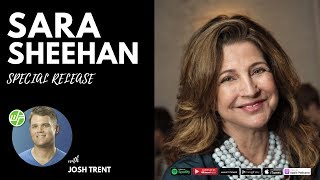
A recorded YouTube interview (Special Release) of Josh Trent with filmmaker/producer Sara Sheehan about the Wake Up Transformation documentary and 90-day program. The conversation (published Dec 20, 2019) covers the film’s structure (three parts: inner work, relationships, your new world), the 27 intimate interviews included in the series, program mechanics (daily emails, workbook, assignments, community/Facebook group), and practical tools (guided meditations, habit building, gratitude, meditation, small wellness steps). The hosts also discuss spirituality, filmmaking challenges/resistance, parenting and life transitions, purpose, humor, and collective wisdom. Sponsorship/marketing details (Organifi; promo code WellnessForce) and charitable giving (15% of proceeds to Healing Our Heroes) are mentioned.
Questions this video answers
December 20, 2019.
27 interviews.
90 days.
15% of all proceeds to the Healing Our Heroes foundation.
Three guided meditations: gratitude, love, and a "calm down/get back to your breath" meditation.
Chapters
Wellness Force Radio, where we discover the physical and emotional intelligence to live life. Well.
You can have the same brain states as someone who's done an hour of meditation every day for 40 years. There's a lot of losses that we go through. So the ability to be able to cope with those losses is very important to build skill in it because loss will happen.
You know, you have to have spiritual.
Courage to really grow spiritually. Because if you really want to take.
Guidance from your soul, you have to.
Be ready to realize that many of.
The things that you're asking for guidance.
On your ego has some kind of an addiction to or an investment in.
What's going on, my friends. It's Josh Trent from Wellness Force and in this special podcast, we're talking with Sarah Sheehan who interviewed me for the Wake up documentary that is going to change so many lives in 2020. I got to be interviewed on the same film documentary as JP Sears, Adam and Vanessa Lambert run dmc. So many others. It was a true honor to be able to sit with Sarah and flip the table around where she actually interviewed me on the Wake up documentary and I got to interview her here on this podcast. By the way, Sarah, she's incredible. She's an incredible director, interviewer. She made me cry. The saltwater is good. Good things happen when the saltwater comes up. Make sure you go to the Show Notes where you can watch this video live on Facebook. Just tap your phone right now. You'll see the link for wakeuptransformation.com if you feel inspired by this conversation where we explore really what it takes from an emotional phys, physical and spiritual lens to actually wake up. Head over to WakeUpTransformation.com get involved in this mission. They're giving 15% of all proceeds to the Healing Our Heroes foundation, which is extremely touching. Kyle Berquist and the team, I know all of them and they're doing this from a very deep, loving heart and truly being of service to the world. I don't have anything to say besides thank you to Sarah and Kyle and Bobby and everyone else that's a part of this Wake up series, this real life transformation project. This is a 90 day transformation project. The 27 interviews that happened, I was one of them. They're world renowned people that I got to sit with and it was a deep honor. But more than just a documentary series, this is a personal development call to arms. It's a hero's journey all of you can go through. You get 90 days of guidance and support. You Get a Wake up audio version and book you get a Wake up workbook. You can stream all the interviews. Head over to wakeuptransformation.com learn about this, share it with somebody that's in process of transformation or that you feel might be in need of a deep transformation. We're going to drop in right now to explore the nuanced landscape of not only Sarah's story, her loss and also her love. How she's become the victor instead of the victim in her life, but also how self love and self care and truly loving others, that's the real work. That's the biggest secret we could ever learn in this lifetime. I wanna thank our show sponsor Organifi for supporting us in 2019 as we close out this year. Huge thank you to Organifi. You know, their products, they really will run the test of time. People are going to look back in time capsules when they dig us up in the future and they're going to be like, wow, that Organifi, that was actually organic. There was no GMOs in there and it was filled with adaptogens. If you've been wanting more energy in the middle of the day instead of coffee, head over to Organifi.com WellnessForce. Pick up the red juice specifically. That's my favorite. It's my all time favorite is the red. The red's got beets and mushrooms and adaptogens for your greatest workout to be fueled. Also, just so you can have energy in the middle of the day without having a third or fourth cup of coffee which you know is gonna make you crash. You don't have to do that. You can go to Organifi.com WellnessForce use the code WellnessForce to get 15% off the red juice. That's my fave. Pick up the red juice. Give it a go. Now let's get into this interview with the executive producer at Working Pictures, a woman who's developed and produced content for TV and commercials and documentary films all across the world for some of the biggest brands you could ever imagine. Let's drop in right here right now with Sarah Sheehan. This is Josh Trent. This is Wellness Force. We're live on and we're recording a very special podcast today. This podcast is about us waking up. We're talking with Sarah Sheehan. Sarah, welcome to Wellness Force.
Oh, thank you so much for having me.
I'm excited that for this in person cause you got to interview me for this series. So as I was saying before we recorded here, the tables are flipping today. And they're flipping in a really cool way. Because I was so impressed with your interview skills. We're going to talk about what even got you into the film, what this film is about, how it's going to serve people. But before we get into that, what is your passion? What is your passion with creating films? I mean, what even got you into films in the first place?
You know, the thing that interests me the most about filmmaking, films and even the series is people. You know, I just love hearing people's stories. And I think, you know, for me, I've always tried to figure out, you know, what's the answer? What are the answers? What do other people do? How do they manage, you know, when life hits them? Curves, balls. And, you know, even when I'm interviewing somebody for a subject that's totally unrelated to this, after the camera stops rolling, I'll sit down and say, well, tell me about you. Like, where'd you grow up? You know, what, like, how'd you get here? What, what, you know, what, what was, like, what were big challenges that you overcame? How did you do that? And at some point we realized, wow, you know, we get to meet all these people in the health and wellness and well being space. Wouldn't it be great to kind of aggregate all this knowledge into one place and be able to share it with the world? And so that's kind of how I got into it, is just my interest in people.
Yeah, yeah. And it seems to me that that's exactly what happened when you and I interviewed for the Wake up documentary in person, because the cameras were off. And even before the cameras went on, you were asking me all these questions. You seem to have this fire inside of you for getting down to the truth in people's stories. When did this actually start for you, this career in asking the right questions that actually matter in film?
I've been doing this for decades. I don't want to say how many because I don't want to date myself. But I've been doing this for decades and I, you know, it's really, I'm blessed in that I get to travel around the world and talk to people about things that interest me. So I've been doing it for a while. And over the years, you just sort of, you learn to read people, you learn to read their body language, you pick up clues. Because I try not to do too much research about a person beforehand because then I feel I'm going to be guided in a direction. And if I'm just talking to somebody organically, it's going to unfold in a very different way. Do you know? So just like for us, like our conversation was a lot about your childhood, which, which informs a lot of what you're doing and how you're doing what you're doing now. And so had I, you know, done tons of research and had prepared questions, I don't know if we ever would have gotten into that. And I thought that was so fascinating.
That's such a beautiful point. You know, this organic unfolding of physical and emotional intelligence. Emotional intelligence is not something that you read out of a book and then it directly appl Applies to your life. And this is what we're going to talk about today when it comes to us waking up, you and Kyle Berquist and also your partner and the team that's created this documentary. It's very touching to me for a couple reasons. The first reason is that I got to share parts of my story that I really haven't shared before, especially when I was thinking how many people are going to view this? And so it was a very intimate process. Not just myself, but I believe there's almost 70. How many people are actually speaking in the series? How many speakers do you have in the total series?
Well, we have 27 and they're pretty in depth and they all, they all go to those sort of personal places and it, and you hear this from people you don't expect to hear it from like the JP Sears who's. I always thought, oh, what a funny guy. But when you sit down and you talk to him, he's a very spiritual, very, just lovely, sweet guy. Or Shawn Stevenson to have Sean Stevenson, the late, great Sean Stevenson. You know, he, he sort of sensed my discomfort at one point in the interview and did like a mini hypnosis on me. So we have like 27 of the most wonderful, in depth, very intimate interviews with people. And all of that kind of aggregated knowledge goes into what we designed with my partners, which is the Wake up transformation, which you can find more about it on wakeuptransformation.com but it's a program, it's a 90 day program. And what we do is we take you by the hand. You get emails from us every day. You're guided through this process to wake up. Because I think what's going on now and you talk about emotional intelligence. But it seems to me when I speak to all the people that I speak to, people seem to be either in a coma, they're anesthetizing themselves, they feel a little disillusioned. Maybe they're mildly depressed. And we want to take them from that to being, to living your full potential to be, to be, you know, awake, to be experiencing life, to be in the present. And there are all kinds of things that almost everybody agreed on, you need to do to get there. And we guide you through it.
There's some common threads when people are exploring consciousness and waking up. For some people, it's meditation. For some people, it's plant medicine or breath work or maybe just having conversations that scare them with their family members, you know, practicing. As we talk about on the show, there's three categories for intelligence. It's how do we gather? How do we apply what we've gathered? And then lastly, the most important thing, Sarah, is like, how do we embody it? How does it become us? How do we embody the lessons that we're gathering and applying and all these different ways that we do? And I think people can get caught up, especially in the personal development world in the gathering phase, where it's like, if I just get all the books, if I go to Tony Robbins, if I. If I get the things, then quote, somehow, some way, I'll just automatically transform. This is not the case. It's not the case.
Yeah. And it's really funny that you mentioned three. Three steps to emotional intelligence. Because what. We broke out our series into three steps. The first is that you kind of have to learn to love yourself. You need to give yourself a break. Because I know me, I'm like my hardest critic. I've got to stop, give myself a break, learn to love myself. And there are all these steps that you can do for that. Then once you get there, you then look around you, look at the relationships closest to you. Your family, your children, your co workers. And then the third part, which to me is the most beautiful stage, is. And now how do I give back? How do I shine my light? How do I find my purpose? Because it feels so good, right? And so it's these steps to getting to this state of emotional intelligence. You're awake, you're fully alive, you're living your life, you're in the present. These are all things that we all need to do, or we all need to refine at various stages.
There's a deeper message for me beyond what you're saying, because I think what you're saying is powerful for the logical mind. And I think people receive what you just said fully. And on top of that, I also can sense there is a deeply spiritual component to this project. How would you Define your personal interest in this project as far as spirituality. Are you doing this in partnership with higher intelligence? Did you get a download from an angel, like, give us the scoop? What happened?
Well, I've always felt, and I guess a lot of people feel this way, but I've always sort of felt a real sense of spirituality, like a real connection with something greater than myself. And it's not necessarily an organized religion, but I think it kind of comes down to goodness and good energy and being kind to other people and how you relate to other people, people in the world. And, you know, that's so important to me. That's. And the work that I've done throughout my career, which has been, you know, PSAs for all kinds of different organizations for, you know, research for blind children to, you know, getting health care for veterans, you know, all these kinds of projects which are trying to improve the greater good. And so that's where my spirituality came in. And I felt like, boy, it feels really great. How do we bring other people along to sort of tap into that energy that is absolutely out there and available to all of us? But for whatever reasons life things happen, you block it, you shut it off. I don't have time. You do. And we make it really easy.
The cool part about this is that for the people that are looking at films and documentary series and there's so much information out there, this is different. This is actually a program. So I want highlight this part of it too, because one of the ways that people can gather and apply is by being in a group of others that are all committed to applying, because that's in the. The seat of intention for embodiment of actually waking up, living our life to our fullest, becoming the most actualized version of ourselves. Let's be real, Sarah. Sometimes these terms can get lost in a sea of words and information and people can get confused as to what the hell is even being meant. When someone says your highest self, your most actualized self, how would you contrast this? You know, you have a group of people that you're formulating for the 90 day project. They're coming together to actually hold each other accountable. But what are they actually doing? Like when we say your highest, most actualized self, what does that really mean?
What it means is, you know, again, these three steps, you know, it's got to start with self love. It's got to start with self respect. And we. And we sort of lead you through those steps. And then you need to improve the relationships in your life, because if you're In a bad environment, all that goes out the window, you know, and then tapping into a purpose in life, which is how do you give? And all of these things I think add to emotional intelligence. And again, it's like there's so many books out there, there's so many coaching programs where I think we're different is that. But we literally do take you through this, through it, step by step. Day one, we're going to do this. Day two, we're going to do this. We have guided meditations available. We've got all kinds of things available to help you. All these tools, in addition to all of these interviews with people that kind of underscore the point, you know, philanthropists on why feels good to give. You know, people who have tapped into their most genuine self, kind of giving tips on how that happens and why they needed to do it. And you hear their stories and it's very relatable. And we kind of call ourselves the Wake Up Tribe because we want to hold each other accountable. We want to be part of a community. We've got a group on Facebook. I'm going through this with you because I need it as much as anybody else.
The director of the Wake Up Transformation series is going through a transformation of her own. I'm sure birthing a project can sometimes feel. I've heard this from, from mothers, like, like birthing a child, you know, it's your baby. I'm curious what's come up for you, like, what have you learned the most about yourself, about your own heart, about your own intelligence in creating this, this transformation, this film series?
You know, that's such a great question. And because I was just thinking about that, I was thinking, wow, this is really helping me too because, you know, there was a time, not too recently, where I was really going through a tough time. It just work pressure, family pressure. And I'm talking to all these experts and I'm thinking, I've got so much to learn from them. Why don't I just go through the steps? One story that I want to share is when we were with you and you were talking about breath work and about anxiety and being on the highway, and you would do this breath thing and you count in and then you'd count out.
I still do it.
I sort of gave side eye to my crew and everybody was. Everybody on the set was doing it. And I'm like, you know, okay, Josh just changed somebody's habit. Isn't that phenomenal? And so for me, being able to share that, you know, I'm Privileged to be able to sit down with people like you and the other people who are in the series, to be able to share that to me. And it brought up for me, maybe this is my purpose. Maybe this is how I give back. Maybe, you know, by helping other people. If I hear one person is happier in some way or is getting out or is connecting or is finding an organization that they're going to volunteer with, boy, them. I did it. I did a great job.
Yeah, yeah. God, that's deep. Because everyone, when they're creating something, they meet this. What Steven Pressfield calls resistance. Right? Like the war of art is real. I mean, it's. It's stacked here in my office for a reason. Because every single creator, I don't care if you're a mom, a dad, an entrepreneur, a solopreneur, a filmmaker, just somebody who's a pillar in their community, you're going to meet massive resistance. The bigger the dream, the bigger the resistance. Have you found this to be true in your years in filmmaking?
Film? It shouldn't be called filmmaking. It should just be called resistance.
It should just be called resistance making. Yeah, yeah.
Because, you know, you have a vision, you have an idea, and, you know, filmmaking is so tough one, especially this day and age, you know, just even raising money for projects because, you know, you gotta fly there and you gotta. You have gear. You've got people who work with you, you know, just getting the money to fund this stuff and then convincing people to talk to you. Like, why should they trust you? Why should somebody open up their heart? I mean, nine times out of ten, people are crying when I'm interviewing them. Like, you have to allow them to tr. I mean, that's part of. Part of the resistance, if you will. You know, I've been lucky to work with my husband, who's, I think, a brilliant filmmaker. Bobby Sheehan, I'm the producer, and the other members of our sort of wake up family and team. Kyle Berquist, who you mentioned, and Will Hinkson is somebody I met working on another not for profit, Force Blue. He's a former special ops guy and just an outstanding individual getting this group together and pushing this big ball up the hill. Talk about resistance. You know, what is this going to look like? How are people really going to benefit from this? I mean, for me, my main goal was, boy, this has to be authentic. I mean, I've got my face on this, I've got my heart in this. I'm going to feel really icky if this is not absolutely authentic, useful. Productive. And so those were all the resistances. And then of course, there's always that inner voice that you need to deal with.
How perfect of a mirror is it that as you've had all this experience in creating films, in creating media, this one seems very different because as you had said, it touched on something where this one, above all else, this is not something where you're talking about people going to outer space. This is a real life, tangible, tactical documentary. It has to be authentic with you. So how perfect of a mirror is it, Sarah, that you yourself are going through transformation in your own heart, in your own spirit, in your own mind as you do this thing? What has come up number one for you as far as something you've let go of? You know, something that you realized, oh, this was a limiting belief, or this is something that I learned from one of the speakers that came on the series that I wasn't aware of. Can you share with us something that you let go of that you weren't even aware of?
There was so much stuff that came up. And I have to tell you, when we were sort of, you know, white whiteboarding, what this was going to look like and what the program was going to look like, you know, most of the time I was just sobbing because I'm in a tremendous area, sort of period in my life of flux. My youngest child just went off to college. You know, I'm in a business that is very difficult, talk about resistance and talking to people. And I realized as I think a lot of the people who are going to be part of this program, the things that they do is I came last. I've come last for decades. You know, it's easier to sacrifice my health, my time, my well being, anything to give to the people that I love. But I realized that wasn't smart. And so I was talking to J.J. virgin was. She's one of the people in the series and she was sharing about her son was in a horrific accident. And she was so grateful that she was in the physical conditions that she was in because she knew she would fall apart otherwise and that her responsibility was to take the best care of herself so she could be a warrior for her son. So I realized, oh, well, that's a lesson there. And then, you know, talking to JP and he said something that I thought was incredible. He said, you know, I don't make New Year's resolutions anymore because my resolutions were too limiting. If I had come to up with a list of things I wanted for the year. My real life has so Far outshone those. I'm like, oh, I think. I'm thinking really small. Yeah. So for me, the resistance and the limiting beliefs were that I could even come up with something like that. And then talking to the team and saying, well, why me? Why am I sort of leading this thing? And they're like, well, why not you? But of course, you know, all those insecurities, all those limiting beliefs, all that, you know, those. Those horrible little voices in your head come up. And so we address all this stuff in the program. But when I say I'm going through it, too, I'm really going through it.
You actually are going through it, and especially as a mother, too, because I don't know what it's like to be a mother. I'm a man. Obviously, you carry life inside your body. Let's get real here. Like, carrying life in your body, birthing that. There's so many corollaries to projects coming out into fruition as well. And I can only speculate, and I'm. I really would love to know how you feel about being a mother, raising children, and how that compares to all of us that are trying to birth something into the world. What's that like being a mom, going through the transition that you spoke about with your children and in tandem producing this series? What can you share with us about that?
Well, being a mother, you know, there's no greater love. And my greatest achievement is. Is absolutely my three kids. You know, no work project is going to match that. So that. That's my greatest achievement. But, you know, like. Like your children, like projects, things come up. There are disappointments. You have to pivot. You need to sort of think about the best, absolute best way of handling something. Oftentimes you're working in a group and there are dynamics that might not be working. Well, that's true. When you have children and sibling rivalry and. And family and different abilities, there's a lot of dynamics that go into that. And I think with my kids, I had a real sort of epiphany with my kids. I was having a difficult time with one of them, and I kind of made a decision. I said, I'm going to throw as much love as I can at this, because that's all I can really give. Right. And I felt the same way with this project. I'm going to just throw as much love at this as I can. There are going to be disappointments. They're going to be, you know, they're going to be obstacles. But if I just keep the love, if I keep the pure intention, I think I'm going to get there. And so those there, you know, it's a great question because there really are so many parallels.
God, the parallel that I could imagine would be when you're letting go of an identity, of being a mother, and you're stepping into this, well, you're never going to let go of being a mother. But a mother goes, a motherhood go through stages, right? When you're letting go of one stage and you're transitioning to another, this is where some people can, you know, for all. For all different words, get knocked on their ass. And so the kind of people that might come to film series like the Wake up series, they've maybe had a setback that emotionally has either caused them some depression or some sadness or something where they're recovering, right? They're going through maybe what David Dida calls a space between purposes. They're figuring out their new purpose. Who's the film really for? You know, we look across our landscape of men and women that deserve to wake up. I know the film's for everyone, but who would you say you designed it for, really?
Anybody who's at a point in their life where they're like, now what? And that's all of us at some point or another. I mean, the irony is, I dropped my son off at college, crying hysterically the whole way home, and got on a plane to whiteboard this series. And so talk about transformation, talk about stuck, talk about changing identity. I went through that, and I think we all go through that. You know, maybe you've been fired from your job, or maybe you're divorced, or maybe you're just unhappy, or maybe, you know, you reach a point at your life where, you know, you're a young mother and you've got spit up all over you, and you're like, is that all there is? You know, there's. We all get stuck from time to time. Life happens. Life happens, and it happens to all of us. Nobody has smooth sailing the entire ride. They just don't. And so this is for any of us who are at a point where we're like, gosh, even a 10% improvement would be great.
Was there any points of this process where you noticed self sabotage coming up?
Yes, all the time. And that is, for me, that little voice in my head that says, you can't. You're not good enough. Who the heck are you? You know, why? Why is anybody listening to you? But then I'd say, well, all these wonderful people have really opened up their hearts to me, they must have seen something. They trusted me. I owe it to them to get this out in the best possible way. But yeah, self sabotage. Because, you know, we all, we all go through those crises, this crises of confidence and that certainly is my Achilles heel. That's what I do to myself.
It's funny because I look at your rap sheet, your IMDb and it's like it's so long, I don't know if I would take an hour to explore all the films and the things you've done. So I wonder, and I've heard this from even people at the highest levels of their game. Whether you look at mindvalley or some, the people from Rhythmia or maybe some of the 20 plus speakers that have been on the Wake up series, everyone still has little voices, little things that come up that give us information that really isn't ours. Like you're not good enough, you're not smart enough. It's funny, I just interviewed someone, his name is Mark Wolin and it's a book called. It didn't start with you. It's how we Inherit Family Trauma and it's on Wellness Force. We're going to link it right here because I think it's valuable for people to take in this information that everything we think and everything we feel, it's not always ours. And I wonder, out of the whole series, was there someone that spoke to this concept? We look at self sabotage. How do we let go of self sabotage? And was there anyone that really touched on this in the series, the self sabotage aspect?
Well, the late and great Shawn Stevenson spoke about this shout out to Sean in heaven.
Like I just, when he passed, I just, my heart had like a cage around it. I was like, oh, I really felt it. So shout out to Sean in heaven.
We got the call about Sean from Joe Polish, who's also in our series. We got the call about Shawn while we were whiteboarding the series and we all sort of like took a breath, we all took a walk. It was just, we're all crying. He's such an amazing guy. But he spoke about that. He spoke about how you need to really take care of yourself because, you know, and there's that famous analogy. If you owned a million dollar racehorse, would you treat it like crap and then expect it to perform well? No, I mean you have to treat yourself like that million dollar racehorse. And you have to, you have to treat yourself. You're never going to love yourself or trust yourself unless you treat yourself well. And so he spoke to that and his Interview was absolutely amazing. I mean, it really blew me away. I mean, I left them like, you know, I'm in love with you. His wife was there, it's fine. But, you know, it really. And we have 26 of these of just absolute brilliant epiphanies and insights from people.
When you were going through the whiteboarding process and that came through with Sean, did you guys pause and actually send him a message wherever he was, like, take us to that moment where you were all there. Who was there? What did it feel like?
Well, it was me. It was Will Hingson, it was Kyle Berquist, it was Bobby Sheehan, my partner. It was George Bryan and his entire team. And I did. I mean, I personally. It was very personal for all of us. George was very upset. We were all really upset. I did. I took a moment and I kind of went outside. We're in this beautiful countryside and I was just sort of looking at the horizon. I'm like, why? And apparently his final words were, this didn't happen to me. It happened for me. And I thought, boy, you know, he left such a gift and such a legacy that we owe it to ourselves to listen to what he's saying and implement it in our lives. Because that way he lives on, right? Because he's still helping people. His purpose is still there. And so that, for me, was my little connection to Sean. And. And it really was pretty profound and just very moving.
I can just feel it right now. And I've been talking about this with my girlfriend out here in Sedona and my friends that are in San Diego and la and on all the podcasts that we do, it usually comes up that we're all making sense of this life. We're all figuring out what we even have to wake up to or why we should even wake up to the reality of what is. How would you describe it? But what is your version. What is your definition of the wake up process if you had to encapsulate it? When we wake up, we actually wake up to what?
You know, we wake up to the present. For me, that's absolutely what it is. I mean, I know that I am so guilty of projecting disaster ahead. What if, let's say, what am I going to do when. And half of the time that stuff doesn't happen, you know, and so to be able to be in the present, to look around, to say, hey, I've got all my kids around a dining table and we're here, everybody's healthy, you know, the sun is shining, like, just. Just A lot of it is gratitude. A lot of it is checking in and being here. A lot of it is enjoying the gifts that we have been given. Air, sunshine, nature, water. We're human beings, we need to exist. We end up by living so much in our head or on our computers. No, we need to be, we need to be here. And that to me is waking up. That's like all this stuff aside, it's taking that breath, it's drinking that water, it's taking that walk, it's being alive. Being alive is the ultimate gift. We should thank the universe for that every single morning. That's what I feel wake up is.
I just had a flutter in my chest when you said that. Because the present moment, it's a present that's like it's here for us to unwrap it. Yet so many things, modern day responsibilities bog people down. Sarah, you know what happens, and I'm sure people can relate, watching or listening, is that the rent's due, the child is screaming, the calendar's full, the stuff is coming in. Like there are real logistical and tactical problems that people deal with because, you know, the modern day world is pretty much a crazy space sometimes. So I think for a lot of men and women, specifically, even the parents listening, how is this designed for parents? Are there other people that speak to parents in this wake up Transformation project? Specifically the parenting hurdles real hard compared to the single life.
Right? Well, you know, here's the thing. Life's going to happen whether you're a parent, you're single, whatever, the rent's going to be due, the phone bill's due, you know, there's a, there's a leak in the roof. We're not saying you're going to go around in a blissed out state and never deal with any responsibilities. Life still happens, but it's going to help if you are more present, if you trust yourself, if you have better relationships with the people around you, it's going to make that stuff a lot easier to handle. It's going to put that stuff in perspective. You know, the rent being due every month, that's not going to go away. But the way that you handle it, the way that you handle the stress, the way you process being alive can change. That is what you have control over. You don't have control over the rent and the phone bill and all that stuff. You do have control over how you feel and how you react to others. And so that's part of what we're trying to do. I don't know if I mentioned this. We have three guided meditations that are available for free for your Facebook listeners@wakeuptransformation.com Facebook I have dear friends. They're Zen Buddhist monks. Meditation is their life. And they put together these three guided meditations for the audience. And they're really wonderful because they help you kind of check in, calm down, and focus on what's real. So one is a meditation on gratitude. One is a meditation on love. One is just calm down, get back to your breath, you know, do this for 10 minutes. The rest of the world is not going to stop. They'll wait for you. But to have those moments of peace is incredibly cathartic and also good for your health, I think.
Yeah. And peace is, I think, what we're all working towards. This is the whole gather, apply, embody, all of us, really, at the end of it all, Sarah I just feel like the human condition is that we're all craving peace. There's a deep longing and a desire and a craving for just having peace. But, you know, it's interesting. Look at even the language I used, having peace. It's actually be. And there's this concept of be, do, and have. And I'm sure it's come up in the series. If I want to have peace, I get to be peace first. Like you said, the rent's going to be due. Like, things are going to come into our space that'll challenge us out of our peacefulness. But when you look across the gamut of all the people you've interviewed and just in your own experience as a filmmaker, what has been a key practice? You know, is there one practice? It could be meditation. It could be something else. I'm curious for you, like, how do you maintain that being of peace? Because it's in the being of peace that we have and that we do. All the things that peace actually begins from.
Well, for me, there's three main components. Meditation, for sure, because you got to sometimes just slow down. Five minutes, ten minutes. We all have five or ten minutes. You know, it could even just be a walk where you're just a walking meditation, where you're saying, the fall colors are absolutely exquisite. I mean, just that. And for me, gratitude is such a huge part of who I am and what I practice. It's when I wake up in the morning. It's when I go to bed at night. I have to keep reminding myself sometimes throughout the day. But again, we're all alive. That's the ultimate gratitude. We're lucky that we're here. And so those for me are the main components. And everybody basically says that. I mean, all 26 people say that. They add other things about, hey, you gotta eat, right? And you gotta. And there are all kinds of tips and stuff. We have recipes and all this stuff is part of the program. But to me, the two most important things are the meditation. Meditation and the gratitude, because it kind of sets the frame for the rest of your day.
Yeah. And let's be real practicing gratitude being in gratitude. It sometimes can be the last thing that one wants to do when they're experiencing stress. But this is the gap that has to be closed. Right. Because it's in that practice of gratitude that the synapses are actually wired and they're grooved so that we can go back to that almost as a life strategy. Do you feel like gratitude is really a life strategy? It's not just something that we do when we're on a white robe on the top of a mountain. It's legitimately a tool to meet the demands of the modern day world?
Yes. And I think you just hit it right on the head because I think what goes on and we're inundated with all kinds of stuff and we're constantly being marketed to. I think that we lose track that it's a very short list to happiness. You know, you don't need all this stuff. You know, you basically just need, you know, health, love, shelter, food, you know, basic needs. Anything after that is icing. Everything after that is extra. That really is what we need to focus on. Do you have that? You know, we turn on the tap and water comes out. Aren't we lucky? You know, there are people living in places where that doesn't happen. So then it's easy to say, oh, God, okay, so my car, you know, it needs repairs. Okay, big deal. I have one, you know, oh, the rent's due again. It's always going to be due, but I've got a home. I mean, these kinds of things, you kind of have to shorten the list of basic requirements. And I think for me personally, that's been a. A big step to waking up.
Yeah, yeah. And waking up does not have to be so challenging, but it can be. If there's the lone wolf mentality, you know, if people think that they're going to wake up on their own and that they don't need community and that. What is that, Sarah? What is that about the human psyche? That there is a part of the brain or a part of the lower self, however you want to describe it that says if you want to get something done, you got to do it yourself. I mean, that is one of the biggest limiting beliefs I think that's ever pushed in media. And I'm curious for you, does that come up in these conversations? The lone wolf strategy where I want to do it on my own, I have to do it on my own because in my opinion, I don't know how you feel, but that seems like the quickest way to self sabotage is thinking that we have to wake up or we have to transform on our own. What a lie.
Well, I feel our greatest asset as human beings is each other. So to ignore that and to ignore the wisdom or to ignore the helping hand that's offered or to ignore the other opinion is self sabotage. Because we need each other. There's so much of us. We're all together for a reason. There's a collective wisdom that really helps drive us all forward. And so to say you can do things on your own, yeah, you probably can. But is it going to be as good as it could be? Probably not.
What do you think collective wisdom actually is? When you say collective wisdom, I think we all.
Which is, you know, again, brings me back to why I love interviewing people so much. Everybody has something to say. Everybody has, you know, a coping skill. Everybody has a story. And if you slow down and you actually listen to somebody and you ask them questions, it is amazing the stuff that you can learn. And there's a nugget of wisdom in everybody. And so you can't be a lone wolf because you'd be missing all that.
You wouldn't get to ask the cool questions.
Yeah, yeah. Why would you pass up all these gold nuggets? Why would you do that when they're out there, you just have to connect and listen.
The film is broken up into three sections. There's inner work, relationships with others, and then lastly, your new world. I'm part of the your new world. Why did you choose to stick me in that section? The your new world section?
Because of what you're doing with Wellness Force and all that stuff and how you give to other people and all of the epiphanies that you've had in your life where you realize that the way you were behaving wasn't suiting you. You weren't being your own best friend, and that you realized that you needed to transform that in a big way. You transformed yourself mentally, emotionally, and physically, and then you put it out there for the world. So to me, you're part of that purpose. I Think you've found your purpose in doing this. I think the work that you do with people and you're there to help them, and that's an absolutely beautiful thing to do.
I got a little tug on the heart just by us communicating about the moment where you said you make people cry in the series. And you have this gift, you have this talent of going there. And I think there really just means the truth, you know, because so many people are afraid of just feeling. Sarah, let's be real. Like, maybe one of the biggest. One of the biggest blocks to people waking up is that their possibility of truth is blocked by their fear of experiencing the feelings of truth. And Byron, Katie has this concept. She calls it loving. What is is, you know, loving what is? She has her four questions. When you look at all the people that have been in this series and every single one of them is really speaking to what possibility accepting the truth actually can create. Was there one that came up for you where someone talked about a truth that you could share with us that was a little bit polarizing or maybe wasn't so modern, maybe mainstream in a way? Was there something you could tell us about that?
Well, one thing I'll share, which is a personal story. Chodo and Koshin, who are the Zen Buddhist monks who I had mentioned earlier. We've been very good friends for years and years and years. And my father was dying, and what they do is contemplative care. They actually coach people through death. And just the most amazing people. And one of the things that they had shared with my mother, and you talk about being with your feelings and not wanting to be with your feelings, and that's uncomfortable. One of the things that they shared with my mother, which really resonated with me, was she was like, I can't look at my husband and not remember who he was. And this person who is alive now is not who he was. And they said, well, can't you just be with him? Just be with him as he is? He's still him. He's changed, but he's still there. He's still him. Just take a breath and be with this version of him made such a difference to her. And I hear their voices. Every time I run into something that's uncomfortable or, you know, I'm feeling anxious about something, I'm like, just be with it. Just this is what it is. Breathe through it, be with it. It's a challenge, but with practice, you can actually do it. And it was like a huge takeaway for me that initially I thought I can't do that. It's uncomfortable. But you can. You really can. But it takes, you know, it takes a certain amount of courage to get yourself out of the rut that you're stuck in. Takes a certain amount of courage to take that first step up. But we can do it.
Do you still feel a connection to your dad? And do you think if he was here, he would be hugging you and celebrating the fact that this Wake up series is coming out?
Oh, gosh, I certainly hope so. I feel very, very connected to him and I know he would be proud of me doing work. What, you're trying to make me cry now?
I feel that deep connection. It feels like a big fuel source. Feels like a big fuel.
Yeah, it is. I do feel very connected to him, but I also really, really miss him. But I feel in some way, maybe because I'm trying to emulate all of his best qualities. You know, you take that when somebody dies. You take that and you try and incorporate it. Maybe just by trying to be as good a person as he was, I can sustain that connection.
We all go through loss, and humor is a big part of what JP Sears brings to the series. How are you using humor in the wake up process? Because sometimes transformation can get kind of dreary, Sarah. Okay, like, we're waking up, we're doing our work, and sometimes it's like, God, does the work ever stop? How does levity and humor and can you contrast JP's work in the film series? How does that help us along the way so that we don't get stuck in, like, the vice grip of doing our inner work?
Right. Well, you know, one of the people, one of the people that we interviewed is a woman called Lynn Harris who has workshops for young women to connect with their funny. And one of the things that she shared was, you know, if you take an uncomfortable situation and you turn it into a joke, like, you know, she was mentioning some girl was saying, you know, okay, I know I'm a nerd, but I'm also a geek. You know, taking something that is your discomfort level and turning it into something where other people laugh, other people laughing at that makes you seen, makes you heard, makes them understand the problem. And I think a lot of what JP also does is he takes a lot of things like vegans, you know, militant vegans, and he makes funny videos about it so we can laugh at ourselves. Because the absolute best stress buster is to have one of those belly laughs where you're not even making a noise anymore. It's just like, you know, your shoulders are just shaking. It's so cathartic. It's good for you. And being able to laugh at yourself is a wonderful way of releasing your ego and just going, oh, gosh, that is really silly.
I felt like this when I first started podcasting. If you ever want to feel what it's like for somebody to be going through ego dissolution, listen to the first 50 episodes of Wellness Force. Because, Sarah, I was like, so serious. Everything had to be perfect and I had to be like, super polished. And this is not what resonates with people. You know what I've learned the most in having conversations, and I'm sure you can relate to this because you're an amazing interviewer, is can we just be people having a conversation about truth? And where can that lead us? Where can that actually uncover the stuff that is so juicy, which is why we're here on planet Earth? How would you define your style? What is your style? Like, do you even have a style of interviewing people? Or is it just Sarah having conversations from Sarah?
It's really Sarah having conversations with Sarah. And as I said, I really don't want to know that much about you before I go in, because I want you to sort of drop those hints that I'm going to pick up on and go with. And for me, it just, it's about getting to the core of who the person is, you know, and finding out what motivates them and what scares them and what they love and what they're proud of. And it. So, you know, somebody may be a widget manufacturer, but maybe we're never going to talk about the widgets. Maybe we're going to talk about the fact that when he was 10 years old and he made a go kart and it won a race. That was the high point of his life. And he's been trying to capture that ever since. You know, that to me is more interesting then this is my product. And you know, distributed in 40 states. Boring. But what's interesting is what made it motivated that guy to invent this thing. You know, why? What were his skill sets? What did he like to do as a kid? Were his parents encouraging or did they discourage him? Was that a hurdle he had to get over? Is that that voice in the back of his head? Is that that self doubt that's always slapping him down? Or is that where he looks at that situation and says, never again and uses it as inspiration? Those things to me, and you keep talking about the truth. That's the truth. That's Much more interesting than anything else. And to me, the people who we've interviewed and the truths that they're sharing is so much more interesting than any fiction you can come out with, because it's real people, and there's so much to learn from other people. And, yes, these people are incredible, incredible experts and all that stuff. But, you know, Mark Hyman became an expert on food because he was so desperately ill. You know, he didn't even know what he was doing. And then he became this incredible, you know, food is medicine guy. He's in our series. And, you know, it's just those motivators, I think, is what's so fascinating and inspirational, because sometimes it's the thing that's wrong that leads you to the thing that's so very right for you for the rest of your life.
Okay, mic drop. That was so powerful. No, really. I mean, that right there. It brings me back to this archetype of the hero's journey. And we talk about this on Wellness Force a lot, Sarah. The separation, the initiation, return. Look what happened to Luke Skywalker. His parents got killed. He went to a new land. He had to go through these challenges and ordeals. And this is a mirror of exactly what we're experiencing. Yet when people lose the curiosity, when they're. When they allow themselves to be hurt or depressed, or when they choose to be victimized in their own life, this is when life starts to atrophy, and this is when waking up becomes just a figment of only something that, quote, rich people do or only something that maybe people in Ojai wearing white robes might do. This is not the case. All of us can wake up. This is extremely affordable. This is something that every human being can take action on. They can take action@wakeuptransformation.com Facebook wakeuptransformation.com Facebook is where you get three meditations. This is where it all begins, is in the stillness, right out of all the people you've interviewed. It just. For me, it just keeps coming back to if we're still enough, we can hear the truth. We can be curious enough to ask greater questions.
Yes, absolutely. And we are each other. We are the world's greatest gift. Just human beings. The wisdom that each person contributes is just the world's greatest gift to each other.
Well, I want to thank you from my heart for coming on the show and talking about this and honestly creating this and allowing me to be a part of it. People can go to the WakeUpTransformation.com Facebook and obviously from there they'll be able to look at more of this series and get involved. But this is an accountability program, too. I want to focus on that. It's not just a film series. You've. You've encapsulated this into getting people on a path for transformation where they'll actually be in groups, you know, tribe, like we used to do. We were sitting around a fire. We're just going to do it through the Internet. Can you tell us about that?
Yeah, well, so. So when you sign up for the series, literally you're going to get an email from me every single day. And I'm going to be walking you through this by the hand, taking you through all the steps that you need to sort of get to this place of sort of contentment, happiness, good habits, all that. There's a workbook that comes with the series. You'll have some assignments. Nothing is going to take more than 20 minutes a day, but these are things. And we wanted to make it 90 days because we wanted to create a habit. We wanted, you know, and again, I'm there every step of the way. Also, you can email me. I'm going to answer every single email you can, can connect with me through Facebook. The series is wakeuptransformation.com that's where you can see all the things that you get. We have transcriptions of all of the interviews, all kinds of information and resources. But yes, that's our steps to waking up.
We're going to link it in the show notes and also here on Facebook. So if you're listening on a podcast, we did this on Facebook. So we got to actually see each other through the screen and connect, which is what one element of our human evolution and where we are as a society right now, that is going away. You know, the face to face component, Sarah, it's, it's such. It's under attack. It's so easy for us to be on our phones and thinking there's connection, but actually being in a process of disconnection. And with that said, you know, what you're doing, how you are reconnecting people to these possibilities of truth. Truth. How would you define the elements of wellness in this? You know, we talked a lot about intelligence, about gathering and about getting down to what's real, but in the middle of that is wellness. You know, we're here to live our life well. This is our birthright. You know, we're sentient beings brought here on some kind of a cosmic wave so that we can be in a meat Suit on a rock in the middle of outer space. How would you define wellness and what does wellness mean to you?
Well, wellness means, you know, taking care of your body. I mean, that's, that's part of self love, right? Establishing habits that are going to improve your health. And we're not talking about go to the gym and do 50 squats or anything. We're talking about small steps. Getting out and walking, drinking enough water, getting adequate sleep. I mean, and again, we take you through all these steps to improving this. If your body aches, if you don't feel good inside your own skin, that's gonna hamper every single thing that you did. So we're not saying go out and do intermittent fasting and go to the gym and pump iron for two hours. No, it's small steps. Do one food swap. Try this in the morning instead of what you would normally eat, bed out, walk for 20 minutes and breathe. Look at nature, look at water. And these are all things, these have all been scientifically proven to improve your health. And then if you want to take it a step further, we're there with you too. But these are the initial steps to feeling better because it is very hard to feel good about anything if you're chronically ill or if you're physically in discomfort all the time. So we help with that.
Is there a process too, when people go through the actual course, the actual training, where they get clear on their values, where they get clear on what's unique about their own journey? You know, there's people that take the presence process. There's people that take the passion test. There's people that take the Tony Robbins, The Q&As and all these different things on how to figure out your purpose or figure out your path. In your series, have you guys designed something for people to get clear on their top of the mountain?
Well, the third part of our series is really, you know, the greater good, the greater world around you. And we have interviews with some people who've done some amazing stuff just to provide some kind of inspiration. Like Robin Trigger Strasburg, where, you know, good looking, wealthy suburban couple, they had everything. And one day she wakes up and she's like, I've got all this extra furniture. My friends have got all this extra furniture. I'm starting a company where I'm going to furnish apartments for people who are coming out of homeless shelters. And it has exploded. They even have a TV show now. But it started with this one idea, and this woman and her husband now work themselves silly. But they said they go to bed every night just with their hearts full.
Yes.
And so finding your purpose. Celine Cousteau, who you know, her family. Jacques Cousteau, the famous marine conservationist. You know, she's talking about, if you know something needs your help, how could you not answer that call? So we have interviews with all kinds of people who have found their purpose and provide inspiration for other people to sort of tap into that. Because. Because as you know, it feels great to help somebody else. I mean, that's just like the greatest joy to reach out and help another person.
It really does. And I've enjoyed being a messenger and helping you spread this message of waking up because I think it's something that people get confused about. You know, this is a modern day series that can actually help people here in the 3D. This is not for people that just do yoga and live in Topanga and maybe want to have like a spiritual commune. No, this is, this is tactical. This is for all of us that actually live in the modern day world where the responsibilities are great and also the potential is even greater. Sarah, thank you for coming on the show and leave us parting guidance as to how we can support this. And please tell us too, if you did have a magic wand and you could take wake up this series as far as it could possibly go, you could wave a wand and there'd be like sparkles coming off the wand. What would you create with this? Like, what's the dream impact that you want to create with this series?
My. And what an awesome question. My dream for this is that we create a community of people who are lifting themselves up and lifting each other up and that we are, you know, we're the wake up tribe. That we all support each other in our dreams, in our endeavors. We connect to each other, we listen to each other. To me, my magic wand would be about unity, love and support.
Excellent. Thank you for sharing and thank you for being here. You guys can go to the Wakeup Transformation.com Facebook and this is Josh and Sarah saying we'll see you soon. And make sure you get those meditations because we all can be more still. Thanks for coming on, Sarah.
Thank you. Thank you for having me.
Hey, thanks for listening to the show, my friend. Everything you learned on this podcast, starting with your morning practices. So from over 300 world class guests, we pulled together six simple yet powerful morning practices down into a 21 minute system guaranteed to increase your vibration and the way that you feel every day. Get this free powerful guide over@wellnessforce.com M21. And if you love this show, share it with somebody. Share it with somebody that you love or that you care about. You can support the show easily by leaving us a five star review on iTunes. Just go to wellnessforce.com review or if you're on your phone, just tap it. Hit the link in purple that says review this podcast. And the journey does not stop here. We're continuing this discovering process in our private Facebook group over@wellnessforce.com group. You can be a part of it. You already are. All you have to do is join us@wellnessforce.com group and I will welcome you at the door. Now go out into your life and live your life well. And until I see you again real soon, I'm wishing you love and wellness.
More from Josh






Your child's future start before pregnancy... and even before conception! #podcast

MD Reveals: Your Healing Creates Your Child's Reality (The Souls Coming In Need Strong Bodies)



