Sprinting For A Better Life With Franz Snideman
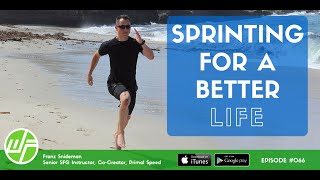
A recorded interview (Wellness Force Radio, episode 66) in which host Josh Trent and Franz Snideman discuss sprinting as a holistic tool for physical and emotional wellness. Franz describes his Primal Speed system and argues sprinting (and related power-speed drills) improves nervous-system function, motor development, insulin sensitivity and body composition while providing cognitive and emotional benefits. The conversation covers Franz's personal athletic background, practical progressions for beginners (marching, foot-intrinsic drills, toe/heel walks), programming cautions (progression/volume), and the role of hardship in growth. The episode closes with promotion for a Primal Speed workshop at Revolution La Jolla.
Questions this video answers
Episode 66.
July 12, 2016 (video metadata stated).
Saturday, September 17th at Revolution La Jolla (San Diego).
Chapters
Wellness force radio episode 66 regardless of.
Your goals, if you're an endurance athlete, you're a middle distance athlete, maybe just a strength athlete. Sprinting will make you more athletic because it's going to enhance your movement vocabulary, it's going to enhance the functioning of your nervous system. It's going to enhance the way that your brain communicates with your body. And that's a good thing. Like nothing neurologically is going to be as demanding as sprinting. That is the top of the central nervous system food chain. Everything else is below.
Welcome welcome back to another episode. This is Josh Trent, your host. Thanks my friend for sharing your time with me here on the podcast. This show is where I bring you access to the most inspiring and passionate experts in behavior change and wellness technology. Right now and every week you and I get to come together to learn from these world class leaders who dedicate their lives to driving real transformation in our physical and emotional wellness. This episode is brought to you by Perfect Supplements, a company that I'm super proud to stand with as they have great values of non gmo, pesticide free and organic real food supplements that can help support all of us on our unique wellness journey. Go to perfectsupplements.com wellnessforce Save 10% off your entire order by entering code wellnessforce at checkout. Today we are diving deep to get knowledge and tools from Franz Snydman. Franz is a great friend of mine. We actually trained clients from the same family years ago and we didn't even know it. I'm so both honored and excited to share Franz's powerful message with you about sprinting for a better life. This show is for you. If you've always wanted to learn how to sprint but have been a little intimidated by the modality, it's also for all my runners out there. In 2007 I ran a marathon. I actually gained weight on the marathon. Now, depending on your unique biochemical individuality and your genetic coding, you may sit really well with long steady state training. Today Franz is going to talk about if you're a runner or if you're not a runner, these benefits of neurological, cognitive, physical and weight loss. Benefits of how we can a Add in the sprinting to our life b Contrasting HIIT training versus steady state Explaining and unpacking what happens with his clients when they shift and start implementing this cardiovascular mode of HIIT training into their workouts through sprinting and lastly, the benefit of pain and what pain can teach us the lessons we most need to learn. If you've been listening to the show for a while. You know that we focus so much on behavior change. What do we get to put into our lives to become this greater and more powerful version of ourselves? Well, that is exactly the mission that I'm on. Currently I'm filming 20 videos unpacking this journey that I'm going through of letting go of these kind of pesky £12, £10 that I've been holding onto. I'll be the first one to admit I do not have wellness perfected and we know that there is no finish line. So follow me on the journey. I'm going to be posting a lot more things on social media in the next couple of months and look in the show notes today. All the social links will be there. Now let's learn a little bit more about Franz and welcome him to the show. Franz Snipman is a senior strong first instructor, Primal move, national instructor, former collegiate sprinter and international lecturer. He's a student of neuromuscular therapy, Primal Move kids, and corrective high performance exercise kinesiology. As the co owner of Revolution Fitness in La Jolla, California, and the author of several books, he draws on his passion in healthy living, athleticism, knowledge and appreciation of human development, anatomy and personal experience to have co developed what he calls the primal speed system. Franz believes in the fundamental importance of educating and coaching clients in safe, healthy and holistic athleticism. Franz, welcome to the show.
Hey, thanks, Josh. Excited to be here, man. Thanks for having me.
We're going to talk about something so important today, man, really close to my heart and I think will help a lot of people and that is the power of sprinting, how that relates to our wellness and how we can sprint to a better life. You talked about this holistic athleticism, which is really cool. I've never heard that phrase before. But before we dive into the sprinting piece, I mean, let's unpack your story a little bit. You know how you approach fitness. I read in the bio you're all over the Internet, people know your name and it's synonymous with athletic performance. But you know, what's something fun that we don't know about you?
I love to travel. I'm a huge. I think one of the reasons I like to teach is because I get to travel and I've been fortunate enough to go all over South America. I mean, all over South America. And now I'm starting to kind of pick apart Europe, which has been fun, and now South Africa, which is a whole nother continent. So, yeah, I think my passion for teaching is Maybe rival now with my passion for travel. So I think, you know, we live in such a. I guess such a global world now. Like, it seems like such a crime to not see the world and to experience other cultures and other. Just the way other people think and live and the way that they exist. And it's. Yeah, I think that. I think many of your listeners would probably relate to me in that aspect.
I love that you mentioned you like to travel and teach, because looking back, I mean, that was the introduction to life. Your parents were very academic. They were both professors. So at an early age, you know, you were doing piano lessons and you were a student at that time. But there was something that happened where you're like, listen, I don't necessarily want to sit around and do piano lessons, right? You kind of. You said your sister, your twin brother were involved in these intellectual activities. Franz, do you feel like at that time, you know, nine, 10 years old, did you kind of rebel against the piano lessons and say, hey, I want to be more athletic? Like, what was that point for you?
You know, I don't know if I really rebelled other than I just. Like, there was no other option for me. I had to move my body. I was a very, you know, I think hyper kid, had a hard time focusing. Maybe I had some kind of a hc ADD or whatever you call it then, and I just. I had to move. So it wasn't. I wouldn't have excelled at any kind of slow, focused work at that time just because I was. I think for about the first eight or nine years of my life, I was so cooped up. Like, I just. It was not. It's not what I needed to develop and to grow. So my. My twin brother and I just naturally, we just begged our parents to put us into baseball. And finally at like 9 or 10, we got into baseball and we got into some other sports and we were late bloomers. I was the kid in fourth grade who could not catch a ball. I could not catch a basketball. It would hit me in the face, it would jam my fin. It was embarrassing. But I knew something inside me knew intuitively that if I didn't move my body, get involved with sports, like, I was not going to make it. Like, I just was not gonna make it as a kid. And that was it. You know, it ended up being, like, one of the best things for me, and it balanced me out. And ironically, the more I got into sports, the better my brain worked and the better I was able to focus. I mean, I was never a strong student. I was always like a B student. I was never. I was never a great student, but it was just because I couldn't focus. So as I got more active and got more athletic, I got better at studying. Ironic.
Was there this interesting point in your upbringing where you just realized, hey, I really enjoy sprinting because, I mean, it's obvious you weren't always an athlete. I think on a previous interview you even mentioned that you were kind of this. A little bit insecure, kind of skinnier kid. What was this transition point, though? You know, you went from being the insecure kid to learning that you had this ferocious power as a sprinter.
Yeah, I mean, I think probably like a lot of kids, I think most. I mean, most kids get kind of picked on at one point in their. In their younger years.
I know I did. I was. I was the fat kid in school. Yeah.
Yeah. So I was. I was the ultra skinny kid that people wanted to pick up and snap. Yeah, right. So my brother and I were kind of popular just because we were twins, but we were, you know, we were always. We were just so small. We were so thin. And it was, it was. Yeah, I was very insecure. I was an insecure kid in the town of Santa Fe, New Mexico. And I think it took me. I was a late bloomer, as was my brother Keith. We were just late, late bloomers. And I think it was about my junior year in high school. I'd been doing basketball my first couple years and I just done soccer my sophomore year. I was a terrible soccer player. Horrible. But I was fast at soccer. I was like, pretty fast. I think I was one of the fastest kids in school. But it wasn't until the end of my junior year that I had a very kind of pivotal point where my track coach, or the track coach of the school that I went to, he came up to me at the end of my junior year, said, listen, we've got districts championship coming up. Your brother's on the team. He's the fastest kid we have. I've seen you run in soccer. You're fast. Would you please come out? I said, me, like, I've never run track in my life. I've never done any kind of competitive running. So I did. And I didn't use blocks. I had no idea what I did. He put me in, I think, the 200 meter, four by one and four by 200. And I ended up just smoking it. And I ended. I mean, it was like the first time in my life that, like, I actually thought for a second, like, wait A second. Like, this is fun and I'm, and I'm the best here. Like, this is really cool. And I haven't done any training. Like, whoa, imagine if I trained. So I trained, I started training, and the next year I broke my school record in the hundred, the two hundred. I went to state, we did well in the relays. So I think I got a silver medal on both the 100 and the 200, and then went on consequently to run some college track for two years. So it was kind of by chance that the track coach had asked me to run. I would have never really known that that part of my athleticism was even there. And thank God he asked me because it kind of lit a fire underneath me to share that passion with other people and to help people find what they're good at.
Looking back, do you feel like literally you had said if he didn't mention to, hey, Franz, why don't you come out for the team? Do you think you'd even be involved in what you're doing now?
I don't think so. I mean, I mean, who knows? Because obviously it worked out the way it played out. But I believe things happened for a reason. And yeah, I mean, that was the natural aptitude that I had. Like, that was my God given gift. Like, I mean, I'm not like an Olympic sprinter by any means, but I was decently fast. And I think as I got older, got into personal training out of college, and I just was, I naturally gravitated towards more of this power speed training as much as I'd like the strength training and like the muscle building work. And that was, that was something I needed to do to balance me out. But I always gravitate towards speed and power. And yeah, I think it was no coincidence that that happened. I think that's just, that's, you know, that's kind of the message that I have is that, you know, that people, that people really don't give the time and day to really appreciate speed and power work. I mean, obviously if you're an athlete, you're a soccer player, you're like in the NFL. I'm like, I'm not really talking to those people. I'm talking to people that are, maybe we're athletic, they're 35, 40, 50 plus, 60 plus, and they kind of realize, like, you know what, there's still some athleticism in me. I'd like to find a way to get that out of me. And it just, it's a very, I think it's a very almost Like a spiritual thing to kind of go inside yourself and feel the athlete again. And, you know, it doesn't have to be in sprinting or track and field, which is my sport, but you can use those modalities, you can use those concepts to help any sport. So, yeah, it's a fun mission that I have, and it's something that I think is still like. I think the conversation is just getting started, Josh.
Absolutely. Which is why I'm so excited to have this conversation. I mean, this is the first time 60 plus episodes that we're having someone come on with an expertise about sprinting. And that's why I thought it would be beautiful to unpack this. But let's look at Primal Speed. I mean, you founded Primal Speed. There was this phenomenal quote that I got from the web, and it's you. You mentioned, primal speed is sprinting for better health and movement. Notice it's not sprinting for the better 40 yard dash or the combine in the NFL or making the soccer team. It's obvious that speed's gonna help in those things. But your mission with Primal Speed is to take sprinting and the concept of speed, jumping, cutting, and the ability to move your body fast to the masses, to use it as a viable means of enhancing the function of humanity. We've lost that, and we need to get it back. What do you mean by that?
I mean, you just take your average desk worker. We don't have to look farther than people, you know, people in your family. You know, when you sit your butt in a chair for eight hours a day, your body will mold. It will mold to the activities and the postures that you sit your body in. You're going to lose your athleticism. So naturally, there is such a large window, there's such a large growing population of people that are not moving athletically anymore. In fact, they're doing the opposite. I'm not satisfied with that. I think that we know so much more about health, we know so much more about what the body's capable of that it seems almost criminal to not help people and say, listen, I know not everybody's gonna go along with this, but there are some people right now that are listening that are like saying, wait a second. Okay, there's something this guy is saying, Josh and Franz are saying that is speaking to me, that sprinting and all of the power speed based movement that I kind of put it under the sprinting umbrella, that is a viable means of movement. It's just as viable as running a marathon. It's just as viable as doing a, a triathlon or swimming or hiking 10 miles. But it doesn't get in the conversation. It's like, oh, that's reserved for the other athletes. No, that should be part of your training. It should be part of your weekly training. Now granted, because the faster you move your body, the more potential for injury. There has to be progression, there has to be intelligence. Your tissues need to be, they need to adapt to this new type of training. But that doesn't mean we shouldn't be doing it. It just means that we need to be intelligent in how we approach it. But I would argue that speed training is actually, it's actually safer than going out and running 10, 15, 20, 30, 50 miles a week. Because over time, the amount of time that you're going to spend sprinting, the volume we do is so minimal. Yes, it's high horsepower, yes, it's a lot of impact, but it's so little steps, it's not that much. So ultimately it is, I mean it is like maximum return on investment. You don't need to do a lot to get a huge return on investment. Whereas with distance running and I'm not anti distance.
Yeah, you can't be anti distance in San Diego.
No, I'm not. No, no, it's okay. That's a viable means of movement, but so is sprinting. They're both good. What I'm doing is I'm just coming and saying, listen, regardless of your goals, if you're an endurance athlete, you're a middle distance athlete, maybe just a strength athlete. Sprinting will make you more athletic because it's gonna enhance your movement, vocabulary, it's gonna enhance the functioning of your nervous system. It's gonna enhance the way that your brain communicates with your body. And that's a good thing. Like nothing neurologically is gonna be as demanding as sprinting. That is the top of the central nervous system food chain. Everything else is below. Maybe put high level Olympic lifting, like that's really high. But sprinting is right there. So as far as something you can do where you need no equipment, there really isn't anything that's going to be as high powered and as beneficial to your nervous system, your muscular system, your hormonal system, orthopedic system, nothing it really. And if that's true, if that's true, which it is, why are we teaching this to people? Why?
Well, I think you bring up an amazing point on my journey. When I started, I was 20 years old, 21 years old, and I was 280 and I think a lot of people can kind of follow the same path of, oh, well, I think if I run, then it's calories in versus calories out, which is this old broken adage in the fitness industry, which we know now that a calorie is not just a calorie. That's not just a calorie. Same thing with exercise. Just because we're logging 40, 50 miles in a week does not necessarily mean that weight loss is gonna be a byproduct. So when we look at this benefit of sprinting, specifically in regards fronds to weight loss, letting go of this old weight, I mean, what are some of just the initial benefits to somebody who's trying to let go of old weight through the modality of sprinting? When we contrast it to this steady state modality, I think that's a great.
I think that's a great question. And I think, you know, to answer that, you really need to go back to like how humans develop. And we just look at the baby, the way that the baby develops and the baby develops by rocking and then eventually crawling. So crawling is the first form of locomotion, right? Like they're on your elbows, they're kind of like doing this kind of thing.
And nobody crawls anymore.
Well, babies do.
Adults, we need to crawl more. As adults, we need to crawl more.
So sprinting is just, if you can think of a continuum, right? You've got crawling on one end and then walking and everything else. And eventually you have running and sprinting. Sprinting is a standing crawl. So one of the first reasons to do it is because it's the final progression of locomotion. So if you just look at that continuum, you're not really complete until your body can get to here. You've got to be able to get here. And that doesn't mean you need to live here all the time. It just means your body needs the capacity to do it now. So neurologically, motor development wise, it connects your body from head to toe. So that I would say would be the first reason on why so many would sprint. It really connects you and this kind of cross body pattern that you get from crawling, you get from sprinting. Because you're going up to the midline, at least you should be, and you are linking your left and right brain hemispheres. That does something else. It makes your brain integrated, which does what makes you move better, which says what makes you burn more fuel, which if somebody in most people, most people train, I think, honestly, because they want to look good naked, they want to feel good about the way their body looks. But if you just look at the athlete or the physique of a world class sprinter, pole vaulter, hurdler, 8% body fat or less. Right. 7, 6% body fat, they're not huge and bulky, they're lean, they've got muscle on them so they look healthy, but they get that way because of what they're doing. So kind of like the scientists and somebody should say, well, wait a second, okay, what are they doing? Well, they're doing these high powered short duration sprints that connect the body, that are very explosive, very powerful and they're getting those kind of results. Like, huh, that's interesting. It makes you wonder, like, okay, well, I see a lot of other people doing stuff and they're not as lean, they don't look as healthy. Success leaves clues, Josh. So for number two, from an aesthetic standpoint, once you get your body into a position where you can maintain what I call your basic core structure, and you have the hip height, you have the mechanics down, it's safe enough to do, you are in a good position because then sprinting is no longer going to hurt you. And as long as you're safe with your progressions and your volume, it's actually super fun. But it, you will get some body composition changes. Like you will see like, oh my God, like my waist is getting smaller, my, my legs are getting firmer.
Do you see like clients that, you know, when they've run for a long time and they get to your gym or you meet them at a seminar and they have a lot of fat around the midsection? I mean, do you ever see and walk people through this progression where they induce sprinting and then from that over the course of time they're actually getting that Android fat to lessen?
Yeah, I mean, I think we can't just, I can't say that sprinting is the, you know, it's not like the end all be all. I think it's the combination of everything that that person is doing. Right. Their strength training, it's their non intense exercise. Right. They're walking around, they're just general lifestyle. But I think that's only going to get somebody to a certain point to get to a little bit more athletic physique or athletic performance. You have to do the things that are gonna get you there. And sprinting is about as athletic as it gets. So hormonally your body, we know from research your body releases more growth hormone, a lot of the more anabolic hormones, IGF1 kind of like, with weight training, some of the research with like hypertrophy, weight training, sprinting helps your body deal with insulin better, helps it deal with glucose better. So for people that are having belly fat issues, Absolutely. I mean, just look at sprinters, they will shed fat. And there's different techniques I will use. If people are a little bit more in the weight loss camp, because you still don't want to pound somebody who's really big, you don't want to do a lot of volume, especially if their tissues are not ready. But you can take the principles, you can take some of these anabolic, some of these anaerobic principles and apply them. They don't always have to be with sprinting. They could be with swings, they could be with a concept two rower, a Schwinn aerodyne. But I think the concept of higher intensity output, it does change people. It absolutely does. I have hundreds of clients that have gotten smaller and leaner. So I know it works scientifically, but I know it works empirically because I've seen it with my own eyes.
I want to go back too, because you mentioned something really powerful where you said people that actually have different sensitivities to insulin. I mean, what is the number one factor when we look at weight gain? For most people, it is kind of an insulin issue where they're not getting the right nutrition in. Well, the way that we feed the body is the same way that we feed the mind. So what are some of these hormones? When we dive into the actual biology of sprinting, I mean, what's coming up for people that's positive from a neurological state? Is it just the insulin sensitivity that's really getting rebooted? Is there any other things that people should grasp on as to motivation to begin sprinting without confusing people?
Because they can get really overwhelming because our hormonal systems are like a very complicated chemistry set. But I think to simplify it, it's like you can really just kind of chunk hormones into two categories and they're neither bad or good. I mean, you need catabolic hormones, which are kind of the tissue wasting hormones, but they're kind of like the stress response hormones, but you need the tissue regenerating hormones. So there's always a balance. I always say, like the goal of training, and if I could give a take home message to anybody, is the goal of training is to know what adaptation you're going after, right? Like, what's the adaptation you're trying to achieve? So if somebody's trying to achieve a more muscular, leaner physique, then we know the why, right? Like that's the why. Like, okay, so if that's the goal, then we need to base our training around that end range goal. What's the adaptation we want? Weight loss. Well, if we want weight loss, we need to do things to increase anabolic hormones. We have to like what? Strength training, building muscle, which is not always easy for people to do, and these higher intensity anaerobic type of like sprinting or swan aerodyne. So if you just tip the scales in that favor, then we're already pointing toward the adaptation we want. We want the adaptation of this, right? If we don't do any strength training, we don't do any sprinting, we just do maybe really light weights and maybe we walk a little bit, but maybe our diet's really high in starches and sugars, we're living off soda pop. We're pointing the adaptation toward the other way. So what we're telling our body is we want adaptation, but we want it in the weight gain area. Right? We want to gain fat. So really it just goes down to the adaptation that you want. Now your behaviors obviously have to, they have to lean against those adaptations, right? Just cause you want something doesn't mean you'll get it. You have to have the stimulus that'll give you the adaptation that you want. Right? So the beauty about sprinting is that I don't know any clients that want more fat and less muscle. Most of them say, well, yeah, I'd like a little more muscle and I want less fat. Bingo, we've got it.
Yeah, that's a good point. I don't know too many people that are like, I'll take a little more fat, please. Yeah.
So really it's like I think I am a complete fitness minimalist. I really am trying to find ways to get people to do less, but to do activities that are really worth doing. All movement's good. I mean, it's all good. If you want to do movement, you want to ride bikes, you want to kayak, you want to do it all. However, there are consequences. There are consequences, good and bad, from every activity that you do. And because time is such a limiting factor for people, and there's only a finite amount of time, My message is, you know what, do what you truly love to do. But if you're really seeking a very specific goal, and you're seeking a very specific adaptation, then you really need to understand the training you will doing or what type of training is going to bolster that end range. Goal or that end range adaptation. So it's just like saying, listen, that's fine, we can do it all. But realize that your body has limited resources. You just can't keep adding stuff into your training and your diet. Food matters. You can't just keep eating forever. This stuff matters. Yeah, it does matter. And what you do, how you dedicate your time to training, will really dictate how quickly you see those results.
And these results you're speaking about, increased muscle building, hormones, greater fat loss, greater energy. And you touched on a little bit too, which I'm curious about. Brain function and cognitive speed. How does sprinting and implementing sprinting into a wellness program, I mean, how is that really going to boost someone's mental faculty?
I mean, I think. And just going back to the whole crawling phase, it's like if you just think of the way the brain works, right? You have these dominant, like left and right hemispheres. The brain's a complicated place. But again, we know enough about the brain now to where we're not in the dark. Like, we do know how it functions. We're learning more and more. But from a movement perspective. The brain develops from movement first, not the other way around. Like your brain doesn't develop and then all of a sudden you're moving. We really need to look at. Okay, you want to learn a new skill. That's gonna require a lot of brain power. Your brain has to lay down new myelin, new nerve cells, new nerve tissue. This is good. We want this. The brain is very plastic. The brain will make new pathways. The thing is, we have to do the activities that get us there. But people that move really well, they tend to learn better. And for people that have really never been exposed, let's just say, to any kind of like athletic movement, I would say, you know, sprinting is a great place to start because you've already kind of done it. You just haven't really done it on the higher end, right? It's like listening to the volume in your stereo. It's the same knob. Maybe you've only gone up to level five, but it goes up to level 20, right? So sprinting takes you to level 20, but you've got to come back down again. Why is that good for the brain? Because it gives you a new threshold, it gives you a new level, a new benchmark that your brain can compare everything against. It's kind of like the case for getting stronger, right? But from a survival standpoint, your ability to access the fast twitch muscle fibers, which are. Those are your survival Fibers. Those are the fibers you need to get somebody out of a building to lift somebody, a car off, somebody to sprint down the street and save your kid. Like, those need to be developed. And there are things in the brain called central governors, and they basically. Everybody has them. Everybody has them. And what they do is they basically prevent you from hurting yourself. Right. So even Usain Bolt, the fastest hundred meter sprinter in the world, he has central governors. He has not reached his peak because the brain always has these guys kind of holding on, saying, you know, what, if he went a little bit faster, he might rip his abdominal off, his pubic symphysis, he might rip his knee, his shoulder might, you know, so it's like there's always this little bit of kind of, I say, like primal protection that the brain is doing. However, it's not a good idea to just let those guys gradually inhibit you from movement. Sprinting expands that. It takes your central governors. It basically helps you take the parking brake off.
Right.
Because it is so intense and because it really is tapping into the more like the reptilian part of your brain where, like, your body's saying, holy cow, why are we doing this? Like, what does this mean? What is going on right now? Why are you sprinting this way?
Ah.
What is happening? So the more we do that, we gently nudge that governor up a little bit. We just gently nudge it up. The reason that's good is that everything else we've done, everything else we do in our daily life relatively becomes easier. Running five miles an hour, where maybe that was hard, is a joke.
Yeah. The importance of this is where we have this general adaptation syndrome that people go through. So the person that starts to do a little bit of weight loss, you know, in one year, well, if they continue to have the same stimuli, there's not gonna be any more weight loss because of this adaptation. But you bring up something really exciting, man, when you talk about pushing our limit, kind of inch by inch, brick by brick. How would you say this is a metaphor for life? I mean, sprinting and the way that it pushes the nervous system, the body, to just go that 1% more. I mean, where else does sprinting and the training of sprinting show up in our emotional life and our relationships and our wellness?
Oh, it's the same correlation. Yeah. I mean, it really. I think any of these principles really transcend athleticism, because you can just take it and say, okay, like, maybe in the emotional department, you've been inhibited. Like, you haven't taken chances. Maybe somebody wants to start their own business and they're just, they're, they're just freaked out. So they're living life at like this really kind of mediocre level. Not because they can't get to the other level, but because they haven't expanded that. But if you gently nudge that kind of emotional muscle, that risk tolerance, right, like, you know what, I'm gonna start this business or I'm gonna start small. I'm gonna make that phone call, I'm gonna get in front of that people, I'm gonna make that. Yeah, absolutely. It's the same. It's just in a different context, but it's still challenging yourself. Right? At the end of the day, it's like whatever slice or sector of life we talk about, it's very similar principles.
We'll get right back to the conversation with Franz. I want to share something with you that I've been learning more about for 2016. It's our microbiome and the health of our gastrointestinal tract. We're not only what we eat, but we're what we absorb. And if you have any kind of fatigue or bloating or indigestion, nausea, ibs, these are the things that point to gastrointestinal issues. Now what do we do to support this? We use pre and probiotics beyond just healthy foods. Prescript Assist combines 29 nutrient rich, soil based, ph resistant organisms that are pre and probiotics that establish a better health for our gastrointestinal tract. They go in there and actually correct the damage that antibiotics cause. I know this. When I was a kid, I actually had mono. It wiped me out. I spent like 10 years trying to figure out what was going on with me. Putting back in beneficial pro and prebiotics to the diet can help tremendously. Hop on over to perfectsupplements.com wellnessforce. Pick up this Prescript assist soil based pre and probiotics. You can get 10% off by using your code Wellnessforce at checkout and some other discounts on the site. Let's jump back to this conversation with Fran Snydman. So how do people begin? I mean, I'm pretty pumped. I feel like I want to sprint right now. But how do people begin? I mean, we've unpacked for the last 20 minutes. The benefits, cognitively, psychologically, personally, emotionally. I mean, sprinting can be a catalyst for a lot of things in people's lives. But for adults who maybe have had injuries in the past and that threshold's pretty low. I mean, where do they begin? What are a handful of things that people can do to start looking at adding sprinting to their wellness journey?
Yeah, I think that's a great question, and I think that's probably the most important because people get really intimidated because they look at it and they say, well, I'm so far away from that. How do I even get there? So I actually have an article that'll go up in the next couple days on my website, which I think will be helpful. And it's basically five things to do to get your body prepared for sprinting. And I'll just kind of share it with you. But I would say number one is that I would get people marching, literally standing up, marching in place, lifting their knees, pumping their arms, moving from the shoulder. The reason that's good, at least in the way that I teach it, is that it basically is the sprinting action, but a little bit more static, right? It's more up and down. You can march where you're kind of moving maybe like half of a foot length at a time. But what it's doing is it's preparing your brain for the cadence, right? There's a rhythm to sprinting, right? So you're getting this opposite hand leg action. You're aggressively kind of hitting the ball of the foot down into the ground. So that's starting to prepare the body for this very aggressive foot strike, which is what sprinting is. Sprinting is a very aggressive foot strike, kind of the stiff lower leg that goes in the ground. It's that stiffness that really creates this power production, which makes you go fast. So the first thing I would say is marching like people would do marching, and then that kind of prepares them neurologically also to land underneath their body. So one of the things we see with runners or inefficient runners, is that they have either poor backside mechanics, which means their legs are to and back of their bodies, or they have poor frontside mechanics, meaning that they're over striding. Either way, the foot doesn't land underneath their center of mass. And that's bad because if you land in front of you, you are probably, you know, you not probably you're turning on the braking mechanism, and that's not good. So marching, in a way, is a very direct teaching method to teach you to land underneath your center of mass. So marching number one, I would say number two, getting people's feet and lower legs prepared for the stress of sprinting. And there's a couple of key things I have people do which all this stuff can Be done daily, Josh. Like, you can almost think of it as like, okay, I'm gonna do like five minutes of this every day. And if you do it for 30 days, in 30 days, I mean, even if you didn't wanna sprint, you would be so much better for almost anything. So the second thing I would have people do is work on the foot intrinsics, which are like the basic, like, the smaller muscles of the foot. So one of the things I love to have people do is to walk with their toes off the ground, called heel walks. You stiffen your knees, you walk like Frankenstein, kind of, and you literally set a timer for anywhere from 30 to 60 seconds. You don't bend your knees, though. You try to just kind of articulate from your hips, and you're gonna feel kind of a burning sensation on the top of your foot and on your shin, that anterior tibialis. And you need that because when you sprint and right before you hit the ground, you want to have what's called a dorsiflex foot. You want to have a very stiff, kind of rigid ankle. If your toes point down and you plantar flex, which means kind of like pointing the toes into the ground, that turns on the braking mechanism. And so if I can get you from day one to learn to pull the toes up toward the shin, like, by the time you get to the drills, you've already have that motor engram in your brain. I just say, hey, Josh, just lift your toes up. You've already done it for 30 days. Right.
I think most people have a backwards man. Most people are taught to kind of sprint from the toes.
Yeah, well, you are going to hit the ball of your foot, but you're not going to hit your toes. You're going to hit the ball of your foot. You never really. It's a fallacy. You don't sprint on your toes. Nobody sprints on their toes. You're hitting more like the metatarsals. So toe ish, but it's more metatarsals. It's not toes. So then I would have people walk on their toes. So knees straight and just do 30 to 60 seconds of walking on your toes. So it's not like on your tippy toes, but just a nice little toe walk. And your calves will feel like they're going to cramp. But what you're doing is now you're building the opposite, right? You're building that kind of push off which you need in sprinting. You hit the ground with a stiff ankle, but then you need to push off so we're kind of preparing the tissues, although not very dynamically, but we're still putting them into a position that they're gonna be in. And most people don't do this. They don't lift their toes off the ground, and they don't walk on their toes. And then the third one I would have do is people walk on the outside of their feet, right? So they just basically walk for 30 to 60 seconds. It feels weird. And then you can even, like, end where, like, you basically stand and you just kind of do what I call around the world. You come up onto your toes, you go to the sides of your feet, you go onto your heels, and you go to the inside of your foot, and you're basically circling maybe like 10 times in each direction. But those are foot intrinsics, so those will help somebody prepare for sprinting. Those three right there, marching, foot intrinsic exercises, sitting on your butt and tall posture and just moving your arms like you can actually work sprint mechanics without even going to the track. You could sit down in your living room, in the gym. You do this in five minutes. You've done probably more for improving your sprint mechanics than most people do when they actually run, because you're really kind of chunking down these movements. And I'm not a huge isolation guy, but I think for people that are learning, it helps to kind of reduce, you know, that whole Newtonian reductionism thing, to kind of reduce things down to their individual parts and then immediately integrate it back together so that people can understand that eventually you've got to sprint. Eventually you have to glue everything together with actual movement.
So teaching these pieces kind of one by one. You talked about marching and the foot walks, the toe walks, the shoulder mechanics. All these. We're going to link for the show notes@wellnessforce.com sprint so we'll make sure. There's also some phenomenal videos that you've done for livestrong there. There's some Strength Matters videos where you're combining kettlebells with sprint mechanics, which is really interesting. I want to shift, though. Franz. This is powerful, man. This is where we get to know you a little bit more. And the question I want to ask you was really based off of something that you posted a few months back, and it was about success. You know, I think a lot of people are trying to achieve health and wellness success, and one of the tools we can use that we've learned about from you is sprinting. But when we look at success, there's so many things that I've seen As a trainer and I know you have that get in people's way, you know, that block people from letting go of weight or reasons that are either self made or that are happening to why people can't move forward. You posted this quote. It was Success requires so much more than people can see. Enjoy the highs and the lows, the ups and the downs. It's all part of the process and the journey. Easily earned. Success is not character building and does not make you stronger. If you can understand that problems are opportunities to grow, then you will not want to quickly give away or avoid your problems. Embrace the problems and the challenges as they make you better will also make you more resourceful. This is so powerful man, because a lot of times in the fitness industry I've seen this kind of fake it till you make it mentality where people have a huge smile on their face 24 7. We're not actually allowing ourselves the gift of the pain and the lesson that comes from it. What has happened in your life based on this quote? What really made you post that on Facebook? Was it something that you were going through? Was it something that you saw a client go through?
You know, I think it's probably more just kind of like my personal story. I think probably like a lot of people that are self employed, there are ups and downs. I've been fortunate enough to be self employed pretty much since 99, since 1999 and opened up my own studio in 2004. But there's been some rough years and I would be completely lying if, you know, if there were times when I did, you know, I was concerned how I was going to make it. But in looking back, the times where I grew the most were actually the times I was hurting the most. And I think because, you know, I've gone through some hard times, I just routinely kind of feel like I want to share that with people. Like, listen, like we all go through hard stuff. So whether it's relationship issues or whether it's, you know, whether it's business issues, I mean, you know, business issues are tough or financial issues or. I think my main message is that I just want to encourage people, like anything that I can share with people to help them along their journey and make any difference at all, I'm super happy about. And I think a lot of that posted was just kind of like a cumulative effect of just like the last couple years where I just said, wow, I got divorced, went through a tough divorce, went through a tough custody, my business went up and down, I lost a couple business Partners. The business was in shambles, Completely in shambles. And I brought it back up and it was hard work. And I think the, like, part of me wanted to give up and part of me wanted to give the problems to somebody else. Like, I was looking, oh, I need another partner. I need somebody else. Let's share the burden with somebody else. And I finally just had like a come to Jesus moment where I just said, hell no. Like, screw this. Like, figure this out, pal. These problems are actually like gems. When I just sat down and I just kind of got the clutter out of my head and said, wait a second. Like, people go through problems all the time. The more I avoid these problems or the more I give them to other people, like, I'm not helping other people. I'm certainly not helping me or my family, because I'm not learning, right? I'm not learning how to overcome these challenges. And every challenge I overcome, every problem that I deal with. And even if the problems are like these long problems that don't really go away, they just kind of. You kind of chip away at them because we all have those problems as well, right? Just to know, like, wait a second, like, I did something today and I was like, maybe I'm only half a percent closer to getting there, but I'm half a percent closer. And maybe tomorrow I'm 1%, and maybe in a year I'm 40%. So over time that just like, not avoiding the problems. And I think what I would tell people is, regardless of any up or down you have in your life, it's easier. I mean, when things are going well, obviously things are going well, it's awesome. I love when things go well, but you really don't grow from that. I think you really grow when you're down or you're sick or you're down and out, or you've got just some really tough challenge or a tough decision, and you just brutally honest with yourself, you just sit there and say, you know what? I'm going to be brutally honest. And I'm going to just write it out. I'm going to lay out the facts, like, this is what I have. And the fact of doing that just you make you feel better. It's just like a weight off your shoulder saying, I don't need to hide anything. Everything's clear. It's in broad daylight. This is what I'm going after. These are the goals I have. This is what I'm trying to achieve. These are the challenges I want to overcome. I mean, really, if you think in that way, you won't be excited to encounter problems, but you'll build some muscle, like some emotional muscle, saying, you know what? I can handle this, and if I can't handle it, fine. It's not a problem to get into. Nothing wrong with reaching out and getting help or getting a partner or getting advice or paying a consultant. I'm not against that. But at the end of the day, nobody can walk in your shoes. Nobody can. It's your shoes, it's your life, it's your journey. You have the gifts that only you have, and you have the journey that only you can go through. So it makes sense to embrace it. Cool. This happened in my life, I'm gonna embrace it.
I love the fact that you said, it's your journey, it's your shoes, because really, that's kind what sprinting is. I mean, the reason that people are so intimidated by sprinting, I feel like, is because maybe they just haven't done it in a long time. And somebody looks at sprinting and maybe in the same way they look at a problem in their own life. There's a correlation between whether we face something head on or whether we go around it. And I think that shows up in our emotional fitness and in our physicality. You know, our willingness to go and sprint and learn new things and go through the process, like you had talked about, of chunking down the mini movement so we can tackle the big goal. I mean, where else does it show up in people's lives to not approach a sprint or to not approach a challenge? I think there's a really strong bridge between the two, man. So that was really powerful. Thank you so much, Franz, for sharing that. Because now we understand a little bit more about you, and we know that you're not just a perfect fitness personality. You're also a man, a father, a business person, and somebody that just uses sprinting as a way to excel other people. So thank you for saying that, man. Cool. Well, one of the pieces I wanted to transition into is these seven questions. And they're powerful, they're quick, they're fast, and it's just whatever comes up for you. Are you willing to go through this little seven question gauntlet? Bring it on. Okay, the first one's. The first one should be easy. It's. If you could change one thing about fitness, what would that be and why?
I don't know if I would change anything. I think, you know, things are the way they are and, you know, people are going to gravitate towards what they gravitate towards. Right. Like, everybody has their own journey. And I think, you know, it's like, you're like, as a fitness owner and as a. As a fitness business guy for the last, what, 16 years, you know, you're really not in competition with anybody else in the industry because you have a certain set of skills, you have a certain personality, you have a certain life experience that's going to help a certain type of person. So really, I don't really get into, like, how things should be or what, like, things are the way they are. I'm not super pleased with a lot of the stuff I see on YouTube, so I just don't go to YouTube anymore. Right. I just. But yeah, I. I say you just be the best fitness person you can be. Whether you're just a fitness enthusiast, seek out the best information you can. And if you are a business owner or a coach, like I am and like you are, you know, we're constantly seeking out the best information we can so that we can, you know, help. Help people more.
That was a great answer, man. Second question. If you have one singular meditation practice or do you have a mindset piece that you employ every day? Now, as a father, I mean, it's easy when we're single. It's easy when we don't have the responsibilities of a family. But as a working parent and a fitness professional, do you have a mindset that pushes you through each day?
Like, the first mindset I have, like, every time I open my eyes is I'm just thankful, right? Like, I just. I'm just thankful. I'm just like. That's the first thing I do. Like, I pray for like, a minute, you know, thank you, God. Please. I usually, just for my own peace of mind, I say, please protect my kids. I could be anywhere in the world. And I wake up and I say, thank you, God, I'm alive. Thank you. I try to start off the day with gratitude, and then from there, something I'm not as good at, but I have had huge benefits from is journaling. I typically won't write because my handwriting is just horrible. I can hardly read it. I'll pull up my laptop and I'll get out Evernote, and I'll just journal whatever's on my mind. And then I try to do a little bit of breathing every day, and I experiment with it. Like, I had an app for a couple months, I was doing, like, a breathing app that I would follow and I would set the inhale and exhale. Don't really need that anymore now. I just, I can even breathe in bed. Breathe to relax. It's a very good app. It's free. I think it was free. What's cool about it is that like you can set some music on it or you can set like this really cool like background with trees and.
And.
I like it to kind of get you into the habit of doing it. But I also think you also need to get in the habit of not being so tied to it as well. So what I found is that I was just, I just had it like I had my cell phone right here as I was for like 10 minutes and I was like, you know what I mean? I think it's good to get started because it gets you into the habit of breathing. And I think most people really the only thing we have in life is breath, right? I'm not a yoga guy, but I know that on the hierarchy of needs, breathing is number one.
What is one thing that you would tell if you could, if you could hop in a little fun time machine like a DeLorean, swing back in time, if you could put a note in the pocket of your 18 year old self, what would that note possibly say?
Be careful to listen to your voices in your head. Not everything you think is true, that feelings and thoughts are important to monitor, but they're often, they're not you. And I think kind of as an insecure kid and kind of just an anxiety ridden kid, it took me a while to figure out that the thoughts and the feelings, whatever society kind of puts into your, that little bowl of yours called your brain, it's not always good. So don't always listen to your thoughts and feelings and on the contrary, use your thoughts and feelings to really kind of mine out what is true for you.
So this is an interesting segue to the next question where if you do feel stress or if you do encounter a roadblock in life, do you have a mantra or a message that you might tell yourself or say to yourself to get you through this difficulty piece?
I think for me I more have to kind of like move my way into feeling better, right? Kind of like that whole notion like you kind of act your way into feeling instead of feeling your way into action. I need to pretend that I'm feeling better. If I'm really, really down, I acknowledge it now. I used to maybe suppress it or if I'm confused or if I'm frustrated or if I'm angry. I think now at 42 years old, it's unrealistic to think like, oh, I'm not Going to have these in my life. In fact, it's very realistic to. To acknowledge, like, hey, uncomfortable things happen. Uncomfortable thoughts and emotions are going to be there, and feelings are not always going to be great. So I think for me, it's more acknowledging it. My mantra is just, okay, this is what's going on. This is not a life or death situation. I'm going to make it through this. And for me, it's more action. It's going out for a walk, it's going out for a hike, listening to some good music, not really trying to ignore it, but just kind of letting things settle, letting whatever life stuff is going on settle, and then kind of being in a more clear place to evaluate it and assess it. It's hard for me to debrief something if I'm in the middle of a very hard emotion. Like, I kind of need to walk away for a bit and say, okay, I'm not in a state where I can debrief this. I will revisit this, and when I come back, I'll have slightly better opportunity to kind of break it down.
And I love that you're saying that because you're actually giving yourself the space to go through something instead of what's kind of popular in our society right now, which is to, like, drink a beer, watch tv, not deal with it, kind of check out. But you're saying you actually give yourself space to go through it. Yeah.
And sometimes, like, if I walk, the thoughts will just circle in your head. And then after like, 20, 30 minutes, you're like, things start to kind of come clear. And it's not like I'm really trying to do that, but I don't want to let those thoughts just kind of festering there. But I also got to realize, like, hey, like, I'm processing. Like, if I stop the process, it's gonna somehow internalize in me, may make me sick, may give me a cold. It may come up in another way that's not very healthy. So I think for me, my mantra is acknowledge. Acknowledge this. It's not me. This emotion is not me. This thought is not me. But something's happening. I'm gonna acknowledge it, and I'm gonna process it. And for me, I usually need to move. I need to What? That's just me. I don't like standing still when I'm. When I feel that kind of emotion.
What's your biggest lesson you feel you've learned as a dad, as a parent, about being healthy? You know, compared to when you were single, how do you maintain your health as a father now, you know, I.
Think, I think cause you just have less time as a father that you need to be, you need to be even more disciplined. But I don't think like the time commitment is probably not going to be. At least in my life, I don't have the time commitment, especially on the days when I'm really involved with my kids. But I always prioritize movement though, even if it's a 20 minute workout, even if it's a 10 minute workout. There's something I learned from leadership expert John Maxwell Probably 10, 15 years ago. And it's like it was the one thing he said that stuck with me forever. If something is really important in life, like there's some decisions you only need to make once in your life. Right. And once you make it, it's done. You never need to make it again. And one of that for me was daily movement. Even if it's just like five minutes of stretching, okay. That counts. I do something every day. So I made that commitment almost two decades ago. I said I'm going to make the decision and I made it and I'm going to manage it for the rest of my life. And I did. I've already made the decision. Yeah. So there's some days I wanted to do more or I wanted to do less, but I'll always do a little something, even if it's just at night saying, you know what, I didn't have the energy to work out today, but while I'm watching TV or the kids are watching Ninjago or whatever, I can stretch my quads out, my hamstrings out, my glutes. I can do a little bit of rocking and crawling and roll around on the ground. So that to me is still movement. It still counts for me. Maybe it's not an intense workout, but it still is movement.
What legacy do you want to leave to the planet when you're gone? You know, through your work, your contribution to the fitness industry, what's your vision of that legacy when you're not here?
God, that's a great question. I think it would be that, you know, that we are capable of so much more than we think we are. And that in the physical and the mental realm, it really comes down to knowledge. Like if you have the right input, you have the right data, you have the right knowledge, it's a lot easier to have a good attitude when your body feels it really is. When you're hurting, you don't know why, you're achy, you feel like crap all the time. I mean, you might be overdoing it with exercise. You may be, who knows? I think being a continual learner, seeking out the best practices from every person you can find, like, I would basically hope that people would say, you know what? That guy was passionate. He encouraged me. He made me get more out of myself. And he made me kind of think of myself in a higher way. If somebody said that, I would think that my life was probably worthwhile. And if my kids say that, if dad made me live as the bigger version of me. Right. At least in sprinting, you have to be, you know, that's like the bigger version of you. If I say Josh, there's two Joshes in life. There's a little Josh, right? And then there's the big Josh. And right now you're living life as the big Josh. Right? You're helping people. You're passionate, you're just taking action. Like, that's what I would say. I would want people to say I helped them become the bigger version of themselves.
Last question. You have such an amazing background, man. I love your energy. You know, I had heard about you for years. And I'm curious, this last question, what you define as wellness? I mean, what is your personal definition of wellness? What does wellness mean to you?
So wellness to me is if you look at all the motor qualities that the human body has or that a human being can do, it's strength, endurance, power, speed, coordination, flexibility. It would be kind of figuring out what. And it should be pretty obvious to know what your strengths are. Like mine, my whole life was speed and power. That's just where I. If I had any success, it was in that. But I was weak. I didn't do my first chin up or pull up until I was like 20. I couldn't do a push up very well. My squatting and deadlifting wasn't good. So I needed to work on strength for a couple decades to make me a more balanced person. Right now I've kind of gone a little bit in the opposite end, where now I've gotten way stronger then. Now I'm stiffer, I'm not as fast, I'm not as powerful. And the pendulum is swinging back for me. So everybody's pendulum is going to kind of go back and forth depending on what their interests are in that time of their life. But I think overall, this holistic, intentional athleticism is a balance of the multiple of motor qualities. And then in there I would definitely put like play and recreation. As somebody who is a pretty type A person. And I like to feel like I'm achieving. It can be a very dangerous mindset because then I come home, I feel like I need to work more. I need to write another blog post. That's, that's not what life's about. When you work, you work, but when you play, you play. When you're with your kids, play. So for me, wellness is kind of living within your highest ideals of how you want to live your life, both morally, ethically and physically, but also realizing that there are some motor qualities or aptitudes that you probably should look into to make you a more balanced person.
Well, I just want to pause here. We're going to give people information on where they can learn about your upcoming workshop in September for Primal Speed. And also everything we talked about today can be found@wellnessforce.com sprint But Franz, thank you so much for what you do, man. You've been a pillar here in San Diego for years and your waves crush all the way out to the fitness industry and beyond. So I just really, really appreciate the work that you do and helping so many people.
Hey Josh, I'm super stoked to be on your show. I'm super excited you had me on and I'm super excited for all the work that you're doing. I think you're doing amazing things and the fact that you are spreading your passion and your knowledge for health. I think we're just, we're kind of on the same team here.
Thank you, man. I received that. Thanks a lot. Well, where can people learn about this September workshop? Is it going to be here in La Jolla? Where should they go to check it out for Primal Speed?
Yeah, it's a one day workshop. It's a super fun course because it's basically, it's eight hours of the fundamentals of sprinting, jumping, cutting, change of direction. We do a lot of medicine ball work. We basically just do all the things that get your body to become more athletic. You do not need to be a sprinter, you do not need to be a runner. You do not need to be a track and field athlete. You can just come, you know, if you're moderately healthy, you'll be fine.
Define moderately healthy. Just if someone's listening and they want to take a trip to San Diego.
You know, like if you're coming off a knee replacement, I probably wouldn't do the course right because it's a very hands on course. You know, if you're generally stiff or you know, you just like to basic aches and pains, you'll be fine. If you're an athlete, you'll be totally fine. But even if it's just somebody that just wants to say, listen, I'd like to start sprinting, but I want to learn it from day one the right way so that I don't just engrove these bad habits. I would say this is a perfect workshop for somebody who's looking at the next half of their life and says, hey, I'd like to know how to do this skill and I want to be able to do it well. So, like, that's the person that I'm talking to. Like, I'm talking to you. You can go to my website, revolutionlahoya.com it's gonna be on there for most of the workshops and stuff. They're all gonna be on the revolutionlahoya.com website.
Franz, thanks for coming on and making Sprinting for a Better Life possible for people. Really appreciate you.
Thank you, man. Thank you so much.
That wraps episode 66 on the podcast. You have made it to the end of the show. I have a surprise for you. I'm actually going to be at Franz's event, Primal Sprinting and the event date is Saturday, September 17th at Revolution La Jolla right there in La Jolla, California. If you're looking for an excuse to come out to San Diego and hang out with some awesome people, this might be the sign. So take this as a sign. Buy a plane ticket, get out here. Let's go to Franz Primal Speed Sprinting workshop together. You can learn more about the workshop and get all the free resources and links from today's show over@wellnessforce.com Sprint. If you like today's show, please share it with a friend, somebody that you care about. There's no greater compliment than the power of your voice in sharing this message of empowering people's lives to greater wellness through technology. You can also support Wellness Force Radio by leaving us an itunes review@wellnessforce.com review. They make a huge difference and I'll read your message live on the air. Now all you get to do is go out there and create an amazing day with all the tools and inspiration you've learned from Franz and every other guest that's been on the show. So until I see you again real soon, I'm wishing you love and wellness sa.
More from Josh






Your child's future start before pregnancy... and even before conception! #podcast

MD Reveals: Your Healing Creates Your Child's Reality (The Souls Coming In Need Strong Bodies)



