STOP Harmful Thoughts + Relax The Default Mode Network | Dr. John Lieurance
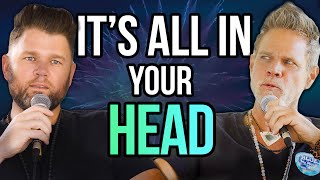
Live YouTube interview (host Josh Trent; guest Dr. John Lieurance) exploring how nasal structure, nasal breathing, and a therapy called functional cranial release (endonasal balloon inflation) affect nervous-system regulation, sleep/glymphatic clearance, and the Default Mode Network. The conversation mixes clinical anecdotes (treating athletes including UFC fighters, ketamine-assisted sessions), personal illness/recovery (Lyme disease, mold), practical tests and exercises for nasal/cranial restriction, and broader themes about identity, trauma, psychedelics, and spiritual insight. The guest also promotes a new book and clinical training/offerings.
Chapters
We carry stressors and fears, and a lot of these fears are based on thoughts that we believe are true. The thought might be that I'm not good enough. I'm not loved, you know, and what might be covering that up is that my father doesn't respect me or my mother doesn't care for me, but underneath, there's these different layers of these fears that we all carry. And so when you start to get into psychedelics or breath work or even this endonasal treatment that I do, you start to have a down regulation of something called the Default Mode network.
There can be a fundamental shift in you if you allow it, and that's actually the key. What's been your experience with the ufc?
I was introduced to Dana White. He wound up jumping in his private jet, and Dana White shows up at Harry's front door. And we treated Dana. We've treated a lot of amazing people, really. I was very ill with Lyme disease and mold and extremely sick to the point where I thought I was going to die. You know, I call it my pain to purpose. Overcoming it and then being able to help others that are challenged in the same way has been really empowering for me.
Part of what we talk about on wellness and wisdom is this pentagon that I've been building for myself. And I think we all build, and it's the mental, physical, emotional, spiritual, and financial aspects of self. No one has any challenges on any of those. Right. And I just find that the more that we can have confidence, conversations in the center of that, like, really being honest with ourselves about, okay, which part of that pentagon of those five things is empty or which one needs the most attention because it tends to siphon energy or reserves from the other sides. And I feel like that's the case. I'm a new dad. My son's 15 months old. Are there any parents? Okay, so, you know, like, sleep deprivation is real, and when the physical body is challenged, it starts to make the mind have some troubles and things like that. And so today we get to sit and really dive into all of those aspects. With John, maybe we won't talk too much about financial, I don't think. But definitely the emotional, physical, and the spiritual. I've known John now for, gosh, three years, maybe. Is it three years, something like that?
Yeah. Yeah.
And he's the founder of Mitozen, and he's an incredible wealth of knowledge. Y' all are going to get to really dive into his psyche today. And this is actually our first live podcast we've ever done. We Were talking before this. This is really cool.
One of us.
So we get to all create this together. And I was thinking too, just as a jumping off point, you know, so many of us came here because we are seeking this. We just want to relax. We want to know what it's like to live and to be and to breathe in our body. And I thought about from a nervous system perspective, you know, I myself have had a lot of sinusitis issues, tinnitus, tons of antibiotics when I was growing up as a young boy in Southern California. And so maybe let's start there. John, the nervous system and how the nervous system really lives and breathes, for lack of a better term, in the nose. Why is this such a massive deal? We'll talk a little bit about John's book, too. This is his new book. It just launched last week.
Yep.
So you all get to pick this up.
It's all in your head. It's all in your head about endonasal cranial therapy. But let's much more.
Let's go there, because as far as I'm concerned, if we're breathing through our mouth and if we've cut out the nose, then we're far more likely to have really a sympathetic driven nervous system. So let's start the conversation right there.
Okay. So there's this Dr. Weston Price, and a lot of people might have heard of him, and he traveled the world and he noticed that aborigines and people that lived off the land, they had wider skull structures, they wouldn't have to have their wisdom teeth removed. And they didn't have a lot of the diseases associated with industrial culture, such as osteoporosis and neurologic disease and diabetes and autoimmune conditions. And so he noticed that the skull structure would collapse and that it was a result of the foods. And so Weston Price is considered the father of the raw food movement. And so Pottinger. So they have the Price Pottinger group in California. And so Pottinger came out and did a study, which is really interesting. I don't know if you've heard this before, but it was cat with cats.
Pottinger's cats.
Yeah. So they took one group of cats and they fed them cooked meat and homogenized milk. And then they had the other group where it was, you know, raw milk and raw and raw meat. And the cats with the cooked and homogenized milk, they had their facial bones collapsed in. They started getting diabetes and osteoporosis and all the different diseases, while the ones Eating the raw food maintained a level of health and vitality. So my. My understanding of his. Of his work is that it. It ties into inflammation. And so when we have inflammation, the canary in the coal mine is our nasal passage, right? Because you have a lot of blood vessels in there. And so there can be some swelling. And it could be subtle. Like, you may not even notice that there's a problem there, but it's subtle. And then with some people, it's not so subtle. And there's a shift to become mouth breathers. And so when we're. We're breathing through our mouth, the. The maxillary bones collapse in and it crowds the teeth. So it's kind of like it goes up like this, right? So the palate. The palate has a. A suture right in the middle of it. And so that palate just raises up and it crowds up the nasal passage and it narrows the. The palate where the teeth are. You start to get a lot of problems with, like, tmj, different headache patterns. A lot of neurological conditions can be associated with this jamming of these cranial bones, because what happens is you lose the ability to move cerebral spinal fluid around the brain and spinal cord, which is like this liquid light. You know, it's like you're not only bringing in the groceries, but you're taking out the garbage, right? So it's not only important to bring in nutrients, but it's also important to take out metabolic waste products, which is like all the degenerative neurologic diseases. There's like these proteins that accumulate, like in Alzheimer's, there's beta amyloid, Parkinson's, it's alpha synuclein, and traumatic brain injury tau protein. So these different proteins can normally be cleansed and detoxed out of the brain. And actually the glymphatic system, which is like a natural pumping action that happens in. With the skull structure, is primarily activated through deep sleep. And that expression can be affected negatively with these cranial bones being jammed. But it's not the bones as much as it's the connective tissue. So you have this layer that surrounds your brain and spinal cord called the dura mater. And in Latin, that means tough mother. So it's the mother because it's protecting your central nervous system. And there's some mothers that are overly protective, Right? How many people here had overly protective mothers? Raise your hand. I bet there's people that raise their hand that. Let's be honest. So we want to release some of.
That.
Constricture and allow that Expression of that cranial rhythm and that movement of the cerebral spinal fluid. And it actually supports the pineal. And that's why the chapter for the pineal in this book is really something that you would not expect to see in this book at all.
One of the things I love about your work, and we talked about this on a previous podcast, was when the cells in the brain are not getting rid of the garbage, you're literally swimming in your own excrement from a brain standpoint, which was absolutely fascinating to me. I thought about we ever wake up and we feel just incredibly tired, yet maybe there's 10 hours on the clock that we've slept and somebody might look at their aura ring and they're like, oh my God, I'm stressing out. I didn't have any deep sleep. What are the core aspects from the structure of the nose and the structure of the cavity that could actually block somebody from having deep sleep? In other words, what's the hardware in there that's making someone sleep for 10 hours, but they're actually not getting any restoration and those cells are not being cleaned out. The garbage isn't being exited. What's really happening there?
Well, I always say, you know, you're either a swamp or a river, right? And so swamp lends itself to infections, it lends itself to the accumulation of toxins. And you also don't get nutrient delivery, you know, when, when it's more swampy. So that all boils down to circulation. Circulation is everything. So if you're going to start to block circulation to the brain, you're going to have a lot of problems. And sleep is a very active process. It requires a lot of energy to act because it's like the body has to shift into and do sleep. It doesn't just happen to you. You know, you don't just relax into it. I mean, it's through the autonomic nervous system mostly. So it's a lot of automatic processes going on, but it's a rhythm. And one of the things that I find really interesting is how disconnected we are as a culture from the natural rhythms of the planet and the earth. And we live in these boxes. We're not getting light in our eyes. We wake up, we walk out of our house and we have sunglasses on. Immediately we wear the sunglasses while we drive to work, you know, and we're not walking on the planet and getting that, that, that, that magnet energy, right? And so those, those fluctuations are super, super important. And the sleep wake fluctuation is one of the most Important, important cycles for us to maintain health and vitality. Because just as important it is to be present and focused and be able to get things done during the day. Because a lot of us use that as our benchmark of success, don't we? Is like, how much we got done that day, right? How productive am I? I'm a good person, I'm worthy, I'm loved because I got all this, all these things done. But just as important as that is that rest and that calm, which is the parasympathetic nervous system. So the sympathetic is going to get us going during the day and we're going to get things done. But the body needs to switch into a resting, a deep restful state. And there's got to be a balance between the two. And so one of the best ways to measure that is heart rate variability, right? And naturally, heart rate variability goes down quite a bit as we get older. And so when the heart beats, there's a variability because part of the heart is controlled by the sympathetic and part of the heartbeat is controlled by the parasympathetic. And so if they're both kind of chiming in on that, there's like slight variations to that heartbeat. But if you have a dominance of one of those aspects of the autonomic nervous system, then it's going to be more consistent, right? And so it's not something that happens very often where people have a dominant parasympathetic nervous system. People are just too zenned out and too calm. No, we're all activated. We're all too sympathetic. It's a sympathetic dominant disease process. And so things that you can do to drastically turn that tide is deep sleep, breath work, meditation, exercise, or a.
Hit from a DMT pen, psychedelics, right?
Well, I see that as like an indirect way because we carry stressors and fears and a lot of these fears are based on thoughts that we believe are true. Like the thought might be that I'm not good enough, I'm not loved. And what might be covering that up is that my father doesn't respect me or my mother doesn't care for me, right. Or, you know, I'm going to be late to this appointment and that they're going to be angry at me. But underneath there's these different layers of these, these fears that we all carry. And so when you start to get into psychedelics or breath work or even this endonasal treatment that I do, you start to have a downregulation of something called the Default Mode Network with really, it's a fancy word, but just think about your sense of identity. And we talked about this earlier.
Yeah. Thinking about, like, who we are, how we identify in the world. You know, what, am I really Josh Trent? Am I really a podcaster? Are you really a healer? These are all constructs of the self, this individuated point of consciousness. But we all come from the same place. We all come from this singularity. And so we're here to experience the duality of, like, pain and love and joy and agony and all these things. But the default mode network has always been fascinating to me because I think about what turns it down. What does it mean to have an optimally functioning default mode network? We know it's the posterior cingulate, the amygdala, and the prefrontal cortex. Those are the three major structures of the default mode network. I mean, there's other structures, too, but when I was building out the Breathe program, I thought about that. I was like, okay, if breathwork takes us to a calm state and we actually can get away from how we identify in the world and get away from the rumination of the past or the focus of anxiety on the future, you know, fear of us being able to perform, how does that actually work? You know, how do we. How do we be this loving present being that isn't so attached to the self so much, which leads to this default mode network with a super high PET scan. So how does that. How does that actually unfold in a healthy way?
So the sense of identity can either serve you, or it can be a positive, or there can be a negative. There could be parts of it that are positive and parts of it that are negative. And. Did you just do Zen?
Okay. For y' all on Spotify right now? We just had somebody in the audience do John Spray, which is amazing. It's called meditation mist. Y' all need to check it out. Joshtran.com Mitozen Yes. That was a shameless plug. I love it. I love this stuff. It's so good. Okay, good.
Well, the new CBG version, it's something.
We have not tried. The cbg.
Yeah, we have. Okay, you're going to.
All right.
Yeah.
After this, back to the present moment.
Okay. Yeah. So the sense of identity, you know, when we were talking earlier, it was really a beautiful conversation in preparation for coming and sharing with you guys. And this idea that the identity can be a prison. Right. And that we're in, like, this confined mind energy where there's a focus on this idea that there's somebody. John Right. And so, you know, John in the mind is like this very concrete point in time and space, and there's a belief that there's actually a John. But really, in essence, John, or the idea of John, is an accumulation of experiences throughout my life, Relationships, things that have been accomplished, the way people have reacted to me, the way I've reacted to other people. And it all builds this point, and it doesn't even exist. It's completely like just a thought form. It's just made up bullshit. Right? And so there's an observer of all of this. That's who I truly am. And when we identify with that false self of John, then the ego really comes in, like, oh, I did this. And I think that there's a lot of trapping in there that can lead to a lot of suffering, where. When one can start identifying with the true self, there can be a lot of beautiful bliss and a lot of heartfelt relationships start to come from that when. When the mind and the ego gets out of the way.
And I think the best way that I found to do that is actually to do something that makes me feel scared, that makes me vulnerable, like having the conversation with my partner where it makes us go. Because that's essentially all we're looking for. That's how we started this podcast, right? We're all looking for the deep breath. That's probably what brought y' all to Ranga, is how do I get this deep breath to be sustainable in my life when I go home? And I think about for myself, like, yeah, breath work has been a huge, powerful lever. But this structure that you talked about when we started, I wonder how trauma plays into that. In other words, if somebody has trauma, capital T, lowercase t, that accumulates, do you feel from your work that that might actually change the structure of some of that cartilage? The mother, as you mentioned.
Yeah.
Have you seen that play out from trauma?
Well, the. The emotions store in the mother and the dura mater, the connective tissue, if you look at Chinese medicine, acupuncture, meridians move through connective tissue where it's most dense, right? And so the dura mater has 2,000 pounds per square inch of tensile strength. It's extreme. That's why they call it tough. It's very thick. It's the most dense connective tissue layer we have. And it's like, right in the center of our being, Right? And so when this releases, there's a lot of subconscious thought forms, mental, emotional thought forms that are subconscious that we don't even Know, exist. And so when that's released, then if it's met with the breath. Because when we hold our breath, that's the veil, right? So you have trauma, you hold your breath, it's going to push it into the subconscious and it's going to be there and it's going to control you in a way that's probably not going to be positive, create suffering. But if we meet this and it comes up and we breathe it with a yes, like we're meeting life with a yes. I kind of been using that term for the last few months because it's so beautiful. Rhonda Byrne, who wrote the book and did the movie the Secret, shared this with me.
I've never heard of it.
You meet life with a yes instead of a no, right? So basically, whatever comes up, you're not. So it's, it's suffering is not what creates suffering. It's the avoidance of suffering that creates suffering. And so if we say yes to whatever sensation comes up, then it's minimal suffering, if not any.
Because I could see that playing out over time. I remember when I was growing up, we didn't know that I had a dairy, a lactose intolerance, and 10, 15 years of antibiotics later, I had to have multiple sinus surgeries and laser cutouts in my nose. And it was very traumatic. But I remember, John, I remember when I was in high school and they took out the gauze from my nose and for the first time in 18 years, I was a senior in high school, I could actually breathe. And like, I can't even tell you, there was parts of my belly that felt like they activated for the first time. And I wonder if we look at the research too, or the data. So many people don't breathe out of their nose because from a construction level, they just straight up can't. And so in your clinic, I'm sure you see this a lot. What are some of the telltale signs? Obviously, if you can't breathe out of your nose, that's a pretty big one. But what are the other ways that that manifests in the body? What is the deleterious health aspects that come when somebody has partial blockage that they might not know about? In other words, they're breathing more only through their mouth.
So the nervous system being the master system, meaning that you have a spillover into every cell in your body. So the healthier nervous system you have, really, the more vitality globally that one's going to have. And so when you breathe through your nose, there's Flora in your nasal passage that outgasses nitric oxide, which maintains blood circulation in the brain. So they found that when people mouth breathe that there's a lot of like contraction that happens through the vasculature in the brain. And you get a lot of hypoxia. There's the respiratory cycle, There's a respiratory cycle. And that respiratory cycle catches some nerves in the sinus and the nasal passage, the upper nasal passage. And this respiratory cycle paces something called limbic oscillation. So that word limbic in neurology is it refers to emotion. Like if you have a limbic response, like a spider comes out and you're like, ah, like that's a limbic response versus a spider comes out and you're just like, that's a non limbic. Right. So these limbic oscillations are really, really important because they, they either synchronize or asynchronize a whole wealth of pathways in the brain stem that keep us healthy and vital. And when you don't have that, it shuts it all down. And so a lot of people might find they have a lot of anxiety. There can be a lot of neurological confusion that happens with the brain. And that's why when we do some of the work, even just doing regular nasal, deep nasal breath work, people have the same experience. But when I do this treatment called functional cranial release, it's an endonasal and it's expansive manipulation. So with a balloon that goes in the nose, there's testing that I do where I determine where exactly the balloon goes, because there's like six different placements. So it's a really specific kind of release. And then the body's positioned in a certain way. And then oftentimes we'll introduce some, some intention and I'll have like a guided meditation that I'll do individually for that individual. And we call that more of like bliss release, you know, so it's a different upgrade to like just the standard functional cran release. And so after that it drops the default mode network, just like psychedelics do. So when you experience this balloon inflation, there's this like very calm sensation that people will experience. And so there's kind of a window for people to have emotions that will come up and being able to be objective and more empathetic towards those emotions. So there's a lot of utility with it for not just treating the brain and neurological conditions, but also with mental, emotional and spiritual applications.
If we look at the work of a lot of different practitioners in the Space. One of them is maps. And the maps. Y' all have heard about maps. The Multidisciplinary association of Psychedelic Sciences. They are at Burning man, and they have these safe places where people go when they're having, quote, a bad trip. And look, I'm not here to tell y' all that you should or should not do psychedelics. That's your own journey, that's your own research. But I will say that there is something pretty cosmic and pretty radical about the healing that happens when people are supported in a loving way. Have you combined. Have you done any synergy stacking with potentially the nasal opening with the balloons and psychedelic therapy? Maybe you can't even talk about that. Maybe that's something like behind the scenes only. But to me, that would be incredible if somebody could breathe for the first time and they could sense things in outer realms that they haven't been connected to in a long time. What is possible in that space? What kind of healing is possible?
Remember that thing I gave you before we inflated you last time? I didn't tell you what it was.
What was it? That's why I felt so good for three days. It was iboga.
It's not a placebo. Well, we do ketamine in our clinic, and so we have a plate around. Generally, you don't really need to. But there is. And I do facilitate with. Usually it's with another group, and I'll come as a guest. And there's been numerous times where I've introduced the endonasal while someone was actually in the middle of a journey. But it has to be someone that has had the balloons before. Like, I don't feel like. Although there has been, like, one or two times where it was the first time for that for a person. But across the board, the feedback I get is that that was the most profound experience I had. It allowed some people to really break through some major, major issues.
A lot of the work you're doing now, which I see on Instagram, is with ufc. There's one of the fighters, Juliana Pena. What did you do with her? And you've also worked with some other people at the ufc, which I think is fascinating. Like, think about the nasal work that's needed in ufc. They're just beating the crap out of each other all the time. So I'm sure there's lots of this work needed in the ufc. How do you see that playing out? What's been your experience with the ufc?
Well, they. They get a lot of face trauma, so I was introduced to Dana White By Ari Emanuel. He. He owns ufc, and so he found me on Ben Greenfield and called me up and we became friends. And then I was out in LA and he and I told him about the work I'm doing with the balloons, and he was willing to experience it. So went over there, treated him and his wife, and next thing I know, I never even knew who Dana White was. I didn't really follow ufc. And so he does a three way call, video call, and he's like, this is Dana White at the time, I have no idea. So Dana White. Okay, right. And so he asked me to go fly out there to treat him, and I was busy at the time, so he wound up jumping in his private jet. And Harry, who's sitting here front row, I stay with him at his house. So Dana White shows up at Harry's front door, and we went up. And when I work with. With a lot of these clients, Harry and I combined forces. And Harry is a masterful facilitator in the sense of doing bodywork and also being able to recognize different patterns and being able to coach people through processes. And so we were a beautiful team together that way. And so we treated Dana. We've treated a lot of amazing people, really. And so then Dana, I was at a fight, and it was Juliana Pena and Amanda Nunes, and it was in Dallas, and I had flown in. Dana flew me in to treat him, and I watched this fight, and it was just. It was the first fight in live that I've ever watched. And these two girls beat the crap out of each other. I mean, just bloody messes, right all the way to the end. And then it was. They were calling the winner, and Juliana lost the fight, so she lost her belt. And so a week later, I get a text message from Juliana saying, hey, this is Juliana Pena, and this is the girl that I just watched the fight with. He says, you know, Dana gave me your number, and I want to, you know, I want to come see you for the balloons. So she came out for a week, you know, and she did the balloons, and she was really, you know, it was. So they get a lot of facial trauma, and it affects their ability to breathe through their nose. And so what a gift to be able to open that back up. And if these fighters get nasal surgery, then every time they fight, their nose gets broken because it weakens the tissue so much. And that's the big thing that they have. So they brought the technique into the entire performance Institute based on introducing this to Dana White and to some of the Other fighters.
Wow. Okay. So I'm thinking about, for all of us who don't fight in the ufc, obviously, we can come to the clinic, and it's in Sarasota. Yes.
Yes.
Okay. So are there. Are there plans to bring this therapy to other parts of the United States? Because I'm sure there's only so many people you can have in the center at once. So what does that look like for teaching practitioners? It's a very nuanced process. I mean, if you make that balloon too big, you're going to probably mess up someone's face much more than the ufc. So there is a. There's a very sacred process in how you teach practitioners. What does that look like for the future?
Well, we're. We. We had to camp. We had a training coming up in a couple of weeks because of the hurricane. We. It screwed everything up, so we had to postpone that.
But we're.
We're. You know, it's definitely something I'm very passionate about, is. Is teaching other clinicians how to use this. I have a lot of biological dentists that are super interested in it. To date, there's been very little medical professionals that have really gotten into it, and primarily naturopaths and chiropractors.
Why do you think that is? Why has there been either a resistance or a not knowingness?
Well, the. The primary people teaching it have not wanted to share it with the medical, and there's a fear that it'll be taken from us, from the chiropractors, and it would be rebranding as their own. And so I kind of was like, you know, that doesn't sound like that's. Like, could that really happen? And the. The fellow who's probably the biggest trainer, he won't take any. Anything except a chiropractor to teach them. Right? And he. He was giving me this feedback, and. And. And I said, well, give me an example. And so X ray back, like a hundred years ago or whatever, the. The First X Ray, B.J. palmer, who was the guy that, like, really put. He was. The. His dad invented chiropractic, and then BJ really developed it, and he's considered, like, the father of chiropractic. And he flew him out, and it was at BJ's clinic was the very first X rays ever taken. Right? And this is chiropractic. But now there's states where chiropractors can't even take X rays. So I was like, okay, yeah, you're right. Maybe there is a risk there. Right?
By introducing it to, like, the AMA and Western medicine, it could potentially be proven to not work because it might go against some other modalities that include pill taking or traditional aspects of care.
Well, how about this? They. They invent a device and patent it, and then. Then the attorneys are going after anybody that's doing anything because it's infringing on the patent, right?
Yeah. And I'm not here to. To go against western medicine. Like, if I break my leg or if I need medical care, like, that's. There's a valid place for that. But I think what you. What I've known about you ever since I met you, and even the work you've done with me has been something I could never get in a doctor's office. A quote, doctor's office. And it's made a profound impact. I mean, last runga, I was here, we were right there, and John, obviously, through our care relationship together, gave me some treatment, and I had an emotional release. I mean, I was crying. It was like. I was like, oh, my God, there's this inner child coming out to, like, get some healing right here in the middle of runga. Yup. And so it may happen to y'. All. It doesn't have to be through a balloon. But what exactly are people afraid of when it comes to standardizing this? Or. I understand the legal aspect you mentioned where it might be proven to fight against someone's patent and whatnot, but what. What are people actually afraid of at the core of it? What's the fear of introducing this type of treatment to the masses?
I don't have any fear, personally.
I know you don't.
Yeah.
So.
So that's why I wrote the book. Like, I think it's ready. It's ready to get out there.
Yeah, let's go.
Let's go.
Okay, so this is the book, and basically this is going to explore functional cranial release. The skull is very interesting. People don't realize that it has moving parts. People think of the skull as having just a standard bone structure. There are some people that can, like, move their scalp. I'm sure y' all have seen this, where you can move your hair back and forth. What is that? Is there a test that we can do, like a fun test or an interesting test to see if the skull is actually moving in an appropriate way on our own. Is there a test for that?
Well, one thing that you can do is you can put your fingers over your jawbone and then open and close, and if you feel the bone kind of pop out, then what's happening is that with the mouth closed, the jawbone is, like, forced into a more narrow, constricted. Do you feel that?
And when you say pop out, do you mean like an audible sound or a click?
Well, it widens. Like, it kind of see it go like this.
Yeah.
Do you guys. Anybody feel that raise of hands? Yeah. So that's a. That's a jawbone that's going into a more narrow skull structure.
I think about most people in traffic, we tend to grit our teeth or just in stress in general. How does that play into the structure of the bones of the nose and the mother and the constant tension of the jaw? I remember I was a personal trainer for 10 years and had a client who came in and he was wearing braces one day, and I'm like, you're 56 years old. Like, why are you wearing braces? And he said, oh, I grit my teeth so much that I have to wear braces now. It was because of stress. So I'm curious, when we have this clenching of the teeth for so long, for decades even, would that impact the structure of the nose and then be deleterious to our breathing?
Absolutely. The musculature around the face and cranium can tug at. So think about your teeth and where the teeth fit in to the jaw and to the skull, the upper and the lower. And the fact that we can take braces and with a light pressure over time, that tooth moves. So you have to think about that tooth in the bone. There's bone that's going to reabsorb, and then there's bone that's going to absorb as that tooth moves. Right. The same exact. The sutures where all the bones come together, it's the same tissue. It's basically lined with all these stem cells. And so that's why your skull structure can completely change either to the negative or the positive. You know, another. Another test that came up after you had asked me is there's. There's a. If you breathe through your nose and then you move your head all the way. You, like, turn your head all the way to the right, then turn your head all the way to the left and notice if it's different. Is it more restricted one way or the other? And then take your head and, like, laterally flex it, And then you can bend your head forward and then all the way back. So for me, when I bend my head back, that for all of them, it seems like there's less. It's a little bit more restricted. And so that's the dura, because those connections are in through the nasal passage. It's actually. It becomes the whites of your eyes. It winds into your ears, goes all the way down your spinal cord. So it's like this dura pervasive mother that's just there. And when you have restrictions, it's like your shirt, if I have a restriction here, can affect all the way to here. And so that's why these different head positions can have an effect on the dura. And you can appreciate those adhesions by that breath challenge.
One of the rebrands I saw you do as out of box document, which I think is really cool because we're definitely not in a box here at Ranga. And you talk about vitality of the body, identity with self and the Creator and also divinity. I wonder how you define the Creator. You know, many of us have a wounding around the word God. I was raised in a very strict Christian upbringing. And so I had to find my own path to God. I had to find my own path to emotional intelligence. I had to find my own path to myself. With the patients you've worked with and everything that's led you to hear, how do you define Creator? How do you define God? What does that look like for you?
It's a really, really deep and good question.
We got time.
Well, I think that when we spoke earlier about this observer, right. And it's this, this aspect of ourself that's pure consciousness. And there for me there's an idea of this like, of this vertical moment, right? The like the just straight up now moment that everything emanates from because there's no past or future. The mind creates that. And when you're, when you're in the mind, the mind can never be in the present moment. It has to be in the future, the past, otherwise it doesn't exist. Right. And so when one is completely in that moment and relaxed into that moment, then I believe that that is the place to experience the divine. Yeah. And there's medicines that can accentuate that. Probably the biggest teacher for me within medicines was a medicine called 5 Mao. Have you, have you.
Not yet. I mean, I hinted towards it earlier with the hit from the DMT pen and you know, look, I don't want to wax poetic on that. It's a very serious, sacred thing.
Yeah.
So it was a joke that I made. But when, when people go to these places, there is an incredible amount of care and of safety and of sacredness. Especially with something like that.
Yeah, yeah. Well, what, what, what? My experience Was is that I inhaled this substance and there was a complete death of the ego. So the identity. And John was just like. I could feel it, like, going away. And for me, it was. There was terror, right, Because I was. I felt like I literally thought I was dying and John was gone. And so there was just this death of the identity. And what was left was just this incredible, blissful love oneness. I mean, it finally, like, at that one point, in that one moment, I understood what all of the religions were talking about. And so I believe that this idea of the vitality of the body supporting us, this identity conversation that we're touching on, and then this idea of a direct experience of God or the divine being able to catch all of those things allows us to become the best version of this life. To take advantage and just accomplish. It's really not accomplishing. It's the absence of needing to accomplish, right? It's like. It's so incredibly simple because it's like nothing. You're not doing anything. You're relaxing into and trusting everything to just flow, right? Because we get so caught up sometimes where we feel like you have to, like, manipulate everything in order or otherwise it won't be this or it won't be that. And just completely trusting and being in the moment is so profound. And if we can just experience that, even just like for a moment every day with a breath work or a meditation, and eventually allow that to be greater and greater, and there's literally people that can stay in that place all the time. Harry and I have spent time with people like that before. And if you're blessed to have crossed paths with someone that's, like, completely enlightened, you get it, and it's inspirational.
And one of my mentors, Paul Check, I don't know if anybody here's heard of Paul Check's work, but he said that I think it's.001% of all people on Earth ever have true enlightenment. So when you come across someone that has true enlightenment, it can fundamentally change your life just by being in their presence, just by being in their realm.
Well, they become a node, right? So that node is. Is in training. So just like two women that are living together, one will start to ovulate, right? And so there's one that's going to have a stronger, you know, influence that's going to entrain the other one into her pattern, right? So they become this node. And you, you know, it's like a. It's like a flame. Like, you could have a candle that Lights another candle. It doesn't take anything away from that other candle, right? And then it can light another one and another one and another one. And that's how these, you know, these. These enlightened beings operate.
And I think about the analogy of a candle. There has to be a spark and a flame first. So, you know, we're here at this beautiful event, and I've gotten the experience with you last, earlier this year, to be here already. And I just felt for me personally, and I saw with everyone that was here last time, there can be a fundamental shift in you if you allow it. And that's actually the key. I know we hear that phrase a lot in spirituality and just in media. You know, how do I allow? Or I'm allowing right now, but to actually allow, there's an ingredient list there. You know, if love was a light switch, we would just flick it and we would all love ourselves and we would love everyone. But it's not that simple. You know, I think it's easy, but it's not that simple. How do you see this with yourself, with your patients, with your work, playing out this understanding of how to actually allow in your life?
Well, again, it's just a deep, deep relaxation, you know, and just a deep trust in who you are and identifying with the self. And the self that needs to have certain sets of circumstances to be validated. That presents a tremendous amount of stress. Right? And the opposite of that is a deep trust and relaxation and just a complete connection with the moment. And that process is not a process. It's not. You don't have to do anything for it. I mean, some people require set circumstances to get there, but that actual process is so simple. It's like. It's complex. It's so simple, Right? It's just like. It's nothing. It's just a deep relaxation.
I think we're all going to touch what you're saying and the allowing a lot over the next two days, two and a half days. If there was an anchor that we could attach to, or if there was something that could support us or be almost like an emotional or a spiritual scaffolding for us to take in the sound bath, to take in the meditation, to take in the nourishment of just being with one another, connecting with one another, being fucking real with each other, what would that be? Is it just vulnerability? Is it curiosity? Is there something else for the recipe of the scaffolding?
Wow, that's another really good question. All right, well, I would offer a question that you could present in your mind. And that question would be, what am I? Not who am I? But what am I? And feel into that in a relaxed state. And then the next thought would be. So there's going to be a thought that comes up and then the next thought would be, where did that thought come from? And then loop back into, what am I? Where did that thought come from? What am I? And this was a teaching from Lester Levinson. And this is someone that had the whole book or the movie the Matrix was based on Lester Levinson. And he's very little known, but there's some books, if you can get a hold of his books. They're very hard to find. Extremely profound. And this is one of his teachings.
The Matrix. If y' all haven't seen the Matrix, you need to see it. Raise your hand if you've seen the Matrix. Okay, so it's like 99% of the people. The best scene in that movie is when finally at the end, Neo just raised his hand. And he didn't do it violently. He didn't do it where it was like, fuck you. Get away from me. He literally just calmly said no. And I think that is like. I mean, it gets me emotional just thinking about it. Like, there's so many things that happen for us in life where we can literally just take a breath and just say no to something. But we have to be able to recognize what thought form keeps looping that makes us say yes. Like, what is that? Is it a partner? Is it a job? Like, is it a trauma that needs to be let go of? Like, there's so many things that. That add to really the disintegration of our boundaries. And I think, if anything, I'll just plant a seed in everyone's garden today. Like, all the healing things that you go through, just make sure that you're being mindful of all the things that you say yes to, that they're really not a yes. There are no somewhere inside of your soul. But there's a. There's a compliance to that for reasons that are yet to be explored. And so I think when I look at the way that we start with the physical and then we go on. In your model, there's three sides. There's vitality, identity, and divinity. The vitality aspect, you know, we're all here to eat well and move well and feel well. How has that shifted for you? How has it shifted for you to be a vital being, you know, as you mature in life? I'm not saying you're old. I'm just saying, you know, as you mature.
Well, for those that have, you know, listen to some of the podcasts that I've been on, you know, I very open with the fact that I had. I was very ill with Lyme disease and. And mold and. Yeah. And. And extremely sick to the point where I thought I was going to die for many, many years. You know, it was over a decade of just being, like, you know, completely brought to your knees. And, you know, I call it my pain to purpose. Right. Because there's a real connection with the frailty of life, you know, for me. And that fear and, you know, overcoming it and then being able to help others, you know, that are. That are challenged in the same way has been really empowering for me. And what I've learned through that process has been a catalyst for me to turn back the clock on my body. Like, I literally probably look 10 years younger than I did, say, five years ago.
How old are you?
52.
Awesome. 52 is truly the new 40, and 40 is the new 30. If we love ourselves, if we take care of ourselves. And I think about your journey. I believe you even had Covid a couple of times, right?
Yeah. Yeah.
And you've helped a lot of people that have had that. So these. These illnesses, these diseases, they come around. And I don't always think that we attract them. You know, I. I know you're friends and you've done some work with Rhonda from the Secret, but I just feel like the law of attraction works to a point. And I don't always believe that we attract the exact illness that is going to make us grow. Sometimes I think just hard things happen, and we make meaning from those hard things. We create a meaning that we are strong. What meaning did you pull from when you had the lime and when you were going through all the health issues that we could learn from?
It's hard for me to answer that question directly, but when we're faced with darkness, like, you're really, like, for me, it's always been a springboard for me. Like, I'm the type of person that when the chips are down, I'm like, really? I'm there. I'm, like, ready to go. Like, let's fucking go, right? So, you know, very tenacious. And so it's. For me, it was just a catalyst to just turn things around.
It's just. It's the meaning that you created, and I think that goes back to what you talked about with the thoughts and how do we just actually allow ourselves what meaning or Be mindful of what meaning that we're putting on things where, you know, my partner and I, we have a young baby, and when we're sleep deprived, let's be honest, I put the wrong meaning on things when I'm not sleeping well, and she might do the same thing. So it's just this constant moving target, this evolution of ourselves that has all led us here. Otherwise we wouldn't be here. It's all perfect. Do you have any parting guidance as we wind down the podcast here about what really matters when it comes to the vitality, the identity, the divinity that we haven't covered?
Well, you know, there's one aspect that we didn't really dive into that I think is extremely important, and it's this aspect of forgiveness. And, you know, I'd like to kind of leave you guys with this last. This last thought, as when we forgive others or we forgive situations, it's not about letting them off the hook, because these things happen. And then we have a response within us. And it's that response within us that's driven by a goal that we would have for a circumstance or an individual. In other words, there's a projection that happens commonly where we look at that object or that situation as the source of our suffering, and that's not it at all. It's the meaning that we have attached to that, and it's the wound that we have within us that's touched by, that's mirrored. And if we could process it in a way where you realize that, okay, I have a goal for my father to treat me with respect as an example, because this is something I'd worked on a lot then when my father disrespects me and I bring that in, like, okay, I'm going to collapse the need for my father to respect me. And then I look at what's below that, which is this sense that I'm not worthy or I'm not loved, right? And then I connect with that and I forgive that. In Aramaic, the word forgive is shabag, which means to remove, to literally remove that. So the idea that I'm not loved and I'm not worthy is total bullshit, right? I'm an infinite being, right? And I am love. So that would be the healing that all of you have available to you. And this is really the true depth of teaching within the identity component with outofboxdoc.com it's an educational site, and we're going to be having some of our own, you know, kind of online education. We do health coaching in fact, my health coach here, Tara's here, front row, and we have a. A space. A lot of you guys have already visited us, but come by, we have some giveaways and some products that we want to share with you and just appreciate everybody just, you know, being here and listening. Thank you. Yes.
And I will piggyback on that beautiful comment that you just shared that in the Greek logos, if anybody studied Greek mythology, there's this river of forgetfulness that we all drink from. And we do it on purpose. We literally drink from a river to forget how loved we are. We forget how special we are. We forget how blessed we are. And then I think we spend the rest of our lives remembering that. And so that's my wish for me and for you and for all of us is over the next two and a half days and take that to the rest of your life. How can we remember how loved we are, how supported we are, and how on the right path that we truly are? And it's not just an esoteric babble. I mean, really, like, that's the challenge, right? That's the. That's the work, is to take what you get and what you receive from this wisdom from all the different people here today and from John on this podcast. And how do you take it home? How do you embody it? Because in the arc of wellness, you know, we gather, we sit here, we listen to podcasts, we. We read together, we. We hear, we listen, then we have to apply. And at the end of the road, we're. We're all just looking for embodiment. We just want to have it live and breathe in ourselves. So, John, it's been a pleasure. I've really enjoyed this podcast, our first live podcast. Yeah, y' all check out John's other two episodes. We did a quadcast with Luke Story and Cal Callahan, and then we also did a pretty. Pretty big, deep dive into some of the other Mitozen products and things. And I'll link that for y'. All. There's going to be some cards in your gift bag, and also you can feel free to scan right there. You can win 150 bucks in prizes every month if you just want to subscribe to the podcast and get more wisdom from people like John. So, John, from my heart to yours, man, thank you for being here. And the final question I always ask on every show is wellness. We all want it. It seems like it's fleeting at times. And in the middle of our physical, emotional, spiritual, emotional and financial, there's this beautiful homeostasis there's this balance point that we all crave, that we all know is possible. How does that look for you now? How do you live your life well? What is your definition of well being?
Well, I think we've covered it in our conversation quite, quite deeply.
Right, I'm just gonna drop the mic right now.
The relaxation into. Into the moment. And one of the things I'm working on a lot right now is just trusting, because I have this past where I would want to be controlling everything. And it's like at the clinic, it's like important shit. You got people coming in and it's like sometimes life or death. And so this idea that things have to be perfect in order and making sure this has kind of carried on to my life. And I'm working on just being in the moment and trusting that everything's going to be fine and not having to always micromanage and manipulate and control everything.
Love you, brother. Thank you. Thank you all for being here. Hey, thanks for watching the podcast. I appreciate you being here. If you haven't done so already, click the subscribe button and the little notification bell so you never miss any of this free weekly content delivered from my heart with care right to yours. If you love this video, you'll love any of the videos on this page. Just click the one you want to watch next.
More from Josh






Your child's future start before pregnancy... and even before conception! #podcast

MD Reveals: Your Healing Creates Your Child's Reality (The Souls Coming In Need Strong Bodies)



