Stress-Disease Connection: Why Is Emotional Distress Making You Sick?
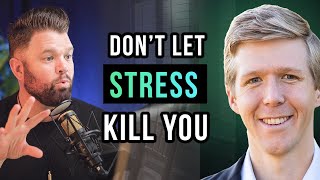
A podcast conversation (YouTube) between Josh Trent and Dr. Leland Stillman exploring how emotional and environmental stressors drive illness. Main themes: distinction between eustress and distress and the concept of allostatic load; the role of respiration, toxic exposures (mold/Marcons, heavy metals), sick-building syndrome and EMF; mind–body connections and psychoneuroimmunology; practical starting steps (mindset, clean water, nature, boundaries) and Stillman’s coaching/program offerings.
Chapters
Eustress and distress are the two categories of stress. Eustress makes you stronger because your body has the resources it needs to respond to it. Distress is stress that actually degrades your ability to perform and long term is bad for you. That's a concept that's lost on a lot of people, particularly in the fitness world, where it's just punish the client more and expect better results. The psychological and emotional stress, even though it isn't some kind of physical toxin, has the same effect. You, you'll talk to these people who say, yeah, I never had allergies till my mother died. You know, these traumatic experiences, all this mind body medicine becomes relevant. But what I take issue with in that world of mind body medicine is these guys don't look at all at other elements of the case. Lots of people come to me and they say, yeah, they said it was all in my head. And I say, yeah, but look at your moldy H vac system. Look at the tap water you were drinking. Look at the well water you were drinking that was contaminated. Look at all these heavy metals on your hair test. And it's shocking to see how much aluminum or mercury or whatever other mineral or heavy metal they've got accumulated comes out when they start to really heal. And that's why every little bit of stress reduction makes a huge difference.
Leland, it's been a minute. I was just telling you before we hit the record button that this is going to be an incredible conversation because I'm finally getting to talk to you friend to friend instead of doctor to client. So, man, welcome to the podcast.
It's great to be here. Thank you for having me.
It's been great to work with you over the past year. I mean, the birth of my daughter and me going through sinus surgery and just all kinds of things that we'll get to unpack today. You know what's really close to my heart, man, is what makes us do what we do. And it's written all over you when I've met you at Runga, when I've worked with you as a client, and I know where your heart is. But I saw something really cool on your website that I did not know about you. And you said that you had a lot of issues with the way you breathe and ADHD and just certain health complications as a kid. That's actually part of the fuel that allowed you to step into being a medical doctor and now functional medicine and everything else that you do. So pull the E brake. I don't know if you've done a time machine back to that point in a long time. But take us back there as to the fuel for why you even do what you do working with clients across the world.
Wow. Yeah. I mean, it's so. You know, it all started when I was really young. I mean, really young. Right. I started to have ear infections, sinus infections, at 2 or 3 years old. Was on antibiotics for. My mom says, like a year straight. And she eventually bailed on the conventional medical paradigm because she saw that it wasn't getting her or her children the results that they wanted. And so we started going to. I mean, everyone. We saw homeopaths and dowsers and chiropractors, and we did this thing called cupping, which is from Southeast Asia. I mean, we saw. It felt like everyone. And we saw the weirdest, most out there people, and we saw the most down to earth, you know, almost mainstream people. And then my dad, you know, remained in the conventional medical world and never really came on any of these adventures with us. And so I grew up in a household that sort of split the difference between integrative and natural and holistic, whatever you want to call it, medicine, and then more conventional allopathic medicine, and really just couldn't sort of step away from it. And in my teenage years, I gravitated towards a naturopath who became my mentor for about 15 years. And he said, go to medical school. It's the broadest education. It's the most fundamental and foundational, and it gives you this licensure where, if you want to, you can go out and do brain surgery. And if all you want to do is talk to people all day, you can do that, too. And you can prescribe and you can order lab testing, and that's what you should do. So I did that, and I just can't stop learning. It's so funny, you know, Today I had a call with a voice coach, and she starts talking to me. This is my sister's voice coach from her high school years. And I'm talking to her because I wanted to. I'm doing all these podcasts and speaking appearances, and I just figured I might as well invest in this, right? But sure enough, I go to the voice coach who starts talking to me about how she's been teaching people respiratory mechanics her whole, whole career. She spent five years studying neuroscience and how it integrates with breath. She starts talking this language to me, and I'm like, oh, my gosh, I didn't even mean for this to happen. But here I am talking to this person about breath, work and the voice. And I. I've. It's just so. This is just my whole life. It's all I do. It's all that happens to me. It's. It's my hobbies, my spare time, my. My free time. All of it comes back to this, and I. I can't stop.
Yeah. And that's why I was saying in the beginning, like, it's written all over you, because I remember when we had our sessions over the past year, you were so engaging in a way that I'm going to be straight up. I've never worked with a medical doctor who was actually that engaged, that excited about his patient. And I know there's only one of you, so it's like not everybody in the world, not everybody with us on the podcast could potentially work with you. That would literally lay you out. There's not enough Leland to go around. But we're going to talk about this later in the podcast. This fundamental aspect of how we can be, well, starting from the inside out, with the way we think, the food that we eat, the supplements we take, and just our way of being in the world, like, that's what's really on the cutting edge for me, especially with what I've been through this year. I want to pull the E brake for myself. I, too, had a lot of issues when I was growing up. I had chronic sinus issues. And this year, actually 2023, when we're recording this podcast, this. What I'm going to share. This wisdom is timeless. So it doesn't matter if you're listening to this podcast years from now or you're listening to it live when it comes out. I had a sinus surgery, but one of the things that was uncovered with us working together was this element of C reactive protein. And luckily, I was able to work with another mutual friend of ours, Dr. John Lawrence, in. In Sarasota, and he did a Marcons test for me. So if I were to tell you in the very beginning that I had Marcons and we started working together, that my chronic sinus issues were actually something to do with mold, would you have said that's a potential? And I think you even brought it up to me. Jo, do you live in a moldy house? Let's go back to when we first started working together. How much of the respiratory. Let's talk about respiration, first of all, because this is a huge one that I've had personal experience working with you on, but with all your patients and with maybe the beginning conversation that you have with people about the hidden respiratory stressors. Where does that conversation begin? What are the things for us to look out for in our home, our office, just, you know, the different aspects of our life that, quite frankly, we could be poisoning ourselves or we could be having really poor respiration and breathing without even knowing it.
It begins the minute you log onto the webcam and I see you, because in that moment, I'm immediately evaluating how you're breathing and how you're behaving and how you're speaking to me. And so there's a really big difference between somebody who gets on the call with me and says, Dr. Stillman, I'm so sorry I was 15 minutes late. I mean, I. I listen to that person. I'm just like, oh, my gosh, I'm already tired. I need a break. And I know what's going on in their head. I know that they've got tight chest muscles. They're going to have back pain somewhere. Depends on other factors where I know they're overstressed. I know they're going to tend towards a lower hrv. I'm looking for things like childhood trauma, past trauma, whether physical, emotional, some combination thereof. I'm looking for toxic relationships. I'm looking for. Are they. Because what will happen with respiratory mechanics is people get stuck in a pattern. They get stuck in a specific, you know, respiratory strategy. And that's what, you know, Jim Laird, the. The strength and conditioning coach who works with me, really calls it. And the more I work with people on it, the more I. I think that way about it. And your strategy for your respirations really comes down to your strategy about life. Are you running around always trying to put the fire out, or are you somebody who knows how to switch off and relax and let somebody say, take care of you? So, I mean, that's. That's where it starts. And with the sick building syndrome piece of things, that's such an interesting conversation, because sick building syndrome is. And for people who don't know, sick building syndrome just refers to, you know, your. Your house or your office making you sick. And it, generally speaking, comes down to petroleum chemicals that were used in its construction. So adhesives, varnishes, paints, primers, laminates, adhesives, all these, you know, the things that go into your house, increasingly they're made in a factory out of some kind of petroleum byproduct. I mean, look at. I don't know if you've noticed this, but I remember when I was a kid, they made decks out of wood and Now I feel like everywhere I go, the deck is like, that's not really wood. That's like a fake wood. And I don't know what it's made of. It could be totally inert and safe, for the record. But I look at it, I'm like, what was wrong with wood? So anyway, with sick building syndrome, it's either that or it's biotoxins from things like mold. Mold is in the ductwork, Mold is in the H vac system. Mold is in the walls. And we live in these very tight houses. So when I say tight, I mean that they're not properly ventilated to the outside world. And so you'll find that people will get stuck in these houses where these pollutants, whether they're biological or synthetic, are accumulating at higher and higher and higher levels. And people won't notice it. They won't smell it, they won't taste it. They won't touch it. So the first question I ask people is, when did you get sick? And did that coincide with a new job, new office, new home, new environment? Because the other piece of that, right, is that you brought up the mold and respiratory issues. But the other thing that will happen is people will move into a home where there's a really terrible EMF exposure of some kind. You know, the biggest one that I've seen make a big impact is smart meters, particularly if you're sleeping on the wrong side of the wall from the smart meter. I haven't seen people get really sick within 10, 20, 30ft of them. Not that it couldn't happen, but if you're sleeping right next to that smart meter, and it's constantly irradiating your head, let alone the rest of your body. You know, people need to remember that their immune system really functions by excluding things from places they're not supposed to be. Like, just think about how you cause someone to have an immune response to something in the medical world, right? They inject you with something, and it causes you to have an immune response to it, whether you're talking about vaccines or you're talking about immunotherapy that allergists use. And so the immune system tries to exclude things from places they're not supposed to be. And EMF really gets in the way of those junctions between cells and the integrity of these. Of these networks that keep things in their proper place. So I've seen people's food allerg, their sensitivities just evaporate overnight when they got out of a bad EMF environment, which is sometimes as simple as just moving across the house and sleeping in a different bedroom.
Oh, my God. I noticed this when I go to Airbnbs, that there'll be like a router in the bedroom. And by the way, a quick link that will drop right here below the show is timed electrical outlets that turn off your router at night so you can actually just sleep in a zone that at least isn't being bathed from emf. Literally, radiation in your own home. And then I want to pull the E break too. Let's go a little bit more into the emf. But before we get there, Leland, something that's near and dear to my heart is this mold, this Marcon. So I'm currently going through my Marcons healing. Through your guidance, I was able to find the right pathway and able to find the right supplements to take. But how prevalent are Marcons for people? How prevalent is mold for people? Like, look, take a 30,000 foot view of your practice, which you've been practicing for quite some time now. How many people that you work with do you believe have either come in contact with mold that is exacerbating their health conditions, maybe even creating certain disease? If you had to guess, is it 20%? Is it 30%? I just want to get a really good bird's eye view of how many people that this mold, which can turn into Marcons and chronic inflammation, how many people is this actually happening to? If you had to guess, I know you're not predicting data, but just anecdotally from your practice, it's very hard to.
Know what, what proportion of people will actually are being affected by it, because not everybody does the investigations I would like. The real question is not how many IT influences, but how many of them I actually pick up. Because the truth is, I.
The.
If there's one thing that breaks my heart about modern medicine and modern society and my practice, it's that everyone is busy running around chasing stuff that arguably, you know, at the end of the day, it's really not that meaningful to them. They're just distracted by it. And I don't begrudge anyone spending their time the way they want it to want to. But I'll say something like, hey, you know, you've really got to check your H Vac system, your ductwork. You've got to have a building inspector come by. And the tough thing about mold is I've had cases where somebody had three different building inspectors come by and two of them missed it. So what am I supposed to tell Everybody, oh, you need three building inspectors at minimum. And then there's another question here, which is, let's say that they've got severe mold behind a wall in their home. Well, let's also say that they've got a bad EMF problem that we mitigate and they've got a bad diet and they've got, you know, this thing that somebody else missed or like a toxin exposure accumulation or nutrient imbalance or whatever. And I fix all these other things. Well, all of a sudden, they're going to compensate better for the moldy wall, whether they take it out or not. Right. And the other thing is people will say, okay, well, I remediated my mold and now my medical problems didn't get better, therefore it was not the mold. Well, the problem with that is you kind of dig yourself into a hole and diseases have this momentum, which is why, as I was saying, it kind of breaks my heart when people are, are, are out things that are not that important without really dialing in their health. I like and prefer to work with people who say, I'm not just in it to, like. We recently had somebody contact us asking us to help them get off Ambien. And, you know, I said, look, you should do the executive physical because it's going to give me the time and the amount of attention I need for this case. Because getting you off of Ambien is not a small thing. It's a significant problem that you've had for years. These diseases, as I was saying, have this momentum. That momentum carries them forward and it becomes harder and harder and harder for us to get sort of the horse back into the barn the further away it is. And so I said, look, you need this. And he said, look, I just want to do one or two appointments. I said, look, that's not really going to get you the results you need. You know, we need to really dig in. We need to really find out what's going on. We need to really get to the root of things. And that means more testing, it means more time, it means more investigation, it means changing things and trying different things in order to get, you know, traction on the illness. So now, that being said, my friend Dan Stock, because every one of us takes us a different, a different sort of line on it. Like, I give people the information and then I keep sharing information with them, especially since we transitioned to more of a group coaching framework within both the medical practice and then within a coaching business that I have now. And we did that because, you know, we had so many people coming to us for help, that we needed to be able to talk to more people. And frankly, 90% of people here need to hear 90% of the same stuff. And they often need to hear it multiple times and then have the opportunity to ask questions about their context. Because I don't give the same advice to somebody in Barrow, Alaska as I do in St. Petersburg, Florida. So my friend Dan Stock is much more hard line with the mold, really wants people to do a lot more investigating, won't leave it alone, so to speak. And he says that about 25% of the buildings in North America have some degree of water damage and that's leading to that accumulation of mold toxins and spores in the air that is creating these illnesses. But a big piece of it that's underappreciated is, is subtle things. Like for example, when we look at the tendency for people to develop mold related illnesses, sensitivities, allergies, a lot of it has to do with past exposures and a lot of it has to do with current lifestyle habits. You know, getting outside, getting fresh air, getting the sun on your skin, in your eye, living a natural life, eating natural, wholesome food, not being exposed to poisonous chemicals as are in so, so common in modern, you know, consumer products and you know, let alone pharmaceutical drugs or, or, or foods. Right. These things all derail the immune system. And a lot of the problem people have with, with moles is either the immune system is not acting properly to kill them where they are and they should not be, or it's reacting to them when they're in a place where they should be and they're even present in an appropriate abundance.
Okay, this is really interesting. Sorry to interrupt you, but I have to ask this. So what I heard from you is like depending on how many other different stressors that the body is experiencing, the time that that body has been experiencing those stressors, that is a key determinant whether or not the body could essentially fight off the mold or not.
That's right. But I think that a big part of the thinking that derails people is thinking that it's about a fight. Because the, the, your, your body, like everyone has got mold on their body and in their body. The question is, how are you dealing with it? Right? So I look at the microbiome of the sinuses, the skin and the gut. Wherever you have microorganisms, I look at it as being like a garden. And I want you to imagine that you hire a gardener and all of a sudden he comes in, he starts you know, detonating hand grenades in the petunias. And he starts, you know, firing an AR15 at the, you know, I don't know, cattails or something like that. And he's just causing absolute mayhem. And you go out and you stop him. You say, listen, I don't understand what you're doing. Why can't you just use a trowel and a weed picker like everybody else? Like, where is the weed whacker? Where is the lawnmower? What's with the hand grenades in the AR15? And he's like, well, this is how I do my job. I want you to imagine that your immune system has got at its disposal things like hand grenades and AR15s, and it's supposed to use those against things that are in places they're not supposed to be. You know, you don't want nematodes in your brain. You know, you don't want staphylococcus aureus in your bloodstream when it's there. Your immune system is supposed to be a little bit more like a garbage man and take it out, you know, aggressively, forcefully. But you want the process to be kind of seamless and quick and almost silent. A really healthy, well functioning immune system isn't not doing anything. It's just catching the problem early, so you don't even notice it. And so the presence of symptoms is not necessarily the presence of a bad microorganism. Sometimes it's the immune system has gotten confused and it's using the wrong tool to try and take out this microorganism. And so it's creating all this inflammation when it doesn't need to be there. That's why, you know, like, you know, a lot of the symptoms that people have with mold illnesses with something like Marcons, when you test certain elements of their immune response, they're having an immune response that's both out of proportion and the wrong arm of the immune response. They need a different type of response. And that's why oftentimes they'll get better with immunosuppressants like cortisol. So, and that's there's just so many elements of this, like, even just on cortisol, when someone has too much cortisol, they're immunosuppressed because it suppresses the immune system at high doses. But when someone has too little cortisol, they're also immunosuppressed because cortisol actually is necessary for modulating the immune response. So you give somebody with low cortisol, I mean, truly Low cortisol. Addisonian crisis is what we call that cortisol. All of a sudden, it's life. It's life saving. It's really. It's hard for people to get this stuff because it does come down to more advanced concepts in medicine that even doctors forget and misunderstand. But more and more, the way I think about the body is we need to bring everything into balance and harmony, and we need to get things on the right energy, frequency, vibration, and then the diseases are not going to occur, and the ones that we have are going to resolve.
I remember years ago, 2008, actually, Leland, I read a book called how to Eat, Move and Be Healthy by a mentor and a friend, Paul Check. And he talked about this concept of allostatic load. And he gave the bathtub analogy where there's so much stress, which equals water going in the tub. And I just. It clicked. I was a personal trainer at the time. I was really deep into understanding why couldn't people get results when they would do five workouts a week, eat 2,000 calories? I'm like, what's going on? And then I realized in my 30s and 40s that there's so much more to the weight loss, to the health optimization question, than just diet and exercise. So much more. You and I know this, but for somebody listening who's maybe struggling with mental health or excessive lipids or let's just say they want to have more energy, right? There's so many factors that probably would be an entire series of podcasts for you and I to go over, but if you were to talk about the element of stress and just break down this concept of the allostatic load and stress for people, I think it could be really healing and really helpful because so many people come to the table and they say, well, as long as I eat less and I move more, I'm going to be healthy, I'm going to be good. And I have just not seen that the case in my own life. And I'm sure you have not seen that produce results with that way of thinking in your practice. So break down the allostatic load and the stress component when it comes to the body being out of homeostasis and also weight loss in general.
Yeah, it's a great concept. And I first learned about it through my studies in environmental medicine, which is really a field that's about how does the environment affect our health. I majored in environmental health in college. And the woman who introduced me to this concept, her name was Claudia Miller, she was a Professor at University of Texas, I think San Antonio, something like that. And she wrote this book about multiple chemical sensitivities, which is a really weird illness, basically. Multiple chemical sensitivities is a clinical syndrome where out of the blue you will develop sensitivities to all kinds of different chemicals. So all of a sudden you're walking into the doctor's office, and the antiseptic that they're wiping the surfaces down with makes you have a headache, or you're using your normal deodorant, and all of a sudden it's causing a weird rash. And then you walk into the grocery store and something that they're spraying in the air is giving you, you know, or a woman's d. Woman's perfume or a man's cologne.
Yeah.
It's causing you to have, you know, a cough, and it's very crippling for people. And it was a very puzzling illness. It was first described by an allergist named Theon Randolph, who became kind of a black sheep of the medical community for various reasons. But his work was continued. And what people realized was that when people have a significant toxic exposure, it can fill the, so to speak, bathtub of their physiology up and cause it to overflow. And this idea of toxicant induced loss of tolerance is the idea that under a large enough or heavy enough toxic load, the safeguards and the checks and balances that your immune system has to not react to things it shouldn't react to and to react properly to things it should react to gets lost. And all of a sudden the immune system is attacking food and not attacking molds or fungi, or even if it is attacking them, it's kind of attacking them too late in the game for it to be appropriate. And that's where you get all these people who wonder, well, I have sibo. You know, I took antibiotics, I got better, or I took some berberine, or I took some this or I took some that. I took antibacterial herbs, and I'm not better. Do I have to take this for the rest of my life? Which is not a winning strategy. Right. And a big piece of this comes back to the toxins in the environment. And so that's how the toxins reduce your body's ability to compensate for just the stresses of life. Now, beyond that, right. There's stress in our environment. And stress is such an interesting concept because you go back to the original. The root of the word, it means to pull apart in Greek. And eustress and distress are the two categories of Stress eustress makes you stronger because your body has the resources it needs to respond to it. Distress is stress that actually degrades your ability to perform and long term is bad for you. That's a concept that's lost on a lot of people, particularly in the fitness world where it's just punish the client more and expect better results. Right. And that there's not a time and place for that, but it has to be used very judiciously. So toxic and induced loss of tolerance is where I first ran into this concept. But then I started to work with people in the real world rather than dealing with concepts in, you know, biochemistry textbooks and classes and whatever. And I started to think about other stresses, right? There's light stress, sound is a stress, EMF is a stress. Your mother in law is a stress. Maybe not yours, but other people's. In fact, it's really funny.
Somebody's laughing right now.
Somebody's laughing. You know what, I came up with this great joke recently. I, I love coming up with jokes to use in my encounters with patients to like get things on the right, the right tone. And so I'll ask them, like I, I say, listen, if I could make three snap my fingers and make three of your problems go away and they can't be your mother in law, step kids or taxes, what would they be and why? And it always gets a laugh. So anyway, so there's many different types of stress, right? And the psychological and emotional stress, even though it isn't some kind of physical toxin, has the same effect. You'll talk to these people who say, yeah, I never had allergies or problems with this or problems with that until my mother died or you know, I lost my husband, you know, these traumatic experiences. And this is where this work of guys like Kirk and I can't remember his name.
Yeah, no, that's it.
But like the body keeps the score. And Gabor Mate, all this mind body medicine becomes relevant. But what I take issue with on, in that world of mind body medicine is these guys don't look at all at other elements of the case. You know, I mean lots of people come to me, they say, yeah, it was all in my, they said it was all in my head. And I said, yeah, but look at your moldy H Vac system. Look at the tap water you were drinking. Look at the well water you were drinking that was contaminated. Look at all these heavy metals on your hair test. I mean one of the reasons I started to do more hair tissue mineral analysis in my practice and we're actually running a hair tissue mineral analysis group coaching course right now. We just started it, and we did it because my friend Clark Engelbert and I did it because we both see so much toxic load coming out in people's hair. And it's shocking to see how much aluminum or mercury or copper or manganese or whatever other mineral or heavy metal they've got accumulated comes out when they start to really heal. So it all works together. And that's why every little bit of stress reduction makes a huge difference.
I think somebody watching or listening to this may feel. They don't have to feel, I want to be careful with my language. They may feel overwhelmed at this point. They may feel like, wow, I just graduated college. I'm 27 years old. Well, maybe I took a late course in college. Let's say I'm in my mid-20s, right? And money, I don't have a lot of extra income. Also, I live in an apartment building. Also, I'm being bathed with emf. I've never heard of water. Like, there's so many pieces to gather and then apply and then embody before you really get to where that bathtub fills and overflows. In other words, what is the game plan for people that are just beginning the journey that. I mean, obviously, if they're here with us in this conversation, they've already been trying a lot of things. They've already been gathering a lot of info. Maybe they've purchased an EMF harmonization tool. Maybe they've heard about drinking clean water. They're beginning the steps. Is there if you look at maybe 50 different things, if you were starting all over. I've never actually thought about this before. If you were starting all over when, you know, you got out of school and you were just beginning your life, essentially your practice, your financial growth, your. Your mental, physical, emotional relationships with maybe a significant other or girlfriend, boyfriend. What would be the three to five things that you would focus on in the beginning stage of a healing journey or even a health optimization journey? I'm going really high chunk right now. I know that. I know because I want to give people the hope and the understanding that wherever you are, that's okay. It's okay. Wherever you are. So what are those three to five things that they can start with?
The most important thing is to inculcate a positive mindset. The best books on this that help people understand what that actually looks like in real terms are by a team of. I think they're psychologists, but I don't actually know what their formal training is. Cloud and Townsend, they wrote these two books that really changed the way I look at people. They're called Boundaries and Safe People. And they're very important books because what you'll find is that people who have poor self care and who are not healthy almost invariably have a certain variety in their life still of unhealthy relationships. Yeah. And a lot of that is driven sometimes by toxic exposures, believe it or not, or, or other health issues because the, the more unwell you become and the more dependent you are upon people, oftentimes the sicker and sicker your mindset becomes. I'm not saying it's a one to one correlation, but if I notice anything in the people who bounce back well, and who don't struggle with the process, that it's easy. They have this really positive attitude. The book that actually best embodies the attitude that I wish I could see in all my patients is the one that you'll see members of the special operations community talk about when they talk about leadership, which I did not expect, but I read I Can't Remember if I Think it's Extreme Ownership by Jocko Willink about a year ago and I thought this is exactly what I don't just need as a doctor, but what my patients need as patients. To own the mistakes, to own the decisions, and to just say, no matter how bad it is, no matter how bleak the outlook, we're just going to stay positive and we're going to do the work and we're going to look for better ways and we're going to be a team player. Now putting that into work in action in small groups and units, which is what people really function within, even if they're part of big corporations or huge families, is what Cloud and Townsend's work is about.
This is a totally different conversation from an md. How many people out there listening and watching have been to their MD and he or she tells them about mindset and about different resources to uplevel the way that you think. I mean, that's it, Leland. Honestly, there is absolutely no way I would have gotten to at least where I am now in my own healing journey if I didn't take full and 100% responsibility regardless. And this is is key for all of us, regardless of what life is bringing to us, because it can be so alluring, almost like sweet syrupy liquid that coats people to be a victim. And I've been there. Like life doesn't happen for me. Life happens to me. It's actually the other way around. And. And a lot of different spiritual teachers, they've talked about this, or maybe they've taught from a stage or shoot, maybe you even read some of their books. I think we've all been around them. But the key is that a lot of what they're saying is right. It's just very hard for the logical mind, the rational mind to take that in. There has to be a soul understanding. There has to be a sole decision that one says, I am well and if I am unwell, that's okay, I'm in the perfect place to get well. That's a totally different mindset flip than somebody saying, oh, cancer runs in my family. We're the Jeffersons, we're always obese. Like, that kind of thinking will crush people and it will stop them from actually enjoying. Because you can enjoy a healing process. It doesn't have to be hardcore pain the entire time. I wonder how you feel about this. The, the flipping of the script that, no pun intended, because you're an md. The flipping of not writing so many scripts and actually doing the inner work from a mindset perspective. Like, how is that? Do you have someone, I know you can't say their name, but do you have someone you've worked with where you actually instilled that mindset approach? And then a lot of things that traditional medicine would have put in place from a pharmacological perspective, that they didn't have to be there because of the person's mindset. Have you experienced that?
You know, it's funny you bring that up because we literally just had a testimonial for that come in today. So Jim coached this woman and she. I didn't actually see her as a patient. My colleague, Dr. Salameh did. And she came to us for high blood pressure. She was on multiple medications. And Jim started to coach her, immediately saw that she was very stressed out. Many children, busy, self employed individual. Very type A engineer by training. The minute I get an engineer, I know generally speaking, there's a lot of tension, a lot of intensity, a lot of potential for high stress. And that's, you know, because the straight stakes of engineering something are high.
Yeah.
If you make a mistake engineering a bridge, you know, do people fall to their deaths and die? Uh, if you make a mistake building, building a building, you know, engineering a building, do the people, you know, have the building collapse on them? So it's good that engineers are a little bit neurotic, but it becomes relevant to their medical problems. I mean, is it any coincidence that the Engineer came to us for a high blood pressure problem. I think not. So that was the problem. And Jim said, look, you are, as he likes to say, a stress monster. And he's got a pretty. He. He's also a stress monster. And one of the things that, you know, you said there that's really interesting that I want to go back to is this idea of taking ownership and the. The process doesn't have to be painful, but one of the interesting things about illness is I think it's important for people to ask themselves what. What is my body trying to tell me? One of my mentors, Louis Malmadrana, is a Native American by background, and he trained with many native healers. And he really focuses on narrative and storytelling as medicine. I remember him telling me a story where he asked a woman who had back pain what was going on in her life and if she felt torn in any way and she was having an affair. She felt torn between this man who she felt more emotional intimacy with and support from, and her husband who she'd sworn to, you know, having to hold in sickness and in health, richer for poor until death to us part. And, you know, this back pain, she described it as a tearing pain in her back. Right. Jim tells his story all the time on podcasts that his ulcerative colitis that almost killed him, it went into remission when he forgave his father for the way he treated him as a child. So we really have to be mindful of our bodies as these places where emotions get stored. And I see people getting so frustrated with their bodies. Why won't it do this? Why can't it do that? What else do I have to do to get it to do this thing that I wanted to do? Well, what. And, and, and who are you not treating right in your own life? Who are you hanging on to feelings of resentment and anger about? Jim mentioned to me the other day, he said, one of the reasons. I don't know if I should say this on tape actually, so I'm gonna couch.
I think you should say it.
He said, one of the reasons why contact sports and violent sports don't embrace things like EMDR and neurofeedback is that once those guys get their demons under better control and some of the rage and anger that they have inside out in a positive way, and they really release some of that negative emotion. Yeah, they actually don't do their job of hitting people and damaging other people as well.
Wow, you are literally describe. I just had a full body chill 3 days ago. 34 days ago, I saw a clip of Mike Tyson talking, and the interviewer had. They had all of his championship belts out on the table. And he said, wow, don't you. Aren't you proud of yourself? All these gold belts? And he's like, no, this is all. I don't care about any of this. I was a broken man chasing the wrong kind of dream.
Wow.
So literally, his anger, his vitriol, going to jail, drugs, alcohol, everything, it was all driven by his lack of inner peace. So it's such a paradox, Leland. And if this is why I love podcasting, I had no idea we're going to go here. I thought we're going to talk about biomarkers and, and all the things that are really downstream. But look, the upstream is this. If I'm fueled by a fuel source in my life, and I can attest to this myself, that is not sustainable, AKA anger, resentment, proving myself, lack of self, love, lack of trusting myself, which then I project onto others as a lack of love, lack of trust, et cetera. There is absolutely no way I'm going to live a happy, well and fulfilled life. There's going to be a reckoning at some point. So to circle back to your point, a lot of times when the fuel source of life itself is coming from a unsustainable well, the well has been dry for years. The body is going to start screaming and crying out, hey, I'm. I've got a message for you. You're not listening. The only way that you will listen is if I drop you to your knees, if I give you cancer, if I give you ibs, even for myself, sinus issues. I was looking in a book that I just ordered here from Bjorn Ebel, and it's called the Psychic Roots of Disease. And I was looking at some of the things that cause sinus issues. And it's things in our lives that we don't want to smell. So it's situations that we've been avoiding, relationships that we've been avoiding, what causes a lot of sinus issues from a psychosomatic or a psychic group perspective is.
Things that I'm avoiding.
And so I just got back, by.
The way, from a huge training, the Power of Language, NLP in Montana. And one of the things I realized.
There is that I'm 43 years old.
And I've had a lot of academic and really great interviews with people like yourself, 600 or more of them. But this concept of self love, it didn't really stick until recently. And I would probably be suffice to say that it's going to stick more in the future, as I do. The loving actions for myself that come from love. That self narrative piece, that's a big one. I wonder if you can talk about the self narrative of why these illnesses happen. I believe in your field it's called psychoneuroimmunology, where thoughts become things. Break that down for us because this is a bit, it's a bit spiritual, but it's also very practical. And you and I both know that they dovetail very well.
They do. It's a very tough part of the literature because you can substantiate that things that will have a psychological impact have then a neuroimmunological impact. So both effects on the nervous system and the immune system. Right. But there's no simple treatment that comes out of that. You know, I, I, it's very, you know, you can't say, well, you have ulcerative colitis, therefore you have anger management issues against your family, or you have headaches, therefore you have a toxic boss. That's why I try to get, because the true, the truth of that is that it's very easy for me to resort and fall back on data in the form of material and energetic information. Right. I mean, I've got ways to measure everything from how much light is hitting your eye to how much calcium is in your urine. I mean, I could do every test under the sun. And really, as a young man, I didn't like emotions. They were confusing. I didn't understand why other people felt the way they felt. I was just very logical. I wanted to find the problem and make it go away from a medical perspective. And part of why I got into all this was that it just failed so badly in some cases and I didn't understand why. And so I was chasing this. Why, why do some people not respond to what I do and other people do? The patients who don't respond are the ones who have something to teach me and they're the ones I think about because it's, I don't know, it's just how I am. I just want to solve the next problem. And so with emotions, the, the challenge becomes though, how do you, how do you turn that into a treatment plan? Right. And that's where I can't really do the push ups for you. Patients have to do the work of getting in touch with their emotions, understanding what they are and then understanding where they're coming from. And so, I mean, I had to do this myself a couple years back. I was in A very toxic business relationship with somebody in my practice. And it was the strangest thing. For some reason, I got it into my head that I needed to make. I needed to repeat the affirmation, I love myself in the mirror, just randomly. And I did this for a few days, and then I just started to cry and all these emotions came out, and it was. I cried every day for like, four weeks. It was bizarre. But it was all those days and weeks and months of training in medical school, training and residency and never feeling those feelings, you know, somebody just died. Oh, but I. I gotta go fix this other person over here, you know, So I just saw somebody, you know, I mean, just horrible, horrible things you see in medical training, in medical treatment, things people lay on you, you know, I mean, one of the things I found pretty quickly was that I'm very approachable, I'm not intimidating. And people realize and figure out pretty quickly that I'm not going to judge them. So pretty soon, people were confiding to me all kinds of things. They were prostitutes, they'd been abused, you know, they'd been taken advantage of. They were in unhappy marriages. So I got a lot of emotional, you know, dumping on me from patients. And so I realized that I had to get to the bottom of. Okay, how do I help them figure out what they're supposed to do about their emotional environment so that it doesn't hamstring my ability to get their biochemistry right.
Yeah.
Because I want both working well. That's what really being full of life is like. You are biochemically sound over here. Your energetics light sound, EMF are good. And then you have great relationships with people that. That you're happy with.
A huge component of this. And I say huge because, honestly, in my life, I don't know. Anything that's bigger is the intimacy that we share with a partner like myself and Carrie Michelle and my. My daughter and my son and. And my close friendships and even, you know, awesome colleagues like yourself. The. To the degree that I'm being honest and I'm not withholding anything, in my experience, that has been probably one of the top three, definitely in the top five factors of the way that I feel, which psychoneuroimmunology translates to how my body feels, which translates to whether I have disease or health.
Right. But what's so fascinating about seeing people's data all the time, and I get more data than anybody I know, is that there is no single place I can look in the data to say, aha. There is the Narcissistic relationship. It's the ratio of calcium to potassium.
Wouldn't that be nice if you could sort of just prove it to a lodge? You could hold it up and be like, you're angry at your wife. That's why you're sick. It could be that simple.
You have toxic mother in love syndrome. Yeah, right.
But it's not that simple. So. So we can chase data. Like, for example, you and I. You know, I invested a good amount of money into labs and working with you, and it was all incredibly educational. That's one thing. By the way, if I'm in extreme ownership, I'm committed to education all the time about myself, about how the body works, about the systems, the resources that are out there. I'm resourceful. But the one thing that I kept coming back to was, do I actually love my life? Is my life something that I love, or are there things in my life that I get to readjust? Uncomfortable conversations? And I can honestly say that right now, my life is the best it's ever been because I have the balls or the charisma and the courage to have intelligent conversations with my partner, with friends, even in business. You and I had something where there was a scheduling piece, and you're like, hey, this is my boundary. And I respected that.
And we had this nice dialog, and that was it. Why do you think people are so.
Afraid to put down boundaries, whether it's in business or intimacy? Because those lack of boundaries, those add.
To the Alex static load.
That's what makes the bathtub pour out the water. That's right. And I think it's a lack of insight into how they really feel and what's right in many cases. And when you look at how. You know, there's two personality types that really. And it's really. They're really personality disorders in the conventional literature. Personality disorders that are very manipulative and outright cruel, that create a lot of the mental illness and suffering that we see in the world. And it's narcissistic personality disorder and then psychopathy and, you know, they're more colloquially called narcissists and psychopaths. And I'm no expert in this, but from what I've read and the books on this that I love are by a woman named Ramany. It's her name. She goes by Dr. Ramany. R A M A N I. Yeah. On the Internet. Because her last name is very long. And I'm. I would butcher it if I tried to pronounce it. So I won't try. But she wrote these great books on narcissistic personality disorder that really opened my eyes to understanding what was going on in a lot of these toxic relationships. That, to people who have empathy, is very. It's incomprehensible and. And it's very helpful for people to read these books because I think it explains a lot of how they get manipulated into giving up their power and giving up their safety and giving up their security and having, you know, since I started working with these concepts, ironically, about a year ago when. About when I met you, it really exploded in my practice into something that I talked to people about much, much, much more. Yeah, because the number of people who started nodding along as I started to talk about the behaviors and the toxic behaviors and the lack of boundaries and the manipulation and the gaslighting and all that, I just realized that almost everyone in the practice was dealing with these people somewhere in their life or in their past. Because one of the things that's tough about. About these people is the interactions you have with them can be very traumatic. And so you're reliving those traumas over and over and over and over again for the rest of your life. And so that was a big. A big. It moved the needle for me with my practice a lot because it helped giving. It gave me tools that I could give to patients that would help help us identify this as a problem point for them. Because what will happen with narcissists and psychopaths is the way they treat people makes people crazy. It's literally called crazy making behavior. And it's all those different behaviors that I just. Just mentioned. They literally create mental illness, which blew my mind, because, you know, every general internist. I'm a general internist by training. Every general internist out there is out there prescribing medications for depression, for anxiety, for adhd. They're just. They're prescribing psychotropic meds that modulate brain chemistry. And they have absolutely no idea that at the root of a lot of mental illness is behaviors that are making people nuts, that are being perpetrated by people. And that's very treatable, you know?
Yeah, yeah. That is something that you can take action on, but you have to know about it first. And I love that you said that. It was kind of around the time we came together as, you know, doctor, patient relationship. Also, it feels good to just call you a friend, like a trusted advisor, somebody that really understands that wholeness and holistic care is much different than traditional care. Traditional care is essentially a band aid. That's why we've talked about on the podcast so much le. It's the sick care system. It has nothing to do with making people well as we wind down here, because I know we could probably do another two podcasts and maybe we will in the future. I think that'd be really fun. I would love that. I want to. I want to go back to when you had said that it was about mindset. I asked you if you were starting over. And for people out there that maybe are dealing with something but don't have the financial resources to work with you, you know, many, many thousands of dollars, there is an opportunity we're going to talk about at the end of the podcast, which I wholeheartedly recommend to people. This is about fundamentals and how do you be fundamentally well as a human, whether you're in the beginning, middle, or towards the end of your healing journey. It's just a beautiful set of skills and mindset tools to be aware of. I want to go to two or three more of those initial building blocks that I had asked you about before. You said mindset is a big one. A lot of mindset can be degraded by toxic exposure. Did you mean toxic exposure from people or did you mean toxic exposure from environments? Specifically?
Both.
I kind of knew you were going to say that.
Yeah. It's pretty remarkable how sick somebody's brain and their thinking can get when they're under a lot of. When they have a lot of different medical problems going on. And, you know, it's been remarkable. You know, there's such a thing as gluten psychosis. Psychosis that's caused by eating gluten when you have a specific type of allergy to it. Right.
Crazy.
It is crazy.
Maybe it's not that crazy, though, because a lot of us, a lot of us weren't designed to eat that. Maybe like the ancient Eichorn wheat and. And stuff from Italy. So, okay, that's one thing. What about a couple more? That people, by the way, will receive this educational training in the fundamentals course, which we're going to talk about, but just so that we can be aware of it right now. So if I'm making sure that my mindset is pure, that my relationships are serving, that there is true love and reciprocity, then I can tick the box on that logically. Are there a couple other boxes we could tick together right now? Just as we round out the show?
High quality water. I've switched over completely, personally to spring water for. I mean, that's a whole podcast yeah. And, you know, there's a lot of other opinions on this, right, Berkey? Filters. RO filters. It's. It's a complicated discussion. The problem with filters is that any filter can be overwhelmed by toxins. So you gotta have a decent water source to start. And beyond the water, getting outside and getting space and getting peace and quiet, I think only becomes more and more important in a world where we're ever more interconnected.
Those are three really powerful boxes. And you know, it's funny for someone out there who's, who's listening and, or you're watching us on YouTube, think about how many times you've told yourself, I get to go outside, I get to go drink clean water. I'm going to clean up my relationships. And you didn't do it. And that's okay. I'm not here to shame you. That's not why I'm saying it. Sometimes we have to hear things 56 times for the 57th time for it to actually stick. And so my hope is that with what Leland just said, the mindset, the clean water and being in nature, maybe that's a starting place for us all in this very sometimes hyper complicated conversation of how do I live my life?
Well, one of the best things that I've done recently that you actually mentioned earlier is I did buy a garden timer that shuts off the Internet. And so the Internet comes on at 8:30 and it shuts off at 8:30. And I did that because I think it's very hard for people to draw boundaries around their technology use. And I think it's probably the single best thing I've done for my health. Well, that's tough. I got a lot of different things I'm doing right now that are, that are sort of competing. I'm not even sure what's working, but I'm definitely getting a lot. Things are changing. Things are getting better for me. I'm really excited about what I'm up to. I'll basically explain how I work with people because I basically designed programs that I would want is what I did. And the number one thing that I do with people now is coaching. It's coaching them in groups. So five basically to 15 people on a call on average. We have a course that's available called the Fundamentals of Wellness, where Jim Laird and I walk them through all the fundamentals that we think are most impactful and most important for them. And with that, we realized that there was huge value in coaching because people always have questions. And the other thing that people need. And everyone who's every kind of high performer knows this. You need a coach. If you're in, you know, the. The podcasting business or whatever you want to call it, you need someone to coach you through, okay, how do I reach people? How do I inspire them? How do I get them to subscribe and like and download and whatever, right? If you're a doctor, you need a coach. If you're a NFL quarterback, you need a coach. And a big piece of it is the accountability, because we come onto the call and we say, hey, you know, how have you been? How are you doing? And we remember things. Not everything, because that's impossible, but we remember little things. We remember what you want, what your goals are, what you care about. And we help give people the orientation that they need in order to get to where they want to go. So that's the fundamentals of wellness, that it includes a course plus coaching. And there's monthly coaching calls, and you get one with me and Jim, and then you get a coaching call with Jim where he goes over strength and conditioning training and breath work training, which has been really helpful for a lot of people. We work a lot in that. He works a lot with people in that hour or more. He goes as long as people basically want on. On respiratory mechanics and spinal position and postural restoration and all kinds of things like that. So that's the number one thing that we do now. And then we have webinars every month. I encourage people to subscribe to our newsletter because we're always coming out with new information on, you know, different diseases, illnesses, how to be healthy, how to be well. I blog pretty consistently and we have a newsletter that goes out, like I said, that links to a lot of those. And then Jim and I actually do a live every morning, Monday through Friday at 9am and then if you want to become a patient of the practice, we see patients here in Florida, and I'm licensed in Florida and New York, if people want to be seen remotely. And we've created annual plans so that you can have continuity with us over long periods of time, which gives people the best results. And if people want to know more about the annual plans, they can go to stillmanmd.com and that includes, by the way, you can have. You have options for executive physicals and things like that with me, where we do more advanced functional medicine lab testing. And then we have plenty of other options as well, because I have a nurse practitioner now on my team who I work with and who takes patients on under my, you know, supervision. And then the wellness practice and coaching is stillman wellness.com man, that is a.
Really big bolus of information.
I know.
Everyone, everyone, everyone will win that. Watch it. And listen to that again. What a cool walkthrough of your life as an MD and also just as a healer. It's been great to work with you. Thank you so much. By the way, you guys, if you're interested, just go to joshtrend.com forward/leland. It's on the screen right now for a really generous discount in the Fundamentals wellness course. So thank you for that. Thank you for being my md, my friend. Really a guide in the ocean of information that some of us can drown in. But look, if we're at cause and if it's our responsibility, if we take, you know what Jocko says, extreme ownership. There's going to be times where it's hard, but it doesn't always have to be hard. And that's one thing that I loved about working with you is I think you texted me once, you were like, hey, I might prescribe you laughter if you're too serious. I really enjoyed that. And I think as we say goodbye here, one of the things I want to leave all of us with is that if you want to live your life well, you have to be a student. You have to be a continuous student. And you have to come to the table with that childlike curiosity of how do I live my life well? So, Leland, it's been a joy. I'm looking forward to doing another podcast with you at some point. But until I see you again, Leland and I are both wishing you love and wellness. We'll talk to you soon.
Absolutely. And on the note of being a student, I have to say the motto of the practice is, the greatest medicine of all is teaching people how not to need it.
Mic drop.
Hey, thanks for watching this video. If you love this video, hit subscribe. That way you'll be automatically notified when new videos come out, new episodes, and also share this video with a friend. If you loved it, they're gonna love it, too. Check out some of the videos on this screen that are perfectly curated based on the video you just saw. Make sure you follow me and I'll see you in the next video.
More from Josh






Your child's future start before pregnancy... and even before conception! #podcast

MD Reveals: Your Healing Creates Your Child's Reality (The Souls Coming In Need Strong Bodies)



