TAKE A DEEP BREATH | 🌬Secret POWERFUL benefits of box and circular breathing for wellness #Podcast
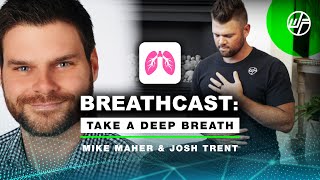
YouTube interview ("Take a Deep Breath") with Josh Trent (Wellness Force Media) and host Mike Maher recorded Nov 10, 2020. Josh shares his personal transformation (career loss, family stress) leading to a focus on holistic wellness and breathwork. The episode covers: a four-quadrant self-inventory (physical, emotional, mental, spiritual); breathwork origins and trainings (workshops, Soma, Sedona); practical breath techniques (nasal diaphragmatic breathing, retentions, box/circular patterns); adjuncts and pillars for wellness (sleep, movement, diet, beliefs); Josh's offerings (Breathe Breath and Wellness / breathwork.io, M21 morning 21-minute routine at wellnessforce.com/m21); and opinions on culture figures (David Goggins, biohacking).
Questions this video answers
November 10, 2020
Physical, emotional, mental, spiritual
Breathe Breath and Wellness — breathwork.io
M21 (Morning 21 — six practices in 21 minutes) at wellnessforce.com/m21
'Se posso respirare, posso scegliere' — if I can breathe, I can choose.
Chapters
On today's breathcast, we have Mr. Josh Trent, the CEO and founder of Wellness Force Media and the host of the Wellness Force Radio podcast. I have linked Josh's stuff below for Instagram and his website. Josh and I got deep into health and wellness in this breathcast. It was wonderful. We talked about all sorts of different things, including breathwork. Josh has his own breathwork course out, so be sure to check the links in the descriptions below. I really enjoyed speaking to Josh, and I really hope we get to do a part two because he's got so much energy and passion for for wellness, and our back stories are kind of similar in some ways, so that was really nice as well to just have that conversation. We've obviously never met in person, but we're talking over zoom, thousands of miles apart, and there's a real nice, genuine connection there. So I look forward to growing up with Josh. It's fabulous everything he's doing. He's got such a back catalog on his podcast of fantastic guests, so it's really, really worth going and checking out his podcast as well. Couple of messages before we get stuck into this breathcast. If you haven't done so, could you please, like, subscribe and share? That's what the algorithm likes. It helps spread the message, it grows the community and allows us to keep making content like this. We have over 100 different breathing videos now on the channel, different breathing exercises, and there's loads more coming. So if you haven't done so already, check out some stuff that's on there. In particular, I'm a big fan of the gentle, calming, relaxing videos, especially with everything that's going on in the world right now. So plenty of nasal breathing exercises that are nice, calm and gentle. And as you can see, my voice started to slow down, so clearly it's working on my hyperactive intro. Anyway, without further ado, let's get stuck into the podcast and we'll see you soon.
Cheers.
Okay. And we are recording. So, Mr. Josh Trent, how are you doing today, sir?
I'm fantastic, Mike. Thanks for bringing me on the show. Thanks.
Thank you for coming on the show as well. I've seen several of your podcasts now. I can't wait to get stuck into the back catalog. But for those that don't know who you are, would you mind just giving us a bit of a brief explanation about who you are and background?
Well, that changes all the time, but in this current moment, Mike, a curious wellness enthusiast who is the CEO of Wellness Force Media, we produce content for men and women that really just helps humans discover physical and emotional intelligence. And intelligence, it ain't how smart you are. It's not how many degrees you have on the wall. It's not how many books you've read. Your true intelligence that we explore with Wellness Force, with the podcast, with. Everything that we do is we gather, we apply, and then we embody. You know, this is the art intelligence, and this is the arc of being well, is having the knowledge and really the courage to execute and try and test and iterate and go through really, the arena of life, right? Gather all the information need test and try it out and do the breath work and do the cold therapy and eat the foods and do the workouts. And then when we really are ready, I think spirit delivers us this embodiment which we all want body. These heroes like the Laird Hamiltons and the Wim Hofs, you know, we want to embody what they have, but they walk the path of doing it. They gathered, they applied, and they. And that's what we talk about on the podcast, you know, the Wellness Force Podcast. And my background was 10 years in personal training. I was a fitness professional. And, you know, Mike, like, 10,000 hours working with clients. And I eventually left that world and I went into the corporate sphere. So I was sitting in a cubicle, and I was committing spiritual suicide, and I was doing it for perceived financial health and perceived safety. I'm doing double bunny ears because there's no such thing as safety. It's an illusion. It's an illusion.
It's.
Yeah, we're taught that by parents who were taught that by their parents. As an Alan Watts says, it's all wretch and no vomit. Everybody sells each other the same story, but nobody ever actually gets rid of it and writes a new one. Well, I chose write a new story, which was, I got this beautiful gift of being fired in 2015, and my mom was in a mental home. We had to put her in a mental home. And I broke up with my relationship with my. With my partner at that time. So it was like the universe just knocked me to the ground. Like, health, wealth, relationships, stress. Boom. And it was in that moment with my back against the wall, that I just had a moment with God. I was. I'll never forget this, Mike. I was looking over a golf course at, like, 2 in the morning. I was sleeping in my friend's bedroom in 2015, and I had nothing. I mean, I just had all my clothes and bags. I'd moved out of my place with my lady at the time, and I had no money. I had nothing going on. I mean, I was literally, like, just screwed. And I got to this place and I just took a deep breath, actually, I took a deep breath.
Yeah.
And I started crying. And I just asked. I said, God, like, it's been a pretty rough road. And I know I've left you a long time ago. I know I left myself a long time ago. I didn't have the courage to do the things that I wanted to do, that my heart wanted me to do. Can you help me? Like, please show me the way. Like, whatever. Whatever I'm supposed to do, show me the way. And it was in that moment that I realized that I would actually take my dream. My dream was to hold powerful conversations, you know, to be a force of wellness, to be somebody who people could depend on for the truth about how they can navigate this complicated world. And it was in that moment that I just made the decision. I was like, I'm going to go for it. I'm going to either do it or die. And I know that sounds dramatic, but the only way that I made it was just by sacrificing and putting everything in front of this one sentence. And that sentence is, I would rather die than go back to how my life was. I would rather die than go commit spiritual suicide in a cubicle. Again, I would rather die than live somebody else's dream. And that was it, my friend. I mean, there's a long road and a lot of nuance in there to describe, but that was the decision I made at that moment. And then that led me to the breath, that led me to interviewing world class people around the world and traveling and being able to sit here with you and provide, like, real value, real experience, real embodiment from actually doing the work. I have a lot to do still. Right. We all do. But that's the encapsulated story of how I came to be here with you and what Wellness Force is really all about.
Ooh. And I'm going to be naughty now and talk a bit because I know it's meant to be an interview. I want to share something with you as well, which is we've got a similar. Similar journey to a degree. Similar.
Ish.
Because same story. Me and my partner marriage ended, but this was about a year later, so this was just early 2016. And same thing, you know, the house was gone and the dogs were gone, and I had this moment as well as like, crikey, I'm in a job I don't like, but mine wasn't per se, a God experience. But there was this definitely this route of listening to Alan Watkins, listening to some Steve Job, which led me to Joe Rogan listening to that hearing about this crazy guy called Wim Hof and then going to spend some time with Wim Hof, then going to a Tony Robbins event which made me quit my job after 15 years. And then last year we bought one way tickets out of the UK and we just went traveling and me and my girlfriend, we just left and we just sold, we sold the bed, we sold the car and we just went. And then during that time we started really working on the YouTube channel. And. Yeah, and then here we are back here. Now I get to speak to, to people like you. So I just thought there's a couple of similarities there. That was really nice to hear your story.
Well, the hero's journey is similar because we're all human. And I don't want to get too metaphysical because I know we're just digging in here. But like I am you and you are me. That's a very frightening concept for some people to take in. But I've had so much exploration with this, especially over the past two years with mentors like Paul Check and, and people that really understand the fact that when I look at you, Mike, and when you look at me, we're just different expressions of consciousness. We're God experiencing God self. So that's the kind of thing that when you go and you do the breath work and you do the plant ceremonies and you start really understanding what the heck we're doing here on planet Earth. We are God experiencing God's self. I am you and you are me. This is not us sitting around a fire singing and playing Kumbaya and like, you know, hippie love here. This is real, legitimate understanding of science and esoteric knowledge, like for 5,000 years plus, man, if you look at our history and you really understand who we are and where we've came from, we are on an evolution of consciousness. Think about this, Mike. We used to own women like property. We used to own slaves. There was apartheid. Why do you think Americans even came over to North America? They wanted to retreat from the tyranny that they were under. So we are all progressing, we are all evolving. And my story is your story and your story is mine. And so is every single person who's with us right here being inspired by the fact that we are all on our own unique hero's journey. And you cannot deny it, it is undeniable.
I like that. Have you ever Read the book the Egg. It's a short story by Andy Ware. You ever heard of that?
It sounds like something I get to read.
Basically, it's. I'm gonna butcher it now. But it's a very short story. Here's the guy that wrote the Martian. I don't know if you saw the film with Matt Damon, but it's the guy that did that and he wrote this little short story. And basically it's about a person that's just died, I think, in a car crash and they wake up. I'm gonna do a spoiler alert here. So I'm so sorry, but it's essential what you've just said. It's like, oh, so I was. I was me and I was also my children, but I was also my parents. And I'm gonna stop there because I'm ruining the book. But it's like a 15 minute lesson on audible, so it's really great. But you just reminded me of. So it's a similar kind of overarching story there.
I'm gonna look up the book, man. I got it on my queue right now.
Yeah, I think you'll like it. I want to jump into something you said at the start because there's this thing around wellness and there's this piece around knowledge. And for me, I've heard the quote before. Most of us could write a book on diet, couldn't we? We could all write a book on how to lose weight. We would all know, you know, less in move, more, all those sort of things. But there's this thing and I struggle from it. I'm sure we all do. It's a human condition.
We.
Why we don't take enough action when we know these things. So I would love to know your journey and any advice you can give on how we can take more action when we've got the knowledge.
Wow, this is beautiful, man. Because like, this is the universal human struggle, isn't it, Mike? We know what we want to do. We've promised ourselves something. We know what we, quote, should be doing, but we're not doing it. Well, why is that? There is a myriad of reasons, but it essentially boils down to two things. And this is going to be quite reductionistic, my answer. And we can unpack it from there. But the reductionistic answer is that we are making decisions from either a place of contraction or expansion. And if you look at the work of Alan Watts, or even if you study some of the things that Dr. Kelly Brogan has been putting out, or any of the great Masters, whether ancient or contemporary, they're all saying the same thing with different words. And they're all saying, we either come from contraction or expansion. We either come from love or fear. And that is it. In the middle of knowing and doing, there's contraction or expansion or expansion or there's love and fear. I mean, there's. There's no. There's no way to deny this. Now let's go deeper on that. What is the cause of love and fear? What is the cause of contraction and expansion? The causes of that are traumatic and trauma and lessons. So there's capital T trauma and there's lowercase T trauma. Lowercase T trauma. When we're children, and it really boils down to ages 0 through 7. Yes, of course. Trauma and understandings of who we are and social imprints and subconscious imprints. Those can happen after age 7, 100%. But there's something really special, Mike, about what happens in the brain during 0 through 7. The right and left hemispheres are connected, and they're connected through what's called a theta state. And in theta state, the brain is essentially on drugs. You know, kids are on drugs. You ever look at a child play? They're just like, constantly on an acid trip, right? They've just done a cathartic breathwork journey. But like, they. They live and breathe it all day long. So what happens is just like when a rose opens up in nature, Nature holds the keys to your question. Your question about why don't we do what we know we should do, or why don't we do what we, we promise ourselves? Nature holds the key. If we study the laws of nature, the irrefutable laws of nature, nature has her own speed, and nature has her own path, her own laws. When a rose is growing, if you were to trample that rose, it may not survive. And if it did survive, it would look a little wonky, right? Maybe the petals wouldn't be as bright. The point I'm getting at here is, like, when we get trauma and we all experience trauma, because that's actually part of our soul contract here on the planet, when we experience trauma, we get altered in some way, and we spend the rest of our lives either looking at that trauma and acknowledging that trauma and do the emotional work to work through that trauma, or we don't. And that's where, going back to your question, the contraction and expansion presides. If we can do the work as grown adults, to look back and understand on an emotional ladder perspective, right? First there's denial, then there's some kind of work to accept. Then there's a surrender to the path, and then there's the understanding that we're all one and our parents did the best they could and so did everyone. Yes. Then that's going to bring us closer to expansion and love. What happens in that bridge between knowing and doing is that we have moments where we believe that we're the contraction. We believe that we're the fear. We identify and we embody the aspects of being afraid. You can look at people's posture and you can tell if they're afraid or not. You can look at the way people breathe and you can tell if they're afraid or not. You can look at the way that people's faces are structured and their way of speaking, and you can see if they're in contraction or fear. On the other side of it, you can see by the same characteristics if somebody is in love or is in an opening. Right? Yes, Expansion. So, so long answer for you there. But the reason that people don't do what they promised themselves or what they want to do or what they would love to do is because every single person along the hero's journey is looking in the mirror of themselves. And when they look in the mirror of themselves, they either take stock or not of all the capital T trauma or lowercase T trauma they've ever experienced. And the capital T trauma is. Is bad. You know, it's. It's sexual abuse, it's physical abuse, it's violence. The lowercase T trauma. I don't. I don't want to mitigate that either, though. Lowercase T trauma can be just as painful, if not more than the capital T trauma. Lowercase T trauma can be neglect, maybe parents that weren't very emotionally available. That's where attachment styles are formed. So it runs deep, Mike. The answer is really deep because there's so much psychological framework and understanding of like an internal locus of control or an external locus of control. When it comes to the bridge between knowing and doing and really, man, my answer just scratched the surface.
And if you come across somebody, then. So I'm coming to you now and saying, how can I move forward? How can I get to that point in my life where I take more action, I become more. Well, you know, I improve my wellness. Where would be the first points of the journey to say? Right, you need to probably go and look in these specific areas. What would you suggest?
Yeah, so the four. The four quadrants or the four squares for a complete box that I would suggest everyone go to is a true inventory of physical, emotional, spiritual, and mental. Physical, emotional, spiritual, and mental. Take up. Take a book out, and in your book, right box, draw a box and then draw cross. In that box, you have four quadrants. Physical, emotional, mental, and spiritual. Write those down. And then take a breath and look at your paper and say, okay, which one of these am I the most lacking in? Which one of these feel most contracted? Which one of these feel that I'm most in fear about? Do I have anger at God? Am I angry that we're here? Am I totally. That's in the spiritual. Am I mentally. Am I stressed out? And do I find myself having looping thoughts? You know, in the emotional, like, do I lash out at people? Do I not love myself? Do I look in the mirror and go, oh, you, you fat person. Or oh, you're gross, or whatever it is. Take a real inventory of these squares. And on the next page, write down the self narrative that you have and be like, okay. When I took the mental inventory, here's what came up. When I took the spiritual inventory, here's what came up. Start there, my friend. Everybody. If you can start there, then you can identify. You can have really what we call self awareness of the story on a subconscious level that's being written.
Yes.
Quite frankly, the story that we're being told by our parents, that was told by their parents, that was told by their parents, it ain't working anymore. It's what's kept us in a perpetual cycle of servitude and really of bondage to the unconscious collective that is dark and the unconscious collective that is actually, in my opinion, causing people to be in fear right now with COVID and with all the forced vaccinations and forced lockdowns and all this absolute BS that we're experiencing, it is people not realizing that they are love and that we are one. It is people in total fear. There is no emotional inventory. I guarantee you 99.99999% of the people who are in fear about COVID and wearing masks and wearing gloves and washing their hands while they wear gloves, they're not doing this inventory that we're talking about not doing it. If everyone on the planet took three minutes to do this inventory, and then from that inventory, they then identified where they are in most pain. Because, as you know, Tony Robbins talks about this. We're either motivated by pain or pleasure.
Yes.
And quite frankly, way stronger motivator sometimes. Because when we're in pain, it's survival. We have to get out. It's ancient brain, it's amygdala. So when we take that inventory, Mike, I guarantee you, when we do that, we're going to at least identify and take a deep breath and just understand, like, okay, this is the area I'm going to focus on right now. This is the area I'm going to focus on right now. And I would say for most people, my friend, for most people, it's. It's love, it's self love. Most people don't love themselves. We're all in a journey to understand that, that we're powerful beings and that we matter and that the work that we do in the world matters. And that's the key piece where most people stay stuck. But that's. That's the starting point. There's a lot more there, too.
Oh, you know, there's this piece around not loving yourself. I've got a friend, a very good friend, that's a hypnotherapist, and he was telling me that, you know, there's people that will go out and have a load of beers at the weekend and a couple of Domino's Pizzas, and then they're saying, I can't afford the therapy. I can't afford the £20 for therapy, but I can afford the pizza. And it's like, if you don't love yourself enough to give yourself that small amount of money to go and do something, it's always a shock, I guess. And I felt like that recently at the very start of the journey. The podcast hasn't aired yet, but I had some time with Troy Casey, who I know you know, and I had a chat with him. And again, my friend who's the hypnotherapist, and I'm on that journey now with organic. So just at the very, very start of it, and straight away I'm thinking, oh, my God, what have I been doing putting this other stuff into my body. Because it's very easy to kind of close yourself off to all these different things, all these pollutants and pesticides and all this sort of stuff. But again, it came back to some words that my friend said to me, which was, I'm really surprised that you don't kind of give yourself that extra bit of love and respect to put in the really good food because you can afford it. And he said it in a different way, but it just got me thinking, you know what crikey is, right? I'm saying to myself, oh, I don't want that piece of chicken because it's an extra two or three pounds because it's organic. But actually, do I not deserve to put that extra meat into my body that's slightly better than the cheapest stuff, where the industry has taken every shortcut legally possible to get that price down as low as I can. Anyway, it's not a nutrition thing. I just thought I'd share that because that's quite relevant for me right now. This piece around, you need to have some more self love. And I'm talking to myself and I think it's something that a lot of people do struggle with, which is, you know, let's treat myself as important, let's give myself some love, let's be kind in our minds to ourselves as well. Because we can be our own worst critic sometimes, can't we as well? What I'm keen to know from you is what's your journey been like from sort of 2015 then? Because you, you know, I think back to again, you know, I think about like, let's say early Joe Rogan, you know, 2010 isn't a long time ago. And if you go back and watch the early podcast where he is now, it's a different human. He's had the education of life, hasn't he's? Had all these great people. And you're so much further along the journey than I am. You've had some superb guests on there. I have too. But you have such a vast quantity of these superb guests. Can you give me a bit of a flavor of kind of what your evolutions look like over the last couple of years?
Well, the flavor has been bitter and sweet. The flavor has been bitter at times, but I'll start high and then we'll go low. So the high level view on this has been like, yes, it's the heroes you journey. And the reason that it's been bitter and sweet is because I am walking the path of duality, just like you are. And in duality, there's dark and light, there's day and night, there's good and bad. There's all these different things that are opposing opposites. If you look at the laws of nature. And I go back to the law of nature because exactly what your question is about is what's been my journey, Mike? And so are you. We're nature, nature. We're God experiencing God's self. So I've had multiple moments of hardcore duality, been in duper pain, depressed and upset and all these things. And then I've also had moments where I'm elated and where I'm learning from the best people in the world and where I'm taking this, like, information and putting it to use and serving other people with it. And so the reason I'm saying all this is because it has been the ultimate journey of just loving myself. This entire, this entire time has been like, okay, when does my, my desire to serve others and when does my desire to be the best podcaster, the best man, the best future father, the best everything? When does my contraction and my old beliefs from childhood get in the way of that? In these past five years since I started the podcast, and since we've, we've grown Wellness Force Media, I have had threshold after threshold where I've been challenged to let an old belief die, let an old way of living die, and let new space for new life and new growth and new ways of being and new beliefs to come in. What I really mean by that is I had to let the old version of Josh Trent die so that the new loving, empowered version can step in. And that will be a continue hero's journey till the rest of my life. That's how we're designed. Look at everything that's happened for everyone that has some kind of powerful story, whether it's Wim Hof or Laird Hamilton or Mike Maher or Josh Trent. Like, we all have unique experiences where we have to get beat to the ground. We have to have everything around us burned to the effing ground so that we can take a breath and then figure out where we want to go from there. Because let's face it, the old way wasn't working, right? The corporate American job for me wasn't working. I'll never Forget this, man 2015 I the Office and I was like, really satisfied with my, like, you know, good paying job. And. But I was, I was committing spiritual suicide. Like, I literally, every day I'd wake up and I'd be like, what am I doing? What the hell am I doing? But I wanted that safety, that security, because I dealt with a lot of lowercase T trauma in my childhood and I wasn't aware of it. I've unpacked that now, so I'm doing the work on that. But I wasn't aware of it and it was driving my decisions. The piece that I'll put in here, and I'm still answering your question, is like, you know, Carl Jung has a quote that I absolutely love and it's going to hit everyone in the heart right now. And he says in his work, until you make the unconscious conscious, it will rule your life. And you will call it fate until you make the unconscious conscious. It'll rule your life and you'll call it fate. You'll say, oh, that's just how it's supposed to be. That's how it happened for my dad, that's how it happened for my mom. It's all wretched. No vomit. Alan Watts. So what I was dealing with in 2015 is I was still force feeding myself the story that life is hard, people can't be trusted, money causes evil, expect the worst to happen, blah, blah, blah, blah, blah. The only way I was able to throw it up was to get my ass kicked to the ground. And life served me some dark contrast so that I could then go towards the light. Nature hates a vacuum. If you look at my journey and your journey and all of our journey, it again aligns with the laws of nature. Nature hates the vacuum. That's why there's high and low pressure. High pressure always seeks low pressure. Sodium and potassium always balance each other out. There's always some kind of a high pressure, low pressure event in the world. Right now we're in chaos. Chaos is just disorder trying to seek order. There's always this high, low pressure in everything that we do in all those quadrants, by the way, spiritual, mental, emotional and physical. So my journey has been since 2015, like really getting served these moments of deep contrast of pain so that I could use that opportunity to burn off all the crap that's not me that's more contractive. And then in that contraction, I can feel the squeeze, just like we all are right now with, with this craziness we're experiencing. And then we can move forward from love. But we have to be squeezed first, we have to be contracted before we can expand. And that's what it's been since 2015 in so many different ways. Man. I dealt with a massive pornography addiction in my life. It was, it was the only way that I could like calm myself down because I wasn't aware of my lowercase T trauma. I just didn't, I just didn't have the awareness straight up. And so many people don't. Right. So I did the work on that and I've done the work with food and I've done the work with breath and I've done the work with movement. I've done the work with emotional body and somatic awareness. And I mean, the list is pretty long and it'll continue because I don't think ever anyone, I don't think anyone can ever be 100% healed. But we can. But what we can do, Mike, is we can recognize that we are 100% whole. That's the difference.
Oh, I like that, by the way. I find it very enjoyable listening to you. I could listen to you talk all day. You've got a lovely voice, Josh. Just thought I'd stick it out there. Bit of feedback for you. I recently finished David Goggins book Can't Hurt Me, Game Changer. Oh, let's. Yeah, let's talk about that and say, yeah, and there was just, great book, great story, and it was okay. You know, you listen to. You go through a few books and they sometimes have a bit of an impact on your life. Sometimes they don't. And there was a bit at the end about how he was basically saying he was dying and he needed to start stretching. And I've had all sorts of physical problems over the years. And I was like, oh, do you know what? And I did then Tony Robbins afterwards, and he was like, you know, put the important things first at the start of each day. I was like, I need to stretch. I've been stretching now for about three months and things are really starting to open up. But anyway, I digress. The next book I then picked up after Goggins was Dr. Carol Dweck's mindset. I don't know if you've come across that. Oh, and I'm only halfway through that, but it's already given me enough. And just relating back to something you just said about the conscious and the unconscious. I've always said I can't learn other languages. It's just me. I just can't do it. I was rubbish at school. I was put into the worst of French class. They just let us play games because they didn't think that we could learn it. My girlfriend's from Poland. I can't speak Polish. I can't learn other languages. And then I started listening to Carol Dweck's book about fixed mindset. I was like, oh, Jesus, I have got a fixed mindset when it comes to learning other languages. So that to me has been a real switch going, hang on a second, what else are you not aware of? And of course, it's almost infinite, isn't it? All these things that you're talking about in the conscious. But I've gone through life going, well, there's no point trying to learn Spanish. There's probably no point going to spend a year living in wherever because I just won't learn it. So. So you're right. I would probably have classed that as some sort of fatal or just, you know, I just can't do those things. But actually taking a look at myself going, oh, no, no, no. It's.
It's.
There's an unconscious bias. If there's something going on in your brain and you've gone, hang on. I just accept it. Anyway, I'd love to hear your thoughts about Goggins, man.
I love your. I love the way you take a thought and then expand it. Because this is how my brain works too. I get intrigued by the way things are and I question, why is that real? Why do I think that's real? Because reality is both objective and subjective. Right? And I'll tie this into the answer about Goggins. But we are a spirit in a body having a human experience, and everyone is making it up as they go along. I don't care who you are. Y' all know you've had moments where you're like, what the hell is going on? Is this real? Like, what's. Are we in a simulation? Like, what's going on? Why is life so hard? Why is life so. Fill in the blank? Why does this happen? The reason that we have these thoughts and that these thoughts come into our awareness is because we are a actual energy, a soul, consciousness inhabiting a physical meat suit. Think about this, man. The brain is a meat radio. We're in a meat suit. And we have this ego that flavors who we are. I mean, it's a massively fascinating thing. So for anyone to say this is the way things are is not only just a fixed mindset, it is a completely contractive experience of life. And the whole experience of life, just like the universe, by the way, that never stops, is to expand. The universe never stops expanding. The more we think we know how big the universe is, the less we actually know about it and the bigger it actually is. It's the same thing with us. So Carol Dweck's fixed mindset versus a growth mindset is a. Is a perfect template for what I'm going to share about Goggins. And this is, like, not a popular opinion, but I'm going to go for it. I think Goggins is still living from his capital T trauma. I think he's living from it because this, like, stay hard mentality and like, you know, don't be a. Don't be a bitch and don't be a P U S S Y. It's like, okay, we get that. And yes, in certain moments of life, you're right. You need to, like, man up and you need to take care of stuff. But to live your life flexing your bicep and going like, stay hard, stay hard, stay hard. It's like that is actually a contractive energy. And so we know that duality exists. Just like a sine wave, right? Something comes up and then it goes down. Something comes up and then it goes down. There is no possible way that in nature there can always be year over year over year growth, just like capitalism doesn't work either. In capitalism, there's always year over year over year growth. Sometimes in nature, you see trees that grow big, but eventually they all fall. It's the same thing with capitalism. And it's the same thing with someone that says, stay hard, stay hard, stay hard. Eventually you have to relax, right? So I get what he's doing. I see. I see Gary Vaynerchuk doing the same thing. I see Andy Frisella doing the same thing. I see a lot of people who are just idolized in our social media world, in our podcast world and everything, and they're just known for, like, being a hard worker and fist in the air and this quality of, like, you know, at all costs, like, taking care of it and, you know, don't be a little bitch. There are moments that these people are needed and that their voice is needed. But overall, I think that people really need to take a deep look at why they feel so inspired by Goggins. It's because they're actually falling prey to their own contraction. Yes, I shouldn't be a little pussy. That's true. I shouldn't be that way. David's right. I should man the F up. Okay, temporarily, that might work. But I'll tell you, that is not a sustainable fuel source for life that will fry your adrenals. It'll make you hurt yourself. It'll make you always come from a complex that you're not enough. And so, in a way, I think he's bringing us to blessing with this it can't hurt me book. But I listen to the book and I can feel it in his voice. I mean, he's not healed. He says he's forgiven his father, and he says that he's in this space now where he really sees the high road. But he's still. He has this edge to him, and I think it's necessary sometimes. But I don't think, as a way of being that it's healthy for everyone. I think that. I think it's causing good, and I also think it's causing harm. I think it's people that don't have an emotional embodiment of self awareness. I think they fall prey to that and be a victim actually of this kind of work where they're shamed into stressing themselves out more and working out and hurting themselves. And there should. There's a middle way, dude. Lao Zhu and all the masters talk about the middle way. There is always a middle way. It's never these extremes. What happens though is these extremes are addictive and attractive. You know, it's like, oh, I'll be like, David, I'll do like the 20x and I'll do. I did it. I did a 14 hour crucible. I did the, I did Mark Devine's program. I did murph soaking wet, 300 pull up, 300 push ups, air squats and pull ups and all these things. I've been there. I fell prey to it myself. That's why I can speak to it. There's a middle way. And the closer we can get to that middle way, the more loving and more expansive we can be.
I don't disagree with you. There's definitely something there. And also, I don't know the gentleman, but there's definitely an energy there which I couldn't sustain full time. So I think you might be right for me. And I can see why there's an attraction there. Because I remember thinking, oh, I was several months into lockdown and I was like, you know what? I've never been able to do 100 press ups and now I do them regularly, every day. And I don't do them in one go do 10. I do what he does and wait a minute and then do 10 squats. And anyway, now I'm that person that does that. And I don't know, I could do that. So there's an energy I've taken from him. But would I want all of that? Absolutely not. I don't want to be in a bathtub wearing out blood, you know?
And I mean this guy, he almost died.
Yeah.
He's taken himself to the extreme.
Yeah.
And all these people that we, some for some reason we want to embody their qualities.
Yeah.
They push themselves to limit and they're not. A lot of these people aren't embodied and don't have balance of the middle way within themselves. But we idolize them because they're so far on the spectrum of being so advanced and almost in a way, like we all want to be like a Roman athlete.
I was thinking the warrior when you were saying everyone wants to be this big warrior.
Yeah.
It's interesting.
And I don't think that's a bad thing. I think we just get to recognize that within ourselves and. And navigate that appropriately.
I think we'll talk about breath in a sex. I'm conscious. We'll go into that. But I'm really enjoying this. I have this. This chap on the other day called Ed Stafford, and he was the podcast that came out a couple of days ago. And he's a British explorer mentioned to you before we went live. And he walked across the Amazon. Took him two and a half years to walk across it. Went through the red zones where all the drug trafficking is and didn't stop. When every day, you know, did the walk in all sorts you can watch. Did he document that you can get online.
It is superb.
So get involved in that. Then he did 60 days alone on a desert island where he turns up naked and just. He's got cameras. No camera crew cameras. And then he's. And the one I watched last night, he went homeless on the streets of Manchester, London, in Glasgow for 60 days. And he had that secretly filmed. Anyway, I asked him, why. Why are you doing these things? What's wrong with you? But obviously in a great way, because I love this. This what he's doing. He's like, for me, a life of just watching TV is. Is not a life. If I'm watching we have a soap opera called Coronation Street Air which has been on since the 60s. Because if I'm just at home watching Coronation street because that's not a life. Because I need to go out there, I need to be uncomfortable. And in that uncomfort or discomfort, I'm learning about me. I'm dealing with emotions. And so I said, you're probably gonna be like a YODA in another 20, 30 years of this if you keep. Put yourself in these in situations. So, yeah, so check out Ed Stafford. But what I was going to ask you is are you familiar of Chris Ryan, Ph.D. you wrote sex at Dawn. Okay, so the reason I say that is I constantly have this, I think, you know, use the word duality. I'm one end of it is Joe Rogan.
Yeah.
And I want to be like Joe and I want to be a black belt in Brazilian jiu jitsu. And I want to do, you know, five podcasts a week and I want to do all these things and go, do you know, just that absolute end. On the other end is Chris with this lovely balance of have a couple of beers and I'll go around in the van. And, you know, I'll go and visit some people and I'll do a podcast and maybe I won't, you know, and I'm constantly striving between those two people because they're both my heroes and they've both got something. But I think to your point, there's this thing in the middle which is let's take a bit of that, let's take a bit of goggins, let's take the best bits and find out what's, what's kind of right for me. That's, that's how I feel about the situation anyway.
Yeah, I think look at Bruce Lee, right? We, we learn and we take what resonates and we leave the rest. I did a 10 day Vipassana. Have you heard of this?
I got on it last year, but then I didn't do it. So it's a big.
For people that don't know vipassana is to go very deep into the thoughts and narratives that run when you're not paying attention. Like, you know, I think if, whether you look at research, 90% or 95% of our choices and our life quality is actually run by the subconscious mind. So if that's true, how do we listen to it? How do we hear it? Well, the most powerful way to do that is to sit in silence. But most people, if you told them to sit in silence for an hour, they would probably start twitching and freaking out. Vipassana is 10 days of sitting in silence. No speaking, no masturbation, no eating meat, no looking at people, no talking to people. I mean, talk about delayed gratification. So I did this for 10 days. I was inspired to do it. And by the end of the 10 days, you know what I realized? I'm never going to do that again. Here's why. Here's why, man. Because I got what I really the medicine that I wanted to be served and that the universe wanted to give me, I got by like day six or seven. And that medicine was when I'm really in love with myself and I truly accept myself for who I am. My potential is unlimited. People talk about human potential and, you know, how to live your best life. The only way we can do that is if we're quiet enough and still enough to hear what's going on with ourselves. And what I realized is that, man, I really didn't love myself at all. I had this awareness of what I thought love was, but I thought like, I thought love was actually more of an egoic expression. And I thought that love was really about like how people Perceived me, but. But I forgot that it was about how I perceive me. And so, you know, it was a. It was a huge hit to my ego, honestly. And in those 10 days, I was super silent and. And I think. And please remind me of what you were saying before this, because I started to feel what I was feeling in the. In the vipassana. Again, what were we mentioning right before this?
I got onto it, but didn't do it. But before that, we were just talking Goggins Rogan and Chris Ryan, weren't we?
Yes. Oh, the middle way. Yeah. Yes, you were mentioning the middle way. And so. So I think what attracted me to that was because I really wanted to feel what it was like to have total and complete delayed gratification and sit in silence for 10 days. And the medicine that I got was that I didn't love myself, and that was more work that I needed to do on actually loving and accepting myself, because that's where human potential exists. Everyone that accomplishes anything good in life, they've all done the work to truly accept themselves, love themselves, and be with themselves and not. And not be in this constant contraction. Yes, I think temporary contraction is healthy and good, but whether you're Goggins or Rogan or Ryan, they're all teaching us through their own eccentric ways of being that it's up to us to uniquely express ourselves. And so I think it's healthy and fine that we temporarily express, you know, human. Human soul, human consciousness by going and doing a vipassana, or going and doing a marathon, or going and doing six podcasts in one week, or however you want to describe it. But I think the only reason why we want to feel that is because we want to feel what it's like to contract and then expand and contract and then expand. Or look at the tides. Tides come in, tides come out. It's part of life. It's. It's part of who we are. I don't think there's ever, ever to be a space in my life or your life or anyone's life that wants to actually be of service to people in this world that truly cares about people. We're never going to find the perfect middle way. We're always going to go left and right, back and forth. But I think as we grow stronger and as we become more embodied, Mike, like, you know, we gather, we apply, and eventually we embody. As we do the work to truly embody, I think the middle becomes more of a home and less of a stranger. I think we really start to live in the middle more. Not all the time, but just more.
It's the yin and yang, isn't it? It's that balance, the light and the dark, you know, it's finding that. Yeah, it's middle ground can sound quite boring, but you're right. It's that peace around. I like a little bit of this. I need a little bit of that. I need to be comfortable, can't be uncomfortable my entire life. That's. That's mental. But, you know, I need some discomfort. I need to get in a cold shower. I need to jump in a cold bath. At the same time, I want to put a jumper on when I'm a little bit, you know, chilling than watching tv. So, yeah, absolutely. Find that balance. Let's. Let's switch gears a little bit then. Josh. Let's have a chat about good old breath work. So I would love to know what's been your experiences. How did you first get into breath work? Tell me a little bit about where that all started.
Well, it's a perfect segue, man, because the reason I got into breathwork is because I was dealing with massive anxiety, right? Massive anxiety to the point where I really, like. I was like, why do I feel this way? I wanted to explore. I took the inventory that we did earlier in the podcast, right? I was like, okay, mental, emotional, physical, spiritual. What's really up with me here? And for me, it was the mental, right? Because I had, like, thoughts that would come all the time, and I'd find myself pontificating about the future. And, you know, just for people that aren't clear on the dichotomy here, it's like anxiety is a focus and a rumination on the future, and depression is a rumination and just a washing of the past. So if I'm depressed, I'm focused on what's happened. If I'm. If I'm have. If I'm having anxiety, then, like, in the future, I'm freaked out about what might happen. Yeah. So I was finding myself being future focused instead of present moment focused. And we know that no matter who you are, what you've trained with, or where you've gone, the breath brings you to the present no matter what. There ain't nowhere to hide. If you're trying to hide, don't do breath work because you're not. You're not gonna be able to hide, because whatever is. Whatever is real for you is going to come through in that moment. And so I found the breath because I actually did a class in 2016. It's cool. I haven't thought about this, man. I'm mentioning this for the first time on the show, and it was from a guy named Christian Minson, and he did Breath His Life training with me. We did a workshop, and I was like, wow, why am I crying? I was, like, crying, but I wasn't like. I wasn't, like, crying like a little boy. I was just like. The water was coming out.
Yes.
Later, I knew what that was. Is that was a psychosomatic reaction that Bruce Lipton caused. Issues in the tissues. So I was leaking energetics that were trapped in my tissues. And then later in 2016, I did some warrior breathing, and I did some breath work. Mark Divine at his unbeatable mind retreat, Same thing happened. I'm having emotion come out of my eyes, and I'm like, what is this breath work thing? Like, what. What is this stuff all about? And I did some workshops here and there, and then eventually I just pulled the trigger. I got inspired by some of the work that Neeraj Naik is doing with Soma, and I went to Thailand, and I was there for a month, and I stayed in Copanyan, and I did breath work and I did intensives, and I did the training. And I had many moments during that time where I thought, wow, is it normal to feel this good? Like, is it okay? Can I give myself permission to feel this good? And when I brought that training back home, I realized that, like, okay, it was something actually that I was trying to seek, and that was just inner peace. I was just trying to find peace within myself. And I think the recipe for peace is self acceptance, self love, and a permission slip to do what it is you're here to do. I think that's the ultimate recipe, man. And from there, I did another training in Sedona with a woman named Gwen Payne called Breathless Prayer, which is more like the cathartic journey, how to facilitate catharsis journeys. And in catharsis journeys, I believe they always need to be supervised. And so that's how I found the breathwork was really just like, asking myself the question, like, how do I find peace? And it's actually written on my arm right here. It's seposo resperate posse. And what that means in Italian is if I can breathe, I can choose.
Why is it in Italian?
It's in Italian because I'm half Sicilian, and that's my heritage.
Okay?
And so even though my last name is Trent, which is the river in England, my. My other side of my family is Padolino, which is from Termini Moressi, which is by Cefalu in Sicily. And I've always loved the Italian language. I think it's a very romantic, expressive language and I just love how it sounds. And so when I thought about, like, you know, se poso resperare po sore. It means if I can breathe, I can choose. It's because, man, if I can just remind myself to take a big nasal breath and do an exhale, and especially if I can remind myself to do it six times, anything that I do right after that, any emotional, physical, spiritual, mental choice that I make is going to come from expansion, not contraction. Because what do we do when we hold our. When we. When we hold our breath, what essentially are we doing? We're contracting. I'm contracting. When I'm not breathing, I'm contracting. So I have less human potential, I have less emotional capacity, I have less bandwidth to live life well. And so that's how I found the breath. And obviously there was a lot of, like, different nuances in there, but it came from the question, like, just how do I have more peace? Because I'm tired of feeling this way.
Yeah, I had a couple of emotional experiences when I was doing the Wim hof. And then last year I went on a. I think it's called a biodynamic breathwork retreat. Or course it just is an hour of just deep breathing, but no retentions. And I didn't. But some people had some big emotional releases in there. I think I had a bit of laughter, but I definitely walked away from there. Chill. I was properly chill, properly relaxed, just feeling fantastic. Just left. Had a little bit of, like. They gave us some, like, vegan snacks after, afterwards, and those, like, incense burning, they give us a sage blessings. We went in. It was just a lovely setting. But, yeah, it's fascinating, isn't it? You can do this thing where you can consciously alter your breath and suddenly you can take yourself in all these different places. It's such a fascinating. I was saying to somebody today, it's a superpower and a gift, conscious breath work. Because we're the only animal on the planet that can do this. We can change the way we breathe. And if we can change the way we breathe, we can change the way we feel. And I think that's such an exciting, exciting place to be. And where are you with breathwork now, then? So you've done that and I know you've got some things online. So what are you currently doing with breath?
So about eight months ago, we launched a program that is continually updated because, as you know, the science of breath is always changing, right? So we launched Breathe, Breath and Wellness. And the reason we did that is because I had so many people that kept reaching out to me and saying, like, hey, I see you on social media, or I see you doing these things, or what is this breathwork all about? And I got to this point where I kept giving people, like the same email over and over and over again. And I was like, okay, I'm just going to put this in a. In a super affordable space so that people can go get it and go actually, you know, attach to the power of the breath and have it be something they can integrate in their lives. And what happened was, this is a cool story, man. I don't recommend people do this because I'm actually done with plant medicine, but it served me. I did about 12 ayahuasca ceremonies in my life. And in one of the ayahuasca ceremonies I did at about 2 in the morning, I snapped up. I immediately walked over to the computer and I purchased Breathwork I.O. because I realized not only are psychedelics misused and abused, and I actually got this message from the medicine herself. It was ayahuasca. And I was told, like, go to the. Go to namecheap.com, buy breathwork IO, put out a program that's about breath and wellness, not just about breath, because breath is powerful, but it's a. A supplement and a complement to holistic living. And put that together and that's going to be part of what you give to the world. And I was like, okay, actually I went and bought the website and I. And now I'm in this space where I integrate both. Like, yes, there's practical breath work where we do box and circular and conscious connected breathing, and we give people the history and the science and the foundation of breath. But I was also shown this unique tool, and that was using safe vape technology, cannabidiol. Because in my research, what I found is that the endocannabinoid system and the autonomic nervous system, they both dovetail and they innervate on the back of the diaphragm. And, you know, from your trainings, and we all know if we've ever even looked into the breath, that when we take that deep breath and we have that contraction and expansion in our diaphragm that can actually signal the vagal nerve so that we can have more rest and digest, everything relates and everything innovates with one another. And this was the most fascinating thing. And this is why I integrated into the, to the Breathe Breath and Wellness program the use of cannabidiol. And I'm not talking about CBD drops, the actual use of low temperature, non toxic, safe vape inhalation. After we've done our inhales and exhales and our breath retentions. That's what can produce massive relaxation and get people very calm, very shifted over to the parasympathetic and then leading the rest of their day with more creativity and focus and calmness like that to me was the ultimate because I'm like, okay, it's really important that we understand the fundamentals of breath. And I don't think that, I'm sure, I'm sure you would agree. Like before anybody adds anything else to the breath, they first have to understand the physiology and the psychosomatics of breath and the proper training of how to do it. Because most people don't, don't breathe correctly. Most people is, as you know, Dr. Belisa Ranich that you had in the show. Most people are vertical breathers. They breathe like this and they don't, they don't breathe horizontally. So that's like a very quick nutshell of what brought me to the breath and like what the Breathe Breath and Wellness program is all about. The reason we do that in there is because it's so important to give ourselves creativity and to give ourselves an expansion as we do the breath. Because most people, when they get into the breath, they'll, they'll take a course, so they'll do a training and they'll say, okay, that was cool, but they'll never do it again. They don't actually work towards embodiment. And so when I, when I found the combination of the safe vape and the cbd, I mean, I would love to give you access and have you just look at this and maybe you can do some experimentation on your own. It has been phenomenal. It has been absolutely phenomenal to put this CBD into the actual breathwork and have that be an integral part of it. Because I think we're in a time where most people are in fear. And I say most. I'm guessing that probably 80% or more of people in the world right now as we record this show are in fear. And what do people need right now? They need to take a deep breath, which I love. They need that, but they also need something that can sustain them as far as relaxation. And I think the combination of these two things and is phenomenal. And then just one last thing, I'll say That in this program, we also talk about designing your life. Right. Like, there's seven pillars that are integrated into this program as well. And it's eating, moving, sleeping, and in the movement is breath, by the way. And then there's our beliefs, thoughts, feelings and actions. So it's ems and then btfa those seven pillars. I believe if you are committed and if you can really integrate these seven pillars, breath being a foundation, then you can change your life. You can do whatever you want to do, you know, And I've learned this by not doing them and then by doing them. And I think when you look at the breath and the cannabidiol and the pillars, and really just a holistic lens, if you. If you push all this together and if you amalgam all these things, you will really find what's unique for you. And I think what's unique for all of us is can we use these tools and can we express ourselves and really, can we love ourselves? That's what this is all about.
Yes. Oh, I love that. That sounds really interesting. So, guys, if you're watching, we'll put the description, the links below. If you're listening on an app, it'll be in the show notes so you can get access and you can go and have a look at Josh's website. I'm really glad you mentioned sleep, because I'm obsessed with sleep. I was always one of those people that was like, I don't. I can get by on six hours. You know, Tony Robbins famously gets by and God knows what. And, you know, Margaret Thatcher and Ronald Reagan both got by in three or four hours of sleep night. Both died of Alzheimer's, I don't believe. Yeah, well, I mean, yeah, I mean, there was that piece around. Is it true? But then they both had obviously cognitive problems as they got older. And are you familiar with Matthew Walker, Dr. Matthew Walker, why We Sleep?
I've heard the book. I've read Sleep Smarter by Sean Stevenson.
Oh, okay. I bet that's also good.
There's. There's so much out there, and they're all great. Mike. I'm not saying, but I think if we just read one book on sleep, we're good.
I didn't finish it. I got the Joe Rogan experience version, and that was good enough. And then I got through about three, well, maybe two thirds of the book. And I was like, at one point, you get to the bit where it's like. And here's another reason why if you don't sleep properly, you're in big trouble. And so it kind of lands it. But those. For me, I actually went through a real period of anxiety after because, like, I need to get my eight hours. If I don't get my eight hours, I'm in big trouble. And even when we were traveling last year, I nearly missed out on some big events because I didn't want to sacrifice my sleep. It's like, no, no, we have to get up early because we're going to go up the volcano, you know, at midnight, and we have to get there for sunrise. I was like, I don't know if I want to impact my sleep for that. And I've kind of gradually found a balance there now. But it's something for me that I think too many people still bit like breath work where we're chronically over ventilating with our mouths and we're not using our diaphragm properly. I think. You know, I'm so glad it's a pillar of what you're talking about, because I think it's just something else people like, do you know what? I can watch an extra couple of episodes on Netflix. I don't need to go to bed. I can get by in six hours tomorrow. And I think that's one of the beauties of one of the clouds, Silver Linings. The clouds we've got right now of COVID and a lot of people homework in is we get the opportunity to get a bit more sleep. And I have to say, even though I was so. I felt so regimented these last seven months, I've really, really been quite selfish with my sleep, trying to get eight, eight and a half, nine hours, and I feel like a different person. I can tell when I've had that good sleep. So anyway, so it's just wonderful to hear you say that. It's part of your pillars because I think it's so important. Have you ever messed about with mouth taping at night? Have you messed. Have you tried that?
You read my mind, dude, I was literally gonna grab the next room. I have these strips, okay? Somnifix, right? And you can. You can tape your mouth. And you'll notice too, if for the people with us, when Mike is talking, my lips are sealed, so I'm breathing through my nose. I actually do it where I push my tongue to the roof of my mouth. Okay. And that. And that is an association I've made where I can breathe through my belly diaphragm. Because you ever. You ever talk to people that when they talk to you, they look like this? Their mouth is open the whole time. Yeah. I just want to go up to them and like, yes. Because they just don't know. And I know you've. I know you've done some. Some content with James Nestor and I love that book, too. And all of these masters, all of these teachers for us, they're all reminding us to do exactly what we knew that was true when we were a baby. Think about this. When we come into the world and when we're being held by our mother and father, if for some reason they plug our nose when we're a baby, we'll start to drown. We can't breathe. We don't know what it's like. We have the innate intelligence to only breathe primarily through our nose when we're an infant. And we are taught by society and we are taught by stress to breathe through our mouth. Yes, that's. That's really what's going on here, is this is a learned trait. And so the reason I'm saying this is because, man, like, if we're breathing like that and when we're waking, it's no surprise that we're breathing like that when we're sleeping. And I think these, the Somnifex company is a good one. I'm not affiliated to them at all. I just, I think their strips are great. If we can train ourselves over the course of time to keep our mouth closed while we sleep. Oh, my God. The amount of increase that you're going to see from your Oura ring. I have the Oura ring that I use to track sleep. Occasionally I go through cycles. I'll use it for a month and then I'll. I'll get off of it. You know, same thing, right? Contraction expansion always coming to the middle. The reason I'm saying that is because, man, if you can. If you can train yourself to breathe through your nose and to sleep and use the tape or just use different tools. I have a new bed coming, by the way. It's a company called eight Sleep. I'm going to interview the founder on the show. They have cooling technology and firmness technology and sleep tracking built into the bed, which I think is pretty cool.
I love all of that stuff.
Yeah, it's pretty cool because, like, then I can really see, like, wow. I, I do. I do best at this temperature. How cool would that be? If we could actually do best at a certain temperature? Firmness and our data reflects it.
Yeah.
Then we don't have to depend on the data. I'm not saying we need to use the data As a crutch. What I'm saying is we use the data to teach ourselves and then eventually we course correct and we naturally just live that way. That's what technology is for. People depend on technology and they have to be perfect. Even people that use the Muse meditation or the Oura ring. Like you were saying, it's like, I can't go out, I can't go to the social event because I got to get good sleep. It's like, well, that's. That's not what it's designed for. It's designed to bring us back to the middle, but never always keep us perfectly in the middle. It's just designed to keep us more in the middle. So that's the long answer about sleep man. And I think the best thing people could do is just use some of this technology to help them. But it's pretty easy. Sleep in a cool space. Sleep in a dark space. And don't look at your phone or blue light before you go to bed. And also don't eat three hours before you go to bed. That's it. If you just do those things. I just conceptualized all these people's work in like two sentences.
That's good. It's. I've got the red glasses. Not with me here, but I've got the. I've got the really strong red ones. Have you messed about at all with red light therapy? Have you played about with any of that?
I think it's great. I have. These are. These are the raw optics.
Oh, yeah. These are the fancy ones. I've got the cheap ones that you get on Amazon for like 30 quid. I need to invest in some proper ones at some point because you can't go out in them.
You look.
You look a bit scary.
Yeah, well, these are the daytime, so, like when I'm on the computer, I'll wear these. But they had. There's the red ones at night look. I think that. I think that that Redther. I have a joov right here.
That's what I'm thinking of. Juve is one of the big brands, isn't it?
Yeah, they're great. But I'm gonna say this and they're not gonna like me because I've had. I've had Juve on the show. I had Scott on the show. I think if you can look at the seven pillars that we talked about, the eating, moving, sleeping, and the breath is in the movement, eating, moving, sleeping, and then beliefs, thoughts, feelings and actions, which is more of that emotional inventory that we talked about. Right. The quadrant with the assessment. If you can do that and live your life by that, then the red light therapy, the glasses, the Oura ring, the bed, all of it is just icing. All of it is just gravy. It's just, it's just a compliment to what we're doing. But I find that people want to run to the red light or like run to the biohack instead of doing the real work, which is like living in the closeness of nature and living in the, in the way, in the frequency and vibration that nature intended us. That's what's most important. Yeah. And people are going to be like, well, this helps you course correct with nature. It's like, yeah, sometimes. But I think when we're in that mindset of like, if I just get the external thing, then it'll somehow make me internally better. Internal locus of control versus external locus of control. The external locus of control is when I need all these different things to make me feel healthy and whole and, and keep my promises. The internal locus of control is different than the external. With the internal, it's like, okay, I'm going to take the time to breathe. I'm going to take the time for cold therapy, I'm going to take the time for movement and for emotional health and for emotional inventory. I'm going to do these things because I love myself and then because it's fun, not because I need it, not because I depend on it, because it's fun and it'll bring me just that little extra. I'm going to use the red light therapy, I'm going to use the glasses, I'm going to use the Oura ring. That's what it's all about. But we're putting the cart in front of the horse when we put biohacking in front of living by the laws of nature.
Yeah, let's get that foundation. I had Tim Gray on, which I don't know if you've heard of, he's one of the UK's, probably the UK's leading biohacker. And he ran the health Optimization summit in London last year.
Yes, I heard about that.
Great guy. Great guy. Great guy, Tim. And he said, again, I'll paraphrase, I spent something like a million pounds on biohacking. And what he came back to was most of the great stuff is the free stuff, which I love because it's, you know, let's get a standing desk. Let's go and stand in the. Then let's be grounded and get daylight on us, you know, let's. Let's be flexible, all those great things, and then you're absolutely right, I believe in that. Then let's do those bits on top. So at night, if I want to watch tv, because you start thinking, actually, if you didn't have a TV and a phone, you wouldn't need the red light glasses because it's. So it's a solution to solve a problem we've created. So if you want to watch tv, which is a bit of tech, then you probably need a little bit of tech to kind of balance that out. But if you're just sitting alone in a dark cabin, you don't need those red light glasses. You've got your candlelight. But for me, I'm thinking right now. So I got out at lunchtime because I'm working all day and then evenings I'm doing great things like this and I'll go out to lunch and I'll go and stand on the park and I'll be barefoot and I'll try and get some daylight. But this is England, man. There's not really much sunlight going on here, so there's daylight. So part of me is thinking I might invest in looking a bit of red light therapy. I think it might just be that extra tweak. Whereas you're probably somewhere lovely, like California, I'm guessing, where you've got. Got probably some really nice. Some really nice weather going on there. So I'm like you, I've got Italian heritage, so my grandma's from Naples, my granddad's from Avellino, so kind of middle of Italy. So I don't think I've got the genetics of somebody that can be in England, you know. Whereas if you've probably. You've got the heritage where you've probably always been in England for like 50 generations, you probably get used to those lower levels of vitamin D. But I can definitely feel more miserable when I've not had the daylight. So that's why I'm curious if it's made a difference. But I think you're right, it's that piece around. Don't make it a crutch for you. Don't rely on this, but use it to supplement all the great things you're doing.
Yeah, There is so much placebo and honestly, just a lot of BS when it comes to all these tools. And I'm not going to single out any companies and I'm not here to lambaste or to put people in the wrong. That's not my intention. My intention is just to Be real and honest. Like, a lot of these tools, they're sold because the founders of these companies, and I know this because I hosted panels for two years at the Consumer Electronics show, the Fitness Tech Summit. I was the host on the stage and I would interview people in front of the crowd and we would talk to these founders about their products. And unfortunately, man, it was like pretty much all of them, maybe one or two that really cared about people. The rest of them just saw a niche, they saw a white space and they knew that people were in pain and they wanted to go make some money. And I'm not saying that Joovv is that way. I think Joovv is a solid company and I think a lot of these companies are solid. But we have to ask ourselves the question, are these tools really being served to us because the company cares about our well being and they are honest about how their products are used in a holistic lens for our lifestyle, or are these companies just trying to make money off of us? Right. Like, and that's a question that each, each person gets to individually ask themselves. So that's an honest take on biohacking. I think Dave Asprey has done a great job. I also think Dave Asprey is a master marketer and I've had him on the podcast. So, like, I'm not talking smack about Dave Asprey. What I'm saying is, like, we have to be very cognizant and very aware and very conscientious about the true motives and intentions behind the majority of these products. That's a big thing to take into account when anyone is thinking about what's the biggest bang they can get for their buck.
Yeah, that's so refreshing to hear, actually, because I think, yeah, there's this piece for us around Ancestral Health, Ancestral Fitness, all those things, functional movement. Let's get outside, let's take our shoes off. Let's drink really good water. Let's eat really great, great food. Let's move our bodies. Let's move our diaphragms properly. Let's use our nostrils because our nose is meant to be breathing.
Yes.
We've got an emergency trap here if we need to use it, but let's use the thing that was designed for.
So.
Yeah, so, no, it's so lovely to tell you. My last question to you then, Josh, is can you give me a little bit of a flavor about your routine? What does a day look like for you? What's your morning look like? What's your evening look like? Just give me A bit of flavor of the sort of things you do to keep, well, wellness for you.
Yes. Okay. So the one thing I'll say is the very first thing that I do is I fill my belly with air. I did it actually this morning. I was like, okay. I woke up, I was a little tired. I happened to check my data too, later on the day, and I was like, oh, that's why I didn't get enough deep sleep. So the best thing we can do when we wake up in the morning so that also we can stop looping thoughts if we're having them, is to take a huge nasal deep breath. And I mean, like this big filling everything. Filling my kidneys, filling my belly. Notice how my shoulders didn't come up when I breathed. It's because I was really focused on expanding from my kidneys all the way to my belly button. Like, getting as much air horizontally as I can. Doing that one to six times. Then step out of bed. Then go and fill up 12 to 20 ounces of spring water. Not tap water spring water, but a pinch of sea salt. Maybe squeeze a couple limes or lemon in there. Lemon. And lime increases peristalsis. And then the minerals in the salt help to hydrate the body because, you know, we're all off gassing as we sleep. Most people are completely. Lack of hydration anyways. And most people are dehydrated, so. So take the one to six through the nose, feel the belly and the kidneys, then go right to the water, then come back. And I like to do what's called a womb squat. A womb squat is where you sit with your feet 45 degrees, your spine stacked. And this is all in a guide that I can give to you and your audience, if that's okay. And you put your hand. You put your forearm on the inside of your knee, and you reach up to the ceiling and you twist your spine. I just crack my back by doing it right now. And you do alternating for 20. And then I sit down and I do my breath work and my meditation and the breathwork. And meditation is really specific. And I put this in the guide. Those are the foundational practices. You know, the hydration. The one thing actually I missed that I forgot to mention is I make the bed. It's just one. It's this one little win that we do in the morning that sets you up for getting other things done throughout the day. It's not. It's not. I think most people get turned off by making their bed because their parents forced them. It's like, make your bed. Make your bed. But really, like, when we. And there was an admiral that I think has like 10 million views on YouTube and he talked about this. He's like, people ask me for advice on how to live their life. Well, I tell them, make their bed. Because if you look at the science of it, there's a reward system in the brain. It's called the limbic system. And the limbic system is always looking for novelty and it's always looking for validation. And so when we make the bed and press it and keep it nice and tidy in the morning, it sets you at primes. It's like priming a pump. It primes your brain and your limbic system for getting other things done and how good those will feel throughout the day. It's variable reward technology. We talked about this with Nir Eyal in the POD podcast. So that's what I do, man. That's in our M21 guide. It's these six fundamental principles that I would love to give to you and your audience. And you can find it@wellnessforce.com M21. It's morning 21. It's six practices in 21 minutes. There is some breathwork in there. It's very basic, but it's a great place for people to start. I would suggest starting with that. And we've covered so much ground on this podcast. I just want to thank you for giving me such a great space to express in and to share. Like, you really are phenomenal at asking the right questions and keeping it conversational. So it's been a total pleasure, man.
Oh, thank you, mate. And that's. Yeah, I've genuinely just. I could just, like I said to you earlier, I could just talk to you for hours, listen to those dulcet tones and just learn all the things that, you know. So. So, no, thank you so much. And, yeah, no, yeah, we'll check out those links. We'll put the descriptions below. And by the way, thank you because you've given me a little bit of a gift, because I've been talking on the Breathcast the last couple of weeks now since Belissa, really, where she was like, you know, she was saying to me, you need to work on your functional breathing. Because there's a video of me when I was with Neeraj from soma and he took me through a breath work only a few months ago, and I'm this. Yes, I didn't even know. You know, I spent all this time thinking about breath work and nasal breathing and all these different things. And so she gave me this fantastic gift. And she talks about the importance of stretching, the importance of twisting squats and proper breath work. And I can't crack yet. Fixed mindset. I haven't yet cracked the ability to let my stomach go because I've been for years and years sucking the gut in to kind of look a bit slimmer. And the thing you said earlier around putting the. The tongue on the roof of the mouth to kind of trigger the other piece, I thought, oh, I like that. And already I can tell that that's going to help. So. So thank you for that. And, guys, if you're at home watching and you're struggling with kind of releasing the belly and letting that diaphragm move properly, maybe try that as a. As a different thing because I've. I've also got. I've not unboxed it yet, but Baz Rutten sent me his O2 trainer, so I haven't had time to play with that yet. I don't know if you've had a go on of those. I'm really looking forward to having to go with that at some point, but I know Belista does.
Is it a trainer where you breathe into a device?
Yes.
You blow through it and you increase your intercostal strength. Yeah. Okay. I haven't played with that. I mean, I definitely. What I do personally, man, and what we do in the Breathe Breath and Wellness program is I use an oxygen saturation meter and I test myself to see how long my retentions can go. And, you know, from the training that you and I have done, the longer you can hold your retention, the more you can increase your capacity and your efficiency. And really, that equates to stress management in life because how we deal with ourselves when our breath is being held, that space between inhale and exhale, that is like the thing that really transforms how we show up for people and how we show up for our work and our life and everything else. So I haven't played around with the trainer, though. I've seen people wear the oxygen masks. Yes, but I'm not wearing masks at all.
No, no.
I am anti mask, period. Yeah.
Oh. I think there's a whole other conversation we need to have, so I think we'll need to try it at some point in the near future. Let's get a part two in. And I've really, genuinely loved this. So, Josh, thank you so much. Once again. Where can people find you?
Wellnessforce.com to get everything we talked about and the guide, which I explained which is like my personal routine and it's actually what I learned from like the 400 shows. I just, I thought about like you know, Tim Ferriss did his tools of Titans, right? Yeah. And so I was like let me squeeze the most important nuggets and what do people have? Most people have about 20 minutes or so. So I just put it in 21 minutes. That's wellnessforce.comm21 and then if you want to learn more about the Breathe program for breath and wellness, it's breathwork IO and that's the website for that.
Wonderful. Lovely. Well guys, I hope you enjoyed this breathcast. Let us know in the comments how you found things and give it a thumbs up a like a subscribe and a share because it helps the algorithm helps grow the community and spread the message of positive breath work. Until next time everybody. See you again. Take care. Thank you. Thanks Josh.
Thanks for having me. Sam.
More from Josh






Your child's future start before pregnancy... and even before conception! #podcast

MD Reveals: Your Healing Creates Your Child's Reality (The Souls Coming In Need Strong Bodies)



