Teal Swan: "It takes a VILLAGE to raise a child!"
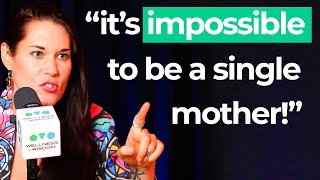
A recorded interview (Josh Trent with Teal Swan, March 30, 2025) that centers on the tensions of motherhood, societal structures, and healing across generations. Teal argues it is impossible to maintain 100% presence as a mother while fully pursuing a global mission, promotes multi‑attachment/intentional community parenting (her son had ~22 attachment figures when younger; about seven now), and links structural social shortcomings to child and parental undernourishment. The conversation shifts to fame’s social pressures, then to ancestral healing: Teal explains inherited/indirect trauma (citing mice studies), describes hiring genealogists to trace traumatic family history (including a whaling lineage that may explain her fear of whales), and presents the protector/rejector model. She emphasizes that deep relational trauma must be healed in relationship (parts work, facing resistance), and highlights collective ancestral wounds related to freedom vs. connection, coping/powerlessness, and cultural shifts (Gen Z, politics).
Questions this video answers
March 30, 2025.
About 22 when he was younger; about seven now.
Chapters
One of the things I love that you said in one of your pieces was it's actually impossible. I'm gonna piss some people off, but it's impossible to have 100% presence as a lady, as a mother in her mission, and be a hundred percent powerful mother at the same time.
Yep.
And that, that flies in the face of so many hashtag boss bitches out there. What do you make of that?
Well, I mean, it's not a fun thing to hear, it's not a fun thing to have to say, but I mean, I'm in the business of telling harsh truths regardless of whether we want to swallow them or not. I feel like as women we want to think that we can do it all, and even when it causes us pain, that we're expected to do it all, but we keep fueling ourselves with this illusion and fueling each other with this illusion. And because of it, children are suffering, we are suffering. And we're unable to actually set up the right structure within society to make it so that children can thrive and let's say people in general can thrive. It's not just about children, you know. Yeah. Women cannot. It's not actually possible to be a single mother, nor is it actually a design. But I'm gonna go even more aggressive than that and say the single family household is not a design that works. So it's not like, you know, a man and a woman find each other and they're able to set up this little nuclear unit and that works. It doesn't work. Even that doesn't work. There's no way for that to provide enough resources for a child, and there's no way for that to provide enough resources for either parent. So what we've got as our norm now is drastic starvation and undernourishment that we have labeled as normal. We've normalized it.
How do you think we can nourish mothers? I think there's just this societal norm where it's like, okay, you're either a stay at home mom and there's really not enough grace given for that.
No, there's no grace given for that.
There's almost none. I mean, I, I look at the way that Kerry, Michelle and Naya and Nova in my family operate and I'm just like, oh, it's so hard. I actually have it easy in what I do.
I know compared to Kerry, Michelle.
So how can we not just as men, as human beings and right now in 2024, and as we move forward with all that's going to happen which, whoa, we're kind of in a crazy roller coaster. How can we genuinely support mothers right now and give them the sacred honor they deserve?
Well, by recognizing first and foremost the importance of the, I don't want to even call it a job, the mission, the purpose that they have. I mean, it's like the tragedy is that we have drastically underappreciated the difficulty of the position of motherhood, especially full time motherhood, when somebody has made that their mission in life. Right. And we don't seem to understand what that job leads to. I mean, we're always thinking about how to improve society that we live in. And the answer is with children. Okay, so then who is more important, honestly than the people who have their hands on our children? Be that whatever parent is home with them or whatever teacher it is that has got them in schools. So first this journey towards being able to support women in that way is to acknowledge the importance. Once you acknowledge the importance, there is a proper level of esteem that's given to the position and not only a proper level of esteem. Usually there's some drive towards societal support for that position of esteem. Obviously though, in a, I mean, the prices within society are going to have to change because the reality is the majority of people in today's world cannot support a family on a one person income. So there's all kinds of structural issues that are presented by society itself that make this whole thing difficult. So what I'm watching is that the women who are really wanting to be in this position and are not necessarily in a relationship where, you know, a man has a job where his income alone is able to sustain the family. These people are having to get wildly creative with, you know, communal living situations so as to put themselves in the position to give them their children what it is that they need, you know, or we've got people who are going completely off the grid.
You know, everybody wants to live in like a 100 yard by 10,000 yard parcel and have like 5 families support each other. I think it's kind of cool.
Oh, I, I think it's way cooler than cool. Like this is literally the wave of the future and I, and it's the younger generations that are going to take us there.
Okay? So if, if, and I believe what you're saying is true, and you know, I'm not here to stoke your ego, like I'm here to have a genuine conversation, but when I've watched your content, I have never found something where my body says no. And so at first glance you might be like, oh, you're trying to, you know, blow smoke at me. No, it's actually true. I was talking with Kerri Michelle last night. I'm like, there's nothing she says where I'm like, a fundamental disagreement to. And when I heard you speak about the motherhood and the work, I'm like, yes, this is what is needed right now. And, you know, on a personal note, like, how did that unfold for you? Growing Teal Swan, the community, the global community, while at the same time being a mother? Because I can see the challenges in that.
Well, you know, I would love to sit here in front of you and say that I have mastered it. The reality is, it's been one of the most painful aspects of my whole life. The best decision that I ever made was to get very serious about my son's needs and figure out how to provide those needs while at the same time pursuing this purpose of mine. It's very difficult to have as much conviction towards what motherhood should look like and what children need as I do, and at the same time, know that that's not my place. I know that I'm not meant to be at home. I know that this is what I'm meant to be doing, but that doesn't mean that I get to neglect my son's needs. So it became very obvious to me that he needed multiple attachment figures. Now, I'm going to say that all children do. Children are supposed to be growing up in tribe, and that is by far the more healthy model for not just children, but people in general. I'm somebody who practices what I preach and who applies what I see. So when I realized, especially when I realized that I was going to be taking on such a large mission, which would require so much of my time, I decided to get very creative with making sure that he had multiple attachment figures. Now, I raised him in intentional community his whole life. He never knew any different. But once I went into this career, it became, no, I need, like. I need, like, a great many people.
How many people?
Well, when he was younger, it was 22. Right now it's about seven.
22 people.
Yeah.
How did you go about organizing that?
Well, I bought a retreat center, and I saw how many people wanted to be part of this movement. Movement, life together. I'm not gonna lie. A lot of things went badly with that, but a lot of that has to do with fame. I think it's about 10 times harder for me to do what other people could do quite easily because of the fact that there are elements involved with me in my life that aren't introduced into the average person's life, and that creates a whole host of different issues. But my son has grown up with anywhere between, you know, six, seven, eight parental figures and most of those who have been with him his entire life. So when I go off on. On trips like I'm on right now, and he's not with me, he's with the other people he's attached to. And he's never. He's never demonstrated any type of attachment and security, which, you know, it was definitely an experiment for me. I was like, well, let's see how much mommy really matters. If from, you know, day one, essentially, he's got all of these people who are always there, you know, but also, as he's getting older, I'm bringing him with me on a lot of these trips. And obviously, if you've got, like, an entourage of people, then, you know, I can be doing an interview like this, and he could be, say, playing on the lake over there, you know, and it's been incredible just watching the way that he has bloomed and learned about the world in that way. But all of this, you know, being said, I still am a part of this society enough to be influenced by all kinds of things, you know, like, it's definitely an interesting situation that I've got with his schools, because over the course of his life, even though I found some very good schools there, there's definitely an attitude of, you know, what is a mom doing with this type of profession? And my son, of course, I wouldn't put him in public school if you paid me to.
My children will never touch public school.
That's my attitude, too. So basically I was like, look, either. Either I'm gonna get real creative and hire somebody to do this with this kid, or I'm gonna find a school that is off the hook. Amazing. I've done that. But it doesn't mean that, you know, when you've got a school that's off the hook, amazing. It doesn't mean that they're outside and completely exempt from this, you know, societal projection or expectation. So he goes to a school which is primarily full of incredibly wealthy individuals and their children. And I want to tell you that by far and away, the majority is men who, you know, are incredibly successful. They're trophy wives who do nothing, and their children and these women can do whatever they want whenever they want. So I'm always the one who shows up at these meetings. And, you know, because the emails for winter school get sent through six different people. Like, I hardly hear about this kind of stuff. So I show up at the parent teacher conferences and they're like, oh, did you hear about this drive? But it's. It's always said in the kind of way of course you didn't, because, you know you were somewhere else.
So there's implied shame there.
There's tons of implied shame. Not only that, you know, I'm not the one that picks him up from schools. Like, I'll sit with him for an hour every single morning because it's really important for me to connect with him that way. And I'm the one that puts him to bed every single night. Right. But the school never sees that. All they see is, you know, one of the other members of the community picking him up and dropping them off. So they really don't have a sense of the connection that I do have with my son. And I have felt the shade on such an extreme level. It's like an attitude of. And especially around the fame. What's interesting is, like, if you've got like a famous dad, there's not this projection that you're ruining your kid's life. I definitely have that projection from so many of the parents that are in the school. What are you doing dragging your child into this world of fame? Have you ever thought about the impact on him? No. You know, I teach about all the psychology stuff. I never thought about it, not even a single day in my life.
You know, there was a point in one of your videos, you said that, you know, if you can run from fame, you should do so.
Yeah.
Why is that?
Because fame introduces, like, a magnification on a level that majority of people cannot handle. And even people who can handle a lot, when will reach a point in it where they're like, I don't know whether I can handle this. I mean, obviously when you've got a high degree of fame, it's like you're in the spotlight where everything you do suddenly is a problem for somebody else or is an item of gossip for somebody else. But I can actually handle a lot of those pressures. What it was for me, and the real reason that I said, you know what I said about that, is that the majority of people are not actually compatible to those types of pressures. There's a lack of freedom that comes with fame. That is not normal for people. For example, it magnifies the human ego. People are really only interested in getting to know you based off of who they think you are in the world or what they think you can do for them. So the level of intimacy drops immediately, and your level of loneliness goes way the hell through the roof. But most people are not. Not really compatible to things like that. You know, not being able to trust people and so forth. So they back out. So what most people are not really prepared for when they hit the world of fame is what it does to your social life. Remember how I mentioned we had 22 people to begin with? Yeah. Most people are not really compatible to this. And so you end up losing people left and right and left and right. So not only are you underneath an intense amount of pressure, everyone around you is bowing out.
My heart goes out to you for what you have been through. I have, like. I don't have sympathy for you. I have compassion for how much drama was created from these documentaries that were created. It's such bullshit. And honestly, I don't even want to spend time on it, really. It's like not even a game I want to play, but the fact that it's there. There's something in the human psyche, Teal, that we put these people on pedestals and then we want to knock them down. Now, when I say the we, I mean the unconscious part of the I. What is that about the human psyche where we, you know, aggrandize people and then we love tearing them apart? It's so unhealthy, yet I see it everywhere. What is that?
I mean, I just see that as the ego in a state of competition. I mean, we get a lot of needs met out of putting people on pedestals. We feel like we have something to look up to, something to look forward to. We feel like we have some guidance. Right. There's a lot of needs that we have out of somebody being above us, but we've been wounded by people who are above us. So we've got power issues as well. So the second that we feel like somebody's on top of us, the unsafety kicks in and the feelings of lessness and so there. That then kicks in this other side of us, which is like, I need equality, or actually I need power over that person, or actually, I'm just as good, if not better than you. So you start to see this awakening of the competitive ego in response to the very thing which we have glorified.
It's so wild. I. I got access to your program, and I absolutely love it. I'm like four or five videos in the ancestral healing course, which, you know, shout out to one of your staff members here in the studio right now, and she's Actually in the program.
Yeah.
Yeah. This work, it's not for the faint of heart. Like, once you actually go down the spiritual path, you can't stop the ride.
Oh, hell no.
You're truly committed.
Yeah. There's no way.
I even heard somebody on Instagram. She says, you know, spirituality and spiritual growth is not all puppy dogs and candy canes. It's Iron Maiden.
Yep. It is totally him.
So how has that played out for people that have been taking this course? Because this is, like, the crux, the fundamental piece, which weaves a tapestry into parenting and being a conscious parent. It's actually healing the ancestry, but not by pushing them away, by bringing in all of the things the dark and the light from. Our parents are great greats. I have a altar right here that honors my ancestors. I put it out today, and there's pictures of everyone. And I'm like, huh? How can I take an emotional inventory of all the ways in which I've rejected them? But you talk about this being a actual protection mechanism, which I love. Can you explain that a little bit?
Explain which bit? The importance of the ancestry?
Well, there's so much there. I think I asked you, like, three things. Yeah, yeah. But basically, let's dive into ancestry and healing of that. And the concept I want to explore with you first before we get into other layers, is when we reject a family member specifically. I rejected my father for a long time, and because there was deep pain there and it was necessary that I went through a grieving process. But just yesterday, actually, from watching your course, I reached out to him, and I'm just like, hey, I want to connect with you. He actually reached out to me New Year's Eve, and he's like, I want to have a relationship again. It had been three years since we've spoken. That's how we heal ancestry. It's not by rejecting them forever. It's by putting down the swords and the shields. That's what the fuck is needed right now in the world. So can you talk about this model of the protector and the rejector?
All right, so as it applies to ancestry, if we have had some kind of damage, usually with a parental figure, be with a grandparent, if we had direct access to them. What we tend to do when we are in rejection of them is we close ourselves off from that very powerful ancestral stream that is coming through the family line on that side to us. And when we cut off that stream, we prevent not only the, let's say, negative, detrimental patterns that are running through that line. We cut off all of the ancestral gifts that are running through that line. And it's a lot of energy. Like, if I was to show, you know, a typical person the amount of energy that is coming through the consciousness of a family line straight to their being and said, you're about to disconnect yourself intentionally from this, it would shock you to see how much of an energy stream that's cutting off. Not only that, a sense of fitting in and a sense of belonging. You know, which is why it kind of makes me sad sometimes when parents, you know, cut off a specific family line for the sake of their kids, not understanding what that's just done to their kids. Right. It's part of why we have this saying in genealogy communities that that which the grandfather wishes to forget, the grandson wishes to remember. Okay. So we've got an aspect that essentially wants to protect ourselves by cutting off our ancestry. Now, we can get into abusive relationship dynamics later because this is not me inviting people to just go and keep all kinds of toxicity in your life. But it's like it doesn't matter whether an individual within a family line is toxic. That doesn't mean you should cut off the entire family line. Right. In the same vein with that protection dynamic, this rejector is essentially trying to keep you safe from all the pain that you have experienced in relationship to those family patterns. Right. So knowing that, where should we go from there?
Well, I think it's a really big. It's a misunderstood thing where there's a lot of bullshit adage out there in the spiritual world that's really spiritual commoditization. Spirituality has been commoditized like rice or gr. You know, it's like, here's my spiritual PDF. You know, go ahead and take that and you're fully healed. I love how you go against that, because actually, I don't even know if you go against it. I think you're just for something else. I don't think you're pushing against that. So this. This piece I really want to explore with you is it's not about just love and light. And if somebody doesn't, somebody doesn't make you feel good, then you push them out, and who cares if they're a family member? It's not that simple. And I think as human beings, we intellectualize, we reductionize how healing can be.
Yeah, well, it's tempting, isn't it? Because we all want that one answer.
It's an easy path. It's like, if somebody makes me feel bad, well, then, you know, just do it. Feels Good, brother.
Yeah, just do it.
Feels good. But when it comes to healing our lineage and really addressing ancestral trauma, it is not that simple. No, it's not complex, Weave.
It's very complex.
How so? What's the complexity there that we. That we really should understand?
Well, the complexity is that once you understand where some of these negative ancestral patterns come from, you can't stand in such powerful rejection of them, even if you can, say, look at them and judge them as something that's detrimental and needs to be changed. I mean, so many of the ancestral patterns that we were experiencing are the byproduct of extreme traumas, traumas that most of us cannot even imagine today and that are still. I mean, it's like it's the. The family line or whatever person that you interacted with thinks that that pattern is going to save them still, otherwise they wouldn't be continuing that pattern. So there's a drastic lack of ownership that occurs when we don't have that information. And I. You know, it's definitely when you have that information, it's less black and white, you know, when you understand that, you know, say, say the aloofness with which you were raised is because of the way your ancestors lived in Scandinavia X amount of years ago, or the hypochondria that you see in your family line is because everybody in that family line left. Everybody lost every person they knew. When you have that information, I mean, really in your hands, and not only you have the information in front of you, you can feel it in your body. It is a live history. All of a sudden, it's not as simple as, oh, I need to cut my mom out of my life or my dad out of my life, because they keep making me anxious about medical conditions, for example. All of a sudden it's like, wait, wait, wait. I need to take more ownership of the fact that this is a pattern that's been running rampant through my entire family line. It's mine. Now that I know that it's mine, what am I gonna do with it? How can what I do with it benefit not only me, but all of the ancestors that have come before me. Mom, grandma, great grandma, whatever it is. And it's actually, what's interesting is that when I'm working with people with this ancestral healing stuff, it puts people in so much more power. And without exception, I've seen this where. When they really are able to track where things came from and almost see the picture of their parents and grandparents as victims of that runaway train, it's like, I'M watching people rise up and be like, wait a minute. It's like I have a memory that I deliberately came into this to change this. And maybe that's why I have the information that other people didn't have before. And maybe that's why I live in this time period where I have access to this kind of resource that other people didn't have before. So it's no longer like you're underneath the whole system. All of a sudden you're above the system. And people are even scapegoats of families are able to see themselves instead as the saviors of their family line.
That's so good. Okay, so if someone is feeling the deep wounding or even anger that on the scale of healing, anger is a piece of it. It's not like we want to bypass anger.
Oh, yeah.
So if someone's stuck in the anger around ancestral healing and they're really using that rejecter mechanism, which is essentially, would you call it, their unconscious that is protecting them, or how would you describe that protection mechanism?
The. It's just an aspect of character. I mean, we are able to fragment our psyche. Right. So the aspect that is protecting ourselves in that way is literally just some aspect of us that has a personal truth. And what it doesn't want to experience is an avoidance.
It's painful.
Yeah. And it's carrying out that avoidance in a specific way. That aspect has to be heard out. So that's the first. First thing. It's why, you know, one of the first things that I lead people into, if they've got any resistance to ancestral healing, is to actually go into and look at and resolve that resistance first, not to bulldoze yourself into it. You know, I'm not encouraging people who are like, I absolutely hate my mom. I don't even want to know. I don't. You know, when they're in that mode, for example, I'm not going to be like, no, bulldoze yourself because it's good for you. No, like, I'd much rather have the person work with the aspect of themselves directly that's got this. All this resistance so that they can really hear what are the fears. Because I'm not suggesting that you should like bulldoze into ancestral healing. I'm saying, well, maybe that aspect of you that's in resistance has some really good boundaries that it wants to express to you. And maybe that aspect of you gets on board once you've reassured it that you're not going to do that. Like, one of those boundaries may be, you know, My mom's like an abusive alcoholic. I don't. I don't want to be in contact with her. I really don't. Okay. So if that aspect of you is like, this is my thing right now. I don't. I'm too afraid of my ability to not keep my boundaries. You might be like, all right, I'm not going to force you then to go contact Mom. We're not going to do that. But let's start asking maybe aunts or uncles about some information. Or maybe go hire a genealogist that can tell us some of this information. You start to work with the whole family line without having to make it about, I need to be in contact with Mom. Right. So, I mean, these parts that are in resistance often have very powerful information about our personal truths and needs that we have been ignoring. Right. You only really see that come up in a person if they have been behaving in zero sum game ways with themselves. Right. So they can't trust themselves.
And by zero sum, you mean I'm safe and you're unsafe.
Yeah. And we're doing this on an internal level all the time. It's like a zero sum game is I win, you lose. Right?
Yeah.
So we're playing this game with ourselves all day. Especially when we have been raised in environments where we have a poor sense of our own boundaries. It's like you've got the aspect of you that's like, I don't want to go. I don't want to go to the party. I don't want to go to the party. But you're going to end up there anyways. Right. So the aspect of you that was like, no, no, no. Is like, it doesn't matter what I do, it doesn't matter what I say. Right. It's just difficult for people, I guess, when they see themselves as an individual. It's difficult for people to consider. Conceptualize of themselves as like a amalgamation of selves, multiple selves, and that those cells have a very complex system of relationships so as to do the integrative work, to make it so that these selves are in coherence with one another. And you see that arise a lot when you're working with ancestral traumas. Why? Because the traumas that we went through with our family, specifically of origin, is the genesis of so many of ourselves. So if you want a parts calamity or a healing crisis to arise, a really good way of making that happen is ancestral healing, because it has a way of, like, bringing them to the surface, you know, all of a sudden you're seeing your own protectors as like, oh, that's not an original protector. Here I am thinking, I'm all original. That's the same one my dad uses, copy paste, you know. Oh, and it's the same one that his dad used, copy paste. Yeah.
There have been so many moments where when I have a conflict with Kerry Michelle, I'll reflect and I'll be like, wow, I just acted exactly like my father.
Oh, yeah, yeah, yeah.
Have you found that in your own life? I mean, look, you're far along on the scale, right?
Yeah.
But there's so much to learn at every level. So have you found that in your own life where you're like, wow, I just acted like my mom or my dad?
Oh, yeah. Oh, yeah.
How so?
So the patterns that I have taken that are definitely the most problematic in my life are my mother's patterns around anxiety. Like, a lot of anxiety. You can see it when I get on airplanes, for example. You know, I hate airplanes. Oh. I feel completely out of control. Have a very hard time with trusting that life is going to pan out.
Well, it's wild that way. Big tube of metal flying through the air.
That's my thing.
Yeah, it's wild.
I mentally can't deal with it. And I realized that I've had, like, engineers try to explain this to me, and it doesn't help.
So.
But yeah, I mean, when I'm watching myself, that is the. That's the pattern that I noticed the most. And I'm like, oh, there's the Cleveland again. But, I mean, it was. What has been very transformative for me is to understand where the hell that came from, because it's. I mean, the anxiety is so extreme on that family line that we get each other going. I mean, it's like my joke around my mother and I, you know, she'll send me, like, some update of some calamity happening, which nobody can do anything about, you know, And I'm like, you know, instantly panicking, and I'm just like, what is this? Like, what our family does is just remind each other of all the crises that could possibly happen and, like, how it's going to ruin everything. Okay. So I go back in that family line, and it's at this point, I'm getting very overwhelmed by the amount of calamity that is being turned over by the team of genealogists that I have hired. Things that even my family didn't know, has no memory of. It didn't get passed down. It's the kind of stuff that people just don't want to talk about anymore.
How do you go about hiring these genealogists? How do you decipher which ones are talented and not?
I. I literally did not even go about finding out which ones were talented or not. I found people who had, like, specialties. So let's say that you've got. You find out that you've got, like, Chinese ancestry. You're researching somebody who specializes in a specific area of China. Right. They're going to be the ones that have just poured all of their time and energy into understanding the history in those regions and the families, prominent families in those regions. And so I was looking specifically for people who specialized in the regions where my family was from. I mean, there's all kinds of sites out there. It's really not hard to find genealogists. There's all kinds of sites. Also, the Mormon Church is obsessed with. I mean, capital O, obsessed with this kind of stuff. And they're very helpful for a lot of interesting reasons. So you can contact them and be like, I need somebody who specializes, say, in, like, Mexican ancestry of this region in Mexico. And they're very good at being like, oh, let's just help you. We have 5,000 volunteers today. You know, so I got lucky in that way because I'm close enough to them. Yeah. But these genealogists have just been turning over information just left and right about how many horrible. I'm talking truly horrible. Blindsiding events keep happening generation after generation and family. And I'm like, my gosh, no wonder we're this way.
This is what you talk about with the indirect inherited trauma. Is this an aspect of that?
Yes, it is. Yeah.
One thing in your course that I love, and I'm not going to give away the farm, because the course is freaking awesome. It's so well done.
Thank you.
Like, there's. There's so much you can tell that you really care. You know, people. A lot of people out there in the spiritual world, they. They're interested in making money. And I think money is just a byproduct of us here in the 3D we incarnated. And money's here, so let's do the best we can. And all I have to say about that is, like, wow. There's certain things, like my grand. My great. My great grandfather, I didn't have a relationship with him, obviously. My grandfather was a brigadier general in the Marine Corps, so I know that's within my lineage as well. But one thing that fascinated Me about you is you had this irrational fear of whales.
Yes. Yeah, yeah.
And it was like. It was to the point where you were like, oh, I just. I would get nauseous or I get bothered paralysis. Bring up a whale. Yeah, talk about that with this indirect inherited piece, because I don't think many people know about this, okay?
So indirect inherited trauma is where you didn't have a direct interaction with some kind of a problem, and yet it's in your body. And they've done all kinds of studies around this. This is not like, you know, I'm telling you, some out of this world spiritual concept that people don't know about yet. They've done all kinds of studies with mice, for example, they've been doing even more interesting ones with worms. But these mice studies are entertaining where they. They introduce the scent of cherry blossom to mice, male mice, while they shock them with an electrode, then they separate the babies from both mom and dad immediately upon birth. What this means is that there's no way for there to be some kind of a mice communication, that we can't track. Those infants of those mice, they still show a reaction like a hyperactivity to the scent of cherry blossom five generations later.
Yes.
That means that we are literally inheriting memory. Now, I'm going to go one step further and tell you that you have every memory of every single ancestor in your body, whether you have conscious access to it or not. And some of those fears are active because it makes sense for them to be active, and some are not. Now, if. If you're in an environment, it just makes sense, you know, in terms of evolution. If you're in an environment and there is a threat in that environment, doesn't it make sense for that to be downloaded without you having to teach your young? Hell yeah. Makes sense. Okay, so this is where it gets really super entertaining with me in wales, right? Because I've always had this issue, like a. Like a big one, right? And it's funny because I'm like, I'm complete animal lover, right? But whales, they come around, panic. One day, my dad just casually drops when he watches me have one of these reactions to a whale on the screen. He's like, what's that about? I'm like, what are you asking me that for? You know, you've only been with me for the last 30 years. Of course I have an issue with whales. He's like, hmm, that's kind of funny. I think, if I remember right, we have a whaler in the family. I'm like, wait, Wait, wait, you are just now telling me this? Turns out my dad didn't even know. So let's go. Two years later, I hire these genealogists. They go down the trail, and they're like, oh, your fifth great grandfather was literally the father of whaling on the east coast of America. And it was four generations of whalers. I go out there, I walk through my family home, right? And turns out that I have one great grandfather who was actually lost at sea in a fight with a sperm whale. And like their entire. For so many generations of so many grandfathers of mine who were all in the whaling business, their nightmares would have revolved around this. Because the whaling gold, right, was the sperm whale. And the sperm whales were the ones who had this tendency to turn on boats. That's what Moby Dick was about, this Essex incident, right, where they went after a bull sperm whale, and it took down the whole damn ship. Whaling was intense business. It's not like these guys went down gently, right? And it wasn't like, you know, now where you're harpooning them, right? You would get out in this little boat with four men and try to spear this thing to death. And then it would drag you for miles and miles and miles and miles and, you know, the whole time bleeding through the water. So at the end of it, you've got sharks that are up sort of trying to feed off the car because it was grisly. So, you know, these men, this would have been the bulk of the content of their panic attacks. And it is in my body, even though I have literally ready for this, never lived near the ocean. I have lived in the mountains my entire life.
So because of that inherited piece or. Yeah, that is so wild. Okay. So it fascinates me because it makes me inspired to go get a genealogist. And, you know, this trauma piece is. Is like Mark Wolin I've had on the show a couple times, and I don't know if you know of his work. He wrote a book called It Didn't Start with youh. But, you know, regardless of it not starting with us, it's our responsibility to heal it anyways. And so what I thought was so fascinating is that you and him both, whenever I get wisdom from different sources that are trustworthy, I start to really do my best to embody that. And one thing that you said is that, you know, healing relational trauma, if you have real deep relational trauma, you cannot heal it outside of relationship. It's just not possible. So you had this inherited piece with the whales And I'm sure you did healing work on that, so I'll let you finish that actually first before I ask the other question. Finish how you actually healed that, because there's a take home there for all of us.
I haven't completely healed yet. This is something that I'm in the ongoing process of doing. So with me, this is an intense enough fear that I have no intention of getting in the water with a whale right now. Like, it's that bad.
Okay. It's a work in progress.
Yeah. What it is is like I, you know, I'm understanding. It helps a lot to understand where this fear comes from. Right. Which is not necessarily the nature of the animal. It comes from the ways they were responding to my antagonistic ancestors. Right. When I was in Sag harbor, which is where this whole family essentially settled and built this entire business, I went out into the water and the first thing that I did was to like, send out this. It was like a very deep meditative prayer where I was sending out this apology to the oce and to the life in the oceans, especially the whales. Right. And I mean, this is going to sound odd unless you're really tapped in esoterically, but it was like the second that I set foot there, it was like everything knew that I was there. And it was like, it was almost like a rub, an energetic rub there with the oceans being like, are you going to be just like them? Of course not. I'm a total crunchy granola that way. Right. But I was like sending out this prayer to say that I'm. My. My promise is going to be the opposite. I know that I came from this line of people, but my promise is to do the exact opposite from the explo meditation that. That you, being the ocean experienced. It was a really healing thing to experience that. Not only that, to have my son there with me. Of course, I took him on that trip, right? And he was paddling around in this bay where my ancestors used to be and his ancestors used to be. And he was, you know, totally the opposite of just going after things to the detriment of, you know, we've got this very gentle child who has been raised vegan and who is very much like a friend of all the animals and loves the ocean, not like me, Right. So he was paddling around and playing and it was just absolutely magical. So we can go from there to, you know, I'm watching documentaries on these animals and, you know, every time that fear arises, it's like I'm trying to understand Them instead I am doing meditations where I'm going into their perspective because the more you understand, the less you fear. Now, you know, and I'm assuming that this is going to lead me at some point to interacting with them. Most likely I'm not going to go for the sperm whales first.
Maybe some dolphins. That'll lead you there. Okay. So thank you for sharing that and also thank you for your honesty. Like, you know, one thing that you've shared in the past that I want to touch on is like a couple years back you had this complex that you recognized in yourself which is super humble and also just very trustworthy that you realize there was a superiority complex. You could sit here on the pod and be like, oh, it's healed, I'm good. But it's not like that. No matter. And this is what I said earlier, no matter what stage you are, you're very far along compared to most people on earth. Very far along. And there's still work to do.
Oh yeah, always.
There's always going to be work. So I feel like, and I know you feel this way too, based on what I've seen and heard from you. We cannot, this is my earlier question. We just cannot heal certain aspects of relational trauma unless you're in a relationship, unless we are in committed relationship. And this is flies in the fucking face of so many spiritual commodifiers out there who say everything you have is within you and it's just so not the case. And I've always, I've always felt actually an aversion to that statement.
Good.
So when I heard you speak it, it was like my spine said, yes, go deeper into that for us, please. Because there is one way of thinking where it's like love and light and everything you need is within your heart. Not the case. If you have trauma around relationships, you have to be in that round circle of relationship to heal it.
Exactly. Well, the first thing that I feel like people need to understand is that the vast majority of people who are pushed towards the spiritual field are pushed there because of relational trauma. They've experienced enough pain with people that they're no longer looking to people for their answers. They're looking to connect with something else. Usually that's when people turn to the spiritual realm. Right.
Or they get sucked in by a church.
Yeah, something like that. Now that can. I'm not going to be able to make that whole entire process negative because sometimes that's exactly what turns people towards their non physical self and towards the awareness of this whole other dimension of life. However, we can go towards that in rejection of. And that is very much something that I'm watching this huge demographic of relationally traumatized individuals do, is they're like, oh, I can now disconnect from other people in human relationships, and I can be in connection with myself and in connection with God and tell myself all kinds of stories based on even true principles that exist about the universe that enable me to be avoidant of relationships and make it so that I'm never back in that vulnerable position that I'm in a relationship. As people, we are running away from the vulnerability of relationship. It's really as simple as that. Because it takes two to make a relationship work. And there's no way to get around that. You are dancing a tango, okay? So dancing a tango, you can't get around the fact that the other person can mess up the tango. That's what you're stepping into by virtue of getting into that in the first place. You say, I'm in a relationship, right? Then you're automatically in a vulnerable position because the other person can either dance with you in that dance or not. We don't want to accept that. And I find it kind of. I mean, I understand it because being in the powerless state is not fun for anybody. But people want to either think that they can do something to be able to control the entire relationship. So it's no longer about what the other person does or doesn't do, or that they can just withdraw from relationship entirely. And then all the needs they would be going for in relationship, they can get some other way. It feels more empowered, it feels less vulnerable. But you can't eradicate your needs that way, number one. Number two, that is not the mastery of relationship. The mastery of relationship is the mastery of the tango. That's it takes two. And whenever you get damaged in relationship, you have to heal what was damaged in relationship. In relationship, that's what people don't want to accept about relationship damage, Whereas they would never think that way with any other type of damage. You know, like, we were just talking about whales, right? I got huge whale issues. Oh, good. Well, you can definitely fix that. Never going in the ocean again, Teal. I mean, that's essentially what you're saying when it's like, oh, I've got all kinds of relational trauma. Luckily, I found everything I need within. That's the same thing as me being like, I've got issues with whales. I figured out how to heal it within myself. I will never go near whales. And that's okay. Because I've got whales within. I mean, like, what the hell is that about? I mean, it makes no sense relative to every other subject.
So, yeah, it's a trap. People fall into this trap where it's like, well, if it feels good, do it. I can't hear in Austin. I mean, it reminds me of LA a lot.
Oh, I just said that this morning.
Yeah, there's some LA vibes here. I lived in California for 40 years. We moved out here because of the COVID Theater bullshit. And I realized when I got out here, I'm like, wow, so many people exited that it kind of has a mini Cali vibe out here.
Like, yes, it does. Yes, it does.
And so, you know, to piggyback on what you said, it's like, God, there's no way I could be able to hold the space financially, energetically, to learn about integration of the masculine feminine in me, unless I was with Kerry Michelle. There's no way. And especially being a father, two children. Oh, my God, y', all, it's no joke. There's no. But I'm so grateful for it. There's this. We've heard this before. There's a gift in the pain. There's a gift in the growth. But it doesn't feel like that when we're in the middle of the contraction. That's the hardest part for us to be. So when we're there in that sticky spot and we're feeling massive resistance come up, where do we go from there?
Face the resistance.
I mean, it sounds so simple.
Oh, yeah. I mean, it's not comfortable, but that's the only place to go. You never want to. Whenever resistance presents itself, you have to look directly at it. You have to dive into it. You have to understand it completely. Also, whatever it is that that resistance is opposing, because it's essentially your own being indicating to you that you've got an internal war going on. Your goal has to be to end that war. And the only way to do so is to understand both sides as deeply as is possible, to find wherever their alignment actually is.
Hence, the parts work.
Yeah.
Yeah.
I love it. Yeah.
Wow. And. And that. I want to go a little bit more into that, because intellectually, I think people got it, but I really want people's hearts to open up to this. I was in an NLP training, and we did some parts work. We did parts integration, where we close our eyes and we listed out all the good qualities and actually all the painful qualities, all the loving qualities. And at the end of the Day what I really wanted was peace and I wanted power. But I can't have power unless I'm coming from a place of peace. Because power that take, that is taken by force. You can't trust that shit. It's not trustable. Have you held those two worlds in yourself? I mean, the platform that you've created and like here you're speaking for I think 300 plus people right in a room. People come to you in a very disempowered state at times.
Yeah.
And so how do you hold the peace and the power in yourself? And what kind of parts work have you done personally to hold your own peace and your own power and really make that something sustainable?
You know, it's come not from parts work itself necessarily with aspects of myself, but it's come from developing a level of awareness where I cannot disconnect from other people so as to lose the truth. And I mean on a very deep felt sense that other is a part of self. What this has moved me into is, is almost alignment with the peace aspect of what you're describing is there is no part of me that wants to be in a situation with an other person, whether it's an individual or a group of people, and do something that's against their best interests. What that creates is what you would consider a peaceful power, where you're essentially pulling an entire audience in as an aspect of yourself. And there's this deep level of care and positive ownership for how things are landing with them, whether they understand it or not, whether we're pushing them in the direction of something that's beneficial for them or detrimental for them. A deep attunement with whether something is actually in alignment with them or is a projection of what somebody else would benefit by or prefer. So it's like taking the best interest of other on such a profound level that it has moved me into, I would say deeper and deeper levels of a power which I think you can only possess as a genuine leader, as opposed to somebody who's just wanting to be in the top position for the sake of keeping themselves safe in that position. Which is the majority of the reason why people want to go for power. They think that's a safer position.
That's really the fuel source for unconscious capitalism. And I'm not here to debate politics, but like there's definitely a unconscious vein of capitalism. Like I love my team so much, I'm happy every time I pay them. It's like a true relationship. So in that way I'm a conscious capitalist, right? But I also know that no system is perfect. I think we'd all love to be in Willy Wonka's chocolate factory and be like, hey, everybody's got a golden ticket. But even if you look at Ken Wilber's work and understanding who we are, we cannot have no hierarchy. There has to be some type of hierarchy. There has to be some type of system where there is checks and balances, because otherwise it would all just be eventually chaos. There's gotta be some order in there. What do you make of that? Where we are in that, in that specific lens of just beingness on planet Earth and capitalism as a whole?
Well, for now that's accurate because human beings are not at the point where they can take each other as a part of themselves. Not just each other, other species as a part of themselves. Until we develop that capacity, we cannot be trusted with each other. So a lot of these checks and balances you're describing, quote unquote, need to be in place. Because of that lack of consideration, we have not become yet a species that is capable of the mastery of relationships, even though it's a potential of ours. There's so much about what we're living in that's flawed. I mean, obviously we're living in the byproduct of a lot of desires that have hatched before us, right? So capitalism is one of those desires that was hatched from levels of limitation which people did not enjoy before. So what we are is standing in this position to launch a new design for what is an improvement. And that looks much more like a design where we're prioritizing, caretaking each other whilst at the same time not limiting each other. That's ultimately what we're all looking for, right? Because so many of the designs for government or economy that seem to be come up with are something that limits us and our growth and our potentials and our. All the things that make humanity what humanity is whilst meeting the needs of people who are not doing so well. Right? So what we're looking for is a blend of both. And I have not as of yet, not that I have taken in everybody's ideas across the totality of humanity, but we have not yet come up with that perfect model.
Something just hit me. So when we look at ancestral trauma, what is the ancestral trauma that is asking for collective healing? A lot of what you and I have talked about is individual healing, but on a collective, maybe even a collective unconscious level where we are what is asking to be healed through our collective ancestry. Right now, in the way that we interface with each other.
Oh, there's so many things I'm gonna make. I'll do, like top hits. Okay. So in terms of collective ancestry, there is a. A deep drive for there to be emerging between freedom and connection across cultures. If I was to take the whole world in, right. There is this tug of war that's been happening for generations between wanting very deep, very intimate connections that you can rely upon for the totality of your life without those connections being the limiting factor in somebody going for what makes them happier, going for a sense of personal success. So it's where the personal meets the collective that you see the greatest amount of drive and desire emanating out of the collective. And that's. That's one of them that I think is quite interesting.
Do you feel like that's an expression of integrated, healthy ego at that place.
Or is it something else if we actually get there? Yeah, yeah.
That's the goal, right? Yeah, I don't think I'm there yet, but, yes, that's the goal.
That's the goal. There is a drive for understanding that is emanating from everyone on an ancestral level. It's been entertaining for me to look at that particular vibration because it means that so many different demographics feel completely misunderstood in their perspective. And I'm really excited to see how this plays out in terms of politics, specifically, because the wave of the future is that politicians are going to have to drastically and deeply understand whatever it is that they are teaching to. It's no longer going to be something which we accept that they are making comments on experiences they've never had. Right. Which means what? It means that we're going to have leaders who have to be practicing consciousness work in order to be able to grasp the concepts that they themselves are passing policy on.
That's the kind of world I want to live in.
Oh, well, me too. That's the one that's like, maybe I'll stick around a little. Yeah. But that one, that place that we are headed, is the direct result of so many ancestral cultures and ancestral individuals feeling so incredibly misunderstood. And so decisions. The wrong decisions being made about them. Right. Okay, what's another? I'll pick three, because otherwise we're gonna be here all day long. This is one of my favorite things to look at. You've really brought me in the direction of what I love looking at, by the way.
I love it too, because ever since I was a little boy, I'm like, what the fuck is this? What's going on here? There's something off. And I think I've felt it deep inside me for my whole life. Yeah, I think most people do. An interstitial tension, if you will.
Yes.
Feels it.
That's a very, very good way to put it. Yes. Okay, so if I just pick the third thing that is emanating from like the collective subconscious that relates to our ancestry, it's like coping would be the next thing that comes up. There's this feeling of powerlessness amongst people in general. It doesn't matter where you are looking in the world. That feeling of powerlessness is that I can't change certain aspects of my circumstances. And because I can't change certain aspects of my circumstances, I am coping with them in this way and at this very deep, primal level. Whenever we are forced to cope in some way, we acknowledge that we cannot change a stressor which we want to change desperately. So there is a dreaming of being able to change the circumstances and change the stressor so as to not have to cope with what we don't want to cope with. Now this ancestral trauma is what we can point to for movements, movements like the feminist movement, movements like even what you're seeing within right now, the Gen Z culture is bringing in a movement around. Why can't. Why isn't it enough for us to just be. They're actually ending the toxicity of the workplace condition, which is, you know, brought in by the industrial era when everybody came in and your worth was really about what you could do in front of a machine. Your worth is what you do and that's the end of it. They are, they are literally and legitimately ending it right now. We can talk about all their dysfunction later. But these movements within a generation and these movements within an entire culture happen because of these ancestral pains like what I'm just describing. I have to cope with this thing. I do not like there have been. I'll tell you where the, where the Gen Zs got this from because they would probably tell you it came from some form of disillusion in their own life. But actually it came because their grandparents and parents were so miserable eking their life out for the sake of the pennies they got in their job and really not experiencing any life satisfaction as a result of all that hard work they were doing that they have imbued this strong, powerful desire to really be in life and in the enjoyment of life. Interesting, right?
I felt that with my own father. Like, he kicks his ass, he's miserable. Why would I want money? I had to go through so many layers of wounding around money before I transcended. And I was like, okay, it's actually just a unit of exchange. It's literally just a way that you give and receive energy. That's all that it is. But what you're talking about with Gen z, I'm like 1980, so I'm like one foot in the old generation, one foot in the other one. I don't know, depending on however you believe these dates actually mean anything. But it's so fascinating to me because what you're saying is true. Like, there's so much pain body around people seeing their parents and grandparents suffering for fucking money that they themselves reject it. But isn't that a form of the protector and the rejector that you speak about?
Yeah. And anytime we're dealing with a protector that is using rejection as a strategy for staying safe, you run the risk of throwing out the baby with the bathwater. And so you see the manifestation of the shadows of that. Let's say in Gen Z, you've got the, oh, why can't I just enjoy life and be celebrated in my value for being. At the same time as you've got a generation of individuals who are not willing to take any pushback, therefore, you don't really see this strong commitment to whatever value they hold and whatever challenge meets them. They don't go, wait a minute. Challenges an element of life. I'm going to stay the course regardless of the challenges of life. It's a give that up, give that up. So it seems like a very weak culture and a very weak generation because of that. So we run the risk of falling into the shadow anytime we step in any direction. And that's something, honestly, for those of us that are on the path of consciousness, I feel like this is one of the most important things that we can be aware of, is that anytime we commit to a path, that path can get us in trouble. We have to be aware of the trouble that path can get us in.
No doubt.
Otherwise we ourselves become dangerous.
It's what Castaneda talks about, I think it's like he has the four pieces of life. And the second one is clarity. Clarity has a shadow. If you think you know exactly the way, then there's a shadow that comes there that you could possibly not even know. You don't know.
Yeah.
The shadow of clarity, by the way.
That'S the one that makes me the most panicked. If you would like to know what keeps me awake at night, it's this one.
How so?
You never know what you don't See, I'm somebody who. I would. I would tell you has much more clarity than the majority of human beings that have been walking the earth ever. This is the one that scares the crap out of me. Nobody can account for what they don't see that they don't see. So it's almost like a phantom that's chasing me at all moments. I can feel it on my back.
Dishonest. It also points to something I brought up earlier, where you said a couple years back, you're like, wow, I have a superiority complex.
Yep.
Was that part of the shadow in which you speak?
Oh, yeah.
How did that unfold for you?
I was noticing how much it bothered me that people were questioning my authority, and I was a match to it over and over again. And it's this especially. It was like. It's a huge issue in America. I'll be honest with you. So, like, as a spiritual teacher, when you go to other places in the globe where there's a lot more respect essentially, for hierarchy, you don't have to. It doesn't feel like you're fighting people. Right. It's almost like you step off the airplane and they're, like, rolling out red carpets, and it's like everything. It's almost the opposite form of scary. You could be like, you know what you need to do to turn your life around every morning? Hop on your left foot, and it would be, like, religiously, they'd be doing it. Not only that, they'd be like, telling you, oh, it's changed everything for me. And it's just placebo. So it's like the opposite issue. When you land in America, the attitude, especially more and more recently, is like, who the hell do you think you are telling me? And then what's worse than that is you got people who are like, you know, they. They do one ayahuasca journey, or, like, they get interested in, like, reading things on. In books or on YouTube. And then it's like, oh, I'm a spiritual teacher, too. And, like, I don't agree with you on this. I'm like, who are you to disagree with me on that, honestly? But I was more and more in my career, I was watching myself get in these types of power struggles. So naturally, I'm like, what is my deal with this man? And I started realizing that, like, I definitely wanted to be on top of that totem pole because of how terrifying it felt to me for anybody else to be on top of that totem pole. It didn't only relate to things like, you know, the information that I have, it related a lot to, you know, things like, look, I know that if I get behind the wheel of a car, I'm going to be able to drive better than anyone else. Even telling myself stories, you know, at that point, which are completely irrational things like, okay, let's. Let's put me in a position where, you know, I learn how to drive a race car. I'm going to be able to do it better than Jeff Gordon. And I'm watching myself have these types of thoughts and like, I'm the type of person, when I have those types of thoughts, I'm disidentified enough to be like, what the fuck was that? Why do I need to tell myself that story? Because it's not. I know it's not accurate, right? I have this, this larger objective perspective, right, where I'm understanding that the ultimate truth in this universe is that because of the nature of our design and what we have intended, even for this life, we have intended vessels even for a physical body, where it doesn't matter how much you train, you will never be better than somebody else. And that is something you intended. Now, I have that awareness enough to be like, I'm using this some way. So when I got track of that shadow, I essentially looked at the aspect of me that was doing that, right? And it was a protector who was like. It was all about trust. It was like, if I'm not the best at everything, I mean, anything that I could potentially do better than anyone, then it means that I'm ultimately vulnerable to them and unsafe. Because it means at a certain point you have to put your trust in somebody else. That never went well for me. So, you know, I was just like, watching this as this unsafety strategy. And when I started caretaking the unsafety aspect, the desperate need to be in this position of superiority all the time started to wane. I got better at working with people who were in power struggles. I really dislike it still, but, you know, when it happens, I'm like, much more attuned to the pain behind it. I'm much more able to see my own reflection, ironically, in the power struggle. The aspect of a person that's so terrified of authority that they're, like, trying to rip me down as fast as they can. So being attuned to that pain, I'm able to respond to it better than to just get in that sort of pissing contest.
It.
More from Josh






Your child's future start before pregnancy... and even before conception! #podcast

MD Reveals: Your Healing Creates Your Child's Reality (The Souls Coming In Need Strong Bodies)



