The 5-Part System That Will Liberate You (Beyond Mind, Body & Soul)
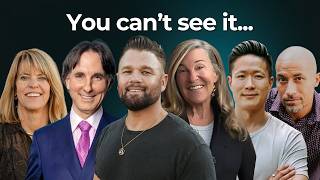
In this episode Josh Trent hosts a round‑table with Dan, John Demartini, Debra Silverman and other guests to unpack a holistic "Wellness Pentagon"—physical, mental, emotional, spiritual and financial nourishment—as a single integrated system. Dan explains circadian‑aligned meal timing, arguing that stopping eating 3‑5 hours before sleep improves sleep, hormone regulation and weight management, and he critiques intermittent fasting for high‑stress individuals. John Demartini links identity to one’s hierarchy of values, describing how shifting values reshapes self‑concept and life purpose. The conversation then shifts to shame as a primary social control mechanism, illustrated through anecdotes about vaccine mandates, medical‑industry pressure, and broader governmental and military experiments. Debra Silverman introduces a "4‑Element" framework (water, earth, fire, air) rooted in ancient astrology and tarot, claiming mastery of these elements unlocks personal evolution. The group also explores the language of money, how limiting narratives (“money is pain”) shape financial reality, and the need to re‑program linguistic habits to align with abundance. Throughout, the hosts emphasize community support, personal experimentation, and the integration of ancient wisdom with modern science to achieve holistic liberation.
Chapters
You were never supposed to chase wellness. You were meant to live by it. Anything and everything you were taught to optimize, your body, your money, your emotions, your soul, they were never separate. They were always one system. We call it the Wellness Pentagon. Physical, mental, emotional, spiritual, and financial nourishment of self. When one is starving, all five suffer. When one comes online, all five begin to thrive. In this video, five top teachers that have ever come on the podcast are here to show you how to nourish all 5 sides of your Wellness Pentagon. Enjoy. Literally, your life could change overnight if you just promised yourself and committed to eating dinner at 6:00 PM. It's on the screen right now, a clip of you talking about this. It's called the Han Dynasty Wisdom of Organ Clocks. Can you go into this? This is a really fascinating part when we look at circadian rhythm.
When people think about, uh, the whole aspect of meal timing, for a lot of like evidence-based professionals, they throw it out the window. Oh, that's not going to help you burn fat faster than, like, you know, going in a calorie deficit. I, I, I get it, right? I get it. But what they're missing is the fact that your body is a machine. And the more that we actually understand how this machine works, the more that we understand how this, like, internal clock inside of our bodies work, the more we attune ourselves to what is natural to our bodies. So when I think about the, the circadian meal timing, I, I say this so many times, it doesn't get the amount of attention that I think it should, but I think it's one of the most important aspects of someone's nutrition, which is actually to create the nutrition architecture of how you are going to eat and also what you are going to eat as well. So we all, we all hear about kind of like— I think the most important part to this whole like circadian or eating to your circadian rhythm is like, number one, when do you decide to stop eating? 'Cause that is the problem that a lot of people are facing up right now. They give themselves like the abundance of like options to eat whenever they want, but in this modern food environment and also with our modern, like, let's just say like our biology, our circadian rhythms, there is a specific time to stop eating, which is gonna be around 3 to 5 hours before you go to sleep. And I don't do that to lose weight. That's what a lot of people say as well. Oh, you're just doing that because you wanna lose weight? No, no, no, no, no, no, no. This is not what I'm doing it for. I actually do it because there is a downstream domino effect when you do this to your body that people don't understand. So when you stop eating 3 to 5 hours before going to sleep, it increases sleep quality by decreasing the amount of times you wake up in the night. When you have great sleep, what's going to happen is that there's going to be a downstream consequence of you being able to regulate your appetite hormones and your hunger hormones because your body is working as it should and you're eating when you should. And also you are stopping yourself from eating when the time of willpower is going to wane the most, which is going to be at night. And then a lot of people are like, well, you should skip breakfast and just do intermittent fasting. I'm just like, yo, I think that is probably the worst thing, especially for a high-stressed individual, because not eating is a stress. People don't realize that. And also when we have a meal set up at least 1 to 2 hours upon waking, What happens as a result is that helps, especially if it's high protein, that helps us regulate our hunger at the end of the day. And everyone's like, I know, I'm just not hungry when I'm just not hungry in the morning. And I'm like, you're not supposed to eat when you're hungry. You're actually supposed to eat before the hunger pangs come. Because when you're hungry, that's already too late. You already gave you like, your body's already like, I'm starving. Let's go eat. I'm willing to eat anything. And even when you are done eating, you're you are still going to be hungry after that. I actually say that you should train your hunger as opposed to letting your hunger dictate when you eat. So when, when someone has the meal at least 3 to 5 hours before you go to sleep, when someone has the meal 1 to 2 hours upon waking, they put a meal, middle meal in there, maybe like a snack in between or whatever. This creates this architecture of eating that you can take with you anywhere, especially because I work with entrepreneurs and I work with a lot of like these, a lot of these founders who have to travel everywhere. I actually say the most important part to your eating is actually maintaining the architecture wherever you are in the world. So let's just say like, uh, you know, you're in Austin and, um, you know, you eat at 8 PM, 12 PM, and 6 PM in Austin. You go to London, you are going to eat at London time at 8 AM, 12 PM, and 6 PM. And that is going to attune yourself to the new time zone that you are currently in and is also going to control your hunger. So for me, it's like attunement of our— to our natural rhythms, it makes the process of dieting and maintaining, or actually sticking to a diet, so much easier because you are literally in training your body on when it's supposed to eat and when it's not supposed to eat. And also, you're improving sleep quality as a result of making sure that you're not munching on something right before you have to go.
I love the architecture because when a human being commits to, okay, I'm going to stop eating at 6, then when they have the cravings or they have the, you know, stimulus and response come, come up at 9 PM, it's actually a beautiful space to be curious. It's such a gift. I know, I know in the moment, y'all, it doesn't feel like that. Believe me, I'm not trying to say this is easy, right? That's why Dan has support. That's why you've created your program. That's why we're all doing what we're doing. Because if it was so easy, everybody would just do it, right? That's why we need support. We do it in community. But I wonder how you feel about this. You know, the, the Han Dynasty and the wisdom that they had 2000+ years ago, You talked about this in your post where the organs actually had more fuel in the morning, and then in the evening, these— the spleen and stomach specifically were declined in their efficiency. Can you talk a little bit about that?
So, well, for me, this comes down to the timing of digestion, and our digestive tract has a clock. Our liver has a clock, our, our heart has a clock, our hormones have clocks. So when we are thinking of like this nutrition architecture, what we want to do is we want to be able to facilitate as much of this rhythm to our organ clocks as possible. And I always go back to the digestive rhythm because when people are trying to digest a heavy meal right before they're going to bed, it's counterintuitive to how the body uh, wants to perform. When they're going to bed is called rest and digest for a reason. So if you're having like a— you had like 500 calories in the breakfast, you have 500 calories at lunch, and then you have like 1,500 calories at dinner, what's going to happen is, is that your body's still going to be working even though you're trying to rest by digesting food. Digestion takes energy. And when we're getting ourselves to lean down into the end of the day, we actually want to be taking in less calories as our meals get into the later parts of the day. And this is going to allow us our digestive tract to take a break, to allow ourselves to sleep. And then when we attune ourselves to this particular timing, to these particular clocks, what I find with a lot of people is they actually come back to me and say they dropped like 40 pounds. They're like, it's actually easier than I thought it was.
Because they're just so habituated to eat past 6.
Exactly. So they say it's easier because the whole thing about losing weight is the fact that you have hunger. And a lot of times when people here feel hunger, they feel uncomfortable, they have to eat something. But what if you actually allowed yourself to be hungry? What if you actually were friends with that hunger, especially like during the times that you are weakest, which are for a lot of people, usually at night or on the weekends. And instead of like saying, oh my God, I'm so hungry, I gotta eat, yeah, yeah, it's like, what if you actually like stopped, felt that hunger, and sat with it, and then allowed yourself to feel it until it dissipates? Because usually that hunger is not going to be there forever. It's actually going to go away after about maybe, let's call it like 5 to 10 minutes. What is going to happen is, is that you're going to realize that you don't need to eat when you're hungry. And actually, most times when you think you're hungry, you're probably bored, anxious. We were talking about this just previously where it's like, it's usually like this coping mechanism. It's an emotion. You're not trying, you're not, you're not actually hungry. So it's gained this reattunement back to this relationship that we have with our body. And a lot of people don't understand how our body works in the first place. They maybe understand the anatomy. Here's our chest, here's our heart, here's our liver, here's our spleen, here's our kidney. But they actually don't understand that we are literal walking clocks. And the more that we can attune ourselves to be in alignment with these clocks, the more life becomes so much easier as a result.
What do you believe identity really is? A lot of my work right now that I'm just fed by— one thing that I love about you is like you say, you've said before, if you get up in the morning, you love what you do, life can just be literally the most dreamy game that you could ever imagine. One thing for me that's lighting me up is this concept of identity and Josh moving through his own identity transformation process. I'm wearing the Philosopher's Stone today. Jung looked at the Philosopher's Stone as the integration of lower current and higher self. I'm curious for you, with all of your life experience and your intellect and just your understanding as a man, as a teacher, what do you believe identity truly is and how might you encapsulate identity transformation moving from one portion of self to how they identify to the next.
Your identity revolves around what you value most. So let's say you have a mother who's 35, has 3 children under the age of 5, and her dedication is to those kids.
Yes.
Okay. So her highest values are children. If you ask her, who are you ontologically? She asks an ontological question. What is the essence of your being? Who are you? She's going to say, "I'm a mother." If you meet an entrepreneur who's running 2 or 3 companies, who may have 3 kids at home with a wife that's a mother, if you ask him, "Who are you?" He's gonna first say, "I'm an entrepreneur, businessman." Mm-hmm. Second, children. "I'm a father." Because his identity is gonna revolve around what he values most. And if he was totally father and she was totally mother, they probably aren't gonna have a lot of provisions 'cause he's not business-oriented. So they're gonna live in more of an impoverished dynamic. So there's no right or wrong set of values. That's the big illusion that people have is that these are the right values and these are the wrong values. The spectrum of values across the planet counterbalance each other. For every person that's got a set of values, there's somebody with the opposite set. And you find 'em and marry 'em many times.
Yeah, yeah.
That's the funny part. Sure. You're attracted to your disowned part.
That's true.
Yeah, that's the entanglement of quantum physics there. So what happens is you have your identity revolving around— your ontological identity revolves around what your highest value is. That's why I have the highest value identification process on my website, free for people around the world. And millions of people have used it because that's one of the most eye-opening awarenesses you have. And your hierarchy of values are evolving. I wanted to play baseball when I was 3 to 13. I wanted to ride big waves when I was up to 18, from 13 to 18. 18 till now, I've been a teacher, and I'll probably do that the rest of my existence. But in the process of doing that, whatever's highest on your value, your identity evolves. So you asked me when I was 3 to 13, I was headed for the big leagues in baseball. I was riding big waves in surf movies when I was 18. I was 17, but now I'm an educator traveling the world teaching. So there's an evolution to the values. They can occur gradually or through cataclysmic events. Massive changes can change, but your values are changing. But your identity, every time you have a change in values, you have a change in identity, and your change of identity has blessings and curses with every one of them. There's benefits and drawbacks with every change. So look at what your highest value is, and I'll tell you what your identity is at that moment. Now, the ultimate essence of your being is all-inclusive and includes all those values from everyone. Nothing's missing in you. But that's an abstraction that few people can grasp. So their identity is revolving about what they value most at that moment. And their value, the highest value, the telos, the end in mind, the chief aim, the ultimate objective for each individual at any moment is derived from all the voids of judgments that come from pre-birth, multigenerational epigenetics, gestational epigenetics, and the epigenetics you've had from the time you're born. All of those voids and judgments all give rise to voids. Those voids want to be filled, and the highest fulfillment is the highest value. Your highest value or purpose is the most efficient and effective pathway to fulfill the greatest amount of voids from all the judgments with the greatest amount of value which is the fulfillment. So our identity is always directed towards the maximum fulfillment of our highest values.
And these highest values, again, I'm going to share this link on the screen, y'all. It's so powerful. Getting clear on values is actually the lens through which we live life through. Yet these values are not taught in school.
I don't know if there's— not to be taught. See, the imposition of somebody's values onto somebody else is the illusion.
Well, what I mean is just the actual systematic understanding of how one figures out for themselves what values are.
Is that how it's developed? Yeah, I developed that 47 years ago when I was 23, that system. And at age 23, I asked the question, why do some people walk their talk, some people limp their life? Why do some people do what they say, others don't? Why are some people flourishing and others floundering? And that led me to the study of axiology, which is a study of value and worth. And Hartmann and Schwartz and many of the other people. There was only 12 textbooks on that topic at the time. And so I devoured those, and I realized that something that the Scottish philosopher David Hume was describing is the difference between is versus ought. And I realized that most of the morals is about how you ought to be in society, how you fit in and conform, how you should be. That's not where the power is. The power is where What is your values? Your life demonstrates your values. Your hierarchy of values dictates your perceptions, decisions, and actions, and your identity revolves around what's highest. I wanna know what that is. I'm not interested in what it ought to be in society, what it's supposed to be by some religious or political doctrine. I'm interested in who you are, that uniqueness. That's the unborrowed visionary. That's the trailblazing unique individual that's inspired by a calling inside. That is where human will matches divine will, if you want to call it that. That's where predestined— predestination and free will are matched. That's where contingency, necessity, determination, indetermination all join.
But this is the thing, is the deeply rooted dynamic around hiding is the shame device.
Yes.
So when you look at shame, shame is— have components of shame as well, right? So shame is wrong. Bad, broken, not enough, too much.
Needs to be hidden.
Right.
Put it away.
Well, it will hide because we will hide because if, when we are shameful, then the tribe, the community will put us out and then we die. We're pack animals as human beings, right? And so if something about me is wrong, something about me is bad, something about me is broken, wrong, too much, not enough, all of those things, if any of those things and somebody else sees me as that, I may get excommunicated, so I hide those things. If somebody thinks that watching porn is terrible, I hide it and I do it in the shadows, right? If somebody thinks smoking cigarettes is bad and I can't let them see it, I hide it and I brush my teeth and I do all these things and have all these mints and I hide it so I'm not excommunicated, so I'm not shut out. And that is what kills us. And if you want to see the most effective human control device there is on this planet, shame is it. You want to get somebody to be in a controlled space, get them to feel shame and participate in that. They will hide themselves, they will do things. It's the most effective. Look at our media.
Of course.
Look at our social media. It's rooted in shame.
Look at what happened in 2020. Oh, by you walking outside without a mask on, you're killing grandparents. Look at the divisive shame that was casted globally. That was a thought experiment, my friend, a big one.
It was a lot more than a thought experiment. It was, it was systems experiment. There was a lot of things happening with that.
How so? What do you make of that?
Well, I mean, the, the, the medical industry systems experiments, the military systems experiments— there was so many things that were rooted in that, that, in those dynamics. But the foundation of that is mind control, right? And you control people by giving them an identity of being wrong, being bad, being broken, being not enough, being too much. You apply shame to them, and then they'll do what you say. You remove their— you remove their rights right, by, by telling, if you do this, then I'm going to remove your rights because you're a bad person. So you get put over there, you die. So this is part of the whole experiment. And if you, again, if you want to control people, you use shame. But it's, it's a military experiment, it's a governmental experiment, the medical industry. So many of my colleagues got fired for not taking the vaccine. It was crazy. And these are people— so I mean, if we're going to go into that space When I was working in the hospital system, I saw things coming on and I was asking my colleagues all the time, do y'all not see what's happening here? And when, you know, we used to have to take the flu shot every year and then they put H1N1 when the flu, the swine flu, they put that in the flu shot. And I was like, I'm not taking that. I'm not doing that. Why are they putting this in here? Right? And I was like, I'm not gonna do it. And so they got bent outta shape about it. So I said, I'm allergic to eggs. I'm allergic to eggs. I can't take the vaccine. And they made me wear a mask. I was the only nurse in the hospital that refused, but I was the best triage nurse they had, so they couldn't get rid of me. And the, so they made me wear a mask. And so I put a smiley face on my mask, and this was way before COVID way before it. And a couple of my colleagues started to have some neurological issues from one of these vaccines. And I was like, I'm definitely not taking another flu shot. And so I started to watch all this stuff happen, the systematic pushing of the flu shots and all of these different dynamics and the shaming of the nurses and the pressure that they would put on them to make sure that they took these shots. And I watched it system-wide and I just, and that's when I started making my exit strategy to get out of the hospital system. And I was like, I'm not doing it. And they were like, why don't you just, you know, peer pressure? They even got the other nurses to try to peer pressure me into stuff. And I was like, I'm not doing it. Yeah. And I'm just not, I'm gonna live in my truth in this space. I've done a lot of work on my body and I'm not, I'm not taking it. I have an immune system and all of these different things. And I'm not anti-vax, anti-vaccine. I'm anti that shit.
Right.
There are certain things.
You're just anti-mind control.
Yeah. I mean, there's, you know, if you want to, if you, if that's your choice and that's what you want to do, go, go do your thing.
Yeah.
You'll have your experience with it. And I, I saw that in a, in a big way. But this is part of it, fam, is the, the pushing of, of, uh, of agendas and ideas on people.
Mm-hmm.
When they know inherently what's, what's right for them. And then you use shame tactics to get them to perform in certain ways.
Which goes back to what you shared with me yesterday about when we're born, we're born with this beautiful honesty. It's like, if I were to describe it, it would be like a rose. It would be like a rose receiving sunshine. And this rose gets trampled on. I mean, it gets cut at times and it brings up sadness for me, but it also brings up understanding and compassion because I know that fear is why others dominate through shame. They're afraid themselves. And I love that you said earlier, you know, when I'm whole with you and I just want you to be whole, my desire, my intention is to just support you and you feeling whole and not broken. That seems like the micro of the meta that's actually happening right now.
I studied at a very young age with the, group called the Emissaries. They're since gone. And the original man that brought it to Earth was a channeler. He was a triple Pisces. And he talked about these 4 elements. I was very young when I heard it. It landed because it was part of my mission. I wrote a book called "The Missing Element" that did really well. You guys have to go read it. You're gonna love it. I'm gonna send it to you 'cause it's all about the 4E process. And then I started seeing that what described for me my success was that I learned how to do all four elements. I didn't really, I came to it almost by mistake. I learned the four elements through that original source. I then began to study it and apply it in my own personal life. And as the years went by, I wasn't aging and I was getting more excited about life. And I was doing a breaking of the model that I was brought up in as a good Jewish girl. Somehow I did not resemble the people that I grew up with. And I know it was because of my relationship with the four elements. And get this, so I just wrote a new book. About the tarot. In the tarot deck, the very first card is the zero card, is the Fool. You come onto this planet like a goofball. Like, why would you come into a planet where you have no instructions, you have the weirdest family, you don't know what you're doing there, and you don't even know what your chart is?
Why would I sign up for this?
Exactly, the Fool, poof. And the first stop, number one card, is the Magician in all the decks since the 15th century. And on the table of the Magician are the four elements. In all the tarot decks across time, and that was the first entrance of how you can master this plane of existence. 4E, I developed, which is something I teach people to assist people to realize that the code is written in doing all 4 elements. It's kind of fun. It's like the simplest, I always feel like I am the canary that ate the, how does that go?
Canary in the coal mine, something like that?
No, something makes me happy and I don't know what it is. I think the canary that ate the cat.
Okay.
It's disgusting. The cat that ate the canary.
All right, all right.
I'm a little funny, you guys. Anyways, I feel like I broke the code by practicing those 4 elements, which gave me this little smile that makes me feel like if you do what the 4 elements, as you saw, give you access and you master all 4, which you've done, a great communicator, this podcast gets everybody on the edge of their seat, an emotional body that knows how to be still, full moon in Scorpio and go deep. A practical side that is really into the details and means what you mean. And then your communic— and then your fire, the excitement, the enthusiasm, your physical body and your mastery. See, this is the clue of an evolved soul right there, in case you're wondering. And the symptom of that is the world works. And the source of that is you study, you learn these simple principles. And that's basically my life's work, the four elements, and the stars.
Yeah, the overlay is so fascinating. The, the way that the astrological lines, you're able to look at the chart and see the degrees. And there's a real science to this that I think is so true, probably like why you named the book I Don't Believe. We're in this intellectual world where everybody has to have exact proof and they have to see it with their eyes and understand it with their mind. But everything we just went through was all in the body. It was all in the heart. And this is the war between the illusionary war between science and spirituality. What do you make of that?
Water is the most important element. If the emotional body can be still, if I can trust, 'cause the next card after the Magician is the High Priestess, who says, "Can you guys stop for a minute and remember why you're here?" If we don't start our day with a prayer or a meditation, or if we don't remember why we're here, 'cause we lost our spiritual connection, 'cause it was religion and it was old, or it's contrived, and people pretend they're New Age, and I ask them, Straight up. Do you meditate? And they go, no. I mean, we all hear about it, but do we actually do it?
Do it.
And this is the real power of all of my work, is the first element is water and the ability to actually have faith that there is a design. It's such a great feeling when you know that this planet is organized by a higher intelligence, and astrology is proof of that. And as Einstein said, God's not playing with dice. So once that emotional body soothes and it's soft, and there's comfort there, then the rest of the system goes so smooth. Nobody ever tells you that. That's why we drink clean water. That's why everybody's so obsessed right now with water. It is the element that will determine whether or not you'll be at peace.
One of the codes you shared with us is that you were drinking the funny water before everybody else your age was, the deuterium-depleted water. When did you start to really focus on your physical body, and did that manifest in ways that your astrology already knew in some way?
That's such a great question. At a very young age, I stopped eating meat and I didn't know why.
When you were 7?
Yes, I didn't know why, my parents didn't know why, and I didn't understand it. Then at a very young age, I was just leaving high school, I realized that I kept going, "Ahem," 'cause I have a dairy allergic thing, but I didn't know, so I dropped dairy. Then I started figuring out that if I exercise, I have a very strong intuition. I never had a drink till I was 40 years old. 'Cause when I drank it, first of all, it tasted terrible. Second of all, I watched all my friends and I was like, "Uh, they're acting weird." And then I just waited until it was the right time. And I did, actually now I love it once in a while, but I've always had, that was the sign of my strong conviction in my body. I was a dancer the first half of my life and everything was about trusting my instinct and not stepping over it. And it got me in trouble. I was saying that to your wife. I never went to a doctor when I was pregnant. I had a home birth in the water and I defied, I just never, and I can't explain it, tell the truth. It's in my chart. I have a very strong true north and I will not step over it no matter what.
God loved them. Like my mother and father showed me by their example, by their modeling that money did cause pain and that money was something that you had to work for and strive for and sweat for. Like really, really challenging for me to get out of that because even at times now personally, and I'm sure the audience can relate, we hold these two worlds of what you're saying is true, that money is energy. And I think, I think we've all felt that in our soul at times. And we're in the 3D with this other world where the rent is due and my team is getting paid. The one thing for me, and I'm curious how you feel about this, I am so inherently attentive to my language. Not just from the NLP trainings I've gone through, but I've learned through even the teachings of the Tao and Alan Watts and just 800 episodes. Words are spells. When I'm saying I have to pay my team versus I get to pay my team, it's a really simple concept to hear, but to embody the power of words when it comes to money is a totally different matriculation process. Can you speak to that?
Oh my God, that is— it's so amazing that you you brought that up because it is true and we are casting our own spell over and over again. And we're asleep when it comes to that, right? Even just something that you said and you said, money is pain, right? Like money is not pain. The pain is believing that you're controlled by money. And so once we see that, then what happens is like poof, you no longer believe it. And so effectively, we're just being ruled by what are our own truths. And so we're— the bridge is distinguishing what was given to us as truth versus what's our real truth. Where we get into— and this is something that I know that you know a lot more about than I do— is where we start to get into like our nervous system and the trauma and all of that. A lot of things can start to feel like truth. And so I do get it. That people are like, okay, great. You know, you talk about the energy of money, right? But, you know, I live over here and I need all this money, right? But like, I— they feel like they're living in their truth with money, but they're not. If it's still difficult, they're not. If it's— if they don't feel open and in flow and connected, they're not. And flow, by the way, is not a feeling of feeling good. That's just oneness. And you can actually be in a really challenging situation and you can still be in full flow with money. Like an example is, you know, people say, I'm not good with money, right? And they block because that's again, the language like you brought up. I'm not good with money. Well, what's the universe going to give you? Sorry, buddy, you're not good with money. You're not getting more money, right?
Yeah.
Well, what happens is if you can, if you can imagine yourself in the situation where what if I gave you $50,000 and said, You need to get all of these people, these families and these children, you need to get them to safety and you need to do it on this $50,000. No longer are you not good with money. No longer are you waiting. All of a sudden you are one, you are God, you are source. You've bypassed all of that. Yet we will literally spend our lifetime to a certain degree wasted in that illusion that we're not good with money and we'll justify it all all day long.
What do you think the payoff that people are getting— this is really good, this is really deep, I think that everyone can relate to this— there is an unconscious payoff that we're all getting, almost like a pseudo-safety or an egoic projection of what safety should be by saying this, this phrase, I'm not good with money, or even a phrase like rich people are bad, or money doesn't grow on trees. These are all epigenetically expressed beliefs that I believe come down through intergenerational belief sets and unconscious patterns.
Mm-hmm.
How do you make sense of the language that we've been learned to speak versus the first step in learning a new set of skills of language? It's going to be very challenging when someone is probably going through some of your early teachings because they're going to be faced with their current narrative of what money, quote, quote, is.
Honestly, Josh Trent, like, I mean, I could actually speak to lots, lots of sublayers of why, you know, and, you know, what's the secondary gain and all that. And I think that each one, you could even go down to the individual level of it.
Yeah.
I think at the root of it, I think that we believe that the only way that we're going to be, that we're going to belong is if we are operating in our ego. Because that's all we've seen really modeled in this world. And I think that we are, again, I keep going back to the bridge, but I feel like we are living in a new paradigm. The old paradigm was, you see all the spiritual teachers and they're sitting in a cave. They're not really participating in life. And then you see all the people participating in life and they're, a lot of them, rich assholes, and we don't wanna be them. So we don't wanna be this guy, we don't wanna be this guy. What we do want is we want freedom and we feel, we can feel our gifts. We can feel that we're here to do something bigger, right? And so we're in this sort of awkward time where we're still not believing that those two worlds can be combined. But that's actually what we're supposed to be doing here is simply figuring out how to become the modern day yogi.
How to hold essentially two worlds, the world of responsibility and the world of energy.
And see that they're one.
More from Josh






Your child's future start before pregnancy... and even before conception! #podcast

MD Reveals: Your Healing Creates Your Child's Reality (The Souls Coming In Need Strong Bodies)



