The Fitness Gym: An Enemy of Progress? Finding Joy In Your Movement w/ Darryl Edwards
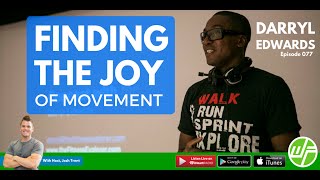
Podcast episode (Wellness Force Radio, episode 77) in which host Josh Trent interviews Darryl Edwards (movement specialist, founder of Primal Play). Core themes: reclaiming the joy of movement by replacing punitive gym-focused fitness with playful, functional activities (Primal Play); practical starting tactics (ripping up rule-books of sport, using partner-based resistance, trying bear crawls and deep 'hunter-gatherer' squats); translating childhood play patterns into adult movement; behavior-change framing (attitude, instant gratification vs delayed reward); applicability to parents/kids and trainers; concrete outputs mentioned: Darryl's book Seven Day Introduction to Paleo Fitness (translated into multiple languages), a Harvard Medical School talk, workshops/online training and community resources at primalplay.com. Tone is conversational, encouraging, and pragmatic.
Questions this video answers
Episode 77
September 27, 2016
Seven Day Introduction to Paleo Fitness
German, Spanish, French, Italian, Portuguese
A talk at Harvard Medical School (scheduled for December 9th, as mentioned)
Chapters
Wellness Force Radio Feelings are essential, but they can't dictate our actions. We literally infect each other with our emotions.
We came here for a special purpose. Let the purpose unveil itself.
Knowing without doing is the same thing as not knowing. They're not just trackers. I'm gonna wear this and it's gonna.
Help me do the right thing.
Wellness force radio episode 77 with best selling author and creator of Primal Play, Daryl it's making fitness fun.
That's really what it is. It's making fitness fun and it's ensuring that that individual can experience the joy of movement again. Many of us have fallen out of love with movement and we focus on fitness or exercise and then it becomes pain and punishment and kind of punitive measures in order to get fit. And what we should be thinking about is what we can enjoy that will get us there rather than what we need to do and endure to get fit. That's basically the crossroads. It's like endure pain, punishment or pleasure, enjoyment and fun. That's the difference. Primal Play is all about, you know, effective natural movement in a fun and functional and practical way. So you get all of those benefits you want. You know, I want to get fitter, stronger, faster, healthier. You know, I want to be more functional. I want to be more independent as I age. You get all of that, but the wrapper, it's all wrapped in fun.
Welcome back to another episode, my friend. I am your host and wellness coach, Josh Trent. Thank you for spending your time with me here on the podcast. This is where every week I bring you access to global experts in wellness, technology and behavior change. On this podcast, you'll learn from exceptional people who are dedicating their lives to driving real transformations in physical and emotional wellness. My intention with the show is that together we'll discover the connections between your emotions and healthy habits to live your best life and enjoy the process. This episode is brought to you by Perfect Supplements, a company I'm honored to stand with who walks the talk with their values of non GMO, pesticide free real food supplements that support us all on the wellness journey. Hop on over to perfectsupplements.com wellnessforce Enter code wellnessforce to save 10% off your entire order at checkout for episode 77, we're talking with my good friend and returned guest Darrell Edwards. He's the founder of Primal Play. He's a movement specialist, he's a nutritionist, he's a sought after speaker all over the. I got to sit down with Darrel for Round two, we dove into a little bit deeper layers of what it's like to be an adult, a functional adult in this society and still have fun with your workouts. How to create movements that actually feel good in your body, wherever you are. This episode is for you. If you're looking to find the joy in exercise, if you're looking to find the joy in movement and you're not really loving the gym, that's okay. I mean, we're all on this earth to find different flavors. That's why Baskin Robbins has 31 plus. And that's what this episode is all about.
It's.
It's finding your unique methodology as to what movements and what environments make you feel the best in your body. A little bit more about Darrell. He is the owner of Fitness Explorer Training. He's authored several books, winning awards for Paleo Fitness and Paleo From A to Z. He's also been published in Men's Health, Women's Health, Elle Magazine, Men's Fitness, and featured on the BBC documentary Eat to Live Forever. He lives in London. This is his second time on the show. So welcome to this connected conversation with Darrell on how to find joy in movement and. And get reconnected with your body. No matter how old you are or where you live, this episode is for you. Darrell, welcome to the show.
Hey, how you doing, Josh?
So great, man. You're coming at Live from London, talking to me here in Encinitas. And this is round two, man. You know, you were episode 14. I'm going to link that in the show notes. You've done so many incredible things in the past year and three months since we talked last. And you are actually one of the. I think you're number three as a repeat guest on the show, man. So we really appreciate you sharing your knowledge about Primal Play. We're gonna get into what that is. But my first question for you in the past year, Darrell, I mean, what's something that comes up, number one, number two, that you're most proud of, man, that you've done this year?
Yes, I suppose that would be me getting to speak at Harvard. Harvard University, Harvard Medical School. And to take what I do outside of the Paleo Primal, ancestral community. Cause that's really what I've been where I've been focused. And my mission for Primal Play is really the world at large. So to have a platform at Harvard Medical School and get people excited about movement is. Yeah, is definitely probably my number one achievement. Number two would be hosting an ancestral conference here in London, which actually Took place last weekend. So I have a conference called Health Unplugged. It's the third year running. Yeah. Just really proud of getting people to focus on this and living a healthier lifestyle. And, yeah, that's probably. Probably number one and two.
Well, those are two very big pieces. Harvard Medical School, your talk was on encouraging play to help your patients increase. That's going to be on December 9th. But when we look at the last show we did, you've made this beautiful transition into really serving people@primalplay.com. what is something, though, that people might not know about you? There's so much information about Darryl online. What's something fun that you might share with us, man?
I danced on stage with Janet Jackson. What?
Tell us about that.
There you go. Yeah, it was many years ago. So she was live in concert. She had some dancers on the stage, female backing dancers, and she was inviting guys from the audience, men from the audience, to kind of battle against her dancers. And she was the dancer basically demolishing anyone who's going on stage. I mean, absolutely tearing them to pieces. And my friend and I, who were pretty keen dancers back then, were like, we can't let you know the Americans come here and just take us apart. We've got to show them that the Brits can represent as well. So my friend and I kind of worked our way to the stage. He couldn't get to the stage. So it was literally me on the stage with several of her backing dancers trying to take advantage of me, and I basically was able to represent and do really well.
This is where primal play comes in hand. Right? If you're a good Primal Play advocate, you can dance.
Yeah, exactly. Dancing is definitely one of the influences for what I do now. And it was something that I did. I wasn't a professional dancer, but I really enjoyed it. It was a hobby. It was a lot of fun. And for a brief moment there, I was being invited to. To take part in a European tour. You know, people assumed I was actually part, that it was all staged and I was actually one of the backing dancers. And, yes, it was kind of my five or ten minutes of fame in relation to being on the same stage as Janet Jackson.
And, yeah, so fun.
I haven't revealed on podcasts before. So there you go.
Wellness Force exclusive. Darrel, thank you, man. Well, there's this awesome quote on your site, and I want to start our conversation about Primal Play and finding the joy in movement again. This is really powerful for you. When I read it and you stating your site, the Most popular day to exercise is tomorrow. Let's face it, exercise can be perceived as boring. It can be difficult to motivate ourselves when we're competing with an environment that encourages us to be sedentary. How do you feel like people are reacting to playing and exercise? This quote that I read here, the most popular day to exercise is tomorrow. From your site. Why do you believe that people deem exercise as not being able to be fun?
It's just all the signaling around us. If you look at all the marketing messages, if you look at all the kind of fitspirational posts around exercise, it's all framed around pain and punishment. No pain, no gain. My warm up is your workout. And so if that's what we need to focus on, we need to focus on the goals and the objectives, on working really hard. Enjoyment is very much a secondary or even not even a secondary factor. It's kind of pushed to one side. You've got to work hard to achieve the results you want. And I can understand why that is. It's like, yeah, if you do work harder, you'd like it to get better results. But not all of us want to or need to train like athletes. And I remember even for somebody who's really keen on exercise, the amount of times I'd be in the gym, five minutes into my workout regimen, just looking at my watch going, when is this going to finish? Do you know what I mean? I just can't wait until the end of this session. I can't wait to get into the Jacuzzi or the sauna or what's on TV whilst I'm on the treadmill. I'm more interested in that than I am undertaking the physical activity. So I recognize that even for somebody in love with movement or in love with exercise, it can be really difficult to maintain that love affair with exercise. So I had a very much a love hate relationship and most of it was a hate hate relationship. Actually not, not much love there. It was a hate hate relationship. I spent a lot of money paying for gym memberships at the beginning of the year and you wouldn't probably see me after February, you know what I mean? And the only organizations that would benefit from that would be the gym. The owners of the gym, they've got my membership, I've been paying it a year in advance and they wouldn't see me again. So in terms of self motivation, in terms of enjoyment, that just wasn't a really big part of my fitness regimen back then. And it certainly isn't a part of people's regimen.
For many today, do you feel like it's because they're. Maybe they're in the moment and it's hard for them to be in the moment because they're not used to the physical pain? Or is it a paradigm that existed way before they even worked out at all? Is it something that they learned when they began working, maybe in a cubicle job or, you know, how do they rediscover this?
I mean, exercise. If you think about it from a kind of evolutionary point of view, exercise is a substitute for the type of physical activity we would have undergone day to day. You know, we would have been hunting and gathering, building shelter, you know, kind of defending our family and our territory. And so we'd have to be significantly physically active. And you know, come the industrial revolution, come the agricultural revolution, come now, the tech revolution and the Internet revolution, are the levels of physical activity have declined so much that we have to create these almost artificial substitutes, exercise being one of them, for what we have been doing for millennia. And so if you think about it, I only would move because I had to. It's like, if I don't have to go and get any food, if I don't have to hunt for my food, I'm going to stay where I am. You know, I'd probably listen to music and dance a bit. I might have some rituals that I undertake, but pretty much I'm happy just staying put.
Sure.
Do you. I mean, I don't want to burn calories unnecessarily. You know, I want to conserve energy. So we were designed to conserve energy. We were built to conserve energy. And we would have that energy output for stuff that we was really, really important, either recreationally or because we had to. And now we're in an environment where life is just a lot easier for us. You know, we're, as you say, we're in a cubicle, we're in a box. We were in a. We commute in a box. Or whether it's a train or a car or a bus, whatever it is, you know, we're just boxed in. We go to work again, we're in a box. Even if we're in an open plan office, it's still, we're still boxed in. And then we decided to spend 30 to 60 minutes a day, a few times a week, to tap into physical activity because we know it's beneficial for us, but it's punishing and it's grueling, and the only outcome tends to be, you're going to get into shape, you're going to get a better body, you might lose some weight, you might improve your function, you might do some functional fitness and go, okay, I'm getting stronger, I'm getting faster. This is really important to me. But you've got to put in a heck of a lot of work to get there. And this is the problem. Go back to being a kid where I was very physically active and all my friends were, we didn't exercise, you know, we played, we were just physically active. If we were playing sport, it was like let's make up the rules as we go along, you know, and, and if it became boring, it's like we're not playing this anymore. Sure, it, you know, so it was when it became regimented and became drills and let's focus on techniques and let's focus on competition. Even my love sports just like dissipated.
I'm feeling like I'm seeing scenes when I'm a kid. We used to be in the park and we would set up like twigs and sticks and we would make, you know, forts and hide and go seek and you're right. I'm feeling like what's really going on, not just now but for the past 50 plus years is with technology and automation increasing, we see that our ease of life also increases, you know, our ability to have instant gratification all the time. You would have hated it. Darrel. I just got back from this vipassana. It was a 10 day meditation retreat where we didn't talk, weren't allowed to exercise and I was sitting for 10 days. But what came up for me there was how just incredibly wired our limbic brain is for instant gratification. And I'm feeling like, you know, this sense of delayed gratification where maybe with discovering the joy of movement, we take a little bit more effort in playing, we take a little bit more effort in finding this joy with movement. But how does this integration happen? I mean, how does this integration happen for adults that maybe don't know how to stick in this time for the joy of movement?
You know, I mean, that's a very good point and I'm glad you mentioned, mentioned instant gratification because play gives you that there's some intrinsic motivation right there. As soon as you undertake a primal play session, you're enjoying your movement on your participation in movements right away. You're not waiting until the end of your activity to get the endorphin rush, you know, the runner's high that you get after running, you know, your 5K and it's like, oh, I feel great now after that run. It's like, no, I want this immediately. And so again, children, if you think about children's attention spans, I mean, they're short to the point of almost being non existent. And so they want constant instant gratification to ensure there's some continuity with whatever that activity is. And of course, now we have these digital distractions that mean they can now swipe on a smartphone to get that instant gratification. Like, oh, yeah, this is really fascinating. Give me more, more, more, more, more. But back in, in our day, back in my day, that instant gratification was get outside, get outside and play. Come back when it's dinner time, Come back when I give, when I shout for you, when you, there's something on the table for you, and amuse yourselves. That's what I was told when I was young. My friends are told the same thing. So we would use the environment around us as our gym, as our playground. More importantly, we would learn about ourselves, those around us, managing and assessing risk. We would create rules and regulations that were fun. They were fun at times. Other times a little bit, we'd be kind of blurring the boundaries somewhat. But all in all, it was about having fun. And so thinking about nostalgia and going back to my childhood, I don't remember my friends, you know, my friends used to come around to, you know, to come and say, hey, you gonna come out to play? Yeah. I never remember on one occasion saying to my friends, you know what, guys, we played, you know, cricket or. Yeah, forgot. I'm talking to an American now. Played soccer for six, seven hours yesterday. I'm feeling muscle soreness today. I need to spend today having a stretch. You know, I'm not coming out to play because I'm feeling a bit sore. It's like, no. What was that? No, there was no. I never, ever remember having muscle soreness as a kid. You were straight back outside again because it was just so enjoyable and engaging. And it's not just about being a kid because we can achieve that right now as adults. That kind of pleasure in movement, we can all achieve. But the secret is another quote that's on my website is about, it's not the activity that designated as play, it's the attitude. Do you know what I'm saying? So most of us will say, oh, I'm doing this because it's really playful. It's like, that's not playful at all. Because your mindset's completely off. You know, your attitude is completely wrong. If Your attitude is right, then pretty much anything can become playful. But many people can't switch that play mode.
Darrell, you are bringing up something so powerful. One of the things I've been talking about with clients and on the show this year is how I made the transition from my 20s to my 30s. And you and I both know, man, like, hormones change, right? The body changes, and we get to be aware of our body changing, but we also, as you had said, get to be aware of our attitude. What I've been talking about is how do I have fitness and wellness and good body composition and health and vitality from a fuel place of love and trust and joy. Like, you're talking about that same feeling we had when we were kids instead of the current paradigm, which is honestly what fueled me when I was in my 20s, was looking good, getting my butt kicked in the gym, having the fear of gaining weight. A lot of people use the wrong attitude, the wrong motivation to be healthy, to be wellness. And so, absolutely, you're right. We have this power to use this fuel of moving and finding the joy of movement. But as an adult, what are those beginning steps? And maybe you can unpack, really what primal play is and how that relates to those first steps.
I mean, I suppose it's trying to find everyone has a play history, everyone has a background where play was a significant part of their life, was a priority in their life as a child. And it might be thinking about a game you played as a kid, you might be playing a game that you enjoy now as an adult or a sport that you enjoy playing as an adult, and literally just ripping up the rule book. So if you play tennis, for example, you know, I'm not much of a tennis player, but I tell you what I would rather do now is get onto a court and just have extended rallies and almost say, you know, what if the ball bounces twice? That's fine. Let's just keep the ball in play. Do you know what I mean? You know, it doesn't matter. Almost doesn't matter what we do. Let's just keep that ball in play, and before long, you're going to be smiling, you're going to be laughing, you're going to be, you know, you're going to be just thinking, what. What was that crazy shot you just did then? Doesn't really matter. Let's just keep going. And so just find something that you enjoy. Look at what your children do in terms of playful movement, and try and incorporate that into. Into your life day to day. It's looking for these opportunities. Opportunities for movement. Yeah, you know, you just don't know when these opportunities are going to. Are going to appear or surface. So if you're going out for a run and you see that there's a tree, you might decide, hey, you know what, let me try and climb that tree. Rather than just doing my sequential run. Let me, you know, as a friend of mine, hey, let me just try and piggyback, carry and take them, carry them for 10 meters and then continue with my run. You know, just trying to think about what you can do to interact with the world around you and interact with those who you're exercising with. That's the first step.
And with primal play, I mean, what would you say if you were walking and somebody saw you wearing a Primal Play T shirt and you were in an elevator? What would you tell them to kind of capture them and entice them into what primal play was?
It's making fitness fun. That's really what it is. It's making fitness fun, and it's ensuring that that individual can experience the joy of movement again. Many of us have fallen out of love with movement, and we focus on fitness or exercise, and then it becomes pain and punishment and kind of punitive measures in order to get fit. And what we should be thinking about is what we can enjoy that get us there, rather than what we need to do and endure to get fit. That's basically the crossroads. It's like, endure pain, punishment or pleasure, enjoyment and fun. That's the difference. Primal play is all about effective natural movement in a fun and functional and practical way. So you get all of those benefits you want. I want to get fitter, stronger, faster, healthier. I want to be more functional. I want to be more independent as I age. You get all of that, but the wrapper, it's all wrapped in fun. It's wrapped in instant gratification. It's wrapped up in what the body responds well to. So all these hormones that respond to physical movement, the endorphins and the dopamine and the serotonin and all those kind of feel good hormones are tapped into immediately as well as all the other side benefits of exercise. Do you know what I'm saying? So absolutely, I'm not thinking about the fun of movement. It's also the outcomes of movement which are going to be, you know, lower blood pressure, you can have a better lipid profile, less likely to be depressed. You know, you're going to be less likely to die prematurely. There are all these bonuses that come from being more physically active or being less sedentary. And I'm just trying to find a way of almost misdirecting people and saying, hey, do you know you just did some high intensity work there, but you were laughing throughout it, you know what I mean?
And then it doesn't even feel like they're working out. It just feels like they're enjoying the process. You know, I had this from you in person last year at a friend's home. You had me doing these like slap routines and then you said, hey, see if you can pull me across the room. And I could not budge you. You were like the Statue of Liberty. You're so strong, man. Do you feel like the years of training and just playing on your site, you say, hello, I'm Darrell Edwards and I play. Do you feel like all these years of playing have gotten you stronger? Or do you even touch a gym? Do you touch any weights? Or do you just do functional fun movement?
Yeah, I only do functional fun movement now. And it isn't just bodyweight activity. It's usually partner based resistance. So that's one way of getting, of getting stronger because you're increasing the load that way. And in terms of additional weight, I mean, if I'm five and carrying someone and going for a run, I mean, that's significant load right there that I'm having to carry. You know, I'm going to be carrying somebody my body weight or heavier for a great distance. That load on the body and that instability that occurs is far greater than me using an Olympic weight in the gym. So people are often dismissive because they say, how can something that relies on just your own body weight or that and say, a partner be as effective as the load that you can see in the gym environment? The main answer to that is, well, this is constantly unstable. You're constantly being challenged and unprepared for this because every single time you interact with that stimulus, it differs. If I find and carry you, it's not just about the fact you might weigh 90 kilos, say, or 200 pounds, 180 pounds, whatever it is, it's not the fact that it's 180 pounds fixed weight, your dynamic, trying to grip your body, trying to carry you, trying to hoist you in one position or the other. Everything's uneven and imbalanced, so you have a greater physiological response. And that's the kind of beauty of this type of movement. It's constant adaptation. And when you look at children once again, they're naturally flexible, they have a great power and Strength to weight ratio. It just happens. The coordination improves. They're agile. There's so much vitality. And then society says, and adults say, okay, we've encouraged you to move, now just sit down. You know, we encourage you to crawl and to climb and to walk. But now that you've complete, you know, conquered those. And now I want you to stay in your high chair and I want you to stay in your room and don't move because I'm overly concerned about you moving. So once that happens and they go, ah, there's not much fun to movement anymore because now I have to be kept isolated. We carry that into adulthood. And, you know, with chasing, we were constantly chasing this. Look at obstacle course racing. You know, we're constantly trying to add this fun element into stuff, which is pretty much inherently boring. It's like, you know, running just running a marathon isn't fun enough. Let's add some obstacles, let's add some climbing, let's kind of add the sort of stuff we do as kids. But even then, it becomes a challenge and it becomes a, look how tough I am.
The ego comes into play. The competition piece comes in. Yeah, yeah.
The ego, the competition. And so it becomes. It may start out as being fun, but it quickly turns to, let's just see how amazing I am in comparison to my peers. Rather than it just being all in, all out and out fun.
Yeah.
There is something not quite right with conventional fitness. Part of it, because it just doesn't sit in. It's just not in tune with our human nature, and that's what's broken. And so not everyone can really take the play ethic on board. You know, if you're a professional athlete, if you're a weekend warrior, and that's really important to you, then you haven't got time to mess around. You've got to just focus on getting work done. But if, like most of the world's population getting increasingly sedentary and just sitting down and watching TV and playing with and watching, you know, browsing the Internet, if that's what you're doing, because you're not. You don't want to go to the gym and you don't find it funny or engaging, then play and primal play is a way of getting you out of that rut.
I think you brought up a great point when you talked about attitude. I'm thinking about, yeah. You know, with the right attitude in place, I mean, almost anything can happen, including fun movement. What is kind of the internal narrative of Daryl Edwards? I mean, what do you tell yourself from the beginning when you were, you know, in episode 14, we'll link that in the show. I don't want to spend too much time on that. You were a technologist in investment banking. You left this financially secure career. You went through a myriad of health issues, and you found movement in those first kind of initial years when you were finding that joy in movement. What's the attitude and what's the internal narrative that you told yourself? I mean, how did you transition from exercise sucks to play is fun?
Well, initially, I was just fascinated by the fact I was getting stronger and fitter. And for someone who was never kind of a jock, I was a nerd. That in itself was fascinating enough. It was like, oh, my goodness, I can do some of this stuff. I had no idea. I can deadlift a really heavy weight. I mean, this is incredible. So that fascination and that honeymoon period lasted quite a few years. But I recognized that what I was doing was taking my career hard work ethic in investment banking into the gym. And so, you know, the gym, my work was all based on merit. The harder you work, the more you were rewarded. And I put that into the gym environment, which suited me to a T. That was just what my personality was all about. I would be very dissatisfied if even the fittest individual beat me in the gym. I'd be like, no, that's not good enough. You know, I need to be number one. I need to be the winner. And of course, that led to injury. It also led to me starting to dislike the training regimen I was adopting. You know, that initial path of improvement doesn't continue. You start hitting a plateau where you go, I'm not getting any stronger, I'm not getting any faster or fitter. So those early gains that I had that honeymoon period just didn't last very long. I recognized I wasn't going to be doing that until the end of my days. I just started to think about what would it take for me to jump out of bed in the morning and to think, I can't wait to be physically active today. You know, I mean, I can't wait to engage in some sort of enjoyable movement. And it was definitely play. That was a light bulb moment for me. It was like, yeah, I need to enjoy what I'm doing and I need to embrace the play ethic. And I recognize that it wasn't just about physical activity. Everything was going to change based on that fact. You know, my. My attitude changed, my interaction with others changed. I wasn't as serious as I used to be, you know, I was having more fun without having to drink alcohol or to do you know what I mean? It was like I'm just becoming naturally more effervescent and exuberant because my approach to movement has spun off into wow, you know, life is far too serious. Life is far too complex. Let's make it simpler, let's make it more enjoyable and mindful and engaging. And so that was the key for me.
We'll get right back with Darrel. You know, on our wellness journey. It's so important now more than ever with our jam packed schedules, the practice of self care and self love for both the body and mind. Darrel is talking about the movements that our body is hungry for, but our body's also hungry for the right nutrients to give our bodies what they deserve and need. I've hand selected three of my top superfoods from Perfect supplements in a Wellness bundle specifically designed for the Wellness Force Radio audience. Inside the bundle, you'll receive Rhodiola Rosea to elevate mood and calm stress prescript assist prebiotic and probiotic to keep our guts healthy and squeaky clean and 100% grass fed hydrolyzed collagen for satiety, skin and joint health. You know, we've talked a lot about, if you're on a Paleo or a Weston A Price diet, you're probably familiar with bone broth. Bone broth is that nutrient dense food because of the gelatin it's produced when you cook the bones. Well, gelatin is just cooked collagen. It's an abundant source of protein. It's included in the Wellness Bundle. Hop on over to perfectsupplements.com wellnessforce. Click on the Wellness Bundle and save 10% off your already heavily discounted package. Get some good health and save some money in the process. Let's get back to movement with Darrel. When one thing changed, everything else changed too. You started changing your attitude towards being not so competitive in the gym, Darrel, and not so competitive about fitness. And you started to focus on just enjoying the process, trusting the process. I mean, that's what we focus on with Wellness Force. So much, man, is behavior change and trusting and enjoying that process of becoming the better version of ourselves. Was there a certain event, man, when you look back at your life, was there one thing or a person or just something that happened where you felt, wow, that was a big turning point for me.
I suppose it was when I was questioning the type of fitness I was doing which was based on functional fitness. You know, so for example, I, I could do pull ups and muscle ups in the gym, on rings and on the bar. And I remember having facing a challenge which was actually quite serious of being chased and trying to climb a wall.
Was somebody trying to rob you?
A friend and I were being chased by people who just didn't, didn't like the look of us. And we got to a wall and it was like, oh, this would be a piece of cake to climb this wall. And it wasn't a piece of cake. And we both struggled. I remember, you know, fortunately we got away and everything was fine, but I couldn't, I had to boost my friend up to climb the wall and he couldn't pull me up. So I was like, you know, what about our training was useful to us in a real world situation? And you know, that's when I started to question what I was doing. It was like, I can do 20, 30 pull ups in the gym and I can't pull myself up once when my life depends on it. On a wall that isn't much higher. You know, I can literally grip the top of the wall with my hands, but yet I can't pull myself up. You know, it's like, what, what the heck's going on? And I kind of understand now why that is. But at the time I was like, oh, I thought I was doing something really functional, but it's not translating to the real world. It's not translating to something practical. And something else that happened to me was trying to deadlift my friend. So remember, my deadlift became 190 kilos. So I think it's about a £420 or something like that. £430. And I couldn't, I couldn't pick up my friend who was half that weight, like deadlift. I couldn't deadlift my friend who was half my 1 rep max with Olympic, Olympic weights. And so I was like, why, I don't understand why I can't lift him up off the ground. You know, there's something about my training which isn't that effective. And so I recognize I had, my training had to change to become more fun, more real world functional. And I also wanted to enjoy it. So me attempting to, me just trying to attempt to lift my friend off the ground was actually quite a lot of fun. You know, it was like, wow, this is really fun. It's really challenging. And you know, we're both kind of cracking up, like, hey, what's going on? Why can't you pick me up? Why can't I pick you up. And so it just became inherently faithful. And I recognized from that moment on, my training has to become just like this. That was the moment where things just became real for me.
In your book, you have this book, seven Day Introduction to Paleo Fitness. It's on Amazon. We're going to link it in the show notes today and it's going to be@wellnessforce.com primalplay but this book, Darrell, I mean, you list out what you believe from years of training as I think around 10 or 20 exercises that are really key. One of them is the bear crawl. Why did you put in the bear crawl? I think the bear craw bear crawl is like everyone's least favorite exercise. When I was in football, I remember in high school in football, our coach would make us do the bear crawl and everybody would look at each other and just go, oh my God, what's going on right now? But why did you choose the bear crawl? I mean, we'll go ahead and link that too.
Yeah, the bear crawl. Yeah. I mean, I mean, basically every single part of your body is working and engaged when you're doing a bear crawl. You know, the core is working, the shoulders, the legs are working. Coordination and agility is involved. You've got to be fairly balanced, equally balanced on either side. So it takes a lot of brain power as well as physical power to undertake this movement and to undertake it really well. And so what I try to do is to find one movement, which is almost a whole body movement, where everything is working in various planes. And something like the bear crawl kind of covers that, you know, and it's very, it's very easy to undertake the movement, but there's a lot to master with it as well.
Sure.
So pretty much anyone can do a bear crawl, but it's starting to learning how to control your body, how to ensure that the movement becomes really efficient, how it becomes graceful, how you start walking more like an animal, you know, kind of soft impact, moving with kind of speed and grace and control. All of these qualities that are often dismissed by, you know, just get it done, just get it done. Actually, whoa, whoa. Actually, no, let's get this done in a way that's going to be helpful to the body rather than just punishing.
Another exercise I saw in there, we don't have time to go over all of them, but just the last one I want to talk about is this hunter gatherer squat. What's the difference between the hunter gatherer squat and the traditional bilateral squat in the gym?
Yeah. So, I mean, People just find it very difficult to go into a very, very deep squat, especially in the Western world. So around the world, people sit in a deep squat position and can stay there for hours. They cook food, they prepare. They have conversation and discourse in this position. And then us in the west have chairs to rely on. And many of us kind of have difficulty getting below parallel. And so people go into the gym, thrust some weight on their back and go to their knees or just below parallel and go, hey, yeah, I'm squatting, and I can squat really heavy, not realizing that I've got a weakness in that kinetic chain and that posterior chain because they're not going through the full range of motion. So I find a lot of people just find that movement really, really difficult to do. You know, nice, strong, neutral spine into a deep squat position. They find that really difficult to do. So it's almost mandatory. It's something that we would have done for millennia, again, without having to rely on when we didn't have to rely on chairs. Do you know what I'm saying? So if you can master that, then you know, you have mobility, flexibility, strength in your lower back. You know, you're not going to be tight in your calves if you can keep your heels flat. And really good mobility and flexibility, strength in the ankles. So there's all these. All these areas that are worked, even just getting into from a standing position, into having to gather a squat position.
This is what's so exciting, too, is that if you're listening and you don't like the gym, if you kind of feel this negative energy come up as you're listening about the gym. The beauty of primal play is that it involves just being outside. And this is a perfect time for a question. We had a couple social media questions. One of them was from Melvin. He asked Darrel, when I try to crawl and do some of the movements I've seen from primal play, I always feel like I'm doing them wrong. How do I get more confident to move? Because I feel like I'm an old man at 27.
Right? So first I would say grab a hold of my books. They will give at least some good teaching points around some of those movement patterns. Attend a workshop or a seminar that I host, and in the future, to make it even easier, I will be having some online training so that people can get something a little bit more specific around these movements. So, yeah, as I say, a lot of people, they may watch a video or read some instructions, go, oh, this is really easy. This is really simple. And not aware of those really detailed cues that will make all of the difference. And what fascinates me about humans is it's very rare that you see, say a dog or a cat or a wild animal not moving very well. They pretty much the entire animal kingdom in whatever their domain is, move extremely well. If they're not injured, okay, they're not injured, or they haven't been attacked or whatever, they move really, really well. You know, a kangaroo jumps incredibly, you know, a monkey climbs really well. You know, a dolphin swims like a dolphin, you know, but with human beings there's such a diversity of movement capacity and a lot of people have just lost their instinctive ability to move well. So even something like a bear crawl, which is just the ability to crawl on all fours, that should be something that we shouldn't have any problems doing. We would have had to do that keeping prone, keeping very low to track animals as we're coming in for the kill. We've just lost that ability. So part of primal play is making that accessible again and saying, hey, this is how we can do this in a fun way to regain some of that movement capability back. You know, not about elitism, not about trying to achieve things which are the impossible. But saying some of these movements should be really, really straightforward. And think about how easy it is for a toddler to do something like that. Do you know what I mean? And the only reason why it becomes difficult is because it's just use it or lose it. And often we tend not to use it. So for that 27 year old, I would just say you've just got to go backwards to move forward. You've got to treat these movements, which look really, really simple, with a lot of respect. Just slow things down, focus on how the body feels, focus on what you should be getting out of this movement in terms of the feedback that you should be getting from this. And then everything will start resetting itself and correcting itself naturally. You know, that's what we've lost touch with. It's not how something looks, it's how something feels. And if you reconnect with that, then things will just start falling into place.
It's about the attitude again. I feel like in our interview there's been this constant return to the present moment, the awareness of how the body's actually feeling. I think a lot of people can resonate with the fact that maybe their day is so busy, Darrel, that a workout becomes just a tick of a box. It becomes something that they just do because they know they should, but there's no real joy in it. And this is actually another question from Cindy from Twitter. I have two kids, 7 and 9, who play video games. How do I get them to play outside like normal kids?
Kids. Basically, kids should be one of our sources of inspiration when it comes to playing or being more playful. But if you look again, if you look at the animal kingdom, there comes a time where the older animals will be less playful. There comes a time when animals do lose that natural ability to just be like, hey, hey, I just want to continue playing and having fun. They maintain that for longer. When a panther's playing with their cubs, they don't say, hey, cubs, just go and play and we'll just spectate. You know, they're interacting with their offspring. You know, they're engaging with their offspring, they're actually having fun with their offspring.
They're rolling around, they're scratching each other.
Exactly. And so, you know, some of the most fun I had when I was a kid wasn't just when I was playing with other kids. It was also when I was playing with adults. You know, my uncles would be throwing, you know, wrestling, you know, when I'd be climbing, like, you know, my dad, like a climbing frame, you know, when I'll be going on piggyback rides. You know, all of that stuff, that interaction with adults, they start to feel, you know, that I'm sure that reminds me of their childhood as well. You know, they're having fun, engaging in movement. And now, unfortunately, there's so many parents who believe spectating is enough or paying a coach to teach their kids how to play. Structured, supervised sport is doing is ticking that box. So, yeah, I would just say there's more to it than just, you know, looking at kids and going, hey, let's just copy what kids do. It's actually, you should be doing that with your kids. One, you know, you should be inspired by your kids, but most importantly, they should be inspired by you. And if you're not teaching the lesson that when you're 27, 37, 47, or however old you are, if you're not teaching them that, it's normal to actually have lots of fun when it comes to movement, and all they hear from you is, oh, you know, slumping into the chair.
Oh, that really tough situation, my back hurts.
My back hurts. I mean, oh, the doms. I don't want to get out of bed because I get all this muscle soreness. If that's all they hear from you, they're going to associate that exercise with something which is, again, painful and punishment and something that they want to avoid. It's like pain avoidance. So, yeah, we've got to be careful on the messaging to our children and to those close to us.
I feel like kids watch more what parents do than what they say.
Yes, of course they do. Of course they do. And, you know, even if they don't, you know, whatever happens in that, in that child's life when they become an adult, even if they don't, you know, they're going to come back to that at some point. Even if they rebel and they get their sedentary for a while or whatever, they're going to come back to those. Those fundamental lessons that they were taught. And why was my, you know, with my children, for example, the one thing they definitely recognize is how much full of life I appear to be compared to some of their friends, parents.
You're so energetic, man. It's incredible.
And trust me, I haven't always been like this. I haven't always had that personality. I suppressed that for many years, pretty much most of my adulthood. I was like, no, I'm really serious. I've got to get work done. There's no time for fun. I've just got to make money, you know, that was it. And now I realize, no, you know, fun shouldn't be a dirty word. And fun shouldn't just mean me going out at the weekend and having lots of drink. You know, play becomes let's play poker, let's party. That becomes again, a supplement for play, substitute for play. And it's because we're just crying out for what is really meaningful, deep and meaningful when it comes to movement. And we're all enriched by that. So, you know, I don't want to spend too much time focusing on our ancestors. But to be fair, it's really important. These movement rituals, these rituals that take you from being a boy to a man or a girl to a woman, you know, a lot of those rituals involve some sort of movement, some sort of physical activity to designate that transition, you know, whether it's finding your future mate, your future partner. In the west, we might go clubbing.
Or, you know, I'm on match.com?
Yeah, yeah.
Or bumble. Bumble is interesting.
But yeah, it's even that ritual of going to a discotheque, you know, which would have been, you know, a generation ago, has become. No, I can just swipe on a screen to hopefully find my partner.
The instant gratification.
Yeah, instant gratification again. So, yeah, I think movement is medicine. And it doesn't have to be medicine, which is a bitter pill to swallow. And I think that's the important point. We can get all of the benefits we want from this medicine without the pain and the punishment. You don't have to add some sugar to the medicine to make it easier to swallow. It can be sweet and enough as it is.
I love so much your explanation about the joy of movement and what I'm hearing from you in the whole interview, honestly, is going back to what's real. Going back to giving people the emotional home to just enjoy the movement, to just be there. Take responsibility for the energy that you bring into the room. Take responsibility for the model you set for your kids. You know, do you play with your kids? Do you have a relationship with yourself where you give yourself the permission to just play? And I want to thank you for your work, man, so much. This is the last part of the show. It's seven questions for seven top of mind answers. Are you in?
Yeah, of course I am.
Number one, what makes you laugh, Darrell?
Oh, on tv. Impractical jokers. If I'm watching, pretty much any live comedy makes me laugh. There you go. Those are probably two answers to that.
Number two, how do you stay healthy and energetic when you're flying and traveling on the road?
I still try to eat well and I still try to move well, even when I'm traveling. In terms of sleep, I try to adopt some really good kind of sleep hygiene to minimize the damaging effects of travel and jet lag.
How do you minimize jet lag the most? Do you use any devices? Do you have any practicums for bedtime rituals?
I try to adjust before travel. So depending on the time zone I'm going to, I will actually adjust my sleep, either getting up later or going to bed earlier or the other way around, going to bed later and waking up earlier. So depending on the time zone I'm going to, and that usually might save me two or three days recovery at the other end. So I'm quite scientific about that now. Getting bright light at the right times, eating at the right times to make that transition a little bit easier to deal with.
Number three, what's one of the biggest roadblocks you see for fitness trainers that might be listening when it comes to embracing more natural movement and play in their training?
I suppose it's just the fascination with using the next shiny piece of kit. So I think that just becomes a distraction. The only way to get fit is by using this kit, whereas for most people, they just need to get in tune with themselves first. They don't need any additional kit. They just need to start moving. And it's very difficult to sell that. Do you know what I'm saying? Just to get out of a chair. For some people, it's going to be all they need to do in the short term. So that's very difficult to sell to a client, that sort of message.
Do you have a favorite piece of fitness or maybe wellness tech that you use personally? Any trackers or devices? Right now, I use a watch.
I'm not going to mention who it's by, but you can probably guess. But I use a watch that I track my heart rate, I track my calories burnt. I don't care how accurate it is, as long as the heart rate's accurate, then I'm happy. But in terms of calories burned, I just use that as a way to gauge how active I am compared to the previous day. I can't say that keeps me motivated to move, but it does make me kind of go, hmm, you know, I haven't done as much as I did yesterday. Let me. I'll just go for a walk just to get a few, you know, get a few more steps in today.
Yeah.
So, yeah, I don't get obsessed with tech, but a mild prod every now and again I think is really good, you know, really good for most people.
Do you feel like that helps with. Even yourself, where you have a life built on planning play that. It helps you with building that musculature in your brain for delayed gratification.
I suppose there's something around quantifying what you've done to have some sort of method of tracking that what you're doing is actually beneficial for you. So I believe having a low resting heart rate is really beneficial. Having a good VO2 max. These are all markers for longevity. They're markers for fitness, your level of fitness. And so the only way I'm going to know what they are is by having some record of that, you know what I'm saying? So, yeah, so there are going to be some metrics that I feel are really important to me, but I try to base those, again, on health markers, not just on the numbers themselves. So I don't care if I can lift 240 kilos in my deadlift, that number doesn't necessarily mean much to me. What will mean something to me is if my car breaks down, can I push it? If my partner is injured, can I pick them up and carry them to safety? If I'm, you Know, in danger, can I sprint? You know, those things mean far more than me recording my 100 meter or 100 yard dash time. Who cares? You know, that's my opinion. Who cares about that? You know, I care about can I actually run, sprint 100 meters? Can I run for a mile without there being any issues? Can I climb a tree, climb a wall, carry my partner, you know, push my carpet brakes down, jump as a given distance to jump to safety, whatever it is. So those, yeah, those experiences and capabilities are important in the metrics.
What is wellness? If you were going to define wellness, what's your personal definition of someone that has wellness?
I would say complete balance between the physical health, mental health, social health and spiritual health.
Darrell, thanks so much for coming on the show, man. For round two, this has been a phenomenal conversation. We're going to link everything@wellnessforce.com primalplay. You have your seven day introduction to Paleo Fitness book. Is there anything we didn't cover about making movement fun?
I think we covered it in and in a lot of detail there, Josh. I mean, you've been a fantastic host and you make it really easy for me to talk about this sort of stuff. So hopefully I haven't been rambling on too much.
But I love the rambles.
I suppose the only thing to add is in relation to that book, seven day Introduction to Paleo Fitness. If there is anyone listening where English isn't their mother tongue, I have that book translated in several other languages. German, Spanish, French, Italian, Portuguese. Yeah, and a few others. So yeah, I'm trying to thread this message not just to those who speak, who speak English, speak and read English, but to those elsewhere in the world as well.
Man, I experience you so connected to your purpose. Like there's no hesitation when I hear you speak or the energy that you pull from. It's really inspiring.
Oh, thank you, Josh. I appreciate it, really, I really do. I'm so glad. I couldn't believe it's been 15 months. I really thought this. I know, I know it's crazy this year or something. I'm like, I'm sure it was about six, seven months ago and.
But it's been a year plus. Well, thank you so much for your work, man. You're helping people be strong, be practical, be useful and getting people back in touch with their body. So thank you for what you do, man. Really appreciate it.
Thank you very much, Josh.
That wraps episode 77 with Darrel. You made it to the end of the episode. Of course, everything we talked about today and more with bonuses. About Daryl's book can be found@wellnessforce.com Primal Play Check out Darrel's seven day introduction to Paleo Fitness book. You can also learn more about Darrel. We'll have some videos and some downloads on the Show Notes page. Some really exciting things for Wellness force coming in 2017, I'm excited to say I'm launching the Ambassador program for Wellness Force Ambassadors. If you are a yoga instructor, a nutritionist, a primal lifestyle enthusiast, if you're a fitness trainer, maybe you specialize in massage therapy or a professional who who loves behavior change, anything at all that's under that Wellness World umbrella of helping people live life well, reach out to me. I'm formulating the team right now. Some of the bonuses are going to be getting your message through the Wellness Force website as well as some Wellness Force hats, T shirts and swag. Really awesome stuff and a way to grow our mutual message of empowering lives through wellness, technology and behavior change. So if that sounds like a good fit for you, reach out to me. Me joshellnessforce.com just make your email header Wellnessforce Ambassador Next week on the show, I'm sitting down with my friend and founder of Organifi and FitLife TV and vegetable juicing. This guy is a powerhouse in the world of health and wellness. If you haven't heard of him. His name is Drew Canole. He is a great inspiration for everyone that's involved in healthy living and he's going to come on the show to talk about wellness and purpose. We're going to be talking with Drew about his incredible life story, the obstacles he had to overcome to first transform himself before now serving millions of people through his business and his mission at Organifi and more. So definitely stop by next week for the full conversation with Drew Canole. Now all you have to do is go out and create an amazing day for yourself and the people you come in contact with. With all the inspiration from Darrell on how to Move well and everybody other guest we've had on Wellness Force Radio. So until I see you again real soon, I'm wishing you love and wellness.
More from Josh






Your child's future start before pregnancy... and even before conception! #podcast

MD Reveals: Your Healing Creates Your Child's Reality (The Souls Coming In Need Strong Bodies)



