The GRAIN BRAIN Whole Life Plan | Dr. David Perlmutter
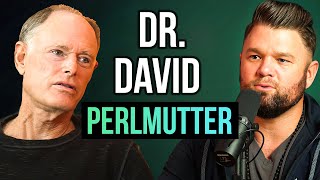
Podcast interview (Wellness Force Radio, Episode 84) with neurologist and author Dr. David Perlmutter recorded for the November 15, 2016 launch of his book The Grain Brain Whole Life Plan. The conversation connects Perlmutter’s prior work (Grain Brain, Brain Maker) to actionable guidance: reduce inflammation by improving gut microbiome health, lower refined carbohydrates and sugar, increase beneficial dietary fats (olive oil, coconut, wild fish, nuts), prioritize daily aerobic exercise (≈20 minutes) to raise BDNF and reduce Alzheimer’s risk, and address lifestyle factors (sleep, stress, gratitude). The episode stresses that type 2 diabetes and microbiome disruption elevate Alzheimer's risk, that many neurotransmitters (≈90%) are produced in the gut, and offers practical steps (remove gut stressors, add prebiotic/probiotic foods, diversify microbiome, exercise). The episode includes personal anecdotes, APOE genotype discussion (APOE4 increases Alzheimer's risk), and a CTA for a free video when the new book is purchased.
Chapters
Wellness Force Radio Feelings are essential, but they can't dictate our actions literally instruct.
Each other with our emotions.
We came here for a special purpose.
Let the purpose unveil itself. Knowing without doing is the same thing as not knowing. They're not just trackers. I'm gonna wear this and it's gonna help me do the right thing.
Wellness force radio episode 84 with physician and New York Times best selling author Dr. David Perlmut.
Our dietary choices play a major role in determining whether we are going to live into our 80s and 90s and even beyond with a good functioning brain. Or like 50% of people who live to be age 85, we will experience brain decline in the form of Alzheimer's. What I'm saying, Josh, is it is a preventable disease. And it's not just that. Dr. Perlmutter, your guest on the program is telling you that it's because that's. That is what our most well respected peer reviewed medical journals are publishing. Yet we don't hear about it because it's not a magic pill.
Welcome back to another episode, my friend. I am your host and wellness coach, Josh Trent. Thank you for spending your time with me here on the podcast. This is where every week I bring you access to global experts in wellness, technology and behavior change. On this podcast, you'll learn from exceptional people who are dedicating their lives to driving real transformations in physical and emotional wellness. My intention with the show is that together we'll discover the connections between your emotions and healthy habits to live your best life and enjoy the process. This episode is brought to you by Perfect Supplements, a company I'm honored to stand with who walks the talk with their values of non GMO pesticide free real food supplements that support us all on the wellness journey. Hop on over to perfectsupplements.com wellnessforce Enter code wellnessforce to save 10% off your entire order at checkout. I am so pumped for you to listen to this fresh brand new show with Dr. David Perlmutter. On this episode, Dr. Perlmutter is going to uncover how we can reduce and control inflammation in our bodies for good. How to turn our body into a fat burning machine by eating fat. How to balance levels of beneficial bacteria in our microbiome, balancing our hormones and increasing our leptin sensitivity. How do we get back in touch with when we're really hungry or when we're stress eating? How to take control of your genes and balance our life. We're gonna dive deep into the chapters of his new book coming out this morning, November 15, the green brain Whole Life Plan and really uncovering how inflammation is always traced back to gut health. If you've been curious about gut health or the microbiome or how that relates to depression and our mood and energy, this is the show for you. There were so many moments during this interview I literally had chills and I don't say that about every episode. This was really special. Dr. David Perlmutter not only has almost 40 years of service to the medical, fitness and wellness community, but he also has a unique blend of history story and emotional investment in why he cares so deeply about your and my brain health. And it all starts with the gut. Now, before we get into Dr. David Perlmutter, I wanna read a five star review that we got on itunes this past week. This is from if youf Wanna Fly listener Justin Hammer. Justin says if you know what changes a heart, then you know what changes the world. Marianne Williamson that is the definition and shockwave that Josh Trent and his podcast offers to its listeners. Raising vibrations with affirmations. Offered here are a powerhouse of dynamic living and breathing resources that we can all live life from with ultimate joy, passion and purpose. Synchronicity, alignment, elevation and balance come in many forms. Taking time for loving, reloading, reaffirming and detoxing the most important parts of your mind, heart and inner verse while embracing your passions here at Wellness Force. Living in the light of what you love is where all life becomes and transcends into the beauty of loving life and all that is you. Peace like a beacon. Justin Hamm Justin, thank you my man. Digital hug. Digital high five. So appreciate your powerful voice. Support WellnessForce by going to wellnessforce.comreview. i want to read your voice live on the iTunes airwaves and it helps others find the message of Wellness Force Radio. All right, here is Dr. Perlmutter's bio. Dr. Perlmutter is a neurologist and Fellow of the American College of Nutrition who received his medical degree from the University of Miami. He was awarded the Leonard G. Roundtree Research Award and is the author of multiple bestselling books including the Better Brain Book and the number one New York Times bestseller Grain Brain and Brain Maker, which was also a New York Times bestseller. He has been on Larry King, cnn, Fox News, Fox and Friends, the Today Show, Oprah. I mean, honestly, any television show or radio that serves millions of people, he's been on there. And the cornerstone of Dr. Perlmutter's work is his unique approach to neurological disorders and and founded in the principles of preventative medicine. He has brought to the public awareness a rich understanding that challenging brain problems, including Alzheimer's disease and other forms of dementia, depression and adhd, may very well be prevented with lifestyle changes, including a gluten free, low carbohydrate, higher fat diet coupled with aerobic exercise. Okay, no further waiting. Let's get into this Inspiring interview with Dr. David Perlmutter. Dr. Perlmutter, welcome to the show.
Well, I'm delighted to be here. Thank you, Josh.
This is gonna be so much fun. Today we're talking about not just brain and cognition health, but nutrition, weight loss, and most importantly, creating habits that will empower sustainable behavior change. So I'm so excited. Thank you so much for coming on and sharing your knowledge with Wellness force Radio.
Again, I am delighted to be here. It's a very special day.
This day is special because it just so happened the stars align and we were talking before we recorded. This is the day of your book launch for the grain brain whole life plan. Everyone's gonna pick up this book. We're gonna have a very free and awesome gift. At the end of the show, Dr. Perlmutter is gonna talk to us about. But before we get into your work and before we dive into these layers, Dr. Perlmutter, what is something fun that most people don't know about you?
Well, truth of the matter is, Josh, you gave me a little bit of a heads up on that. I had about 30 seconds to think about it. And I think the fun thing that I do for me is I love to spearfish. So I'm in south Florida, and that's what our sport is. We love to go out of the boat, free diving, no tanks, and hyperventilate on the surface, go down, shoot a fish, bring it home, and that's dinner. So what can I say? That's the best I could come up with.
That is the most primal thing I've ever heard from a physician. That is awesome.
It is primal.
Well, to start us off here, I mean, a lot of people have heard of you. You've been on Dr. Oz. We talked about in your bio intro for the past 35 years, you've been interviewed on essentially almost every TV and radio station out there. But share with audience why you became in the very Beginning, you know, 30 plus years ago, a physician and specifically a neurologist.
Josh, the real, I think, impetus for me was basically trying to connect with my dad. I think a lot of us do that in our chosen careers. And he was a very well trained, highly successful brain surgeon. And so I became really interested in the neurosciences at an early age. We would talk about the brain. And truthfully, when I was even 13, 14 years old, he used to take me into the operating room and I was too short to even see what was going on. So I'd stand on a couple of stools and actually help him take out brain tumors in the day when there was less litigation going on with. That's sort of.
Wow. At 13, you were helping him take out tumors.
Yeah.
Interesting.
Truth be known. And so I developed a really keen interest in the brain and neurosciences at that age. And again, as mentioned, we, a lot of us do things so that we can cultivate a way of getting closer to our parents. And I know retrospectively that that's one of the reasons that I did that. My dad always instilled in us a sense of giving back. And so I knew I wanted to choose something of service with my life and with the background that I had, it was pretty straightforward that I would go to medical school, and I did, and became a physician and became a neurologist interested in the neurosciences. But I'm going to go ahead and answ answer a question that you haven't asked yet and. But. And that it sort of paves the way for your next question, which could be, well, what changed, though? Why did I not just stay in mainstream neurology?
And sure, you read my mind. That was a beautiful segue.
Yeah, yeah. Because truthfully, you know, There are about 27,000 mainstream neurologists in America, and, you know, I think what they do is great, but it wasn't for me. All I did when I first finished my residency in neurology, went into practice, was became very skilled at using drugs and other modalities to treat symptoms of disease. Never treating the disease itself, only treating the smoke, but ignoring the fire. In other words, giving medications to Alzheimer's patients to calm them down when they would become frustrated, giving medications to Parkinson's patients who had a tremor, meanwhile ignoring the underlying Parkinson's itself, giving medications to children with epilepsy, but ignoring the fact that, guess what? This epilepsy could be caused by something as simple as being sensitive to gluten, which is published in peer review journals. So I really felt pulled to a place of wanting to understand causality here. What's underlying so many of these devastating conditions that are so heart wrenching for patients and families alike? And even back then, now we're talking a quarter century ago, there was already a modicum of literature talking about how Lifestyle factors could affect a person's risk for Alzheimer's, for example, but really no one was paying attention. And over the years, I began cultivating a practice where my mission was really focused on the fire. And that is what's underlying things like Alzheimer's. Therefore, once we gain an understanding of those factors, we might actually be able to make inroads into preventing something like Alzheimer's, a disease affecting 5.4 million Americans for which we have no treatment. So I began to align myself with individuals who shared this vision. And you know, interestingly, this afternoon I'm going to be on the Dr. Oz show with a woman, Maria Shriver, you know, one of the member of the Kennedy family, John Kennedy's niece. And as you may know, she has really been deeply involved in getting the word out about Alzheimer's prevention and novel treatment strategy. So she and I are going to talk about that just later this afternoon on the Dr. Oz Show. So that said, there's plenty of work being done out there in science and published in peer reviewed literature. The problem is that became so attractive to me as a niche. The problem is that that information is not getting out. The public who is desperate for this information, that our lifestyle choices, the amount of sleep we get, the amount of stress in our lives, the amount of physical exercise that we get, so fundamentally important, our dietary choices play a major role in determining whether we are going to live into our 80s and 90s and even beyond with a good functioning brain, or like 50% of people who live to be age 85, we will experience brain decline in the form of Alzheimer's. What I'm saying, Josh, is it is a preventable disease. And it's not just that. Dr. Perlmutter, your guest on the program is telling you that it's because that is what our most well respected peer reviewed medical journals are publishing. Yet we don't hear about it because it's not a magic pill.
Oh, I am going back to my grandma actually passed and she had Alzheimer's. So I love that you brought up the fact that your father was an inspiration for you to dive and share this work. Because you're right, the megaphone of which you're speaking is one. And there are hundreds of millions of people in America that need this information. So what do you see, Dr. Perlmutter? What's the blockage? Why has this not been accepted as mainstream truth? And how do you feel like your books, which we'll talk about, are alluding to uncovering that truth?
I think the main reason that it really isn't availing itself to widespread spread public discourse is because there's nothing monetizable about what we are talking about. In other words, you're not going to see this advertised on the evening news, whereas you'll see advertisements for this or that drug, for this or that problem. No one owns this and therefore no one can leverage it. And, and it can't be profitable. But the bottom line is, you know, that's why you hear individuals like myself and others doing their very best just to get the message out. You know, having experienced over 30 years of medical practice, neurology practice, dealing with family members and patients alike going through this and similarly experiencing it myself with my father dying of Alzheimer's disease. So I, I get it on a personal basis, I get it on a professional basis, and that's what I wake up to each morning. That's the motivation that says, you know, get on Josh's program and talk about this stuff. Get out, write books, lecture to doctors, do the very best you can, take your hits. Because I'm. Every day there's criticism, and that's fine. If people weren't criticizing what we do, it would mean that we were basically maintaining the status quo. And that's certainly not good enough for me. So that's what the mission is. And it's to give people then the empowerment in terms of knowledge. The action part, which is the necessary second step, is really up to the individual. It's up to people to embrace this information, recognize my truth, and then choose whether or not they're going to implement.
Let's talk about your work. In 2013, Grain Brain was published. Actually 27 languages. That's incredible. 27 languages around the world.
Well, last week it came out in Lithuanian, So now it's 28.
So this is that book that everyone has heard of if they're in the Paleo or in the health and wellness space. But for people that don't know, this is a book that really highlighted the harmful effects of gluten, carbohydrates and sugar on our health, but specifically our brain. Then in 2015, Brainmaker hit the number one New York Times bestseller list. This one shifted. This one focused on the emerging science of the hundred trillion plus organisms that live inside of all of us. Now these books, Dr. Perlmutter, essentially, would you say that they kind of gave us the nuts and bolts of why we should pay attention to the brain food link?
Yes. And you know, to be very fair about it, it's well beyond the brain. It's not as if these are good recommendations for the brain but are gonna be bad for the heart or the liver or the immune system, this is the right way to eat because it is focused on one fundamental premise and that is reducing inflammation. Inflammation is a mechanism that is involved in the degeneration of the human body from top to bottom. It's the key player in Alzheimer's, Parkinson's, multiple sclerosis, coronary artery disease, diabetes, and even cancer. So any of the degenerative conditions that rank number one according to the World Health Organization, as cause of death, now, globally, anything that relates to inflammation, be it nutritional, be it exposure to certain things in the environment, is going to be important to be left on the table. In terms of a wide scope of issues. We all heard in the day of the heart smart diet, and you know, as if there's a unique diet good for your heart, but somehow that might jeopardize the rest of the body. That doesn't make sense. We want a body smart diet. And that is a diet, right, that is focused on limiting sugar, as I mentioned in grain brain, limiting carbs, increasing good dietary fat, and as we mentioned in Brain Maker, amping up our dietary fiber to nurture the good bacteria in the gut, in the human microbiome, that hundred trillion microbes that you just touched upon. And as such, recognizing that the microbiome, the bacteria and other organisms that live within us are determining the set point of inflammation in your body. Inflammation, the cornerstone of everything bad. You don't want to get determined by the health and diversity of our gut bacteria. So the step we took in going from grain brain to brain maker was welcoming. Now, this new lens to the table, a lens through which we see the effects of a diet that has gluten that's high in sugar and carb, we see the effects now in terms of changing the gut bacteria, increasing the leakiness of the gut, leading to inflammation, and basically causing us to die of one of these powerful degenerative conditions.
And I love that you pointed out everything begins with inflammation. We're going to talk about inflammation later on in the show. But I'm curious, with Grain Brain whole life plan, why did you write this book? I mean, was there a call from your readership that they wanted to know the action steps or the emotional piece of how did that work out for you and why did you write the new book?
Well, Grain Brain was written and published in 2013 and really focused on the science of carbohydrates, sugar and gluten. Brainmaker was really focused on the Science of the microbiome and all the mechanisms involved in gut permeability and inflammation. The new book, the Grain Brain Whole Life Plan is focused on implementation of the science. In other words, how do you do it? And it's written from the perspective of a 61 year old physician with a positive family history of Alzheimer's dementia. That's me, yours truly. And it's written from my perspective, but keeping myself on the side of the reader. In other words, how do I live my life? What are my lifestyle choices? In knowing what I know, what do I do when I wake up in the morning? How is it that I've changed my diet? Why is exercise so fundamentally important? The answer of course being because we know exercise turns on the genes that allow us to grow new brain cells associated with a 50% reduction in the risk of Alzheimer's. But that's the science, I think more importantly is how do you do it and how do I do it and what have my challenges been? And so it's all about being user friendly and implementation. So it's far more of a good day to day guide. How to. I have a whole section there about gratitude, about stress reduction, about sleep, why you need to have a sleep study. I have a whole description there about various exercises and then link that to a website where I demonstrate these exercises. I do videos of each exercise and show the reader how to do them. So it's really about me getting involved one on one with every individual who reads that book. And now it's, you know, it's really about what do you do from the moment you wake up until you go to sleep at night to be not just brain healthy, but overall very, very healthy. I think if you've noticed in reading this new book, there's a lot of transparency here from me as a person, as a 61 year old who, you know, I'm very candid about an event that I experienced, I talked about it in the book, but that, you know, I'm not different. I'm, I'm in this fight like everyone else, doing my best at increased risk for Alzheimer's because my dad died of it, you know, So I really want the reader to identify with the fact that I'm on the same side and we're going through this together. That's what, that's the new, you know, the new take is on this new book.
I was lucky enough to get an advance copy so I got to review the book before our interview. The goals of the Green Brain Whole life plan. These are really specific Goals, and these apply to everyone. Starting off with reducing and controlling inflammation, turning the body into a fat burning machine, by the way, using fat to do that, balancing levels of bacteria, balancing hormones and increasing leptin sensitivity, taking control of our genes and balancing our life. Out of all the things that are out there, Dr. Perlmutter, I mean, why is the book focused on these five to six bullets? Did you feel like these were the ultimate as far as health and longevity?
I think they're gonna have the most traction, and I think they are, to many people, going to represent the biggest. Aha. Because, you know, basically, first of all, in going to a place of recommending higher levels of dietary fat, while we know it's really good for you and it's definitely good for the brain, we'll talk about that in just a moment. That, you know, is an area that's still taking a lot of work to massage out this ridiculous mindset that people have been inculcated with over the past three decades that somehow fat was a bad thing and sugar and carbs were what we needed. How incredible it is, Josh, that just a few weeks ago, front page of the New York Times reviewing a publication in the Journal of the American Medical association demonstrating that where we got this information that sugar was good and fat was bad, goes back to the late 1960s when the sugar industry paid off researchers to write articles and publish them in peer reviewed medical journals indicating that we should avoid fat and eat more sugar. Wow. That was published on the front page of the New York Times. What a powerful influence that had on what doctors would then recommend. I mean, the articles are published in the New England Journal of Medicine, arguably one of the most well regarded peer reviewed medical journals on the planet, saying fat is the cause of all of our ills. Coronary artery disease, you know, being most important, that we should eat more grain, more carbohydrate, and that's what our savior will be. Well, that influence of the sugar industry, as was so well documented in the New York Times and by the JAMA article, in my opinion, led to more health consequence and death than World War I and World War II combined. It killed hundreds of millions of people around the world. You know, not to be pompous about it, but the United States does kind of lead the way in terms of recommendations, and the world followed us, trying to emulate us and emulate our dietary patterns to some degree. So it's, it's, you know, when the, the United States Government Dietary Advisory Committee last year came out and said, hey folks, it ain't the dietary fat that's killing you, it's the carbs and the sugar. I felt very validated having written all about that in Grain Brain. And you know, certainly there wasn't unanimity in terms of the support for Grain Brain in the lay and professional. I mean, there were plenty of detractors that said no. I mean, if you eat fat, bad things will happen, your children are going to be worn naked and all horrible things are going to happen to you. But having, having said that, how breathtaking it has been, especially as of late, to see the validation of our contentions in that book in terms of sugar and gluten now really at the forefront of peer reviewed journals. And you know, I feel very, very proud to have been one of the early promoters of the importance of this doctrine.
Yeah. And it's so powerful too because in a statement Responding to this JAMA report, the Sugar association said that in 1967 when the first review kind of demonizing fat was published, that was a time where medical journals did not require researchers to disclose funding sources. So I love, I love the fact that you mentioned that. And I think really what people are most hungry for now is yes, everyone wants the truth, but also they want what actually is going to give them greater wellness. When we look at fat, specifically saturated fats or just higher fats in general, we actually had a Facebook question. This is perfect timing from Paul. He asked Dr. Perlmutter what are the three best sources of fats available?
Let me, just because you mentioned saturated fat and you know, I just would like let you understand that the brain has a lot of saturated fat in it. 50% of the fat in human breast milk is saturated fat. There's a wonderful editorial written by a Dr. Glenn Lawrence from Long Island University where he talks about, it's published by the American Society of Nutrition back I think in 2013. And he just talks about how we got so off track in demonizing fat and demonizing specifically saturated fat. To be clear, there is no increased risk of coronary artery disease when we consume saturated fat. Who knew? That said. To get more specific about your question, I think that a great fat that we can add to the plate is extra virgin olive oil, organic if you can find it. The reason being is that it really is a good resource for what we call polyphenols, which act as antioxidants and also nurture the gut bacteria. But, but in addition, provides wonderful monounsaturated fats that we can use as building blocks for our cells, specifically for brain cells. And beyond that, at least from a research perspective, the recent predimed study that was published in the Journal of the American Medical association looked at risk of dementia in people who were on a Mediterranean diet, but in whom added olive oil was recommended. And they took in an extra full liter of olive oil per person per week, which when you start doing it is really not a lot, especially if you like olive oil. And their cognitive function improved dramatically in comparison to those who were just on the Mediterranean diet, which is good for the brain as well. So the notion here is that adding more fat, in this case in the form of extra virgin olive oil is good for you. Adding coconut oil to increase the availability of what are called ketone bodies for the brain to use as a metabolic fuel has been just described as being a life sustaining intervention. When I say just described, that was just 3,000 years ago in the Vedic texts. So, you know, we talk about being on a ketogenic diet being good for the body and good for the brain. You want to push that, you push it a little bit by using more ketone resources like extra virgin, rather organic coconut oil. Very, very popular these days. A lot of people are talking about it. That said, even aside from supplementing fats, as I mentioned, eating fatty food like wild fish rich in dha, good for the brain, nuts and seeds, grass fed beef, free range poultry, these all have good fat. You know, it wouldn't have been more than a few years ago that the notion of good fat would have been considered an oxymoron. I mean, how could there be good fat? Because fat is across the board talked about as being bad for us. Well, how can we castigate a major food group that a macronutrient that we've been eating for two and a half million years as being bad for us? It paved the way for our survival. Whereas the sugar and carbs are brand new in our diet. You know, the fractionated carbs, the highly refined carbohydrates, that's something we hardly ever had in our past.
Yeah, the interesting part around this too is because inflammation can be linked to lots of different sweetened foods, specifically aspartame. You know, all these chemicals that are essentially new to the body, like you've mentioned. Why do you feel like inflammation is at its highest right now? I mean, are there two or three things that. And it's a nice segue into what the actual kind of paradigm is that you're talking about with the grain brain whole life plan. Are there two or three things that people can remove and what does that look like from a high level on people using your program for wellness?
Great question. And I say the one thing I think that's amping up mechanistically, inflammation globally, leading to this surge in the chronic degenerative conditions are the changes that are happening to the gut bacteria around the world. Please understand that it's the gut bacteria that maintains the integrity of the gut lining. When there is less diversity of the gut bacteria, when we challenge our gut bacteria through many different avenues, and we'll talk about those in a moment, then we disrupt their ability to maintain the gut lining. When the gut is permeable, or more colloquially used, leaky, leaky gut, it allows various proteins and other components from inside the gut to get outside, stimulates various immune cells and they amp up their production of the chemical mediators of inflammation. So this is the connection then between the microbiome and degenerative diseases throughout the body. It's, it's really a new way of looking at this. And frankly, when I wrote grain brain, we knew there was wonderful correlation between diets that are high in carbs and sugar and gluten, for example, and risk for brain disorders. We didn't really understand that mechanism. Now we understand that mechanism. So things that challenge the gut bacteria then are going to ultimately lead to increased inflammation and then the disease that you don't want to get. You mentioned artificial sweeteners. And you know, it seems almost ironic that artificial sweeteners dramatically increase a person's risk for obesity and in fact diabetes as well. So here are artificial sweeteners fueling the obesity epidemic. The obesity epidemic was the reason they developed artificial sweeteners in the first place. So people could still satisfy their sweet tooth and not gain weight. But it turns out that when you consume artificially sweetened beverages, for example, you dramatically, in a dosing specific relationship, increase your risk for weight gain and in fact ultimately obesity. This was described way back in 2008 in the Journal Obesity where they looked at a large group of people, they looked at over 5,000 individuals and they looked at their consumption of artificially sweetened beverages and found that there was a strong correlation. We've seen an even larger study of more than 70,000 people showing a more than doubling risk of type 2 diabetes in people who favor artificially sweetened beverages as opposed to get this, as opposed to sugar sweetened beverages. Now the take home message for your listeners is therefore don't drink the sugar sweetened beverages. That's not what I'm saying. But if you are defaulting to the sugar free blank this and that, you're actually more than doubling your risk for type 2 diabetes. The mechanism was puzzling for a long but was recently elucidated by researchers in Israel who showed that, as you would expect based upon our lead in the changes that happen to the gut bacteria by artificial sweeteners are what is leading to inflammation, leading to these metabolic signals that ultimately lead to diabetes. Now, you know, I've been kind of talking about diabetes here for the past few minutes. The reason it's so important is that diabetes quadruples your risk for Alzheimer's, a disease for which there is no treatment. So you need to do everything you possibly can to not become a type 2 diabetic, which is by and large a choice. There are people, there are a few people around, and I want to recognize them who live a good lifestyle but nonetheless become type 2 diabetic anyway. But by and large, type 2 diabetes is a lifestyle event based upon our choices to eat more carbs, eat more sugar and not exercise, become overweight. And that's what happens once you're a diabetic. You fall into the category of a person who has amplified his or her risk for Alzheimer's disease. And again, there's no treatment for that. So if people go to my website, which is Dr. Perlmutter.com, drpromutter.com, I just posted a video interview of a Dr. Melissa Schilling, s C H I L L I N G from New York University. And she published in the Journal of Alzheimer's Disease, an incredible research study demonstrating not only how diabetes increases your risk for Alzheimer's, but how prevalent this is. But more importantly, how we can reduce the prevalence of Alzheimer's by keeping people from becoming diabetic. And what is incredible is she is a professor, a PhD, but she's in the business department. And yet she wrote this unbelievable study that was accepted and published in the Journal of Alzheimer's Disease. Her motivation was a family experience and she decided to get the word out.
Wow. And the incredible point about this is you touched so much on how this is a lifestyle disease, diabetes, type 2 diabetes. Now, when we look at this high level though, of the green brain whole life plan, what is this program, what is the directions of it, and what are the key lifestyle and dietary habits that prove the most successful?
Let me start if I could not that I'm going to rank these with exercise. Now, that may seem surprising, but what our research shows is that exercise, aerobic exercise, actually increases the gene transcription of the gene in the body that turns on the production of something called bdnf. Now, I know this sounds a little bit, bit complicated, but when we aerobically exercise, it changes our gene expression. We make a chemical that serves as growth hormone for the brain. It grows new brain cells in the memory center of the brain throughout our lifetimes and is associated now in one study that just came out in, I think February of this year, that people who regularly exercise based upon presumably this mechanism have a reduced risk of Alzheimer's by 50%. Wow. And that is breathtaking. And you know, that's why there's such an emphasis on the grain brain whole life plan in the book on 20 minutes of aerobics every day. I'm 61 years old. Before this interview today, I just, I did a six mile run. I'm doing my best because I don't want to, I don't want to be an Alzheimer's patient. I experienced it professionally and I can promise you it left an impression on me when I experienced it personally with my father as well. One of the best things that you can do is to spend 20 minutes every single day and do something aerobic.
I think the ultimate challenge is at the end of a day, you're tired, you're stressed out, and plugging in 20 minutes of aerobic exercise can sometimes be such a mental hurdle that it can be challenging to overcome. Well, I think the best way we can circumvent this is by being proactive about our health and tapping into the power of Adaptogens. So this week, while you're eating your whole foods nutrition, if you're finding that the energy is lacking for you or the motivation is lacking for you to get that 20 minutes of aerobic work in, start using Adaptogens. This is a product from Perfect supplements called Rhodiola Rosea. Now, this helps our body adapt to adverse influences of anxiety, exhaustion or stress. It's also included in the ultimate Wellness Bundle. This is a bundle that was specifically designed for the Wellness Force Radio audience. I dug through a bunch of pieces of research and I figured out my top three supplements, put them into a wellness bundle that's heavily discounted just for Wellness Force Radio. So discover more about the Wellness Bundle and rhodiola rosea@perfectsupplements.com WellnessForce. Pick up some amazing health and save some money in the process.
So again, new research has correlated that to a dramatic, a decreased risk of developing the very disease that we're talking about. So, you know, this is something anybody can Do. It's basically turning on in your body stem cell therapy. So you are turning on the growth of new cells which are basically stem cells in your body by doing aerobic exercise. And a terrific study was published again in the Journal of Alzheimer's Disease. All these studies are on my website. People can go to the science section and scroll down and put in a topic like Alzheimer's. They will all come up. But this is a study from UCLA published as I mentioned, I think March of this year in the Journal of Alzheimer's disease. Researchers at UCLA, Dr. Cyrus Raji, and incredibly comprehensive studies with the highest science brain scans going into effect, you know, looking at the brain changes. So no one's talking about it. You know, I interview these people, put them on my website. But yeah, you know, we have thousands of people that look at it, but that's nowhere near the hundreds of thousands, if not millions of people who are watching the evening news where grandpa is given a pill because he can no longer tie his thigh.
Yeah.
And the pill doesn't work. If it worked, I'd be using it, I'd be writing prescriptions for it. But it doesn't work. And that's where we are in 2016 as we have this discussion.
Yeah, and the interesting part around this is like we've heard it from so many different people in the wellness and health industry. We all need exercise. But I think it's also really powerful to know exactly why you mentioned that it actually makes the brain stronger and it cuts Alzheimer's. This is a big one. I want everyone to really take hold of this 50% less just by doing this cardiovascular work. I had a question though, because I am an APOE type 3, 4 and I'm curious, this higher side on the fat. I've done a 23andMe test and I got data analysis from promethease and I was identified as an apolipoprotein 3, 4 is a higher fat diet with these good oils and good healthy fats. Is that a good fit for me or anyone else that has this 3, 4 or even a 4, 4 APOE.
Well, let me take a step back then for your listeners and just def what we're talking about. So we have three different types of a certain allele called APOE. We can have a 2, we can have a 3 or we can have a 4 and we have two shots at it. So you can be a 2, 2, a 2 3, a 334 or a 4, 4. I guess I went through them all. So you spin the wheel twice, you can get a 2, 3 or 4. The alleles that are demonstrated to be associated with increased risk for Alzheimer's disease are the Apoe 4 alleles. And as Josh just mentioned, he has one of them, the Apoe 4 and doesn't have, they're not both four, which is certainly fortunate. So statistically, Josh, your risk for Alzheimer's is with all due respect, increased. It's increased probably as much as five fold. Now you are in along with about 20% of Americans who do carry the APO. That said, individuals who are 44 actually may increase their risk of Alzheimer's by as much as 12 fold. Now what the APOE alleles code for has to do with how we transport through the apolipoproteins fat throughout the body. And there has been some discussion that there is a deficiency perhaps in those who have the Apoe 4 alleles either having one or two. So there has been some discussion that those individuals should limit their fat. I have said and have had this discussion with multiple researchers around the world on this topic and I think the consensus really is that you shouldn't, but you should be extra vigilant in terms of the type of fat that you are consuming. And it gets us really back to this very, very fundamental notion and that is that the type of fat you consum consume is absolutely critical. So you should be on a fat restricted diet more than the next person, but only restricting those fats that we know are really really bad for you. The omega 6s, the processed fats, the fat that you'll find in your typical store bought meat in raised Atlantic salmon, for example, farm raised fish. In general, these sources of fat are not going to be good for anybody. And the suspicion is that you as an APOE 4 carrier would do even worse by being exposed to those fats. That said, you really want to be as ketotic as you can, meaning really dramatic reduction in your carbs and sugar consumption and increase your consumption of those types of fats like coconut oil that will augment your body's ability to get into ketosis and therefore nurture the brain's energy production through nurturing the mitochondria which are contained within the brain cells.
Now what about the monounsaturated fats? We had the key medical director from Wellness FX on the show a few weeks back and I presented these findings. I did a two series blog post of wellness effects. He talked about my specific lipid type. What are some other ways that someone like myself. And by the way, we'll link all this Information in the show notes today. It's an easy way to get these test results. You can do do a WellnessFX, you can do a 23andme get the data from Promethease. So Dr. Perlmutter, this data is readily available. It's just really does it spark action for people to know about it? How do I get these foods into my diet? And then also for people that have a 3, 4 or a 4, 4 apolipo what are some other ways they can get these healthier type fats into their diet?
Well, again, the foods that I mentioned and I think that for those of I can't say us, but for those, because I don't know my APOE allele profile, I suspect I probably carry a in light of my family history. But I would say that there's a terrific research study put out by Martha Claire Morris at Rush University. She's done some amazing work. She's really, I think, the first to really alert us that DHA is so important for the brain. But she wrote an incredible study in the neurobiology of aging called Dietary Fat Composition and Dementia Risk where she goes through chapter and verse what the apo, rather what do the apolipid proteins do? And the literature that looks at the various alleles of APOE to determine if there is any correlation between the type of fat that we consume and risk. And I think it was more her research that influenced my decision. You know, how I come out in this debate more than anybody else's. But having said that, I would indicate that we've got to not shy away from foods that are high fat. For example, there was a time that even it was like as in a few months ago, that foods that were high in fat were considered unhealthy, like avocado and nuts. And so I think that we've got to recognize that things like avocado and olive oil are good for us because they do contain high levels of monounsaturated. There are a lot of foods that contain monounsaturated fats that we really need to start gravitating to. You know, there was a time when we were told that we should favor the polyunsaturateds. I don't know, you may be too young for that, but there were commercials. There was mazola oil and they had a woman dressed as a Native American saying hi in polyunsaturates.
This is old school. Yeah.
Lots of nut oils and nut butters, for example, have lots of good monounsaturated almond oil, almond butter Which I love is great. Truthfully, there are some high levels of monounsaturates in, like oleic acid in certain vegetable oils, like, for example, sunflower oil. Now, I'm not suggesting we consume sunflower oil or safflower oil because of their high omega 6 content and canola oil, for that matter, as well. Also high something we want to avoid. Corn oil as well does have some monounsaturates. And so we want to be careful again, when we're talking about fat, that those bottles of oil on the grocery store shelf containing modified oils that are modified to extend their shelf life have to be avoided, like the plate, especially. Josh Trent, for you carrying the ApoE4 allele. But we can't castigate all fat in making that statement.
Sure.
It's like, you know, there's times when people say, well, you know, you read the China Study, and what did Dr. Colin Campbell talk about? And basically the premise here in his work is that we shouldn't eat meat because meat is associated with increased risk of heart disease and colon cancer. And, you know, if people ask me, well, what do you think about that? Because it's a wonderfully written book, well researched, I tell them, much to their surprise, that I totally agree with him. And maybe you're surprised by hearing me say that.
Yeah. Interesting.
The reason that I agree with him is because, by and large, eating meat is a bad thing to do and will kill you, I believe, because the meat that people are eating is horrible. It's meat from cattle given omega 6 grains. Who. The grains that have been treated with glyphosate, which is Roundup into herbicide animals which are being pumped full of antibiotics, which damages their microbiome, increases the presence of inflammatory chemicals within this meat. Animals that are given hormones to stimulate their growth. I wouldn't go anywhere near that stuff. That will kill you. And so when Dr. Campbell talks about how damaging it is to human health to eat that stuff, heck, hey, we're on the same page. I am dialed in.
I just had a vegetarian give me an email this morning. And it's funny, the timing of this because she was very upset that we're not promoting a more vegan and vegetarian lifestyle. So I think if there are vegetarians and vegans listening right now, they just perked up a big smile.
Well, I am all for a vegetarian diet, even taking it to the extreme of veganism. I think, provided we are careful in noticing that there is a risk in being vegan to having deficiencies of certain minerals as well as vitamins. Like vitamin D, DHA and even vitamin B12, vitamin K as well. But risk of, you know, as long as we take those considerations, I think it's a terrific approach to being healthy. And I think, you know, even we talk about that quite a bit in the new book the Grain Brain Whole Life Plan because, because statistically these are healthy diets with those caveats on board. But again, to get back to the China Study and the work of other people who strongly advocate vegetarianism, I think we need to take a step back and recognize that we can't castigate all meat eating just based upon studies that look at meat eaters versus people who don't eat meat, you know, by saying, well look, Seventh Day Adventists don't eat meat and they, they are very healthy. Well, there are other things that Seventh Day Adventists do and don't do that are good for them. And same way looking at meat, you know, I say, look, it's like let's do a study of determining whether it's healthful or not to consume alcohol and we're not going to differentiate between a glass of Merlot and a couple of shots of scotch. Now there's a world of difference. They're both alcohol. There's a world of difference in terms of what we could predict as health outcomes between those two variables. That said, there's a world of difference in outcome between eating Factory farmed beef versus eating farm raised grass fed beef that's high in omega 3, that doesn't have its microbiome altered, that hasn't been exposed to glyphosate or round up. It's night and day. So again, I thought I'd raise some eyebrows in my support of Dr. Colin Campbell's wonderful book the China Study. Great book, heroic effort. I'm all in. And, but I think that we need to recognize that there is a place for wild fish, there is a place for grass fed beef and free range eggs for example, and these are good sources of protein and, and will help offset those risks that vegans may have by certain nutritional inadequacies in a purely vegan diet which are easy to fix.
Thank you so much for mentioning that. It's such a powerful point not only for myself who is at higher risk for Alzheimer's because of my APOE type, but also, I don't think people know about this. We talked about this with a few guests. The level of toxins and like you said, the glyphosate and the things that these CAFO fed animals. So thank you so much for Pointing that out, I want to shift to the article that comes up a lot in many discussions, and that is the link between depression and our gut health and the foods that we're feeding it. You know, on a previous episode I actually quoted you, you said 95% of serotonin is made in the gut. I was not aware that it was that high.
Well, it isn't. The current figure is about 90%. But inflammation is a cornerstone of depression. All of the markers of inflammation are dramatically elevated in depression. And interestingly, one of the markers that we look at, we actually measure in the laboratory is something called lps and it stands for something called lipopolysaccharide. And let me just walk through that for a moment. Lipopolysaccharide is the covering over a large number of organisms that live in the gut. And it shouldn't be out of the gut gut. But when the gut is permeable, lps, lipopolysaccharide makes its way through the gut lining, challenges the immune system, and is a powerful augmenter of inflammation. So we measure LPS in our patients and the research has demonstrated that there's a dramatic elevation of LPS in that correlates with major depression. So, wow. What is it telling us? It's telling us two very important things. Number one, inflammation's been turned on, and number two, the gut is leaky. So there is a Wonderful researcher named Dr. Emerin Mayer, M A Y E R and I first got to know him. I mean, I was following his work. He's the one who did some research. He's at UCLA. He had 21 women and he gave some of them a very powerful probiotic enriched yogurt that they ate over a month. Another group got yogurt without the probiotics, and third, didn't get any food change. And the ones who had the probiotics demonstrated dramatic changes in their brain function in areas of the brain that had to do with mood. Now let's just embrace that for a moment. Women in the study, and I'm sure it would happen with men as well. The brain changed its activity in mood related areas based upon consumption of a food that had bacteria in it, specific bacteria that go on to heal the gut. You talk about a gut brain connection. That's pretty profound. Well, Dr. Emerin Mayer, I was so taken by his work that I was chairing an international conference on gut brain connection, invited him to speak, and then after that he wrote a terrific book about the gut brain connection that I featured on. I interviewed him and did a video that's on our website. So it's a bit humbling to recognize that mood is regulated by our gut, not only through the process of controlling inflammation, which is a cornerstone player in depression, but also, as you well brought up, the notion that around 90% of our dopamine of our serotonin are not. Even though they are so called neurotransmitters, they are not manufactured in the brain. It's manufactured mostly in the gut. So it's interesting, you know, there's a Dr. John Crayon, a cryon C R Y A N who's done some work looking at certain species of bifidobacteria, and he has found that, at least in laboratory measurements of depression, I don't know how they do that, but that these species of bifidobacteria were more able to reduce markers of depression in a laboratory animal than Lexapro, which is, you know, a big time antidepressant. So we're just beginning to put the pieces together and understand why it is that there's such high rates of depression, for example, in people that have inflammatory bowel conditions like ulcerative colitis and Crohn's disease. We've known for years and years that these folks have increased risk for depression and for cognitive decline. And now we're making the connection with what's going on in the gut.
Oh, this is so incredible. I don't think you know about this at all. 90%. Now, why do you think that higher intelligence or whatever your beliefs are, what's the connection between making our emotions that are fueled by these hormones in the gut? Wouldn't it make sense that they'd be in the brain? I mean, why is it like that? Why is serotonin produced there?
Well, it. Because it has actions in the gut. It has actions in the gallbladder and in the liver throughout the body. The reluctance has been that we've hung the name on these things, which therefore dictates where they're going to live. They are neurotransmitters. You know, we call another hormone in the body something called cholecystokinin. Cholecyst means gallbladder. And so the notion that cholecystokinin, the gallbladder hormone, there are receptors for it in the brain doesn't make any sense whatsoever. Just because we name these receptors things progesterone, pro. For gestation, just the hormone that women have so that they can become pregnant. Well, there are progesterone receptors in the brain. There are estrogen receptors in the male brain. There are testosterone receptors in the female brain. The problem is, we get so attached to their names and what we've been told they do that the notion they can work elsewhere in the body is just it, just over the top. Let me give you the probably the biggest offender of all, and that is insulin. Ask somebody what insulin does and they will tell you, oh, without a doubt. Insulin is the hormone in the body that regulates blood sugar. Blood sugar goes up, insulin goes up, blood sugar then goes down. Okay, I get that. But insulin also has a primary role in terms of telling the body that winter is coming, therefore changes the expression of genes that deal with fat metabolism, turning on fat production pathways. So we make body fat so we can survive winter. And insulin also has a very important role in the brain that regulates appetite and even has a role to play in the survivability of brain cells that has implications for Alzheimer's disease. So there's research looking at giving insulin through a nasal spray as a treatment treatment for Alzheimer's. So we get locked into what these. These things do in the body, and it's so hard to take people out of their comfort zone and expand their understanding of what these things actually do for action steps.
I mean, how does someone know if they have an issue with leaky gut being a problem, Maybe downregulating serotonin? Is there a specific test that you love to promote, or is there a way that people can learn, A, if they have leaky gut and then B, how do they heal?
If you're living in our modern world, your gut is leaky to some degree. I'm just gonna say, I mean, there's no way to avoid it. We all have a leaky gut to some degree. The question is, then how leaky is the gut? And I would say there are multiple tests. There's some permeability studies that you can do through various laboratories, but you can also, as I mentioned earlier, have an LPS level done. There are various labs that offer that. Ask your doctor, go online and find the lab that does it, and tell your doctor you'd like to know. I go over that in the book and tell people how to do it. It's actually very straightforward. Now, the second question I think is far more actionable, and that is, what do you do? And the key is to a remove. You want to remove the offensive agents in your life that may be damaging your gut bacteria, the medications, like the overusage of antibiotics, eating food that is genetically modified because likely it's Been sprayed with Roundup or glyphosate, which damages the human microbiome. Avoid water that is chlorinated. Get away from sugars and artificial sweeteners. Look at other drugs that can threaten the microbiome, like the acid blocking drugs called proton pump inhibitors and even non steroid anti inflammatory drugs. Stress itself also damages the gut microbiome dramatically. So. So before we get into the repletion part, we wanna talk about removing those factors that are bad for the gut. We wanna increase the diversity of organisms that live within the gut. Now, interestingly enough, and I added some slides to my lectures recently, we can increase the diversity of the organisms that live within the intestine by aerobic exercise. Who knew? I recently almost my website wrote a blog called Diversity of our Gut Microbiome Key to Health. So diversity is really important and we amplify diversity by, number one, doing those things I mentioned to preserve our gut bacteria. But number two, we want to add in foods that are rich in what is called prebiotic fiber. So these are a group of foods, vegetables that are rich in a type of fiber, not just fiber, but prebiotic fiber that nurtures our gut bacteria and increases our gut bacterial diversity. These are foods like Mexican yam, which is jicama, onions, garlics, leek, dandelion greens, one of my favorites. I'm not sure I'm huge.
You know, I taste on dandelion greens.
Yeah, it depends on how you cook. I'm going to say it's not my favorite taste. But when I eat dandelion greens, I know what I'm doing to my gut bacteria and I owe it to them. You know, they're making my serotonin and dopamine and healing my gut lining. So if this is something they like, I'm gonna send it down to them. You know, they say when a woman is pregnant, she has to be careful what she eats because now she's eating for two. Well, listen, Josh, you're eating for 100 trillion as, as is every listener to this podcast. So we have to give these gut bacteria what they want. And that includes these prebiotic foods, probiotic foods, the foods that are fermented and loaded with good bacteria. Kimchi, kombucha, cultured yogurt, fermented vegetables, all really teeming with good gut bacteria. Again, I want to just talk about the importance of aerobic exercise because that's really new, the fact that aerobic exercise is going to increase our gut microbial diversity. Who knew? So assume that your gut is somewhat leaky. Assume that if you have an inflammatory condition, it's even more leaky. Like if you are suffering from depression or have joint issues. Skin inflammation, early Alzheimer's, Parkinson's, these things are all related to permeability of the gut. Autism is a gut related disorder. LPS levels in autism are through the roof, elevated. So if your listeners would like to learn about that, I have those citations on my website. But just Google LPS and the word autism and start reading and you'll understand why our focus in dealing with autism must be the gut and not the brain, because the gut is where this problem begins.
Ugh. The the power behind this is. Again, thank you so much for sharing this information. Because this goes against Moder, I want to transition. This is the last part of the show. It's seven fast questions for seven authentic answers. Are you ready?
Is this a double valued bonus round?
Yes, this is the lightning round.
Okay. And let me get my clicker in my hand here. Okay, here we go.
The first question is if you had to meet with the President of the United States, he's called you for consultation and he wants to change the health epidemic of the country, what would be a few powerful things you might tell him that could change our current parents paradigm?
Number one, we've got to emphasize what we are feeding our children, and that's where the executive branch can have a huge impact, as we saw with Michelle Obama's initiative. So we've got to affect children and we've got to do what they're doing in Canada, and that is emphasize that kids need to eat more good fats, higher fiber, by far. And we've got to get rid of the highly processed carbohydrates off their plate.
What foods would you put in your backpack if you were going to hike Mount Whitney?
First thing would be packets of coconut oil, packets of nut butters. In fact, this is what I carry when I hike. So packets of nut butters, certainly water and some dark chocolate, probably 85% or greater.
What's your favorite brand of dark chocolate?
Anything that's organic. There are various brands that we like.
Got it. What is the thing in life that makes you laugh? What cracks you up the most?
Gee, it's a lightning round here. What makes me laugh? I love good comedy. I listen to the Comedy channel. I think good comedy is intellectually stimulating and I like to make fun of myself and make fun of my faults.
That's always the most fun. What is one of the biggest lessons you've learned as a father about how to encourage your kids to Eat well and also live well.
Teach by example.
What's your favorite meal to share with friends or family that you most care about?
The meal that I most care about or the friends and family I most care about?
Hopefully you care about them and you have that nice meal that you care about, too.
Well, I don't cook as much as my wife does, but when I do cook for people, it's generally breakfast. And it'll be sauteed spinach or sauteed kale with scrambled eggs, lots of olive oil and coffee, and probably a little kimchi on the side.
All right, You're a breakfast guy. Me too. From a Facebook video you had flex your gratitude muscles. As being quoted, the science has spoken in your book. Actually, you said the more grateful we feel, the more resilient the brain becomes physically and even emotionally and spiritually. You also did a video that I will post in the show Notes, and you said, gratitude means celebrating what you can do, not lamenting what you cannot. Why did you post that? And how has gratitude been a powerful source for you in your wellness?
This. Well, the video that I posted, actually, my wife recorded that with my iPhone recently. We were hiking in the Moab and we came upon a sign, and the sign had an arrow left for climbers and an arrow right for hikers. And I came to the appreciation at that exact moment that my climbing days might be over, but my hiking days are still here. So my gratitude is that. That I was celebrating the fact that I can still hide and enjoy it. And maybe I can't climb anymore. I probably could, but maybe the risk at my age is something I shouldn't accept. So I think that, you know, gratitude is something that might be missing for a lot of people to be grateful for what we have, not what we don't have, for what we can do and not what we cannot do. And I think that it, you know, we've just gone through a very, very contentious time in our country, and. And I think it's time to take a step back and take a deep breath and to be grateful for all of the wonderful things that abound and not be placed in this mindset that the media has imparted on us that everything is so bad and everything is so negative. So my wish in this book is that, you know, that that becomes a powerful leg of the stool, and that is we accept what's going on around us with great, great gratitude. And, you know, I related in the book an anecdote about gratitude in my life where a year or so ago A couple years now, somebody had written a magazine article that was so derogatory about me. I mean, it made me out to be this horrible, horrible person. I was telling people they shouldn't eat sugar and that gluten was not good for your health. And he just destroyed me. And it turns out the reason he did that is that week he was launching a book that was all about why we should eat grains and eat sugar. It's all good for you. So his attack on me, I learned subsequently, was to amp his book sales. But anyway, when the article came out in a major magazine, the morning of the publication, I got a frantic call from my publicist and my editor, and we got on a conference call, and they said, oh, my gosh, what are you going to do? Do, Dr. Perlmutter, what are you going to do? And I said three words. I said, God bless him. And the gratitude that was in my heart at that moment, because I thought about it, was that I was so grateful that this individual reminded me that I don't judge myself based upon the commentary of other people. I don't need other people to define who I am. And I was grateful that he. He helped reinforce that notion in my life, that contention. And so I had gratitude in my heart for this person who wrote this not nice article about me. And I think the more we can spin life's events in a positive way and look for the silver lining, the better off we're going to be.
You know, I'm going to be honest with you. The hair on my arm stood up when you said that. That is one of the most powerful things I've ever heard. Heard about gratitude. Thank you so much for that. I really connected with the fact that you. A lot of this came from the fuel from your dad. You know, Dan Party shared that same story. We had a few physicians on the show that have had deaths in their family. So I really, really connect to why you do what you do, man. And it inspires me a lot.
So thank you. I appreciate it. You know what? Even you saying that takes me to a certain place, but the response is then direct. Direct that emotion to make the lemonade. You know, I feel it right now, but he's telling me, okay, you know, I know it's upsetting to you, but move on and do some things. So I hear you.
This is the last question, and everyone that comes on the show has a unique answer. And I'm curious, with your background, you know, almost 40 years of helping people, what is wellness to you? What's your Personal definition of wellness.
Wellness is a state of body and a state of mind that allows each and every individual to appreciate every single day in the most powerful way possible.
You can find more about Dr. Perlmutter's work, and also he's going to share with you a gift@drperlmutter.com pre order. Tell the Wellness Force radio audience, Dr. Perlmutter, about this gift that you're giving. I believe it's a video or video series, correct?
It is. It's actually when people get our new book and then just log on to drpomoto.com and put in their information about the book that they buying a book. We're gonna give everybody a free download from my public television program that was based upon Grain brain. It's called Brain Change with David Perlmutter MD so it was something that was sold a couple years ago, and we're just giving it out so everybody can watch that, enjoy it. I think there's some great information in about diet and carbs and gluten in the brain, so I want everybody to enjoy that.
Thank you so much. And I want to pause for just one second to thank you and honor the work that you do. I mean, you're a neurologist, you're a father, you're an author. You're doing so much good for the wellness industry, and you inspire me. And I know everyone listening today has gotten sparked a little bit more of inspiration as well. So thank you so much for what you do.
Thank you, Josh. Any opportunity I get in my life to share information is one that I look forward to. And, you know, the fact that people listen is really so validating for me that. That the information may help people. So thank you for that.
You can pick up a copy of Dr. Perlmutter's book today this morning. It went live November 15th. Dr. Perlmutter, have a great day. Thanks for coming on the show.
Thanks, Josh. Talk soon. Bye. Bye.
That is a wrap for episode 84 with Dr. David Perlmutter. That was such a special episode. You know, when I was doing research on Dr. Perlmutter, I was watching his videos and looking at some of the other podcasts he's done, and I got to tell you, he really gave his all for Wellness Force. Not only did he share personally and professionally the things that he's done in his own life and with his family that have made a difference, but I just think he got real with us, and I so appreciated that. Give him a tweet, make sure you hit him up on Twitter. Let him know that you love the interview today on Wellness Force Radio. His Twitter handle is Avid Perlmutter. I don't know about you, but I am feeling so connected to getting into more fats, healthy fats and vegetables in my life. You know, I think a lot of people can relate to sticking in vegetables, getting in healthy fats and how challenging that can be. Well, look, you're not alone. We are all on this journey together. And by the way, it's a journey. You heard Dr. Perlmutter even say himself. He is 61 years old and he is still working towards that inevitable finish line. You know, it's the one that we're all going to. But before we get there, let's enjoy this thing. Couple takeaways from today's show. Make sure that you're getting in high quality fats, olive oils, avocados, coconut oils. If you are eating meat, make sure that it's free range and organic. And also practicing gratitude. I know it's not the first time you've heard this on the show and Dr. Perlmutter did an incredible job about highlighting how gratitude has served him in his mission and in his life. Show notes from today are found@wellnessforce.com grainbrain you can pick up a copy of Dr. Perlmutter's new book, the Grain Brain Whole Life Plan. Also, do not forget to get that free video that was sold a couple years back that he's giving specifically to the Wellness Force Radio audience after you pick up the Green Brain Whole Life Plan. Okay, my friend, now all that's left to do is for you to get out there and create an amazing day. Tell somebody you care about them, give somebody a high five, drink a green smoothie. Whatever is going to make you feel awesome today, you get to do that. So until I see you again real soon, I'm wishing you love and wellness.
More from Josh






Your child's future start before pregnancy... and even before conception! #podcast

MD Reveals: Your Healing Creates Your Child's Reality (The Souls Coming In Need Strong Bodies)



