The Key to Emotional Mastery: Master Your Emotions, Master Your Life
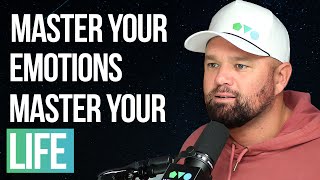
A 2025 Wellness & Wisdom episode (YouTube/podcast) by Josh Trent presenting a practical primer on emotional mastery. Trent defines emotional mastery as understanding, regulating, and constructively expressing emotions; shares personal anecdotes (family stress after returning from Costa Rica) to illustrate why intentional nervous-system regulation matters; and gives actionable steps—set intention, practice vulnerability (not reactivity), breathe to regulate, use nonviolent “I-feel” communication, and seek discomfort to build the skill. The episode closes with a community call-to-action for LiberatedLife.com.
Chapters
So what if mastering your emotions was the one thing that was never taught in school that'll actually give you every single thing you've ever wanted in your whole life? We're talking about this right here, right now on wellness and wisdom. Hey, it's Josh. And this mastery of the mind is something that I have been playing around with for quite some time in my life. I'm 44, and it took me probably about 39 to 40 years to really understand the weight of how much success in life is attributed to soft skills like emotional intelligence, communication, and interpersonal skills. There's a research report done by Carnegie university that says 85% of successful people master these soft skills. So why aren't they taught in schools? You could say it's a conspiracy. You could say that it's just not a focus. But in my opinion, I think it's probably a combination of both for me, for whatever reasons, these things were not taught to us. We are going to go in depth on these today. By the end of this video, this podcast, you will have a clear understanding of what is emotional mastery and how I can master my emotions so I can master my life. Let's dig in. So on the screen right now is the definition of what many people in emotional intelligence and psychology deem emotional mastery. It says the modern definition of emotional mastery is the ability to understand, regulate and express emotions and in a healthy and constructive way, enabling one to navigate challenges, relationships and opportunities with resilience, self awareness, and intentionality. And this is the key, right? Intentionality. Because it's one thing to read the highly effective habits of successful people or to go into Robert Greene's work mastery, but you really have to check yourself and say, why do I want to be emotionally regulated and emotionally resilient? And why is mental mastery such a big deal for me? Well, once you're clear on that intention, you can plug that into your purpose, your values, and your dream, which we've talked about on a previous AMA that's linked right here on the screen if you're watching on YouTube. So first, get really clear. What is the intention of wanting this mastery, of desiring this mastery in the first place? For me, it came from pain. And maybe for you, maybe there's this awareness that's bubbling up inside of you that knows if I don't master my emotions, if I don't master my mind, life is going to consume me, my relationship is gonna consume me, my stressors are going to consume me. Case in point, I practiced this emotional mastery right when I got Home from a mastermind. So this is in January of 2025. But whenever, wherever you're watching or listening to this, it's perfect timing because after you go on a vacation, have you ever felt this? You get nourished, you have some downtime, your nervous system can off gas, you can literally relax. Then you come home and quote back to reality, the reality that we're choosing and you are tested. God, universe, creator brings you a test that is going to see how regulated, how resilient, and how much an emotional mastery you actually are. So I got back from Costa Rica, it was five days of nourishing myself and boom, when I was gone, my son broke his toe. Also my family was sick and when I got home, I was dealing with urgent care, emergency rooms and all these different things. On top of building a business and being present for myself. Now with two children, whether you're a parent or not, you know that you're regulating and tending to the child inside of you. You can see that emotional mastery really is about managing your emotions and managing your self regulation in the face of stress. This is so important because if you read the title of this emotional mastery, master your emotions, master your life. The reality is either you're going to master the way that you feel and the way that you project those feelings, or consciously reply with those feelings to the around you that you love, or they're going to own you. And they owned me for a long time, many decades, I was owned by my emotions. What is an emotion? It's on the screen right now. Energy in motion. Emotion is energy in motion. So what does emotion want? It wants fluidity, it wants to move. So really, in the most amazing way, emotional mastery is about regulating your nervous system and allowing yourself to be a river, not a damn. When you're a dam, you get blocked up, you push it down, you don't feel it. Which many men in America and in the world have been taught to not feel their emotions. Which honestly is such a tragedy because the less that we feel our emotions or that we suppress our emotions, the more paradoxically that our emotions start to control us. Let me ask you this. Have you ever felt something that was so scary or so intense or so overwhelming to your heart, to your nervous system, that it brought up so much fear you didn't even know how to deal with it? Let me know in the comments below. Let me know. PodcastWellnessAndWisdom.com have you ever felt something so severe that it literally checked your courage on your ability to meet the fear at Its face at its threshold. I know I have, but this is the real key that we're gonna talk about today. And I'm gonna unpack all the different parts of emotional mastery, at least a starting masterclass. When you have the courage, when you cultivate the courage to face the emotion and that you don't want to feel, you actually become a master of that emotion. When you are a slave to that emotion, it means that you're not allowing yourself to feel it. It took me a long time to understand this as being truthful, right? Like, how often do we let a single bad moment ruin our day or even our entire relationship? It happens because whether it's career, whether it's relationships, whether it's mental health, this is a story that is unfolding for all of us. And if you watch my previous AMA on rewriting the game with you being the player and the programmer at the same time, then you know you actually do have the control to feel it. You first must face the conditioning and the programming that was told to you by society and parents. Maybe a football coach if you're a man, or maybe a cheerleading coach if you're a woman, or any kind of coach, man or woman. A lot of adults don't know how to feel their feelings. And so they will inadvertently teach their children or teach their students to not feel their emotions as well. We've all heard phrases in life like, suck it up, pussy, get back out there, or focus on the positive, brother, good vibes only. Now, these things all might sound inspiring, they might sound like a really great thing, but they're missing a big key when it comes to emotional mastery. And this is the first tip for emotional mastery. The opposite of reactivity is vulnerability. The opposite of reactivity is vulnerability. Also learned discernment and intuition of how someone responds to your vulnerability. So I'm not saying that we always need to be vulnerable, especially as men. There's a time and a place to be vulnerable as a man. But I really feel like we must earn that with our productivity, with our presence, and with our regulation. In other words, a woman doesn't want a man to just be, like, shitting and spewing all his vulnerability on her. She's going to turn to him and say, this doesn't feel good. This feels like I'm hanging out with one of my girlfriends. And that's going to kill polarity. So if you're in relationship, listen up. For men, there is a time and a place to be vulnerable, but there is never a place and a time to Be reactive. Actually, let me check that. The only time there's ever a spot in your life to be reactive is when it's like life or death, right? If someone's attacking you, if you need to slam on the brakes, or if you need to establish a boundary physically, like someone's gonna harm you, those are the only times, typically, that you really must be reactive emotionally. But 99.999% of the time, most of us are simply not going to have that happen. So how do we do this? How do we practically apply vulnerability instead of reactivity? And also that learned discernment of when to be vulnerable and when not to be vulnerable. Here's how you do it. I promise you this will change your life. Let's give an example. My woman is yelling at me about something. She's completely upset, AKA she doesn't feel safe. When a woman doesn't feel safe, all of her patterns, all of her programs, all of her reactivity will show up. So it is my job as a man to literally hold the space, to be in the space. When I'm met with this intensity, the best possible thing I can do is pause. Practice the power of the pause. Practice this power of the pause. You do it by breathing in through your nose. So I'm getting yelled at. What do I do? What's the first thing I train myself to do? Then respond. I promise you, whether you're a student in the Breathe program over at Breathwork IO or not, you will feel the power of breath to literally cache your nervous system so that you will not start yelling back at the person. Right? Or in this example, my woman, or your partner or your wife or your husband, whoever it is, and then breathe. For this emotional regulation, you must breathe. Because there is a key difference here, and this is the second point that I want to share with you about vulnerability instead of reactivity, knowing that vulnerability is the antidote to reactivity. Unless you breathe, it's going to be physically impossible for you to feel your body, to have a somatic experience where you actually respond with love or with care to your person. So when you take that deep breath and you pull in the stress that you're feeling and you exhale, you are actually regulating your nervous system. The second point, there's a key difference between suppression and regulation. When you suppress an emotion, it doesn't actually go anywhere. Energy cannot be created or destroyed, only transmuted. So when I forget to breathe and I suppress the emotion or I mash it down, it's going to come out sideways later. On or maybe even five minutes later during the argument. Can you relate to this? Have you been here? So the key difference between suppression and regulation. Suppression is depression. It is when you mash something down. This is why many people are depressed in life, because they have taught themselves to just suppress, suppress, suppress. But what happens with energy is it cannot be created or destroyed. Right, as I've mentioned. And so when you suppress, it is a one way ticket to dysregulation. Either now, five minutes from now, or five years from now, which leads to addiction. So when you choose to suppress, it's actually, and hear me out, it's the coward's path. Emotional suppression is a path of cowardice. Emotional regulation is for the fucking warrior in you and I. That is how you actually become a humble warrior, a warrior of love. So key takeaway here, Practice doing that quick inhale, I promise you it'll change your life. Inhale, big exhale. And then let's go into part number three. We've already talked about the first two keys. The third part of emotional mastery is actually practicing non violent communication. It's on the screen right now. Nonviolent communication is when you have an I feel statement to express emotions constructively and to speak boundaries around the game I'm playing. So how do we do this? How do we practice nonviolent communication? Well, first and foremost, listen to our podcast that we did right here. It's linked on the screen or in your show notes where we went very deep with Waylon Myers, who trained with the founder of nonviolent communication. You can pause right now and look that up or you can bookmark it for later. Nonviolent communication is essentially I statements. So if you have been in an argument and you're person is pointing a finger at you, well guess what, there's four pointing back at them, right? They keep pointing the finger at you and all it does is just put you in hostility. It puts you on defense. So you've taken your breath, you're practicing vulnerability, which is the antidote to reactivity. And now in this third step, the most important one, you're speaking from the eye. Hey babe, I feel triggered right now. I feel unsafe, I'm feeling heat in my stomach, I'm feeling a lot of pressure in my heart. When I hear you say these words, what I start to feel is this. Now look at the difference. You've taken a breath, you've not suppressed, you've regulated, you're in this argument all of a sudden. Now you've completely disarmed the situation. You've done the warrior's work. This is actually the opposite of cowardice. The warrior's work is to breathe, regulate, and be vulnerable and say, hey, babe, I'm really triggered right now. I'm feeling inadequate right now. When I hear these words, it makes me feel like I'm not enough. It makes me feel like I'm a piece of shit, and I don't want to feel that way. Then respond with the question, what I heard you say was. And then repeat what they said, what I felt was. And then share how you felt, and then ask for something better. Hey, babe, the game I'm playing this year and for the rest of my life that you're a huge part of is that we speak to each other with love and kindness. And so when I hear this from you, are you open to me letting go of this emotion, letting go of this fear, letting go of this anger? And can we play the game where we speak to each other with kindness and where I'm present to what your complaints are and what you're sharing? And can we create a game that looks like this and then speak the game that you're living? So my game in 2025 and for my whole life, really, is I'm emotionally regulated. I. I authentically express myself, and that brings abundance that I can share with the people I love. So when I received this intense feedback, actually did it this morning, Total true story. I was going to a physical therapy appointment, and my lady texted me, like, hey, I didn't like that you did this. And all I responded was, I hear you right now. I'm feeling triggered right now. I'm feeling not enough. Can we talk about this later and have a more loving connection later? Boom. Total disarmament. Say that you heard them say how you felt. Say what they said. Say the game that you'd like to play. If you can master this one piece. This is the keystone of emotional mastery in what I'm sharing with you. So practice the nonviolent communication. Next, our fourth part. Seek out discomfort. Whether it's cold plunge, whether it's exercise, whether it's practicing these really hard conversations, the most important thing is to remember growth mindset is a skill. It is a skill. You could literally take everything I've told you for the past 10 minutes or so, and you could practice this and put it on paper and print things out and, you know, laminate it and do all this stuff. But if you're not practicing, if you're not actively seeking out discomfort and seeking out responsibility, essentially, whenever you seek out a big dream game, you're going to meet yourself in the process. Like, personally, the biggest game that I'm playing is to have seven figures in my bank account. Seven figures earned, huge team, huge podcast, loving family, deep connection, intimacy, physically, emotionally, spiritually, financially, mentally. All the things you better believe. I've met myself. I've met myself in ways that I never even thought I would meet myself in. I've met myself to the degree that even at 44, father wound, mother wound, being bullied, being overweight, all this stuff still has residue. All this stuff still comes up that I project onto the woman I love. And so do I have perfect emotional mastery in my life? No. But am I much further along than I think, the majority, the far, far, far majority of people? Because you and I are here, because we actually even care about this? I would say, yeah. Remember, this is a skill. You must seek out the discomfort, seek out the responsibility, because that is where you'll actually meet yourself. So all the key points are on the screen right now. If you're watching us on YouTube, we've gone into depth and actually practically in a very short amount of time to regulate yourself, to master your emotions. With the key point being when you master your emotions, you master your life. When you regulate your emotions, you free yourself from the slavery of emotional suppression. Remember, the opposite of suppression is expression. The opposite of depression is expression. Who wants to live their life depressed? Mashing down their emotions and saying things like, go hard. I know I cap on David Goggins a lot, but, you know, he's an archetype that some people need. I just think a life led telling yourself you're a pussy and staying hard and being a total badass 24 7. It eventually will drain you. And if you're like me, you're interested in living life through a different lens. You're interested in taking all these big concepts and simplifying them down so that this wisdom is practical and relatable so you can live your life liberated. That's what this is all about. That's what it's all about in our Liberated Life tribe as well. So before I get to my call to action for you, it's on the screen right now. I want you to go to liberatedlife.com. we're launching it in 2025. I want you to be in membership and tribe and community with us. This is a place where you can actually express yourself, where you can learn about these tools, these nervous system communication and emotional mastery tools. This is the place for you to practice that. So tell me this. What is one emotional trigger that you're committed to mastering today? I'll list out a few. Anger, resentment, reactivity, hatred, disgust, sadness, anxiety, depression. They're all just things that we experience, right? So let me know in the comments or Write to me podcastellnessandwisdom.com what is one emotional trigger that you're committed to mastering today? Drop it in the comments below. We'll reply as a team or I'll reply personally. If this resonated, hit like subscribe Share this video. It's short, it's actionable, it's punchy. It'll really make a difference. I truly believe this will really make a difference. But. But the key is you must do it. Remember in our previous AMAs I talked about the concept of be, do and have? Well, if you want to have the life of emotional mastery and abundance in all five sides of self, if you want to do the practices of emotional regulation, and if you want to be the person that has mastery over his or her emotions, then work it in reverse. Be, do, have, be the person that does the things that has the result that you want. This is literally not spiritual mumbo jumbo. This is practical, really weighted advice that I've been practicing myself for a long time now, and I truly believe from my heart to yours, that this has the power to completely change your life. Master your emotions, master your life. Let me know what you thought in the comments below. If you're listening, take this and use it. Please. For the love of God, don't just listen to this podcast and put it down and do nothing. Like do something with it. Do something with it, my friend. Write to me. Join the community. LiberatedLife.com Until I see you again, I'm wishing you love, wellness, and most importantly, peace and power. We'll talk with you soon. Oh, and by the way, if you want to leave your voice for these AMAs, go to joshtrent.com ama you can record yourself 90 seconds or less. I'll play your voice in the podcast or like many people do, you can Write to me podcastellnessandwisdom.com all right, peace.
More from Josh






Your child's future start before pregnancy... and even before conception! #podcast

MD Reveals: Your Healing Creates Your Child's Reality (The Souls Coming In Need Strong Bodies)



