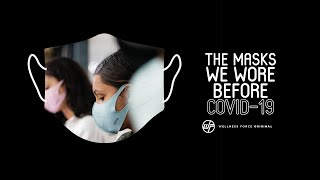
This is a recorded podcast conversation (Wellness Force) between host Josh Trent and guest Adam Roa exploring the idea of ‘‘masks’’—both literal (COVID-19 face coverings) and metaphorical (social/emotional personas). The speakers reflect on how the pandemic made visible an existing tendency to hide inner truths, and they share personal anecdotes: Adam recalls being in Encinitas, CA at the pandemic outset and writing about masks; he describes adolescent struggles (freshman year: 5 ft tall, 73 pounds), later social success (homecoming king) and the realization that external achievements didn’t resolve inner insecurities. The discussion frames a choice point for listeners about removing masks and taking radical emotional inventory.
Questions this video answers
Encinitas, California.
He said he was 5 ft tall and weighed 73 pounds.
He said he became homecoming king.
Chapters
It was really cool because you started out. Everyone is wearing masks now, but is it really that different than before? It feels like the fabric on their face is just a physical representation of the mask they already wore. And I don't even blame them anymore. Living in this world that's lined with stores, ads, convincing them if they simply walk in the door, they can leave with something new that makes them better than before. So I think this is incredible, because I have taken off probably hundreds of masks in my life, and there's probably still some to take off in the future. Do you remember where you were when that came through?
I do remember exactly where I was. I was in Encinitas, California. Shout out to North County, San Diego.
My own home.
Mine, too. I can't believe we didn't know each other when we were there, man. And I. That's where I was when the whole Covid thing started. And if you remember that, no one knew what was going on initially. So we stocked up on supplies and just said, I'm gonna be here for a while, it looks like. And then there was this day where I walked down, and there's these train tracks. And so I was sitting on one of the benches there, watching people walk. Right. But for whatever reason, and I'd done this two days earlier on this day. That was the day that everyone was starting to wear masks and just looked around, and everyone was wearing masks now. And I don't know what had happened in those three days, where. Must have been something maybe the president said or whatever. But the thing was, I had this thought, I can't see anybody. I can't actually see anyone. And then I had the next thought, which was, if they weren't wearing masks, would you have even noticed them? And that got me thinking, how much do I really actually see people? How much do I really see someone? Even if they're walking down the street and I notice them, do I really see them? And I think that in society, people are craving authenticity, and yet at the same time, putting up their own walls around the truth of how they're feeling with themselves. So many people are not being honest with themselves about the fact that they're unhappy in their marriage or their job or where they live or they feel really lonely or whatever it is. And so I sat there, and I had my poetry journal with me, and I just. I wrote that, you know, so many people are wearing masks now. Is it really that different than before?
Yeah. I love the microcosm of, like, the physical mask, the emotional mask, because taking off the Mask can be confronting.
Oh, that's so good. I know. I know I can cuss.
Oh, yeah, you can, totally. Because I think about, like, one of the biggest masks that I wore in my life was if my physical body isn't perfect, then I'm not worthy, because I came from, like, this fitness background. And how confronting that has been for me to just be like, hey, I'm a human being. I have my own experience about loving my body no matter what's going on, no matter how much stress I have. And I lead this movement of wellness force. And so it's full front and center right now. It's the most weight I've ever carried, dealing with myself and Covid and you know what mask I'm taking off that I have to be perfect, that I have to be, like, this soldier of truth 24, 7, 3, 6, 5. It's just not real anymore. So I'm curious for you, man. Like, was there one moment that jumps out the most? Like, what comes up for you when I ask you, what. When did you wear the biggest mask and how did you take it off?
Wow, that's a really good question. I would say that for me, the biggest. What pops into my head right now is that growing up, I was the son of Asian immigrant. My dad's from the Philippines, immigrated to this country when he was, like, early 20s. And I was. I didn't get a ticket to puberty at the same time as everybody else. I was late to the game. And so when I entered high school, I weighed 73 pounds. My freshman year of high school, I was 5ft tall. I weighed 73 pounds, and I looked way more Asian. And so I just had this thing and where I so badly wanted to be seen as cool and popular and sexy and all of these things. And I just didn't think that was in the cards for me. You know, My dad is 5 5, and my mom is 5 foot tall, and so I am nearly 6ft tall. And my mom says it was sheer willpower that I just willed myself. I refused. But I, at that time, went, I'm gonna be the tiny Asian kid forever. And so I was retreating into my mind as my superpower at that time. And I went, but I can win this game of being popular. Like, high school's a game. I can win that. And so.
And in some ways, social media is the same.
Similar, right? And so I, by my senior year. Fast forward here. My senior year, I was multiple varsity sports. I was the president of a club. I was elected a student body I was scholarship to college for academics. And I then went homecoming king. And winning homecoming king was my holy grail. That was the thing that I thought meant that I had won high school. You know, I was the most popular person I thought, you know, varsity blues and all these movies, not only will all the girls want me, all their hot moms will want me. That's how this works, right? And I remember winning homecoming king and the next day waking up and feeling no different. All of my insecurities were there, all of my fears, my doubts, all of the anger was there. And even worse, actually, I didn't have another mountaintop. That was the holy grail. And it seems like common sense, but I really want this to land for people because for most people, while you could hear, well, of course winning homecoming king is not going to change. Yes, but what is that thing for you, the person listening to this right now? What is that thing? Because most people have something that they think is going to change their world when they get it. And so at 18, the mass that was coming off was whether it was nature or nurture. I don't know what it was. I'm so blessed to have the mindset. Instead of going, okay, what's the next thing that I need to do to satisfy this? Oh, that must have just been a fluke. I went, what if everything else they've told me is a lie? And that's when I started questioning, you know, they tell me, go to college, get a career, get the thing, and then you're gonna be happy. Well, I started questioning that at 18. I hit a mountaintop. And I feel so blessed because so many people don't hit that until they're in their 40s or ever. And that's a big part of who I work with now is one on one clients are these people in their 40s who have hit their multi million dollar businesses and things and are going, I'm feeling empty on this mountaintop. What's for me here? And I got to have that experience at 18. And I feel like that was the first mask that I got to take on because I had all of these masks that contributed to me being able to be the one at 18 who had won all of these things and all of that.
One of the other things in your poem, your spoken word that I loved, it was towards the end and you said, if I'm concerned about you hurting me, then certainly there's bound to be a poor connection surrounding me because what you found isn't actually me a clown. My frown painted into a big smiley, I'm good. I'm fine. I'm doing okay. It's this narrative. Like, we're good. We can be resilient. We're not allowing ourselves as a society to even have a moment where we give ourselves permission to take off a mask. Expand on that, because that's a huge part, not just of your poem, but the poem that's living out here for us in society. It's. It makes me sad. I was feeling it today anyways, and then I watched your video, and I was just like, it hit me, you know, I've been going through personally, and I know everyone in the Wellness Force community has been feeling it too. Like, we can't go on like this anymore. We're being forced into a choice point where we're either going to show up without wearing a mask and take full accountability for what that is, AKA all the people I've hurt, all the ways I've showed up where I'm fake, all the things that I've lied about, like a full radical emotional inventory, or we're not. We're at this choice point. So what do you feel about this?
Well, I feel it's. It's so prevalent in. For men, especially on. On this planet, which is this man up, you know? Don't let them see you cry don't let them see you fail don't let them see you hurt.