THE ORTHOREXIA CONNECTION | The Allure of Information | Dr. Michael Ruscio
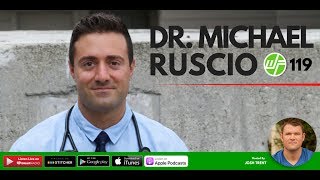
Transcript of Wellness Force Radio episode featuring Josh Trent interviewing Dr. Michael Ruscio about orthorexia, the ‘allure of information’, and pragmatic clinical approaches. They discuss the harms of over-researching and excessive testing, how gut problems can underlie non-gut symptoms, validated vs. meaningless lab tests (e.g., American Gut/youBiome), a short set of high-impact tests/interventions (SIBO breath test, comprehensive stool testing, vitamin D, CBC, basic thyroid), the psychological drivers of orthorexia (addiction to health-control, past trauma), and practical mindset/lifestyle advice (nature walks, simplified interventions). The interview includes personal anecdotes and action steps for listeners.
Chapters
Wellness Force Radio.
Feelings are essential, but.
They can't dictate our actions.
We literally infect each other with our emotions. We came here for a special purpose. Let the purpose unveil itself. Knowing without doing is the same thing as not knowing. They're not just trackers.
I'm gonna wear this and it's gonna help me do the right thing. Wellness Sports Radio Episode 119 with Dr.
Michael Ruscio out of all this noise out there, out of all these symptoms and conditions and diagnoses and diets and supplements and tests, what do we have to do? It's not doing lots of testing, but rather doing the few tests or making a few interventions that have been shown to have the most impact.
What's up my friend? It's your host, Josh Trent. And welcome back to another episode for your weekly access to global experts in all things wellness as we discover the physical and emotional intelligence we need to live life well. Self awareness support for this show was brought to you by Perfect Supplements, a company who's passionate about non gmo, pesticide free and real food supplements that fuel us for the wellness journey. Click over to perfectsupplements.com wellnessforce and be sure to grab a 10% discount by using code wellnessforce at checkout. Have you ever noticed that the over obsession with health research, either in yourself or others, this chasing of the symptom rabbit down all the black holes online, can actually create an unhealthy lifestyle? There's a term for this obsession with excessive elimination diets and being overly concerned with avoiding foods that people believe to be harmful. It's called orthorexia. Being obsessed with your health sounds like a great thing on the surface when you're dealing with disease or physical distress. But the truth is that we as humans tend to have a fundamental flaw thinking that more analysis and more testing will lead to better wellness results. But paradoxically, the more most people tend to stress about finding the one answer that will ease the pain is actually what's blocking them from hearing the messages from the body that are trying to direct them to better health. This is why I'm so excited for you to hear this. This podcast with Dr. Michael Ruscio. We're discovering the underlying issues that cause this need for perfection and how to focus in on the few lab tests and strategies out there that can have the most impact on our well being. You'll learn why Dr. Ruscio spends over 30% of his time with new patients simply calming them down from their over researched and frenetic clicking online to Then teach them how to tune back into their body's own voice and intelligence. It's through using this emotional intelligence, learning how to trust the signals that are coming from the body that we can know deep down, we will find the answers that we're looking for. Let's step in with Dr. Michael Ruscio. So we're talking with functional medicine practitioner, lead researcher in current IBS study, postdoctoral continuing education provider who's also a doctor of chiropractic. Dr. Michael Ruscio, I'd like to welcome you to Wellness Force Radio.
Hey, Josh, thanks for having me.
This is gonna be a talk about truth. You and I met in Austin for Paleo FX in the Mind Pump Kitchen. And I think this is gonna be a Kitchen Confidential episode to talking about something really important, and that is people that are in this frenetic search, Dr. Ruscio. To find the right answers. Being in that frenetic search actually is what can create orthorexia and block them from the very thing they so want the most. I want to give people a quick snapshot on you. How did you get to be where you are now?
I wanted to be an orthopedic surgeon. When I was in college. I was, you know, that. That kind of profile where all the guidance counselors told me, well, if you want to go into medicine, you're kind of a burly guy. And typically burly, jock type guys end up being orthopedic surgeons because it requires a degree of strength, so you should just do that. So I said, sure. You know, I'm type A. I'm driven, I have good grades. Let me. Let me do that. You know. So that wasn't really a deep calling. It was just kind of like your guidance counselor ferreting you along the path that you were stereotyping, you know, stereotypically associated into. But I ended up all of a sudden going from being really healthy and being a competitive college athlete. I played lacrosse in college. To all of a sudden having insomnia, fatigue, brain fog, bouts of depression, dry skin, thinning hair. So I figured, well, this is, I guess, what doctors are for. Let me go to a few doctors, and there's probably something wrong and they'll fix it, and hopefully it won't really be a big deal. I saw three doctors, and none of them had any answers for me. They all said, well, the labs look normal, you look normal, you're really healthy, you have a low body fat, blah, blah, blah. And my response was, well, did you catch the dialogue I went through a few minutes ago where I Used to feel great and now I feel really terrible. And they really didn't have anything to do for me. So I'd like to help you, Mike, but there's nothing here I'm seeing that I can aid with. So I ended up finding a functional medicine doctor who told me he thought I had a parasite. And I remember thinking to myself, this is bs I didn't go to Mexico, I didn't get food poisoning. I don't have any of those stereotypical associations.
You didn't need a hometown buffet.
Yeah, right, exactly, exactly. But at that point I said, well, what do I have to lose? Ended up doing a stool test and found that I had an amoebic infection, Amoeba histolytica. And what was interesting was before the months before that, kind of in the interim, after I saw my conventional doctors, but before I found the functional doctor, I spent months going on the Internet and researching my symptoms. And I self diagnosed with hypothyroid and I went down to Whole Foods and I bought the ashwagandha and gugaloo and the things that help with thyroid conversion and iodine and kelp flakes. And then I thought I had adrenal fatigue. So I went on all the adrenal fatigue supplements. I read Dr. Wilson's book, Adrenal Fatigue. I took those supplements. I felt a little bit better with each one of those interventions, but not much. Then I thought I had heavy metal toxicity, did a heavy metal urine test that showed I had heavy metal toxicity, did detox for that heavy metal toxicity and felt no better. And I only improved when I addressed the problem in the gut. And that taught me something very valuable, which was if you have a problem in the gut, it can manifest as non gut symptoms. And sometimes that's the thing that eludes people in terms of they're chasing down symptoms, thinking that the symptom is a thyroid problem or a hormone problem or what have you. And in some cases it is, but in many cases it actually comes down to a problem in the gut as being the ultimate driver of that. So that experience changed my career path. I decided to go into alternative medicine instead. As I went into alternative medicine, I started noticing my patients were doing the same exact things I was back when I was a college student. They were going on the Internet, reading, self diagnosing. But now there's so much information, it's even worse. And patients just fall over the deep end where they come in. And I would estimate I spend probably 30% of my time now talking someone out of a disease or a condition that they think they have based upon what they've read on the Internet.
Oh my gosh, this is so powerful because by the time people get to you, they've probably had three, four, maybe five years of just frenetically searching on the Internet and just self diagnosing things that potentially aren't true. So what do you do when they come to you? They have this paralysis by analysis. They have all these pieces of information that are just not true. What do you tell them when they come in?
That's what fueled our conversation in the Mind Pump Kitchen was me just kind of venting about how disheartening it is where people are trying to help themselves. But by trying to help themselves, they're actually making themselves worse because they're putting all these potential conditions or diagnoses in their head that they don't have and they're just adding more and more and more restrictions based upon what they read about this diet, that diet, the other diet. So they're kind of gelling all these different dietary restrictions together and then they end up in this spot where they eat anything. They can't go out and do anything because they don't want to have alcohol or gluten or soy or gmo. And they are living this very imbalanced life, which that has been documented to be very unhealthy for someone. What I do is I help people to understand out of all this noise out there, out of all these symptoms and conditions and diagnoses and diets and supplements and tests, what do we have to do? And, and what's been really nice, now that my voice has gained some traction on the Internet with the podcast and some of the research that I've been doing is patients seek me out as that filter. They come in and they're really open to, geez, I've been reading about all this. I can't make heads or tails of it. I feel like everything I read is excessive and dogmatic. And I came to see you because you seem like you're practical and level headed about this and you can help me kind of parse through what we should do and what we don't need to do. So that's a very general answer to your question, but I really just try to cut through the BS and help people understand what it is that can help them and what they may not want to do. And a lot of that comes back to just knowing how to use scientific literature the right way rather than the wrong way to improve your results, rather than distract you and make your results convoluted.
Yeah. One of the things I'm looking forward to later on the show too, is asking you about our internal voice. You know, you've been on a couple different podcasts. You talk about listening to what our body is telling us, but I think there's a road to get there. You know, not everyone's born with that intuitive edge where they just tap right into their body's voice. Orthorexia is caused, I believe, by people second guessing, triple guessing, quadruple guessing where they actually are being paralyzed. The orthorexia, it's not in the dsm, but a lot of people struggle with this, these symptoms. Can you explain to the audience what is your definition of orthorexia?
What I guess internally define that as is someone who comes in and you can tell that they are overly nervous and neurotic about their health and healthcare related decisions. And what that can look like is people who are on the most restrictive diet and they're taking handfuls of supplements and they're asking questions about, you know, every little thing. There's minor things and there's major things. Right. If you want to run fast, you've got to be at a healthy body weight, you've got to have a good deadlift, you've got a heck of good leg strength. Right. Good psoas muscles. The strength of your forearms as it pertains to sprinting performance isn't really that important. But people.
Right, right.
But people are looking at things that are like the forearm strength and how important that is because they want to be a faster sprinter. And so, you know, people get so wrapped up into these little things, these little details, these little snippets of information, and they obsess over those. And there's so many little snippets that if you obsess over all those snippets, you can very quickly just lose your grip on reality. And so oftentimes these people have a lot of focus and on many little different things that then create a life that's very hard to live. And unfortunately, they oftentimes start pulling back from social relationships and social engagements. They don't go out as much, they don't socialize as much because they're afraid of so many things. And so that's kind of my loose definition, just someone who looks like they're a little bit imbalanced in their life, where their health is running their life, rather than being a tool to make them feel more vital to have a better person to bring to their Life, man.
And I'm going to speak my truth to a lot of people were like me. In 2009, I hadn't even know about Paleo at all. I read Rob Wolfe's book, the Original Paleo Solution then, and I started to learn about these different food sensitivities and gluten sensitivity and dairy and whatnot. And then I came to this point where after a few years, I was kind of exhausted about doing just the most restricted lifestyle I could imagine. And I just went back to eating like portion sizes based on how I actually felt. And that was what course corrected me. But a lot of people that have orthorexia, they seem to be on the outside, like, motivated by health, but there's underlying issues that are driving them to be so focused on the nutrients and being perfect. Where do you think this perfection thing comes from when it pertains to health and orthorexia? Like, why do people want to be perfect? What's that really mean?
I agree. And when Kevin Geary came onto my podcast, I thought we had a really nice conversation about this because he gets a lot into some of the psychological underpinnings of these, almost like a health addict. And I think a lot of that has to do with things that have happened early in life in terms of maybe not having the best childhood or the best relationships, or having early life trauma that may have been physical, emotional, or both, or it may be current biochemical imbalances that could cause depression in one person, but almost causes OCD or anxiety type reaction in another person. But I do think that it's almost a form of, like, addiction where instead of being addicted to alcohol or cocaine, you're now addicted to these healthcare practices. And I think for some people it's stimulating and it gets them by for a little while. But then oftentimes I find people end up burning out, as you said, because it gets so hard to live. And I was the same way. I mean, you know, I criticize a lot of this stuff as someone who did it and then learned through it. And I think I'm healthier today, even though my diet isn't nearly as strict as it was, even though I'm taking way less supplements than I was. And so, you know, it's something where I think it's easy to fall into this model of testing everything and going on restrictive diets. But, you know, we just want to try to give people the things that they can do, they're going to be most effective and then just let them get out there and Live their lives and not obsess over these small little details. I think you say that really well in terms of the addiction that can almost form to all these different little things. And I do think there's stuff that underlies it. And I'm sorry, maybe to answer your question more directly, I think those things underlie it. And then I would start with trying to optimize someone's health biochemically first, because some of these things may just be they're a manifestation of an addiction. And sometimes the addiction can be biochemical. But for people that don't respond to getting their body healthy internally, and especially if they've had previous mental, physical, or emotional trauma, then they may want to seek out a competent therapist to help them work through where that's coming from.
Yeah, and you bring up a huge point. This emotional intelligence, as we look at our life, being healthy and living it well, it's so easy to. Recent podcast with Rob Wolff, you talked about this concept of the allure of information. Can you explain why this allure is such a major problem on the Internet?
Yeah, and it is a major problem. I've been calling it lately meaningless measures, meaning you can measure something, but that measure is meaningless. And many lay people don't understand this. And to tell you the truth, many doctors don't even understand this, that just because a lab can analyze your urine or your blood or your feces or your breath and tell you that the result is high or low in whatever it is is being tested, it doesn't mean that that result means anything. And it's really important that we understand that. There's one example that's maybe most noteworthy. There was a lab that used to do urine testing, and they'd give you a readout of your urinary levels of serotonin and dopamine and other associated amino acids and metabolites. And this was supposed to tell people why they're anxious, why they're depressed, why they're sad, why they can't focus. So it looked very compelling. You got a lab report back with these cool pathways. Some were high, some were low. If they were high, they were bolded in red. If they were low, they were bolded in red also. And if they were normal, they were just in regular black ink. And it looked very official. Yet this. This lab company recently pled guilty to fraudulence. They subjected their lab results to a multiplication factor which essentially made created an imbalance. And they didn't adhere to standard laboratory guidelines to ensure that they were being accurate and making sure that their measures were valid. So they pled guilty to fraudulence and it was a major lawsuit. So if someone is looking at a test like this and then saying, I have to change my diet according to the test, I have to take these supplements according to the test, that's all meaningless. And it's really important to understand that because with every passing day, as alternative medicine is growing, you're seeing more lab companies pop up and more supplement companies pop up. Not to say that that's bad, but to be truthful, many of these companies are either making fictitious claims or they're not making those claims. But people are using the tests in the wrong way. And American Gut and eubiome, I think are two examples of labs that are well intentioned but are being misused by the consumer base. And I don't know if that's going too deep, but there are definitely tests that mean nothing. And it's important we're aware of that so that we don't get pulled into that.
Let's talk about this, Michael, because you just blew the lid off my brain with the whole youbiome comment. They were at the PaleoFX conference. I actually sent out a few test kits, but you know what I did? I sent out two at the same time. And I want to get back the results and see how different they are. I think that's a good way to figure out. When we look at functional medicine and lab testing, do you have a certain way that you check the applicability of something actually being correct? When we have like, you know, these leap MRT tests and the blood tests and biohealth and there's so many companies out there. What do you do to make sure that a lab is actually legit?
There's a number of things that can be done, but one thing that might be the most simple is just look to see if that test tells you about a certain treatment. Right. Does that test tell you you have this problem and then this problem has been shown to be remedied by this treatment? What you often see is, is not that, but you see a mechanism marketed. This test shows low short chain fatty acids in your stool. Short chain fatty acids are anti inflammatory and help repair leaky gut. So if you take prebiotics to increase those short chain fatty acids, you will therefore repair leaky gut. You see like the leap there. Yeah. Where it's a mechanism. The appropriate way to look at that would be maybe a SIBO breath test. Your SIBO breath test. SIBO is small intestinal bacterial overgrowth It's a overgrowth of bacteria that occurs in the small intestine that may underlie the majority of IBS according to some of the literature. And when we see that test positive, we've correlated that test to correlate with ibs. So we validated that the test correlates to a condition second step. We've then treated those lab findings and shown that the lab levels improve and that lab level improvement correlates with an improvement in the subjectives or the symptoms of the patient. That's the kind of information that you need. But all too often what you see is this compound does this in the body. So therefore if you increase or decrease this compound, you're going to have this favorable effect. But we haven't actually done it in humans, so we don't really know. And that's so often left out of the dialogue. And American Gut and you Biome are examples of this. Now I can speak more directly to American Gut. I was in Australia about two weeks ago at the International Congress on Natural Medicine and, and I was presenting there along with Rob Knight. Rob Knight is one of the leading scientists in the field of microbiota research and he's the founder of American Gut. He's the guy who made the test. He's a scientist behind the test. He's not a sales rep, right. He's not an enthusiast who's well intentioned but maybe a little bit misguided. And we're on a panel. Now I know that those tests don't have any clinical applicability because I read the clinical studies and you see that these tests are starting to show correlations. But we don't know if we can treat any of these correlations. We don't even know what the treatments for these correlations are. So I felt a little bit weird about this because someone asked in the audience when it was a question and answer panel, someone asked me if I use any of the tests like American Gut in my clinical practice with the guy who made the test sitting right next to me. So I'm just saying to myself, oh shit. But I try to be diplomatic, but also honest. Being truthful is very important to me. So I said, well, I think it's pretty clear from the clinical literature that these tests are very important for research and we should support them for a research perspective so that we can one day make clinical recommendations. But as of right now, I use none of them because they are not clinically relevant at all.
Was it like crickets in the audience?
No. And Professor Knight is shaking his head in agreement next to me. And he was totally in agreement with everything, which was nice to hear, but also not surprising because Professor Knight is a scientist and he's not going to misrepresent the information. But unfortunately what happens is there are circles on the Internet that are very passionate about helping people. I totally get, I think these people, people are well intentioned, but they're so excited about these tests. They don't realize that we don't know what to do with information. It's like having Dr. Pertlemutter, I know he was on your podcast recently. Also, he made a great analogy at Paleo effects when we were sitting on the gut panel together. He said, it's like that 90 page instruction booklet you get when you buy a new camera. He goes, you're not going to use any of that information. You don't even know what to do with it. It's kind of a similar thing when we get these really complicated readouts of all the gut bacteria. We don't know what to do with that. But it doesn't stop people from telling you you should do something. But what I'm saying is be careful about that because it can pull you into empty measures, man, the allure of information.
And I think it goes to a point where there's a lot of reductionism out there in our industry, like eat less, move more, or just do it. We interviewed Daniel Schmachtenberger, he's the CEO, the co founder of Neurohacker Collective, it's a nootropics company. And he touched on reductionism. Why it's so popular is because it gives people that answer that they're looking for. But in your practice, do you believe that reductionism exists? Is it as simple as telling a client to do three to five things and they'll improve, or is it always more complicated?
I believe in making things simplified. That's different than reductionism. Reductionism is breaking things down into its, you know, component parts and looking at things in isolation. So instead of looking at the whole body, we look at a part. I don't agree with reductionism in terms of in the clinical setting. Reductionism is used in a research setting to generate hypotheses that you then test in clinical research. So I believe in making things simple. And if you have the right three to five things, for example, that can be very powerful. And so one of the things that I am a big advocate of is not doing lots of testing, but rather doing the few tests or making the few interventions that have been shown to have the most impact. And that's how you can really do more with less. There's an old saying, I first heard this by Paul Check. And it's always stuck in my head. He who is the best can do the most with the least. And I think, you know, that, that. That applies pretty broadly. If someone comes in to see me, we may only need to do a few tests. Two. Yeah, maybe two, maybe three. And we'll get really good results instead of doing eight tests. And I would also argue that if you do too much testing, you cripple yourself underneath all this information, and it can be hard to process, sort through, and prioritize. So, yeah, it's. It's a fundamental flaw is that thinking that more testing and more analysis is gonna produce better results.
Man in the center. People are experiencing the symptom, right? The pain, the ibs, whatever it is, the sibo. But the intuitive eating versus quantification of testing and, you know, maybe tracking macros. There is this bridge, Michael, between just knowing how to listen to our body's voice versus going down the route of tracking and quantifying everything that we do. How would you cross that bridge between intuition, intuitive eating, knowing ourselves, and then having to feel like we must track everything?
Yeah, that's a great question. And I kind of like to look at that like the inverted U that showcases the law of diminishing returns, meaning for the initial few units of energy invested, you see a nice return, but the farther you go, the less return you get. And then eventually you start getting negative returns if you put more time or energy into something. So I think that inverted U applies to. You get a lot of return with your initial few levels of investment, but then if you keep going, you eventually start getting a negative return. How I would bridge that is, it's tough because there's not necessarily two tests. I would say here's the test for everybody. I would say to people, if you've made some improvements in your lifestyle and in your diet and you still haven't seen adequate resolution, then you may want to seek out a clinician to help guide you the rest of the way. So you could try the paleo diet, maybe the autoimmune paleo diet, maybe the low fodmap diet, especially if you have digestive symptoms. Make sure you're getting enough rest, Reflect on how much stress you have in your life, and try to mitigate too much stress if it is there. Make sure you're getting some exercise, but not too much, at least a little bit of social time. Every week, maybe try some probiotics or a multivitamin or vitamin D, a couple of these basics. And if after doing that you're not feeling like you're as improved as you'd like to be, I'd really then turn things over to a clinician. Because what I found, and it's even worse nowadays, I was chasing down hypothyroid, low testosterone, metal toxicity, and neurotransmitter imbalances and none of those things were the cause of my problem. Now I didn't want to go see a doctor because I was in college. I had no health insurance, so I was like, Geez, $300 for an initial visit? I don't have that kind of money. I probably spent $1,000 with my own tinkering.
God, that's so crazy how our brain messes with us in that way, right?
So a good clinician will get you there more quickly and less expensively than if you did it on your own. But you do have to find a good clinician because unfortunately there are some that believe that more testing equals better results and that can eat up a lot of money very quickly.
If you've been listening to the podcast for a while, you know that energy is something we always can use more of. But how do we do this through natural foods? Unfortunately, it takes about 25,000 calories to get all the energy and micronutrients we need from even eating organic and natural foods. This is why I'm excited today to talk to you about Acai Revive. One of the many reasons I stand behind this perfect Acai Revive product is because you are getting four energy boosting blends in one organic Acai, Rhodiola, Rosea, Organic cordyceps and grape extract. This delivers sustained energy and focus throughout the day without the jitters and the caffeine crash of that third or fourth or fifth cup of coffee. Make sure to pick up your four in one supplement. Make it easier to get some more energy today for your busy day by clicking over to perfectsupplements.com wellnessforce to grab your Asahi Revive. Enter code wellnessforce to get 10% off your entire order. I want to bring up a point when we look at how things are validated in science. You know, animals, rats specifically. I don't think they have anything to do with human beings when it comes to real tests. Do you feel like the testing that's done on rats and animals really correlates to being of equal value for humans when we look at health and wellness testing specifically?
No. I mean it absolutely doesn't. And this is one of the main sources, citing animal data or cell culture data, petri dish data, or even observational data and using that data to justify a treatment or a test. That is a major underpinning as to where all the disagreement and confusion comes from in the field. Now, if you look at what's known as the evidence based pyramid, and I talk about this quite a lot because it's a nice representation of what we should look at, at the bottom of the pyramid you have things like observational data, animal data, cell culture data, or petri dish studies. At the very bottom actually is animal and petri dish. Then you come up a level and you have observations of things in humans. Then you come up a level more, you have clinical trials in humans. And then you come to the very top, the apex. You have summaries of numerous clinical trials in humans known as systematic reviews and or meta analyses. And much of what I do is focus on the top of that pyramid. Now, a common criticism is, well, sometimes we don't have that type of evidence. That's true. But that is only true for a minority of issues. Because, guys, today we have a lot of interest in natural medicine and there's a lot of research. So you can't hide behind the excuse that, oh, we don't have the clinical data in humans to answer this question, yes we do. People are using American Gut and New Biome to try to guide gut testing. We have the data that shows we shouldn't do that. People just ignore it because it's not convenient for their argument. So I would focus on clinical trials. And if you think about it, a clinical trial is really simple. Okay, Josh and I both go to the doctor because we have diarrhea, right? We ate some bad food at the Mind Pump Kitchen, Mexican food. We've had diarrhea ever since. So I'm going to get a placebo. Josh is going to get a new treatment and we're going to break up all the patients that come in with diarrhea over the next month. Half are going to get placebo, the other half's going to get the treatment. Then we're going to analyze the numbers and we're going to see did the people who got treated have a significant impact and then if they did, we'll start using that treatment. That's a clinical trial. And it's so simple and so profound, but it's exactly what you would want. I have this problem. I am wondering if this treatment will get a result for my problem. Yeah. What we wouldn't want to do is say, well, people with diarrhea have higher levels of serotonin in the gut. Therefore, we're going to give this antiseratonin herb, and because it soaks up serotonin, that's going to cure their diarrhea? Well, okay. I mean, it might, but we don't know that until we test it in a clinical trial.
A lot of people that are out there have heard correlation does not equal causation, vice versa. Just because there's a marker that exists doesn't mean you can always tie it. We find Dr. Ruscio. There's always companies that say, hey, if you have this one marker, like if you have oxidative stress, or if your lipid peroxides are this much, or if your vitamin D is low, whatever it is, oh, well, that's why you have depression. That's why you have low energy. But it's not always the case. I want to give people a few action steps, though. Are there a couple tests, maybe three to five tests that you believe in? When someone comes in with these general fatigue syndromes, you know, their digestion's poor, their depression is high, they're just not feeling great in their body. Do you do a handful of tests when they come in?
There are definitely tests, and a number of them that have been shown to be clinically validated. One would be the SIBO breath test. Sibo, again, stands for small intestinal bacterial overgrowth. Bacteria in your gut, as part of their metabolism, release hydrogen and or methane gas. And we can measure that gas in the breath. And we know if someone has a level of gas that's too high, that can indicate an overgrowth of the bacteria that produce that gas. And again, more importantly, we've shown in clinical trials that elevations of gases correlate with IBS like symptoms. So gas bloating, abdominal pain, loose stools, diarrhea, constipation. And then as we treat patients for the gas or for the bacteria that cause the gas, we see those symptoms improve and the gas levels go down. So a breath test for small intestinal bacterial overgrowth I think is something that's very reasonable, oftentimes covered by insurance. And even if it's not covered by insurance, you're looking at maybe about 200 bucks, maybe a little more. So not very expensive. Also, I like doing a routine stool test. Sometimes we add in blood along with it, depending on what lab we're using. And this will look for things like candida or yeast, other bacteria that can be problematic Like H. Pylori or yersinia or protozoa, like blastocystis hominins or toxoplasmosis. So to put it generally maybe in terminology that's, that's easily accessible, a comprehensive stool test for yeast, bacteria, fungus and parasites that can be helpful. Now, challenge is that you have some of these newer companies now that the microbiota is becoming such an invoked topic that aren't really valid tests that are being called clinical tests. So a few labs that I like, I like doctors data, I like biohealth, I like diagnostics, and I actually use a lot of LabCorp and Quest because when patients have insurance, you see if you know the markers you want to test for, you can do this through LabCorp and Quest. The challenge is twofold. One, most of the functional medicine labs like to say that the big box conventional insurance labs aren't good at testing for parasites, which is not true. Right. That's just marketing conjecture. But also if you're a new clinician and you don't know all the specific markers, it's hard because LaborP and Quest, they expect you to know what you're doing and know all the test codes and put the test codes in. They don't have a nice neat panel, you know, parasitology one, parasitology plus fungus panel two. You know, a lot of the functional medicine labs are a little bit more user friendly for the clinicians, but it doesn't change the fact that if someone has health insurance, you can do a very good test for bacteria, fungus, parasites via LabCorp request that are accurate and are covered by insurance. So those are a few of the labs I like. And then also vitamin D screening, what's known as the CBC with differential, which looks for anemias. Also looking at a comprehensive metabolic panel, blood sugar, cholesterol, A basic thyroid evaluation looking at TSH and T4 can be very helpful. But you have to be careful with thyroid because there's a lot of overzealousness regarding thyroid. Not to say that you can't help someone get over their thyroid like symptoms, but again, you don't need to test every fraction of the thyroid known to man in order to fix the cause of the problem. So TSH and T4 oftentimes are adequate. And also maybe the thyroid antibodies if you're suspecting someone has thyroid autoimmunity, that's some of the major ones that come to mind. So it's not a ton of things, but it's an important core fundamental group.
And let's take a Breath here, because these are very actionable. It's not something where anyone has to feel overwhelmed. It's just three to five tests to check when you've done the dietary intervention. You've been eating what you believe to be clean, you've been exercising, moving your body well, yet you're still not getting the results. I actually worked with someone, and I will link this in the show notes. Her name is Kathy. She's a previous client. She actually posted about how she went through this process with me, and then she ended up going to a natural, neutral path, and they found out all these different things that were going on with her where she had the celiac gene, she had leaky gut, she had all these issues that, let's be real, diet and exercise don't fix. So I understand why people go down this road of orthorexia because they're like, well, you know, the gluten sensitivity. I pulled out gluten, I pulled out dairy. That didn't work. So now I'm gonna shave my calories. Well, now I'm gonna do CrossFit Wads. And it's like. It's so exhausting, right? I mean, these people come to you when they're at that point. Do you have any kind of emotional intelligence, talk with them, or do you go right to the science?
I do. It depends on where the person is. Again, a lot of people come in to see me kind of expecting me to give them the bottom line, right? So a lot of people, I think, are expecting that, and they're already coming in kind of just looking to follow the recommendations that I make. But there are some that I can tell they're almost addicted to the information, and they're addicted to the thought of having a problem. What this oftentimes looks like is I make a recommendation, and the recommendation is to go through this, take some notes along the way. We'll see you back in a month. And we get an email every three days from this person, right? And they're questioning everything. They went on the Internet and they read that, you know, I'm recommending this probiotic. They read an article that said that this strain of the probiotic can cause brain fog. And they have brain fog.
All the coaches listening right now are nodding their heads because we've all worked with these people where they just constantly are seeking out, well, what if this goes wrong, right?
And so the conversation I often have, even there's derivations, but the conversation I often have is if we're testing something, right? So right now, day One, I have a hypothesis of what's happening with you. Now we're going to test the hypothesis and your response is going to answer if my hypothesis is correct or incorrect. If you change the plan every couple days based upon what you read, what you think, what you feel is happening, all you're doing is detracting from my ability to ask and answer the question so that we can move through the clinical process of getting you healthy as quickly as we can. I'll tell you right now that you're going to have more questions than I can answer all the time. I've seen this before. And what ends up happening is people question themselves out of being able to get healthy because they're so involved in your healthcare. And I appreciate the research that you're doing, but at this point, the research that you're doing is making you question the recommendations that are supposed to get you healthy. And all that's doing is just short circuiting from your ability or our ability to work through this process and ultimately figure out what's needed to get you healthy. So what I'd ask you to do is just take a little bit of a break from all the research. Let me worry on your behalf. Let me steer the ship, and we'll take this step by step, and I promise we'll get you moving in the right direction.
This is the old architecture in the brain. And Gay Hendricks talked about this on the show. He wrote about it in the Big Leap. It's this addiction to what's wrong because we get chemicals. You know, everything's released from an excitatory perspective in our nervous system. Even when there's drama going on, people can become addicted to the drama in our lives. I'm sure we've all had people like that where there's constantly something going on for them. Do you think those people are more prone to being orthorexic than others?
Absolutely. I think there's definitely a personality type that is very prone to this. And yeah, I mean, to me, it's night and day. There's a subset of patients that this is like a bullseye problem for them. And it's for these patients, when I tell them I want you to only be compliant with your diet 80% of the time. And I want you to take some time off from your diet. And I also don't want you to do any health research for two weeks. And they come back in and it's this population that will say, I had some gluten and I went out with my friends and I had a Couple drinks and I was up a little bit late and I just feel so much better. Yeah, it's like, yeah, because you're not sitting on the computer for three hours reading every iteration of adrenal fatigue testing and treatment. You're actually out of your head and enjoying your life.
This is such a great point. And I believe this is one of the biggest gems from our conversation, is that the focus on what we don't want brings more of what we don't want. When people are paying you, they're coming. You're their clinician, you're their physician, you're helping them with these tests. And you had said you're steering the boat for a while. What do you think is the mindset about people that don't want to let go of the rudder? Like, why do they not want to let go and let someone else truly serve them?
I think for some people, they've been burnt in the past and I get that. And sometimes the way to get around that is just to be empathetic and to let them know, like, I know what you're going through, I've been through that. But if you don't let me help you, I can't help you. And so I'll just say to them, if you want to just keep doing whatever you think is right, go do that for a while. And if you figure it out, great. And if you don't, come back, but don't come here and pay me to help you, but then not let me help you, because that doesn't allow me to help you. That's very circular logic, but I think a lot of it has to do with a certain personality type that is addicted to kind of control and strictness and deprivation. And you see that, you see many times it's people that used to be alcoholics or used to have problems with drugs, now they're habitual crossfitters or hyper religious or whatever it is, because they just need that super strict structure. And I don't have a problem with that in and of itself. But where I do have a problem with that is if you're just shifting the addiction from one thing to another. You know, I find that a little bit disheartening because I'd like someone to be in a little more control of their life and not feel like whatever it is they're into is what's dictating their life.
Such a great point. Because the thing that's making them go from one addiction, either it's CrossFit or now it's being Orthorexic is really something internally. Like, there's an emotional longing that's not being fulfilled. Right.
Exactly.
This is what you see in your practice. Have you ever had patients open up and say, I realized through working with you, or I realized in this health discovery process that it was some abuse that I experienced, or it was a traumatic event, or does that ever come out in your practice?
This is a very rough estimation, but I'd say maybe 50 to 60% of patients, they just kind of have that realization where they can let go. And once. They kind of make that realization once. And I think these people, they're just waiting for someone to tell them it's okay not to be so strict with their diet, not to obsess over all these lab markers. I think some people, they're just waiting for someone to say, hey, it's okay. And once they're given that permission, they just let go. But there's a smaller subset that I think there's something deeper that needs to be addressed. And sometimes I think just through knowing that I care and I'm there to support them, they're able to get over that. But then there's some that aren't. It's almost like no matter what I say, a problem is still present. And one of the things I have kind of in the back of my head to try to bring more into the clinic is, Is a better hand I can give them to somebody else in terms of, okay, like, I've seen this pattern a few times. Here's the person we need to get you in the sea to really help with this. I do think Kevin Geary, it sounds like he has a pretty good program because it seems to be like a self assessment to help people identify some of these things, and it connects them with resources to help them with whatever's found through the assessment. So I've referred a few people over to that, but I haven't. Not enough time has passed for me to really to be able to tell. But I do think there's a subset of. If there's been significant, perhaps emotional, physical, or psychological trauma in the past, they may need someone to help them get in there and really wrestle with that, to get past it.
Man, such a valuable thing. We had Kevin on the show. We'll definitely link that in our notes today because he talked about decoding wellness. There's a code, but it's unique for all of us. So, Michael, you had a specific upbringing. You've had a different thumbprint for how you've lived your life. That is what's giving you the health you have now. Same with me, same with everyone. Listening. There is no template, there is no one blanket structure that we can apply to people achieving and unlocking this better health. But when you look across the board, there are some fundamentals. You gave us some awesome tests which we will link as well. Is there anything from a mindset perspective or a way of being kind of detoxifying the emotional garbage out of there, being more in our parasympathetic nervous system, just relaxing more in life? How do you feel you approach that when you talk to clients about the mental angle for health and wellness?
Well, I mean, there's a couple of things that I think are helpful for people to realize, which is there are things that can happen early in your life that may require you to compensate a little bit for that later in your life. But that compensation isn't necessarily a bad thing. For example, for people that have had lots of antibiotic use as a child or maybe were also formula fed or cesarean birth, they may have more of a predilection toward things like ibs, and they may do better on a little bit more of a low fodmap type diet because their gut may not do really well with a diet high in fodmaps, which are compounds that feed bacteria because they may have guts that are kind of prone toward bacterial overgrowth. So not a big deal. It's almost like someone who had a really bad knee injury in college, right? They're going to have to make sure they do some rehab and stretches throughout their life to keep that knee in balance. So it's not a big deal. It doesn't mean something is gravely wrong or imbalanced. And the same thing, I think applies for people that have had past emotional, physical and psychological trauma in the past. It has been shown that they may be more sensitive to things like stress. And so like someone with prior heavy antibiotic uses as a child, someone who is physically, verbally or emotionally abused as a child may not do well with lots of stress, just like the person with antibiotics may not do well with lots of fodmaps. So it's just trying to figure out what things you have to do to create the best environment for your unique body so that you can be healthy and thrive and realize that we've all got shit. Yeah, right. We've all got stuff that's happened. No one's perfect, no one's invincible. And if your friend can eat a ton of FODMAPs and she feels good on that Your friend's also at a really healthy weight and you're jealous of that. It doesn't mean if you do that you're going to look that way. And if another friend of yours is super type A and they kind of thrive with structure and with challenge, but you don't. It might be because you've had some prior emotional stress that makes you more sensitive to stress current day, and you may not be able to do the same things as that person. So don't compare yourself to anybody else. Find your own troops truth. Listen to your body. And if you're not able to get there on your own, find a competent clinician who can kind of help you through navigating how to find what your truths are to keep your body healthy and in balance.
I am so stoked. You mentioned two things that hit me pretty hard. Listen to your body. Find your own truth. Your truth is different from everyone else's. That is so valuable for the entire audience to hear. Mike, this is the last section of the show. This is seven back to back questions for seven of your truths. Are you ready, Matt?
Yeah, let's do it.
What three food companies do you personally use and trust? And also, what are three companies that you wouldn't even feed to your bad neighbor?
I'm a bad person to ask because I more so look at the ingredient label. If I'm like in Safeway and I'm having to buy something where there's not a lot of good options, I look more so at the label. And what I would say is look for a shorter ingredient label and words on the label that you can pronounce because that's a pretty dead sure way to make sure you're eating healthy foods as compared to unhealthy foods.
So looking at wellness in our 20s versus wellness in our 30s and 40s, what's been the biggest change for you personally about the way you live?
Well, I think you're more impervious to insults when you're in your 20s and when you're in your 30s, you have to, I think, learn to listen to your body a little more and slow down a little more. Even though I fought that pretty, you know, pretty tooth and nail.
Me too.
But maybe the other thing I've really noticed is that the amount of calories I need to eat has gone down. When I was in my 20s, I worked out a lot. I still work out a lot now, but I ate like five meals a day. And I noticed that for a little while there, I was just a slight bit heavier than I should be. And I can't complain. I've always been under pretty good weight. But I stopped listening to my body. I got habituated into eating five meals a day. And that worked for so long, it just became pattern. And then I finally reflected on it and I said, I used to be hungry at every meal. Now I. I'm not hungry at most meals. Maybe I don't have the same caloric requirements that I did a couple years ago. Maybe part of it is because I used to be a student, walking, walking, walking, walking, walking. And now I'm pretty much at a desk all day. I mean, yeah, I walk from office to office in the clinic, but that's like four feet. So I pretty much sit all day. I'm a little bit older, so I started eating more so when I was hungry. And what that's led me to do now is I tend to fast most of the morning, have a light lunch and a really big dinner. And that works really well for me, both gastrointestinally from an energy perspective and from my body composition. So again, just learning to listen to your body, I think is a lesson that is so profoundly important.
Another gem that I will link in our notes how you just mentioned when we shift our age and our behaviors, it's okay to give ourselves permission to shift our eating. We don't have to fall into a dietary dogma. Someone might be listening right now and they're feeling a deep sense of overwhelm, maybe. What is that? Deep breath. And the first step you could tell them about how they can begin to heal.
You know, one thing that I think is a really good return on investment is going for a walk in nature. It's been repeatedly shown that people that spend more time in nature have a better life expectancy, meaning they live longer and they have less disease. So there's something about nature that's incredibly therapeutic. And there's even something that I'm about to add to my paperwork in the clinic. I think it's called the nature Acclimatization Index or something along those lines. But it's six questions that tells you how much time someone is spending in nature. And I'm going to build that into the lifestyle recommendations that I make if people aren't getting enough time in nature. And I can say for me personally, when I was both busy in the clinic and also writing my book and also launching the website and the podcast and everything else, it was just too much going on at one time. And my saving grace was just putting on a pair of Minimal soled shoes, which are super comfortable to walk in. And then going for a walk in nature just to kind of decompress. There is science here, right? We do know that there are things like phytocyanides that are some of the scent compounds released by trees that have been shown to lower blood pressure. So it's not just this hippie dippy get in nature, man. I mean, there's science that supports this stuff. So I would say a walk in nature can be a great one. Also. It's been shown that there's something about walking that helps connect both hemispheres of our brain, that helps us deal with stress. So walking is one and then being in nature is another. I think that's a great bang for your buck, man.
Huge. I go on walk and talks with my friends all the time. I do business meetings, walking. Because also I feel like from a mental clarity perspective, it gets the psychological juices flowing. If you could spend one to two minutes though, talking with somebody, I believe that makes a lot of big decisions for our healthcare policy. It's Sylvia Trent Adams. She's our current Surgeon General. If you were in an elevator with her and you had a couple minutes, what would you say if she turned to you and she asked you for advice on how to heal this obesity epidemic in the usa?
Great question. I think that we have the most potential for impact for the obesity epidemic if we intervene with early life factors. And what I mean by that is unnecessary cesarean birth, unnecessarily formula feeding, unnecessary antibiotic use early in life is when it seems to be most deleterious. Because there does seem to be this. Well, there is a early window in life, usually about the first three years, that the majority of your gut microbiota forms, and that has impacts on your metabolism for the rest of your life. And so I think we have the deepest chance to intervene in the most profound way if we can try to remove as many insults to the microbiota early in life as we can. So that's where I'd want to really steer the recommendations.
In the past three years, there's been a lot of keto talk out there. Supplement companies, diet programs. Do you believe, Michael, that these exogenous ketones should be used by somebody for more than three to 12 weeks at a time, or even at all?
I haven't researched the use of exogenous ketones, so I. I can't speak to that. But the one thing I could say that's somewhat tangential is that when you look at the different diets that are available, vegetarian diets, Mediterranean diets, Paleo diets, Atkins diets, they all tend to be helpful for weight loss compared to no diet at all. Which is important that we recognize that because sometimes we fight over what diet is best. And compared to nothing, all diets work. The lower carb diets work slightly better for weight loss, but again, the difference, you're looking at a number of pounds. It's not like a 20 pound difference between one diet or the other. So it's just important that we realize that all diets can help not to fight over the different diets, but also that the lower carb diets do seem to have a little bit of an edge.
Rob Wolf turned me on to Fitgenes, it's a company in Australia. They test for the AMY1 CNV gene, which is how much, basically carbohydrate tolerance you can have. Have you ever done any research or any talks with colleagues about our individual carbohydrate tolerance from a genetic perspective?
I have more. So from the perspective of our microbiota, which your microbiota and your genes are kind of similar because there's such a world of bacteria in your gut. In fact, you may have heard that we have more bacterial cells in our body than we do human cells. So the ability of bacteria in our gut to influence our genome or our phenotypic expression is pretty profound. There are some tests that I've shown that a certain microbiota will lead someone to do better or worse on a higher or lower carb diet. From some of what I read, it appears that the impact of the microbiota is actually quite small. And so it's important, and we're talking maybe a few pounds. So whether or not you had the diet guided by the microbiota or not didn't seem to make a huge difference. And so, and I know I'm not completely answering your question here, but I'm going on a little bit of a tangent, but something else that's important to keep in mind when something is shown to be helpful. Another question to ask is what is the effect size? Prebiotics, for example, have been shown to help with weight loss, and some people get really excited about this. But if you read the studies, the best results with using prebiotics for weight loss was 2.3 pounds in people who were already overweight. Yeah, I think there's some utility there, but I'm always a bit cautious because I think for many of the genes and the promises way outweigh the actual delivery. And I think the MTHFR gene is another one that's not about carbs specifically. But I had Kara Fitzgerald on the podcast recently. She's a naturopathic physician and she's done quite a bit of research in mthfr, and she cited a review paper that analyzed all the data on MTHFR gene testing and whether or not that had clinical applicability. And the paper essentially found that it did not. Not even though it's so commonly referenced now. And you even have patients come in who tell you that they're MTHFR positive, as if it's like their identity.
I'm so glad you brought that up, too. And I just have one final question for you, but I do want to remind everyone listening this mthfr that Dr. Ruscio is talking about, this is actually what one of my clients, Kathy, was dealing with. And we will link that in the show notes so you can read her story. I think everyone listening will get a lot of value out of that. But Dr. Ruscio, is this last question. You have had an incredible path to be able to serve so many people through your podcast, your website, your new book, and everything that you're doing on your journey. You've learned a lot today. What is wellness to you? How do you personally define wellness now?
Great question. The way I like to define wellness is taking care of yourself so that you can feel good and bring that vibrance to your life so you have the energy to be with your friends and to be energetic and to be on and to be engaged or to learn an instrument because you have a little bit of extra energy at the end of the day. To me, that's what health is all about. It's not about to me. It's not about all the stuff I don't eat or don't do or do do. It's about doing those things. Yes, but with a focus of feeling great so I can bring more of me to my life.
Solid answer. You have a new book coming out. You have not picked the title, but you have filled in the most important thing, which is the body of work. This is a book that is going to revolutionize the way we think about and treat the gut. Can you tell us when the book's coming out? Just give us a little more skinny on the book.
Absolutely. I'm hoping for it to be out late 2017, or if we don't hit that, it'll be early 2018. It's all about the gut and how important the gut and the gut microbiota and all the Bacteria that live in the gut are for our health. And it's an interesting storyline where I think the reader will learn a lot. But then most importantly, all that learning is codified into a sequence of steps that are personalized to the individual to help you apply all that information to become healthier. And also it has the goal of getting you the results quickly. So if you respond really well to one step, you may skip the next two as the step plan is laid out. But if you're someone with more severe impairments, then you may need to do more of the steps. But it's written and constructed so that you can get healthy quickly and not turn you into someone who's afraid of food in the process to empower you rather than to kind of scare you.
I'm definitely going to pick up a copy of this book and maybe that'll be a good time actually to do an entire show where we can do a deeper dive into gut health and the way that you're finding through this cutting edge research, people can actually unlock the right gut health for them. Also, people can learn about you at Dr. Ruscio Radio. Thanks so much for coming on the show, Dr. Michael Ruscio. We look forward to having you back again, man.
Thank you Josh.
Hey my friend. Thank you for hanging out and growing with me on today's show. Remember to hit subscribe share this podcast with somebody you care about that you think gets to hear this message. Support the show by leaving a five star review for the podcast right now simply by tapping on your show artwork. On your iPhone, click that purple link that says review this podcast. It helps the show reach more conscious and smart people like you. And your voice will will attract more world class guests that want to come on the show. So let them hear your voice. For all the downloads, videos, links and free resources mentioned on the episode, go to wellnessforce.com radio. And while you're at my house on the web, join us in the WellnessForce community newsletter on that page and I'll send you four free guides around staying healthy with your eating, moving and sleeping while you travel. Join a group of people like you over at the Wellness Force Community Facebook page. This is where we talk about the things that really matter. We share our wins, inspirations, struggles and a lot more. So join us. Tap on the show artwork on your phone and hit that purple link that says join the Facebook group and I will welcome you at the door. Okay, now you get to go out into your world and create impact for the people that you care about. So until I see you again real soon. I'm wishing you love and wellness.
More from Josh






Your child's future start before pregnancy... and even before conception! #podcast

MD Reveals: Your Healing Creates Your Child's Reality (The Souls Coming In Need Strong Bodies)



