THE POWER TO HEAL | YOGA | EATING DISORDERS | Maris Degener
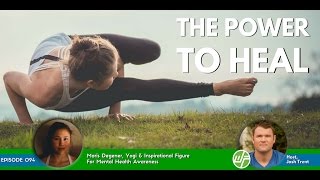
Episode 94 of Wellness Force Radio (YouTube/podcast) — host Josh Trent interviews 18-year-old yoga teacher Maris Degener about her experience recovering from a life‑threatening eating disorder (diagnosed at ~13), the emotional gaps in conventional treatment, and the healing role yoga, mentorship, and community played in her recovery. They discuss prevalence estimates (host cites ~30 million Americans; 20 million women and 10 million men annually), myths about eating disorders (not just vanity), warning signs, tools for emotional healing (feeling emotions, gratitude reframing, telling someone), Maris’s forthcoming documentary I Am the Portrait of a Young Yogi (planned spring release), and her blog/yoga teaching (yogamaris.net).
Chapters
Wellness Force Radio Feelings are essential, but they can't dictate our actions.
We literally infect each other with our emotions. We came here for a special purpose. Let the purpose unveil itself.
Knowing without doing is the same thing as not knowing. They're not just trackers. I'm gonna wear this, and it's gonna help me do the right thing. Wellness force radio episode 94 with women's empowerment, an inspirational figure in mental health awareness, Maris Degener.
So I just was kind of looking for something that I could control and something that I could define myself by. And I found the only thing that I could do was get very structured with what I ate and very structured with the way I move my body. I think you have to be willing to shed every idea you have about what it means to be happy and what it means to be successful and a healthy person again, shedding those expectations of other people, getting to the root of how you feel, and then being open and honest with yourself to go out and explore what it is that will light you up and give you this fuel and this passion to go on and become a happier, healthier person.
Welcome back to another episode, my friend. I am your host, Josh Trant. Thank you for spending your time with me here on the podcast. This is where every week I'm bringing you access to global experts in all things wellness, behavior change, and new technologies. On this podcast, you'll learn from exceptional people who are dedicating their lives to being a positive force for our physical and emotional wellness. My intention with the show is that together we'll discover the connections between our emotions and healthy habits to live our best life and enjoy the process. This episode is brought to you by Perfect Supplements, a company I'm stoked to partner with who actually walks the talk with their values of non GMO, pesticide free, real food supplements that fuel us for the wellness journey. Head on over to perfectsupplements.com wellnessforce Enter code wellnessforce to save 10% off your entire order. Hey, my friend. I trust your new year is giving you exactly what you need at this very moment, which is why you're here listening to the show, because at this moment, I'm excited to introduce you to a brand new guest to Wellness Force Radio and someone that I think we all can learn a lot from no matter how old we are. And I say that because this is an incredible episode where we discuss something that's affecting over 30 million Americans and that is emotional health and eating disorders. I'm talking with my new friend Maris Degener about her inspirational story and and a message that is universal to us all. A message of acceptance, acceptance of our journey, acceptance of what we've been through that serves us and acceptance of this very moment we have right now, the one we get to create anything we want in. Maris is an 18 year old certified yoga teacher. She specializes in the healing and restorative power of vinyasa flow. With a past of overcoming eating disorders and mental illness, Maris is a recovering pessimist and perfectionist who is now fearlessly authentic. At the age of 13, she was diagnosed with a life threatening eating disorder that led her on a journey to regain her mental and physical health. She now seeks to spread this healing power of yoga, whole foods and mindful living through her blog and teaching practice. So on this episode you'll learn about her new documentary film coming out this spring. I Am the Portrait of a Young Yogi. We're talking about mental illness, the healing powers of yoga, and ultimately self acceptance. So if you're either 18 or 68 or anywhere in between or above, I think you're really going to love this message in the podcast because mental illness is something that deserves light, not dark. So if you've ever dealt with or anyone you know has dealt with mental illness, this episode will give you some tools of compassion and acceptance to be a support for yourself or for others who are in that process of overcoming a disease or a hurdle that stops them in their tracks. Let's get to this real, raw and inspiring conversation about the power to heal with Maris Degener. Maris, welcome to the show.
Hi. Thank you so much for having me.
This is a special moment. You know, there's lessons about our emotional and physical health that I think all of us can learn from the older and wiser, but also from the young and the fearless. So today, today I'm stoked to talk about your story. Not only your incredible story, but in just 18 years of living now on path to do a documentary film in 2017, a portrait of a Young Yogi. Where is your college? Where do you actually go to school?
Now I go to UC Santa Cruz, so in Santa Cruz, California.
And I'm thinking about the times when I trained student athletes here in San Diego at ucsd. And one of the things I always enjoyed was these little flashes or lessons that I'd learned about like human nature, our ways of being in life with a heart open. And I think kids and young adults do that. They live their life on purpose. They're so raw and real, so really Looking forward to this conversation. I mean, Maris, let's dig into your story. When CNN interviewed you, you got emails from young women, but specifically you got an email from an 80 year old man who wanted to try yoga. What did he tell you after being inspired by your story?
You know, that was probably one of the best emails I've ever received. It was an 80 year old man, I want to say he was from North Dakota or somewhere in that area. And he basically said, I've never tried yoga before. I saw your story on CNN and it inspired me and I'm going to go take my first class now.
Do you guys keep in touch at all? Have you received other things from being on different outlets? I mean that seems like a pretty unique story. An 80 year old reaching out to an 18 year old of inspiration.
You know, I haven't, I wrote him a nice email back and I told him I wanted to hear more about his story, but unfortunately he never got back to me. But every time that I'm able to speak in a public place or I'm honored to be on a podcast like this, I do get emails from people. And it's always just so touching to me how people can see themselves in my own story. And it really just, it's such an honor to be able to serve as a mirror for other people and hopefully offer them some insights from the things that I've learned.
It's interesting because I haven't had a real in depth talk with somebody who's, you know, around 20 years old in a long time. So that's another reason why I'm so excited to have this conversation. Specifically eating disorders in America. I think in the United States we have some data that'll be linked in the show. Notes. 20 million women and 10 million men every year suffer from eating disorders, you know, including anorexia, bulimia, other binge eating disorders. What is something that people don't know about eating disorders? Before we get into your story, like what's the common myth about eating disorders that people believe is just not true?
You know, I think the biggest and probably the most hurtful myth that I think disturbs a lot of people is that eating disorders are only linked to vanity and in the way that we look. And while a lot of times eating disorders are related to controlling weight or controlling appearance, that's definitely not the end all be all of having an eating disorder. And eating disorders can exist in a space that doesn't have that component or that can be just a component that is kind of a stand in for other issues that someone's working through. So I think it's important to recognize that it's not just an aspect of vanity and it's not just an issue of insecurity. It's a lot of times a result of severe traumas. And it can be feeling lost in life, it can be feeling out of control. And it's not necessarily just about how someone looks or how they appear.
You were a competitive swimmer for a long time and this was before your condition. Tell us. You know, at that time, I think you're 10, 11 years old, you talked about in some of your media appearances that there was some things that were going on from a familial side, you know, some things that were out of your control and that sparked some kind of hook either in your genetics or, or in just your way of being at that age. I mean, what was going on back then that led to this disorder being there in the first place?
You know, I had anxiety my entire life from a very young age. I was an anxious child to the point that I was diagnosed with anxiety. And I lived the first half of my life with a stay at home mom. And I got very used to being an only child for a long time. My brother is five years younger than me, but I was kind of an only child with a stay at home mom. And I was used to having this very structured support system and having a constant companion. And around the time that I was in fifth grade, so I want to say about 10 years old, my mother had to go back to work. And so suddenly I was in this position where I was taking care of my younger brother. I suddenly wasn't with my mom as much and we were very, very close and it felt like things were kind of spiraling out of control. And at the same time I was competitively swimming and, and becoming increasingly involved in that sport. And that is a time consuming sport. It's practice before school, it's practice after school, it's dry land, it's day long meets. And I was doing pretty well at it. I was going up and my times were getting better and I was becoming more competitive. But I was becoming increasingly consumed by a sport that I just didn't like at all, didn't like swimming. And it caused a lot of anxiety for me. I've never been a very competitive person and I put such a huge weight on my shoulders to perform well in that sport that I had no joy in it. So I was feeling kind of like I was just floating around in this world. I no longer had the security of the home life I was used to. I didn't feel like I was spending my time or directing my energy towards something that was filling me up. And I was starting high school around this time, and everyone seemed to have their little niche. So, you know, people, there were the art kids, and then there were the sporty kids, there were the funny kids. And I just felt like I didn't have anything at all. And so I just was kind of looking for something that I could control and something that I could define myself by. And I found the only thing that I could do was, was get very structured with what I ate and very structured with the way I move my body. And it just kind of culminated with increasing anxiety and depression into an eating disorder. And it happened so fast and so insidiously that I really didn't realize what was going on until it got to a point where I was teetering on the edge of, if not dying, causing very lasting and permanent damage to my body.
Wow. So I think what I'm hearing from you the most is that, by the way, high school is already a challenge enough beyond just having these extra pieces that you're going through. But, you know, your first year of high school, you're doing sports. You're kind of in that phase that I think a lot of people are at that time in their life, and that is, who am I, what do I do, and why do I do it? So going back there, I mean, that question might get answered at that age for some people, but then you could be 30, 40, 50, 60 years old and still not have a clear answer of that question. Maris, do you feel like the question was, what was giving you the pressure? Like, what am I gonna do with my life? How is everything gonna be okay? Or was it something else that really made you seek the control?
You know, I think the biggest part or component to that question that I was struggling with was, how authentic can I be with it? Because I feel like, at least now in modern day high schools, there's a lot of pressure to do things just to get into college or just to get into a good school after high school. And I was surrounded by people who were getting very involved in school activities and in sports and in clubs. But I was surrounded by very few people who were doing it out of passion, and a lot of people who were doing it because they felt like they had to, or because they had pressure from teachers and parents, or because they felt like the only way they would be worthy is if they got into a Good college. And so I was, you know, torn because was I supposed to do things because I was passionate about them, or was I supposed to do things because someone else was telling me it was the right thing to do? So I was struggling with this, you know, the traditional lack of identity and struggle with identity that I think all people go through at that age. But I was also playing with this idea of what does it mean to be authentic and what does it mean to do things that are important to me?
Where do you think you got the inspiration to have that much depth at that young of an age? Because I'll tell you, I mean, that's not the average 13, 14, 15 year old's mental narrative.
You know, part of it is probably some self reflection from present day. But I've always been kind of described as an old soul. I wasn't raised around a lot of little kids. I was raised around a lot of adults. And a lot of dinner parties and books were my best friends. So I think part of that was just being a little book nerd who wanted to learn more about everything, including myself.
And I think a lot of people deal with these growing pains in life. You know, one of our previous guests, Lisa Perkins, she had a big eating disorder that she worked through. You know, you're in the medical ward at one point too. You were hospitalized at 13 and 14, and when you left, you had healed the body somewhat, you had gotten the tools from our medical system to heal the body. But there was this big gap in your mind. I mean, what was missing and what do you think is missing from centers for either men or women that can help them heal in their mind and body from these eating disorders?
You know, this is a big question and something that I've been tackling a lot recently. But I do think there is a big gap in the way that we're medically treating eating disorders and the way that we're approaching them in a kind of traditional sense. But basically, mental illness as a whole is very difficult to treat because it is so unique to the individual. We're still not 100% certain about how exactly mental illness manifests in people, just because there could be genetic roots, it could be triggered by traumas, it could simply just come from life situations. And so if you think about it, the way we treat most illness is by getting to the root of the cause. So we know that certain diseases are caused by bacteria, so we find ways to treat that. Or we know certain cancers are caused by exposure to certain things, so we can treat based on that. But with mental illness, it's a lot of trial and error trying to figure out what exactly works. And I feel like eating disorders are still very wrapped in a lot of taboo and in a lot of myth, and so it makes it even harder to get to the root of what's causing it. So I think a lot of times we get stuck on just the symptoms and trying to tackle the symptoms of the disease. So we focus a lot on the weight loss or the weight gain, depending on the nature of the eating disorder. Or we'll focus on the way the body reacts, so the way the organs are reacting, the way the brain is reacting. And so a lot of times we get kind of stuck in this cycle of trying to put a band aid on things. And, you know, a lot of doctors put so much emphasis on we just want to restore weight or we just want to get your vitals stable. And I think sometimes we lose sight of the greater picture of trying to heal what's actually causing this illness and what's causing these manifestations in the body. So the hospital for me was a space to kind of be forced to sit down and start to heal my physicality. So eating more, moving less, and that was beneficial. It definitely gave me a secure ground to work from start to kind of build up again. But there was not a huge emphasis on healing your mind after leaving. It was basically like, here's a few pamphlets on how to eat at a family dinner table and not cause too much stress. Good luck. Go out and do your thing. And so I was surrounded by a lot of young girls who had been in that hospital three or four times. And part of that is due to the nature of. Eating disorders are probably the most competitive mental illness. One of the aspects of having them is that you want to compete with other people who also have that disease. So having this ward with, you know, 12 to 20 girls who are all suffering from the same thing kind of just drives up this competition of wanting to be the most sick person. So I have a lot of issues with trying to find healing in these spaces where we're all being held together. But at the same time, for a lot of people, it's the only way they'll kind of wake up to what's going on in their lives.
And what I'm hearing from you is around this emotional piece, because it's really hard for the American Medical association to quantify emotional healing. When you look at blood work or you look at scale weight, or you look at someone's biometrics, I mean, Those are things that they can track and then send those to the insurance companies that are paying them bills. But what I'm hearing from you is that when people leave, and this is, by the way, you know, 20 million women, 10 million men, this is a lot of people. This is not something to bat an eyelash at. There's a piece missing around the emotional support. So then my question for you is, what was the turning point? I mean, you get out, what did you do? Like, what was the mindset from an emotional fitness perspective that really made the difference?
I kind of had to make a decision between sticking with what I had always done and what I had always known and what felt safe and taking this big leap and into something that felt scary and foreign, but had a lot of promise and a lot of hope. So I think the biggest gift that I gave myself was being willing to be uncomfortable in a new and different way. And I put a lot of emphasis on finding something that would give me the tools I was seeking. So I knew I was seeking more peace. I knew I was seeking to calm the mind, and I knew that I wanted to heal my body and get stronger. So I sought out yoga. And that ended up being probably the biggest part of my recovery.
And through yoga, I mean, let's break this down because I don't know if yoga is for every single human. There are some people that find healing in other modalities. There's a lot of ways to heal. I mean, what specifically around yoga was there one part of it that really called you? Did you feel magnetically pulled to it? Tell us about that, like how you found yoga and then what you're really doing with it now.
So I kind of just stumbled into a particular yoga studio that I teach at today. But I just took a random free community class and it was the most challenging and hard thing I had ever done. It was like a 75 minute power vinyasa flow and it was heated and it was a packed room.
Wow, that was your first class.
Yeah. And it was crazy and I was just kind of stumbling through it, but I found that I was smiling the entire time. I just had this grin plastered on my face. And I knew that even though I had no clue what had been going on, it lit me up in some way and I wanted to come back. So for me, the biggest part maybe wasn't necessarily just the yoga itself, but the fact that it lit me up in that and it gave me a passion that I'd always been seeking.
Where was your parents during this process? I Mean, I'm thinking about, you know, if I'm a mom or a dad and my daughter, my son's struggling with this. How did they support you in this healing process? And were there any difficult conversations that you might share for somebody that's going through something similar?
You know, my parents are great. They. I don't think either of them has had a lot of experience with mental illness in general or eating disorders in particular, but they were very willing to kind of work with this very steep learning curve and try to figure all this out with me. And even though there were some tricky parts where they didn't understand what was going on and that frustrated them, they were always there by my side, always a constant, and always willing to support me in anything that I thought would help. So they took me to yoga, they took me to therapy. They took me to everything. But I think the most difficult conversations parents might have with their kids that have anxiety or depression or an eating disorder is that they. They might not be able to understand that a lot of the things going on in a sick person's mind doesn't represent them. It represents their illness. And I think sometimes my parents had a difficulty differentiating me from my disorder. So when my disorder was being very manipulative, they saw it as me being manipulative, or if I was acting out and being very frustrated and angry because I was struggling inside, they just saw it as a disturbance. And I can understand that. But at the same time, I think it's important for parents to make that distinction between their child and the disorder and the healing that has to happen to kind of bridge that gap.
And let's talk about these distinctions, because I think the nomenclature around addiction gets to be shifted not only just for food addiction, but for many addictions. The opposite of addiction is human connection. And so what's really missing in this world is people that care, people that. People that can express why they care, and then the vehicle or the bridge to make that care actually execute. And I'm feeling like what I'm hearing from you, and the data is supporting this, is that this is something that people get to put a lot of energy and attention towards because it's probably somebody on our street. It's probably somebody that's just down the road. It's probably somebody that you go to yoga with or somebody that's just dealing with this process. There's a guy actually on YouTube, and his name is Furious Pete. He's one of those eating champions. Have you seen this guy?
I have, yeah. I've Heard of him.
So his story is that he had an eating disorder and he got through it. And on one of his videos we'll link in the show notes, he talked about there's different ways that people kind of fall into a disorder. Do you feel like from your experience and from people that you've been around in this healing world for eating disorder that people are born that way? Is this something that people are born with a genetic precondition for? Or does behavior and events push people in that direction?
You know, we know that there are certain kind of personality types in life situations that make you more likely to have an eating disorder, but we don't know exactly if that's a direct cause or a link that we can make. We do know that people who tend to have a type A personality or a very perfectionistic personality tend to have eating disorders. And we can look at similar predispositions for people with other mental illness, but there's many different links that we've found. So we can look at the way our DNA looks and we can find certain markers that seem to indicate someone will develop depression or anxiety. But we also see cases of depression and anxiety that happen in absence of this marker. So we don't exactly know what causes them, but we do know that there are certain life events that can trigger these sorts of things to come up. So I know a lot of people whose eating disorder was sparked by the death of a loved one. I know a lot of people similar to me who had their life situation at home change, and that seemed to bring on eating disorder tendencies. So there are many different causes or roots of causes that can lead to disorders.
A big part of our emotional health comes from how we feel in our body and how satiated we are throughout the day. I mean, it's hard to treat other people well and think good thoughts if you're walking around hangry. One of the best ways to cure satiety and satiation is to add in powdered collagen to your drinks, your waters, and into your foods. I use perfect supplements. Collagen. It's sourced from 100% grass fed cows. That means there's no hormones, pesticides or synthetics because these are healthy cows that eat grass while the sick cows eat corn. So beyond these healing powers of collagen for digestion and joint health, it also has 20 grams of protein in two scoops, which helps to curb appetite and increase that satiety. One of the cool things about this collagen is that there's individual packets you can mix in water. And you know what? It tastes like water. I mean, all of a sudden my glass has 10 grams, 20 grams of protein and all the health benefits of having this non GMO pasture raised collagen in my bloodstream. So don't walk around hangry, pick up your grass fed collagen, Feel better in your emotional body and your physical body every day. It's part of the Wellness Force radio bundle and it's heavily discounted just for you. Click over to perfectsupplements.com wellnessforce to save 10% off the already discounted package and get more wellness in the process. And there's a stigmatization around mental illness. My mom, for her whole life has dealt with manic bipolar. And I've had a lot of friends and family that have taken medications for this for a long, you know, decades. But there's this negative perception that I think you come across a lot at such a young age. And I want to take this moment, by the way, to just honor and acknowledge what you've created. We are going to discuss your documentary film and we're going to go into a lot more about what you're creating in 2017. But in the middle of our interview here, let's all just recognize that at 18 years old, you have spoken on CNN, you've been published on media outlets, you're here on the podcast. You reached out to me after being inspired from Melissa Hartwig's episode about food freedom and her past in food addiction. So thank you so much for what you're doing and just having this awareness at this point in your life to put out a message and that nice positive signal for people to absorb.
Thank you so much. I really appreciate that.
One of the things that you wrote before we interviewed was around this stigmatization and particularly in regards to depression and anxiety. Are there different facets that you've seen? I know you talk to girls and you have people that reach out to you quite a bit. Are people reaching out to you for things other than eating disorders?
People are reaching out to me in all sorts of ways. And I think that really speaks to the fact that I try to speak to as wide of an audience as I possibly can because I do feel like my experience with eating disorders is just a microcosm of the experiences that we have as a whole. So there's so many different ways that people experience the similar struggles and changes I went through. And so I have people reaching out to me who are again, dealing with, you know, the loss of a loved one, with people who are struggling with addiction, with substances, substance abuse, people who are struggling with a diagnosis for other mental illness, anxiety, depression, bipolar. And they. I guess what they see and what I write is largely just the acceptance component and the fact that I try so hard to get across the fact that having a mental illness or going through a struggle doesn't have to be the end all, be all of who you are, and it in no way diminishes your self worth. And it can be the avenue to a new world of self exploration and self discovery. And it can really be shined. It can really be seen in a more positive light than we commonly see displayed in media and in other people's lives. And the way people talk about it.
A lot of people that have issues, right? And we all have issues in life. I mean, I think I have probably the entire book of National Geographic as far as issues. But this is a big topic in your movie. And one of the things that we're talking about here is mindset. You know, people see illness as something that shouldn't be talked about a lot, I think, or there's a negative energy around it. This is just life experience. You know, in life, we go up, we go down. Sometimes days are very exciting and happy, Sometimes days are sad. And I think what I'm hearing from you and what we've had a lot of guests talk about on the show is giving ourselves permission to actually feel what it is we feel. To just sit there and be in an emotion, whether it's happiness or sadness and whatnot. Do you feel like that skill set is something that's lacking? Like, especially when people look at the stigmatization of mental illness, is it just that people need to be heard, or do people need better tools on how to manage their emotions?
I think it's a combination. I think the way that we're kind of raising a society and the way that we're raising these newer generations is, you know, to almost not feel. I feel like everything we're taught to do is kind of tainted by certain expectations of how we should act and how we should perceive certain life events. And almost like we should just be following this predicted life path that all of us should be going through. And I think that suppresses a lot of emotions that come up for people. And I do really wish that people one had the ability to just feel, to really sit down and check into what's going on in their body and in their mind, because I know so many people who just kind of numb out. And I was one of those People who just kind of numb out and don't get to the root. And, you know, I actually was talking to a friend, and they pointed out that a lot of times when I'm feeling anxious or when I'm feeling depressed or I'm feeling sad, I tend to just say I feel weird. Just weird. And I don't get to the deeper cause of why I feel weird. You know, I'm feeling anxious because of this, or I'm feeling depressed because of this. And I think that this is a tool and a skill set that we need to offer to people, is really just sitting down and feeling your emotions and working through where they're actually coming from.
Especially for men, by the way, people that are in their first two days, maybe three decades of life. The narrative has been different, though, than what you're talking about. So how do we shift this narrative? I mean, you're in college. You're at UC Santa Cruz. What do you tell young women you know, either in or out of college, but now you're in college that might be dealing with this emotional health piece or the addictive piece. Where do they begin? With this reprogramming and with this new.
Narrative, I think you have to be willing to shed every idea you have about what it means to be happy and what it means to be successful and a healthy person again, shedding those expectations of other people, getting to the root of how you feel, and then being open and honest with yourself to go out and explore what it is that will light you up and give you this fuel and this passion to go on and become a happier, healthier person. So for me, that was finding yoga and finding my passion in teaching and practicing it. But for other people, it might be bird watching or scrapbooking or writing or whatever it is that lights you up. I think that's the biggest key is finding that thing that lights you up. No matter what other people say you should be doing or say you should be passionate about, if you find that thing, you're going to be so much more motivated to keep working towards other things that make you happy and will support that cause.
Meris, I am so impressed with your level of depth. And I know I told you before we recorded here, this is something that's coming up on the interview where I'm visualizing myself at 18. I was overweight. I was not having the vocabulary that you're having right now. Who's inspired you to be like this? Was it your story itself? Do you have people in your life that have fortified this way of being. I mean, it's pretty clear someone's listening. They're like, wow, Maris is kind of an old soul. She's well spoken. She's 18 years old. She's accomplishing all these things. She's going to be in a documentary film next year. I mean, who's helping you become this person you've become already and the person that you're envisioning for the future?
You know, I have so many strong women in my life, in particular that I am just in complete awe of. I really feel like my healing process was very, very much sparked by one woman in particular who owned the yoga studio that I wandered into that day, Jenny Wendell. And she just saw something in me and I saw something in her. And she was probably the first person to kind of hold out her hand and say, I'm willing to walk this journey with you, and I'm willing to figure out who the fearlessly authentic you is. And that just inspired me. And she instilled this belief in myself by offering me a teacher training experience and by believing in me to go on and become a teacher at 16. Like, to me, that sounds crazy. I don't know who would even think that, but she believed in me enough that I started to believe in myself. And I think that that has carried something. That's something I've carried with me this entire journey, and I've gone on to meet countless other teachers. But I really do acknowledge her as my greatest teacher and someone that I'll always be completely indebted to.
You know, the power of mentorship. If you're 18 or if you're 58, it doesn't matter. Everyone has mentors, and even our mentors have mentors. This film that you're making, this is a documentary film. I am a portrait of a young yogi. This is a film about mental illness and the healing powers of yoga and ultimately about self acceptance. How did this happen? I mean, what's your genesis for this film? Were you approached? Was it something that came through you? Tell us about the film.
I was approached probably about a year and a half ago by a filmmaker in the San Francisco area named Laura Van Zee Taylor, who has done previous short films about kind of similar. Similar ideas, in particular with youth. But she basically said, hey, I saw your story, and I want to make a different kind of eating disorder movie. So there's many, many, many documentaries about eating disorders. And if you watch them, a lot of them are very dark and they. They delve into eating stories, but they always kind of end On a sour note, it's always about relapse, or it's always about how it ends in struggle. And we really wanted to make one that didn't have this heavy veil over mental illness anymore. We wanted to kind of tear everything away, say, hey, this is what happened. This is how one person dealt with it. And maybe that will inspire you to start to seek out what could help you. So we. At first, I was kind of uncomfortable with the idea of having a documentary that seemed to be about myself.
Sure. I mean, it's really vulnerable. Yeah, absolutely.
But I came to realize that it's not about me. It's about other people. And it's about acting as a mirror for other people to start to see their own story and maybe a different light.
In the film, you talk about forgiveness being a gift. It's not something that comes to us naturally. It's something we must grace upon ourselves if we want to continue to grow. So forgiveness, you know, you're 13. You're that freshman in high school. You were anorexic. Have you forgiven yourself for having the eating disorder? Like, today as you know it?
I think that's a continuing process for me. This past summer, I. I was listening to this random song on an album that was about forgiveness, and it had that line in it that you just read. And all of a sudden, it hit me that a lot of the things I was still working with was the fact that I hadn't fully forgiven myself. And there were a lot of things that happened surrounding my disorder and that time in particular, that I felt very guilty about and the way that it affected people in my lives. And so I think that kind of began a process that's still ongoing for me of accepting that a lot of the things I did were a result of certain circumstances and weren't necessarily a reflection of who I am. And I'm still working on finding that grace with myself of completely embracing who I am and what I've gone through.
Your therapist asked you if your blog had a theme. What did you answer?
I said self acceptance. And she said that was what she had in mind. So I'm glad that comes across.
This film is going to be launched in the spring of next year. I'm definitely going to link this in the show notes so that people can understand this healing power. You know, I have been inspired by so many documentary films in my life. Are there certain books or are there certain practices that you have? Maybe it is just going to the studio and having that mentor, but what about books? Are there Books that you have really leaned on in your journey around, working through and working on this addiction piece of.
I love books. I've always loved books. I'm so glad you asked me this question. Probably one of the biggest books that helped me change the way I saw myself was Quiet by Suzanne Cain. That's a brilliant book that kind of delves into what it means to be an introvert. And it helped me start to view my introversion as not being a weakness and maybe even an aspect of strength. Another book that I look at as being a big. A big turning point for me was the Yamas and Niyamas by Deborah Adele, which talks about the philosophical side of yoga, which was actually gifted to me by my mentor. That's a brilliant book, especially for people who are looking to take their yoga practice a little bit deeper, maybe going beyond the stretch, as I like to say, and getting into the mind space of it. And then a book that I'm kind of recently obsessed with is, oh gosh, I can't remember who wrote it, the Subtle Art of Not Giving a Four Letter Word that Starts with an F. But it's a brilliant book. It's a self help book, but it kind of has none of the fluff and it really gets down into the hard work and the work you really have to do with yourself. And I think it was really good for me because I still find myself putting a lot of worth on what other people think and how other people perceive me. And it's helping me shed some of those preoccupations.
Someone's listening and they have a friend, they have a neighbor, maybe themselves that are dealing with this form of addiction, this mental illness. How do we recognize this? I mean, people are good at hiding things. I know when I was a kid, I was real good at hiding my addiction. How do people recognize when someone's going through. What does that look like?
I think it looks different for everyone, but there are definitely some common signs that you can kind of look at. So for me, a lot of it was not finding joy in food anymore. So food was very stressful and other people could see it. And I remember my mom even saying, like, I saw you look at food like it was an enemy. Like you just looked at it with complete disgust and disdain. So if someone around you suddenly has a very different emotional response to food, I think that's a very big warning sign. If someone is suddenly displaying a lot of stress around eating in social situations. So sharing a meal with someone else, holidays that are surrounded around food, like Thanksgiving And Christmas, that's another good sign. And, you know, sometimes it's just as obvious as noticing that someone's restricting what they're eating to a very extreme degree. So if you notice someone is suddenly weighing and measuring everything that they eat, and they've never done that before, or someone is suddenly eating very different portions or very different kinds of food and seems to be kind of stressed around it, I think those are good warning signs. But again, it looks different for everyone.
What's your relationship now with food? I mean, here you are, you're 18, you're in college. It's a pretty stressful time. You know, you have a lot of deadlines. You have a lot of things going on. How do you manage that now? I mean, what's made the difference for you in making that relationship with food light and free and coming from a place of love and abundance?
That's a great question. I think a lot of it was just framing it in that light, trying to see food as no longer an enemy or no longer something that I had to be very preoccupied and stressed about, but seeing it as a form of nourishment, and beyond that, seeing it as something that could even bring joy to me. And a lot of that was reading the work of Michael Pollan. I think his work is just brilliant.
Oh, he's great.
Yeah. But he talks about how food is representative of so much more than just calories and micronutrients. It's a symbol of our culture. It's a symbol of connection. And reading his work and trying to reframe the way I saw food was a big part of it. And another part of it was getting more connected and more involved with where my food came from and how it got on my plate. So learning how to cook, sharing my cooking with other people, getting comfortable with opening up what used to be a very secretive space of how I ate and prepared food with people that I loved, yeah, it made things a lot lighter and a lot more free.
And one of the ways that I can speak from personal experience here, in clients that I used to coach in gyms, they would tell me that they wouldn't eat any food at all. So there's this cognition bias where people that are having these eating disorders, whether it is bulimia or whether it's just being obese, the relationship with food is off. And a lot of times, the story of what's the truth versus the story of what's actually happening couldn't be further from what's reality. What is a narrative that you come across quite a bit where people are saying one thing, but they're doing another in regards to food.
That's a great question. I do see a lot of that difference between what you say and what you actually do. I see a lot of people who say that they just want to look a certain way. And in that, I think they think that they're becoming healthier. Because we see. I think the important distinction to make is we see right now this big coming of the fitness industry, but I think that can be very different from the health industry. So I think a lot of times we see people that are very strongly trying to manipulate the way they look, thinking that they're doing it for health, but maybe not focusing on the more underlying issues like hormonal health, the more kind of quiet and invisible aspects. I do see people who want to change the way that they eat, but are reluctant to let go of kind of old knowledge that we've just kind of heard repeated over and over and over again and start to, like, low fat and low carb and low sodium are all the healthiest possible things you could ever find. But maybe looking a little bit deeper than that and being willing to explore new ideas surrounding food and the way nutrition works and serves our bodies.
This is the last part of the show, and this is where we get to know you a little bit deeper. This is just going to be seven questions. Tell me the first thing that comes up. I didn't give you any precog on this. You have to answer them in the moment. Are you ready?
I'm ready.
What's your biggest growth edge right now? In other words, Emmy, what's the lesson that you're learning right now or that you're in the process of currently learning right now?
I'm taking a break from teaching while I'm away at school, during the time I'm at school, and I'm learning how to kind of see who I am, how to. When I have to shed the teacher part of my identity. So learning who I am when I'm.
Not a teacher, how do you practice this fearless authenticity? What does that look like?
For me, That's. That's how I write. I write about. My whole theme of my blog is I talk about the shit I don't want to talk about. So I force myself to talk about the ugly stuff, the stuff I might be trying to hide, and kind of embracing the idea that that might be the best thing I have to offer to people.
What's been one of the most powerful parts of the community that Supports you in being this fearlessly authentic person. Is it people? Is it your yoga studio? I mean, how do people piece in? Tell us what's worked for you about creating this environment where you feel the space to be authentic in?
I think my yoga studio has to be that cocoon for me. Everyone there is willing to support me in becoming a better teacher and in becoming a more knowledgeable student. And people there just my particular yoga studio people love you just for who you are and for showing up. And there's no gossip or pettiness. It's just love.
When you've been in the shame spiral in your life and you're feeling kind of, you know, just horrible or maybe helpless, somebody out there is going through that literally as we speak, and we already talked about the data. Millions of people are dealing with shame spirals. Every single day someone's feeling this way. I mean, what do they do in that moment? What's the narrative? What can they tell themselves when they're feeling that shame spiral begin?
I like to interrupt those kind of anxieties with gratitude. You know, just trying to replace negative things with a positive reframing. And we do have evidence, just psychologically speaking, that that kind of reframing is probably one of the most long lasting and most effective ways to improve our mental health and our mental well being. So interrupting things with gratitude and just reframing the way we're viewing things.
Marisa, what was one thing, or maybe someone that you gave the gift of goodbye to that you let go of in order to step into this vision of the documentary next year and the people that you're serving? What did you let go of?
I let go of the idea that I had to be a certain kind of person or do certain kind of things to be a worthy person and worthy of other people's respect. And so I kind of do things in an unorthodox way. But that's how I've come to find a little bit of freedom and find a little bit more love.
I love your answer so much. This has been an incredible talk so far. And we have two last questions and the next one is your vision. You have a vision at 18 and it may change. I mean, I'll be honest with you, it's going to change. I'm 36 and my vision has changed three times. But your vision today, Maris, as you know it, what is that vision? Who do you want to serve and why do you want to serve them?
Who do I want to serve? That is a great question. I want to serve Anyone who has ever felt the feelings that I felt when I was at my lowest point. So anyone who has ever felt like they're at rock bottom and they don't have anywhere to go. And I want to reframe that rock bottom as a firm foundation for them, a place where they can build up from the bottom and step into a new life and a new purpose. And I want to do that through teaching yoga and through writing and through speaking and connecting with as many people as I possibly can.
How would you define, if you were to put it into a sentence or three, your definition of being? Well, what does wellness mean to you?
To me, wellness is whole body, complete acceptance, love, and nourishment of the self. So whether that means protecting your physical body, whether that means protecting your physical or your mental health, or if that just means stepping into a new purpose, I think it's just taking care of the soul and nourishing the soul.
One of the great things that we've talked about today is giving ourselves permission. For someone that's listening right now and they're feeling that energetic pull, you know, where they're excited and they want to take a step. If they were to take one step tonight or tomorrow morning in either getting the community support they deserve or having those healthy habits be a part of their everyday life, what's one thing they can take a big breath on and do tomorrow morning or tonight?
Tell someone. Tell someone that you're ready to change things and get that little bit of kind of responsibility there and accountability and just make it be known that you're looking for change.
So enjoyed our conversation today. Thank you for your tenacity and following up with myself and the team at Wellness Force. I really appreciate what you're putting out into the world. I mean, in 18 years, you have been through probably two or three lifetimes worth of lessons. So, looking forward to the future. Tell us about what you're doing on your website. You have this section for women to put out, series of posts, right? Profiling their lives who are embodying strength. It's called Everyday Goddesses. So if there's any women listening, I mean, how do they sign up for this? How do they get involved?
Yeah. So I do have a blog where I write about yoga and nutrition and mental health. But I also have a little series on there that's an interview series I do with women who I think are strong and impressive and inspiring. To me, it's called Everyday Goddesses. And if you go onto my blog, yogamaris.net, you'll see a little link there and there's just a little space where you can send me an email either telling me a little bit about yourself or another everyday goddess and I'll get in touch with you and I would love to chat with you and share your story with the world and get a little bit more positivity out there.
We're definitely going to link all the show notes today and we're going to put it@wellnessforce.com Maris and that's M A R I S. Thank you so much. I want to honor and acknowledge you again, just like I did in the middle of the show at the end because your journey is just beginning and I feel like in the next two, three decades you're going to impact a lot of people. And I feel like we were lucky to hear this message no matter what age we're at, if we're 18 listening or if we're 88 years old listening. Thank you so much for what you're doing in this world, Maris.
Thank you so much. It was such an honor to be here and to get to chat a little bit.
That wraps episode 94 with Maris. Now, I know there's probably multiple times when you were like, this woman's only 18. Well, I know I did. But that's what's most beautiful about this podcast today. And I mentioned it in the beginning of the episode where there's these lessons about emotional or physical health we can all learn from, from older and wiser grandparents and people we love, but also from the young and the fearless who have been through lessons that we might not have been. So if this show sparked you to take action or you got a gem of wisdom that you might apply to yourself or someone you care about, please share the show with a person who's ready to receive the message all time. The all the show notes from today, including information about Marist's documentary coming out this spring, can be found at wellnessforce.com Marist and I want to connect with you outside the podcast and in real life. So sign up for the free weekly Wellness Force community newsletter and join our free facebook group@wellnessforce.com news. Let's stay in touch and have some real conversations about things that matter to all of us on the Wellness Wellness journey. You know, there was one really big takeaway that I got from this show and it actually happened when I was going through the editing process. And it was this one thing that hit me when Maris talked about being open to shedding all the expectations and all the things you've accumulated about what you think makes you happy and be willing to take an honest emotional inventory about the things you actually believe will make you happy. That is a challenge. I think we all can relate to that as a very universal question in this human experience. So as you take that thought into your day, there's just one more thing left for you to do, and that is to step out into the world and your community to be a powerful force of wellness for the people and things you care about. So until I see you again next week, I'm wishing you love and wellness.
More from Josh






Your child's future start before pregnancy... and even before conception! #podcast

MD Reveals: Your Healing Creates Your Child's Reality (The Souls Coming In Need Strong Bodies)



