The Root Cause of Slow Metabolism Is NOT The Food You Eat (Ben Azadi)
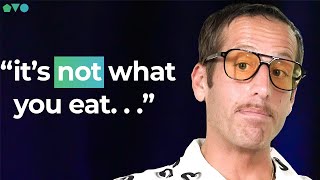
Podcast episode (Josh Trent interviewing Ben Azadi) exploring metabolism as driven less by macronutrients and more by mental, environmental, and spiritual factors. Ben frames weight as a symptom, describes his own reversal from 250 to 170 lbs by discovering purpose and changing environment/thoughts, links chronic stress and lack of purpose to metabolic disease, and shares a personal story about his father's illness that motivated his work. Practical themes include protecting your environment, reducing allostatic load (stress bucket), prioritizing whole foods (animal protein/red meat), and using keto as a flexible tool (Keto Flex / Metabolic Freedom).
Questions this video answers
93%
Less than 1% obesity in 1930
Highest 250 lb; current 170 lb
1984
August 11, 2014
Chapters
People are obese not because of what they're eating, but because of what is eating them. In 1930, we had less than 1% obesity, and now it's going to be 50%. Our genes do not change that quickly, so it's not a genetic problem.
I wonder if there's something besides just the food I'm eating or besides the lifestyle that I'm leading. Maybe it's actually the thoughts that I'm thinking. Maybe it's actually the disconnection of my heart from something that created me.
93% of Americans are metabolically unhealthy. They're not living a life on purpose with their purpose. When you're clear on that and you start to change your thoughts and become aware of what's going on in your environment, everything else clicks.
There's this pain to purpose that we all walk. Many people, they feel it, but they never grab hold of it. They actually don't ever use their pain in a very positive way.
You can't escape a prison if you don't know you're in one. Nobody has a weight problem. You never had a weight problem, Josh. I never had a weight problem. We had a weight symptom. The body gets healthy to lose weight. It does not lose weight to get healthy. So once you understand that and identify the interference, then work on removing the interference and then your inner physician will go to work for you. The average person looks, looks at a symptom and they look at it as something that is bad and they want to drug it, medicate it, vaccine it, or whatever it is. Just cover it up. Symptoms are a gift from your innate intelligence. Symptoms are a gift from God because it's God's way, your metabolism's way of showing you something you ate something in your environment. Maybe your thoughts created interference. And I'm going to show you a symptom to help you become aware of that. It's like your body's check engine light. From my research, there's only two ways to change the paradigm.
Hey, it's Josh. Before we get into this episode, I have a small yet powerful favor to ask of you. The community has been growing by thousands lately and the bigger the tribe, the bigger names of world class guests we can have on this podcast that I can bring to you from my heart, from my curiosity, so you can have more wellness and wisdom in your life. Would you please be so kind as to hit the subscribe button wherever you're watching or listening to this podcast. It'll allow us to rise naturally in the algorithms based on your 2 second act of generosity by you just tapping that little subscribe button wherever you're viewing or hearing this episode. Thank you so much. It means the world to me and our entire team here at Wellness and Wisdom. Now, enjoy the podcast.
Ben. Welcome to the podcast, Josh.
It's been a long time.
It's been a long time marinating. We're here in Austin, Texas, in a beautiful Airbnb. By the way, freaking love it here. And this is special, man, because I'm actually changing studios right now. And so you'll be my first guest I've ever done outside of the studio.
That's cool.
Which is cool because you have outside the box, thinking and being, man. It's been such a joy to get to know you through your content and I'm looking forward to getting deep with you and hearing about your psyche and learning about your psyche today. You know, for people that don't know you, they don't know anything about you. You're the author of four books, Functional Practitioner of the Body, the Mind, the spirit, maybe the Soul. Yeah, probably.
Yeah, absolutely.
Just give people a 30 second snapshot of who you are. I know it changes over time because mine sure as fuck has. But with your life and everything you've accomplished, like, what are you the most proud of? And if you're an elevator, like, how do you explain who. Benazadi.
30 seconds. Okay.
Or 45. Whatever.
I'm a teacher. I love to teach. So if I had to just nail it with one term, one word, it's I'm a teacher. I would also combine that with I'm a student as well. So I'm constantly, just like you, Josh, learning, unlearning and relearning. And whenever I learn something, the first thing I want to do is teach it to somebody selfishly. Because when I teach it to somebody, I get to learn it better. If I could explain it to them in a way they get it, then I really get it. So if I had to just say it in one word, who am I? Benazadi. I'm a teacher.
I love your last name. It's got a cool ring to it. And you were sharing with me before I hit record. It actually means freedom in Farsi.
The book.
The new book will be called Metabolic Freedom. This is Keto Flex, if you guys are on Spotify or YouTube. But the new book has the word freedom in it and your last name means freedom. And Farsi. It does talk about that a little bit.
Yeah, it's perfect because I don't Take for granted the fact that I have freedom here in America, in this amazing country, able to live the life I want to live and do the things I want to do. And my parents immigrated here from Iran in the 1970s, literally three months before the shah, who was the president when it was in free country Iran was before he was overtaken. A few months right before that, my parents decided to come here. And of course then it turned into a communistic country and now it's, you know, unfortunately there's a lot of bad things happening there. But they left right before that and they came here to Miami. My dad got offered a job by an American doctor to kind of be like a landscaper slash butler slash just take care of my home sort of thing. So he took my mom, they had an arranged marriage, they flew here. And then I was born in 1984. And my last name literally, like you said, translates to freedom in Farsi. And my first real, my actual real name is Behrouz, so I go by Ben. And I'm happy that you call me Ben, I'm good with that. But when I was a kid, everybody called me Behrouz. And Behrouz actually means sunrise. So my full name means Sunrise and Freedom.
1984. George Orwell. Do you ever connect with that, the freedom aspect of your being?
That's true as well. Have you thought about that? Yeah, I have thought about that.
The coolest part about you that I can connect with is the physical health. Obviously there's more. There's mental, physical, spiritual, emotional, financial. It's the Pentagon that we teach in liberated life, community, and just all of our work. But starting with the physical, man, if the physical is not clean, if the physical is not taken care of, you really can't do anything else. And that physical aspect is massive because I've been very overweight. I was 280 pounds at one point. I'd love for you to share your journey with weight loss, because weight loss, it's not like we need to actually find it, we know where it is. The term even weight loss is kind of funny, but losing weight, it's really letting go. It's letting go of the physical stressors, it's letting go of the stories, it's letting go of the shit that holds us back. There was obviously something, maybe many things that were holding you back when you were close to 300 pounds or how big were you?
250 was my highest.
250. And what are you now at?
170.
Okay, so that's a Pretty big chunk of you that you let go of. What's that part of you that you let go of? What is that?
I got clear on my purpose. I. When I was a kid, I had a lot of addictions. And I was always told I had an addictive behavior. So my addictions were really destructive for me as a kid because I put that energy into video games. I was actually one of the best video game players in the world. Call of Duty and Madden, I used to crush. I was so addicted to video games. But then it got into drugs and alcohol. And my environment molded me. We become our environment. My environment was toxic, so I had toxic thoughts, toxic behaviors, and I was addicted to a lot of bad things. I had food addiction as well. So when I got clear on my purpose, I used that addiction as a superpower. And I think a lot of people who have an addiction, they don't understand that that's a gift. And it can be a powerful gift as long as you take that energy you're putting into your addictions like I was. We put so much energy into our addictions. I became a master at video games because I was so addicted to it. When I got clear on my purpose, I transferred that energy and became unstoppable to this day. And I use it as a gift and as a superpower. And like you said, I released the weight. There was no time to eat destructive food, inflammatory foods. Cause it was taken away from my goals and my aspirations and my purpose. And there's a great quote from Robert Heinlein, who said, in the absence of clearly defined goals, we become strangely loyal to performing daily trivia until ultimately we become enslaved by daily trivia. So when I was not clearly defined on my goals, I was a slave to daily trivia. But when I got clear on my goals, that was a thing of the past. And then I started eating better, moving my body, and I lost all that weight in about nine months.
So was there a moment where you had like flaming hot Cheetos on your fingers and you were playing Call of Duty that you just said enough is enough?
It wasn't that sort of moment. I was going through a bad breakup with an ex girlfriend and I was so depressed and suicidal and just lost and hurting every day and crying every day. And I had to actually invite friends over constantly because every time I was alone it was suicidal thoughts, going on the Internet, looking for ways to end my life with the least amount of pain. And I kept thinking about my mom every time I explored suicide. And I didn't Want to leave her with that devastation. So stop me. And then I got into reading books. Dr. Wayne Dyer, who we were talking about offline, he would say things that would just light me up, like, hey, if other people are the cause of your problems, you would have to hire a psychiatrist for the rest of the world in order for you to get better. And I thought, damn, that is so true. I'm blaming everybody. That's unrealistic for me to hire a psychiatrist for everybody. I'm the only problem that I will ever have, and I'm also the only solution. So it really helped me take responsibility. That was my first step. And that word. I know you talk a lot about this, Josh. Most people don't understand that word responsibility. You do. I see that with the way you live. But that is your ability to respond to life. Yeah, right. When you. When your ability to respond to life is poor, like it was for me, you get poor results. When your ability to respond to life is taking the ownership and taking ownership over your circumstances and doing whatever it takes to figure it out, then you become the victor of your destiny and you stop being the victim of your history.
See, this is what I get from.
Both of our work.
And really everybody here at the Hack your health conference this weekend, everyone is a personal development mentor. Some people just pick vehicles of physical, like you or metabolism. And then some people like myself are all about the emotional health because it's tied to our pain. There's this pain to purpose that we all walk. And for some of us, it's not to judge, but we. We don't actually make our pain into purpose. And I wonder what that is, because there had to have been a moment for you. I like to get deep, man. This is how we roll on wellness and goodness.
Let's get deep.
I really like to know what is the fabric of your psyche or what is that chink in the armor of your soul that actually allowed you to grow and grab the purpose? Because many people, they feel it, but they never grab hold of it. They actually don't ever use their pain in a very positive way. There had to have been a turning point or maybe like multiple turning points for you where you said, okay, I'm going to take this pain that I'm feeling. I'm going to take this sadness, this grief, and I'm actually going to do something amazing with it. What was that? What was the amalgamation of that?
I got a strong relationship with God. I developed a strong relationship with God. And I'm a child of God and God Abundance is our birthright. I started to understand that I was in a prison of my own making. And you can't escape a prison if you don't know you're in one. So the first step was awareness. I became aware that I put myself in a mental prison. And I said, if I put myself in a mental prison and it's a result of all these small little behaviors I did every day that stacked over time and compounded into a negative, hateful life for myself, then I could stack the cards in my direction and start changing my behaviors and do a tweak a week sort of thing and develop and compound that into a direction that I love. Then started to just become really faithful with God and understand that God is living through me and God has given us abundance. And I'm a child of God. I am love, which is I am God is the same thing to me. I am love. And it just helped me wake up, you know, awareness was the first thing there. We live in America, Josh. I mean, when you live in America, we're so fortunate we could do whatever we want. I kept thinking about, like, what if I lived in Iran? What if my parents never made that scary decision to come here? And I lived in a communist country with a beautiful history, but I was not free to do the things that I could do now. And I started to understand that I'm taking this for granted. And if I'm a child of God and God wants abundance for us, then I'm letting God down. And that was the turning point for me to understand that.
When you say God, do you mean a bearded dude in the sky or do you identify with God in a different way?
I identify with God as a higher power. I identify with God as the person who created everything. I don't know if that's somebody with a beard or not. I guess maybe we'll find out. But I know that someone, something created us. And I have a strong belief that the reason we're here is to live out our purpose, to find out what is our purpose, and then to live on purpose with that purpose. And I'm one of the grateful people, and I think you are too, that have found that. And we're actually living in congruence with that.
Yeah, it wasn't until I really developed a actual relationship with God. And my definition of God is much different. Well, it's actually very similar. It's the loving energy that always has been and always will be. Right. It's the omnipresent zero point field where you and I are created from. So you're Benazadi, I'm Josh Trent. We're this unique point of consciousness expressing itself from a creator. So a creator created us, therefore we have been created. So how could anyone deny the fact that there's a creator? And if you look at some of the blue zones and the research in the blue zones, I'm sure you're steeped in the blue zone research. When it comes to metabolism, think about the, like Sardinia or Icaria, all these places, the people that live the longest are the ones that have a faith or a connection to a higher power, which, by the way, directly impacts metabolism.
Yeah.
So paint that corollary between metabolic health. I know we'll get into the sciency stuff too, which I love.
Yeah.
But more on the spiritual for people that are just maybe saying, okay, I have low energy. I wonder if there's something besides just the food I'm eating or besides the lifestyle that I'm leading. Maybe it's actually the thoughts that I'm thinking. Maybe it's actually the disconnection of my heart from something that created me. Can you paint the corollary between metabolic health and a connection to God? A connection to higher power?
Yeah, it's a great question. It's exactly it. 95% of our results is right here. It's the mental. So it's all great to have a physical six pack. I think that's a good goal if you want to have that. But a mental six pack, that's a worthy goal. So when we think about metabolic disease out there and how that relates to more of the mindset part, it reminds me of a book called Recovering the Soul. Have you heard of this book before?
No. It sounds like my kind of.
What a great title, right?
Yeah.
From 1988, medical doctor named Larry Dossey. In this book, he had a study that showed the average American has their first heart attack Monday morning between 8 and 9am 85% of the time. What's the significance of that? They're going to a job they hate, they're stressing out. And when you're in a chronic, sympathetic, stressful state, and that could be physical stress, mental stress or chemical stress. But in this scenario, we'll talk about mental. You're going to have chronically high levels of cortisol. You're going to be stuck in a sympathetic state. And that's a silent killer. We understand how stress kills. It leads to obesity. For example, Harvard is saying by the year 2030, 50% of Americans will be obese. Half the Population. It is not a genetic problem. Like Oprah or other people want to talk about that. It's a genetic problem. It's not. Our genes don't change that quickly. In 1930, we had less than 1% obesity, and now it's going to be 50%. Our genes do not change that quickly. So it's not a genetic problem. I believe people are obese not because of what they're eating, but because of what is eating them. They're not living a life on purpose with their purpose. When you're clear on that and you start to change your thoughts and become aware of what's going on in your environment, everything else clicks. You start to eat better because you love yourself more. And why would you want to eat fried inflammatory foods, which is going to make you have brain fog and be inflamed when you have a life to live and you have goals to pursue? So it starts with the mentality. It starts with your purpose. Then it helps you make better decisions. That's exactly what I did.
I think about the allostatic load that not having a purpose creates. It's like this constant drip of stress putting us in that sympathetic. It's the same thing when somebody gets up in the morning and they're like, well, what do I have to live for? You know, like, why should I actually live my life? For many people, it's children. Like, my life took on a whole new meaning. And I don't know if you want children. I do. Okay, so you'll find a deeper level of God's diamond in the eyes of your son or daughter. You just will. And that's what I found. And I find that the more that I can actually learn from children, because my son's very metabolically healthy. His squat, his motion, he likes to eat Paleo Valley beef sticks, shout out to Paleo Valley. Like, he just naturally is in harmony and in alignment with the stuff that's good for him. Now, granted, he freaks out and cries a lot, too, so he needs my coaching and my fathership and his mom's guidance in that. But, you know, this. This thing that you said, I'm a child of God. I really love that because I think the further away we get from the wisdom of our childhood, when you're a child, you know exactly what lights you up. You don't have to argue with your friends about what's fun. You just go have fun. And then the more we get disconnected from what actually gives us joy and what gives us fulfillment and purp. I don't Know, at some point in our lives, and I wonder how you feel about this. At some point in our lives, we start divorcing ourselves from nature and we divorce ourselves from the things that we actually are craving on a soul level. And that, I think, is the. Is the bifurcation where we put our dreams in one box and then we put our responsibilities in the other. And it fucking kills us. It literally makes us sick from the inside out. Not just with thoughts, but we're out of alignment with our soul. Have you. Have you experienced this in your life? It sounds like the video game land and the Cheetos. Was that for you?
Yeah. No, it was.
You had forgotten that you were a child of God?
It was most of my childhood. First 24 years I was lost in life. Most people are, unfortunately. And that's why conversations like this are so important, because it helps people become aware that you are a child of God. Like, if you live in America, live in a free country, like, you have the opportunity to do whatever you want, and you should, as long as it's, you know, ethical and moral like you should do it with. Our spiritual DNA is perfect. It's absolutely perfect. Like, we have this human body that we want to take care of, that we can live here for a very long time. And then when the body dissipates, when the body expires, the soul is transferred. This is a transfer of energy. Energy is never created or destroyed. It's just transferred, just goes somewhere else. So this spiritual DNA is absolutely perfect. And when we can understand that we were built to be the child of God, to be a child of God and find out what's important to you, what's your passion? And I'll tell you this. So many people struggle with finding out what's important to them. And a lot of the times it's with. It's with what you fear. I think fear is an indicator of a green light of passion. I'll give you an example. When I was in college and I dropped out of college, when I was in college, I was two years in. I was about to get my associate's degree. And the final class that I needed to pass to get my associate's degree was speech class. In order to complete that class, I had to present in front of my classmates for 10 minutes on a specific topic. I was so afraid of doing it, I pulled my teacher, my professor, out of the classroom a week before I was set to present. And I made up. I made something up. I said that I had a speech impediment And I couldn't speak in front of my classmates because the speech impediment will come out. It's very embarrassing. I made that up because I just want to. Didn't want to speak in front of him. And he gave me the right advice. He said, you have to face your fears, and we're going to support you no matter what. We're here to support you. But I ended up just quitting. I didn't even go to class that day. And I dropped out of college because I was too afraid to speak in front of my classmates. Now fast forward to now. I speak on stages all across the world. It's my favorite way of teaching. I love nothing but speaking in front of a large audience. And that was something I feared. So I say this because sometimes with your audience who's watching and listening, it's the thing that you fear that might be your greatest gift right now, if you lean into it and just punch fear in the face. I always say frequency creates the genius, and you just keep moving forward. My philosophy is to embrace the suck. Right? We do things and we stretch ourselves. We set new goals. And it's uncomfortable. You start speaking in front of people, you feel uncomfortable, you start to sweat. You start to think about, at least this was me. Did I say that the right way? And it sucks at first, and it continues to suck in the beginning. But my formula is suck, suck, success. You embrace the suck, you become a master. You were once a disaster. You eventually become a master along the way.
I used to be the first three, four years of podcasting, I was scared to be on camera.
Wow.
I literally was like, wait, I'm not going to have any notes, and it'll just be me. Oh, my God, what are people going to think? But I kept going. And it wasn't until, like, three, four years before I was like, you know what? I'm actually just gonna put cameras on because I am who I am. And it's in this journey of, like, loving the self, truly loving the self for exactly who you are, that you get to speak on stages around the world or that, you know, 10 plus million people have listened to the podcast. Fill in the blanks with all the accolades. It's going in that direction of fear. And fear is interesting because I've heard acronyms like forget everything and run. I think it's different. I think fear is for everyone's attention responsibly. Responsibly. You talked about responsibility earlier. So fear is an informant, right? It's just something in our psyche either individually or collectively, that's just giving us info. It's information. So at that time, your whole nervous system and your consciousness development was saying, get the fuck out of here. And I listened to it like, you need to leave. You're going to die. And I've heard that public speaking is. Is construed by some people's nervous systems. It's like true death, they feel. And it goes back to ancient wiring where if we were kicked out of a tribe, we could die. So there's some primordial wiring there. But fear is so wonderful at times because when I'm going into my fear, I feel alive. I feel like I'm doing something with value and meaning. And honestly, man, and this is what I really want to get into. There's so much gift, there's so many beautiful things that can happen when we actually lean into the fear. It's one thing to talk about on a podcast. We can sit here and wax poetic. But it's been 10 years of me going into my fear and you the same. Plus, I wonder, for the people that are here at this conference or the people that are listening to the podcast, is there even a beginning step? It's easy for us to say, we'll just do it, you know, but that's not tactical. It's not practical. Like, is there. Is there something practical that you could share that's really helped you in your life when you do experience overwhelming fear, almost where it paralyzes your nervous system? Like when you were in school and the teacher was like, you gotta face it, and you quit. Obviously you can look back on that version of yourself and have compassion. Right?
Because you.
You were who you were then. Yeah, I said it earlier. I'll say it again, and I wonder how you feel. It's really moving in the direction of what we want. Experiencing the fear and learning how to love the self. And when I say the self, I just mean the beautiful being that we are. That's actually the inflection point where everything comes from everything. And I feel it in my bones when I'm talking to you. There's no way that anybody could accomplish any. Anything. Mother, father, author, speaker, whatever, whatever your chosen endeavor is. Unless you have some way of embracing and loving and dancing at times with your fear, like, what's the starting place for people, in your opinion? Many people have different thoughts on fear, but we're not going to get out of life without experiencing, and we surely will not have a purpose if we don't face our fear.
Well, you said it With. It's exhilarating. Right? There's. There's a feeling to where I'm most alive. Yeah, exactly. You feel alive.
Yeah.
It might be uncomfortable, but when you're in your comfort zone, it's comfortable. Obviously it feels good, but it's a very dangerous place to be in your comfort zone. There's no growth. Everything is. Either you're either growing or you're. I'm going to word this differently. Either you're creating or you're disintegrating. Nothing stays the same. So change is inevitable. But personal growth is a choice. Nothing stays the same in this world. Nothing. Everything is moving. This bottle of water, this book. Everything is moving. Just can't see it. So when I started to understand paradigms in the subconscious mind, it helped me overcome the peril, feeling paralyzed from fear. So the paradigm, of course, is part of the subconscious mind and conscious mind. And people think the mind is the brain, but the mind is not the brain as much as the fingernail is the brain. The mind is a system, and it's all over the body. It's not just the brain. And 95% of our thoughts, our feelings, our actions, our decisions, and essentially our results come from that subconscious mind. And our subconscious mind runs the show. It's on autopilot. And most people, they have thoughts that are just going on autopilot. People are not stopping to see if that thought is a real thought. Is it serving me or is it just an autopilot? Thought and mental activity is not the same thing as actually thinking. Bob Proctor used to say 3% of the population think, 2% of the population think they think. And 95% of the population would rather die than think. People are not thinking. They're really not. They're just going through the motions. We have 60,000 thoughts every day, Josh, and 90% of them are the same thoughts from yesterday. And 85% of them are negative thoughts. They're stinking thinking thoughts. That's your paradigm. It's a multitude of habits embedded into your subconscious mind, which is just. You're running on autopilot. So when I started to understand the subconscious mind and paradigms and how it works, then I started to understand how I could change the paradigm. And from my research, and I don't know if you've seen anything different. I haven't seen anybody give me any other data here from my research, there's only two ways to change the paradigm. The first way is an emotional impact. It's usually a negative experience. So when I was obese, and suicidal. That was an emotional impact when I lost my dad. An emotional impact. 9 11, for a lot of people was an emotional impact. If you were involved with the buildings and everything that happened with 9 11, when that happens, it's enough of an impact to change the way you think, to change your behaviors, hopefully for the better. Right? That's one way. And it's usually a negative way, and I don't prefer that way. The second way is the constant repetition over time could start changing the way your brain fires and rewiring your brain. And the thoughts that you used to think that were negative, inflammatory, stinking thinking thoughts are now thoughts of opportunity. And there's something here. Let me, Let me pause, let me reflect on that thought. Where's that thought coming from? So that's the second way to change a paradigm, to actually do it on a consistent basis. And I do it with writing down my goals. I do it with gratitude, feeling gratitude, et cetera. I do it with reading books. I do it with changing my environment. It doesn't happen over time, but it will happen over time for sure. It doesn't happen overnight is what I meant. It happens over time. So when I started to do this on a consistent basis and start just becoming aware of those thoughts, and if it's a negative thought of the old me that was not serving me, I would pause and kind of let it pass like a cloud and then choose a better thought. So over time, I started to understand what was going on with my mind, and it really helped me kind of embrace the fear and go towards it.
I love it because I've explained to many of my people in the community that thoughts can just be leaves in the driveway. Just because we think a thought doesn't mean that it's actually real. I mean, y' all know what we're talking about, right? Like, if you're watching this right now on YouTube, write a comment and be like, today I thought about this. But then I realized that it was complete. It wasn't actually real. Didn't serve me at all. I have thoughts sometimes when I'm driving down the freeway where I'm just like, oh, my God, what would happen if I turn the steering wheel like this? It's literally just a thought. It doesn't become form until I attach some kind of emotional particle to it. And then when I attach emotion to it, then it starts to generate towards manifestation. Then that thought can actually become a thing. And the part that's so amazing about this also, I guess you could say dangerous, is the Way thoughts become things is the same way that food becomes our body. It's the exact same thing. What I'm feeding myself, my psyche, the food that I'm eating, it all relates. It's like brother and sister. And this concept of metabolism is so fascinating because I remember a long time ago, I was talking with Jade Tita. Dr. Jade Tita.
Yeah.
And he's this master of metabolism. And so one thing he was saying was that, you know, many people, they think just by eating less and moving more that they'll become healthy. But the body adapts just like our brain adapts. So you have to be really, really almost cunning and strong mentally in the same way that you can train your body physically to be able to adapt to life. The things that are happening in our world right now are so intense. Like if you allow yourself to go down the route of elections and all the things that really can't control. But also food companies and the way that food companies advertise and they get their hooks and children and we're very careful with the foods that we feed our kids. But it starts in childhood. I was raised on welfare, Ben.
That's right.
I'm talking like government cheese, government funded housing, no vegetables, tons of seed oils. I remember like the big jug of Crisco in the kitchen. So this is, this is. And you know, forgive me, mom and dad, I know. I love you and you did the best you could. Right. It's just you don't know what you don't know. But I wonder how you see this playing out now. There's so much more awareness about the hooks that are put into children and also the hooks that are put into the minds of adults. When it comes to food, we are only as adaptable as we allow ourselves to be when it comes to the thoughts we think and the foods we eat. In your book, especially the new one, Metabolic Freedom, there has got to be a mental, emotional intelligence section.
Yeah.
Where somebody can really go deep into their self to figure out, oh, I'm a slave, and I don't even know it. I'm literally a slave to food. I'm a slave to thoughts. But I didn't know that. I didn't know that. I was the biggest blind spot. What's your take on this? Because it's a real. I mean, there's a whole podcast there.
Yeah, I love.
But just give us, give us the tip of the iceberg there in your world of metabolism. The thoughts we think, the foods we eat, we're feeding the same being.
I love Talking about this, Josh. I am going to have an entire chapter about this in the book, by the way, because it's that important.
Yes.
You know, I believe that it starts with your environment, because your environment is going to determine the thoughts that you think. The thoughts that you think will determine your beliefs and your values and the actions you take or don't take in some cases. And that'll determine your results and essentially your destiny. So we could talk all day about changing your thoughts and. Which is great, but it isn't until you change your environment that everything starts to trickle down in the right direction that you want. So our environment, you just mentioned, we are being bombarded with things that are brainwashing us at such a young age.
With AI.
With AI now, right?
Yeah.
I love that you're protecting your environment and your family's environment. I'm really diligent with protecting my environment, even to the point where sometimes my fiance gets frustrated with me. I'll give you an example. Like, she'll want to watch a Netflix show, like Euphoria, or. I don't even know if it's a Netflix show, but it's a show on HBO or whatever. And she's like, it's such a good show. Watch it with me. I watched the first episode. It is so dark. And I said, I don't want this in my subconscious. I don't want it before bed. Like, I'm not going to watch the rest of the season. Oh, come on. It's such. It's so well done. Not for me. I'm protecting my environment. I'm not gonna watch this. Like, this is not gonna go into my conscious mind and subconscious mind. And I'm not gonna go to sleep right after this. So I didn't watch the show. And one of the other things that I've noticed is every Thursday, I have dinner with my mom. Now it's Thursday today, I'm in Austin, but if I was in Miami, I would be having dinner with my mom today. And me and my fiance drive to her apartment. I love spending time with my mom. She makes us an amazing meal. But there's an issue. She has the television on every time I'm over.
Oh, God.
She watches Hallmark. And there's a lot of commercials on that channel. And we're sitting there at dinner, the TV's on in the background, and I'm just kind of, like, looking over at the TV during the commercials. And it's like this medication, a second medication with all these side effects. And then fast food, some they're thinking, oh, my gosh, like, people are watching TV or they're not. It's just on in the background. It's still going in their subconscious mind, in their children's subconscious mind. So I did some research and I'm like, I'm going to find out what percentage of commercials on television in the United States are funded by big Pharma. And I discovered it's 75% of all the commercials in the United States are funded by big pharma. Then I decided to see how many countries in the world, out of the 195 countries, allow for big pharma to market directly to the consumer. And the answer is only two countries, New Zealand and United States. Then I said, okay, I see a lot of fast food commercials too, brainwashing us to think that Burger King is healthy or McDonald's is healthy. You have all these, like, athletes and celebrities on these commercials, letting you believe that it's healthy. And these elite athletes who drink Sprite and eat different products are healthy for you. 11 to 29% is from FAST food commercials. So essentially, it's big pharma, Big pharma, fast food, big pharma, et cetera, et cetera. We are being brainwashed with all this information out there. It's the billboards, it's the social media. When the vaccines got rolled out, I remember going on Google and you know how Google changes their themes depending on different holidays and things. When the vaccine rolled out, I took a screenshot of this. The Google, the G O, O G L had different, like, letters with like, band aids on it of people who got the. It's like a subliminal subconscious thing that I'm aware of and I see. Yeah, but the majority of people goes right into their subconscious mind and it enables them to make that decision to get a vaccine. They don't even know it. It's right there on their freaking Google search page. So these are the things that we first gotta be aware of. And then when we're aware of it, we can make a conscious decision to not allow it. When you protect your environment, you protect your thoughts, you get better results, and you change your destiny.
See, this is why I'll say it again. Like I said at the beginning of the podcast, you have chosen metabolism as a vehicle for personal and spiritual development. That's really what it is. Because that mirror will shine on all the parts inside of oneself that are dark. Anyways. In other words, we could start wherever we want. We could start at any of the five, right? The physical Mental, emotional, spiritual, financial. If you're broke, there's a reason. If your mind is unhealthy, there's a reason. Your spirit, your emotions, your mind, your physical start somewhere. Just like pick one of the five, right? And for the people that gravitate towards metabolism, I think you really talk in a beautiful way about how people can start with the body because the body keeps the fucking score. You don't need to read Bessel Van der Kolk's work to even know that. Like, we all know that when we get massages, sometimes we cry. Have you ever cried in a massage? Or have you ever done breath work and had an emotional release? Right. The body literally on a cellular level holds memory and it's epigenetically expressed. Depending on our behavior, our environment, and also the foods that we either compound and suppress these unconscious things or the foods that we eat can detox us. They can help us release these memories, release these physical charges. Essentially, that's what they are. Is there a few foods that you literally cannot live without when it comes to the metabolism, specifically through the lens of letting go, you let go of a lot of weight back when you're playing video games to now. Are there a couple handfuls of foods that for the metabolism and also just for the soul, for the body, for letting go that are just really, really beautiful on a cellular level, On a mental level, like what are your go to? Couple handfuls of foods that, that could be really practical for somebody to, to eat every day.
I love red meat. I do really well with red meat. It's loaded. Of course we know we could go down the rabbit hole of like all the nutrition and minerals that it has, but red meat is, I feel amazing when I eat red meat. Protein, I would say, just to give a general term, when I eat high quality animal based protein and I get enough protein, my body functions and thrives the way that I want it to. I'm able to perform and train and feel good and optimized. When I don't get enough protein and maybe when I'm carb carbohydrate heavy, I don't feel the same way. So I'm not anti carbs. I'm a big keto guy. I'm not a dogmatic keto guy though. And so the book Keto Flex is about metabolic flexibility using keto as a tool, not the only tool, but going in and out of ketosis. I actually don't believe in long term ketosis. So carbs are not essential per se. You don't need Them for survival. There's no such thing as essential carb. But there is a role for them. And in the keto space, I think a lot of people fail to kind of see that. And they're very dogmatic. I'm not like that. As a matter of fact, I've spoken at some. I won't name the conferences, some keto conferences where they didn't want me back because my message was don't do keto forever. Oh, yeah, it's. It's use it as a tool. Not the only tool.
Yeah.
So I do well with red meat. I do well with whole foods. You know, I would say this when I'm eating. I don't do gluten or seed oils, at least not that I'm aware of. But if I did have that, like when I was. My video game obesity days, I'm inflamed. Like you said, your cells are inflamed. You gave a great example. And I wanna. I was thinking about this when you were talking about it. So I'll explain this for those who are not watching on YouTube. But, you know, essentially. Let me grab your bottle of water, actually, this will be better.
All right, the cap is off.
Okay, thanks for letting me know. So, I mean, somebody who is metabolically healthy, we'll say it's this person and I'm holding up water bottle that has half the water in it, so the other half is empty. So we could get away with a few things. We could stress and do different biohacks and we could shake this right here. Nothing's going to spill. You could see it stays in there. There's a lot of room here. Right. This person right here, which is the other bottle that's filled to the top. They, they can't do much. They can't do cold plunge and sauna. They can't eat inflammatory foods because it'll spill right away. I'm not going to do it because I don't want to ruin the carpet here, but it'll spill right away. Meaning their stress bucket is too full. And they make it even worse with the thoughts. They think the foods they eat the Frankenfoods. And their stress bucket is so full, they have no room for anything. They're so inflamed. So what we want to do is follow all the tips we're talking about here and deplete that stress bucket. You have more flexibility to get away with things. You could do a four minute cold plunge. You could do your red light. You could do all the cool biohacks. That we talk about. But if you're this person with a high stress bucket, you have no business getting into a cold plunge or doing an infrared sauna.
That's beautiful. Yeah, I always talk about it like a bathtub. So if you're getting into a bathtub that's full with more stress, the water is going to pour all over the floor. I love your analogy. And by the way, analogies are the best way to tell stories. Little kids understand analogies. And when it comes to metabolism, I just think there's so much confusion. And it's likely designed that way, I think, because why would you want to be a citizen, scientist or self empowered when you could just literally outsource your power through whatever your parents said or whatever the media is saying or your doctor? And it's not to demonize these people. I'm not here to like throw shade on our parents or doctors. I think in everyone's heart they have good intentions. Right? But the road to hell is paved good intentions. So what is one intention that you see out there in the world of metabolism? Right? Traveling conferences and speaking where it's just simply not the case. It's just simply not true. It's a good intention. I'm not saying the speaker or the facilitator is doing a bad thing, but what is a common misconception or a myth about metabolism? That it's just simply wrong and it's coming from a good place. But what's something about metabolism that most people get wrong?
You kind of answered it with your question. I love the question, by the way, because it's a really passion of mine to explain this. The misconception is that it's. That it's complicated. And metabolism is not complicated. It can be if you go into the Krebs cycle and all the things.
That I don't have to understand. The ATP and phosphorus transports.
You don't have to understand. Okay, so the b. What I would like for your audience to understand is that the Greeks call metabolism transform. That's the word for metabolism, meaning our human body that God created takes food in the form of either fat, protein, or carbs, water, oxygen, heck, sunlight, or even body fat and transforms it into energy. When your metabolism is working the way God designed, you produce adequate amounts of energy to feel incredible and have amazing energy and to burn fat. When your metabolism is dysfunctional because of the interference, then you can't transform food energy, excuse me, oxygen, light, sunshine, or even body fat into energy. There's interference. So ultimately the goal is to find out what is interfering with the metabolism? Once you identify that, then you remove the interference. And the world's greatest physician, the innate intelligence, goes to work for you. It goes back to burning fat for fuel. It goes back to using the carbs for energy or using the protein or using the sunlight or using whatever substrate which is your fuel source that is available for energy production. That's somebody who's metabolically free, that. Somebody who's not having to count a calorie and measure their foods and be handcuffed by their snack for every two to three hours just to sustain some energy and a glucose hit. And most people are metabolically handcuffed. 93% of Americans are metabolically unhealthy. So the goal is to just go back to the way God designed you. And we have been brainwashed back to that societal brainwashing that to think that symptoms and diseases are our problem. They're not our problem, Josh. Symptoms are a gift from your innate intelligence. Symptoms are a gift from God because it's God's way, your metabolism's way of showing you something, you ate, something in your environment, maybe your thoughts created interference. And I'm going to show you a symptom to help you become aware of that. It's like your body's check engine light. Yet the average person looks at a symptom and they look at it as something that is bad and they want to drug it, medicate it, vaccine it, or whatever it is, just cover it up. But if you're on a road trip and your check engine light turned on, first of all, thank God, there's a system in place to show you something is wrong. Number two, you don't just keep driving and cover up the check engine light or find a way to turn off the light. That'll be disastrous. You pull the car over and look up what's going on underneath the hood. You find out what the interference is. So somebody, to give you an example, might go out one night and they'll eat a whole bunch of food and drink a whole bunch of alcohol, completely gorge themselves until they feel like throwing up. They go to bed, they wake up the next day and they have what symptoms? Maybe they have acid reflux, maybe they're constipated, they're bloated and puffy. And the average person looks at those symptoms and say, this is something that's going on here. Let me make an appointment with my doctor. And they explain all their symptoms to their allopathic conventional doctor. And that doctor's listening for those five minutes or whatever and says, no worries. Here are five prescriptions for an antacid, anti, flatulence, et cetera, et cetera. Go pick it up at Walgreens and you'll feel better. But if the doctor would have just asked, what did you eat last night? And the person would have explained it, the doctor could have just said, well, that's the cause of your symptoms. Just don't eat that again. And drink. Don't drink all that alcohol and you won't have those symptoms. Right. We understand cause and effect. Most people don't get that. They look at the effect as the problem, like being overweight. Nobody has a weight problem. You never had a weight problem, Josh. I never had a weight problem. We had a weight symptom. The body gets healthy to lose weight. It does not lose weight to get healthy. So once you understand that and identify the interference, then work on removing the interference, and then your inner physician will go to work for you.
It's great because a lot of people, especially here this weekend, they'll go to, like, the red light or the methylene blue, or all these things that are completely separate from the core fundamentals, like eating, sleeping, being in sunlight, drinking water. All the base stuff has to be covered. And I find. I wonder how you feel. I find that this just gets glossed over because in marketing, it's kind of sexy to have a $5,000 sauna in your house.
And I have one, too. Right.
But those things are like ornaments on the tree. You have to have a healthy tree. Yeah. Before you really can put ornaments on it. And that's essentially what biohacking is. It's fun. I mean, I do cold plunge. I have a sauna. I have. I have the sauna space. I have all the fun things. But it's not like I hang my health or I hang my entire beingness on these biohacking tools. And I think that's a really important point because so many people can get kind of lost in that world. It's sexy. It's fun.
Yeah.
But it's really just novelty for the brain. It's just. It's just giving us limbic activation. You know, we've covered a lot of ground so far, and there's one thing I wanted to ask you, and you talked about it earlier when you were playing video games, and you had said that there was this moment where. And I don't know if it was during the video game time in your life or not, but you had to say goodbye to your father. And I haven't lost My father. But in many ways, I have. I don't have a strong relationship with my dad. He hasn't been part of my life or my children's life up to this point. But when you lost your father, did that add to your purpose? Did that cause you to pause your purpose? Like what? How did you take the grief of that loss and turn it into something that would actually give you more fuel? How did it help you? In a way.
I lost my dad in 2014. My dad had type 2 diabetes, which a lot of people have. About 60% of Americans have diabetes or pre diabetes. I didn't really understand it as a kid. I just remember my dad taking his insulin and following a standard American diet, and he gained weight year after year. And then in 2013, it was November 2013, my dad called me. He was having really bad diabetic neuropathy in his feet, where he couldn't even walk. It was so painful for him to walk to the restroom. So my parents were divorced at this time. So I picked up my mom and then went to go pick up my dad, took him to the emergency room in Miami Beach, Mount Sinai Medical center, and they gave him a room there. They started to assess my dad, his medications, et cetera. And here's what happens with diabetes. If the diabetes progresses and the neuropathy continues to get worse, less blood flow ends up to the extremities of the feet, and then an infection occurs, and then it spreads to the rest of the body, and it could kill the rest of the body. So what happens is to prevent that, we amputate the feet. So there was conversations about potentially my dad's feet or one or both of his feet getting amputated. And in the hospital, Josh, the stress of realizing that he's close to getting his feet amputated. He suffered a massive stroke in the hospital. It left him paralyzed. It left him with the inability to speak. And it was so devastating because they didn't even know he was having a stroke. The next day, I came back to visit him, and I walked into the room, and he wasn't speaking to me. Dad, are you okay? He was just looking at me with, like, these eyes, like, trying to say something. And I. I was there just thinking, what's going on here? Why is my dad not speaking to me? He was speaking to me yesterday. So I ran into the hallway, and I flagged down the first person I saw that was working there. And I brought him in, and they're doing tests, and they discovered he suffered a stroke. They didn't even know he was in the hospital and suffered a stroke and didn't even know. And it was too late. He lost the ability to speak, and he was paralyzed. So after that, they transferred him to hospice care. And, man, being in a hospice facility is a dark place. And it was in the middle of south beach, out of all places, this hospice facility. And I would visit my dad every week, multiple times a week. And I would just show up and I would play music for him, like music from Iran. I would share stories about what's going on in my life and talk about my sister who was in Texas, and just give him updates. And he couldn't speak to me, but I would speak to him. And every week I visited him. Every time I walked into that room, it was so difficult to walk into that room, man. I had to put on a Persona because I didn't want to be sad and negative in front of my dad. So I would. I would build myself up and put on this Persona, like I was acting, essentially, and walk into that room, just be there for my dad and leave and then cry my eyeballs out. But every week, his body would shrink before my eyes. His bones were shrinking before my eyes. And nine months into this, it was Monday, August 11, 2014. I remember walking into that room. I walked into that room, and he's got throw up all over himself. His eyes were just in so much pain. Nobody was in that room. He had throw up all over himself. He was convulsing. I ran into the hallway, flagged down the nurses. Everybody rushes into the room. They start cleaning him up. They start working on him for a few hours. And he's all cleaned up. He's looking a lot better, right a couple hours later. And I remember walking up to my dad that night. I looked at him straight in the eyes and I told him how much I loved him. I told him, you're always gonna be my dad. I'm always gonna be your son. Nothing is ever gonna change that. I love you. Your family loves you. Like, it's okay. Like, I feel like he was holding on for something. And I wanted to give him permission to release. I wanted to give him permission to stop the suffering. So I kissed him on the forehead. I said the words, hasta la vista, baby. Because he used to always say that to me from Terminator. That was our favorite movie when I was a kid. He used to always say, when he said, goodbye, hasta la vista, baby. So I said that to him. And I drove home that night, and I was crying in My car. I got home and I prayed to God and I said the same prayer I said every night for months. God, please end my father's suffering. He suffered enough. Please end my father's suffering. It's enough. And, man, there was something different about that night. That prayer energy of feeling there, that I was being heard. And I went to bed. The next day, I woke up around noon. I get a phone call and I see my caller id, it's the hospice. And I just knew something was up. My heart just sunk in my chest. My heart rate just skyrocketed before I even picked up the phone. And I pick it up and the nurse lets me know that my father passed away that morning. He stopped breathing out of that. I immediately sat on my couch and just started crying. A part of me was so relieved. I never have to see my dad in pain like that. He is not. He's not suffering. I had solace, but the other part of me was angry and pissed off. The conventional doctors never talked about cause. Never talked about reversing it. I was just pissed. And I dug into the research on diabetes and metabolism. I was treating health like a hobby. And then I turned it into actual purpose and a passion. And I began to understand that my dad would be around today if I would have applied what I know now. I would have saved his life. I would have reversed his diabetes like I've done with hundreds of people. He would be around today to see all the cool things I'm doing, maybe even listening to this interview. But I also get this, Josh. I was given that mountain so I could show the world that this mountain can be moved. I don't know if I would be doing the things I would be doing today if I hadn't gone through that. So I'm actually grateful I went through that. It sucked. It was very painful. I have guilt about it sometimes, and I release it of things I could have done for him that I didn't do. But you said it earlier, you do the best you can according to your current level of awareness and ability. And I didn't have the awareness back then, but now I do. And now it drives me. And to answer your question, that is what really fulfills me. To not treat this like a hobby, but to wake up and educate people like it's my freaking job. And if I don't do it, people are gonna suffer like my dad suffered. People are going to die from cancer and diabetes like people are doing right now if I don't do the gift of teaching what I know so that. That is a passion of mine.
Dude, thanks so much for sharing your story. I really appreciate it.
Thanks for listening.
And that is the part when I first came through the door that I said, I really feel your heart in what you do. You remember when I said that?
You did.
Because I think. And I had John Wineland on the podcast, and he said this once, and it just, like, blew my heart wide open. He said, you know, the wound is actually where you serve from. And I think there's something really special about that for you that I can feel definitely in person now. Really, really profound story. And the silver lining is that it doesn't have to be like that for y'. All. If you have a parent, if you have a loved one who is suffering in the way that your father suffered, the sooner you can change, the sooner you can get different results. And so it's not. It doesn't have to be a death sentence. It really doesn't. And it's the same thing. It's part of what fuels me as well is my mom's own this. She's manic bipolar. She's been that way for 30 plus years. And so the deep dive into the body, the deep dive into the. The soul and the mind and the emotional health of how we show up and why we show up in the world like we do, this is the best place for me to be in my life, man. It's been such an enjoyable, short, but very profound podcast. And my favorite question ever since I was a little boy, Ben, I've asked myself this question forever. And I'd look around and I'd see all these adults just in disharmony and hating each other and paying money they didn't want to pay, and working jobs they didn't want to, Just leading life out of alignment. And when I was a little boy, I was like, how do I live my life well? How do I, Josh, enjoy this existence? What is wellness? That was a seed that was planted for me as far back as I can think. And then I turned that into this podcast. Used to be called Wellness Force. But like our buddy Hawkins, I don't like the word force. I like power instead. So I got rid of force. I replaced it with wisdom. I think we can only really learn and apply that learning by going through pain and going through lessons. I think we are afforded wisdom. We have the life experience that gives us that wisdom, and I feel that wisdom from you. So what is the wisdom that you can share with us about wellness? You know, how do you define it? How do you live it? What is wellness to you? How do you live your life?
Well, it's a great question.
It's the question I most love in the world.
And I love the name wellness and wisdom. It's a lot better than wellness for us. It's so much better.
Much better. I'm so glad we changed it. Shout out to Mushrooms and Carrie Michelle for that.
That helps.
They helped 2021 and we changed the name in 2022 and everything clicked.
I love it. I love it. Wellness is going back to what we started the conversation. Understanding that you are a child of God and understanding this, even more importantly, you are a masterpiece because you're a piece of the master. And the sooner you understand that, the sooner you'll achieve wellness. Vitality, health, vibrancy. Wellness is waking up, looking forward to your day and having the energy to pursue that, having fun doing it and making an impact and an income while you do. At the same time, wellness is having the relationships in your life that you love and enjoy and cherish and cutting people out of your life that are not well, that are toxic to your life or having conversations and setting boundaries with them. Wellness is living a life of full responsibility and full ownership and understanding that you are the only problem you will ever have. You are also the only solution. And the quicker you get to understand that there's no nothing external, outside that's going to impact you. It's all eternal, internal. Excuse me. The faster you're going to achieve wellness starts with the environment. Clean up the environment. Do an audit on your environment. Look at what you're reading, what you're seeing on social media. If you're watching tv, like turn off the. The idiot box, the teeth, the television, and control your environment, then it's going to make everything easier to achieve wellness. And when you achieve wellness, you're living the way that God designed you to be. You're that masterpiece because you're the piece of that master. That, to me, is true wellness.
Okay, official bomb drop outside of my podcast studio. What is your podcast?
The Instagram is the Benazotti. Instagram is the Benazotti. And then the website is benazotti.com and the podcast, which we're about to record a podcast right now for, the show is called Metabolic Freedom Podcast, which is also the name of the new book coming out next year with Hay House.
And your last name in Farsi, which I love. Dude, what a great conversation. Thank you for sharing the story about your father. I know people can feel that, and it's a vulnerable place.
Thank you.
So respect and appreciation for what you do. Guys, until we see you again, please share this podcast with somebody that will be moved. I know I was. There was a moment there where I almost cried. So I know emotion was moving in me. Energy in motion. Share this podcast with somebody that's suffering with their metabolism and not just their body, but their mental health, their spiritual health, their physical health, their financial health in any way. If someone is going through pain, please share this podcast with them. Until Ben and I see you on another episode, we're both wishing you love and wellness. We'll talk to you soon.
More from Josh






Your child's future start before pregnancy... and even before conception! #podcast

MD Reveals: Your Healing Creates Your Child's Reality (The Souls Coming In Need Strong Bodies)



