The Science of Letting Go With Glenn Stokoe
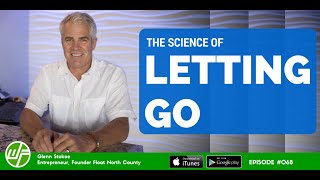
YouTube interview (Wellness Force Radio, episode 68) between host Josh Trent and float expert Glenn Stokoe (Float North County, Solana Beach, CA). They explain what float tanks are (roughly 8'×5', ~11" water with ~1,100 lb pharmaceutical‑grade Epsom salt, water at skin‑neutral ~93.5°F), how flotation reduces sensory input and gravity load, and proposed benefits: reduced cortisol, improved sleep, pain relief, enhanced recovery for athletes, increased creativity/problem solving, and access to theta brain states. Presenter cites studies (Thomas Fine—22% drop in cortisol after 20 40‑minute floats; Laureate Institute FMRI work) and practitioner recommendations (Dr. Dan Engelo: 6–9 floats over 2–3 weeks for anxiety/pain). The episode includes practical guidance (90 minutes recommended as a baseline; packages/memberships available) and notes growing adoption among athletes and teams.
Chapters
Wellness force radio episode 68 letting go.
Is a little tricky. The ego wants to get involved just about every chance it can. Every time you begin to step back and sort of observe your breath or observe your body, the ego can step in and say, look what I'm doing, you know, and then it's back to thinking again. So it's tricky. But the tank is a perfect environment to let go. You don't have those outside distractions. You don't have the sensory input. Even when you're at home in the most perfect situation, laying on your bed, you still are inundated with sensory. But in the tank it eliminates all that. So it's a great training place for that. And like anything, the more you do it, the better you get.
What's up my friends? Welcome back to another episode. This is Josh Trent, your host. Thank you for sharing your time here with me on the podcast. This show is where I bring you access to the most inspiring and passionate experts in behavior change and wellness technology right now. And every week you and I get to come together to learn from these world class leaders who are dedicating their lives to driving real transformation in our physical and emotional wellness. For episode 68 today we're getting knowledge and tools from floating and sensory deprivation expert Glenn Stoko. I'm so excited to bring you this episode by our sponsor, Perfect Supplements. Because I'm always looking for products to trust. I'm stoked to support this company who walks the talk with their values of non gmo, organic and pesticide free real food supplements that support all of us on the wellness journey. Head over to perfectsupplements.com wellnessforce Enter code wellnessforce at checkout and save 10% off your entire order. Now a little bit more about Glenn Stoko. Besides being a floating and sensory deprivation expert, he's also the founder of a premier float spa located in San Diego, California. As an avid surfer, competitive swimmer and athlete, he helps people recover from pain and improve performance. He's had a meditation practice since he was 17 and he's discovered how float tanks can provide the perfect environment to deepen a meditation practice while helping the body to recover, align and fully relax. He works with professional athletes, spiritual seekers and anyone looking to reduce stress or physical pain. And he's had personal explorations in the float tank. Get this, 30 straight days of floating floating in sessions for sometimes over three hours. And explorations of deeper states of consciousness and visualization practices. Drawing from a healing power of floating, Glenn completely switched directions from a 15 year career as A principal at a major commercial real estate firm, to open what has now become one of the top float spas in California. I want to get right into the show. This is the episode for you. If you're suffering from chronic pain, if you're an athlete looking to recover faster or prepare for your match or meets or sprints, whatever you're doing, or if you've just been looking for something new to help you recover faster in mind and body through the science of magnesium, which helps you let go. This healing power is something I've been exploring for the past three months and floating beyond just the magnesium benefits. I think you're really gonna love this conversation with Glenn. He's also gonna share a special gift with the audience at the end of the show. This was such a fun interview. Let's jump into this powerful conversation with Glenn Stoko. Glenn, welcome to the show.
Thank you. I'm glad to be here. Josh.
This is exciting. We are coming at you live from Encinitas, my recording stud in my apartment. And it's fun, actually to interview people in person because you and I have known each other for, I think, like almost six months now. It's been a nice journey.
Well, we spent a couple months tracking you down, but yeah, we.
Couple months, right. And it's funny, you know, I've explored floating because of Glenn. So we're gonna talk about floating, the power of floating on the show today. And really what I like to call the science of letting go. So if you're out there and you're listening and you're thinking, wow, I'm really interested in different modalities of stress reduction and what I can do in my life, what things I can put in my life to help me let. This is the show for you. So, Glenn, thanks for coming on, man.
Glad to be here.
Well, one of the things I'm always curious about with people that come on the show is their story. I mean, everybody's got a unique story as to why they get into what it is that they do. And you have a pretty cool past. Can you share with us, you know, kind of why you formed Float north county and what was your road leading up to there?
Well, it actually started about middle of 2013. I found an article in a publication called the Week. It's put out by U.S. news & World Report. Great publication, by the way. But they do an article at the back back of the magazine, and this one happened to be a two page article. And the reporter was basically reporting on his experience floating in a tank in New York City, in an apartment, of all.
Places. What year was.
This? It was.
2013.
Okay. So I read the article, thought this is fascinating. And I can tell you sort of why that seemed fascinating to me in a second. But what I have doing then is I found a float studio in San Diego. I went first. Float I had wasn't good, actually. The person running the studio just didn't really give me the right direction. But I got enough out of it, and I came back the second time. And that was transformative. It was just an amazing experience. And I got, right after that, started thinking, there needs to be another float studio in San Diego and one in North County. So that's how I started the process of developing Float North County. But to lead back, and why it was of interest to me to begin with is I, at a younger age, about 16, had a grandmother that was pretty progressive lady. She had her own business and very successful, but she was also very spiritual. And so she introduced me to all things spiritual. Like, I went to psychics and I learned about acupuncture, and I started reading about spirituality. And she put me in touch with this man that was sort of a spiritual guide. And we would meet and he one time took me through a guided meditation. And I had never really meditated before, but the experience when I came out of it was just unbelievable. I'd never felt that sort of sense of joy. And it was just such a great experience. And I sort of wanted to chase that after that. And so I meditated on and off for many years. Even had an idea when I was in my 20s, an entrepreneurial idea, to maybe even open a little meditation center in like a strip mall or something. And that was just a fleeting thought. And so here we are now, many years.
Later. Wow. So this thought was kind of brewing in there for.
Decades. It was. Yeah. Hidden back there.
Somewhere. Do you feel that we're going to talk about the benefits of floating and kind of what floating is for people that don't know? But do you feel like looking back, that maybe that one experience when you were 16, was that something that planted the seed for you to walk the line, going through the, you know, the regular pitfalls of life? Was that always there? Was that little thought always there, like, hey, I wonder what that was when I was.
16? Yeah, I think it was. It definitely. It led me to continue to meditate and see the value in meditation. But when that article came along, it's. It was there to. It was almost a seed that now sprouted because I saw something that was so unique. And having that experience and seeing how deep in meditation you get in a float tank and how perfect the environment is for meditation just seemed to.
Resonate. And I've had such powerful, powerful impact from floating. I'm going to share that on the show today. But the one thing that I want to focus on for everyone out there is this is something new. So take everything with an open mind that you hear today, because a lot of this is really growing. I think there's over 300 or 400 float centers now in America, and it's growing every year. There's probably a float center within driving distance to wherever you are listening. But Glenn, what is floating? I mean, what actually is floating for somebody that doesn't know what floating.
Is? Well, yeah, for those that don't know, just breaking it down to the bare essentials is you just imagine an oversized bathtub that's fully enclosed. So it's about 8ft long, about 5ft wide. Some tanks are 5ft high. We have tanks that are 7ft high. And you step in and there's 11 inches of water and 1100 pounds of Epsom salt. That's pharmaceutical grade Epsom salt that's diluted in that water. And as you may know, Epsom salts is magnesium sulfate. And then the water is brought to your to temperature of your skin. It's what we call skin receptor neutral, and that's 93 and a half degrees. So when you get into the tank and you shut the door and the light goes off and the music goes off, you're now in an environment that is completely free from sensory input. You've eliminated sight. Like I said, there's no. It's completely pitch dark in there. There's no sound that's been soundproofed. You're floating in water that's the same temperature skin. Gravity is not pulling on you. So you have an opportunity to be in an environment that is physically, mentally, even in some cases spiritually, the perfect.
Environment. Now, who did you learn from? Because not like anybody can just decide to wake up one morning and go, I'm going to open up a float center. Right. So did you have a mentor or somebody that you respected and kind of taught the science and kind of how to do this so that one it's safe, and then two people are really getting what they're paying for. I mean, how did that work for.
You? Yeah, it was interesting because I went online. Beauty of the Internet today. I went online right after my first float and I started looking up everything floating and about Three lines down was this posting said float conference coming up in August of 2013. This was like in May and I'm at a float conference. Like they actually have a conference around this stuff. You know, I didn't think there was, that was even possible. So I made some calls and started inquiring and I, it was up in Portland. I said, I'm going. So I went to the conference. And the conference was really all the float studio owners, the manufacturers, everything around floating. And there was a workshop there and it was all about starting your float studio. And I went to the workshop and before I left that conference, I knew I was going to open the studio. So. And the other thing was I'm just, you're up there around these people and everybody's cool. I mean just this whole industry is made up of just awesome people because they're all opening their studios or creating tanks so that people can have the experience of floating, which is, I believe is the, the best personal development tool out.
There. Yeah. And Joe Rogan, Aubrey Marcus from on it, they're huge proponents of floating. Joe Rogan has a private one in his home, same with Aubrey Marcus spoke at the conference, I believe, two years.
Ago. Right.
Right. And one of the things that really hit me in the chest is he talked about consciousness. And consciousness is not something that we explore all the time on Wellness Force Radio. But really consciousness is just the knowing that we're a force and we get to direct our force by choice. So with all the distractions that we have on this planet, calendars that are stuffed, people that are constantly taking away our time, how do you feel like floating actually applies? This science of letting go. I mean, we already talked about the benefits of magnesium on a previous video. We're go ahead and link that@wellnessforce.com so you can go to that for all the show notes today. But when we look at the actual unpacking of the brain, I'll be honest, like, it took me an hour to relax when I got in there. I know 90 minute floats are the bare minimum. Now. What does it look like for somebody kind of first time getting into a float? What can they look for? How do they begin this process of.
Floating? Well, you have to look at the fact that most of us have spent our entire lives thinking, I don't know how many thoughts we Entertain every day.
50,000. It's like 87,000.
Crazy. So we're just trained to think and we just, that's all we do. So it's completely natural that the first float is Going to be a little bit of a novelty and can be what I call the least productive float, because you're just in a new environment and you're trying to figure it all out. But. But what happens magically in the second, third, and fourth floats are. Are just transformative. So getting back to letting go, what I found personally is letting go is a little tricky. The ego wants to get involved just about every chance it can. Every time you begin to step back and sort of observe your breath or obs, your body, the ego can step in and say, look what I'm doing, you know, and then it's back to thinking again. So it's tricky. But the tank is a perfect environment to let go. You don't have those outside distractions. You don't have the sensory input. Even when you're at home in the most perfect situation, laying on your bed, you still are inundated with sensory. But in the tank, it eliminates all that. So it's a great training place for that. And like anything, the more you do it, the better you.
Get.
Yeah. So letting go is a very big part of it. And I find the most productive floats are when I go in with the idea that I'm not going to control this environment, I'm not going to control this float. I'm just going to be there and just try to let go and be quiet. And the more that I'm able to do that, or the less I should say, the better those floats end up.
Becoming. So the benefits are 10 to 1 when it comes to brain training. I mean, we look at how many negative thoughts are in the brain. I think it's like 70 to 75% of the thoughts we have are negative. Negative. But that's because we're just going and repeating the same day that we had the day before for a lot of human beings. So in the tank, there's no sound, there's no light. All you can hear is your breath and your heartbeat. And I think the power of this, for me, you know, I've done, like, probably 10 floats now almost. And I think about the third or fourth float, I just felt so incredibly energized because finally, kind of the band that always plays in my head got to shut off for, like, 30 minutes. And it was so incredibly peaceful. And Joe Rogan talked about this on the podcast. You know, he mentioned we store so much energy not only in our psychology, but in our musculoskeletal system that when we float, our body gets to unwind and just finally take that Breath. It's been craving so much. Have you had people when they come out of the tank? I know we're gonna talk about athletes in a moment. The Chicago Cubs, different basketball teams, the NBA that use floating for healing their athletes and de stressing their athletes. But have you found for just average people, when they go into the float tank, are they coming out wired? How many floats does it take for them to start increasing their.
Energy? Well, each float is different, I've found. I mean, you really, once you think you know what's going to happen before you get in the tank, you'll be surprised that that doesn't isn't what happened. And I think you had that experience too, where you first float, you came out super energized. In the second float, you were more mellow and relaxed and so on. So I don't really know of a technique necessarily that'll energize me in the tank. But the beauty of floating is, what I like to tell people is it's the funnest wellness thing you'll do. And despite, you know, all these benefits will happen. You know, chronic pain will dissipate, you'll de. Stress, anxiety levels will go down, your brain will synchronize and you'll begin to have, you know, create creativity like you haven't had before. And you'll solve problems and we can get into the benefits. But ultimately the bottom line is, is that all these things happen naturally just by being in the tank. And the fact that it feels really good makes this whole experience, you know, really kind of.
Neat. Well, who's floating for? Is it for people that have high stress? Is it for people that have chronic pain? I mean, is floating for.
Everyone? Yeah, I believe so. I think there's, you know, it's easy to talk about the deeper connection you have in the meditation part. And there's a lot of people that just really not interested in that. And that's just, that's fine. We've had kids from 12 years old, we've had people that are 85 years old come in, but there's so many benefits that you get out of it. So we get people that come in that have pain and they come out and their pain is either reduced or gone completely. You know, I think the bigger group of people that come to floating are those that are dealing with stress. And we just get inundated all day with so much. And we all know how bad stress is really, how it can be a big part of a lot of major diseases. And it's just Important that we manage stress. And so I think a majority of the people that come in are really, whether they say it or not, they are really dealing with that stress. And that stress is going away. And for the first time after they get out of the tank, they're feeling like it, they say completely washed away. So I would say that's a big part of the people that come in is just the stress aspect of it. But we've got veterans coming in that ptsd. I mean, there's a big gamut of it. We can talk about.
Those. And I know the seal fit with Mark Devine, A few of the guys have been in from that. A lot of MMA fighters have gone in to kind of down cycle the nervous system after a big fight, or even to prepare for a big fight. But when we look at the central nervous system, I mean for the mind and the body, what is this effect of being weightless in this magnesium rich water? What does this do biologically for people while they're in the.
Tank? Well, it said that about 90% of the Central nervous system's job is to deal with gravity. So when you take gravity away, which you do in the flow tank, you have a, a lot of resources that are now available to your body to heal. And there's some mechanical things that happen. Your blood pressure, this is science, this has been proven. Blood pressure goes down, respiratory rate goes down, the vascular system expands, so the veins, the capillaries, and they expand so the blood can then flow and heal better. So these resources are then reallocated to the body. And your body, as we all know, is very powerful at healing. And that's why I've got long term float people that come in and they float once or twice a week. And they've been with me for over a year and they're having amazing results. Their body aligning, pains going away, just things that have been with them for their whole life and it's going away. So when we're in an environment where we're now using the parasympathetic resources and we're able to calm that system down, then the mind can be much more attuned to some of the things that are in the background. And so that's why people have problem solving ideas. Creativity comes in. I've got a one guy that comes in, he owns four companies, a very busy entrepreneur, he's been floating with us for a year. And we asked him one time, why do you float? And he said there's two reasons. One is I am inundated with people and things all day long and it's just overloading. So this is the only place I can come where no one can call me. I can completely relax. He said the other thing that was really important to him is that he's dealing with negotiations. He's got a lot of stuff on his plate for running his businesses. So he finds that he's able to get clear thoughts not only in the tank, but when he's say, on his way home from floating to help him answer the things he needs to do the business. And his business has gotten better as a result of it. So he's a probably good example of somebody that's not there to meditate necessarily. He's just there to, to get those.
Benefits. And I felt that, you know, just from my own process going through. There'd be some times, like you had said, where each float was different, but I always slept amazing in the evenings. I mean, over 60% of Americans are magnesium deficient. When we look at the numbers of what's lacking in our food, but what's lacking in our water and then the stress that's coming into our lives, we're kind of in an environment that doesn't really necessitate health and wellness. So all the things we can do by putting in good tools like floating and healthy foods and all these different pieces for the average people, they can get tremendous benefits. But athletes though, there's a few NBA teams, there's some baseball teams, I believe the Chicago Cubs, Olympians, surfer Damien Hobgood, Steve Kerr, a lot of athletes, professional athletes are coming into float centers increasingly in America. We mentioned Sealfit earlier. What are athletes doing kind of benefits are the athletes getting from these float sessions? Are they doing a different approach than the average person or is it really the same healing.
Modality? They're getting great benefit from it. And this is other part of science that has shown that when you think about the fact that you're in an environment where there's the gravity is not, you're not affected by gravity. And so your muscles can completely relax, your spine decompresses and so. And then the absorption of the magnesium helps a recovery. So I've had triathletes come in the day after the day of their triathlon and I've gotten emails back saying I've never felt this. Recovered the next day. And I had these guys in from Seal Fit. They did an event called kokuro. It's a 53 hour workout. It's. It's.
Insane. It's absolutely insane. These guys Carry sandbags on the beach, hoist a 500 pound log over their.
Head. But they're doing for 53 hours.
Straight. We start.
Asleep. Yeah. Friday. And they end on Sunday in wet clothing. Yeah. And so these three guys, young guys, and it's really for guys are either going to go into seal, going to the SEAL training or they're going to be going to the marines or something else. So these three young guys came in and I, I videotaped them afterwards. And really what they said was not only was it just this way to completely relax their sore, beat up muscles, but it gave them opportunity to reevaluate what they did over that weekend and sort of make a mind body connection. And they said for them that was almost just as important as the actual recovery. So athletes are using it also for visualizing their events. And because you're in an environment where you are able to just not have that sensory input and all that stuff that you're dealing with, the mind can be allocating its resources to visualize. And we know the power of visualization of an event or a result and a success. And so we've got a woman that does she's Jiu jitsu and she uses it to visualize her training. So yeah, we've had quite a few athletes that have gotten great results from recovering to visualization, to dealing with pain and injuries that they're dealing with in their.
Event. Why did the Golden State warriors put a tank in for their players? I mean, what's the approach that we're seeing now in professional sports and sensory.
Deprivation? I think the Warriors, a couple of warriors have gone and floated and it's Steph Curry, who's the MVP and Harrison Barnes both floated. There was a, ESPN did a thing on it. The Chicago Cubs have a, have a tank. They just have a brand new facility they put a tank in. And I think a lot of what they're doing is just the recovery that you can do. And the other thing that you learn about in the tank is you can really be sensitive to what your body is going, what's going on with your body. So as an example, and it's, it's been stated that you can, if you pay attention, your body will tell you when there can be a future injury coming up. Like I can feel my hamstring begin to sort of tingle a little bit. And so it's really an opportunity for these athletes to pay attention to their bodies and know how to deal with those when they come up in the tank. So it's a Full recovery. It's dealing with injury, some that may use it for visualization like I was talking about. But really I think ultimately it's just getting back in that horse again to build a workout again and doing that from a recovery.
Standpoint. So it's the science of letting go, but it's also the science of being present. So if these athletes are having maybe an injury that's coming up, they'll feel it. So for the average person then, I mean, when we look at the brain, the brain has so many pieces that we have no idea even what it does. Still, we have these PhDs, people that have studied the brain forever. When we look at brain synchronization and this power, this science of letting go, we know that with this magnesium and stillness, it cultivates this space for enhanced creativity and problem solving. But how would you unpack this for people? When we look at synchronizing the brain, this brain training element of floating.
This is another tricky thing in the tank is, you know, if you go in with an intention or you're working on a problem, you have to let go of it. I mean, the ideas pop in not because you're trying to dig them out of your brain. They just sort of come and it's. It happens in there. And they're just really clear thoughts that you know that are problems that you're trying to solve. And I've had it happen several times where if you just focus on whatever you're trying to deal with and then you just sort of let go. I don't know how to explain really what the process of that, but I know myself and many people have had that experience of it. You just have clear aha moments.
Like you're in the tank, then all of a sudden a business idea just explodes in your head or you get clarity on something in your life. And I think from an anecdotal stance where I've done these almost 10 floats now, there has just been this space for me to actually create what it is I want to create because there's not so much input. I mean, how are we supposed to create as human beings if we're constantly reacting to what's coming in? There's no space for us to actually respond and pause and then do the things that we want to do and have this creativity. So this deeper connection piece, I mean, beyond the tank and its physicality benefits, what about the personal development and the meditative aspects of floating? Some people do two and a half hour and even three hour floats. Talk about that a Little bit.
Yeah. One of the things we haven't talked about yet is, and I think probably one of the most important parts of floating is being able to tap into the theta state. And the theta state, as many of you may know, is that point just before you fall asleep at night, we fall into theta. They also say that a lot of kids under the age of three or four are living in the theta state. And it's really where your brain waves slowed down to between 4 and 7 hertz. And it's the state also that they've. You know, there's been a lot of studies on meditation over the years. And they put EEG machines on the brains of monks, people that have been meditating for 20, 30 years. And what they find is that those really experienced meditators get into a theta state, and that is where you want to be. That's where the creativity is. So what happens then? And if you just meditate on your own, it can take many years. Like, these monks have meditated for many years. It takes a long time to reach that theta state. And what happens, what happens naturally in the tank is you reach theta very easily. And it's the best way to kind of realize that you've hit theta is you might say to yourself, I don't think I fell asleep in there, but I woke up. That happens very easily. That's really where you start to get that deeper connection. Really, that deeper connection comes in stillness and quiet. For me, when it happens, it's when I've let go. I'm not trying to force anything. And I'll have these moments in there that are. They're hard to explain, but they are profound. And when I come out of the tank, I just feel.
Amazing. And you know, what's interesting is there's a lot of people, I'm sure hundreds of thousands of people that have floated at this point. And a lot of them have these phenomenal anecdotal stories, me being one of them, you creating a life of floating. So there's also a lot of science behind floating. You know, there was studies by Thomas Fine. He was a professor. He actually did Studies through the 90s on cortisol levels being reduced in the tank. We know that cortisol is not necessarily a bad hormone, but cortisol and adrenal fatigue is a real scientific phenomenon. So for people that are stressed out, that are possibly in a stage two or three adrenal fatigue, I mean, what does this look like? What did these studies that Thomas Fine did in the 90s, what did.
They find what they did is they put several. This is kind of a conducted study where they had several people in a tank over 20 sessions, 40 minute floats. They took their measurements afterwards and drawing blood through intervention, they found that 22% drop in cortisol levels. And you know, cortisol as we all know is that stress hormone that causes our body to react the fight or flight response. And it's just over the long haul, it's not a good thing. You think about it, it's only been the last couple of decades where we've been inundated with so much input. I mean, you know, for hundreds of thousands of years we've basically sat, like I heard somebody say we've sat on the edge of a plane waiting for our food to walk by. And essentially that's the kind of input we've dealt with. But now we're. Even though we all love technology, it is, it's overwhelming. So yeah, we want to find ways to drive those cortisol levels down. And it's just something that happens naturally in the tank and as a reverse in that is that endorphins and dopamine go up. So those are the brain's happy.
Neurotransmitters. We'll link another study from the International Journal of Stress Management in the show notes as well. Laureate Institute of Brain Research utilized their own in house float clinic and FMRI machines to actually see how floating changes affected areas in the brain associated specifically with anxiety. Now I've had a lot of anxiety in my life and it's something that came from childhood. Some programming you and I were talking before we recorded about like childhood tapes that just kind of run in the background. How have you found beyond just this scientific evidence with yourself or with clients that come into Float north county that people are using this modality of floating to actually let go and alleviate some of this.
Anxiety? Yeah, I see it all the time. I mean I've got stepsons that are dealing with anxiety and they float and they come out of the tank feeling better. You're essentially retraining yourself. So we get a lot of anxiety. And like you were mentioning patients with anxiety, but you were mentioning the Laureate Institute of Brain Research and, and they build an in house float clinic and they're as you said, using FMRI machines and their results. They're really focusing on what happens in the brain, in the areas of the brain that are dealing with anxiety and how does floating affect that. And it's new. This is the most current studies that are going on right now, but it's been successful enough and they've got enough good results that they're going to be moving on to working with people with PTSD and trying to figure out how to floating. And we've seen it anecdotally, great results for people with ptsd. As an example, a guy down in, owns a float studio down in Austin, Texas, had a veteran come in who was on 12 medications. He would leave for months at a time because he just couldn't deal with life. And somebody brought him to the float studio and he got his first float in and he loved it. And he floated three more times and by the fifth float he was off all of his medications. And just a.
Tremendous. How is that possible that you could stop 12 medications from floating? Like, how does that work? I mean, can science even really explain.
That? I don't have an answer for that. Yeah, you know, I talked to the owner of the float.
Studio. Well, let's take a transition point here because we've talked about so many pieces of the benefits of floating, not just for athletes, but for regular people. CEOs, stressed out, moms and dads, busy working professionals. I mean, floating, if you're open to it, can really help people let go. So when we look at the style of floating and how many times a week maybe people should float, I mean, what would people do as far as making floating a regular practice? How many times per week, how long would they.
Go? So the first float, like I said, is probably least productive. So we do, at our float studios, we offer a three float package. Like I said, it's widely known you should float two or three times. And we've had, we see it every time people come out after the second and third float and they say that's amazing. It's so much better than the first float. Dr. Dan Engelo, a neuroscientist and a psychologist, he's done a lot of floating over time and he, he made some recommendations on the amount of times you should float. As an example, if you're dealing with chronic pain, he says float eight or nine times in about a three week, three week period. And you will see dramatic results. If you're dealing with anxiety, float six or seven times over two weeks. I mean, these are general numbers, but you will see results and we've seen that. So for those initial period of dealing with pain or anxiety, that's a great start. And from there on to maintain, it's really sort of what works for you. We had people floating once a month to people floating two or Three times a week and for various reasons. But you will see we find with longer term people that make this a practice that it really spills into the time in between their floats. People that are saying, you know what, I'm just calmer, I'm less reactionary, my body is coming into alignment and my chiropractor and my orthopedist is telling me that if you do it on a regular basis, once a week, twice a week, or even if it's once a month, you will see ongoing results that really impact your.
Life. We'll get right back to the conversation with Glenn. We've talked a lot about magnesium in this episode. It's the primary ingredient for float tanks. Well, natural vitality makes natural calm. This is the top magnesium drink supplement on the market. It's made from all natural ingredients. Natural calm is this drink mix and it works to help soothe the nerves and correct magnesium deficiency. Over 75% of most Americans, male and female, are magnesium deficient. So the benefits include reducing stress and anxiety, of course, but also promoting healthy digestion and healthy cholesterol. There's a lot of other healing pieces. We'll link in the show notes today. Pick up this anti stress drink@perfectsupplements.com WellnessForce. Save 10% off your entire order including natural calm by entering code wellnessforce at checkout. Now let's get back to this conversation with Glenn Stocco. And there's some key influencers. You know, we talked about Joe Rogan and Aubrey Marcus, but a lot of celebrities and athletes and more and more people are beginning to float for longer and longer. Why did you just recently change at your facility the time from 60 to 90? What made you choose that? And is 90 kind of the bare minimum in your opinion for people to get a benefit of.
Floating? First of all, 90 minutes is more in line with your natural sleep cycle. The circadian rhythm is closer to 90 minutes. So that 90 minute time period really is a valuable one. There's a lot of float studios around the country that deal with 90 minutes. 60 minutes, we opened that way. But what we find is that it usually takes 30 or 40 minutes, at least on the first few floats, to really settle down. And then before you know it, the time's up. We really want to get you in that theta state as long as possible. So it's really a 90 minute float is should be the bare minimum. We also have two and a half hour floats and those are for people that really get into it. That's transition. I mean, that's That'll impact your life, there's no doubt about that, if you do it on a regular basis. And what's interesting about that time frame, for a lot of people, it might seem like a long time.
Yeah. I think some people are listening and saying, I have to sit with myself in a dark, Wet space for 90 minutes or 180 minutes. How do I do.
That? That's a daunting thought. You've never done it before, but, you know, it's interesting. Good example. I had a lady come in a couple weeks ago. She said she had. A friend of mine gave this to me. I didn't want my friend to feel bad, so I came and she floated. But she didn't tell me any of this stuff until after she got out of the tank. And she said, you know, that was an amazing experience. But what I didn't tell you is that I am fully claustrophobic. I can't even get into an elevator. And we have these large tanks. And even when I showed her the tank, she told me later, she says, I was scared, even though it was a big tank like that, but she got in there. And what we find with is a lot of people think they're going to be in a claustrophobic In a tank, but what happens is your awareness expands. So your sense in the tank is more of expansion than it is contraction. And she came out and said, you know, within about 15 minutes, I shut the door. Another few minutes after that, I turned the light out and I was fine. And she's come back several times since then. So claustrophobia is a fear that we get from a lot of people, but it's just a preconceived idea. And once they get in the tank, they realize, you know, there's nothing to be fearful about. This is just a. It's like laying in a bathtub at.
Home. Yeah. And I think for people out there that are listening, that are kind of curious about floating, imagine this. Imagine if you were meditating in a swimming pool on vacation, but it just happened to be your own private swimming pool that also had all these health benefits from magnesium. So I think even if people are a little bit apprehensive, there's still a little bit of comfort that I think is felt just from floating in water. I mean, look, we have nine months of our lives that we're in our mother's womb and we're in that same salty solution with magnesium and all these chemicals going on. So, you know, I think it's wired in us to Be comfortable in water. And even if there's people out there that are kind of uncomfortable in water, this is a different experience. It's not as if you're sitting in a freshwater lake or something. The whole part that I thought was really interesting, Glenn, is that with these magnesium salts that are in there, the body's really buoyant. I mean, you're like, on top of the water, so you can relax every single muscle in your body and you're fully supported. You don't have to worry about water getting in your eyes. You don't have to worry about water coming in your face. You're just kind of there. Do you find that people that come into the studio go, oh, you know what? That was a lot more comfortable than I.
Expected. We get that a lot where people, you know, it is a. It's a completely new environment. You know, it turns out to be one of the best environments you can be in. But it's just the thought of it going in. There's a lot of people come in with the idea that they're going to be locked into some tank. I actually had a woman say, I thought you guys were going to put a lock on it. She had that before she came in the door. You know, she didn't think of it when she came in, but there's a lot of preconceived ideas of what this experience is going to be like. And 95% of the people come out have. It's a completely different experience than they thought going in. There are some people that just don't want to spend time in the water with themselves, and that's fine. It's not for everybody. You know, the great thing about having this float studio is seeing people that come in, they're either stressed out, they've got pain, and to see what they look like when they get out of the tank. I've literally seen, like, people lose, like, 20 years of age. I had a lady come in one time. I'll never forget this. She looked. You could tell that somebody dragged her there. And she had this look on her face like she was not only skeptical, but she was kind of mad. And she came out, when she walked through the door, it looked like she was 20 years younger. I told her that it was amazing because she had relaxed so much, and you could see it was for the first time in her life, probably that she had an experience where she could just let go and just. Just came out.
Rejuvenated. And I loved how we've touched on a few times in this show, it's the science of letting go. Because there really is a science to letting go. There's not a lot of teaching out there in mainstream education or in society that teaches people how to let go. So once you start learning all these benefits, physiologically, psychologically of what floating can do for you, then maybe you'll be interested in meditation. Then maybe you'll be interested in doing something like hiking and different pieces of yoga and nature. So everything can be a catalyst for everything else. And, you know, one brick at a time builds this thousand brick strong wall of wellness. But for people that are interested in just getting involved, what do you feel about locally here in San Diego? How is floating gonna grow from San Diego and beyond? What do you see in the wellness industry for floating being a.
Growth? Well, some people are projecting it to be the next real wellness thing. When you, when you see the experiences that people have and the positive impacts it has in their life, you know, it's been around since the 50s. Dr. John Lilly, the neuroscientist, had really sort of invented this and brought it up. When I go to that float conference every year, it's at least doubling in size. So it's growing. I think the future is.
Tremendous. I want to transition to this quick, fun part of the show. It's a surprise. If you could change, you know, one thing about fitness or wellness, the industry, what would that one thing be? If you had the power to change one thing, why would you change.
That? That, you know, I guess I would bring more of mindfulness into the wellness side of things. I think whatever you do, whether it's working out, eating, yoga and, you know, that's the thing behind yoga. The idea is it becomes a mindful. You're there with your body and you're paying attention to exactly what you're doing. And then you're hopefully ending savasana and not getting up early, but just trying to stay in that focus. So I think any. I would change anything that took you away from that direct.
Mindfulness. Do you have a mantra or a message that you might say to yourself when times get tough? You know, when life gets stressful, you're a busy entrepreneur. Do you have a certain mantra that you might repeat to yourself to face these.
Struggles? Relaxation, I think, is the key word. You spend too much time thinking and overthinking, and that blows everything out of proportion. And if you can just bring it back to being in the moment, Take a walk, just.
Relax. How have you found that floating has impacted either your meditation practice or Your restorative practice for yourself. What do you think you might do if floating wasn't there? What's something else that's powerful in your life for restoring.
Yourself? Well, meditation is, you know, ultimately that's what I'm doing in the tank. So if I didn't have the tank, I'd just be meditating, you know, in my room or wherever I had a meditation. And I think that's one of the most powerful things that we can do as a human is to meditate. I just think that physically, mentally, spiritually, it's. And there's been, as we all know, there's been plenty of studies to show that it has a positive impact on.
Us. What's one of the most profound things that have come to you in the tank? Has there ever been a breakthrough moment or an aha moment that you've gotten that right after a session where you had to go write it down or put it in your.
Phone? No. What happens for me in the tank is just sort of these, like when I get there and it's not easy, we all, you know, sort of struggle with meditation. But when I get have silence and my mind is not thinking and this just this overwhelming sense of joy comes in, that's, that's what I'm shooting for. It's nothing more than that. Just simply trying to be in that state whenever I can. It's not easy though. You know, what I do is I put my attention on the spot between my eyes and I just try to be in that spot and just let my body completely relax. And that's usually if I, if I'm not thinking too much and things like that.
Happen. What gets you out of bed in the morning, what gets you fired up for your day and, and running a float center and helping people in that way, what makes you get up and be excited, you know, that's just.
It. It's actually getting an opportunity to see how impactful this is flotation and how it has such great impact on people. And I mean, I got the best job in the world. I mean 95% of the people that come through have a smile on their face when they come in and they have a bigger smile when they leave. And I'm meeting great.
People. What would you say if there was just one piece that you could tell your younger self? You know, if you could go back and just put a little note in the pocket of your 17 or 18 year old self, what would you say on that.
Note? Be easy on yourself. Don't take life Too seriously. Over the years, there's been times where I've just been too serious about stuff and realize, you know what, you're not here that long. So just kind of roll with the punches, enjoy.
Life. Last question. Glenn, this is a cool one with your background too. So what do you define wellness as? What's your personal definition of.
Wellness? Wellness for me is balance. It's a positive attitude, having positivity in your life and it's just enjoying the relationships, you know, enjoying the people around you. I think it ultimately comes down to you can eat the best, you can do yoga all day long, you can meditate, but you really got to be happy around the people you're with and enjoying life. And so it just really comes down to attitude, I.
Guess. Words of wisdom from Glenn. People can learn more about floating@floatnorthcounty.com and actually if you're in Southern California, whether you're on vacation or you live here, Glenn was generous to give 10% off the already discounted intro for three floats. Tell us a little bit more about that and where people can learn more about you and.
Floating. So float north county is in Solano beach, happens to be a pretty cool little town in Southern California. San Diego. We have like, we talked about 90 minute floats and we have a three float special. It oftentimes takes two or three times to really settle in. We have a membership that we're putting together that the more you float, the cheaper it gets for you. So we just want to make it available to as many people as possible. You can go to our website.
Floatnorthcounty.Com and the cool takeaway that I'll say, not just from watching other people. I've been in the studio, in the lobby and reading, you know, researching for today's show, looking at these major thought leaders that are floating is the takeaway is that we're all in the mood for less stress and pain relief and more creativity and better sleep. But floating, really, it just seems like this fun vessel for us to feel good. And that's what makes this so empowering as a personal development tool is because it gives us this space to finally breathe, to take that long awaited relaxed breath that we have throughout the entire day. So, Glenn, thanks so much for coming on and thank you. I just want to pause here for a moment. Thanks for what you do, you know, here in San Diego, locally and getting people involved in this healing mode of.
Floating. Yeah, thanks, Josh. It's been a lot of fun being on the show with you and I'm glad that we had this forum to be able to express that and hopefully you come into float as much as you possibly can. I know you're getting great things out of it and so keep coming.
In. Yeah. Thanks for coming on.
Man. All right, Josh.
Foreign. That wraps episode 68. You made it to the end of the show. If you were ever, ever in San Diego, please come visit me. We can go float together. Let me know. Josh, wellnessforce.com I would love to do some magnesium session with you. If you enjoyed today's episode, please share it with a friend or someone you care about. Hey, you know what? Even if you have somebody on your street that annoys you, let us know that they could listen to this podcast. They can have some de stressing elements and get some more wellness in their life. But honestly, your voice is powerful. I would love to get your review live on air. You can leave a quick one which helps support the show so much in its message of empowering people's lives to better wellness through technology. Easily get your voice heard@wellnessforce.com review. It helps out the show a ton. And I'll read your thing live on air next week. A great guest we're having on. It's a surprise. Now, you know, in the past, the surprise has been pretty cool. This week is no different. You get to go have an amazing day right now. You get to go create an amazing day with the tools that Glenn gave you, all the healing powers of magnesium, and every other guest that's been on the show. So until I see you again, possibly in San Diego or just down the road soon, next week on the podcast, I'm wishing you love and wellness.
More from Josh






Your child's future start before pregnancy... and even before conception! #podcast

MD Reveals: Your Healing Creates Your Child's Reality (The Souls Coming In Need Strong Bodies)



