THE SECRET LIFE of FAT | Why Do Women Gain Weight? | Dr. Sylvia Tara
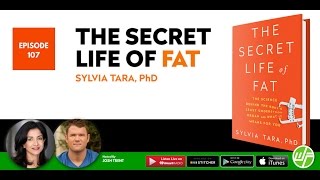
Podcast interview (Wellness Force Radio episode 107) with Dr. Sylvia Tara about her book The Secret Life of Fat. The conversation explains fat as an endocrine organ, hormones it produces (leptin, adiponectin), differences in fat biology between women and men, types of fat (subcutaneous, visceral, brown/beige), behavioral and psychological factors in weight loss (habit formation, temptation bundling, forgiveness), and practical strategies (intermittent fasting, HIIT, exercise, tracking). The piece emphasizes long-term persistence, individualized responses to food, and the limits of quick diets.
Chapters
Wellness Force Radio Feelings are essential, but they can't dictate our actions.
We literally infect each other with our emotions. We came here for a special purpose. Let the purpose unveil itself. Knowing without doing is the same thing as not knowing.
They're not just trackers. I'm gonna wear this, and it's gonna.
Help me do the right thing.
Wellness force radio episode 107 with Dr. Sylvia Tara, author of the Secret Life.
Of In a way, fat is fighting to come back onto us. Fat can even divert blood supply to itself. So when you're losing fat, you're actually remodeling your body. You're remodeling tissues. And that is not an easy process. And in some way, we're kind of still in this vein of we'll do anything to lose our fat. And we spend $60 billion a year fighting fat, which is more than Homeland Security has spent fighting the war on terror for the last few years. And that's an astounding number. That's how much we hate our fat. Women partition more nutrients into fat compared to men. Women preferentially use fat for energy in times of need. So if we're energy depleted, like after sleep or during a really strong bout of exercise, women's body will actually reach for fat for energy, which you think would be this great thing. And during that time, it is a great thing. We're burning off some fat. The issue is, for all the other hours of the day, women are storing fat back into the fat tissue at two to three times a higher rate than men are. The good news is that is that the more you implement a plan, the longer you're on it, it turns into habit and it's not stress anymore.
What's up, my friend? It's Josh, Trent and Welco. Welcome back to another episode. This is your weekly access to global experts in all things wellness, behavior change and new technologies. In this podcast, together, we'll discover the connections between our emotions and healthy habits to live life well and enjoy the process. This podcast is brought to you by Perfect Supplements, a company who actually walks the talk with their values of pesticide free, non GMO real food supplements that fuel us for the wellness journey, save money, support the show, get more wellness in the process. Head over to perfectsupplements.com wellnessforce Enter code wellnessforce to save 10% off your entire order. With over $60 billion every year spent on fat loss in the United States, what is the real truth around how we can control our physiology and let go of the weight that holds us back from living the life of wellness we deserve. If these are the kind of questions or narrative that runs in your mind, today is going to hit you like a ton of bricks on the show because we're bringing one of the most authentic, scientific and trusted minds in the Wellness Space, Dr. Sylvia Tara, to talk about her decades of research to give us more clarity and to cut to the fat of what are the real issues surrounding weight loss versus letting go of old weight? This episode hit a really emotional button for me because as I've grown Wellness Force to then produce a second show in the fitness industry while at the same time helping clients that I work with virtually as a coach let go of their weight. The reality is that I'm human as well and in my process of letting go of weight and it's been unique to me and at times challenging. I talk about this on the show. So stick around towards the midpoint and at least make sure you're in a headspace where you can take a deep breath and keep an open mind during this conversation. Because some of the topics we're going to discuss today may trigger you. They may frustrate you at certain points of the interview, but I promise if you keep an open mind, you're in for one of the most down to earth conversations around letting go of weight. So you can understand this secret life of fat, how fat operates on our body. Because this is not a diet book. This is what I love so much about this conversation. I want to preface our time together today for you and I by saying there's going to be a lot of education in the interview, so you may want to take some notes or set a bookmark to listen to this again because, well, everything's going to be on our show Notes page over@wellnessforce.com letgo we'll have detailed show notes there, so click on your artwork at any point during the conversation. All right, today's show we're diving into some incredible topics like the difference between weight loss, lean body mass and fat loss. We'll talk about the analogy of money and fat, the corollary of how blood glucose is cash, diet, glycogen is a checking account and fat is a certificate of deposit. Why you need more than just hope to let go of old weight, how we can increase our Adiponectin stores so we have less mesentery fat and it's okay to have subcutaneous fat. Really interesting research on why women store more fat than men and how you can circumvent that. We'll talk about body shaming and perception why all these skinny real people that are on the covers of Gucci magazines are actually planting subconscious seeds that make people fail. Because at the end of the day, fat is an acronym. It's food, it's activity, but it's also training our brains. You'll get some tactical steps you can take through overcoming willpower depletion by applying what Dr. Tara calls temptation bundling. And when letting go of old weight, she'll discuss how forgiveness on this wellness path is just as powerful as the plan itself. Bear with the audio in a few sections of the show and in our 7 for 7 round as this was such a thought provoking conversation but we had a little bit of an issue with Skype. So sorry about that, my friend. It flickered a little bit. Just hang in there. The interview gets really and especially when we learn about Dr. Tara's definition of wellness and how she learned to love her fat to let it go. Let's step into this thought provoking conversation with Dr. Sylvia Tara. Dr. Sylvia Tara holds a PhD in Biochemistry from the University of California, San Diego and an MBA from the Wharton School of the University of Pennsylvania. She was a healthcare management consultant with some of the world's leading brands and previously worked for the largest biotechnology companies on the globe. After an extended battle with fat, Dr. Tara became fascinated with its resiliency and embarked on a mission to better understand it. Her book is the culmination of years of research and interviews with physicians, patients and leading scientists. The Secret life of Fat will forever change how you think about this misunderstood organ. As a busy professional author, mom, wife and influencer in our health and wellness world, Dr. Tara is a true example of balancing life's demands while still being of service to others. With her new book, she is bringing a surprising science behind our most hated body part for us to understand what it really takes to let go of old weight. Dr. Tara, welcome to the show.
Thank you. It's great to be here.
You know, we spend $60 billion a year fighting fat and this is just such a misunderstood organ. I am so excited to dive into the book I mentioned before. We recorded this is not a diet book and I think the title of it, looking at it and all the people that are in our space, you have written something really uni. Why did you want to write a book like you did that wasn't necessarily a diet book and more of an empowering educational tool? Why did you go that route?
Yeah, I went down this route. From my own experiences. I gained weight Extremely easily. And I always have. I always watch people eat what they want, do what they want, not even exercise much. And they somehow eat more than me and stay thinner than me. And I'd gone on a number of diets. I worked with personal trainers, you know, day in, day out. And I think even they were surprised that I had to take much more of a drastic effort than they thought in order to lose weight. And there's that philosophy that you have to eat calories in order to lose weight. And that never held true for me. The only way I'd lose weight is if I drastically cut down my amount of eating. And so I got so frustrated with this, and I was about to go on yet another diet, and I thought, no, I'm not doing this again. Not unless I understand everything there is to know about fat. My fat acts differently. It's softer, I gain it faster. It doesn't come off as easier. And I'm a scientist by training, a biochemist. And I thought, if someone can understand fat, surely I can. So I went down, just a mission, a five year long of researching everything about fat. I think I read about a thousand articles out of the scientific literature. I spoke to about 50 thought leaders, scientists around the globe, really, about what they were finding out about fat. And what I found was just so interesting, it was actually astounding. And I thought, you know, I have to tell everybody about this. I gotta tell the world about this secret life fat has that nobody ever thinks about. And the book is. Secret Life of Fat is exactly that book.
And it's such an incredible book. I read it in the course of two days this past week. And it's this endocrine organ that's not just made of fat. I want to dive really deep into your chapters, and obviously it's such a great book. We're just going to hit the tip of the tip of the iceberg today. But Barbara Walters is mentioned in your book. I thought this was a powerful way to start the show. She interviewed Newt Gingrich, one of the most fascinating people of 1995. She asked him, what do you least like about yourself? And after a really suspenseful pause, he said, I'm most embarrassed about my weight. And then two decades later, she's interviewing Oprah to a similar question. Before I leave this earth, I won't be satisfied until blank. And Oprah answered, I won't be satisfied until I make peace with the whole weight thing. I've got to make peace with it. Why did you put that in your book? I think it sets the tone for how people view fat and the shame that's surrounding fat.
Yeah, because I wanted to show that even the most powerful among us, the people you think wouldn't care about something like this, their Achilles heel is their fat. And so these people, Oprah Winfrey, Newt Gingrich, are greatly accomplished in what they do. They've risen to the top. And what really hurts them on the inside, what do they think about the most? What can't they make peace with? It's their fat. And why does fat have such power on us? Power on our self esteem, the way we think about ourselves, just our perception of our day to day accomplishments. And it's a real disproportionate amount of importance we put on fat. And I wanted to just then kick that off the book in that way to why we should really understand it. And what is fat? When did we start hating our fat? Why did it become this judgment and not just a body part like it is? And then what is fat really? What's it doing in our bodies? And how do we come to so be bothered by it? So the chapter kicks off with that historical context of the world hating fat. And surprisingly enough, we didn't always hate fat. I mean, there was a time in America after the Civil War where fat was cherished. People loved their fat. In fact, the Fat Men's Club opened. It was a prestigious club where men had to be fat enough to join. There were celebrities and women would pad themselves to look like these certain heavy celebrities. And things started changing really around the 1900s when the economy improved, people could get work and they became more prosperous. And with that they started having more food, eating a little bit more, and they started getting, gaining weight. And that's when a number of leaders started chiming in. Military leaders said that that wasn't good. They need strong lean bodies for the military. You know, business leaders wanted agile bodies for their factories. And then even religious leaders said it wasn't pious to be fat. And it caused this echo chamber where people started getting self conscious about fat all of a sudden. And then that was a great wide opening for businesses to come in and start selling things to get rid of fats. Because of course, when you have a fearful public, you know who else solved the problem except for entrepreneurs and hucksters who are looking to make some money? And then really weird things started coming in. People were very gullible. There was a soap, fat off soap that was supposed to melt fat under your skin. Cigarettes. They took this angle. Have a lucky cigarette instead of a sweet. And this would help you lose weight. And then even tapeworms were ingested and they were supposed to siphon off energy so you wouldn't gain. So zany things coming out. And in some way, we're kind of still in this vein of we'll do anything to lose our fat. Those small businesses have now given way to multibillion dollar corporations. And we spend $60 billion a year fighting fat, which is more than Homeland Security has spent fighting the war on terror for the last few years. And that's an astounding number. That's how much we hate our fat.
That is incredible. I love that you mentioned that. And out of this huge monstrosity of cash, $60 billion. We're looking at one side of the coin where it's how do we be healthy and have enough fat so we can su sustain metabolic activity for women? We'll talk about some of the differences between men and women later in the show. But we do need fat. It's something that even though it's hated on the one side of the coin, it's something we really need on the other side. You're right. There's a lot of opportunists and entrepreneurs out there that try to take advantage of it. You know, I see these wraps and cellophane and pills and fat burners. There's so many things that people are taking advantage of. And it really hits a chord on my moral heart because it's something that I've gone through in my life. You and I share a similar story. I was £280 at one point in my life. And so that was in my early 20s and going through a lot of cycles of weight gain and then gaining it back and losing it. I found what was really right for me. I found my North Star. How did you find your North Star? Early in your process, your mom had something where she couldn't eat full meals. And then later on, which we'll discover in your book, that was something that you repeated as well. What did that look like for you to find that North Star in regards to how you became loving about your fat and not just something where it worked against you?
Yeah. So you're right. My mom had this problem where she. She couldn't really eat. Late at night, she would eat a breakfast, and yet she wasn't thin, even though she didn't eat all three meals. And I always felt sorry for her. And through my life, I did gain weight easily, but I could ratchet it back if I cut my calories. Down. It wasn't too bad in my youth. I could get it off, you know, after having two kids, after launching a career and being really busy and aging, you know, certainly I'm middle aged now and my fat, all those old tricks didn't work that well anymore. And that's what I had to come to terms with. And then everyone's trying to sell a diet. Like I said, I don't think we're out of this realm where we have opportunists out of the way. Easy diet books follow these simple rules. You lose £10 in two weeks. We're still in that vein. And that's what the secret life of fat is. To understand what is fat. Stop getting out of these siren songs where you're trying to follow and find something easy. And so I've gone on a number of these diets. Sometimes I could even gain weight on a diet if it wasn't quite right for me because I can't eat as much as what some of these thought leaders or these diet gurus are advertising. So I finally, once I learned about fat, it was actually really empowering. Once I learned about what it's doing, all the tricks that it has to stay on our bodies. Fat can do amazing things. And like you said, it's an endocrine organ, which means it's releasing hormones into our bloodstream that are affecting our behavior, it's affecting our appetite, it's affecting our metabolism. And when we try to lose fat, we lose some of those hormones too, because fat is making them. And what that does is it drives our appetite through the roof. It drives down our metabolism in a way, fat is fighting the come back onto us. Fat can even divert blood supply to itself. And even from that, you will get fatter. So when you're losing fat, you're actually remodeling your body, you're remodeling tissues. And that is not an easy process. And so having that knowledge really helped me learn that it's all about persistence. And so some of these diets are not going to work fast because your body is fighting you back, your fat is fighting you back. And so also once you've gained weight and you tried to lose it, because that has an effect on your metabolism, when you lose fat, you now need fewer calories than before in order to maintain your lower weight. So what that means is somebody who say is at 150 pounds and they've always been at 150 pounds in their adult life, they can eat more than someone who was 170 pounds and lost 20 pounds to get to 150. That person who's lost weight to get to 150 has to eat about 22% fewer calories to maintain that weight than someone who's never been heavy to begin with, who was always at that target weight. And so this is really important because a lot of us and a lot of diet folks will claim that, well, you stay on this diet for a few months, you'll lose weight, and then you can go back to normal, but you can never really go back to normal. Someone who's lost weight always has to stay at fewer calories, work harder at it than someone who's never gained weight. So persistence is key. Don't pick a diet just for six months, pick one for forever. Because that effect that I just mentioned, the lowering of metabolism, it might be permanent. It's been studied for up to six years, and they found that it lasts for some people for that long. But then I've spoken to people who, for even longer, they're having that same effect. They can't eat as much as they did compared to other people who are at that weight naturally. So pick something that works. And what I finally did is I just kept a spreadsheet, really detailed spreadsheet of what I was eating, what time I was eating, and did I lose weight or not on that. And I started finding that restricting my time of eating actually helped a lot. So if I stopped eating after 3 o' clock or so, I could bust through really stubborn fat. I could lose like half a pound a day. And then certain foods would make my fat stickier, like white bread, for whatever reason, white bread, if I even have one slice of it, I will not lose any weight. But whole wheat bread is fine. I can lose weight on whole wheat bread. And there's excellent research I talk about in the Secret Life of Fat, where at Weizmann Institute in Israel, they're actually studying a number of people and they looked at their blood sugar response after they ate various foods. And so some people, they notice, could eat chocolate, they could have alcohol, they could have a cookie, and they wouldn't get a big blood sugar response, it wouldn't spike. And then other people, even a small amount of something sweet would actually cause their blood sugar to spike. So we're not all responding to foods the same way, which is why it's so important to tailor a diet that works for you. And it's why some diets will work for you and others won't. We all have various responses. And I think that's where the dieting world will probably go into in the long run is tailoring diets that work rather than this one size fits all that helps sell a lot of diet books, but doesn't really work well for everybody.
Such a good point. I mean, it sells books, it sells product, but like you mentioned, everyone has a unique response in their metabolism based on so many different factors. I mean, genetics are the way we store fat. Subcutaneous or visceral or mesentery. I love the analogy you made in the book of money and fat. You talked about glucose as cash. Glycogen is a checking account and fat is a certificate of deposit. Can you make that contrast between how we store money in our bank and how fat's stored on the body?
Sure. So we have different forms of energy in our body and fat is really just one. We have glucose, which is when we eat a lot of our food is turned into glucose eventually. And that's kind of like cash. So it's floating around your body, it's always available. You know, when you lift a finger, you type whatever. We're using glucose, we're burning through that. And then there's a different form of energy called glycogen. And what that is is essentially glucose strung together in chains. And it's stored in your liver and stored in your muscle cells. And it's like a checking account. It's not as easy to get through as a glucose in your blood, but if you need it, you know, if you're going on a quick sprint to your next meeting or something, you can get into your glucose and use that. And then there's fat. And fat is like a long term storage of energy. So it's like a certificate of deposit where it's not as easy to get to. You know, it holds back a little bit. And it's when your body really needs. It's gone through its gluc, it's gone through much of its glycogen. Now it's going to tap into fat. And so fat is completely different. It's not glucose, it's not glucose strung in chains like glycogen. It's these long chain molecules of carbon atoms really strung together and it goes through a different cycle. And so, you know, if you could think of it like that, when we're just every day, kind of minute to minute usage, we're using our glucose. You know, we get into glycogen at times of really depletion and it takes much more to get into your fat. And fat in itself is A storage of calories. The molecule is certainly a storage of calories. It's stored in fat cells, and then fat cells is stored as fat tissue, and then fat tissue collectively throughout our body actually functions like an organ, meaning that it's self contained and it has vital functions. And one of those is to release hormones. It makes unique hormones that it releases into our body. That has vast effects on a number of things. Our brain, our bones, our immune systems, our reproductive systems, and our psychology. So it's actually doing a lot more than just storing calories. And that part of the book is where I put it into what fat really is. I think when we try to lose it, it's not much like skin. A piece of skin is just a piece of tissue, but skin in its totality is an organ, and fat is very much the same way.
And the way that fat directs our thoughts, by the way, one of the main things that a certain type of fat does is releases leptin. Leptin we've talked about on the show is that seesaw between am I hungry or am I full? And that seesaw of ghrelin and leptin. Tell us about the leptin piece, because I think the more we know, the better equipped we are to let go of this old weight. Dr. Tara, what is leptin for people that don't know? And how does fat regulate Leptin?
Yeah, so fat cells produce leptin, and leptin is a protein that acts like a hormone. So our fat cells make leptin, it goes into our bloodstream and it can go and bind to the hypothalamus region of our brain, and that's where an appetite center is. So when we have normal amounts of fat, we're overall fairly satiated. I mean, certainly we get hungry at mealtimes and things like that. And there's a number of other hormones that dictate hunger, such as ghrelin and other stomach hormones as well. But overall, we're more or less satiated. Now, when people either lose a dramatic amount of weight or they have a defective fat, such that the genes in their fat don't produce leptin, their appetites go through the roof. And I tell the story of a girl named Layla, and much of the book, the Secret Life of Fat, is told through stories to make it interesting and to help people get through the science. And, you know, this girl Layla, since she was born, really, as a toddler, she could not stop eating, and her parents tried to regulate it. You know, she got to eight years old. She was 200 pounds. They tried locking cabinets, they tried keeping her away from food. Nothing would work.
She would dig through the trash to eat food.
That's right. She would look for food anywhere. She broke into a locked freezer to eat raw frozen fish at one point. And just a pathological drive to e eat. And she'd seen a number of nutritionists, doctors. I mean, she got blamed for it. You know, her parents got blamed. And one time they put her in the hospital even to control her eating. And even though they controlled her eating, she actually continued to gain weight just more slowly than she did in her regular life. And finally she was sent to an academic center, to a scientist who was thought to be very creative about solving problems. And he finally did some tests on her. And then they noticed she had a defect in the gene for leptin. So she wasn't making functional leptin. She had defective fat, essentially. And so she never got a signal that leptin that goes to your blood and goes to your brain wasn't happening. She never got the signal to stop eating. Her body thought she had no fat, and it drove her to eat constantly. And so that eventually she was able to get leptin that was made and have it injected. And dramatic results. I mean, really, very quickly, she started losing weight. She's since gone on to have a perfectly normal life. She looks normal, she's got a career, getting ready to be married. And so it just shows the power of our fat. It's not just sitting there storing calories. It's producing vital substances our body needs. You can see the power it has on our brains when we don't have enough. And that same effect when we lose weight, we actually get the same effect. Not quite like Layla. We're not pathological. But FMRI analysis shows when they look at brain activity of people who've lost 10% of their weight or more, they are more responsive to food. So when they're showed pictures of food, the reward centers in the brain, they light up. They're more excited by food than someone who's not lost weight so far. And that's really interesting. And at the same time, their control centers, their inhibitory centers, are less responsive. So they're more excited by food, but they have less ability to control themselves after they've lost weight. And that's to do with that depressed leptin level. And so that's. It's something to keep in mind when you are feeling hungry. You know you've lost weight, you're feeling hungry, feeling Less satiated. Remember, your body is driving you to put that fat back. And it really takes a good amount of drive, determination to see that through, to not give in to that craving. And that feeling will last for years. Really. It's been studied for years. It goes on for years. And it's one of the reasons why, a main reason why people regain weight after they've gone on a diet. While we're constantly looking for the next diet, the next solution, the next miracle, that's going to help. And really what I learned from all this research is there's not the miracle diet that's going to help. It is going to feel a little bit less satiating after you lose some weight. You're going to want to eat more. You're going to be driven to put that back on. Your metabolism is lower, and you've gotta stay on this. You've gotta have the drive to stay on this for year after year.
This is why I love your book so much, because you're not painting some fake picture that will just sell a book. I'm enamored with your messaging because it's the first book I've read in years where you're really cutting to the meat and cutting to the truth. Now a lot of people are listening and they're thinking, oh, my God, am I screwed for my whole life? I mean, you know, Dr. Tara's telling me that I'm always gonna be hungry and I'm always gonna be in this space where I'm, you know, being controlled by my leptin. And for people like myself, Dr. Tara, who have lost 75, 80, maybe 100 pounds, is there hope for us? What can we do from a mechanical standpoint? What are the daily habits that you instill in your life? For people that have lost 10% of their body weight or more, what does that look like each day to set up your day for winning and letting go of old weight?
Yeah. The good message is that it does get easier with time. So I remember and I talk about my own experience in the book. And it was really hard when I started, but I felt I had the tools now to understand fat. And I mean, most of it, it's mind over fat, if you will. You have to have the drive to want that thinner body more than you want this big plate of food that's being advertised to you by some restaurants or something like that. So first you have to have the will and the desire. And in fact, research shows when people are really motivated, they can get through this and they have permanent Weight loss. There's the National Weight Control Registry which tracks successful dieters. And they find that people who had a strong trigger, like they had a diagnosis of a health problem or they saw a picture of themselves at an all time high weight, some emotional reaction to their fat, like that, they are actually the most successful dieters and those are the ones that are really motivated to take off the weight. And so what they do, the other things that they do that make them successful is that they count their calories, they keep a very diligent log of what they eat, they rarely come off their diet and if they do, they get back on really quickly, so around holidays and that they exercise for about an hour a day. And this helps them have permanent weight loss. And I know for me it kind of went along the same line once I read about what fat is. Once I got to that point of being really fed up with having it, it was like an emotional trigger. I was like, okay, I got it and I'm on a vengeance now. I'm going to fight this thing down. That's more or less what I did. I kept that log and it could not win after I knew what it was doing. And so for me, what really worked for very, very stubborn fat is intermittent fasting. Whereas I, I eat for certain hours of the day and then I don't eat for more than. So I eat between like nine to three, you know, 3:30 or four maybe, and I don't eat in those off hours. And the reason it works is multifold. One is that we can eat for our hormones and we read a lot about insulin, right? There's a lot of books about controlling our insulin levels, not having too many carbs and sugars, and that's a great start. But there's other hormones too to think about, and one is growth hormone and growth hormone levels, they peak at night. And so if you can extend that overnight fast, it's thought that you can actually extend the release of growth hormone. And that's a great fat burning hormone. When we eat, we start to mitigate some of the growth hormone levels. And also ghrelin, which is a hunger hormone, is actually helps release growth hormone. So it's actually a secretagogue for growth hormone. And that's something even when you're feeling hungry late at night and I'm not, when I'm not eating, those hours take solace in knowing that that's ghrelin helping to promote the release of growth hormone, which is busting through your really stubborn fat. Testosterone is another good one. And I write about this in the Secret Life of Fat. Certain exercises will help promote the release of testosterone, that is a great fat burning hormone. And as we age, we have less of growth hormone, we have less estrogen, testosterone. All those great fat burning hormones we've had along the way are declining. And so getting clever about your hormones becomes more important as well.
So this is fascinating because there's many different ways that fat controls our immune emotions and our physiology. And going back to the actual types of fat, you know, brown fat we've heard about, beige fat we've heard about. And then of course, there's the two types, the visceral fat, which is known to increase chd, and then there's the subcutaneous fat, where actually it's not really that unhealthy. Especially when we talk about the sumo wrestlers in your book. Can you tell us about the sumo wrestlers and then unpack the different types of fat?
Yeah, sure. So sumo wrestlers are a very interesting case of fat, but fit. And so it turns out fat is producing another hormone called adiponectin. And adiponectin actually helps guide the fats in our blood circulating triglycerides into subcutaneous fat tissue, where it belongs. And so I'll say a little bit about the different types of fat, because this is important to the story, is that we have subcutaneous fat, which is that fat that's right underneath our skin and that's a healthy deposit of fat. That's where fat should be when we have it. Now, like I said, fat cells produce another hormone called adiponectin. And adiponectin helps guide triglycerides out of the blood into subcutaneous fat. It also helps reduce visceral fat. And so exercise helps promote the release of adiponectin from fat cells. And because these FEMO wrestlers are exercising for so long, six to seven hours a day, they have very high levels of adiponectin and they're keeping their blood pretty clear of triglycerides. And they're also reducing their visceral fat. And so metabolically, they're quite healthy, surprisingly, when they come off their diet. So when they retire and they start eating processed foods and they don't exercise much, they quickly become metabolically unhealthy. And that's when they have a lot of their health issues.
What are they eating when they train?
Yeah, so they're eating some fried food, tempura, things like that. They'll have one gigantic meal they'll eat in the middle of the day to try to pack on the weight and.
Then they take a big nap, right?
That's it. That's the nap. And so they're having about 5 to 7,000 calories a day. They take a nap, but then they exercise an awful lot. Okay. And so it is healthier food. It's not as much processed food, it's not junk food. So, you know, it's a lot of, you know, fish, fish stew, it's noodles, things like that. But they're just eating huge amounts of it.
I know what someone's thinking. They're thinking, how can I release more adiponectin? How do we do this? Because that's what's going to store the subcutaneous fat versus the visceral fat. Right? Visceral fat. We don't want. That's what's going to give us more health complications. How do we eat and how do we live so that we release more adiponectin?
So exercise is a good way to do it. So 20 miles of jogging per week, one study show, releases more adiponectin. And that sounds like a high number, but that gets to about three miles a day. Doing high intensity interval training three times a week is known to decrease visceral fat as well. And so that's high intensity. You probably have covered this on your show, but it's where you do like a very high intense exercise for about 20 seconds, about 10 seconds of rest. And you do this for eight cycles or so. And I use it and I agree, it busts through stubborn fat like crazy. And so that's a really good one.
Now you do that fasted just for your particular lifestyle, you do it a fasted hiit session during the day, correct?
That's right. And I've learned that, that really, if you have a plateau, whenever I plateau, that has always worked to take it right down. And so, you know, like I said, I do intermittent fasting, so I don't eat after 3 o' clock or so, and then I'll exercise sometime in the night and then I actually get quite tired after I do this and I go right to bed so it doesn't provoke that urge to eat. Also, if I do hiit or exercise early in the day, I notice I'm hungry all day. So exercising at night for me is a great way. You go into bed soon afterward and then you don't have those cravings to eat anymore.
That is a great point because you're unique in the way that you have your physical habits, just like you have your eating habits. And I Think all of us are on this journey to figure out how we're gonna live life well, and so with obese people, you know, eating significantly less. A lot of studies show that people don't eat a lot of food when they're obese. It's that their body is set up so that they're insulin resistant. So even if they are eating 1200 calories, there's actually a story, a few stories in your book where people are eating, you know, very few calories, but the weight's not coming off. Why is that? Can you unpack one of those stories that you wrote about in your.
There's all kinds of ways we get fat. And that's another part of this book. The whole middle section's about. People think it's sloth and gluttony, but there's not. Actually, genetics plays a huge role in how we store fat. Our age does. Like I said, our fat busting hormones decline with age. Gender. Women are predisposed. They have biochemical pathways that preferentially pack fat compared to men. And then even viruses and bacteria have a role in how much fat we store. And so depending on these reasons of why you're getting fat, you could actually be eating not that many calories and storing more fat. And of course, you hear this from women all the time, that they eat a fraction of what their husbands or men in their lives eat, and yet they're fatter. And women, to tell that story a little bit more detail, we are predisposed to pack on fat. There's something called nutrient partitioning where some part of the nutrition we eat gets partitioned into fat versus muscle versus bone versus other areas. Women partition more nutrients into fat compared to men. So again, if you think of it like money, it's like a 401k. You know, there's some part of what we're taking in that's going into this 401k plan, call it fat, right? And women are storing more of their nutrition into this 401k compared to men. So whatever's left is what the rest of your body has to deal with. The other thing is that women preferentially use fat for energy in times of need. So if we're energy depleted, like after sleep or during a really strong bout of exercise, women's body will actually reach for fat, for energy, which you think would be this great thing. And during that time, it is a great thing. We're burning off some fat. The issue is, for all the other hours of the day, women are storing fat back into the fat tissue at two to three times a higher rate than men are. So our bodies are very efficient with fat. And then not only that, but after we do, say, a strong bout of exercise, we have a higher spike in ghrelin, which is a hormone that comes from our stomach that's associated with hunger. And so we tend to compensate more after exercise than men do. And even after we eat, after that bout of exercise, our ghrelin levels remain 25% higher than men. So we have a longer term reaction to exercise than men do. And so. So the one good side of all of this is that women tend to be metabolically more healthy than men. We put more into subcutaneous fat than men do. And so because we're so efficient at storing fat, we have less of it circulating around in our bloodstream. We have less of it actually going to visceral fat. For most of our lives, men tend to have more visceral fat, more heart disease, more of those metabolic issues. So although we have more fat, in a way, like I said before, if you put it in your subcutaneous deposits, you're actually healthier. And there's even genes that have been discovered now in men and women and one in men called IRS 1, where if people have a certain men have a certain variant of this gene, they're actually heavier, but they're healthier because they have more subcutaneous fat. And there's other men who had a different variant and they were thinner, but they had more visceral fat and more circulating triglycerides. And so just because we have more fat, I know we have to look at all these images of bikini models and other models, but just keep in mind, we're designed to have a little bit of more fat, and it's not necessarily a bad thing for women.
Dr. Terry, you bring up such salient points because I hear you talking about how people's body and the way they store fat is unique to them. And there's so many things that go into that, whether it is, you know, genetics or their microbiome, there's all these different things. But yet in our society, and specifically in the fitness industry, there is a model that everyone is supposed to, quote, quote, look like, and it's just absolutely not true. You talk about realistic lifestyle solutions in your book and understanding that, hey, it's okay that you don't look, look the way that society is wanting you to look, because everyone is unique. And I want to circle back to when you talked about how women have more ghrelin after their workouts. Women are hungrier after they work out. And I think I've heard that when I used to train clients in the gym. A lot of this is around mindset as well, because if we're feeling stressed or uncertain, there's a beautiful quote in your book that I love that applies to both women and men. You wrote, if we feel uncertainty in our daily lives, whether over a medical test, job offer, family situation, the lingering doubt depletes our willpower. Starting a weight management plan during uncertainty makes it difficult to persevere. It's possible to ease the stress. If you can, before starting a serious attempt to change your lifestyle, then do so. Successful weight management requires the ability to take challenges in stride and maintain your diet and exercise plan. So knowing this quote is absolutely true, how do we mitigate stress? How do we set ourselves up for success, whether we're a man or a woman and step into this mental commitment of letting go of this weight?
Yeah, and I have a whole chapter just on the psychology of losing weight, because in the end, that's one of the biggest tools we have to really fight. You know, I wish that in all my research, I discovered some magical thing that we could take or eat or do that was going to melt everything. And I think there are things on the horizon that look good, but they're years away. So right now, what we do have, we have exercise, we have what we eat, and we have our mental willpower. You can think of it with this acronym of fat. It's food, it's activity. And it's training your brain to stay on this for a long time, whatever plan you pick. And it has to be a plan that works for you in multiple ways, your body responds to it, and actually, psychologically, you can deal with it. I know there's some foods I can't live without. All these diets out there talking about having no sugar at all. I won't stay on it because I really like sugar. So pick a plan that works for you.
Keto's not for everyone.
Absolutely, it's not for everyone. I've been on it. It works. But I tend to come off because I want something. I'm a craving for something. And then for your lifestyle, I've been on plans where it's five to seven meals a day, you exercise for two hours. That also works. But my lifestyle doesn't accommodate that. So pick something working for you, for your biology, psychology, and socially. And then really, you have to get to the mindset. And again, going back to that research that shows when people have a really strong trigger that forces them to want to take their weight loss seriously, they're able to get through anything. They're able to get through the stress, they're able to get through the feeling of deprivation. So there are better times versus worse times to start a diet. And research shows when people have a lot of stress, their willpower is depleted. And so during like a time of recession, say sales of candy go way up, people just don't feel like taking on more stress. And a diet can be stressful because you're having to watch yourself every day. The good news is that, is that the more you implement a plan, the longer you're on it, it turns into habit and it's not stress anymore. So they did one experiment where they had people, they paid them to go to the gym eight times a month and another group, and after this period was over, I think it was about month then they didn't pay anyone after that period anymore. And they noticed that people who had gone regularly actually tended to go more frequently to the gym afterward compared to those who didn't. And so it turned into habit for them. And so just remember that you can get through this, it turns into habit. I know my diet seemed very restrictive to people, very harsh to people, but the more I did it, I don't even think about it anymore. I don't even think about eating after 3 o' clock or 4 o'. Clock. It's just become second nature to me. So that's the good news. And there's other tricks I talk about, like temptation bundling, where if there's something you don't want to do, like go to the gym, you know, there was another study where they had people bring juicy audio novels to the gym. And people who could have that only at the gym tended to go to the gym more often than those who were able to read their novels or listen to their novels any other time. And so pair like an unwanted activity with like a want activity and that'll help you go more, it'll drive you more to it, and then it will turn into habit too after a while.
Let's talk more about that. I love this temptation bundling. This is such a. This talk about juicy. This is really juicy. There's also an opposite way where you could set up an account online. I think you actually linked this in your book and you could have money in an account that friends share. And you're all working towards a weight loss goal. And if you don't reach your goal, if you're not having your benchmarks completed, it'll donate money to a charity that you don't like. So if you're a Republican or you're a Democrat, it'll donate money to the other party. Is that also part of temptation bundling?
That is, it's carrot and stick. So it's called stick.com is the website and they have a plan like that where it helps you on your long term goals. And so you can do it either positive or if you lose the weight, you can donate to a charity you like or it'll save your money and some other deposit or like an anti charity like you said, where if you don't achieve your goal, it'll donate to something you really don't like. And so that's supposed to be a way to help you keep on. The other thing that you can do is really you have to take breaks during a diet. So we all go off our diet sometime and there's something called dichotomous thinking. Whereas sometimes when people go off their diet just for a day, they feel like a failure. So it's akin to the thinking of, well, if I didn't get an A in this class, if I got any other grade, then I failed. And it's a very binary way of thinking. And women in particular are prone to this way of thinking. And so like willpower is very much like a muscle. You know, the more we use it, it does get depleted after a while. And there's some research done on hospital workers when they're told not to wash their hands constantly all day and they find that later in their shifts they stop washing it. They just get tired of doing. But if they take longer breaks during the day, they'll continue to wash their hands throughout the day. And similarly, when you're dieting, you know, you are on a regimen, it takes, you know, willpower, it takes discipline to stay on this. And every now and then we want a break. So just say to everybody, you know, let yourself go on a break once in a while. The real key is forgiving yourself for that break and getting on immediately the next day. And that's another thing successful dieters do really well is that they might go off for a holiday, but then they're on the next day. So just, you know, forgive yourself and snap back into a diet plan. You will need a break. I don't mean to quote so much research, but another research study I cover in the book is, you know, they had people do a strenuous task and then they let them take a Break. And they have part of the people go and watch a sad movie. Another part of the people, they go and watch a very happy movie. The people who have gone and watched a happy movie and recharged, they're ready to get back at it. They have more willpower, more ability to apply themselves after that pleasant break compared to somebody who watched a sad movie or didn't take that break. Break. So, you know, figure out it doesn't always have to be food, your reward. It could be other things too. I mean sometimes I, you know, I'll go shopping or something like that when I need a little bit of happiness or that injection of reward, you know. And other times like you know, Friday nights or after a long week of working, you know, sure, I'll have wine and I'll have, I'll have something good after in my non eating hours and so, but you know, the key is I get right back on it on Saturday, I'm back on the treadmill, I'm back on my diet plan. And so allow yourself to go, go back and come off your diet and come back on and don't punish yourself too much for that feeling.
It is no surprise if we're on point in taking care of our emotional health. It makes it so much easier to let go of old weight and have more energy throughout the day. But believe me when I say it's hard to treat other people well and think good thoughts if we're walking around hangry. One of the best ways to support our body's energy systems and help cure that satiety and satiation, AKA hangry is to add in collagen to your waters, shakes and foods. Foods. Over the past year I've been using powdered collagen from perfect supplements in my morning coffees, waters and post workout shakes to get some organic proteins I can feel good about eating. You know by now healthy cows eat grass and these sick cows from CAFOs eat corn. So beyond the healing powers of collagen for digestion and joint health, this 100% pasture raised organic hydrolyzed collagen has 20 grams of protein in two scoops which helps curb appetite and increase satiety and satiation from ethical harvesting, you can actually feel good about. Collagen from grass fed cows has five times as much Omega Omega 3s and twice as much CLA as found in grain fed beef. And best of all, you can sleep well at night knowing you're supporting the change we need for this broken food system. Get a box of single serve packets for on the Go grass fed collagen or purchase it as part of the Wellness Force discounted bundle by clicking over to perfectsupplements.com wellnessforce and be sure to enter code wellnessforce to save 10% off your already discounted package. I'm so glad you said that because the shame spiral is real. We've had many, many behavioral psychologists talk about shame spiral versus self love. Giving yourself compassion, giving yourself that breath, that space to understand, hey, it's okay, I'm a human being, I do not have to be perfect 24 7. Even what I'm hearing from you in your own life and doing, you know, decades of research, understanding how we let go of fat. How does self love come into this? How does giving ourselves forgiveness but knowing not to get ourselves completely off the mark? What does that look like for people to move forward towards their goals, giving themselves love, not going into the shame.
Spiral, it's really important. And when I talk to some doctors who actually run obesity clinics, this is one of the most important things. And when I talk to their patients too, and they say this is what actually makes the program work is you know, they'll go and have ice cream or something like that. But if the doc who's working with them is like, okay, you know, you had ice cream, it's okay. We come off every now and then. It actually helps them want to stay on the diet. It's that kind of self love of knowing that one transgression doesn't mean you have to give up the whole diet and it doesn't mean that you fail completely. And even talking to personal trainers who I've interviewed in this book too, they do a lot of coaching around, you know, for women in particular, women tend to shame themselves more after going off a diet. They tend to think of it as failure. So they're associating more emotions around food than men are. One trainer I talked to said, like her guys, they, you know, they say I had a beer and so what, I had a beer. And they just get back on their diet. And women tend to be more self punished. And so the key is really to watch, you know, this dichotomous thinking, this kind of, you know, self ashamed spiral. Once you get on it, it's hard to get off. And it's not only for your diet that it's important. It also leads to a lot of other problems. People with dichotomous thinking tend to have more depression, they have more eating disorders, they have a lot more unhappiness in their lives. And I don't know where this really comes from in people, but I know it's prevalent. I've even been guilty of this in the past. You know, the more you think you. You just get it's a long road. Dieting is a long haul. We're going to be on this for years. Of course you're going to come off and have ice cream every once in a while.
I do, yeah. We're human beings. Right. Last year, actually six months ago, at ucsd, your alma mater, I went to the exercise physiology department, the eparc, and I worked with a exercise fizz specialist there. He's been in the industry for decades. He did my VO2 max test and I came out with my RMR at 2031. And so that means if I'm completely still, I need about 2031 calories every day for me to actually maintain my weight. And so over the course of those six months, Dr. Tara I tracked all my food in my Fitbit. I tracked everything I was doing as far as exercise and calories out so that almost every single day I was between 750 and 1,000 calories in deficit. But yet the scale and the fat did not move and I was knocking my head against the wall. What can I do? What can I do? So I went down this chain of figuring out my microbiome. I checked dysbiosis, I did a blood test with wellness effects, and I really just tried to understand as much about my body as I could. And then I realized what was going on in my life. It was stress. If I was constantly in this state of stress, growing wellness force and interviewing people and just doing what I love, I had to figure out a way to let go of the stress and trust the process. How did you balance trusting the process for you to let go of your path? And does what I told you make sense about on the paper? I should have been losing weight, but in real life I wasn't.
I think that's everyone's story. I can't tell you how many times I've had that experience where I've tried really hard. I've put everything into a diet and week after week it's just sitting there plateauing. And I think, you know, we don't really get away from stress. I mean, just sitting in traffic these days, you can get really stressed out. And so I know people talk about stress a lot. It is important to try to manage. I mean, one thing you can do is get adequate sleep even if you are in a stressful situation. You know, that actually helps mitigate your leptin levels, your ghrelin levels, cortisol levels, a whole bunch of things. So sleep is really important. You know, the other thing is just kind of work around. If you are in a stressful situation, it might not be the best time to take on a diet. But once you're in it, I think if you turn things into habit, you can maintain through that stressful situation a little bit easier. But the other part is just, it is trusting the process. And I think after I learned about how resilient resistant fat is, all the tricks it's got. It can't sustain forever. You have to be in for the long haul. It's going to take a long time. Your body doesn't really want to change. The upside of that is now that I've lost weight, my body doesn't really want to gain weight either. So when I come off every now and then, I'm not gaining. Your body likes to stay homeostatic. It likes to stay at that same level all the time. So stay on it. But when you get to a plateau, I'm impatient. I don't like plateaus. So when I notice that I rationalize it up and that's when I'll cut my calories a little further. I'll watch what I eat again. Tracking your food will help you really figure out what's making you gain versus lose. And there's some things that shouldn't make me gain, but they do, and other things that I shouldn't be able to eat. Everyone tells me this is terrible, yet I don't gain weight. Salads in the middle of the day for lunch works really well. Works better than a sandwich or pasta or anything else. So just go back to those things that really have helped you over time, control your eating window. The longer fasting period you have works. I increased my fasting period when I was really trying to lose. Even when I wasn't trying so hard, I was. I later on, my body would still lose weight. So six months after I thought my diet was done, all of a sudden a few pounds would disappear. And I think that's a testament to your body. It just wants to hold on. It doesn't want to change. But if you keep at it a long time, it eventually has to adjust to the new reality.
I want to talk about something as we wrap up the show here. There is one piece that I think a lot of people are feeling as they listen to this conversation. And, and it's how bad do I really want this? Because the reality of all the Things that go into the years it takes for us to gain weight and to put on that fat, it's going to take a significant amount of time to take it off. And in that space there's gonna have to be habitual lifestyle patterns that are put down, that are reinforced. You know, Gretchen Rubin, someone we had on the show about six months ago, talked about self monitoring tools. And I know that in your research and in writing the book that was one of the topics, habits that people really felt helped them along the way. I mean, this battle is not easy all the time in self monitoring tools like logging with a Fitbit. And that's actually what I do with my clients using Nudge Coach. We use wearable technology so that people get better results because we're actually seeing how we're showing up every day. Do you still use any kind of tracker for your activity or your food? How do you track your activity and food now?
So right now it's become almost automatic. I don't have to track so much. But I have noticed when I stop tracking for a long period of time, I start to gain weight. Every a little bit, it starts to creep back. And that's because food tastes really good. We have moments of weakness where we want to go after something. So really I don't stop tracking for more than about six weeks, six to eight weeks, and I'll go back to tracking again. So I do it intermittently, if you will. I do that part of it. And so I think you bring up an important point, is that how badly do you want it? And that's why the research shows when people have a trigger, that emotional trigger, like a diagnosis or they've seen a reflection themselves or they got into an all time high weight, they really want it. They really want to get this thing under control. They don't want to have this issue anymore. And so I think you have to assess that for yourself because if you don't really want it, chances are you're going to come off that diet. Because any diet is hard to do. I won't lie. I won't be like one of these people that says my diet's really easy and if you just buy my book and get on my program, you'll lose weight. I'll admit dieting is hard and it's a long term commitment and you have to fight a lot of urges to stay on it. So make that decision for yourself. Another thing you can do is that you can be fit but fat. I talk about this. If you don't want to lose A lot of of weight, just work at trying to get it out of your visceral area. And again, I think not eating at night, doing exercise, right, that will help deplete it out of your visceral area. But you really have to monitor that. And that's hard to do too. I mean, that takes computer imaging to monitor. But you can't get that test for yourself to see if you're successful in that way. I find that's too hard. It's easier actually to just lose weight, I find. And so for me, I wanted it and the rewards have been good. And that's another thing to think about is that it might be hard to go through and stay on for a while, but when you come out the other end, it's not that hard anymore. And what you gain in return is one control on your life. This thing that you thought you couldn't control was out of control. It just made you sad and depressed all the time. It's now completely under control. And that's a great feeling. You know, going in and buying clothing in the size that you want to, you know, have it in, you know, that's a good feeling too. And when you hear people have gone through this and transform themselves, I mean, the benefits on the other side to that are just enormous. And so it's worth going through, but go through it at a time that's right for you and know that it's going to take a really long term commitment and effort. But if you do, it becomes easier with time. And that's the most important thing. After six to eight weeks, it'll start to become a little bit automatic and you'll start to see some rewards.
I love that you mention that, because if someone's closing their eyes and creating this new reality where they're that smaller size, it's the love, it's the love of themselves, and it's the excitement of the new goal that's gonna pull them through some of those roadblocks and hurdles. Because as you'd mentioned, it's not easy. Dr. Tara, this is the last part of the show. This is seven really fast questions for seven answers. Are you ready?
Okay.
Don't sound too excited. We know this ability to live life well, which, which I believe is wellness, it has something to do with falling in love with the process and reflecting on how much we love ourselves. How have you fallen in love with your own wellness and these habits that you fortified in the past 10 years?
Well, I think I've fallen in love with just knowing that I that they're easy to. That I'm completely in control of the time I eat, how much I eat. I'm in love with the awareness now that I have of what's in food and what works and what doesn't. So I think I'm just in love, really, with being in control of how I look and my health and what I'm eating.
What's been the most shocking or surprising piece of research you came across when you were writing your book?
That fat can control our mind. I think that was really surprising to know. It affects appetite and it affects how we think about food. That we get more obsessive about food depending on what our fat is doing in our body has a life of its own and a mind of its own.
Oh, it's almost like a spin doctor. Now, Byron, Katie has written a powerful book called Love what Is. And she talks about doing the work for our emotional health. What do you believe doing the work is for those of us that have lost 10% of our body weight or more? What does that work look like for us? In a few sentences, it looks like.
Staying on the program even though it feels hard and you feel tired of doing it, and the work looks like to indulge once in a while without falling off the wagon and just coming back onto your plan the day after.
A lot of what you talk about in the book is outsmarting the fat. Someone that's going through that resentment stage, maybe they're angry or just really frustrated with their fat. Do you have any advice or solace you can offer to people that are angry at their fat? In other words, what helped you not become eaten up by resentment towards your fat?
I use that resentment, and that's the advice I would get. Anger is a very strong emotion. And I think what helped fuel me through this is I had a lot of anger and vengeance towards my fat. I realize it was taking control of me versus the other way around. So use it. Use those emotions that are even thought to be negative emotions and direct them in a way that you will win in the end. I mean, when I get angry at something, I don't lose. And when I got angry at my fat, there was no way it could ever win. And so use it. Use it to your advantage.
Now, when you wrote the book, you talked about leptin replacement therapy. Will this ever be available in the United States? What is leptin replacement therapy and what needs to happen for that to be viable?
Yeah, so leptin replacement therapy is actually injections of exogenous Leptin people could get. So when. Nice, as I said, when we lose fat, we lose leptin. And that makes us hungrier, it lowers our metabolism. And there's some research going on about in that state, when people have lost weight, can you inject leptin back in? And what happens and what they find is that their appetite is a little bit, is more stable and their metabolism actually goes up again. And so it's in research now. I think it's probably a good test 10 years before something like that is available, but it is one of the most promising treatments out there, I think, for people to help them maintain a weight loss.
So you definitely don't recommend, you don't recommend that people take any leptin over the counter if they just want to have that more full signal in their system.
I don't know that it works. Does it work if you actually ingest it through your stomach? I don't know that a protein like that could last through stomach acids, et cetera. I think it's more of an injected type of drug that it would have to be and it would have to go through years of trials and approvals before it came out. But, but I think it's. To me that sounds like one of the most hopeful approaches out there.
Okay, so if someone's trying to sell you. For the audience member listening, if someone's trying to sell you leptin, let's not go there. How important is friends? When we look at social groups and environment with parents, is that something that can make or break a plan?
I think so. I think a lot of the group things like, you know, working out together or even just sharing on social media what you're going through. I think that support is really helpful because sometimes we have to do things that are very different than people immediately around, around us to accomplish this plan. And I think if you can reach out and get support, that's. But at the same time, there's a lot of advice out there. So something like skipping dinner. I can't tell you how much, you know, anger that provoked in certain people who thought that was a form of self loathing or, you know, starving myself. But truly, I know this works for me. I'm not starving. I'm still not skinny. You know, I've lost weight, but I'm not underweight, so be careful too. I think support is good, but find the right support of people who understand the plan, understand the great amount of variation involved in helping people lose weight.
Last question. This has been such a unique and interesting really thought provoking conversation. I'm never going to look at fat the same way again. And I think people are really going to get some good nuggets they can take away from the show. This is the last question. What is wellness to you now in this stage of your life and everything you're looking forward to? How would you define wellness for you?
I think you know being healthy as wellness. So, you know, like I said, I'm so. I'm not skinny. I wouldn't be a bikini model, but I don't need it to be. I don't need to be skinny either. I now understand what fat is. I understand its importance. I understand how it accumulates with time as we age. And it's not a bad thing either. I mean there's some research showing that as we age, fat is actually protective. It helps, you know, fight against mortality. And so I guess I learned to respect and love my fat. I know the power of it, you know, it now knows the power of me, that I can control it as well. And so wellness is just being completely self integrated and aware and happy with your state in life right now, even if it's not a measure that someone else is holding up to you. So that to me is wellness.
Dr. Tara, thanks so much for coming on the show. The secretlifeofat.com she also blogs at Science to Live By. Is there anything you think we missed or any piece of guidance that can really make someone feel empowered today as they go along this route of letting go of old weight?
Don't give up. I mean, there's a lot of diets that I'm sure a lot of people have bought into trying this diet or that diet. And it's failed. And it fails for a number of reasons. It fails either because it's too hard to stay on. It fails because it's not the right type for your body type. It fails because you just don't want it psychologically. You don't like the diet and you want a different kind of food. There's still hope out there. You can create your own diet. You can have something that works for you in the long haul in all dimensions. So do not give up. This might be harder than you think it is though, and acknowledge that too. And that's where I think I'm a little unique, is also just face facts. And again, it's my scientific background. I'll be able to space facts and take it on. So it might require more drastic measures than what someone thinks. It doesn't mean you can't do it. You absolutely can do it. And when you do and you come out the other side, you'll be happier and feeling more in control at the end.
What I love most about our conversation today is you combine real science and data with what actually your experience was giving people hope and empowerment rather than just selling books based on facts and figures and excited emotions. So thank you so much much for what you do in this wellness industry and we really appreciate you spending time with us.
Great. Thank you. It was terrific to be here.
Hey my friend, thank you for hanging out and growing with me on today's show. Remember to hit subscribe and share this podcast with someone you care about that gets to hear this message. And if today's guest sparks something in you, leave us a five star review on itunes for the podcast by just quickly tapping on your show artwork on your iPhone, hit the link in purple that says review this podcast. It helps the show reach more conscious people like yourself and attracts world class guests. So let them hear your voice. For all the downloads, videos, links, giveaways and free resources mentioned on the episode that support you to live life well, go to wellnessforce.com radio and while you're at my house on the web, join the free Wellness Force newsletter on that page because I want to send you four free guides around staying healthy with your training and your travel. And if you're to ready ready to take inspired action. Don't let this conversation stop here. Join a group of people who care about what you do over at the Wellness Force Community Facebook page. Just search Wellness Force Community on Facebook. This is where we talk about the things that really matter. We share our wins, inspirations and our struggles and so much more. Tap the show artwork on your iPhone, hit the purple link that says join the Facebook group and I will welcome you at the door. Okay, now you get to go out into your world and create impact for the people you care about and be a positive force of wellness in their lives. So until I see you again real soon next week, I'm wishing you love and wellness.
More from Josh






Your child's future start before pregnancy... and even before conception! #podcast

MD Reveals: Your Healing Creates Your Child's Reality (The Souls Coming In Need Strong Bodies)



