The Self-Care Scam: This Is How Modern Life Fuels Burnout
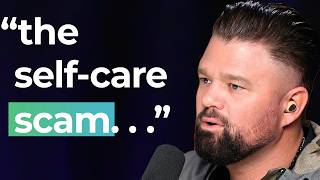
Podcast episode (Josh Trent with Mara) arguing that much modern 'self-care' is commodified, superficial, and can perpetuate burnout. The hosts contrast instant gratification (retail therapy, trendy gadgets) with durable self-care rooted in awareness, internal locus of control, delayed gratification (e.g., cold plunges, breathwork, daily practices), and community. They review related science (General Adaptation Syndrome, marshmallow test, dopamine/limbic drives), describe practical steps (daily inventories, cold therapy, breathwork, boundaries), and close with gender/community notes and calls to action.
Chapters
So what if I told you that everything you think you know about self care most likely is a scam? We're talking about that and so much more on wellness and wisdom. Mar, this is really cool because I practice self care. You practice self care? I think we all have heard of self care Sundays, but a lot of the stuff out there is pretty bullshit. Like it's made to sell you things. It's made to. To make you feel inferior. And really, it's a weapon. It's a monetization of people's pain. So y' all have dealt with this before. Oh, my gosh. I should be doing self care and just going around this merry go round of yo, I really care about myself. I want to practice self love. Why don't I buy 15 things that I don't need instead of a cover for what you really need, which is taking the time to know yourself. We're going deep into this today. So, Mark, what's your favorite form of self care?
I would say right now it's spending time in nature, just disconnected from all the technology because work happens, life happens. Crawling on the phone happens. So whenever the sun is out, I like to just sit by the waterfalls and be at peace.
See, that could be like literally the entire podcast today. So if you're just joining us for the very first time, this show, this movement, is about liberation, liberation of self. We are only as liberated as our darkest secrets. And we're also only as liberated as what we don't know, we don't know. In other words, the things that are totally in the dark about ourself. Our goal with this podcast is to allow us and you to see life through a different lens. It's on the screen right now. It's the Pentagon of wellness. And on the bottom is the physical. And that's what Marge has talked about. This ability for us to be healed and nourished in our physical self by nature. But look, the walls of mental, emotional also get healed by nature. And then, of course, the top of the Pentagon, the spiritual and financial, they actually come through the wisdom of nature, too. But you know what's really crazy, Mar, is we are nature. And there was a guy that, I forget his name, but I think he spent, like, years and years and years in the ocean, and he would, like, befriend all these sea creatures. And he had a really special relationship with a octopus. And he came back and he was being interviewed on a podcast, and the podcaster was like, hey, don't you feel that that's not natural? For you to be doing that. And he got really angry and upset and he was like, well, do you realize that everything about modernity and technology and self care, Sundays and the whole bas basically dark side of the wellness industry is complete bullshit because it's trying to mimic nature in the most fake way. What I'm saying is there's healing power in nature. This conversation about going into self and really understanding that most self care is a scam is actually what is fueling the modern burnout crisis in America. I remember when I first got into wellness, I learned about Hans Selye. Have you heard about Hans Selye? He did the gas theory.
I've never heard of that.
General adaptation syndrome. So we have a stressor that becomes a response and then we adapt and we lower the stressor. But if we never adapt, y', all, then we eventually reach burnout. So this is both spiritual and scientific. Like modern self care isn't liberating us really. I think modern self care is keeping us stuck, keeping us trapped. So let's define this modern self care. Like when you think of the worst part of self care, the commodification of self care, the weaponization of self care by the wellness industry, what's the worst thing you see on Instagram or online? In other words, how do you see self care being plagiarized or commodified in the most terrible way?
I feel like a lot of the self care that's being sold to us is very superficial and it's often also just a one time solution that it's like if you do this once, you'll be healed and your problems are going to go away. I think that's one of the biggest lies because self care needs to be done every single week, maybe even every single day in small portions. There's always parts of us that need more care. And so there's not just one time solution that's going to fix it all. Especially now with all the biohacking and all the wellness being trending. I feel like there's more and more products that could be good for people, but they're actually something fake that maybe you have fake red light, you have fake supplements that don't really work, which is a big, big problem. So people are wasting money on something that doesn't even work for them. How do you see the wellness and the biohacking? Because I know that you like to do your red light therapy in the morning with the cold plunging and take your supplements. How do you feel like that is something that's supporting your self care and not just being something that's being sold to you.
Well, the first thing that all of us get to do when we realize that we're in a trap is identify that we're in a trap. I fell into a trap for many years that if I had the coolest toys and the coolest things, then somehow I was doing the best self care. But really, and we're going to get into this practically in this episode today, the best form of self care comes from a place of honesty and delayed gratification. We're in a trap though, Mar. We're in a trap of instant gratification. Like our whole world is built on comfort, not transformation. And people mistake comfort and self care Sundays as being this transformational thing. But it's not, you know, how I see biohacking and self care is really a supplement to the core aspects of what I believe self care actually is. I think at the core of it all, the biggest pillar for self care is, is do we have a process of being aware of how we're actually doing? So in other words, is there an emotional inventory, Is there a physical inventory, is there a spiritual inventory? That's really what we're talking about here because we'll go into the science of dopamine and why I think people get trapped in these loops of self care. But at the top of it all, just as a jumping point for this conversation, do y' all ever feel like you've bought the supplements, you've done all the things that you were told would give you health or give you peace? You know, the meditation apps and the devices you wear on your wrist or your neck, but you still hate your life or you're still in a relationship that sucks, or you're just not happy with the way that you feel because feelings are emotions and we talk about this so much in our liberated life community. This is what we have conversations about all the time because it's on the screen right now. Btfa, we have a belief that leads to a thought, that leads to a feeling that leads to an action. So now if you've flashed on the screen and you know what I'm saying, if we have a feeling that we're not feeling well, it's going to drive us to seek out the things that'll make us feel well. But if we get caught in a shame spiral or caught in a self deprecating loop, then we're unfortunately going to feel bad and then we're going to eat things or do things or hang out with people that continue to make us feel bad. So at the core of all the practical, tactical things I'm going to share today, there really gets to be an emotional inventory. And this is what we always go into@liberatedlife.com that's why we're in community. There you can't get everything from a YouTube video, but you can get a starting place. Let's go into the neurochemistry of this because this is really big. On one side we have this concept of self care, and on the other side we have a neurological, biological and spiritual fulfillment of that self care. But I think what's dangled as a carrot by modernity in society is that self care means you go get a massage, self care means you do a bubble bath. But at the core of all of this, if you get out of the bubble bath and you hate your life, or you get out of the spa, or you buy, you know, $5,000 worth of biohacking and you don't have any awareness practice of what truly nourishes you, none of this stuff's gonna work. None of this stuff's gonna work. Like we have, we have this wiring in our, in our neurology, in our neural tree. And our brains are wired for instant reward. So we have a limbic system in the brain. And that is why we are drawn to negative things. We have a negativity bias. As human beings, we're always trying to avoid pain and seek out pleasure. To quote Tony Robbins. I don't know if you've ever seen Tony Robbins. Like, he gets people jumping and dancing and things like this. And like 80% of what he does for people is he puts them in State. That's 80% of his events. He's getting them rewired essentially to receive and give joy for a whole weekend. Like that is a great starting place for at least knowing what makes you happy, but gives you internal locus of control versus external. And this is the scientific part that I love the most. All of us inside of our conscious mind and unconscious mind, we have this critical factor that I've learned from nlp. And that critical factor is informed by all the trauma and all the stuff that's happened for us up to this point. And it actually shapes the way that we choose and select different self care practices. But if we don't have an internal locus of control, which science tells us is a mechanism for our psyche that allows us to seek truth or seek purpose of safety coming from inside of the self versus the external locus of control, the external locus Says I'm only safe if Mar makes me feel safe. I'm only safe if my boyfriend or my girlfriend makes me feel safe. I'm only safe if I have the perfect PDF or if I have a thousand books in my library because I'm so smart. But the challenge with the external locus of control is that it actually never makes us feel safe. Because what if any of those things were taken away? Like let me ask you this, if you're watching this on Spotify or YouTube, there's a woman right now in the bath. What happens if she goes and moves to a new place and her bath is broken for a month? Is she going to freak out? Is she going to completely spaz herself because her one self care practice is gone? That's the internal versus external looks of control. Does she need this thing on Sunday? That's a non negotiable for her, for her to feel safe. Well, what if that thing is ever taken away? How do we actually understand that we can be comfortable in any situation we choose and we can just self select new things that are based on our internal locus of control? That's the biggest point I'm trying to share here. So like, you know, we, we binge, we're on social media, it's almost like we can't sit with, with ourselves. Do you feel this, Mark? Yeah, we literally can't sit with ourselves.
I've been, I don't want to say victim, but I've fallen into this as well myself, just wanting to meditate so bad. But then instead of that I just end up scrolling on Instagram. I'm just like, where did my meditation goal go to? Like that that's what I actually want for myself. But I don't have the capacity to tell myself, stop doing this and do this instead. And that's like why? Like why can I, can't I choose something better for myself?
Because you are. And we all get stuck in these loops of having that limbic brain, that novelty piece of our psyche being fed when we're scrolling on our phone, y', all, it is the most addictive thing. Now if we can use it in harmony, then we can get a lot from it. But unfortunately, as you were saying, Mar, it's like we, we scroll for literally hours on our phone, but we can't sit for five minutes. This is the construct, this is the really core of what we're sharing today. There was a test done and it was called the Marshmallow test. And there were children in the late 1960s and early 70s. @ Stanford. And it's a very famous test. I don't know if. Have you ever heard of the marshmallow test? Have you seen little clips here and.
There? No, that's completely new to.
Me. It is such an amazing insight into instant gratification and delayed gratification. And this is really at the core of self care. So what they found were the children that were choosing to eat a marshmallow immediately instead of waiting, I think it was five minutes or ten minutes, and they would receive two marshmallows for waiting. The children that waited extra long and received two marshmallows had a higher degree of satisfaction in life. They were more successful in life, and they performed better academically. Now, why do you think this is, y'? All? It's because science showed us the children that were basically parented with love and parented with boundaries, they were able to become a more strong and resilient human because they were taught from a really early age how to have this internal locus of control and how to have this mechanism of delayed gratification. Now we can extrapolate that out. The marshmallow test is a really beautiful way that science shows us essentially what's going on with self care. Most self care practices are kind of like band aids. Have you ever felt like you needed something in your life more that was self care, and if it ever went away, you noticed it? I don't know. For you, it's like surfing. You ever felt like there was a band aid for you in self.
Care? Well, surfing, it's just an addiction. Like, it's not even self care anymore. It's like proper addiction. I feel like exercise is an important one because just it makes you feel good, makes you feel stronger. It releases all these hormones. So I think that's an important one. I'm gonna take it away. I can feel it. Like, I can feel it. I'm not myself. And just like, my mood is maybe not as good. So I feel like that's. But it's essential as well. It's not like something that I would need to take or buy or something like, I can do it even when I'm at home, but it can be still taken away from me if I get injured or, I don't know, something happens.
Right? Yeah. That's a really beautiful way of therapy. Exercise, nature, breath work, jumping in a lake. Here's the real scoop, y'. All. They're all free. They're all free. Like, yeah, maybe buying a board, you have to invest in a board. But for the majority of nature nourishment activities. They're typically all free. Yes, you have to buy shoes and I guess anybody could argue with me on that. It's not totally free. I mean, unless you wanted to go like walk barefoot, which some people love doing that. I can't do that because, like, I've just. I really enjoy wearing shoes in nature for the most part when I'm hiking. But what I'm saying is the point that I'm making here is when we go to the things that are actually not novelty based, they're not just hedonistic, they're not just feeding that part of our brain that wants the new thing because it gives us an escape from how we actually feel. This is what happens in the self care world when we see like retail therapy where you go spend money on a credit card and look, I've painted a lot of light on things that we don't want. We've summarized internal and external locus. We've talked about what happens in the body with dopamine. We've explored a little bit about how self care can be a scam if you fall into that trap. Let's provide some solutions though. I think what's really important here is to identify where your proclivity is. Are you the type of person, when it comes to self care, that you have delayed gratification or that you have instant gratification? Full stop. That's really important. The two best things that you can do if you notice you have an addictive personality or you have that issue where you're constantly seeking immediate gratification, do something really short that's really hard. Do cold therapy and do breath work. I know I'm ringing the alarm of things we've talked about a lot on this podcast, but are you actually doing them? That's. That's the key. The reason why I think cold therapy is the best starting place is because it gives the people that have the addictive nature and internal stimulus right away. Like you remember Mar, when we did our retreat, there ain't nothing you get to focus on besides your breathing. Right. Like, what was that like for you when you first did the cold.
Plunge? Well, I enjoyed it. Like, for me, cold is a really big challenge because I don't enjoy cold even when it's like cold air, cold water, whatever it is. So well, also Texas being so hot, it kind of helped. But yeah, it's like first you're like, oh, everything hurts. And then you just need to surrender and you just breathe through it and you get to relax. And eventually it starts to feel good, and then all the good hormones start to release, and it's like, life is great.
Again. Yeah, but it gave you that initial hit. I mean, I love that you enjoyed it. Maybe people that have never done cold therapy are like, whoa, how could this possibly be self care? This is the one thing that I want you to take. If you just took one thing from this entire podcast, from this episode, that will change your life. Self care is not about instant gratification. Just, like, let that sink in here. It's something that I've learned over time. It's something that we discuss in liberated life. It's something that is a core lesson in my own experience of being a human that I've learned so many times. Self care is not about immediate gratification. True self care is about delaying the gratification as long as you possibly can so that when you get the gratification or the reward, that you've actually earned it. And I don't mean you're not worthy of it. I don't mean that you have to suffer and you have to struggle. Although many times we do. What I'm saying is whether it's a bath, whether it's shopping, whether it's cold plunge, whether it's sauna, I mean, there could be a thousand different ways that we practice self care, but if you're doing it from a place of necessity, like, I need this to escape from the way that I feel, instead of, I'm mindfully using this as a way to nourish myself. You can see what I'm saying, Mar. There's just a different mindset. One of them comes from scarcity. 1 the of. 1 of them comes from.
Nourishment. Would you say that self care should become a.
Habit? Well, that's interesting choice of language, because when I hear the word should, all I think about is finding Joe. You know, anytime we say the documentary Finding Joe, there's a monster in there, and it's the shall not monster. It's this big monster that says, you shall do this and you should not do that. I think that self care doesn't need to have a should connected to it. I think that self care is actually just a natural part of our human experience that when we were in harmony with nature, we just intuitively knew how to do. And I think what's disconnected us from that is our phone, our laptop, our stress, our modernity, you know, the. The pace of life and modernity and how disconnected it is from nature could not ever be more present than it is now. I think that yes, self care gets to be a core pillar of that, but it's this refinement process going back to what I said. And this is a heart based statement. This is not an intellectual thing. Am I approaching self care from a place of what I truly need to nourish myself, or am I approaching self care as a way to escape from what I'm actually feeling? This is a really big one, y'. All. Like let this land people with an internal locus of control. They believe they create their own reality with resilience and confidence and fulfillment. But when you have an external locus of control, then life happens to you. You're a stress candidate for financial stress, physical stress, emotional stress, and you sign up for it unknowingly. We all do. When my peace and my nourishment of self is dependent upon my external environment 100% of the time, then I'm always a slave. I'm always captured by my life, by my day. Do I have days where I fall into that? For sure. But as long as I'm leading my life in the direction where I have an internal locus of control and I'm treating my body with love and care because I want to nourish it, not because I'm in scarcity of needing to escape of how I feel, that's the big one. That's honestly the main thing here. Then when you have that internal locus and you have that nourishment lens, then you can choose whatever feels good, whatever you intuitively know you're out of alignment on. Like when you go to surf Mar, it's not because you're trying to escape the way that you feel. Or maybe it is sometimes. Sometimes it is, yeah, I'm not here to shame. Sometimes it is. But if, let's say 80% of the time you're going out and being in the water because you just love it and you know it nourishes you. Not because you're trying to escape yourself. That's the big one. Can we be with ourself? I think about the Rick William episode that's coming out. Maybe by this time it's already came out. And one of the core teachings he talked about was he was acting like his father for so long because he was trying to get safety from the outside by being a bodybuilder, by doing all the self care stuff, the self care trap that we're talking about today. But on the inside, on a neurological level, on a heart based level, it wasn't until he learned to give and receive love from his heart chakra and really be there for himself. That health is just a state of ease for him. You know, emotional regulation and physical health is just a state of ease for Rick William and it's linked right here below and you can go to joshtrend.com719 today for all these resources. The reason I'm saying this is because it's a really big shift from internal power to external power. So if I have a shift of like buying a $2,000 treadmill, thinking that that's going to solve my problems because I don't love myself when I look in the mirror. Well, doing breathwork and looking at yourself in the mirror is free. It's completely free. Most of us have mirrors and if we're alive, we're breathing. You can actually start there. And this is why we get so clear on who are we, what are we doing and why are we doing it in the world and all these AMAs that we're describing and that we're talking about today. Because gosh mar, like if we're just caught up in the self care scam and all we do is get that quick hit of dopamine by buying the new thing, then every choice we make is not about nourishing ourselves, it's just about feeding the novelty in our brain. It's just about reinforcing actually this external locus of control. So one other amazing thing that I've learned from NLP is the conscious and unconscious mind, that critical factor I talked about earlier. You know Mara, we get our conscious mind 40 to 50 bits of info per second that we can actually process, that we can actually take in and utilize. Yet our unconscious mind has 11 million bits per second coming at it. Like can you just imagine this? But if we can only process 40 to 50, we have 11 million coming at us. We know that energy cannot be created or destroyed. Law of Thermodynamics shares this with us. So that means that like 10 million plus almost 11 million bits are getting stored somewhere. And so if we have this identity that we are the product of our environment and we start hanging out with people that are low vibe and we have a really crazy unhealthy week. And then we just think by spending a day taking care of us on Sunday that that's going to be this permanent fix or this permanent change also completely ignoring the fact that we don't enjoy our life and it's just an escape from what we don't want to feel. That actually is what propagates the self care scam industry. The self care scam industry is much different than the self care self love industry, which is what you and I stand for. It's what this podcast stands for. So it can be a bit heady or a bit intellectual, this concept, but the heart of what I'm sharing here is if you don't have an introspection process, if you don't have a self awareness process, if you've identified that you are a external locus of control, not an internal locus of control as your main leverage, and if you realize that you have an addictive personality, the best place to start is a daily practice, not a full self care Sunday where you buy all these things that you really don't need. What do you.
Feel? I feel like it goes even deeper than the practice of self care itself, which can be anything for different people. But I feel like it also starts with setting boundaries as a part of your self care. Saying no to somebody who's asking you for something when you really feel burnt out and instead saying like, no, I don't have time for this, or just making different choices, that's the first thing. We first need to make a different choice for ourselves to realize, okay, this is not good for me. Maybe I should change my job because it's really making me feel stressed and depressed. Maybe this relationship I'm in is not serving its purpose and I'm only struggling and nothing's working out. So I think it starts, as you said, with the inventory of everything that we do, everything that we welcomed in our life and see, okay, what are the things that are causing me stress and anxiety and working on reducing it through the practices later on, but also through making big changes in our.
Lives. Yeah, the big changes can be really scary though. So I have compassion for myself and everyone who's ever been through big life thresholds, relationship, job or moving, all these things are probably the hardest to deal with. Right? Like I've heard, moving, getting married and a death in the family or a major injury are all essentially the biggest shocks to the nervous system, to the root chakra, actually, to quote Ayurveda, as, as human beings could ever feel. Yet when we look at why these self care Sundays don't really address the root of the issue, it's because they don't rewire the nervous system, they just don't. They'll do it temporarily. And look, there's a time and a place for damage control, right? So we've gone very deep into many layers of self care and the good side of it and the scam part of it. But I do want to provide some, some really key take home practices and some great things you can do right now. When you look at rewiring your nervous system, it has to be done on a continuous basis, on a gradual basis. Doing a quick hit of self care on a Sunday, even if it's all day and then Monday through Saturday are hell with zero. Self care will not offset the love that you give yourself or the care you give yourself on Sunday. Now arguments happen, trauma happens. There is a time and a place for deep self care. Whether it's, you know, microdosing or macro dosing, psychedelics or deeper breathwork journeys. You know, for example, like you know, back in the day when you broke up with the man from your past, it would have been really great for you to do like a full day of self care because your nervous system was in fight or flight response. Yes. Do you remember that.
Time? Oh yeah, it was very difficult time of my life. It took years actually to get my nervous system back to its normal.
State. And what did you learn about yourself when you went through that process of doing self care every day versus waiting a long time and doing a self care.
Sunday? A lot has happened throughout the years. I feel like the self care, it's, it's an exploration process as well. Not just exploration of the products or the activities to include in my life, but also exploration of who, who am I, what do I need and listening to my body and how my whole nervous system feels in the moment when I'm doing something or when I'm meeting with somebody and just as I was saying, just making better choices for myself consciously. And I feel like our conversations always go back to one answer, which is awareness. And that's the answer for absolutely everything. So I like that we always bring it back to awareness. So cultivating awareness around the feelings that I have inside of my body and what's going on with my mind, being conscious of my thoughts. I think that's been one of the biggest self care practice and the most sustainable one.
Too. Yeah. So this is why the self care Sundays don't fix the burnout. Because true self care is not about doing one big shock to the nervous system. It's about these tiny changes, tiny little self love, little one ingredient at a time. You know, the path up the mountain, that's a million steps. You have to take one step at a time. I remember my mom is manic bipolar which I've shared on the show. But one thing that she has been really wise about is she'll constantly text me a message, she'll say, okay, Josh, one step at a time, one step at a time. And there's certain wisdom like that that can be shared from anyone and it just rings true. Self care Sundays don't fix you. They may temporarily give you, you know, an assuagement of your physical, your emotional, your mental challenges. But if you want real sustainable, long term self care, self love, it's taking one step at a time. Now this is not sexy. This is not going to get a bunch of clicks. This is not going to get a bunch of energy and attention towards it. But I don't care because it's fucking true. There's just no way out of doing the work. You have to do the work. You get to do the work. So don't drop a comment below. What is one self care thing that y' all have been doing or Write to us? Podcastellnessandwisdom.com what is something that this conversation has brought up for you? We're like, huh, I was doing the sauna for three hours every day or I had a four hour morning process. But I realized that it was actually holding me back and I realized that my self care quote, quote was actually a cover for not wanting to feel the feelings that I didn't know how to feel or I didn't have the courage to feel. I think that's the real thing here is if you want to break free from self sabotage and burnout, it's not about taking drastic measures. It's about taking small intentional movements or small intentional meditations every single day that over time builds your maturity, build your bolus of you having internal locus of control. I think that's the big piece today here. You know, a lot of what we shared, mar, is about the scam side of self care. I'm not here to shit on self care. I think anytime you can get it is good. Like anytime you can get self care in this modern world, it's a good thing. But I wonder from a woman's perspective, you know, how do, how does a woman see self care and what really nourishes a woman in this world compared to a man? I think there is a key.
Difference. There definitely is a difference. And I feel like, well, for the scam part, it's mostly like being sold cosmetics and just like taking care of your body and looking pretty and all of the superficial stuff. But I feel like there's a lot that we need that is not talked about as much like how much women need other women. Just like gathering in groups of women only and sharing what's going on in their life in a completely safe space. I think when I first experienced that, I was like, wow, I never knew that I needed this in my life. It felt so special. And I was like, oh, my God, like I was craving this my whole life and I didn't even know. And I think that's one of the biggest self care tips. Just like being surrounded by a community of people who have your back and that just support you and you can talk about anything with them. Especially for a woman, I don't know how it is for men. I believe it's also important for men, but just like women spending time with other women, super.
Important. So good. Yeah, for men, it's important. I lead a men's group here in Austin, so we do require that nourishment as well, but it's actually different. And we'll talk about this maybe on another show. The difference between men and women when it comes to self care is that the masculine at its core, at his core, he really needs and thrives in being alone. Not all the time, but men for millennia have gone off and spent time alone or spent time with just other men and then came back nourished and refreshed to be with the feminine. Because the dance of the feminine requires for the masculine fuel. And I believe that fuel only comes from being in solitude and, you know, being very clear on who you are as a man. Look, the way that self care plays out for men and women is unique. But at the end of the day, we all require, we all must take inventory of how we're feeling. Do we love our life? And if you feel stuck on the inside, but on the outside, you have a great job, you're in this quote, great relationship. If everything on the outside feels like it's in perfect place, but on the inside, you feel like you're struggling and you're between the ages of 30 and 50 and you really are looking for something unique that can help you in a trustable way. Get to being peaceful on the outside and being peaceful in the middle. This is what liberated life is all about. So it's on the screen now. Liberatedlife.com this is a space that's trustworthy, where you can actually work on these things in community, which Mara and I both echoed is so important. So until we see you again on another AMA and another podcast, please leave us a question. You can write to us@podcastellnessandwisdom.com or you can just simply leave 90 seconds of your voice. Joshtrand.com ama so we'll talk with you next week. Make sure you share this podcast with somebody that's been doing self care, but they're still an asshole, they're still a jerk, they're still not happy, but they have $10,000 worth of self care things. It's not a shame thing. I just think it's funny. We put energy in the wrong spots at times. So until we see you again, share this podcast, subscribe wherever you're watching or listening and make sure that you're going deep into yourself this week so that you have love, wellness, but most importantly, peace and power. You cannot have peace without the power. All right y', all, we'll see you next week.
More from Josh






Your child's future start before pregnancy... and even before conception! #podcast

MD Reveals: Your Healing Creates Your Child's Reality (The Souls Coming In Need Strong Bodies)



