TOM BILYEU: SET YOURSELF FREE - Are We living In The Matrix?
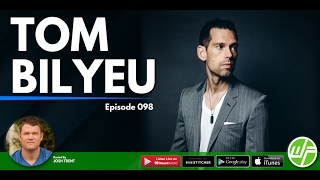
Transcript of Wellness Force Radio episode 98 (host Josh Trent) featuring Tom Bilyeu (co‑founder of Quest Nutrition, founder/host of Impact Theory). The conversation centers on mental wellness, mindset change, skill acquisition, mythology/ritual, and practical steps from knowledge to execution; it includes an intro, ad reads, long-form interview, a seven‑question rapid‑fire segment, and closing remarks.
Chapters
Wellness Force Radio.
Feelings are essential, but they can't dictate our actions. We literally infect each other with our emotions. We came here for a special purpose. Let the purpose unveil itself. Knowing without doing is the same thing as not knowing. They're not just trackers.
I'm gonna wear this and it's gonna.
Help me do the right thing.
Wellness Force radio episode 98 with the co founder of Quest Nutrition and the host of Impact Theory, Tom Bilyeu, I.
Believe that we're living through two pandemics right now. You've got the pandemic of the body, and that's what Quest is meant to address. Then you have the pandemic of the mind. And the leading cause of death among young men in America is suicide. And depression and anxiety are ubiquitous. I mean, it's really, really crazy. And so that's the pandemic of the mind. And wanting to address that and asking myself the same questions that we had asked about Quest, which is what is the no BS answer to ending metabolic disease? And. And the truth was that you had to make food that people chose based on taste and it happened to be good for them. And so wanting to do the same thing for the mind, which is what do you really have to do to pull people out of that vicious cycle of being depressed, of being anxious, of feeling trapped in your life, not being able to accomplish the way that you want, not understanding or being able to find fulfillment, like really, really, what do you do to address that problem?
Welcome back to another episode, my friend. I am your host, Josh Trent.
Thank you.
Thank you for spending your time with me here on the podcast. This is where every week I'm bringing you access to global experts in all things wellness, behavior change and new technologies. On this podcast, you'll learn from exceptional people who are dedicating their lives to being a positive force for our physical and emotional wellness. My intention with the show is that together we'll discover the connections between our emotions and healthy habits to live our best life and enjoy the process. This episode is brought to you by Perfect Supplements, a company I'm stoked to partner with who actually walks the talk with their values of non GMO pesticide free real food supplements that fuel us for the wellness journey. Head on over to perfectsupplements.com wellnessforce Enter code wellnessforce to save 10% off your entire order. This is a big day, my friend. I'm excited you're here. We're talking with one of the most influential minds in the wellness and personal Development Community Tom Bilyeu Tom's PR company reached out to Wellness Force last year and my immediate response was yes. I'd been following Tom's work and his interviews from InsideQuest and impact theory, interviewing mentors like Tim Ferriss, Simon Sinek and Tony Robbins and so many more. Getting to explore the mind and personality of Tom in person was a true honor. I know you're gonna listen to this conversation at least twice to catch a fire and level up whatever you're working on, your wellness or in your career. If you've been listening to the show for a while, you know there is a big difference between motivation and inspiration. When I sat down with Tom face to face, I can tell you with total honesty, my week following was a completely different experience. I was able to navigate with my colleagues and my friends with the REM that I'm coming from a place of being a learner and using my curiosity as an engine for enjoyment. I had a lot of introspective and aha moments from this show. Tom shared so much, including his belief around the importance to recognize we are going through two pandemics in 2017. One being the pandemic of the body which his company Quest Nutrition is addressing and the other the pandemic of the mind which his new venture Impact Theory is tackling head on. There is a real and very sad problem with a powerful solution also that we're facing and it's the data that lets us know one of the top causes of young men and mortality in America is suicide. Tom is on a mission to change that and so much more with his show and movement at Impact Theory. So today on the podcast you're going to hear how Tom went from dead broke to co founding a billion dollar business with Quest Nutrition. The power of myth in both business and life. The old styled software that is limiting our self awareness. Continuing on in our learning and understanding of the brain from our previous episod setting ourselves free from being stuck in our heads. Why neurons that fire together do chemically wire together how to set a realistic timeline for your mission and creating the impact that you want to create. Why becoming a radical learner always trumps being great about being right and knowing when to be vulnerable and when to take massive inspired action and seeing the truth about what allows people to form better habits and let go of the ones that aren't serving them. Let's get into this lightning bolt of a conversation with Tom Bilyeu. Tom Bilyeu is the founder and host of Impact Theory and the co founder of Quest Nutrition. After spending six years growing Quest into a billion dollar company by helping people transform their bodies, Tom is now focused on completing the second half of his mission. Transforming people's minds through his new venture with Impact Theory. This is a show spearheading a movement to facilitate mental transformation both through its empowering content by accelerating the businesses and entrepreneurs destined to change the world. And Impact Theory's mission is to free people from the matrix said another way they want to end the poverty of poor mindset. Tom, thanks so much for coming on the show, man.
Thanks for having me. It's a pleasure to be here.
I had probably the most fun doing the research for you that I've had in like six months. You have so much content online. What is something that people don't know about you? I mean, there's so much about you out there.
Wow. Something that they don't know about me? Well, I'm profoundly lazy. I don't know. Despite what you may have heard. Yeah, that's actually very true about me. And my success is in spite of that, certainly not because of it. So, yeah, that's a true, perhaps little known fact.
You spent so much time in corporate America before you even founded Quest and one of the things you talk about a lot is resilience. You're a good sufferer, you've mentioned and it's one of your skill sets that you talk about. We're going to dive into law of attraction versus suffering. I want to get really deep with you today because we've interviewed guests that are very open as far as like the vibrations we're putting out. But then some of the guests that you've interviewed, like Tim Ferriss, like Michael Strahan, where he talked about his mindset and the way that they've approached training the mind is totally different than kind of somewhat of the airy fairy spiritualness that we see a lot out there. But on that same note, I mean, eight years marketing in a tech company, what was that time for you? You talk about that as a dark time.
Oh, yeah, yeah, yeah. That was a very dark time. I used to say that I lost those years of my life, but the truth is I just sold them cheaply. And I say that because I really was Lear. There's no question. But there was a tipping point somewhere in there where it stopped building me up, even though I was learning and growing and started really diminishing me. I wish I had understood back then that you really can make a demand that you do all of that. You learn, you grow as an entrepreneur. You push, you build, but you're doing it in service of something that you really, really believe in. And something that, to use Joseph Campbell's words, is following your bliss. And I did not understand that back then. I did not know that you could build a business around what you love. You have to have business acumen. There's no two ways about it. You have to know how to construct something. You have to know how to identify a market, how to serve that market. But at the same time, there is a market, I promise you, and whatever it is that you're deeply passionate about, and you can make the demand that you build a business around that. And unfortunately, I did not do that, and I paid a bit of an emotional toll for it.
But that's what actually fortified you. That's what made you to be able to make stronger decisions when the stakes were even higher. So now you've founded this billion dollar company, you've moved on, you're now spearheading impact theory, which is unlocking people's negative mindset. Tell us about impact theory. I mean, I did a little bit in the intro, but tell us what it means to you. I mean, why did this show come through you?
So I watched the movie the Matrix, and that movie really, really changed my life in a deep and fundamental way. By pointing out what I wish had been a little more obvious, which is that I was creating all these limiting beliefs about myself and my life, believing that my talents and intell were fixed, that there was only so much I was ever going to be able to accomplish. Not realizing that just believing those things become the Matrix and become the things that hold you back. That was a powerful, shifting moment in my life. Then I met the guys who would later become my business partners and really began to teach me about entrepreneurship and began to see how I could develop a set of skills to accomplish any task that was just a critically, critically important breakthrough. And it so fundamentally changed my life. And took me from scrounging through my couch cushions to find enough change to put gas in my car, to co founding a billion dollar business and transforming myself from a wealth perspective. And that really being a reflection of the transformation that had gone on in my mind. I had promised myself that one day I would pay that forward and I would show other people what I had done in the hopes that not only would it help them on an individual level, but if we could make that mindset shift ubiquitous enough that you really could have impact on a global scale.
You make promises to yourself and you keep them and There was a promise you made years ago. You wrote on your side, I went from dead broke, in debt, not able to pay my bills, to building that billion dollar brand. What was the promise? I mean, all of us make promises. Sometimes we keep them, sometimes we don't. But what was that promise like? Why was that such a heavy promise that you wanted to keep?
Yeah, for me, you really have one shot at this. Like, this is your one go round and to really go introspective and ask, what is the purpose of all of this? For me, the answer was to acquire as many skills as possible, to have utility, and then put that utility to the test. Really recognizing once you realize that you can do anything you set your mind to, how you spend your time becomes a spiritual consideration. When that switch flipped in my mind and I realized that I was capable of all of this stuff, that I wasn't stupid, or at least I didn't have to be stupid forever, that I could learn, I could expand my intelligence, I could expand my ability to execute. Then it became a question of, okay, well, what are you going to execute against? What are you trying to bring to the world? Wanting to put that at the core of my life is really about answering the question, how far can I take myself? That, to me is the meaning of life. The very meaning of life to me is that concept of skill acquisition and seeing how much of your potential you can actuate. I think so many people are satisfied merely to have potential instead of actually do something with it. I hold myself to a standard of execution and that's the metric by which I judge success.
Looking back, thinking about all the things that happened up to founding Quest, you went through quite a bit of turmoil founding Quest. Why did you leave Quest?
So I consider myself to be the chief evangelist of Quest. I'm in a founder role now, so I don't have a day to day role. The reason that I wanted to do that is because I believe that wellness is really a 360 degree endeavor. It's not just the body, it's the mind as well. And originally had thought, hey, we'll do all of this inside Quest, which is actually why we were doing the show. I wanted to really give back to the employees, do something great for them. And then we opened it up to the world at large and thought, okay, this will be the way that we increase the scope of what the brand is. But the reality is that brands are very difficult to encompass multiple things and people come to a brand for a specific thing. Or we'd obviously just crushed it on the food angle, people really got it, they understood it, that's what we were about. And so trying to get the brand to encompass the mind as well just was running the risk of that being a little schizophrenic. But I really, really believed that it was important to encompass the mind. I believe that we're living through two pandemics right now. You've got the pandemic of the body and that's what Quest is meant to address. Then you have the pandemic of the mind. And the leading cause of death among young men in America is suicide. And, and depression and anxiety are ubiquitous. I mean, it's really, really crazy. And so that's the pandemic of the mind. And wanting to address that and asking myself the same questions that we had asked about Quest, which is what is the no BS answer to ending metabolic disease? The truth was that you had to make food that people chose based on taste and it happened to be good for them. Wanting to do the same thing for the mind, which is what do you really have to do to pull people out of that vicious cycle of being depressed, of being anxious, of feeling trapped in your life, not being able to accomplish the way that you not understanding or being able to find fulfillment. Really, really. What do you do to address that problem? I firmly believe that it's going to be addressed through commerce, that it has to be a self sustaining engine. It can't be a philanthropy which is always coming to the world with your hand out. How do we turn that into a self sustaining engine? Which turned me back to the thing that I had really been thinking about for a long time and it certainly had the biggest impact on my life, which is mythology. I think one of the biggest problems that we face in society is a lack of rituals and that are driven by the myths and they've really become toothless. And I've talked a lot publicly about why I got scarred as a part of my wedding ceremony. Not the ceremony itself, but as a part of my transition to being married. And just harkening back to when rituals were more intense and they had more of a kick in the ass.
When you say scarred, what do you mean scarred? What was that process?
Yeah, so I read a book called the Power of Myth and it talked a lot about different rituals. And one of the rituals it talked about was ritualistic scarring clarification, which a lot of tribes use to remind themselves either a ritual of adulthood or whatever. It's always some transitional moment and they would get branded or they would get tattooed or whatever the case may be, just to remind themselves that they were different the day before than the day after. So I was somebody who was terrified of needles, Absolutely did not ever want to get a tattoo. And so I thought, okay, that's one of my greatest fears I'm gonna face, that I'm gonna get a permanent reminder that I'm a different person before and after this ceremony. So I got tattooed, which I don't think of it as being tatt. I remind myself that it was a ritualistic scarification and I treated it as such, as something that was very ceremonial, sacred, and a permanent reminder of the change and transition. And my wife and I are about to celebrate our 15 year anniversary. So it's worked so far.
Something about that ceremony obviously worked out. Then 15 years later. One of the things that I've really felt from you in the past six months or so that I've been exploring some of your content is your insatiable curiosity.
Yes.
Where does that come from? I mean, I'm very in touch with mine. We talked about this on the show and it's come up quite a bit how part of wellness and part of feeling that force inside of us is just feeling curious and allowing ourselves to explore. What do you feel that looks like for you and your life?
To me, being excitable is really, really important. And learning to cultivate that in yourself, learning to take what might otherwise be sort of a wisp of enjoyment and really like fanning those flames and letting that excitement really become real enthusiasm. And so in the beginning, when I was young, I hated reading. I wasn't very interested in school. I didn't work hard until I got to college. And it really was learning to cultivate that excitement from a small nugget. And in doing that, in letting an idea capture your attention and really focusing on it and going deep and asking, how is this usable? And then putting it to use in your life and taking those steps to act on the things that you learn. And then when you do that the first time and you realize, whoa, I read that concept here and now it's actually played out in my life. You get a sense of this self reinforcing cycle. I've really poured a lot of energy into getting excited about the ideas that I encounter, which only further feeds my desire to be inquisitive, to ask the next question, to push a little bit farther, to get a more usable answer. And when you know that you're going to put this stuff to use, you find yourself pushing, pushing, pushing until you actually understand it. And I find so many people are afraid of looking stupid that they never ask the question. They need to make the information usable. So there's never that reinforcing cycle. So they never get enthusiastic about learning because it doesn't go anywhere. Yes, but feeding that usability has fed my inquisitiveness.
Jason Silva, we talked before we recorded just came out with a video that we are completely afraid of our own greatness. And I don't know if you saw that, we'll link it in the show notes, but there's something about how powerful we actually are that is scary. Have you ever felt your own power and be like, oh, it's kind of scary, and then how did you push through that? Was there a moment or a threshold that you breached? In the words of Joseph Gamble, I.
Don'T know that I would say that I'm. And I don't even think Jason means it in the way that we're actually scared. Once we realize that we are powerful. I think that what freaks people out is the following. Once you believe that you can do anything you set your mind to, then how you spend your time becomes a spiritual consideration. And so I don't know that people are ready to give that much importance, to believe that they could change the world if they really applied themselves. Because then there's real consequence to your life, there's real consequence to what you do, how you spend your time, the choices that you make. It's kind of like when you really go hard on social and I'm sure you felt this, that you're putting yourself in a situation where the world is watching and it's a double edged sword. Right? It's amazing because there's all this accountability and it gives you that extra drive and push and you know that you can influence people's attention and that can have profound implications. But at the same time, people are watching. And now it's like that day that you don't want to work out. It's like, oh, well, I'm not invisible anymore. And I think when Jason talks about people being scared by their own power, that's more like, holy hell, I now have consequence. And if I'm willing to believe that I matter on that big scale, it's a lot of weight. But when you actually are, you've developed a skill set, you've worked very hard for it. There's nothing fake, it's not conjecture, it isn't you having campaigned and try to get people to believe something you're actually capable of. Something. And this is what I tell people all the time. Stop worrying about being a champion and start worrying about becoming capable of a championship performance, because that's totally different. That's about grinding it out, earning skills through hard work, actually getting good and becoming capable of the extraordinary. Now, when you're capable of the extraordinary, at least for me, that's just intoxicating. It is so cool to know I've become capable of this just because I was willing to work at it. I was willing to practice and not worry about looking stupid, not worry about failing. Like doing all that stuff, embarrassing myself, picking myself back up and keeping going like that, to me is just exciting.
I'm so glad that we're talking about being seen because we've had guests on the show that are talking about how do we fully express ourselves. And I think a lot of our path in life is to figure out how do we be fully expressive and how do we just relax into being our authentic self. There's a narrative that goes on. So many of your guests talk about our internal narrative. And one thing that fascinates me about the brain is we are running on really old software. Like we are running on software that used to keep us safe. We'd be in a tribe and if we were rejected by that tribe, then we could actually lose our life. We could not get fed, we could not mate. So we have this old software bias that we're running on. And I know you interviewed Nir Eyal on your show and I interviewed him last year and we talked about kind of this mechanism that's built into the brain where we're so biased unless we're aware. How do you feel like people in regards to wellness can be first aware of these thoughts and then second, what does that look like for them to actually change those habitual patterns of negative thinking?
Yeah, for me it all comes back to understanding the brain. And I'm talking about from an anatomy perspective. You know, especially in the wellness game, people really get the body, they understand it, they can see it sort of as levers and pulleys. And I think there's a mechanistic understanding of the body. But the brain is invisible, right? It all happens in this invisible box you can't see inside of. And so there isn't the same time and attention applied to the brain. And there's no sort of mental equivalent to six pack abs that somebody can see just by walking by you at a pool party. So there's none of the same sort of vain external drivers or reinforcements for developing the brain. So people don't really dive into neuroanatomy. They don't dive into the mechanisms of the brain, the biases that you're talking about, things like that, or even like myelination, understanding how the brain makes these fast connections and builds these, what Tony Robbins calls the superhighways. And they could be a superhighway to fear and anxiety, or they can be a superhighway to gratitude and joy. I mean, it just depends on what you spend your time thinking about and working towards and obsessing over, quite frankly. Because neurons that fire together wire together. So if you want to really go deep down that path of understanding how those things are going to allow you to form better habits or break habits down that aren't serving you, then you can set yourself free. But it really comes down to you have to understand the anatomy of the brain, how the brain is trained, how you make changes in the brain. You have to be, I think, more proficient at that than you are at the body.
Wow, that is not the answer I expected from you. Because a lot of the guests that you have on the show are a fortified expert in their field. And I feel like you do such a great job of extracting the information that people can take action on. Because it's one thing to have knowledge and then there's this bridge between knowledge and execution. What have you seen in your own life that allows you to learn and then execute? Because that bridge is different for everyone. But for someone like yourself, what did that bridge look like?
So for me, it comes down to getting these little wins that begin to stack on themselves. And it is just like going to the gym. So you walk in the gym and if I told you execution was picking up a 50 pound weight and curl it, and you walk over to the 50 pound weight and you can't curl it mentally. Like, think of mathematics. People go, well, I just can't do it. They don't back it out like they would the body and say, well, but I can curl a 20 pound weight and then a week from now I can curl a 25 pound weight, and then a week after that a 30 and so on. They just get that progression that people, for whatever reason, don't understand mentally. And that's exactly how it was for me once I realized that the brain worked like the body and that, yes, I can't do it today, but that doesn't mean that I can't build out this system where I can learn and get better at this and then really execute against it. So, so crossing that chasm, I never looked at it as a huge chasm. I would understand, okay, that's my goal. And I see that there's this huge difference between who I am today and who I'll need to become in order to do that goal. But I know that I build a bridge by building one skill after the other. I learned pretty early on that this is just a game of skill acquisition. So I got good at identifying what are those skills. And I think a lot of times that's where people fall down. They actually don't know the skills that stand between them and executing against their goal. Or worse, they don't even believe that they can acquire the skills to execute against their goals. So they get paralyzed. Or they believe that they can acquire the skills, but they just can't stop themselves from looking at the whole thing. It's like one big insurmountable chunk. How do you eat an elephant? One bite at a time. You just break it down into these smaller pieces and get that one skill and then the next skill. That's what I set about doing. One thing, this is really key. People have to look at themselves in a very long timeline. And I've just always been willing to work really hard full out for 10, 20 years and to think of myself in sort of decade movements instead of, you know, well, if I don't have this down in a week, then I'm going to give up.
One of the things that is important to me is language. And sometimes language can be passive and sometimes language can be very ownership based. Have you noticed in your career dealing with many employees and even audience questions that you used to field from InsideQuest and now impact theory, that you ever feel compelled to catch someone when they're using disempowering language that's not helping them or supporting what they're creating? Let me give you an example. Someone might say, you know how it is, Tom, when you're tired, the dessert is almost impossible to say no to. And you could pause and say, wait, when I'm tired, I eat the dessert. You mean you eat the dessert. It's hard for you to say no to. Because this usage of the word you when speaking instead of I takes away the responsibility, I think subconsciously and even consciously from the responsibility to ourselves. So this power of language, either self empowered or passive, is this something that you've noticed and coached employees on and how do you think this impacts our own mental narrative, the disempowering language versus the empowerment? Or is this something that I'm only seeing in my circles.
No, no. I have two strategies for that. So strategy one is, if you're my employee and I need you to think a certain way in order to achieve the goals that we've set up for the company, then I'll say 70% of the time I'm gonna call you out. There's gonna be a lot of times where you don't. It just doesn't make sense in a meeting or whatever. But 70% of the time I'm gonna say something because that's how you reinforce the cultural norms and really get every centered around a core set of values. So I actually would say, like, hey, that's not, you know, that mentality isn't going to get us where we need to go. And let's really look at what's a more effective approach. And because I'm always coming at it not from a moral judgment perspective, I'm purely just thinking, like, what's going to let us execute. People are usually pretty unguarded about that. Because I'm so open to people doing it to me. They'll see me in a public setting. If I say something that's a limiting belief or whatever and somebody calls me out on it, it I fall over myself with gratitude. And because I thank them so authentically and from a real place, because I really am grateful for those reminders and I'll do it publicly, I'll do it privately. People know that I'm sincere in that, so I don't think they feel attacked. That's part of it. Strategy number two, because I can't let limiting ideas like that inside my head. If somebody says something that I totally disagree with but it would be wildly inappropriate to say something, then I just say in my head three times because. Because it's usually something like, well, we could never do that. I'll just say in my head three times, yes, I can. Yes, I can. Yes, I can. I could do that. I could do that. I could do that. And I think people think I'm kidding, but, like, I really do that a lot just to reinforce in my head that all of this is possible.
And I love the fact that you said it's not like I thought of it as a huge chasm to go from knowledge to execution. It's little bricks bit by bit. I love that because the narrative that happens. It's easy for us on a show in a safe environment or for people that might be achieving a lot of they're at that state of achieving already. But for the people that haven't achieved and they're in the process of achieving. What do you tell those people when those voices come up, like when they're looking at it as a chasm instead of one brick at a time? Is there a place they can go to as far as daily habits to reinforce that?
There are definitely. But the place that I always tell people to go is the book Mindset by Carol Dweck. If people haven't read that book like A, they're in for a treat because it's just so massively powerful, but B, it's such a great place to turn to for the step by step instructions for how to actually change your mindset. To go from a fixed mindset where you believe your talents and intelligence are fixed and they're never going to change. You got them at birth. It is what it is to realizing that even intelligence, even IQ is something that's malleable, that you can change, you can improve over time. And once you believe that, the world gets a lot less emotionally terrifying. Because what used to really freak me out was being in a situation where I was going to have to come face to face with the fact that I wasn't as smart as other people because it really stings. It sucks to think that you're not good or as good as somebody else.
I feel like that all the time on the show when I interview people.
But here's a great thing. You believe that you can change and grow and get better. So I feel like that all the time as well. But I'm no longer hurt emotionally by it because I know if I choose to apply my energy to that, then I can get just as good as they are are. It's when you don't believe it's possible that now it's just a confirmation of your inadequacy. When it's just a confirmation of I haven't applied energy to that, then you can say, yeah, I haven't applied energy to that. So now if I want to, like, if that's important enough, then I'll apply my energies to that. I can grow and develop in that area and get that good. But I just have to ask and answer the question is it important enough? And so then it's, you know, it just comes down to that.
I don't know if it was on InsideQuest or if it was on Impact Theory, but there was this radical quote that I have in bold. I'm going to put this in the show notes. And it was the big breakthrough in my life was the day I stopped thinking of myself as smart, because I wasn't. And I started thinking of myself as a learner. That is a massive transition. I think that is taking away the thing where we've heard in sources of outlets comparison is the thief of joy. I think when we compare ourselves, it starts to bring this negative charge. You know, I've felt it. I'm thinking about colleagues or people in my profession that might be doing more than me. It's toxic. It's poison. But that jump you made from just recognizing, like, hey, I'm gonna shift my mindset to being a radical learner, where did that come from?
That came very specifically from a moment where I was arguing with my business partners because they're so smart. Like, just from a processing data perspective, they're ridiculously smart. It's kind of crazy. And I was arguing with them, and I would just lose every argument. First of all, they were ahead of me as entrepreneurs, had been doing it so much longer than I had, and they were just smarter than me. So I would lose these arguments all the time. And it was this constant reminder that I was not as smart as they were, which made me feel really badly about myself, comparing myself. It really was stealing my joy. And one day I actually won the argument. And I was like, oh, man, I just won the argument. But I actually know I'm wrong. Then I had this real moment of awakening where I said, I've been promising my wife that I'm going to make her rich and I'm going to do all this stuff, that we're going to be rich one day. And that was my goal. And I had this number in my head. So supposedly everything I was doing, all the sacrifices, all the late hours, everything was because I wanted to make us rich. And I was going to make that happen. So I thought, well, wait a second, I just did something knowingly that's going to move me away from that goal because I wanted to feel right. So now I have a values conflict. So what do I really want? Do I want to be right or do I want to feel good about myself? And I realized I can't not feel good about myself, but that doesn't move me towards my goals. So the only thing left, if I knew I had to feel good about myself, and I was always going to have these goals that I wanted to march towards, I had to change what I felt good about. While I didn't have the language at the time, I do now. It's called Becoming Antifragile, which is a book by Nassim Taleb and I had to switch what I was feeling, what I was building my self esteem around. I had to switch it to something that was anti fragile, meaning the more you attacked it, the stronger it got. So I thought, well, building my self esteem around being smart is super weak. It's very fragile because I'm going to routinely encounter people that are smarter than me that's going to make me feel bad. But those are exactly the people that I need to be around in order to get better, improve and all of that. So what could I switch it to that would always be in alignment with acquiring my goals? And that was to value myself for being a learner and actually value myself being willing to admit that I was wrong. That way I was always identifying the right answer, meaning the thing that was most likely to take me towards my goal. And that switch changed everything in my life.
So much of the content you put out is vulnerable, but it also has a presence of experience. How do we know when we go through life? Is there a pole position or an internal compass we can trust in to know when to lead with vulnerability or to know when to time it correctly? I think that's a question that comes up a lot because we see a lot of content creators putting out vulnerability, vulnerability and it's almost too much vulnerability. You know what I mean? They're just like so spiritual and so open. How do we do that? What's your compass that you use to know when to be vulnerable and to know when to just sit idly and wait for the right time.
So a, I've honed my instinct for that but most of the time I'm going on well developed instinct. And I think people think instincts come from birth and they don't. So instincts come from training yourself. So it comes from, hey, I just over shared and I'm going to learn something from that. So I'm not going to overshare like that next time. Hey, this time I really tried to present myself as having it all together and like I can see that the person isn't resonating with me and I'm gonna remember that as well. So you know, I mean this is, look, I've been at this game for a long time and I've just learned over years of making ruthlessly embarrassing mistakes but not letting the mistakes cripple me and always asking, okay, what can I learn from this? Like where did I go wrong? And I think that's the one thing everybody needs to get really, really good at is you have to be willing to stare nakedly at your inadequacies. And if you're trying to protect yourself from seeing what you're bad at, you're never going to get better. And that comes down to what you're building your self esteem around. But because I don't value myself for being right, I don't value myself for being smart, I got rid of all that. So for a very, very long time now, in fact, not only am I not damaging my self esteem by staring at the things that I'm really, really bad at, I'm improving my self esteem because I value for my willingness to do that. I'm always looking at why something failed, why it didn't work, and quite frankly, putting myself out there and not worrying about looking stupid, just truly, truly worrying about learning and getting better. Like anything you do that enough, you begin to have instinct. So now I just have a gut feel for when to really let my guard down and let somebody in. And a lot of that's predicated on what I think will deliver the most value.
A big part of our emotional health comes from how we feel in our body and how satiated we are throughout the day. I mean, it's hard to treat other people well and think good thoughts if you're walking around hangry. One of the best ways to cure satiety and satiation is to add in powdered collagen to your drinks, your waters and into your foods. I use perfect supplements collagen. It's sourced from 100% grass fed cows. That means there's no hormones, pesticides or synthetics because these are healthy cows that eat grass while the sick cows eat corn. So beyond these healing powers of collagen for digestion and joint health, it also has 20 grams of protein in two scoops which helps to curb appetite and increase that satiety. One of the cool things about this collagen is that there's individual packets you can mix in water and you know what it tastes like water. I mean all of a sudden my glass has 10 grams, 20 grams of protein and all the health benefits of having this non GMO pasture raised collagen in my bloodstream. So don't walk around hanging, pick up your grass fed collagen, feel better in your emotional body and your physical body every day. It's part of the Wellness Force radio bundle and it's heavily discounted just for you. Click over to perfectsupplements.com wellnessforce to save 10% off the already discounted package and get more wellness in the process. I think encapsulating your last statement on delivering the value making the mission of whatever you're doing that gives you anxiety. When I say you, I mean my friend listening, anyone that's watching to really understand, like, hey, this mission, whatever I'm putting out into the world, whatever needs to come through me, it's not really about me. And I think there's a disconnection of the ego there. I mean, what you're doing with impact theory is very clear. You're upgrading people's minds. You're changing the way that people think about what the current reality is versus what could actually be. And so how do you think that people can relate to someone with your level of success where they might be in the beginning of their journey? What might you tell somebody who's in the beginning when we start looking at things like impact theory and the content you produce?
Yeah. The thing that really is super heartbreaking for me is that people can see my physical transformation. So I can show you a photo when I was 60 pounds heavier and then I can show you the after picture where I have 6 pack abs. People get that and they just then know, okay, he put in work. But it's so hard to show somebody that same mental transformation. But I really did go from. I remember laying on my carpet, just literally laying face down on the carpet, thinking about how my face was like becoming one with the carpet because I felt so, just lost and trapped and not knowing what was happening in my life. And I just felt hopeless. I felt hopeless. And to go from that and scrounging in my couch cushions to find enough change to put gas in my car because I didn't know how to generate revenue, going from that to transforming as a human being, co founding a billion dollar business, transforming my life financially, it's harder to get people to see that, but if they can really internalize that, hey, this guy that you hear talking, that has thought things through, is coming from a place maybe of deep experience. He didn't start there. The only way that I found to really explain this to people is think of it this way. Way. All of us are born a lump of flesh, excuse me, who can't hold their own head up. They poo in their diapers. They literally have no self sufficiency whatsoever. And yet those blobs go on to be Michael Jordan, Albert Einstein. And Einstein might be bad because people just discount him saying that he was a progeny. He was super smart. Elon Musk who escaped his bad home life in South Africa and bounced around and taught himself herself rocket science. Tony Robbins, who had a pretty rough upbringing and said I'm unstoppable because I decided I'm unstoppable. Oprah Winfrey, who was abused as a child and has gone on to build a billion dollar industry around herself. J.K. rowling, who wrote the original idea for Harry Potter on a napkin and was on state benefits and was a single mother, divorced and also feeling hopeless, and then goes on to be the first self made billionaire based on writing. It's like there are just story after story after story of people who've gone from the lump of flesh who can't hold its own head up to absolute extraordinary things. And the only mistake people make is they discount those people and say, well, they're extraordinary, they were born that way. And that to me is such a catastrophic error. If instead you look at those people as being no different than you other than they applied energies into an area that ended up paying off and then it's just about finding that area, that thing that you care about enough to begin to gain mastery, to see if you can be passionate, to get so good at it that it does develop into a passion and then have a mission where you want to do something bigger than yourself. That's how you get in this virtuous cycle and really do something. But at the end of the day, it comes down to getting good at something, something, period.
In self mastery, there's a rule of 10,000 hours. I kind of feel like sometimes it could be actually more because there's so many people that as the population grows. Right. Do you feel like the 10,000 hour rule still applies or do you think it's more?
No, I think it very much applies. And I think that the sort of base level of Excellence is about 10,000 hours. I mean, give or take. But if you stop at 10,000 hours, you're going to get your lunch eaten by the people who just keep going. Right. Like I've. I walked way More than 10,000 hours in business and certainly self development. And so I just keep going. So if your goal is to catch up to people that really are performing at a high level, don't stop. But the thing is, it's this engine that the more you do, the better you get at it, the more you enjoy it, the more it's tied to a mission, something bigger than yourself, the more you want to keep doing it so that it really should get easier and faster as you go. It's not more laborious or more painful. If it is, you're probably chasing the wrong thing, man.
Tom, this potential that you're talking about, I feel like you're really touching on human potential. The bounds of what we could be, it's in everyone. So then why do people achieve it? And then why do people don't? Are we living in a simulation? Is this like a video game? What's going on there? You know, is this the Matrix? Like, are we in the Matrix?
Here's the thing, like, I don't think it matters. I think that you can maybe we are in the Matrix. It would make absolutely no difference in my life, life, to be honest. I like to play the intellectual game to remind myself. So I'll do this. If I'm feeling particularly stuck, especially over something in the past, I'll say, remember, this is just the Matrix and the past doesn't actually exist. I just came into being right now. This moment and everything in the past is a false implanted memory, which I don't believe. So don't panic. I don't want people writing in saying, oh, that's crazy. I'm just saying it's an intellectual exercise to remind myself how malleable the, the past is. And I can choose to ask different questions about the past. So if something horrible has happened to you, most people sit there and think about why it was the worst thing that ever happened to them. But if they just ask a new question, in what way is this the best thing that ever happened to me? They will come up with an answer because they're forcing themselves to focus on something positive. And the one truth I know about humanity, you get what you focus on so you can focus on the negative. And then your whole life will feel negative and it will be real and true. And you're absolutely right, that terrible thing did happen and that is terrible. And it will just be the self reinforcing loop. Or you can look at the positive thing and go, because that thing happened to me. Now I am so committed to helping other people that I have all the energy in the world because I will not let somebody else go through that. And I wouldn't have the energy to do that, to fight for these people if that hadn't happened to me. So yes, it sucked and I really sad that it happened. But oh my God, I would not be able to do this and have touched all these lives if it hadn't. And that's when things get powerful. And that is just a shift in focus.
I think what I'm hearing from you in a way is a question I talked about in the very beginning of our interview. And it's this law of attraction. Law of attraction states what you focus on, you bring into your reality. Do you feel like law of attraction is something you believe in or do you not need that label?
I think the law of attraction is 50% amazing and 50% total BS.
So tell me about the BS part.
If you don't marry it to action, nothing is going to happen, I promise you. My mom used to say when I was a kid, want in one hand and spit in the other and see which fills up first. And I'll just tell you the one that you spit in because you're actually doing something on that side. So that's the truth. Right? What you focus on, you will get for sure when it comes to emotion. But simply focusing on, hey, I want to be rich or I want to be an entrepreneur or I want a great relationship, nothing's going to happen because all you're really doing at that moment is focusing on want. But when you go say, okay, I want a great relationship, well, what are the building blocks of a great relationship? Well, if you talk to anybody, you're going to hear communication come up a lot. Well, what's the last thing that you read? Studied practice that had to do with becoming a better communicator? Like, are you out there actually trying to become a better communicator? When was the last time you asked either your current relationship or a past relationship, what could I have done to be a better partner? Right. Like there are steps you can take take to develop a new skill set, but if you're not developing the skillset through deliberate practice, you're never gonna get where you wanna go. I don't care how much you think about it.
One thing that I've seen so much, especially now in 2017, is people that are trying to better themselves at seminars and going from group to group. There's almost people that go from like seminar to seminar, like seminar junkies. Have you ever done any kind of work that you feel so proud of as far as personal development?
I mean, the most important thing that I did was switch what I build my self esteem around. I mean, that was just critical crit, fully embracing a growth mindset. The amount that I read, I'm very proud of that. But I think the thing that's most responsible for where I'm at in my life is an unyielding bias towards action. The only thing that I will allow myself to be proud of are the things that I actually do. So if I go to a seminar and it motivates me and inspires me to be a better person, to do something better with my life, to build a company, whatever, but I don't actually go do that. Then to me, I haven't done anything at Impact Theory. I'm super excited by how many people that we've motivated and inspired. And we get people writing in all the time but the ones that mean something to us are when the person says, and I started this new company, I got my first client and I've now made that client's life better. And that's the self reinforcing cycle with me. I feel better about myself because now I'm helping other people and I'm learning about business and you know, so that is what's interesting. And we will hold ourselves accountable to exactly two things. How many businesses do we help create that are mission based and making the world a better place? And then how many pieces of content are we making that are helping to spread ideology that's empowering so more people can create things that help the world?
I've watched probably, I think there's eight shows or nine shows when this is going to come out in a couple of weeks, it'll probably be like 10 or 11 shows. They're incredible, man. I don't know how much media background you have, probably more than a decade at this point. But the show quality is not just visually appealing. The messages that come out of these guests, like Tim Ferriss show was incredible. The Strahan show, I think he was your first guest, right?
Yeah.
Just some of the most incredible leaders in the world. So everyone's going to check out Impact Theory. We'll make sure to link that in the show. Notes Tom. This is the last part of the show. This is where we dive a little bit deeper, man. It's just seven fast questions and just seven real answers. What? Whatever comes up. You ready?
Let's do it. I'm ready.
What makes you laugh in life the absolute most? What cracks you up?
My wife. When she does something that is legitimately funny, she's so disarming. She's got this real childlike quality to her humor that I love beyond measure.
What fascinates you the most about evolutionary psychology?
Ooh, fascinates me most about evolutionary psychology that there really are drivers and explanations for even the most absurd and seemingly counterproductive behavior. And knowing that allows me to not fall prey to some of the things that are totally useless. Like anxiety over being ostracized. Right. Once you understand that that was meant to keep you in the group which used to really mean something, but now doesn't. You can stop paying attention to that because it's not useful in a modern context.
There's a lot of media in the past six months about CEOs in Silicon Valley using psychedelics and kind of microdosing different psychedelics for protocol and creativity. Is that something you've ever explored? And do you think if you haven't, it's something down the road that you might as long as it was still in alignment with your mission?
Yeah. I'm never dogmatic. So while I haven't tried it, I'm scared of it, which is why I haven't done it. But if something compelling enough comes along that makes me think, hey, this really could move me forward, then yeah, I would do it. I'm not dogmatic about anything.
How can the Wellness Force community support impact theory? What are two or three ways that we can step up to the plate for you, man?
Helping spread the message about what we're trying to accomplish. Helping us grow the community. Is it. We have three phases before us, and phase one is building that community. So getting people over there and when they're there, I can explain because it's a much longer answer than you'd want here, but I can explain why building the community is so important. But yeah, help us build that community, man. That would be everything.
What's one of the happiest moments if you close your eyes and really feel it? What's maybe the one, two or three moment where it just gives you the most joy?
The moment I realized I was in love with my wife. No question. That's a high watermark. And yeah, I'll cherish that forever.
What do you think led to that kind of sidebar real quick? What led to that?
Well, I mean, look, I'm hyper aware that love is neurochemistry. So it was neurochemistry. And you can break everything down to there's something about her scent and all that. But at the end of the day, I felt. Felt safe and understood and that I had found a missing piece of myself. Man, as cheesy as that is. And it just still holds true today, like, I would not be the person I am without her. She is the most influential person in my life, like by a factor of 100. I mean, it's just. Yeah, she's my everything.
You read so much and one thing you're proud of is how many books you read besides mindset, besides Carol Dweck's work. What is another book that you would gift to somebody you care about not just recommend, but actually give them.
Oh, Grit is another just incredible book. The Power of Myth. Incredible. I mean, life changing. The Power of myth changed me and is very much one of the pillars of impact theory. It's why we founded the company. I feel like we're living in a society where people are really, really good at creating mythology and really bad at understanding it. So we want to help people use the mythology that's ever present in movies, books, comics, all that stuff, take it seriously and turn themselves into whatever they want.
We had Gay Hendricks on the show speaking in mythology and he was in Joseph Campbell's documentary Finding Joe. And I know you've probably seen Finding Joe actually, haven't you? Haven't seen Finding Joe. I am so stoked that you are here in the show and you get to watch that this weekend. I mean, it is absolutely incredible. And he talks about how he hit his head and how he saw everything was true. As far as the hero's journey, separation, initiation and return. Last question. This is really profound considering the health journey you've been through and just how much knowledge you shared with us today. This has been such a great talk. What is wellness to you? How would you define wellness in your life?
Wellness is a 360 degree concern. It's about getting your body into a powerful and capable state and as well as getting your mind into a powerful and capable state and having goals and being able to execute against that. So if you want to know what I mean by capable, I mean exactly that you set a goal. There's something you're trying to do and you're able to do it both physically and mentally.
How do you feel like using impact for others can make us? Well, what's the correlation between having a clear vision and putting out there to serve people and our own physical health in mind and body?
Well, I think that the physical health in mind and body is what's necessary in order to be able to do that. And the reason that I think people want to serve something greater than themselves is fulfillment. At the end of the day, in my mind, there's two kinds of happiness. There's momentary happiness, a bowl of ice cream, that's momentary happiness, sex, momentary happiness. But fulfillment is about becoming something. It's about being somebody. And I think that we're wired, going back to what you're saying about evolutionary psychology, we are wired to support the tribe. We are wired to bring value to other people. And so I think you'll be rewarded with a chemical cascade that will make you feel truly fulfilled like your actions matter. Like you have purpose and significance in this world. And there's just nothing more pleasurable from a neurochemical standpoint than that.
Thank you so much for coming on the show and let me pause to say thank you for how you're impacting the wellness community beyond just Quest and what you're doing to help people up level their minds. We can't do anything unless we see it in the mind first. So thank you so much for what you do, man.
Thank you man. And thanks for having me on the show. This was really, really great. You're a very good interviewer so I appreciate you having me on.
That means a lot coming from my studies of you interviewing, so so thank you. I don't even know where I want to begin with the episode with Tom. There's probably 16 takeaways. I am going to list my favorite four because that episode rocked my world. Can you relate to feeling super inspired, not just motivated? I talked about that at the beginning of the show. Such a huge difference between inspiration and motivation. I'm feeling like inspiration always comes from inside me, motivation from the outside. Hopefully you got a little bit of both from Tom. Tom talked about some key concepts, one of them being knowing and doing. On the left side we have knowing. On the right side we have doing that bridge in between that we can either look at as a chasm or as a short walk. It's up to us. At the end of the day, let's create that support system of people and places and things and technology that can help us walk the bridge. Being a learner versus Being right. This was a big one. I have definitely raised my hand in many conversations with friends or with previous relationships where I was so focused on being right that I stopped being a learner. Being a learner is what really unlocks our greatness. That is the end of the day, the most important thing. Do you want to be a learner or do you want to be right? And who pays the price when you're not a learner? Make sure you go to the show notes page@wellnessforce.com TomTom we'll have the links to there for Carol Dweck's mindset book as well as the link for my all time favorite. Well, definitely in my top five Finding Joe. This is what sparked me to have gang Katie Hendrix on the show and explore the mythology of Joseph Campbell that Tom connected so deeply with that helped him form Quest Nutrition. Lastly, let's accept some grace. That part of accepting wellness is surrendering to the fact that we are not on this planet to be perfect. We're on this planet to learn and to be our best. So today, I'm going to do the same. Let's go out there and create the impact in others that we feel in ourselves. So until I see you again real soon, I'm wishing you love and wellness.
More from Josh






Your child's future start before pregnancy... and even before conception! #podcast

MD Reveals: Your Healing Creates Your Child's Reality (The Souls Coming In Need Strong Bodies)



