Top Thought Leader: How to Enter Flow State on Command + Find Purpose
In this interview, host Josh Trent and motivational speaker David Nurse explore the science and practice of entering flow state on demand, linking it to personal purpose and authentic joy. They begin by describing the "Flow Code," a 2–3 minute alpha‑rhythm (≈10 Hz) training that can reliably trigger flow, and discuss supporting research from an IRB‑approved study. The conversation moves into how self‑efficacy, identity work, and deep practice—illustrated with elite performers like NBA star Shai Gilgeous‑Alexander and climber Alex Honnold—can cement lasting flow habits. Language and mindset techniques are presented as tools for re‑framing thoughts to stay in the zone. Purpose is framed as the anchor that turns flow from a fleeting high into a sustainable way of living, with David sharing his own definition of authentic joy rooted in his relationship with God and his wife. The second half shifts to David’s entrepreneurial journey creating clean‑ingredient protein gummies. He recounts how a simple observation about his wife’s snack choices sparked the idea, how market research revealed a gap in healthy, low‑calorie protein options, and how assembling an all‑star team with prior CPG experience accelerated product development. The gummies boast 10 g of protein per 50 calories, using whey, collagen, and gelatin, and are positioned as transparent, guilt‑free nutrition amid a market of misleading claims. Throughout, the dialogue emphasizes the importance of environment—both physical (nutrition, sleep) and social (community, social media)—in sustaining flow and purpose. The interview closes with a call to action for listeners to apply the BTFA (Belief‑Thought‑Feeling‑Action) framework, share the podcast, and pursue peace as the foundation of true power.
Chapters
The number one regret that people have on their deathbed: I wish I would have bet on myself and not done what others said I had to do.
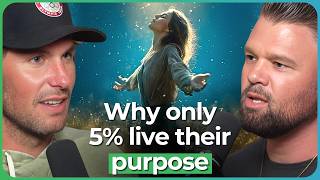
There are trillions of dollars in graveyards because there are ideas that were left unfulfilled. Why do you think that is, that only 5% of people actually ever actualize their purpose? David Nurse is a worldwide motivational speaker and author who specializes in helping CEOs, high performers, and teams get in the zone by accessing flow state.
Those moments you just feel like life is just clicking and it's going your way. That's what we're all searching for if we're being honest. I'd watch NBA players just go off for like 40 points and they'd be totally in the flow and I'd ask, they'd have no idea how it was done. There was no formula. There was not even a way to like, how do I actively train my brain for flow state? And we did a lot of research on it. Finally came up with a 2 to 3 minute low-code formula. It's not just for the high performers. We can live a life that is geared and centered towards living in flow.
How is it actually trainable?
I'll give you the formula for the flow code that you can practice and train your brain to get closer to that 10 Hz.
So why do you think that is, that only 5% of people actually ever actualize their purpose?
I just don't think people have a relationship with the person that they want to become. And I think one of the main things is, you know, you just go through life to get by. And there's this term I love, it's called self-efficacy. So self-efficacy means acting today as if the person you're going to be tomorrow. So think about this. You probably have a vision where, you know, where you want to be 10, 20 years from now, where you want your family to be, I would assume.
I mean, 5 years, 20 years, who knows what AI is going to look like.
Okay, minus the AI, right? Yeah, yeah. Most people don't. Most people will fall into this cog of this wheel where it's, you know, you go to school, you get a job. And my story is kind of like, I didn't get a job right after college. I was playing basketball and I was trying to create my own thing. And everybody was like, well, when are you going to get a real job? Or just wait till you start real life. And I was like, I don't think so. And now on the flip side, all my friends then are asking me what I'm doing or excited about what I'm doing. And they're living in quiet desperation of the life they have. So I think it's a blend of not having the relationship with that person you're going to become, because if you don't know that person you're going to become, how are you ever going to get there? Right? If you can't see that as that, how will you be that? And then the second one is just you do what you're supposed to do and you kind of just go with that mold that's already been created.
That's pretty meta. I want to go deeper into that. So when you say you do what you're supposed to do, if you don't have a clear identity to self, of the things that we go super deep on all the time in this pod is identity transformation, knowing, honoring the current self, grieving the past self, and being informed by the higher self or the future self. And I think from an academic lens, and even from a coaching lens— I mean, you've worked with the best athletes in the world. For how many years were you a coach?
2015, so 11, 11 years.
So a decade plus seeing the minds of people that are at the highest level in sport, and also just frame that you set from your books. What is it about our relationship to this future self or the act, the highest version? Let's call it the most actualized self. What is the real disconnect for people? What is the belief set that most people hold that blocks them from being informed by that most actualized self?
Well, let me give you a quick story to kind of paint the picture here. So in one of the best— well, he is the best NBA player right now, Shai Gilgeous-Alexander. So I started working with him in 2018 for NBA pre-draft. So he's coming out of college. This is when players, they're training to be into the NBA, right? And he comes in and not highly touted. It's, you know, the people are like, you know, he might be a mid-round pick and he's this kind of unknown kid from Kentucky, you know, not much hype around him at all. And, you know, anytime a player— I start with a player, I ask them what their goals are. I want to know, you know, who they want to become, what their goals are going to be. And most of them will say, I want to be a first-round draft pick. I want to be an all-star, you know, something like that. He said, I'm going to be the best player in the NBA. And at the time, you know, it's like, all right, man, like, no one really knows you. And it's— there's LeBron, there's Curry, there's Durant, all these great players. But his whole mantra was Somebody's gotta do it. Why not me? And I think that is one of the biggest disconnects that we have of we just think of like, well, greatness or our goals that we have, somebody else will do that. Somebody's more gifted than us. Somebody has a better upbringing than us. Somebody has a shortcut to the table. In reality, that's not necessarily true. I always think that too. And I live out in Los Angeles, Marina del Rey, and me and my wife will walk up and down the beach and go to Malibu and these massive houses.. And I always tell myself, I'm like, yeah, that's probably just family money. It's passed down. No, 80% of millionaires are self-made. It's not necessarily that family money. So I think it just comes down to, in, you know, I've just seen it so many times in athletes and CEOs. You have choices. There's only two routes to take. You take the route in everything you do. There's one of two ways, literally. And Shea made this choice of, well, somebody's gotta do it. Why not me? And I think if you make that decision of, well, you know, this is my goal, you know, I want to start a company and I'm a mom at home with 2 kids. I can't do it. I've got, you know, not enough time on my hands. I've gotta raise these kids. If you make that decision of like, that's your truth and then that's what you, that's what you'll live in. But if you make the decision of, well, I can do it. I can be the best mom Midwest, minimalist blogger. That's actually a true story. My sister is one of the top minimalist mom bloggers, and she started from nothing. Just had a desire to write. Give her a shout. Desire to write. Julia Ubengay, shout it out. 5 kids. All right. And I just told her, like, she asked me, like, how do I do this? How do I connect? How can I start? And she followed it to a T. And I mean, she's a phenomenal writer and she's just developed it over time. But has, you know, 150,000, 200,000 people on our email list.
Man, really cool to hear the language you use because we just had this week, it came out, Mark England, founder of Uplifted, NLP trained. The way we use words in life, and you know this because on a stage the words can either disconnect your audience or definitely connect them to you. So where did you first come across the power of word and how have you talked to yourself and to others as a coach, as a speaker, such that there's real authentic connection to yourself first? You know who you are. What's that language like for you? Who taught you how to be that and embody that?
I don't know who taught me that. I don't know.
Who did you learn by osmosis from?
I think a lot of it comes, you know, I always say we're a smoothie, right? And you look at the people that you look up to and you take a little bit of them, a little bit of them, and put it in your own blender and Put some cacao nibs and stuff on top, your own little coconut flakes and your own little swag to it. Yeah. One of my mentors, a guy named John Gordon, he wrote a bunch of books. He's the guy that kind of got me into public speaking and keynote speaking. And he would always say this quote. He'd always tell me, he's like, you can either, you know, you can either think your thoughts or you can be talking to yourself. Which one are you going to do? Like, you get to determine the thoughts that you have because You know, everybody's heard that there's 50,000 self-talk thoughts and 40,000 of them are negative, 80%. I don't know how the heck they come up with those stats. Like, really, how can you know how many thoughts somebody's having? Anyways, it's kind of the generally accepted term that there's— our mind is set to the negative, our mind is set to the worst-case scenario, and it's all about catching things in the moment. So two things here. There was— I think one of the biggest things that someone can do is look at the research, look at the stats, look at the actualities. And there was a study done years ago. I can't remember exactly where it was done, but it was on worst-case scenario thoughts. And it came back that 92.28% of worst-case scenario thoughts not only don't come true, but don't even come close to coming true. But people spend 25%, one-fourth of their day worrying about the worst-case scenario thoughts. So taking up 1/4 of your day worrying about something that 92.28% won't come true, that's just how humans are wired. Call it the fight or flight, whatever you want. We have to combat that. So the biggest thing that I learned from John and some others that I've been around that, you know, I really look up to— actually, Mel Robbins helped me a lot early on. It was on a bus ride from a friend's 40th birthday party. I didn't know her. We started talking in the back of the bus and she's so sweet. She spent like 30 minutes just pouring into me, helping me with my talks, really just like, you can do this. Stop thinking that you can't go speak in front of, you know, thousands of people on stage. But these people, I see that they have this great sense of self-awareness. So I think self-awareness is one of these terms that gets thrown around there a lot of our like, oh yeah, have self-awareness. But what that really means is Can you stop in the moment, kind of like The Matrix, and stop, pause things? Things are going crazy. Are you able to step out of that moment and see what's going on? So it's the awareness of everything in life starts with the awareness of, and that's one of the biggest things that I've seen from these people of like positivity, but real true positivity where they're actually believing the words that they speak to themselves. You have to have the awareness of. So when you catch yourself in these down moments or these woe is me, this kind of stuff, can you catch yourself with it? The next one is the relationship with. So it starts with the awareness of, you gotta catch it, the relationship with. What is your relationship with it? What is, why are you calling yourself worthless? Why are you speaking down on you? What is your relationship with that? Is that true? Is it not true? And then when you ask yourself that question, remember I said there's only two choices to make. You funnel this. One of my favorite tools is the bucket of lies and the bucket of truth. So after you catch yourself in the awareness saying something, you know, totally crazy about yourself, you ask yourself, is that a truth or is that a lie? And you have to look at it from an analytical standpoint, like, are you a failure and you've sucked at everything in your life? No, there's no chance that's true. You put those in the bucket of lies. Did somebody say something to you online on social media, which happens a ton, that brings you down? Look, even with NBA players, I had this player Gordon Hayward I worked with, awesome guy, all-star, all this and that. And he'd just get under his skin when somebody would say something on social media or in the news. And I'd have to remind him, I was like, is that true, Gordon? You realize this person saying this is probably 40 years old and living in his mom's basement and had never played basketball in his life, right? So it kind of reframes it there. And I do want to come back to that point about taking things from social media as well. So remind me on that. But the last point of it is the action from. So we started with the awareness of, and right now we're kind of talking about, you know, self-talk and the negative thoughts you might have and, you know, whether you believe that's true or not. So the awareness of, the relationship with, and then the action from. So what are you doing about it now? So if you're taking these thoughts of, you know, like we're talking about, I'm worthless, I can't do anything right, I'm a failure. You have to flip those now. Now you get the choice to replace those. A good friend of mine, Dr. Daniel Amen, he calls them ANTs, automatic negative thoughts. And you squash the ants, you step on the ants. It kind of makes you laugh. It's kind of silly, but then you replace it with something positive. It's like, hey, I've, you know, I'm a failure. Oh no, actually, you know, I had this success, I had this. And it can be small little wins, whatever it is. But the action from has to be a replacement of. Just like if you're used to eating terrible fast food, what are you going to swap that with? It's kind of like a health swap, right? What would be your replacement of it? And it's the same thing for thoughts. So those are the 3 steps of that.
Yeah, I like the 2 buckets. I was visualizing that and I was thinking of this old adage too, where it's like crabs in a bucket. When they're in the bucket, they like to pull pull the other crab down. And a lot of times when I'm in the wrong environment, if I'm hanging out with somebody or a crew that maybe isn't at a certain level of frequency— and I'll use frequency because it's both scientific and spiritual— there's the Hawkins scale that's on the screen right now that I've referenced like probably a thousand times. So my audience is like, yo, we've already seen this, but it's important.
Well, I don't know it.
I'd love to hear this. Well, Dr. Hawkins created a frequency scale in a Hertz measurement, which is essentially what we're going to talk about with the brain, the 10 Hertz and flow state. Hertz is how many times something vibrates in 1 second. So shame vibrates emotionally at 25 Hz. It's like the lowest human emotion that we can basically feel. It's a very dense emotion. Then above that is anger, grief, sadness, despair. Then once you get to anger, you can get to courage, you can bust through pride, then you can get to acceptance and love. And so he was a 40-year PhD MD that really mapped emotions, that mapped human consciousness. And he found that when people were stuck in an emotion, it's because they didn't have a certain bucket or framework like you've presented, and many people have their own. I like yours. It's very simple to understand. But when somebody doesn't have the right toolset, you could try to do all the things forever. But if you're trying to build a car and you don't have the right tools, the car is not going to be built. Same thing with the mind. Yeah. And so that's why I put it on the screen right there. And I want to juxtapose it by what you said. You said if we don't have the self-awareness, then we really are lost. We don't know how to have a go-to if we don't know where we're coming from. And it makes sense. But I think a lot of people are— they're accosted with these lower density emotions. And even like the basketball player you mentioned, this is like a multimillionaire who's playing at the highest level of sport and he's worried about a post. Don't you think a lot of this stuff comes from what we learned in childhood, what we learned in adolescence? And then as an adult, we either move through the scale of consciousness or we don't. There's a lot of athletes that unfortunately do terrible things and they leave the sport. And not just athletes in sport. I mean, people that are excelling at the highest levels of anything, they self-sabotage is what I'm saying.
Yeah.
So how do you make sense of, of what I'm proposing here with the emotions and density and frequency versus what happens in our childhood? Have you seen that play out? Totally.
Athletes, you know what? It's the funniest thing too, because I keep going back to like, you get the choice of which, which path you want to go down. Everything in our past is what? It's our past that shapes who we become, right? But your choice from it. And this is what I see all the time. It's either someone looks— you can look at the same situation, you can look at a terrible, difficult, hard, abusive upbringing, and you can say, damn, I didn't have the best parents, I didn't have the best opportunities, that's why I'm at where I'm at. Most people will choose that. Yeah. But the very few will say, hey, this is what I had, and I'm gonna make it better. This shaped me to become better. This shaped me to change my life, to not do it the same way, but to be able to overcome it and then help others see it. So it really comes down to, yeah, I think it comes down to, of course, how we're, how we're brought up. And I think there's a sweet spot in the— now this goes from more of a performance standpoint than just a life overall standpoint. The main thing with the life overall standpoint is make your decision right now, right, like, you know, 5 minutes ago is in the past. We can't do anything about it. We could learn from how we started this podcast to make the podcast either better or the worst going on here, but we can't change it. So you can make that decision of like, you know, what do I want to take from the past as a learning tool to be able to better the future? But from a performance standpoint, there's a sweet spot in the ages of 5 to 11. Now that's where the brain is, you know, the most neuroplastic that it can possibly be. The learning is like a sponge, like You know, I still even have songs that come on the radio, like one week, Bare Naked Ladies, that song. You remember that song that goes really fast? You remember that? I don't remember that one. Oh my gosh, it's a jam. It's a jam from back in the day. I'm old. Anyways, I can say, I can remember every word from that. Now if I hear a song even like 200 times, like I can't remember a word just because our brains are like a sponge. That's the example I'm using.
So it's that accelerated neuroplasticity at that age.
So yeah. So You know, it's, I've seen this in like, you know, Steven Spielberg in those ages and when he was young, got to go backstage of Universal. He's spending his summers, he's spending time on sets. It's no wonder that he's the great producer, director that he is. 'Cause he was immersed in it. Steph Curry's dad's in the NBA his whole life. That time he's with NBA players, he's training with them. So the success sweet spot is, that those years, but you have to have a passion for it. Number one, you have to be immersed in it. Number two, and you have to have a great coach leading you, directing you. Yeah. If you have that in some kind of skill set aspect, you have potential to be really freaking good. Now, can you overcome it after those ages? Yeah, totally. Yeah. But is it a little bit harder to? Yeah, totally. I totally think so.
Yeah, the frequency component is really fascinating when it comes to the brain. So earlier we were— I was pulling that data from your team. 95% of people never live their purpose, not because they can't find it, but because their brain has never been trained to access the state where purpose becomes obvious. That state has a frequency and it's 10 Hz and it's trainable. How did you come across this, this magic of the 10 Hz? How is it actually trainable?
Yeah, totally. So this is where flow state. Occurs. So I'll kind of give you a backstory of it, bring it full circle to this IRB scientific study, the Flow Code. So I've been fascinated with coaching professional athletes for a long time of this, you know, this muse out there that's flow, like in the flow, and people would throw it around, this flow state. And, you know, I started asking these athletes and friends of like, have you ever been in flow state? Boom. So I was interviewing Alison Felix, the most decorated female Olympian of all time. I was like, you know, have you ever been in flow state? She's like, yeah, definitely. I was in it 3 times. Like, that's pretty specific to remember 3 times, right? I was like, well, how did you get in it? Oh, I don't know, just did. I was like, what? That's interesting. Then I was interviewing a buddy of mine, Mike Chandler. He's a UFC guy, uh, big UFC fighter. And he was telling me the story. He's like, yeah, man, I could see the guy's feet moving before they moved. I knew right where he was going and I knocked him out cold. I was like, well, how did you get there? He's like, yeah, I have no idea. I was like, this can't be. And I'd watch NBA players just go off for like, you know, 40 points and they'd be totally in the flow. And I'd ask them, they'd have no idea how it was done. So, you know, I started asking around, I'm curious. I'm asking everybody like, do you know any, you know, top neuroscientists? And I got connected to these ones 2 females. They'd worked with Peyton Manning, Bryson DeChambeau, like a lot of these top athletes. And I was like, you know, have you brain mapped them? Have you give them a QEEG? Like, that is the brain map. And like, yeah, totally. It's like, well, can you— is their brain different than other people's, normal people's brains? Like, yeah, absolutely. And I was like, have you seen the flow state happen in the brain? It's like, yep, and it's 10 Hertz. 10 Hz is alpha brainwaves, is between 8 and 12 Hz. That's when the flow, the deep focus, the creativity is kind of has this sweet spot. Now there's 5 different levels brainwaves and all of them have a little bit of, you know, the impetus on how to get into flow. And, you know, there can be a little few different things for different people and everything. But the main thing is, can we get people closer to 10 Hz in the brain, where their brainwaves are activating that 10 Hz more regularly and able to stay in that zone, that sweet spot of 8 to 12 Hz for a longer period of time. That was the whole question. Flow state, it originated in the '80s. Mihaly Csikszentmihalyi is the one who's kind of like the godfather of flow. And he introduced the concept and he had 8 characteristics of flow and there's like a skill challenge and some pretty, you know, like, you're like, okay, that makes sense and kind of basic. But it was like, hey, you know, it's, it's on the map. There's this thing, flow state. Steven Kotler took it to another level in 2012, '15-ish with his books, Rise of Superman and those ones. And, you know, I love them. They're great stories, but they were always just telling about how— or sorry, when people were in flow state, like these big wave surfers or these crazy adventure people, and it was basically like there were near-death situations and they were in flow. I'm like, that's probably not gonna help the rest of us. But there was never a way how, there was no formula. There was not even a way to like, how do I actively train my brain for flow state? Because just like anything in our brain or our muscle memory, physical tools, things are trainable. You have to work on 'em. You can't just automatically be a great tennis player, a great golfer, or a super coder, you have to continue to work on these type of skills. So I was, you know, having this conversation with these neuroscientists. I'm like, do you think we could put together a formula that actively trains the brain to get closer to 10 Hz on a regular basis? Something that people can do anytime, anywhere. And we did a lot of research on it, you know, had some different things tested and finally came up with, you know, basically a 2 to 3 minute flow code formula. And we had 60 participants, 20 in the uptraining, which means they were below 10 Hz. So think about, you know, you kind of like a more chill, calm person. 20 in the downtraining. This is more like, you know, Type A kind of people. Myself, I'd be on the go, go, go, go. I'd have to, you know, downtrain. And then 20 in the control group. In the control group, We just gave them— Kotler has 22 cues for flow. So it's like, you know, go on a walk in the woods, things that could put you into flow, but it's pretty, you know, like, good luck. So that was the formula— or sorry, that was the study. And the results that we've seen, we're coming out with a white paper soon, but we did get more people close to that 10 Hz overall. But we also saw more of, you know, we'd ask them questionnaires every week, the same questions. How are you feeling after? Do you feel more contentment? Do you feel more at peace? Do you feel more purpose? Every single one of those type of things that's more of the personal feel and not just a high performance metric, a more of a living a life in flow were increased. And it was like a— man, it was like a delta of like a 5.2 to a 7.34 on increased purpose, which is, I guess the delta is like a 2.2 or whatever on that. Each one of those increased, which tells me that it's not just for the high performers for flow state, but we can live a life that is geared and centered towards living in flow. And I think, I mean, you would probably agree with this, like it's connecting to your frequency and it's like when you're in the zone, you just, those moments, you just feel like life is just clicking and it's going your way.
Yeah.
That's what we're all searching for, if we're being honest.
Yeah, I love that. And so when's that white paper coming out?
Hopefully within the next month or two.
All right, we'll link it in the show notes for y'all. So my next question is, like, when you're speaking, I'm seeing the big wave surfer. I mean, I've interviewed some of them, and I even think about Dr. Tim Brown, uh, he's the chief medical doctor for the WSL. And like 5 years ago, I was talking to him, and he just has this way about him where he's like at peace at all times. You ever sit around these people? You said you're more A-type.
Yeah.
You ever be around these like Zen people that are super accomplished?
Yeah.
Yet they're so chill and it's like when I'm around them, I exhale and I relax. He's like that. For people like that and maybe the people that you found in the Flow Code that had the greatest levels of flow or that were able to adhere to it and just be in the flow, what was the correlation between their default mode network turning down and their ability to act in courage and act forward even in the presence of fear?
Oh, such a great setup question.
I mean, this is like stuff I think about all the time.
I love this. So this, so also in this study, I went on this journey of I'd interview and spend time in person doing the thing with the top flow state people in the world.
Mm-hmm.
So a perfect setup with this, I went and climbed with Alex Honnold. Now Alex is the free solo guy. Oh yeah. He just climbed Taipei 101. If you watch that live on Netflix.
This is on the screen right now with him climbing, y'all. This is like crazy. Yeah. I mean, I look at that and I get scared and I'm just watching it through a screen. Go ahead.
Go ahead. It is funny because I think it was a real, you know, interesting situation for people to watch that live. There's nothing really been like live like that. And my wife, I was watching with my wife and she was squirming uncomfortable and she doesn't know Alex. Yeah. And I just told him, I was like, I know he's got this. Like, I've spent time with him. I've become friends with him. I understand how he works. He's incredibly calculated, incredibly detailed. Okay. I was like, there's no way this guy's taking this on if he didn't know he was going to make it. So about probably, you know, a year ago, I was out there at his place climbing in his little climbing wall inside, not outside. My wife wouldn't let me do that. I'd kill myself. And I interviewed him for about 45 minutes and then we climbed for the rest of the day, about 5 hours, literally climbing on his climbing wall. So of course I asked him questions about fear. Obviously, this guy's free soloed El Cap, which is the— it's called the, you know, the, the top flow state performance, I guess, of all time. It's just, it's crazy. You got to watch Free Solo if you haven't watched it. And, you know, he's talking about fear, but he talks about it in a different way. And he has it for sure. It's a little, you know, it's different because fears aren't as much fears when you have done the thing so many times. Like, I've been blessed to be able to do keynote talks for corporations and a lot of motivational talks. I don't have fear anymore. I used to have fear when I went up there. I don't have that same fear because I've just done it so many times. I know of any situation that occurs, I'm going to be okay. I can get out of it because I've been there before. Yeah, he has that same type of fear with climbing. Us, when we see this, we're like, that's absurd. I'd be so— but we've never done it. We haven't done it for 30 years of our life. Yeah. So there's part of it. It's called deep practice. And I watched him do this live. In person. Shai Alexander, who I was talking about earlier, who is the top NBA player in the world, basketball player, the MVP, the champion, all this kind of stuff. He did the same thing too. It was every single rep is a focused rep. So what I mean by that is let's take it to the example of let's say I'm archery, I'm shooting a bow and arrow. Okay. If I shoot a bow and arrow at the target and I just keep shooting and keep shooting and keep shooting. That's practice. But if I shoot the bow and arrow and I check the arrow's trajectory, that it hits the target, I check my feet, how my balance is, I maybe watch a quick film of it to see how, you know, my shoulders were aligned— every rep is analyzed to be able to improve from it. That's deep practice. So you skip the 10,000 hours, which is honestly just It's kind of BS. It's not— there's no, like, there's no real science to that actually being real quick.
Is there real science to the 10,000-hour rule?
It was— what was it, Hans Christian Andersen or somebody like that had actually done it. I might be getting the name wrong. It wasn't Malcolm Gladwell. He just took something that was used. 10,000 hours is a generally accepted number, but it's not like you can get there much faster than that to mastery. It just became a catchy thing.
Yeah.
You know what I mean? And then it just caught on. So in the deep practice mode, Alex, I watched him, he had this climbing wall. It kind of looked like a Dance Dance Revolution thing where certain holds would light up and he'd have to grab them at that moment. And then he'd have to figure out the next move, but it constantly would keep changing. And I'd watch him fall and I'd watch him fall. He'd try it again. He's like, yeah, this is a 9 outta 10. I gotta get this. And he'd fall. And I'm thinking like, Isn't this the guy who's, you know, can't fall or he'll die type of thing? Yeah. But, you know, he's practicing these time and time and time again so that he masters them. Shea on the basketball court, he would— he literally would not leave the court until he mastered every move, every footwork, every form, every shot. Most guys are just going through it to go through it, and that's fine, you'll improve, but you'll drastically improve with the deep practice type. So, all right. Alex also looked at things in a different way. Now we're getting back to the fear question that you'd asked. So he was telling me a story about being on El Cap up there, way high. He falls, he dies, and something went off plan, like a rock slip, something. And his point of view— and I think this is so powerful— he looked at it like,, "Oh, I knew something was gonna go off plan. Now it's out of the way. Now I'm in the clear," right? Most people look at it as like, "Oh, something's off plan. I'm gonna fall. I'm gonna die. It's not gonna work out." That's how most people take something that throws them off their day, that throws them outta whack. They're like, "Oh, it's all over," instead of looking at it like Alex did of, "Oh, I got past that. Now I'm gonna be fine." And that's a huge shift to be able to make, a huge choice. Now to the point of living in flow, and I've noticed this in every person that I've interviewed. This lady named Lucia, I played the violin with her. She's the top violinist in the world. K-Chon is the top barista, coffee barista.
I didn't know there was such a thing. That's cool.
Coffee barista world championships. There's such a thing.
Where they pour the cream and designs and all that.
All of it, man.
All of it.
Yeah, he's outta Santa Barbara. Legend. Paul Nicklen is a top National Geographic photographer. That guy is insane. And there's been some more, um, I'm gonna run sprints with Usain Bolt coming up. This chef in Chicago, he's a top chef in the country. You're gonna see how it works all there. Anyways, what I've seen through all these people is 3 main things that line up, and this is living life in flow. It is passion, which means you actually love doing the thing that you do. And I know people are thinking like, well, what if I'm doing something that I don't love to do? Do I just drop it and then just go chase something? No, no, no. You can find passion within. There can be something that you love within the thing that you do, even if it's like, hey, I'm going to set a great example for my two kids at home to see what hard work looks like, to see what stick with it is. It doesn't have to be just the crazy dream of being a famous singer you had when you were a kid. So you can find passion within. I truly believe that. So it's not a cop-out to say, well, Alex is climbing. He got into climbing because he just loved climbing. He never thought, you know what, this is probably a good business idea where I'm going to make a lot of money. Yeah, nobody was making money from climbing. Yeah, he literally says like, I never thought this would lead to anything. He's like, I just love doing the thing and it happened. So it's passion personified. He's living doing. But you can take personified, which also means presence. You're present in the moment, you're personified, you're doing the thing, you're present. So it can either be personified/presence, and that's when everybody's at their best, right? When you're present, when you're not ruminating on the past or having anxiety of the future. And the last part is purpose. And this is one of these— another one of those words where it's like, well, can I have purpose? Purpose doesn't have anything to do with amount of people impacted. It doesn't. Look up this story of Florence Nightingale. She gives credit to this one person who poured into her. This one person changed the trajectory of the whole doctor-nursing system because she poured into Florence. That person doesn't get much credit because it only impacted maybe one person, but Florence impacted millions and millions. So the purpose for Alex was to show people, and even said this after the Taipei 101, that they can overcome obstacles in their life that they never thought they could, to show people that you can dream and do bigger. And that's where you really got to connect with what is the reason that you're doing what you do. And it can be so— you might think basic of, I just want to show my kids that they can live with joy. I just want to show my kids that they're encouraged. I just want to show— you were just talking about it as like the people that just— they show up so calm. You know what they do? They make the people that they're around feel so comfortable in their own skin or because they're comfortable in their skin. And I think that's one of the greatest things you can do. I think that's legacy as it is, is how you make people feel in the moment.
I think the most powerful person in high-stakes situations or in any situation is the one who's most peaceful.
Totally.
That's the most powerful person in the room. Hands down.
Right?—
from a neural system regulate— if I'm anxious and you can feel that I'm anxious, if you're not careful, you might osmotically become anxious. It's like it bleeds into the room. So to go back to flow, I got from you that, yes, it's a reps thing, like putting in the reps, that deep practice, but there's also this mysterious kind of sixth element that comes in. In the East, they might call it dharma. Someone's living their dharma. They're just doing what they were brought to earth to do. And some of us find that, but based on the research, a lot of us don't. What's the sweet spot? What's the missing ingredient? What do you think if there was a sixth sense to overlay on the three categories that you said? There's something mysterious. Some may connect to a higher power, some may call it God, some may just honor of the mystery of the universe. There's some unquantifiable, ineffable thing that overlays on what you're saying. It's not just a mental model or a practice thing. Have you ever thought about that or considered what's ineffable that we try to understand about flow, about becoming this actualized person, but we can't really put words on it?
You know, it's an accumulation of different things together. But I think at the end of the day, it's just an unburdened way of life.
An unburdened way of life.
Unburdened way of life. Can you go—
what do you mean by that?
I just— it just means that you're not worried about the outer applause. Like, I'm not living if you're somebody that's living life in flow, you're not worried about social media, the likes that you get, what people say. You're not worried about where the money is coming in from. Are you feeling financial burden? You're not worried about are your kids going to be okay? It's just an acceptance of giving up control. And I agree with you, the higher power. I believe in God and that God has the plan. And it's giving up that control that I can do all I can. But I could be hit by a car tomorrow. Am I going to be okay in accepting that God has me right here, right now, where I'm supposed to be?
What's been one of the most challenging ways in which you've lived what you've said?
Well, I'm one who tries to force situations before they probably should. Okay. And it's, you know, I really, you know, I've struggled with this of like, hey, I should be further ahead in my own eyes. Than I actually probably am. Right. And I've been, you know, in some different cool environments and situations where I've seen friends just go worldwide famous, even like in NBA coaching. And, you know, seeing my uncle or one of my very close friends are the top coaches in the NBA. And like, well, why couldn't I get there? Or even in the podcasting world, I started out a long time ago Andrew Huberman is a good friend of mine, and before he started podcasting, then I watched him just take off. And a few of my friends that have written books, I watched their books just skyrocket, or speakers. I'm like, why? And I'd wrestle with God. I'd be like, man, why can't I be there? I'm putting in the work. There's no way these people are outworking me.
That's honest.
But what I have kind of come to figure out, and I think it's more just this year than any others of because I'd always rate my years on what big accomplishments did I have. I'm like, man, I'm almost 40. I've got to be here by now. But I've come to figure out that, like, you know, the timing that God has for me is going to be right when it happens. If I try to force it, if I worry about if social media growing or eyeballs on me, it's only going to drive me nuts. Yeah, it's never going to be, you know, authentic. It's going to be more forced. And I tried to force things. Like, I tried to force, like, what's going to make a great social media grow? What's the best podcast version to do that people are going to— but that's not true to who I am. And I had to come to that acceptance and that, you know, if God has it in my cards, there's nothing that's going to hold him back from doing it. But I might hold myself back from doing it.
Oh, I did a pod yesterday. And it's exactly what you're talking about. And I realize, and this is like why I love these conversations, when I think about the word forcefulness, what really fuels forcefulness is fear. Totally. But I believe— I'm curious what you believe— I think what really is the fuel source for flow is feeling freedom.
Totally.
Yes. So one is fear, one is freedom, one is forceful, one is flow. What are your thoughts on that?
I totally agree. So let's go deeper on that. So I think it is absolutely freedom equals flow. Freedom's kind of the unburdened life, right?
The hair on my arms is standing up. This is like exactly— I love it— the pulse check of this podcast right now. Yeah, it's really— I'm really interested in what you have to say about these dichotomies, or if they're false dichotomies.
No, they're true. They're true. I—
I—
fear is based in uncertainty, right? The reason that we fear is because we don't know what's going to come. Like, if we were all told the day that we're going to die, we wouldn't fear death as much because we'd know when it's going to happen. We'd prepare for it. So this type of, you know, fear that we have that keeps us back from living a life of flow is based on the uncertain. So I'll give you the story of when I was interviewing this Lucia, the violinist. I was talking to her about, you know, this, this moment that she had that she was playing with Josh Groban, this great singer, the LA Philharmonic. And she'd been asked 2 days prior. Josh is like, hey, come down, fill a spot for me. And she's like, anytime I get on stage, there is that uncertainty of what if? What's going to happen? But all I'm trying to do is get between the lanes, is what she was calling it. Between the lanes. So I kind of took this a little bit further and thinking about it in a word picture of You know, when you're bowling, what is the fear of bowling? It's throwing it into the gutter, right? That's, that's the uncertainty. There's gutters on both sides. So in our lives, the fear of living the life of that we might want or taking a risk here or taking a chance here, the fear of it is what if it doesn't work? What if we fail? What if we go broke? What if all our peers, you know, call us stupid? What if, what if, what if, what if? But if you're bowling with bumpers, what happens? You know that you can no longer go in the gutter. The uncertainty that was once there is now gone. If you could live your life thinking that there are bumpers on both sides of you, how would that change how you live? The fear that we perceive as fear would no longer be there because we know that we're going to get to the end result, right? Everybody's going to get to the end result. At some point you're going to get to your end result. You'll get to a— I can't say a better, but you'll feel more content with the result that you have if you don't think that there's going to be, uh, gutters, that you know that there's going to be bumpers. And I, I always come back to this, this book by Bronnie Ware. It's the, it's the Top 5 Regrets of the Dying. And the number one regret that people have on their deathbed. And I'll butcher this a little bit, but it's to the point of, I wish I would have bet on myself. I wish I would have went for it and not just, you know, been more true to myself and not done what others said I had to do. I think that in an essence is the ultimate fear of living life in uncertainty of the what if worst case scenario, like we talked about earlier, and not just going for it. And the freedom is going for it. I put in quotation marks, whatever your it is, and being okay if it doesn't work out. And there's this Greek term, we might have to look it up. Gosh, I can't remember off the top of my head. But what these Greek people that were put in the Colosseum started to do back in the day is they already viewed their outcome as dying, as losing. And if you can— there's actually some, some beauty to this. If you can view something that you're about to do and seeing the failure in it, the failure, you losing, you not succeeding, and you're okay with that, you have a relationship with being okay with that, you're going to be so much better off because that not being okay with it is the uncertainty. Quick example there, a player that I worked with in the NBA. He was in the 3-point shootout in the All-Star Game last year and always wanted to be in this. And he was just practicing for it. He was focused on it. It's all he was thinking about that week leading up to it. And I was like, man, like, his name is Norm Powell. He's a great player. I was like, man, you got to be okay with going out there and sucking because you're going to put a lot of pressure on yourself if you think you have to hit these certain expectations. Like, you're going to be really tense and tight. Yeah. And he went out there and just blew it. Like, was not good. He was tense and tight. This year he was in it again and he just had his first kid, his daughter. And you know, he didn't practice once. He wasn't even thinking about it. He like literally was like, oh man, I forgot to tell you, you know, I'm in the 3-point shoot. I was like, what? Okay, cool. And he got, he went in there with being totally okay of like, if I mess up, if I blow it, like it doesn't change a thing. And he did awesome, so well. So that's the difference in the relationship with fear, man.
There's like two big things I was thinking when you were talking about— I love the analogies. I remember quotes like you, and I don't know who said this, but when I, when I heard this quote, it resonated deep, like the one that you mentioned. And it was, whenever you drive by a graveyard, just know that these graveyards are the most expensive place in the world. There are trillions of dollars in graveyards because there are ideas that were left unfunded.
Fulfilled.
Oh, oh, I heard that one was like, like, oh, like I can feel it right now. Because think about how many people never had the right support system, the right mental models, the right spiritual connection. The— you could put a thousand reasons as to why they weren't as blessed as some other people are. I think that the universe is inherently unfair, but I think that there's an energy that's created it that's all-loving and all-knowing.
And this is the, the spiritual teaching school that we're in here.
It's like, sometimes stuff isn't fair, but we can choose to let go of the desire for it to be fair. Because I think the desire or the anger that life isn't fair can block so many ideas and so many things from coming to fruition. I would say, and what is your thoughts? All levels of sport, not just the NBA, any level of sport, Olympic athletes, athletes of any kind, high performance of any kind, typically what drives them to be an exceller in sports or in anything they do has been some type of a pain or anger or wound that they— that they learn to use as a fuel source to get them there.
Now, once they get there, that fuel source doesn't work anymore, right? Because they can't just be angry in sport all the time. Have you found this where most of the time— not all the time— people at high levels of sport in life, they had some type of trauma or wound or bad situation and that anger drove them to excel originally?
It's a good question. I think yes and no. I think there's definitely a chip on the shoulder mentality that can spark that.
Yeah.
And it works for a while, but it doesn't work forever.
It does, but you might have to keep changing it. So it just because the novelty of it. Novelty is an interesting thing. And I think that plays a big role in that. 'Cause if you still have the same chip on your shoulder at every level, it probably changes. But there's, you know, there's the story of Michael Jordan where LaBradford Smith gave him buckets and dominated him. I can't remember, it was like a 30-point— maybe scored 37 points on him. So I think it was 37. And Michael makes up this story that LaBradford came over to him, gave him a hug and said, nice game, Mike, in like a sarcastic tone. That was the story that Mike told. And everybody thought it was true because he, you know, stuck with it for years and years. And he used it as this fuel, this fire. They played him the next night and he told one of his teammates, BJ Armstrong, he's like, that guy, that kid, you know, I'm gonna score more at halftime than he scored in the entire game last time. And came out and did it. Had like 38 at halftime, finished with some huge number. But the point of that is like, it never happened. Mike came out later in the documentary series, like, yeah, I made that up. So he totally made up this fuel, this fire. So he always had a chip on his shoulder. He continued to change the chip and made it novel and made it have a different feel and change the situation of it. So I think it can definitely be a driver.
Yeah, yeah, that's what I meant. I'm not saying it's sustainable because he, he later on dealt with a lot of alcohol issues too. So same, same with Tiger Woods and all these, right? Like, that's why I'm saying— Good point. I'm not saying it's a healthy comfort.
Yeah, yeah, yeah, yeah, yeah.
But I think it's a temporary fire that gets lit that can't be burned forever. So, so to go back to, to the crux here, I feel like we've explored a lot of the mentality around this, and you mentioned your faith in God. We know from the Blue Zones that it wasn't just their food, that the centenarians live because of a connection to higher power. Is there any other through lines that you've seen when it comes to living a life in flow, which essentially I'm getting from you means that you operate with a certain way of being where you trust and you're not committed to perfectionism. That seems to be a part of it. Is there any other through line that you think we missed when it comes to how not just to understand flow, but how to actually embody flow in your physical body, in your mind?
Yeah, totally. I'll give you two and then I'll give you the formula also for the Flow Code that you can practice and train your brain to get closer to that 10 Hz. So the two— and we kind of touched on it a little bit of, you you know, community and how important that community is and having the right people around you. And it's either people that, that speak life into you, that are givers. Do you surround yourself with givers, or do you surround yourself with energy vampire suckers and takers? Like, that's, that's, that's a huge difference. Who do you have in your life? And I know if you're working at an office or something, you might not be able to control that all the time, but you also can understand it, block it out, not let it affect you, and you're You know, know that, that anybody that's usually, you know, the crab in the bucket or, you know, throwing shade your way, there's something internally that they're struggling with. And when you understand that, it changes the game a little bit where, you know, it's whatever they're trying to reflect inside of themselves, they're trying to put upon you. And I've kind of seen this, man. I wanted to go back to this social media thing. Don't let me forget where we're at here. 'Cause this isn't a pin that there's, this is an important point. Yeah.. And even with, you know, the protein gummies company, you put videos out and there'll be ads and, you know, they put— people won't— don't think necessarily like, you know, someone put a ton of time and energy in this. This is their, their thing. But yet they'll say whatever they want. It was even last night, I kid you not. I looked at one of the videos, the ads, and this lady is like, she's like, this is the worst thing ever. We hate these. You suck. Why did you ever do this? Don't anybody buy this. And I DM her offline. I'm like, hey, sorry you don't like them. You know, most people do, but it's okay. Like, you can have a refund. We're more than happy to give you a refund. But, you know, like, I would never be this harsh to you and publicly shame you and say you suck at what you do. What'd she say? She comes back, she's like, oh my gosh, I didn't know there was anybody behind this. I didn't know this was a real person behind there. I'm so sorry. I was like, you do see this is my face. This is what we do. We've put a lot of time and energy into this. I'd appreciate it if you take comments down publicly that you're saying like this. It's like, I'm so sorry. This was a terrible moment of myself. I've been having a rough time. And it just showed me anytime you meet them where they're at, you know someone's going through something. It's crazy what people will say on social media.
I've had some comments.
Oh my gosh.
I had somebody call me a fucking Idiot, stupid, you're fat, you're, um, you name it, bro. Oh, attacking my, my family. I'm a bad father, like just crazy stuff. And I'm like, like you feel, I ask myself, what is going on in this human being?
It's weird.
If would they speak to me like that if we saw each other in a coffee shop? Of course not.
No chance.
But it becomes this outlet. It's the same reason why people are driving down the 5 freeway and they like flip you off or something. Everyone's this conditioned bundle of nerves and they have so much toxicity in them that when they have an opportunity where they feel like they can off gas and not get caught, their worst part of their ego comes out. And it's just human nature. I think that's a beautiful story that you reached out to her and she was like hit with the lesson. Oh my God, I'm so sorry. And I find that that's what people fear. 'Cause earlier we talked about the graveyard. You gave your quotes about the athletes and the fear, The player who was like, "They're talking smack about me online." It's this element of fear that blocks us from doing the thing that our heart wants so badly to do. And I'm here to tell y'all it's false evidence appearing real, but it's also for everyone's attention responsibly. That's the designation on fear that I love. It's for everyone's attention responsibly. It doesn't mean that it's real. It just means that it's there, but it doesn't have to be the whole story.
I like that a lot.
And I really like, Wow, that story you told me with that woman, I cannot believe it. I would love to have been there and seen her face where she just got hit with a lightning bolt.
It's funny, man. But I always tell people like, you know, if someone's doing that to you, it means you're doing something really good.
Yeah.
Because no one's paying attention to someone who's not doing something. And that's what it is. And that's what you're doing. Great things.
When haters are throwing shade, it means that your branches are growing pretty big.
There you go. They're—
you're, you're excelling, right?
So, so what was the other piece of the through line?
I'm sorry.
Yeah, yeah, yeah, yeah. No, that was it.
Through line.
So the community aspect is surrounding yourself with people who are not energy suckers. They're positive people. They want to give, they want to serve, and being that person yourself. The other one is the environment, and the flow environment is so important. And now more than ever, and I think Cal Newport does a really good job of talking about this. If you ever listen to his stuff and just the digital world that we live in, the technology world of You know, there's so many distractions from our, you know, mental energy, our time suck, the phone, the computer, notifications, all of this type of stuff. You can never really get in the flow of life. Like, I've, I've seen this in days of myself when I literally, at the end of the day, I'm like, well, what did I get done today? Oh, I was so quick at responding to email, man. I got back to everybody in my text messages so fast. And I just feel like, oh, what a waste of a day. Yeah. So yeah, I'm a big believer in the— you have certain zones, your, um, your chronotype, right? Like where you get your best work done. I'm a morning person. I'm a morning person. My, my, you know, my zone is like 7 AM to 10 AM.
I'm going to do 9. Yeah, I am.
You're in bed by 9?
I'm in bed by 9. Same as me if I can help it.
If I have a conversation with anybody after 9 PM, I tell them like What I say, don't hold this against me. Yeah. I don't know what I'm gonna say. So I know my zones in the morning, understanding when you, you know, get clear off the phone, clear off the notifications. My wife, she's a night owl. Like when it's 10 o'clock, she gets this surge of energy and creativeness. And I'm like, you're crazy. But it's amazing. So you have to know where your spots are at. So creating your environment both physically and mentally is a really, really important spot. So those were the two things, the community environment.
Yeah, go into a little more on social media because we're all in the soup right now. And with as fast as AI is going and even in these amazing gummies, if you're watching on YouTube, y'all, these are literally like the most— like, this podcast isn't about the gummies. It's about Flow and being your best self. But as you know, the environment that you're in is a huge part of that. What you drink, the water, the food. Most people are undernourished from a protein standpoint, hands down. But then you see on social media there's all these crazy protein powders that are made in some factory off the coast of who knows where, and they're cheap, but they make you bloated. And then when you're bloated, you're less likely to be in flow. It's a clear connection in my mind. Totally. Very clear connection. Yeah. What's it been like for you to launch, more or less? What even made you launch this and what good things? And you've already talked about some of the flak. What's been the challenge? What's been the gift in creating a company like this?
Well, one of the best things is, remember when I was saying I was forcing things? Yeah, this is totally unforced. My wife was eating a Chomps beef stick about 15 months ago, and she's like, hey, you know, she called me. She was in New York doing some Christmas movie thing that she was on, and she's like, hey, I love this thing, Chomps beef stick. I was like, Taylor, you hate beef jerky. Like, you literally don't allow me to have beef jerky in the house. It's like, what are you doing? It's like, well, you know, I got to get my protein in.
Yeah.
I was like, Taylor, who are you? You've never said I've gotta get my protein in. So it turned me on. Like, it was, I wasn't searching or seeking like, let me start a CPG company. Let me start a protein. It wasn't that at all. I was like, I just started asking people, what do you do for healthy, clean ingredient protein on the go? Nobody could give me a good answer. They're like, well, this bar, but it has too many calories and it has so many weird ingredients. No one gave me a good bar answer. And then the number one answer I got was Chomps Beef Stick and nothing against Chomps. They're great. They're fine. But for females especially to say Chomps is their number one thing, because the follow-up question I always asked was, do you actively look forward to eating this Chomps? And they're like, no, it's a means to an end. Yeah. So called a great friend of mine, smart, smart guy in the space. Like, what do you think about protein gummies? Like, everybody loves gummies. They're kind of having this comeback. Protein's hot and it's getting hotter. Why don't we marry these two? And long story short, we— he says yes. We put together this all-star team of people who have all done it before. That's another key point.
Yeah.
Find your— when you're going to build something, find people who have done it before, find people who know what they're doing and just put the best all-stars in the seats that you can. And yeah, so we made this mission and it's so funny too, man, that David Barr's having this thing right now where they're like, you know, lying about the calories and, uh, created fat. Because at that same moment when we started this, when my wife was having the beef sticks, I ordered a bunch of David Bars. I'm like, what a name, that's my name. Great macros, right? Super high protein, low calories. And I ordered a ton of them and I started eating them. And full disclosure, the— our place did not smell very good because it tore my stomach up. Yeah.. And then we looked into it like they're, they're not good for you. They're bad ingredients. So all of us as a team, more or less, we're like, we're going to be the ones who don't lie to you. We're going to have the best ingredients. We're going to have nothing bad about them. We're going to make it guilt-free, taste really good. You can give to your kids, but really solve the issue of protein on the go. And we've done that. We've made the gummy with 2 grams of protein in it, all clean ingredients, low calorie. It's 10 grams of protein for only 50 calories. In a small serving, that means that's 80% protein, which is absurd. And we're continuing to come out with new flavors, improve the current flavor. And it's been awesome. Most people like them, but then you always have like a crazy lady who's having a bad day.
She wants to throw shade.
She wants to throw shade.
Listen, my wife's very picky. And when I say very picky, I'm like, she only likes what she likes, you know? And so even way before you even came to the podcast, I was telling you this.
I was like, yeah, yeah.
She asked me, can we get more of those gummies? I love it. And that's just real. And then I tried them and I'm like, how could it taste so good but be so good for you? It seems like you cracked the code on that, which is really fun. It's just fun. Honestly, if it's fun, if it's enjoyable, if it tastes good, and if it's healthy, that's like the winning ingredient. But to me, it seems like this is a labor of love that comes from you from a place of, like you said, you didn't even know you're going to do it.
Totally.
You had no idea.
You had no clue.
You were just solving a problem. I think that's the best entrepreneurial lanes in life is like you, you personally have an issue and then you create something to fulfill the solution for your own issue.
Exactly. Yeah, man.
That seems like the way to go.
I never knew what a, you know, a going D2C or what the LTV to CAC or all these ROAS things like, and I'm learning so much. It's so fun learning and growing in this.
Thank you so much for being here, man. Thanks for the generosity too. Y'all can get these. Tell people what's inside of these, the protein gummies. It's joshtrent.com/protein and the code is Josh, which gets you 20% off. I only want to stand beside things that I actually consume, you know, whether it's Mana or More or Less or Mitozen or all the Noble Protein, like all the things that I actually eat.
This is one of them. So thanks, man. It's pretty rare because I'm in a world where there's like thousands of products, you know, the Expo West.
Oh man, I was there.
Wow. It's like 5. Do we really need this many products? Probably like 90% of them are just trying to make money. Totally. I get from you that this is more of a service. This is more of like something that's coming from your heart. So thanks for that. Tell people what's in them so that they can understand that.
It's a blend of whey protein, collagen, and gelatin, which hits everything that you need. So the, you know, the whey muscle building, recovery type stuff, protein, collagen is the hair, skin, nails. And the gelatin is more of a tendon base. So you're getting all of the good stuff. Yes. In one little gummy.
And it tastes good too, which is like way better than what you get on the shelves at Walmart and Costco. Yeah, for sure. Although that'd be cool to get you at Walmart and Costco and then put you—
We're going. Not now. Sometime soon. We'll be there.
Man, you know what I feel from you? Even when you first came to the studio, you— we've rebranded recently and we used to look at life through nourishing the 5 sides of self and we still do. But over 11 years, you know, I've evolved as we all do. And my promise to myself, my audience, my family, the world is that we're going to stop the cycle for people and we're going to lead them to authentic joy, their authentic joy. So what is that for you? What is your definition or embodiment or expression of David's authentic joy?
Authentic joy. Two main things. I think these are the biggest decisions you can make. And for me, these have been the biggest decisions. And when I Quit worrying about everything else and come back to these two things. That's where my authentic joy comes through. And that is my relationship with God, number one, and my relationship with my smoking hot wife. That's number two. Hey, that's what my authentic joy is, honestly. Like, when it is, there's so much noise, there's so many things we can focus on, but like just being around my wife, like I can't wait to get home. To her, fly home and just spend time with her. It's just like, I mean, you know it when you find the one that God made for you that you're supposed to be with. It's just different, you know? Um, and those are my authentic joys. And I just love meeting people. Like, I'm a people person. Not like, hey, I'm so great around people. You know, I'm probably kind of goofy, probably kind of awkward around people, but I just love being around people. I think there's so many fascinating people. And when someone's passionate about what they do, and that's kind of like the whole flow thing is like the coffee barista guy. I was blown away. You could be the best, you know, spinning wool into cashmere sweaters person in Scotland. I would love to spend time with you. If you're just passionate about life and passionate about people, I already love you, man.
Thanks for being here. Thanks for doing what you do. Appreciate you coming to—
thank you, brother.
Dripping Springs. Yes, sir. Y'all share this podcast with somebody who, one, doesn't have to think the way they think anymore. They can actually think differently, because how you think directs exactly how you feel, and vice versa. And then the actions that come from your beliefs, thoughts, and actions— that's why in our tribe we have the BTFA: your beliefs inform your thought, your feeling, and that's what dictates your action. The actions that we have in life do not have to be a repetitive same thing over and over and over again. What I'm saying is we can change. So if this hits you, if this stuck to your spine, please share this podcast. Go to the show notes as well to get your code on the protein gummies, the More or Less. It's joshtrent.com/protein. It's also in our store page. Until we see you on a, a podcast number 2, I'm wishing you this. It's something I say at the end of every podcast, David. It's love, wellness, but most importantly, like we talked about with Tim Brown, like these people that you've been around, peace. I'm wishing all of us peace.
That's good.
Because I believe that we can only have power, all of us can only have real power if it comes from peace.
Amen.
We'll see you next week.
Peace.
More from Josh






Your child's future start before pregnancy... and even before conception! #podcast

MD Reveals: Your Healing Creates Your Child's Reality (The Souls Coming In Need Strong Bodies)



