True Elder Wisdom: If You Don't ALLOW Yourself To FEEL It, You'll Never Heal It...
This content was created by Josh Trent. This content was uploaded by Josh Trent. This is a YouTube video titled "True Elder Wisdom: If You Don't ALLOW Yourself To FEEL It, You'll Never Heal It..." featuring a conversation between Josh Trent and Margo. The discussion, recorded on August 27, 2024, delves into themes of emotional healing, consciousness, and the wisdom of elders, with a focus on personal growth and the healing energy of Maui.
Chapters
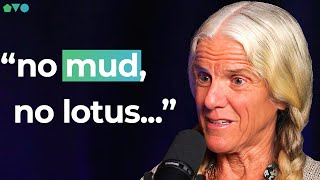
No mud, no lotus. You know, all of our garbage, all of our traumas, all of our gravity and heaviness, that's the mud. But without the mud, this blossom of open chakras, of open heart, of consciousness can't happen.
All this pain and this torment and this generational wounding and the stuff that essentially keeps adults closed in their hearts, that makes them in positions of power, being just wounded children. This is the part that I think is being called forth. Heal the planet.
It's painful, but I love feeling that. That pain and suffering of becoming initially conscious is more than halfway there. That pain isn't new. It's really, really ancestral old.
Yeah.
And you're choosing. I'm going to feel that pain that you so well know. It hurts so bad. I had to say, thus far, no farther. And there's more to come. There's all these layers of the human experience. It needs to be felt. That's the healing modality. It needs to be felt, but it needs safety in order to be felt, because safety wasn't there before. It needs compassion and then it needs curiosity. But I can't be curious about a pain if I don't feel safe. And that's why I call it treasure hunting. Within all that wounding, within all that protection is something that we caretaked from. Whenever that trauma happened in utero, in birth and childhood and, you know, whatever, it got protected by all these perceptions of the mind because we're taught to figure it all out in our head.
How quickly things can change when love wants something new, when people are actually committed to what love wants. And by the way, love does not always mean puppy dogs and fucking rainbows.
Partly working with couples is getting them to set the guns down. Who's pulling the trigger? Why is it loaded? What happened here? Can you put up a white flag? It's the hardest thing in the world because your habit pattern from your ancestors is like, this is how we do it. But inwardly, how can we find an inner harmony so our mind doesn't keep stopping what our heart desires? The whole idea of presence is the present, the presence in the moment. That's the present that we're so longing for.
This is the real stuff. This is, I think, where we change generations. Hey, it's Josh. Before we get into this episode, I have a small yet powerful favor to ask of you. The community has been growing by thousands lately. And the bigger the tribe, the bigger names of world class guests we can have on this podcast that I can bring to you from my heart, from my curiosity. So you can have more wellness and wisdom in your life. Would you please be so kind as to hit the subscribe button wherever you're watching or listening to this podcast. It'll allow us to rise naturally in the algorithms based on your 2 second act of generosity by you just tapping that little subscribe button wherever you're viewing or hearing this episode. Thank you so much. It means the world to me and our entire team here at Wellness and Wisdom. Now, enjoy the podcast. Margo, thank you for coming back on the podcast.
Yeah. Here we are again. Must be a friendship.
Who knew? The mentorship, the friendship that we've. Carrie, Michelle and I have experienced through you has been just so profound. I just want to say thank you. Thank you for all you've done for us.
Yeah. Thanks for letting me walk with you.
Yeah. Or running it. Sometimes it felt like for me. Or on the ground screaming and crying, pounding my fists as my childhood wounds are healed.
Yeah. And I just sit there. I just sit there going, okay, you got to do that. I accept. I mean, that's all we need is someone to see us and accept us, even if we're throwing a tantrum.
Man, I'm. I'm just so blessed to know you. There's. There's very few. We're going to link in the show notes the other podcast we did.
Yeah.
Where we went through an incredible ceremony with you. And just working with you now for nine months, 10 months. Almost a year.
Time to birth that baby.
Almost a year. And, yeah, it's just been so profound how quickly things can change. When love wants something new, when people are actually committed to what love wants. And by the way, love does not always mean puppy dogs and rainbows. Sometimes love can be really bloody, really messy, really gnarly. And so I just wanted to say thank you because this is pretty rare, that I would do a podcast in Maui with a mentor, with a friend like you. And so I think a perfect jumping off point would be Maui. There is some vortex healing here, some, I don't know, birthing energy, new life energy, healing energy that I've never experienced anywhere else. It makes the hair on my arms tickle as I share it with you. There's something really unique about why we were called to Maui, why you live in Maui. What is it about Maui that is so healing? Why are so many people drawn to Maui not just for their inner child, but to. To uplevel their adult and to really be an adult, which is what I want to talk about with you today, what it means to be an Adult. There's something special about Maui.
It's. It's the spirit of Aloha. It's the spirit of the original people, of the wayfarers, of the Polynesian canoe people. And that's been held for thousands and thousands of years. You know, it goes way back. And they, you know, Maui is a heart center for the Pacific Basin. All these little islands, they're caretakers of the whole Pacific Basin. And they, by the canoe, they've taken care of this land and taken care of the spirit of the land. And very connected to the Aino, which is the land, very connected to the community, which is their beingness, you know, like most traditional people. And they've held it, and it hasn't been decimated as much as North America. Native people, they weren't sent to the schools, you know, to get reprogrammed. But there was enough, you know, like, who are you? You're nothing. You know, get modernized. But there's still a lot of culture here, alive and well. And I speak that very strongly because it needs to be honored wherever you go. Who are the original people of this land? And how can I honor and respect them? And. And it's hard when thousands and thousands of tourists come to your place and want a piece of that. And yet, if you come with respect and open heart and really watching and paying attention, I mean, I think a lot of our talk is going to be on consciousness. How can I consciously enter into this culture of heart of love, of Maui, of Aloha, and not bring all my colonized modern. Take, take, take. How can I be with the land here? How can I be with the people and give them great respect? When I go somewhere and they call me auntie, I feel like I've been honored. So it just humbles me, humbles me, humbles me to walk on a land of other people. Because every nation has been taken over by some other nation. But the ones that are still living that truth, it's like they carry the hope of all those nations that have been taken over. So how do we humble our hearts so their heart can open and we can all connect and really create this illusion of world peace. But it's people to people, and we'll get more personal. It's person to person, friend to friend. I mean, you're experiencing Aloha being here, and I'm so glad you're here. And it's been so healing. And so how do we experience that within our own soul?
Yeah, the Aloha spirit's alive, thriving, and well. Everyone's got a unique definition of. We were at the road to Hana, and I stopped at the Jaws Cafe, and there was a woman, and she had aloha shirt. I said, how do you define aloha? She said, well, back in the day when there was this takeover, the haoles came in and the hows did not have breath, so they had no ha. But the Hawaiians, when they say aloha, they're breathing into each other. It's almost like Avatar when, you know, they say, I see you. And it just breaks my heart to know what these people have been through. Yet, going back to my original question, there is so much profound healing here, as long as people are willing to give and not just take.
Yeah.
So I'm thinking to myself how I show up when I come to Maui or when I go to any place that essentially. I mean, Maui doesn't even have to be the United States. It could be its own country. All of Hawaii could be its own.
It would like to be.
It would like to be. But there's something really powerful here, and I don't know if it's the energy vortexes from the books that we've seen worth it. Is this aloha spirit? I just want to go back to that question again. Like, what is it that drew you here? And what is so powerful about the healing energy or the healing prana that's here? What do you think that is what drew me here?
Born in San Francisco. I love the Pacific Ocean. I've lived in Vancouver. I lived in Malibu. I've lived on the coast. And I knew I was. I'm a West coast girl. I didn't know there was further west till my daughter moved here. You know, I'm not a. I haven't been a wanderer. I am now. But my daughter's like, come, mom, come see. Come, come hang with me. So I'm like, ooh, warm ocean, you know, good people of the earth. And so, yeah, I came.
But were you called to heal or were you called from. From joy, like, just enjoying.
Oh, and enjoying just from joy. Even all the diets and all the cleansings and all the herbal stuff I've done, it hasn't been. To heal is to experience my own will, force my own curiosity. You know, I don't live in, like, oh, my God, I gotta fix this.
Yeah. You have a vitality, which is what I talked about in our last episode. It's what I. I felt palpable from you the whole time. The entire time we've been together in our Dynamic, less than a year, crazy roller coaster relationship. And I don't know how exactly you embody it. I'm really curious how you embody it, because many people in their 70s, they're kind of dead already. They don't have any more magma in their volcano. Like, it's just missing. So there's. There's got to be something about, you know, yes, we're going to talk about being an adult and balancing responsibility. There's got to be something in your heart, in your soul that allows you to continue to embody this vitality. How do we age gracefully? Right? How do we age with grace? How do we age with joy? And how do we age and actually live instead of just being technically alive? Like, that's a. That's a big question.
Oh, yeah. And I tell people I'm. I'll be 74 in a few weeks. And it's. I tell them not like, oh, you don't look like it, you don't feel like it, whatever. I tell them to give them hope. Like, yay, wrinkles. Yay. You know, it's good, guys. It's good out here, you know, don't be so scared. Don't believe the marketing of get rid of that. Whatever. You know, be youthful and pretend like you can get pregnant again. It's just like, you know, hey, I've attracted you, you know, it's just like, I'm not attracting people anymore. I gotta look like marketing tells me to. And I mean, ancestry, you know, I've had artistic relatives on both sides of my parents, and they were caring and loving and environmental and community people and artistic and, yeah, keeping my heart open and yay. Hippie days. Psychedelics kind of said, oh, there's a lot of other energies and ways of being in the world and finding community within that communes and living together. Like, how can we do things a little differently Inside the box, outside the box and learning about Kundalini yoga, learning about that energy flow, you know, I can squeeze my perineum and I can feel it go up my body and wrinkle, you know, dripple down, you know, goosebumps down my. It's just. I mean, that helps clear. Clearing your chakras, clearing your forces. But how, how are you going to do it? How are you going to have time to clear your stuff, you know, Because I see people walking around like this, you know, and cell phones don't help when you walk around like this, you know, but it's like, it's not. Put your shoulders back. It's like, how do we open our hearts? Well, we don't open our hearts because it's been so wounded. It's been. It's. We got to protect it. You know that. We all know that. And it's like, how do I open it? It's like, oh, no. But this is not a protective stance. This asks for trouble, you know, because people can see you're. You're. You're not. You don't have. You're not calling on your forces when you go like this and walk in a room. You can try it. Walk in a room like this. Look around. But if just without even saying anything, walk in a room like this. And people go, huh, huh? Yeah. So just a posture. How do we posture?
I remember you told me a story where you were walking down a dangerous street, and you just believed with your posture and your heart and your being that you were safe. And it was like the universe and the world reorganized itself for safety around you.
Oh, yeah. The old, scarred, big old guy, you know, said, you know that line, what's a nice girl like you doing in a place like this? And he walked me home. Yeah, that's happened a few times. I don't project. I don't, you know, put myself in that. But this is where I lived, you know, just happened to be in the wino section down in San Francisco.
See, this is why I love learning from a true elder, because there's so much wisdom that elders don't have the space to share. And I feel like we've lost the ability to create spaciousness for elders because it's been replaced by the top five things to grow your heart on YouTube or. Or whatever it is. And so it's really special to give you this platform, to give you this space, because we've just lost the art of listening to elders. We're looking for the quick fixes and the top 20 checklists of how I grow and how I make money. But I got to tell you all, there ain't no shortcut. Like, there's no shortcut. And I think if you looked at Native American tribes, and I know you have a lot of deep history with the Native American tribes doing sweat lodges and being immersed in their culture. There's so much we can pull from that if we can just slow down to listen to actually hear it.
Well, reconciliation in Canada, it became a political thing. The prime minister did an apology and listed all these things that needed to happen, and a lot of goodness came out of it. A lot more is needed, of course, because there was residential schools There big time, and torture and abuse and kids being torn away from their families and, you know, almost wiped out. And it's like, we're still here. I love that. That power. It's like, I'm still here. I'm in my 70s. I'm still here. You know, how do we stand together? And a lot of the reconciliation was letting the elders tell their story. Because a lot of this posture of old people is, no one's there going, hey, grandma. Hey, grandpa. You know, tell me about your life. How was it for you? And. And. And who's listening? You know, put them away in a rest home, and they just kind of shut down. So how do we open up? How do we open up each other? How do we find the elders? You know, especially if you didn't have good memories with your blood relatives. But they're out there. They're out there.
Who was one of the elders that. That really shaped this ability for you to hold vitality and help others. Because, you know, you're not just helping people across the world. You're helping Carrie, Michelle, and I with our relationship with ourselves. But you have people that are just attracted to you. They're coming. You don't have a website. There's no advertising. People just come to you. Yeah, and I think that's. You know, Aristotle has a phrase, nature abhor is a vacuum. So you're pulling from a place of love and your own vitality and your own service, and people are coming to you. And it just slaps the face of traditional marketing where you have to have a website and you have to have a landing page, and you have to have all these things in place. And I think it's literally the vacuum that's being created by the universe that wants to hear from a true elder. What do you make of that? I mean, you have a life that you've designed. You have a life that you love. What do you make of how the energy has been sucked and that vacuum has been created just by your being? There's something about you that's created that vacuum. If you had to guess, I don't know if anybody's ever asked you this question. If you had to guess, what is the vacuum that you think your soul is creating from a place of love?
Well, I've done this a few times. While you're talking to me. I went to India for a month, and this is what I brought from India, this wobble head of acknowledgment. And I love it. To me, it's an endearing place Partly from where I gathered it, that was one of the gatherings. But just like, I hear you, I'm with you. Yes. You know, it's. And I mean, Ram Dass always pops up. You know, he blessed and acknowledged. He was one of the early ones to, to really go, I see you and acknowledge you. He runs up to me and gives me a hug and a kiss. And I've heard from so many people he did that. He just felt presence and acknowledged it. And yet. My dad was a shop owner, a businessman. He said, customers always come first. You greet them when you come in the door. He was always present for whoever came. My mom, community organizer, she's out doing a lot of things for people. So it. It was really, they. They were about family, but also community. So that. That's in my recent lineage. And, you know, they had their stuff and I had stuff to go through to find my identity. But I mean, my siblings, our whole family gets along and that, that doesn't always happen. Parents are gone. I talked to my mom in the spirit world, but I would love, just like Mom, I just want to sit down and talk with you now. I've learned so much, but I've learned some. And I've learned so much because of her and my dad and the ancestors and, you know, where does it all come from? My grandma was very esoteric. My dad's mom, her library was amazing. From Young to Paracelsus to Steiner to, you know, she was really.
I'd love to see that library.
Oh, yeah, I have a few of her books left because I lightened up to come to the islands. And she, when I came with my hippie insights and New Age, you know, brought my new things that I've learned together with her. She. She would go, oh, yeah, been there, done that. If you really want to do something in the world, get into politics, fight the communists, you know, it's like, fight the. The dark side. And it's. It's like, okay, well, I needed to work on my light for a while more, you know, and now here we are again, dark and light, good and bad. And it's, it's that. I think I talked about it before. It's the yin yang. We can't survive without both. And all the stories of how the human got to the earth, being star people, Earth people. Even the Bible talks about that, that the first children were dark and light. It's kind of like levity and gravity. It takes both. And the heaviness of being in the body, like this is. Whenever you're really relaxed and you don't feel the pain and the tightness of the body. You just feel like, ah, feel so light. But in order to do something in this world and move things forward, we need to be in our body, into that tension, into that. And it's like, oh, so we, you know, we medicate. We either caffeine or alcohol or drugs or, you know, we try and lighten it up, lighten it up just so we can get through the day. But how to get. So it's even keel enough that our visions and our heart's desire can be activated. And you've asked me, where does it come from? Does it, you know, I can't pinpoint that person. That person, you know, Yogi Bhajan did Kundalini with him, you know, it was just all these people on the path that said, because in the 60s, the yogis and the Eastern mysticism started coming in and we're like, thank you. Because we were expanding so far. They said they reminded us breath, heart, focus, body, and gave us tools that were very ancient that us Westerners didn't know about. So that was a big part. But my brother and sister, younger and older, they weren't in the midst of that. And yet they have consciousness. It always comes to what is consciousness? How. How did Margo stay conscious and awake and vital through all of this? Destiny, karma, you know. Yeah. Who knows?
What do you think the elders that taught you, and also you as an elder, believe about consciousness that modernity has forgotten?
Well, we're taught so much as well. There's a lot of taught about inward, inwardness, like, be calm, be in your breath. Here's this meditation, here's that. And even me, because I think really fast and though I process and move in the world very slow, you know, different attributes, but it's. I'm going to give it a pause right here. And when I did a lot of public speaking, that was a big learning of it's okay to pause. You don't have to say, or I forgot what I was going to say or, you know, all that kind of stuff. You can just take a breath. And I think a big thing that I've really learned is to really relish those pauses, to really just be in it. It's like, oh, I don't have time to meditate. I don't have to. You know, if there's a pause, people get on their phone of like, just let it be a pause. You can even feel it right now. Everything's just kind of settled, right? Like we Were like, it's just, it's okay. And that's part of the life force. I'm just going to feel my life force right now, even though I have a to do list and what I'm going to say next. And you know, it's just like, just let it be. And the whole idea of presence is the present, you know, the presence in the moment. That's the present that we're so longing for. And how did I learn to enjoy that? I think a lot of time in nature. Talk about influence. I went to summer camps. I was a camp counselor. Lived in communities or way out in the boonies just being. And granted it was pre cell phone time, but just being out and just feeling the breeze, hearing the birds. And I've, you know, we all know that birds sing when there's safety. If there's no bird sound, it's like maybe the lion's coming, you know, so really acknowledging the birds, creating safety.
See, it's so good. And the practical side of this too is like, everyone's heard, oh, it's good to go out in nature. We know that the Japanese doctors prescribe shinrin yoku to their patients when their ailments are kicking up. But how do we actually do that? I mean, that's, I think that's what people are hungry for. From the elders that taught you and you yourself at elder, people are hungry for, hey, how do we actually do that? How do you. How do we practically design our lives? And what, what are the integrative pieces that must be set in place so that we really do have a commitment to nature being something that heals us, that supports us? Because it's so easy to just be like, oh, yeah, I know, I should go on nature.
I went for a hike.
That's so easy.
And I check in my phone, but.
Are you actually doing it? And knowing and doing are so separate. There's a bridge. There's some kind of a really cool maybe rainbow bridge. We're out here in Hawaii. Maybe there's a rainbow. What's the rainbow bridge between knowing and doing?
Well, are we human doings or are we human beings?
Well, of course we're beings, but sometimes we do.
But how do we be if our mind's going a million miles an hour, our heart's heavy from whatever just happened, and we're out in nature and we're going, oh, yeah, right. You know, it's every indigenous elder I've hung with, they talk about nature and it's almost like they're talking from A whole different place from what us Uro implants, immigrants, wherever we come from. Westernized people that were taught to understand things, control them, make money off of them, utilize them. Yeah, care, take like environmental. We're going to take care of the earth. What if the earth is us? I mean that's what I get from indigenous folks, you know, of just we are the aina, we are the land. It's speaking to us just like our mind is speaking to us, our heart is speaking to us, our organs are speaking to us. The earth is part of our organ system. And I get that there's a deep yearning and disconnect from us humans and from the earth. One time I was very distraught. I was laying on the earth crying or you know, just emoting. And I felt like the earth was the mother receiving all of my pain and sorrow and it was like composting the earth. What mother doesn't want their child to come to them? And just the child's just having big emotions and the mother just accepts and says, I'm here for you, I'm here for you. It's good, you know, you're crying, it's good. That's what the earth was doing to me. So then when I turned over and I looked up at the sky and just with that mother father image, the father then was just pouring blessings into me because I emptied into the mother. So that was a good image. So how do we be with nature? Not just observing it. And it takes time. Takes time to walk out on a path. It's nice to go to the same path even if it's in a, you know, houses and you know, it's nice to go be totally surrounded by trees and jungles and things like here or even on your deck where you have plants growing, you know, look at the little bug crawling. Look at this little plant, how it entwines in the other, makes rooms for the other plants. Just look at how it is and all of a sudden your thoughts have slowed down because you're engaged with, you're engaged with. How do I have a conversation with a plant, with a tree? Just slow down a little because what about work? And I got to be with it and market it and pay my bills and take care of my family. And there's all this. But where does that source come from? Where's that ability to. It's like not be exhausted and I really, really, really commit within myself that. It's about the pause, I think when.
I go back to my 34 year old self like 10 years ago, when I started what was the Wellness Force Radio podcast, I did not have this switching capacity that I've shared with you before. This ability to go hard charging, get it done, take care of responsibility, you know, cut with a razor and hold the baby in the same day. It's like, well, that's not taught. I, I was never modeled that by my father, nor was he by his father. And I assume that maybe my great grandfather, my great, great, just didn't have it. They, they were never taught it. So I feel like the wisdom of the elders that you're sharing isn't just about sitting with nature and giving our cries and our grief to mother and being blessed by father. It's. It's also a call to men. I'll speak from a man's perspective. I know women embody masculine energy as well to get things done, but for me, especially being an entrepreneur and getting things done, but also being soft and luxurious for my woman and being fully present with my heart over my family and then going back to getting things done, this switching capacity, I feel like the true elders in the Native American community and in all, in all communities across the world, they have that mastered. They haven't mastered this ability to go to war and come home and hold their baby. You know, they just have that. And I wonder what you think is most pertinent to be shared with younger men who are coming up, who are going to be fathers? You know, when you and I are long gone, their children will still be here. What do you think those children need? What kind of presence and what's the practicality of increasing a man's and a father's switching capacity to go from hard charging responsibility to soft and nurturing and honestly, the wisdom to know the difference how to the Lord's Prayer, right? Grant me the serenity to accept the things I can change to the wisdom to know the difference between the things I cannot change. I paraphrase that. But it's like God, it's so important. It's so important for us to know when to grit, when to, when to relax and quit. What do you make of that?
Well, wisdom, I can say. Wisdom is consciousness. And when people are all of a sudden, you know, they, they emote and they just, oh, I feel so much better. But are they conscious of those emotions, how it affected who's around them, be it your colleagues at work or your family at home? I just emoted. I finally unloaded my truth or, you know, and sometimes it's in rage and, you know, that's the one that's really good to look at because you lose sight of just like, oh, I just need to unload and yell at this person. Can we look at how that affected the others around me, especially your children, especially your partner. And you go, oh my God. And the partner is so like full or used to that happening. They're just like putting up with it. So trigger, trigger, trigger, passed on to your kids. That's just how the home life is. Well, what if the person who just emoted goes, oh, I feel better. But I it. I want to rephrase that. I want to take two, you know, let's. Let's do it over. And that's okay. That's a powerful power. Hardest thing in the world to do. Do over. This is what I really meant to say. And I was loaded because da, da, da, da, da. So really I messages rather than because you did this and you do that, that that invokes to unload at you. And here we go. You know, the war's on. So my partly working with couples is getting them to set the guns down when you did that. And da, da, da, da. It's like, you know, who's pulling the trigger? Why is it loaded? You know, why? What happened here? Can you put up a white flag? As you know, it's the hardest thing in the world because your habit pattern from your ancestors is like, this is how we do it. And I think part of that ability to flip it probably started changing when we weren't farmers anymore or we weren't hunter gatherers anymore. If you go that back or we weren't living in a large community, that's it. So we have nature and we have community. Not only elders, but aunts and uncles. And it's not just a one or two parent household. It's. You got the neighbors coming around and kids are running back and forth to one house. Oh, yeah, they're napping over here or they've already fed over here. And wouldn't that be a dream? You know, rather than, oh my God, I'm responsible for the children. And then the whole culture goes, your children are a mess. It's your fault. Well, it's really the fault of the culture. You know, the myth of normal. Gabor Monte, that's his book last year. It's just, what have we created that it creates so much stress? Stress is like up here to people because. Exactly. They don't know how to switch to. Into that doing and then that relaxed mode of being. And it takes consciousness. So when somebody goes, okay, I want to be conscious of doing that. And they emote and then they go, oh, this is what I did. That's really painful. It really hurts. It really vulnerable to realize I just wounded or passed on my trauma to my children or it didn't help my colleagues at work. And it's painful, but I love feeling that. That pain and suffering of becoming initially conscious is more than halfway there. And I'm sure I've told you that that pain means that you are now feeling that that pain isn't new. It's really, really ancestral old. And you're choosing. I'm going to feel that pain that you so well know. It hurts so bad. I had to say, thus far, no farther. You know, it hurts so bad. But that. Thank you for feeling that, Josh, because it was like that pain. And there's more to come. There's all these layers of the human experience. It needs to be felt. That's the healing modality. It needs to be felt, but it needs safety in order to be felt, because safety wasn't there before. This is all compassionate inquiry of. It needs compassion, and then it needs curiosity. But I can't be curious about a pain if I don't feel safe.
Yeah. So speaking of curiosity, the curiosity for me on this is what I've learned. I wonder how you feel about this. What I've learned is my ability, my courage to be with the most uncomfortable, typically shame or guilt or sadness. It's one of those three, or you could even say grief, let's just say four. Those are bubbling at the bottom of my ocean inside. But what's layered on top is anger or quickness or abruptness. And so really, the anger is the COVID emotion for the real emotion that I'm feeling, which is, oh, my God, I'm going to die, or, oh, my God, I'm alone. Oh, man, you know, I'm not worthy of being loved or I will be abandoned. And these things run from myself and many, many, many men everywhere. But we just have never been taught, how do we get in there? What are the tools and the ways to actually get in there? And I'm just going to say it's real simple. I wonder how you feel. It's actually just being with it. It's just going into it, being with it. And the more we do that, just like when you go to the gym and you lift weights, the more you face the grief, the dark, the sadness, the crunchiest, darkest stuff, we realize it ain't that bad. I mean, it's pretty bad. It's pretty bad at times, but it's not going to kill you, even though your nervous system or your unconscious mind says that it will. And I think that's how I and we as men go into the parts of ourselves that our women in the world are so longing for. They want it so much. I mean, it almost makes me cry just talking about it, because that's where the switching capacity comes from. I don't have any capacity to go to my dark unless I've cultivated the courage through repetition to go there. And then, of course, I could just be like good vibes only and everything's fine and just pacify myself. But that's what our society is built from. I wonder in the depths of who we are. What I believe really blocks us from being vulnerable, especially as a man, is grief, guilt, shame, sadness. Those are the things that block me because I don't trust myself enough to feel them. I don't have the life experience to feel my shame, to feel my crunch, to feel my darkness. Therefore, I rob the world of my light. I robbed my woman, my family, of joy because I haven't done the real work. And it's not to shame myself or anyone. This is the conversation, right? This is the real stuff. This is, I think, where we change generations.
Yeah. And a lot of that is just protective mechanisms. And some of the sessions we went through of, of not shaming and blaming those things, just say thank you. Thank you for being angry. Thank you for feeling shame. Thank you because it was from childhood and my father's childhood and yada, yada, it was more like thank you for. And that's just kind of touching the bruise just by saying thank you. And this, this protective energy goes, oh, okay, you appreciate me. You're not going to send me to my room. Because that's what we do. We send a lot of these little traumas and little barbs into their room and shut the door. Well, that's in our body. And that can create illnesses later on when the body says no. Another Gabor book. You know, it's in us. We can't just throw it out. We can't throw it away. It's still in us to remind us. And that's why I call it treasure hunting. Within all that wounding, within all that protection is something that we caretaked from. Whenever that trauma happened in utero, in birth and childhood and, you know, whatever, it got protected by all these perceptions of the mind because we're taught to figure it all out in our head. And now that's the Whole thing with somatic healing these days of, where is it in your body, in your heart. Remember when you had a stone heavy heart and you wanted your woman to fix it? And she's just like, I'm good, you know, what's with you? She. You wanted her to be soft where it's you. You needed to be soft to that. That stone heart. And it did it. You did it by ultimatums. Like, you know, thus, I can't hold this pain anymore. It's too much. And something in you softened. And look at Carrie. She responded. It's like, oh, he's melting his own heart.
Yeah, that's its own switching capacity, isn't it? The ability for me to accept my own death, to accept the death of relationship, to accept it, and maybe not be at whole peace with it, but be at peace with whatever outcome happens. Because I know that I have me and I know that I have my own back and that I would be okay regardless of what happened. That's what really helped to soften and to really chip away at that rock was, wow. The rock and the hardness in my heart was actually created by my own lack of courage to face whatever outcome would be possible.
Because if you face that hard darkness, you might die. So it's your own death. I will. I will. I will open this and. And give it, you know, and like you said, it's scary, but it's not. It's like facing the dragon in the cave. That's so, you know, look at the Tibetan carvings. You know, they. They have this beast at the beginning of the temple. They're just the guards for the treasure. And they look really, they. They keep you away. You know, the guardian at the threshold, they're just like, you know, thus far, no further. And then you. You have this, this key or this apple or this coin to give them, you know, like here, and you're creating relationship then, and they're like, oh, you want to be related to me? That's kind of a key. How do we have those keys to relating, connecting with the aina, with the earth? How do we find those keys? And it's softening our own getting out of our mind. You're out of your mind. That means you're going crazy, right? We're supposed to hang on to this. But the mind creates perceptions. Are they really true? Our body is always true. Our gut's always true. Our heart's always true. I kind of feel. Not kind of. I do feel. My heart guides me to the yes. Like, oh, that looks good. Let's Go hang out with Josh and Carrie. Yeah, that feels good. And the babies. And then the mind is here to map it out, schedule it. You know, how much money do I have? What time do I have? Then I ask the mind to get activated. It's not here to go. Well, if I do this, then this will happen. And this. It's like, that's. I can't even. I don't know how to do that. Partly why I wasn't a very academic person. I didn't want to figure out all these things. Now I am. Now I am.
Yeah. You know, this is what makes people not want to be entrepreneurs, because you have this beautiful gift and art and voice you want to bring to the world, but then also, in paradox, you have to figure out timetables and structures and spreadsheets and P. Ls, like, I get it. It's not easy to hold both worlds. It's not.
No. But so how. And that's part of the switch, right? Left brain. How can I go out in nature and just be receptive? And how can I encapsulate that in. And now put it in a spreadsheet and organize it and share it. It's. It's the conundrum of being human, you know? And. Yeah.
You were talking about the guards at the gate in the Tibetan monastery and. And the guards in the gargoyle. What was it exactly? It was a gargoyle, or what was guarding.
Gargoyle is more medieval. But what was it? I don't know.
A dragon or something.
Yeah, they have names for them.
See, this is. I'm thinking about a movie called Finding Joe where it was Joseph Campbell's work. Right. The Hero's Journey. And it was the. The cave that you fear to enter holds the treasure that you seek.
Oh, he said that. Good. Yeah.
And that's a parable or just a little snip of an iceberg of a dream that I think we're all living and we're all unfolding this dream. Why do you think that is? And what is the wisdom of your eldership and the elders that taught you how we can really embody that? It's not just about facing your fear. It's about knowing where you're going and listening to your heart's. Yes. And then when you face the gargoyles or the dragons at the temple, there's still a part of you that knows beyond that fear, there's something your heart has always been longing for. Oh, my God. It's almost like a Turkish delight or like a Juice of a lemon or just a citrus fruit that pours down your arm when you bite into it.
Right?
Mango, ripe mango. Like, what is that? There's a yes in our heart. How do we cultivate the yes in our heart so that we can move through the fear that we feel?
And how do we trust it? Yeah. How do we find our intuition? And how do we trust it when the whole world says no, no, no? And that's part of. Have a. You can call it spiritual or not. Have a practice where you go to something sacred, something pure. Is it a feng shui empty place in your house where you can just sit? Or is it out in your yard or is it a walk? You know, where can you go? I've had cancer twice now, and when I talk to cancer people, I'm like, do you have a place? Is it in your heart, you know, inwardly that you can go to that the cancer cannot touch? You know, And I. It's not actual place, but, you know, do you have a flame that you've nurtured and if you can't see it inside, like, light a candle and just. Just be with the candle? You know, somehow the elements, Earth, air, fire and water. And when you talk about the dragon and the entry to the cave. Thank you. Because I didn't know it was a Joseph Campbell thing, God bless him. Gate, gate, peragate, bodhismgatte, bodhisvaha. It's just about the jewel and the lotus. It's about that candle flame.
What did you just mention there? What was that?
It's jewel in the Lotus mantra. Yeah.
Would you know what it means?
It's about the sacred jewel in the lotus. I don't have the whole rundown, but gautaga te perigate. If you look that up, you'll have the whole text.
Okay. Yeah, but it's guiding people past the monsters into the cave where the Turkish delight is.
Yeah, the jewel in the center of the lotus.
Yeah, yeah.
That when the Tibetan monks do their sand paintings or their mandalas. We've all seen the tantric mandalas. They're guiding you to the center of the lotus.
See, there's so much magic in being an adult. I say this in bunny quotes, air quotes, but also, still having the curiosity of a child. That's the kind of both worlds paradigm that I want to live in till I leave the planet. Can I hold my childlike curiosity and can I take care of my responsibility as a man, entrepreneur, father, an adult? I mean, the load's pretty big, Margot. There's A lot there, don't you agree? Like holding those two worlds, you hold the curiosity, the vitality in you. Even with the cancer twice, you hold this space in your heart that the cancer cannot touch, which I think is so beautiful. Such a special way to describe it. Not from a place of anger or resentment. No, it's not a war or trying to send it to its room, as you've mentioned, but literally, just like, hey, I love you. And this space is for me. Is it a boundary? Because I think clear boundaries can also afford us more switching capacity and the ability to hold both worlds of curiosity and responsibility. Is it a boundary? What is that?
Well, getting couples to set their guns down. You know, it's like, what guns do we have in ourselves? What wars are we fighting within ourselves? And it's, you know, if that sacred place is in us or just a calm place, you know, spirit aside, if there's just a calm place that my worries won't touch, that my heart can feel safe and open, can I do that for myself? And if you can't, I mean, that's why there's therapies, and that's why there's so many people out there offering help. It's like, how do I source that? And it's a good thing. I mean, I remember in the 60s, I was in high school, and a psychology teacher said, four out of ten of you or something, you know, we'll end up going see a psychiatrist, and we're all like, ooh, which one of us is crazy? You know, now it's chanted in the back.
That picks her teeth.
Yeah, but it's not that way anymore. It's like, what, you don't go to counseling, you know, and then. And then people go to therapy and talk therapy for years and, you know, it's. The idea of counseling is to wean people off of you, not gather them in.
Exactly.
You know, it's like, okay, there's your jewel. You got it. You know, we'll check in every now and then.
So then how do we. So accountability is a big one because, yes, you do both talk therapy and somatic work and also what I would describe as spiritual healing. Like, there's kind of three in there. Maybe you can put your own words to it, but keeping clients accountable. And actually, you shared with me that you maybe had a couple that just one of them decided they don't want to do the work. It's just not in their wheelhouse. It's not in their highest vibration, highest joy. So they think, what is it that makes people stay accountable to doing the real work of holding the world of responsibility, being with their triggers and wounds, knowing themselves in their darkness so that they can have more fun. Because it's the. I believe it's the holding of those two. And maybe there's more worlds, but definitely holding those two, it requires work. So what is it about the human experience that allows us to stay committed, stay accountable to the work and the reps of what you teach? Because there's probably couples that succeeded, then there's couples that don't, and there's couples.
Like, I don't know if I can help you. Yeah, yeah.
Why is that?
And partly the ones, the few that I said, I don't know if I can help you right now. You know, and it could have been my energy. It's like I was a kindergarten teacher and every now. And there was a kid. I don't understand how to help your child. Can you. Let's have a conversation rather than, your child's a mess. I can't discipline him. It's always an imessage. And that's part of the magic wording that I bring to people. Keep it an imessage. Once you go, you. You got your guns out. So if fixing. I mean, we can't fix the war on the planet. There's been Cain killed Abel, you know, in the Old Testament, in our culture, memory. It's like, we're not going to stop hitting each other. We're not going to stop who's in charge. Who's got all the toys? And, you know, it's. But inwardly, how can we find an inner harmony so our mind doesn't keep stopping what our heart desires? You know, how do we do what we love and the money will follow. That was a book, right? How do we do what we love and feel? Fed by it and nurtured by it. And it's looking at different parts. Dick Schwartz. You know, internal family systems. It's like we have different parts in us, and when one part feels like it took us over, like, no, you can't do that. You're not good enough. You know, you need to do this mundane job that you hate because da, da, da, da, da. It's like, thank you for advising me. Just step aside for a minute. I want to hear the heart or I want to hear a different part of me. Can you step aside? So it's having all those different things that feel like, this one's in charge. No, this one's in charge. And they're internally at war. With each other and getting them to step aside for a minute and even having a conversation. Okay, the manager is going to talk to the firefighter right now, you know, and look at the conversation rather than they're having this. I'm so exhausted every day because this is going on. It's like having a whole bunch of kindergarteners and they're. They're doing chaotic things. It's like. So you pick one child and another, and you connect with them and you build something with them. You make peace, and all of a sudden, the whole classroom's in harmony. It's the same within us. We've got a bunch of kindergartners running around and how to say, okay, there's chaos because they're not feeling connected. You know, number one for any child is connection. And that's where a lot of the trauma comes in, is when you're sent. You do something. You know, the milk spilled and go to your room. You've just. The child was feeling disconnected and kind of out of it anyway. Now he's really being disconnected. So he feels shamed and blame and that all that stuff starts coming in, come out when you. When you stop crying, rather than, I'm here for you. Give me your tears. I can handle it, you know, so we do the same within us. So how do we nurture those parts? Saying, yeah, you're really afraid that's going to happen. Thank you for protecting me, but I want to try something, you know, just don't leave. Just hold them. Hold them dear as part of the treasure that's hidden. And let's try this. What do you think? Yeah, it worked, didn't it? You know, come on. What are your ideas that can make it work better?
So who is the teacher who's speaking right now?
Consciousness.
We have all these parts in us. How many parts do we have? I don't know.
Oh, it's infinite.
Infinite.
And you can give them lots of names.
So. So in ifs, there's this. Yes, there's an understanding of parts, but I haven't gone deep enough into ifs to understand, hey, is there really a part that's controlling my life? And if so, how do I float above all parts to be able to be the watcher, the observer, the teacher that brings them all together instead of for war, for peace, for harmony, for coaming.
Who's the United Nation person? Yeah, well, it's the higher mind. They say the cerebellum doesn't really fully develop till you're in your late 20s. You know, if kids do something really crazy in their early 20s. They're not totally connected yet, and maybe they even have a midline crisis. They haven't done enough movement as a young child. Right. Left brain. To create this bridge between the two sides of the, you know, so the.
Physical movement or other physical.
Physical movement, that's what creates the connection between the two sides. And then this brain, the higher brain, let alone getting out of the lizard brain, you know, we're all activated. So that's physiologically. That's the watcher.
Oh, interesting. Okay, so the reptilian brain is like, get away from me. I'm going to kill you. I'm hungry, I'm thirsty, let's have sex. That's the reptilian brain. But the higher mind, I've heard it, you know, called as the enteric nervous system or gut, is the second brain.
Yeah.
So you said earlier that our gut is never wrong. Yeah, but what if somebody's gut has been encoded by so much deep trauma that potentially, like in my case, hypervigilance in our gut says, oh, this person can't be trusted. But maybe they can be trusted. Maybe. Maybe it's actually me projecting my, quote, gut feeling onto that person. And I want to, you know, respectfully challenge you on that and get your elder wisdom on that. Yeah, because a lot of people say, oh, well, if you feel it in your gut, then that's the truth. And it's like, I don't think so. Because if somebody has a gut brain axis dysbiosis where their microbiome and their gut flora is destroyed, well, then how do we know that their gut is leading them to the wrong.
It comes from a constipated place.
Or like, in my case, I. I've gotten to do with yourself and many people before I met you. A lot of work on just, hey, it's actually okay to trust people and give people the benefit of the doubt, Josh, because your hypervigilance has nothing to do with how this person's showing up. So the true sharpening of my intuition of when I can trust people or not is can I trust myself when I'm with that person, regardless of the outcome? That's a real barometer of truth for me.
And part of that watcher, that awareness is in the pause. Like, do I need to react because it's dangerous, or can I just pause? The pause allows us to respond. But to truly respond, we need to wait a minute for that person to. By osmosis to come. Maybe not totally into, you know, into us, but really Experience other person and even respond like. And that was part of our early talking, too, of, you know, your partner says something you don't agree with, you repeat what they say. Oh, I heard you say you don't like. Da, da, da, da. Tell me. And then curiosity. So you've created compassion, and you've interest, and you've created safety so that person can really start saying what they really meant rather than in anger or frustration. So the same with your gut. It's like your gut goes, oh, no way. You go, okay. So you somatically go. And you feel your gut. You know, put your hand on it. It's like, yeah, I hear you. It's. It's really tight down there, huh? Thank you for creating safety for me. And then you might even ask that person or that opportunity, ask some questions, get curious, soften the space. You know, unless it's really dangerous, it usually isn't. Yeah, it feels like it. Because it was dangerous before, as a young kid getting yelled at. That's dangerous.
There's a memory of a parent or an experience informing the current moment that actually doesn't let them.
Is this scary? This invalidates everything when you tell a child, no. And I've seen it. I've seen it every little kid. I've seen when a parent goes, no, Their whole world says, no, and it's okay. We got to do it sometimes. Like, no, don't touch that fire. And they're like. But then it's the. You're there for them. You pull them aside. You soften them. Yeah, that fire is really hot. Look at that. Can you feel the warmth of it? That's repairing. That's allowing the trauma not to go in. You say, no, don't touch that. I told you. You go over here. You know, it's shame, blame, shame, blame. And that happens again and again, and then the child comes out. I'm not a good person.
Yeah.
I have to be this way to be acknowledged because I need to stay attached to my parent.
See, that? What I always said, and I'm sure I heard it a long time ago, is people that are in the highest positions of power in the world are essentially just wounded children in adult bodies. And it literally does not have to be that way. Like, imagine if this conversation got picked up by, like, Kim Kardashian. So if anybody knows her, please share this with her. And she shared it with her followers in between her Pepsi ads and her fake bras with fake nipples on them. It gets put in the middle of that, and somebody feels Something like, oh, this war inside of me doesn't have to go on anymore. Wow. I really love what Margo is saying. We're at the tip of the iceberg, you and I, on really a movement that's being created by hopefully millions of conversations like this one across the world. And that is how we actually write the ship, or that is how we actually transform and be more conscious. I want to go into what you believe consciousness actually is.
Yeah. I had the pleasure of sitting with Thich Nhat Hanh for about a week. He came to Vancouver, and we all stayed at UBC in the dorms there. And every day we sat with him and. And my grandchildren were visiting right then. They were like 8 and 10 then or something, and. And we got to sit with him and walk with them, and he had children's time with them, and they had a little camp with the nuns, you know, playing jump rope with the kids. And it was amazing. And so what I take from that, besides sitting at the foot, as someone that felt very aligned, very. It was peaceful, but with a real, you know, martial arts intensity of focus. And like, I've experienced that with the Tibetan monks as well. And a couple things he said. Well, the best one is no mud, no lotus. You know, all of our garbage, all of our traumas, all of our gravity and heaviness and, oh, you know, stuck on the cross, not knowing how to resurrect it. And that's the mud. But without the mud, this blossom of open chakras, of open heart, of consciousness can't happen. And so sometimes we have to sit in the mud with the sleeping frogs. It's cold up there. It's not time to blossom. So not being like, I want to get to the top of the mountain. So my. I mean, we do have goals. We have. Oh, I want to do this. And. But I feel sometimes we stay too focused on the top of the mountain. Never get there. It's too far away. I'll never be a millionaire. You know, once you have some ideals or some. I want to be more conscious or want my heart to open. You know, just small wishes like that. No, but it's. It's. Look for the mousy trails. Look, you're on the bus. This has happened to me. There's an open newspaper or magazine, and it's a title of the question I just had, and I read it, and it guides me to something else and to something else, and all of a sudden, I'm halfway up the mountain. Like, don't stay focused on the Mountain. But, you know, do have those little mantras and wish listed. But then let them go. Write them down. Or just tuck them away in your treasure chest and. And see what comes. See what conversation. You know, it could be a cashier just giving you a little treasure alone. That little coin to get to the dragons.
You call it a mousey trail. I call it a breadcrumb from God. Same thing. Same. Same. Right behind you, there's a frog pond at the place we're staying at, and there was this huge lotus growing through it. And I. And I have that wisdom that you shared two weeks ago. I'm like, oh, that. That can only come from a really dark, mucky place. And then it comes and opens up and it's so beautiful. Oh, my God. Look where it comes from. We're the same.
Look where we came from.
We're the same. All this pain and this torment and this generational wounding and the stuff that essentially keeps adults closed in their hearts, that makes them in positions of power being just wounded children. This is the part that I think is being called forth to heal the planet. And it's not just me. I think it's hundreds of thousands of people with any kind of platform at all across the world that they have any kind of connection to consciousness. They see what is really happening. We feel what is really happening, we notice what is really happening, and we're just not okay with it. We. We know that we deserve more than this because we were created from the creator.
So my game, because my dad, he actually belonged to an optimist club. He really was an optimist. I actually left two Optimus Creed's cards for you here.
Sweet.
So my grandma focused on fight the Communists, and we kind of Grandma with her spiel and again, I'd love to talk to her now. And it's the law of improv. Not, no, but it's always, Yes, I am. So I keep switching that over a little bit. How do we walk without focusing on, you know, all the evil in the world and the horse and the conspiracies and, you know, it's. It's like, how do we focus on what is my role? What is my gift for this? And part of my gift that I'm awakening to is sharing. Because I was a very inward person till I was probably 40, and now I get paid to talk. I mean, I'm not doing big workshops and things now because I'm supposed I'm retired. I'm just yakking to people and making friends and really consciously being Aware of every meeting, of every person that. That walks by me. It's like, whose eyes did I meet today in the shop on the road? You know, who did I really? And there's some old people. No one has met their eyes for days. They go to the store. You know, the cashier is busy, young person. And.
Oh, yeah.
And so I love. I love looking for those. Those eyes.
My heart goes out to them. And I used to be a grocery bagger. My first job in the world, I was 16. Okahone bonds in East County, San Diego. And I remember just how monotonous, how trudgingly, disparately monotonous these jobs can be. And yesterday at Foodland, and by the way, y', all, you can practice this. Just take a breath and just shoot love into the person who's beeping your groceries. Like, just. Just give them a piece. Because I could tell just for a second that her heart, her soul appreciated it, you know? And then she went right Back to, hi, Mr. Jones. But. But she felt it for a moment. And we had this human moment. And I think that is a really important piece of wisdom that we can all practically start doing right now. It seems so easy, but are you actually doing it? And that's why I asked you earlier, what is this rainbow bridge between knowing and doing? I wonder from this vantage point that we're both sitting at here. I love our posture, by the way. We're both, like, sitting on these couches with our legs crossed, but our body is open. If you notice this, our body position has changed a little bit with a.
Soft pillow behind me.
Yeah.
Can't get rid of this. Yeah.
So. So in an open body, in an open heart, in an open consciousness, this open mind awareness, I think it's so easy to make these choices. But like you said earlier, so many people, their posture has closed them down.
Well, I think that term was. Is really good that you said a human moment. How many human moments did I have today? How many human moments were positive life force? And how many human moments were judgmental and actually putting something down, even if it was in my thoughts? Oh, that person. I don't like how they look. Oh, oh, that person. I wonder how they look that way. I knew I was getting older when I went. I think it was Nevada City. I was just on a break from a workshop I was doing, and I went to this place they were selling. Not coffee, not even tea, like silajit blends and all these things I never heard about. And people had, like, tattoos I'd never seen and feathers. And they say, oh, that's the leather and feather people that go to, you know, the Bing.
Oh, the Burning man they go to.
Those are burning man people. I'm like, okay. And I was like, look at us. Like, who are you people? And I. It's like, oh, I'm like an old person looking at the you Pippies. I'm generations not out of touch, but things have changed, and it was beautiful. I. I love telling people I love getting older to see evolution and process. I mean, that's one reason why I'd love to sit with my mom right now and my dad. My mom had a really rough childhood. She had a lot of migraines. You know, she was holding. She didn't know how to process all this stuff. Amazing. Mom physically made bread, made her clothes, you know, 50s mom to the mat. She didn't wear pearls. But, you know, she was. She was amazing. And yet she had all this pressure inside because she didn't have the language. She just started. She had a very aware meditation, practicing MD and he started doing relaxation classes that she helped organize because that was her spirit. And she just. When she passed, I read her journal. She goes. Whenever I relax or start thinking of some memory, that was really hard for her, and I don't know what to do with it. It was just beginning. This is in 60s. It was just beginning. You go inward and you start seeing these tensions. And now we're learning pathways of what to do with that. And that was, well, 40. That was 60 years ago. That's a long time away. But we're evolving. I really think we are. So I haven't sat with Palestinians, Ukrainian, Israelis. I've sat with a few. But you think of the pain and suffering. But it's so publicized right now. We're so aware of the world pain. But I was. From the time of Vietnam War, we didn't hear the pain and suffering of the Vietnamese. Partly they were the poor brown people over there. It's just like, oh, they were different than us. Now all of a sudden, Ukraine and Israel and Palestinians, Gaza, they're more like us as far as from the Western news thing. So we have more compassion and empathy. But think of all the wars that are going on and. And the countries in Africa and South America. We, We. We haven't felt that. Really. Israeli.
Yeah. We're so. You and I are so fortunate to even be sitting here talking about this, because the resources and the awareness are just absolutely minuscule in so many of these places. Like, their. Their biggest priority is can I get a bowl of rice today and that's real. Like that's actually happening on Earth. I'm so. And I want to be very cautious. I'm so fortunate. I'm so lucky to be born a white guy in La Mesa, California. I mean, are you kidding me? It's so. I'm so lucky. Any challenges that I've gone through not to, not to reduce my challenges and put them on a terrible microscope. Anything that I go through compared to the suffering of so many millions of people in the world, even billions, is just comparing an apple to an orange on a completely different fruit plate. It just doesn't even make sense. So if we can have that high level understanding about the suffering and the pain that's happening in the world, I think it could be a really great perspective shift for anybody in America. Even if they are born to parents that hurt them, they've been through sexual trauma, they're on welfare. I mean, so many of these experiences that we allow ourselves to be burdened by for our whole lifetime. If we could just have a perspective shift and see the world through someone else's eyes, or live one moment in the shoes of a child that's trying to get a meal that they haven't had for five days, I mean, that would be an ultimate. You know, say this with kindness, an ultimate slap to the face that is needed so it can bring somebody to the humility that I think the world really needs right now. What do you think that humility is for people in America? Let's speak to America specifically. That's the majority of our audience. There's people in the UK and Australia as well. But for people in the North American continent.
Thank you.
What do you think they're drunk on? That keeps them from being humble?
And thank you for shifting that. Because the Americas include South, Central, everything. Yeah.
There's so many Americans so that there's.
An ego place right there. You know, I'm an American. It's like, that's why I say I'm a European American, even though it's been 250 years being.
I'm a global link, a globalist.
Yeah, yeah. I'm a leader. I'm a leader. My tribal heritage is so lost. I'm a wanderer and it's given me, it's empowered me, and yet I have a loneliness of not knowing how to connect back into the earth. So back to your question. Is working with an inner war? So if this is in peace, then every person I meet, I threw a glance to the checkout Person to the old lady on the street, to a child after I acknowledge the parents, hi. And then I could say hi to the child, you know, and maybe I can be that person, just like randos and other people that came with real clear consciousness and validated me. Maybe I can be that for others. Like who was there when you were growing up that really saw you? Hopefully one or two. And it's not always the parents. Hopefully there was some. We can be that for others. How can we validate even in a chance meeting of I see you, I hold you, and I've experienced that in a five minute conversation. It started out with I like your hat. And all of a sudden we have this depth and I love ending that with this conversation. I feel so connected to you. It gives me hope for the future. Thank you. Because we both had a heart connection. And I just like that drinks me the greatest joy. And that's. That's the word.
So that's what you just described, I feel, is what people are not drinking, they're not drunk on. Curiosity, connection, heart connection, conversation with a stranger, opening up to someone. The opposite of that. I think what people are drunk on, and I want to know how you feel. I think people are drunk on inwardness, solitude, aloneness, lone wolf syndrome. I can do it myself, I don't need anyone else. But really, if you get down to the bottom of that, much like I share, with my anger being the COVID emotion for my grief, I think on a collective level, what we're really seeing and experiencing is people are being trained by iPads, iPhones, and the Internet and the technocrats to not connect with people or to have some kind of fake connection through an iPad that doesn't actually exist. Because if you ever met that in person, you may not even share anything you ever shared on the iPad or the iPhone anyways. Because the entire dynamic of the connection would change based on our circuitry and the way we connect with each other in person. That's how we're built to be, is to connect in person. So I think people are drunk on a pseudo connection instead of a real connection. And I think in order to turn the tide of this, there has to be long form, deep conversations like this. So that can spark long form, deep conversations in person. So if y' all are dealing with what we're talking about, which is being drunk on this disconnection and this illusion of loneliness makes me so sad to even think about that. It's like how many kids in America right now are. Are just sitting alone in their room, playing video games, eating Cheetos with their friends.
So they feel connected.
So they feel connected. But it's just. But this is what I'm saying. It's a pseudo connection. It's not actually a real connection. It's like. It's like a hollow tube with no fill.
Yeah.
And it's perceived as a. As a cord, but it's not at all. It's actually. It's completely false. So I wonder how. Margo, can you solve the world's problems? I wonder how we shift. It's obviously through podcasts and conversations. And hopefully this. I know for someone, this is going to move them to have a conversation with their dad, their mom, their brother, their friend, someone. Even if it's for three minutes. But I wonder beyond just this podcast, a way of being. That you could share from an elder's perspective, what. What might turn the tide there? What takes people from loneliness and inwardness and lone wolf syndrome to having the courage to step out and connect with somebody in nature or at a Starbucks or at the grocery store? What is that? Is it just the repetition of practice? Or is it. Or is it something else?
I was talking to my brother last night, telling him about these questions, and I said, what would you say? And he said, well, be vulnerable, show up, sit down the front row, raise your hand, try it out. And that also creates safety. So how do we create safety for myself? So I don't need all of those covers. All those covers that you just mentioned and just being present to another and acknowledging that rather than, why are you so angry? Why? You know, stop pointing the finger. Just saying, I see you. Yeah, that really. That really bothers you. I mean, I've done a lot that with you acknowledging your feelings and Carrie's feelings. And I hear you. So it's not just talk therapy. It's just, I see that. I see that. And then we'll go, can you hold a moment? Let's look deeper. And that's more into the counseling mode of we don't usually that for friends, we just unload and unload and unload.
Yeah.
How do you go? Let's look at that and bring it into the body and let's really feel where that's going, where it came from. And you have to create safety to do that. And that's a big question. Yeah.
Oh, my God. That's a global question. How do we create safety? I think the only reason we make places unsafe is because at a super high level, we're not safe in ourselves. War is created from A place of, I'm not safe unless I have more nukes than you have. So the only way I can be more safe than you is to have a 20x nuke repository compared to what you have. It's almost like there's this phrase that keeps playing in my head all the time, and I've said this to you probably already, and my audience is going to be like, dude, we've heard this a thousand times, but it's. It's perfect. When it comes to evolution and raising children and growing into being a full adult, what we've been experiencing is what Alan Watts describes as all wretch and no vomit. Everyone's being trained in the way that their parents were trained, who trained them to raise their children like this, to raise their children like this. It's all wretch, but no one's actually vomiting it out. I think we're be. We're being called forth to vomit out this loneliness, to vomit out this disconnection. Just the remembrance that we're all here on earth together and right now, probably in someone's mind. It definitely popped up in my mind. There was this consciousness that said, well, how are people going to believe that we're actually all together when there's so many platitudes that make fun of the fact that if love is all there is or if we're a global community, that it's just, kubaya, bro, so go light another joint and sit by a fire. But what if that is the very blockage of the awareness that we all need the most?
Well, in the plant medicine world, when you. Some of the medicines you can throw up quite often, you know, it's like, I don't want to do that, you know, but it's called getting well. It's not. Oh, you're sick. Yeah, because it gathers what doesn't belong there and releases it. And then that's taken out into the land because it's still very. This is very sacred. It was the covering of the jewel that's very sacred. This covering of a jewel that looked very ugly and harsh. So be with reverence even. Even with the hardness. And how do you do it? And I think in relationship is the best. Yeah, you can go sit in the cave and meditate. And, you know, there's a story where the guy's meditating for years and his. His guru master comes by and he goes, am I enlightened yet or I'm done yet? Which is, you know, rhetorical question. But he goes, no, there's still wars over there. Keep. Keep meditating. You know, it's like, how do I affect the whole plan, at least myself and my family? So in relationship with partners, with children. Yes. Of that pause when you. I didn't mean to yell at my kids. I didn't mean to move too fast and ignore what they just offered me. Of pause. Hopefully before, but even after going, that didn't feel right because you're looking at their faces and going, that wasn't loving and kind. And not that it always has. No, I have to discipline and. No, but the kid's like this. Or your wife is shut down, and it's like. That didn't sit right with me. Did it sit right with you? No. You can't ask that to a little kid, but they'll take two. What I really meant to say, little one or beloved, is this is that higher mind, that person who's in charge, calling on all the powers that be. Please, you know, And I've done like I did training with nonviolent communication. And I remember going home after asking Marshall Rosenberg, you know, what do I do? My daughter just throws things on the floor. When I come home, there's no place to sit. And I just tell her, just pick up your clothes. And she never does. Okay. This is straight from the master, right? He goes, that's the whole imessage, man. Right? He goes, well, when I come home, I'm really tired. There's no place for me to sit. So I. It's an imessage. I describe what's going on. You know, the kids go. You know, they spill every food. When this food's spilled, it makes a mess, doesn't it? Would you be willing to go get a cloth and clean it up? And I told my daughter, would you be willing to hang up your clothes so mom has a place to sit? So it's an imessage. It's a description, and then it's an ask. So what does it take to do that? Rather than pick up your clothes and, you know, get them out of there and realize that I've said that 10 times. It never worked. Why do I keep. So that's the higher awareness. Why do I keep saying that it never works. I just had to say it stronger, and I'm in charge and you're not. I just devalued my child's development. I didn't give them freedom to be. And it's like, well, they need to be taught how to be out of compassion or out of control because they're going to get so Used to that control, they're going to look for a controlling partner, a controlling government, because they don't know only the person who controlled us. You've just disempowered their soul. So it's a very. It's our job to be aware of our actions, our words. What is it? You know, your thoughts create your actions, your actions create your habit, your habit creates, you know, it's all. So what do we do? We can start with our thinking and our gut feelings.
If you could tap into the wisdom of every wisdom piece that's been shared with you, what do you believe is most needed to be said right now for us to be real adults, for us to be embodied, integrated, powerful, loving, joyful, all the things. What needs to be said from an elder's perspective so that we can rise to all be fully integrated adults right now?
Silence. And seeing what comes up in that silence. I mean, meditation teachers will say, yeah, a lot of thoughts will come up. That's actually tension releasing. Once a big GM transcendental meditation thing. It's just. You want that. It just. And you just watch it. You don't. Okay, oh, I can market that. Oh, I need to. I could do that. I can do that. It's like, just be. Be with what comes up. But it takes silence for that to start coming up. If we're doing, doing, doing, doing, we're saying, not time. I don't have time. I don't have time. And then we go home exhausted. Just in the moment, even as you're on the workspace or your, you know, whatever your day to day task is, you're changing diapers or there's always a pause between each breath. You know, breath in, hold it for a second, breath out, hold it for a second. It's like breathing comes autonomically, just. But just so one body things. We can't, unless we're some divine monk, change our heartbeat, but we can change our breath. Breath is like a seed of consciousness. So if we can just give it a pause of. And even now I can go, okay, I did it. I did my breath. Okay, it's like, hold in my breath.
And we move on to the next thing.
I know, I know, but just give it a little space and then something bubbles up. If you really have to write it down, write it down. But it's just like, let it bubble up. It's like, how do we release a little bit, just a little bit of those bruises, of those worries, of those concerns? And especially if you're in a family, you Live with a bunch of people or even on the workspace. You do that, and I promise you, people will notice. They may not say anything, but you will notice this. Sadly, like, we paused a little bit. Even now, we're just pausing. We're connecting. We're breathing together. We're sharing the aloha. Can we breathe together? You know, if you're sitting with your children, just breathe with them, you know, and. And kind of feel their. Their breath and feel your breath. My kids were really calm today. That's calming the waters.
Easy said. Easy listen to different for it to be done.
I know. That's why it's like, okay, I did my breath, you know, okay, move on. It's. And then celebrate that. It's like, oh, you're funny. You know, it's. Just celebrate that. Well, let's try again. Try it again.
It brings me back to when I was a personal trainer. It wasn't about me, like, helping people work out. It was about me being present with someone. They would. They would resign with me. They would be my client. Not because I made their butt look better or they lost the 15 pounds. It was because they just craved this.
Yeah.
And they wanted someone to hold them through what was physically difficult emotionally.
Yeah.
And I feel like that's what I'm being called forth to do, to be a trainer. So everything in reverse is perfect. All my teachings and all the things that I wondered why I was doing them in my past hindsight is perfectly, perfectly envisioned because being a trainer taught me to be present with you. I mean, 10 years of being with clients, that allowed me to be a better podcaster, to be in curiosity about what makes somebody's gift emanate in the world. What is up with Margot? Who is this mysterious yet powerful woman? Like, why. Why is she here? What is she all about? That's the kind of thing that I think we get to get drunk on now. Not the loneliness part, not the inward part. And so that's my challenge and also my invitation. It doesn't have to be a challenge to anybody. Listening to this podcast is, wow, really take in that. You are so powerful and you are so special, and it is your calling to cultivate the courage to be able to speak that out into the world, because that's the antidote for the loneliness. That's the antidote for the pain. You know, like, you read to me a book at the. At the beach, and it was from Ruby. And so the cure for the pain is the pain.
Yeah. And then those. I mean, it's it's all about the vagus nerve. You know, people just that, you know, if I can have this inner calmness and pass it on, and then people will like it. It's. It's calming the waters so we can walk on the waters, you know, even without a paddle board, you know, it's. What. What is that? That the elements will actually carry us because they feel so in tune with us. And it's not just a cartoon fairy tale, but the myths. The myths hold archetypes that are more true than true.
How so? What do you mean?
Well, we all have. It's kind of like our different parts. It's like the archetypes are different parts of us. And they all, they battle, they marry, they, you know, there's jealousy, there's all these parts, but they're, you know, who's. Who's the head God? Is it Zeus? You know, who's the higher mind? Who's. Who's orchestrating all of this?
Oh, yeah, yeah.
Who's orchestrating. And feels like marketing right now is orchestrating that. Oh, and by the way, I don't think it's AI, It's AP Artificial Intelligence. Is it really intelligent? It's artificial plagiarism. They're gathering. They. The computer system is gathering all of our information. So let's be part of the information givers, not part of the assimilators. And then we start seeing our words on AP AI, like, oh, yeah, but if it's true, it's it. Yeah. You could try and cooperate it, but if it's true, it's true everywhere, you know, and nobody owns it. It's like the native saying, you know, you can't own the Earth.
Well, all wisdom is borrowed. But artificial is actually in the term artificial.
Yeah, yeah.
So it's not superficial, it's artificial. So it's coming from an artifact or a real being, which is you and I, and it's trying to make itself have the same wisdom or the same innate intelligence that we have. I've even heard Kevin Kelly, he was on the podcast once, the founder of Wired magazine, and he said, well, all technology is essentially the Technium, when the Technium is consciousness experiencing itself through technology, which I think is an interesting, fun way to put some verbiage to it. But at the core of it all, the rise of artificialness is really a symptom of our own sickness. Because if something's artificial, that means that it's not wholesome. That means that it's not natural. It's. It's being Superimposed, or it's being, you know, replicated and multiplied from an original source, which is God. God, self, nature, the creator of all things. But then why is the Creator allowing it to happen? That's the whole paradox that I think we're all in. Don't you all agree? We're in this ultimate paradox of, like, well, if artificial intelligence is artificial and it's being replicated from the consciousness that you and I hold in our being, then why is the Creator allowing this? Or what is the plan of the creator to have this unfold? I think we just get to watch the thing unfold.
Unfold.
I think we just. We're in the movie, Margo. We just got to let this thing unfold and just watch the characters, see how they play out and guide them to make sure that there's not unnecessary suffering and pain.
It's like raising children. It's God raising us and watching us and giving us the freedom. It's like giving a child freedom to make mistakes and giving them the tools. Here's where the cloth is to clean up the still. But if you didn't show them where the cloth was or you didn't have a cloth available, you still the milk. Go to your room. It's like, oh, the milk spilled. Here's a cloth. So what is. What is guidance? And what is free will? And, you know, how. How can you do both? How can you not be totally in charge? And how can the child not be totally in charge? Like, where's the. The give and take? I. I like the idea that.
Isn't that the yoga? Yeah, the yoga of sex, the yoga of parent, the yoga of it all.
Yeah. Yeah. And. And it's like I was. I had a. A tantric thought somewhere in our conversation. I'll bring it in now. Of like, the guy's got a heart on. He's ready to just, you know, let go. And yet the woman isn't receptive. And it's just like, you could push through it, or you could, you know, pull back a little and wait for this to come up, you know, and it's just like, life is tantra. I need to teach my children something. And this is the moment. It's like, wait, my child is not receptive? Or I have this burning thing in me. You know, I just. I put it into sex terms because for what? It gets attention, but also it kind of puts it into everything as a give and take. And we all know that place. So I need. I need to do this. And where's the Tantra of that moment of, oh, there's not receptivity right now. That's where consciousness comes in to say, they're not ready yet. I'm loaded. I. I'm so ready. I need to do. It's like, oh, okay, maybe they're not the receptacle. Even though it's my partner and we're here together, I need to go for a hike or run. It's like, that's when say, I am full. I need to go up here. And then. And you're, while you're running, you're praying, you're thinking, what are the words I can bring to my partner, to my children? Rather than, I just gotta do it now, you know, because it's. I got a hard on. You know, it's just like, well, what good did that do? You know, it slammed your woman or it, you know, either way, rather than it brought up something, it brought up this flow. How do I make this flow rather than this war of I'm going to do it to you, how is that for you? I'm not very good, you know. You know, it's just like, how do we build forces? How do we build forces with our children, with our relationships? And that takes consciousness and that takes painful, oh, I need to visit that place that I had so protected. But the somatic work is so valuable, isn't it? When you talked about you really, and it wasn't that long ago, you really accessed that black, dark, heavy heart.
Yeah.
And I've had people in depression explain that, describe that same heaviness. How do I even create safety enough to just feel it? It's pretty scary.
It's an incomprehensible, uncontrollable loss of self in an ocean of abandonment. That's what it feels like in the darkness of the deepest, blackest heart. But what's really amazing is that there's eventually a bottom of the ocean floor. It may feel to me or anyone that depression has this no end. It feels in the moment that it has no end.
But how did you give yourself permission? Because you didn't go, oh, this is just for a time. Because when you're in it, you have to, it needs to be felt. You're not like, oh, this is going to end. I'm get. Get to the bottom. You're just in it. What gave you the courage to stay in it?
I desired a different result. There was a longing for a different life from love, love, love came forward. And instead of me pushing away love, which at the time felt like Fear. Love sometimes feels in my nervous system like fear, but it's not. It's. It's me to figure out and decipher. Well, if love is pushing me in this direction that feels like I'm going to die, feels like the deepest ocean of fear. Can I just trust love for a moment? Can I just trust what love wants for a moment?
And it feels like it writes a passage, because a child cannot do that. They can be put in that dark space, in that dark room, in that place of loneliness. But as it's like you've been initiated because you went into that darkness and you moved yourself through it, but a child cannot. So you come out as this integrated being. And it. It is because I remember you saying a few times, what, I have to be like a ninja. I have to be the one always upright. And it's like. But the ninja part happens inside, not to what your partner brings and your kids. All this overwhelm and stuff. It was overwhelming because this was overwhelming. But when you went in here, that's why I asked, what kept you not running away from that?
I trusted trust.
Yeah, trust.
I trusted that love was on my side, and I trusted that actually it was a trust in me. What got galvanized was a trust in my own self, that whether we stay together or not, whether we get married or not, whether we have another child or not, whether anything or not, it's the same wisdom that's been shared with me like 57 times on the podcast, but now, 58th time here in Maui, it played out in a ceremony and. And being with you and understanding that, wow, sometimes it takes a lot of messages that are the same for me to actually hear it on a number that I never thought would happen. Maybe for some people out there, it's a thousand times they have to hear a message. So, yeah, the. The ultimate. The ultimate work for me that has come true here in the dream called Maui is I trust myself. I trust myself to make decisions that are best for me, my heart, my family, and I can be trusted. Wow. I'm just like having a really deep moment right now because I. About five years ago, I did a dream vision statement from my friend Alex Rybczynski, who's one of the teachers in the Czech system. And part of my dream statement was that I'm a trustworthy guide, but in order for me to be trustworthy for my own dream, I get to do the work, to actually trust Josh, to trust himself. And so the beauty in this is that I've been afforded these Experiences. One of them being that I'm so grateful for being with my woman, is that now I understand that trust is actually something that is earned for me. It doesn't have to be that way for other people. But I've had to earn my own trust to myself. I've had to have this really young, really tender, really beautiful young Josh. I can almost see him as a little child holding my grandpa's hand outside of the school with my brother. He was wearing a GNS skateboard hat. And it was just this beautiful moment I could live to see, see the photo right now. And it's actually being in partnership with him and saying to him, like, I got you. You can trust me as an adult. You can trust me as an adult to make decisions that are the most loving and best for you and all these other beautiful people in our family now. So it's including this younger part of me in my decision making so that he can trust me and I can trust my decisions. Yeah, I think. I think that's the gift. That's the beauty of this whole thing.
And thank you to life. Thank you to that grandpa.
And thank you to grandpa.
Yeah. Yeah. It's like, was there one person that really saw you?
Yeah. You know, when you asked that earlier, that was the person that came up. And I. I know at times that my mother and father wanted to see.
Me, of course, but.
But they have been overshadowed by not seeing themselves. And I've heard this, too. Speaking of elder wisdom, I've heard that there's a special bond between grandparents and grandchildren that is completely different than. Than children and parents. Have you heard of this as well?
Oh, yeah.
How do you describe that?
Well, for one, they. They go home at night, you know, are they. You know, it's not like a 24, seven for. For life. It's. You come in and out unless you're living together.
Yeah.
Fortune. Well, it's like we have children so young, you know, when it's. I've. I'm living in my higher mind. I've experienced it, I've worked it out, and I have more patience. I don't feel, and it's societal too, like you're going to imprint your kids. And I don't have that serious thing of. I'm imprinting my kids. As a teacher, I took on that burden of. I am imprinting the kids of maybe their first experience, especially in childcare, of being away from their family nucleus. And that's why we called it a home away from home. In the childcare I had and so we are imprinting each other. So it's. It's not quite a heavy burden of. And it's. I mean, some grandparents feel like they need to fix the things. You know, they've imprinted their children. Now their children are passing it on. Now my chance is to fix it by fixing. It's like, no, no, no, no, no. You know, it's. It's. Yeah. Just being present. Just being present.
Well, this has been a present for me to be with you in Maui. What an incredible fortunate time. I'm just so grateful for the way I started the podcast, the way I'm going to end it. I'm so grateful for the fact that you'd be open and willing to doing this work, to share it with people across the world, to just being this yes. Follow the yes that's in your heart. It's such a beautiful thing. And I think, if anything, one thing people get from this conversation, it's follow the yes, follow the yes.
And listen to your mind supporting it or not or telling you why. You know, you gotta look at these no's. Just listen to the mind and say, thank you for your advice. I'm gonna sit with this yes a little bit. You be my. My judge and adjudicator. And, you know, but. But that. Step aside for a moment. Let's just sit with that yes and see what comes of it.
What else needs to be said.
Trust the silence. And if you have no yes, if your mind is racing and noisy, acknowledge it, be with it. And take that noise and that anxiety, take it outside. See what the trees have to say. See what the breeze has to say. It's amazing when you're thinking and you're busy and da, da, da, and you're sitting outside, some breeze might come by or some bird. Pay attention to that. We're all connected and we have a feeling of disconnect. And again, you know, find the indigenous people of where you live, give them your respect and thanks for their connection to the land, and maybe there's some gifts here for you. In the amount of time that you mentioned Maui, every time I. In my mind, I'm thanking the people that's in a here for holding the space for you to have this experience.
Yeah, yeah. I'm so blessed. And. And it's easy for me to have, you know, a month in maui now after 10 years of hard work. But for those of y' all out there that are wanting to just take time away from your life, I promise you, it's possible. It's Absolutely possible. It's just about saving. That's why we have the fifth piece of the wellness Pentagon, which is financial. It's about treating your financial self just like you would treat your baby or your child and giving it that level respect just like the other four parts of yourself. It's totally possible. So I have my understanding of wellness. What is yours? How do you define it now? Especially as you've been through your journey with health and as you've been through now how many years have you been on Maui?
Off and on for four. I've been doing a lot of traveling.
All right, so almost, you know, half a decade here in Maui. How do you define wellness now? I mean, what is it? I look outside behind you, there's the lotus and the frog pond. There's the breeze that's pushing all the leaves of all these plants and trees around you like you're, you're in an epicenter of nature and healing here. It's so potent, so powerful. But that's just one piece where you out there's also, you know, you live in your body and you live with yourself. How do you define wellness now? It's been almost nine months since I've asked you that question before. But how do you define wellness now? What does wellness mean to you at this stage of the, of the game, the journey?
I have an inner watcher awareness but it's not my critique. I don't ask it to judge and critique and even the yes or the no. I don't live in binary. It's just I accept that we all yin yang energies but it's more am I in harmony and a lot of times we're not in harmony because we're exhausted. When I retired from my day to day work, I was amazed how much I slept and having time to go. I mean there are times when I need coffee or a booster juice, the things that you, you know, advertised. But it's like how do I, how do I find rest and that I, I, when I taught kindergarten, 24 kids or the career before that I did eight massages a day. People like how do you do, how do you do so much without. And I, that's when I started really accessing. It's about the pause. And I'm not a, a yogi, a meditator really, you know, but it's more like defined in a moment of just watching what's going on, just watching. I'm not taking on people's bodies when I'm massaging them. I'm not taking on all the chaos of children. I'm looking for connection. I'm looking for that little tight muscle and getting in there and getting curious and releasing it. I'm looking for that just seemingly discordant child and getting close to them and connecting. So something's in discord and not comfortable. Not well give it attention either. Touching it, breathing with it, Just taking a nap. What does my body need? Yeah. What does my finance need? What is, you know, all the five areas, what and what's needed? And that's part of the pause of, oh, I don't have time for it. Well, start making a list. What. What are my needs? And having a half a day, an hour, you know, just a little bit of time is going. I'm going to address that one need just a little bit. Just touch the bruise. Touch it. And then door starts opening. That's part of the chrome or the mousy trail. Rather than. I don't have time for it. It's like, well, just start doing one little thing. Otherwise, how are we going to raise our kids? Not overwhelm.
Sure.
Yeah.
Wow. Kids are such beautiful teachers, aren't they?
Well, they. There's a thing that kids take our energy. I'm exhausted. But I believe kids live in the moment delightfully so. And they're gifts to us. They're waiting for us to be in the moment with them and not necessarily play with them. I mean, they can help fold laundries or chop vegetables. You don't have to get down and do blocks all the time because they. If they see you working, then there's a place for them to work alongside because they live by invitation. There's a moment of connection and you're being in the child's present. They are so present. They're in the. They're doing all these things we're talking about and we teach them out of it.
Margo, I love you.
Love you too. We can talk forever.
Thanks for everything. What an incredible journey it's been so far. I look forward to what's coming next. Coming back to Maui again. Tell people, please, where they can connect with you if they want to, because you don't have a website. You're literally like this mystique who has people coming to her from across the world. And there's no website.
I'm so old school.
Old school. But. But you have an Instagram. You do have an Instagram.
Instagram, email. It's my name. Marvel at Gmail. Yeah, I'm here.
Well, thanks for being here with me. Welcome. Okay. And tell Mario, when I see you again. Another podcast.
All right.
Aloha.
Aloha.
We're both wishing you love and wellness. We'll talk with you soon.
More from Josh






Your child's future start before pregnancy... and even before conception! #podcast

MD Reveals: Your Healing Creates Your Child's Reality (The Souls Coming In Need Strong Bodies)



