TURN OFF THE VOICES | The Fitness + Compassion Connection | Finding Your Fit
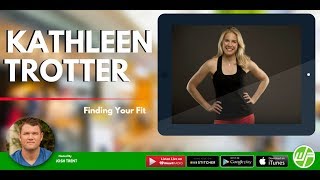
A Wellness Force Friday podcast interview between host Josh Trent and guest Kathleen Trotter (the 'compassionate fitness expert'). The conversation explores how compassion and self-understanding support sustainable fitness: identifying and countering "brain propaganda," using activation-before-motivation tactics (the 10-minute rule), making movement a non-negotiable, and tailoring strategies to individual tendencies (moderator vs abstainer). Kathleen shares her personal origin story, lessons learned (e.g., "perfect is the enemy of done", "trending positive"), discusses her book Finding Your Fit and offers a signed-copy giveaway, and closes with practical steps: just do something, and recruit a fitness buddy.
Chapters
Welcome to Wellness Force Friday, a special edition bite sized podcast that fuels the start of your weekend with actionable steps for your wellness journey through an inspiring message or story from a trusted influencer who's a positive force for the physical and emotional wellness of our global collective. If it's your first time listening to the show, be sure to hit subscribe for access to our more in depth and full length featured episodes with over 100 expert guests where you'll learn the best tools and ways of to understand those connections between our emotions and healthy habits to live life well and enjoy the process. All right, let's drop in together for this week's message. Our guest today on Wellness Force Friday is Kathleen Trotter, the compassionate fitness expert. Kathleen, welcome to the show.
Oh, thank you so much for having me.
You know, I found you online through one of our mutual colleagues and I was so excited because what we've been exploring so much on the show lately is physical and emotional intelligence. And I can't think of a better channel to explore this in and, and how compassion relates to fitness. So tell us really quickly, Kathleen, who are you? What do you do? Why do you do it?
I do it because fitness and health literally changed my life. So I'm a personal trainer, I'm a Pilates equipment specialist and I'm a writer. I've written a book, Finding youg Fit because I wanted people to help themselves find their fit. I think the problem with health and wellness is that it feels very overwhelming to everybody and they feel like, well, they have to do what their brother and their sister and their favorite celebrity does. But the trick is, is you have to find what works for and that's the only way it's going to work long term.
I think this message really that I'm hearing from you and that I see on your social, on your Facebook, I'm actually going to bring up a post that you put out there earlier this week. This message, what is this message that will really allow us to live life well? Is it compassion? Is it that we're not broken and we don't need any fixing? Which one is really the most powerful?
Both. I love both. It's about working out and making healthy choices because you love yourself, not because you hate yourself. It's not about becoming a different version of you. It's about becoming a version of you that exercises a bit and eats a few more berries as a opposed to chocolate bars. You know, it's about being a version of yourself that's a little bit more mindful and Understanding why you eat and how you eat and enjoying life and having that compassion. Because people that I meet, we get into this really downward spiral where you have a cookie and then you're like, ah, crap, I'm a terrible person. Which leads to another cookie, which leads to 10 more cookies, right? Or if you make it the workout, oh, I skipped a workout, right. You know, I'm a terrible person. I might as well skip the rest of the workouts for the rest of the year. But if you can have some compassion and say, okay, I'm a human being, I had a cookie. That doesn't make me a bad person. It just makes me a person that has to decide if next time I'm going to have the cookie again or if I'm going to have a salad or if I'm going to have a piece of fruit. And if I had the cookie, why did I have the cookie? Did I let myself get hangry because I didn't have enough food earlier in the day? Was I sad? Was I lonely? Was I angry? You know, it's about having this growth mindset towards yourself. So it's one choice of many in your day. And then you just decide, okay, was it a good choice? I'm happy about. And if, if you were happy, then great, do it again. And if not, find strategies that make you able to have a different choice next time.
A few days ago on your Facebook page, you posted a very powerful article that you wrote for the Huffington Post. Silence. The voice in your head that keeps sabotaging your health. Can you tell us about brain propaganda? I love that term.
Oh, thank you. Yeah, you know, that's that sort of anti compassionate voice in your head. That's that. Oh my God, I'm so tired. I shouldn't do anything. I'm useless. I made a bad choice yesterday. I had piece of cake at work. You know, I slept through my alarm this morning. I might as well do nothing all day. That's the brain propaganda. You know, I had a couple weeks ago, I was supposed to meet a girlfriend for a boot camp workout and I woke up in the morning and I was like, oh, I'm so tired, I should just stay in bed. That was my brain propaganda.
Yes.
But the thing is, is if I had stayed in bed, I would have felt absolutely crappy for the rest of the day. It wouldn't have made my day better. So because I know my own form of self sabotage, I know the brain propaganda that goes into my head. I had strategies set up. I set my alarm way across the room, so I had to get to turn it off. I say to myself, kathleen, you're always going to feel better after a good workout. I say to myself, people are waiting for you. You better get up. I say to myself, you know, an hour more sleep is not going to make you feel better. It's going to make you feel worse. I say, kathleen, your future self will be more energized and empowered and proud if you go to that workout. So so much of it is knowing your individual propaganda and it's about having those strategies for success already in place. So you can say, okay, sure, my brain is telling me one thing, but that I will feel better if I don't listen to that propaganda.
I love this new narrative and you know this firsthand. Tell us your origin story. You came from a nonlinear path to serve so many people, to be an author, to be the compassionate fitness expert. What's that origin story, Kathleen?
Well, I sort of ate myself through my parents divorce. I was 6ft. I still am 6ft tall. But when I was younger, I was just very uncomfortable in my own skin. I hated gym class. I would lie to get out of gym class. I would pretend to be sick. You know, I remember my mom, she used to make me walk home from, from school and I would time it perfectly that I could stop at a chip wagon, but it would be on my way home. So she wouldn't have known that I stopped because it didn't add extra time. And I would eat as I walk. Talk about mindless eating, right?
What's a chip wagon?
Oh, like fish and chips.
Okay, okay. Different term than we use here in the United States.
I grew up in a very small town. Sorry. Yeah. But basically the idea is that I hid my food and I never wanted to work out. And I just generally felt absolutely crappy with myself. And I would rather, you know, I wanted to stay in bed versus get out of bed. And I didn't like facing the world. And so eventually what my mom said to me was, listen, Kathleen, I get it. You don't like gym class. Maybe it's the people in your class. You don't like working out with the same age group. She's like, but fitness has to be a non negotiable in your life. There has to be some motion. And that's a real tenet of my philosophy of the idea that movement is a non negotiable. You just have to figure out how to move. So she said, okay, let's figure out a solution. You don't want to Go to gym class. Maybe you'd be better exercising with people that are older than you because you wouldn't feel as uncomfortable. So she got me a membership at the ymca, and I started going. And, you know, I started by just walking on the treadmill for 10 minutes and then 20 minutes and then 30 minutes. And then I started doing some weights and some aerobics classes. And eventually I taught so many aerobics classes that they were like, you should teach these classes. And that went into me wanting to be a personal trainer and then doing university for personal training. I always thought I would be a. A lawyer, actually.
Wow.
But, you know, as a lawyer, you do an undergrad in whatever you want. So I was like, I'll do kinesiology as my undergrad, and then I'll go to law school. But, you know, I finished my undergrad and then I was like, nah, I'd rather become a personal trainer. And then I took my Pilates equipment specialist, and then I went to. I decided to do a master's in exercise science instead. So just. It's a very slow progression. But, you know, I love, love, love, love what I do.
What about compassion plugs into this, by the way. Little side point here. Your story and mine have such a corollary. I was working out in a gym almost 12 years ago. I didn't know anything about. I didn't even know personal training existed, Kathleen. And a fitness manager came up to me and said, you should think about being a trainer. And I was like, what's a trainer? And that's what led me down the path. So we have a similar story there. But, you know, looking back in your life, this threshold, moments that you occurred, not from the chip wagon and forward, what do you think that the connection is now in your practice of making compassion part of the fitness journey?
Well, it's just about understanding that it's a process that you can't want to be fit yesterday, that it's a marathon, not a sprint, and it's an ongoing learning process. So, you know, if I make a mistake, I don't view it as a mistake. I view it as a chance to learn about myself. And it's about letting go of this idea of perfection because one perfect doesn't exist, but also perfect is the enemy of done. We all get in our own way. It's like, oh, I have to go to the gym two hours every single day or it's not worth it, or I have to eat perfectly. Well, you know what? That's not true. Small little steps, small Little wins, I call them. They add up and they snowball forward into really big wins. Or the idea of little drops in a bucket that accumulate an event, your health bucket is overflowing. But if you get wrapped up in your own head and you're like, oh my God, if I don't do an hour run, I might as well do nothing, well, then you're gonna never do anything because we're busy people and the world is filled with reasons not to exercise. So you have to find solutions, not excuses. And you have to say something is always better than nothing and that you're gonna always feel better if you move. So if you miss, you know, your full workout, fine. Go for a 20 minute workout at lunch or go for a walk or say to your partner after d, you know, I haven't really moved a lot today. Let's go for a right or in front of your tv, do some squats and some lunges. It's really this mindset. Change of daily movement is a non negotiable. All that's up for negotiation is how you make that daily motion happen.
There's a really cool thing you mentioned in your article, and it was activation before motivation. We'll link that from Huffington Post in the show notes. What do you mean by this activation before motivation?
Well, we all think like, oh, I have to be really motivated to start something. Well, that's just so not true. From anything from like, if I sit down to write, often I don't want to sit down to write. But as soon as I get going, then you feel better and it sort of spirals forward. It's the same thing with exercise. That's why I really tell all my clients, it's a 10 minute rule. You don't want to move. You say to yourself, I will make myself do something for 10 minutes. Because if you stop after 10 minutes, at least you've done something. But most the time, once you do something for 10 minutes, you end up doing it for 15 or 20 or you finish your entire workout.
Right?
So it's that activation energy to start. It's hard for all of us. I mean, it's, it's hard for me. Sometimes I don't want to start. But once you get going, you're like, oh, right, me not wanting to do this. That was brain propaganda. And I will feel better if I move. My future self will feel happier, healthier, more energized. I'll be able to sleep better when I do something.
I want to talk a little bit about your book, but the question that's burning in my mind is the growth that you've experienced. How does the path you've led in the past lead you up to now? Like, what do you rely on to fuel your fire, to help other people and connect compassion to fitness?
Now, that's a great question. I mean, I rely on the fact that I know that I feel so much better today than I did 15 years ago, but I also rely on the idea that it is this process, that I'm going to have crappy days, I'm going to have days where I'm less healthy, I make fewer healthy choices, but on a whole, I'm pretty much trending positive. And I think that that's a really key thing. I think people look at fitness and health and it's like, oh, it's a linear line. I go from point A to point B and then I reach healthy and I stay there and that's it. And I'm like, no, it's an ongoing process and I'm still learning things about myself. Like, for example, the other day, my boyfriend left some Haagen Dazs ice cream in my fridge. And I was. I told him he could leave it because it's a flavor I don't like. And I was out running and all I could think about was that ice cream in my fridge. So I came home and I took the ice cream and I threw it out and I sent him a text message and I was like, I owe you $3.50. But that money is worth it to me because otherwise I would feel like crap because I would eat all of that at 11 o' clock at night tonight. Now, the older Kathleen from five years ago would have been like, I'm strong enough. I can totally do it. But then at 11 o', clock, I would not be strong. I'd be exhausted from a long day at work. My resolve would be down. I'd eat the ice cream and I'd feel like crap. So I've learned, you know, I know what works for me. Other people, they can have a little bowl of the Haagen Das, and that's fine for me. I know I don't have that moderation. So if I want ice cream, I know I've learned I have to do it outside my home. I have to go to, you know, ice cream parlor and have a small amount of something that I love. But that's taken years. And that's what I try to instill in my clients when they come in and they're like, oh, my God, I Ate all the ice cream in the world. I'm like, okay, well, I did that five years ago. Let's learn from this.
So much truth is coming out of you right now. And it brings me back to an episode we had on the show with Gretchen Rubin. She talks about moderators. Don't you love her? Moderators or abstainers? Right. So I know that I am not a moderator. I'm like you. I can't have the unhealthy choices in my world because when my decision fatigue kicks in at the end of the day, when my physiology is tired, I'm gonna make those bad choices. So thank you so much for bringing that up. Again, I'm curious. There's so much of you online. There's, you know, your books coming out. Let's talk about your book. But before we do, what is something that most people don't know about you? Maybe a gem that you might have written in your book that you could share.
Basically, I always feel better when I work out. So that is my biggest thing that I say to myself. I say, kathleen, you will always feel better if you do this workout. Just do. And I don't know. I think the other thing is mostly just creativity. Oh, no. Certainty is the opposite of growth. I think that's the thing I'm working with right now. I think that I struggle because the way I look at the world, the way I. Because I am that abstainer person, I look at the world in these often sort of black and whites, and I'm working on my own process of being a little bit more moderate and just saying, you know, it's okay to be a little bit creative, to be a little bit curious and not have things. So I don't need to know everything right now. If I make a mistake, that's okay.
Let's talk about finding your fit. I love this title. A Compassionate trainer's guide to Making fitness a lifelong Habit. Why did you write this book? Does this come through you? How long have you been thinking about this?
So the book came out in October, and I think that I wrote it because people, again, they really try to do what's right for their favorite celebrity, what's right for their boyfriend, what's right for their brother. And I think a lot of people know that they should work out. But connecting the dots between knowing that you should do something and actually do making your fitness wish, a fitness reality, that's really hard. Those dots. So there's lots of fitness books out there that tell you, okay, here's this four Week program, go do it. But one, it's hard to make yourself actually do it. And two, that's such a generic thing that what happens when you're done. The four week program. So the concept of the book is it teaches you how to connect the dots between wanting to do something, having a fitness wish, and how to create an actual goal. And then at the final chapter of the book is divided into four fitness personalities. So you can say, okay, now I know how to make proper goals and I know how to make it a reality. And how do I tailor those goals to me? Because I don't want my readers to finish the month long program and be like, well, now what? Oh, I guess I better go back to eating chips and sitting on the sofa. I want this to be a lifelong thing. Right? So it's funny you mentioned Gretchen Rubin because her book on habits. I actually wrote an email to her after I read that book being like, you divide that book into four personalities. My fitness book is divided into four personalities. I love you. You're amazing. So we had this whole email correspondence about how similar we are as human beings.
I love that so much. You know, you've experienced so much growth, and I love your mindset. Obviously you've read Carol Dweck's work.
Yes.
So one of the things that guides me in my life, if I'm going through stress and I'm having trouble staying connected to my growth mindset, I tell myself a mantra. For me, it's if I can breathe, I can choose. Oh, I love it. Gets me through a lot of my life. For yourself, do you have something, Kathleen? Do you have a mantra or a message that guides you in a moment of stress or strife?
Yes. I probably almost have too many of those. But one of them connected to that growth mindset is just as long as I'm in the arena of life, as long as I'm trying, I'm okay with it. You know, if you're in the arena, you're gonna fall down, you're gonna get messy, you're gonna get dirty, you're gonna get back up again, you're gonna possibly fight with some other people in the arena. But that's okay. As long as I'm only comparing myself to the people in the arena and I'm not comparing myself to other people, and I'm sort of staying in my own lane. So I'm not thinking about the people who are outside the arena looking in and being critical of me. I'm saying, who are the other people in this arena that I respect how can I learn from them, but how can I learn from them while also staying in my own lane? So I say that a lot, you know, Kathleen, stay with your process. I think the only other thing is that I try to tell myself that it's about making choices that both honor who I am now, my sort of Kathleen Ness, and also honor who I want to be and who I want my future Kathleen to be. So that's where that compassion comes in. I know that I have a certain meanness, you know, I think probably too much in my own head, but at the same time, as I said earlier, I want to be the person who can have a little bit more moderation and be. So I'm constantly balancing those two things and that's a hard thing to do.
Well, for inspired action, someone's listening and they're feeling connected to what you're saying. What's just one thing they can do? What's the beginning of this spark for change that they can do?
This weekend I'm gonna tell you two things. The first one would be just do. Don't think about it. Go out for a walk. Stop trying to find that perfect workout, that perfect time to exercise. Drink some water. Put your running shoes on. Do something, anything, because it'll forward momentum you right? It'll give you that positive spiral. And the second thing is get a fitness buddy because fitness is super fun, but it's even more super fun if you have somebody to share it with.
Those are so powerful. And it reminds me of like the Nike slogan, just do it. Just put your shoes on. Just put your shoes on. Reach out to a friend.
And that's that self sabotage. That's that brain propaganda.
Kathleen. This has been a ton of value in 15 minutes. This is awesome. And I'm curious now for you at this age what you've gone through looking at compassion and fitness. What's wellness to you now? How would you define wellness in your life?
Wellness is that balance of making choices that respect you now and respect who you want to be and making choices because you love yourself, not because you hate yourself. And being mindful of not just what you do, but why you do it and how you're feeling things and why you're feeling things and just respecting yourself as a whole person.
I'm going to read a few things we went over today and these are going to be linked in the show notes. Perfect is the enemy of done the 10 minute rule. Trending positive activation before motivation. Certainty is the opposite of growth. Kathleen, thank you so much. For sharing your gifts with us. And I know you're even more generous. We talked about you would like to give away a copy of your book to the Wellness Force Radio audience. Can you tell us about that?
So, my book, finding your fit. I would love to give it to one of your readers. And whoever wins, I will autograph the book and mail it myself to the person I love. Connecting with anybody and everybody. And I really do feel that, you know, working out has energized and empowered me. And if I can share that with one person, it'll make my day.
I am smiling big right now. I know people that are listening are doing the same. Kathleen, the compassionate fitness expert. So appreciate what you're doing for our wellness world. Thank you. Thanks for coming on the show.
It was absolutely my pleasure.
Thanks for listening to the show. If you're ready to take inspired action from this week's Wellness Force Friday podcast, let me hear your voice. Tap your show artwork. Click the link in purple that says review this podcast. Write down your thoughts about this episode and what you're committed to creating this weekend and into the next. Don't let this conversation stop here. In your same show artwork, tap on the link that says join the Facebook group for added accountability and connection to support the physical and emotional wellness for the collective and ourselves. Okay, now you get to go out into your world and create impact for the people you care about. So until I see you again real soon, I'm wishing you love and wellness.
More from Josh






Your child's future start before pregnancy... and even before conception! #podcast

MD Reveals: Your Healing Creates Your Child's Reality (The Souls Coming In Need Strong Bodies)



