Unplug + Detox From Technology for Unstoppable Clarity
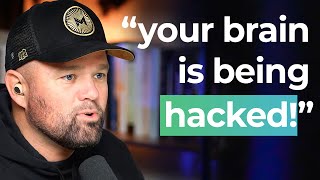
YouTube conversation (host Josh Trent with guest Mar) about how smartphones and platforms monetize human attention, producing addictive behaviors that hijack time and mental clarity. The episode mixes spiritual framing (time as an illusion; a "war for our souls"), behavioral neuroscience (variable rewards, limbic/Hook model), and practical steps to reclaim agency — notably morning-phone boundaries and a suggested 3-day digital detox or nature-based retreat to reset attention and dopamine patterns.
Chapters
So your brain's being hacked and you don't even know it. We're talking about this and so much more, how you can detox your digital life right here, right now on Wellness and wisdom. Mar, this is crazy. We all have phones. The phones control our life. Our brains are being hacked and we don't even know it. We're going to talk about the science and the spirituality of this. But before we dig in, y' all clicked on this. You're here because you know that your phone is probably a problem. Mar, has your phone ever been a problem for you? Have you ever been addicted to your phone?
I still am. Unfortunate.
I think we all are.
I think we are. Like, do we even have still any control of our time? Or it's just the technology in control?
Look, time. If you think about our episode we did with Mark Gober, which is linked right Here, this is JoshTran.com725. We've transferred from an AMA, which is an Ask Me Anything to. To a LLS. And this is a Liberated Life series. So the whole concept of Liberated life, our community, our tribe, all of our programs, so we can actually look at life through a different lens, out of genetic determinism, out of mental slavery, out of being a slave to your phone, just exiting the matrix, if you will, so that we can just have peace. That's the whole point of this podcast of my life and of Mar, your life and all the work that we do together. How do we have peace? How do we see life through a peaceful lens? And how do we be powerful from that place of peace? That's what this is all about, y'. All. So the reason that your phone is controlling you is because, in a way, it's a guardian of growth that is wanting you to push through the slavery to your phone. I don't think we have any control of time. I think time is an illusion. Right here on the screen, there's just a quick clip of Mark Gober. He wrote the end of Upside Down Thinking. It was one of my favorite episodes I've ever done. And he talked about time being a construct and an illusion. And if you look at the metaphysics and even the real history for millennia that's been studied about time, whether it's the Mayans or the Incans or the Egyptian sundials, time doesn't exist. All we have is this second, this breath, this moment. Rupert Sheldrake said this to somebody in his audience that was asking him. Rupert Sheldrake is a very powerful spiritual and metaphysical Teacher and a woman asked him, you know, know about her past and how her past was causing her so much pain. He said, have you ever visited the past? Can you physically go to the past? Can you physically go to the future? In other words, can you take your body, your being, and go there? And of course, her answer was no. And he said, so then if time is only really apparent on where you physically are and where you're spending time, then the only time we have is literally right now. Yes, we have memories of the past, yes, we have, you know, potentially anxiety or future forecasting of the future. But we're not in the past or the future. We're right here. So these devices, our phones that we hold in our hand, they become almost this time warp machine, right? And your question is, you know, does time exist? And you know, do we think that technology is controlling us in our use of time? I would say that the real hardcore issue that we're all dealing with when it comes to the phone is we are the product. We are the product. Our attention is the currency. And our attention is the currency that we spend, quote, quote our time to these technocrats so that we can click on ads and get people to buy things. That's at the core of all of these models. Whether it's X or Snapchat or Facebook, you know, meta. All of these platforms, they are designed to monetize our attention. Our attention is currency. So think of all. We have 24, quote, quote hours in a day, right? We all have 24 hours in a day. At least the construct that we operate under in human existence. Now, in those 24 hours, you can choose to sleep for eight, you know, maybe your meals and just self care is another four. So we have another 12 hours in the day. What are we doing in those 12 hours? Are we feeding ourselves, love? Are we taking care of our relationships with the people that we care about? What are we actually doing? This is what I want to get into the practicality of in this digital detox lls today because we are the product, y'. All. That's what's really going on. The time that we think that we're being either in the past or in the future. Spending in doesn't actually exist. We can only spend time right now in this moment. And that's the part that's really hard to wrap our heads around. So as we're scrolling in these extra 12 hours we have every day, right? Eight for sleep and four for self care. Maybe another six to eight of those are work. We still have four hours, six to four more hours in our day where we can choose. And that's the concept I want to get into today. We can actually choose to spend our time for ourselves and in service to others rather than just kind of consuming. Right? It's the consuming that crushes us, I believe.
I've been wondering this myself and I feel like when we actually understand what the tools, which is the social media, Facebook, the Instagram, the TikTok, what they've been designed to, and really understanding it's like this is what they want to achieve, then it could actually help get off of it. I think, at least for me, that could work. When it's not like, oh, it's just social media, it doesn't mean that much, it's just fun content, it's like cute cats and, I don't know, videos that just distract you when you need it, but when you actually understand the root intention behind it. I feel like that for many people could be the breaking point of I don't want to be a part of it, or at least be a part of it, but very consciously so. What is actually their intention? Why do they want to harness our attention just to distract us from our potential and achieving higher consciousness? Is that it? Is that all they want to achieve?
Well, when you say they, I'm getting at the people that control the algorithms and the people that own the data centers and essentially the technocrats in Silicon Valley, right? Like the people that own Meta, the people that own Snapchat, things like this. Their primary goal, y', all, if you haven't known this, I'm going to share it to you. It might be kind of abrupt. The reason that it's so challenging to, to disconnect from your digital life is because the long term goal of these technology companies is technocratic control of your entire life through the devices that are surrounding you in your environment. In other words, the long term goal of the companies in Silicon Valley is to monetize every single aspect of how you live. Whether it's how you go to the bathroom, how you brush your teeth, how you take a shower, how you make coffee, how you get food in and out of your fridge, what iPad is on your wall, how you plan your family activities, what car you drive, what route you take, what food you eat during the day, the friends that you spend time with, the places that you go. Every single aspect of human life is being monetized right now and you don't even know it. And that's the scary part about this. And so in an Age of digital uncertainty and digital control. What we really have to recognize is that we're half beast and half spirit. So we live in a physical body, right? We have a visual cortex that gives and receives images to the back of our skull. We have a information matrix in our brain that allows us to process information. We have a neural tree, and we have an amygdala and a prefrontal cortex and a default mode network and a posterior cingulate. We have all this hardware that's part of the beast in us, and that is the part that actually gets to be really unpacked. Today, that's what I want to talk about. The spiritual aspect of what I believe is going on is a war for our souls, a war for our minds via the war for our attention. If our attention can be grabbed and be weaponized and monetized, then that can actually be what is manipulated in our minds and in our souls. That's a pretty dark topic. But how we can get away from this is by actually having an infrastructure of behavior in our life where we're not as controlled. Many of us are controlled, and we don't even know it. Let's go through the ways that we're controlled. So the first thing is, everybody out there, be honest with me right now. Write this in the comments or let us know. What do you do in the first 30 minutes when you wake up? Do you go get lemon water? Do you stretch? Do you go out in the sun? Do you hug your wife? Your husband? Do you go play with your kids? Do you work out? Or do you literally roll over, grab your phone, pick it up, and look at who emailed you? I mean, this is. This is actually the number one thing. If you get one thing from this podcast today from how to actually truly detox so you can have clarity. The clarity for your day starts with the clarity of the sun shining on you in the morning. With the clarity of your thoughts in the morning. Your brain is super malleable when you wake up, right? Your glial cells have been washed in your brain, Your body has cortisol that's spiking. Your melatonin has decreased. Like, you're literally a prime vessel for whatever you want to create in your day. Yet the challenge is if you fall into the trap that the technocrats want you to fall into for their domination and control, you're going to grab your phone and look at it before you even get out of bed. Please, please, please don't do this. That's the number one thing. How you start Your day is most likely how you're gonna live your day. If you start your day under control by the device, then that device is going to control you throughout the day. It is the number one hack that every single large media platform and podcaster has talked about in the past few years. Specifically, we had Nir Eyal on the podcast a few years ago, and I think you've heard of Near Eye y' all before, right? He has the Hook model, and he used to addict people in technology.
Yeah. Was he working for Facebook?
He was working for Facebook and Twitter, and he essentially was hired by these companies to make their technology as addictive as possible. And he had this gut check moment where he said, I don't want to do this. I don't want to addict people anymore. And so he extracted himself from Silicon Valley and. And now I think he lives in Singapore, and he just writes every day and gives out all this information about how people can break the very addictions that he helped to create. I think it's his coup d' etat to be in service to humanity again. And I really love this because our attention is the product. They're profiting off of our distraction. Right. How are they profiting? By you grabbing your phone first thing in the morning? Like, really feel me on this. If you want to detox if you've been feeling like you're late, life has been controlled by your phone or by your screens. This is the number one thing you guys like. Please, please make a promise to yourself, because now you're in the knowing, and once you know, you can't unknow. Take your phone either out of the room, put it on silent. If you have to keep your phone in your room for emergencies, put it more than an arm's reach away from your bed. So you at least have to physically get out of bed to check your phone. And I would even say there's a greater hack here. Lay out your workout clothes. Have your water all ready to go the night before. Prepare yourself for in the morning when you wake up that you're less likely to be pulled by your limbic brain to grab your phone. I think this is a really big one. I think if we all can just commit to doing this one thing, it can literally change your life. You will feel so much better as a human being. At least go 30 minutes. The ultimate goal would be to go 60 minutes of just living your life without your phone. If you do that, I promise you 100%, your time and attention will not be harnessed by someone else. You will actually have agency and choice over your morning. So let this be a reminder. And maybe you're even watching or listening, and you're like, well, duh, Josh. I know that, but are you doing it? Are you actually doing it? That's the whole point. Knowing and doing are two separate things. So do you struggle with this? Do you sleep with your phone next to your bed, Mar?
Yeah, I do. And I've thought about putting it further away because I know it's not good. Like, I do put it on airplane mode, just not to be disrupted and to not get, like, the EMF from the phone. I don't know if airplane mode, like, completely blocks it, but at least some of it. But, yeah, I usually feel like if I don't have any source of light right next to me, then I don't feel safe. So that's why I keep it close to me. So I think my solution would be either to get a tiny little lamp or a flashlight or something to keep next to me in case there's, like, an emergency or something. So that has been my excuse for a very long time, and I've had many times when I decided not to use my phone in the morning and before bed, but lately, it's been very tough for me to actually do that, and that's what I still struggle understanding. It's like, why. Why do I need to look at the phone in the morning, check messages, and even sometimes get to work and maybe complete a task or two before I go surfing or go to the gym? It just makes me feel very relieved. And so maybe that's the dopamine hit that I get. It's like, oh, I accomplished this in the morning, the virtual thing in the virtual world. And, yeah, it's been very tough for me to actually break free from that.
I mean, it makes sense, right? Because what I heard from you, and I think we all deal with this, is like, for example, I'll check my phone in the sauna, but by the time I get into the sauna, it's been about 45, maybe 60 minutes or more. You know, I'll wake up, I'll hydrate. I actually walk outside, and I, like, clean the pool. And I. I did it this morning with my son. You know, we. We went and got the little pool robot, and we did all these things. And then in the sauna, I checked my phone, and then I put my phone out of the sauna, and I just listened to a podcast or I'll listen to an audiobook while I'm in the Sauna. This is a really good synergy stack that we'll go over in an upcoming lls how to take the things you're doing in your life and stack them on top of each other so that you actually can get twice, three times, four times the benefit. The reason why I'm saying this is because I think what's going on for you and all of us when we want to check the phone is we want to set ourselves up so that we have less anxiety or less pain or less struggle for the rest of the day. Does that feel true?
Yeah. Even just like checking the surf forecast or something, there's always a reason why I should check the phone. I always find a reason why I should instead of why I shouldn't.
Well, the science behind this is really unique. It's called variable reward. And Nir talked about this in our podcast, which we'll link here@joshtrent.com 725 and in the podcast, he talked about the variable reward that we get when we click on, like, buttons or when we check emails. We know, like, you know, that little red circle on your app where it says, like, you have this many notifications. We know our brain knows that it's gonna get a tiny shot of dopamine every single time we click because every notification is gonna be different. And so it's this variable reward that really feeds and drives what's called the limbic system or the limbic brain. So one of them is like novelty. The other one is self preservation or self safety. Right. So if you can ask yourself before you pick up your phone, am I checking this because I'm bored or because I need the hit of dopamine? Or am I checking this because I know that I need to get done with four things today and I want to make sure I'm planning my day effectively? If the answer is that you are limbically driven and you just want the variable reward, well, then go get it somewhere else. Right? What I'm saying is, before you grab your phone, check in. Is it. Is it limbic system and novelty and dopamine that you're craving, or is it actually preparing yourself for your day and making sure there's no fires that are going to potentially burn you later? If it's the latter, if it's you just prepping for your day, then do that after you've cared for yourself because the fire is going to be there whether you spend 30 to 60 minutes loving and caring for yourself or not. Right. The other one, the limbic system driven one, that's not going to do anything other than set you up for a dopamine cycle the rest of the day, which is what these technology companies want. So check in with yourself. Is it the first one where you're. Where you're craving novelty and dopamine, or do you, like, genuinely have to prepare yourself for your day and make sure that there's no fires that potentially could burn you? I think that no matter what the answer is, they all can wait 30 minutes, they all can wait 60 minutes.
Yeah, I agree. I'm not sure where it's actually coming from, but it could be like, by now, by, like, after all these years that I've been using social media and being stuck, like, to my phone. I think it's just a dopamine reward. And I don't.
It is.
The tricky thing is you don't feel it directly in your body. It's like. Yeah, when you look at your screen, you feel this rush or something. You don't really feel it. It's so subtle. It just happens in your body unconsciously. Right. Like, it's on such a. Such a subtle level that you don't realize that. I feel like if we actually could feel it in our body more, if you were more attuned to our body, we could actually realize what's going on. Right.
We're in a big experiment, and the experiment that we're in is, where do I spend my attention? It's kind of like a slot machine at Vegas. Have you ever been to Las Vegas? Have you ever gambled?
I don't think so. No. No.
Good for you. Good for you. Somebody. Somebody listening is like, I have a gambling problem. That's a whole nother podcast. You know, the reason that casinos are designed in the way they're designed, which, by the way, casinos hire multimillion dollar behavioral analysts to make sure that casinos are addicting as possible. All the lights, all the bells, all the, the glitter and the handles and everything with casinos is actually very similar to how our phone is designed and how the ui, UX and your phones are designed. The phone or casinos or any type of addictive construct is designed. So it gives you as much of a variable, variable reward as possible. Right. When people gamble, there's always this preemptive dopamine that's waiting to be released depending on if they win and how big are they going to win, and is the red light going to flash or is the green light going to flash? What we have to realize is that I hearken back to the beginning of this podcast, we are half beast and we're half spirit. I'll slow down because I really want this to land. So if you're driving your car, like, don't close your eyes, but at least take a deep breath and receive this. When you're driving and you've driven a route a thousand times, you don't have to think about how to get from home to work anymore. It's unconscious, right? You could do it without Google Maps. You could just drive from your work to your house and you never have to think about it. It's because you've conditioned your unconscious mind to know where and how to drive without having to think about it. Well, the same thing applies when it comes to the addictive use of technology over time. If you're not careful, that same mechanism that allows you to drive from your house to your work without thinking about it is the same programming that will exist for you to use the phone and spend your attention to benefit the technology companies and to rob energy and time from your life. It's the same mental framework. So how do we get over this? How do we get through this first, like always, it always comes down to awareness. Every single thing we ever discuss on this podcast or in our programs or in our personal life, it is always, always 100% of the time boiling down to awareness. When we have the proper awareness to know that malevolent forces are wanting to control our attention and use the brain chemistry and the neurology that allows us to get places without having to think how to get there, we then must ask ourselves, if I'm doing things that I know are just a waste of time, well, why do I keep doing them? It's just being really curious, right? It's just. It's just asking real questions, like, why do I sit for an hour on my iPad, on my lunch break, instead of just going for a walk or talking to a friend? Why do I scroll on social media and hit that little search button and look at all these stupid clips? Why am I doing that? It's because that is God, my creator, wanting me to feel the pain of what that feels like so that I can actually learn how to be whole and sovereign without distraction. Many people can't sit for 10 minutes because when they sit for 10 minutes, everything that they're thinking about or that hasn't been processed bubbles up to the surface. And so when we sit for 10 minutes, or when we breathe for 10 minutes, or when we lay in nature for 10 minutes, I know I felt this. Maybe you felt this. Too Mar. You're laying. It's a beautiful day. You're taking 10 minutes to yourself, and all of a sudden, this little thought floats by, and it's a little thought leaf, and it says you should check your phone. And it's such bullshit. You know, it's. It's literally just a thought is what I'm saying. So in our program, it's on the screen Right now, liberatedlife.com we talk about the BTFA loop. It's belief, thought, feeling, and action. Now, an action doesn't become an action until we have a feeling that's encoded to a thought, right? And Dispenza talks about this in his work. A thought doesn't become an action until you attach a feeling to it, right? You have to energize a thought with feeling and emotion before you actually go out and perform a behavior. So just practice noticing the thought. This is a very practical spiritual lesson. Just watch your thought float by and observe your thought. And instead of being a slave to your thought, just in that moment, just laugh at it or smile at it and say, huh, that's interesting. I'm laying here in the sun. I'm at the beach. I'm on a walk. I'm doing something that feels so good. I wonder why I'm having a thought to check my phone. And just let that be for a moment. I wonder why I'm having a thought to check my phone. I. Oh, it's because that is my own maturity, my higher self calling me forward to be a really mature, awesome whole human being without the use of technology. That's really what the gift in all of this is. This threat of technology, this threat of AI, this threat of variable reward. It's not really a threat, because at any time we can just choose to take a deep breath, put the phone down and just laugh or dance or do something that gives us the feeling of peace that we want without having this outside thing giving it to us. That's what this is really about. Because every time we scroll, we're training our brain to need constant stimulation. And we get used to feeling peace or feeling that exhale only when we're stimulated, which is actually the opposite of peace. True peace is an inside job. It has nothing to do with. With what we're receiving or, you know, what our phone is telling us or what music we're listening to. Although music can be really helpful. So, I mean, look, guys, what if I told you that in three days you could literally reset your mind completely? Like, would you believe me? Would you Believe me that in three days you can start to reset your dopamine loop. Like, first of all, do you believe me more? Do you believe that's possible? That in 72 hours you can reset your mind on.
I believe it's possible, but I'm a little bit skeptical if that's really doable.
Yeah. Well, this is, this is where most of us fail is because the skepticism that comes, and I think it's really honest and beautiful that you're saying that. The skepticism that comes, that says it's a thought. Right. Skepticism is just a thought. There's no way I could reset my brain in three days. Well, why is that? It's because there's that little part of your limbic system that's still attached to receiving the variable reward. It has nothing to do with skepticism. It's that little part of the brain that just wants its hit, it wants its drug.
Yeah, but it's also.
Do you feel me?
If I've been scrolling on Instagram for five years without a break, like every single day you just scroll, scroll, scroll. How is it possible that I could recover in just three days? Like, when you look at alcohol addiction, drug addiction, it never takes three days. So that's the skepticism. It's like, can, like long term addiction actually be reset and just like removed within just three days?
Well, it's definitely the first step. Right. So the sustainability is going to be in those three days for you to practice noticing all the things you feel, all the stuff that's popping up, all the ways in which that we aren't comfortable just being with ourselves. And if you're really struggling with this, if anybody's struggling with like severe tech addiction, the best thing you could possibly do is a nature retreat or of a, or of a passion or a vision quest. Something where you're literally not allowed to have your phone with you. So for some of us, you know, for the upholders, to quote Gretchen Rubin, you're just going to hear everything that we've talked about on this podcast today and you're going to go, huh, I really get to practice this. Cool. I'm going to do it. But for those of us that struggle with tech addiction and you really feel like you need a digital detox, I would suggest that you listen to our episode with Tim Corcoran. He is the founder of Purpose Mountain. I went on two vision quests. They were very powerful. Four days, completely disconnected from everything, just sitting in nature. But you also can just organize for yourself a free. You don't have to pay for it, a free digital detox where you put a response notification on your phone that says, hey, I'm unavailable to respond to texts or calls for the next three days. I'm doing a digital detox. I mean, how amazing would that be if like I was a friend texting a friend and I received a text message back that said, hey, I'm on a digital detox, you know, I'll get back to you in three days. I'd be like, wow, I'd be, I'd be so, I'd be like so happy for them, you know, that they're doing it. So what I'm saying is there's, there's all this beauty and possibility of our technology addiction being healed, but it's just you being aware of yourself and noticing. To what degree of, of impact do you need? To what degree of accountability do you need? For some of us we're going to know that doing a three day detox is just enough. We don't have to do a vipassana or a vision quest. But then for some of us we're going to need stronger accountability and that's okay too. I wholeheartedly believe that in three days you can start to heal technology addiction. The only path to sustainability on that is whatever lessons you learn about yourself without the technology being there. Because many times what technology is just like for me it was pornography in my past. Or for some people it's shopping, or for some people it's overworking, or for some people it's honestly even athletics. You know, some people are so addicted to marathon running or even surfing, right? Anything in our lives that makes us feel good can be one of two things. It can be a way for us to express joy and have fun in our life, or it can be a way for us to run from us being with ourselves. It's one of two. And so this spiritual journey that we're really talking about starts with taking out the things of your life that you feel like you can't go without. I remember a mentor of mine, Paul Check, said, if you want to know what your master is, ask yourself, what's one thing you can't go one day without? That's when you really know your master. If you can't go a day without something. Now obviously we need water, we need to breathe and we need food, right? That's fine that those things are inputs, but we can do our special work on those to make them not our master. But when it comes to technology or any inputs that we feel, quote, quote like we need. If we can't go a day without something, it's your master, it's controlling you. And so if we want to be liberated, we cannot have all these things in our life that make us feel pseudo peace. We actually get to do the real work, to be aware of ourselves and have real peace from our soul. That's what this is all about.
So what is the three day detox plan then?
All right, so here's what I want you to do. For three days, I want you to do two forms. The first one, if you're a really strong personality type, I want you to just put your phone either out of your room or that you have to get up to check it. And I also want you to put it on airplane, okay? If you have an emergency or if you're in a position where you have to have it on, at least put it on silent. Then for the first 30 to 60 minutes of your day, I want you to actually have a practice where you sit with yourself and you just be. It could be meditation, it could be breath work, it could be just going for a walk, right? If you want to listen to an audiobook, cool, that's fine. Just don't check your notifications, don't check your emails, don't check anything that your limbic system is wanting you to check. And do that for three days and notice how awesome that you feel. You're going to feel really good, I promise you. You will feel absolutely amazing. For the people that are really struggling, look in your calendar and see where you can put in a three day detox. Actually go in nature for three days or sign up for a vision quest or do something where you can have a framework of accountability that'll start you on this detox pathway. Because really, the food that we eat, the technology that we take in, the relationships that we spend our time with, they're either harming us or healing us, right? They're either helpful or they're harmful. And so let this be a place of a check in for you, a self awareness check in where you can do one of those two paths, right? You can either commit to three days of the first 30 to 60 minutes of your day where it's just you, it's just you filling your cup in the morning or, or have that extra accountability where you can be in nature for three days or, or be away from your phone completely. I recommend we probably at least twice a year, maybe even once a quarter, all of us should do that. All of us get to have a detox. Even if it's 24 hours. Like, start where you are with what you have and just accept where you are is perfect. You don't have to have this radical, crazy plan that there's no such thing as 0 or 100. Right? Like, start where you are. Be peaceful. Be comfortable where you are. Go to joshtrent.com 7:25 this Liberated Life series is about nourishing all five parts of ourselves so that that lens that we look through is different. And essentially what the end result is is us feeling peaceful on the inside and behaving peaceful on the outside. This is a lifetime of work. You don't have to master it with this one show. Please share this episode with somebody that's struggling with detox of technology. Please share this episode with somebody that you can't have a conversation with because they're always looking at their phone. All right. So until we see you again, I'm wishing you love and wellness, but most importantly, peace and power. We'll talk with you soon.
More from Josh






Your child's future start before pregnancy... and even before conception! #podcast

MD Reveals: Your Healing Creates Your Child's Reality (The Souls Coming In Need Strong Bodies)



