📹VIDEO Podcast | 326 John Chavez: How To Create DMT Naturally Inside Your Body
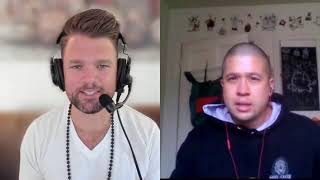
A podcast interview (Feb 18, 2020) where host Josh Trent speaks with John Chavez about endogenous DMT, Chavez's personal spiritual awakening and recovery, and how practices like breathwork, meditation and float tanks may upregulate internally produced DMT ("endowasca"). They discuss links between altered states, neuroplasticity, fluid dynamics in the brain (choroid plexus), and plans to fund research via DMTQuest to study endogenous DMT scientifically.
Chapters
John, welcome to the show.
Right on for having me, man. I'm excited to do this with you.
You know, we were talking before we recorded here about just this experience and gratitude, and you were talking about how you were grateful for your parents, and I was saying how grateful I was to be in this moment. And it's kind of a mystery, you know, as we explore this conversation about endogenous dmt. You have this term that you call in your book, Questions for the Lion Tamer Endohaska, which we're also going to talk about. We've explored a lot of topics on the show about the human condition. You know, know, what are we actually doing here? What is this mystery? Why do we go through periods of having gratitude and then depression and all these different emotions that manifest into physical disease? But to start us off, man, tell us this name. I got it right when I saw it. I was like, I have to know the name of this. Why he chose it. Questions for the Lion Tamer. Why did you name your book Questions for the Lion Tamer?
Well, you know, I have the, I guess the intuition that, you know, everybody has this sort of lion spirit within themselves. And I feel us as a society has kind of been not dumbed down, but we have been programmed to, I guess, think that we are not empowered, that we don't really have that much ability, and that, you know, we always have to rely on a higher power in the forms of doctors or, you know, things of that nature to answer our questions or even our ability, you know, to understand our true abilities. And I always just thought it was pretty funny to see a little man with a little whip controlling the king of the jungle. And that's the way I feel that it is. It was like, how'd you play that? How'd you go ahead and trick the lion? You know, how did you go ahead and trick humanity for so long into making us believe that we don't have these capabilities that we actually do have once we delve down the rabbit hole of altered states and things of that nature. So that's pretty much where it just came to me, just like that, in a flash, and I just ran with it.
God. So such a powerful metaphor, too. I've even seen on social media, John, there's like a horse, a huge horse attached to a plastic chair by a leash. And it said mindset, right? Like, or even how elephants are trained. You know, I think it's easy for us to forget, like we're a soul having an experience in a physical body and a lot of people get caught up in this 3D world where they become victims to society or their responsibilities or even John. Like things that are taught to them by their parents, like, lovingly, most times that get integrated and downloaded and imprinted, and then that person never really reaches their potential. And one thing I know you talk about in the book, where it's delving into the mystery that is DMT is really the question that I'd love to ask you right now. The mystery of why some people expand into their potential, and then the mystery of why some people never, ever actually reach their potential. Why do you think that is?
Wow, that's a really complicated question. And, you know, it's hard because I don't really like to generalize because everybody's had different forms of trauma in their life. And I think that, you know, if we're talking about spirituality, I think that everybody has a role to play in certain lifetimes. And when we think of people reaching their full potential, maybe it's just happening in a specific lifetime and in a different lifetime, they have to go ahead and maybe slow the roles down and have different sort of more mundane experiences where they don't fully flourished, so maybe they can come back and have that full flourishing at a different point in time. I know we're going straight into the esoterics, which is something that I love, but does that make sense? I feel. I feel as though it's the timing for everybody. Just like for me, I feel like I wasn't flourishing until I had a sort of spiritual awakening. And now at this point, I do feel like I'm manifesting the way that I need to in this lifetime.
And.
And I think timing is everything. So we have to. We have to be patient to see things unfold.
I love the way you answered such a complicated question with a simple solution. Because whether you believe that this is the only life or not, there's got to be. There's got to be something else out there that helps and shapes and directs us. Otherwise, I don't think we'd have access to dmt. I don't think that these chemicals and plants and things would exist either endogenously or exogenously. We wouldn't be able to experience them. We're in this kind of soup, like a cosmic soup, and it is this big mystery. And sometimes for most people that are healers, whether it's breathwork, we had Neeraj Naik on the show, we've had Krista Recchi on the show, we've had Dr. Edith on the show. Now we're having you on the show. Edith and I came together and that's why you're here with us. There is something to be said about healers that go through their own healing. And I know for you, like, that's exactly what happened. I think it was 2013, you were, you would not necessarily lead a healthy lifestyle up to that point. Right. Like this is what led you to write questions for the lion tamer. But it was really understanding that metaphor within yourself. Can you, can you share with us the quick synopsis of your story? Like, I think you were, you weren't exactly the health promoter. You were drinking, you were eating unhealthy foods for a while, but it manifested as something that happens for many people.
Yeah, exactly. I think, you know, it's interesting because, you know, when I first had that experience, I mean, I'll get into it in a second, but I was like, wow, you know, am I the only one who's kind of had these types of, of experiences? And then you look online and it's actually hundreds if not thousands of healers.
Most healers, yeah.
That's how they got their start. And you know, so it's like a polarization, right? You go from negative to positive. Yeah. So like you stated, In 2013, I had a. This thing called a spiritual awakening. When I describe it to other people, they, they describe it to me as what they think is Kundalini. To me, I didn't know what that meant. But anyhow, up until 2013, I'd been living a very unhealthy lifestyle. Drinking a lot, not sleeping well, having really no concept of what health was, you know, like drinking Gatorade and eating power bars, thinking that that was the way to health, you know, which, you know, at this point I'm quite aware that, you know, those products aren't necessarily conducive to one's own well being. So in 2013, I accidentally induced a massive gastrointestinal purge that basically cleared my entire gut out. I was sitting on the toilet for quite some hours. And in the process I started to feel like a life force start to return in me. And I felt a surge of electricity basically from my tailbone up to the top of my head and even out my hands. It was a very electrifying experience. I felt a connection with a sort of a source. It was weird. The only thing that I could use to describe the term was God, which is very weird to me. To me being that I had been raised in a, I guess a religious family, Catholic, Christian, whatever. And I always consider myself an atheist in my 20s. I just felt like there wasn't really any proof of anything bigger than, you know, just regular life out there. And at that moment of awakening, I felt a deep connection with Source. I could only describe it as the creator or whatnot. And it wasn't a visionary experience. It was a very. An experience of feeling like electricity, like a deep sort of. I don't know if it's a magnetic connection with everything around me. Not only that, but I also felt like the electric wiring in my neighborhood. So it wasn't really just relegated to like a very fuzzy, warm feeling of connection with, you know, the Source, but it was also like, whoa. You know, I kind of have a different sort of sensation with the environment around me. And anyhow, once I had this experience, I basically started right that day. When I had the experience, I started to feel differently in my body. Like when I would take a shower that day, I basically, you know, when the shower water comes out, it comes cold, and your body is, you know, it's very uncomfortable with that feeling. So I would go ahead and turn that shower on cold. And. And I didn't have the sensation of coldness. And it was a very strange thing because I'd never experienced anything like WIM HOF method, autonomic nervous system control, things of that nature that I'm well aware of now in terms of the wellness concept. And I just started to, I guess, explore these weird sensations that I was having in my body, almost like mind manifesting. So what happened when. When the water didn't hit me and when the water came out and it was cold and didn't bother me, I went to put it warm, you know, just to, you know, get comfortable in the shower. And I just was like, let me go ahead and crank that all the way to cold just to see what happens again. Just. Just to make sure my mind didn't play tricks on me. And I went ahead and, you know, switched it all the way to cold, like they say in the WIM HOF Method. Boom. It hit me all over my body and I didn't. Like, I was bracing for it. And then somehow my mind told me that I was going to be fine and I didn't feel any of that cold sensation at all.
And.
And at that point I felt like, whoa, this is really strange. Like, not only did I have a sensation of being connected to something greater than myself and that whole feeling, but I also have control over my body in a very strange way. And following that moment and these sort of sensations. Like, you know, I would touch metal and the metal would get really hot within three or four seconds. It was a very strange, I guess, change in sort of energy transference that I really didn't have control over at the time.
Did you think in those moments where you're like, john, are you tripping? Like, was it a. Was it a weird sensation? Did it feel normal?
It was very strange. I mean, because it was. It was the concept of, like, awakening to, you know, the field outside of us and also interacting with the 3D world had changed, you know. Yeah. And it just continued to get confirmed. Like, for instance, my girlfriend at the time, she had been diagnosed with lupus. And she came home that day and she's like, you know, are you okay? What happened? I was like, I feel great. You know, like, I just started to explain to her about the experience, and I started rubbing her back because she had always complained about, you know, having a sore back and, you know, just having more joints. And at the moment that I touched her back, there was like a surge of energy. That's the only way I could describe it. Energy or electricity that got sucked out of my body into hers. And within, like, two seconds, she had a surge and she felt great while I felt drained. And that. That, I guess, opened me up to the possibility of energetic transference between two people in a manner that I had always been entirely skeptical of, you know, so, you know, just continuing down that rabbit hole, I'm going to give a few more examples so we can go into other topics. But, you know, a couple nights later, I went ahead and I don't know if at night your feet get cold or things of that nature sometimes. Yeah, sometimes. So I would. I don't know why, but I had the intuition to go ahead and. And just visualize, like, a warmth in my foot. I just had, you know, the thought that if I'm having these weird sensations of, you know, electric disturbance with the wires, if, you know, if I'm transferring energy between my. Me and my girlfriend, you know, autonomically, maybe I can go ahead and just visualize something to change within my body. So I visualize my right foot getting warm, and in two seconds, it felt warm. And I grabbed it with my hand and it was warm. The left foot, it was still cold. I touched it, you know, from the inside, it still felt cold, and from the outside, it still felt cold. And I just went ahead and did the same exact visualization, and it got warm within two seconds. So at that point, I was like, whoa, this is really weird. This is really cool, but this is really weird at the same time that basically you can control your physiology based on intent or will or visualization or a combination of all three. And at that point then I was just like, okay, there's something definitely very interesting taking place via the mind, intent and the body. And then the next day is where we get into the real, I guess, catalyst for a lot of my writings, which is basically, it was me and my girlfriend at the dinner table. Is after dinner, we were just kind of just hanging out. Salt lamp, you know, ambient music, things of that nature. And I just thought to myself, maybe there's a way that you can connect with another person in the same way that I. I influenced my own right foot to get warm. Maybe I can visualize this through the air and I can connect with her. So I didn't tell her what I was going to do. And she's just sitting there, and I was like, let me use the same visualization, same exact visualization I did in my body and just connect with her. So I get deep into the visualization, and all of a sudden her head just jolts back. And at that point, I knew that this, my visualization, had affected her physically. So I ended up telling her what I was. What I did. And she was like, whoa, that was really weird. And at that point, I got the intuition that maybe that's the way telepathy works, you know, I mean, I'd always heard about the concept of telepathy, but I never. I'd never really been interested in any of this stuff at all, you know, But I don't know why. I just got the intuition that maybe that's the way telepathy works. If I can affect her via just a visualization, then maybe I can transfer an image via visualization. And it ended up working, like, four times in a row, like, very vividly, like, very clear. And then we got a little bit excited and started, you know, playing around, and it didn't work so well. But that gave me my first taste of, like, true esotericism, esoteric abilities, you know. And since then, I've been able to train people how to do it as well. And for me, it's okay. Becomes a mechanism rather than magic.
Man. Did you ever think at some point when you were in high school or when you were a teenager that you'd have an experience like this at all?
Hell, no, man. Never close, right?
What? You came. You said you came from a kind of religious upbringing, and for a while you even mentioned that you were atheist. Why was that the case?
Well, because, I mean, there's a conflict in terms of education. Right. You have religion that, you know, is basically just the religion that I was brought up on with, you know, the church. So it's based on the ancient Bible. And then you have education which doesn't mention the Bible at all. Sure. It's promoted as based in logic and reason and science. So for me, I always kind of go with logic. And I had never seen proof of anything in the Bible that was considered magical. So I had to go with whatever was being taught in school. And, you know, just, I think the more you get educated, formal education without any mystical experiences keeps you even more ingrained in that thought process.
You know, there's like parallels between your story and the alchemist Paulo Coelho, because I'm thinking about the young boy, the shepherd who goes out and he has this magical journey, really the hero's journey. This hero's journey for you. You even mentioned it. You said I accidentally induced a spiritual awakening and then went onto the toilet and had this massive purge. Like. What do you mean you accidentally induced it?
Well, I'd been having massive digestive issues for, for many years and I was kind of getting desperate. So, you know, I just, the doctors couldn't figure it out, so I just had to self diagnose and become one of these heroes on Google trying to heal themselves, you know, and that's, that's what caused it because I was, I was, it was out of pure desperation, you know.
Was it like ulcerative colitis or what were you actually dealing with physically?
Well, I don't know that. That's a great question. I mean, all I know is that every time I would eat, I would give massive heartburn. You know, I didn't have regular bowel movements. It was very, very dysregular. Yeah, I, it was, it was nothing that was ever formally diagnosed, you know, but all I know is that I did wasn't feeling well at all. And at 33 years of age, like I was feeling like, was 80, man.
Yeah. So there was something physically. Do you look back and see how the emotional energy was creating the physical symptom?
Absolutely. And, well, I see a, there's a feedback. Right. So the emotion is causing the physical symptom. And then, you know, the physical stuff that you're putting in your body is also, you know, kind of doing a feedback on the emotions. So it's, it goes both ways.
Yeah. What was that for you specifically? So that somebody can really connect with their journey. I mean, they may not have a spiritual awakening like you had, but what were the components that you were dealing with? Was it like an unprocessed trauma that was manifesting? I mean, share with us what that was.
It was a very stressful time in my life. You know, I was trying to get a. I guess a project in terms of sports, entertainment going, and, you know, I just wasn't living a healthy lifestyle. I mean, at that point in my life, it was like, if, you know, sleeping is for suckers, you know what I'm saying? Or like not partying with the. With the people that you need to get some done with is, you know, that's. You got to be part of the group. You have to just kind of go with whatever the Arrow was pushing at the time. And at the time, it just seemed like it was all about work, work, work, Try to find a way to get things done and play hard. And the way to get healthy was just to, like, exercise as hard as you could in the morning times, you know, which is, you know, when I look back, it was one of the silliest ment ever, you know, and it's just not very fruitful for spiritual cultivation, physical cultivation, emotional cultivation, neurocognitive cultivation. Like, it's pretty much the. The worst thing that somebody can do in my eyes, is to feel like they can live like crap and then just work out super hard. I feel like that's probably the worst thing in the world.
Well, it's a symptom of the work hard, play hard, really sickness that we've explored on the show before. And I found this. I don't know how you feel. It's about working hard and resting hard.
Absolutely.
Because without, you know, the yin and the yang balance, we are going to burn out, and we're going to burn out as a society. Look at the way we're treating the planet mother Earth. It's the exact same way that we're treating our fellow brothers and sisters. So there is this kind of psychic abnormality or almost spiritual sickness that I think we're experiencing. And what's fascinating to me is that there you were having a breakthrough. You said it happened by accident. Was it really an accident?
Yeah. I mean, at this point in time, I know that nothing's an accident, you know, absolutely nothing. And, you know, if you're really tuned in, then you'll see synchronicities everywhere. So then you realize that this game is very, very complicated. But, yeah, no, it wasn't an accident. I feel like this is the proper, right, I guess the life path that, you know, I need to take at this point in my life and I look forward to the journey. It wasn't that easy, you know, I mean, these things come with a lot of challenges, you know, a lot friendships maybe kind of go by the wayside. And yes, you know, you have different perspective on life. So, you know, your relationships with yourself and others is going to change a lot. But I can only be completely appreciative for its occurrence.
So the, the two books, Questions for the line Tamer number one, Number two is already out. And you also have the movement that you're. You have already launched. I think it's been two years now. Dmtquest.org Tell us about the dmtquest.org yeah.
So basically, you know, what happened with my spiritual experience is that what I found following it was the difficulties in having conversations regarding it with people that are very entrenched in, you know, normal society, not the esoteric sort of aspects of life. And I had a cousin that was in medical school at the time, and I was trying to tell him about my experience and he was just kind of like brushing me off. He's like, you know, go look up DMT. And I was like, DMT? I never even had heard about DMT until 2014 when he told me about it. I had no interest in it, you know, no interest in psychedelics either. And, you know, so I just went down that rabbit hole, got Rick Strassman's book, watched the Spirit Molecule documentary, a couple Joe Rogan podcasts, and, you know, I started to realize that, you know, this is interesting being that, you know, DMT is a molecule made in what we thought the pineal gland, that we know that it's made in the human body. It's already been labeled as a spirit molecule. Maybe it has something to do with mystical experiences, not just hallucinatory phenomena. So I got deep into the research and I started to realize that Rick Strassman's study in the 1990s was really interesting because he administered four different levels of DMT to the volunteers in his study. Two of the levels were sub psychedelic, meaning that there were no visionary experiences from the administration. But at the lowest levels, he did see a very, I guess, pronounced increase in like a feeling, like euphoria. One of the subjects even described it as feeling like heroin. And that really is what I guess connected me with my experience, because I felt like a deep euphoria, not just for that day following my massive purge, but for like six or Seven weeks, like a deep euphoria that I'd never felt before in my life. And the fact that I guess sub psychedelic levels of DMT can induce deep euphoria, I felt like that was a very interesting tie in with my experience in that I could probably use the popularity of that molecule to begin discussing my experience with others in a rational manner. So that's really the basis of, I guess my journey is learning how to make communicative bridges between the esoteric, you know, experiences that people tend to have and, you know, science of today. So yeah, the, the basis of my book is trying to delve into much of the, the mechanics, the replicable mechanics, the reliable mechanics that we see during altered states of consciousness that seem to have so much overlap with, you know, I guess cousin states like you have states like lucid dreaming and they're very similar to things like hypnosis. And hypnosis has a lot of mechanical overlap with things like meditation and things of that nature. And the hypothesis is that endogenous DMT is upregulated during all these states. That's, that's the, what I'm kind of building in the book is that based on, you know, all the brain activity studies out there and based on what we know, that psychedelics and exogenous dmt, the type of brain activity that those things induce, there seems to be a lot of overlap. So there's still a lot of research that needs to be done. But the DMT quest thing is all about raising the funds to go ahead and do these things in a scientific manner. So that's why I've linked up with the University of Michigan. They're the leading endogenous DMT research lab in the world. Dr. Jima Borjigian, John Dean, Nick Linos, those are the researchers that are going to be carrying the torch in terms of performing all the studies to try to decipher the meaning behind endogenous DMT. Endogenous 5 Meo DMT as well as you know, we also have monoamine oxidase inhibitors that are produced naturally within the body that a lot of people aren't aware of. When we have the discussions regarding endogenous dmt, it's, it's a very defined and reduced conversation many times. But you know, when, when we're talking about things like ayahuasca, the body does produce a very, actually a more complex version that I call endowasca. It stands for endogenous ayahuasca.
Oh, let's talk about that a little bit. Because breathwork float tanks, meditation. I even did a vipassana, a 10 day vipassana. And I had a very mystical experience. Except for, I'll tell you, John, before the mystical experience in my 10 day Vipassana, there was a lot of anger, there was a lot of frustration, you know, because being still, not speaking, not looking at anyone, just being with you, your breath and your thoughts for 10 days, it was pretty stressful. It was pretty stressful. And I think that's what most people. I really want to stress this to the people watching and that are present in this conversation. We're not talking about doing drugs on this show. We're talking about achieving real awareness through an altered state of consciousness. And whether you want to describe consciousness as the observer, the superego, the id, whatever model you want to express it as, there is something to be said about us controlling the mind. And when we control the mind, we stop becoming a slave to the mind. And so many people right now, mental health crisis is a massive epidemic. I mean, it's our whole focus for 2020, John is really helping, helping humans get rid of mental health issues. And like you said, the food is one part of it, the thoughts are another part of it. But what is so special about the dmt, specifically the kind that our body can create through breath work or through flow states, or through visualization and meditation? How can endogenous DMT and maybe explain to the audience what that actually is, help us stop being a slave to our own mind?
Yeah, well, the way that, you know, there's so much hype around psychedelics these days, you know, and because they have good effect, it's not that it's unwarranted, but one of the, one of the underlying properties of psychedelics is their neuroplastic abilities. Neuro standing for having to do with the nervous system plasticity, having to do with the ability to change or mold something. And DMT is an endogenous psychedelic, meaning that it's naturally produced within the human body. Actually, recent study shows that it's produced throughout the human brain, not just the pineal gland you're talking about.
It also hurts, specifically in the lungs too. Right.
That's a major area that was a leading hypothesis based on the enzyme needed to create dmt, which is called inmt. But what they did find for the first time at University of Michigan this past June was that that same enzyme, inmt, is found throughout the brain. Yeah. So that changes the concept, that changes the conversation altogether really. And I'll get deeper into that study in a little Bit. But what I was going with in terms of the neuroplastic aspect of psychedelics is that endogenous DMT naturally produced within the human brain, upregulation of that chemical also induces neuroplastic properties. So that, that allows us to change our neural pathways, which allows us to change our perception. And perception is everything, right? So change our way of thinking, change our perception, change our life really. And that's why I feel like things like breath work. Wim HOF METHOD I saw that you have a 21 day process. Anything along those lines is always gonna be a step in the right direction. You know, one of the most interesting things about the recent study about endogenous DMT was that we found that it's not only synthesized at the pineal gland, but it's also synthesized at the choroid plexus. The choroid plexus is where cerebral spinal fluid is made in the brain. I like to call the choroid plexus the lungs of the brain. Basically there are two formations on both sides, the left and right hemisphere. And the fact that DMT is made at the site of the choroid plexus in concentrated amounts, and that breath work directly affects not only the amount of cerebral spinal fluid being produced, but also the circulation of that cerebral spinal fluid. And if you look at a lot of neurological disease, we're talking about Alzheimer's, Parkinson's, dementia, even schizophrenia, a lot of them have, I guess, a lack of fluid dynamics in the brain and they see that, you know, this is a, this is, I'm getting into periphery correlations, but they see a lot of lung dysfunction in a lot of these neurological disease. And I believe there's enough evidence to show that, you know, proper breath work, proper breathing causes, I guess, more optimized fluid dynamics in the brain, allowing us to kind of clear out debris not only when we sleep, but also when we're awake.
Yeah, I love this. Most people in our, in our stress reduction breathwork program, we talk about the 4, 4 diaphragms. One of them is that, is that cranial space. And so you'll even see this when Wim Hof does his demonstration on YouTube. It's breathing from the pelvic floor all the way through the spinal chain into the back of the cranium and that. I love that you mentioned that because there is a washing effect, there's a cyclical fluid effect where if somebody's never taken a deep breath, they're breathing only through shallow forward flexed chest posture. They don't have any Innervation of the vagal nerve into the diaphragm. They're never going to get the health benefits of taking those cyclical deep breaths. Is this what the research is showing, that breathwork, by the way, I've seen this, I felt this with my colleagues, we're talking about it right now. I feel like it's being downloaded across our, our network. Do you feel like breathwork is going to be a tool to help people access that endogenous DMT as we move forward with mental health?
Absolutely. It's going to be the number one tool because everything else is a little bit tricky. I mean, other than music, because it's a very. Music is kind of passive. You don't have to actively work. From what I've seen, the quickest way to get in an altered state is breathwork, you know. Absolutely. I mean, faster than hypnosis, faster than meditation. You know, deep breaths through the nose is the quickest way to get there. And like I said, the fluid dynamics also correlate with the cleansing of the brain, which I feel DMT has a big part. DMT also acts as an antioxidant, anti inflammatory, so producing these sort of chemicals would seem to be optimal for the brain.
I, I get to introduce you to Anthony Diclementi from Biohacking Secrets. Anthony, I helped go down to arrhythmia. He came back, he reported through his research antimicrobial properties of ayahuasca with the dmt. Also like you had mentioned, higher healing properties through taking away the toxins really that are produced when people are in dis. Ease. Right. In a state of not ease. But I gotta ask you, like, you know, through my journeys I've done almost, I think almost 15 sits with mother ayahuasca at this point. What are the pros and the cons of someone taking a psychedelic substance like ayahuasca versus really focusing on the natural things like breath work and meditation and vipassanas. What's the pro and the con of taking and drinking the medicine versus focusing on the endogenous release of dmt?
Well, you went to a great place, rythmia, so I think they have a really good protocol. They have a good set and setting. But I've seen it, you know, with the popularity increasing in psychedelics, you have a lot of kind of shift, shabbier sort of shamans out there that, you know, they can really affect your experience. And I feel like when you're in the psychedelic state, you're very moldable. You know, your brain can go this way or that way. And I feel that that's one of the risks involved with psychedelics is. Is not having a proper support system before, during, and after the experience, which can lead some people to have some sort of trauma following it. I think that's a risk for other people that might have heart cond. Or things of that nature. There can also be some minor risks involved. So I'm not an expert on psychedelics, but this is just as an outsider comparing it to things like breathwork. You know, one of the interesting things I read late last year was a story. I don't know if it was about arrhythmia, but it was a story about, like, elderly citizens taking ayahuasca and psychedelics. And one part of the story was that there was a couple, a man and a woman, and they went down to. I don't know if it was rhythmia, but one. One of those centers. And because the husband had a heart condition, he was not allowed to do ayahuasca. They had doctors on site. So they have been written.
They don't let people go in. They don't have conditions.
Okay, then this story was probably about rhythmia. And so the woman. The woman actually did the ayahuasca ceremony while the husband did a extended breath work. Ceremony. And it was interesting because the story was that the man had a super mystical experience. Just from the breath work.
Yeah.
And while the woman, his wife, had a mystical experience from ayahuasca. And it basically created sort of a honeymoon effect for them, you know, after. And it's interesting because to me, he just accessed the endowaska, and she, you know, hit the ayahuasca, and they met at the same place somehow, you know.
So your term. I haven't heard this before. You, man. Endo waska. How'd you come up with that? Were you seated in a ceremony? Have you done ayahuasca?
I've done ayahuasca before, yeah. I've tried it once. I didn't have the experience that many other people discussed. Wasn't too visionary for me, but it was emotional, I guess, for me. I came up. You know, other people have used the term endowaska before me, so I'm not going to take credit for it. I'm just saying, like, I put the pieces together in my book in a pretty comprehensive format. I put all the chemicals associated with altered states in the body that are they even go further than just DMT5MEO, DMT, Buffonine, and the monoamine oxidase inhibitors produced by the body, like Pinolene, neurocadin, tribulin, triptyline. There's multiple ones. I also add even the fact that our body produces endogenous morphine alpha endocytosin, which is almost like a PCP diazepam binding inhibitor, that's almost like a valium. We produce some very interesting chemicals in the body. So I think what it goes to show is that humans and even maybe all mammalian creatures are built for these sort of altered states. I don't think that we would be producing such a vast array of these chemicals with psychoactive properties if we weren't, if there wasn't some sort of underlying purpose for them.
You know, what do you feel drives you to continue to dive into this research with, with everything you're doing with the book, the Lion Tamer books, two books. And also your, your vision, your mission with DMT Quest, like when you have those challenging days and you're like, I'm sure you've had these moments where it's like, why am I even doing this? It's so hard. What compels you to keep moving forward? Like, what is it? What's the heart behind this?
I think it's education of the public because I think that it's an important topic of education right now. There's a lot of speculation going on and I like to go where there's a need, right, and there's a need for support for endogenous DMT research. Because, listen, you know, scientific community has known that endogenous DMT has existed since the 60s. How much money has gone into that specific field of research? Probably less than $5 million since then. You know, I can only imagine where society would be if, you know, something like $100 million was dumped specifically into Endowasca research. We'd have a better understanding. There'd be more conversation, there'd be more, you know, headlines. You know, more people would be discussing this in a. In a tangible manner. And I think it would open up the conversation for people to discuss their paranormal experiences more openly, you know.
Yeah, and I want to break it down to the bottom of the basement here, because the truth is, John, you, myself, people in our community, even Joe Rogan, Aubrey, Marcus, Paul, check, you know, a mentor of mine, really what we're all doing is we're shining a light of awareness, of consciousness, that these plants, this dmt, whether it's outside the body or inside it, can really show people the reality of how powerful we are, how much love there is on this planet. And it's really a guidebook on how to live. You know, these plants are ancient, ancient intelligence of which we're just beginning to scratch the surface and figure out what they can actually do. Yet, as you state in your research and in your books, we also produce these chemicals inside of our body. So if they're in our body and they're in nature, we all get to wake up to how powerful they really are. Now, to contrast that, there's a lot of forces in our world. The pharmacological institutes, you know, Bayer Monsanto, all these different ivory towers that are stacked against us. I think we're gonna win, my friend. It gives me goosebumps just to talk about it, because the fact that you and I are even here, that this exists, it means that we're going towards the solution. It means we're moving closer to love.
Yeah, absolutely, man. I think love is the key to everything. I mean, as cliche as it sounds and all that, I know that. I feel that in my heart, and I just. I know it in my brain, too. That's just, you know, how the game goes. But, you know, from what I perceive of the world, conversation is everything. So scientific endeavors only go so far. There's the narrative that goes along with the scientific results. So, you know, the DMT questing is not just about funding the research. It's all. It's also about, I guess, executing a video docu series on the study. So basically, every time a study comes out, boom, we do a documentary on it to provide a layman's perspective, layman's ingestion of the content, you know, because there's a big divide between, you know, scientific results and the layman's perspective of what those scientific results mean. So, you know, there needs to be some sort of middle ground where we can present the data in a way that the general public can understand. And like I said, narrative and conversation runs everything. So I think that we need to be cognizant of that if we're going to engage ourselves in an endeavor like endogenous DMT research. We need to understand that the conversation is everything, really.
You know, three different people that I'm going to link you up with. And everyone listening here is my friend Nick from Stationary Astronaut. He has done something with gabor mate, also McKenna, and he had them on stage talking about Meeting of the Minds. And Also our friend Dr. Lynn Marie Morsky over at the plantmedicine.org and Plant Medicine Podcast, because they're exploring these things as well. The reason why, I think all of us are converging in this space is. Is because the drinking of medicine or the administering of DMT and psychedelic chemicals, it may not be for everyone, but, dude, everybody can breathe, right? Everybody can go in a float tank, everybody can sit in a meditation. Let's get a little more granular. Granular. Can you give us some examples of what tools or practices on a daily basis that people can do to start getting this natural, endogenous DMT release?
Well, I guess for me it starts with breathwork. And it doesn't necessarily mean you have to sit down and do like, you know, five rounds of the Wim Hof method and things of that nature. But it does need to be conscious about your breathing, ideally breathing through the nasal passages, you know, at a deep, slow rate. Most people will never do that. You know, you'd be surprised. I mean, probably not your listeners, but for the general public, they'll never take a deep breath in through the nose.
You know, babies do it, though. Dan Brulee talked about to me about this. Dan Brulee has been doing breath work for four decades, and he said, if you ever cover a baby's nose, it'll start to choke. Because naturally we come into the world and we breathe through our nose. I think it's fascinating. As adults, because of stress response, we learn to shut our nose down and breathe through our mouth, but then upregulates cortisol and messes our entire system up.
Yeah, we're not making all the good chemicals. I forget there was a. There was some sort of chemical that's very specific to nasal breathing. So, I mean, just to start, there is a key. I think you have to be cognizant of the music you listen to as well. I think exposing your. I think sound can be very powerful both ways. It could be one way to program yourself negatively and another way could be healing. So I think that, you know, starting with the breath work and being cognizant of the sounds that you immerse yourself in is very important. You know, meditative states is good as well. You don't have to do it. For me, it's not about the length of the meditation, it's about the depth of the meditation. So, you know, I like to, I guess, promote the fact that, you know, 10 minutes of really deep meditation is better than 30 minutes of wandering meditation. So those are the three basic things. But, you know, there's also the exotics, like the float tank, like you mentioned, that could be really fun. That could be something that people can explore that a Lot of people have I guess described having very psychedelic and mystical experiences from the tank.
If you could wave a magic wand and you could have, let's say $10 million to drive research forward about endogenous DMT, what would you do?
Well, one of the biggest things would be to develop technology to measure endogenous DMT in the brain in a non invasive manner. I think that would allow for a more dynamic measurement, that you could utilize this non invasive methodology, maybe via magnetism, being able to measure biochemicals in a magnetic format synchronously while measuring electric activity via eeg. So we can have a better framework for understanding. Well, when this person goes into deep meditation and they're hitting global gamma waves at a very fast hertz, what type of chemical flux is DMT correlated with that sort of electrical activity? And then we could have just a better understanding of how these altered states kind of happen. And that helps with the conversation that be one part of it. Another part would be studying how prolonged maybe darkness affects our biochemical secretion in the brain. Breathwork. How does that affect biochemical secretion in the brain? Basically all these altered states, hypnosis, meditation, the out of body experience, things of that nature, we will be able to see what are the neurological correlates to these things taking place.
One more person I just interviewed that again, I'm extremely excited to introduce you to because I love your work, man. I really, I didn't know how deep it went until we got on this interview today. And I can understand now why, because of your own experience, it's driving you to start sharing this with as many people as possible. And someone that comes up for me to link you up with is Dr. Dan Engel at Revive Centers. Because we've had Dr. Dan on the show twice and actually just last week he was talking about the way that people experience breath work and how they integrate that breath work into their programs at Revive. It's the very first thing they do. Because he said we can't just administer ketamine, we can't just administer these things to people. We have to take them through an onboarding process, like essentially a ramp up process. And I can see in the research if we start getting military veterans and we start getting people with chronic stress disorders and we start getting everyday moms and dads and then people that are maybe just high functioning CEOs. I know you're in Silicon Valley, right?
Yep.
So. So we have this amalgam of people that could be involved in these studies. What do you think we would Find. What do you think the end result would be?
Well, I think we would see severe neuroplasticity for sure. I think there are some, some things that are already very clear that are taking place. The only thing that hasn't been connected, I guess from a conversation and a data standpoint is the upregulation of maybe 5 Meo DMT, you know, maybe DMT, maybe all the monoamine oxidase inhibitors. We probably see a fluctuation in there. You know the interesting thing that is kind of difficult when you're deciphering things taking place in the brain is that yes, you're seeing a certain electrical correlate to these experiences. We've seen this consistently, is that I'm pretty, I already know that you're very well aware of the five, you know, I guess brainwave states that are mainly discussed, they go from delta, theta, alpha, beta to Gamma. And Gamma is considered the fastest oscillation that we see. And basically during all these altered states we're seeing just gamma across the board. And so what I was getting at is that sometimes we're seeing these electrical oscillations at the gamma frequency, but it's not necessarily going to be so indicative of a biochemical release that's necessarily measurable. So that's what I'm saying, like it's, it's gonna be interesting to see how everything plays out. I can't say whether we're gonna see a definitive increase in these chemicals. It's gonnai think it's gonna change from brain to brain.
Well, I think no matter if you're analytical or if you're spiritual minded, if you're, if you're prickles or if you're goo, as Alan Watts describes. You guys know, and I'm sure you know this, John, like taking six full diaphragmatic deep breaths can shift your physiology in less than a minute. And we all feel, feel that. We don't need like a scientific study to show us that. Yet it's so fascinating in our world because how hammered we've been by these ivory towers where we need proof, we need logical proof that something is working rather than just the report card of how we feel. Isn't this.
It'S. I've thought about that a lot. Right. It's interesting how the human, bright human mind thinks and what molds our thoughts, what creates a truth? Right, Yeah, I mean like to really think what does create a truth. And to me it all kind of boils down to constant propaganda. You know, it just, it seems like it Goes that way. Just like, I mean, listen, so I was talking a little bit about the recent DMT study that was released this past June, and people are still referring just to the pineal gland when it comes to dmt, even though this recent study showed that it's actually more than just the pineal gland. But it takes deep propaganda and marketing for the masses to actually get access to that information, or else they're going to be relying on old information or speculative thought process. Which makes me realize that it's actually marketing that drives the narration for truth, you know, for new information to get spread. That's a big, big part of the puzzle. You know, it's.
I would say 70% of my ability to share messages like yours has been my ability to learn, understand, and apply marketing. And it's not like it's some sexy thing, John. I just do it because I want to meet people where they are. And where they are is captives of the system. They're captives because we drive down the road, people watch tv, we listen to the radio, whatever it is, and we're just accosted. Our intention, our attention is at war with itself. And I had someone on the podcast, I forget who it was, he said attention is the new currency. You know, our attention is literally being monetized. Whether it's a, like on Instagram or a video watch on Facebook. I mean, every single thing we do is being monetized. And we're being monetized through this. Through our cell phones. Yeah. And I guess the thing that really upsets me, but also inspires me from a place of love is to share messages through this device that'll actually get people closer to the truth. And the truth is, is that love is everything. It's not just some hippie. Like, we're not like sitting around a fire singing songs and doing a bunch of drugs. We're talking about practical spirituality here. Like, that's what I feel from you, that's what I see in your work, is taking practical, tangible tools and allowing access to higher intelligence. Do you feel like there'll be a focus on that for you in the future? Are you going to write another book? Like, what's Coming Next in this practical spirituality aspect, you know, one of my.
Biggest passions is, you know, the mechanics of spontaneous remission of disease. And that's why I find, you know, guys like Wim Hof so interesting and guys like Joe Dispenza so interesting because it seems like that's one of their focuses on, you know. Yeah, altered states are great to have these visual. Visual experiences. But there's. There's a need at this point in society for, you know, quick healing, optimized healing, and if we can learn how to tap into these altered states to heal physically, not just emotionally, not just, you know, from depression, but also physically. I'm talking about, you know, cancer, whatever, you know, diabetes, through these things, like deeply altered states of consciousness via the upregulation of the Endowasca system, allowing us to have, you know, autonomic influence over our internal organs. You know, things like that. I think these things are happening right now, but they're just not widely known. So that's really one of my passions, is to spread that sort of knowledge of the human potential, you know, just that full human potential in a tangible manner. And I think that once we solidify that in terms of, you know, the. The physical healing process, then we allow us to have conversations about what else there is, you know. You know, like, listen, man, we brought in 20 people and, you know, maybe 10 of them had a spontaneous remission of a severe disease within whatever, a few weeks that allows us to be like, hey, man, there's something here. We can go into something deeper, you know? Yeah.
And something deeper is the fact that cancer disease, especially autoimmune disease, right, where the body attacks itself. I found that in all my interviews with experts that it's essentially all boiling down to self love, self care, and some kind of looping thought process that's connected to some kind of belief. This is why in our stress reduction program, we talk about the BTFA loop. Belief, thought, feeling, action. The belief is everything. And this is the crazy part. This is the question I want to ask you in your research, and I'm curious if this even comes up in conversations. We had someone on the show, and it was about past life, and we did a podcast about how beliefs can sometimes be installed three generations back and how tools like dmt, whether it's outside or inside the body, can help us see that the beliefs and the thoughts that we're having, they aren't actually ours. Have you experienced this or have you researched this?
Absolutely. Actually, I felt that, you know, when I had my awakening, it was very. It was very. It was the strangest thing because I felt like I'd fully inhabited my body in a manner that I hadn't before, and I had control, complete control over my thoughts in a manner that I distinctly didn't have before, that I wasn't aware of until I had full control, you know, so, yeah, absolutely, I definitely see that yeah. In regards to past lives, that's a very complex discussion, but I'm happy to get into it. I definitely feel as though University of Virginia has generated enough case studies to point to the fact that there's something strange going on. You know, even from a very, like, academic perspective, you know, like, you can't just write that stuff off.
Yeah.
Like, at a minimum, you could say it's strange. At a maximum, you could say it's proof, you know.
Yeah. So Mark Wolin was the guest that we had on. We'll link that in our show notes today. And it was about his book. It didn't start with you Healing generational Trauma. And so he does things where he says he taps into source. You actually mentioned source. I wrote this down earlier. When you talk about source, and you could actually describe source to an analytical person to maybe somebody in Silicon Valley who's super logical minded, how would you describe source to them?
Wow, man, you got some complex questions, man.
Well, this is wellness for us, John. We're getting in.
I love it. How would I, how would I describe source to them? Well, I guess I would describe it in a sense that. Let me see this. I think that it's. We, we have the idea that we're disconnected from everything, but there's something powering everything on this earth. So I think for me, like the most tangible example of something like source would be the sun. You know, without the sun, everything on the planet dies. And for me, that's, you know, you can see it, you can feel it. We know the benefits. Yeah. We'd like to think that we can create technology where even if the sun dies, we can continue living. Not gonna happen, man. Not gonna happen. We need the sun to live. Everything on the earth needs the sun to live somehow and either directly or indirectly. And it's, it's the driving force for life on the planet. And I feel like if I were to describe source to somebody, it would be something like that. Words, you know, that's, that's actually the underlying power for our, you know, our. Ourselves, our soul.
I love that. And I'd love to add to that, because breathing, it's the only autonomic response that we can change with a lever ourselves. Right. So it's funny, Coot Blackson, who's a big speaker of personal development, he came on the show two years ago and he was like, you know, Josh, something's breathing you. And I was like, what are you talking about? He's like, you're not always breathing yourself. Something is breathing you. Something is beating your heart, something is digesting your food. We don't do these things, these autonomic things. Yet breath, for some reason, source, the sun, however you want to describe it, it allows us to pull that lever so that we can use our respiration to change our lives. And I think that right there is prime example for the logical minded person of the power of breath and the power of that connection to the thing that's breathing us in the first place.
Yeah, no, that makes a lot of sense and it's interesting, man, since we already went to esoteric and go all the way and Edgar Cayce, you know, one of the famous psychics from the early 1900s was talking about the autonomic nervous system as being the part of the nervous system that's connected with spirit. So, you know, it makes complete sense even from that angle.
Well, I love what we've covered today, John. Like, it's been really special and I felt multiple times where somebody listening has felt excitement too. And that's when I know it's a good show. So when people want to take a step and they want to either support you in DMT quest or they want to get your book questions for the lion tamer or they want to reach out to you, like where do they begin this process of understanding the power of internally created DMT so that they can deal with stress, anxiety and illness.
Just go ahead and check out the website www.dmtquest.org. you can go ahead and actually, I have all the content from both books for free on the website. So this is not, you know, I'm not trying to make money out of this. I'm trying to, trying to spread the word, trying to just put out ideas, put out information. And you could always email me at jchavisch a v e z mt quest.org send me any questions or comments or anything of that nature. I'm an open book. So if you have anything to share, then just share it with me.
Well, man, just deep bow, hands together. Because I know that the path you're going on is not like the easy path. Like you said, friends come and go when you're on the this path, maybe relationships, even family members. Man, I've had so many people since I've started the podcast and gone down this path of really understanding what actually is. It is not for the faint of heart, it is for the warrior. So just honoring the warrior inside of you and question for the warrior as we say goodbye is this concept of physical and emotional intelligence. We're at this nexus on top of that is spiritual. So physical, emotional, and spiritual. Really. In the middle is wellness. You know, how does John Chavez define wellness? What is your definition of wellness?
I think your wellness is based on your habits, you know? Absolutely. So I think that, you know, the pillars of wellness have to do with your sleep, your gastrointestinal, I guess, integrity, and your bowel movements that I learned the hard way. Your natural breath, I guess, rhythm throughout the day. I think those are three, like, excellent pillars to start, I guess, if you're not already on your path to wellness, if you can get those three foundations right in terms of your GI tract, your sleep and your breath rate, as well as, you know, your diet will come after that. But if you can get those things in line, then I feel that those, those wellness foundations will allow you to connect with your higher self in a more, I guess, solid manner than if you didn't do those things.
Amen, brother. Thank you for coming on the show. And we're talking more about john's work@wellnessforce.com group. You can also get the links for his website. We'll put questions for the lion tamer there. John, thank you for coming on the show, man.
More from Josh






Your child's future start before pregnancy... and even before conception! #podcast

MD Reveals: Your Healing Creates Your Child's Reality (The Souls Coming In Need Strong Bodies)



