Weight Loss Expert: Losing Weight Is a Spiritual Process (Disguised as Fitness)
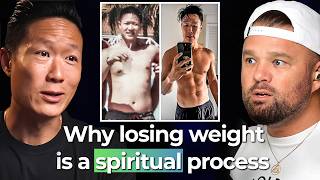
Conversation between host Josh Trent and coach Dan Go exploring weight loss beyond tactics—positioning it as a spiritual and psychological process. Key themes: food as a uniquely difficult addiction because it’s omnipresent; the need to identify root causes (generational trauma, childhood experiences) and 'peel the onion' emotionally; identity transformation as essential to long-term change (the 'upper limit problem'); practical levers such as meal timing (stop eating 3–5 hours before sleep; eat within 1–2 hours of waking), sleep optimization, nutrient optimization (vitamin D, magnesium), and bloodwork for biomarkers; Lean Body 90 program combines tactical training with a 'mental mind control' module. Dan notes family context (children aged 2 and 5) and personal recovery experiences.
Chapters
Food is probably the hardest addiction to break. Because this thing is omnipresent inside of your life. You can't stop eating food. When you start to get your body in shape, you literally will take the steps to transform your entire life. It becomes a spiritual process that almost tricks you into evolving into that next level person.
Dan Go specializes in helping entrepreneurs get lean and live longer with ease and minimal stress. There's this split second where we know what we're about to do isn't loving, is it nourishing? But yet we do it anyways. Viktor Frankl calls it the space between stimulus and response. How do you work with that space between stimulus and response?
Question I like to come back to is, what am I trying to escape when I'm doing this thing? I'm feeling bored, I'm feeling stressed. It's been a long day. I want to reward myself. And then you keep on asking yourself, okay, so why, okay, why you have to peel the onion to get to the core? Let's just say, like, you stopped the habit of binge eating at night. That habit will show up in other ways because you're going to transfer that coat to another thing, and it will still keep on doing that until you fix it.
What is a through line that you see with most clients and most people when it comes specifically to sabotage? Why do you believe that really, physical transformation is really a spiritual process in disguise?
I talked about this with the mastermind that I was just running, where there's like three, three modes of spirituality that not a lot of people take as spirituality. One of them is building a business where you learn so much about yourself, your tendencies, your weaknesses. The other one is raising a family. All the internal traumas that you were hiding and that you were numbing in the course of raising a family, they come up when you start interacting with your family, interacting with your wife, interacting with your children. And the last one is going to be health. When you get yourself healthy, you are going to find out so many ways that you have numbed yourself from the feelings that you needed to feel. And I think a lot of times, especially with the thing that we're going to be talking about today, especially with, like, food. Out of all of the addictions that anyone can have, food is probably the hardest addiction to break. And the reason I say that is because you can stop drinking alcohol, you can stop doing crack, but you can't stop eating food. And because this thing is omnipresent inside of your life, then you are going to have to go into the reasons as to why you lean into eating food as a way to cope with things, things that you don't necessarily want to deal with. And when you go through that process, it becomes a spiritual process. You heal the parts that you need to heal, and when you heal these parts, you develop a better relationship with this thing that is called food.
And really the self, capital S. I think about my own journey with addiction and food and also my addiction with pornography. And I see them now, a father of two. I know you have children. Many of our audience members have children. The addiction is really this disconnection from self or from others. At least that's the Gabor mate description. And I resonate with that because I know you had a journey with pornography. I know you've had a journey with food. When you look back personally and professionally as a father now, and also somebody that has helped so many people in the world let go, I think your team has helped like £150,000 or £200,000 be lost at this point. What is the through line when it comes to the roots of addiction and why we have such a challenge disconnecting from unhealthy food?
Because there's a benefit that we get from eating unhealthy food. And that's not something that a lot of people realize where it is literally doing something positive for us in the moment while we're eating it. And I'll use something from my own story where I had this horrible addiction to nighttime binge eating. And when it came to the nighttime, like, I. I can actually just like, control all my eating in the daytime. But when it came to night, after 8pm all bets were off, so to speak. And I usually thought that that was the reason why was because I wasn't just eating enough during the day. And even though I fixed that, I still found myself having the tendency to eat at night. So I had to dig a little bit deeper. And when I dug deep enough, it came to a situation. I'll throw this out there. I didn't have a great family life. I love my family. I love my dad. I love my mom, God bless her soul. I love my brothers, I love my sisters. But we lived in what I could consider to be one of the most dysfunctional families on the planet. And to add on top of that, I was a latchkey kid, so that means that my parents were gone for 12 to 14 hours a day trying to support us immigrants to a new land, trying to make a life for us. So I was being raised by kids that were two years older than me. And we all know what happens when kids try to raise other kids. It's almost like Lord of the Flies, so to speak. And then the bullied will get bullied. So for me, one of the ways I was able to cope with this in ways in which I was able to have control over myself and my situation, was to go into the fridge and to go into the pantry and to eat whatever was edible inside of those. Inside of those areas. And this gave me a coping mechanism. It gave me a way to cope and deal with the amount of hurt, the loneliness, the stress I felt while being in that situation. And I needed, as an adult to dig back to where this came from in the first place. I always love to go through this thing that's called the theory of constraints, where whenever we're trying to achieve anything in our lives, it's not necessarily about adding more stuff. It's actually about finding out what the obstacles are that are in our way that prevent us from actually achieving the obstacle in the first place. And part of that process, or actually the first part of that process, is saying, okay, well, this is the problem. Binge eating at night. Well, what is the root cause of this problem? And a lot of people will be like, I'm stressed. I'm this, I'm that, and whatever. But what they don't realize is that this actually came from a place. And if you don't know exactly where that place came from, if you don't have awareness of that place, then you will always fall back into the behavior. If you lack awareness, then you basically are saying that I can't change without awareness. There is. There is no change. You have to understand what the root cause is. So as I've dug back to why I have this habit in my life, especially with the theory of constraints, there's always a psychological aspect and a physical aspect. Most people try to work on the physical, but they don't really try to work on the psychological. So as I was working through this, I had to learn how to heal and learn how to forgive. Learn. I had to learn how to forgive my brothers for. For doing what any kid would do in that situation, which is like, you know, just. Just bully the person younger than them and control their lives. I had to forgive my dad. I had to forgive my mom, because they were never there. We wouldn't even see him for dinner. They'd be like, all right, just go buy McDonald's and that'll be your takeout. And we were like, yay. But at the same time, it's just like, well, our parents are now even home, like six, seven days of the week. And you have to go in and you have to heal those parts of yourself in order to move forward, in order to develop healthier habits and ultimately a better identity, a more conducive identity to the one that you want to create.
I love this man. So much of my work in the life method is about identity transformation. That's honestly the core of emotional epigenetics, the understanding of what happens not just to the piano keys of our DNA, but the chemical messengers that turn off and on genes for either, let's say, trauma or trust. And what you just touched on is both spiritual and scientific. If you look at the research, it's on the screen right now, y'.
All.
If you're watching on Spotify or YouTube, there was a cherry blossom study done, and very devout study, very lengthy study. And they found that when they would shock the male mouse and they would have that male mouse smell cherry blossoms, at the same time, that stress response, that hypervigilance to just the scent of cherry blossoms was exhibited in two generations of the offspring. Now, these offspring had not been shocked. So what does that tell us about the epigenetic transfer of not just our neural system and how it works, but also the way that we perceive threat? And I can relate to what you're saying because I used food as a drug for so long and I didn't even know that. I didn't know it. I was very unconsciously incompetent. And it wasn't until I really became a father that I started taking my health extremely seriously. I wonder for you, obviously you've done so much work before you became a father. How old are your kids now?
One is two years old, the other one is five.
So. So about six years ago, the gong of reality hit really loud for you, and it was time to really up level in ways that you didn't even know were possible. I'm sure what changed for you with all your work leading up to having children, knowing the physiology, knowing addiction cycles, understanding the psyche when it comes to letting go of weight, and why people sabotage that process. Then when you became a father, I'm sure in ways you had to learn about your own relationship to food and diet and exercise in a way that you probably didn't see coming.
There's something that's going on in my mind I'm double clicking on, which is the concept of generational curses. And these are curses that follow us from generation to generation to generation. And it's on whatever generation it's in at that very moment to fix and to heal whatever was broken in the first place. I believe, like a lot of the stuff I was going through was trying to deal with the generational anger that my parents had experienced, that the parents. Parents had experienced. So to give you context, we lived in a place in China and when communist rule came over, we were essentially vacate. We had to vacate out of that place and move to the Philippines. And this was when my dad was like, younger. And I can just imagine what, what that would be like, you know, being kid, having to move from China to the Philippines as a result of communist rule. And when he got to the Philippines and immigrated to China or immigrated to Canada, you know, it's. It's basically you're just taking the same version of yourself, but just a little bit better to this new country. So when I got to Canada and when I, and even before I started to have children, I realized that I had this internal anger. This anger was actually when. When I say anger, I will not say that it's something that is going to be a weakness. I actually do think that everything has a benefit. Everything has a pro, everything has a con. So I don't want to label something as like, I should have like healed this kind of thing.
Right.
Or I actually say that my anger was a benefit. It, it helped me achieve a lot. One of the things that I loved, especially when I was starting, you know, to become a personal trainer and to, to go from working corporate and to do something completely new 20 years ago to be a trainer. I love the fact that people were telling me that you're not going to make it, that you're not going to do this, that you can't do this while you're doing the side job, all this kind of stuff. And I was like, thank you. And. And then what I found as a result of that was I. It gave me fuel, it gave me fire, it gave me motivation. Now the downside to all that was I always looked for anger to fuel the next level of growth. So I'm like, please, like, someone tell me I can't do this. Please someone tell me that this is not possible for me. And I would always look for that motivation. You know, it's like the whole Michael Jordan thing. And then, and then that's what this person said. And it got me, you know, it got me riled up. Yeah, I was always constantly looking for that stuff. And then I had to come to a, to a point where I'm like, well, is it healthy for me to always seek out anger and spite in order to fuel the goals and the identity that I want to bring out into this world that I want to. That I want to evolve into? And a part of me was like, no, you can't lose this. You actually have to like, hold on to this because this is like, this is like good stuff. This isn't an asset. But the greater part of me said, well, you can't succeed without being angry. Do you understand that? And I did everything. So first of all, I use the gym as this conduit to control my demons and to keep them at bay and to control my mind. But the thing about demons is, is that they always come back. So when you're, when you're trying to use the gym and physical activity and like, you know, all this kind of stuff in order to kind of like heal these parts. No, no, no. They. They just make these parts go away for the why, for the. For the very short term, they will always come back. So I had to do the work. On top of that, I had to journal the reasons why I was doing this. I had to journal my feelings. I had to understand what these feelings were because, like, even right now, with our daughters, we're having my daughter name her feelings just to understand what these feelings are. I never got that right. I just like, I was like, you know, just the, the whatever part in your brain, the reptilian part of your brain is just like, well, F that, you know, F that F U S this. But I never got a chance to understand, like, how to label the emotion I was going through. And I had to relearn or actually have to learn that for the first time while I'm an adult. And yeah, I did, you know, I did things like, I did therapy. I did things like psychedelic therapy. I didn't, you know, and. And I did the whole gamut of it. But the whole thing is, is that you have to work on yourself while you are using these things in order to help you keep these demons down. And you have to understand that it's okay to not have to be angry all the time. At least from my perspective, it's okay to not have to be angry all the time in order to achieve really great things. You can actually be happy and doing it.
There's so much gold there. I think about my own journey. 2002, I was a trainer. And 2004, I had six pack. And I thought that was going to make me so happy. I was like, look, I have a six. I have a six pack. I was still fucking miserable.
It didn't work.
And then I had to look at a deeper side of me that was really connected to the fear of abandonment and the fear of abandonment that drove me to eat foods. The psychosomatic connection that I'd love to get your understanding on in a deep way. I'm sure this comes out with every client you work with in some capacity. My own journey was that I would go to the food. My dad wasn't at home, my mom would be in her room screaming. She was struggling with manic bipolar at the time. Many people in our audience can relate to this because mental health has been on the rise since the 80s. If you look at the research and the way that we sabotage ourselves, Dan. When it comes to having a goodwill and wanting to be healthy and even parents that have children, you know, when I had my children, it was an awesome wake up call of like longevity. And I started thinking in decades instead of, instead of days. Do you see a through line in your own life? In my life and your client's life, either in person and also globally, where they have the will and their will is coming from their heart, it's coming from a great place. They want to live long, they want to be healthy. But there's many things that get in the way of that. What are, what is a through line that you see with most clients and most people when it comes specifically to sabotage, sabotaging themselves, what's that all about?
It's something that I believe gay Hendrix coined the upper limit problem. And there's, there's varying levels to this. So let me. I'll bring this back. So let's just say the whole starting of the process of getting you into shape, getting you healthy, that is one situation. And then the next situation, which I would argue is even harder, is how do you actually keep the result and expand past that? So for the person who is just getting into shape, they're probably using a lot of, like, conscious thought, a lot of willpower, a lot of like, putting their nose to the grindstone, possibly getting a coach and getting them from zero to one. And that's great.
Yeah.
And even still, they're still doing tactical shit, right? If I do this, I'm going to lose weight. If I keep on exercising, I'm going to be able to lose weight. And they're, they're tying their weight loss or they're tying to their goal, to actions. And that's okay in the beginning. Right. Once they surpass that what happens that I see with a lot of clients is they run into what I call the upper limit problem. And the upper limit problem essentially comes down to whether or not they feel they deserve it. So I'll use an example from business where I always say, like, whenever I set these goals and I get and I achieve these goals, I'm like, oh, man, I should have, like, set bigger goals. I only set the goals based on the container of how I perceive myself. So we offset these glass ceilings of what we feel we deserve. And then once we hit the temperature that we. That. That will make us say, like, okay, this is too much work. How am I supposed to maintain this? What am I supposed to do? This all goes into what is called this upper limit problem, which is this idea that you're reaching a. This, this glass ceiling, this invisible ceiling of something that's going to happen that's going to break everything down. You're not going to deserve this. Regardless of whatever actions that you're going to put, let's move back into what we feel most comfortable, which is going to be our old identity. And slowly but surely what's going to happen is they're going to gain a pound here, gain a pound there, they're going to have a drink here and a drink there, and lo and behold, they may have dropped 33 pounds in the first 12 weeks. They get themselves back in half the time. And it all comes down to the idea that they think that this whole getting in shape thing is this outcome. The harsh reality is it's a lifelong process that not a lot of people are preparing themselves for. Okay, once I hit 30 pounds, I'm going to be able to keep it up. No, absolutely not. Once you hit the 30 pounds, the hard work begins. The hard work of reforming your identity. The hard work of even setting bigger, you know, goals, bigger levels of attainment for yourself. The hard work of actually making use of the body that you just created for yourself and expanding past this identity of just, like, trying to lose, like, 30 pounds. They see this thing as like, this endpoint goal, where the reality is, I like to say, what if actually this whole thing was automatic as a result of who you are as a person? And that's where the real work begins. It's the ability to see yourself as this new version of yourself. It's the ability to see the vocabulary that you're using, like, the words that you're using that are coming out of your mouth as almost like this litmus test to see whether or not I'm Actually, the person that I say that I am, I always look at vocabulary. Vocabulary, to me is like the one thing that I'm always like. I'm like pinpointing.
I do it all the time. My team is triggered by me. They're like, wait, you just corrected my language for the 15th time. So I'm with you. Language is power. NLP is power. Go ahead, go ahead.
It's spells, right? Like, we're basically placing these, like, hypnotic spells on each. On ourselves. And the more times that we say something, the more more it seeps into this, into our subconscious mind. The. The quickest. I won't say the quickest way. I hate the quickest way. But the most effective way to start going in the path of the whatever shape that you want to be in or whatever, like, type of body that you want to be in is to first change the way in which you talk to yourself. And that is probably the hardest part. It's like the mind control part. So what holds people back is looking at this whole getting in shape thing as an outcome to be achieved, as opposed to this lifelong thing that they're going to be working on probably for the rest of their life and being really excited about it. Everyone's like, oh, I have to do this, I have to do that. I'm like, no. Like, this is actually exciting stuff. And it's getting over the. The idea that all of this stuff is a chore, as opposed to these behaviors being basic hygiene. And then you also have to identify, what are these glass ceilings I'm putting on myself, right? Like, what are these things that I don't believe that I deserve? Let's put it out onto paper. And these are what we call the limiting beliefs that will hold you back even if you hit the goal. And I'll. And I'll close this off by. By using this story where it's. It's an unfortunate, sad story where this guy got. He almost like Icarus. He went too close to the sun. So we. We worked with this guy, super high driven. He was like, okay, I'm going to do whatever you say, and blah, blah, blah, blah, blah. And we actually lost. Actually lost, I think 36 pounds in 12 weeks. And I kept on telling him, you know, we actually dropped like, his visceral fat by like 60%. And I kept on telling him, I was like, this is. This is what's going to happen. You have to be aware of this and you have to just actually start doing the work to the mental work that's going to get you to the point where you get to the goal and you feel like this is normal for you. But, you know, he was. He just thought of things in like a tactical way. And then lo and behold, like one. One missed call led to. Multiple missed calls led to. I, like, I've gone back so far. Like, I don't even want to show my face to Dan anymore. And then he just basically just self sabotaged himself, even though he was on this like, incredible streak of momentum. He got a promotion at work, he got like a raise. His family life was getting a lot better. And then all this stuff was almost like this red flag warning that he should actually stop doing this. He. Because it wasn't within his realm of reality.
There's so much there. I want to go all the way back to when you said generational curses. And I'm going to connect it to emotional epigenetics and I'm going to bring up identity enmeshment, otherwise known as stagnation of safety. And so I think about the blessings that you got from just having the awareness to look at where your parents came from and how you came to this country and how that informed you for a while by so much anger. But then there was a point where anger didn't work anymore. So you went, you yourself went through an identity transformation. You realize that what fueled you once cannot continue the rocket ship anymore. And it sounds like that's exactly what your client went through when he had gotten to his goal and who knows what emotional fuel he used to have his rocket go. But then the old patterns, the emotional patterns in that I describe in emotional epigenetics as inherited beliefs, unconscious beliefs, which you call the stories and putting them out on paper, the emotional patterns, which I believe if you look at the latch theory from Michael Edward Johnson in the Bay Area, he actually believes that below the fascia and the smooth muscle tissue that that's where Bessel van der Kolk was actually describing that the body truly keeps the score. It's a physical latch. That's a emotional afferent, efferent message to the brain. That's for another podcast. What I'm saying is the. The wounding that our parents give to us, we don't have to carry on, but we have to have awareness and education as to how to change those. I feel like that's at the core of what you do. That's why I said you're a Trojan horse. You get people into their body. But really this is a spiritual game. And in my opinion, I'm Curious how you feel. There is no greater spiritual warfare than playfulness and curiosity. If I bring playfulness and curiosity to the weight loss game, which is really the healthy me game, because then weight loss is a byproduct of that. Nothing can stand in front of it. So do you believe, Dan, that that really when it comes to weight loss or the weight loss industry, the reason why there's so many people, I don't know what the percentages are. I think it's in the 90, 90 percentile that people regain weight for the percentage of people that keep the weight off. They've done such deep emotional inventory that they've actually gone through an identity transformation and they've stopped their generational curses.
I believe there comes a point where they decide to be the person that is not who they are anymore. And there is a decision that is made. And whether or not they make it consciously or unconsciously, the people who stick it, they have to change their identity. It is, it is, it is a non negotiable. And the reason I say that is because this is the unfortunate harsh part about getting in shape. The fact that you shed your old skin. You have to turn into a different person. You have to have a different way of looking at things that are not going to be comfortable. You have to get rid of some friends because these people will not serve you anymore. I actually call a lot of people, like when they keep their friends around them, they enable the behaviors that make them weak. And a lot of people can't deal with that. They're like, I love my friends and all this kind of stuff. There is going to be a lonely period when you are getting in shape that no one will understand, no one will understand you. And you have to have the courage to go through that and to be able to create these new connections with people who actually have the same values as you. And when I say all these things, it's uncomfortable because we optimize for comfort. We optimize for doing the thing that's going to give us the result in the most comfortable way. When the reality is that that is not what growth is, is the growth into the making the hard decisions that are gonna allow you to struggle in the beginning but turn out easier to be in the end. So when we're, when we're thinking about this whole stuff and even when it comes down to the science of sustainability and the science of the evidence based things that are needed when it comes to keeping the weight off, identity is the core piece. And then at some point in time we have to get away from doing things because they're making us healthy. But having. We have to go into the idea that we are healthy people, therefore we do these things. And this is the reason why people gain the weight back, because again, they see it as the end point as opposed to the constant journey that is going to happen. And you know this as well. Even though you got to the six pack, you probably had the six pack. And then afterwards you're like, oh, what the fuck? And then probably, maybe even gain the weight back a little bit.
Oh, yeah.
And then they're like, oh, I want to get back there. Blah, blah, blah, blah, blah. And then we don't understand that there is all these, like, little journeys within the journey. And whenever you reach the goal that you set for yourself, you don't realize that you're just at the summit of another mountain. And something I tell my clients all of the time is that you have to actually set goals past the initial goal that you set for yourself. It's almost like you have to. You almost through the goal setting and through the achievement of creating this evolved version of yourself, you actually have to set these goals that are way past this original goal. By. It's like, okay, so you lost 30 pounds. Okay, cool. What's the next thing we're going to raise? VO2 max. We're going to bring cardio into. Into our habits. We're going to gain. We're going to be a person that, like, goes into the gym and gets stronger, gains muscle. What is it? What's it going to be? We're going to optimize our blood work, whatever it is, but there has to be something else. And this is. This is like almost like a mental trick that almost tricks you into evolving into that next level person.
Yes. Yes.
Yeah.
Wow, that's so good. I think about the suppression. If we look at psychology, there's repression and suppression, unconscious and conscious. When someone has unconscious suppression, it's really challenging for them to transform their identity. I can think of so many moments when I was using porn or even when I would, like, eat ice cream when I was a trainer, by the way. And there would be this moment where I was about to eat the ice cream or I was about to eat the porn. You know, Viktor Frankl calls it the space between stimulus and response. And I would be in that space and there would be. And we all have this, Dan. We all. I feel like we all have. There's this split second where we know what we're about to do isn't Loving isn't nourishing, but yet we do it anyways. And if we all could just be curious about this split second, really underlining the word curious. That's where the deepest work is. It's not, it's not when we eat the ice cream or when we watch the porn or when we overwork or when we over shop. I've struggled with credit card debt as I know you have as well. And earlier in my life I was 80k in debt. My money, my. The porn, sexuality, health, it's all coming from the same source, which is me, the self. How do you work with, how have you worked with personally? That space between stimulus and response and how have you coached yourself really? What we're talking about here is self love. This is a self love process. And then how do you make that scalable for others? In that moment before the choice, my.
Question I like to come back to is what am I trying to escape when I'm doing this thing? So let's just call this like, you know, it's 8pm at night and the beer is staring at me, but I don't want to drink, you know, past a certain time, but you know, staring at me, whatever. And I want to have the beer, right? What exactly am I trying to escape? What is, what is inside of me that I don't want to face up to? And when you have that question, you, you end up unconsciously or, or consciously trying to answer it. Okay, well I'm just, I'm feeling bored, I'm feeling stressed, it's been a long day, I want to reward myself. And then you keep on asking yourself, okay, so why? Okay why? Okay why? And it's almost like I always look at getting to. The real result is the ability to peel the onion and allowing yourself to cry while you're doing it. So as you're peeling this onion, you're just getting deeper and deeper. Your tears are getting like more harder and harder. But then you have to peel the onion to get to the core for. Yeah, and those are what these questions are for. So even still, let's just say like, you know, you stopped the habit of binge eating at night, right? That habit will show up in other ways because you're going to, you're going to transfer that cope to another thing. So we could say like, okay, well I stopped binging at night. Now I just can't stop being on my phone. Not you know, or I, I can't stop watching porn. It just jumps from one place to another and it will still Keep on doing that until you fix it.
You just touched the ultimate truth. If anybody gets anything from this podcast, play that back and listen to it again. Energy cannot be created or destroyed, right? Basic law of science, only transmuted. So if I'm. It's almost like holding. I'm sure you've heard this analogy. It's like holding a beach ball underwater. Eventually it's going to pop up. It's about releasing the pressure. It's about releasing what Dr. Hawkins calls the emotional scale, right? Going from a safety paradigm to logic and reason, and then onwards to love. But let's be honest, Dan, our society, especially here in North America, definitely in the UK as well. Australia, just major continents, it's about production, and it's about producing as much as you possibly can so that you can buy things to impress people you don't really care about. To feed your ego to feel temporarily pseudo good, pseudo fulfilled, which then puts you into credit card debt and emotional debt. And then we wonder why we don't have the energy to let go of the weight that we ourselves put onto us.
This is the key part of even the emotional aspect of things. It's this inability to sit with ourselves while we're feeling that feeling, essential to what David Hawkins talks about in his book Letting Go, where we don't even give ourselves the space to sit with the emotion itself. Oh, I'm feeling bored. Can I allow myself to feel that? What exactly does that feel like? Oh, I'm feeling anxious. I just want to eat this food to not even think about what I'm feeling. What we have to do is we actually have to, like, sit with that feeling and we have to, like, almost, like, be friends with it as it is going on. Once you dissipate the feeling and it's a process and you can look through. Actually, David Hawkins, he does an entire book on letting go, but the process is only like maybe a paragraph, right? And we have to allow ourselves to feel what we want, what is coming up. The more that we don't allow ourselves to feel what is coming up, we create emotional debt. This emotional debt allows us to go into coping mechanisms in order to express this debt. The more that we have, the more that we carry this debt, the more that we're going to be. We can achieve whatever we want, but the more we will lean into other behaviors which will be counteractive to the person that we're trying to become. So we'll have to allow ourselves to one be sitting, allow ourselves to sit with this uncomfortable feeling. Where is it coming from to develop mindfulness, to be friends with it, to allow it to dissipate through our entire bodies. Then afterwards, that's where the healing comes from. So exactly what, exactly where exactly does this inability to sit with myself come from? Why am I not comfortable with myself? Why? Why? Why is that? Why is that? And why is that? And then it just leads you to awareness. And then from awareness, you can do what you need to do in terms of, like, the healing. And. And most of the times when we see people leaning into behaviors, what they're doing is they are just numbing themselves from the things that they want to feel as opposed to what the counterintuitive thing is, is that you actually have to feel the uncomfortableness of that emotion in order to surpass it and transcend it.
So good. I remember I was listening to an audiobook from Hawkins, and he said that for an entire weekend, he sat on a bed and just allowed himself to feel. Whether you call it generational curse or an ifs, it's called the legacy burden. He allowed it to move through his system, and it took him an entire weekend of just releasing. And like you said, it's only a paragraph in life. I wonder how you feel about this from a maturity standpoint, from a wisdom standpoint, it seems like the levers are really easy to flick, but the person that we get to become to have the courage to flick these levers is really the game. It's not about the strategy when it comes to letting go of weight. It's not like, honestly, people can work with you. And we're going to talk about an incredible program for the men. Specifically, it's called Lean Body 90. So stay tuned. But honestly, like, your life can radically transform in 90 days if you work on this first. I'm pointing to my head for y' all in the car. If you're watching us, think of your life as this circle. In the circle, there's all the parts of you that you've carried with you up to that time. You cannot form a new circle unless there's been an inventory of emotions and self and beliefs and emotional patterns and even the legacy burdens as well. Is there a point where human beings just decide from pain that enough is enough? Or can that external motivation come from being a parent? Which one do you feel is stronger? Or does it even matter?
I think everyone has their own journey when it comes to healing these various parts to themselves. And I like to call it activation energy. So some people need the activation energy of being at rock bottom like me losing my mom and being made fun of and bullied when I was, like, in public school, in high school, and just coming to a point where I'm like, f this, I'm gonna change this or I'm gonna die. Like, literally, like, some people need to go to rock bottom no matter what you tell them, no matter what you say. And I just pray that people don't have to let themselves get to that point. But sometimes it just has to happen. Or you can have a significant life event transform you, one of which is having children so you understand the way in which you were raised, in the environment of which you were raised. And if we are being conscious human beings and wanting to do the best for our children, we look back at that and be like, I don't want my kid to go through that. But it's not going to be through tactics. It's not going to be through, oh, yeah, you should do this or do that with your children and always read to them and whatever. Like. Like, it has nothing to do with these actions. It has everything to do with you actually healing the parts of yourself first. And then that's where the beginning part stem from. And going back to what we were talking about before. You know, there was this anger, this generational anger that was inside of my family, and it was actually during this time I was interacting with. With my oldest daughter, and it came to a point where I was seeing myself as I was interacting with her, and I just like. And I was. And she. She did or said something, and it's. It's triggered, like, this part of me. And then there was like this flash of intense anger. And I would like to say that I'm like this perfect parent. And I didn't. I didn't lean into that. No, I. I did. And then I look back after that, and I'm just like, oh, my. This. I am recreating the exact same situation that I was being raised in right now. And that was my line of demarcation where I was just like, it wasn't even big. Like, it was just like, of course I rationalized to myself now, but it's like, it wasn't even like, you know, like, I got beat. You probably. I don't know, I got beat as a kid, probably. Like, people in our generation understand what that's like. And that was a normal thing back then. It wasn't even like that. It's almost like you just raise your voice. But at the same time, I realized at that moment in time, if I keep on Leaning into this curse or this, or this behavior, this generational type of behavior. How is my relationship to my daughters going to be or to my daughter going to be when she's 19, 20, 25, whatever. Like, for me, I didn't even want to chill with my parents anymore. I, I wanted to hang with my friends because they were my family, because I only got respect and love when I hung with them as opposed to when I interacted with my parents and all the stuff that they did, you know, as kids, when I was a kid and I almost had to like fast forward myself like 10 years down the line. Like, what happens if I keep on leaning into this type of behavior? And it was at that point in time I was just like, no, like it. This actually stops with me right now. I have to find a way to understand how life can be joyful, how life can be happy, how anger is still a valid emotion, but it doesn't have to be the driver of doing all these things that you think that it can do. And it was at that point I was like, well, I have to do something to kill this. And it wasn't my necessarily my rock bottom, but it was my projection of like 10 years that really got me to change.
It was seeing a rock bottom before it hit rock, which is honestly even more wise than maybe you can get from hitting rock bottom. I've asked many people that are some of the largest voices in the world on the show in 10 years this question, and I know my version of the answer, but I'm curious of yours. Do we have to experience the deepest, deepest levels of pain in order for transformation to be actualized?
Yes, you can build off of wins and you can build momentum off of win winning and off of, off of achievement. But the one thing that I've seen in my own life is change comes from having the requisite amount of pain, whether it be future paced or present paced, to be enough activation energy for you to want to change in the first place. You can manufacture that change by exporting yourself 10 years down the line. If I keep doing these behaviors, I what exactly is going to happen to me? How exactly is my relationship going to be to X or whatever it is and then make it really painful for yourself? Or you can feel that pain in the moment of time. But through pain comes transformation, through struggle comes transformation. And for me, I don't want to always connect the idea of pain to transformation, but even the process of transformation is painful. And I think the pain allows you to say, hey, I'm willing To I'm willing to go through anything in which to make this area of my life better as a result of it. Now, are there some people out there that don't need pain to, to make these transformations in their life? Yeah, absolutely. They are very enlightened people. They're supremely enlightened.
Yeah.
But, but for the vast majority of us, for, for us mortals, so to speak, pain is actually the signal for us to make the change or not to make the change. And that is whether or not you allow yourselves to feel a lot of pain, whether future pacing yourself or you're already feeling that pain, that should be the signal as opposed to feeling the pain and saying, well, I have nothing to change in the first place.
It's very profound because I know for sure. I trained about 10,000 hours in gyms, and the bulk of my revenue didn't come from giving them a perfect workout with perfect posture and mastering the strength stabilization curve and getting their VO2 max up. None of that really mattered. You know, what mattered to them is that I knew how to have a great conversation and connect to them and I knew how to touch their pain. I knew how to relieve their pain they were having with their husband, with their work. I became a therapist, which honestly made me a great podcaster, man. So I, I love my 10 years of personal training. You know, that's what sold sessions, right? Being, being able to continue a session on. And I know you know what I'm talking about. So. So really at the core of this, we're talking about mental, physical, emotional, spiritual. In the center of this, we have vitality. And this is the model that's on the screen right now that, that we teach in the life method. I'm curious in your teaching specifically for men. This is on the screen right now as well. Joshtrent.com forward slash link. Lean Body 90. This is your premier program for not just high performers, but people that have this future pace of high performing as well. How much of the life force vitality do you focus on and how much of the mental aspect do you focus on in this program? Can you just give people a high level and then we can dive into the mechanics?
It's. It's my trojan horse. I knew you're gonna say that. Yeah, of course, of course.
Yeah.
So it's, it's literally my trojan horse to be to, to say to people, hey, what's up? 90 minutes a week. We're going to get your ass in shape. I'm going to teach you all the systems that we have inside of our business that we use to help our clients transform. And the Trojan horses is like a big part of that is the mental mind control module. And the mental mind control module is like two parts. One of them is going to be emotional, one of them is going to be the ability to actually trans and to, to visualize and to ingrain into your subconscious new identity that you want to bring in. But a big part of that is the emotional part. So, so we want to get people in through the tactical stuff and this is the result you're going to get and yada yada, and you will. But the most important part is going to be the mental side of things. You cannot transform your body without transforming your mind, at least for the long term. You can do it, but you will not be able to keep it if you do not transform your mind. And you must literally become a different person. So for The Lean Body 90, yes, it's a, it's a proprietary IP. You know, we have great workouts, we have our nutrition plan, you know, we talk about circadian rhythms, all this kind of stuff. But the, the true aspect or the true power of that program is actually in the mental training that we have inside of there. And you cannot again, you, you do not want to train the body without training the mind. You do not want to train anything or make any kind of achievement without entraining the mind as you are doing it.
It's really good because I think the one thing that I personally struggled with when I looked back was my mindset around when it's good for me to eat and when it's more deleterious for me to eat. And I actually love that you mentioned that meal timing. Somebody's life could change literally overnight. I'd love for you to go into this. Literally, your life could change overnight if you just promised yourself and committed to eating dinner at 6pm it's on the screen right now, a clip of you talking about this. It's called the Han dynasty wisdom of organ clocks. Can you go into this? This is a really fascinating part. When we look at circadian rhythm.
So, so when people think about the whole aspect of meal timing, for a lot of like evidence based professionals, they throw it out the window. Oh, that's not going to help you burn fat faster than like, you know, going in a calorie deficit. I get it. Right, I get it. But what they're missing is the fact that your body is a machine. And the more that we actually understand how this machine works, the more that we understand how this like internal clock inside of our bodies work, the more we attune ourselves to what is natural to our bodies. So when I think about the circadian meal timing, I, I, I say this so many times, it doesn't get the amount of attention that I think it should, but I think it's one of the most important aspects of someone's nutrition, which is actually to create the nutrition architecture of how you are going to eat and also what you are going to eat as well. So we all, we all hear about kind of like I, I think the most important part to this whole like circadian or eating to your circadian rhythm is like number one, when do you decide to stop eating? Because that is the problem that a lot of people are facing up right now. They give themselves like the, the abundance of like options to eat whenever they want. But in this modern food environment, and also with our modern like, let's just say like our biology, our circadian rhythms, there is a specific time to stop eating which is going to be around three to five hours before you go to sleep. And I don't do that to lose weight. That's, that's what a lot of people say is, oh, you're just doing that because you want to lose weight. No, no, no, no, no, no, this is not what I'm doing for I actually do it because there is a downstream domino effect. When do you do this to your body that people don't understand? So when you stop eating three to five hours before going to sleep, it increases sleep quality by decreasing the amount of times you wake up in the night when you have great sleep. What's going to happen is that there's going to be a downstream consequence of you being able to regulate your appetite hormones and your hunger hormones because your body is working as it should and you're eating when you should. And also you are stopping yourself from eating when the time of willpower is going to wane the most, which is going to be at night. And then a lot of people are like, well you should skip breakfast and do Stewart intermittent fasting. I'm just like, yo. I think that is probably the worst thing, especially for a high stressed individual because not eating is a stress. People don't realize that. And also when we have a meal set up at least one to two hours upon waking, what happens as a result is that helps, especially if it's high protein, that helps us regulate our hunger at the end of the day. And everyone's like, I, oh, I'm just not hungry when I'm just not hungry in the morning. And I'm like, you're not supposed to eat when you're hungry. You're actually supposed to eat before the hunger pangs come. Because when you're hungry, that's already too late. You already gave. Your body's already like, I'm starving. I'm, let's go eat. I'm willing to eat anything. And even when you are done eating, you are still going to be hungry after that. I actually say that you should train your hunger as opposed to letting your hunger dictate when you eat. So when, when someone has the meal at least three to five hours before go to sleep, when someone has the meal one to two hours upon waking, they put a meal, middle meal in there, maybe like a snack in between or whatever. This creates this architecture of eating that you can take with you anywhere. Especially because I work with entrepreneurs and I work with a lot of, like these, a lot of these founders who have to travel everywhere. I actually say the most important part to your eating is actually maintaining the architecture wherever you are in the world. So let's just say, like, you know, you're in Austin and you know, you eat at 8pm, 12pm and 6pm in Austin. You go to London, you are going to eat at London time at 8am, 12pm and 6pm and that is going to attune yourself to the new time zone that you are currently in and is also going to control your hunger. So for me, it's like the attunement of our nat to our natural rhythms. It makes the process of dieting and maintaining or actually sticking to a diet so much easier because you are literally entraining your body on when it's supposed to eat and when it's not supposed to eat. And also, you're improving sleep quality as a result of making sure that you're not munching on something right before you have to go.
I love the architecture because when a human being commits to, okay, I'm going to stop eating at six, then when they have the cravings or they have the, you know, stimulus and response, come, come up at 9pm it's actually a beautiful space to be curious. It's such a gift. I know, I know. In the moment, y', all, it doesn't feel like that. Believe me. I'm not trying to say this is easy, right? That's why Dan has support. That's why you've created your program. That's why we're all doing what we're doing. Because if it was so easy. Everybody would just do it, right. That's why we need support. We do it in community. But I wonder how you feel about this. You know the, the Han dynasty and the wisdom that they had 2,000 plus years ago. You talked about this in your post where the organs actually had more fuel in the morning and then in the evening. These, the spleen and stomach specifically were declined in their efficiency. Can you talk a little bit about that?
So for me, this comes down to the timing of digestion. And our digestive tract has a clock, our liver has a clock, our heart has a clock, our hormones have clocks. So when we are thinking of like this nutrition architecture, what we want to do is we want to be able to facilitate as much of this rhythm to our organ clocks as possible. And I always go back to the digestive rhythm because when people are trying to digest a heavy meal right before they're going to bed, it's counterintuitive to how the body wants to perform when they're going to bed. Is called rest and digest for a reason. So if you're having like a, you had like 500 calories in the breakfast, you have 500 calories at lunch, and then you have like 1500 calories at dinner, what's going to happen is that your body's still going to be working even though you're trying to rest by digesting food. Digestion takes energy. And when we're getting ourselves to lean down into the end of the day, we actually want to be taking in less calories as our meals get into the later parts of the day. And this is going to allow us, our digestive tract to take a break, to allow ourselves to sleep. And then when we attune ourselves to this particular timing, to these particular clocks, what I find with a lot of people is they actually come back to me and say they drop like 40 pounds. They're like, this is actually easier than I thought it was because they're just.
So habituated to eat past six.
Exactly. So they say it's easier because the whole thing about losing weight is the fact that you have hunger. And a lot of times when people feel hunger, they feel uncomfortable, they have to eat something. But what if you actually allowed yourself to be hungry? What if you actually were friends with that hunger? Especially like during the times that you are weakest, which are for a lot of people, usually at night or on the weekends. And instead of like saying, oh my God, I'm so hungry, I gotta eat, it's like, what if you actually like stopped felt that hunger and sat with it and then allowed yourself to feel it until it dissipates. Because usually that hunger is not going to be there forever. It's actually going to go away after about maybe, let's call it like five to 10 minutes. What is going to happen is that you are going to realize that you don't need to eat when you're hungry. And actually most times when you think you're hungry, you're probably bored, anxious. We were talking about this just previously where it's like, it's usually like this coping mechanism, it's an emotion, you're not actually hungry. So it's gained this reattunment back to this relationship that we have with our body. And a lot of people don't understand how our body works in the first place. They maybe understand the anatomy. Here's our chest, here's our heart, here's our liver, here's our spleen, here's our kidney. But they actually don't understand that we are literal walking clocks. And the more that we can attune ourselves to be in alignment with these clocks, the more life becomes so much easier as a result.
This is so good. We had Dr. Kirk Parsley on the podcast a few months back and he's a Navy Special Warfare sleep doctor and he talked about the pressurization system that Huberman and other people have talked about too. But it was this superchismatic nucleus and it was a sleep pressure that's created upon wake and dark light cycles. And what's so fascinating to me that blew my mind and I'm like, I've been in this health world for like 20 years and I, I, I had heard about this. So he said that when you are sleep deprived and this could come from eating at 9 o' clock or it could from come from having too much caffeine, whatever it is. And, and I know you go into this in your program too because it's a super low hanging fruit. When the sleep pressure's off and we get a really poor night's sleep, it can be upwards to like 250 to 500 calories more that you eat the very next day because there's an increased ghrelin signal. The ghrelin hormone is released because of the exhaustion. When I heard that, I'm like, wait a minute, 3, 500 divided by 5. I can gain a pound a week just from shitty sleep. That's when I knew that sleep was not to be messed with. Can you go into that?
Whenever I think about the reasons why people eat, especially when they don't want to. It comes down to how energetic are they or how exhausted are they. It comes down to their mood, right? If they have regulation of their mood, then they're probably going to eat less because their mood is going to be regulated. They're not going to feel as anxious, they're not going to feel as depressed, like whatever it is, and then it goes to the down or actually the aspect of sleep being the lead domino. So if you actually just get good quality sleep, and for me, good quality sleep means quantity and quality. So it's like, how many hours is sufficient for you? I remember I was working with one client and we literally just took him from six to seven hours of sleep and then he was just like, I just don't feel hungry anymore. I just, I just don't feel hungry. I feel so much more energetic. Just six to seven hours of just, just one more hour of sleep and everything for me comes downstream of sleep, whether or not people want to realize it or whether or not people want to admit it or not. Yes, we talked about the emotional stuff and all this, but all that stuff is handled so much easier when you have a great night of sleep. So whenever I think about the sleep, we talk about quantity, but also we have to think about quality. Now I'm not one to say that you should be wearing a whoop band or an OURA ring for the rest of your life or an Apple watch or whatever. I really think that there's this over reliance on wearable technology. But I do know that if you just track your sleep for about six to eight months and you throw things up at the wall to see whether or not they stick and what happens to your sleep score afterwards, within that six to eight month period, you will actually find all the things that will work for you and all the things that won't. It will give you a level of awareness and it will also inform you what makes great sleep and that gives you enough time to actually make a great sleep routine in the first place. So for me, I always thought like, oh, you just need to get ars and all this kind of stuff. It was like, no, there's actually like REM sleep, there's deep sleep, there's latency, there is a heart rate recovery, there's like all these other numbers and all these other factors that lead to having better quality sleep, which will then affect your hunger hormones. It'll actually affect your testosterone and also estrogen as well. But also for a lot of people who have trouble with Eating it will affect kind of like their mood, it's going to affect their energy. And what we talked about before is like a lot of times when people eat, it's not because they're hungry, it's actually because they're feeling something. So we have to actually use our sleep to help us regulate these feelings. And by, by being high energy and having enough sleep, it's going to give us a better chance of doing that as opposed to being sleep deprived.
How deep do you go maybe with like the super high tier clientele into blood work and hormone balancing and biomarkers and testing?
We, we have them take their blood work and we go and try it and we do our best to, to relay like what exactly is happening. The things that we're essentially looking for is going to be their hormone regulation, their inflammation and also their nutrient intake. So it's like I found for like looking at hundreds of of our clients blood work, like vitamin D3 because we're all sitting inside like 85% of like my clients that come to me are like deficient in vitamin D3 and that's huge. Like vitamin D3 to me is like anabolic. It's, it's, it regulates your mood, it helps you burn more fat and it just makes you feel better, right? It makes you more, it makes you more energetic. Also we're looking at like how much magnesium they have in their body. I think like one of the most like game changing nutrients that about like 70 of the clients that we work with that we see them being deficient in is magnesium. So it's like just by shoring up these nutrients, not necessarily through like a multivitamin or whatever, but actually like knowing which nutrients were missing and actually shoring those up. That's actually one of like the best ways to optimize your body when it comes to like this blood work stuff. And also like you can look really healthy in the, you can look really healthy. Like I can, I can look like I'm 15 body fat. You can look like you're super fit and jacked and all this kind of stuff. But what's going to happen is, is that underneath the surface the blood work is going to tell you exactly how healthy you are. So I know people that are at 15 body fat that have high elevated HbA1c and they're almost like pre diabetic, right? So, so blood work actually tells us what the real story is. It's not enough to just like look healthy for us. We want to actually be healthy. And that's what blood work does and for. For any client that, like, works with us, we always, like, we always tell them, like, this is an option for you. Go get this through. Like, you know, we work with a couple of people like Cy Fox or Function Health or Superpower, but we want comprehensive blood work to actually inform what we should be taking in and what we should not be doing as well.
I love it. My go to is Jevoti. We had them on the show. They're just incredible. They actually come to your house, they draw your blood. That's on the screen right now as well. We're just giving y' all the golden treasure chest today. Dan, this has been so good. I think about. I can't let you go unless we go into my favorite part of, honestly, my life and my work here. And that is the intuition versus the instinct. I think when we look at the gut brain axis and if our gut microbiome is in dysbiosis, how much that truly scientifically affects the way that the brain connects to the gut and vice versa. So I look at the really overweight or inflammation being something that can dampen one's intuition, and then we're just driving the car. As an instinctual being, we're just reactive to life instead of responsive. Can you talk about the way that too much lipids, especially visceral fat, can dampen our intuition, can turn down the volume of our intuition when we see.
Someone who has a large belly? And this has actually been something that I posted way early in my social media career and got flamed for, because when I started my social media career, it was in the throes of body positivity and everyone was like, okay, you can be obese and still be healthy and all this kind of stuff. And if you said anything otherwise to. The fact is, like, you are going to try, like, people are going to try to cancel you.
I'm so glad that's done. I feel like that's over now, don't you?
Yeah, yeah. It's good riddance. Yeah. We're on the other side of the spectrum right now, unfortunately. Fortunately. Fortunately. Unfortunately. But. But when it comes to belly fat, we know that it takes away blood flow to the brain. That. That's what we know. That's what. That's what evidence is telling us. But also, I look at food as code and we are just big computers. Like, I. I don't want to. I don't want to, like, reduce us down to the fact that we're just machines, but literally, like the human body to Me is the most advanced piece of machinery on the freaking planet. I don't care what anyone says about AI. It's like, no, the human body is like so complex. It works in such a amazing way. And we don't understand an iota of like how our body actually, like how our actual body works or even how our brain works. Right now we're just like scratching the surface. So when we look at these foods that we're eating, especially with these nutrients that we're putting into our bodies, these things are informing our brain of how to act, of what to do. It can actually turn us from being into a, what you call like this intuitive state where I actually am in tune with myself. I have this, this awareness of myself, of the things around me. I am this conduit for whatever messages that brain or subconscious or whatever you want to call it, like something higher that wants to download into you. And when you don't have this, let's just say, let's just call it when you have too much belly fat, when you have too much visceral fat, all this becomes a blockage. So you want to eat foods that are going to inform the code inside of your body to work the way it's supposed to work. And obviously we talking about like, you know, we could talk about probiotic, prebiotic rich foods, all this kind of stuff. Well, it's like whole foods, fiber, protein, single ingredient stuff, all that kind of stuff. Right. And the more, the more that we can use these foods to inform the code and also to get ourselves to be what is called metabolically healthy. Healthy. To me it's more like body composition and, and kind of like this combination of like body composition and optimized blood work. But I like to focus more so on the body composition side because that's, that's a lot more real for a lot of people having a body composition of anywhere between like say 12 to 19%, you are metabolically healthy. Unfortunately, only like 12% of the population is metabolically healthy. And we're seeing this a lot with like social media as well, where if you are not healthy, you are going to be so reactive to the things that you are seeing online. And it is going to, basically you are at the throes of whatever content people are going to be throwing at you if you don't have this connection with your body. So I like to say that you can actually change the code in your body. You can change the program, you can change the source code by changing the foods. And I do believe that there's a no. There's this girl, Julia Ruckledge, where she did this experiment and it's actually a TED talk that people can see on, on YouTube where they gave. They gave these kids, I believe it was like a multivitamin or something like that. And they gave the other kids like a placebo. They didn't see anything. They actually found that their mental health improved significantly. Depressive scores improved significantly. Anxiety went down just by having the requisite nutrients inside of their bodies. So what you. It's kind of like this whole thing where it's like you are what you eat. That's true. I also like to say you are when you eat as well. And when we combine these two things together, we align ourselves with our circadian clocks. We also put the right types of foods into our bodies or the ones that will give us like the best code. Then what's going to happen is that our brains are going to open up to new possibilities, new realities. And the only reason I can say this is because, number one, I've seen seen it in myself, I've seen it in my clients. When you start to get your body in shape, you literally will take the steps to transform your entire life. Like, I think you said you were like 80 grand in. In debt. Like, for me, I was. I was significantly in credit card debt, right? When I started to like, exercise, the first thing that happened was I was like, okay, well I have all this debt right now. I think I should pay it off, right?
I don't.
Nothing worked for me before, but exercising was like, okay, well if I can control this and I'm feeling really good as a result of this and whatever, then how about I fix this part of my life too and then it becomes this virtuous cycle, right? It's like, you fix this, keep on getting. You begin better shape and you fix that. Then it's almost like you're using your body as this conduit for more success, more joy, more fulfillment. And you can't necessarily do that if you are always hating your body or if your body is working against you, unfortunately.
I love the layers that led us to the closing of this conversation. It's been one of my favorites.
Man.
I already knew it was because we had a call and you said something a few months ago when we first met. And it really touched my heart. And it goes to what you're describing as the intuition and also the connection between belly fat and brain function, which I was not aware of until now. You had said you were speaking with your daughter and she came up to you and she said, you know, daddy, does this dress make me look beautiful? And you said, baby, you were beautiful before you put the dress on. And this. This wonderful moment that you shared with me, I thought, okay, Dan is a father. He's breaking generational curses. He's learning how to really be in the moment. And I believe that if we can be in the moment, it's one thing to say it, it's another thing to actually earn it through all the different pieces we've talked about today that try to, when they're out of alignment, rob us from that moment. And so I just want to say thank you, man, for being you, for being real, for being a father, for helping so many people, for teaching us how to essentially come back home and let go of all these things, distractions, and honestly, lies that we've been trained to believe from society. I wonder, in closing, if you could just share your wisdom on this question. I haven't asked this for maybe 50 to 100 episodes, but it feels perfect. Now, if you were to wave a magic wand for yourself and all beings, what do you believe wellness would be? In other words, how do you define wellness in your life?
Wellness is having a healthy, loving relationship with yourself. When we have and cultivate this relationship with ourselves, what's going to happen as a result is we are going to do things that show love to ourselves. We're going to do things that. That. That prove to ourselves that we actually love who we are. And the more that you love yourself, it's not about, like, okay, well, I love myself. I'm gonna go to the spa. I'm gonna get a massage. I'm gonna go watch Netflix. That has nothing to do with that. Like, loving yourself means taking care of yourself. If I love my car, I'm gonna clean it, I'm gonna detail it. I'm going to give it some rims, maybe. I don't know, like, I'm. Maybe soup it up a little bit. But I'm. I'm going to take care of that car. Right? Yeah. Yeah. And the same thing goes with ourselves. Like, when we express love for ourselves, we do things that would express that love that show that we love that. That. That being. And those things are going to be, again, doing these physical things for ourselves, leaning into doing hard things, all that kind of stuff. But also it's to allow ourselves to have the stillness to sit with ourselves and to see what's going on and to see what we are trying to tell ourselves without numbing. And then that to me, when we have this great relationship with ourself that outlines and that that goes and spreads into everything else that you do. So to me, that's what ultimate health and wellness is.
I'm really glad we got connected. We got connected through a band of brothers, essentially a mastermind that we're in. And it's this through line of connection that I heard in your description of wellness, which is actually nourishing and loving the self. So I'm fully aligned with what you're doing, y'. All. It's on the screen right now. Joshtrent.com leanbody90 thank you for the love you gave everyone. Half off, which, you know, it's not easy to take all this wisdom and stuff it into something so digestible. The code is Josh50. If you head over to joshtrend.com leanbody90 Dan, go. Thank you for being my guest today, man. So appreciate it.
Thank you, brother. I appreciate you having me on. This conversation that we had was so fun and also so revealing as well. I have not even thought of some of the things that we talked about until you've prompted it out like the great man that you are. So I appreciate you. This is almost therapeutic for myself. It was great.
Thank you. Me too. That's why I do it. All right, y' all share this podcast with somebody that's suffering, somebody that's carrying so much weight and they're literally killing themselves that you want to stick around longer. So until Dan and I see you on another podcast, we're both wishing you love wellness, but most importantly, peace and power. You cannot have power unless it comes from peace. We'll talk with you soon.
It.
More from Josh






Your child's future start before pregnancy... and even before conception! #podcast

MD Reveals: Your Healing Creates Your Child's Reality (The Souls Coming In Need Strong Bodies)



