What is Kava? And Can It Help Your Mental Health?
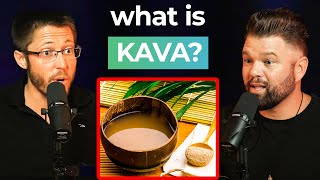
Interview (Josh Trent with Cameron George) about kava — what it is (Piper methysticum root beverage from Polynesia/Melanesia/Micronesia), its cultural role as a social and sacred drink, and its contemporary uses as a mental‑health and alcohol‑alternative aid. The conversation contrasts kava’s relatively low risk and integrative, sober ‘natural high’ with higher‑risk psychedelics and pharmaceutical/synthetic interventions, and includes Cameron’s recovery narrative, clinical observations, and a product testimonial.
Chapters
Tell us about what kava is today and maybe just a quick brief history of kava.
Very simply, kava is mostly a social, a plant based social drink that builds mental health and performance. Right. So that's basically, that's, you know, as far as the practicality of sort of like the modern uses, that's what it's most beloved for in the South Pacific island. So it's a plant based elixir that's prepared for from the roots of a shrub like plant from the pepper family called Piper methysticum. And it's from the South Pacific, like Polynesia, Melanesia, Micronesia. So it's from Oceania, basically. Right. And it's been used in these cultures as sort of like the foundational fabric of the social structure in all of these cultures and really has helped to shape the communities and the spiritual framework even of these cultures. Right. It is their most sacred substance that has been used in individual villages that are more rural and some of the more urbanized areas that have become more Americanized, even in today's world. But it's sort of like the pillar of the social fabric. It's known as the drink of peace. It's known as the great connector in a sense. Right. Because that's probably its greatest identity as a living organism is that it is a protector, number one. It's a great protector. How it sort of embraces and protects and helps the body process built up stress and trauma in the body. It's also an opener, an expander of the mind, a heart opener, mind opener, as you would call it in more sort of non scientific terms. But then it's a connector. And that's the result, right, Is that whenever you're safe, whenever you're open, you. You can connect easier. Right? And then whenever you connect, you breathe deeper as well. Yes, exactly.
You can feel more safe in your body where you live, which the connection.
Facilitates creation, which is like really allows you to create better circumstances in your relationships, better circumstances in your life. There's a creativity aspect even to the integration of the mind that comes from kava. It kind of connects left and right brain hemispheres and so on. But so it basically induces a kind of relaxed, enhanced state of natural sobriety. And that's key because although it is an altered state, kava probably is more unique than any other single plant compound that I've used. I've used an experiment that I've worked in the functional medicine space for years. I've went through my own health odyssey where I experimented voraciously for over a decade with anything and everything that would give me some small increment of improvement. But so I've worked with all of the very subtle non psychoactive adaptogenic herbs from Ayurvedic medicine, from traditional Chinese medicine, from Amazonian medicine, Native American folk medicine, go down the list, Tibetan medicine, all the ones, the rishis, the ginsengs, and I've worked with the super psychoactive sledgehammer compounds, like your DMTs and stuff like that, the bufo like compounds and psilocybin, lsd, ayahuasca, those very, very powerful medicines.
If I was going to start with one plant medicine to actually bring me into the world of plant intelligence, it would be kava.
Yep.
Because ayahuasca, dmt, bufo, all these other substrates, they're great. They have a time and a place and a purpose. But man, for a person who's just coming, let's say, out of a regular cubicle, 9 to 5, beginning their journey post college 25, they need to start gently. There's an on ramp for this stuff. I have had my own psychic breaks with too much ayahuasca that I've shared about on the podcast down in Costa Rica. We have to have, and this is what I love about you and Trukava. We have to have some responsibility for the integrity of these plants and how we administer them to ourselves and other people.
The Chinese actually have one word that means both danger and opportunity, which is really, really interesting. Right. You know that, that's like, you know that those are seen into. Those are kind of amalgamized into one.
Um, it's in a movie called Finding Joe.
Oh, yeah, yeah, yeah, yeah. I've said yeah, yeah, okay.
That's where I learned about that.
Yeah, yeah.
The Chinese symbol is for crisis, is danger and opportunity.
Yes, exactly.
I love that, I love that.
And that's sort of at the epicenter of when we, we kind of step into this whole. Well, it actually is. Is very representative of the time that we live in, in general. There's a lot of big risk right now of this rapid acceleration, whatever you call it, singularity, you know, acceleration of consciousness, transformation, et cetera, as we move, you know, into this technological age where a lot of things are converging and the rate at which things are converging and developing and quickening is accelerating as well, too. There's risk and opportunity there. But probably the most powerful tools that we have on this planet for quickly shifting a person's perspective and consciousness and expanding their sense of self and Awareness in relation to the environment, other people and themselves and the universe existence of are psychedelic compounds that we know of. Like, there is nothing that will switch you on and. And blow open your. Your. Your crown chakra. How. However you want to, you know, you characterize it.
And I make you shit your pants too.
Absolutely. Yeah. Be careful, y', all, now. And so a lot of people, you know, the initial thought would be like, well, that's indiscriminately a good thing, but not necessarily. Context definitely matters, right? And they bring you into a state where there's great danger and opportunity. Right?
So.
So if a person is not grounded, is not very grounded, and doesn't have the potential for integration, doesn't have the perspective, the framework, the support, a kind of structural framework in place for integration, then you can see too much and there's nowhere and nothing to integrate. There's nowhere to integrate it, and there's nothing to do with it. And so now you've seen certain truths that you can't properly. That you can't properly decode and interpret. And it can just be a bunch of noise, and it can also be tormenting to a person. Sure. A lot of people don't talk about this. A lot of people will go into ayahuasca ceremonies, you know, to deal with addiction and things like that, or at least with the. With the idea or the thought process of trying to, you know, address that. If a person is not in a place where they're actually ready to take on deep work and ready to confront very, very painful, you know, truths about themselves and explore their dark side and integrate those parts of their dark side and shed light on the dark. If they're not truly ready for that, then being shown, quote, unquote, certain things about what they're doing and how it's affecting themselves and everybody else around them can actually lead to greater addiction in some cases. Because if a person isn't willing to integrate and address it, then when they go back to their daily life, then it torments them that much more. So they have to go farther into escapism in order to retreat from that, you know. So I've actually seen some people go farther into addiction, you know, because they lack integration after a psychedelic. So now, that being said, we don't blame the compound or the psychedelic. That's my viewpoint of it. These compounds are, like I said before, they're living organisms, right? And they have certain characteristics, a certain pharmacology.
And.
And from my perspective, there's not necessarily a moral dimension to them. The moral dimension comes in with the application and the usage. Right. So it's like a tool, like a scalpel. You can save someone's life in surgery if it's very carefully, forensically targeted, or you can easily kill yourself with it. You know, and so it's important to just understand that danger opportunity ratio whenever, in anything in your life, obviously, because in order to progress with anything, you have to take risks in your life. Right. We know that being too safe and being overly protected leads to weakness and atrophy. Right.
That's the biggest risk in the world.
Absolutely.
Playing it safe your whole life.
I think, you know, Jordan Peterson talks about this a lot. You know, it's like there is no riskless path. It's like, what are the risks of doing nothing in your life? Right. What are the risks of not taking a risk?
No doubt. I want to. I want to steer us back because one other thing Jordan Peterson said that I love. I love that you bring up, like someone that. I've been reading all of his books for the past five years. He has such good wisdom. And he said something pertaining to exactly what you and I are talking about. He said, when it comes to plant medicines and psychedelics in general, and by the way, kava is a plant medicine. So this is included in the conversation. Be careful of unearned wisdom.
Yep.
You actually have to earn your wisdom. You can't just be 21 years old, you know, did a bunch of acid, and then go fly down to Costa Rica and drink plant medicine for five days. That's not going to get you the spiritual courage or maturity that one needs in order to deal with true trauma. And the reason I said that is because I think it's so important for people that are like, literally just maybe even hearing about the concept of plant medicine to know that, like, there is actually a gentle starting path. The. The medicines of which you speak, in my opinion, are very advanced. I think that someone needs to bolster themselves and fortify their own nervous system and their own psyche and their heart and their awareness about who they are and what they're here to do way before they go to those medicines. That's my opinion. We can jam on that later a little bit. But. But for somebody that is starting, maybe just letting go of alcohol, letting go of marijuana addiction, letting go of addiction of any kind, which we know that it's something we're attached to outside of ourselves, it's a lack of safety that we feel in our body. That's what creates all addiction, whether it's Mate or anyone else talking about it. So maybe talk about that. How kava can really help people at the stage of letting go of alcohol, letting go of a deleterious thing that's. That's actually harming their health for the long term. How does kava come into the nervous system and how does it actually work to give people this sobriety high? Right. Because you're really, you're sober with kava, but it's giving you a heart opening. It's doing something really special to the nervous system, which I feel every single time I drink.
It's amazing.
No, it's amazing. I'm glad we brought it back to this here because so in the cultures in the South Pacific, like I mentioned before, kava is really their foundational, most sacred medicine in Polynesia. Right. And they have access to different things. They have access to psilocybin mushrooms and some of these harder hitting sledgehammer compounds. But they have a kind of wisdom and a kind of saying around kava that the most potent or the most powerful or therapeutic or relevant medicine isn't necessarily the one that hits you over the head with the sledgehammer the hardest. It's the one that's most versatile, that can be taken and integrated, that you can form a closer relationship with, and that a larger percentage of people can collectively use to be able to get on a collective wavelength of connection and understanding, to create the process and the opportunity for personal growth collectively. Right. As I was kind of alluding to before, I've worked with this huge spectrum of medicines and have a good amount of experience because of. Because of just the sort of destiny of my process that I didn't choose to get into this world. I was forced into it from being sick. But that led to a kind of desperation where my back was up against the wall, where I was just voraciously experimenting with anything and everything to get my own life back, which then evolved into an inspiration later on once I got out of desperation mode, where I'm just. I see the transformation that can occur. But, you know, so basically out of all the plant compounds that I've used, of all these different living organisms, everything from ginseng to dmt. Right. From ginseng to ayahuasca. Right. Or even foods, you know, that's a big basket, dude. Yeah, exactly. It's a lot there, I can't say. And I have the unique experience of getting to work clinically with thousands of physicians where I get these large pools of data, where we're actually seeing it in the very Sick and people who are very fragile. And that is a great, you know, that's a great sort of testing realm, because if you understand how the most sensitive interact with certain things, it's sort of like the canaries in the coal mine, then you get a really good understanding, not only from my personal experience from being really sensitive and sick, but you get sort of a large pool of data of how people respond to different things and what the likelihood is of success in the early stage, in the beginner stage. Like you're talking about when people first get into certain things versus whenever you. They're at it for a longer period of time. And I can't say that I've found a single organism or plant compound that has a greater therapeutic effect to drawback ratio than kava.
And what do you mean by drawback ratio?
So drawback meaning, you know, possible side effects or stipulations that could. That could bring about dangerous consequences. Right. So that danger piece, Right. So in other words, the risk profile. Right. So the risk, both physically, psychologically, and emotionally, is extremely low with kava, if you get the right stuff. And that's a stipulation, because there are ways that you can manipulate the structure, use the wrong parts of the plant. That have led to some belief systems, even around safety, which are all unfounded if you're actually working with kava as a food in its food form and medicine. But the risk profile is virtually nil. Like, it's. Kava is an extraordinarily safe medicine. Now, like I mentioned before, that I kind of view. I view all of these medicines as living organisms. And I view every single time you seek out a plant medicine of any kind, whether it be an adaptogenic herb that's supposed to be therapeutic for your immune system, like a reishi mushroom, or whether it be something that is less physically nourishing, but that could be very, very nourishing, or open up the opportunity for nourishment for your psyche, your emotions, and spiritually, like, say, ayahuasca. Each one of these compounds are living organisms. And when you bring them into your life, I see it as forming a relationship with another organism, just like you and I would form a relationship as we get to know each other. Right? And it's important to understand that just because something's natural doesn't mean that that thing is ready to have a relationship formed with it. Just like all people, Right? We look at the landscape of people in the world. Is every person in the world someone you want to form a relationship with? No, they're natural, you know, it's like. But that doesn't mean certain people have certain boundaries and certain people have certain barriers that you have to break through as you sort of craft a relationship with them that can long term, when you get ready and you put in the work can be great and fruitful. And some people are just ready to go like very, very easy to get along with, you know, right away and easy and just kind of sync with you very, very well. Kava is that medicine that has evolved and adapted to be very compatible relationship wise with both human biology and the human psychological emotional framework. So I see it as. It's kind of like an ambassador for the world of plant medicine and plant intelligence that is sort of that medium. I think a lot of these compounds can especially the ones that affect our neurochemistry and affect our perception that can actually help to communicate to us through chemistry. I believe that everything in the psychedelic realm there's, at least theoretically. I like this model of these compounds acting as somewhat ambassadors between us and, and base consciousness and base ecological intelligence. Meaning that they can't talk with us like higher vertebrates can and use these kind of sounds that you and I are making that our brains decode as language. But they communicate to us through chemistry. Whenever you take them, you have this. A very large percentage of people who take them have this undeniable feeling, whether it's true or not, undeniable feeling in experiential circumstance that I'm getting a message that's coming through right, that it is acting as a medium, that that's opening up, opening that link and regenerating and reconnecting that link between base intelligence and your ego. The sort of base framework of the ecology, the intelligence that we're all an extension of.
It's so wild because most human beings, and I did this for fucking sure in my 20s, they go to alcohol because alcohol, even though it makes people drop their inhibitions, it's also a depressant. It. It radically shifts the liver and the gut biome and just health in general. I mean, everybody knows like I personally go the rest of my life, I'll say this right now, without ever having one drop of alcohol ever again. And I would be the wiser and the healthier and the smarter for it. I'm not anti alcohol, just not for me. Maybe some people's constitution can take it, but why are people actually doing that in the fucking first place? They're doing it in the first place because they want to feel safe, because they want to feel Expressive. They want to feel connected. They need, in your terms, a liaison between this dimension 3 and 4 and 5, where there can be this expression and creativity. Do you find? That's the number one thing with people that come to kava. They've been drinking alcohol, they've been maybe addicted to other things, and they just want to have that same feeling, but better and not have any deleterious health consequences.
Yeah. You know, the beautiful thing about kava, kind of like we touched on before, is that it is a therapeutic organism that really helps to nourish some of our core foundational needs, or at least help us to facilitate and rebuild and reclaim those ourselves. Right. Which is really what natural compounds do. Right. They help to facilitate and work with the intelligence of the body instead of working against it and manipulating it, overriding it, contradicting it, or undermining it like a single synthetic molecule would that we extract and isolate from nature short term instant gratification at the cost of long term health physically, mentally and emotionally. What makes kava so unique and the reason why people like you said, tend to gravitate to alcohol, benzodiazepines, or drugs in general is this need to, number one, feel safe, for sure. And then the need to open up and to reconnect with their existential core, who they really are, which is something that we all are longing for, whether we are willing to. Willing to admit it, whether we're consciously aware of it or not. We are all longing for genuine human connection, both to our existential core, to finding ourself, to longing to be the person who we were meant to be, the person that's deep inside of us, the person that is at that foundational existential core that's connected with the intelligence that is everything, in my view. But we also, definitely, it's undeniable that we long for human connection with others. And if, and if you believe, I mean, whether you believe or not, but if you have entertained the concept of sort of the unity principle or sort of the guy in principle in and of itself, is that we all under that model are all one collective consciousness experiencing itself subjectively anyways. And so really it's about connection and sort of integration into that sort of unity thing.
Real quick, I love how you dropped in a physiological and psychological bomb that would blast open any spiritual teacher for like 10 years. I love how you just dropped that on us when I, when I asked you about alcohol. It's such an existential question, right? Like, what are we doing here? What's the purpose of this where do we come from? I think that's really cool. I like how your mind works because I asked you a question about alcohol, and you brought in spiritual depth to it and the God principle. So I just wanted to point that out because, man, there is spirituality in everything, whether or not we want to admit it to ourselves. And I'm sure that's probably what fueled your path to go through your health journey. To be sitting here with me right now and to be serving hundreds of thousands of people. Is it globally or us?
Globally.
Globally, with kava. So I digress. I had to insert that real quick so that everybody was feeling what I was feeling. I just put words to it.
Yeah. Thanks, man. I appreciate. Yeah, a lot of that has come out of my. My personal experiences, and, you know, I'm a really huge believer in that. You know, the emergence of truth and authenticity comes out of immersion into darkness. Right. You know, and I've been immersed in some really, really dark places. And I also believe that pressure makes diamonds, and you find yourself. The deepest, darkest places are actually where you find the truth about yourself, if you're open and willing and have the circumstances in place to where you're willing to look for it and, you know, develop that hunger for it. It came out of desperation, like I said. It turned into inspiration. But that sort of set the whole pathway. If you were to talk to the. The.
The.
The earlier version of me, you know, 20 years ago, if we were sitting at this table 20 years ago, that. That. I wouldn't have used any of that.
What would you have said if you were sitting here 20 years ago? What. What might you have said if you were talking about how to feel good or how to live your life?
I probably would have just. I. I probably would have seen it in more from a more totally reductionist standpoint. Right. We're talking about Kava. I would have just said, well, it probably. It feels like it most likely, you know, relaxes your nervous system or may have talked about the science of GABA receptors and this and that, and then said, well, alcohol does something similar. It makes you feel good. It opens you up. Mood, relaxation, mental clarity. Probably would have talked about it on those dimensions, which is all part of it. It's. That's. That's all part of it, but that's sort of like the extension that's, like, you know, on the surface a little bit.
And that's where most people start. Right there.
Exactly.
How can I get a grand, gratifying result now? Which is why the product, I think, is Doing so well. It does give people pretty much an immediate gratification. But the long tail, the long term delayed gratification, comes more on the spiritual.
Path, which is funny because that's the thing that's beautiful about kava. And I'll get into alcohol too here in a second, so we can kind of unpack that and the difference between the two and the relationship and sort of that on road trajectory from alcohol to kava, which I believe that culturally we're going to in that direction for sure. It's just inevitable long term. The indigenous people of the South Pacific actually see kava as a mental and psychological and spiritual medicine. That's their. That's how they view it, mainly because they don't have a lot of the same physical ailments that we do, right? The kind of anxiety, the kind of depression, things like that, maybe because they use kava, but it's not just that. It's because they haven't historically had the level of processed food, or I would just call all expressions of nature divorcement syndrome, which is really what generates pretty much all disease, right? Anytime you take steps away from the base intelligence of what you are, you're actually separating yourself from yourself and you're overlapping and working against yourself. And that is generating every expression of disharmony and dis ease, which leads to every kind of ailment in the manipulation of. Of your mind, body, spirit system. But the indigenous people see kava as a psychological and mental medicine that actually builds mental health and mental fortitude and emotional maturity over time. It builds wisdom in a person or creates the opportunity for wisdom to be built. The medicine doesn't do it itself, but it opens up the pathway and the doorway for you to increase your senses to. To be able to develop as a human. They see it as a developer of the mind and a developer of the emotions. And they see it as something that helps to bring out that authentic existential core in a person and to manifest itself collectively. And when you do that in individuals, remember, healthy cultures are made up of healthy individuals. So it all starts with the sovereignty of the individual. That's another Jordan Peter Peterson thing, right? You know, it's like, I truly believe in that, right? Because in order to have a good healthy culture collectively, it starts from your internal paradigm, your perspective, your belief systems, your thoughts, which. That's the place that you are internally. So of course there are these physiologic effects with kava. And the reason that, you know, kava is so good for so many people as an entry Point to all aspects. And a catalyst for personal development is, is because it gives anybody, even a person who's really not seeking personal development, or at least not consciously seeking, gives everybody. There's something in it for everybody. Whereas there's that sort of catalyst hook there where you get a physiologic response that is pleasurable and comfortable. Kava, in a lot of ways brings on a state of comfort which is accessible and relevant to anybody. No matter where you're at in your life. And whether you're seeking to get those deeper psychological effects of mind integration and the induction of empathy, you don't even know that it's happening if you're someone that's not seeking it. But whenever you drink kava regularly, what we see in populations is people tend to become more introspective, reflective, more empathetic, and I would just say across the board, in many cases, more intelligent because of the neuroplasticity that we believe is happening from activating and allowing these different parts of these different hemispheres of the brain, left and right, these different parts of the brain, to communicate into a more what I call systems thinking, where high dose of kava. Something similar happens that happens with all psychedelics, except for you maintain total sobriety and it's happening in the background, which leaves you functional and you can use it more often and regularly. But you're in this state that's more systemally integrated and orchestrated to where you can kind of look at the circumstances of your life and put them on the table and kind of be the observer, kind of zoom out. And this is a characteristic of all psychedelic plant medicines. It's because they connect these people parts of the brain. Normally you're in fight or flight or you're in everyday waking sort of productivity consciousness, right, that's fueled more by like stimulants and caffeine that bring you into this monofocused, get things done productivity, very, very much executive thinking kind of state of consciousness, which is very useful, but it is also incomplete if you don't have the sort of more introspective, reflective side, at least at some point integrated into your daily life, which comes through meditation, many other things. Kava in many cases is kind of like meditation in a drink to some degree, but because it helps to bring on this sort of state of integrated systems thinking where you can see the big picture and you can see the circumstances of your life like they're on the table and you can start to connect dots, you start to see pictures instead of pixels, right? And Whenever you can do that, you start to look at your life. And in the same framework that an engineer would look at a schematic, right, where you can see the entire machine instead of being focused in these individual compartmentalized parts of your life. And now you can start to see how everything fits together so you can start to work on it. And you're like, oh, you're making me.
Think of Tom Cruise and Minority Report, where he had that gloves and the windows. What was that thing? Pre. Pre contemplation. They would arrest somebody. The Precogs.
Yeah.
I love that movie because I thought, wow, that's how all of our brains work. We all have these photos that are kind of flashing before our eyes at all times, but are we actually looking at them and really, like, do we even have the courage to look at them? Which is really why I think alcohol exists. I don't know when it started. I think it was in the 1300s or 1400s or whatever it is. But if you had to articulate maybe in a few sentences or more, why do you believe that so much of the populace and so much of our societal conditioning is around? Get drunk after work, get drunk on the weekends, so you can, quote, slog.
It through the week, literally. It's a societal continuum that is so unhealthy. And I fell into it for many years.
Most people that go to college, it's.
All about drinking, keg stands, parties, stuff like that. It's literally woven into the fucking fabric of our culture. And it's very sad because I wonder how many more people would be empowered and free if they weren't literally in a jail cell, shackled by. By partying and all these things that might give them a temporary high, but they're really just looking for reprieve from stressors they're not even aware of. What do you make of this? What do you make of our societal conditioning in this almost tapestry that everybody gets introduced to at like 18? Well, this is what life is. You go drink, you go party, you do these things. What the hell? Where did that even come from? What is the answer to that? Kava being one of them. What do you think about it?
Yeah, it's a model of reality, right? And we all. There are collective models that. That precipitate like a virus in a host, right. That it just becomes a collective idealistic sort of mentality or non idealistic mentality. That is a model that we kind of inhabit. And partly what psychedelics do is they deconstruct that model and bring you Back to the base fabric of your intelligence and your consciousness, to where you can look at things objectively and kind of see them outside of the model that's been presented to you that, that your mind has been molded into. And you start to see everything, all of your belief systems, everything from the structures of how we're even taught to think about certain things, Everything, even from mathematics to science to, you know, to history to, you know, to everything. They're all models that we've been given and we've been integrated into these models. And some of the models are really good, some are incomplete, and some are just total, totally nuts and probably are best to be broken or discarded. But they're all models. I think this is a really, really important thing to hit on. I'm so glad that you hit on it of like, you know, the discussion around, you know, first of all, why we're drawn to alcohol and why we're drawn to altered states of consciousness to begin with. Now this is really important to understand historically, anthropologically and contextually, every single culture in the history of, of human civilization or even before human civilization, when we're talking about just being hunter gatherers, we are obsessed with altered states. Michael Pollan has written about this a lot. He's been on Rogan's podcast. He's talked about how we're obsessed with altered states of consciousness. Whenever he talked about psychedelics, many people have talked about it. Anybody who's gotten to the realm of psychedelics as they relate to anthropological circumstances has touched on this thing that every culture has, has their form of altered state. And I think that humans, as we evolved out of being, you know, less complex mammals, primates, or just this different thing where we're very different than any organism that exists on the planet with a level of complexity. Once we had the self awareness to be able to manipulate our environment and had some level outside of just our normal survival processes of just existing in the now. And we can actually experience a perception of the past and of the future and all these different things. Being in that state of mind and developing that is also one of those danger opportunity type of situations where it can drive you mad in trying to figure out, you know, how to exist and how to even stay sane with a level of consciousness that can perceive what the past is, remember the past, live in the past or live in the future, anticipate the future, the anxieties of the future. So we live in this kind of situation, I think how humans have coped with that kind of development, of developing a level of complexity that's gotten us to a point where we can perceive that. And there are almost certainly infinite levels that will change the game totally outside of this, but where we're at now is altered states. And I think that certain other organisms have, have co evolved with us to be compatible with us, to actually assist us, to get us on the same page with the rest of the ecology so that we don't get too crazy from being in those states and start to work against the whole system in the same way that a cell in the body can become disconnected from its collective community and unit and go rogue and turn into cancer and work against the entire body.
Why are those pieces assisting us? You said they're assisting us.
Why they're assisting us? Well, well, I think that just like everything else in evolution, I look at from the Gaian principle and this is kind of the model, and I'm not saying that this is the absolute truth, but just from my perspective, this is an interesting thought exercise. Under the Gaian principle, if on this planet we all are one collective consciousness, that is not individual units, but it's all one collective system, just like if you've heard the principle as above. So below the microcosm, we are the microcosm of the macrocosm. Right. You know, in this existence that whatever, we live in a, you know, fractal holographical reality with where in everything is contained everything, a smaller version of everything. Right. So let's just take say the collective mind of planet Earth, for example, being the macrocosm of the human brain, which is also a collective mind. And let's look at the, you know, the collective mind. And we know about the human brain or at least a decent amount about its structure and the individual units that, that make it up.
We think we do, but who knows?
We don't know much about the mind. We at least know some level of measurement about that. There are units, subunits in there that call cells.
We know there's a prefrontal cortex. We know that the pfc, the blood flow shuts down for times of stress. We know like all these things. And there's literally brain scientists that dedicate their entire lives to it. Yeah, and, and if you sit with them, they. And I've had brain scientists on the show, even Dr. Judd Brewer, and he's like, yeah, we're learning literally new things every day and what we thought wasn't actually the truth, so we're just going to go ahead and be humble about that. So.
Yeah, exactly.
Please continue because like, you know, Science people forget science is actually a Socratic method where it's a method of proving and disproving based on real facts that are non biased and intention. And unfortunately because of the world which we're going to talk about farming today because it's super important, there's so much bias, bias that's injected keyword that's injected into pharmaceuticals and injected into society, that science now has become a God itself. Which is quite troubling to me because you've been mentioning a lot of concepts about God and about oneness and unity and unfortunately where we are and why I think so many people are here with us on the podcast is like we feel it to be different than what we are told. We just know that it's different in some ways. Yeah, so go a little bit more.
Yeah, so. And there is a very distinct difference in my view between the scientific method, which is the objective method of, through the language of mathematics, you know, the process of building evidence towards a greater collective understanding of any part of reality which is not a destination. So any, any time that the conversation goes to the term the science is settled is actually the complete, complete antithesis of what the scientific method is. And now we're in scientism.
These that say trust the science. I'm like actually trust the money that trusted the science.
Exactly. And what is the science too?
What exactly does that even mean for.
You know, for any perspective or any, if you've ever, you know, read anything about any, any, you know, litigation or court case where someone is being sued, you know, for damaging a large percentage of people like say Monsanto with glyphosate, you know, or non Hodgkin's lymphoma and so on and so forth, forth. You always have two sides. You've got the prosecutor, you got the defense, and each one have scientific advisors that are presenting science. Right. And so it's one of those things, any kind of situation where there's scientific controversy now the quality of science is dictated about how much more complete it is and the variables that it addresses. Right. There's complete and incomplete. And unfortunately there's not necessarily. There's a lot of. Most people don't know how to discern those two. If you have enough money and you put a nice shiny label on this stack of scientific literature, no matter how incomplete it is or how much it was structured to distort the perception of the reality by omitting certain details and leaving in others say that is any kind of pharmaceutical drug that's led to the deaths of hundreds of thousands. Vioxx, for example. That was later it came out in the discovery and in court, obviously, that Merck knowingly kept out, you know, a large percentage of studies that they had done because they're not legally required to submit those and only kept in studies that they funded and structured that, that left out certain details about cardiac events, et cetera. So they knew, they knew the, the, the, the, you know, you know, the 40%, you know, prevalence of cardiac events in X number of people, et cetera. It led to the, the death of over anywhere from 200 to 500,000 people.
Have you seen that documentary American Pain? You heard of it?
I've heard of it, yeah.
Okay.
Yeah.
If you guys want to get your hair ripped back, watch that documentary and try not to get disturbed about how much literally hundreds of billions of dollars was made on oxycontin.
Yep.
Those pill mills that popped up on the east coast, specifically in like the, the Long Stem of Florida. It was insane to watch this, but I realized it was just literally people being opportunists to something where they could take advantage of the pain of others. And that's actually what we're experiencing right now. When this podcast comes out. It's a big deal for all of us to really pay attention to these concepts that we're describing today. We're not doctors, we're not scientists, but we are, it seems like a shared, we have a shared affinity for philosophy, for consciousness, and for health. And with those things, for me being now 25 years, and for you, I assure, I assume the same at least 15, 20 years, your own health journey, me being 280 pounds, like walk a mile in somebody else's shoes, regardless of what letters are after their name and trust what you feel in your body compared to what the certificate on the wall says about the applicability of the information that's being shared. In other words, sharpen your own intuition before you just outsource your health to pharma and doctors and all these people.
That, by the way, they're not the enemy. Right. There are good people in those industries. Unfortunately, there is a Watiko, to quote Paul Levy, that has been overshadowing so much of this in the name of finance, in the name of unconscious capitalism. I'm a conscious capitalist. I know you are. I think there's good that money can be used for, but it has to be clean with the intention, which is what you talked about with the tribes, anyways.
Yeah.
Their intention is so pure as to why they even use the root the kava that the intention is actually medicine stacked right next to the plant medicine itself. So I wonder what could happen if that mindset you talked about could be applied to these industries and maybe that would make it that no pill mills would ever be created ever again.
Yeah. And that's really the higher purpose of a lot of these different treatments, therapies, modalities. And even in this conversation that we're talking about with this medicine specifically, anything that sort of feeds into the development and the integration of the human mind, body, spirit paradigm. Right. That's. That leads to an opportunity for expanded consciousness and integration in an individual and can help to contribute to the process of that occurring and progressing collectively is going to improve the health of the entire culture. Just to go back to what I was saying, this is this, this segues right back into what I was saying kind of before with this sort of, with the guy in principle sort of mindset, you know, and you know, you're comparing microcosm to. Of the human brain to the macrocosm of the collective mind of say like the planet. Right. And it's directly relevant because if the, if planet Earth is a collective mind and what makes up that collective mind or individual units of consciousness. Right. That can work collectively to either create a healthy ecosystem or a non healthy ecosystem. The human brain is the exact same thing. There's a hundred billion neurons, there's trillions of glial cells that are in there, and they either work in sync, in communication with each other, or they work against each other. Right. And that we call that disease. Right.
How can kava.
How can these plant medicines help us.
To sharpen that intuition?
Yeah. Whenever we talk about some of these tools, kind of back to plant medicine and sort of the spectrum, we're talking about like the most powerful ones, like, like, you know, the psychedelics and where something like kava falls and you know, again, this kind of ties back into. Okay, well, so why do people, from the context of this, you know, specific uses we talk about, like alcohol and everything like that. We were talking about altered states. We're talking about why we're drawn to altered states. Right. Which leads into why we're drawn to alcohol. Because, because like I was saying before, every culture in history of civilization has been drawn to altered states. And everything we just talked about is, I believe why is. Because we've evolved into these higher vertebrates where we have a level of complexity where we can perceive these. Our potential for going rogue is much greater than any other organism. We can go rogue like no other organism on this planet, right? And when we go rogue, that's when we get psychotic. And whenever we divorce from nature, we start expressing. Every alarm inside of our system is going off, like something is wrong. And we have this, this purpose and meaning deficiency, right? Because the meaning is in being aligned and integrated with the process of life. And if you're not, if you believe that, that you're not, for some reason, you cease to have meaning. And so then, just to remain stable, insane. What you want to do is you're trying to find ways of hijacking your body's reward systems and chemistry to try to mimic meaning and purpose in your life, right? Because those same chemicals in your body at the physiologic layer are the end stage expression of the process of finding meaning and cultivating it in your life. And you have pleasure and you have all those things. That's the end stage part of it. But, you know, you've forgotten that the cake exists. So you're just looking for icing. And you're trying to, you know, you're trying to gorge yourself on it over and over, and it melts like cotton. Whether it's food, whether it's sex, whether it's drugs, whether it's any of those things, it's all escapism. And it comes from that divorcement and that fundamental disconnection from self. If you've ever, I don't know if you've ever, you know, talked to or read the work of Gabor mate, He's. He's really brilliant man. Yeah, he talks about trauma, right? And so trauma is really what causes stress, and trauma is what causes this divorcement, you know, in everybody. And, you know, trauma is not an event. Trauma is the impact of that event on you. That's why some person can be trauma. You know, person A can be just as traumatized from a breakup as person B is from an IED explosion in Iraq, you know, because it's, it's about how your system was set up, the vulnerabilities, your sense of identity, your sense of self, everything.
And there's some epigenetics in there as well.
Exactly. Genetics and everything. But it's the impact of that event. But once trauma hits your system, whether it's being sexually abused as a child, whether it's things in the home that were present that shouldn't have been or things that weren't present that should have been in the sense of like, love and compassion, things that we need to be because, you know, love is, is the self abandonment. Of one individual. And it's sort of like the, it's, it's. It's the recognition of. Of divine truth from one organism to another. To some degree. There's something that gets opened up whenever love exists, because that's what we are at our existential core. And whenever someone expresses that to you, it brings you back from that state of rogue to what you are, fundamentally, in my view.
But anyway, that's another platitude, by the way. Love is all there is. Love heals all things.
Yeah.
Because if we could just live that. Right?
Yeah.
How do we live that? It takes tools, it takes scaffolding. Kava's one of them. So I had to plant that in there because it's so easy to hear someone like you, super articulate, very intelligent, super knowledgeable talk about these things. But for it to actually land and embody in the nervous system and allow the unconscious mind to take it in and have the operating system have a different path or guidance system, there takes like some breaks for people to really feel like, wow, if love is all there is, curious question. How can I make that real for me? How can I make that real for you too? That's really at the core of what we're talking about. Because a lot of these concepts, they're so fun. They're so fun to talk about. Like, I can tell you, and I can intellectually jam for quite some. We could probably do a seven hour podcast, which that'd be like a world record. I think we could do it if we took bathroom breaks. I had to interrupt you there because I get to. Because it's so important for us to have the gravity of, like, what we. What we're really talking about here. This episode. Yes, it's an episode about lots of things. Kava and plant medicines and addiction and healing and so many things that we all experience to be human. But at the core of it, what I really want people to get right now and what I'm just feeling in my own system is like, why are we doing this for the first thing in the first place, what are we even doing all of this for? It's so that we can live our life well. That's the mission of the show. It's the mission of my company. That's what you're talking about. You're talking about living life. Well, it's much different than just a anthropomorphic ideation of, okay, well, I'm a human in a body and like, I eat food and I defecate and then I live and die. No, we're so much fucking more than that. And in order for us to be that and to embody that wisdom, we have to actually take it in as real.
Yeah. And that's the. That is the end goal. Right? Is. So that's why whenever we're having any of these conversations where we're talking about any individual strategy or tools, the tool and the strategy is just a medium through which we can help to cultivate exactly what you're talking about. Right. The end result is we want tomorrow to be better than today. And how do we do that? We want to live more purposeful, meaningful and productive lives. We want better friendships, we want better relationships. We want a sense of meaning. We want to have the strategies and the wherewithal and the resources and the support in place to where we can build value in ourselves and develop as humans and we can grow. And this is a Tony Robbins thing, you know, the two things. It's. Because this leads into this whole conversation and this plugs into the whole conversation about certain escapist, compensatory strategies that are. That, you know, that people use whenever they do go rogue, like we were talking about, you know, versus, you know, versus actual, you know, actual deep work, right? That's actually going to get you the result and get you back to baseline and get you back to that, that highest level of who you are, you know, your highest, your highest potential and the, the. The you that was meant to be you, you know, your most authentic self, I guess you would say. But growth, you know, you know, personal growth and giving are the two things that actually make people happy. And the social sciences even tell us that. All the studies actually show us that as well, too. There's a difference between happiness and pleasure, happiness being fulfillment, and happiness. And fulfillment comes primarily from growing as a person, which is progressing. And then giving. Growing will make you actually happy in life. If you're stagnant in any way, if you're not learning, if you're not growing, if you're not progressing, if you're not moving to some kind of a next level, you're going to have some level of mental illness, right? You're going to be miserable. Because that is what the process of life is. In a process of constant change and growth and development, right? If you were to go and to tie a, you know, I don't know, you know, tie huge ropes around a tree and keep it from growing, it would struggle and it would, you know, it would eventually break through. You couldn't contain it. But I mean, it was like, it's one of those things. Growth is crucial for not only human development, but for happiness and for true fulfillment and having a meaningful life. But, you know, so growing will make you happy, but giving and contributing will make you 10 times as happy or more. We don't know exactly how much, let's say 10 times. And I believe that we're meant to grow so that we can give because we can't give what we don't have. Right. You know, so in other words, what you accumulate in life, or chasing emotion or chasing feelings, you know, connected to things that you accumulate or things that you can accumulate as far as materials you can just surround yourself with, you know, will never make you happy and fulfilled. Who you become and what you contribute will. Right. Those are the things that actually lead to happiness. And the more that you cultivate personal growth, true personal growth, and the more that you contribute and give to other people, that awakens that existential core inside of you and helps it come to the surface. And, and that kind that, that anything that you're doing in your life that helps to cultivate that process is just, it's. It's waking up every fundamental, every fundamental unit of life inside of you to just express at a much, much higher level. Call it higher vibrational. There's all kinds of spiritual terms that people put on it, but you can feel it when it happens. Like we were talking about earlier, when someone tells you something that's ex. That's existentially true, it. It permeates you down to the cellular level or even to the energetic level to where you just. You feel like your body is resonating like a tuning fork. And it just. You, you know, it. You may not be able to fully interpret and articulate it and, you know, communicate it to other people always. Some people have developed that skill more than others. But at least, you know, whenever you're in the ballpark of something that's existentially true, we talk about guys who have blown up in crazy popularity in a time of, like, great need. Like guys like Jordan Peterson, we were talking about. How do you explain that phenomenon? The amount of, amount of people, the millions, the hundreds of millions of people who are listening to this person and their messages. Because you're talking about a person that through his life is suffering, his circumstances, has developed into a realm of growth and a state of consciousness in a realm of thinking. Right. That is very, very. It's at least in a realm where there's a lot of existential truth, you know, that's I mean, no one is right about everything or anything like that.
That.
But there's enough that has been proven out historically, enough that is based on, you know, certain just really powerful sort of timeless principles from storytelling or from Jungian principles or any of those kind of things where, you know, there's some powerful stuff going on there.
All these people you're mentioning, young, even Freud, by the way, people don't know this. Freud was a cocaine addict.
He had wooden teeth.
Yeah.
He would actually meet with clients high on cocaine. Like, nobody's perfect.
I don't care.
You know, Alan Watts was an alcoholic.
Alan Watts was alcoholic. He. All of his kids complained that he was, like, never really present for them. So I'm sure there's a laundry list.
For all contemporary and ancient masters where they fell short. But at the core of it all, though, they did have this quest. They had this thirst for what is the truth?
What is the truth of being? What is the truth of being ness?
And what is the truth of why we're here and what we're doing? And I love that you brought up Peterson again, because you share something with Peterson. I share something with Peterson, and. And so do you. I'm pointing at the camera right now. Or if you're listening on, you know, your car ride or wherever you are.
We all share something with these masters, and that is. We've all gone through our own process of pain. We've all gone through our own process.
Of galvanization, being put in the fire, and, like, having to come out and do something with it and actually be of service with it. I think about John Wineland, who. Who sat right in that chair, and.
He said, you know, the wound is where I serve from.
Yeah.
You know, and. And I pray. We all get to pray that our wounding doesn't cloud our wisdom. How we can serve from the wound.
But not have our wisdom be so.
Messed up by our wounding that that gets projected into how we serve and how we teach.
So let's go back.
Let's go back because this is so good, man. And by the way, the reason that we can talk like this is, like, I feel a cool connection with you. This is the first time we've really ever sat and gotten to know one another. And I think it's because of the.
Kava, the consciousness journey, the path of.
Having, you know, pain and turning that into purpose. Like, there's a lot here for us. And I think that if the starting place is to take a deep breath, which is why I have students in the breathe program to actually start using plant allies like, like kava, to give us some bolstering, to give us like a gentle nudge, like for the people that maybe weren't raised with loving parents.
Which leads to alcohol.
For the people that were dealing with stress or trauma or just anything that's pulling us rogue, as you say, I love that. Anything that's pulling us rogue, is it like a once a day? Is it a twice a day? What's the optimal dose for kava in the form that you have it, that you've produced it?
Let's talk about the experience of it a little bit, because it's just what you might expect to feel whenever you take it. It is kind of, like I said before, a calm, enhanced state of natural sobriety. It's sort of like a relaxed but not dulled, right. State of mind at all. It opens the mind and clears the mind. It kind of puts you in almost like an alpha state, right? A very, very sort of calm, focused and very comfortable state. And, you know, dosage dependent, you can take very much larger amounts to get more of a state of almost euphoria and comfort. But it feels and the experience is very authentic and natural. Like, it is a natural high. It's not an altered state in the classic sense, which is what makes it more unique, unique than any other compound that I've dealt with, because even the natural compounds that are very psychoactive, the psychoactive ones, cannabis being included in that, right, can bring you into an altered state where it is a divorcement from what we would call sobriety, right, where your faculties are impaired. You need to be focused just on that experience if you're going to do it. And there's potential value in all of those compounds, but they're more limited because they take you in high dosages like thc, even, and certainly psychedelics, can take you far outside of your centered, present, functional state, where you can operate in this reality and be grounded, but then bring in those higher levels of consciousness and extend your higher emotional framework and access more of your emotions, more of your mind. That sort of systems, thinking, reflection. Kava is one of those compounds and really is the All Star compound that has developed evolutionarily to be biologically compatible. Like, from my perspective, what we talked about before, from the ecology, to actually sort of act as that sort of relationship for us, it's available as a relationship that can really help reconnect us with the complexity of our emotional framework and our psychological framework. At the same time, is giving us that natural pleasure that we're seeking whenever we're going after something like alcohol. And it's my perspective that the kava experience, or what it helps to facilitate is really what people are looking for whenever they go after alcohol and other things. And alcohol gives you a shade of it and just enough of it to where it feels good. And then it kind of entices you back and entices you back, but it ends up actually taking from your consciousness. If kava is an entheogen, which I would say that it certainly is entheogen. The term entheogen means the divine within. I like the term entheogen in that sense is like we were talking about. It helps to surface the divine within. That's why that term exists, is because that has always been understood about these compounds. I would call alcohol an entheogen in the sense of, like, that the more alcohol you drink, the more surface level and sort of primitive and animalistic your behavior actually gets. Right. We all know this. Right. You get horny, you get happy, you get this and you get that.
And you want a California breach burrito at 3 in the morning.
Exactly. And the depth and quality of your thought processes and conversations and the quality of the. The atmosphere of. Of sociability that you're trying to connect with people, which is the main reason why people drink alcohol is, of course, to soothe themselves. But it's really because we long for connection. We want. Everyone's doing it in every social circumstance, so we do it. But the quality of your state of mind is going to dictate the quality of the outcome in the relationship. How many times have you gone out and been drunk and whenever. We all have been this, obviously, a million times, you know, and it feels really good the time. Then you wake up the next day. You don't feel like you developed any relationship with anybody.
No.
Because then you see that person you like, you've only been drunk with them, and you're like, okay, I gotta start over. Because I don't, you know, I don't know you.
Listen, listen, what you're saying is 100% truth. And I would actually. I'm gonna say this. Most of the people that you are, quote, friends with aren't actually your friends.
Yeah.
And this is very alarming to a lot of people, specifically in their 20s, maybe even early 30s, if they're still hanging onto that lifestyle.
Most people that go drinking with you.
Are not your fucking friend. They're only your friend because you go drinking together.
Yeah.
And that took me, like a good.
10 years to learn in my 20s. In Pacific beach in California. It's a very party happy area. I don't know if you've been down to San Diego.
Yeah, yeah, but.
But most people that are your drinking.
Buddies will never come to and lay on a track for you. Will not pick you up at 2 in the morning if you need it. Will not be there for your kids. Real relationships are built in sobriety. Relationships are not built. Being drunk at a bar on a.
Weekend, spending money you don't have.
That's not where relationships are built.
Relationships are built in the now. You can't be in the now if you're floating somewhere else because of. Even if it, even if it is an entheogen with the improper intention behind it. There's just no way to cultivate truth and relationship and actual intimacy. How many. It breaks my heart. How many babies have been born that.
Were brought into this world unintentionally that.
Then had a life of pain and suffering because their parents got lured in by. Honestly, you can call it what you want. I think it's a dark spirit. I think it's a demonic Watiko alcohol. Just like the whole gender dysphoria thing. Just like lots of hooks that are coming into children's minds and relationship and family. There's so much happening in the world right now. Maybe just that one kernel of truth is the most important thing for somebody to hear on this podcast.
Cameron, like, people you drink with are not your friends. You can go a year and then really see who your friends are. If you are sober for one year, you can start using some of these plant allies to guide you on your path so that you actually figure out who your friends are. And then you can start knowing what giving and receiving real love and real intimacy actually feels like. Which goes back to what we're talking about. Sharpening the intuition. Yeah, that's what this is all about.
Anybody, I mean, anybody who, you know and your shared experiences are exclusively under the influence of alcohol or any other especially synthetic substance, then there's absolutely no way of knowing what is there and what isn't right. Now, of course, you could have people in your life that you also drink with, that you also have invested, you know, authentic time with people in your favor that you might drink with as well. True. You know, and so that's. That's something that certainly can occur. But whenever we talk about, you know, people who. That is your shared experience and you have to be under the influence of alcohol and that's the only thing that you do or primarily that it is or if it's only fun or if it's only enjoyable whenever you're there under that circumstance, you know, then those are recreational acquaintances, right? You know, it's. It's.
That's a good way to say it.
You know, recreational acquaintances. You know, friends. You really. At the end of the day, most people really have very few very, very close friends in their life. You start out your life and you think whenever you're young that you're going to connect with endless people and you're going to have people that'll show up for you and it's going to be this never ending. But then later in your life, you realize that it really only happens a few times. Times where someone is really going to show up for you. And that's not necessarily meaning that everyone you come across with, there's different degrees, right? Like, it's. It's just, you know, for someone to be able to invest in you at the level that they would show up for you on, you know, on your worst day, it just requires a very deep connection and time spent together and stuff. You could have good people in your life that just have. That hasn't been formed. And they're not necessarily bad people or toxic people. But then you also have plenty of people where that's not even possible because they're so in their rogue state, they're so isolated, they're so in escapism mode that they don't even have the actual ability to be an actual friend, to develop a real, fundamentally authentic relationship with somebody, Although they may be in what they call endless relationships and kind of go through the whole process of this or that or whatever. But a relationship is, you know, it's not a relationship until you become an adult, really, a true relationship. And you're not an adult just because you reach 18 years of age or whatever age it is in whatever country, right? You're an adult whenever you value something else fundamentally more than yourself, and you adopt the responsibility to care for and to nourish that in your life.
You have kids yet?
I don't.
Okay. Do you want them at some point?
Yeah. Always have. Yeah. Yeah.
All right. You'd be a great dad. Here's why. Because you just said what you said. Because all my life is a service. From the time I wake up to the time I go to bed, it's service. The only time I get, like, service to me is self care, which is beautiful. But if you look at my day, it's all service. And it took me a long time to actually just like, to quote Jordan Peters again, be a beast of burden. Took me a long time to be a true beast of burden, because we all carry burden. And I think what we're looking for is a breath and some reprieve from that burden. Which is why some of these dark entities come in. The alcohol, the marijuana, the porn addiction, the shopping, the workaholism. They all come in. But what's really beautiful is on the other side of the coin. There's friends, there's allies. So tell us. Like, right here. This is actually what I had last night. I drank half of this last night. I want to share a quick story about this product. So Carrie was in labor, and I was watching my son, and it was a pretty long labor, almost a day, half a day. And I watched him all night. I got no sleep because he's used to nursing with his mom. And there was this moment where I knew that I didn't need a coffee. I knew that I didn't need to be more awake. I actually just needed to chill the fuck out and just to relax. So I took this, and I noticed within less than 30 minutes, I felt completely different than. Than how I'd felt before. Here's what I felt before. Nervousness, tension, lack of sleep. You name it. It was coming in also, like, my daughter's literally about to be born. And I had some of this in my system, and there's no doubt in my mind that it allowed me to be more centered during the birth process. And I don't think CBD would have done the same thing. I mean, I have a lot of plant allies right here in the studio. This studio is full of plant allies, all kinds of. But there was something really special about.
This because it allowed me to show.
Up in a more restful state, even though I hadn't rested a lot.
And it allowed me to be calm but not be super whacked out or not be really tired either. So it was this beautiful. Almost like a midheaven, if I can even use that phrase. It was like a midheaven where I could just take some plant ally through kava and be there in a time where my lady and my family needed me the absolute most. It actually makes me emotional right now just talking about it. I'm having the memory come back up. It was such a beautiful moment.
Yeah.
And you'll.
You'll be there.
When you're a father one day and parents, you know what it feels like when your daughter or your son comes down the birth canal. It's so emotional. So Beautiful. And so having something to. To bolster my physiology, like, that was so impactful.
Yeah.
And so that's my testimonial. I don't know if we could fit that on your website, but. But honestly, this is something, you guys, that's so, so important. I know we're going to keep rolling on the podcast. I just have to tell you right now, if you're already feeling inspired, the code is Josh20. And you can go to joshtrend.com kava k a v a. The code is Josh20. 20% off. That's awesome. Thank you for that. Because making this is not cheap. There's so much that goes into freaking producing products. So super grateful for that hookup.
Let's keep rolling.
Because my story is just probably a fractal of many stories.
Absolutely.
That people have written in on. Mine was pretty, pretty severe. It was like, during a birth, you know, so.
That's true. Yeah.
Having Covid during a birth was like a really solid ally, but for people on different paths. Like, talk about that a little bit.
That's. That's, you know, I mean, that's arguably the most important day of your life, you know, or one of them, you know, make it into, you know, if you have other kids, you know, it'll be, you know, it's like, that's. For most people, that's going to be. And so, yeah, I think it's. And I love that story. I love that's. That's one of my favorite parts of being involved in this and being on this path and everything is. Is just being able to get in and get other people's personal experiences with the medicine and how it plugs into a much larger conversation of the result that we're trying to get. Again, Kava is a crucial part of what we do. Kava is a catalyst. And I said this to you before we even started rolling was, to me and to us, true Kava. Our company and our organization, it's really more of an organization, and it's the foundation of. It was an extension of years of me being sick and suffering significantly and Kava bringing both mental health and connection back into my life and rescuing me from being on medications and having seizures and all kinds of other stuff that then extended to me when I worked with our thousands of doctors and created protocols and we reproduced those effects over and over, getting people safely off of benzodiazepine drugs, which Kava reduces withdrawal symptoms of, and alcohol and so on. And we just see it being an amazing adjunct to almost any chronic Disease protocol because it's starts to nourish those basic needs to make it easier to implement all other treatments, therapies, modalities in people that are sick, but then also people. It's just such a turning point catalyst for me. Whenever someone starts, when someone is in any kind of state of rogue or disease or disjunction of any kind, it's never one thing that gets people well, it's just not right. It's a multi therapeutic approach and that's a big term. But basically what that means is right. There's never just one ingredient. It's the synergy between bring all of these expressions of nourishment back into your life to, you know, to give you the fundamental authentic things that feed your body at its core and your mind at its core and at its base, and you become healthier mentally, physically, emotionally. And you can't divorce any of those because they all work in tandem. And sometimes the expression of disease expresses more in one instead. So you kind of enter from different angles. But the good thing about something like Kava is that every disease process, even if you don't consider disease, even if you're just not well, or if you're just struggling internally, emotionally, whatever, which today that's extremely common. We all have trauma, we all have stress in our lives. And if you don't have it right now, then savor it and love it because it's coming for you. Yeah, yeah, it's coming. It is coming, you know.
Yeah.
But something like Kava is such a tremendous relationship you can form with the plant and ally because it comes in and offers immediate support and immediate comfort to bring you into a state to which you can clear up some of that noise and actually be able to approach and formulate a strategy to soundly address whatever problem that you're addressing. That's how it was for me. Right. Meaning it's like it's so easy when we're any. In any kind of degenerative or isolated state, right. We're struggling physically with disease emotionally because of whatever breakups, this and that, or just living on planet Earth, you know, in the world we live in, et cetera, or psychologically, it's so easy to get paralyzed by the stress and trauma and anxiety of it all. Where we end up out of our higher selves, we were talking about in that sort of big picture thinking that we get into through meditation practices, good people, support systems, all that kind of stuff. It's so easy to get into that reactionary fight orf flight isolated, just Try to survive. Who cares about all this spiritual, you know, like, look, I got to pay my bills, and I'm.
I.
My, My.
We've all been there, dude.
My. My spouse is dying from cancer, or I've got. You know, and it's like. And it's one of those things. Whenever you start to hear all. All of these deep strategies, people are just so paralyzed by, like, how do I even begin to start doing that? So what I noticed about a medicine like this was that we could give it to any patient, that it would actually help them feel better and get more into that expanded state to where they can actually start strategizing and they feel it's inspired. You know, the three adjectives we use, even on all the products are, you know, focused, relaxed, inspired. There's more that we could use, but it's basically, you know, because it. It helps to open the mind and focus the mind to clear. Also relaxes that sort of trauma response that keeps you in that. That paralyzing sort of fear, like freeze or fight or flight or anything like that. And it opens up the mind to where you're kind of in this inspired state of mind, right? Because you feel like more of yourself. And when you feel like more of yourself, you're inspired to. To express more of what's in you, you know, and to be. And to actualize your potential. Right. Which is the greatest ethical crime that anybody could commit against themselves is to not fulfill their potential as a human being and to be who they were meant to be. Fundamentally. Fuck, yeah. You know, and. And again. And, you know, Yukava, as a tool and as a catalyst, is a first sort of line of, like, when you look at therapeutics, it is. It is a pharmacological intervention of the mind. That's a pattern interrupt, which is so cool, right? Because it's something that almost anyone can tolerate where you are. Like, again, like, if. If you've never. If you're atrophied and you're in terrible shape and you're. And someone says you need to. You need to go. You need to, you know, get in shape or whatever, would it be smart to jump in the gym or, you know, jump in a marathon the next day, you know? No, that's kind of what, like, just taking ayahuasca can be for some people, you know, and it's like, this is. It's such. This medicine is such an approachable medicine that kind of gives people what they think they want out of alcohol. But alcohol is like the big. The kind of unkept promise. It's kind of like the, you know, it's sort of like it is kind of in many ways the opposite of what it's portrayed to be or what we believe that it is. Right. We believe that it's going to improve our sociability and improve our connection with others when really in many cases it does the opposite and it detracts from physical health across the board. There is no physical, you know, contribution that it makes to you. It only detracts. Right.
It's not a country. And of course people right now are gonna be like, well, Cameron, what about like, you know, all these people that smoke cigarettes and drink soda and drink a beer a day and live to 100? It's like in any kind of path of evolution, there's always going to be outliers. So I don't believe in that. Where people say, oh, well, what about so and so? It's like, well, yeah, what about like the literally 10 billion other people?
Well, but plus it's also that thing of like we talked about, you know, all these inspirational figures that had these vices. What would their potential have been and what could they have reached as far as, well, roundedness in their life? You know, Alan Watts could have had. Had his great wisdom and maybe what.
If he had 20 more years?
If he had 20 more years on earth and he could have died young, like 50s, right?
50S, 60s.
Yeah. And maybe he could have had the best of both worlds of, through his desperation, gotten that sort of peak at the wisdom, but then also been able to get a level of existential happiness from long term good relationships with his kids, from being more balanced and not having the weakness and the vice and the. I don't pretend like I knew Alan Watts. I'm just saying it as like a, as a thought.
I mean, I feel like I know him. I've listened to him in the shower for like 10 years.
Yeah, yeah, me too. Right?
When you're at the throes of your deepest addiction. Now, I'm actually going to refer the bulk of your story. Your story deserves like a good 45 minutes to an hour. We don't have that much time left. So I am going to refer right now that everybody go and check out my buddy Luke's story. He's a great friend of mine here and he did an amazing job telling your story. But I do think if you could just pull out the gems for us, maybe not so many details. One of the things that when I was preparing for us, I noticed that Adderall was a huge deal for you and something you said that was really cool. It's like, be careful before you take any pill, because taking any pill is actually a contract. It's an emotional and spiritual and physical contract with you being outsourced to something outside of you. So then you can have an internal compass that'll guide you the right way. But it's such a paradox because your compass is built on something you're taking from the outside. It's not coming from you. It's the ultimate paradox.
Yeah.
So when you were at that peak point, which, you know, it's beautiful that now here you are, the founder of this company, and you're giving true medicine to people. We have to give a caveat because we're not giving medical advice. Right. And we're not doctors or therapists. But. But at the throes of addiction, maybe, was it addiction to Adderall? Was it addiction to something else? Could you ever, in your wildest fucking dreams, imagine that you'd be sitting here right now? Did you have flashes of that? Or did that come way down along the journey? Take us to that point.
Zero, I think just like you have to go into a state of complete chaos and insanity, you know, to really, really fundamentally find what's most true about yourself. And I wouldn't say that you have to. There are all different layers, and there's infinite, you know, expressions of these experiences, and everybody has their own path. But let's just say for me specifically, I definitely had a chapter of my life where I was immersed in such a deep, dark level of just absolutely, seemingly infinite existential horror and chaos that it brought out of me a deep appreciation and an understanding for the antithesis of that. And this is. Goes into duality, the duality principle. And we could go seven hours on duality in and of itself, but everything comes down to it, right? And we talk about, you know, spiritual traditions. We talked about, you know, you know, religions. Everybody on this planet. It's undeniable or even storytelling. Our greatest stories in pop culture are superheroes, you know, Star Wars, George Lucas, you know, based on Joseph Campbell's work, which is based on Jung's work. It's duality. It's the light side. It's the dark side. Truth, illusion, masculine, feminine, you know, all of those things. And you couldn't comprehend light without. Without darkness, it would not exist. You could not have an experience of light or an appreciation or an understanding for it without the contrast of darkness. Right? It's only as light, as the dark is dark. And so, you know, if. If you're going to blame the circumstances in your life, the quote unquote, seemingly bad circumstances in your life, for bringing about such horror and terror and all the bad, then you better blame them for the good, good too, right? It doesn't mean that, though you want more of those. It doesn't mean that you want to relive your darkest days. It doesn't mean that, you know, the death of a loved one, you can say, man, I'm glad, you know, I'm total. You know what I mean? Like, you can't say that. But the thing is, is that it goes back to that danger, opportunity thing, right inside every experience and inside the darkest of the dark, the most traumatic of the traumatic, the. The deepest horrors that human beings can experience. When you talk about losing your loved ones in horrible ways, losing children, losing the loss of someone that you truly, truly love, it's like the crashing down of the fabric of reality itself. At your deepest possible level, it ignites every fire inside of you. It's inside every one of those experiences, there is opportunity. That's not easy to hear. In fact, you fucking hate to hear that when you're in the middle of it. Anyone who tries to tell you that if you've, like, just say, like, say you've lost a child or, or say you're, you know, and, and. But that's okay because that's where. That's what makes the experience real. But there is opportunity there. And I actually heard. I actually heard Bobby Kennedy, of all people say this recently when he was asked an interview about the death of. Of his uncle and his dad and everything that led to the announcement of his presidency and the path that he's on, all that kind of stuff. When he asked, I believe it was his aunt or one of his relatives or his. His mom or somebody, you know, because they had experienced so much tragedy in their family of, you know, people who were trying to do the right thing and they lost them because of it. And he asked them, does. Does the hole that it leaves inside of you ever get any smaller? And she said, no, Bobby, it doesn't. To be honest with you, it doesn't. Whenever you truly love someone more than yourself, it doesn't get smaller. But what the goal is and what you learn is the greatest way you can honor somebody who you have lost and that you can actually make that hole proportionately smaller is by taking the best virtues that were in them and integrating them to grow and to build up yourself to make a contribution to the process of life and everything around you that, that gives meaning which, which then gives a meaning to the passing of their death because it catalyzed this sort of inspiration inside of you. And so it makes everything in your paradigm and your growth bigger, everything in what you are, it helps you to grow around the whole, so it gets proportionally smaller. Right? And so my whole point in saying all that is that in everything there is opportunity. And the goal and everything in anything that's dark and horrific is to find the opportunity. So without going into crazy details about that, I was in a chapter of my life where everything that I knew completely broke down, including my physical health. And I lost all of my freedom, my ability to even walk at times. You know, I was watching people die all around me, you know, regularly. And drugs was, Was it drugs? Yeah, that was part of it, you know, but. But you know, again, addiction is not the problem. Addiction is your attempt to solve a problem. Right. You know, again, that's that disconnection from self that happens from trauma. Whenever you're traumatized by something, your mind and your mind and psyche, automatically there's a disconnection from self that happens and you kind of go rogue like we were talking about before, because you want to disconnect from that most vulnerable part of you, which is the most authentic part that can be hurt because you feel everything and that. So you disconnect. And the more that you're traumatized, you create these layers of disconnection and you go farther and farther away from it. And in that disconnection, you try to mimic, you long for that reconnection to fundamental self, which has all these feel good feelings. And so you want to feel safe. And so you're in the opposite of that. You're in stress hormone mode. So then you try to manipulate your physiology to mimic that state that is home. What I call it's home. It's familiarity. It's your existential core. It's the part that we're talking about, we're trying to get to. It's who you really are. It's nature, it's life. It's all those, those things. And you're trying to mimic that. Food, sex, drugs, etc, and you realize that you can, you can just dope yourself up into a mode to where you kind of get the, a little bit of the feeling, the artificially induced, like in stage feeling, but without the centerpiece that sustains it. So it's like it's fake.
Is that where you are? Were you in that consciousness realm right there?
Oh, for sure. Yeah, for sure. Addiction, amphetamines go down the list. List. A lot of that was, was part of that. But I had a, you know, a complete crisis from probably as a young person. I'm one of those people that probably came into the world a little bit more sensitive maybe than the average person.
Cool.
Have you ever heard the term hsp? Highly sensitive person.
Yeah.
Empath.
Yeah.
Yeah, I, I can identify with that as well. Ever since I was young, I was like, why do these adults treat each other so shitty? Why is this world such a gnarly place? Like how do we make this easier for everyone? I remember thinking that very early, probably when I was like single digit age.
And when you are like that and you're wired like that to some degree, then you kind of come into the world usually and kind of developed a little bit of an oppositional personality because you feel, not only you feel isolated because you're born, whether you're born in it or it's developed early on or whatever, you come in, whatever, it's the progression of your soul, whatever theory you have behind it, you end up in this state where you know something, it's sort of like, it's sort of like the Morpheus Neo thing, right? You know, the big speech, the Matrix, the whole thing. What you know, you can't explain. But it's there, it's been there your entire life. Like a splinter in your mind driving you mad type of thing, right? Like the something is not right and you feel isolated because no matter what you do, no matter what you do to try to appease yourself or to feel good, and usually those you become an addict because. Because you know that something's not right, that you're not who you could be. You don't know that consciously you're not thinking what I'm saying right now. You just sense that something's wrong and you feel at unease.
Dude, There's a client I used to have back when I did business coaching. I don't do that anymore. But he had a massive YouTube channel, amazing YouTube channel, like super talented musician. But he was struggling so much with his father's death and just the things that had happened for him. He did not know how to deal with it all. And we had a conversation similar to this, this one many years ago. And I see him now and it's heartbreaking for me because I see his potential, I see what he could be and I know he knows it in himself. It's not my journey to figure it out for him, but that's the kind of things that I think many of us that are. I even hate to have the term identified as hsp. Whatever. HSP might be some of my construct, okay, I don't identify with it, but in it's. It's part of my construct in life. So how do you look back on yourself with that kind of loving care, that leadership, that fatherhood, that. That parental energy that you can sit here and speak to us now from? In other words, if you had a dad back then that was giving you the great advice, what would you have said to, you know, young Cameron, who was in the throes of addiction, doing everything he could to try to scrap back to center? Like, what would you have told him back then?
Yeah, and the ironic thing was, is that I actually, of all the things, I definitely came into the world probably with some level of generational trauma, right? I was different than my brothers. I had two brothers. And, you know, everybody goes through their challenges, but I had significant ones. And I was always prone to impulsivity and addiction and prone to all these things. And a lot of it was because of this internal turmoil and isolation that I just had where I felt like even in a crowded room of hundreds of people, I felt totally alone. And when you have this kind of thing going on, you do, you know, because you sense something and you're at unease because of it. You're not who you could be. You're not connected. You feel like things are off. Like, you know, and so then you try to. What I call compensatory strategies. You're trying to make yourself feel better because you start to feel really bad about yourself because you're isolated. Then you end up not being able to fit in with other people. So then it harms your. Your identity, sense of self, because then you don't feel accepted. Then that ends up too compensating to want to prove yourself, maybe, or to do this or to retreat, either one. It's very, very often that these type of people end up trying to compensate, to try to get that sense of self back, even though they don't know it, with doping themselves up in various different ways to give them the dopamine to feel more confident, to feel more in control, to feel more like things are right when they know they're not. And then whenever the substance or the behavior or the impulse wears off, you feel twice as bad because, oh, my gosh, that didn't work. And now what do I have? I. You know, how could you.
Okay, how could you distill that wisdom down into a sentence or two. For not just you at that age.
Yeah.
For somebody with us right now, I can actually feel their presence, whoever they are.
Yeah.
I can feel this person watching, listening right now. Can you, can you distill that down for them?
I would say the best piece of advice, if I were to talk to a 5, 10 year old version of myself, don't chase feelings. Chase meaning, chase things that matter. The feelings will come, the stability will come. You will become a better version of yourself and you will be more confident and, and you will fit in. And then the positive circumstances, the friends that you think you don't have will come to you and the right ones will come to you. Remember the movie Field of Dreams? If you build it, they will come. Remember that. You know, like that movie. Go off on that for a while. No, but it's one of those things that I truly believe in. Don't chase in general and certainly don't chase feelings or states. That's the biggest thing that as a young person you just naturally do it. You run towards pleasure and away from pain. What else do you know? Right? Do not chase feelings, no matter how good they feel. Chase things that matter. Chase developing yourself, developing your skill sets. Because you invest in yourself. You have abundance and you have value. You have something to offer yourself. You have something to offer everybody else. Where does confidence come from? Where does self esteem come from? It comes from overcoming difficult challenges and taking responsibility. Right? And so, you know, don't stay away from thinking that the world is against you like that you're a victim. You're not. You know, it's the fault, responsibility thing. It's not your fault that you feel this way. It's not your fault that maybe horrible things happen to you. It's not your fault that. But it damn sure is your responsibility. Right? You know, sometimes it's your fault, but in many cases it's not. But it's your responsibility because you are the only one that can shift it. And you will not shift it by chasing feelings. You will shift it by building value and taking responsibility in your life.
I could advocate for the other side and say that nothing is absolutely our fault at all. It's just the fault of the consciousness that we previously held. That's a way to just, you know, maybe not so linearly look at our development. And God, if I would have heard that distilled wisdom when I was like 18, 20, I totally would have listened. I might have told myself, myself something very similar too. I might have said something right in that Same vein of like, hey, you know, all these feelings that you're feeling, it's okay that you're feeling them.
Yeah.
That would have been like the nugget I gave myself because so much anxiety and loneliness and depression and, I mean, I used to be 280 pounds. We're gonna put this on the screen right now. This was me when I was, like, 18 years old. And the craziest part about it is that when I was at 280, I thought that I was, like, having fun and I was doing cool stuff, but way deep down, and we all have this feeling, man, I'm sure you can relate to this. You go to bed at night and it's just you and your thoughts and your breath. That's all you get. And there was probably a good five years before I just tucked everything into a storage unit, sold everything I owned, and moved to Hawaii before I finally started to feel Josh, like, just be connected to him. And so this journey that you put yourself on, that you signed up for, otherwise it wouldn't happened with Adderall and with addiction and with so many things that happened for you, you can absolutely look back now. I'm sure, as it being a total.
Gift, because you wouldn't be here, you wouldn't be sitting right here if you hadn't have gone through stuff that I couldn't even imagine.
Right.
Adderall and addiction. And, like, I think there was even a massive spending spree at some point where I think you and Luke talked about you arrivaling the. The. What was the guy's name?
Well, it was a. My life devolved at one point. This is one of many things. It devolved into what could be considered a combination of Ace Ventura and Breaking Bad. Let's. Yeah, just think of that.
So. So can you. Can you feel the gravity of that? And can you share the gravity of that? That. That. That actually did define you, but it didn't put you into a jail cell. What occurred?
Yeah, yeah. No, it's. It's. It's. The thing is, looking back on it now, whenever you're in the midst of it, like I was talking before, being immersed in just the deepest, darkest, chaotic, absolute. You know, what seemingly feels like at the time is the biggest, just most belligerent smear of chaotic nonsense, of meaningless nonsense, of bullshit that you can imagine. And it's like, how could I ever. Especially once I got physically sick back to a certain point where literally every doctor around me was telling me, this is. This is it. You know, this is not. You Know, this is just to manage expectations. This is not something that people come back from. They get this sick kind of thing when you're in that place or even when you're. Far before it was mental and emotional, long before it was physiological. And there was a very slow descent into hell. And there was multiple chapters that were very different. Some are comical, like the animal situation back then where I had, like, an apartment full of monkeys and dogs and piranhas and parrots and all kinds of stuff, because I was tweaking on Adderall and, you know, all kinds of stuff. But whenever you're in the middle of it, it feels like that. And whenever you. We asked me earlier if I had clarity back during that time, I always sensed. I mean, well, there may have been a deeper part of myself, but what happens during trauma is you compartmentalize and you go into this. You escape into certain parts, parts, and you lock my. My sensitive part. That sense that away because it was too painful to. To face the fundamental reality that I was committing. One of the. Like I talked about earlier, probably the greatest ethical crime that a person can commit on themselves is, is that I could be way more than I was being. You know, I could be. Felt that back then, infinitely more. I felt it at times, but then I locked it away. And the mind tries to do it. That's what we were talking about earlier of, like, people will double down and triple down on addiction to not face that reality, especially if they're a person that can sense it. A lot of times, the deepest addicts are the people that can sense that. And because they don't have the tools, they don't have the courage, they don't have the circumstances at that point to be able to start addressing it or even know how to. They start to believe that it's impossible to do it. But they have a sense that they are nowhere near what they could or should be or who they really are. And it torments them. And so they go deeper and deeper into escapism to try to run away from that, because that is always there. Like a judge telling them, you know, telling them that they are not who they're supposed to be. Like the. Like being haunted by one of the ghosts. And in Dickens Christmas Carol, like Ebenezer Scrooge, you know, like the guy with the chains or whatever that comes in. I had an experience is very much, very much Dickens. Like, in that situation where I even had my first psychedelic experience was very much like that. You know, past, present and future. Visually going there, seeing it so on and so forth and being horrified and terrified. And it was a psilocybin experience that really changed the, you know, the entire trajectory.
Did that plant take you to this plant? Yes, that was the journey.
Yes.
And obviously we're linking that show because we don't have time to go into your full depth of story. I want to give the respect it deserves because a awesome story like it was so good. But, but I'm just curious because to, to tie it back to why we're here, what we would do with these allies. You found the ally from one plant to another. That's so amazing. It's so amazing that one plant told you about another plant. It's almost like they're all connected.
Well, it's like we were talking about earlier and we know that this. And again, I'm not saying that this is the reality and we're talking about some of these, you know, these, you know, theoretical principles as far as the, the guy in principle and as far as the plant intelligence and collective intelligence influencing in this specific way. But this is a very interesting thought exercise in the sense of that this underpinning intelligence that orchestrates everything we know, that it orchestrates multiple cells that are seemingly unrelated to coordinate together inside the human individual paradigm, which is just an extension like the apple on the tree for the collective base intelligence of this entire planet. And then that is an extension of the base intelligence of the galaxy, universe, et cetera, and the existence beyond. And never ending, probably a never ending limitless loop. And even the idea or thought of boundary or time is really just a construct, an illusion anyways, quantum physics even tells that. So again, we could go down that whole thing. But, but I really think that that's an interesting way of thinking about it, at least to some degree or at some layer or expression of that. Because just understanding that there is no question that there is an interconnectedness to all things. And there is no question that there is a base substrate intelligence that governs nature. And we are that we're not something that just resides over nature, that we just kind of sit on top of this ball that is nature that's floating in the cosmos around this huge ball of fire. It's like that's miraculous and crazy to even think about on its face anyways. But we're an extension of it. We're part of it. We're like the blade of grass. We're just a more complex extension of it that can walk around and do certain things. But that's all we are. We are an Extension of that life process. And so whenever we talk about what cultivates health, it's expression, non manipulated, non divorced expressions of that collective intelligence. And that's why true medicine comes from nature unadulterated. Right. Whenever we talk about integrating medicines, because again, we're just coordinating. Just like I would call on a therapist, right? Or I would call on another person who might be the perfect person to, you know, to converge and be biologically and psychologically and emotionally compatible for me, to help break down certain boundaries and get over a certain negative trajectory, to reintegrate me with who I really am. And ultimately nature, et cetera, calling on these plants is the same thing. And I think I actually, truly believe that certain compounds and certain organisms surface at a time of great need, where there's a significant need for what that particular organism has to offer and how it's developed and the constitution of what it is. Right. As a protective substance, as a heart opener, as a mind opener in terms of kava, just like during an injury, like which what we're going through right now in this planet is a transformation where there's a lot of risk and opportunity, but there is a big injury that has occurred as well too, where there's collective trauma like we haven't seen.
We're in the middle of a cytokine storm.
Yes, exactly. So like. Like a brain injury in the brain, where the brain where the. The system and the substrate intelligence that governs everything that we. That we know is there, recruits certain cells to go to the side of injury and to secrete all these factors to then basically rebalance the entire system. You know, everything in nature occurs whenever there is something that threatens the health of the system, then it will. The intelligence seeks to reestablish homeostasis. Just like whenever you go in the gym and work out and you break down a muscle, you know, it's going to mobilize its resources to balance it out and to create some sort of. Everything goes back to stress and adaptation. Adaptation occurs from the intelligence re establishing homeostasis so that, you know, consciousness can persist, you know, and at a. At a sustainable and balanced state of being so that life can continue and to thrive and flourish. Right. And can continue to progress and grow. Life will find a way. Right, as the. Is the Jurassic park quote.
Absolutely. You know, another great movie. We've dropped some great movies on this podcast, y'.
All.
There's going to be some good ones in the show Notes. So as we round think about this, right now we're in a model where probably at the time this podcast comes out, I would even almost put money on it, that there's going to be some kind of bullshit mask mandate. There's going to be all these vaccine conversations. It's going to be pretty gnarly. And people may fall prey and people may not fall prey to the psychological war, the Watiko that's happening. We talked about this with the cytokine storm. We're going through like a. I guess you could say a growing pain, because if you look at humanity, you know, we haven't been around for that long. Compared to the age of the Earth, we're kind of still an adolescent. So as we go into our young adulthood, I wonder what the wisdom you could share from the most inspired place about the narrative of pharmacological intervention versus something from the Earth. How can you articulate that in the most simplistic and powerful way so that somebody truly understands the. The paradigm, the dichotomy that we're in?
Yeah, yeah. And we. And you can actually go back. Anyone who's listening. Luke Story and I went into this pretty. On, I think, our second podcast that we did, where. And this is a really important. I don't always get the chance to kind of go into things at this depth, which is what I love about. What I love about you, and I love about this. This platform as well. But this is really important because, again, whenever we talk about. And I said this, you know, before we started, and I said it, you know, midway through, I think that what kava symbolizes is just as important as what it is. Okay. And so what we're doing, even with true Kava, it's an educational and advocacy campaign. It's a movement. But to. To kind of stimulate and catalyze this sort of plant medicine renaissance, this consciousness, you know, Renaissance, that's. That's to help us find from one angle. There are many angles that we can come at it at, but feed into this process of getting through this growing pain and actually healing it. And then collectively, I think that these tools that intervene on our consciousness, on our perspective, are some of the most powerful tools for transformation, because, again, healthy cultures are made of healthy individuals, and healthy individuals are made from healthy mentalities. It all starts with perspective. It all starts with mindset and how connected you are with what you really are to truth, you know, without an internal compass. Without an internal compass and a vision that extends off of that, that's in line with objective reality. Objective reality, meaning that substrate intelligence, just like in the body, the cell that's gone rogue. It has to get back online with objective reality, which is that the truth of the existence of that intelligence that's there. And once it believes that it's something separate, it acts against it. Right. So again, you know, in order to do that, the, these compounds are some of, in my view, some of the greatest tools for intervening in a human psyche and to catalyze cultural transformation in that regard. Michael Pollan, before, just real quick, I want to go into that, into the actual synthetic pharmacology thing, but to go back to the Michael Pollan thing for just a second to kind of set this up. Michael Pollan was on Joe Rogan's podcast, as many others, whenever he was doing a book tour for I think not his last book, the one before it. But he did a really good job of articulating the fundamental reality in his perspective of it, of how caffeine, he was using caffeine in this scenario helped to reshape and structure the collective mind of Western civilization in the early 1900s. And he did a great job at making a fundamental philosophical point about the power of these substances. A lot of people just think, oh, it's just a food, come on. It's, this is like, just something that you take, like really like, you know, the world's going to be changed through politics or through this. That's like saying, you know, you know, you know, your, your, your chronic disease is going to be corrected through a drug and you know, manipulating your, your chemistry downstream, you know, which is just a byproduct, which is just a symptom of something. Your gen is just going to approach a symptom and so on. And there are things that can be done at all different levels to create transformation, but it starts with the sovereignty of the individual and it starts with the sanity of the individual. Insanity being your connection to what you really are into objective reality and everything that we've talked about in this podcast. But he was talking about how caffeine helped to shape the collective mind of Western civilization into this more productivity driven and prioritized state of consciousness, which it was already moving towards that from, of a lot, lot of different factors. But when we introduced the advent of coffee breaks to increase productivity, that was part of sort of a corporate thing, obviously to increase output and so on. But when you have a large population or large collective group of people, which meaning an entire country at this point or entire civilizations today, all using something that is psychoactive, that creates a certain collective state of consciousness that's within a certain range, then it Totally makes a massive contribution to the development of what that collective group or civilization's values are, what their aspirations are, what their goals are, what their disciplines are, what their actions are, right? And then it can fundamentally actually change the culture, Right? Because that's why every culture, like we were talking about earlier, every culture, every tribe, even hunter gatherers, all have some altered state that they uphold. Because we're obsessed with altered states. We're obsessed with altered states for our own sanity, to connect with other people, to get clarity, to reflect, to do all these different things. And some of us choose better altered states than others. We've fallen into this thing where because of industry, because of a lot of different things, alcohol, caffeine, nicotine, have become the three that. That have ruled the roost for Western civilization. And really kind of the modern world. We still go to certain cultures, like in the South Pacific that have kava as their main one, or in the Amazon where we still have psychedelic medicines and those are their preferred altered states. And we actually see that all of these cultures that use these much more higher intelligent living organisms, sort of based entheogens that bring it to a state of higher consciousness in the altered state, instead of suppressed consciousness. When you study some of the results culturally, as far as levels of mental illness, when you talk about connection to the natural ecology, the value structure of sustainability, all of those things, right, that we're kind of divorced of today, where it's sort of like mass production, maximize profits, grow, grow, grow exponentially, et cetera, et cetera, et cetera, right? And it's sort of like we're kind of in this productive game because we're locked into this one part of our consciousness, consciousness, which is useful, but without the other part that sees the big picture with integrating the mind, integrating the left and the right, the analytical, which is the practical and sort of daily this and that versus the introspective and the creative. You get too introspective and creative, then like we talked about, you're the hippie that's not really productive, but says a lot of things that are interesting and probably true. And then if you're too overly analytical, then you lose your connection to that bigger picture. It's more mundane and it's more just like probably productivity etc. But anyways, the. So the idea was, and so what Michael Pollan was, was, was, you know, describing was how, you know, caffeine helped to shape. And I would say alcohol has also fed into that, shaping big time. As far as the social structure, how we connect it's like. Yeah, I would say it's like the vast, overwhelmingly like majority of any social atmosphere. Alcohol is there.
It's the focal points of every city. Oh, we're a great brewery town. It's like, who gives a. Yeah.
And where it's not, caffeine rules the roost. So caffeine is like daytime sociability. Meet someone for coffee and caffeine is. I'm not on caffeine or anything like that because there's definitely times and places and coffee can be an amazing. Even, you know, food and stuff like that. But it is, it's not one of those things. It can be addictive, it can make you off your center, it can imbalance your. If over consuming caffeine. It's one of those. It's not. I wouldn't say that it's a bad guy, but it's just. It's one of those things you're doing how to work with.
It's a tool you can harm, how to work with.
And kava is one of those that's more closer to the center of integrating and balancing the human mind. Left, right brain, hemisphere, which is like. Which is why again, we're so divided. You look at everything, we're divided left and right brain. That's what conservative and liberal is. Right. You know, we're locked in this part of consciousness that conserves the knowledge of the past, is more about analytical and fast fact and blah, blah. And this over here is all about opening opportunity, big picture of the future, emotion, etc. And you know, this people, these guys end up being locked away. And you know, one side says rich people are greedy, the other side says poor people are lazy, you know, and it's, it's one of those. And it's like. And it's like really, it's the integration. Yeah, integration is the takeaway message, I think as far as human development is concerned. We talk about psychedelic journeys, we talk about life, we talk about this. And that integration is actually taking deep lessons and introspection and actually integrating them into the practical reality of you in this incarnation or this, whatever you call it, this reality, you. It's action, it drives action. So the idea with this is that kava, anywhere where you've seen kava, so that all being said in Polynesia, everywhere where you've seen kava proliferate, it is done amazing things to develop very tight knit, authentic communities where mental illness is extremely low in the way that we see it today. And even instances of other metabolic diseases. And there's a Whole other conversational as the physiological, stress driven diseases, et cetera. Because you're talking about a substance that if a culture upholds a substance like this and chooses to form a relationship in a point, this substance as its main arbiter of altered state. Right. We choose this altered state as our altered state. We know that we kind of need altered states for sanity as resets, et cetera. We're all drawn to them.
Like we said before, we all need a spiritual pressure washing now and then.
Yes, exactly.
We do.
And when we choose certain strategies or allies that deliver a higher quality altered state, and then collectively we start to enter into that in large numbers for a large period of time, it creates totally different atmospheres like what we noticed too. And we have tests for this because we have whole cultures in Polynesia with kava, for example, they have 20 times as many kava bars as they have regular bars in Fiji. Right. Why is that? Well, the only reason why they have regular bars is only because of tourists and stuff like that. They're like, why would we use that shit whenever we have this? The atmosphere at a kava bar is normally, unless they have low quality stuff, it's normal. It's just this very authentic, the state that people are in. It creates these amazing atmospheres where it's just like people are just there themselves. You will never see a fight break out at a kava bar that I've seen hard every. It just doesn't appeal to that more animalistic. For everything that we've talked about where kava touches places, it tends to help to contribute to a much better atmosphere. So like I said earlier, the thing for the true kava initiative is more it's. It's. It's. What it symbolizes is just as important as what it is. And it symbolizes a mentality. It symbolizes a choice, you know, to invest in your mentality and to expand and to pursue authenticity and to pursue that part of you which is most natural and most authentic. Right. And it symbolizes connection, symbolizes hope in a lot of ways. It symbolizes a lot of things. And so even seeing it and using it, sometimes the act of using something, knowing that you're doing something good for yourself and investing in that is also a very powerful thing, right? Where you're taking this conscious choice and you're saying, I could go one way, you know, and not to say that there's no way that people can adapt to alcohol to some degree, but it is kind of. It is a vice. You're just having to adapt to it, you know, and to try to keep things together while you're using it. And kava is one of those things that I fully actually believe that everywhere where it's touched, we're going to see those same results if we get it proliferated and solidified. And I think it's coming no matter what. I think that it's emerging and we're just trying to act as arbiters for that.
If you had to wave a magic wand, how would you use kava to extinguish the unconscious drive for alcohol and pharmacological intervention?
Well, the interesting thing about this and what we've seen both in patient populations and just anthropologically in culture, we can look at data. In my own personal experience is that generally whenever people start to use a substance like kava, they naturally start to lose their taste for alcohol. This gives me actually what I thought I was getting out of alcohol or this is what I really wanted. It's like I just feel more of myself and it's smooth and I'm not addicted to it. It doesn't call to me the next day like I need it. In fact, it's really an off ramp. It's really. It's not only is it not a drug, but kava is an antidrug. Because in the literature, we actually see an upregulatory effect on all of the main neurotransmission systems, mainly GABA and these things, instead of downregulatory. So pharmaceuticals in the conversation of that, like you mentioned before, pharmaceuticals fundamentally are isolated molecules that are sort of isolated and ripped off from nature, meaning that they're divorced from nature, taken out of the context of a living being, just like an individual hormone is out of the human body instead of taking something from a human body, Right. And they. They work by working on a very specific pathway, obviously to target. And they're foreign molecules that just plug into a certain receptor because they're just synthesized to plug into a receptor and get an effect, even though it's not a molecule that's innate to the body. Some drugs are molecules that are innate to the body that just are synthesized. And some are just foreign molecules that plug in and trick a receptor. Either way, it's essentially like a hack to the body. I always say that alcohol and drugs, you know, synthetic drugs, all pharmaceuticals are somewhat liver toxic, neurotoxic to some degree because they are not part of the innate intelligence. And they borrow from tomorrow to pay for today. That's why every drug, every drug commercial, see, here's the effects, and here's the side effects, which are the effects. They're really the effects of the drug. And that's because they borrow from tomorrow they hack a receptor. I like to think of the catalytic biochemical processes that govern every sequence in the body. Every process in the body like steps of an assembly line, right? They start from producing energy to producing hormones, to producing X, Y and Z communities, indicating here and there or whatever, like the steps of an assembly. It's a massive assembly line, just infinitely complex, right? And a drug is basically like intervening at one step of the assembly line where you want to fix something at the level of symptoms. And you're saying like, it's like the product's already being produced, it's already down there and you want to, you want to change it right here. And so right there you can create a molecule that'll make a quick shift to where in that little space you get effects and results. I take Adderall, I focus today.
Great.
At what cost, right? Because you're not hiring a new manager and changing the standard operating procedure and coming at it from an intelligence where you tell everybody in the assembly line who's working on it what's going on to change the process to make it more efficient. You're not doing that. That's what plant medicine does because it's a biological organism that has all these molecules that act in that way, individual molecule. You skip all that. You take the intelligence out. You just hire one person to come in and change this one thing so you get what you think you want on that day, feeling better. Whatever the drug is, if it's a benzodiazepine, yeah, it relaxes the hell out of you, but it's optimizing for certain symptoms or metrics at the cost of the system long term. Now, your body will course correct and it'll adapt to some degree, but the more that you do it, it steals from the system, you know, and it throws off. It's sort of like it's a hack also for a computer analogy, you know, a hacker, you know, understands that all a computer system is is an assembly line of code that all is connected together. And you can hack in to change one thing to get a result, but that affects the entire sequence of code. And the more that you get spyware and the more that you get these hacks in your system, it slows up and distorts the whole system. It doesn't work. Eventually you just have to throw the damn thing away because it's so diseased, right? Because you haven't. The system is not working in synergistic harmony anymore. We're all systems. We're all complex systems that are governed by intelligence. We're all assembly lines.
I feel this, like, at its most simple, pure form, we are either in harmony, in homeostasis, or we're not. It's not a shame thing. It's not a blame thing. It's more like if we're going to move forward here, if we choose to move forward as a collective society that loves each other, that cares about each other, that is consciously competent, then we can move to unconscious competence. Yeah, we can just know everything without having to know that we even know it. That's the kind of world that I want to create. That's the kind of body I want to live in. And I think that's what these plant allies can teach us. Man, this has been an exceptional podcast, dude.
More from Josh






Your child's future start before pregnancy... and even before conception! #podcast

MD Reveals: Your Healing Creates Your Child's Reality (The Souls Coming In Need Strong Bodies)



