When Pain Knocks, Say ‘WELCOME HOME’ + Watch What Happens
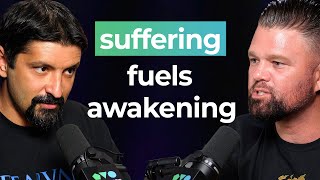
Podcast-style YouTube interview (May 20, 2025) where Josh Trent interviews Akshay Nanavati about his attempted solo, coast-to-coast Antarctica crossing (2025). Akshay describes 60 days alone on the ice, pulling two sleds (total sled weight ~420 lb), facing soft snow that prevented the crossing, and ultimately ending the attempt after severe gut pain (later identified as diverticulitis) on day 58–60. He reflects on suffering, paradox and oneness (Fearvana concept), surrender, and how extreme solitude produced spiritual experiences. Practical details: flights (Chile → Union Glacier by larger aircraft; Twin Otter to Berkner Island), caloric intake (~5,700 kcal/day) vs expenditure (8–10k kcal/day), ~17 lb weight loss over 60 days, fundraising (~$1.1M raised), planned books (Step into the Storm; coauthor with his wife), speaking/brand building post‑expedition, and the Storm framework (Survival → Transformation → Optimization → Relentless Mastery → Mastery & Fulfillment).
Chapters
So when you stop resisting suffering, it frees you from the grasp of suffering. It's not the suffering in and of itself that I seek. It's the means, it's not the purpose. The purpose is what it gives you access to. It's the transcendence. It's the awakening, it's the breaking down of the illusions. It's the surrender.
Akshay Nanavati is a United States Marine veteran and attempted to be the first person to solo cross Antarctica in 2025. Did you get what you were looking for, or did you get so much more?
I did get some moments of that pure oneness with the divine, where everything sheds. It sheds that lens of reality, the constructs that shape our experience of reality, and you get to feel true oneness, unfiltered experience. So on these voyages out on the edge, you see two realities coexisting at one, which ultimately sheds the illusion that they are separate. That's what creates ultimately, all suffering, is the resisting or clinging to either side of any duality. We as individuals, we will not rise to the level of the desires we want. We will fall to the level of the struggle we are willing to endure. So ask yourself, struggle am I willing to endure?
This is your first pod since you came back from probably the most epic journey I think almost any human being can go on. And I want to jump right out the gate.
Let's do it.
So you had written this very inspirational email and you had quoted Carl Jung, which I love Carl Jung, and I think actually last our podcast, last time I talked about the tree that Carl Jung describes, where you cannot have the branches touch heaven unless the roots touch hell. The roots go into hell, and it's very powerful. You said my North Star, my mission is to, quote Carl Jung, wander the world with human heart, to doctor the sick with human soul. What does that really mean to you?
So I'll share the full quote briefly that he said and why that resonates with me. He says if anyone wants to know anything about the human psyche, it would be best to abandon scholar's gown and wander with human heart throughout the world. There he would reap richer stores of knowledge than textbooks a foot thick could give him. And. And he would know how to doctor the sick with the true knowledge of the human soul. And that has become my North Star in however I live my life, from spending 60 days completely alone in Antarctica, to working with former child soldiers and survivors of sex trafficking in West Africa, people in extreme poverty in India, to the travels that I've done to the other expeditions that I go on. Because when you go out there into the world, as opposed to studying the textbooks, you, you, as he says, you get to know the human soul in a way that you cannot by studying a textbook. And the wisdom I get to unearth, and I say get to very consciously because it's a privilege to even have the option to go do the things that I do.
Yes. It's.
I get to choose my suffering. That's a huge privilege that many in the world do not have. So I get to. And the responsibility of that is to bring that wisdom back. Especially, I mean, being alone for 60 days in Antarctica in the depths of isolation, unbelievable hardship. I mean, I was probably, for portions of the journey, geographically the most isolated human being on Earth. No one around me for hundreds of miles. And in that silence, in that stillness, you get to open doors in the soul that are very rarely opened.
Yeah.
And the wisdom that is unearthed from that, it is my responsibility now to bring it back and share. Everybody's got their own Antarctica to cross, right? Very few. If anyone's going to actually go to attempt to cross Antarctica, it doesn't call me. We all, and that's fair. But we all have our battles. Life has struggles.
I mean, the sled you were pulling, it's such a metaphor. You pulled, I think it was 400 or 420 pounds.
420 pounds.
So you pulled this for y' all who haven't seen the first episode. We'll link it in the show notes today because, like, it's so cool to see the before and after. That's what I'm really wanting, the juice today.
Yeah.
Because like you said, all of us are on our own journey and sometimes what seems like a divorce, God forbid, like, knock on wood, a loss of a child or just something so traumatic that it can seem like being alone out in the snow for many of us, on an emotional level. Yet you were pulling this 420 pound sled for hundreds of miles. Was there an emotional sled that you were also carrying at the same time?
There were moments out there where, see, before going to Antarctica, I'd done a lot of work to confront my own inner demons from serving in war, losing friends, going through a challenging divorce, all of those things. So I didn't have moments of sort of confronting new demons. Did have moments. I remember one day skiing, just thinking about my buddies that I lost in the war and just started tearing up, you know, thinking about. I mean, when you, when you spend that much time with yourself, this is one of the biggest challenges in Polar Expedition is that you're skiing into empty white nothingness. So there's no stimuli to engage you. And unlike when I've done mountain climbing, for example, because it often gets compared to Everest, let's say when you're on a mountain, the terrain puts you in flow in many ways because you can fall off the mountain. So like for example, when I climbed Denali at 16,000ft, there's a ridgeline, thousand foot drop on each, each side. So you're not thinking about things, you're not wandering. Your mind is right there in front of you because there's a drop and there's consequences. In Antarctica, it's just flat white nothingness. So your mind has the luxury and the burden to wander and that becomes the most mental challenge. So your mind goes everywhere. So I did think about buddies I've lost. I thought about my life with my wife, how we got here, the future we want to create. I had all of that. But I'd say the biggest emotional challenges were the frustration, the hardship. I had. Like, I'm the kind of person, my wife will tell you this, no matter what happens, no matter how tired I am, how bad shape I'm in, I'm always, she's like, how are you doing? I'm like, I'm good, I'm good. But in Antarctica, there were two or three times where I was like, I'm not good, I've been. And I just don't say that right. So I was that bad because the, the problem was we got hit this season in Antarctica, got hit with a tremendous amount of soft snow. So there were three other, three or four other adventurers attempting other records out there. All of us did not hit our target. Everyone failed. People doing other shorter journeys tried to like, took 10, 12 more days longer than it normally would have. And so I was dragging a 420 pound sled uphill through unrelenting soft snow. And there were four days where I broke 20 kilometers, which is about 12 miles, and that was a milestone I needed to hit. Like keep breaking 20km. Four times it happened where I would break 20 that night it would snow. And then the next day, putting in the same hours, I couldn't, couldn't break 20. And the first time this happened, I, I hit 21.9 kilometers, snowed a ton, and I went from 21.9 to 17 to 14 to 13. And on that day, when it was 13 kilometers every three steps, not even exaggerating, my two sleds would get Stuck in the snow. Cause it was so soft. I would have to fight it up with all my might and then take a few steps and this would get stuck again. And that day, I remember sitting on my sled. Usually when I take a break, I don't sit. I just eat some food, drink some water, pee if I have to real quick, and then keep moving. I just sat on my sled, looked up and said, come on, give me a fucking break. And there were other days in the tent, especially the second and the third and the fourth time it happened where I broke 20. And I said, all right, I got this. Now I can keep breaking 20. And then it would snow and then I couldn't. And I would call. And sometimes just out of frustration in the tent, I would just start tearing up. And it was so hard because there was nothing I could do to have it go any differently. And I would give my all that day and put in the hours. But sometimes you can't control the results and the frustration of that. And especially the last 10 days when the body really started falling apart. So from day 50 to day 60, I had days where I was so dizzy I would fall over. I felt like I was drunk out there. And I could. I kept trying to will myself out of it. Come on, you're mentally strong. And I couldn't will myself out of it. It was just absolute exhaustion. And I actually found out later another adventurer did faint. And when you're solo in Antarctica and you faint, that could be fatal. But thankfully, this other guy, he ended up waking up, set up his tent, he evacuated, but he got frostbite on his fingers and toes. So I was nervous of fainting. And I had few days of the dizziness. Another day where I couldn't bring my breath down to normal. I was just like. I couldn't even few steps and my. I'd be panting heavily. And then on the day 58, when I had the shooting gut pain, which is what ultimately ended the expedition, on day 60, I got diverticulitis, which is in. Which is infection in the colon. And the pain is quite severe. And if left untreated, the colon can burst and it can flow into the bloodstream, which becomes septic and. And will kill you. And that's actually what happened to an adventurer eight years ago. So when that happened, you know, I kept trying to fight. Day 58, pain hit, and again, the frustration of that. And there's nothing I can do, right? It's just. And so day 59, I took a recovery day, thought, let me See if I can still keep moving. Day 60, it hit again. And the doctor me made the collective decision to call it.
There's so much here. I remember, gosh, it was a year and a half ago. We podcasted. Yeah, something like that. So I remember I asked you on the last episode, I was essentially like, hey, man, why are you doing this again? And you gave me this beautiful answer. And I'm not going to quote you exactly, but it was something like, I want to be able to know what it's like to be in connection with God and myself and nature in a way that most people are never afforded. And then I think I asked you something like, well, what are you looking for from that? And your answer was essentially a deeper connection to the divine, a deeper connection to life and to the isness. Did you get what you were looking for or did you get so much more? Because I can only imagine having a clear expectation and a dream and a hunger to cross the finish line. But then God in nature gave you a different result. There had to have been a gift that you never even saw coming.
There was a desire, obviously, to finish.
The full crossing, like a burning desire. You trained so hard.
Trained like. I mean, it felt like every day. It was your job. Four years, trained for it, spent God knows how much money towards it, invested my soul to it. My wife had committed so much to it.
You had raised people, crowdfunded.
We raised $1.1 million.
You raised over a million dollars.
There's a lot of pressure. A lot of pressure. And it didn't go that way. So actually I really struggled mentally. When I came back for the first two weeks, it was very, very hard. But to answer the question of. I did get some moments of that pure oneness with the divine, where everything sheds. The masks that we wear in the normal life, that. That form as a result of the decadence, the distractions around us, those get shedded.
Yeah.
In this very raw. Actually call it a raw experience because it has three elements. Reclusion, adversity, and wilderness. So a raw experience. And when you experience, when you go through that raw experience, it sheds the filters to how we which view the world. It sheds that lens of reality, the constructs that shape our experience of reality. And you get to feel true oneness, unfiltered experience. And I had some moments like that and literally tears streaming down my face while skiing. Just pure bliss. And there were other moments because it was so hard, I didn't get as many of those. These moments of awakenings, if you will, of oneness than I have sometimes on other things have done, like the Darkness and. And other solo expeditions because it was so hard. So often I was just consumed by the struggle, being on what I call the struggle bus. And that was just unrelenting. And in a way, that itself was its own spiritual journey because that forces you back into the present when every day. I mean, there were many days that I could have quit. I mean, even we knew by day 45 or day 48 that the crossing was no longer possible. The math was just no longer feasible. And I spoke to my polar mentor, my polar coach, and we were both clear. There's nothing that could have been done to have it go differently. And all those days, all those days of frustration, all those days of hardship, you get in your tent and some days even waking up and then seeing the snow, your mind starts thinking ahead how much this is going to suck. I can't make it. The pressure if I need to hit the distance. All you have to do is bring yourself back into the center, bring yourself back into the now. So had I not gotten such soft snow, possibly could have pulled it off, but I wouldn't have gotten those moments of constantly having. I mean, think about the metaphor. Life. How many of us are just punched by life over and over again? Sometimes things happen. Yeah, all you can do. We can't control a lot. I couldn't control a lot in Antarctica. All I could do was control that next step. I don't know how it's gonna play out the next day. I don't know how it's gonna. Things are gonna happen. I don't know if it's gonna snow. I don't know what kind of conditions I'm gonna get, but I can at least bring myself back into the now and keep moving forward. That process of returning to center, of staying in the now, over and over and over again, that's life.
So to me, tell me how you feel about this.
Sure.
It seems like we all strive for these peak experiences in our own way. And whether you're going to India and sitting in ashrams or meditating with gurus in caves for 10 years, or doing an insane physical crucible like crossing Antarctica, which I can't even really fathom, just the amount of preparation for that, or even conscious relationship, the crucible and the facing of our own demons per se, that can happen there. In other words, we all chase our own peak experiences. You had said something really powerful in your message to your audience. You said it wasn't about crossing Antarctica. It was about Attempting the impossible. And I really love that because where we are versus where we want to go, in other words, the identity shift that so many of us are all chasing. How do I become this actualized, amazing, powerful version of myself? There's many ways to get there, is what I'm saying. What part of you got actualized? What part of you is fundamentally viscerally different now than a year and a half ago from the journey?
I think I got a lot more concrete understanding of the. The illusion through how which we experience life. And I'll explain what I mean by that. So this is something that I had pondered and played with in my book. Fearvana is this whole essence of two seemingly contradictory ideals, fear and nirvana, that are in fact complementary and can create a whole that is greater than the sum of each individual part. And one of the reasons that even drew me to this is this expedition is to sense that oneness. So I mentioned the raw experience, right? The illusion through which we view reality. In reality, there's a series of opposites that encompass the human experience. Masculine, feminine, pain, pleasure, light and dark, life and death, love and fear, love and fear, ego, humility, stress and recovery, so on and so forth. And we often demonize one side of each duality. Stress is bad, the, the fear is bad, stress, pain is bad, the darkness is bad, so on and so forth. But that is, the illusion is that they are separate, they are opposite, that they're enemies. And I call this the paradox of oneness. This is kind of have been formed since my experience in Antarctica. Yes, the paradox of oneness is the realization that all the opposites that encompass the human experience, they are not truly separate, they are interconnected and they are part of a greater whole. And true peace, true freedom is created through shedding the illusions of the mind, the conceptual mind that creates these divisions, and in fact seeing them as one and embracing both sides as part of the greater whole. So in Antarctica, for example, to make this a little bit more concrete, this abstract idea, you feel so humble, so small. I remember one day when I had to climb the steepest portion of the entire route, the place called Wujiak Ridge. Looking out from there, I could see my tent in the distance. I had set up my tent because I had to take. It was so steep. I had to take three runs up this. I would take one run, leave some gear up there, come back down, do it three times. So first run I go up there, I'm looking at this vast expanse completely alone for 100 miles, hundreds of miles, my tent there you feel so small, nothing. We are so small in this grand universe. But in experience like that, you also feel so powerful. There was a day when I got hammered by a polar storm. Just it was, I think 18 meters per second. It was very, very strong. And you feel so powerful like a God that you can be even in this space and survive and thrive in this space. And when you play on these extreme edges, it sheds that illusion that they are two dualities. So simultaneously. I can experience unbelievable power, unbelievable self realization, how strong I am, and also feel nothing. You feel paradoxically so, so connected to all that is I mentioned those moments of connection and I'm physically completely alone, completely alone and, and so connected. The experience with my wife, the love that I felt, this intense longing for her, the missing. Even though I'm so far away, love is this experience of both separation and connection. And separation. Neuroscience has actually shown it enhances the experience of love in a partner. So on these voyages out on the edge, you see two realities coexisting at one, which ultimately sheds the illusion that they are separate. Another very concrete example of this was when I did the ten day darkness retreat. I think we talked about it last time. I literally saw the brightest white light I've ever seen in my entire life sitting in a dark room. And that was these moments of what I call, what the Japanese and they call satori. So satori is that momentary glimpse of an awakening. Now inevitably, as you return to life, the sense of I returns. And that's not bad, right? This is not about good, bad, right? Wrong. The constructs we have through which how we view, view reality are not bad. They help us move through reality. But when you get those glimpses of awakening, of oneness, it shifts how you relate to the world and how you engage with the world and how you view your own suffering because you see it no longer as something bad, no longer resisting or clinging. That's what creates ultimately all suffering, is the resisting or clinging to either side of any duality. So you'll see people who. You're going through a hard time. I wish it wasn't this way. You are resisting the isness of the human experience. The foundation to freedom from all suffering is acceptance of isness. And, and when you seek out the biggest dragon, like pushing what I did in Antarctica, I mean what I did has not even not been accomplished before. It's never even been attempted before to do a coast to coast crossing of Antarctica without dogs or kites. So we literally pushing the boundaries of possibility. And I truly believe, starting from that side of Antarctica, the journey is impossible. I think to, to, to pull it off, you have to start on the other side, which I didn't get a choice because the weather didn't allow us to start on the other side.
Did you want to start on the other side?
We were pondering and I, I had the weather cleared up, we, we would have taken that side. But the other side is a 12 hour flight from the main base camp, Union Glacier. And you have to get good weather in four different spots because you have to land twice in the middle of nowhere to refuel the plane. And getting good weather in four spots, the takeoff spot, the landing, and two fuel sites in Antarctica is very hard to do. So we didn't get a good weather window, so I didn't have a choice. So I had to start on the other side.
How many planes did you actually have to take to get out there? Like five, six planes.
Two. One from Chile to Antarctica, the base camp called Union Glacier. And that's actually just a normal Boeing. It's pretty wild. It's just a normal flight. It was an Iceland Air flight, just like you'd fly anywhere else. And then I took a small Twin Otter from Union Glacier to the coastline, a place called Berkner Island. And because I started on that side, I had to climb from day one. So coming back to the point of all of it is these moments of satori, these realizations of oneness, it shifts how you relate to life. Coming back now I'm starting to work on a book for myself and then co authoring a book with my wife on our relationship and when. Now writing a book is hard business. Building a business is hard. But it's given me such new perspective. I'm sitting there writing and I'm thinking and I'm like, you know what? At least I'm not dragging a 420 pound sled through soft snow. I'm sitting, I'm comfortable.
This is great. This is it, Akshay. So I would assume, and tell me if I'm getting it right here.
Yeah.
I would assume that when you reach the limits of human potential and you literally, for y' all that are watching on Spotify and YouTube, you meet the dragon or you meet the monster. I'm wearing a shirt that was a gift from you today, which I'd love to, for you to go into maybe with this answer.
Yeah.
When you meet the ultimate dragon inside of yourself, the self created dragon, the one that may breathe fire on the resistance of why something is hard, instead of just Accepting that it's all part of the same, that dragon has to be a reminder. And every challenge in your life, whether it's writing a book or being in an argument or somebody cutting you off in traffic, in other words, the spiritual maturity that's earned by meeting the deepest, darkest dragon of yourself at the heights of human potential, that has to be a barometer of your suffering, a barometer of your awareness now, and if so, how.
Yeah, and to jump into what that shirt means, the back of it says, the greater your demons, the greater the divinity required to rise above them. And so to your point, the bigger the dragon you battle, the greater the treasure you unearth on the other side of that battle. And so I went out there looking for the biggest dragon I could find. You know, so in the depths of the solitude, in the depths of the suffering, the hardship, you're battling the dragon. But you have to find something not just within you, you tap into the human soul, like I said earlier. Right. Paradoxically, some of my most connected moments to not only myself, but to the persons that. To the person that I love, to the people that I love, to God, are while I'm in complete solitude. That's the great paradox of the human experience. All the great answers of the human experience are a paradox. The human experience is one.
Yeah.
And so that's why the greater the dragon, the greater the demons, the greater the divinity to rise above them, that transcendence. So Maslow's hierarchy needs, he lists self actualization as the highest on his pyramid of needs. But what's not as public is that he actually listed self transcendence as a higher need than self actualization. And Viktor Frankl put it more beautifully when he said self actualization is a side effect of self transcendence. So it's through self transcendence that you actually attain self actualization. And when you are pushed into the depths of suffering you have, you are inevitably. That's why so many monks, they pursue suffering. It's not the suffering in and of itself that I seek. The suffering is the door, but it is not the. It's the means, it's not the purpose. The purpose is what it gives you access to. It's the transcendence. It's the awakening, it's the breaking down of the illusions. It's the surrender. When you are pushed into the edge of suffering, the only way to find peace without breaking is to surrender. And that surrender is the thing I seek. It's tapping into the hand of God.
The hand of God brings the suffering that opens the door which would not exist unless there was the suffering. Yet behind the door, the ultimate gift for the everyday person. How would you describe that in a few sentences? The ultimate gift behind the door that the hand of God unlocks through suffering. What's behind that?
Connection to God, Awakening of the truth. Connection. The realization of oneness, the shedding of the dualities. And why that matters in day to day life. Let's bring it back concrete. Like why does that even matter? Not everybody has the luxury to even seek out enlightenment, right? Sure. The process of seeking that out in the extremes is a luxury. I'm not unaware of that.
Yes.
But as you're going through day to day life, when you go, when you, when you realize these, these, these things that we're talking about, it will allow you to release your clinging and your attachment to one side, if any duality. So when I go through a hard time, instead of saying I wish it wasn't this way, I accept what is and I actually do this on expedition. I'll say, thank you God for these perfect conditions. Now, would I have preferred hard snow? Sure. But they are perfect because they cannot be anything other than what they already are. So when you stop resisting suffering, it frees you from the grasp of suffering. When you stop clinging to joy. I mean, if you constantly spend your life searching for joy, you will create immense suffering in your life. Yeah, but when you accept what is and you embrace the duality, every duality. I mean, take ego and humility for example. You have to have tremendous ego to do something great. I have to believe that I'm legendary, that I'm the strongest person alive to go, even attempt this. But the humility to be, not to be a learner. I was asking every polar explorer, fine, I don't care whether they have more experience than me. What did you learn in your expedition? The humility to be a learner. And greatest athletes are a great example of this. You look at the Kobe Bryant's of the world when you were Kobe talk. People perceived him as arrogant sometimes, but it was confidence. He had ego to know he's great. But he was a learner. He was always looking for that next gap, that next gap to fix. Right. So that's the realization to apply in whatever your craft is. If you find yourself in a way to make this really actionable. I'm do I do this in my life all the time? I look for a duality causing me friction and I go play on the other edge of it. So here's how I did That a few years ago, I was out on a run and I saw a sign that said 5k fun run. And I had visceral disgust at the idea of a fun run. Every run had to be an exercise in suffering in the paradigm through which I was operating at the time. This was many years ago. And I realized that I had developed a strong connection to suffering and pushing the edge, that I was actually creating it in every area of my life. And that was a huge flaw. It was a mistake in living that way. It's even now we've gone to this edge where people say, comfort is the enemy, Comfort is not the enemy. Excessive comfort is a problem, but comfort inherently is not the enemy. And that's the kind of paradigm that leads to more suffering. My wife will tell you, when I'm not suffering, when I'm home, I like to be absurdly comfortable. I'll be sitting there with a Snuggie in our house, and I'm cozy as hell. Exactly. I'm cozy as hell. Right. But that's the joy. Contrast is what gives life flavor, you know? So when I had this realization, I started playing on the edge of joy, Started playing on the edge of play, doing fun things. I'd be in my car, kind of dancing, singing to music, going for runs without actually needing to suffer, without counting how many miles I'm doing, just smiling with it. And if I stop in one hour or two or three, so on and so forth, whatever it may be. The other. The other edge I started playing on was control and surrender. If you look at that as a paradigm of duality. Right. That control is something we as entrepreneurs, where my world is in my hands, everything is on me. Even my book, Fear of Honor. Everything is backed by research. Everything had to be validated. Until I started playing on the edge of surrender. That's what led me to the darkness. And one of the ways I made this actionable. Anytime I went through an experience, and you can relate to this, we go through these surreal, mystical experiences where we think, how did that happen? What are the odds? We were just talking about this. This. The odds that all these stars aligned for this situation work out this way.
Yeah.
I started writing it down and I it. To me, it became evidence of the mysticism of the universe. So this paradigm through which I was operating. And again, it's not to say that research and science is bad, but there it's beautiful. Embracing the mysticism, surrendering to the God, to universe, whatever consciousness, whatever you want to call it, recognizing that there are things that can't be explained. And that's profoundly beautiful. So I started playing on the edge of surrender. And that's what that was, an evolution after the book. So I'm always looking for a duality causing me friction. And I'll go play on the other edge of it.
It's so good. And it reminds me of this phrase. I'm sure you've come across this false dichotomy. So if somebody's presented with only two options, that means that they're being told by a teacher who's by the way, well, meaning on one side you can be a financial expert, but you have to work for a large company because everybody knows you can't be a financial expert on your own. The third path, or the path of just oneness, the path of self discovery, is not presented forth in a false dichotomy. So I really love this concept of false dichotomy. And I think it dovetails into what you're talking about here with either being an illusion or recognizing there is not one. This third path, maybe in the dao, it's called the middle way, right? The middle way is actually an amalgamation or an awareness of both ways. But then you choose to create your own way. And I think this is really what makes a great entrepreneur world class or exceptional or an athlete too. The best athletes, the best entrepreneurs, the best anyone, they have a really strong desire and they go for it. And they also surrender to the mystery of God. And then wouldn't you know it?
Absolutely.
At the finish line, somebody trips and then they become first. But they wouldn't have become first if it wasn't for the mystery of God. Like how do you work that into your storyline now? Because the false dichotomy that's presented that so many of us believe, by the way, and it's by people that mean well, it's just based on their own conditioning. A teacher, a professor, even our parents, God loves them. This false dichotomy, I think is something that sabotages people in a way they don't even know they don't know. What sense do you have on false dichotomy as it relates to illusion and oneness?
I think it's recognizing that reality is not an either or, but a both. And so whenever you find yourself saying an either or, you recognize that's a limitation of a mental model, a limitation of a mental construct. Instead it's a both and. So in other ways, I used to have this paradigm that I can only be an adventurer or an entrepreneur, and instead I Start asking, like, how can I be both?
Yes.
Now, look, this is not denying that one needs to focus on a craft to achieve mastery at it. But when you start asking questions from a both and perspective, you gain new answers that you would not have gained had you stayed in that either or perspective.
Oh, yeah.
And that's ultimately what it's about, is embracing the either or, you know, and recognizing that when you label it is. You mentioned the Tao. In the Tao, it said that when you label something as ugly, beauty is created. When you label something as good, evil is created. It's the inherent distinction of something as a label. But when you put words on it, you limit it. Right? The words, the description. Because words are inherently built of conceptual mind. They're built on the constructs that shape our reality. So even for example, this is a wood table. How do I know this is wood? How do I know this is a table? From an early age, I was taught this thing that I'm looking at is a table. This thing is wood. That's a construct. And what I mentioned earlier, the raw experience is about breaking down those constructs. And the only way to do that is through pure experience. Pure experience sheds the constructs of the conceptual mind. Now, this is not to say again, words are bad, but words can point the way. You mentioned the Tao in Zen, there's this story of a monk asked the master, what is enlightenment? The master points to the moon. The monk looks at the master's finger, and the master says, do not mistake the finger for the moon. So words are like the finger. They can open a door. They can point you to the way. Listening to a podcast like this, reading a book, they can point you to a way. But the only true way to shed the conceptual understanding of the paradox of oneness is to fully experience it. So, but I think it starts with the words and recognizing that neither side is good or bad. So, as in a very concrete example, somebody who read my book Fear of Honor, this woman from Australia, she wrote me back saying, just the idea that stress, fear, and anxiety are not bad transform her life. Because that's the value, right? Suddenly now you see this, and the next time you feel it, oh, this is not bad. There's a value here. Instead of resisting it, instead of denying it, let me be with it. Let me experience this fully. Every emotion we talked about this last time is neither good nor bad. It's all part of the human experience. Even labeling an emotion is a construct. If you shed the label, what are you experience? You just. Are you experiencing that fully. That's how I mean, I'm by no means perfect at it. I'm a human being. So I go through my own moments where I forget the paradox of oneness and get consumed by something in the struggles. But, but that, but the realization is not to say you have to be perfect at it. We all go through this. I've seen the greatest athletes. Actually just earlier today I was watching a clip from Novak Djokovic who talked about even as one of the greatest tennis players of all time, he still had moments of self doubt, still had moments of beating himself up. But he said what makes you a master is not about not having those moments, it's to bring it back, bring it back to center. Even meditation, it's not about silencing the mind permanently. Nobody does that. It's about when the thoughts arise, you're able to bring it back to stillness. And that's the same thing to your point about the illusion is you can still see duality, you can still experience it as a human being moving through life. But it's to bring it back as quickly as possible to recognize these are two sides of the same hole. And it's those two sides that make something better than each individual part.
Man, I'm so fired up by your presence. Like you seem to me even more powerful than when I saw you last. But yet again, I'll tell you, you still have this center of peace. And this is the part about extreme athletes like they're surfers that'll chase hundred foot waves, but when they're not chasing the waves, they're getting drunk, they're getting high, they're having unconscious sex. In other words, their dragon inside of them is breathing so much fire that they haven't been afforded yet. And I say yet because they're on their journey. That wholeness, that peace with knowing the darkness in themselves or knowing that chasing of peak potential that probably makes them want to jump on the top of a crest of 100 foot wave. Anyways, there's something about you now that I can sense that's even more developed and I'm going to do my best to put words on it. So just gimme a moment here. The hunger and the fire in you is actually burning a little brighter that I can sense, but also there's even more calmness inside of you. So to me that's the biggest report card that I think anyone could ever wish for when going through a dynamic peak experience. And I think to go back to what you said about meditation, if we have the Intention in meditation, to sit down and have the best meditation session ever and not think about anything, well, then we're just going to completely be in resistance.
Exactly.
What layer. Just feel into this for a moment. What layer of resistance did you really, truly let go of out there on, on the ice, in the snow that you weren't even aware of? There's got to be some part of your soul, some part of your awareness that got to shed resistance in a way that you never could have been afforded unless you were on that journey.
It was the attachment to the outcome. I wanted that result bad.
Yeah.
I had trained years for it. I wanted to make the crossing and that. So there was an attachment, a clinging that this is what I want and I'm fighting so freaking hard for it. Right. I mean, it was indescribably hard, this expedition. I've done a lot of hard things before. There's this different level, and as a result of going so hard and being thrust into conditions that made it even more challenging. And even if you sidestep those conditions, I mean, the team at ale, which is Antarctic Logistics and Expeditions, they're the team that manages all logistics for adventurers and other adventurers said that anyone who tries this will probably fail. Other adventurers call this impossible. So you go out there knowing that the odds are stacked against you doesn't mean you still don't want the result. And God knows I was. And there were days when I wasn't hitting the distance I needed to hit and frustration, stress, all right, shit, I need to go fast, I need to go. And the attachment to that, that resistance to the isness of that, and then constantly having, to the point that we're saying earlier, if it arises, it's about the letting go, it doesn't mean you don't have to be perfect and never having it arise, but letting that go, letting the attachment to the outcome. And since I have come back, I have been much more embracing the process of things. And it's not to say to do anything great, you still have to be foot process focused as opposed to outcome focus. But I've gotten a lot better, better at it now. Even the other day, you know, my wife dropped me at one of the trail heads and usually every run there's a target I'm going to run for X time or every training session, X time, X distance, whatever it may be. And I said, I don't know how long I'm going to be. I'm just going to be. I don't care how long it takes Where I go, how fast I am, I'm just going to be in the isness. And that's actually the duality I'm currently playing on. As I mentioned, I'm always looking at one, right. So it's what I call a meta duality. If you look at the duality of two edges, two extremes, you mentioned the middle way. So now I'm playing on the edge of the middle. So. So it's the duality is that there's the edge and the middle. That's duality in and of itself. Right. I'm playing on the edge of the middle, meaning that I don't have to go out on. On the edge and look, it doesn't mean you don't still do things. Right. There's a great quote in Zen that says, before enlightenment, chop wood, carry water. After enlightenment, chop wood, carry water. So it's not that the doing is different, but the experience in the being becomes different in the doing. So to your point, and I appreciate the acknowledgment of finding more peace within is because I had to let go of that attachment of something that I had trained so hard for. And no matter what I did, God knows I worked my ass off. No matter what I did, I couldn't get the result. And that that was hard. When I came back, I struggled tremendously with that for the first week and a half, couldn't sleep. Every time my head would lay on the pillow, my mind was running through all the scenarios. What could I done differently? How could I gone better? And beating myself up a little bit, I can sometimes be a bit hard on myself. And then when I wake up, that's the first thing in my mind. But letting that, shedding all of that, you know, shedding all of that and recognizing this is how it was, and at least knowing that I gave my all. I mean, I literally pushed the body to the brink of death. Right. The body broke before the mind did. I'm damn proud of that. I can be proud of that and still feel that it wasn't in a mat sense, the outcome wasn't realized.
Yeah. I was talking with Dr. Kirk Parsley a couple weeks ago. He's a retired Navy SEAL, he's a physician for the SEALs, and just one of the most hard charging, like in his 50s, super athletic, obviously has been in very violent situations. Maybe there's lives that he's taken. I know he's seen lives be lost. And he was sharing with me about these different archetypes that we experience in life. The warrior archetype is something that you embody, but you also embody this real, this place inside your heart that I can feel is a spiritual warrior. So the balancing of these two worlds for him and for you seems like it really comes down to if I've done the best that I can and I've been unattached to the outcome, and I'm living truly in the present moment, like, not faking it, not just intellectualizing it. Yeah, brother. I'm living in the. The current moment, but really have done the inner work, the spiritual, deep work, to be present in a moment. He said to me on the podcast, you know, I could die right now and I would still be happy. I would miss my wife. I would miss, you know, the snuggling, and I would miss all the. The comforting, loving things. But I feel like if I died today that I would still be happy and I would still be fulfilled. Do you feel like that?
If I were to. I think I'm very grateful for the life that I've had, but there's still a lot more life that I want to live. So I wouldn't say that. I would feel like. Let's say I knew tomorrow I would die. I think I've lived multiple lifetimes in my life.
I would never know.
Sure.
Of course, that would be a shitty game. If we knew our exact date, I would not want to play.
That would not exactly.
I'm not down with that game.
I mean, you know, in Antarctica, granted, I came close to it, but at the time when the gut pain hit, I didn't know I had diverticulitis. I just had a gut pain. So I didn't know sort of what exactly went down till later. Right. So it's not that I pondered my mortality. This expedition wasn't that dangerous. In the grand scheme of things, it was. Polar exploration is not that dangerous. It's just a lot more suffering.
Wait, hold up. What do you mean it's not that dangerous?
What are you talking about?
How is it not that dangerous?
Because it's. I mean, like, unlike mountaineering, for example, you can fall off a mountain, literally fall off. A lot more people die than a mountain.
Can't you fall through a sinkhole out there?
So I did not get to the section of the journey where there were a lot of crevasses. I would have hit that on the other side of Antarctica. That would have been the most dangerous section of my journey. But I didn't get there. I had to leave before. And so the entire time I experienced it was just Very, very, very hard. But I'm moving on flat terrain and you have to know how to handle that environment. When storms hit, you have to be comfortable, know how to set up your tent.
What about when it's total whiteout? What do you do when you don't know? Up, down, left, right.
You're just, you have a compass harness in front of you and you're just staring at that compass harness. So it's attached to me here and I'm staring at it with the bearing. So you put the bearing on, keep the red arrow, keep the arrow in the thing and you're just staring at it for 10 hours a day. Yeah.
I mean, to me, call me crazy, it still seems fucking dangerous.
Honestly, as. As long as you are somewhat well versed in that environment. Like there was nothing that could have gone. Like I would have. I was fine there. I obviously wasn't my first expedition. Yeah. So it wasn't as dangerous as people think. It's just, that's the nature of polar travel. It's, it's by far. I've done mountain climbing, I've run ultramarathons, I've done a lot of other physical feats. Nothing compares to the sheer amount of mental and physical hardship that polar travel is. But it's not as dangerous, man.
I'm gonna make a corollary that I think you'll feel and I'm gonna ask you first. You know, you mentioned Henry Worsley, the explorer who died from the same condition that hit you, the diverticulitis. When you're met with even the thought of your own mortality or the challenge of a death, I could juxtapose it to. For example, in my relationship, I've really had to look at, if this relationship doesn't work, then I have to look at the death of the life that I thought was possible. And it's very gut wrenching. I mean, it's not diverticulitis gut wrenching, but the thought of physical death or egoic death, AKA attachment to relationship, or even egoic death, attachment to you having to cross the finish line and realizing that you were ten days past your due date and you weren't going to make it yet, you still carried on. Can you expand that a little bit and make your heroic journey on the ice and the snow something that people can feel if they're experiencing an ego death or a death of an attachment to an outcome that they've been white knuckling in their lives? There has to be a crossover of wisdom there. One's physical One's emotional, mental, spiritual. But they're the same. One and the same.
Yeah. I think when you experience that kind of death, any kind of death, relationship, whatever, it's really valuable and important to feel and experience the grief of that. I think sometimes in the spiritual world, when we talk about releasing all attachment, it leads to. It can lead to. And I've seen this happen with people. They become like zombies where they don't feel. They're completely numb. And that's not. That's not the healthy way to live. They've literally weird.
They wear a shirt that says good vibes. Only if it doesn't feel good, brother, I don't do it.
Oh, yeah.
And I'm just like, good fucking luck.
One of my friends, Michael Gervais, he's an outstanding human being, one of the leading people forming psychologists, he says, never trust somebody who's all light. And I've seen this happen too. To your point, if somebody who's like, I'm all, like, all that, they'll. You'll see. And I've literally seen this. You'll see darkness show up in their. In how they interact with the world. They do dark things that they're not even fully aware of because they haven't confronted that darkness that we all have. We all have. So embracing. Coming back to embracing that duality, embrace. And you actually like the simple. That's. You know, you mentioned the surfer who, when he surfs and when he's not surfing, he's drinking. Because this is actually another paradox, and this is hugely important for entrepreneurs who are very driven. I was just talking to a brilliant entrepreneur earlier this weekend who's so driven, can work like his work capacity is unreal, his ability to produce output in such a condensed period of time. But he struggles with stillness. That's the duality. Then. Stillness is not the same as doing nothing. This is what a lot of people mistake. People who are driven. If I'm still not doing anything, it'll accelerate your doing and it'll actually bring you a lot more peace in the doing. So that was my counsel to him, is go play on the edge of stillness. And needless to say, he really struggles with it. He himself was like, it was really hard to be with stillness. And I'm like, yeah, the inherent nature of an edge is you'll be off balance. It will be hard. That's the nature of an edge. But that's where you will find new awakenings. Because if you stay doing what you've always done, you're going to Keep getting what you've always known. And each one of us, you, me, everybody else, we don't know what we don't know. One way to start recognizing what we don't know is go play into a new edge that we're not even familiar with that is so beyond our lens of reality that will open up brand new doors playing on that edge.
It's so good. I'll go back to the.
I think I lost the sidetracked on the death conversation.
You're great. I just wanted to bring it back for me and for the audience. So. So Henry Worsley, did I say his name correctly? So he, he died from diverticulitis.
So just to make that clear, diverticulitis, if left untreated, it leads to what's called peritonitis.
Got it.
So he died of peritonitis because that's when the colon bursts, flows in the bloodstream, it gets septic and kills you, which is what part of. And I knew this when I was out there. So a big concern was especially I didn't know that I had diverticulitis at the time, but I had gut pain, quite severe gut pain. And so knowing what happened with Henry Worsley, knowing that it was a gut issue, that was the fear, for sure.
Do you feel like. And we'll get to the second part of the question. Is it something that's airborne? Is it something that like, like microscopically lives on food? Like, how does one even get it?
From what I understand, speaking with doctors of various capacity, it's caused by a lot of people get. It's caused by immense stress.
Immense. Okay, so stress response.
I was in a bit of stress out there.
Almost like an autoimmune response where the body's screaming, stop, stop, stop. So it gives you the diverticulitis, which maybe the bacteria lives in you, maybe it's airborne.
From what I understand. I'm no doctor at Eckerspur, but from what I understand, it lives within you and it just gets inflamed and infected and it affects the diverticulum in the colon that I think they inflame. And that's what.
Did you know that he had perished before you went out on the, on the voyage from that. So it was.
I knew, I knew it was peritonitis. I actually didn't know at the time. Now I found out more that diverticulitis is what leads to peritonitis when left untreated.
Okay.
I didn't know the ins and outs of what peritonitis was. I just knew it was a gut issue. That's what killed him because he was. And he was a savage. This guy was a former sas, legendary polar adventurer. But he. He. He pushed, I guess, too hard. And. And when he finally called for the evacuation, he did call for an evac, he was alive. He got evacuated Chile, but by then it was unfortunately and tragically too late.
Oh, well, I'm so glad you made it back, man.
Thank you.
That was primary on the mission, right?
That was. Coming back alive, obviously was number one. Yeah.
Who are you to be a martyr and sacrifice your own Akshay 3D self just because you want to cross the finish line? What an ultimate decision you made. And it was 10 days in. It was 10 days in that you knew you essentially weren't going to cross the finish line.
Well, I was. Sorry. It was 45 days, in about 40 to 45, that we knew that the crossing was no longer possible.
Oh, that's right.
But you kept on going for the last 10 days, the 50 to 60. Those last 10 days were the ones where the body just kept falling apart in multiple different ways. I had spine pain, chest pain, gut pain, dizziness, inability to breathe. All those things were just compounding on the last 10 days.
So for the 10 days, for those 10. The span of 10 days, did you know. Did you already have a sense, based on, you know, your radio communications to your mentor, to your guides, that you essentially weren't going to complete the. The mission?
I knew that I wasn't going to complete the crossing. The goal at that point was, let's see how far I can get and let's see what new awakenings could be realized. It's a beautiful. As hard as it was to experience, it's a privilege to experience that kind of solitude, to that experience, that kind of stillness.
Did you see any cool, like bears or.
There's no life out there.
Nothing.
There's only penguins in the coast of Antarctica. But when I'm one day away from the coast here, there is nothing. There is zero life. That's what. That's why I think Antarctica is this majestic land that is truly a mirror for the human soul when you. Because there's no stimuli to engage you. Right. I mean, I did see mountains for part of the journey, but a lot of the journey is just flat, white nothingness. So when there's no stimuli to. To consume your consciousness, where else do you go? It's almost like the exact opposite of a darkness retreat. Sure. It's. It's similar in the Sense that there's no stimuli, so your mind goes within, and that. That's the challenge to experience that level of stillness of mind, of just being with the self. And that's the one thing that I'm grateful for, is I never struggled with this isolation element of it. That was. I was. And this was not something. That was me always when I struggled with drinking after the war, I could be in a room of 100 people drinking and feel no desire to drink. But when I was alone, I would down a bottle of vodka. Being alone was my demon. I could not handle being alone. It was. I would escape from that experience of solitude the first chance I could get. My trigger was always being alone to drink. So to go from that to now, being as alone as a human being could be, it was. It's been a beautiful journey to get there, but it's also a real privilege to feel that level of solitude.
The veil's thin out there inside yourself. And also, like you said, it's a place where no humans are. So there's no feedback in the field is what I'm saying.
Yeah.
It's not like you're in a community and there's people talking or cell phone radiation. You know, correct me if I'm wrong, there's probably no cell towers out there.
So I used a satellite phone. There's obviously. Yes, no cell towers.
So with the veil being that thin, did anything mystical come in? Maybe conversations with relatives that have passed, or did you have any connections to outer worlds in that type of environment?
I had what I perceived to be a conversation with Victor Frankl. You know, the. You can channel the spirits of anybody. Of everybody.
Yeah.
And one can argue it's not real, but who cares? It's real in my mind, so.
That's right.
It's as real as anything else.
And the paradox is that might be the case always, which is quite profound.
Exactly what is real? What is it? Or. It's. It's all through the conceptual mind that we view it. So it was as real to me as anything else while skiing, because I. I re. I was re. Listening to man's search for meaning for part of it. And I was having a dialogue with him because one thing we talked about last time I was here is the struggle with my guilt, the guilt of being alive. You know, to refresh your memory. When I was in Iraq, my vehicle drove over an active IED that didn't explode for some reason. My friends drove over. Obama exploded. He died. And that brought to the surface, you know, and as Much as I had processed that guilt, moved through it in many ways. There were still, I recognized, layers of it, that still I felt that, still felt that, a guilt for being joyful. And that's why I had this conversation with Viktor Frankl, that Viktor Frankl, who experienced more hell than most human beings can fathom in a concentration camp in World War II, that don't mart, don't use that suffering. If I was Viktor Frankl, you know, this was Victor Frankl saying this to me. I don't want you to use my suffering as a reason not to feel more joy. Because if I feel guilty that I haven't suffered as much as some others had suffered, who am I to have gotten this blessed life that I've gotten? You know, I mean, I was born to great parents. Yes, I've suffered in life, but all in all, my life's been pretty blessed. And who am I to get that? And so having this dialogue with Viktor Frankl, I remember chatting with my wife that night about really freed me up more to say that, look, if my work is about bringing more peace and joy to the human condition, to human, I have to be that right. Gandhi said, be the change you wish to see in the world. And there's. By me, being joyful is not denying. It's not. It's not going to make other people suffering go away. And it's not denying that there is suffering in the world. If anything, it allows me to do the work better to alleviate some of that unnecessary suffering in the human condition. And so that conversation with Frankl brought me more peace. That was a beautiful day that I would, at the end of every day, I would call my wife through the sat phone and share some of the journey while I was eating. And some days when I couldn't sleep, I would call her multiple times just to say hi. And again, that's. That was so beautiful to feel that. It's not that I felt alone, like the isolation didn't bother me, but I miss, but I valued her tremendously. She was like, the things, the poetic things you say, the love you showed for me is even more extreme when you're on expedition, you know, so it was beautiful to feel all of that. To feel all of that.
The phrase that comes to mind is a phrase that's been spoken for probably hundreds of years. Absence makes the heart grow fonder.
Yeah. Yeah.
And there's real value to that.
Absolutely.
If you look at some of the work from John Weiland and also the Gottmans and Relationship theory.
Yeah.
Some of Them even say, you know, if you sleep in the bed every night, you'll kill the polarity. Some of them say actually taking a break and, you know, having time where you don't speak to each other for a couple days can wash away the synapses that created the disorder in the first place. In other words, it can bring you back together in a way that you never even thought possible.
Absolutely.
And we were chatting before we jumped on the podcast and she was sharing just like the journey that it was for her to be away from you for that long. What did you learn the most about your love with your wife from being away from her for so long?
In a very tangible, practical sense. It showed me how incredible she was at support. I'll give you examples of that. I mean, she's been very supportive leading up to Antarctica in every way. I mean, she funded our life. I kind of joked that my job title was explorer and sugar baby, but out there, you know, it to your point, like the absence makes a hard grow fonder. Not only did it amplify our love, but when we had. I had many low moments out there, some low ones. And when somebody's in that, in that condition, you can say something without meaning to that makes it worse. It's hard to support somebody in a very. Going through a very dark time.
Yeah.
Every time she would say the perfect thing, she allowed me to feel what I felt and then provide some perspective to keep moving through. In a very concrete example, there was one day where it was day five, actually. So I was very fuel conscious on my expedition. I was taking the bare minimum fuel a person could take because of how much I needed to save weight. So there was a few things I doing without getting to the nitty gritty of how a stove works that accidentally led to me burning a hole in my tent. So now I'm sitting there in my, in my tent looking at this small hole, being like, fuck, I'm on day five. What did I just do? And my. As a marine, my inner dialogue can be quite self deprecating and beating myself up, right? So I'm like, you fucking idiot, what did you do? And then I call, I'm calling my wife because I needed some help with sewing. I had studied sewing, but it was years ago. Then I kind of forgot. So I was. And so I call her and she could tell something was wrong. And I'm thinking, oh shit. She's gonna be like, what did you do, you idiot? And I'm like, I burned a hole in my tent. Her first Response not even thinking. First response is, no problem, no problem, there's a solution, we'll fix this. We got this. And I was kind of like, wow. I was kind of blown away that. And then I told her later, I was like, I thought you'd be like, you fucking idiot. And she's like, why would I say that to you? I was like, that's what I say to myself, you know, kind of joking. But the point is that how she was able to be an anchor, a pillar, a rock going through, whether it be burning a hole in 10 or just the extreme hardships on those frustrating days, or when my body's dying and falling apart, those days awakened me even more to how incredible this, this relationship is. And that time away, at least for me, she might not agree, but the time away was beautiful. Like, I don't. I know for her it was. She went through her own emotional journey as well. But I value the missing of that, you know, and like I said earlier, Neuros, and this is coming back to the paradox of oneness. Love is not just. If you're around somebody 24 7, everybody's gonna lose their shit a little bit. So. And I'm not saying it has to be 60 days in Antarctica, that's obviously an extreme, but that's the duality. When you create separation and connection, you create a whole that is greater than each individual part. So this is coming back to playing on this a certain edge. If you're in a relationship where you find yourself being too far apart all the time, maybe build more of that or two together, go to play a little bit apart, go for one day away and how that'll amplify when you're together. It just makes you feel so much more valuable and that love is so much more profound.
There's an old parable about the wolf who's trying to get the porridge not too hot, not too cold. The Goldilocks zone. And the Goldilocks zone of relationship is really beautiful. And you just spoke to it. But there's also an internal dialogue that relates to the Goldilocks zone. You had mentioned that you're like, I'm a Marine and so sometimes I get really hard on myself and I say, you fucking idiot. I think it's really both humble and transparent and a bit vulnerable that you'd share that since your work is built upon transcending the illusion.
Yeah.
Because that illusion, it seems like still residues of that show up. Maybe it's from your military days. Of course, maybe it's from just Life itself. How do you hold that world and not get stuck in a shame spiral of, you fucking idiot. Oh, I'm noticing that I'm calling myself a fucking idiot. Oh, you fucking idiot for calling yourself, you know, the shame spiral.
Yeah.
So with that narrative that drove you in the past to be a great Marine, to be able to, you know, risk your life for other people.
Yeah.
As you're moving into this next stage of your life, you know, post journey, how do you tend to that part of yourself? I'm not saying you need to know exactly why it's there or dissect why it's there. Like, we all have parts of ourselves that we don't need to know why they're there. We just simply acknowledge that they're there.
Yeah.
But that part of you that would say, you burned a hole in your tent, you idiot. How do you hold that part? With reverence and grace and love as you move forward to whatever the next leg of the journey looks like.
Yeah. There's two parts to how I answer that. It's a beautiful question. So one, in my book, Fear of Honor, I talk about what's called second dart syndrome. So Buddha said, we're all stabbed by the two darts of suffering. The first dart is the one we don't control. Let's say I stub my toe, my toe hurts. That's the first dart. The second dart is when I start saying, bad things only happen to me, God hates me, this door is stupid, my world is stupid. Why did I stub my toe? And we go into that. That spiral like you just said. Right. I'm beating myself up about feeling this way, talking this way. And second dart syndrome is when without awareness, without consciousness, we let that self dialogue spiral, Just as you were saying. So the key to stopping that is to recognize that this is a second dart and you don't have to get caught up in. What's the first dart. Is it the external thing? Because most of our thoughts we don't control. They just happen. They arise. Right. Because they're a pattern from something that has been created. This comes back to releasing attachment or resisting and clinging. It's just accepting what is. And accepting what is is not only accepting external circumstance. Hey, I had this thought. I'm not gonna beat myself up for it. And as soon as you stop the second dart now, you've seized control again, you've seized awareness again to stop that spiral of second dart syndrome. Hey, I noticed myself talking this way. That was the first dart. So the only thing to think about when you're applying this in your life, however, that internal dialogue for you is as soon as you bring conscious awareness to it, you have stopped that spiral of second dart syndrome, and you've regained control over that second dart of suffering. And all like unnecessary suffering, as I said earlier, is resistance. All unnecessary suffering is resistance of accepting the isness. As soon as you accept the isness, hey, talk this way now. I don't have to go into, why did I talk this way? What's wrong with me for talking this way and doing that? So that's the foundation. First is the acceptance of isthmus, freeing yourself from those second darts of suffering from there. Another way to then now, what do you do with that is to go play on the other edge of the duality. So I'll give you an example. My wife and I had gone on a very. On a tough hike in Hawaii. This was not her jam do. We hiked Mauna Kea. It was a very hard hike. It was like 13,000ft summit. So she was struggling. And as we work very close to the summit, her inner dialogue was, this gets to be easy. This gets to be easy. This gets to be easy. My inner dialogue was like, embrace the suck, suffer harder, push yourself, that kind of thing, right? The marine. And in Antarctica, I had a moment where I called her and told her where I started. Embracing this is the duality, the paradox, right? That her side. It gets to be easy is just as valuable. There's no right, wrong, good, bad, both have their place. There are times when the hard version of me can fuel me, but there are times when, and I was doing that for certain days in Antarctica, just saying, why can't this be easy? This gets to be easy. This gets to be beautiful. So I was noticing a pattern. Freeing myself from the second dart of suffering, suffering, and then exploring the other edge of that duality. And by exploring that other edge, you open yourself to new awakenings, new realizations, new opportunities, even new concrete results in the thing you're moving forward on. When I started embracing the edge of joy, life became much more joyful, you know, and now, like my wife will tell you, my friends will tell you, I'm always laughing, always shooting the shit, super playful. And you can be all of those things at the same time. One of my core mantras now in the world of fear, of honor, is be a warrior in action, a monk in wisdom, and a child in play. You do all of those three things, life becomes so much more fulfilling, you.
Know, spoken from experience. And I remember Jordan Peterson was talking about this once. He talked about systematic desensitization where he had a patient that was deathly afraid of elevators. She couldn't even think about going on. I mean, she would have like a visceral reaction. And so over the course of two weeks, he would like, walk her to the building. Day two, walk her to the building and look at the elevator. Day three, walk to the building, look at the elevator, touch the elevator. Eventually she, through that systematic process, was able to ride the elevator and she was cured. Isn't this amazing? And it was literally just a construct of her mind. The same thing in psycho cybernetics where Maxwell Maltz talked about this person who was deathly afraid of snakes. And so they actually brought in fake snakes into the room and they brought in real snakes. And it was actually Bandler, one of the early proponents of nlp, that did this process. And the guy was cured because he actually, we actually get to. You did, on such a grand scale, face the thing that brings us so much visceral fear that if we weren't consciously aware of our work through it, that it would take hold of us. The fear would actually own us in a way that would stop our potentiation of growth.
Yeah.
And I think this happens through religious training as well, where we're supposed to even this phrase, a God fearing man, you must fear God. It's like this is completely opposite of what we need in the world. We don't need people to fear God. We get to have people that respect the mystery of God. I love that the power of language is so severe here. We're literally praying to ourselves. You've dropped so many beautiful pieces of language here. The language of what Jordan Peterson did, what Maxwell Maltz did, and what you just shared with us about playing like a child and being a warrior. All of these things are essentially words. They're fed through this construct of the filter between our conscious and unconscious mind. And then our soul or the essence of us makes sense of it. We decide what we want to do with pieces of information, yet that comes from a piece of sanity. And this is my question for you. Was there ever a moment out on the ice and in the snow on this epic journey where you ever questioned your sanity?
I think I stopped questioning my sanity a long time ago. We joke. We joke about how crazy I am.
Like, did you ever go like. Like, oh, I'm losing it here. Like, did you ever have a moment where you're like, I'm feeling really crazy. I'm actually not aware of what's Going.
On, like, this is crazy. When I'm just mumbling to myself, like, because I'm out there skiing, and as I'm skiing, I'm mumbling to myself. I'm having dialogues with myself. You're talking to Victor Frankel, and you're like, this is crazy, dude. I'm losing my mind. And I would joke with my wife about it, you know, so definitely moments of that. But that's also the value. Coming back to the duality of, let's say, delusion being one edge of it. There's value in delusion. Delusion allows you to. I mean, again, healthy delusion. Delusion can also lead you to dark places. But healthy delusion in the sense that when you're delusional, you're shedding the rational mind. You're shedding the trappings of the rational mind. And in some sense, anyone who's achieved something truly innovative and great is delusional because you're breaking the paradigm of the rational mind and the constructs of reality. I said to myself, why can't I get to the other end of Antarctica feeling as good as I did on day one? Now, does that mean whether it happens or not is sort of irrelevant? Because all that's affecting me is in the now. The now is all that's real. It's all that exists. So if in the now, my delusional is helping me, even if in the future it doesn't end up being that way, who cares? That delusion is helping me. So embracing that crazy, go where it takes you, see where it takes you. Let it. Let it. Let it flow through you, you know, and seeing. Seeing what it will arise, how it'll shift your experience of the now.
The other day, my son was in the front of the house. We have the playset, and his truck was jammed in a little crevice.
Yeah.
And he tries to pull it out, and he looks at me. He's like, I can't do it, Daddy. And I was like, here's my golden parenting moment. I go to him, and I'm like, nova, we don't say, I can't. That's not something we say. What we say is, I'm learning how to do it. I'm learning how to do it. Can you try?
Okay.
Give it your best shot. Give it your best shot. And eventually, he got it. I might have, like, you know, touched the truck for him a little bit, but I let him go through this micro adversity of getting his truck unstuck. And I think that when a helping hand from a parent becomes harmful is when we rob our child of a lesson. That's hard.
Yes.
And then that extrapolates into being in a very soft generation where there's no more analog conversations in person out of fear of getting hurt. And then all of our conversations happen on a cell phone, through text or on Snapchat.
Yeah.
How do you think that your story of hardship and being with the isness, being with the challenge and even being with your own demon. Is there a way you can take parts or maybe the whole story and feed it and disseminate it to the younger generation? Have you thought about that?
I have to your point. Because I love when I speak in front of colleges or schools. If you can implant seeds in the younger generation before they get trapped in patterns that they have to then unlearn decades later. It's a beautiful thing. So to do that. And I love, love what you said with your kid. And I see this a lot as an Indian. Indian parents, especially if you are in a higher socioeconomic status are notoriously known for over spoiling the hell out of their kids. And I've seen this with a lot of people where the kids now they've been over spoiled. They grow up with zero resilience. Anything that happens in life, they break. You have and I've even have friends who ran a gym where they would work with the parents would constantly tell these friends of mine to shield their kids from any harsh, any feelings of any hard feelings. So oh, they shouldn't feel like the pain of loss.
This is the worst.
So I'm not gonna take this the worst advice.
Yeah.
So love, I love what you shared with what you did with your kid. Let them go through that. Let them experience the range of emotions that is part of the human experience. If you don't, they're gonna experience it anyway. Life's gonna hit us and if you don't know how to navigate that, you're gonna break when it does. So what you said about Kant and learning through micro adversity, let them feel the pain of loss, let them feel the hardship and recognize the of sense is not bad. And parents sometimes out of I mean a lot all almost always out of love will say don't be scared, don't worry, don't feel fear, don't stress. All you're saying is don't feel what you feel.
That's right.
That's coming back to resistance. Hey, you're feeling scared. Tell me more about it. What's going on? Let them feel it fully. Let them and when you don't, this is what happens. Like, I worked with. I was. I was on a podcast once, and this woman called in who was going through PTSD from the Boston bombing. And so we started chatting a little bit here and there, and I said, all right, the next time you feel that hypervigilance rise up when a loud noise hits, I just want you to pause and sit with it. Just be with it. And she goes, yeah, but that's really hard. I know it's hard, but the only way out is through. This is the core teaching, I think, is whatever hardship the only way out is through. You want to get on the other side of that hyper vigilance of ptsd, pause and be with it. And is that going to suck? Yes. But the more you embrace that. Coming back to what you shared about stress, inoculation, I think you used a different word, but same thing of the elevator, right? Sit with it, do it in small degrees.
The systematic desensitization that Jordan Peterson is known for.
When you do that, you. Then. Then. Then you. That's how you move through it. You want to. You're struggling with your demons. That's what I could. I could run away from it, which is what I was doing with drinking. Instead. Then. Now I started. Then I started sitting with it. The only way out is through. Let me confront it. Let me be with it. And that's hard. But I have. I have one kid who was so inspired by what I did, he locked himself in a closet for a few hours, his mini darkroom. And I was like, dude, that's badass. This kid. The kid inspired me. You know, he's this kid. He's a friend's son, and now he's become a friend as well. He just locked himself in the closet and just sat still with his thoughts in darkness. What an amazing experience to go do that. And that's harder than, you know, sometimes we look at the tangible. What can I specifically do rather than just be with it? But be with it is often the answer. Yeah, it's the. It's the answer, and that's how you move through it.
Wow. I just got a through line of just something so simple, yet so profound. This is why I love podcasting, man. So the same way that we can use specific language with our children is one and the same of the way we can use language to our inner child. And so if you look at right now, I'm really passionate and studying the IFS model from Schwartz, understanding our exiles, our protectors, the parts of ourselves that are locked away, that we actually are in shame about or that we're in resistance to. And then another part of us that protects that person that may come out is projection or defensiveness or stonewalling. And I love this because the exact same way that I'm training my children with my conscious language, it's the same thing I'm doing to myself if I go on a ketamine journey and look in a mirror. It's the same exact thing. Yet we complicate this so much because I think we're in this. You want to talk about illusion or delusion? I think like you said, delusion can be a great place. I love that.
Yeah.
But delusion can be really harmful if there's delusion without borders, without boundaries. And I think one of the biggest delusions that we're all dealing with is the power of language and how soft talk and soft language is just presented by society and parents and in schooling as, okay, yeah, when I hear the word I try or I should or I might or I may be or I might try that. We've become so inoculated with this really virus of soft talk and of language that's so disempowering. Have you looked at your own language in. Not just on the. I'm sure you looked at your own language on the journey, but, but in preparation for the journey, Michael Gervais was a guest that, you know, thankfully you introduced me to and he ended up coming on the show and we, we talked a lot about this. So I'm super grateful for that. Yeah, you know, he operates at a really high level and like you, like you had said, these people, pro athletes or even special Forces, like everybody's got these internal voices, these maybe dark Geppettos that pop on the shoulder and start to implant this really self deprecating, self limiting language inside of our psyche, but it's still us. What was the work you did from a language perspective and how do you actually practice language now to be really empowering to yourself and in the future when you potentially have children?
Yeah, it started with just being very conscious of it until it became more habitual. But as you said, I'm a human being. So even in, I was about to say in Iraq, in Antarctica, I make this mistake a lot in Antarctica. There was this day, I can't remember what it was specifically, but I remember saying something like, I should have done this or I should do this. And my wife would say, stop shooting all over yourself. Yeah, stop shitting all over yourself. Love it when she supported me. I'm like, all right, that's good point. So we're all fall prey to it, but that's the key, bringing it back the center, you know, when you find yourself straying. So to this day, though, you know, I use language very consciously to shape my reality. As you yourself said, that has huge power. And the words we use shape our experience of reality. They could, they help shape the illusion through which we experience reality.
I'm learning that it's actually our entire reality. The words that we say, because they're, they're a projection of the thought patterns that we're experiencing. And then we use words to describe the way we're thinking. So, so I'm curious, how did that play out for you before?
You know, I, I over, over time, I built that relationship where. That's why I said earlier when my wife asked, how you doing? I'm good. And when you, when you. It's not it. And this is the key thing to also understand is you're not denying the experience. You're just not giving it power by putting words to it. So let's say I'm on a long run and I'm hurting. I'm still in pain. And I'm not denying that I'm in pain, but I'm not going to give that pain power by giving it a voice and starting to feel sorry for myself and, or anything like that. No, I'm good. I got this. This pain is why I'm here. You know, I wanted this. This is the apex moment. Because that moment, even out there, I had one profoundly beautiful moment when I was in the depths of hell and I, and, and I said, this is why you're here. You didn't choose to do something easy. This moment of pure hardship is that apex moment when you are, you know, it was Vince Lombardi who put it beautifully said, I firmly believe that any man's finest hour, the greatest fulfillment to all he holds dear, is that moment when he has worked his heart out in good cause and lies exhausted on the field of battle victorious. And I remember this day, I was struggling, and I said, this is the apex moment. You are in hell now. What will you do? Who will you be? And you get to transcend. You get to rise, you know, so the words that you use. And there's value in, in those moments to shed all words. Because coming back to the point we said earlier, all words are conceptual thought. You cannot inherently experience the pure, unfiltered oneness without the paradigms that shape our experience of Reality through words, through thoughts. You can only be feel them fully in the. In the isness of experience. That means through the body and shedding all that. Right. But words just act as a doorway. So you have to be careful what words you use, otherwise you're not going to find that door. Yeah, if that makes sense.
It makes perfect sense. The way that we've explored word is so potent because you wrote an email, which I was super inspired by. And in the email you said, look like there's still the journey. The journey still continues. And I wonder, with everything that you've learned, how does the journey continue? Like, are you gonna go back? Are you gonna accomplish something greater? You gonna climb a mountain blindfolded? Like, what's the next thing for you? But not just from an egoic place, from a place where you're looking at suffering as a way to become more whole, become more conscious, become more aware of or right now, are you just in a recuperation phase?
I out of the recuperation phase, got back to it pretty quickly, sat with the pain a fit, and then realized that you gotta channel the pain to something and realizing that the ultimate North Star was what you shared earlier. Wander the world with human heart in order to doctor the sick with human soul. So that mission still continues. Antarctica was simply one small expression of that. So now I'm working on a book called Step into the Storm. We're sharing the lessons from Antarctica to help people step into their own storm. Because if you don't seek out a storm, one will find you anyway and it's. It'll break you if you haven't mastered being still in the face of the storm. I'm also co authoring a book with my wife on how do you build the foundations of a, of a relationship, of a thriving relationship? You know, we've been together two years. We, we. We have created something profoundly beautiful where we navigate hard conversations. She's way better at it than I am, you know, so now sharing all the lessons from the journey to bring that to others. So I'm starting to speak more. Also on a practical level, I was not. Any money I was making, I was spending on this. So now I promise my wife I'll stop being a sugar baby and actually make some money. So that's on the practical level. But, you know, the mission continues. We also had some hard talks about the desire to go back. As soon as I came back, I had a desire to go back because I felt unfulfilled, you know, and that was a hard conversation that My wife and I had. And the desire to go back was not to do a full crossing again because I truly believe that's impossible starting from that side. And you have to get tremendous amount of luck to start on the other side. And even then you need still luck with good conditions. And you could just lose a ton of money. One of the hardest things on this journey was not just to what I in Antarctica, but raising $1.1 million. That was brutal. Yeah, that was unbelievably hard.
Well, I'm sure those skills would transfer to anything else in words, other entrepreneurship like fundraising. Do you think it's possible with dogs?
It's been done with dogs.
It has been done with dogs.
It's been done with dogs and with kites. With using wind power so the kite will propel. It's just never been done without a dog or kite. That's what I was attempting to do.
And you went the farthest that anyone's ever gone?
No. So people have gone longer distances, but I dragged the heaviest sled that's ever been dragged from the foot because I was. The attempt was going to take me 115 days, meaning I had 115 days worth of food and fuel and supplies in my sled. Two sleds. Which is what made it the heaviest sled that any man has driven.
So were you like trimming the handles off of toothbrushes and like every gram mattered.
Cutting tag off shirt. I wore the same. I wore the same shirt and base layer the entire time out.
That shirt smell when you came back, probably not great. Like stand up on its own.
We tossed it, tossed it, threw it away. That was beyond washable anymore. Yes.
And all your food was measured and everything was right down to the gram.
Was calorie everything, the detail, every little thing about weight. Cutting tags off. My wife packed like 90% of the food for me. We were packing food and then even the, you know those thin grocery bags you get at the store for your vegetables, using those so they're lighter than the other food bag that the, that the meal might come in and then cutting the top off to save another gram.
What were you eating out there? What was your fuel?
I was eating Magic Spoon cereal for breakfast. Are you familiar with.
Yeah, it's like more of a keto cereal.
It's a gluten free, much healthier fruit loop, essentially. Amazing tasting. Mixed that with milk powder on the go. I was eating chocolates and nuts. Jalapeno chips were my favorite. And then dinner, I would eat a freeze dried meal that we had pre mixed butter powder into.
So just super calorically dense.
Exactly. I was eating about 5,700 calories a day and burning about 8 to 10,000. So that's why, as I think you remember, when I was constantly working on getting better and putting on weight, because I knew I'd lose weight out there.
How much weight did you lose when you came back?
I lost about 17 pounds in the 60 days. I would have lost more, as had I continued. And then I put on. When I came back, I was like, I don't care. I'm just eating all the foods I missed.
Yeah. Yeah.
So I put on about seven, eight pounds. And then I started, like, now I'm getting disciplined again. What was your.
What was the. You know, when you're out there and you're suffering.
Yeah.
And you knew you were going to have your jalapeno chips when you got back, when you're on the plane coming back home, what was the meal that you were dying for? Like, what was. You're like, was it lasagna? Was it ice cream? Like, what were you going to eat?
My favorite is pizza. Very simple. I just love. I love pizza. So I didn't eat it in Chile. My wife came and met me in Puntarenas, Chile. We had a lot of steaks and stuff like that there, seafood. When I came back home, I think I'm pretty sure that was the first meal in Scottsdale.
Man. I remember. And obviously, this is a micro journey compared to what you've gone through. So it's not to compare, it's just to contrast.
Yeah. Yeah.
I did my very first marathon in my early 30s.
Yeah.
And I remember when I crossed the finish line, I cried. I had such an emotional release, like, just baggage of, like, father wound. And my mom met me at the finish line, and I was just embracing her and just feeling that grief of, like, you know, her illness. And I remember you said this when I asked you the question about your internal dialogue, you know, the residue from the soldiers that were lost and that shedding of guilt that you started to feel. It's through this peak physical experience that we can get some really radical healing if we're willing. And that's the key phrase, willing and open to going through the Hawkins stage of emotions, you know, at the bottom is shame, then anger, then sadness, then grief. I think the reason why, and I wonder how you feel. I think the reason why grief gets jumped is because grief is one of the hardest things to feel. Yet paradoxically, it's the heaviest Weight we carry. What do you make of that?
I totally resonate with what you're saying, and that's why I think we try to. I mean, I've even been to a personal development seminar once where this gentleman had lost his father and they were trying to help him get rid of his grief. And I'm like, that's a part of you lost your father grief to just.
Bypass his grief, just move on. Yeah.
Even in the personal development world, I've seen so many big names will demonize anxiety. Anxiety is bad. Here's how to get rid of it. Here's how to move. Yeah, get out of it. Yes, stress is bad. Here's how to get out of it. That's not a helpful way to approach the human experience. And it's only going to create more suffering. To your point, if you don't feel the grief fully, it'll show up in other ways. Carl Jung, who we talked about, put it beautifully when he said, until you make the unconscious conscious, it will direct your life and you will call it fate. And that's the core of it, is you do all these things to make the unconscious conscious. So you feel it fully, you move through it. And look, some things you will never get over. Even when I. I've lost brothers in arms that you know, and I've heard other people who've gone through so much, let's say, just get over it. You don't. There's some things that are so daunting you won't get over, but it doesn't mean they imprison you. You know, you use it. I still have moments when I think about my brother is in arms that I've lost. If I watch war me to this day, they'll bring up tears. The other day, my wife and I had a conversation. Somebody had shared something from a podcast interview I did where it talked about the war. And I didn't want to share it publicly. I just. I just didn't feel like I don't like anything that makes me sound like I'm a hero from the war. And there was something. I can't remember exactly what it was, but something that had come out that had made me sound like I'd done. And I was like, I can't share publicly. And she's like, what happened? And I wouldn't talk about it at first. Eventually it came out and I just started tearing up. I was like, I don't like anything that makes me sound like I did anything noble in the war. I did my job. Have to. But I was certainly not remotely a hero. And why did I spy onto that? Oh, talking about the things you don't move through, like. Yeah, that's why I got onto that path, is that. I don't know, it's not about getting over. If that feeling is there, so on and so forth, it's not holding me. I'm not imprisoned by it. Losing my brothers in arms keeps showing up, is the point that I was making. Yeah, but that's okay if you've lost people who are so close to you. I mean, I can't imagine a parent losing a child. I know some people who have. I can't imagine you ever get over that. No, I would. I mean, I don't know, but I can only imagine you never would. Yeah, but. But there's how many parents I know people who've lost their child, let's say to cancer, and then they'll start doing cancer work to help others. Right. The biggest thing is turning your pain into purpose. That's why the mission is wander well with human heart to doctor the sick, with human soul. I've suffered, you've suffered, we've all suffered. And you can either turn that suffering into inflicting more suffering on others, inflicting more suffering on yourself, or you can say, I've suffered. I don't want others to suffer that way. And so let me share the lessons I've learned. And then that becomes a way to channel your pain into purpose.
Man, I remember, since we're busting out amazing quotes, one of my favorite quotes was from Winston Churchill. And I think it was at the really hardest time for the uk. I think they had just been bombed and, like, it was very tragic during World War II. And he said, you know, really the zest of life is moving through hardship after hardship without losing your excitement for life. And I love that because I don't know what it's like to go through the suffering that other people have to the degree that I've suffered is my own. But, gosh, like, moving from hardship to hardship without losing your zest for life, without losing your enthusiasm. Actually. He said enthusiasm. There's a formula to that. I don't want to discredit grief. I don't want to discredit these lower, more crunchy emotions because they're really important to feel, but they can be like a lock, and the key can be thrown away. And I think the reason we throw the key away is because we think that that throwing away of the grief ever being processed or ever being dealt with is Somehow a homage to the people that we've lost. It's somehow a respect to the, to the men that we've lost, to the women that we've lost, to the, to the challenges we've gone through. It's this weird part of our psyche that. That is very self sabotaging.
Yeah.
That actually, you know, we lock our grief in a jail cell and we, and we tend to throw away the key.
Yeah.
I think the real journey is going and finding the key and unlocking the jail cell and being willing to hold all the sadness and all the grief inside of it. I don't have the exact formula on how to do that, but I do know that anytime that that's bypassed, it actually just creates more hardship because then you bring that grief to other relationships. It's the same thing with capital T trauma. If someone's gone through sexual abuse, you know, or I don't even know what that's like to go through. But this projection of our unprocessed lower level, maybe the, the 50 to the 200 frequency to, to quote the Hawkins scale, that's the stuff that sadly, man, and it really breaks my heart. Like our women, our men, our friends, our community, they pay for the sins of our own inability to process the grief and the sadness that maybe we just were never taught how to feel. If somebody's never been taught how to feel that, where do you think they start? Like, where do you start to even know how to feel it, know how to grab the key and unlock it? Is it just through these peak experiences or is it something else?
There's many ways I think you could work with. Start working with a therapist, work with the coach. That's one way. I do think that stillness is the key, though, to master stillness. Because even if you go to a therapist or coach, no matter how good they are, they are bringing their paradigms of reality to you.
They're bringing their projections.
Exactly.
That's true.
And that's not bad or good. It just is, is the point.
Absolutely.
But when you, the more you practice embracing stillness, the more you start to even become aware of what your paradigms are, the more you let that unconscious become conscious. And then you be with it and you sit with it and you embrace the process of it. That's ultimately, I mean, core spiritual teachings, being here in the now. Right. That's the essence of it. And you do that by sitting still, bringing it to the surface, allowing yourself to feel. And, you know, there's this idea of like the pursuit of happiness that's A deeply flawed concept. Because if you're pursuing it, then anything that comes in the way of it is now a barrier and impediment. Instead, just pursue here and the process becomes its own fulfillment. Viktor Frankl has said happiness is a side effect. It's not the thing you pursue. It's a side effect of pursuing that meaning and just being in the here and now, embracing all of this. That's why I think that one of the core virtues of mastery, of peak performance is the ability to rapidly let go of the past instead of holding onto it. And I see this with some of the people I've worked with over the years. Those who are constantly struggling are living in the past. Everything. Their story constantly goes back to the past. My wife kind of jokes, you have a terrible memory. And it's not that I, maybe I genuinely do, but it's also because I actually just genuinely let go of the past as soon as it's done. Like, that's why it took me a week and a half. I'm done. I moved on. Let's move on. Somebody asked me, what's your best adventure you've ever done? My answer is the next one. Past no longer exists. It's the pursuit now and embracing the process of it. So the more you can let that stuff rise to the surface and embrace the process of it. That's why one of my core mantras is also suffer. Well, suffering is not the impediment to the journey of happiness. It's part of the adventure. And then you just be with the process of it all. Got it now moving through it. I'm feeling the now fully. I'm feeling it fully. I'm allowing myself to experience it fully in service of this mission that I'm on, whatever it may be.
I did this 20x with Mark Divine. He's a Davey seal. He has a huge movement seal fit. And he wrote a book called Uncommon. And I did his 20x on my 37th birthday. And I remember like it was this overnight crucible where you do like Murph, which is like a hundred pull ups and 300 air squats and you do it soaking wet where they're throwing dirt in your face. It was a spiritual moment for me because one of the captains had his boot on my back and I was cramping so hard I couldn't do pushups anymore. And I just started grunting. And he yells at me. He says, suffer in silence. And that was a profound moment. I was like, damn. Because at the time I didn't have the faculty, to understand what he was really saying. What he was saying is, your suffering is actually why you're here. Which is what you learned a lot too. And by me grunting and being in pain, I was actually distracting everyone else from being in their own silence. So I don't think silence, and I wonder what your take is on this. I don't think that in the silence, it's always supposed to be easy, or it's always supposed to be us sitting on a pad, you know, meditating in the sunshine. Like that's not the. The medicine of silence, is what I'm saying 100%. What does my story bring up for you? And if we could contrast this with the medicine of silence, the medicine of being with yourself, maybe there are people listening that are inspired to go climb their own mountain or pursue their own Antarctica. But at the core of it all, whether you do a physical thing or not, it still comes back to, can you sit with yourself in silence? And can you learn from the suffering that you experience in your own silence? What do you make of that?
It reminded me of a story when we were hiking up Mauna Kea with my wife. As I mentioned, I didn't want to tell her things like, come on, you can do this. I just was silent because you want to let somebody, to your point about what this person did, said, suffer in silence. You want to let somebody navigate that internal dialogue themselves without plaguing it with your paradigms. I don't want to tell her how I motivate myself. My paradigm is not the right way. It's a way, it's my way. And so she. So I would. We just walked up in silence. I wanted her to go through their own dialogue of herself as I was going through mine, you know, so that's the value of it. You start to bring that to the surface. You start to find what on a more practical level works for you to move through. You don't have to talk to yourself like I talk to myself to move through a hard times. It's like I said, it's a way. Not the way, but the only way you can start to figure out is to be with that, to sit with that silence. So I love when he said suffer in silence because you could potentially be taking away that experience from somebody else who has to start feeling that own inner dialogue. The voices, where they go, what they. What you can tap into. But that's the value. Silence is the ability to then bring the unconscious to the conscious. So you no longer let that consume you, let it. Call it fate and you can seize the reins a bit.
Have you ever considered taking large groups, let's just say specifically men. I mean, it could be couples.
Yeah.
But this, for lack of a better term, softer generation, like these younger guys in their late teens, early 20s, it seems like they would benefit from this physical and also silence practice more than any generation. Have you considered doing this? Like leading a group of men out in the wilderness where you do your own version of 20x for fear of honor?
I have potentially considered that. It's seems like that'd be so powerful. I think it'd be really cool. It'd be a beautiful experience. Nothing like in person connection. Okay. To do that together. So I think it'd be a beautiful experience to guide people through that and experience. Because I've seen now a lot of people do this kind of boot camp thing. And I think that's beautiful. I think it's awesome. But I think what it needs to be added, at least to some that I've seen, is the stillness element.
Right.
And I think it's just the physical pursuit will allow. It's a beautiful thing. Obviously, I thrive on physical suffering, but it's so important to add the silence and the stillness element. I spoke with a veteran friend of mine who said a lot of veterans he knew now are doing well, but they don't take any time for stillness. And he was kind of like, do you think everybody should go to a darkness retreat? And it's not to say that's the only path. There's other ways to be still. But I think if you don't do that, you're. You're some demon may be running inside of you that you're not aware of. And it's just so scary to confront it in stillness. Even when I went to the darkness retreat for the first time, for the first two, three days in there, I was just working out. And I realized that I was. Because that's my comfort zone. I can physically suffer. I'm good at it. So. Yeah, exactly. So I was like. Then I immediately. I think it was after day two, I said, don't you. I'm no longer going to let that be an escape from the stillness. So I made a rule. The first time I did darkness was seven days. The next time was 10 days. So for the next five days on that first darkness retreat, no, no working out. Just be with it. And again, it's going to be very uncomfortable. That's the nature of it. But there's a reason why I could spend 60 days alone in Antarctica and have no problem with solitude. The only way out is through.
I think about the. I've seen this on Instagram. It's actually one of the coolest memes. It's this cloudy water. And Alan Watts has talked about this too. Like, what's the best way to get clarity? It's to stop the movement of the water so that all the dirt sinks to the bottom so you can actually see in the glass. That won't happen unless you're in a space of stillness.
You have to stop the noise.
You have to stop the noise. And I think, you know, we have our phones here and people are watching the podcast probably on their phone. That's where like 80% of the content is watched and consumed.
Yeah.
So in this day and age, if there was like, let's say you had a billboard, for example, and a million people would see it every day. Let's say that it was a billboard that, you know, a million cars drove by and everybody had to look at it. And there was a couple sentences on there that would speak to this medicine of stillness. That would speak to this medicine of just being in your own self, letting the water be still so you could see down to the dirt. What. What would be a phrase or two that might be on that billboard?
It's a great question. Staying on the lens of stillness.
Just on the lens of stillness. Like a pattern interrupt. You know, somebody's driving and their. Their heart is beating. They've had four cups of coffee and they're racing to work, and they have all these. The water is just swirling, all the dirt is going everywhere. And they look up at this billboard and they just see a phrase or two from you just to meet them, where they actually are.
That comes to mind. I'm sure there's more profound ways to put it, but just immediately where rises to the surface is something along the lines of just pause, be with your thoughts, whatever they are now, sit with them just so something to just have them acknowledge, become aware. Maybe something like pause. What are you thinking right now? Become aware of those thoughts. And that pause, I think, is the key. So you get. You don't go down the spiral of the second dart syndrome and just pause and have them acknowledge their thoughts. I think that's a. That's training the muscle of awareness, because many of us are moving through life on autopilot, and unless you train the muscle of becoming aware of what is the meta awareness. So I am aware that I am aware. Right. I'm aware of what is. But you have to train that muscle in order to stop the second dart syndrome, you have to be aware that there is the second dart. Right. So I think that would be something along those lines of just pausing and noticing what is happening.
I mean, how badass would it be if you saw that billboard? Yeah, I would take a photo of it and like post it and be like, look at this amazing billboard that I just saw. Let's all take a day.
Deep breath.
I'm curious. When we look at now this not the tail end of your journey, it's just the tail end of one. Like, like you said, the journey, the mission continues. What are the other healing elements or the self awareness elements that you're starting to bring in? I mean, you've really achieved, man. I'm sure there's more, but to me it seems like the hardest physical attunement, the hardest physical thing that anybody could ever achieve, really. I mean, I don't know what else could be harder than that. So now beyond the physical, if we look at the other four parts of the wellness Pentagon, you know, the mental, spiritual, emotional, financial.
Yeah.
Which one of those calls you forth now? Which one of those do you feel like gets to have the most attention in your life?
Top priority right now, I would say is financial. We want to build, build a brand, build a business. You know, and like I said, I'd been just spending a lot of money to do these things. I've been the sugar baby. So. So now we've. I've started already getting, getting speaking gigs, getting paid and started building the brand and sharing the lessons from this journey and mentioned the books. Long term. My wife and I have potentially talked about kids. That is terrifying to me.
Why is it so terrifying?
Because you're birthing a human being that didn't choose to be born again. How you view the reality. But let's say this being is now. That is your. When a child comes into play, it's your responsibility that you have brought this child into existence to help raise that child in a way that setting them up for a future that allows them peace, strength, courage, all of that. And if you don't do that right. And nobody's perfect. No, my great parents, but nobody's perfect. And I'm sure I won't be perfect. You are setting them up for a lifetime of suffer, unnecessary suffering. If the mistakes you make in that burden of that. I think it's not just a burden, but it's a beauty of that responsibility.
Yeah.
So it's terrifying. I feel like that's a good thing. That is scary. Yeah, it should be. I mean, you're. You know this better than I do.
And I have.
I talked to my friends who are fathers and others who are mothers that like. Yeah, there's the beauty and the burden of that responsibility. That is also exciting. One of my friends who has five kids said it's the most spiritual experience he's ever gone through being a father. You can relate more than I can. Five kids, Come on. He's actually the same guy who drew that shirt.
Oh, my gosh.
Amazing artist. He has five kids, and he said there's nothing like the spiritual experience of being a father. So I can't imagine. I mean, I can somewhat relate, but I can't obviously fully relate. So that's a little bit down the road right now. The financial. I'm always gonna be someone who keeps playing on those other, like, I do physically hard things. I like that. And I like pushing myself mentally, emotionally, spiritually. All of that. In our relationship, we continue to deepen, continue to explore. We're building our bit brand and business together, which is really fun, navigating that together. It's a beautiful thing to do, all of that.
Well, I'm going to lovingly push back on something you said.
Please, please.
You had said, this soul or this child possibly didn't choose to come in. And I think in the same way that when you were out there having the conversation with Frankl and when you were saying, how can I make my finish line feel just as good as my start, that language you used is so powerful. And when you said, this person may or may not have chosen, I say that they actually chose. And I say this because of my own experience. And I'll do my best not to cry here, but I looked at my son one day, it's like a month ago, and I said, nova, why did you choose for me to be your daddy? And he just looked at me and he goes, because I love you. It's so profound, dude.
That's beautiful.
So profound. Because that's everything we've been talking about today. You know, I mean, just even the fact that at three years old, he has the consciousness to.
Yeah, that's beautiful.
To even answer that question, it's like, wow, what a gift having children is. Because sharing that, I believe that children come into our lives as a man and our lives as a woman to teach us really profound things about the ways in which we've actually been disconnected from the love for ourself or the love for life or the love for God. And so, you know, that's a very philosophical podcast angle. We could go down.
But.
But, yeah, from my own life experience, because you were out there having the experience on the ice. Right. And an experience that I will never have. I'm not called to that. And you bring that unique wisdom. I would say that the wisdom I've learned from being a father is that, yes, you're right, it is scary, because you are the shepherd of this life, and we know what it feels like as men and as women to get projections from our parents, to have fear downloaded on us, to have, you know, this epigenetic emotional transfer given to us. And we didn't ask for these gifts. It's almost like I want to stop parents and stop myself and be like, don't give them that. You know, don't. Yeah, don't in the Indian culture, give your. Your children no awareness of how to get through hardship. That's actually really deprecating to them.
Yeah.
So, yeah, I just. I had to share that because there's. There's. There's so much wisdom in children. And. And I'm not a biblical man per se, but I think that all religious texts have value, all of them.
Absolutely.
And in the Bible, Jesus would put the children in the center when he would speak, because he would say, you know, to really hear my sermons, you have to have the heart of a child. You have to have the curiosity of a child in order to hear them, in order to receive them. I think as adults, we get so sooty and dirty. Our window of consciousness gets so dirty from pain and from beliefs and from projections that children come along and they help fucking pressure wash. They help pressure wash our lens, you know, so I'm. I'm so excited for you and your wife to be able to explore that when the time is right, because I think any spiritual leader becomes more of a leader when they're a shepherd of life. I wonder what comes up for you when I say that.
It's a beautiful way to put it. It reminded me of my friend saying that as well. He said that there's nothing more. The spiritual experience of that and being like he said it made him feel. He actually used that word leader, too. I can't remember exactly how he put it, but he said that now you are the leader of this household. You're the leader of this life. And it was really beautiful how you put it. So, I mean, I'm excited and scared of the prospect. It's not on our media radar. We've talked about potentially in the next five years or so. Right now we want to build a little bit more of a financial foundation without spending million dollars. Because even if you sidestep the 1.1 million we raised for Antarctica, we spent hundreds of thousands collectively. And even before she came into my life on training expeditions, on filming a documentary around it and all of these things. So now, you know, it was worth it in every way, the adventure that we went on. We had spent time in Norway and Alaska, going to Iceland, Chile. She got to see four new countries in the first year we were together, you know, so it was a beautiful adventure. But definitely now kind of getting into that lens of focusing on the financial arm of those pillars that you mentioned. But the kids, I think, will be down the road.
See, because people say like, oh, when you have. There's this old kind of bullshit adage out there that I know you won't entertain, but I just want to like, wash it away for anybody that's considering having children. There's such fear mongering out in the world, especially on social where it's like, oh, when you have kids, like, your life will change. Nothing's ever going to be the same. You can't try. It's such bullshit. My kids have been to like 15, 20 different places in different states and everything than I think most kids ever go to.
So that's people's limitation.
It's a limitation.
I've even been told you can't love your wife if you do these things that I do. That's their limitations.
Who said that?
Somebody at a speaking event once stole that.
Okay, but, but can you see in that person's projection that it's. Any time that I'm judging another person.
Yeah.
It's either a resentment of what they have or a jealousy of something they're doing that I want to do.
Yeah.
Do you find that it's anything else?
Oh, for sure. I think, I think you're. To your point. I think it is, it is some version of those two.
Jealousy or resentment, right?
Yeah, yeah.
And it's so profound to see it in the moment where someone's like, you can't do that. You can't cross Antarctica, blah, blah, blah, blah, blah.
Your wife, if you go away. And that's their own stuff.
It's their own stuff. And like, like sometimes even people will comment on the podcast, like, who is this fool speaking? Or this guy's fat. Or I'm just like, Jesus, there could be what a freaking projection, you know? So I just, it's just challenging for Me, sometimes. Not all the time. Sometimes to practice love, to practice compassion.
Dude, I feel you deal with that.
When you're preparing and even on the journey. I mean, I was commenting. I think your wife saw me comment. I'm like, go.
Go for it. Yeah, she told me how much you were commenting and engaged.
And your check ins were so powerful. Like, y' all go to his Instagram. It's @Fearvana. At Fearvana, there's like this beautiful storytelling of all your check ins. I could like see you huddled in the snow on your radio and actually.
I wasn't planning on doing as many check ins, but my wife and my parents were telling me how many people were moved by it.
So beautiful.
That made me want to keep sharing the journey. And I had just. Just yesterday I was with a friend in Arizona and he was telling me how he kept checking in and it would help him go to the gym. He was like, man, I don't feel going to the gym today. And he's like, you know, what if Akshay is suffering? Antarctica, I'm gonna get my ass to the gym. You know, or whatever it may be.
I can't feel his feet. I'm gonna go on the treadmill.
So whatever may be. So that was really. That meant a lot to hear. It was making an impact and that people were, you know, obviously I couldn't see the comments while I was out there, but Melissa told me about it.
Yeah.
And that meant a lot. It felt like we're in this together, you know, I mean, even the fact that we raised $1.1 million, that was amazing. Hundreds of thousands of people coming together to put this, to get this and make this expedition a reality. I was alone on the ice, but it was not a solo expedition in that sense. There was an army of people that made this as possible.
I was with you. I donated.
Yeah, yeah. And just the support of people coming together to believe in something that's greater than each one of us, an individual, you know, and that. That's beautiful. That really meant a lot to me. So I appreciate you and thank you for all the support, brother.
Thank you for inspiring us. I'm not going to let you go without this last question or two.
Sure.
So the thing when I look at fearvana and can you just share with people the concept of fear, of honor, the bridging of the two worlds? What is that?
It's this idea that fear and nirvana, two seemingly contradictory ideas, are in fact complementary. And that fear is not the antithesis of nirvana. It's an access point to it and the whole book is around designed around helping people transform their relationship to fear, to suffering, to stop demonizing it in order to use the inevitable struggles we go through in life to find, live and love your calling, to find, live and love your purpose.
It's so good the bridging of these two worlds that seem separate, but they're literally built by the same brick and mortar.
That's the foundational skill, you know, Personal professor Mihaly Czik Mensihalyi he wrote this fantastic book Flow the Psychology of optimal experience. He says of all the virtues we can learn, no trait is more useful, more essential for survival. And I forget the last part of the quote, but it goes more essential for survival than the ability to transform adversity into an enjoyable challenge. That's why to summarize that in fear of honor lingo is suffer well. When you can transform adversity into something enjoyable, when you can find beauty and suffering, then think about it. It's the thing that like then doesn't matter what life throws at you, it doesn't matter what adversity you're seeking, you move forward with joy. You can experience joy. This is also a duality that I think is sometimes mistakenly I've heard people say, oh, you can't experience two emotions at once. But that's based on a construct of the label of what an emotion is. If you I experienced moments when I felt deep pain and joy at the same exact time. And that again, it's the words we put, it's the constructs. But don't let those limitations hold you right? So that's fear of honor, that you're going to be able to experience suffering and joy together. And when you are able to do that, you experience what you mentioned earlier in the start of our conversation. To tie a ribbon on all this is what Joseph Campbell would call the rapture of being alive. Isn't that what we all seek? Awe, the rapture of being alive. Fulfillment, happiness, joy. Use whatever word comes to mind. But when you find beauty and suffering, you get that thing you always want. And then you can move forward on the path, whether it's some adversity you're seeking, building a business, raising a child, all those things are hard. Doing anything worthwhile is hard. But you can find beauty on that journey and then you can embrace the process of it which ultimately leads to the outcome.
The reason I wanted you to to tell us about what fearvana is is because I'm sure, and this is the question that's really burning for me, the fear of what will people think? Specifically our parents coming from an Indian culture. Like, there's the caste system. Right. There's a lot of. There's a lot of proclivity and predisposition to act and think and be a certain way in the Indian culture. And there's beauty in the Indian culture.
As well, of course.
Profound beauty.
Yeah.
And profound teachings and wisdom.
Yeah.
But just like any walk of life, there's. There's a shadow element to it.
Absolutely.
The fear of what will people think. And really, if you look at. I'm not a huge fan of Gary Vaynerchuk, but he talks about this all the time. It's really. We're all running around because we're afraid to do the thing we want to do because we're afraid of what our parents might think. And you could insert society or friends in the parent category too. You personally, did you ever get to go through any of the recapitulation or reconditioning your mind when it comes to fear around, from a cultural standpoint, what you were taught? In other words, did your culture. Did the Indian culture ever tell you that you shouldn't be doing what you're t. Doing now?
From a cultural standpoint? You know, I left India when I was 8 years old. I'm more American at this point than I am Indian.
Okay.
I wouldn't say that affected me too much from the cultural standpoint of being Indian. I mean, I am a black sheep in my family, most in Indian, especially being engineer, doctor, you know, that kind of thing. They're not this. Like, I'm the unique character in my. Not just direct family, extended family, but that was never viewed in a. It was almost viewed in a way of awe and admiration as opposed to, you know, something negative in a pejorative way. But I did struggle with fear of what people would think in Antarctica. And actually, one of my voice note updates was this. When I couldn't make the distance, when I knew the crossing was possible. And you have a lot of time to think out there, a lot of time to think. So I kept thinking, what are people gonna think about me? Are polar explorers gonna think I'm weak? Is everybody who supported gonna think I'm a piece of shit, that I sucked at all this stuff? And that was a really beautiful moment to be with that. As I said earlier, the only way out is through and sit with it. Okay, got it. And I would move through it. Firstly, like, I was like, let me deal with this in one day of long Skiing and sitting with my own thoughts. Firstly, most people have their own shit to think about. They're not really thinking about you that much. That was a kind of one just it's important to. Let's be present to that. And even if somebody does think that about me, how is it going to change the dynamic of my life? Is it going to stop doing what I do? Even if somebody thinks I'm the weakest person on earth, it's not going to change anything about me. Do I care? You know, so recognizing, just becoming more aware of that, recognize people have their own stuff. Even if somebody thinks about this, recognizing it's their own paradigm coming what we're talking about earlier. Right. It's their own lens of reality. And it's not going to change who I am and what I do. Not one bit. And do I know enough? Can I look in the mirror today? And if we bring it back to the lens of Antarctica and say I gave my all, that's ultimately all that matters. And I know I have at least especially now, enough self awareness to know that if I if like even while training today, if I'm being lazy, I know the difference between, hey, today I'm just being lazy, let me go do it versus, you know, I need a recovery day or whatever it may be. And I can truly say in Antarctica, out of the 60 days I was there, I mean my first recovery, my first full day off was on day 50. 49 days, didn't take a single day. Day off was kept moving. And There was only one day in the entire 60 days where I felt like I should have gone for 15 minutes more at the end of the day. But every single day, pretty much every single day, except actually one or two when snow was really good. The last few hours a day were absolutely brutal because I, and I would want to stop earlier, but I knew I had to hit the certain hours of my, or at least this, you know, I'm gonna hit certain hours every day. Those last few hours were brutal and I pushed through. So if people are gonna think that I can't control that, but it's not going to change how I live. It's not going to change the mission that's for me. And that doesn't matter now. Easier said than done. It's still going to rise up from time to time for anybody, for all of us.
Yeah.
But the more you, the more you bring that to the surface, the more you say my mission still continues. And that's why it's so important to have clarity of what that mission is crystal clear clarity. You know, this is my mission. This is what matters. I'm going to focus on my process and. And that's when you keep your mind and your eye on that, man.
I remember from like 2011 to 2015, I sat on the idea of this podcast for four years, kept telling myself a story, and the story sounded just like this. Who are you to launch a podcast, dude? What wisdom do you have to teach?
Why are you good?
I mean, it was just like incessant, dude. It was just like this record playing in the background. And I actually pieced it it back to many things that my mother and father had said and specifically a math teacher in high school. You know, no judgment of him. His name is Frank Foogiano. He was a math teacher. And there was these core memories that were installed. And if you do, if you and Melissa ever do have children, please promise me your children will watch the Disney movie. It's called Inside Out.
I love it.
You love it. Okay, so you've already seen it.
So good.
So y' all know this is the best movie movie. And whether you have kids or not, it's so freaking good.
So good. So well done.
It's the way that these core memories are actually installed in our hardware. So a software event happens, it gets stored in our hard drive, and then it either, like you said from young, it directs our life and we call it fate, or we see it for what it is and we assimilate the unconscious, conscious piece of it to pull out some wisdom from it.
Yeah.
And so the ticker tape and the story that was playing in alignment with the concepts of fearvana that you teach in your book, it was actually meeting that fear head on. And it was meeting it in breath work, it was meeting it through psychedelics, it was meeting it through talk therapy, it was meeting it in the float tank. I mean, a lot of different ways I met it. And at first there was anger, there was resentment, like, fuck you for installing this stuff in me. And then as I walked up the ladder, I got to 250 on the scale, which is really like the willingness and the courage to change and then to accept acceptance. And it was through that acceptance that I saw my dad's words, my mom's words, my math teacher's words, all these words. I just saw it as this massive epigenetic emotional transfer where our lineage, God love them, gives us these horrific gifts of belief, self deprecating belief that hold us fucking hostage for so long.
Yeah.
The reason I share that story is as we say goodbye, if someone is struggling with one of these installed beliefs, how do they walk the ladder to get to the courage to change the actual inflection point of change?
Ultimately, the pain of inaction has to outweigh the pain of action. So you can engineer rock bottom and actually you can engineer pain. So simply by becoming more aware of it, you can say you have to. So one of the things I'll have sometimes people do is, look, any path in life you choose, at any point in life, there's a crossroad, this path or this path. You know, there's always kind of these two branches always spiraling. Should I stay in this business that I hate, in this job that I hate, or build this business? Should I stay in this relationship that isn't working out, or be single? All these crossroads, Whatever the decision, I would have people write down, all right, write two columns on column one is path A, column two is path B. And then write another two columns in each one. What's the reward of path A and the struggle of path A? And then the reward of path B and the struggle of path B? Because we, we as individuals, we will not rise to the level of the desires we want. We will fall to the level of the struggle we are willing to endure. We will fall to the level of the struggle we are willing to endure. So ask yourself, which struggle am I willing to endure? And then you get to make the call. Antarctica. I suffer tremendously, but the struggle of not doing this thing, that was my soul's calling. That was me exploring the edge of what's possible. If I look back on my life knowing I'd never done that, that's a suffering I don't want. Every bit of suffering I endured in Antarctica and getting up to it was worth. It was more than worth. And that's not saying that everybody's that. But the point is, that was a struggle I was willing to endure. So get clear on which struggle you are willing to endure. And then when you have those beliefs, those dialogues, wherever you are in your journey. So actually in my work now, I've created a framework based on Maslow's hierarchy needs called Storm. So that step into the storm, and the idea is survival. This is a five phase evolution from a human being going to the depths of suicide to struggle to the heights of mastery and fulfillment. So survival, transformation, optimization, relentless mastery, mastery and fulfillment. So true. Experiencing not just mastery at craft, but truly fulfilled. Now, the tools to get from S to T are very different than relentless to mastery, right? The tools are different. So I actually have a whole series of tools and offer that I offer on my website. Feel free to check it out if anybody's interested. But now where I'm playing at, I had to believe in myself strongly to go in Antarctica. I had strong self belief. But if you're in the stage of survival, arguably even transformation, you don't need to believe in yourself. And I stress this to people I work with. Belief is built on the battlefield so you can have those thoughts that you're talking about. Okay, what's who am I? All that stuff. Even when I wrote Fearvana, as you know, I got the Dalai Lama to endorse the book. When I reached out to him, I had all those thoughts. Who am I? I was an unknown author. Why would he endorse my book? What if it's terrible? All those thoughts. But I kept taking action. I kept, you can have those thoughts and still do the thing. I can still write that email. I can still reach out, I can still do the action. So you can trans. That's why, coming back to the point of pausing for awareness, if you don't pause for awareness, you'll go down the spiral of second dart syndrome. But when you pause for your awareness, you can say, okay, I'm having these thoughts. I am not my thoughts. My thoughts are not me. I don't have to be defined by them. You are not your thoughts, you're not your feelings, you're not your experiences. You are the thinker of your thoughts, the feeler of your feelings and the experiencer of your experiences. The higher I we talked about the wholeness, the paradox of oneness, right? There's something that transcends all the alluding illusions, all the constructs. So I can have that thought. Just like you did. I'm sure when you did your first podcast ever, hey, who am I? But you took action. Belief is built on the battlefield. So you do not need to believe in yourself to go from survival to transformation. Once you go from relentless to mastery, yes, at that point you better start believing. You better own who how great you are. But wherever you are in your journey and there's no judgment. I've been on the edge of taking my own life from drinking heavily. I've been there. At that point, I certainly didn't believe in myself, far from it. I didn't believe I could be do the things that I do now and be where I am. But I just had to take a small step. Once you take one step that you stack the wins, right? That next step becomes the next step, and then you move up the ladder. That's why the. The tools are different. You can't work with somebody who's like a Kobe Bryant doing the same tools and somebody who's on the edge of suicide. Yeah, that makes sense. So starting with, I would say to somebody as uncomfortable as it is, practice becoming aware of those thoughts. Those second darts, just take one small step. Belief is built on the battlefield, so do not wait to feel confident. Confident is the result of action, not the fuel for action. That's a huge mistake I see a lot of people make. I have to be confident. You weren't. I'm assuming you weren't extremely confident when you started your podcast, but now I'm sure you're a lot more right. Confident is built through action, so it's not the fuel for action. Take one stall step to whatever your craft is, and then the next, and then the next. And if you don't know what to do, find out from somebody who's done it. How do you think I learned about polar travel? I didn't start being an expert like anything I learned. Then you build some skills, right? Then as you evolve, you can in any craft, whatever the craft may be. And I'll end with this. One of my favorite quotes from Buddha. Know me through thy intellect, then destroy it to become me. Know me through thy intellect, then destroy it to become me. The idea is you start with conceptual mind. You have to take action. Right. We also talked about how enlightenment. You can't cling to it, you can't attach to it, but you can create the conditions for it. Just like falling asleep, you can't force yourself to sleep. You have to surrender. But you can create the right conditions. A dark room, the right temperature, your bed, your pillow. So same thing. You take action consciously through purposeful action, consciously use the constructs, all of those things. And then once you evolve, then you can make your own rules. Then you break all the rules and you be fulfilled in the isness, the oneness, the pure experience.
Man. So good. It's like the big joke is, I think our capital s self is like, well, I gotta have the confidence and I gotta have the clarity before I take the action. It's completely 180. Exactly. It's like that part of ourself that wants the trust is actually waiting for us to take the action because that's where the trust of self is actually built.
Exactly.
That's what I got from you.
Absolutely.
In this storm model, this framework, which I love. Where does prayer come in? Or is it in all the legs? But where is prayer in the storm model? The most efficacious, I would say it's.
In all the legs. It has a different value from guiding you from the depths of hardship in the survival stage. It also has a different value when you're on the cusp of mastery. And again, we all have our own paradigm for what God is and our relationship to God. But when I first was on the brink of suicide, I didn't have a relationship to God. What I would label myself an atheist. I found other ways out. And then I developed. When I actually broke my sobriety after the divorce, that's when I started developing a relationship to God. And the movie Hacksaw Ridge and the book When Bad Things Happen, why Bad Things Happen to Good People helped me tap into that. This is where, coming back, the words can point to the moon. Right. So these were conceptual ideas that pointed to the moon, developed a relationship. And so now did I access God in Antarctica?
Absolutely, absolutely.
Absolutely. And that faith. So I think prayer and all our, whatever, our paradigm around it is universal to all phases. And how you access that prayer, how you experience it, the tangible results it provides are going to be different along the different phases of evolution.
What do your prayers sound like, feel like now compared to when you're in suicidal thoughts now?
I would say I'm much more conscious about praying for, you know, and often, one, they're shorter, so it'd be something in the morning, like, or at night before going to sleep. I'll say, thank you, God, for a perfect day. It is perfect because it can't be anything other than what it is. Right. So something simple as that, you know, thank you, God, for the opportunity to be alive today when I wake up. And they're often just accessing, one, just a sense of gratitude, and two, tapping into resources that give us a limitless well of the human spirit. So Harold Kushner, he says this in his book why Bad Things Happen to Good People. To me, the surest proof of their existence of God is that when people pray for strength, hope, and courage, they find a level of strength, hope, and courage they didn't have before that. So I'm not using God to bargain with. Right. Hey, if you give me this, I'll do this. But it's pray, give me something in the hum, like tap into something that allows me to become better than I am as this mortal being that I am. And you tap into a seemingly limitless well, that's the power to me of God, of faith, It's a limitless pool that you can tap into to be something so much more. When I look at. Sorry, last part about Hacksaw Ridge. Have you seen the movie?
No, but I get to.
Are you familiar?
Yeah, I get to watch it.
I highly recommend it. That man pulled 75 people off a cliff in World War II. This is a true story. He was a Medal of Honor recipient. Desmond Doss, in firefights, sometimes dragging a person as far as a football field. We did body drags in the Marines for 10, 15 yards, and it's brutal. This man did it for 75 people while being shot at in the middle of a firefight all night. What he did was impossible. After every person he pulled off and lowered off the cliff, he'd say, please, God, help me save one more. Now, he didn't say, please, God, save one more, and sit back. Right? He said, please, God, help me save one more. That, to me, is the most beautiful expression of God moving through us and divinity, what he did.
I'm so glad you said that. Yeah. It's interesting. This is the second podcast that I've had with my grandfather on the table. And so in the wide shot you're all looking at, it's Joseph Mauro Padolino. And he sacrificed tremendously, and prayer was always a big part of his life. And while I never agreed with everything that he did and everything that he said and all the ways he lived his life, I think that there's a real peace and a real honor in acknowledging all the ancestors that have sacrificed and also the men and women that have sacrificed, like this gentleman on Hacksaw Ridge, so that we could actually be here. I think that's a really beautiful part of this man. And also in homage to. In respect to your brothers that have been lost and all the people that go through hardship and pay the ultimate price, which is not being here with us anymore. So there's so many ways we could end this podcast, and the best way to do it would be out of everything that you learned and everything that you've shared from your journey, and also in preparation for your journey, what do you believe your soul is calling to you next? Beyond just the business and the book and potentially children? Like, what's the next evolution of your soul that you're really calling forth at this time.
Beyond the tangible things of what we're.
Whatever it means to you, it could be metaphysical, it could be tangible. Just curious.
I think it's to help others cross their own Antarctica. And I've been blessed to have lived a pretty epic life. Very grateful for the things I've had, including the suffering, but the life experiences and to share that, to share the wisdom on earth. That's why being here with you and if it touches one soul, somebody, one person hears this and is able to move through some suffering they're currently going through to find a greater sense of peace and joy and freedom in this human experience. That's everything. Wander the world with human heart, doctor the sick with human soul. And I hope to be that doctor of the sick. And by sick, I don't obviously mean literally sick, figuratively in the struggles we all endure and help guide people through the knowledge of the human soul. I've been blessed to have received in my life, man.
It's such a pivotal time for that to occur. Yeah, we need like hundreds of thousands of you. So thank you for being one of those hundreds of thousands because likewise. Yeah, we are in, you know, to quote Paul Levy, we are in Watiko. We are in this encapsulation of really abhorrent and malevolent thought. And also at the same time, we're in this beautiful capsule of love and of light and of all these good things. And the only one that's going to win is to quote my buddy Eric Zimmer. He hosts the one you feed podcast. The wolf that wins any war is the one that you feed. So thank you for feeding the good wolf man and being here in my studio. Appreciate you so much.
Likewise. Appreciate you, brother.
So it's Fearvana. Y' all go and follow him. And also the website fearvana.com fearvana.com the.
Book is on Amazon, Kindle. And the resources I mentioned to guide people through the different storm phases are all on Fearvana as well.
I really like that framework, and I love that you put prayer into it. I mean, how could it exist without prayer?
Absolutely, brother.
Such a huge part of it, y'.
All.
Share this podcast with somebody that has been struggling with fear, someone that is making fear something that it's not, which is this false evidence appearing real, which is this really hostage, this grip of hostage that is holding them in jail upon. There's another way out. And if this story, this podcast, inspired you, please share it with somebody. Share it with somebody that is deserving of inspiration. Because like Akshay said, the only way out is through. But we're not meant to do it alone. I know you're good at suffering alone, but for the rest of us, for the far majority of us, it's important that we thrive in community. So be a pillar of your community. Share this podcast until we see you again. I'm wishing you love, wellness, but most importantly, which we covered a lot in this conversation, peace and power. You cannot have power unless it comes from peace. All right, we'll talk to you soon.
More from Josh






Your child's future start before pregnancy... and even before conception! #podcast

MD Reveals: Your Healing Creates Your Child's Reality (The Souls Coming In Need Strong Bodies)



